Podcast
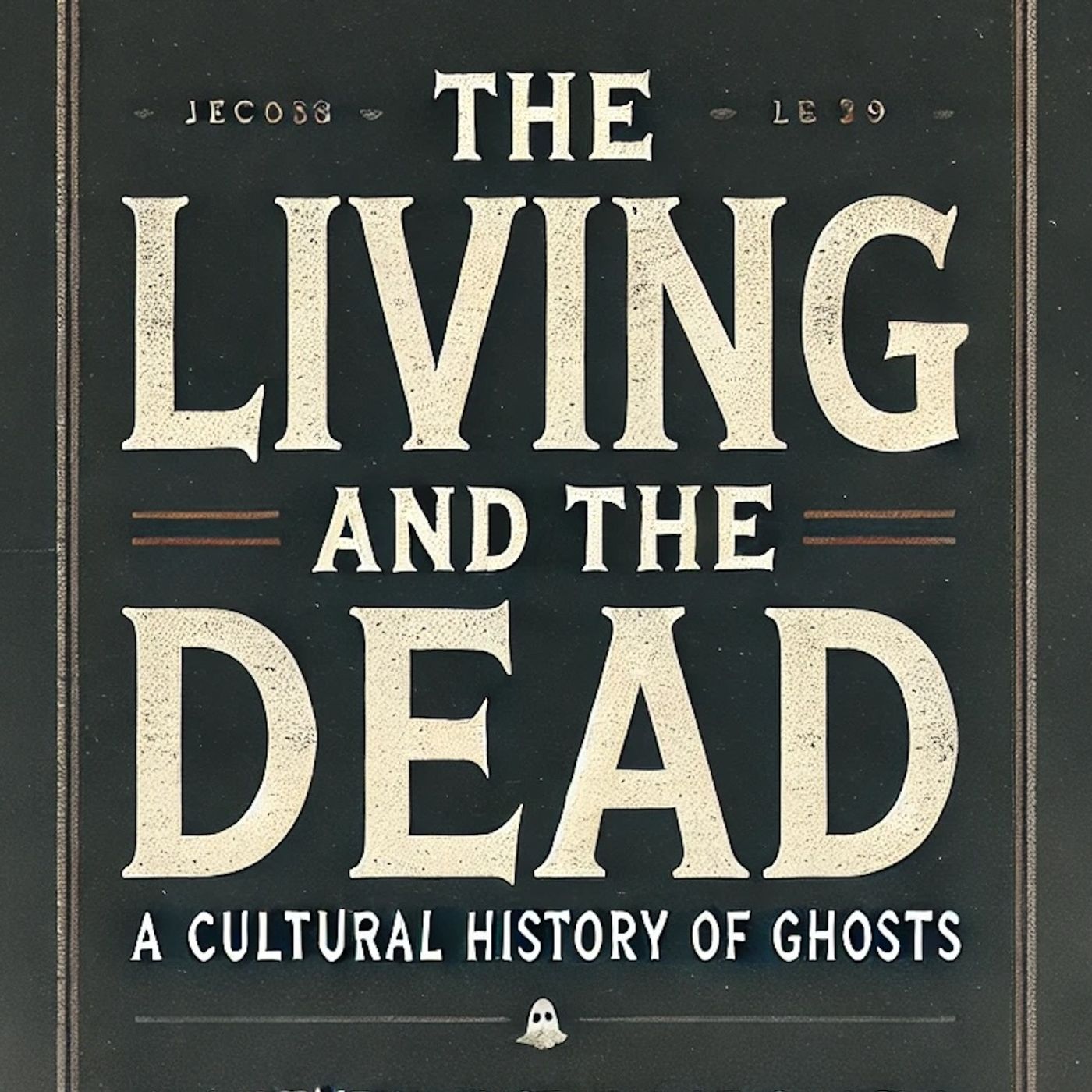
The Living and The Dead
Hosted by Quiet.Please · EN
The concept of ghosts and spirits represents one of humanity's most enduring and universal cultural phenomena. From the earliest cave paintings suggesting ancestral worship to modern digital hauntings, the belief in a spectral realm that intersects with our own has profoundly shaped human society. This comprehensive examination explores how ghost beliefs have influenced religion, architecture, literature, social practices, and cultural development across civilizations and throughout history. Ancient Foundations The earliest evidence of ghost beliefs predates written history. Archaeological findings suggest that Neanderthals may have practiced forms of ancestor worship, with grave sites showing ritual arrangement of bones and offerings. Early Homo sapiens left cave paintings depicting what archaeologists interpret as spirit figures, suggesting that ghost beliefs may be as old as human consciousness itself. Mesopotamian Ghost Traditions In Mesopotamia, humanity's first complex civilization, ghost beliefs were already highly sophisticated. The Sumerians developed an intricate understanding of the afterlife and its relationship to the world of the living. Their word for ghost, "gidim," appears in texts as early as 3500 BCE, demonstrating how fundamental these beliefs were to early human society. The Mesopotamian conception of ghosts included several distinct categories: Etemmu: The standard form of ghost, a person's spirit after death Utukku: Dangerous spirits that could be either beneficial or harmful Gallû: Particularly malevolent demons that were often blamed for illness Lamashtu: Female spirits particularly dangerous to pregnant women and infants The Epic of Gilgamesh provides one of history's first detailed ghost descriptions in its account of Enkidu's spirit rising from the underworld. The text describes specific ghost characteristics that would influence ghost stories for millennia: The spirit's translucent appearance Its ability to pass through solid objects The connection between improper burial and ghostly haunting The concept of unfinished business keeping spirits bound to earth Mesopotamian ghost prevention rituals were equally sophisticated. Clay tablets detail specific practices: Regular offerings to deceased family members Proper burial procedures to ensure peaceful passage to the afterlife Ritual cleansing of spaces believed to be haunted Specialized incantations for different types of spirits Professional exorcists who dealt with troublesome ghosts Ancient Egyptian Ghost Beliefs Egyptian civilization developed perhaps the most complex early understanding of the soul and its posthumous journey. Their conception of the soul included multiple components: Ka: The life force or vital spark Ba: The personality or soul that could travel between worlds Akh: The transformed, immortal being Sheut: The shadow self Ren: The true name, essential for existence Ib: The heart, seat of emotion and thought This sophisticated understanding led to e...
2episodes
Episodes
Newest firstAll episodes
pt2. How Spirits Shaped Human Civilization
Oct 28, 202400:19:46Tap to summarizeThe late 20th and early 21st centuries have witnessed a fascinating evolution in ghost investigation methods, blending traditional spiritualist approaches with modern technology. What began with simple dowsing rods and séances has transformed into a sophisticated field employing everything from electromagnetic field detectors to thermal imaging cameras. This marriage of ancient pursuit and modern methodology reveals humanity's enduring desire to prove what many believe cannot be proven. The first organized ghost investigations began in earnest during the Victorian era, when the Society for Psychical Research pioneered systematic approaches to studying supernatural claims. These early investigators developed protocols still used today: detailed witness interviews, environmental measurements, and attempts to replicate reported phenomena under controlled conditions. Yet unlike their modern counterparts, these Victorian ghost hunters lacked sophisticated recording equipment, relying instead on detailed written accounts and the occasional spirit photograph. Today's ghost investigation has become both more sophisticated and more democratized. The proliferation of paranormal investigation shows has transformed ghost hunting from an obscure pursuit into a popular hobby. Modern investigators carry thousands of dollars worth of equipment into haunted locations, though many of the fundamental questions remain unchanged from centuries past. What causes a haunting? Can spirits interact with electronic equipment? Why do some locations seem more prone to supernatural activity than others? Television has played a crucial role in shaping contemporary ghost investigation methods. Shows like "Ghost Hunters" introduced the public to supposedly scientific approaches to supernatural investigation. The now-familiar night vision aesthetics, EVP (Electronic Voice Phenomenon) sessions, and the dramatic reveal of evidence have become standard elements of ghost hunting culture. This popularization has led to both increased interest in paranormal research and heightened skepticism about investigation methods. The rise of sophisticated recording technology has transformed how we document supposed supernatural activity. High-definition cameras can capture footage in near-total darkness. Digital audio recorders pick up sounds beyond human hearing range. Thermal imaging reveals temperature variations invisible to the naked eye. Yet paradoxically, as our ability to document the world has improved, definitive proof of ghostly activity remains elusive. Each new technology seems to generate its own category of ambiguous evidence, leading to endless debates about orbs, electronic voice phenomena, and other supposed signs of spiritual presence. The internet age has revolutionized how ghost stories spread and evidence is evaluated. Social media platforms have become repositories of supernatural encounters, with users sharing experiences in real-time. Online communities analyze evidence, debate investigation methods, and organize investigations. This democratization of ghost hunting has led to an explosion of amateur paranormal research groups, each developing their own approaches to supernatural investigation. Universities have begun approaching ghost beliefs from new academic angles. Anthropologists study how ghost investigation methods vary across cultures. Psychologists examine the psychological factors that influence supernatural experiences. Sociologists analyze how ghost hunting groups function as communities. This scholarly interest has helped legitimize the study of supernatural beliefs, even as the existence of ghosts themselves remains scientifically unproven. The development of portable scientific equipment has created new categories of ghost hunting methodology. Electromagnetic field meters, originally designed for detecting electrical wiring, have become standard tools for supernatural investigation. Geiger counters measure radiation levels in supposedly haunted locations. Infrared cameras reveal temperature variations that investigators associate with spiritual presence. This technical approach provides ghost hunters with data to analyze, even if the interpretation of that data remains controversial. Professional ghost hunting teams now operate alongside traditional spiritualists and mediums. These groups often combine technical investigation methods with more traditional approaches to spirit communication. Some investigators use scientific equipment alongside psychics, creating hybrid methodologies that bridge ancient and modern approaches to supernatural investigation. Modern ghost investigators have developed increasingly sophisticated methods for attempted spirit communication. The traditional Ouija board has given way to sophisticated "ghost boxes" that scan radio frequencies, supposedly allowing spirits to communicate through electronic means. Digital audio analysis software can isolate EVP recordings, while specialized cameras claim to capture spectral energy invisible to the human eye. These technological innovations reflect humanity's enduring desire to bridge the gap between the physical and spiritual realms. The emergence of artificial intelligence in ghost hunting presents intriguing possibilities and ethical questions. Some researchers now employ AI algorithms to analyze hours of audio and video footage, searching for patterns that might indicate supernatural activity. Machine learning systems scan thousands of ghost photographs, attempting to identify commonalities in supposed spectral appearances. This marriage of cutting-edge technology with ancient supernatural pursuit represents a uniquely modern approach to age-old questions. Virtual and augmented reality technologies have created new frontiers in ghost investigation. Some researchers use VR environments to recreate haunted locations, studying how people react to supposedly supernatural environments under controlled conditions. AR applications overlay historical data onto investigation sites, allowing investigators to correlate reported phenomena with past events. These technological tools create new ways of experiencing and documenting supernatural claims, while raising questions about the nature of reality itself. The Role of Environmental Science Modern ghost investigators increasingly consider environmental factors in their research. Studies of infrasound – low-frequency sound waves below human hearing – suggest some ghostly experiences might have natural explanations. Electromagnetic field researchers explore how varying energy levels might affect human perception and experience. Geological surveys of haunted locations reveal potential connections between supernatural reports and underground water sources, mineral deposits, or tectonic activity. Climate change has introduced new dimensions to ghost investigation. Some researchers study how changing environmental conditions might affect reported supernatural activity. Others document ghost stories related to disappeared landscapes – phantom islands lost to rising seas, or spirits haunting abandoned towns affected by environmental disaster. These modern ghost stories often carry environmental messages, linking traditional supernatural beliefs with contemporary ecological concerns. The Evolution of Evidence Analysis The digital age has transformed how ghost hunting evidence is collected, analyzed, and shared. Cloud storage allows investigation teams to accumulate vast databases of supernatural documentation. Online platforms enable real-time collaboration between investigators worldwide, comparing experiences and methodologies. Social media provides immediate channels for sharing potential evidence, though this instant distribution often comes at the cost of thorough analysis. Professional organizations have emerged to establish standards for paranormal investigation. These groups develop protocols for evidence collection, documentation, and analysis. They provide training for aspiring investigators, emphasizing scientific methodology alongside traditional supernatural sensitivity. This professionalization of ghost hunting represents an attempt to bridge the gap between scientific skepticism and supernatural belief. The Economics of Modern Ghost Hunting Ghost investigation has evolved into a significant economic force. Equipment manufacturers produce specialized devices for supernatural detection. Tourism companies offer ghost hunting experiences in supposedly haunted locations. Television shows and streaming services generate substantial revenue from paranormal content. This commercialization of ghost hunting has created new opportunities while raising questions about the authenticity of some supernatural claims. Many historic sites now embrace their haunted reputations, offering ghost tours and investigation opportunities as additional revenue streams. Hotels advertise resident spirits as amenities rather than deterrents. Ghost hunting equipment suppliers maintain profitable businesses catering to both professional investigators and amateur enthusiasts. This economic dimension adds complex layers to modern ghost investigation, blending commerce with spiritual pursuit. The mainstreaming of ghost hunting has profoundly influenced popular culture. Documentary-style paranormal investigation shows have created their own genre of entertainment, spawning countless imitators and establishing common tropes now instantly recognizable to audiences worldwide. These programs have shaped public perception of what ghost hunting entails, though many professional investigators argue that television dramatizes and oversimplifies their work. Universities increasingly offer courses examining paranormal investigation from academic perspectives. Departments of psychology study how ghost hunting activities affect participants' beliefs and perceptions. Anthropology programs examine how modern supernatural investigation practices vary
Transcribe →pt.1 A Global History of Ghosts and The Human Experience
Oct 28, 202400:27:52Tap to summarizeThe concept of ghosts and spirits represents one of humanity's most enduring and universal cultural phenomena. From the earliest cave paintings suggesting ancestral worship to modern digital hauntings, the belief in a spectral realm that intersects with our own has profoundly shaped human society. This comprehensive examination explores how ghost beliefs have influenced religion, architecture, literature, social practices, and cultural development across civilizations and throughout history. Ancient Foundations The earliest evidence of ghost beliefs predates written history. Archaeological findings suggest that Neanderthals may have practiced forms of ancestor worship, with grave sites showing ritual arrangement of bones and offerings. Early Homo sapiens left cave paintings depicting what archaeologists interpret as spirit figures, suggesting that ghost beliefs may be as old as human consciousness itself. Mesopotamian Ghost Traditions In Mesopotamia, humanity's first complex civilization, ghost beliefs were already highly sophisticated. The Sumerians developed an intricate understanding of the afterlife and its relationship to the world of the living. Their word for ghost, "gidim," appears in texts as early as 3500 BCE, demonstrating how fundamental these beliefs were to early human society. The Mesopotamian conception of ghosts included several distinct categories: Etemmu: The standard form of ghost, a person's spirit after death Utukku: Dangerous spirits that could be either beneficial or harmful Gallû: Particularly malevolent demons that were often blamed for illness Lamashtu: Female spirits particularly dangerous to pregnant women and infants The Epic of Gilgamesh provides one of history's first detailed ghost descriptions in its account of Enkidu's spirit rising from the underworld. The text describes specific ghost characteristics that would influence ghost stories for millennia: The spirit's translucent appearance Its ability to pass through solid objects The connection between improper burial and ghostly haunting The concept of unfinished business keeping spirits bound to earth Mesopotamian ghost prevention rituals were equally sophisticated. Clay tablets detail specific practices: Regular offerings to deceased family members Proper burial procedures to ensure peaceful passage to the afterlife Ritual cleansing of spaces believed to be haunted Specialized incantations for different types of spirits Professional exorcists who dealt with troublesome ghosts Ancient Egyptian Ghost Beliefs Egyptian civilization developed perhaps the most complex early understanding of the soul and its posthumous journey. Their conception of the soul included multiple components: Ka: The life force or vital spark Ba: The personality or soul that could travel between worlds Akh: The transformed, immortal being Sheut: The shadow self Ren: The true name, essential for existence Ib: The heart, seat of emotion and thought This sophisticated understanding led to elaborate mortuary practices designed to ensure proper transition to the afterlife: Mummification procedures that preserved the body for the Ka's return Tomb decoration with scenes from life to sustain the Ba Food offerings to nourish the Ka Spells and incantations from the Book of the Dead Architectural features designed to allow spirit movement Complex funeral rites that could last for days Egyptian ghost stories often centered around tomb desecration and its consequences. Surviving texts warn of curses and hauntings befalling those who disturb burial sites. Archaeological evidence suggests these beliefs were taken seriously: Tomb builders included secret passages and false doors to confuse evil spirits Protective amulets were standard burial items Walls were inscribed with spells for protection Architectural features were designed to help good spirits and hinder malevolent ones The Egyptian influence on ghost beliefs spread throughout the ancient world, affecting: Greek and Roman burial practices Early Christian concepts of the soul Islamic traditions regarding spirits Medieval European ghost lore Modern paranormal investigation methods Classical Perspectives The Greek civilization inherited and transformed earlier ghost beliefs, creating a rich tapestry of spectral lore that continues to influence Western culture. The ancient Greeks believed the dead resided in Hades, but could return to the world of the living under certain circumstances. Unlike their predecessors, Greek ghosts were often portrayed as conscious, intelligent entities capable of complex interactions with the living. The Greek term "eidolon" referred to a visible ghost or phantom, while "psyche" represented the immortal soul, establishing a distinction that would influence philosophical thought for millennia. Greek literature abounds with ghost stories that established enduring theatrical and literary traditions. In Homer's Odyssey, the hero's descent into Hades provides one of literature's most influential depictions of communication with the dead. The ghost of Achilles tells Odysseus that he would rather be a slave among the living than king of the dead, introducing the concept of the melancholy spirit that would become a staple of ghost literature. Roman culture absorbed and expanded upon Greek ghost beliefs, adding their own innovations to spectral tradition. The Romans developed elaborate festivals dedicated to appeasing restless spirits, most notably the Lemuria, during which the head of the household would perform complex rituals to pacify potentially dangerous ghosts. Roman writers like Pliny the Younger recorded what would become classic ghost story elements: rattling chains, mysterious footsteps, and apparitions appearing to the living with requests for proper burial. The Romans also institutionalized the concept of household spirits, with each home having its own Lares and Penates - protective ancestral spirits who guarded the family and property. This domestication of ghost beliefs would influence everything from European household fairy traditions to modern concepts of the "family ghost." The Eastern Mediterranean and Near Eastern ghost traditions merged with Greco-Roman beliefs during the Hellenistic period, creating new hybrid forms of ghost lore. Egyptian burial practices influenced Roman funerary customs, while Persian concepts of good and evil spirits became incorporated into Western ghost taxonomy. Asian Ghost Traditions Chinese ghost beliefs represent one of humanity's most sophisticated and enduring spectral traditions. Dating back to the Shang Dynasty (1600-1046 BCE), Chinese ghost lore developed alongside ancestor veneration practices that remain vital to Chinese culture. Chinese tradition recognizes multiple types of ghosts, each with distinct characteristics and origins. Hungry ghosts, those spirits of the improperly buried or forgotten dead, became so significant that an entire month of the Chinese calendar is dedicated to their appeasement. The Chinese conception of ghost-human interaction differs significantly from Western traditions. Rather than seeing ghosts as necessarily supernatural or frightening, Chinese culture traditionally viewed them as natural elements of the cosmic order. Ghosts could be beneficial or harmful, depending on how the living treated them. This led to the development of complex social protocols for maintaining harmonious relationships with the spirit world. Japanese ghost lore, while influenced by Chinese traditions, developed its own unique characteristics. The Japanese Yurei represents one of the most distinctive ghost types in world folklore. Unlike Western ghosts, Yurei have specific physical characteristics: they appear in white burial kimono, have long black hair, lack feet, and float above the ground. These spirits usually have a strong reason for remaining in the world of the living, typically involving love, hatred, or jealousy. Japanese culture also developed unique architectural features designed to cope with ghost activity. Spirit walls - small barriers placed in front of doors - were built to confuse spirits, who were believed to only be able to travel in straight lines. This practical approach to ghost management reflects a matter-of-fact attitude toward supernatural beings that characterizes much of East Asian ghost lore. Medieval and Renaissance Ghost Beliefs The medieval period marked a crucial transformation in how Western society understood and interpreted ghostly phenomena. The rise of Christianity created an intellectual tension between traditional ghost beliefs and official church doctrine. Early church fathers struggled to reconcile popular ghost stories with Christian theology, eventually developing complex theories about purgatory and wandering spirits that would dominate European thought for centuries. During this period, ghosts became inextricably linked with Christian morality. The medieval ghost typically appeared for specific purposes: to request prayers for release from purgatory, to reveal hidden sins, or to warn the living about their moral conduct. These spiritual visitations served as powerful tools for religious instruction and social control. Monastery chronicles from this period overflow with accounts of spectral visitors seeking spiritual assistance, often appearing to monks during their nightly prayers. Medieval ghost stories frequently centered around grand moral lessons. The ghost of a corrupt nobleman might return to make amends for earthly sins, while a murdered victim's spirit could appear to reveal their killer's identity. These tales served multiple purposes, reinforcing social order while providing a framework for understanding justice beyond the mortal realm. The concept of the "walking dead" during this period differed significantly from modern zombie mythology - medieval revenants were often conscious beings capable of speech and complex moral reasoning. The Renaissance period brought new sophisticati
Transcribe →