Loading summary
Transcript104 lines
- [00:01]
Odoo Advertiser
Support for this show comes from Odoo. Running a business is hard enough, so why make it harder with a dozen different apps that don't talk to each other? Introducing Odoo. It's the only business software you'll ever need. It's an all in one, fully integrated platform that makes your work easier. CRM, accounting, inventory, e commerce, and more. And the best part, Odoo replaces multiple expensive platforms for a fraction of the cost. That's why over thousands of businesses have made the switch. So why not you try Odoo for free@odoo.com that's o d o o.com.
- [00:41]
MIDI Health Advertiser
It'S true that some things change as we get older. But if you're a woman over 40 and you're dealing with insomnia, brain fog, moodiness and weight gain, you don't have to accept it as just another part of aging. And with MIDI Health, you can get help and stop pushing through it alone. The experts at MITI understand that all these symptoms can be connected to the hormonal changes that happen around menopause. And MITI can help you feel more like yourself again. Many healthcare providers aren't trained to treat or even recognize menopause symptoms. MITI clinicians are menopause experts. They're dedicated to providing safe, effective, FDA approved solutions for dozens of hormonal symptoms, not just hot flashes. Most importantly, they're covered by insurance. 91% of MITI patients get relief from symptoms within just two months. You deserve to feel great. Book your virtual visit today@joinmidi.com that's join M I D I.com I don't think.
- [01:43]
Yegana Torbati
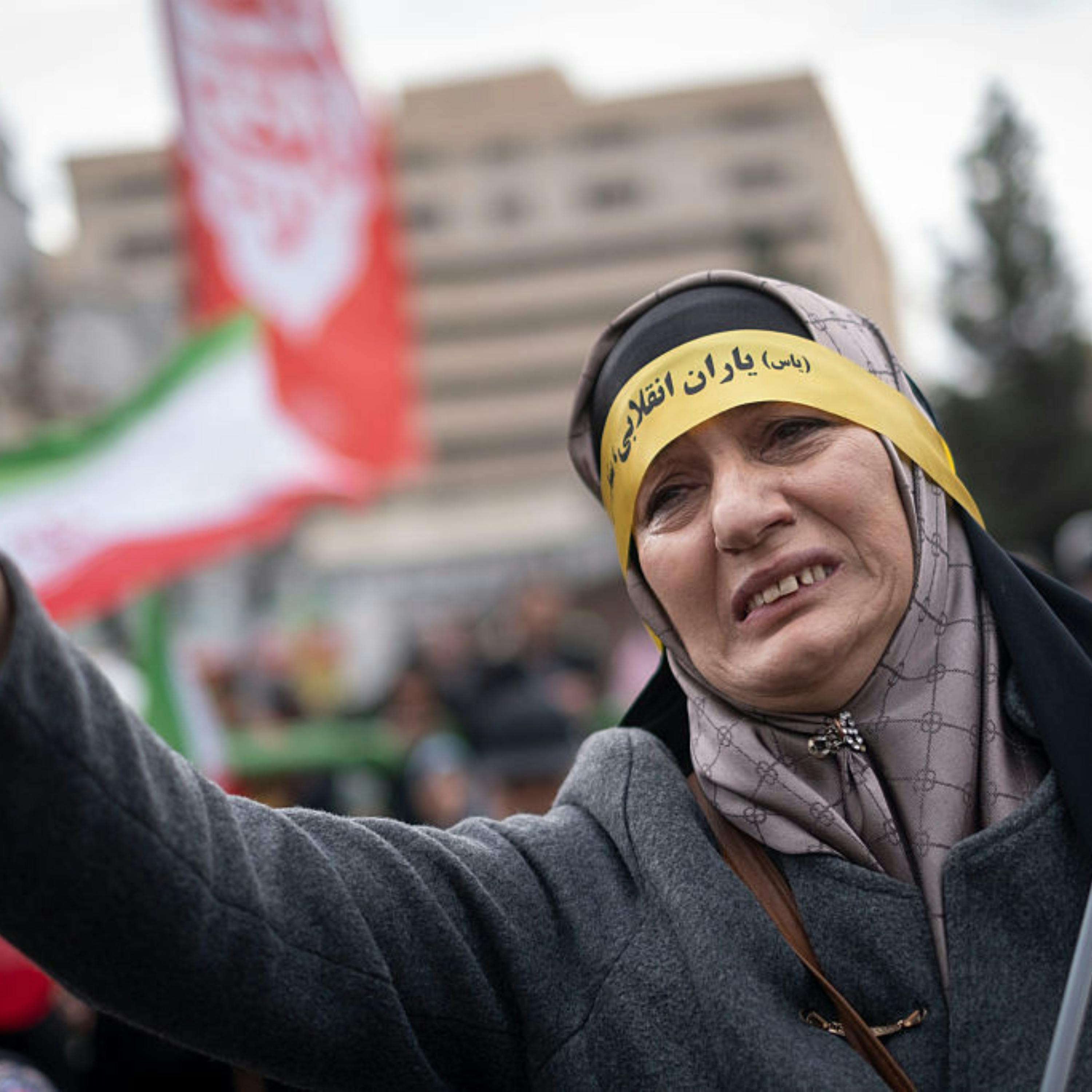
That President Trump's statements and tweets were a primary cause of the protests or the fact that the protests got so big in January. But I think they did serve as a motivating factor and the sense I have now is just of immense betrayal.
- [02:01]
Jake Sullivan
Welcome back to the long game. I'm Jake Sullivan.
- [02:03]
John Finer
And I'm John Finer. And today we are thrilled to welcome our second guest to the podcast journalist Yegana Torbati. She's an expert on Iran who's been reporting most recently from Turkey for the Washington Post. And we'll talk obviously a bit more about that. Before that, she covered national security for both Reuters and ProPublica, has won a a slew of awards for her reporting, and she's also the co author of a book that's coming soon called Stolen Betrayal and Hope in Modern Iran, which is a history of modern Iran told through the lives of ordinary Iranians and So we're going to ask her about what things are like on the ground in Iran today for ordinary Iranians, in addition to all the policy issues we normally dig into.
- [02:46]
Jake Sullivan
So we're going to talk to Yegana, as John said, about the situation in Iran, about what to make of the latest round of talks between the US And Iran, about what to make of all of the countries in the region flocking to try to make the diplomacy work, and of course, about Prime Minister Netanyahu's recent visit to Washington. Then John and I will zoom out for a moment and talk about something quite different, which is shooting down party balloons near El Paso, Texas, a matter of grave national security. So we're really looking forward to it. And Yegan, it's good to have you here.
- [03:19]
Yegana Torbati
Thank you guys so much for having me.
- [03:21]
Jake Sullivan
We want to start actually with the fact that you most recently were with the Washington Post, a fact that you actually share with John Finer, who was once a reporter for the Washington Post as well. You share that in common.
- [03:34]
Yegana Torbati
Illustrious alumni.
- [03:36]
Jake Sullivan
Yes, indeed. But you were part of a group of people, a very wide range of reporters, particularly when it came to the foreign correspondents for the Washington Post who were let go just a few days ago. And one of the things we wanted to do was bring you on the podcast because the depth, the quality, the perspective that you brought to the pages of the Post for readers in the United States and around the world on these critical issues, especially what is happening in Iran at this momentous time. It's just, frankly, I think the technical term is a damn shame that they let you go. And I know that you'll end up back writing somewhere very soon. But first, before we dig into Iran, wanted to just hear your reflection, what it felt like, what it means and how it affected you personally.
- [04:36]
Yegana Torbati
I took this job in June, I believe I was offered it on a Monday, went back to them with some requests on a Tuesday, and then we finally came to an agreement on a Wednesday. And on Thursday, Israel attacks Iran. And so that was kind of my introduction to full time Iran reporting, although I've sort of covered Iran on and off for over a decade now.
- [04:59]
Jake Sullivan
Were you surprised by the way Yegana, about that attack when it happened? Did you see it building up or did you think, oh my gosh, you know, I haven't even gotten my feet wet really, in this new beat, and now all of a sudden this has gone down?
- [05:12]
Yegana Torbati
I definitely had the latter reaction. But I do think looking back on it, especially the kind of couple days or four or five days leading up to it was a sign that something would happen. I think all of us were sort of taken aback by the exact timing because there was, I think the sixth round of talks between the US and Iran were supposed to happen on the Sunday and then on Thursday night our time, US time Israel attacked. So I think even the Iranians were quite taken aback by that. So I wasn't even supposed to start my job for another couple weeks. I had a vacation planned, which I ended up going on, but I worked basically every day from Portugal, which was really fun for my family. But yeah, I mean that has kind of been. That had been the pace ever since. And I wanted this job and I took this job because I felt like Iran was really at a crossroads for a lot of different reasons. One being the age of the Supreme Leader. And this is a person who has ruled Iran for, I think he's now probably the longest serving autocrat. He's been ruling since 1989. He is 86, almost 87 years old. Just actuarially speaking that's going to change soon at some point. So I felt like that portended a lot of change for Iran and then also just the gap has really never been wider between Iranian society and the state. And I felt like that was a really interesting and vital thing to dig into in this moment and over these next few years. So I was really looking forward to doing this job for, you know, it's technically a three year posting, but I was hoping that I could extend it. You know, I was really hoping to prove myself and I really tried especially you know, over this last month. January was an incredibly difficult month to be covering Iran news. I think I've, you know, the images that I've seen are just gonna stay with me probably forever, unfortunately. And I really tried over these last few weeks to bring the voices of ordinary Iranians to the pages of the Washington Post, give a sense of kind of how they were experienc. The Internet shutdown in Iran made that very, very difficult for a couple weeks. But things had kind of started to open up a little bit and we were able to hear a little bit more. That has all kind of come to quite an abrupt end, at least for the Post. My last story with them was in late January and it was about. It was basically the reconstruction of a massacre that occurred that was carried out by state forces in one city, Rash the kind of this Caspian Sea city in the north. And our aim there was, you know, the Internet had been shut off. We really had a very little sense of what had happened, especially on January 8th and 9th, which were kind of the bloodiest days of this crackdown. And so our aim was, let's just put all our firepower into reconstructing just one night in one place. And that'll kind of give you a snapshot as a reader of what occurred maybe across the country. And I'm really proud of that story. It was a huge team effort. And me and the lead reporter on that and Elu Tabrizi were both laid off last week. So it's difficult. I've never been laid off, which for a 15 year career in journalism so far is honestly pretty lucky. And so this was probably coming at some point given the reality of our industry. And I hope to continue in some form going forward. I'd very much like to stay in Istanbul, stay in the region, keep covering the country. That commitment hasn't changed at all.
- [08:47]
John Finer
Yegana as Jake said, like you, I kind of grew up a bit in journalism and certainly at the Washington Post. I spent the first four or five years of my career there mostly in the Middle East. News organizations, I guess up to and including organizations like the Post, are sometimes a bit notorious for how they treat their people. My introduction to this was on the eve of the invasion of Iraq. I was actually with a colleague from a different newspaper who I won't mention by name, who got a phone call literally as the vehicles were starting to drive across the border from Kuwait into Iraq, from the general counsel of his news organization, who said he just wanted to read a quick statement and make sure that this reporter concurred. And it was this kind of lengthy hold, harmless disclaimer. He was going into the war zone of his own volition. I mean, literally had a helmet on, he had a flak vest. He was sitting in the back of a vehicle with all these Marines. It was comical a bit at the time, but it does reflect sometimes that the personal dimension of these jobs can be more than a little bit brutal for the correspondents, by the way, for the foreign employees of these news organizations who often even get less acclaim and are treated worse sometimes when these actions go down. And I did notice that the Post and some of its friends have put together a fund for some of those stringers to try to compensate them for the situation that they're in. You know, as bad as some of the things I've heard before and experienced, this is kind of an epically bad situation. So I did just want to acknowledge on a personal level that I've been thinking about all of you since this happened. I've also been thinking about, and I think Jake can, can attest to this as well, what a loss this is going to be for people in policy roles, particularly in a place like Iran, where the US Government does not have a diplomatic presence. So we don't get the typical diplomatic and classified reporting. You know, obviously we have intelligence on Iran, but we don't get the on the ground kind of granular feel that you get in a lot of countries. And so we rely to a very large extent on open source reporting, like reporting by correspondents and news organizations. Maybe you could just give us a bit of a sense before we get into the hard policy and the diplomacy of what you think life is like in Iran right now in the aftermath of this just very difficult period.
- [11:04]
Yegana Torbati
It's the darkest time that I can remember certainly reporting on. And even in my research, for instance, for the book, we go back to even before 1979, maybe the 1980s for some members of the opposition was a darker time and we have a little bit less window into that. But in the modern era, especially post 1988, 1989, this is the darkest moment that I think Iran and Iraq, Iranians are living through. The scale of the killing really shocked people. And what was really disturbing was that they didn't even know because the Internet was cut off. And so most Iranians only knew what had happened in their town, in their city, or maybe they were able to call people, even phone lines had a really hard time domestically. And so as the Internet kind of came back on, they all of a sudden realized, oh, there were thousands of people killed, tens of thousands, possibly all across the country. I talk to people, I'm in touch with sources, friends, some mostly sources and friends. And there's a rage that I haven't seen before from people who are not violent people and who have never sort of wanted one. Person I know is like, I don't even like to get into physical fights, like street fights or anything. I avoid all of that stuff. And he said to me, I could rip Khamenei apart with my bare hands if I saw him. And I think that's a very common sentiment that is not rare right now. I don't know how the government comes back from that in terms of legitimacy, but I would have said that maybe even a while ago. And it's been months or maybe years where I felt that the vast majority of Iranians just do not view this government as reformable or as salvageable, and they don't tend to have a lot of faith in its ability to change and to adapt and to answer their concerns. I very much wanna follow and see what happens after this. But I think right now is a very difficult moment for Iranians and it's going to take them a long time to recover from this if they ever do.
- [13:33]
Jake Sullivan
Just given that gulf you're describing between the people and the regime and that depth, I mean, that's a very vivid example. Just wanting to rip the Supreme Leader limb from limb. Just that depth of dark and negative feeling towards the regime. How would you characterize its stability and staying power? Can it basically murder its way out of its problem here?
- [13:58]
Yegana Torbati
I think the fact that they were able to deploy this much force and this much violence shows that there's not cracks within this regime, at least where it matters. I had been thinking before all this started, I was like, the economy was really, it was clear that they were having serious economic issues. I was thinking about trying to research a story to see are they having any problems paying security forces, because that is really where you would start to see some weaknesses. And, and it's very clear to me now that they don't have any problem mustering enough loyal forces to kill enough people to be able to put down these protests. Street protests are an incredibly dangerous form of protest of dissidents. And for various reasons, which we could get into if you'd like, it is the tactic that Iranians tend to go to. And that's mainly because there's no real organized opposition. There are opposition movements in other countries. Myanmar comes to mind where the governments there are just as brutal, possibly more, but they are able to organize and adapt and use different tactics, including boycotts. We don't really have that in Iran. There's been immense repression of forces inside who could kind of organize that kind of thing and weaken the regime through these, maybe through these different kinds of strategies, while also protecting dissidents inside side. And so they're unable to organize that internally and then externally for various reasons that also hasn't taken shape. And so the outrage and the anger towards the government hasn't gone away. In fact, the economy has even gotten worse. So these protests launched on December 28th because of basically the crash in the rial reaching like 1.45 million to the dollar. The economy has gotten far worse since then. I mean the prices of food have gone up, certain food items by double digit percentages just since late December. And so people are in this government according. I've done interviews with economists and people who kind of look at the options that are available to this government, and they don't see that they're willing to actually take the steps that they would need to take to really improve the economy so that discontent is going to stay there. But the question is, what. What happens with it? If it's just more street protests, which are spontaneous and unplanned and unprotected, and the government really feels like it is at risk, there's no reason to think that it won't do this again. So there are other folks who may be more optimistic. I don't even know that I would characterize my view as optimism or pessimism. But just looking at the different factors, what is the actual mechanism for change? I don't see evidence that the government itself is seeing kind of its forces fall away. It seems quite solid and able to repress these protests when they do occur.
- [17:08]
John Finer
So one of the strange aspects of the moment that we're in is the reason we're talking about the possibility of military action is because President Trump, during those protests, essentially declared that he would take military action. If a large number of demonstrators were killed, then a large number of demonstrators were killed. And actually, I'd be interested in your thoughts. There have been various reports about the extent of the killing and a wide range of numbers, although they're all horrific. But President Trump said that the Iranians cracked down and basically have now stopped the demonstrations in their tracks. There is no. Or correct me if I'm wrong, does not seem like there's very much active protest activity anymore. But the United States was not ready to take military action at that time. We needed to bring more assets, more forces, more defensive capabilities into the region. So those forces are now in the region, although the president has said maybe he's going to bring even more. He brought one large naval configuration, a carrier strike group, to the Middle East. He may bring a second, is what he's now said. Simultaneous to that, though, we've now embarked on diplomatic talks. Jake and I recorded last week, just before those talks got underway. There's now been at least one round. What is your sense of the prospects of these talks coming to fruition in a way that can avoid a military action here? What do the Iranians want from these talks other than to avoid being bombed? What does the United States want from these talks, and is there a position that can be common to the two of them?
- [18:46]
Yegana Torbati
I think in some ways it's even easier to talk about what the Iranians want than what the US Wants, because I feel like President Trump sort of signals different things. And given what we saw the last time there were US Iran talks, which was them resulting eventually in an Israeli strike, it's just very hard to know. I mean, Iranians, I will say, the ones I talk to, the ones that will speak to me, are very disappointed in these talks and the idea that, okay, thousands of people were killed than for the US to negotiate with Iran over its nuclear program and basically nothing else. And so, you know, but at the same time, President Trump is fairly unpredictable. And it's a bit unclear to me if this is genuine or if it's sort of he's really trying to get a deal or if it's sort of, you know, maybe similar to what was happening last time. And there were reports that, you know, there was like, some kind of coordination with the Israelis as well to sort of maybe lull the Iranians into being more complacent. I think the Iranians would like to see. They deny this, but there is a little bit of a waiting game. So trying to buy time to. As long as they're able to rebuild their missiles and get the situation at home under control and feel more secure in that way, the talks help buy them time where they're not being attacked, while also dealing with instability at home. Home. And so that's occurring. I mean, the repression continues. So far, they've executed over 400 people, according to one of the human rights groups that follows Iran. So that's ongoing. And then, of course, I think sanctions relief, given the state of the economy right now, one way that they could actually improve it. And that was what a lot of the people that I spoke with for sort of the story that I was trying to do on the economy. They basically said the only way to improve the situation is to lift the sanctions. And that would require pretty major changes in Iran's foreign policy, especially on the nuclear program. And they have said that they are not willing to give up enrichment or the right to enrichment at home. Right now, that's the US Position, is that they have to give that up. It's unclear to me at this point on the missiles. Maybe you all have a better sense of whether the U.S. if that issue is as important to the U.S. government as it is to the Israelis, again, that's another red line for the Iranians. They do not want to give up their missile program. They view that as very existential, perhaps even more so than the nuclear program. And so right now, we're only one round in. The statements that came out were encouraging for those who Want to see a deal? They seemed like they were fairly positive, but I feel like I've been. I mean, you all are the real veterans of these nuclear talks. I think I've covered them when both of you were dealing with these issues. So you all know these much more intimately. I've covered them when they were under Ahmadinejad and they were, like, totally unserious and they refused to speak in English, and they were just like the whole round was just them translating back and forth. And then I covered them also under Roulhani, which was a very different environment right now. I'd say in their ideal world, yes, they would want to get a deal and lift sanctions, but I just don't. The system right now does not seem ready to make the concessions that they would need to get there. And that is flowing very much from the top, which is Ali Khamenei.
- [22:30]
Jake Sullivan
I mean, to sum up, you think they won't give up the right to enrich, they won't give up their missile program. And if they won't do those two things, the question is, would Trump basically accept something less than that? Because the Iranians just have their red lines, and even despite all the pressure on them, they'll stick with them. Am I hearing right that that's kind of your judgment of where the current mindset of the regime is?
- [22:55]
Yegana Torbati
I absolutely think so. I think they have psychologically prepared for some kind of conflict re emerging. I mean, basically, ever since the ceasefire to the 12 day war, that's the rhetoric that you hear. Kind of before all these protests started, there was a series on YouTube with where this, like, hardline documentary filmmaker was interviewing all these different, like, generals and different officials and just asking them about, like, their views on 12 Day War and what they were doing. And, you know, he was kind of coming at it from a critical perspective. Why did we fail so badly? And they were really much, very much defending their conduct. And also it was very clear that they didn't see it necessarily as over. And you also kind of see sense. There's sort of a younger generation of Revolutionary Guard people. You know, we all. We kind of describe the Guard, which is sort of the ideological military force in Iran, as like a monolithic force. That's not necessarily true. And one thing I would like to dig into in the future is maybe the divisions within that military force.
- [24:00]
Jake Sullivan
Interesting.
- [24:01]
Yegana Torbati
The younger crowd in particular are actually kind of more hard lines sometimes because they came of age under sort of the heyday of Iranian power in the Middle East. Soleimani, the successes in Syria and Iraq and Yemen and elsewhere. And over the last two, three years, that's been a huge crash for them. And some of the rhetoric, it's very subtle, but the way, especially after the ceasefire, the way some of them talked was I remember one guy was saying, I think some suit wearing people within the government have gotten out ahead of our leader. And what does he mean by that? He means not clerics and not military commanders, but, you know, kind of the Pezeshkian sort of elected government, you know, foreign diplomats like Arakchi, that kind of. That's the crowd I think that he's referring to. And so, you know, there's a very subtle criticism even of Khamenei in there that like, why aren't you standing up more against this? So I think there's some pressure on the leadership to be more resolute or threatening. There's a sense that Iran has not done enough to signal deterrence and that's why it's facing all of these defeats. And so I think you see that in the rhetoric. I think last week or a couple weeks ago, Khamenei put out a video on his Twitter account or his X account saying, I think the translation would be something like God is enough and sort of casting himself and the Islamic Republic project as similar or equivalent to the Prophet Muhammad's project and kind of leadership of the Muslim world.
- [25:46]
Jake Sullivan
Your point about them feeling that they haven't established deterrence, they haven't been tough enough in response, they're revving themselves up. There's this younger element in the guard that believes that they need to be more resolute. It raises an interesting question. So I think there are people around President Trump right now advocating for military force and basically saying, boss, when we hit Iran, they tend to kind of back down. Okay, we took out Soleimani and they took one strike at our bases and we kind of knew it was coming. We bombed Fordo and they telegraphed their punch with this kind of weak attack at Qatar and then chilled out so we can go hit them again and maybe they'll do something token in response. But fundamentally, the risk of this spinning out of control is pretty low. I think that's essentially the argument that some people are going to make to President Trump. Do you have a sense of if in fact the United States went ahead and conducted military action in Iran here in the coming days or weeks, whether Iran would essentially do the same thing it's done before, or whether there's going to be voices inside the country saying, hey, you got to do something more significant, you got to hit back harder. What's your take on that?
- [27:02]
Yegana Torbati
I think it depends on the extent of the strike. Are we talking about hitting a few military bases and some of the nuclear facilities again, or especially the missile bases? I get the sense, my expectation we have to say, yes, I report on Iran, but it is a very opaque system. And I would kill to know just one days meeting minutes from the assembly of Experts or something, or the Supreme National Security Council. Even better, it's very, very difficult to kind of read the tea leaves. We're picking things up from people's YouTube and Telegram channels. All right, but if it's a limited strike just to kind of say that the US Stood by its word and did what it said it was going to do or is trying to punish Iran for not coming to a deal, then I don't see them kind of spiraling out of control and making this a huge regional thing. But if it's a decapitation strike or if they're trying to kind of, if the Iranians feel like it's a regime change, I mean, I think this is again, where the January protests and the response to those protests really kind of is relevant. Again. I think we've seen that this government, this regime, will do what it needs, what it feels like it needs to do to stay in power. This is their project. This is a hugely ideological project as well, that they, especially at the top levels, really believe in. Not every government official and not every regime supporter. I think one key reason the regime has been able to stay in power is it is able to kind of provide very comfortable livings for a wide range of supporters. It's able to kind of, through these rentier schemes, make certain people rich and keep their support. But there is a ideological core, and that's the whole reason we even have this nuclear program, the missile program, the enmity with Israel and the United States. Those are things that the government and especially Khamenei believe in and have believed in. And to me, that's, you know, it's still unclear to me exactly how far they'll go. But I think that's the mindset that we have to sort of understand in order to be able to even game out that scenario.
- [29:19]
John Finer
So one of the things that's interesting to me, at least about these talks and actually different from both the talks that Jake worked on and the talks that I worked on, all part of the same broad negotiation to reach the jcpoa, is how involved the different regional countries are in the diplomacy My sense is this round of negotiations started based on conversations between some of the regional countries and the Iranians that suggested actually they were maybe more open to making some undetermined concessions than maybe the United States has realized the Qataris in particular had been engaged with the Iranians and then went, I think, to the United States and said, hey, you should talk to these guys. There may be a way to avoid taking military action and still getting what you want. And then the talks are underway. So what that leads to, though, is everybody kind of spouting off about what's happening. So President Trump comes out and says, our position is no nuclear weapons, no missiles. He also then said, know this, know that, all the different things you want, whatever that means, so very precise. If you can interpret that, please do. But then Hakan Fadan, the Turkish Foreign Minister, said maybe his impression is the United States would be open to allowing some enrichment inside Iran, which would be news if, if true. And then of course, you have Prime Minister Netanyahu showing up in Washington, you know, making a very different case. Can you talk a little bit about how you see the different regional actors, voices and roles in this and then in particular what impact you think the Prime Minister's visit is going to have on the entire calculus here? Because that is, it feels like it was rushed to make an impression on the President.
- [31:03]
Jake Sullivan
And then they were unusually tight lipped coming out, which could be read literally, could be read any which way. It could mean strikes are coming tonight, could mean Netanyahu is disappointed, who knows?
- [31:14]
Yegana Torbati
But I think I saw a little bit of reporting. Maybe I saw a headline about Trump telling Netanyahu that they were going to do another round of talks for sure. So maybe that might have explained also why Netanyahu might have been disappointed. Yeah, I mean, that is kind of a new dynamic. I mean, my memory going back to JCPOA was that the regional countries were very opposed to it. Right. It was a long time ago.
- [31:40]
John Finer
Partly they were opposed that we didn't talk to them about it before we started. And Jake in particular was a perpetrator because he did a whole secret round of talks in the region that we didn't notify them about until they basically came to fruition.
- [31:53]
Jake Sullivan
It's true, I think not on their all your fault, Jake holiday card list. But yeah, they were able to restrain their enthusiasm for the entire Iran nuclear deal and the negotiations around it, that's for sure. And their tune has changed massively on that.
- [32:08]
Yegana Torbati
I think one huge factor is the last two, three years of Israeli policy in the region. I think that has. They haven't done themselves any favors in terms of their relationships with regional countries, particularly Qatar. Not that those relations were ever good, but I think especially the strike on Qatari soil really deteriorated that further. And then you kind of have to hand it to the Iranians and their diplomacy over the last few years. They have, I think it was like early 2023 when they really started reaching out to the Saudis and reached some kind of sort of deal with them.
- [32:45]
Jake Sullivan
Or kind of like normalization basically. Yeah, I mean, you know, exchange of ambassadors and such.
- [32:51]
Yegana Torbati
It's sort of hard to believe, But I think 2019, 2018 was the Aramco cyber attack that was widely believed to be Iran. And you kind of can't imagine something like that happening right now. And so I think that was a very savv foreign policy move by the Iranian government, which started under Raisi, the prior president, and then has continued under Pazechy on very different administrations. But tells you maybe the decision making at the very top levels had foresight on that front. And so that is all working to its benefit. The Turks have been very against some kind of US strike and have been playing a big role in trying to have the Iranian foreign minister over and sort of like ferrying messages back and forth. And so that I think has probably saved the Iranians from at least a military strike in the last few weeks. At least that's what the reporting seems to suggest that that played a huge role in President Trump's decision.
- [34:06]
Odoo Advertiser
Support for this show comes from Odoo. Running a business is hard enough, so why make it harder with a dozen different apps that don't talk to each other? Introducing Odoo. It's the only business software you'll ever need. It's an all in one fully integrated platform that makes your work easier. CRM, accounting, inventory, e commerce and more. And the best part, Odoo replaces multiple expensive platforms for a fraction of the cost. That's why over thousands of businesses have made the switch. So why not you try Odoo for free@odoo.com that's o d o o.com. Think enterprise software is too costly, too complex and takes too long to get up and running? Think again. Workday Go makes simplifying your small or mid sized business simple. HR and finance together on one powerful AI platform right at your fingertips. Workday Go gets you live fast and fits the needs of your business. Find out what Workday Go can do for you. Go with Workday Go.
- [35:23]
Jake Sullivan
As all this is Unfolding with these regional actors, with Netanyahu, with President Trump having his own internal deliberations. You've got the Iranian people who had a certain expectation that America was going to come and strike and do something to support them physically. When you talk to your sources and your contacts and your friends and family in Iran, are they hoping that America bombs Iran? Do they now think the window has closed on that? What is their view? What are they looking to see here as we all just watch the toing and froing of the diplomacy?
- [36:07]
Yegana Torbati
So I always have to add this caveat, that the people who will speak to a Western reporter are maybe a different slice of Iranian society than a perfectly representative portion would be. So they tend to be more open to the west, more maybe anti regime. I try to kind of control for that a little bit in my reporting, but I just have to be very upfront about that. And that's sort of just the reality of what I do. But I have often been surprised, and other people of the reporters have found this as well, of how much some Iranians seem to welcome a strike. And we saw this especially with the 12 Day War, with the Israel strike strikes. I wrote a story when those first started that kind of tried to explain Iranians mixed emotions in some ways. They felt elated. And you saw people kind of gather on their balconies and watch the strikes. And that also spoke to their belief that the Israelis would not be hitting civilian sites and they were really only gonna go after Iranian officials and these sort of pinpoint strikes. And now also, I mean, people, I don't think that President Trump's statements and tweets were a primary cause of the prot or the fact that the protests got so big in January. But I think they did serve as a motivating factor. And the sense I have now is just of immense betrayal. There are some people, I think, who still hope and believe that something might happen. And they're sort of kind of waiting. And you know, there was one person that we spoke to who was like, our eyes are just fixed on the sky, just waiting for something to happen. People kind of staying up at night when they hear news of like a. A ship moving closer to the coast or whatever it might be, just waiting to see if that will happen. And I think that really speaks to just the decades of repression that they faced. I mean, Iranians have tried to change this government and even just to reform it in many, many ways over the last 47 years. And for decades, that was through elections and the reform movement. In the 1990s was totally crushed, even though it was led by people who were very loyal to the revolution and who were loyal to Khomeini and Khomeini and never sought to overthrow it. The 2009 green movement, which I'm sure you guys are very familiar with, that was also led by two men who were incredibly loyal to the revolution and by people who did not want to overthrow the government. I mean, their biggest protests, they were completely silent. And that was a very strategic decision. They wanted to give Khamenei room to reverse what they viewed as a rigged election. And instead, people got killed on the streets. Not as many as this time, but we all saw Nadara Sultan getting shot. People were arrested. They were called instigators of a velvet revolution, accused of being spies, accused of being American agents, when all they wanted was for an election to be respected. And again, they voted in 2013 to bring in someone who they thought could lift the sanctions and do this nuclear deal and maybe open the aperture a little bit for society. And that failed as well for various reasons. The repression continued, et cetera. And so then we get into kind of this latest. This sort of late era, 2017 onwards, where this slogans that you hear. It took months for people to say death to Khamenei in the streets during 2009. You heard that almost immediately in 2017. And that, I think, shows you sort of, I don't know, radicalization is kind of a negative word for it. But the radicalization of the Iranian street and Iranian protesters and Iranian people, they feel like they have tried every way to try to get some reforms in this system and to get the government to be accountable for its mistakes. It's repression. And Khamenei has refused. The government has refused. And so they feel like, okay, we've done street protests, we've done elections. What else is left to us? We don't have the power to change this government. Maybe Israel can, maybe the US can.
- [40:34]
Jake Sullivan
Amazing.
- [40:36]
Yegana Torbati
That is, we can kind of sit here and judge that and we can say, oh, that kind of military action never works, and all that. But that is the view that I'm hearing from Iran. And I feel like it's my responsibility to share what people feel and what they're saying.
- [40:51]
Jake Sullivan
Would that mean that if there were strikes, obviously nothing's possible to predict, but that you would anticipate people would go back out into the street or try to take advantage of that in some way, or they would just wait and see? Sort of what?
- [41:04]
Yegana Torbati
We have a test case Right. We have the 12 day war, and that did not happen at all. They were, especially when I think President Trump said that people should flee Tehran, and there started to be more Israeli strikes in the city. People fled. And the. Tehran's the biggest city. So if there's not gonna be protests in there, there's not gonna be protests. Really? I mean, what kind of street protests are we really expecting? And I think people thought that it was just gonna be nuclear and military sites. And so they. At first they were really not afraid, or at least many of them weren't. But then when they saw that both, okay, the government was not dislodged, there were some civilians killed, like at least a few hundred. And now our infrastructure and our cities are damaged, and we're still stuck with this government. I think people lost some hope in that route as well. But then I think President Trump's statements basically saying that he would very heavily implying he would carry out a strike to support protesters specifically, that raised a lot of hopes. And so people haven't lost that hope. I think it's sort of still there. In the interviews that I have with people and the conversations I have, they're still kind of like, well, maybe this will happen. But they just sort of. Right now, overwhelmingly, the mood is just one of kind of despair and grief.
- [42:30]
John Finer
One of the things that people who argue against military action often predict would happen is some sort of rally around the flag effect. If Iran is bombed by an outsider, then the people will rally, even to a government they don't particularly like because they're Iranian in some sense. The fact that people were out demonstrating in such large numbers within a few months, even of the 12 Day War, suggests that it did not exactly endear the government anymore than they already were endeared to the people of Iran. It seems very unlikely that that would be the case this time. If the United States follows, let's call it a more violent version of the Maduro playbook, and actually tries to take out the Iranian leadership, not by going in and arresting them, but through military means, what do you think happens in terms of governance in Iran at that point?
- [43:25]
Yegana Torbati
We can only look to history, right? Like, because Iran is so opaque, it's a bit difficult to analyze because in 1979, the groups that managed to take power were the ones that were most organized, and that was the clerical groups and their military supporters or sort of militia supporters. And why was that? Because the monarchy had repressed basically every other form of dissident inside Iran at that time. But the clerics remained because they had the mosque, they had their hierarchy, and they had a little bit more freedom to operate, especially kind of of right before the revolution. So who's organized right now? I mean, also, if we're talking like a more violent version of the Maduro strike, does that mean they take out the Supreme National Security Council? Does that mean they take out all of the Revolutionary Guards leadership? There's all these open questions, but inside Iran right now, the organized forces are the Basij militias, the military forces. There's not. I mean, there's unions, there's guilds, there's kind of some civic groups. But the Iranian government has done what it can do over the last 47 years to really repress any kind of organized group that could pose any sort of threat to it. And so it's very unclear to me. I wish I could give you a better answer of what happens the day after Khamenei is killed or taken out or whatever happens. I think, I think there's probably a core of the Revolutionary Guard who maybe are not even super ideological, but sort of want to keep the oil money going and want to kind of have maybe some sort of like, almost like a Pakistan or Egypt style military state and maybe they take power and make some kind of deal and just sort of. And it seems like President Trump might be happy to do that, and then they're able to stay in power. Maybe they lift social restrictions a bit and kind of. It's an Islamic republican name, but not really.
- [45:32]
Jake Sullivan
Or it's the Iranian. Delsey Rodriguez is what it sounds like you're describing there. Right.
- [45:37]
Yegana Torbati
You know, there's been some speculation over maybe Hassan Rouhani. He put out a statement after the 12 day war. I think this was even before Khamenei made his statement after the ceasefire, basically saying it was, you know, he praised Khamenei, he praised the armed forces, but he also said, like, we need a, a new path for governance. Basically inside the country. He is a cleric. He's technically qualified to be supreme leader according to the Constitution. So there's been some speculation around that. There's also sort of this wild card candidate, Hassan Khomeini, who's a descendant of the founder of the revolution, Ruhollah Khomeini. And he's kind of the whole Khomeini family generally has been closer to kind of the left wing reformist crowd in the 90s and kind of the more recent era. And so that could be seen as kind of almost like a compromise candidate. If Khamenei is taken out if whatever is left of the regime wants to present kind of a more conciliatory face to whether it's a Trump administration or the world in general. He qualifies as a cleric. He has that kind of unquestionable revolutionary pedigree. There's very, I think there's huge questions about whether the Iranian people writ large would accept that and whether they would want to kind of see that kind of leadership and even continue to live under an Islamic republic. But that is kind of one sort of option for the government.
- [47:11]
Jake Sullivan
It's interesting, I had not heard about the descendant of Ayatollah Khomeini, the original founder of the Islamic Republic. I've heard a lot about the son of the Shah. Maybe the two of them could get together. And then, of course, there's the son.
- [47:27]
John Finer
Of the current Ayatollah, team of rivals, team of rivals, cabinet.
- [47:32]
Jake Sullivan
There's the son of the current Ayatollah, too, Mojtaba, who has been tipped as a possible successor. So it sounds like the family affair among the jockeying for what could potentially come next is an interesting feature of Iranian politics.
- [47:48]
Yegana Torbati
And both Mujtab Al Khomeini and Hasan Khomeini posed problems. Right, because this government was supposed to replace a hereditary system that passed power on from a father to a son. But I guess that's how some of these revolutionary systems go. They kind of recreate some of the more negative aspects of what they replaced.
- [48:13]
Jake Sullivan
It's the laws of authoritarian physics, I think. But over the course of this conversation talked us through different episodes from 79 through to today and what that can potentially teach us about the current moment. And I know you're not just pulling that out of thin air. You are in fact pulling that out of a book you have coming out in June, I believe. Is that right?
- [48:37]
Yegana Torbati
Yes, June 2nd.
- [48:39]
Jake Sullivan
A book called Stolen Betrayal and Hope in Modern Iran that John referred to at the start of the podcast with a co author of yours, where you sort of tell the story of this revolutionary regime through the eyes of human beings, not just as a kind of a dry history. We're very excited to read the book. I think you are sending it to us and we're going to have to have you back on at some point.
- [49:06]
John Finer
If not now, you have to because it's been deemed so by Jake.
- [49:11]
Jake Sullivan
But anyway, we're very excited to read the book. We hope everybody who listens to the podcast will. We'll go out and buy it. June 2.
- [49:18]
Yegana Torbati
Pre order. Pre order now.
- [49:19]
Jake Sullivan
Pre order Now. Pre order now.
- [49:21]
John Finer
Thanks very much for being with us.
- [49:23]
Jake Sullivan
Thank you for being with us. This was awesome.
- [49:24]
Yegana Torbati
Thank you guys for having me. Really appreciate it.
- [49:40]
MIDI Health Advertiser
Support for the show comes from Pandora. Expressing yourself is a skill. And with Valentine's Day approaching, you might be wondering how exactly you might express yourself to your person. While finding the right words is special, sometimes it can feel even more special to encapsulate your love wordlessly in an unforgettable gift. That's what Pandora jewelry is made for. Find the perfect heartfelt charm or pendant, a sparkling pair of earrings or an elegant bracelet for your person to wear and think of you each time they do. And if you find a few perfect words, you can get an engravable piece of jewelry to capture your special bond. You don't need to struggle to find the right words when a piece of Pandora jewelry can say it all without you needing to say a word. This Valentine's Day, make it personal, make it memorable, and make it more than a gift. With Pandora. Visit your local store or shop@pandora.net today.
- [50:39]
CoreWeave Advertiser
Support for this show comes from Coreweave. Everywhere you look, AI is expanding what we thought was possible. And at the center of it all is coreweave. Medical research and diagnosis, education, complex visual effects for movies, science and technology breakthroughs. CoreWeave powers AI pioneers around the world with purpose built tech building what's never been built before. CoreWeave is the essential cloud for AI Ready for Anything, Ready for AI to learn more about how CoreWeave powers the world's best AI, go to CoreWeave.com ReadyFor Anything.
- [51:24]
Jake Sullivan
I feel like, John, we should maybe just think about a weekly installment of interviews with laid off Washington Post reporters because that was great. I mean I learned a lot, got a lot of color and insight and historical texture that I felt having followed this issue very closely for the past few days and weeks, for sure, in the past few years I didn't even fully know.
- [51:47]
John Finer
Well, you don't have to make the case to me about the value of foreign correspondence. I often try to remind people when I was in the government, it's worth reading this stuff. Actually there's like a lot there that we don't necessarily get. And it's funny how many times even in the daily intelligence reading there is a revelation from the intelligence community which is very good. And this is not to disparage them in any way that I may have read a few days earlier from a reporter out in the field ferreting out the same information.
- [52:15]
Jake Sullivan
And you made the point correctly. That that's uniquely true at the place like Iran where we don't have either an embassy or any kind of physical.
- [52:23]
John Finer
Presence that and don't travel, you know.
- [52:25]
Jake Sullivan
They don't travel there people, diplomats.
- [52:26]
John Finer
Don't get on a plane and fly to Iran.
- [52:28]
Jake Sullivan
Yeah, yeah, exactly.
- [52:30]
John Finer
Speaking of getting on planes and flying places or.
- [52:34]
Jake Sullivan
Yeah. From the deserts of Iran to the deserts of South Texas. A remarkable story where the faa, the Federal Aviation Administration came out and announced out of the blue late at night a couple of nights ago that it was closing the airspace around El Paso and basically shutting the air for 10 days. And then a few hours later it reversed that decision and it emerged in the reporting. And I'm still not 100% sure I have this right because it's so crazy that the reason that the FAA did that is the Pentagon was planning to move forward with the test of a high powered counter drone laser technology, which obviously they wanted to de conflict civilian traffic from. But then it emerged that the CBP had already been given this technology by the Pentagon and had used it to shoot down what it thought was a Mexican cartel drone coming into US airspace, but was in fact, I kid you not, a party balloon. A party balloon. They blasted a party balloon with a high powered counter drone laser out of the sky. And all of this, it seems like the FAA administrator got a little tired of being jerked by the Pentagon, so pulled the ultimate flex move where he's like, all right, you don't want to listen to me in terms of the timing for the testing, fine, we're shutting it down for 10 days. And that actually did. That was a razor fold moment where he raised and the Pentagon ultimately folded and it's back open. But John, what do you make of this? And beyond it being somewhat amusing, what are the implications?
- [54:19]
John Finer
What I particularly took away from this episode, 1, the FAA is a truly independent entity within the federal government. We experienced this a number of times during. And by the way, as it should be. I mean, air safety is. There are a few things probably more Americans get exercised about than the safety of flying in an airplane. It gets tons of attention every time there's any sort of incident of any kind. And the FAA is the safeguard of all this and takes their job seriously, as they should.
- [54:49]
Jake Sullivan
Actually, John, I don't mean to interrupt, but I do think I'll just tell one quick story of where the FAA acted totally. So China announced this Air Defense Identification Zone in the East China Sea, basically over territory that it claims it controls that is contested by both Japan and Taiwan, basically to flex to say, this is our territory. Now, the US Government under President Obama said, actually, we do not recognize that zone, so we're going to fly B52 bombers through it just to show that we don't recognize it. And then the FAA came out and said, hey, Delta United, you got to recognize the zone. Sorry, got to recognize. And the Japanese and others called us up and were like, what the heck? And we had to try to explain to them, no, no, no, no, that's not the U.S. government. That's the FAA. And they're like, the FAA is the U.S. government. We're like, well, yes, exactly.
- [55:42]
John Finer
So I would call that a minor coordination issue within agencies of the federal government. What we saw over the course of the last week, I would say is a massive failure of coordination in policy and basic governance. And it led to this, this kind of amusing but serious situation for the first several hours after the airspace was initially closed, where people were trying to figure out why this had happened and the government was providing no information, no answers. So there was speculation about everything from an imminent US Invasion or some other military action against Mexico, which is a very serious thing and something we've talked about on this podcast we think could happen at some point. The Trump administration taking action against drug cartels in Mexico. So maybe this was a precursor to that. There was speculation about maybe the cartels were about to attack the United States. Or Fort Bliss in Texas, which is very near El Paso, where the airspace was closed. There was even, I saw in a few places, speculation that this was some sort of retaliation by the White House, which is not what happened against the community of El Paso because the city council of El Paso passed some sort of civic ordinance condemning ICE raids in the area. People had no idea.
- [57:00]
Jake Sullivan
Do you think that that's even remotely plausible, that it's not totally out of the question, that the White House might shut the El paso Airport for 10 days because of some non binding resolution passed by the city council? Tells you a lot about where we.
- [57:13]
John Finer
Are right now in a text chain that you and I are both on. One person's sort of glib response to. All of the speculation was either it's one form of abuse of power, an attack against a sovereign state on our border, Mexico, or another form of abuse of power, retaliation against the city of El Paso turned out actually to none of these things. It turned out to be what you just described. But to me, what this underscored is in an administration that struggles, to put it, I think, generously, to work in a Cohesive, coherent fashion. These kinds of things can be quite disruptive to actually what people care about their government for. The ability to make sure that they are safe when they travel on airplanes, the ability for air travel to function and not be closed down by some sort of confusion in the federal bureaucracy. And nobody was distinguishing themselves with how this served, certainly the people in that community during this episode.
- [58:12]
Jake Sullivan
No, absolutely. And one other more serious element to this that I think we should pay attention to and we'll probably come back to at some point along the way here is the threat of drones, of uncrewed aerial vehicles of various shapes and sizes has definitely grown. And what we have seen around the world is the ability of terrorist groups, of non state actors, and of course of state actors to deploy these drones at great distances in very creative ways. And they can carry explosive payloads, or they can be kind of suicide drones that just fly into targets, or they can be surveillance drones. And the US Capacity to both sense and perceive the existence of drones and to be able to do something about them, take them out of the sky, is something we worked on in the Biden administration. And the development of these capabilities is an important part of homeland defense as we go forward.
- [59:13]
John Finer
So the technology that they were testing, this laser technology to go after these drones, or balloon in this case, is something that the Israelis have worked on and pioneered through a system called Iron Beam. And the reason this is a potentially very important and promising technology is because the traditional way of going after threats from the air is to shoot a missile, shoot a drone at a drone, shoot a drone at a missile, but some sort of munition that are limited in supply and in number. And if you can use either electronic warfare or a laser to target these attacks, you can do that as many times as you need to. And the only cost associated with this, the only major cost is the research and development to produce this sort of capability once you have it. Each individual use costs very little and does not need to be replenished by manufacturing more things to shoot. And we don't often have as many of these anti air munitions as we need to defend key places around the world and in the United States.
- [60:18]
Jake Sullivan
And by the way, as we were having this back and forth, I had briefly forgotten and now have a flood of memories again of the big drone scare of 2024, when there was all of the sightings of drones around New Jersey. And actually Secretary Austin, Secretary of Defense, had to deploy a significant number of capabilities up there in order to be able to tell the American people Actually, there's no, not an Iranian mothership off the coast that's flying drones into the New Jersey and New York metropolitan area. I recall during that time, one prominent politician actually posted on X a video of drones he saw that then people pointed out were actually stars. So there's also this other element, which is there's a lot more traffic in the sky. There's just a lot more drones up for a ton of reasons. There's a lot of small passenger aircraft that look like drones to somebody who's just kind of casting their eyes skyward. And so the possibility of false positives is also a real thing. But that doesn't mean that there isn't this underlying threat and challenge of the potential nefarious use of drones against the American people that I was talking about before. Now, speaking of false positives, there was one in this case, they shoot down a party balloon thinking it's a drone. And you and I also have some experience with this. We are not going to do it justice at the end of this episode, but we are going to promise our listeners that there will be a future episode on blasting balloons out of the sky, something you and I have some significant experience in doing in the Biden administration. Not only do we have to take a Chinese spy balloon down, but then subsequently had to take a series of other balloons down and then figure out.
- [62:10]
John Finer
How to stop doing it every day.
- [62:11]
Jake Sullivan
For the rest of the administration and then break ourselves of the habit. So that's a teaser. It is worth going into that in epic detail, but do not have time to do that for today. So that is a.
- [62:26]
John Finer
It'll be the strangest week in a long four years. In our previous show. Absolutely.
- [62:30]
Jake Sullivan
Some colorful anecdotes coming out of that. All right, before we close out, because I'm an Olympics junkie, I can't help but just make one observation about the Olympics, which is right right now as we record this today on Thursday, Italy is neck and neck with Norway for the top of the medal count. Italy, which has never been a country that has contended in the Winter Olympics at the top of medal count. So I went back and looked at this issue of home court advantage in Olympics. If you're the host. Oh, my God, it is unbelievable.
- [63:08]
Yegana Torbati
So.
- [63:09]
Jake Sullivan
So I actually just pulled up a few numbers because I thought this was such a striking thing. So Japan, when Tokyo hosted The Games in 2021, the COVID delayed Games, they won 58 medals. 41 was the number they had won in Rio 2016. So they won 17 more medals Great Britain. Britain won 65 medals, up from just 30 in Athens in 2004. China, 48 gold medals, 100 total medals in Beijing, 08, up from 32 golds they'd won in 04. And in Athens, 04. Greece wins 16 medals, which was roughly equal to their total from the six previous Olympics combined. So I. What the heck? I mean, part of this is literal home court advantage, right? You have the crowd on your side. But I think I've seen some speculation that part of it is because countries actually put a lot more money into their Olympic teams in years that they host, and then they also get automatic qualification in every event. So you get kind of more shots on target. But anyway, the home cooking thing's really interesting and since we have the next summer Games in, in Los Angeles in 2028, bodes pretty well for the US kicking butt.
- [64:35]
John Finer
Yeah, I think the automatic qualifying thing is part of it. By the way, we should look at this when it comes to the World cup as well, because my at least anecdotal recollection of previous World Cups is that countries that host tend to, well, they always qualify, but they tend to perform a little better in the Olympics in the World Cups they're hosting.
- [64:52]
Jake Sullivan
Ah, that would be nice than the.
- [64:53]
John Finer
Other guys do, but we'll have to verify that and, and come back. I have to say, you've always been more interested in these overall medal counts, totals. We posted them. You, I think, at your direction, posted them in our office. During all the Olympics that took place in the four years that we were in government, we had a whiteboard where we were updating them every day. I tend to focus on the sports I follow the most closely. And so I'm particularly excited about this evening's game, the first U.S. olympic hockey team game against Latvia, which I think is going on basically as we speak here. So they're going to first men's hockey.
- [65:29]
Jake Sullivan
Game because the women have already been just like wiping the floor.
- [65:32]
John Finer
Unbelievable so far. Unbelievable so far, including against Canada.
- [65:36]
Jake Sullivan
By the way, blanking Canada is always.
- [65:38]
John Finer
A good thing, especially in our current challenging moment with the Canadians.
- [65:43]
Jake Sullivan
Right, Exactly.
- [65:44]
John Finer
Well, that's all for today. We'll be back next week with a new episode of the Long Game.
- [65:48]
Jake Sullivan
In the meantime, send us your questions and comments@long gameoxmedia.com and find us on substack@staytuned.substack.com the links are in the show notes.
- [66:06]
John Finer
That's it for this episode of the Long Game.
- [66:08]
Jake Sullivan
If you like the show, please follow Share with friends and leave a review. It really helps listeners.
- [66:13]
John Finer
Find us for updates and more analysis in your inbox. Join the community at.
- [66:18]
Yegana Torbati
Stay tuned.
- [66:20]
Jake Sullivan
The Long Game is a Vox Media Podcast Network Production Executive Producer Tamara Sepper Lead Editorial Producer Jennifer Indig Deputy Editor Celine Rohr Senior Producer Matthew Billy Video.
- [66:33]
John Finer
Producers Nat Weiner and Adam Harris Supervising Producer Jake Kaplan Associate Producer Claudia Hernandez.
- [66:40]
Jake Sullivan
Marketing Manager Leanna Greenway Music is by.
- [66:44]
John Finer
Nat we here we're your hosts John.
- [66:46]
Jake Sullivan
Finer and Jake Sullivan. Thanks for listening.
- [66:55]
Tastytrade Advertiser
Support for this show comes from tastytrade. There's two types of traders out there, the ones who settle for the status quo and the ones who push the envelope. Tastytrade is the platform of choice for the latter. With tastytrade, you can trade stocks, options, futures and more all in one platform. It offers low commissions so you can keep more of what you earn. Become the trader you always wanted to be. Go to tastytrade.com Vox today tastytrade Inc. Is a registered broker, dealer and member of FINRA, NFA and SIPC.
- [67:36]
CoreWeave Advertiser
Most people know American Express for their iconic personal cards. Some know them for business cards to help entrepreneurs grow. But American Express also offers something built for companies at the American Express Corporate Program. With the Corporate program, you can apply for employee cards tailored to their needs, issue virtual cards to your team and suppliers, and even automate accounts payable with American Express. 1ap along the way, your company can earn rewards or cash back as well. Statement credit to reinvest where it matters most. And because it's all backed by American Express, you get the service, insights and flexibility to help keep your business moving forward. The American Express Corporate Program designed to help companies grow with confidence. Terms apply, enrollment required and fees may apply, including an auto renewing monthly platform access fee. Suppliers must be enrolled and located in the United States.