← The Long Game with Jake Sullivan and Jon Finer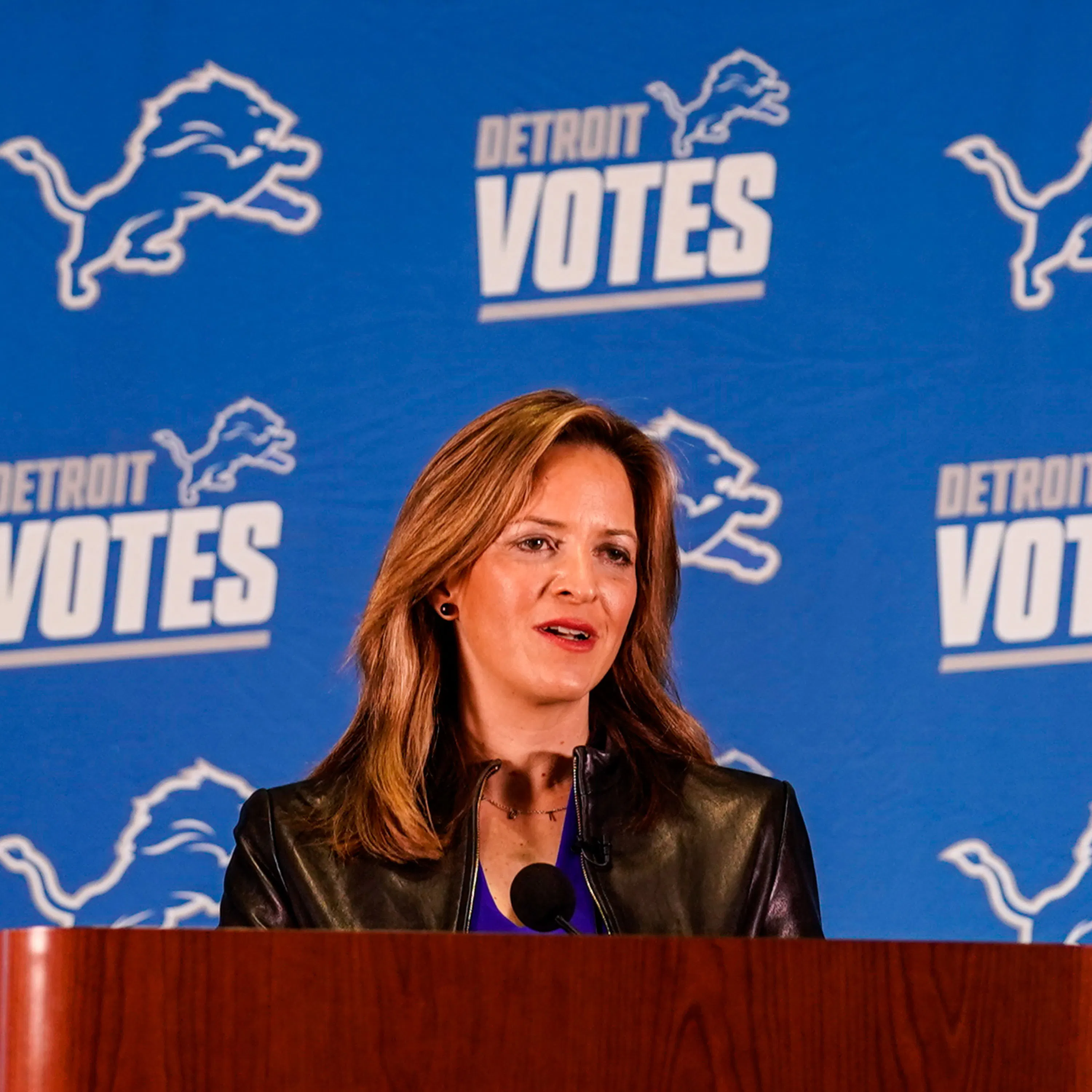
The Long Game with Jake Sullivan and Jon Finer
Trump’s Election Playbook, Explained by Jocelyn Benson
01:02:52
Loading summary
Transcript82 lines
- [00:00]
Jake Sullivan
This Monday.com ad was created by a team of people and AI agents. The agents wrote the copy and managed the timelines, while our human creative director
- [00:09]
John Finer
made sure it all made sense.
- [00:11]
Jocelyn Benson
Easy.
- [00:12]
Jake Sullivan
Create your own AI agent today on Monday dot com.
- [00:16]
Jocelyn Benson
Hey, I like your new RAV4.
- [00:18]
Jake Sullivan
Thanks. Yours too.
- [00:19]
Jocelyn Benson
What does RAV stand for anyway?
- [00:21]
John Finer
To me, it's the remarkably advanced vehicle.
- [00:24]
Jocelyn Benson
Really? To me, it's the Runway approved vehicle for its amazing style.
- [00:28]
Jake Sullivan
What about remarkably adaptable vehicle because of
- [00:31]
Jocelyn Benson
its versatile cargo space or really admired vehicle.
- [00:33]
Jake Sullivan
Oh, or really awesome vehicle.
- [00:36]
Jocelyn Benson
It really is the recreational activity vehicle. The stylish 2026 Toyota RAV4 Limited. What's your RAV4? We know that domestic interference can be just as problematic and possible as international efforts to undermine our elections. So with that in mind, we have to look at everything that the President and his justice and others and his allies do. Not just in terms of what will he do, but what will he say he'll do but not do anything. But of course, inspire copycats or others to actually try on their own.
- [01:13]
John Finer
Welcome back to the Long Game. I'm John Finer.
- [01:16]
Jake Sullivan
And I'm Jake Sullivan. And we are recording this on Tuesday, July 14th. And as it happens, we have an amazing guest for this week. We actually recorded our interview with her yesterday, Monday, July 13th. It is Jocelyn Benson, the Secretary of State from the state of Michigan, who is also the Democratic candidate for governor. And as Secretary of State, she is responsible for administering the elections in Michigan and has been on the front lines of election integrity, election protection, and dealing, frankly, directly with challenges and threats to the election, including from this current administration. So we will have that whole interview, but shortly after we finished it, we got news that President Trump is planning on giving a primetime speech on Thursday night, among other things, to discuss threats to the election, election integrity, quote, unquote, from his perspective. And so it makes this episode all the more timely. We knew this was something we wanted to cover, even though we tend to focus on the kind of core of geopolitics and national security, doesn't get too much more core to national security than the fundamental integrity of our democracy. So we knew we wanted to talk to Jocelyn. We just didn't realize quite how newsy it would end up being because of the context of the speech that President Trump will give Thursday evening, just shortly after we post this episode. So with that, Jon, I don't know if there's anything you wanna lay out to set all this up before we get into the interview with Jocelyn and then the second half of the episode we will come on to Russia, Ukraine, and in particular the choice facing Vladimir Putin as to whether he wants to escalate directly against NATO beyond the hybrid warfare and gray zone activities he's already been conducting for some time. But Feiner, let me turn it over to you.
- [03:20]
John Finer
The only thing I'd add is that every profession, every job, has occupational hazards. It feels like the main occupational hazard of podcasting is this gap between when you record and when the podcast actually airs so people can listen to it. And we just found that out again this week. We found that out in the past, particularly with this administration where the velocity of news is such that nobody could possibly keep up with it, even if you were just live tweeting everything that came out of the White House. And we don't know exactly what the President will say on Thursday night. I would bet it's entirely possible he doesn't know exactly what he's gonna say on this topic and others. But one thing I am confident about is this interview with Jocelyn which lays out the stakes of the upcoming election, the threats to the upcoming election, how people who are trying to protect the integrity and the security of the upcoming election will go about doing their jobs, and what voters need to know as they prepare to participate in the upcoming election is going to be extremely relevant and I suspect validated by many of the things that come out of the President's own mouth either on Thursday or subsequently. So I think well worth a listen and appreciate all of you being with us.
- [04:28]
Jake Sullivan
John, you know how when you're a die hard sports fan for a particular team and you think if you sit in a certain way or you cross your fingers or you leave the room, that a play will go in your favor as opposed to against you. But somewhere deep down you know that's not actually the case. I feel like with this podcast, when we choose topics, sometimes it ends up causing the news. Even though I know that's not true, I tend to think it may end up being true. So maybe for the next few episodes we should just do things that are super positive and we can manifest them into existence.
- [05:02]
John Finer
Something like about England winning the World Cup. Oh, sorry. Maybe that's just positive for me. Less so for.
- [05:07]
Jake Sullivan
That's just you. That's just you.
- [05:08]
John Finer
And with that, here's our conversation with Jocelyn Benson. So, Jocelyn, welcome to the long game.
- [05:14]
Jocelyn Benson
Thanks for having me. And thanks for all your great service, both of you, to our country and in this moment helping us stay all informed on all things domestic and international.
- [05:23]
Jake Sullivan
Well, we're Very excited to have you, Jocelyn. We've only got about a half hour with you and probably hours worth of material that we'd love to get your views on. So we're going to prioritize as best we can and dive right in. In the national security world, we have something called the bluff, the bottom line up front. Our country has a midterm election coming up in less than four months. Can you give us your bottom line? Do you think that election will be free and fair? And what's top of mind for you in terms of your concerns?
- [05:51]
Jocelyn Benson
I love that. The bluff. And here it is. Yes, our elections will be free and fair. They will be held on schedule, on time, and when they are, they'll be secure, and the results will be an accurate reflection of the will of the people. We know that because in the vast majority, over 90% of our elections in this country are conducted with paper ballots that are auditable after the fact if there are ever any questions. And we have multiple layers of security to ensure that every valid vote and only valid votes are counted. But, of course, a lot of the chatter around elections, changes to election laws, potential observers slash interference from the federal government in cities like Detroit and elsewhere around the nation. A lot of that is designed not to actually interfere with our elections because we have provisions in place and laws to protect against that. It's actually designed to cause us fear, to create this sense of confusion and chaos and worry that can ultimately lead people to either stay home on election day or worse, give up on democracy altogether. That's the real tactic here, and that's what keeps me up at night. That's where state and local election officials are critical to providing that clarity and that certainty and that confidence. But it's also where we all can play a role in protecting our fellow citizens against what we in the election community refer to as the hacking of the mind, the efforts to confuse or interfere with our understanding of our elections. We all can play a role in helping to cut through those lies and share the truth. And that's really, I think, the goal for us in the next three and a half months as we approach the midterms.
- [07:28]
Jake Sullivan
You know, it's so important to emphasize this point about the hacking of the mind as opposed to the hacking of a voting machine and trying to cast out, as you said, on the sanctity of our election system or to make people feel like their vote doesn't count so they won't go vote. One of the things, Jocelyn, that we've seen over the course of the past several years is particularly foreign governments. Russia comes to mind seeking to interfere in our elections in large part for that reason, to undermine faith in American democracy and to cast doubt on the results. And we saw that in 2016. We saw it again in 2020. We've seen it in other instances as well. Something that is, you know, coming into focus this year that's a little different from years past is whether the president himself is trying to take steps to interfere with the elections. Politico recently wrote that Senate Democrats have been war gaming a whole range of election related scenarios, including the President doing things like ordering the National Guard or another federal force to seize ballots or to interfere with voting. How do you think about the role of the federal government right now and particularly this administration? And do any of these kinds of scenarios that have been floated in the press give you cause for concern? Do you think the president may try something coming down the stretch here in the closing months before the midterms, beyond what he's already tried to do?
- [09:00]
Jocelyn Benson
Yes, I think yes to all of the above. Essentially, in our work we say we always hope for the best but prepare for every contingency. And that's exactly what is is required and what has enabled us frankly to go through not one, not two, but three election cycles in 2020, 22 and 2024 with these very same threats, with this multinational potential threat to our democracy, not just in actuality, but in sort of in our minds. And it's come certainly particularly in presidential years, that threat has been amplified by foreign governments we've seen. But we know that domestic interference can be just as problematic and international efforts to undermine our elections. So with that in mind, we actually scenario plan and we have been doing this since 2020, where we partner at the local level with local clerks, law enforcement, first responders to go through every possible scenario. Not just what if the president sends in federal troops, but what if someone just shows up claiming that they are right? That's the other piece of this. That's not. We have to look at everything that the President and his Justice Department and others and his allies do, not just in terms of what will he do, but what will, you know, say he'll do, but not do anything, but of course, inspire copycats or others to actually try on their own. So we have to plan for all of that in the fact that we have 1500 local jurisdictions in 83 counties in Michigan alone. So that also provides multiple points of entry, multiple vulnerabilities, multiple challenges, and we scenario plan on through all of them. We also have three ways of voting in Michigan. You can vote from home through the returning your ballot through the mail or at a Dropbox or at your clerk's office. You can vote early, prior to Election Day, in person for the week prior, or you could vote on Election Day itself in your local precincts. That also provides multiple potential entry points for anyone to try to disrupt our elections processes or interfere with any means. So we prepare for all of those things, and we've been doing that well. And then on Election Day itself, we actually have not just a war room, but people throughout our state within five minutes of every polling location. So that if anything does occur or if there's any, you know, chatter online of anything potentially happening, we can have eyes on the ground within five minutes of any precinct or voting location to actually assess what's actually happening and then respond appropriately. So we're ready, we continue to be ready. It's one of the things that's also happened alongside of these escalation of threats over the last six years. We've become more wiser and seasoned as well in dealing with the threats. Doesn't make it any easier, but it does make us more prepared for every contingency.
- [11:39]
John Finer
Jocelyn I think it was at the end of the Obama administration where the United States first declared election systems to be critical infrastructure. I think it was very early 2017. The Trump administration has now dismantled at least some of the apparatus that was built up after that declaration over time, including a lot of the election security function at DHS's Cybersecurity and Infrastructure Security Agency. How concerned are you and how concerned should voters be about the, the loss of that apparatus and particularly when it comes to threats to elections from countries overseas. Russia, China, Iran and others come to mind.
- [12:16]
Jocelyn Benson
Yeah, you know, in 2020 in particular, we were really fortunate to have the support, and certainly in 2024, by a web of networks at the federal level of security provisions and data collection and support, frankly, in coordination with other states that's completely been dismantled. And what we've done since, though the structures at the federal level may have been defunded and dismantled, the expertise is not gone. And so what many states have done, particularly the critical battleground states like ours, Arizona and Pennsylvania, we've hired internally a lot of national security folks to help us and coordinate with each other, prepare and continue to prepare for all the potential threats. It is nowhere near the level of security that we had in 2024. And that's unfortunate. Especially while the President talks out of one side saying security this and that. And then on the other side, dismantles all efforts to protect the security by elections that actually work. But we've tried to do what we can at the state level to rebuild a lot of those networks, a lot of that information sharing, a lot of that security apparatus. And my hope is that'll be sufficient at least for 26. But of course, 28 is a whole new ballgame. And I'm deeply concerned about that because it opens up significant vulnerabilities. And frankly, the president knows that. And so I think you'll continue to see other structures emerge to help us protect the security of our elections in partnership with state and local officials. And all of it really underscores that in the absence of any type of protections or real leadership at the federal level in this front, states are left to themselves, and state leaders are responsible for filling in the gaps, building out a patchwork of security and response. And we've worked to do that to the best that we can, and we're going to continue doing that. And again, it's one of the reasons why governors and secretaries of state and local clerks are so critical right now.
- [14:20]
Jake Sullivan
Years ago, Netflix said that its main competitor wasn't some other streaming service.
- [14:24]
John Finer
It was sleep.
- [14:26]
Jake Sullivan
And maybe that explains why all of a sudden Netflix has games, it has tons of reality shows, it has video podcasts, and maybe going forward, it even has YouTube videos. This week on the Vergecast, we try to figure out what Netflix is going forward and whether it's still a streaming service.
- [14:42]
John Finer
We want.
- [14:43]
Jake Sullivan
Plus, the future of smart glasses, what's going on with quantum computing, and yes, we have a Trump phone. All that on the Vergecast. Wherever you get podcasts.
- [14:53]
Jocelyn Benson
1, 2, 3.
- [14:55]
Jake Sullivan
I'm standup comedian John Marco Cereze. And I'm actor penis model Russell Daniels. The downside is our podcast where we bring on guests to talk about how miserable their lives are. Because, let's face it, things are not getting better. Every episode, we talk about what's wrong with our lives. Our guests lives, the world, but in a fun way. Bottom line is you're gonna walk away feeling better about your life. We've had so many cool guests. Caleb Huron.
- [15:22]
John Finer
Busy Phillips.
- [15:23]
Jake Sullivan
Stavros Halkias. Laverne Cox. Hasan Piker. Alana Glaser. I promise you're gonna have a good time. Now on the Vox Media podcast network, this is the Downside.
- [15:42]
John Finer
It's interesting you haven't mentioned it, and I think I know why, but the threat that the Trump administration seems far more focused on is voting by people who came to this country illegally and therefore are not eligible to vote. You've investigated this extensively in Michigan, so I'd love to hear a bit more about evidence, not just allegations. Let's just put it on the table. How big a problem is this really? And why do you believe that Trump and his team are so heavily focused on it and so less. So much less focused on these other threats?
- [16:12]
Jocelyn Benson
Well, it certainly feeds into the othering, the messaging, that there's sort of. This sort of other force that's coming to interfere with our country, and those folks come from countries like Mexico or other places, and they're taking over our country. In our elections, you hear this rhetoric. It's getting more and more fever pitched as we get closer to the midterms. What that manifests itself as is the sense that though there is no evidence, and though we have looked for that evidence, not just in Michigan, but in Georgia and other states, there is no evidence that any type of ineligible citizens or ineligible residents are voting in significant numbers in any election. If there was any evidence of that, we would have found it. Instead, we find sporadic examples in which case we are able to prosecute and hold people accountable. That's how the system works and should work to protect the security of the process. But yet you still have, because it is a very palatable and scary proposition to say that this is actually happening in widespread numbers to create, again, fear and distrust in the process and also feed into the sense that there's a group of Americans and there's a group of residents that, quote, don't belong here. And to add to that fuel, they're mythically participating in or trying to rig our elections. Again, no evidence to any of that, but it feeds into this, this fear and this sense of insecurity, not just around our elections, but around America writ large. So our challenge is to respond, as always, with the truth and to simply say, we've looked at that, we hear you welcome, to ask questions about the process and let us answer them. But when we answer them and when we say definitively, as we have in Michigan, that there's no widespread evidence of either voter fraud or ineligible individuals voting in our elections, then we have to close the book on that so that we can move forward with the work which is ensuring every eligible citizen can vote in our elections.
- [18:04]
Jake Sullivan
As you've alluded to a couple of times, it's a facet of our system, of our Constitution, that states largely control the conduct of elections. But the Trump administration is trying to use legislation and also Lawsuits to muscle through changes. The President seems particularly obsessed with passing the SAVE act to the point of holding up appointments and other bills, including a housing bill, to try to force it through the Congress. He's even threatened to withhold federal funding for counterterrorism from states that don't make the changes that he's demanding. He's claiming, the administration is claiming, that this is a common sense effort to require voters to provide evidence that they're citizens consistent with federal law. Can you explain what's actually going on with the SAVE act? What concerns you and what should concern our listeners?
- [18:52]
Jocelyn Benson
Yeah. The SAVE act is not what Trump, believe it or not, says it is. It's actually an act to make it more difficult for citizens to vote in our elections. It's an act that creates barriers upon barriers among many communities, including married women, including overseas voters and voters serving in the military. It's an effort to essentially not just interfere at the federal level with how states oversee and manage our elections, but do so in a way that will make it more expensive, more difficult, and more challenging for citizens to vote. And that's the bottom line, that not only is it a solution in search of a problem, it is a solution that creates a lot more problems, particularly for millions of eligible voters Here in Michigan, 2 million married women alone. So we're trying help respond with that, with the truth and the real. The thing for us to find optimism in, frankly on this, is that two things. One, the law is on our side. Even if the SAVE act were to be enacted, I highly suspect there would be an immediate effort to seek an injunction in federal court that would protect it from going into effect, especially this year. But again, that doesn't stop the narrative from being out there that somehow our elections are not secure, even though they are. The second piece of it is that we, you know, it obscures the facts of all that we're actually doing in states like Michigan to ensure that only eligible citizens are voting. We do verify people's ID before they vote, either through a photo id, which is the vast majority, or through a signature which is then matched to the signature on the voter file, which is just as effective at identifying someone's identity. In addition to that, we have layers upon layers of verification opportunities for people to challenge the possibility of someone's eligibility, all of which are designed to ensure we have checks on the process and ensure only eligible citizens are voting. Without policies like the SAVE act, that would not just be duplicative, but would ultimately make it more difficult for eligible citizens to vote. So it's important that we talk about all this because it's our best way to counter the narrative and the misinformation the president's getting out there. But it should alarm us all that he is so willing to shut down government, hold back necessary reforms to reduce the cost of housing and other things to address the economy that he's created that's rising, that's driving up costs for just about everyone.
- [21:16]
Jake Sullivan
He's also sued you and other secretaries of state, as John was alluding to, and used other tactics like sending the former Director of National Intelligence, Tulsi Gabbard and hundreds of FBI agents to Georgia to try to get access to state voter rolls. What's really going on here? Why does he want. Want this information so badly? What's he looking for in trying to get this access to voter databases, voter rolls and other voter information.
- [21:42]
Jocelyn Benson
I think it's two things. One, it keeps the story alive, right? It keeps every time there's a false allegation or a false evidenceless investigation or baseless investigations, it keeps sowing the seeds of doubt that something's wrong with our elections, even though these investigations often go nowhere. When the president. You're right. When the president tried to pressure to, contrary to protections under the law, turn over the private data of our citizens, I said no, and I'll see you in court. And I won. And it's important to note as well, the law is on our side when it comes to not just protecting the private information of our citizens, but protecting our election system against the overreach of the President and the Justice Department, who are trying to use every tool in their toolbox to not just undermine our elections, not just cast doubt on the processes, but also gum up the system so much that it becomes difficult or impossible for us, the work of administering elections. Not only that, creating a lot of fear for just about everyone involved because no one likes to be the subject of federal investigations, even if they are baseless. It creates a lot of challenges in people's lives. So all that to say is this is part of the multi year coordinated effort to dismantle elections and democracy in this nation at a time where, again, the president is increasingly unpopular and does not want to be held accountable at the ballot box. So I think we need to see all of that as interconnected. But that doesn't take away from the reality toll that these types of threats, pressures, lawsuits, sham legislative hearings, everything takes on ourselves, our families, as professionals just trying to do a job here.
- [23:18]
John Finer
We currently have Bill Pulte, a political Operative, totally loyal to President Trump, serving in an acting capacity as the nation's top intelligence official. The guy responsible for telling the president and the country about the threats we all face. So let's say just before the election, he issues some sort of a statement that the United States has detected a credible threat to attack or interfere with the election, maybe from a foreign actor, maybe a plot by a collection of ineligible voters, people who came to this country illegally, as they're so want to be concerned about in large numbers to try to swing the election. And in response to this supposed threat, President Trump, or maybe the DHS secretary, Mark Wayne Mullen, announced that in order to protect the integrity of the election, federal agents, ice, cbp, FBI, whoever will be deployed to polling places of greatest concern, which, by the way, maybe also happen to be urban precincts with high Democratic Party turnout. Mullen, I think, has already said during his confirmation hearing that he'd deploy federal agents if there were a specific threat to polling places. Is this plausible and what can be done before, during, and maybe even after the election to prevent this sort of nightmare from playing out?
- [24:29]
Jocelyn Benson
Yeah, I think it's important for us to recognize this is plausible. The less evidence there is, and there likely won't be any, the less plausible it becomes. Because ultimately, even if there were, let's say, a declaration, the role I would hope of local officials, investigative journalists and others would be to quickly uncover the fact that it's baseless and then go to court to try to stop it. That's sort of one avenue. The second avenue is to recognize even without that declaration, there could still be an effort to send and federal troops, or in this case, we already know federal observers will be deployed. And that is quite typical to have federal observers in the Justice Department overseeing or watching elections. There's nothing unusual about that. But no matter who it is deployed or sent by the federal government, if they disrupt our elections, if they interfere with the process, if they try to intimidate voters or election officials, we will be there to stop them from doing so because the law does not permit that. Allow that, and we will immediately go to court to stop it. This is why we're doing scenario planning with local law enforcement who respond to the state, not the federal government, and ensure that they're there to protect state laws from being followed and protect voters from being blocked from the polls. So we have a number of pathways and protections in place to stop federal interference of our elections. What it's important for every American citizen to know, however, is that the goal is to Stop them from showing up at all. And so the number one thing every American citizen needs to be prepared to do this for is vote.
- [26:01]
John Finer
I guess one of the things I'm worried about, or I would be worried about if I were responsible for elections, is that all of this happens in kind of a crescendo right at the end, right in the days leading up to the elections. And yes, there's court action, and maybe the court action is correctly decided and rules out some of these extreme actions, but it happens in an environment of a lot of confusion without a lot of time for people to process. The only analogous situation I can think of, Jake, may have another in mind that we dealt with when we were in government, is when we got sort of advance warning that Russia was going to invade Ukraine through our intelligence community. And what we decided to do, and it was a bit controversial at the time, and I give Jake a lot of credit for driving this, is to go out publicly and tell people what we thought was going to happen and to go to our friends, partners, allies around the world so that they could be prepared. And it took a lot of convincing. And it took a lot of convincing, I think, for the public to believe that something this crazy could transpire. But the public dimension of this, I think, was quite important in not allowing, in this case, the adversary to set the narrative and basically come up with a false pretext for why it had to go to war. It does feel like information in advance for the voting public is going to be quite important here. So what would you say is the most important thing that people need to know in the coming months as all this may play out?
- [27:28]
Jocelyn Benson
I can't underscore enough how critical it is that we all be critical consumers of information right now, that the press and the media also do their job job of asking tough questions and uncovering fallacies and challenging falsehoods. And it's never been more important, frankly, for us as citizens to not take our eye off the ball and to see exactly what's going on. To be not just critical consumers of information, but engaged voters determined to ensure that no matter how we vote or cast our ballot, that our voice is heard and then also to do so, you know, strategically. Meaning here in Michigan, as I mentioned, we have options on how to vote. You do not have to wait until election day to vote in the vast majority of states in this country, including in Michigan, where you could vote in person prior to election day, or you could vote by mail up to several weeks, 45 days before election day, or at A local Dropbox. So we encourage citizens who have any concerns that something might happen on Election Day to get it out of the way and vote early. That also reduces the potential for long waits on Election Day and gives people the peace of mind that their ballot is counted and in the bag before anything potentially goes awry. We've succeeded in Michigan in ensuring, well, not insuring, but in through success, administering these options to vote. Two thirds of voters in Michigan actually participate prior to Election Day. And that also minimizes the potential for interference on Election Day to be as effective as it might otherwise be if everyone was voting in that window on a Tuesday. So use your options to vote if you've got them. Vote early if you can. That's one of the best things you can do to stay engaged and then be that critical consumer of information. Encourage others to do the same. One of the things that we found in our work in Michigan to not just secure the vote, but help promote a narrative of facts and security is how important it is to have multiple voices talking about trusted and accurate information on our elections. And anyone can be that trusted voice for elections. We also work with faith leaders and business leaders and nonprofit leaders and teachers and others who can be equipped with truth about our elections and share that with people in their worlds and spheres of interest.
- [29:36]
Jake Sullivan
Jocelyn first, that is a great place to end. Second, John and I have both been subject to interviewers who kept us way over the time. We agreed because we had busy jobs just like you do. We are not going to be those interviewers. So we are going to let you go get back to all that you're doing, both to protect this election as well as your campaign. And we're just really grateful for you to come onto the long game because I think this is an enriching conversation for the two of us and for our list.
- [30:02]
Jocelyn Benson
Thank you. I appreciate the work you guys are doing and have done to protect our democracy and our country. And the one thing history teaches us is that we're all in this together and democracy can prevail when the people of America determine that it does. I think a lot about. I think it was Clinton who said, there's nothing that's wrong with our country that can't be solved, but what's right and best about our country. Right. I think about that every day because it really reinforces to me that the way out of this dark time, the light out of this dark time, are the American citizens who believe in who we are and believe in the. And that's going to be Ultimately, how we get through this.
- [30:36]
Jake Sullivan
Amen.
- [30:40]
John Finer
So, Jake, I have to say I said this to Jocelyn as well. I was a bit pleasantly surprised by the degree to which she was optimistic about the fact that we will have free, fair elections in which the outcome will match the votes that are cast. And there's so much speculation at this point about all manner of interference, certain certainly foreign actors, and that's been with us for a while. But as you pointed out in the episode for the first time, really from the federal government itself, and she is not Pollyannish about all of that, but does seem to think the system is equipped to manage it.
- [31:15]
Jake Sullivan
You know, it's interesting. I was empathizing with her throughout the conversation because you and I have both been in the position of having to stand before the press or speak to the public and try to manage a team tension. And the tension is, on the one hand, being real and true and straight about the threats and in fact, making sure that people are educated about those threats, and on the other hand, trying to convey a sense of reassurance, stability and calm and striking that balance is never easy. And I think she was trying really to do that, not just in this conversation, but that's basically her job, right? She has to tell people, your vote will count, the system will work. Because as she pointed out, a lot of the impetus behind either foreign interference or Trump interference in the elections is about trying to discourage people, trying to make them stay home or trying to make them disbelieve the results of the election. So she has to reinforce that they will fail, the election will go off, and it will go off successfully, and your vote will count. But she also, at the same time, and she did this throughout the interview, has to say, say there are efforts by a lot of bad actors out there right now, including within our own country, within our own government, federal government, who are seeking to undermine the legitimacy of the election and perhaps even directly interfere in its proper conduct. And I thought it was really interesting watching her walk that line, I thought extremely effectively, as she has done. And she obviously has a lot of practice added after multiple elections cycles. But I think her bluff, her bottom line up front is basically right, that there is a resilience and robustness to our election system, in part because it's so damn decentralized. She threw out some stats, just about Michigan alone. When you map that onto the whole country, there's so many polling places, so many local officials, so many state officials, that even for a president with all the tools at his disposal to effectively change the outcome of an election is a tall order. That being said, we have seen plenty of evidence that President Trump may nonetheless try, and that is something that requires us to speak out about. And it's why we did this episode in the first place. And your analogy to Russia, Ukraine, I think is very apt.
- [33:48]
Jocelyn Benson
Starting a business can seem like a daunting task unless you have a partner like Shopify. They have the tools you need to start and grow your business. From designing a website to marketing to selling and beyond, Shopify can help with everything you need. There's a reason millions of companies like Mattel, Heinz and Allbirds continue to trust and use them. With Shopify on your site, turn your
- [34:09]
John Finer
big business idea into Sign up for
- [34:12]
Jocelyn Benson
your $1 per month trial@shopify.com specialoffer hey,
- [34:16]
Jake Sullivan
it's Ryan Reynolds here for Mint Mobile.
- [34:18]
John Finer
Now.
- [34:18]
Jake Sullivan
I was looking for fun ways to tell you that Mint's offer of unlimited Premium Wireless for $15 a month is back. So I thought it would be fun if we made $15 bills, but it turns out that's very illegal. So there goes my big idea for the commercial. Give it a try@mintmobile.com Switch upfront payment
- [34:38]
Jocelyn Benson
of $45 for three months, $90 for six months or $180 for a 12 month plan required $15 per month equivalent to taxes and fees. Extra initial plan term only greater than 50 gigabytes. Me slow when network is busy. See terms.
- [34:52]
John Finer
Should we shift to another topic that is a recurring challenge for us that we've been at for quite some time on this podcast and we before we should all right, so we spoke with Michael Kaufman a few weeks back. I think some people remember the military analyst who we had on to talk about the war in Ukraine, about how much better Ukraine is doing on the battlefield recently. The good news is that's continued. The bad news, as we also discussed with Michael, is that Russia doesn't seem to be responding to this pressure by seeking negotiations to end the war. Instead, they seem to be trying to do the opposite opposite and actually escalate the conflict against the Ukrainian people as we talked about, but also against our allies in Europe. So maybe you can tee up the conversation that we're about to have along these lines.
- [35:46]
Jake Sullivan
Yeah, so one thing that has been a constant presence in Russia's brutal war against Ukraine has been Russia also rattling the cages of engaging in what's called hybrid warfare against countries in Europe against NATO by conducting a range of different destabilizing activities. And those have included everything from sabotage to Attempted assassinations to arson of public officials, houses, to drone incursions in multiple countries, up to and including a drone in Romania not too long ago that hit an apartment building and actually caused casualties to things like removing navigation buoys from the river that separates the border between Russia and Estonia, to kind of shake confidence in Estonia that Russia would recognize that border going forward. So a wide range of activities to escalate, not just in Ukraine, but against the countries supporting Ukraine, against European countries, and through that, against NATO itself. And the question has always been, will Russia take that to another level? Will it escalate its direct challenge to Article 5 to a point that goes beyond this set of what is kind of broadly categorized as gray zone activities, to include things like a more direct conventional strike against or incursion into NATO territory, to include a dramatic increase in the use of drones to hit targets in NATO territory, or to include just a systematic escalation of sabotage activities and other things that actually cause loss of life and damage at a scale that far exceeds what they have done so far. And, John, as you know, because you've been in Europe frequently in the last few months, as have I, there is growing concern that Russia may choose to test NATO, to test Article 5, to press further to move up the escalation ladder as part of its response to the pressure it's under in the war in Ukraine, because of Ukraine's success both directly on the battlefield and in terms of its strike campaign against targets inside Russia. So the question for Russia is, do they want to do this? Do they want to take steps further up the escalation ladder? And I think they are grappling with the pros and cons of doing that. And NATO countries and the United States have to think through what the possible scenarios are. Have. Have I fairly described that, or is there anything you would add, or.
- [38:29]
John Finer
It's not merely a hypothetical, as you indicated. We now know through reporting in the Daily Telegraph and in the Polish press that American officials are now warning European allies and in particular Poland, about exactly the sort of provocation playing out on their territory to test NATO's resolve that you just described. Drone or missile attacks on critical infrastructure, even Russian troops potentially crossing the border, claiming some sort of mistake, perhaps, and then negotiating their withdrawal in exchange for concessions like cutting off support for Ukraine. So this is becoming quite real and quite concrete. And we thought one way to sort of tease out the stakes and how this could play out that would be a bit different for us would be to do a Red team, Blue team discussion debate. But not from the perspective of either the United States or our European allies, but actually from the perspective of Russian President Vladimir Putin and the people who are advising him one way or the other. Escalate or do not. And I think I drew either the short straw or the long straw and agreed to make the case that Russia should escalate against NATO. So unless there's any other preamble that you want to add here, maybe I'll just launch in and then you can explain exactly why this would be a very bad idea.
- [39:50]
Jake Sullivan
So you are a. A senior Russian official making the case to President Putin that he should in fact escalate against NATO. And I'll be a senior Russian official making the case that he should not. And that is our Red Team Blue Team for today. And fire away.
- [40:07]
John Finer
This is going to be one of those great statements that, if clipped properly, is going to make me seem like a truly insane person. But we've put all the disclaimers up front. All right, Mr. President. Vladimir Vladimirovich, I'm going to tell you something that your military is sometimes too reluctant to say. We are losing the war. Excuse me, the special military action in Ukraine. And when I say that, I don't just mean that we are losing soldiers. You and I both know they're expendable. And we can probably keep avoiding unrest by paying off their families when they are killed. What I mean is we are now losing territory. And for the first time in years, our economic team is telling us there is real pain coming if something doesn't change soon. Obviously, none of this is your fault. This war was a brilliant strategic masterstroke that has been badly executed by others, and they should pay a price. But that doesn't change the basic predicament and the need for a new approach which only you, the world's greatest strategist, can deliver. And the question is, what do you do? You will hear lots of soft willed and frankly, UN Russian arguments from others about the risk of escalation and maybe even the need for negotiation, which I believe translates in English as defeat. But to beat our enemies, and make no mistake, as you've said all along, the brotherly Ukrainian people are not our enemy, nor could they possibly defeat us on their own. Our enemy is America and its enfeebled little brother, Europe. To beat our enemies, we have to understand them. And so I'm proposing an idea that comes from American strategic doctrine and some of its greatest generals. Dwight Eisenhower comes to mind. He once said, whenever I run into a problem I can't solve, I always make it bigger. I can never solve it by trying to make it smaller, but if I make it big enough, I can begin to see the outlines of a solution. Mr. President, I urge you to make the Ukraine problem bigger so that we can reach the outlines of a solution that works for Russia. In this war, NATO has been able to hurt us for free, or at least at very low cost. If we are to win, that cannot continue. They must pay a price or they will never, ever stop funneling money and arms that Ukraine can use. Use to kill our people. And ultimately, and I say this with the greatest possible respect, even to try to topple you as Russia's leader. That's where they want this to go. You will hear from others about the risk of escalation. Is there risk? Yes, of course. Is there any gain in this world without such risk? No. And I think this risk is manageable. And the reward for this may not just be victory over Ukraine, but a much larger prize, breaking NATO once and for for all. For one thing, those countries are small and soft. Do you really think nations that have never really fought and barely fund their armies will accept real pain of a war with Russia? The entire active duty British army can fit in Wembley Stadium, and they might be the best of all of them. But the other thing to keep in mind is these countries are slowly waking up. They're spending more on defense. They're recognizing how vulnerable they are. And in a few years, it won't be as easy to intimidate them as it is now. Particularly Germany, which is spending the most and has a martial history I don't need to recount to you or any other Russian. But there's another reason they're vulnerable. Some may pipe up with, what about America? Which spends more on defense than the next six countries in the world combined. But there has never been a better time to prove that. At the end of the day, and for all the rhetoric about all for one and one for all, America will not trade its security and prosperity for countries its citizens can't find on a map with names they can barely pronounce. President Trump has mocked NATO from the moment he first ran for president this term. He has threatened NATO territory himself, himself. Let him have Greenland. In fact, we should be encouraging him to take it. And since the failed US War in Iran, he seems much more angry at and openly willing to tell Europe that they did not help him when he asked and not to bother asking him for help in their hour of need. We need to call that question. So what do we do we do more of what we're doing already. Assassinations when warranted, sabotage when we can find useful idiots to carry it out, drones to make life more threatening and uncertain. But also now we must do more. Show that NATO is a paper tiger, a lie. That we will need to draw real blood and take territory to do that. We can do it in a way that gives you deniability if you want. Munitions that went off course, soldiers whose GPSs led them astray. And when NATO fails to respond, or fails to respond adequately, as I think is likely, all of the allies will know that they are actually alone. And they will negotiate on our terms, not theirs. And not just over Ukraine, but over the rest of our demands in Europe. This is the only way we can begin the process, slowly but surely, of reversing what you rightly described as history's greatest tragedy, the disintegration of the Soviet Union without any real shots being fired.
- [44:56]
Jake Sullivan
Well, Mr. President, you are a former KGB officer who has been trained through your entire career in psychological warfare. And what you just heard was a version of psychological warfare from your very own advisor who thought he could just flash you so transparently. Frankly, we all know who you are and what you represent to our country. We don't need these type of cheap tricks that we just heard from your other advisor to try to bring you down a course that will lead Russia into folly. You have very wisely chosen not to directly attack NATO, either with missiles or with troops crossing the border. You have very wisely chosen to undermine NATO's sense of confidence and sense of cohesion through an active gray zone campaign that I believe you should continue. And going down the road of a more direct challenge, I think creates far more risk than reward. Let's start with President Trump, who you know as well as anyone. President Trump doesn't like Ukraine, doesn't really want to support them, is sympathetic to you and to Russia into your argument, arguments. But he also really doesn't like to be a loser. And right now in Iran, he is losing badly. Iran is making him out to look like, frankly, a bit of a clown because they have been able to show they can open and close the Strait of Hormuz essentially at will, that they control it and America can't do anything about it. And when you have someone who thinks they look like a loser in one place place, and you push them in another place, they are more likely to lash out in a dramatic and unpredictable way. And I think that's what President Trump would do if we decided to test Article 5 right now, he cannot accept looking weak and feckless in the face of a Russian attack on NATO territory of one sort or another. He would have to show some degree of strength because he is already in such a weak position when it comes to the Persian Gulf. So I think President Trump. President Trump would in fact respond, even though his natural impulses, his natural sympathies are not with NATO. He would feel he had to, given the current circumstance he finds himself in. Second, there has been a lot floated in the American press right now about steps President Trump is thinking about taking that we don't want him to take. One is this tariff spill, where he would impose tariffs on Russian oil being sent around the world, but particularly to our major purchasers like China and India. This would, in fact, make it harder if this bill went through for us to be able to get the money that we need to continue to fund this war. And you just heard from your advisor that we are facing some economic challenges through a combination of mismanagement of some of your weak underlings, not through any of the choices that you've made. And from the fact that we already are facing some pressure for our oil supply sales overseas, if, in fact we attack NATO territory, I believe that the United States Congress would prevail upon the president to finally move this bill into law, and we would face a much more significant economic hit as a result. Second, President Trump has been thinking about turning on starlink for Ukraine in Russia, making it easier for them to strike critical infrastructure targets right here in Moscow and in other places across our country. And again, in response to an attack on NATO territory, there would be a huge upswell, a huge push to do this. And I think the Americans probably would do it. And frankly, we can't rule out much crazier responses. Remember, it was President Trump when Wagner forces, Russian mercenary forces, crossed that boundary in Syria in 2018 that allowed his military to kill Hunter, hundreds of them, without a second thought, because he felt he was being tested. His manhood was being tested. If we test his manhood in a very direct way, like we did back then, he may choose to directly strike and kill Russian forces. And then what would your next move be? I would ask the advisor to answer that question. The third point that I would make is right now, the threat of more direct action, I think, is having some effect. You see the American media and the Western media full of concern that you might do this. That's good. We want them concerned. Have them keep thinking we may do it, and it could have some deterrent Effect, in fact, send messages that say if they go too far on tariffs or Starlink or other things, we may have no choice but hold back on actually doing it because the threat of it may actually have a greater impact than, than following through, which could cause them to react in ways that put us at a disadvantage. And this relates to a larger point, the fourth point that I want to make right now. The underlying trends in terms of NATO are running in our direction. There was a brilliant analyst in America, former government official named John Finer, who wrote an article in the New York Times just a few days days ago saying that Europe has completely lost faith in America, that they're trying to go their own way, as are many other countries around the world. Let that continue. President Trump just last week said he's thinking about cutting American troops in Europe by a third. Tens of thousands of troops coming out of Europe. Let that play out. You go attack right now and the odds are you only extend the long term American deployment of troops in Europe for the foreseeable future and you only push NATO closer together, not drive them further apart. And then finally, and I hate to even raise this because we know that you are the senior partner when it comes to the Moscow Beijing relationship. But Beijing we still need as a core economic partner and strategic ally. And a direct attack on NATO is going to lead Beijing, I believe, to recalculate its entire approach to this conflict. And that is something that we have to take into account. So for all these reasons, we are much better off continuing the entire range of hybrid warfare, gray zone warfare, and driving forward to continue to undermine and shake the confidence of the west and allow nature to take its course. President Trump wants that's to undermine, weaken and potentially even one day withdraw from NATO. Don't give him any reason or excuse, especially at this moment of weakness, for him to decide to go against those instincts and double down on NATO, which I believe would happen if you listen to the silly advice of my fellow advisor. So for all these reasons, I think not escalating at this moment, continuing in the same course is the right way to go, and I hope you make the right decision.
- [52:09]
John Finer
Full of cheap shots, but well played. The point that I really was struck by, because I think it's also relevant to what the United States has done with Iran, is that once you play the card of military action, it's kind of a spent thing and the threat can actually get you quite a bit, as I think it had from Iran for the United States over the years and now is getting the United States much larger, less since they have seen it, haven't used it and are unbowed. Yeah, yeah, yeah. Do you think they're going to do any of these things that are reported in these articles or that are speculated about by people like us?
- [52:49]
Jake Sullivan
I guess what I believe is that they will escalate every vector in ways that could be more damaging, destructive and even deadly. But I find the idea that Russian troops actually will in some meaningful. You know, they could step across the border, but will actually, actually conduct an incursion and hold territory, or that you will see a clear, unambiguous Russian strike on NATO territory that they don't immediately disclaim as an accident. I think it's a real risk, which is why we've done this segment. We're not doing this because we think that that is a silly proposition and we think it has to be taken seriously. Scenario planned against war game to get against Vigilance has to be at a high right now. But if I had to put my thumb on the scale, I would say it is more likely than not that they will continue down and intensify the current course than take this step change. But do you have a different view?
- [53:52]
John Finer
No, I guess I agree with that. My problem is more that I think their strategy has been the entire time to try to impose as much of a cost on the countries supporting Ukraine as they can without triggering a war because they don't want want a war with NATO. And the problem with that approach is every time they impose some sort of cost and there isn't a response, they decide, okay, that's below the threshold. So where is the threshold? Let's try something a little bit further up the escalatory ladder. And at some point, something like what happened in Romania or one of these sabotage attacks is going to kill a significant number of people. And to my mind already we've reached a point where the alliance really is facing some credibility problems. When Russian drones are flying over European airports, shutting down air traffic for a day in some cases and not being shot down, these are unmanned aircraft that have violated sovereign airspace. To my mind, that sends a message that this stuff maybe isn't tolerated, maybe isn't okay, but ultimately is something that Russia can get away with and leads to the question in their minds of what else can get away with. And I think that's a very dangerous part of the current dynamic.
- [55:08]
Jake Sullivan
So I think you've put your finger on kind of where I think this will go is I think there will be this intensification and it could cause actually a much more dramatic incident than we've seen so far. And it could come from a vector that we've seen less of. It could come from something they do on the high seas. It could come from a form of sabotage that causes a plane to fall out of the sky or, or a ship to sink or what have you. It could come from a swarm of drones that causes a lot more casualties than we've seen so far. That to me seems a lot more likely than what has been reported in the telegraph than a more direct attack on NATO territory. The one place where you could see them say, look, we may take some conventional strike because we see it as just directly defensive, would be an attack on supply lines. In some ways it's surprising they haven't done that. Hit railroad tracks, potentially hit a port where materiel is coming in on cargo ships. You could see a world in which they say we need to defend ourselves against this onslaught. So if they were to go down this road, I think they would try to do it in a way that they cast within a broader context of pure defense. And then the last thing to keep in mind to watch for is they have repeatedly warned about drones being launched not just from Ukraine into Russia, but from other NATO countries into Russia or the use of other countries airspace as corridors for Ukrainian drones. So another defensive move they could possibly consider is to say we are in fact responding to what we have seen as an attack originating from Finland or Poland or the Baltics or Romania, even if it's not true, that that could be a pretext for them to take a strike that was specific and targeted. To say we're only doing this because we feel we were directly hit from a point of origin or airspace of origin of a NATO country. These are the kinds of scenarios that I think they're probably gaming out as ways they could choose to take action. But it would be, in my view, couched in a very particular defensive logic and in a way that tries to deter a specific response from NATO by basically saying we're responding to you now, that's the end of the game.
- [57:41]
John Finer
I think that's very well put. I think the only other thing that we, we haven't covered either in the debate or in this wrap up conversation, is what will happen if Ukraine actually stops making incremental progress and starts making more substantial progress on the battlefield. And what sort of escalation could that lead to, up to and including? And we have to say it because this is a part of Russian doctrine, a major breakthrough in the Russian lines that leads to a threat on what Russia considers to be Russian sovereign territory, either its own territory or Crimea, which we consider to be a part of Ukraine, but Russia doesn't. Does that lead Russia to contemplate, again, as we believe they did at least contemplate in 2022, the use of a nuclear weapon, maybe a tactical nuclear weapon on the battlefield, maybe a nuclear test somewhere else to send the message, hey, just a reminder, we have this capability and can use it if we decide to. I don't think that can be totally ruled out. It's crept back into some of the discourse as Ukraine has made progress. And so that's another thing that we'll just have to watch.
- [58:47]
Jake Sullivan
It's interesting in the fall of 2022, we face this at some point we can reflect on that more fully. And it was very much in the public commentary back then, as you said. It has come back into the public commentary really for the first time since then. Now, because of the possibility at least, that there could be a catastrophic collapse of Russian lines at some point along that very long front in Ukraine. And that's something, again, that I guarantee you in THE SITUATION Room and in NATO capitals, they are war gaming and scenario planning against. It would be, of course, the first use of a nuclear weapon since Hiroshima and Nagasaki at the end of World War II. So these are all things to watch. This whole conversation has a bit of a deja vu vu all over again quality to it for you and me. But it's back. And it's back in a way in which after multiple years of war, the Russians have already done a lot of things, have already kind of pushed the envelope on escalation, as you say, have kept seeing the line in their sense get blurrier and blurrier in terms of what they can get away with without a very robust response for NATO. So we will have to to see what calculus Putin makes and which of the two very erudite arguments cases that you made and I made he chooses to listen to here in the coming weeks and months.
- [60:14]
John Finer
Mine was a little obsequious, but the way to his heart. All right, thanks everybody. Diverse set of issues on this episode, but I think a lot got covered. And thank you for sticking with us. That's all for today. We'll be back next week with a new episode of the Long Game.
- [60:35]
Jake Sullivan
Subscribe to our YouTube channel and follow the audio feed so you never miss an episode.
- [60:40]
John Finer
For additional content, episode transcripts and exclusive podcast segments, subscribe to the Long Game on substack or join The Long Game plus on Apple Podcasts this week we
- [60:51]
Jake Sullivan
covered new developments on Iran and broke down the big strategic questions emerging from the collapse, ceasefire and President Trump's announcement that the US Will reimpose the blockade of Iran's ports and Iran's ships in the Strait of Hormuz.
- [61:04]
John Finer
We've kind of gone from strategic failing to strategic flailing at this point.
- [61:10]
Jake Sullivan
Nice.
- [61:11]
John Finer
Do you like that? It's really true though. We are trying the spaghetti at the wall technique of national security policy. They don't seem to know what to do. And I I agree with you very much that this all stems from the United States making an agreement with Iran that it did not really understand.
- [61:29]
Jake Sullivan
Head to the long game.substack.com or subscribe to the Long Game plus on Apple Podcasts. The links are in the show Notes.
- [61:43]
John Finer
That's it for this episode of the Long Game.
- [61:45]
Jake Sullivan
If you like the show, please please follow, share with friends and leave a review. It really helps listeners find us. The Long Game is a Vox Media Podcast Network production Executive Producer Tamara Sepper Senior Producer Matthew Billy video producers Nat
- [62:00]
John Finer
Weiner and Adam Harris Supervising Producer Jake Kaplan Associate Producer Claudia Hernandez Marketing Manager Leanna Greenway Music is by Nat Wiener. We're your hosts, John Finer and Jake Sullivan.
- [62:14]
Jake Sullivan
Thanks for listening.