Podcast
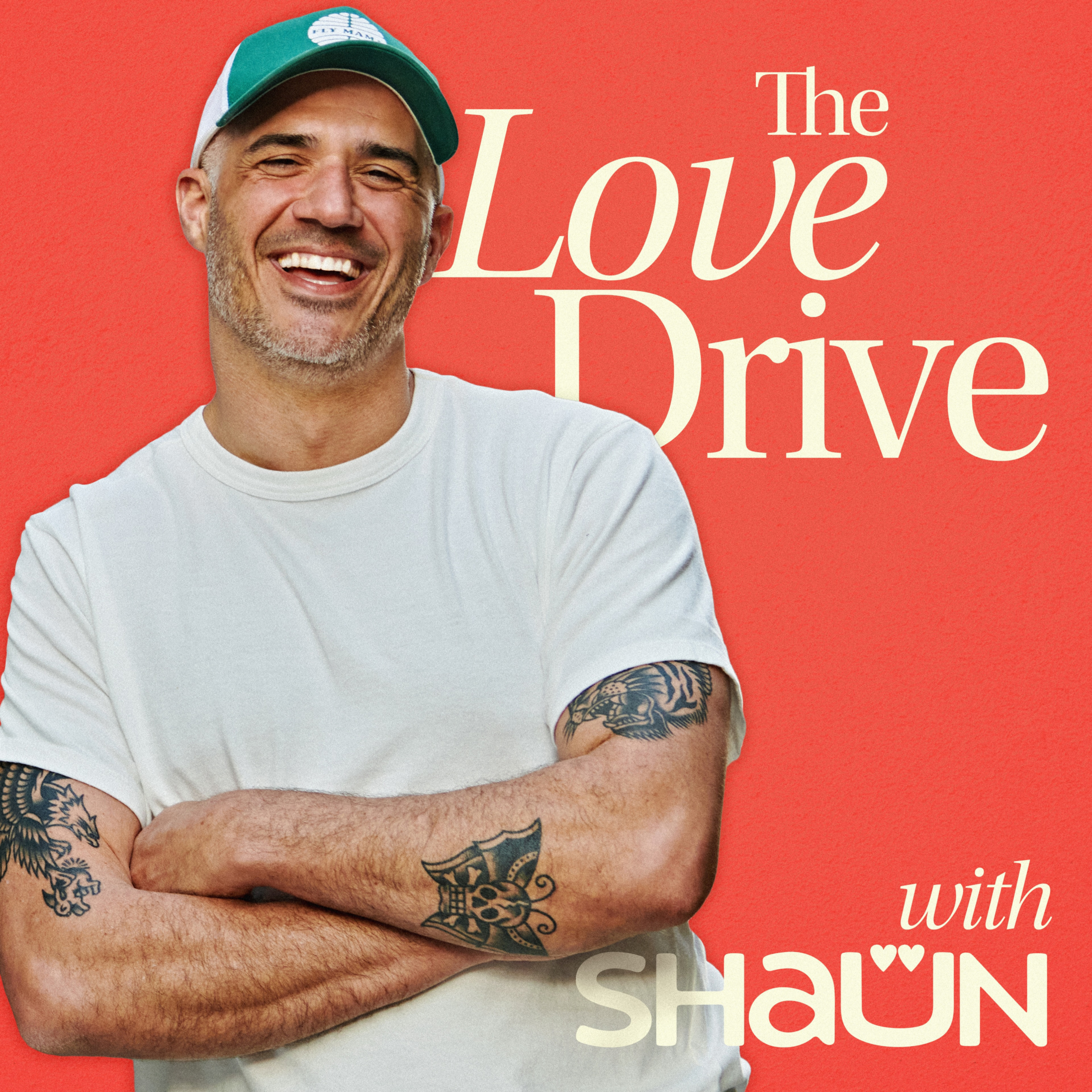
The Love Drive with Shaun Galanos
Hosted by Shaun Galanos · EN
No-nonsense advice on sex, love, relationships, and dating for hopeful romantics, love cynics, and everyone navigating modern love, hosted by Love Coach Shaun Galanos.
The Love Drive is for women tired of toxic love advice and men who want to do better. The antidote to the red pill manosphere, we're making emotional intelligence, honest communication, and healthy masculinity cool again.
31episodes
Episodes
Newest firstAll episodes
To the best rope gun I know: a eulogy for Josh
3w ago00:17:05Tap to summarizeOn July 13th, I lost one of my dear friends. Josh Kalven was diagnosed with a rare, aggressive cancer in March and died four months later. He was a husband, a dad to a five-year-old, and a sweet friend.This episode is a eulogy. I read Josh the letter I wrote him in June, back when we still thought he'd beat it. It's full of stuck ropes, bad slab, his famous hummus sandwich, and everything he taught me about climbing and friendship. And I talk about grief. What losing my dad, my dog, and now Josh has taught me. How devastating it is, and, if you can find it, how beautiful.Grief is unexpressed love. Maybe. It's also expressed love.If there's someone you love who doesn't know it, and an email you've been meaning to send, let this be your invitation to send it.I'm taking August off to move into the new place and rest, so this is the last episode until September. If it touches you, share it with someone who needs it. And I'd love to hear from you. Leave me a voicemail at 415-494-9559 or an email at podcast@thelovedrive.com. Take good care of yourself and the people you love.Connect with Shaun:Read my blog: https://shaungalanos.substack.comThe Love Drive Podcast: https://shaungalanos.com/podcast/Instagram: https://www.instagram.com/thelovedrive/More About Shaun: https://shaungalanos.com/about/Buy me a coffee: https://buymeacoffee.com/thelovedrive
Transcribe →A guide to eating pussy with Amy Baldwin
Jul 1601:13:47Tap to summarizeThe manosphere thinks going down on a woman is gay, submissive, or a low-return waste of time. It's wrong on all three — so I brought in an expert to help me prove it.In this crossover episode — Shameless Love — I sit down with sex educator Amy Baldwin from the Shameless Sex podcast for an honest, explicit, and useful guide to going down on women. We take apart the manosphere nonsense, then get practical: how to get out of your head as a receiver, real anatomy (yes, Amy brought a vulva puppet), hygiene without the shame, communication that actually works, and my field-tested tips for being great at this — plus a rapid-fire hot-or-not round to finish.Ten years ago I wrote a blog called What Women Wish You Knew About Eating Pussy. Consider this the 2.0.Explicit. Headphones recommended.Mentioned in this episodeShe Comes First — Ian KernerEmily Nagoski ("same parts, organized differently")Dan SavageMidori — the "pussy hug"Feeld (dating app) · Uberlube Amy's book, Shameless Sex What women wished you knew about eating pussy blog postLinksShameless Sex: podcast + shamelesssex.com (couples retreats, Oct 2026)Connect with ShaunRead the blogThe Love Drive PodcastInstagram: @thelovedriveMore about ShaunBuy me a coffee
Transcribe →Learning to love unpredictability
Jul 900:19:14Tap to summarizeA listener asks whether to move back to somewhere familiar or take a leap somewhere new. Shaun uses the question to explore something bigger: how do you make peace with a life you can't predict?In this episode: finding community after a move, the "third space" concept, why it took two years to find his people in Montreal, what Flagstaff taught him, and why every choice — city, relationship, kids, career — requires you to grieve the road not taken.Books mentioned:The Untethered Soul — Michael SingerMeditations for Mortals — Oliver BurkemamWork with MeI have room for 3 new coaching clients. If this episode resonated — this is exactly the work we can do together.shaungalanos.com/coaching or https://shaungalanos.substack.com/p/love-and-relationship-mentorshipLeave a Listener Question📞 415-494-9559 📧 podcast@thelovedrive.comConnect with meRead the blogThe Love Drive PodcastInstagram: @thelovedriveMore about ShaunBuy me a coffeeFollow & SubscribeIf this episode moved you, share it with someone who needs it. Word of mouth is everything for an independent podcast.
Transcribe →Bidding for connection with Jess Janz
Jul 201:09:41Tap to summarizeJess Janz is a writer, community facilitator, and the founder of Dinner With Strangers - a project that has brought over a thousand people together for a meal with one rule: no one talks about what they do for work. Her book, The Table Where We Meet, is out July 14th.We set out to talk about platonic love and ended up somewhere more personal - about what it actually means to bid for connection with a stranger, what gets in the way of letting people in, and what happens when someone turns the big scary light on and decides to stay anyway.In this conversation: why we project entire futures onto people we've known for five minutes, the grief of nine years of building something and not knowing where you end and the project begins, why friend breakups are so hard to mourn, and the small everyday acts that are actually love stories - if only we'd name them.What We Cover1. Why we are obsessed with romantic love over platonic love - and what that costs us2. How Dinner With Strangers works, and why removing the agenda is what makes connection possible3. Projection: narrating entire futures onto strangers in coffee shops before they have introduced themselves4. Bidding for connection - small honest signals and whether they get returned5. Jess answers "how are you" honestly - fear about the book, and not knowing who she is outside the work6. Identity tied to vocation and the danger of losing yourself in what you have built7. The loneliness of being single while creating - no one to debrief with at the end of the day8. The big scary light - what it means to be truly seen, and what is actually more terrifying: rejection or acceptance9. Friend breakups - no script, no closure, no culturally sanctioned way to grieve10. How to actually build community - ritualizing friendship and why getting out of your comfort zone is the only answer nobody wants to hearAbout Jess JanzJess Janz is a writer, poet, and community facilitator based in Toronto. She is the founder of Dinner With Strangers, a gathering project that has brought over 1,000 people together across North America for meals where no one talks about what they do for work. She has hosted events for lululemon, Pinterest, Wealthsimple, and The W Hotel, among others.Her debut book, The Table Where We Meet: Lessons Learned From Dinner With 1,000 Strangers, is out July 14, 2026. She also writes a Substack called Gentle Company.Connect with JessInstagram: @jessjanzWebsite: jessjanz.comPre-order the book: jessjanz.com/bookSubstack: Gentle CompanyConnect with ShaunRead the blogThe Love Drive PodcastInstagram: @thelovedriveMore about ShaunBuy me a coffee
Transcribe →Living with a Broken Heart
Jun 2500:20:10Tap to summarizeThis week's episode is a tender one. I recorded this on Father's Day — three years after losing my dad — and I'm reading my Substack essay Living with a Broken Heart and riffing on what it means to keep showing up, keep feeling, and keep choosing love even when it costs you.I also make a correction from EP17, share a few quotes that have been sitting with me, and offer some practical tips on how to actually live with a broken heart — not just survive it.In This EpisodeA raw check-in: Father's Day, grief, and why I showed up to record anywayCorrection from EP17 (What is Love?) on Ho'oponopono — what it actually is, and why it mattersI read my essay: Living with a Broken Heart6 tips on how to live with a broken heartI have room for 3 new coaching clientsQuotes"God breaks the heart again and again and again until it stays open." — Hazrat Inayat Khan"You have to keep breaking your heart until it stays open." — attributed to Rumi"Maturity happens when we learn to hold ambiguity: emotions that contradict each other, that don't quite make sense together. So maybe as we grow up, we get better at smiling when we cry, dancing as we grieve, being kind when we lose our shit." — Max Vallot"I haven't been feeling like myself lately. I must be growing." — UnknownBooks MentionedAdult Children of Emotionally Immature Parents — Lindsay C. GibsonThe Road Less Traveled — M. Scott PeckNo Bad Parts — Richard SchwartzA Note on Ho'oponoponoIn EP17, I referred to Ho'oponopono as a prayer, meditation, or mantra. That was incorrect. Ho'oponopono is an ancient Hawaiian practice with deep cultural roots and strict protocols around who can practice it and how. It's not a phrase or a technique — it's a process for restoring harmony within a family, traditionally facilitated by a trained elder.A listener and Love Camp alumna who works closely with this community took the time to write me a generous and educational correction, and I'm really grateful. The resources below are a good place to start if you'd like to learn more.Start here:Kekoa Kealoha on Ho'oponopono and The Pitt — A Kanaka Maoli content creator and activist responds to a "Ho'oponopono poem" featured in the HBO show The Pitt. Accessible, contemporary, and worth 2 minutes of your time.Moʻo ʻŌlelo: Moʻolelo Hoʻoponopono with Aunty Lynette Paglinawan and Kaʻaiʻai Paglinawan — A grounded, primary-source conversation about what Ho'oponopono actually is.Talk Story with Aunty Lynette: What Is The Hawaiian Way? — Not specifically about Ho'oponopono, but a beautiful introduction to Hawaiian worldview and values.Go deeper:Hoʻopono: Mutual Emergence — Dr. MeyerNānā I Ke Kumu: Look to the Source — Foundational texts on Hawaiian worldview, culture, history, and practiceWork with MeI have room for 3 new coaching clients. If this episode resonated — heartbreak, grief, fear of love and intimacy, learning to set boundaries or make requests for your needs — this is exactly the work we can do together.Book here or email me for more information. https://shaungalanos.substack.com/p/love-and-relationship-mentorshipLeave a Listener Question📞 415-494-9559 📧 podcast@thelovedrive.comFollow & SubscribeIf this episode moved you, share it with someone who needs it. Word of mouth is everything for an independent podcast.
Transcribe →Why lonely men join the Manosphere with Laura Ramadei
Jun 1801:09:32Tap to summarizeI've been thinking a lot about why so many men end up looking for belonging in all the wrong places.This conversation starts with the manosphere, but it quickly becomes something much bigger. Laura Ramadei and I talk about why so many boys and men are starving for connection, why "fix yourself" advice so often misses the point, and how loneliness can make almost anyone vulnerable to people selling certainty.We get into emotional safety, friendship between men and women, why relational skills matter far beyond dating, and why being seen for who you are will always be more valuable than chasing status, money, or someone else's definition of success.I also share some of my own experience with validation, why I spent years looking for it in sex and relationships, and what I'm still learning about opening my heart instead of protecting it.This one's about choosing connection over performance. Mess and all.Mentioned in this episodeLouis Theroux – Inside the Manosphere (Netflix)https://www.netflix.com/tudum/articles/louis-theroux-inside-the-manosphere-release-date-news"Small Hands, Big Heart" (Girthmaster & Small Hands parody)https://www.facebook.com/61556509147521/videos/small-hands-big-heart-smallhands/1157398549907361/Girls on Porn Podcasthttps://www.girlsonporn.com/About Laura RamadeiLaura Ramadei is a sexologist and intimacy coach. She's the Safety Director at one of Los Angeles' most prominent play parties and the host of the Girls on Porn podcast.Laura works with individuals, couples, and groups, specializing in relationship counseling, desire discrepancy, non-monogamy, queer identity, and kink.Connect with LauraWebsite https://www.intimacywithlaura.com/Instagram https://www.instagram.com/intimacywithlaura/Substack https://intimacywithlaura.substack.com/Connect with ShaunRetreats and latest offerings: https://bit.ly/m/thelovedriveRead my blog: https://shaungalanos.substack.comThe Love Drive Podcast: https://shaungalanos.com/podcast/Instagram: https://www.instagram.com/thelovedrive/More About Shaun: https://shaungalanos.com/about/Buy me a coffee: https://buymeacoffee.com/thelovedrive
Transcribe →What is love?
Jun 1100:14:53Tap to summarizeWhat is love? It's a question I've never seriously stopped to answer — and one that's surprisingly hard to get at.In this solo episode, I share reflections from Love Camp, a retreat I hosted for 25 people, where only one participant raised their hand when asked if they had positive loving role models growing up. I explore what love actually looks like in practice — not the grand gestures we're sold, but the quiet, boring, mundane acts of showing up.I read a letter I wrote to myself, share an email from my friend Kathy, and read some of my favorite quotes on love from M. Scott Peck and Rainer Maria Rilke — plus a Hawaiian prayer to close.This episode won't give you a clean answer. But it might help you live the question a little better.If you've ever found yourself asking what love actually is, why it hurts, or whether you're doing it right, this one's for you.Maybe the answer isn't something we figure out.Maybe we live our way into it.Listener question from Sarah in British Columbia, Canada.Featured quotes: M. Scott Peck "Love is the will to extend one's self for the purpose of nurturing one's own or another's spiritual growth. Love is as love does. Love is an act of will — namely, both an intention and an action. Will also implies choice. We do not have to love. We choose to love."Rainer Maria Rilke "Be patient toward all that is unsolved in your heart and try to love the questions themselves, like locked rooms and like books that are now written in a very foreign tongue. Do not now seek the answers, which cannot be given you because you would not be able to live them. And the point is, to live everything. Live the questions now. Perhaps you will then gradually, without noticing it, live along some distant day into the answer."Connect with Shaun:Retreats and latest offerings: https://bit.ly/m/thelovedriveRead my blog: https://shaungalanos.substack.comThe Love Drive Podcast: https://shaungalanos.com/podcast/Instagram: https://www.instagram.com/thelovedrive/More About Shaun: https://shaungalanos.com/about/Buy me a coffee: https://buymeacoffee.com/thelovedrive
Transcribe →Once a cheater, sometimes a cheater with Lauren LaRusso
Jun 401:21:26Tap to summarizeThere is life after betrayal. It might not feel like it right now, but there is.My guest today is Lauren LaRusso, a licensed therapist and the author of Beyond Infidelity, a book she wrote after living through betrayal herself. Then she discovered the infidelity, and everything split into a before and an after.We talk about why infidelity is a trauma, not just a relationship issue, how being gaslit by someone you love can make you stop trusting yourself, and why the reaction you’re having probably isn’t “too much.” It’s grief. It’s shock. It’s your body trying to make sense of something that doesn’t make sense.We also get into the myths that don’t help — “happy people don’t cheat,” “if it were me, I’d leave immediately,” and “once a cheater, always a cheater.” Lauren brings so much nuance to the messy middle: staying, leaving, repair, shame, self-soothing, emotional maturity, and learning to live with answers you may never get.This one is for anyone who’s been betrayed, anyone who’s betrayed someone else, or anyone trying to understand how love, devastation, anger, and hope can all live in the same body.Find Lauren:Website: https://www.laurenlarusso.comInstagram: https://www.instagram.com/laurenlarussoBook: Beyond Infidelity https://www.amazon.com/Beyond-Infidelity-Turn-Relationship-Beginning/dp/B0F3W9ZKP2Connect with Shaun:Retreats and latest offerings: https://bit.ly/m/thelovedriveRead my blog: https://shaungalanos.substack.comThe Love Drive Podcast: https://shaungalanos.com/podcast/Instagram: https://www.instagram.com/thelovedrive/More About Shaun: https://shaungalanos.com/about/Buy me a coffee: https://buymeacoffee.com/thelovedrive
Transcribe →Can awkward sex be improved?
May 2800:23:17Tap to summarizeWhat if the sex is awkward, but the connection is actually really good?This week, I’m answering a listener question about dating someone new after years of being mostly single - someone kind, compatible, emotionally available… and a little nervous in bed. Fun! Humbling! Slightly confusing!I get into whether sexual compatibility has to be there from the start, how to tell the difference between someone who’s shut down and someone who’s simply inexperienced, and why nervousness doesn’t have to mean immaturity or incompatibility. Sometimes it just means: new person, new body, new dynamic, new reps. I also talk about kissing, giving feedback without making someone feel like a project, and why asking for what you want in bed is not as obvious as people pretend it is.And yes, I start with a personal update. I’m in a very real in-between place right now - with love, work, grief, anxiety, medication, and the annoying little fact that I don’t currently have clear answers.Maybe you don’t either.Mentioned in this episode: Clarity & Connection by Yung PuebloConnect with Shaun:Retreats and latest offerings: https://bit.ly/m/thelovedriveRead my blog: https://shaungalanos.substack.comThe Love Drive Podcast: https://shaungalanos.com/podcast/Instagram: https://www.instagram.com/thelovedrive/More About Shaun: https://shaungalanos.com/about/Buy me a coffee: https://buymeacoffee.com/thelovedrive
Transcribe →Herpes is just a skin rash — with Debbie Barish, NP
May 2101:14:14Tap to summarizeMost adults in the world carry the virus that causes herpes. Most of them don't know it. And the shame around it is doing more damage than the virus.This week I sit down with Debbie Barish, DNP, MS, WHNP-BC — a board-certified women's health nurse practitioner with 32 years in sexual and reproductive health — for a no-shame, no-bullshit conversation about herpes (both HSV-1 and HSV-2). We get into what it actually is, how it's actually transmitted, why your standard STI panel doesn't test for it, what suppression therapy can (and can't) do, how to talk about it with a partner, and why this one virus carries so much more shame than other, often more serious, STIs.I also share my own diagnosis story for the first time on the show.We cover:What HSV actually is — and the difference (or lack of one) between HSV-1 and HSV-2Why most new genital herpes cases today are HSV-1How transmission really happens, and why 70% of cases come from people who don't know they have itWhy HSV is not part of a standard STI panel — and the one situation where a blood test is actually usefulWhat a first outbreak feels like, and how to take care of yourself through itSuppression therapy: how it works, how effective it is, what the side-effect profile actually looks likeDisclosure: when to tell a partner, how to say it, and what to do if they react badlyWhy herpes carries the stigma it does — and where that stigma comes fromHSV in pregnancyDebbie's own diagnosis story (including a 26-year-later reunion with the firefighter who gave it to her)Resources mentioned:World Health Organization — Herpes simplex virus fact sheet — global stats and overviewWashington University in St. Louis HSV research — Debbie's go-to source for current, accurate herpes informationAmerican Sexual Health Association (ASHA) — US, but the patient-facing info is universalPlanned Parenthood — STI information — US-based, info applies globallySF City Clinic — STI-specialized clinic in San Francisco (model for what to look for locally)If you're outside the US: Search for your country's national sexual health service. In the UK, Terrence Higgins Trust and the NHS herpes page. In Australia, Better Health Channel or Family Planning Australia. In Canada, Sex & U. Most public health systems have free or low-cost sexual health clinics — use them.Find Debbie: @thenewdebbieb on Instagram — where she posts zines and art journals about sexual and reproductive health.Citation for the transmission number: The 50% figure I give at the end of the episode is from Corey et al., 2004, New England Journal of Medicine — the landmark study on daily valacyclovir as suppression therapy for HSV-2 transmission. Read the study here.Heads-up: This episode talks openly about shame, self-image after diagnosis, and mental health. If those topics are heavy for you right now, take care of yourself listening.Connect with Shaun:Retreats and latest offerings: https://bit.ly/m/thelovedriveRead my blog: https://shaungalanos.substack.comThe Love Drive Podcast: https://shaungalanos.com/podcast/Instagram: https://www.instagram.com/thelovedrive/More About Shaun: https://shaungalanos.com/about/Buy me a coffee: https://buymeacoffee.com/thelovedrive
Transcribe →