Loading summary
Transcript352 lines
- [00:00]
Billy Hindle
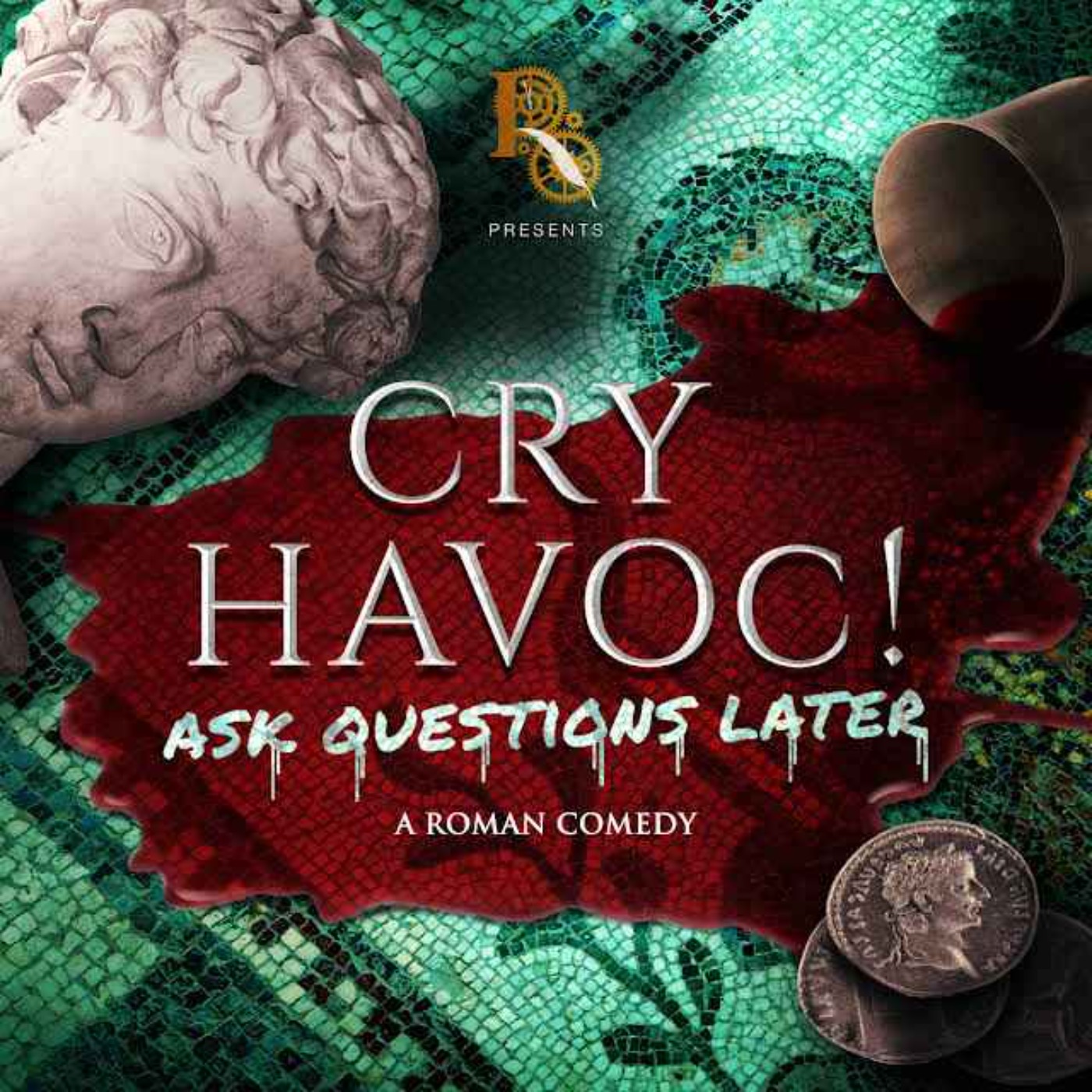
Hi there, Billy Hindle, the voice of Alice Dyer in the Magnus Protocol. Today we are sharing with you the first episode of our very own Rusty Quill original show, Cry Ask Questions Later. Cry Havoc is a political sitcom written by David K. Barnes, set in ancient Rome. Julius Caesar is dead, but Rome's new leaders just can't get along. Gaius Caesar's heir is a stressed control freak. Mark Antony is charismatic but deeply irresponsible. Rome is on the verge of collapse, and they desperately need to schmooze Queen Cleopatra of Egypt to try and save it. There's also Gaius sister Octavia. She's meant to be a respectable Roman lady, but she drinks too much, sleeps with other women, and most scandalous of all, she likes theatre. Her company, the Palatine Players, stage comedies making fun of her brother. And a new actress has caught Octavia's eye. You may recognize some familiar voice talents from the Magnus Protocol in Cry Havoc, including Sarah Lambie, Kazim, Tosa Nomore, Ryan Hope via Anderson, Harry Roebuck, Ellie Dickens and more. You can listen to more episodes of this series by searching for Cry Ask Questions later, wherever you listen to podcasts or by clicking the link in the show notes. For more information, visit www.rustedquill.com. have fun and enjoy the episode.
- [01:24]
Brutus
Not long ago, in a distant land, there lived a warrior of great and noble deeds. He wished to rule the people of his city as their king. But his friends didn't think it was a good idea. So they killed him. That's right, isn't it?
- [01:52]
Cassius
Broadly.
- [01:53]
Brutus
I don't want to get the facts wrong.
- [01:55]
Cassius
Don't worry about those. Just tell me the story.
- [01:59]
Brutus
All right. Well, they ran away. The killers, I mean. To the plains of Philippi. There, they raised an army. They knew they'd soon be followed, for two men sought revenge against their crime. Two men forged in opposites. The first strong of muscle, the second, strong of mind, united in common cause.
- [02:30]
Cassius
And what did these two men do?
- [02:33]
Brutus
Basically, they won.
- [02:38]
Mark Antony
We did it, lads. We bloody did it. All right, all right. Now, you know I'm not much of a speaker. I never even passed my Latin. But if any occasion deserves a few words, it's this one. Because you boys were incredible out there. I mean, that was Pete performance. Rome is proud of each and every one of you here today. And that goes double for me. This was no ordinary war. We fought no foreign enemy. These were Romans, like you and me. Some may have even been our friends once. I wouldn't have blamed you for finding this one a struggle. If you put down your swords and said this far and no further, but each of you put his duty first. You fought like lions. And Brutus may have been an honorable man, but we bloody well showed him a thing or two, didn't we, eh? My old mate Julius is looking down upon us. And he saw justice done this day. And here, standing with me at my side, is his very own son. He fought with us. Is your friend and mine. He's Gaius Octavius Caesar.
- [04:22]
Gaius Octavius Caesar
Hello, everyone.
- [04:24]
Mark Antony
Oh, son of the divine Julius Caesar, inheritor of his titles and estates. Have you anything to add on this day of victory?
- [04:36]
Gaius Octavius Caesar
Me?
- [04:36]
Mark Antony
Yes. Anything on this august occasion?
- [04:48]
Gaius Octavius Caesar
No, No, I think you just about covered everything. Yep.
- [04:54]
Mark Antony
What's the matter?
- [04:56]
Gaius Octavius Caesar
There's just so many of them just looking at me and over. I've lost my voice.
- [05:04]
Mark Antony
You lose more than your voice if you don't say something inspiring. Well, go on, give me some.
- [05:13]
Gaius Octavius Caesar
That is to say, I have nothing else to add but well done, you men. Well done.
- [05:28]
Mark Antony
Yes, well, the son of the divine Julius has spoken. And now that's done with, we celebrate. Who wants to go and get hammered?
- [05:47]
Gaius Octavius Caesar
That went well, I thought.
- [05:49]
Mark Antony
Yeah, sure. What a planned.
- [05:54]
Brutus
Rome's enemies lay vanquished in the field, and there were no more left to fight. Mark Antony and Gaius Octavius had won. Rome was theirs to rule. And that's when their troubles would really begin. Rusty Quill presents Cry Havoc Ask Questions Later Episode one After Caesar, the armies returned to Rome in triumph. And there was much rejoicing. General Mark Antony embraced his loving wife, the model of a Roman woman, Fulvia.
- [07:04]
Fulvia
Mark.
- [07:06]
Gaius Octavius Caesar
Oh, Mark.
- [07:07]
Fulvia
I missed you so.
- [07:09]
Mark Antony
And I missed you, my love.
- [07:14]
Fulvia
How'd it go out there?
- [07:16]
Mark Antony
Fine. It was dead easy. You'd have loved it. Lots of big handsome men working up a sweat.
- [07:24]
Fulvia
No problems with the army?
- [07:25]
Mark Antony
They'll do whatever I tell them.
- [07:27]
Fulvia
So it's over then? Rome is ours?
- [07:30]
Mark Antony
Yep. She can't keep her hands off me, lads. The Senate's already ratified it. As from now, I'm running the show.
- [07:41]
Cassius
Yes.
- [07:42]
Fulvia
Finally we can get things done around here. Just you and me. Oh, Mark.
- [07:48]
Mark Antony
I mean, it's a bit more complicated, but basically, yes.
- [07:54]
Fulvia
What do you mean? Are you in charge or not?
- [07:57]
Mark Antony
Yeah, absolutely. Me and Gaius.
- [08:02]
Fulvia
You and Gaius?
- [08:04]
Mark Antony
Yeah. Julie's boy.
- [08:06]
Fulvia
I know who he is. You said you were going to kill him.
- [08:09]
Mark Antony
I know. Yeah, I know. I know. Hey, Mark. You're the. Yes, I am. Thank you.
- [08:19]
Fulvia
You promised me you kill him.
- [08:20]
Mark Antony
I can't do that.
- [08:21]
Fulvia
Why not?
- [08:22]
Mark Antony
Cuz Julie was a mate of Mine. You don't kill your best mate's son, no matter how annoying he is.
- [08:28]
Fulvia
Adopted son. You owe him nothing.
- [08:31]
Mark Antony
Oh, he's harmless. He's a whelp. There's nothing he can do to us.
- [08:35]
Fulvia
Kill him.
- [08:35]
Mark Antony
No. We're still a republic. I can't just take it over by myself, can I?
- [08:41]
Fulvia
How do you know if you won't try?
- [08:43]
Mark Antony
Julie tried. And look what happened to him. Is that what you want for me? Lying in a forum with swords in my back? Thank you very much.
- [08:50]
Fulvia
You should rule. You deserve it. Rome deserves it. Quite frankly, I deserve it.
- [08:56]
Mark Antony
Look, look, look. Don't worry. It's all working exactly as we wanted it. I am in charge. I'm Mark Anthony. They love me.
- [09:08]
Fulvia
And Gu.
- [09:10]
Mark Antony
The boy's a wash out. He's got no clue at all. You wait. I've got him wrapped around my little finger, just like I'm wrapped around yours.
- [09:19]
Fulvia
You better be right.
- [09:21]
Mark Antony
When have I ever been wrong?
- [09:23]
Brutus
Now.
- [09:23]
Mark Antony
Keep kissing me. They're still watching.
- [09:26]
Fulvia
No, they're not.
- [09:28]
Mark Antony
Well, pretend they are.
- [09:36]
Brutus
The celebrations continued long into the night. Some say the Romans go to war so they can justify the orgy afterwards. Some say I do. Yeah. And the more blood spilt, the more they enjoy it. Sort of like a fetish. But one man sat alone, away from the throne. Gaius Octavius didn't know how to party. He only knew how to think.
- [10:10]
Gaius Octavius Caesar
No, this doesn't make any sense. What did it say in that other one?
- [10:16]
Mark Antony
Gaia.
- [10:17]
Gaius Octavius Caesar
What? Oh, hello, Mark.
- [10:19]
Mark Antony
What are you doing? Come and join the gang.
- [10:22]
Gaius Octavius Caesar
Oh, later, maybe later. Mark, come and take a look at this. Look.
- [10:27]
Mark Antony
You're working.
- [10:28]
Gaius Octavius Caesar
Yeah, I thought I'd get a head start. Look what I found. It's maddening.
- [10:32]
Mark Antony
Can I sit?
- [10:33]
Gaius Octavius Caesar
Sure, let me just.
- [10:34]
Mark Antony
My son's around here somewhere. I told him to spend the night with his grandparents. Fulvia and I want some privacy tonight.
- [10:43]
Gaius Octavius Caesar
Good. O. You see here, I found an executive summary from our governor in Syria. And in it he says.
- [10:50]
Mark Antony
Have some wine.
- [10:51]
Gaius Octavius Caesar
What?
- [10:51]
Mark Antony
Wine.
- [10:53]
Gaius Octavius Caesar
Oh, thank you. Anyway, he says, the governor, they're paying far more in interest to the publicani than we're actually making back in taxation.
- [11:02]
Mark Antony
Really?
- [11:02]
Gaius Octavius Caesar
Yes. And they're still running up debts like you wouldn't believe. And the magistrates collecting a backhander. I mean, we have to stop this. It's appalling.
- [11:11]
Mark Antony
Guy. Yes? Put your papers down and understand one simple thing. We did it.
- [11:19]
Gaius Octavius Caesar
What?
- [11:20]
Mark Antony
Rome. Us. We did it.
- [11:25]
Gaius Octavius Caesar
We did it.
- [11:26]
Mark Antony
We did it.
- [11:28]
Gaius Octavius Caesar
We did it. I guess we did it. Didn't we?
- [11:37]
Mark Antony
Now you're thinking straight. You know why they're all happy tonight. Those people. Our people. You know why?
- [11:44]
Gaius Octavius Caesar
Tell me.
- [11:45]
Mark Antony
Because we get stuff done, my friend. We get stuff done. That's what we do. We're unstoppable.
- [11:51]
Gaius Octavius Caesar
Well, I'll drink to that. To the republic.
- [11:55]
Mark Antony
If you like.
- [11:58]
Gaius Octavius Caesar
Do you think Caesar. I mean, my father. My new father. Still feels weird, by the way.
- [12:04]
Mark Antony
You'll get used to it.
- [12:05]
Gaius Octavius Caesar
Do you think he really wanted to be a king?
- [12:10]
Mark Antony
Doesn't matter.
- [12:11]
Gaius Octavius Caesar
No.
- [12:12]
Mark Antony
No, what does matter is the scum who killed him are dead and in the ground, and we're still here. How many did you kill?
- [12:21]
Gaius Octavius Caesar
Eh?
- [12:21]
Mark Antony
The enemy. How many?
- [12:23]
Gaius Octavius Caesar
Oh, I lost count. You?
- [12:27]
Mark Antony
269. Nice.
- [12:32]
Gaius Octavius Caesar
What is.
- [12:36]
Mark Antony
Never mind, young guys. It's all over now. No more civil wars for us. You're not much of a fighter on the quiet, are you? Well, it's okay. You don't have to be. You're the son of Caesar, right? The men respect that.
- [12:52]
Gaius Octavius Caesar
Yes.
- [12:53]
Mark Antony
But I know how you feel.
- [12:55]
Gaius Octavius Caesar
You do?
- [12:56]
Mark Antony
Oh, yeah. I was new once. Rome's a tough world. Hard to be the bloke who doesn't get his head kicked in.
- [13:02]
Gaius Octavius Caesar
I suppose so, yes.
- [13:04]
Mark Antony
But, look, for whatever reason, Julie adopted you to be his son. And that means something. I don't know what, but it does. And sure as his divine spirit is looking over us, I just want you to know that I'm looking out for you, too. It's going to be okay.
- [13:21]
Gaius Octavius Caesar
Thanks, Mark. That means a lot.
- [13:24]
Mark Antony
No worries, friend. And in the days ahead, when it's all going on, doing this and that, well, you know, you can leave it to me. If you ever need to. All this. It's never too much trouble, right?
- [13:39]
Gaius Octavius Caesar
Yeah.
- [13:40]
Mark Antony
Good. Now, come on. It's time to enjoy yourself. Plenty of fish in the sea looking for a hot, strong war hero tonight.
- [13:49]
Gaius Octavius Caesar
I was just thinking.
- [13:51]
Mark Antony
It can wait till tomorrow.
- [13:52]
Gaius Octavius Caesar
It's simply that.
- [13:53]
Mark Antony
No. Come on. We've won. Right now, you and me are the most powerful men in the world. We own the entire Republic of Rome.
- [14:02]
Gaius Octavius Caesar
Yes. So what are we going to do with it?
- [14:15]
Cassius
You never met Julius, did you?
- [14:19]
Brutus
No. Well, I served him dates once, but we never spoke. What was he like, if you don't mind me asking?
- [14:28]
Cassius
Caesar. He was honest in his own way.
- [14:36]
Brutus
Do you think he'd have made a good king?
- [14:38]
Cassius
The Romans don't believe in them, to be honest. Nor do I. On that subject, when is our visitor arriving?
- [14:49]
Brutus
I believe their ship docked nearby not too long ago. Should I leave you to prepare oh, no, no.
- [14:55]
Cassius
I'm ready for him. Would you like a honey cake?
- [15:00]
Brutus
Are you sure? Thank you. Mmm.
- [15:10]
Cassius
Resume your story. It helps me to think. Where were we.
- [15:17]
Brutus
The morning after? It was a new dawn for Rome, free from internal strife. Gaius Octavius and Mark Antony were due to meet to begin their governance in earnest, and Gaius was well prepared. He doubtless spoke of it with his sister Octavia, known to all as the epitome of virtue.
- [15:45]
Mark Antony
Hey, guys.
- [15:46]
Gaius Octavius Caesar
Morning.
- [15:47]
Octavia
Oh, don't talk too much. I'm still a bit trashed. What time is it?
- [15:55]
Gaius Octavius Caesar
Sundial's outside if you want to look.
- [15:58]
Octavia
Didn't see you out celebrating last night. Surprise, surprise. Can't even show up for your own party.
- [16:04]
Gaius Octavius Caesar
I was there briefly.
- [16:06]
Octavia
You do know it was all for you?
- [16:08]
Gaius Octavius Caesar
It was for the armies of Rome and their commanders.
- [16:11]
Octavia
Including you.
- [16:13]
Gaius Octavius Caesar
But mainly Mark.
- [16:14]
Octavia
Well, of course they like him.
- [16:18]
Gaius Octavius Caesar
Where's the new girl? She's meant to have tied it up in here. Look at my desk. It's filthy.
- [16:24]
Octavia
She's still in bed.
- [16:25]
Gaius Octavius Caesar
In bed?
- [16:26]
Octavia
Yes. Leave her, Gaius. We had a very long night.
- [16:30]
Gaius Octavius Caesar
I see.
- [16:31]
Octavia
I think she'll work out.
- [16:33]
Gaius Octavius Caesar
Not interested, to be honest. Thank you, Octavia.
- [16:36]
Octavia
Oh, don't be such a prude. You'd understand if you could only find yourself a knife. To anyone.
- [16:41]
Gaius Octavius Caesar
Perhaps I'm pickier than you are. It'd be impossible not to be, wouldn't it?
- [16:46]
Octavia
What is all this, anyway? Reading anything good?
- [16:49]
Gaius Octavius Caesar
Corsican tax revenue for the past five years. Very important.
- [16:54]
Octavia
I'm sure it is. I know how your heart leaps at the sight of a finely written receipt.
- [16:59]
Gaius Octavius Caesar
I have responsibilities now. You may not have noticed. Oh, and I found this amongst my papers. If you could keep your hobbies away from my work.
- [17:08]
Octavia
What is it?
- [17:10]
Gaius Octavius Caesar
The Palatine Players began their new season with a riotous revival of Plautus's comedy classic, Asanaria. Or the one with the asses, which in this critic's opinion, has really been blah, blah, blah, blah, blah.
- [17:26]
Octavia
No, no, no, keep reading. It's a good review.
- [17:28]
Gaius Octavius Caesar
The one with the asses. I hope you mean donkeys.
- [17:31]
Octavia
We'll see the play and find out. We've been doing ever so well lately. Sell out nights across the board. Though I sometimes think we rest on our laurels, pardon the phrase.
- [17:41]
Gaius Octavius Caesar
It's just a theatre company.
- [17:43]
Octavia
It's my theatre company.
- [17:45]
Gaius Octavius Caesar
No, it isn't.
- [17:46]
Octavia
But I pay for it. That makes it my company. You wanted me to be a patron of the arts and I'm doing it.
- [17:51]
Gaius Octavius Caesar
It's the wrong sort of art. I should have had that bunch of parasites shut down years ago.
- [17:57]
Octavia
You can't. They're too popular.
- [17:59]
Gaius Octavius Caesar
But they're always slipping in jokes about me.
- [18:01]
Octavia
Yeah, naturally. They get the biggest laughs, Gaius, if you give the people entertainment and a way to blow off steam now and then.
- [18:09]
Gaius Octavius Caesar
Then you make them restless.
- [18:10]
Octavia
You make them happy. I'm sure I'm doing more for Rome with my plays than you are with all your dull reports.
- [18:18]
Gaius Octavius Caesar
Stop it. That's my intro. What is it?
- [18:21]
Mark Antony
Hello there.
- [18:22]
Lepidus
Only me.
- [18:23]
Gaius Octavius Caesar
Oh, Leopardus. Good morning.
- [18:25]
Lepidus
Your servants let me in. Not disturbing you, am I?
- [18:28]
Gaius Octavius Caesar
No, not at all. Please, make yourself at home. We'll be setting up in the dining room. Oh.
- [18:34]
Lepidus
Going to eat, are we?
- [18:37]
Gaius Octavius Caesar
No, sorry.
- [18:38]
Lepidus
Oh, shame. Still raring to go. Getting stuck in.
- [18:43]
Gaius Octavius Caesar
What? That's right. In you go. Won't be a moment.
- [18:49]
Octavia
Lepidus. Seriously, Lepidus. He's in the gang.
- [18:54]
Gaius Octavius Caesar
He was a key part of our victory.
- [18:56]
Octavia
But he's such a fool.
- [18:58]
Gaius Octavius Caesar
Even fools have their uses. Especially when they're well connected.
- [19:04]
Octavia
Does Mark know about this? He'll hit the roof. He'll tear the old man apart.
- [19:08]
Gaius Octavius Caesar
No, he won't. He knows already, I think.
- [19:12]
Octavia
Why bother with Mark, anyway? He's popular, but he doesn't know the first thing about government.
- [19:16]
Gaius Octavius Caesar
Now, that isn't fair. I spoke to him last night. He may be full of himself, yes, but he cares about Rome. And he's taken this very seriously. I know he is.
- [19:28]
Octavia
Oh. So why isn't he here yet?
- [19:33]
Brutus
Mark Antony was nearby. He'd been waylaid by friends. That was all.
- [19:48]
Mark Antony
Now, someone pour me a proper drink. Oh, hang on. Duty calls. It's my first day at work, don't you know? You'll show the moves, boss? You bet I will. Wish me luck, lads. What I do, I do for Rome. When are we getting paid? What's that? It's just after the campaign we just had and everything. You see, sir, none of us are wealthy men. And we were sort of looking forward to getting what's owed to us. What's owed to you? Yeah, like the rest of our wages. And the bonus you mentioned. We all want to buy some land to call our own, you see. Settle down, run farms, raise our family. Right. Yes, and not being funny or anything, but there's not much food kicking about and we're all hungry. Yeah, you can hardly even find bread these days. Well, yes, of course. Wages, land, food. Goes without saying. Yeah. So when do you reckon we might get all that? We know you won't let us down, sir. No, no, I will not do that. No, definitely not. It's just that he's letting us down.
- [21:17]
Brutus
No, no, no, no, no.
- [21:18]
Mark Antony
On the contrary, my friends. On the contrary. You see, I'm going to. I'm. I'm going into that meeting right now. Two to the first of a new and improved Republic to sit with. Excuse me. With Gaius Octavius, the son of the divine Julius Caesar. And I will see to it personally that you will get your money and food and everything you need immediately, Straight away. Now, how. How's that sound? Okay, that worked. Now, which way am I going?
- [22:19]
Brutus
As the general sought out the home of Gaius Octavius, his new colleagues awaited him with eager anticipation.
- [22:38]
Lepidus
Oh, my aunt was asking after you.
- [22:44]
Gaius Octavius Caesar
Sorry?
- [22:45]
Lepidus
My Aunt Claudia. She wanted to know if you were keeping well.
- [22:49]
Gaius Octavius Caesar
Oh, good.
- [22:51]
Lepidus
I said you were.
- [22:52]
Gaius Octavius Caesar
Yes.
- [22:54]
Lepidus
Hope that's all right. You know, saying that.
- [22:58]
Gaius Octavius Caesar
Sure. Ah, good.
- [23:00]
Lepidus
Thought I might have said, too much careless talk costs lives and all that.
- [23:07]
Gaius Octavius Caesar
I. Sure, yeah. Good thinking.
- [23:12]
Mark Antony
Finally. I swear, this hill isn't normally here.
- [23:16]
Gaius Octavius Caesar
Ah, Mark. Good morning.
- [23:17]
Mark Antony
There he is, my boy. Good to see you, friend. Exciting, yeah? All this exciting.
- [23:29]
Gaius Octavius Caesar
Yes, it is. You know Lepidus, of course.
- [23:32]
Mark Antony
What? Oh, yeah. Morning. Sorry.
- [23:37]
Lepidus
That's all right.
- [23:38]
Mark Antony
Grand. So.
- [23:42]
Gaius Octavius Caesar
Take a seat.
- [23:44]
Mark Antony
Yes, now that you mention it. Cheers. Any of them?
- [23:50]
Gaius Octavius Caesar
Anyone? Yep.
- [23:56]
Mark Antony
Wow. That's better.
- [24:00]
Gaius Octavius Caesar
Okay, I think we'll start. Oh, do help yourself to refreshments. And there's a bowl of grapes there if anyone's hungry.
- [24:08]
Mark Antony
I'll take those. Oh, absolutely starving. Blimey.
- [24:16]
Gaius Octavius Caesar
Mark, I'm not trying to put you on the spot here, but are you drunk?
- [24:25]
Mark Antony
Well, I might be. Who can say?
- [24:30]
Gaius Octavius Caesar
I mean, we can, because you look really drunk.
- [24:34]
Mark Antony
I can keep up with the chat, don't you worry. The Cogs are worried.
- [24:38]
Gaius Octavius Caesar
Are you sure?
- [24:39]
Mark Antony
Yeah. Crack on.
- [24:42]
Gaius Octavius Caesar
Okay. Well, greetings, both of you, to what I'm sure will be the first of many stimulating and productive meetings about the running of our glorious Republic.
- [24:54]
Mark Antony
Yes. Stirring stuff.
- [24:56]
Lepidus
Oh, yes. Top drawer.
- [24:59]
Gaius Octavius Caesar
Thank you. We are. We are great men. I, Gaius Octavius, son of the divine Julius Mark Antony, General of the armies of Rome.
- [25:13]
Mark Antony
That's me.
- [25:14]
Gaius Octavius Caesar
And Aemilius Lepidus, without whom we could never have raised the capitol to raise the armies. The Roman state owes you a great deal.
- [25:24]
Lepidus
Oh, pleasure, pleasure. Nice to be involved.
- [25:28]
Gaius Octavius Caesar
The future prosperity of the Roman Republic now rests between the three of us. And we will succeed.
- [25:35]
Mark Antony
Wait, hold on. This bloke's working with us?
- [25:39]
Gaius Octavius Caesar
Yes.
- [25:39]
Mark Antony
You mean he's in charge, like us?
- [25:43]
Gaius Octavius Caesar
What did you think he was doing here?
- [25:44]
Mark Antony
I Thought he was the secretary, like, taking the minutes.
- [25:49]
Lepidus
No, I can do that, too, if it'd be useful.
- [25:52]
Gaius Octavius Caesar
No, no, that's fine. Mark. We agreed that Lepidus would join us. That's what the Senate ratified yesterday. We're a triumvirate.
- [26:00]
Mark Antony
A what?
- [26:01]
Gaius Octavius Caesar
Triumvirate. Three of us. To make sure that supreme power never gets concentrated in one person. They think it's safer that way.
- [26:10]
Mark Antony
Three of us?
- [26:11]
Gaius Octavius Caesar
Yes. Well. Are you all right, Mark?
- [26:16]
Mark Antony
Oh, Carry on.
- [26:18]
Gaius Octavius Caesar
Okay. Well, as the ruling triumvirate of the Republic of Rome, we face many challenges, as we all know.
- [26:27]
Mark Antony
Yes.
- [26:28]
Gaius Octavius Caesar
We must strive to meet them for the good of the people of Rome. And also to be fair for us.
- [26:35]
Mark Antony
So, land.
- [26:37]
Gaius Octavius Caesar
What?
- [26:38]
Mark Antony
They want to buy land. The soldiers. And food. Money and food.
- [26:45]
Gaius Octavius Caesar
Right. Well, that is actually at the top of our agenda today. Thank you, Mark, Welcome. Thanks to Lepidus, we covered the initial costs of our most recent campaign against the killers of my late divine father.
- [27:00]
Lepidus
Lovely man.
- [27:02]
Gaius Octavius Caesar
Yep. But now we need to pay off the rest of it to the tune of approximately 300 million sesterces.
- [27:09]
Mark Antony
How much?
- [27:11]
Gaius Octavius Caesar
It's a big army. It costs a lot.
- [27:13]
Mark Antony
Hmm.
- [27:14]
Lepidus
What have we got in the coffers?
- [27:15]
Gaius Octavius Caesar
Not much. In fact, not only are we low on money, we are also facing a massive food shortage.
- [27:23]
Mark Antony
Oh, dear. You're joking.
- [27:24]
Gaius Octavius Caesar
No. So, while we tackle that growing problem, we're also looking for a way to settle our account with the armies before they get restless. Lepidus, do you have any ideas on that front?
- [27:36]
Lepidus
Ah, now, I was thinking about this, and, no, I haven't. Nothing.
- [27:46]
Gaius Octavius Caesar
Okay.
- [27:47]
Lepidus
Sorry.
- [27:48]
Gaius Octavius Caesar
No, it's a tough problem.
- [27:49]
Lepidus
I suppose Rome wasn't built in a day, huh?
- [27:54]
Mark Antony
Was it? Look, the way I see it, we need stuff, right? And we don't have it.
- [28:03]
Gaius Octavius Caesar
Correct.
- [28:04]
Mark Antony
Then let's take it from people who do. Simple.
- [28:09]
Gaius Octavius Caesar
Well, actually, as it happens, I've been looking through our treaties with neighboring kingdoms, and I think Egypt is the best shout done. As we can see from the treaty, they've got grain and gold aplenty. And they might even have land for any men who want to live there.
- [28:24]
Lepidus
Oh, living abroad. Nice idea.
- [28:27]
Gaius Octavius Caesar
So I move that we open diplomatic channels with Queen Cleopatra immediately. All in favor?
- [28:33]
Mark Antony
Diplomatic channels? I'm not talking about having a talk. I'm talking about not talking and acting.
- [28:40]
Gaius Octavius Caesar
Instead, I'm sure Cleopatra will be amenable to our needs after some. Some polite conversation.
- [28:47]
Mark Antony
That Egyptian harlot. You can't trust her.
- [28:50]
Gaius Octavius Caesar
The Egyptian queen? Yes, we can, mate.
- [28:53]
Mark Antony
We've garrisoned in Egypt. We can Take what we need by force.
- [28:57]
Gaius Octavius Caesar
We had to recall our men from Egypt to fight at Philippi.
- [28:59]
Mark Antony
Well, send them back. We can win any war. Our armies are unbeatable.
- [29:05]
Gaius Octavius Caesar
These would be the armies we haven't paid yet for the last war they fought for us.
- [29:09]
Lepidus
Yeah, I don't suppose they'd take it on credit.
- [29:12]
Gaius Octavius Caesar
I doubt it. I say if we want the resources of Egypt, then diplomatic overtures to Cleopatra is the best way forward at the present time. All in favor?
- [29:23]
Mark Antony
May one speak, please?
- [29:26]
Gaius Octavius Caesar
Everyone's opinion here is equally important. Go ahead.
- [29:29]
Mark Antony
Your idea stinks.
- [29:30]
Gaius Octavius Caesar
Right?
- [29:32]
Mark Antony
We are Romans. We don't ask if we need something, we take it. That's the way it's always been, and.
- [29:38]
Gaius Octavius Caesar
I'm sure it will be again. But right now we've got to regroup, to rebuild so we can write this out.
- [29:44]
Mark Antony
And how long will that take?
- [29:45]
Gaius Octavius Caesar
I expect a few months. That's why we need to start.
- [29:48]
Brutus
Months?
- [29:48]
Mark Antony
Those men out there won't wait months. They need paying now, Mark.
- [29:53]
Gaius Octavius Caesar
Rome hasn't any money. It hasn't any food. We have nothing to offer these men unless we can.
- [29:59]
Mark Antony
You're worse than the Senate. Talk, talk, talk. Where's the action?
- [30:04]
Gaius Octavius Caesar
Where you going, Mark?
- [30:06]
Lepidus
I say, is the meeting over?
- [30:08]
Mark Antony
I'll tell you where I'm going. I'm going to the middle of that forum and I'm gonna talk to the men, and I'm gonna tell them that we're invading Egypt. Now what? No ifs, no buts. And that's a guarantee from all three of us.
- [30:20]
Gaius Octavius Caesar
You can't do that.
- [30:21]
Mark Antony
Gaius. You have no idea what I can do.
- [30:24]
Gaius Octavius Caesar
No, I mean, you can't go out there. Look at you. You've pissed yourself.
- [30:30]
Mark Antony
Have I? Oh. What?
- [30:33]
Gaius Octavius Caesar
I don't believe this.
- [30:35]
Mark Antony
Oh, no. Has anyone got a towel?
- [30:38]
Gaius Octavius Caesar
Don't use the treaty, mate.
- [30:40]
Mark Antony
I've got to use something. It's all over the floor.
- [30:43]
Octavia
Hey, guys, can I borrow you for a second?
- [30:46]
Gaius Octavius Caesar
Not now, Octavia.
- [30:48]
Octavia
It's quite urgent, though. See, there's a mob of soldiers outside and they're getting impatient.
- [30:54]
Gaius Octavius Caesar
Oh, gods.
- [30:55]
Octavia
Do you want me to pass a message?
- [30:57]
Mark Antony
Yeah, tell them I'm not here.
- [30:58]
Gaius Octavius Caesar
Mark, we've got to deal with this.
- [31:00]
Mark Antony
Tell them to go away, then.
- [31:01]
Gaius Octavius Caesar
We can't.
- [31:02]
Mark Antony
But we're in charge. Don't they know that? They'll do what we tell them because we are in charge.
- [31:09]
Octavia
Have you pissed on our floor?
- [31:11]
Mark Antony
Clearly, yes. Now find some towels.
- [31:15]
Lepidus
If the meeting's over, I thought I might head off for an early lunch.
- [31:24]
Cassius
Incredible. The situation sounds worse than I'd ever dared to hope. And is all of this really true?
- [31:34]
Brutus
I filled in a few gaps, but I drew upon the reports of our spies in Rome. The triumvirs intend to seek aid from us. It can only be a matter of time.
- [31:45]
Cassius
Thank you, Charmian. You have a knack for bringing these matters to life. Makes it so much easier to know what to do.
- [31:53]
Brutus
My queen is too kind. I've always enjoyed telling stories.
- [31:58]
Cassius
You've got a real gift. I shall make full use of it. And if I'm not mistaken, it sounds like we finally have company. Trust him to be late. You'll do the honors, won't you, my lady?
- [32:13]
Cleopatra
What is going on around here? I demand silence.
- [32:17]
Brutus
You kneel in the presence of the almighty, beloved by her father and her people. Abase yourself before the infinite majesty of the rightful Pharaoh of Egypt. The living goddess and our queen, Cleopatra.
- [32:36]
Cleopatra
I know that. I'm her husband.
- [32:38]
Cassius
Ptolemy, dear. I'm so sorry to get you out of bed like this. Oh, it must have been quite a surprise to you and whomever or whatever you were sharing it with.
- [32:49]
Cleopatra
Get me out of bed. You've dragged me all the way to Greece. I was still in Egypt a week ago.
- [32:55]
Cassius
Well, I wasn't cutting my holiday short just because of you.
- [32:58]
Cleopatra
Holiday? You've never taken a day off in your life.
- [33:02]
Cassius
You take more than enough for both of us, Charmian. How many was it?
- [33:07]
Brutus
Too many to count.
- [33:09]
Cassius
Not a good look for a king, is it?
- [33:11]
Brutus
Not a good look at all.
- [33:13]
Cleopatra
You can't treat me like this. I am Egypt's king. I outrank you. You're committing treason. I hope you know that.
- [33:21]
Cassius
I do. But here we are.
- [33:24]
Cleopatra
What do you want from me?
- [33:25]
Cassius
From you? Nothing. You're of no use to me, to Egypt, or to anyone. I'd half a mind to leave you alone, but you're always whining and causing.
- [33:38]
Brutus
A scene or plotting to remove the queen.
- [33:42]
Cassius
Yes, because you're right. I don't take a holiday without cause. I left Egypt to see what you'd do, and you rather took the bait.
- [33:53]
Cleopatra
I don't know what you mean.
- [33:54]
Cassius
But your conspirators do. They're all dead. So instead of keeping you hanging around, I thought it best if I didn't.
- [34:04]
Cleopatra
But I am your brother.
- [34:08]
Cassius
Yes. Marrying one's brother, never my favorite part of the job. Still, with you gone, I won't have to do it ever again, will I?
- [34:21]
Cleopatra
You're going to have me executed?
- [34:24]
Gaius Octavius Caesar
No.
- [34:25]
Cassius
I believe if you want something done, you should do it yourself. Good. That was simple enough. Have his body dumped in the sea.
- [34:41]
Brutus
Of course, my lady. Remove it.
- [34:47]
Cassius
And now a change of scenery.
- [34:51]
Brutus
Shall I instruct the captain to ready our ship for Egypt?
- [34:55]
Cassius
No, we're not returning home just yet. We're going to Italy.
- [34:59]
Gaius Octavius Caesar
Italy?
- [35:00]
Mark Antony
Really?
- [35:01]
Cassius
We mustn't keep our Roman friends waiting, must we? Matters like these require the personal touch.
- [35:09]
Brutus
Is it wise for you to return there so soon after Caesar's death?
- [35:13]
Cassius
Your concern is noted, Charmian, but unnecessary. I feel quite able to face Rome once again. After all, it's time we all knew who's really in charge.
- [35:31]
Brutus
Cry Havoc Ask Questions later is a podcast distributed by Rusty Quill and licensed under a Creative Commons Attribution Non commercial share alike 4.0 international license. The series is created by David K. Barnes and directed by Amani Zardo. This episode was written by David K. Barnes. It was edited by James Austin, Lori Ann Davis, Tessa Vroom, Meg McKellar, Catherine Seton, and Catherine Rinella, with scoring by Sam Jones. Today's episode features Kazim Tosin, Amore, Harry Roebuck, Lara Sawalha, Sara Aar, Sarah Lambie, and Andrew Seacombe, with additional voices from Ahmed El Jabri, Mark Nicholson, and P. Pip Gladwin. Cry Havoc Ask Questions later is produced by Natalie Winter, Katherine Lindeman, and Production manager Natasha Johnston, with executive producers Alexander J. Newell and April Sumner. To subscribe, view associated materials or join our Patreon visit rustyquill.com Rate and review us online, tweet usherustyquill, visit us on Facebook or email us@mailustyquill.com thanks for listening.
- [36:57]
Billy Hindle
If you enjoyed this episode, you can find all 20 episodes by searching for Cry Havoc, Ask Questions later wherever you find podcasts or by clicking the link in the show notes. The whole series is available. To listen to ad free on Rusty Quill's Patreon, visit www.rustedquill.com for more information. Thanks for listening.