
Podcast
The Marketing Architects
Hosted by Marketing Architects · EN
Introducing a research-first podcast that builds revenue, not condos.
Answer questions on the biggest marketing trends and news with discussions based in marketing, psychology and economics research. Along the way, learn about marketing accountability, category leadership, brand-building and much more.
Featuring a team of experienced marketers whose blueprints for success are marketing strategies actually proven to work.
Answer questions on the biggest marketing trends and news with discussions based in marketing, psychology and economics research. Along the way, learn about marketing accountability, category leadership, brand-building and much more.
Featuring a team of experienced marketers whose blueprints for success are marketing strategies actually proven to work.
180episodes
Episodes
Newest firstAll episodes
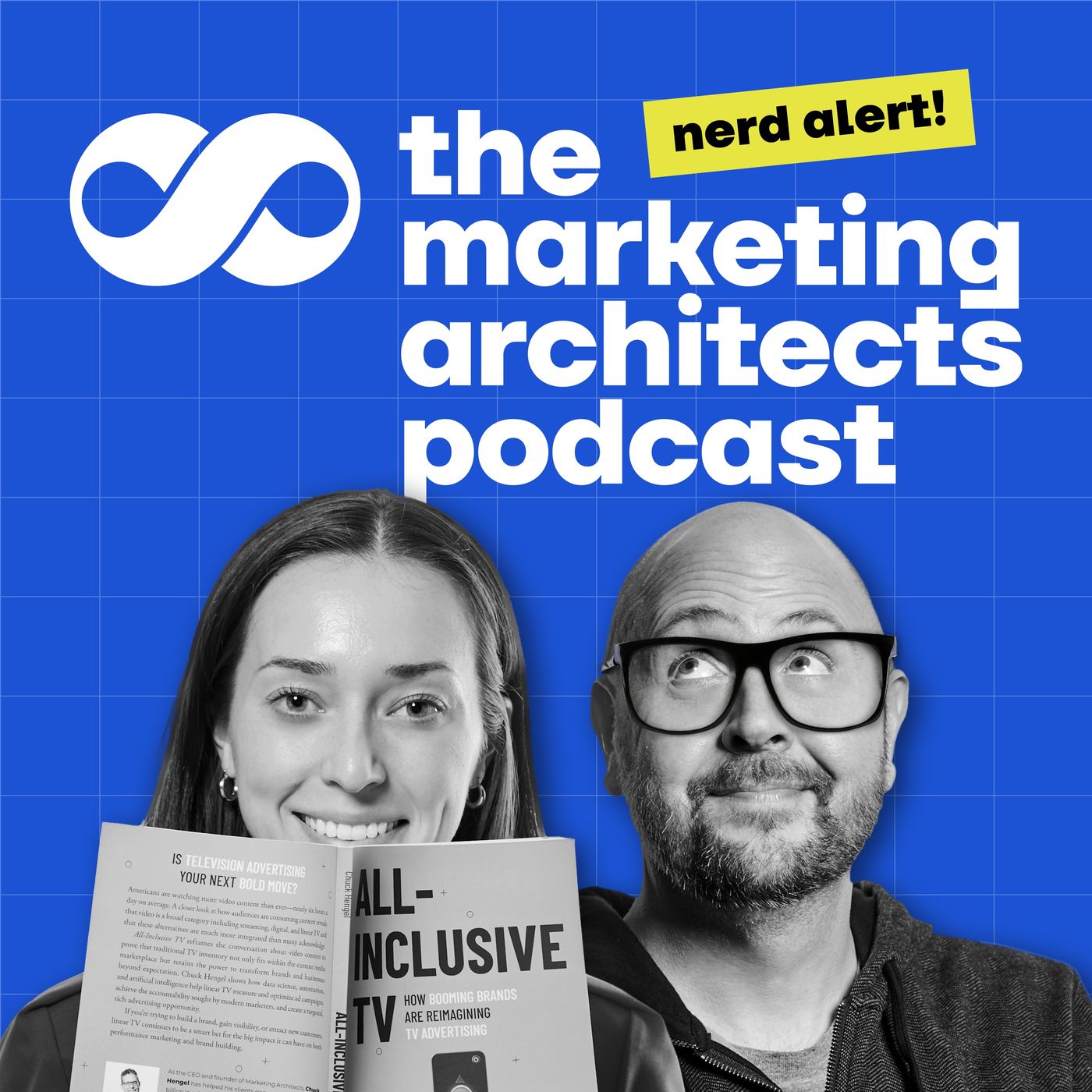
Nerd Alert: Why Branding Strategy Matters
Apr 3000:08:26Summary readyWelcome to Nerd Alert, a series of special episodes bridging the gap between marketing academia and practitioners. We're breaking down highly involved, complex research into plain language and takeaways any marketer can use. In this episode, Elena and Rob dig into how branding strategy shapes consumer buying behavior and why the strategy you choose matters less than how consistently you execute it. Topics covered:[01:20] "Impact of Branding Strategy on Consumer Buying Behavior"[02:50] Why branding does the heavy lifting for fast-moving consumer goods[03:15] Four branding strategies: corporate, multi-brand, sub-brand and mono[05:20] When a house of brands beats a branded house[07:00] Commitment over perfection: why execution determines brand powerTo learn more, visit marketingarchitects.com/podcast Resources: Singh, Balgopal (2013), “Impact of Branding Strategy on Consumer Buying Behavior.”Research Journal of Arts, Management & Social Sciences, March 2013 Get more research-backed marketing strategies by subscribing to The Marketing Architects on Apple Podcasts, Spotify, or wherever you listen to podcasts.
SummaryNo More Mild Marketing
Apr 2800:24:43Summary ready94% of pricing power comes from how meaningfully different a brand is perceived to be. So why are so many marketers playing it safe?This week, Elena, Angela, and Rob ditch the safe answers and eat progressively spicier hot wings while doing it. Inspired by the format of Hot Ones, each round brings hotter wings and bolder takes on the marketing strategies most people are afraid to question. From the real cost of over-targeting to why your first-party data obsession may be holding you back, these are the opinions your marketing team needs to hear, even if they sting a little.Topics covered:[01:00] Research on why playing it safe is the riskiest bet in marketing[04:00] Low CPMs on TV aren't a red flag[06:00] Retargeting is overrated and doesn't grow your business[08:00] Most marketers are over-targeting and overpaying for the illusion of precision[14:00] Digital attribution set marketers back a decade[19:00] First-party data obsession is preventing real growth[22:00] Brands should stop producing TV spots like it's 2006To learn more, visit marketingarchitects.com/podcast or subscribe to our newsletter at marketingarchitects.com/newsletter. Resources:2025 Ad Age Article: https://adage.com/article/opinion/why-playing-it-safe-riskiest-bet-marketing/2603646/2025 WARC and Kantar Report: https://www.warc.com/SubscriberContent/article/warc-exclusive/playing-it-safe-is-not-safe-how-the-most-successful-brands-stand-out/en-gb/147826Get more research-backed marketing strategies by subscribing to The Marketing Architects on Apple Podcasts, Spotify, or wherever you listen to podcasts.
SummaryNerd Alert: Life After Brand Death
Apr 2300:10:23Summary readyWelcome to Nerd Alert, a series of special episodes bridging the gap between marketing academia and practitioners. We're breaking down highly involved, complex research into plain language and takeaways any marketer can use. In this episode, Elena and Rob explore what happens when a brand disappears, and which competitors stand to gain the most when a brand gets permanently pulled from the market. Topics covered:[01:45] "Filling the Void: How Competing Brands Can Capitalize on a Brand Deletion"[02:20] Why brands get deleted and how often it happens[04:00] Who actually benefits when a brand disappears?[05:30] The highest-return move competitors can make[07:10] When raising prices backfires[08:20] What manufacturers should stress-test before deleting a brandTo learn more, visit marketingarchitects.com/podcast Resources: Keller, Kristopher O., and Harald J. van Heerde (2026), "Filling the Void: How Competing Brands Can Capitalize on a Brand Deletion." Working paper, University of North Carolina at Chapel Hill and University of New South Wales. Get more research-backed marketing strategies by subscribing to The Marketing Architects on Apple Podcasts, Spotify, or wherever you listen to podcasts.
Summary
The Business Case for Brand Trust
Apr 2100:26:51Summary readyTrust isn't just a feel-good metric. According to an IPA Effectiveness Data Bank analysis of over 800 campaigns, 93% of campaigns that drive very large trust gains also deliver at least one major business effect. This week, Elena and Rob are joined by Catrina McAuliffe, SVP of Brand Strategy at Marketing Architects, to dig into what brand trust really means, how to measure it without turning your brand tracker into a "vibes recital," and what marketers get wrong when they try to advertise their way out of a trust deficit. Topics covered:[01:45] IPA data: trust-building campaigns and business impact[03:00] What a genuinely good brand measurement system looks like[06:00] Why brand health trackers become "vibes recitals"[09:00] How to measure trust in two layers — what people say and what they'll forgive[13:00] How newer brands vs. comeback brands should approach trust differently[18:00] TV as a trust legitimizer and amplifier[21:00] Can you advertise your way to trust?To learn more, visit marketingarchitects.com/podcast or subscribe to our newsletter at marketingarchitects.com/newsletter. Resources: 2024 MarketingWeek ArticleGet more research-backed marketing strategies by subscribing to The Marketing Architects on Apple Podcasts, Spotify, or wherever you listen to podcasts.
SummaryNerd Alert: Brands in Unsafe Places
Apr 1600:11:07Summary readyWelcome to Nerd Alert, a series of special episodes bridging the gap between marketing academia and practitioners. We're breaking down highly involved, complex research into plain language and takeaways any marketer can use.In this episode, Elena and Rob explore how ads appearing next to offensive or harmful content can quietly erode consumer trust, and what marketers should do when it happens.Topics covered:[00:45] "Brands in Unsafe Places: Effects of Brand Safety Incidents on Brand Outcomes"[02:00] What counts as a brand safety incident?[04:00] How quickly does brand damage spread?[05:00] Which brands are most at risk?[06:00] Unsafe content versus negative content: there's a difference[07:00] How to respond when an incident occursTo learn more, visit marketingarchitects.com/podcastResources: Grewal, L. S., Vana, P., & Stephen, A. T. (2025). Brands in unsafe places: Effects of brand safety incidents on brand outcomes. JMR, Journal of Marketing Research, 62(6), 981–1002. https://doi.org/10.1177/00222437251349522Get more research-backed marketing strategies by subscribing to The Marketing Architects on Apple Podcasts, Spotify, or wherever you listen to podcasts.
Summary
The Science of Ad Personalization
Apr 1400:25:53Summary readyPersonalized ads outperform generic ones. But the effect is smaller than most marketers expect, and the hidden costs can quietly undercut your brand.This episode, Elena, Angela, and Rob dig into a meta-analysis of 53 studies on ad personalization and what the research actually says about when it works. They're joined by Chief Analytics Officer Matt Hultgren and Director of AI Audio Josh Wilson to discuss the real tradeoffs of personalization and why a new tool called the Mass Customizer could change what's possible for TV advertisers.Topics covered:[01:00] What the meta-analysis reveals about personalization's modest impact[03:00] The reach trap and why narrowing audiences shrinks mental availability[06:00] Why marketers overestimate audience differences[09:00] How to test personalization cleanly using geography and control groups[14:00] Traditional roadblocks in TV production when scaling creative versions[18:00] How the Mass Customizer uses AI to swap voiceover and graphics at scale[21:00] Why CTV breaks the false choice between mass reach and customization To learn more, visit marketingarchitects.com/podcast or subscribe to our newsletter at marketingarchitects.com/newsletter. Resources: Yeo, T. E. D., Chu, T. H., & Li, Q. (2025). How Persuasive Is Personalized Advertising? A Meta-Analytic Review of Experimental Evidence of the Effects of Personalization on Ad Effectiveness. Journal of Advertising Research, 65(4), 616–631. https://doi.org/10.1080/00218499.2025.2467763Get more research-backed marketing strategies by subscribing to The Marketing Architects on Apple Podcasts, Spotify, or wherever you listen to podcasts.
SummaryNerd Alert: When to change your messaging
Apr 900:09:08Summary readyWelcome to Nerd Alert, a series of special episodes bridging the gap between marketing academia and practitioners. We're breaking down highly involved, complex research into plain language and takeaways any marketer can use.In this episode, Elena and Rob explore when brands should evolve their messaging versus refreshing their creative execution, and why the right answer depends entirely on how old your brand is.Topics covered: [01:00] "Should You Change Your Ad Messaging or Execution? It Depends On Brand Age[02:00] Message versus execution: what's the difference?[04:00] Why younger brands benefit from changing their message[05:00] Why mature brands should protect their core positioning[06:00] The formula for older brands: keep the promise, change the packagingTo learn more, visit marketingarchitects.com/podcastResources: Pauwels, K., Sud, B., Fisher, R., & Antia, K. (2022). Should you change your ad messaging or execution? It depends on brand age. Applied Marketing Analytics, 8(1), 43–54.Get more research-backed marketing strategies by subscribing to The Marketing Architects on Apple Podcasts, Spotify, or wherever you listen to podcasts.
Summary
TV Like Digital? Debunking the Biggest CTV Myths
Apr 800:10:27Summary readyMany brands treat Connected TV like another form of digital advertising. That's a mistake.This week, we’re sharing a bonus episode with a special presentation from Shoptalk. Catherine Walstad, Chief Media Officer at Marketing Architects, breaks down the most common CTV myths and explains what smarter TV buying actually looks like. From frequency management to targeting accuracy to ad fraud, Catherine covers the traps brands fall into and the strategies that get results.Topics covered: [01:00] Why CTV is not just another digital channel [03:00] How frequency becomes waste faster than you think [04:00] Why premium inventory doesn’t guarantee better performance [05:00] Ad fraud, poor supply, and wasted CTV impressions [06:00] The limitations of IP-based targeting [07:00] Why CTV measurement produces conflicting answers To learn more, visit marketingarchitects.com/podcast or subscribe to our newsletter at marketingarchitects.com/newsletter. Resources: Watch: TV Like Digital and Other CTV Myths Catherine’s LinkedIn
Summary
When CPM is King
Apr 700:32:17Summary readyMarketers are being told to stop buying media on CPM. But is that actually good advice?This week, Elena and Angela are joined by Chief Media Officer Catherine Walstad and Chief Analytics Officer Matt Hultgren to dig into one of advertising's most debated metrics. Together, they break down why CPM still matters, where the low-CPM-equals-bad-media logic breaks down, and what actually signals media quality.Topics covered:[01:30] Research on the true cost of dull media[06:00] Why TV outperforms digital on cost per attentive second[07:00] Should marketers stop buying on CPM?[11:00] Where low CPM signals bad inventory, and where it doesn't[16:00] How to identify high-quality media[21:00] Why CPM is king at Marketing Architects[25:00] How to design a test to challenge your CPM assumptions To learn more, visit marketingarchitects.com/podcast or subscribe to our newsletter at marketingarchitects.com/newsletter.Resources: Think TV/Eat Big Fish/Amplified Report: https://thinktv.ca/research/the-eye-watering-cost-of-dull-media/Elliot Wright Article: https://mediacat.uk/whats-holding-tv-back-culture-not-effectiveness/Get more research-backed marketing strategies by subscribing to The Marketing Architects on Apple Podcasts, Spotify, or wherever you listen to podcasts.
SummaryNerd Alert: What 100 studies taught us about marketing
Apr 200:09:51Summary readyNerd Alert: What 100 Studies Taught Us About Marketing Welcome to Nerd Alert, a series of special episodes bridging the gap between marketing academia and practitioners. We’re breaking down highly involved, complex research into plain language and takeaways any marketer can use. In this episode, Elena and Rob synthesize findings from 100 Nerd Alert episodes to surface the principles that consistently show up across the research and what they mean for how marketers should think about creative, reach, promotions and measurement. Topics covered: [00:55] “What 100 Studies Taught Us About Marketing”[02:00] Marketing works through memory[03:00] Why creative is a strategic multiplier, not a subjective choice[04:30] Brand growth comes from reach, not loyalty[05:30] Promotions create spikes, not growth[06:00] Why measurement often misleads strategy To learn more, visit marketingarchitects.com/podcast Get more research-backed marketing strategies by subscribing to The Marketing Architects on Apple Podcasts, Spotify, or wherever you listen to podcasts.
Summary