Loading summary
Transcript26 lines
- [00:00]
A
Foreign. Welcome to a new special series called the Bathroom break. That extra 10 minutes you either have to listen to marketing tips or use the bathroom. Or both. But I don't recommend both. But that's your choice.
- [00:20]
B
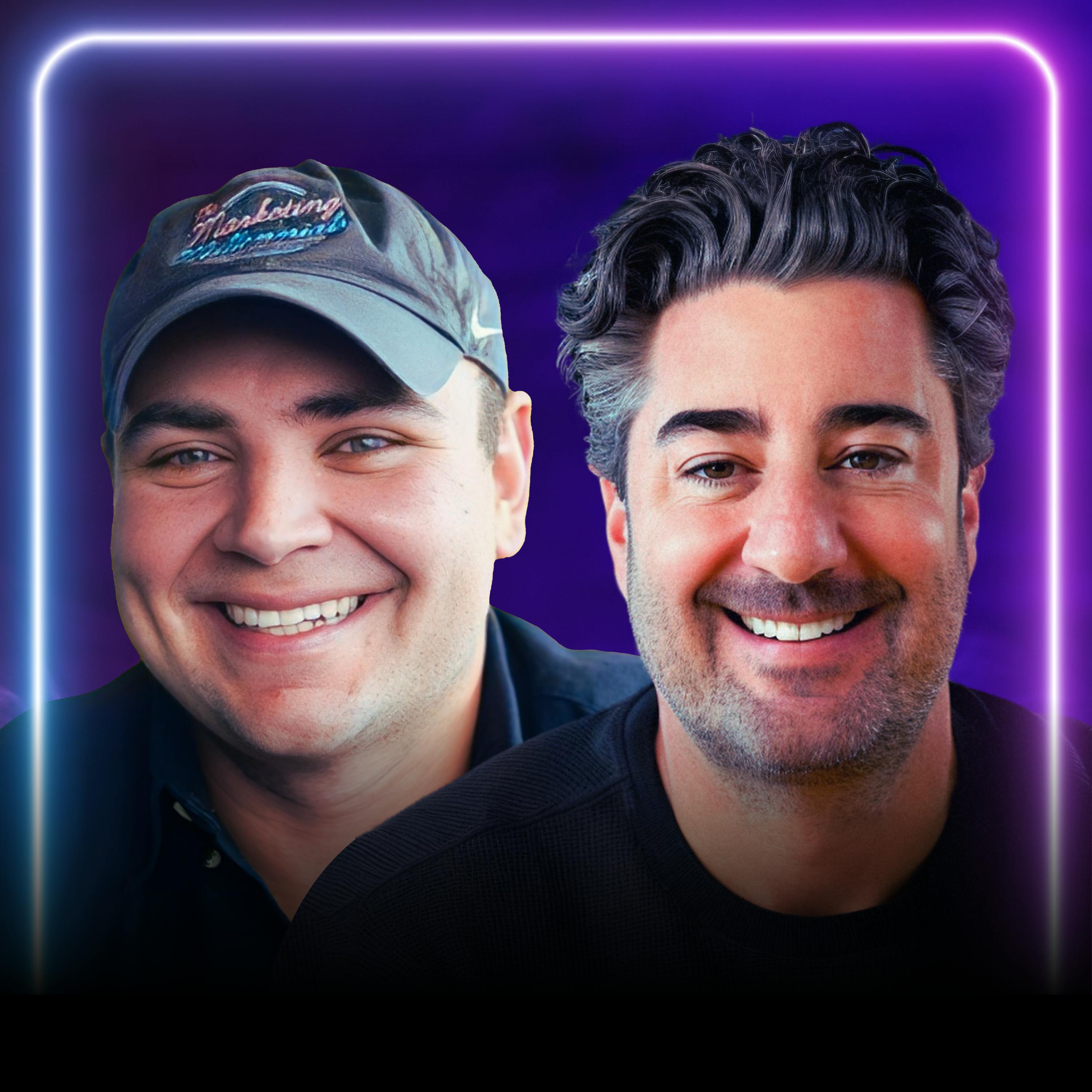
This collab is going to be super fun. We have Daniel Murray from the Marketing Millennials and me, Jay Schwedelson from the do this, not that podcast and subjectline.com each episode in the series, we are going to go over quick tips, different marketing topics, and if you want to be in the bathroom, fine, just don't tell us about it. Thanks for checking it out. We are back for the bathroom break. There's Jay Schwedelson from Do this, not that. And I'm with the marketing millennial himself, Daniel Murray. And we're going to be doing today our top five things that we've learned about social media this year and things taken into 2026 about social media. But before we do that, it's the shopping time of year. It's the whole, you know, Cyber Monday, all that's going on or happened or whatever. So, Daniel, what your vibe with holiday shopping?
- [01:06]
A
Well, since I have a baby, I, I literally texted R and she put this on the newsletter that I, I was waiting for a few weeks on finding what baby items were going to go on Black Friday. And this one store, which, like, has the softest baby clothes, had this drop where it was password only. And I literally went on Facebook to join the group to get the, the, the, the password so I could get early and to. So I'm like desperately buying baby clothes right now on Black Friday.
- [01:36]
B
So that's, I don't think there's a worst investment that you can make than baby clothes because terrible. You buy it and then within like 60 days, your baby's too big for them. Exactly.
- [01:47]
A
It's just for the pictures. It's not for anything else.
- [01:49]
B
It's all for the gram. It's all, you don't put your kid on the gram. It's all for pictures that will live on your phone.
- [01:55]
A
Yeah, I don't, I do not put my kid publicly on social media. So I just, I do it because for the cuteness of it, nothing else.
- [02:04]
B
That's good.
- [02:04]
A
I mean, you like to do the trick of leaving things in your card and like, letting, letting the discounts come to you.
- [02:12]
B
Well, I think one of my biggest failures when it comes to all the holiday shopping is I wait until this time of year to buy, like, essentials, like, I need new socks. And I've been putting it off for like six months saying I'm gonna wait for holiday discounts. I'm like, dude, what am I doing? I need socks. I'm gonna save $2. What am I doing?
- [02:30]
A
I actually Ari tells me I need to because I swear 30% of my socks have a hole in them. And every time people like come over when I wear socks, they're like, what is wrong with you? Just go buy new socks.
- [02:43]
B
Well, now's the time. All right, well we've covered a lot of great information already, so let's get into it. Let's rip through. What did we figure out this year about social media heading in 2026? What are the key things, the five things, the whatever.
- [02:56]
A
Yeah, I'm going to start off with one. And I think the big one I learned is the power of commenting on LinkedIn. So LinkedIn this year launched impression metrics for comments and that signaled to me that they care about what people are commenting, especially for company pages. So I doubled down on commenting strategy of commenting on thought leaders posts, commenting things and that actually grew the market millennials LinkedIn page way more than if I just posted in feed post. So I still think this is going to be a big strategy going into 2026. I still think this helps you prove that you're not AI and more social do not do. But when I'm saying commenting strategy, it has to be a well thought out comment. It easily has to be entertaining, funny. Exactly what you would do on the grid should be your comment. It's basically testing for future posts. So don't just do good job or thank you. It has to be an intentful comment. But if you do that right, you'll see a lot of impressions, likes and follower growth, especially on company company pages.
- [04:02]
B
Yeah, I've been watching you all do that. And it's also really smart. And it also gives you a feeder of like content that you can create based on the comments that really hit which is super cool. I think the biggest thing that we we've taken away from this year is micro budgets for boosting on social. What I mean by that is if you look at content you put on Instagram or LinkedIn or YouTube and you then put boosting dollars behind your best content, don't put it behind losers, but you have some content that does well. You can put the smallest amount of money. So for example, on YouTube you can put $5 I'm not even exaggerating $5 behind a video that had a little bit of traction and you will see it take off exponentially you could do the same thing on Instagram for less than $50, the same thing on LinkedIn for less than $50. Micro budgets and boosting stuff, paid ad boosting on posts that are doing well. And the reason it's doing so well, you're getting way more than what you deserve. These platforms are trying to onboard as many ad clients as they can. So when you boost it even for a few dollars, they're making it rip because they want you to come back again. So think about doing that for your best post because it helps so much.
- [05:18]
A
I think the third form, and this is a general thing, but I also will go down. I think this was the year of the short form video and I think next year it's going to even be a bigger thing for reels, for TikToks, for YouTube shorts. So I've really been. But what I wanted to add on that is when you're thinking about doing reels or YouTube shorts, you have to think about in the mentality is is this going to be shared in the DMS on Instagram, Is this going to be shared in the Slack channels? Is this going to be shared in the group messages? Your goal should always be if you want to get in the feed longer, is, is this content shareable? So when you're creating it, the first three seconds need to be perfect. There needs to be good, good storytelling. It needs to have a good call to action or loop at the end. So really think about doubling down on short form video and 2026. I think it's going to be, I think it's still going to be a huge thing and it's going to be more and more important to, to nail down the formula and the format for Every platform in 2026.
- [06:23]
B
Yeah, and I'm going to name drop here for a second and be a real cheesy loser. But something I got out of the conversation I had with Gary V. On my podcast, which really helped me out a lot, was not pushing stuff that are losers, focusing on winners. What my company used to do was we would put stuff out on social media that we, we thought would be a good piece of content, didn't do well organically and like, oh, we want this thing to do better, let's put paid dollars behind it, let's try to juice it, whatever, and we try to amplify losers. But losers are losers for a reason, whether you like it or not. So amplifying winners is secret sauce stuff that I learned from him this year, which is really important. And the other Tactic which we've been doing, which I don't, I don't see a lot of people doing, which is really cool, is we always talk about getting people off of social media and onto your email list. Great. But also the reverse is true. Getting people that are on your email databases to be aware of your social media presence. And so one of the things we've been doing is in our newsletters and some of our promotional emails we are linking to like we'll put a hero image in our newsletter that's actually linking to a social post that we did on that topic specifically. And it's bringing people from our email databases to then follow us on social. And it's getting those social posts to do really, really well. So if you've never tried to just link from your newsletter or promotional email to social media itself, that's a cool test that we're doubling down on heading into 2026.
- [07:49]
A
No, I am, I'm 100% in agreement on that. I think, I think people overly have said for the longest time that email is owned audience. This is the only audience you need to build. But also you need to stay. We're also in the mode where you need to stay top of mind and multiple platforms. And if, if people aren't opening your email, they might see your social post, they might see your boost post you. They might see something else from you. So you as important are people getting off your list. It's as important to nurture the community on the platforms you have. Obviously they can switch off that platform and you lose that following. But also people can't might not open your email. So um, you need both. I don't think you should only double down on ones. I always say rented an owned audience. And I think the last thing I would say is and a technique I've been using and I don't know if it's like a huge deal but is using stories to bring people off of the platform. Instagram stories. And what I do is instead of just saying click link here to attend my event, I'll say I'm doing a private event. I'm doing this like DM me like a word and I will get back at you. And now there's pop. There's like technology like many chat which can help respond to things for you. So you should use the platforms in smart ways to get people of the platform. And the reason why you keep people on your Instagram stories and you want people to reply to your Instagram stories just like email is like deliverability and be shown more in the feed. So the more people reply to your Instagram story, the more people get fed your Instagram story and more people see it. So I would double down on trying to get people off Instagram story into a commenting strategy to. I mean, a replying strategy to your. To your DMs.
- [09:36]
B
So let me ask you a question. Going back to holiday shopping for a second. If you're at, like, you know, Best Buy, whatever, and then a fight breaks out about, like, somebody trying to buy the last whatever item, are you the type of person that kind of, like, gets really far away and just tries to leave the store? Or do you take out your phone and. And start videoing it? Like, what level of a horrible person are you if you see something like that break out?
- [10:00]
A
First of all, I do never recommend going anywhere on Black Friday. So I'm an online shopper, but I would just be. I kind of would just, like, watch for entertainment, not record. I think the entertainment value is. Is peak when people are, like, fighting over the last thing. I'm. Sometimes it's not that deep. And I get it, you want a deal. But the deals happen online now. But I imagine, like, 10, 15 years ago, that was some crazy stuff going on there.
- [10:29]
B
So, yeah, 100%.
- [10:31]
A
Have you ever seen one happen?
- [10:33]
B
No, but when I see it on my feed, it's content I will consume all day long. I mean, if anybody wants to send me DMs of. Of that occurring, I think that is the downfall of humanity. I think that right there, when those things occur, that is the end of society as we know it and all for it. I. I encourage people fighting over weird stuff that they're trying to buy. If you see that one item left, you should dive on it and curse at other people. This is what I am telling people to do.
- [11:03]
A
Okay, well, you heard it here first. Send Jay all the videos of what happened on Black Friday. And if you find some funny videos, flood his DMS on Instagram and go follow him on Instagram and LinkedIn and all. All the places. And give. Do this, not that. It's 7432 review on. On Spotify and Apple podcasts.
- [11:28]
B
So there you go. All right, later, y'. All. Daniel, come on, man. I gotta get back to work. Get out of there. All right, while he's still in there. This is Jay. Check out my podcast, do this, not that for marketers. Each week we share really quick tips on stuff that can improve your marketing and hope you give it a try. Oh, here's Daniel. He's finally out.
- [11:48]
A
Back from my bathroom break. This is Daniel. Go follow the Marketing Millennials podcast, but also tune into this series. It's once a week, the Bathroom Break. We talk about marketing tips that we just spew out. And it could be anything from email, subject line to any marketing tips in the world. We'll talk about it. Just give us a shout on LinkedIn and tell us what you want to hear.
- [12:10]
B
Peace out. Later.