← The Marketing Millennials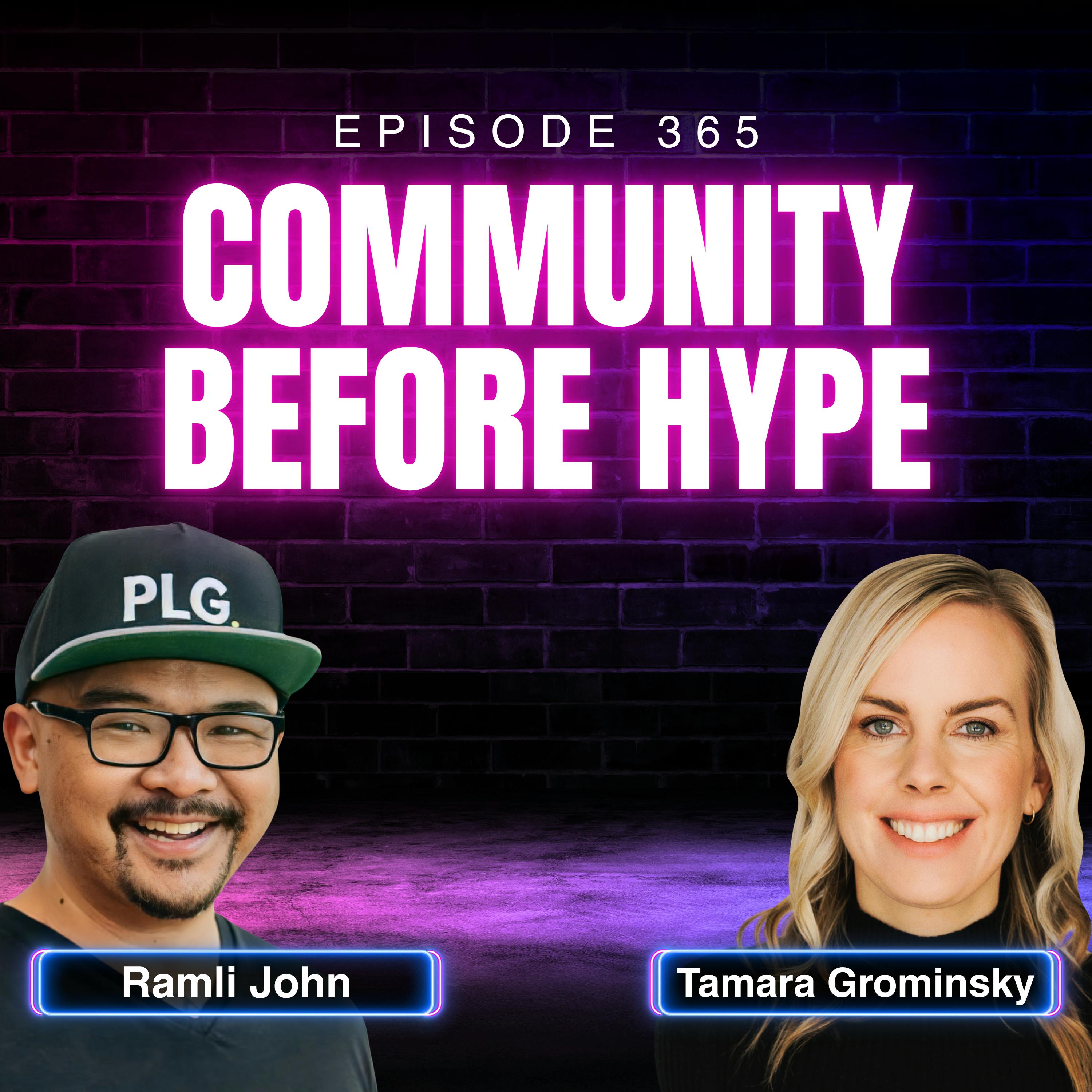
The Marketing Millennials
Building Community Before Building Hype with Ramli John, Founder and Author | Ep. 365
00:39:19
Loading summary
Transcript59 lines
- [00:00]
A
Hey, besties. Welcome back to another episode of the Marketing Millennials. I'm Tamara Graminski and I'm stepping in as your guest host while Daniel's out on paternity leave. I'm a career product marketing leader and the former VP of PMM at high growth startups like Kajabi and Unbounce. Now I'm the founder of PMM Camp, a community and newsletter for product marketing leaders. And while Daniel's off doing dad things, I'll be here bringing you fun conversations with some of the smartest marketers I know. Today I'm joined by Romley John. He's the author of Product Led Onboarding and Eureka, and is one of the leading voices in product led growth. We talk a lot about marketing software or even DTC products on this show, but rarely books, which is wild because launching a book is basically a masterclass in marketing. You've got positioning, pre launch, demand gen, distribution strategy, bundling, everything. And for me, this one's extra fun. I actually have my master's in publishing, so when I saw how Romley John launched his second book, Eureka, I I knew we had to break it down live. Today we'll dig into what worked, what didn't, and why he took such a different approach. The second time around, we'll break down the key levers of his launch, from pre promotion and demand validation to distribution choices and pricing so you can apply the same strategies whether you're marketing a book, a product, or your next big idea.
- [01:20]
B
Welcome to the Marketing Millennials, the no BS Market Marketing podcast. I'm Daniel Murray and join me for unfiltered conversations with the brains behind marketing's coolest companies. The one request I tell our guests stories or it didn't happen. Get ready to turn the up.
- [01:46]
A
Bromley. Welcome to the show.
- [01:48]
C
Hey, I'm excited to be here tomorrow.
- [01:51]
A
I'm so excited to have you. As you know, we just launched your second book, so you had product led onboarding, now you have Eureka. And we were chatting before the show and you were kind of sharing how you took two completely different approaches with the book launches. So I'd love for you to just walk us through what you did for the first book with Wes, actually, and then how you thought about launching the second one and why you made some of those changes.
- [02:18]
C
Yeah, the first book, Product Led Onboarding, I launched it. I was still working with West Bush at Product led, and that was four years ago, 2021, in the middle of the pandemic. It's absolutely crazy that we're saying that it has been four to five years. But that one was really a lot of things that I saw worked. I adopted in this one some of the things that really worked. Building a community. Earlier on at that point it was very email driven. So we were. I got an early readers club that had people enjoying to read the book early and then they were part of the launch team. So they had the book advanced. So when it launched they had the photos available. I took the best of that and then brought it here. All of that. And I added on top of some of the things that I've seen really well that we can talk about. I did a virtual launch event. So a virtual conference on top of that. More generic about onboarding. But the book was really plugged into that. That did really well into driving sales and to the book itself. And then in terms, rather than like hosting the early readers club community in email format, I actually use circle, which I know you're familiar with. So I created a circle group. And the second, the third thing that I changed was actually charged to join the early readers club. So they would pre order six or seven months before. And I just dripped out like a chapter a week for like 20 weeks. So those are some of the things that changed. I know this is very high level, but I'm happy to dig into what worked and what didn't and any of those things that worked, how they performed.
- [04:04]
A
Yeah, let's go into the reader's club concept because I love that and I don't think I've heard this exact concept before. I've definitely heard the idea of like what you guys did with product LED onboarding. So, you know, you sign up to a special list, you get, you know, some chapters, maybe you can even give feedback. But it sounds like you did something more unique here. I've never heard of a community ahead of a book launch. So walk us through like first. Where did that idea even come from? And just give us kind of like the TLDR of like. What was that readers club. What was actually included. How much did you charge for it? That type of thing.
- [04:38]
C
Yeah. So for the early readers club, I believe I saw it first with David Spinks. He actually wrote a book about community which made sense because he launched with it's the business of belonging. I believe that is the book itself. I chose to charge for it. So there's skin in the game. It was pretty much a pre order rate which is like 40 bucks to get in. They get the early chapters. I did a monthly Q and A for me to get feedback on what I'm writing. So I'm getting live feedback there. They would get the book in advance of everybody else, so that was part of it so that they can launch it as part of the community. And the reason why I found that chose to approach it with using a circle or something like that is a book launch. Is it truly better with a group of folks who are passionate about that topic? And a lot of product folks know this. Product marketing folks know this too. You usually launch a feature to a beta group. So you would have a beta, a beta team or beta customers and you would test out the product. I took the same product approach to the book, right? I was like, oh, I gotta build this beta group. But some people might not know what that is. So early readers club made sense. And it had a two pronged purpose, to pre sell the book and secondly also to get a ton of feedback from it. I got about 100, 100 or so folks. So that already generated four to five grand from before even the book was sold. And so that helped a ton to build confidence that I'm writing the right topic and I was writing the right chapters. The feedback was invaluable. I actually got one feedback from someone is like these three chapters, they don't work well together. And I was like, I was already feeling it. And I was like, you're right, it's like this should be one. So I completely remove three chapters and put it into one. Like it totally changed the way the book looked like because of feedback from an early readers club. So I think that that that helped a ton in terms of producing a more quality book than without it.
- [06:58]
A
When I first heard you describe the concept of the readers club, I immediately thought of like a beta group testing for product launch or you know, I remember when I was at Unbounce, we were creating content. It doesn't have to even just be products, but we were creating content this big, like conversion benchmark report that we would produce every year. And we even created that report with a group of paying customers as well to A, just like validate what they even wanted in the report. Like we presented a bunch of different insights and we're like, what is more interesting to you? What would you actually want to know more about? What would you action in your work and then B, to like kind of get them excited. So same as you. On launch day on LinkedIn we had a bunch of kind of influencers promoting our report rather than it just being, you know, from the unbounding. So I love that idea. And I think, like, marketers can apply it from a bunch of different projects that they're working on. It doesn't just have to be like a book launch or a product launch. I'm curious, what percentage of your book was, like, written before you launched the readers club versus what was it? Because I think this is where I get a lot of challenge is like, in product marketing. I'll just put my product marketing hat on. I always want to get users in as soon as possible. I want to talk about it as soon as possible so that I can get that feedback. But you also have to balance this with, like, what if this actually doesn't get shipped? Or what if this changes entirely? So, like, I'm just, I'm curious about how you were thinking about balancing the, like, over commitment, I guess.
- [08:24]
C
Right? Yeah, no, that's. I'm, I'm totally with you. It's like, I'd rather get this. I wrote, I think I wrote two chapters out of 2020. I had the description. I had the description. I had a concept in terms of like, oh, here are my, Here are my chapters. They're going to be small. I want it to be easy so, you know, you can finish a chapter quickly so that you don't lose your spot. I had the chapter headings, the sections, and then two chapters. And I launch it because I'm totally with you where, like, hey, you know, I'd rather get this out sooner. There's always an opportunity to refund if it doesn't work out.
- [09:06]
A
Sure.
- [09:07]
C
And it's. And it was part of the journey would be like, hey, we're in this journey together. And if the output is like, oh, this book is not going to happen, let me refund it. But along the way, it did shift some of the things that, for example, I mentioned, the three chapters that totally changed. So I think this applies a ton and just get the feedback quicker because things are moving quickly. We're seeing this in marketing. We're seeing this with search and organic, with brand. Like, how things are moving so quickly that I would rather test it with the market quickly and then like, oh, okay, that didn't work. What's the worst that can happen? Of course you don't want to test it out with everybody. Like, if you're a company that's like Adobe, right. You're like a public company and you release this, it's like, oh, my goodness, shoot, didn't work out. Let's backtrack. But can you do a smaller. Can we do a smaller test with a Smaller group of people that will be honest and give us feedback, but will still love us, even though we mean, we had to kind of backtrack with this. And that was part of the early readers club was some of those people. I. They were part of my email list for some time. So, yeah, that's what I was thinking.
- [10:25]
A
I love that. And I think so often we are afraid. You kind of mentioned this, that you're afraid as a brand to have any kind of negative feedback. But we also need to know before we invest months or years on something what that feedback would be. And so what I'm hearing from you is kind of like, minimize the risk, right? Like, create these little contained spaces where maybe they're super fans, where they'll actually give you feedback. You don't want people to just praise you either. That's kind of the balance, I find, with some of these super fan environments is like, you want someone who will give you honesty, but you want it to be contained. Honesty, I guess, would be the best.
- [11:03]
C
And there's like, one. Like there's one or two folks that, you know, your customer base, they love you, but they will be honest. And like, for me, like, they're hearing them say they love it more or they need. It's like, okay, that's some kind of validation. I'm totally with you. Like, you want to make sure that the people in that space, that superfan space or early launch, whatever you're trying to launch, whether that's a report or a book or something, that there are some there that you know will be completely honest with you and be like, yeah, this is not working out. Please fix this.
- [11:43]
A
I love it. I mean, so one of the things we think about a lot as marketers is distribution. And you definitely took a different distribution play with your second book versus the first. And I was reading that LinkedIn post that you wrote, and I think you mentioned, like, 77% of Eureka sales came direct rather than through Amazon. Tell us a little bit about, like, how you thought about distributing the second book and what kind of owning your direct distribution channel allowed you to accomplish.
- [12:12]
C
Yeah, that's, you know, the first book we launched, I launched Product and Onboarding. It was exclusive to Amazon. Totally exclusive Amazon. And the reason why is when you. When you sign with Amazon, you know, you tell them that exclusive, they'll promote it, they'll add it to Amazon Unlimited, and they. They provide it to people who are part of prime and they can read it for. And Amazon would pay you per page that they read. You can Provide more discounts. So volume wise I did better in terms of number of book sales with Amazon when I learned launch product led onboarding. But in terms of margin and connection I would say direct sales is more valuable. And what I mean by that is that you know, with direct sales I obviously get a bigger cut. Amazon, I forget how much they take now, 60, 40% or something like that. Of course but the, I think the most valuable thing is that when people pre order through Amazon or buy through Amazon you don't get that customer connection. You don't, I don't, I don't see who, I don't see the email address. I don't see like where they came from and how versus with with direct when they purchase I actually get a slack ping. I was like oh hey you know yesterday I had a call with somebody and they bought it beforehand and then I was like oh thank you for purchasing my book right before the call because I have visible visibility into that and I have like a email sequence like when they purchase the book, if they have any bonuses they got like the audiobook, they'll get that. But also I can request for feedback or they can, you know, they're now part of my email list in kit that I, that I can continue the relationship with that I don't get through, through, through the other way through Amazon. So I think that was really valuable for me to you know like really connect and those people that, that, that bought directly or pre ordered directly, I invited them to the free launch party, the virtual conference that I, I wouldn't have been able to if, if they bought it through Amazon. So really it's about that, that relationship and connection that, that I was able.
- [14:26]
A
I love that. I actually think, I love how you just like put this element of community into your entire book launch and not just the launch like leading up to it, building the readers club, but actually thinking about how you continue to engage with your customers readers. I often think of a book as a bit of an impersonal thing. Like so many people have asked me are you going to write a book? And I was like well it's not really top of mind for me. Like I love my newsletter because for the exact reasons that you mentioned though, which is I write my newsletter. A I can write it and get real time feedback kind of like you mentioned your readers club. But B like my subscribers will like message me back all the time every Sunday and be like oh what about this? Or I love this and this, you know, relates to this part of my life and I feel like I have a real relationship with many of them and then, you know, if I see them at a conference or I see them on LinkedIn or they schedule me for a call. Yeah. To your point, I have all this context of, oh, we were chatting about this topic from four months ago and I feel like a book, book doesn't have that up until now. And you've kind of like reframed how I think about books now.
- [15:30]
C
Yeah, no, that's. I never saw it that way, where it's hard. Like somebody buys it like from a bookstore and like, did they buy it? Like, who was it? Like, where, where did they come from? Where do they work? Like, how, how can I help them more? And I don't see that visibility if it was through, through Amazon or Barnes and Noble or, or somewhere else.
- [15:51]
A
Nice. One of the reasons I really wanted you to come on the show is that, you know, book marketing might seem different than what we usually talk about, but so many marketers are being asked to like promote whether it's a book or just longer form content for their founders or for their executives. And so I think this is a really top of mind subject for a lot of marketers. And one of the things I think we could learn from you is how you went just beyond the book with some of your bundling. And I'm going to call them value ads. But I think it makes a lot of sense for companies who wanted to put out thought leadership. They want to put out a book because it does give some credibility, but they also want to make that book actionable. So can you walk us through maybe some of like the templates and the different bundles that you created as part of launch?
- [16:39]
C
Yeah, I definitely wanted it to be practical and like, what is the transformation that I want people to achieve through the book? I want them to have better onboarding, but chances are they're going to read the book and they're going to be happy and then they're going to put it down. How do I make it the quickest time to value, the quickest time to action for them. And templates is one of them. So I created a bunch of templates that if you get the book, there are some free templates available, but there's also some premium templates that they can get that I created in Miro and figjam that they can run some of the workshops in. I kept thinking, like, what else can be valuable to that end reader or that person who wants to make this transformation? I was thinking about, what about Swipe Files. Okay, that's cool. What about people who hate reading but they bought the book? I'm like, audiobook is great, but like, okay, it's audio. But some people like seeing the face. So I created a course with it too. So there's prerecorded course that I walked through the framework and that's part of the. I say, okay, so all of this, that's great. But what if they still have questions and that's when the highest tier skill bundle where you know, you can buy the book for your team and I can come on and do a Q and A with your team. So I started, I guess I was thinking a lot about like how do I make this experience for the end reader or this customer really great so that if they, if they know it's not going to work out. Like is it templates? Is it, is it the course? Is it the swipe files? Is it the one on one call? Would that would really help them. And my, my end success is like I'm hoping that they people who get this will actually build a better experience for their customers in their onboarding experience. And that's all I was thinking about. How do I make it make that happen for them? Because you know, I don't want them to just get the book and like, okay, it collects dust or they don't open it up.
- [18:49]
A
I love that. Like it sounds like what you were actually focused on was like marketing the transformation and you were less committed to the format to deliver that transformation. And that's opposite for many books or content marketing. Like I'll even just go back to this like report again just cause it's like fresh in my mind from when I was at Unbounce. It's like, okay, we had this large report that we spent many months on. We were so focus on like getting the report, getting people to download the report, versus being like what do we want people to do? We want people to understand the mechanics to increase their conversion rate. How might people do that? Yeah, some people want a report. Maybe some people want an app. Maybe some people do want like a premium call. Maybe we could have offered something like that for like our enterprise customers. So I love that because I think we could apply that to a lot of things. Like as marketers we often just get so stuck on the like delivery mechanism versus what we're actually trying to deliver in the first place.
- [19:44]
C
Yeah, they're so focused on the deliverable that they forget about the transformation they want to deliver to the customer.
- [19:51]
A
Exactly. I love that. And I think it's probably allowed you to learn a lot about that customer through engaging with them in different ways, right?
- [19:59]
C
Yeah, no, that's totally like it's that one on one and that community and that different things keeps coming back to like what else do they need? And having that community and space like so what else do you need? You got this. What are other things that could be helpful for them is where I'm getting a ton of feedback from.
- [20:22]
A
I love that. So obviously you used a bunch of different levers to launch this book. If you had to strip it back just to like a minimum viable launch as I'm calling it, what would you actually like really keep now in hindsight versus what were the things that maybe you tried and weren't as effective?
- [20:42]
C
Yeah, what did it work? I can go start with what work. If I had to launch another book, I 100% do this. The community is definitely one that was a ton great feedback, great space for testing the waters in terms of the viability of the book. The other thing that was helpful was doing an event. I think that was very helpful to build hype and like anticipation for it. It's like, oh, my book is launching. My book is launching in seven, seven days. Like that. That is not as a cool. You're launching a book. How does that help me? How does that help? Like if I was like here, here I am, I'm trying to do my job. I'm in product or customer success or marketing and a conversion or a free trial sucks. Conversion rate sucks books. I don't have time to read that book. So. So the event was like coincided with the book and it was like a six hour event right on the same day of the book launch. I invited some folks who are experts in the field like Andrew Kaplan and Kate Siuma and Wes Borscht, a bunch of folks that spoke and shared what worked and what didn't for them. And people signed up and they invited their colleagues. I noticed like, you know, people were signing up and from the same email address from the same company and majority of those, I would say like 95% of those people have not bought my book at all or it was not in my, not in my email list at all. So they joined because they wanted to learn how to improve their product onboarding. And it was a product onboarding summit. And to get the recording of the event and which includes my book, it was $47 for a VIP access, which is not crazy, but you know, to buy a $47 book, that's expensive. Yeah, like If I went to Amazon or to Barnes and Noble and $47 for a book, that's crazy, right? And by bundling it with, with the recording and some of the templates and the book itself, I got a ton of sales on the book launch. I think it was about three to four grand from the book, from the book launch day itself because of this. So I think looking back that's like, man, this worked and I enjoyed it. It gave me a ton of energy. Like if it was like, oh my goodness, that tired me out a ton after that six hour session. I was like, man, this is gonna be long. But it gave me a ton of energy. I would suggest like, if they were thinking about doing like hyping up something like a report, matching it with some kind of live event would be helpful, especially that people are looking for that connection. And yeah, I would say that's something that I would do it. Again, what didn't work as well, I didn't think about international shipping as much. That's one thing that this might be more book related where if you're trying to send a physical book to Europe or even in Canada, because my publisher was in the U.S. the shipping cost was like 50 to $70, which is like, what the heck?
- [24:01]
A
Oh my gosh.
- [24:01]
C
Yeah, no, that didn't make sense because it was direct.
- [24:04]
A
Right.
- [24:04]
C
It was like two or three times than the book, which didn't make sense. So in those cases I would have pushed like an Amazon pre order much earlier, which is a lesson learned. I also, yeah, I think that's one of the biggest like lesson learned from what didn't work out.
- [24:23]
A
Yeah, I love that. And I think I've. Shipping is crazy. I've even had this myself. Like I supported someone else's book launch. I bought a bunch of copies of the book to send to campers in the PMM camp community. And I was shocked by how expensive it is to like mail a book across borders. So I've definitely learned that. But again, what strikes me about what you said did work is again, the. I feel like you have this like uncanny ability to nail perception of value and actually understand what is valuable. Like every story that you've told me about the book launch is about how to make the reader more successful. It's actually not about how to promote my book. And I think that's really important and worth calling out Again, so applicable to anything that we are launching or marketing, whether it's a product, a piece of content, a book. It's like we're so obsessed with it. Because we've probably spent three months, nine months, two years thinking about it. Right? And like it's, we hold it so close to who we are. We have all these feelings and attachments about it. But at the end of the world, it's like the market. Our customers have not thought about it once. They need to be told what's in it for them. And I love how you're like, I didn't even host a book launch. I hosted like a summit about the topic of my book in which my book would be a great takeaway to continue the learning. Cause think about it, I don't know how many attendees you got, but like, I bet you it would have been a fraction of the amount if you had said, here's my book launch.
- [25:57]
C
Exactly. Yeah.
- [25:57]
A
You know, some friends would have shown up. Of course we wanna support you. But that's completely different than saying like, wow, I'm gonna go spend six hours learning about this topic. I'm gonna be able to apply it to my job im and I'm gonna have this amazing reference product that I can keep looking at as I kind of get the learnings in the next few months.
- [26:16]
C
Yeah, no, that's actually funny enough how I define product led growth. Like, oh, what is product led growth? It's just a quote that Wes Bush said that's like, man, that's so good. Our customer success becomes our success. So if we can make our customers as successful as possible, then they're like going to look at us as like they're going to stick with us. It builds that trust and relationship. So I guess that's how I was thinking about it. And you're right, it applies to so many things like content report, like how is this going to make that transformation? Make my user or customer or whoever. I'm trying to share this to be successful with this thing and think about it from their point of view than from our point of view.
- [27:05]
A
Exactly. Because it's like so often we're like, great, why are we doing a report? Well, we want people to put their email in so that we can market to them later. Great. And then, but this, you know, this is the, this is what happens. Right? We're sitting in a room. Great. What would something, what would be so valuable that someone would give us our email? Oh, conversion insights. Great. And then that's the conversation. Instead of the conversation being like, wow, how can we make our customers more successful? Helping them understand what converts great. What's the best way to teach them what converts great. Do you know What? I mean, it's like the scaffolding is just a little different in both of those conversations.
- [27:41]
C
Yeah, you're right. It's like. And I don't know about you, but I feel like that sometimes comes from the top, from sometimes the founder or the CEO. We're like, okay, we need to sell this versus, like, how do we get it from the point of view from the CEO and as marketers, like, I feel like sometimes that requires some re education, like even asking the pointed questions. So what is our customer going to get out of this? Even, maybe even asking the product team or other people that we're working with really asking that question, what is in it for our customers?
- [28:19]
A
Yes, yes. Speaking about what's in it for our customers, I also want to chat about ROI in general because, again, I think books are valuable, but books are a lot of work. They're time consuming. Oftentimes, especially if you're thinking about, in the context of maybe you're a founder or an executive and you want to write a book and publish it for thought leadership for your company, a lot of questions might be around, like, well, how do we get the ROI on this? So I'd love to just hear your thoughts on how you think about even tracking ROI on a book. And how might a marketer explain the ROI of, you know, publishing a book if that is like a lever they're wanting to pull?
- [29:04]
C
Yeah. I can speak of it from the point of view as a business owner myself, then from like a marketer as a business owner. Like, obviously their sales was great. I shared on LinkedIn, I got 16,000 just from that month, just from book sales, which is like, it's amazing. And the other good stuff, and I think this applies to marketers as well, is that I know it's a huge hypothesis and it reflects on me. It's reflect on our friends that we like, our circle of friends, like April Dunford and Wes Borsch. Like multiple times in the last few weeks, somebody would come into a sales call with me and like, hey, here's your book. And it's the book that I just published. And it was like, cool, good. Like, you know, like even, you know, somebody from. Actually, I, I didn't tell you this until now. Somebody from your email list. You mentioned my book, reached out. Yes. And scheduled a call with a sales call, and she was holding my book.
- [30:04]
A
It was like, amazing.
- [30:05]
C
I think that's, that's the power of like writing a book. Especially now, you know, I can talk about AI, I can talk about like, all these things happening to our world in marketing and, like, having that. That sense of credibility. And now it's like a discussion starter for sales. It's like, oh, I just. I have your founder's book here, and they're holding it in the sales call. Like, I love this. Like, you know, it would be awesome to work with your product or your service or your company. There's that. And also, I think it opens up opportunities to, like, do partnerships, like co marketing with other, you know, like, you know, with different companies or different communities where you would come in to do a webinar or you. You would get on podcast. So it's a lot easier there as well. So I think there's a lot of the roi. You're right. It's harder to track. But, like, now I. Now I know, like, when I jump on a sales call and they brought my book, it's like, okay, I can kind of attribute it to that. I'm sure, you know, attribution is hard. It's like, oh, it's definitely just a book. No, there was a lot of things that happened. Right. That was one of the touch points.
- [31:19]
A
And the book, you know, and the book.
- [31:21]
C
Right. Yeah. Yeah.
- [31:23]
A
And I think, you know, you and I were even chatting about this before the show. I think in a world where AI is making it easier and easier to learn almost anything human POV is so important. And I feel like that is what a book is. It's like, this is my personal point of view on this topic. These are my stories about how I've implemented my beliefs. Beliefs, my frameworks, and no one can replicate that, you know, and so I think it does create a relationship where a relationship might not exist if they were just, you know, getting your response from a blog post, for example.
- [32:00]
C
Yeah, 100%. I think you're. You're right. Like, it's that. That opinion and that human. Like, you know, there's. There's. Hopefully there's stories in there. It's not. Yeah, hopefully, you know, hopefully there's not just like, oh, here's some tips and advice. All one audit. So, like, it's as much as people getting to know you. And, like, my book is about onboarding, but I shared stories about how my dad taught me how to fix a sink, and I was using the wrong tool. And I brought that into, as analogy to, you know, you can have the right. If you have the wrong tool, it's not going to work out. So I think having those stories make a big difference, and you're. That POV as like a, you know, big differentiator against something so generic, like what AiI would write.
- [32:48]
A
I love it. Well, we're coming up to our time here together, but we like to end every episode of the Marketing Millennials the exact same way. So I would love to know, what is one marketing hill that you would die on?
- [33:01]
C
Yeah, one marketing hill that I would die on. I really think in the coming few. I don't know how to say this without saying, in the world of AI, it really, we're seeing it. AI is changing marketing. We're seeing people use AI to write, people use AI to make images, people use AI to make videos that are fake. And so. So I think AI can do all of that. But one thing AI can't really do is read the room. It can't really build that human connection. And it's just so much more important as marketers that we don't lose that human connection. And that may be through doing calls with customers and connecting with them and meeting them face to face or even with other marketers. I think people. That's going to be the biggest differentiator in the future where it is human. It's not like it's not automated. It's like something that can really pull together things and kind of figure that out in terms of the world that we're in. So I would say that how do we make things feel more human? It will be a big differentiator in going forward, and. And maybe that will take more. We'd be less efficient. We're all about, oh, let's get our workers to create two times the output that they used to do, which is like, oh, cool, okay, that's good. But sometimes it does come back to, how do we reconnect and connect with folks through that?
- [34:49]
A
I feel so deeply about this as well. You know, I think I'm excited about AI. There are definitely ways where AI makes my life easier and it allows me to speed up the right things. But as I think about, you know, as a product marketing leader, as a community builder, as, like, a business owner, how do I make myself, you know, relevant, stay differentiated? It's like, the only thing that AI can't take from me is me. And so in almost everything that I do now, I think about, how do I make this more human? How do I do this the slow way? But, like, how do I prioritize the relationship in this activity that I'm doing? You know? So, like, I'm trying not to write with AI I want these to be my real Authentic perspectives. I'm trying to like, get out of my office and meet up with people in real life instead of taking a zoom call. Just like creating more slower space for like real human interaction rather than optimizing everything in my life.
- [35:55]
C
I'm curious your take on this. Like, I've heard people talk about how it'll become such a differentiator if we know it's created by human. We ever see a world where like a piece of content is like made with a real human, like, no AI, you would just.
- [36:09]
A
I think so. I just saw on LinkedIn this week they are now showing like some videos and it was like made using AI. And I actually do think there will need to be some sort of like, stamp that, you know, shows this was made, 20% of this content was created using AI or 100% of this content is human. There will have to be. This will be the differentiator in the future, I believe, like, I'm doubling down on that in my beliefs and in my world. I don't know what that will look like actually, but I do think that will exist.
- [36:46]
C
Yeah. And I think it goes back to what you said earlier about your POV and sharing vulnerabilities that it's hard for. If you share a story about something that happened with your community and you learn all of this that came from you, that's your lesson. AI could have written a generic thing about, oh, when Adobe did this with their community and say, no, it was like, oh, this is what happened to tomorrow's community. And it's you, it's your story. It can't, can't replicate that. And I think that's, I think that's what that, that could be an interesting. You know, and right now we don't have the 20% created by. But like, I think marketers need to think about more about personal sharing, personal stuff and vulnerabilities, maybe even from their founders point of view or their own. And I don't know how brand fits into that. We're like, oh, this is so off brand. We can't do that. And so I think we might see a world where people are actually sharing real human stories more and more.
- [37:55]
A
I think so too. I think it's going to go in both extremes. Right. Like they continue to have even more bland, homogenized content. It will. We laugh, but it's true.
- [38:04]
C
You're right.
- [38:05]
A
Or the opposite. Which is like people are going to stand out by being vulnerable, essentially, you know.
- [38:12]
C
Yeah, no, that's true.
- [38:14]
A
Amazing. Well, thank you so much. For coming on the show. This was such a fun conversation. Where can folks go to buy the book, learn more about your work, follow you?
- [38:23]
C
Yeah, people can find out more, follow me on LinkedIn. I'm very active up there. Ramley John and then if people want to check out the book, it's @EurekaBook Co and then my website is@DelightPath.com Amazing.
- [38:39]
A
Well, thanks so much again for coming on the show.
- [38:41]
C
Thank you Tamara. Appreciate it.
- [38:44]
B
Thanks so much for listening. Keep tuning in to hear more great insights from the coolest marketers from around the world. If you haven't already, make sure to subscribe and follow the Marketing Millennials podcast on Apple Podcast, Spotify, YouTube or wherever you get your podcast. And if you like what you hear, I would greatly appreciate you giving us a five star rating. It helps bring more marketers into our community.