← The Marketing Millennials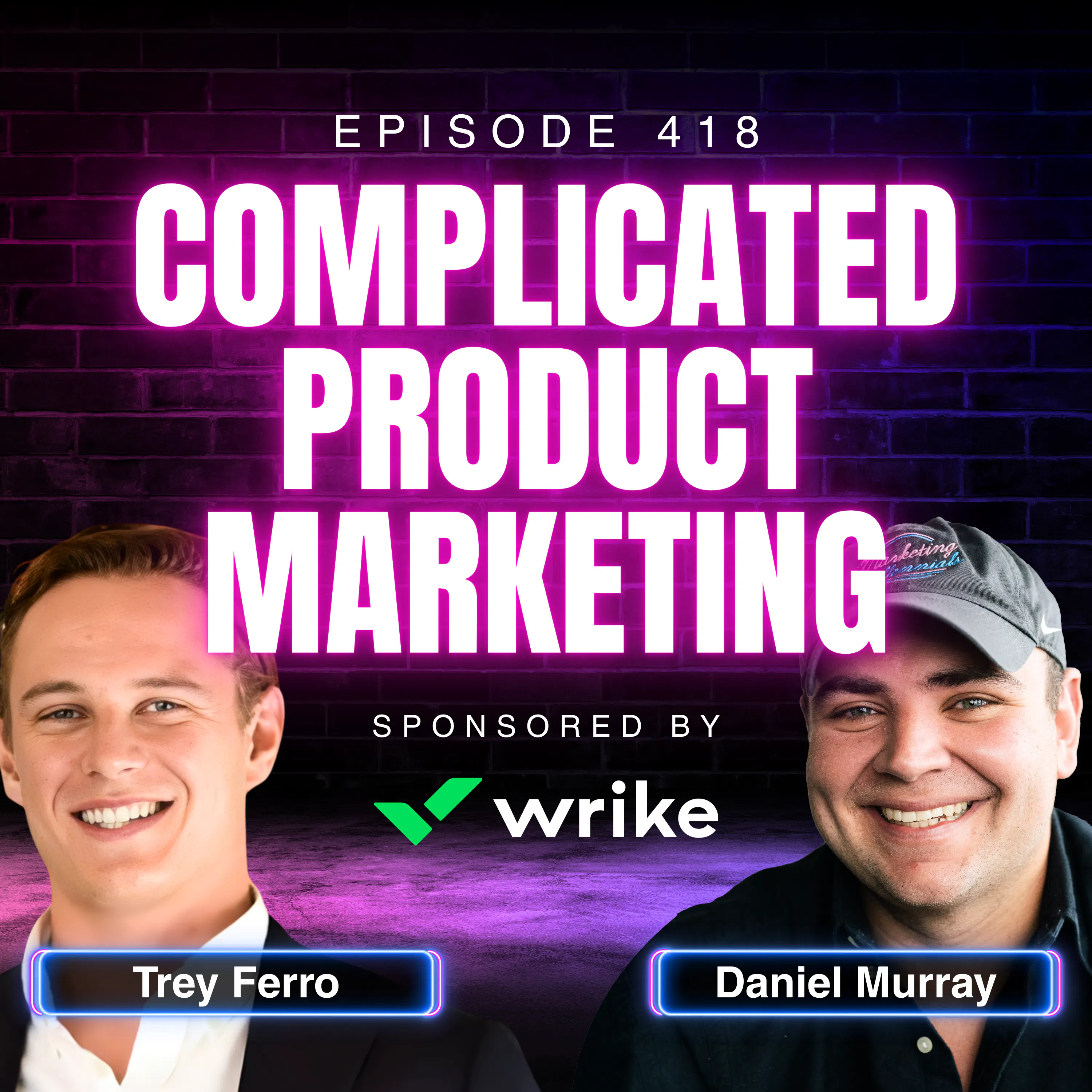
The Marketing Millennials
Guide to Marketing Complicated Products with Trey Ferro, CEO of Wag!, Ex-Spot Pet insurance | Ep. 418
00:29:56
Loading summary
Transcript54 lines
- [00:01]
Wrike Marketing Voice
If your approvals, assets, context and tasks all live in different places, you need a marketing ops intervention. Get everything organized and visible with Wrike, the smart word management platform. Head to wrike.com TMM to see more.
- [00:22]
Daniel Murray
Welcome to the Marketing Millennials, the no BS Marketing Podcast. I'm Daniel Murray, and join me for unfiltered convers with the brains behind marketing's coolest companies. The one request I tell our guests stories or it didn't happen. Get ready to turn the up.
- [00:47]
Podcast Host
What is up? Trey, welcome to the podcast.
- [00:50]
Trey
Thanks, Daniel.
- [00:51]
Podcast Host
Happy to be here. I want to dive in quickly. First, Trey is a Gen Z, so don't hate on him. Millennials listening. But he, he has created a company that's growing rapidly, which is cool. But I'll let. Let you talk about the story, the background, the why, why you started your company, and then we'll get into some marketing stuff.
- [01:14]
Trey
Absolutely. So back in 2019, I found a very interesting statistic. I found out that 2% of pet parents in the US had insurance, and overseas in Europe, it was closer to 40%. So I went on a solo mission to uncover why there was such a discrepancy between the two. And what I found is a lack of education. People didn't know about pet insurance, and a lot of people still don't know what pet insurance is. So Spot was kind of based on how can we get people, you know, up to date with this new product that is essentially health insurance for cats and dogs? And the Millennials, the Gen Z's getting their first pets, they don't really know how expensive these bills can be. And we're here to help, you know, take away that financial stress from any unexpected vet bills. So you're not having to choose between do I pay rent next month or do I pay for a $4,000 surgery bill?
- [02:12]
Podcast Host
A lot of brands out there say, like, you got to test, you got to test. But very few brands make that like, a core of their strategy. So how did AB testing become a major driver for Spot pets marketing?
- [02:27]
Trey
We've always been a really customizable insurance product. So no matter if it's your brother, you know, who's just getting out of the real world, getting his first job and not getting paid that much and just needs, you know, a super cheap accident plan or, you know, a suburban mom who's on her fifth or sixth dog, and she knows the drill. She wants the best coverage possible. We offer that. So our AB testing strategy was how do we personalize not only pricing, but the message, the Creative, everything that we're putting out to people. So I'm not going to message, you know, our TikTok audience the same as I'm going to message our employer group audience, people who are getting this through their employer. Then I'm not going to offer the same prices either. You know, they can choose whatever they want. But I'm going to recommend, hey man, you know, I know that you're just getting out of college, you have a puppy, or let's start you off with something cheap and you can upgrade later. Or hey, I see that you're in, you know, Beverly Hills, you have a very designer dog breed. Let's make sure that you have really good coverage because those dogs are really, really expensive. So we've gone on, you know, along that route for the last five years and it's really our conversion rates, what we look at every single day. You know, how many people come on site, how many people get a quote, how many people buy. That's what we're looking at every day.
- [03:45]
Podcast Host
What are some of the most important elements to test when a B testing? Are you looking at copy creative, CTA audience targeting, and which one have you seen is the most effective when you do changing it?
- [03:59]
Trey
It's crazy how effective a CTA can be. I mean just a two word button versus a three word button. You could have your conversion rate change by 10, 20, 30% based on what you put in there. So I like to start with the small things and then get bigger. You know, low hanging fruit. But it's really customer engagement and what you say to people so creative's nice. Like you want to make sure that your creative is, you know, synergistic throughout the process. But I want to tell your brother that, hey, this is a really affordable product. I want to tell someone with a little bit more income, hey, this is the best five star rated by Forbes, you know, highest customer satisfaction product and 24,7. Support all that stuff. Knowing that and really just, you know, making sure that your cadence is correct, you know, hitting people just enough where you're constantly on them, but not to the point where like, okay, you know, these guys are annoying. I'm not going to go with them because they text me every 24 hours. I'm, I'm out of here. So that's kind of the fine line that we've decided to walk. And it is a combination of everything. But my advice to other marketers out there, start small, then get bigger and bigger.
- [05:15]
Podcast Host
You grew up in the Gen Z cohort. What do you think that your mindset as a Gen Z has transformed how you approach Margaret versus what you see out there of millennials. Gen X, then older.
- [05:31]
Trey
I think the biggest part of my industry being insurance is the big scary words. You know, I don't really want to hear all this insurance lingo. I want to know, hey, I'm going to give spot $500. What do I get? I'm like, oh, I'm going to reimburse you 90% of everything, you know, for these 35 different, you know, claims that you could have. And it's going to happen in 48 hours and you can call me 24 7. And as a consumer, I'm like, that was very open and honest. And as long as the reviews hold correct and these guys are telling the truth, this is a good product. It's not, oh, let me, you know, all these exclusions and I'm going to trick you and get you to pay more and upsell you. We're customizable. I don't care what plan you choose, I don't care how much you use it. We're never going to make you pay more because you use it, you know, up to your limits. I just want people to get this product because not enough people in America or Canada, we sell them both have pet insurance. And pets who have insurance, they live 30% longer. If you go to the vet, you're a healthier pet. We're trying to create communities of healthier pet families. And that's really our goal as a company.
- [06:43]
Podcast Host
One thing that I think the Gen Zs have taught a lot of people is just like rapid transparency on pricing, rapid transparency on wording. I mean, I think millennials are, are into that now because we've been screwed by the healthcare system. We've been screwed by like old software pricing. We've been. There's a lot of things that have hidden all the details, which you could have done back in the day because there wasn't much options, but now there's so much options. People just want to know, hey, I'm going to spend X amount of money. I'm going to get X. Like you said in, I mean, lemonade kind of does that for just like renters. Insurance is pretty plug and play. But you're like, you are doing the same exact thing for like pets and not. And a lot of your part is just education because you said in the beginning it's 2% of people know about pet insurance. And I. The only time I ever heard pet insurance was a thing was when one of My employers offered it as a benefit to people. And that's the only time I ever heard that pet insurance people had pet insurance.
- [07:51]
Trey
It's a new era, man. We can't just hear about, you know, cool products from our employers or our vets. You know, I'm trying to put it in front of people's faces on social, on television. I want to make this a fun thing. It's not scary like life insurance. You're going to die. This is, hey, we cover routine checkups. Like, this is part of your family. This is your baby. You got to treat it like your baby. Babies are expensive. Make sure you're there to, you know, be financially responsible.
- [08:18]
Podcast Host
You are very digitally first company. So what are, what are some things you've learned from using social to scale the business? What are some things that people can do that they aren't doing? What are things that you doing that are working on social that people should think about doing?
- [08:35]
Trey
Everyone wants to be viral. You know, that's, that's the word that gets tossed around all the time. How do we make this viral? I want to go viral and it's really just listening. Social listening, so important. So listening to our reviews, asking our customers for user generated content, recycling that into our paid media campaigns. And then I think the new digital age has created a new review network where places like Facebook groups and Reddit and Quora are so important. Because if I'm not doing my job as an insurer, my customers, my consumer base is going to talk about that in these forums. And there's a lot of great word of mouth, but there could be a lot of bad word of mouth if you don't do a good job. So I think that's what a lot of companies have to be held to a higher standard now is, hey, it's not just, you know, critics or acclaimed reviewers that are going to tests, you know, how good you are. It's real people. And that's what we look at. You know, I look at Yelp reviews before I go to a restaurant. I'm not just going to say, oh, I saw this spot guy, you know, on television, I'm going to buy it. It's a big decision. You know, you want to go through the steps, make sure that we're top rated, that everyone else trusts us and we're fun and easy to understand.
- [09:55]
Podcast Host
How do you get over, I know insurance is a very, I would say, not liked industry. So how do you get over the humps of, okay, someone posts something terrible on Reddit or they post the bad Google review. What is your action plan when you see something like that? Because Reddit has now become like the new Google search. Like people will search best pet insurance Reddit or best something Reddit. So what are you, how do you deal with that if you get negative conversations happening in the back channels?
- [10:31]
Trey
I try and funnel every single, you know, review about spot that I can directly to my email, my Slack account. If someone has a bad experience on Google bbb, it comes to me. My team, we address it, we reach out to the person personally and say, hey, I heard you had a bad experience. Tell us about it and we fix it. And a lot of the iterations in the A B testing that we've done is hey, you know, I tried calling you guys and your service rep wasn't good or hey, I tried to email this photo and it bounced back for whatever reason. And sometimes, you know, it's an us problem, sometimes they overreact, it's a them problem. But the big thing is being open and honest to people and when responding, when appropriate and you know, kind of letting people rant when they want to rant. You know, if I make a mistake, that's on me and you know, it doesn't happen that often, which is great why we've been so successful. But I love boosting the good reviews as well. You know, we have 6,000 trust pilot reviews, we have a 4.8 rating. We are constantly looking that over and seeing okay, what's good? How do we make it even better? People like you know that we offer perks for farmer's dog and dog collars. Great, let's go get more perks partners, people like, you know, multi pet discounts. Great, keep that up. Let's see how much you know, more we can offer people. But it's really looking and not ignoring it. I think a lot of other companies are just ignoring what they see online.
- [12:07]
Wrike Marketing Voice
Nobody designs bad marketing ops on purpose. You just wake up two years in and all your approvals are in email. Your assets are in three apps, your slack is amaze and your Mondays are like one long status meeting. Reich is how you dig yourself out. It's a smart work management platform with visual collaboration AI that catches deadline risks before they even happen and the structure to let you focus on the real work integrates with everything, aligns everyone used by teams at least. Lyft, Ogilvy, Nvidia. Go to wrike.com TMM to see how
- [12:47]
Podcast Host
I want to ask you like how you walk that fine line because I think like I Mean, I do a podcast, I get bad reviews, good reviews, and there's usually 10x more people saying good things than bad things. But you always over index on that one person who's just going crazy on you. So how do you balance, like not letting your team or you being discouraged versus on that bad review versus actually dealing with it? Because that could also take you down that whole path where you just are not focusing on all the good you're doing as well.
- [13:25]
Trey
I think the first question I ask myself is, is there anything I can do about it? You know, was this something that might have been my fault or do I immediately know it's not my fault if someone's like, I hate your logo color, I'm like, I'm sorry, that one guy hates my logo color. I'm not going to change it. You know, hundreds of thousands of other people like it. And I think that it's important to just compartmentalize that. But if someone says, hey, I hated, you know, that it took more than a couple days to get my money back, we're going to investigate that. And if it was, you know, a legit reason, like they were talking to a veterinarian, we were getting all the facts, that's fine. We're just going to have to let that one go. But if it's, hey, we messed up for whatever reason, you know, I'm going to fix it. I'm going to contact that person and, you know, see how I can do better. So just compartmentalizing it and making sure that you're not, you know, overreacting from time to time.
- [14:23]
Podcast Host
Yeah, I want to go back in a B testing because, I mean, I've checked out your website. There's a lot of different things that are, like, good about the website that people could lean on, but a lot of things you could a B test on your homepage, for example. So what are some things that you. I mean, obviously there's like your tagline, your yellow, I mean, your orange button. Then you also have another, like, recognized by pet experts, trusted by pet parents, which is a good tagline. And then you also have a bunch of social proof. Then you also have the pets. Like, do you a B test the animals? Do you test the, the, the social proof there during. Because, like, what are, like, what are you thinking of a B testing when you're a B testing?
- [15:08]
Trey
Yeah. For us being an industry where you don't really understand the value prop, I think it's important that we show people, hey, this is what we cover and this is how it works. So content for us is really important just because you don' what it is. If I was a, you know, lipstick brand, a soda brand, like, I know what lipstick is, I know what soda is. I want to see pictures, I want to see, you know, reviews on that more than anything. So it really does depend on what your product is. I think that colors are great. You know, I actually worked at grubhub about eight years ago and they found that when they switched the checkout button from grubhub red to just like a Go street sign, green, it increased conversion by 10%. So there are tests like that that'll prove to be really good for the company. But it does depend on what you are. And I think that people just have to have a good AB testing software. Whether they build that in house or get a third party, you know, it's a big part of your scale. And I think that a lot of people get too hyper focused on one thing and you just have to have a big backlog of, hey, what can work and why and make data driven decisions.
- [16:29]
Podcast Host
Yeah. When you started the company, what is, what do you recognize was like the growth levers to, to scale this? You obviously saw there was a gap in the market by Europeans and us people not having panic surgery. But what are the channels, you know, first tag on? Could you walk me through the beginning stages of how you started to scale this business?
- [16:50]
Trey
Yeah, I mean, the best story I have is day one. You know, we set up the website, we're all excited, we press set live, and we're all looking at the same computer screen. We're like, all right, waiting for the sales to come in, but, you know, nothing came in. We got maybe a few clicks, one sale, and we were all wondering, well, what the heck? We set this live. You know, we put whatever digital flyers out into the world. It's not enough. You need to build an ecosystem. So the first thing we did is, okay, let's find some places to review us. And we got, you know, Forbes and Market Watch and we said, hey, we're the new pet insurance players in town. Can you write stories about us? When people search new pet insurance, best pet insurance, we show up. The next thing we did is, okay, let's start doing top of funnel. Let's do social media. No one else is doing social media. Everyone's going to the veterinarians and the adoption shelters. So let's put this out and just get top of funnel. They'll see a spot. They'll say, what is pet insurance? They Google it and they say, oh, Forbes ranked these guys, that's pretty good. Now Forbes ranked us, they've seen us on social. The last thing they need is that social proof. So then we bring in real reviews, user generated content, trust pilot reviews and say, hey, you've seen us. You know, these guys say we're good. Our customers say we're good. You're now on the website. The website says very clearly what you're going to get for this amount of money. And here's all of our good customer service stats. This is why you should go for us. You know the phrase I like to use is nuts. The thing to inspire people is need, urgency, trust and a money sign for affordability. So if you can get someone to understand they need it, you know, pets are expensive. You need this urgency. You need to get this before you know you have an accident. Because if you get it after, we're not going to cover it. Trust, great reviews and then money. We're affordable, we have a great product
- [18:59]
Podcast Host
because I mean pet lovers are the obviously have a dying love for their pet and there is a need to want to keep like even saying the Statue said that 30% live longer. Everybody wants their pet to be healthy happy, just like their kid, like healthy happy. So how to do that? I mean it's good that you're in an urgency market, but there's also marketing to people who are thinking about getting pets or have families that have pets. Are you thinking about that? But I also see that your site is very which other sites aren't always like this, but very educational because people don't know what pet insurance are. For example, like what is accident insurance? What is pet insurance? You're answering the question so the people don't have to go off your site to do the research. All the research is done on your site when you get there. Because even if you understand that you need pet insurance, you still insurance is complicated. Not everybody understands. They might understand that I might need this, but they need to be educated. Like what do I actually need? Do I need this or this or this? And what stage of life am I in? What stage of life is a dog and all that good stuff.
- [20:22]
Trey
So that's exactly right.
- [20:24]
Podcast Host
What are some underrated things that you thought wouldn't work, like tests or anything that you thought wouldn't work that ended up working.
- [20:34]
Trey
One of the tests we did was like a hyper detailed checkout, like final page. And I thought that people would just like to see, okay, here's what you're paying. You know, check out Move fast, get through the funnel as fast as possible because you don't want people to have to press a bunch of buttons or get distracted by stuff. But I think that the digital user today is really savvy and we put, you know, hey, this is what this costs. This is exactly when this is going to start. Like, we're going to send it to this email. Like, please make sure this is your billing address. Do you want direct deposit now? We just loaded that page up with more information and I guess people felt a little bit more reassured, like they didn't have to read all of it, but they knew they didn't have to cycle back for any additional information. It was all right there. So it was a lot of content and a lot of info on the page, but it did really well. And I think that, you know, it works for some demographics, some verticals and others it doesn't. You know, if I'm scrolling on Tik Tok, I go to spot and I want to get a quote fast during my lunch break. You know, that's a totally different customer than someone who's gone through, you know, five hours of research talking to their spouse about it. And I think that that different personalization at every step of the funnel. I always thought that it can't be that different, but it really is. Sometimes, you know, one picture could make all the difference of, hey, you know, that's a primarily person focused picture. I don't really resonate with the person as much, but oh my gosh, that dog looks like my dog. And figuring out, you know, what are the most popular dog breeds, see if we can understand what the person has, guess and then put that dog breed in front of them on the website. All that little stuff makes a huge difference.
- [22:32]
Podcast Host
Yeah. Could you talk about some of your funnels, what they look like you just talked about? There's one from Instagram. What are the type of personalization funnels you have right now?
- [22:44]
Trey
I think the biggest part of the personalization is the customer engagement. So if you're coming from social media, I know that you're not super warm. I'm not going to hit you, you know, every single day with an email or a text or whatever else. But if you're coming from like a, a comparison site or you know, a direct referral from your employer, like, I know that you really focus in on this and I'm going to hit you as much as I can because I know you want it, give you the best discounts and just move you from stage to stage. So big Ones are social media review sites. You know friends and family is a huge one. If your friends and family, I'm going to say, you know, go see what X pet like I have the name from the referrals. I'll see, go see what Bucky saved last year. Bucky saved $800. Whatever is public information. I'll say that I'm not going to give anything. I can't. But people really like to know that we're the experts and not pretending so not saying hey this is the best for Bucky. It's hey this is the best for a three year old Chihuahua. You know, I understand what's the best. I'm going to offer you the best. You can trust me.
- [24:05]
Podcast Host
Yeah, I think, I mean people expertise is builds trust. So if you can give expertise up front it's also I mean but you have a lot of on your side. There's a lot of expertise through like social proof as well. So you definitely rely on that. I want to go into how are you using any AI or autom like AI in your workflow now that AI is becoming big. What are you, how are you using it? How's it improving your business Today?
- [24:36]
Trey
We use AI to create the rough drafts for some of our customer engagement journeys. Um, so we say hey this person's moderately engaged. Hit them with XYZ discounts and then we edit it from there. The other thing we're doing is large language modeling. So understanding hey, when we recommend this price to customer usually has a really good experience or hey, recently, you know, three year old Chihuahuas haven't been needing as much of a top tier annual limit. Consider bringing that down, you know, so that people don't have to pay as much on their recommended plan. So we have a team of data scientists and I wouldn't recommend that for companies just starting out. I think it is a maturity thing that you can build into. But we have market mixed modeling that we do. We have you know like churn prediction, you know, stats. If I say hey, I know this person hasn't made a claim in about a year, I bet he's going to churn once his renewal comes up. Let's tell him to go make a claim or go do something that's more so where we're seeing automation come in. But I do think the power of AI when it comes to claims adjudication and billing suggestions, you know that's incredibly important. It's going to be a big part of the future.
- [26:04]
Podcast Host
I want to go into a couple rapid fire questions.
- [26:08]
Trey
Let's do it.
- [26:09]
Podcast Host
What's the best performing social channel for Spot
- [26:14]
Trey
in terms of impressions and engagement? I would probably say TikTok.
- [26:19]
Podcast Host
What's one thing every brand should test on social today?
- [26:26]
Trey
Test the first three seconds of your creative Having an important and engaging hook makes all the difference.
- [26:34]
Podcast Host
What's an overhyped marketing trend you're ignoring?
- [26:42]
Trey
I would say QR codes. It was a big thing back in 20202021 but I think we haven't really done much with them.
- [26:51]
Podcast Host
What's one tool that makes AB testing easier for you?
- [26:56]
Trey
We use a tool called Stat Sig. It really helps with multi arm bandit testing and just ease of integration with our website.
- [27:09]
Podcast Host
What it actually what's the most unexpected a B test you've ever seen?
- [27:14]
Trey
Most unexpected AB test was probably a next to blank page with just a CTA versus a completely decked out content page and they had totally different results depending on which group you showed it to.
- [27:35]
Podcast Host
What's your favorite dog breed?
- [27:38]
Trey
Favorite dog breed? I don't have one but I love Belgian Malinois. I love how athletic they are and just energetic and cool.
- [27:49]
Podcast Host
And last thing I ask everybody in this podcast is what is a marketing kill you would die on?
- [27:57]
Trey
Always tell the truth. You know, I see a lot of marketers out there kind of stretching it as much as they can and it really backfires. You might have some great short term gains. It's not going to do you well in the future.
- [28:10]
Podcast Host
Rapid transparency otherwise. I mean the trend of everybody in the last like few years is the lack of trust of institutions. So if you could be the most trustworthy institution, you're going to definitely win. So also, where could people find you and what you're doing and all that good stuff?
- [28:31]
Trey
You can check us out@spotpet.com any of our socials get Spot covered. You can find us just about anywhere. We're in all 50 states in Canada so everyone should go get pet insurance.
- [28:43]
Podcast Host
Well, thank you so much for coming on and I appreciate it.
- [28:47]
Trey
Thanks Daniel. Appreciate you having me on.
- [28:51]
Daniel Murray
Thanks so much for listening. Keep tuning in to hear more great insights from the coolest marketers from around the world. If you haven't already, make sure to subscribe and follow the Marketing Millennials podcast on Apple Podcasts, Spotify, YouTube or wherever you get your podcast. And if you like what you hear, I would greatly appreciate you giving us a five star rating. It helps bring more marketers into our community.