← The Marketing Millennials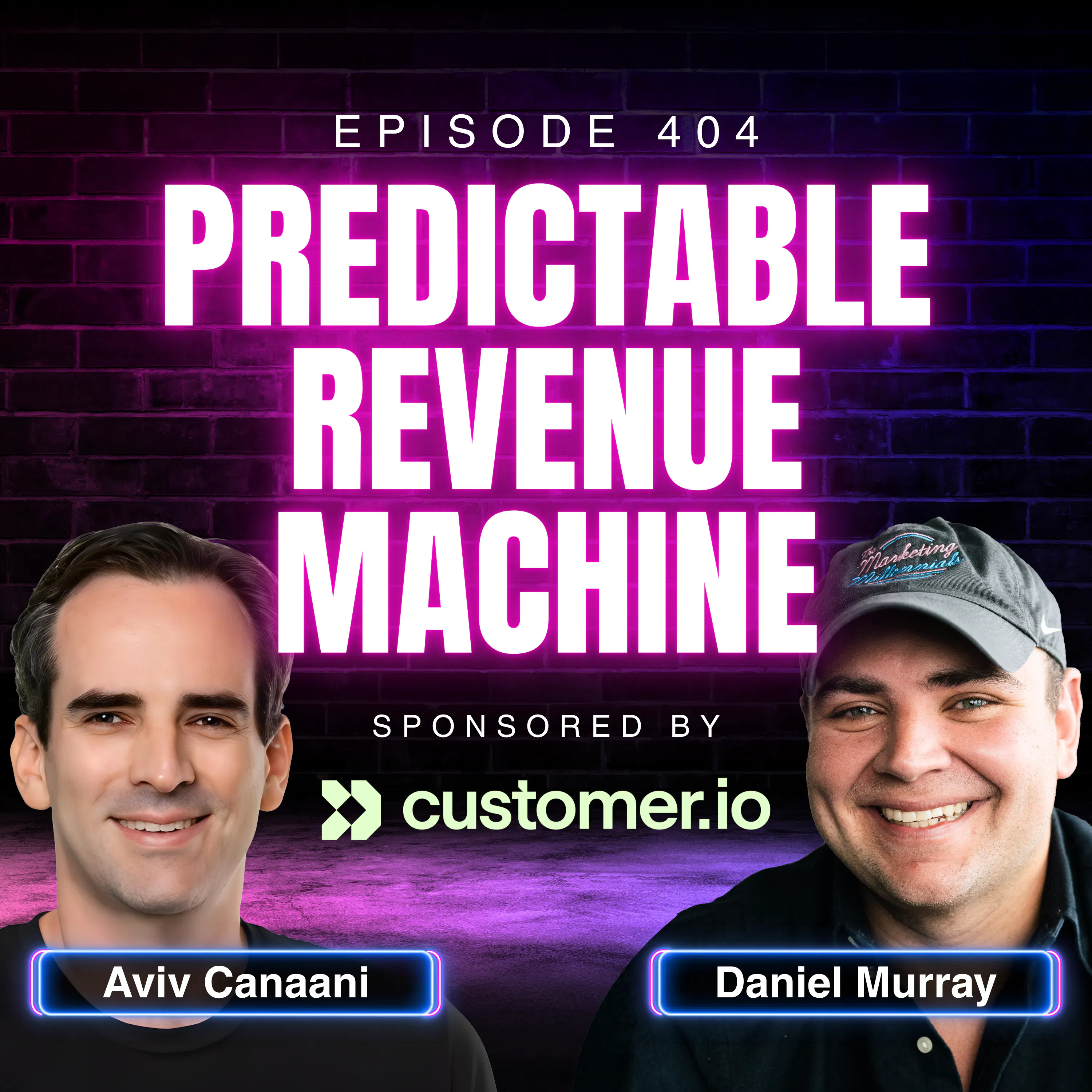
The Marketing Millennials
How To Create a Predictable Revenue Machine with Aviv Canaani, CRO & CMO of Datarails | Ep. 404
00:40:54
Loading summary
Transcript66 lines
- [00:02]
A
Welcome to the Marketing Millennials, the no BS Marketing podcast. I'm Daniel Murray and join me for unfiltered conversations with the brains behind marketing's coolest companies. The one request I tell our guests stories or it didn't happen. Get ready to turn the top.
- [00:28]
B
We are back with another episode of the Market Millennials. I am here with my former rival, Aviv. I'm kidding. We used to work at like competing companies but now he's the CRO CMO of Data Rails and we're going to talk how to build a predictable revenue engine because he's been doing that at multiple of his roles. But I'll let Aviv give his background, how he got into marketing, how he's growing on his career and then we'll get into the podcast. But welcome to the podcast AB Awesome.
- [00:59]
C
Great to be here. Thanks Daniel.
- [01:00]
B
I'll let you start off and how did you get into marketing and in the revenue go to market space?
- [01:08]
C
Yeah, it's been a while, like I've been in marketing like for many years now. I actually started in politics being director of communications for a politician and been working in different like tech companies ever since. After being at IBM for many years, actually moved to the startup world and at my previous startup is the one you mentioned, the one that we were competing against. Like I worked for a small startup called Workies that was competing against the mighty service title and was an amazing ride over there. I've worked there for a couple of years in the field service management space. And then about four years ago, four and a half years ago now, I was approached by the co founder of Data Rails. I looked him up, he seemed like a, you know, interesting guy. Already built a billion dollar startup which is Wakme that got sold to SAP. So I decided to move to Data Rails and the growth ever since was amazing.
- [02:04]
B
Yeah, I mean it looks like it's growing like a weed from the outside perspective. So that's amazing. And you seem to be doing this in a lot in your career. But I want to ask you, a lot of people say the phrase predictable predictable revenue engine, but a lot of teams aren't actually building a predictable revenue engine. So what's your equation you start with when you are given a revenue target.
- [02:32]
C
Yeah, so. So I started by the background, continuing with my story to explain like how we got into that kind of equation. So when I joined the company it was really very early phase. It's a few people, a couple of million in arrangements and they told me try to build marketing. It was just outbound back then. And I started building some paid media efforts, some brand efforts. And with time we started to understand like how this machine is operating. So moving forward, a few years later, I was able to build a system where I can know the target the CEO or CFO gives me in terms of how much revenue we need to generate. And I can go back in the waterfall model and say, okay, this is the marketing budget I need. This is how many meetings we're going to generate, how many opportunities are going to come in and how much revenue eventually is going to come in based on that. And that's one of the reasons where like two and a half years ago they also asked me to take over sales just because everything was so inbound led. And the salespeople, the way we built this machine weren't even prospecting. We just fill their calendars with meetings and their goal was what? Close, close them and make them deals.
- [03:44]
B
Okay, so this reverse engineer the process now because that's a good background of you get a revenue number and now you have to like reverse engineer to get exactly the opportunities. Exactly book meetings exactly lead target. But if I say I gave you the same a $20 million ARR goal or what are the first five numbers you need before you even think about starting running a strategy or campaign?
- [04:17]
C
Oh yeah. So what I'll need to know is first of all the cost per meeting. So I know it based after, after doing it for many years in my industry, I know how much budget I need to spend in paid media activities in order to generate that. It's important to mention we're selling to CFOs. I didn't mention my work for Data Rails. We sell to the office of the CFO and SMB and mid market like an FP and a solution. So with time I was able to understand, you know, the cost per meeting. Of course, the more we scale, the more the cost goes. So I need to know like the cost per meeting based on that. I know how much meetings I can generate. Then I know the conversion rate for meeting to opportunity, which means you know, from the meeting that the account executive took, what's the percentage rate that they will make it an opportunity and work that deal and then the conversion rate from opportunity to close one. In addition to all that, like I mentioned, we are building this whole machine based on it. So I also hire account executives based on how many meetings we have. So for example, If I have 2,000 meetings a quarter, if that's my target, in order to reach the revenue target I know and I want to create for example 100 meetings per rep. So I need like 20 reps. So based on that, not only on what we do in marketing but also how we hire our account executives.
- [05:36]
B
And is it when you calculating, let's say the close rate back to the opportunity, is it blended along like ramping reps and regular reps? Or is a ramping rep close rate, a regular close rate? Or is there also different close rates per like different sections? Like you know, because you had to like work backwards from that number to see kind of get the opportunity.
- [06:00]
C
Yeah, you're right. Like I, I kind of simplified it. But we also have like different tier systems for the leads. That's also a big change we did a few years ago. It's not about fairness. We want the best leads to go to the best reps. And also, you know, they have different quotas. So of course like we have different conversion rates per tier level and per the account executive and also per jio. We work in North America and in emea so you know, we know the different numbers for each one of these.
- [06:27]
B
When you go into these orgs, where do you think most teams mess up the equation? Where does the mess usually come from?
- [06:35]
C
Yeah, I think a lot of companies when they want to generate more revenue so they just hire more AES and say okay, this is the quota for ease and we'll just hire more ease and we'll get there. But another thing about the pipeline, and again I could speak based on my experience in the SMB mid market space, I know it might be different in an enterprise. I believe that account executives are best utilized if they don't need to prospect themselves. I'd rather generate the pipeline for them. I think prospecting today is very difficult, especially if you want to do it cold outbound. So I think in other companies they would just hire the AES without thinking first about the pipeline. I would not hire more AES until I know I have the correct pipeline to support them. And also different than other companies, I do not want my AES to prospect at all. I don't think it's like that cool metric for them to mention and just show their sales prowess by being able to cold outbound. I'm thinking about more like the Henry Ford factory. Like every part of the machine needs to do their role. Marketing SDRs need to generate the meetings and the sales team needs to know how to close them.
- [07:43]
B
So also I want to work backwards from the, the meeting, the meeting book target to like getting the lead. So how are you like what channel? What's like the media mix look like when you're, when you're looking at that? Are you putting a lot on Meta, Google, or is it, is it event budget? Like how are you separating that media mix up top?
- [08:09]
C
Yeah. So I'll tell you, like what works for us, like a big part of it is especially digital. So I think a lot of people would assume that because we're selling to CFOs, we're just focusing on Google and on LinkedIn. But you'd be surprised to hear about almost a third of our spend is also on Facebook, which means Facebook and Instagram. We have ads that work there that are funny and engaging and different people might be surprised. But CFOs also have a sense of humor and you want to engage with them. You want to do something cool and interesting and where they are. And a lot of them are still in Facebook or Instagram. We even have like different campaigns in TikTok and we saw deals coming in from TikTok. Again, not something obvious you would think would happen with CFOs. And that's, you know, our main channels. Of course we do like a few other smaller ones. But yeah, that's like the expertise that we built in hubs.
- [09:08]
B
You probably have like the bread and butter channels. Like meta is bringing a third of the budget and stuff like that. So when deciding let's go to TikTok or something like that, are you, do you care about like the blended cat number you're trying to hit? Or like is there a certain CAC number per channel that you're trying to hit as well?
- [09:26]
C
Yeah, I think it's like whatever works. So you see things are changing quarter to quarter. So we have an amazing user acquisition team. So in one quarter they might increase their Facebook ads or we call meta ads or then decrease Google or the next quarter could be something different. But yet all comes down to especially like the head of the user acquisition team. They have to think about the cost of acquisition, as you mentioned, and see how many meetings they can generate with their budget and try to maximize it. Of course there's like nuance here in terms of the quality of the lead. Like I mentioned, the tier one versus a tier two and so forth. But usually their targets are based on meetings and opportunities.
- [10:04]
B
And for that tier one, tier two, is it based on form field filled out? Is there like an AI grading system? Is it an intent system? Like what is the system built to get the tier?
- [10:17]
C
No, it's a good question. So when we started it was Very basic based on company size or revenue or title. But now we're embedding AI more and we're even researching the different leads coming in and giving them a different tier. We even create more tiers based on it. So there's so much you can do with AI now and it's really helping us. And now we're learning about these new tiers and the conversion rates like we mentioned before like and how they're impacting. But yeah, it's an exciting times.
- [10:49]
B
I know this is a question you probably are getting a lot internally but also like the question that the market wants to know too. But this is a two kind of fold credit. How are, besides lead scoring, how are you embedding AI into the workflow to help let's say SDRs, marketing, sales. And the secondary question is are you looking into like Geo aeo? Like how are you deciding like how what to spend on to get to be seen in on these LLMs and things like that?
- [11:25]
C
Yeah. So to start with your first question, so based on the fields people are updating, you know we can have AI learn with time what's better and what's worse and also like enrich it with things, you know, that can find online. And we even use for example with AI a spam filter to make sure you know, we don't do a lot of spam meetings that fill the calendars of the account executives. I'll give you an example. Let's say like you sign up and it says like, I don't know, like Daniel Am is at, you know a company, it double checks like in LinkedIn if there is a Daniel, you know, I'm working at that company and it's like, and it creates this kind of ranking system to see what makes sense, what doesn't. Even like when the SDRS go on calls, for example, we have them qualify meetings and decide on the tier system. But also we have AI double check that and sometimes if the AI says something different than the sdr, so the SDR manager looks at it and decides what is the right ranking or something. You need to update the SDRs or something. Maybe the AI got wrong. So in every part of the process we're using AI to some degree and I think we only got started. I think there's so many possibilities in how to scale it and make this whole machine more efficient. And if you go back to what we mentioned before, it's like you asked me about the numbers, I just want to improve the cost per meeting conversion rate for meeting to opportunity every 1% here, 2% there, could make a really huge difference in our profitability. And to your question about GEOs, of course, it's a major shift within the last year and focusing much more on GEO than just rather SEO. Of course we're still doing both. And yeah, there's a lot of different tactics that we're trying to employ to get there and a lot of different testing that we're doing to see what people are getting within their GEO results. I can even share an anecdote. The biggest deal we had last year, huge enterprise deal. I looked it up and I wanted to see how the attribution. So one of the questions we asked in our forum is how did you hear about us? It's open forum questions, not like a dropdown. So the person wrote ChatGPT, now it's a CFO of a multi billion dollar company. So, you know, you never know.
- [13:47]
B
I mean before we got on this podcast we talked about you had to close down your cloud tabs and stuff like that. So all executives are probably using it to do some sort of research, some sort of playing around, some sort of data ingestion. So they're using it to make their lives easier, um, and catch their mistakes too that they're probably making. So it makes sense. Especially because ChatGPT is pretty good at like logical things which like CFOs have to be very logical. Like you can't mess up numbers when it comes to the cfo.
- [14:24]
C
Exactly, exactly. It's like everyone is using it. Like we said before, it's like about social media, like everyone's using it. Same thing with AI. Like I think everyone's experimenting now with like Claude and ChatGPT and people want to figure it out.
- [14:36]
B
One thing I have to you, I think one of the hardest things is coming into business and then like doing very well the first year and predicting the next year. So how, like what is the, the forecasting process? You have to make sure that you get that meeting book number right. You get the split between like I need to, obviously you need to get the certain amount of right ramp reps, right reps at the right time to hit like those numbers. And then also the split between SDR and marketing generated. Like how do you work back from a year that you did well.
- [15:10]
C
Yeah, exactly. It's like, I think it's not obvious. Like it seems like, you know, I wish the life was that easy. As you put it in Excel spreadsheet, like everything works out so you have to update it like every quarter and make Some assumptions, but if you, like, you know, three other quarters last year and we had an amazing year, like I was right within like a 5% margin, like in each one quarter, the only quarter that we actually exceeded expectation by 30% because we introduced, introduced a new model of a multi product solution and new pricing that really made a difference and I couldn't have expected that. So I think it's like you want to see the results, you want to reiterate, you want to talk with the team. But I wish it was exact science, but it isn't. But I think you trust your judgment, judgment of other people on the team. But eventually it's important to mention when you speak with a CEO or cfo, especially the board, that's what they're expecting of you as a marketing leader, especially a CRO. They just don't care about the details. For them it's like, okay, this is the target, how much you're going to spend and build something that actually is going to work. They don't care if I spend everything in Google Ads or Facebook or whatever, but they want to have something, someone they can trust that would come to them and say, I have a plan. This is how we get there. As opposed to someone that just says, I have no idea. We'll just try this.
- [16:33]
B
Yeah, a lot of marketers make the mistake and start saying, yeah, we had a split of this and this. And they're just like trying to say like, hey, are you hitting the numbers or not? I don't care how you hit the numbers. Are you hitting, are you getting your meeting books target, Are you spending the right amount to get there? Is your cat going up or down? Like, is it efficient or not? Are you profitable or not? The questions they're, they're asking, they're not asking in the weeds. Your job is to get in the weeds and ask those questions to your team. The board doesn't care and the leadership doesn't care.
- [17:08]
C
Exactly. Yeah, I might be like a bit biased, you know, especially as like a marketer that became a CRO or CRO in general. But I always found it weird going to like a management meeting. And I can tell the CEO, oh, I hit my target. I generate X amount of meetings or pipeline. Then the VPC says, oh, I missed my target. Just doesn't make sense. So when you think about it from the CEO perspective, now he has one person to work with that is both in charge of the revenue growth but also on the cost of acquisition. So you know, it's one person to talk to as opposed to like trying to figure out like you know, a debate of like who's right, who's wrong if like we missed the target and so forth. So again, biased. But that's my opinion.
- [17:52]
B
We did this at service tight end. But I know I wanted to ask the question how you, you're winning at the CFO. So like you talked a little bit that you're. 1/3 of your 1,3 of your revenue is coming from or Pipeline driven is coming from meta. I don't know how much is coming from TikTok. But what does that process look like to generate creative and what does it, what does it look like marketing on on Facebook versus like marketing on more of like a professional network like LinkedIn, like what type of creative you're creating because obviously CFOs have are people and they have a life and they're on Facebook and they're on Instagram and they're scrolling and they're doing those things. So what does that look like to win on those platforms and B2B?
- [18:37]
C
Yeah. So I think you need to throw out everything you heard about B2B before and just understand you have to be creative and different and that's what we're trying especially I think as a startup you have to take big risks. It's a difference if you know, you're marketing and you work for Apple or Samsung or you're working for a small startup and you're working for a small startup, no one cares about you. You're gonna launch new product, no one's gonna stand in line, you know, to buy it. So you have to interrupt people where they are and let's say they're on Instagram, they're scrolling through their feed, they're seeing, you know, some stuff their friends might be posting or comedians or politicians or other things that they like. You need to have like an amazing ad in order for someone to stop, especially like a cfo. So we have like an amazing in house team we created. Most of them actually came from B2C where we are generating dozens of creatives, sometimes even like 100 every month. And we're just feeding it to the algorithm and trying to see what sticks and what works. We're working with content providers. Sometimes we're filming stuff ourselves in the office. Once in a while we also do a small production. We're just testing everything and you never know what's going to work. Sometimes there's something you created in an hour, maybe the cost was 50 bucks. It's going to work for you better than something you produce for $40,000. But for us, we don't care about what's going to work or what strategy. It's just like we want to find something that works and we're going to put all of our budget there behind that.
- [20:10]
B
Hearing that you the amount of creative you're producing sounds very B2C obviously because my wife's in E commerce and they pump out creative crazy. That's their goal is more and more creative because creative is the new targeting. It's the new testing ground. It's the new especially when you have higher volume like an SMB versus enterprise. It might not work but when you have high volume you get that audience fatigue and audience when when you have the same creative over and over being seen. So you need to get out of that for audit audience fatigue loop. If you buy putting new you could repeat winners. You can keep the winners on but you need that that loop and that sounds very B2C. B2B needs to learn a lot from like how E commerce runs meta.
- [21:02]
C
Exactly. And I think it's like you're forgetting how much other impact it can have. For example, even our outbound team still have Outbound performs well. But you can see that I listened to some of the calls that led to deals in outbound and you can hear our Outbound is they are talking with someone and they're like hey, I'm calling here from Data Rails. And then you can hear the prospect say oh, I've been seeing your ads all the time.
- [21:26]
B
I love that. That must feel good as a marketing team to hear that.
- [21:30]
C
Exactly like you're building your brand. And the way I see it, it's important to mention as a CRO, especially coming from marketing, I'm fine giving a few different teams credit. It can be both outbound and marketing. It can be partnership as well. It's not that we need to make a decision on like only one source that led to it. In this case, both outbound and marketing, you know get the credit and you know that's how you build I think an efficient machine like you want everyone to work together with the align winning together.
- [21:59]
B
Also I think you said you do things that are pretty creative and funny and humorous people. Also I think a lot of people forget or marketers Forget that in B2B that you're competing next to an ad that is for their their deodorant. They're a handbag. You're not competing against other B2B companies. When you you're on me, you are doing that as well. But you're competing with everyday products that these people are buying. So you, you have to do something to stand out. You can't just do be better than B2B. You also have to be better than the E commerce ads out there to stand out.
- [22:36]
C
Exactly, exactly. You're competing with everything. Like I'll give you like three different examples of stuff we did in marketing just this past year. Why don't we introduce the new mascot? So we have a mascot which is a panda. If you think about it, we sell to FP&A, so it's F Panda. So we, we have like a panda as our main mascot and he appears in our ads and content super geeky, making Excel jokes and stuff like that. The second thing is we sponsored the Excel World cup in Vegas and we had many participants actually wear Data Rail shirts. Even one of the people we sponsored, let's call it the athletes that we sponsored, actually won the competition. So we got a lot of coverage based on that. And even talking about the most, the place that you might think is the least B2B focused. We did like this Sora video where you have Bob Ross, the famous painter from the past, actually use his paintbrush on Excel and talk about it with Sora. Like eight second clip. We posted it on TikTok of all places. We had more than 1 million, sorry, 3 million impressions, thousands of likes, hundreds of comments. We even got comments from the official Microsoft account. So yeah, some fun stuff.
- [23:54]
B
Yeah, I think, I mean it comes down to what you say too is you deeply are knowing what CFOs, CFOs are in Excel all day. So you need to be where Excel is. You can poke jokes of number jokes and Bob Ross jokes and all this stuff of. It seems like every industry, if you could find those little pain points and poke to the pain points of those people, you can get a good reaction. And the goal of content usually in my eyes is to get it shared in the or get a screenshot, get in that Slack channel. So if you create something great like that Bob Ross Excel, I bet it was shared in multiple channels where finance teams, FP&A teams are looking, laughing and they're like, oh, datarails did this funny. They have a humor. They're not just like this boring B2B company that I'm going to work with.
- [24:52]
C
Exactly. And I think it also makes a differentiation even during the sales process. You want to be a brand that's likable and personal. Just once you have this kind of character and people feel like they know you. I think it's going to be also easier to make a decision to buy from you. Just it's not this random brand that Cold called me and I never heard about them at all.
- [25:14]
B
How much of the budget, percentage wise, do you put into like testing like new bets versus like tried and true channels, like what is. Obviously the XL tournament might have not did something, but it did something great and probably drove some pipe, some good pipeline. But what are, what are those, like big bad budget look like versus tried and true budget?
- [25:39]
C
Yeah, so it's like 5 to 10% of the budget. So I mentioned like we had some success like in TikTok, but we tried other things that didn't work. We tried Spotify, we tried Reddit, you know, Twitter X, how is it called? But like we're trying things like all the time and like, I want to encourage my marketing team to experiment and try new things. You want to also work, I think as a market in an environment that encourages you to take big risks. And it's completely fine if it failed because that's the only way you'll be able to grow and discover new things is if you take these bold bets rather than just do whatever is obvious and keep going at it, even if it stops working.
- [26:23]
B
You don't want to be that marketing team who I knows they're not going to get fired because they bought IBM back in the day. Like, they just do the safe thing because it's logical. And a lot of logic keeps people's jobs for a little bit, but it doesn't help them scale. The logical answer is to buy this tool or do this thing, but sometimes you need to. Like, it might not be logical to spend that much on meta in B2B, but do the not logical thing. Try it. If it works, keep going and take those bets like you said.
- [26:58]
C
Yeah, it's like you have to take those big bets because exactly, like you mentioned, you can play it safe. So maybe you'll survive a few more quarters, but at the end of the day, you're going to lose your job because you aren't going to make remarkable marketing. You aren't going to build great pipeline. So you'd rather take those big risks and try to do something amazing. First of all, it's more fun, but also I think it's better also for your career. You see some of the best. Even B2B companies out there had amazing marketing over the years. And if someone is listening to this podcast and saying, oh, but I can't do it because my CEO won't allow it. So quit now. There are more companies out there.
- [27:39]
B
Exactly. As you don't have to stay at the same company and you don't. And not every CEO is going to get marketing and that's okay. And you want to be in a place with a CEO and founders get marketing and Node works and supports marketing as a revenue driving, not a cost center in the, in the business.
- [28:01]
C
Exactly. I think it's so important for you to frame that that way that it's like a profit center, that it's not like you're spending money and maybe one day it's going to help build the brand. You want to show immediate results. And I can share that. When I started my second week of the job, I wanted to do a funny meme on LinkedIn. I took the inspiration from, you know, what Gong was doing on LinkedIn. So I did this meme and after a few weeks and the CEO came to me, said they had a board meeting and one of the board members was asking why are you doing these ridiculous things like you're selling to CFOs or serious people. And I told the CEO, trust me, it's going to work with time. Luckily for me, he trusted me. And with time we were able to do more and more better creative with more creative people than myself on the team, doing amazing things there on LinkedIn and other channels. But you have to have the CEO trust you and be willing to take risks.
- [28:54]
B
Yeah, you don't, you don't want to be that on the marketing. I've been on the marketing team where I was even like posting stuff and people were worried like I was getting smacked from like, like a board member seeing that I was posting a meme on on. It's just ridiculous. You don't want to be on that team where you always having this like shadow of like take this down. We don't want you to post this. Don't do this type of marketing. Just play it safe. It's the like you said again going back, I'm repeating myself but quit. But I want to ask you if a CMO or leaders listening and wants to prove that marketing is a revenue driver like you said, in the next 90 days, what would you tell them to start doing Monday morning?
- [29:42]
C
Yeah. So I think they have to start with things that show revenue or build pipeline. When I started, I hired three different agencies. One for Facebook, one for LinkedIn, one for Google because I wanted them to compete. And while I was also trying to build the inbound team because I knew that Once I show results, it's going to be much easier building a team. And I'm sure a lot of people there are thinking, oh, I can't really do this. I want to focus on the brand and all that. So I'm all for focusing on the brand. When I started, we also started building a podcast that four and a half years later, we have more than 600,000 downloads. We started building this LinkedIn content I mentioned, but I would never be able to get to this kind of growth if I wouldn't have invested in paid media ads. Growth that generated results on the spot. Because you have to balance, you know, the short term goals with the long term goals. So especially if you speak with like, you know, your CEO, make sure, first of all, you're hitting your target and with the extra money you have, do some brand stuff. And I think it's very like, ever since I became a CRO, I learned about, you know, the sales side. It's exactly like for a head of sales to hire an account executive in a quarter, let's say you're in Q1, that account executive is not going to help you at all getting to your results in Q1. You're going to have to hire them, train them, maybe they're going to help you by Q3, but you have to invest in it. The same thing goes with marketing. You have to invest in your brand, but it's not an excuse to not hit your targets this quarter.
- [31:18]
B
Yeah, I think that's a, I think that's a great way to. Because a lot of leaders get the sales motion more than they get the market motion and the sales motion is more predictable. So framing it marketing as that, I mean, brand as that sales rep that you have to train it, you have to show them the ropes, show them how to prospect, then give them the accounts, and then eventually. But you also have to have had those reps, those, those quota hitting reps and enough quota fulfilled to make sure that the, that you're hitting quota as well while you're hiring and scaling up that rep. So that's exactly what you were saying. That's a way better way to phrase it to someone who might not get how marketing works or what brand is, because a lot of people think brand is just fluffy logos and colors and like, pretty stuff.
- [32:12]
C
Yeah, exactly, exactly. You have to think about that. And, and again, like, I think also a lot of marketing leaders feel that, like they say, okay, I invest in brand, but the fact you're investing in brand doesn't mean you're Doing a good job. Like for example, if I would do like a brand campaign that's not focused on demo requests, which again most of my focus is demo request, I would want to see if we spent money there that I'm getting more likes or comments or shares that people are interacting with it and we're going to mention the name of a specific brand. I saw that you started a huge campaign and I looked at one of their videos on YouTube and you can see 1 million views. So probably they promoted the heck out of it. But it had like two likes. Like if you're doing brand video and it has a million views because you spend a lot and you get like 2 likes and no comments, maybe it wasn't the best brand video.
- [33:03]
B
Yeah, I mean, I mean social media will give you signals what are good and that's why likes, shares, comments. If they don't, if those signals are there, you probably, probably organically, like I always say, like test something for organically before you put spend behind it. If you're going to do a brand campaign like put spend, test organically see if it actually gets likes and shares organically before you start blowing budget on putting money behind it. It's not smart at all.
- [33:38]
C
Yeah, I love that. Like for me, the way also I built the team is I have my brand and content organization and the growth organization. So growth is focused on generating this amount of meetings and opportunities. World brand just in charge of doing like cool stuff. I don't want them to focus even on, you know, these kind of metrics that said every now and then if there is something that I we did in the brand team that is amazing and cool and all of a sudden like I mentioned a few of these examples before, we got a lot of likes and comments and shares organically just like you said. Now I'm going to go to the growth team and say, you see this was super successful. Let's put maybe some money behind it. It's probably going to create like more reaction with our audience and it usually works.
- [34:18]
B
Yeah, I feel like so much paid media is wasted because people aren't testing on organic first and testing ideas on organic. Because organic gives you free signal of hey, directionally this is a good piece of content or bad or this is a good messaging or bad or my audience is resonating or not with this type of creative or messaging or format. And once you, you've seen that, you could start just tweaking it and make it a little bit better for paid media or a little bit better for TikTok. But once you've validated the idea through organic, you could put a lot more paid against it, and then you're not. Because I always say to people that impression, you pay a paid impression doesn't mean a paid attention. Yes, you. You could pay to get something in someone's feed. It doesn't mean they're paying attention to that. So it's you. You want to put it in the feed so people pay attention and pay more and more. Because the benefit of paid media is. Is guaranteed distribution to your audience.
- [35:28]
C
Like what?
- [35:28]
B
Organic is not guaranteed distribution to your audience. So that's why you put money behind it, because you want that guaranteed distribution.
- [35:37]
C
Yeah. And I think that's also what's so exciting about marketing today, as opposed to, let's say, the Don draper days or 40 years ago. Like, you can test stuff and get reactions organically. It's not that, you know, you work on one campaign for three months, you sit in an office, come up with this amazing ad, you can test a lot of different things and see the results, and just like you said, double down and you know what actually works.
- [35:59]
B
Yeah, in the way. I mean, they. They even tested back in the day on like a B testing, like mailers. I mean, they. I mean, that took longer because you have to, like, send out mailers. It took a week, and then you got to get the response back, but they still were a B testing creative on mailer, seeing if it worked or not that way. But lastly, I want to ask you, what is a marketing hill you would die on?
- [36:27]
C
Marketing has to generate revenue. If it doesn't generate revenue, again, you're a cost center. You want to be a profit center.
- [36:35]
B
Yeah. I mean, there's nothing more to say that. I also say that you want to see marketing as an investment. And when you put in your money in the stock market, your own personal money, you're not trying to get negative return on your buddy. Like, it's the same with marketing. You're trying to get a positive return on whatever you trying to invest to get build the business. And that marketing budget is an investment in growth of the business. You have to think of it like that and think that I'm trying to grow that portfolio. It's not. And it compounds like a portfolio if you do it right with brand and good creative and stuff like that.
- [37:18]
C
Yeah, I think it's like. I think the best situation, which is a hard one to get to, is like, get the CFO to come to you and say you should invest more because they see the results. So I think that's the situation you want to be in. Like I mentioned with the stock market, the company or warrant would want to have you invest.
- [37:39]
B
The best situation you can have in as a marketing team is you're blowing targets so far out that month that people say keep spending because we need to hit goals. Your budget just increased in that quarter because you're overperforming. That's the best feeling as a marketer. Just like, come on, let's put more fire on tip because it's working.
- [38:03]
C
Yeah. And that will allow you to do crazy ideas like telling them, now I want to have a panda mascot. Once you, once you're there, you can go wild with your ideas. But first you have to prove that you generate revenue.
- [38:16]
B
And lastly, where could people find you and what you're doing and all that good stuff.
- [38:21]
C
Yeah. Follow me on LinkedIn. Feel free to DM me. I'm the only Aviv Karani on LinkedIn. So happy to connect.
- [38:29]
B
Look at you. You have like perfect SEO now. People just could find you. I have to compete against all these Daniel Murray's in the world. It's a hard, it's a hard battle out there.
- [38:40]
C
At least you know how to pronounce your name. It's like for me, it's harder.
- [38:44]
B
Yeah. Well, thank you so much. Appreciate it.
- [38:46]
C
Thanks D.
- [38:50]
A
Thanks so much for listening. Keep tuning in to hear more great insights from the coolest marketers from around the world. If you haven't already, make sure to subscribe and follow the Marketing Millennials podcast on Apple Podcasts, Spotify, YouTube or wherever you get your podcast. And if you like what you hear, I would greatly appreciate you giving us a five star rating. It helps bring more marketers into our community.