← The Marketing Millennials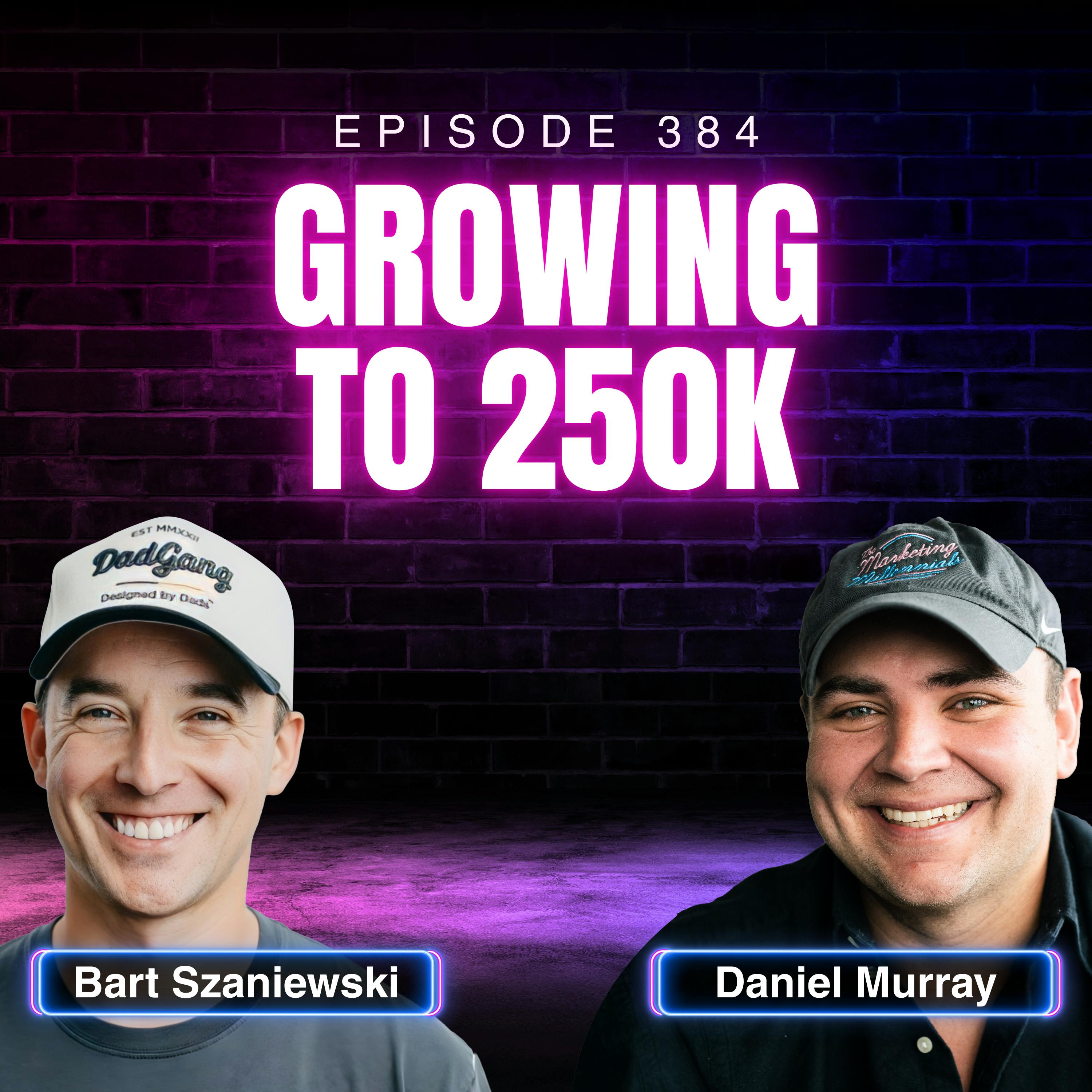
The Marketing Millennials
How to Grow to 250k Followers in Under 3 Years with Bart Szaniewski, Founder of Dad Gang | Ep. 384
00:35:09
Loading summary
Transcript58 lines
- [00:00]
A
Welcome back to another episode of the Market Millennials podcast. Today we have got Bart from Dad Gang on the podcast. We recorded this one last year and is still relevant today. Bart and two friends made a hundred hats in a text thread. Sold them in 36 hours and now they've sold half a million hats. Yes, half a million. No fancy strategy, no million dollar budget. Just iPhone content and a free Shopify theme. Here's what stuck with me. He spent money growing followers before chasing conversions. Everyone told him that was wrong. He hit 245k followers on Instagram and 11k person Facebook group instead. The community came first, the sales followed. We talk about boosting posts, broadcast channels, why perfectly curated graphics are dead, how he specs out launches across eight channels without annoying people, and his rapid fire at the end is pure gold. Let's get into this episode. Welcome to the Marketing Millennials, the no BS Marketing podcast. I'm Daniel Murray and join me for unfiltered conversations with the brains behind market Coolest companies. The one request I tell our guests stories or it didn't happen. Get ready to turn the up.
- [01:36]
B
What is up, Bart? Welcome to the podcast.
- [01:39]
C
Thanks.
- [01:40]
B
I want to get this started and you give a quick background on how you thought of dad Gang. Why did you start this brand? And we can go down that rabbit hole first.
- [01:54]
C
Awesome. Well, yeah, awesome to be here. Thanks for having me. I'm Bart. I'm one of the co founders of dad Gang. It's myself and two of my best friends, E.J. and Grant. We, you know, we've all known each other for a super long time, have been in the same text thread forever, and we're all dads. And we kind of noticed after becoming dads and having kids that the Internet was kind of just filled and social media was just filled with like really funny, goofy stuff for dads, especially when it came to apparel. It was just kind of like dad bod jokes and mowing the lawn and just kind of like jokey stuff all over the place. And we were in our text thread all the time, kind of like venting about our days, the good things, the bad things, the, the struggles of being new dads. And we'd always leave the text thread with like, hey man, it's all good. Dad Gang. Let's, you know, let's have each other's backs, let's support each other. But, you know, you, you've got us, you've got your, your wife and your family. You know, dad game, just stick together. And so after saying that for a while, we're like, hey, let's, let's make a hat. And I, I've worked in direct to consumer and e Commerce for good 13 years and knew some good hat manufacturers and just tried making a black and white trucker hat that said dad gang on it, just as simple as possible with no intention of, like, building a company whatsoever. It was just kind of like, let's make some hats. The minimum is 100, so we got to make 100 of them. And then let's see if our friends and family want some and let's put them up on a Shopify website with a free theme. And it was just that at first it was just like, yeah, we're sick and tired of, like, seeing funny stuff. Let's make a cool hat we don't want to wear. And so we made those hats. When we got them, we decided to just kind of announce on our own personal social media pages on our Instagrams with very little followings that we made some hats. And if you're a dad and want one, here's the link. And to our surprise, we sold out of those hundred hats in less than 36 hours. And it was kind of like, it was cool, but at the same time, you're like, okay, it was all friends and family. We appreciate their support. It's kind of like when you're a little kid doing fundraisers and your mom and dad and uncle and aunt buy your chocolate bars, right? But after that happened, we were like, okay, let's try again. Let's. Let's order some more and see if more people want them. And so I think we ordered 100 again and then 300 the third time, and they kept selling out. It was kind of like, okay, there are dads out there that, that want to celebrate fatherhood for everything that it is, not just the funny stuff. And they want to get behind this community of dads supporting each other. And so from there, we just took all the profits from making that initial batch and made more hats and then put them up on the website. And it wasn't like a. We didn't have any advertising strategy, although we've, we've worked in that for a long time. We didn't seed influencers or anything like that. We just kept selling hats on the site and talking about it on the Instagram page. And then it, after a while, it got to a point where like, okay, this, this could be something. Let's try and run some paid ads behind it and with that organic kind of powerhouse behind it. And yeah, we just Kept making hats and selling out and telling fatherhood stories and sharing other dad stories. And yeah, We're. We're almost three years into building this brand. May 11, I believe, or sometime in May will be our official three years. And from, from that initial moment, we've sold almost half a million hats in. In our time, since we've been around so little. I don't know, almost 500,000 hats sold as we speak today. And yeah, it's been awesome. Just building with your friends, building something people actually want, and then building a massive community behind it at the same time.
- [06:10]
A
Well, congrats, first of all.
- [06:11]
B
That's awesome.
- [06:12]
C
Yeah, thank you.
- [06:13]
B
You said you started posting on the Instagram, so what did that look like? What type of content were you posting? How did you start building that initial following on Instagram?
- [06:26]
C
Yeah, for the most part initially I just posted what I had. So we just had a black and white trucker hat. I would take like cinematic videos or portrait mode photos of the hat in different settings. So whether it was like myself wearing it, Grant wearing it, ej, those are my two other partners just taking photos out and about with the kids. I would, I would be like in the yard working on something and like have myself in the background with the hat as the main focal point. Just kind of like pictures of the hats for the most part. While. While re. Explaining while the why the brand started. I think, I think the caption and the copy of the content was super important and just like reiterating that story of like, we started this brand because there's nothing like it for dads on social media at the moment. And we really want to empower dads, stick together and just, just highlight all the aspects of being a new dad, a dad with teens, a dad with kids in college, and like really highlight all of it. So the copy and the captions on those posts was really important.
- [07:37]
B
And now, I mean, the Count dad gang has over 245k followers, so that in less than 3 years. So what do you attribute the biggest driver for organic reaches?
- [07:49]
C
Yeah, one of the. One of the first things I did when we finally had enough like profit to advertise a little bit was I would just go in and, you know, I know the ins and outs of. Of Ads Manager and meta. I've just been in it so much for the past 13 years. But the thing I did was I just boost our best performing organic posts just by hitting that boost button on Instagram and say I had a really good post that had a lot of comments and Likes and some shares. I would just take that post and boost it for like 10 to $20 a day for, for audience growth, not for cause. You can select when you boost whether you want it to be like website visits or profile visits. So I would just boost it for profile visits. And if I, if I looked at the budget, say I spent $10 a day, but I was getting 20 followers a day, then we would just keep that going. And then a lot of the time when we go through these periods where hats were sold out and we were waiting for new hats to come in, that audience kept building while we wait for new hats and then we would drop new hats and that audience would already be there waiting for the hat to restock. So it's kind of that rhythm of boosting posts for, for profile visits, being sold out of hats unintentionally and then, and then dropping hats and kind of developing this fomo. So like if you, if you follow us, you'll be ready to purchase a hat when it drops and if you don't, then you might miss the next restock.
- [09:30]
B
That strategy, I mean, a lot of people probably in marketing and D2C would probably go against because it's not like directly tied to a sale, it's growing on a channel that is rented. So what would you tell to people like why that strategy matters from what you've learned?
- [09:51]
C
Yeah, what I've learned is if you want to build a brand that is community driven, you have to build the community first. It's exactly what we did. We didn't. The thing is, we had full time jobs while building this company and never had the intention of like scaling massively or anything like that. We're like, let's build this thing at a slow and steady pace and let's make sure if we're going to build a community that's behind this brand, let's build that community first. So that's why I would spend dollars on profile visits or audience growth before I would jump in and obsess over conversions. And that's still the thought to this day. Like we have, you know, multiple campaigns running in meta at this point, but I still boost posts for profile visits. I still want to run certain traffic campaigns to get people to discover us because I feel like if you are, and I probably sound like a broken record, but if you do want to build an audience, you do have to build the audience. And so allocating some funds for people to actually come and check you out is important. But I totally understand the opposite side of that. Is like, oh, my gosh, you're not running ads for conversions. Like, what is wrong with you? Because I've done that on the agency side of things multiple times, and I get it. But I want this brand to mean much more than just a click or a conversion. And that's why I was all about, and still am building people first over obsessing over clicks and conversion rates.
- [11:27]
B
It also, I mean, people underestimate, like, the power of a follower account. And even though it's like the landing page of your business half the time when you run an ad. So if you're running an ad to Instagram and you see that Instagram has a 200k followers, it automatically gives it kind of like the legitimacy of, hey, this right. People care about this brand. Like, why is it 245k if you have a account that you're not growing followers and has 5k followers, you might not trust the brand as much. So, like, when I looked at that game, like, I'm like, oh, wow, there must be a lot of dads that care about these hats, because there's 245k followers.
- [12:11]
C
Yeah. And that's our main channel. Like, we do a little bit on TikTok, a little bit on Google, but in YouTube, but meta and Facebook, Instagram, the whole metaverse is just kind of like our spot. And yeah, exactly how you said it. I treat the website as kind of like the final destination. And that's why our website's so simple, too. It's like you saw all this great content on social media about the hats, about the dads that wear them, about the fatherhood stories they share. If you, if your next thought is, okay, I want one of those hats, just simply go to the website and buy one and don't make it. Don't add a lot more story to the website just because the. The ad or the organic content has already kind of converted that thought into, okay, I want to have. So we really try and try and tell our story on there as much as possible.
- [13:08]
B
And I mean, you have like a simplified story too with saying, like, designed by dads. Like, I think that's like a simplified story that. Okay, these hats have a story of something. Like, dads made this hat come from something. So the story is there, but in a very simplified way. And if you want to dig deeper, there's places to dig. But it makes sense that, like the tagline to tells the story.
- [13:32]
C
Yeah, exactly.
- [13:34]
B
You. I know you have two avenues also that I want to talk about. One, I know you have a VIP group on Facebook. So could you tell me how you utilize the VIP group on Facebook? And then the other side of it also I want to talk about is like, what do you do with like broadcast channels and how you utilize that for Instagram?
- [13:57]
C
Yeah, this is great question. I keep obsessing over this stuff, like more and more as the brand grows. One time somebody asked me, like, you have a lot of followers, good customer base. All these people, like dad gang, they wear it, but where are they? And I couldn't really answer that question because you would normally just say like, oh, they're here on Instagram, they're on Facebook, they're on x, they're on LinkedIn. But that's not like where they all exist. So somebody asked me, like, if you were to talk to all of your followers, what, where's the one place you would like, speak to them? If you were to like, you know, throw a concert or a conference or something, like, where would you put them? And I didn't have an answer for that. And then I was like, well, a Facebook group kind of is private and it puts everybody into one place and you can communicate with everyone rather than depending on the algorithm to, to feed whatever you're posting to the right people. Like, sure, we have over 200,000 followers on Instagram, but I don't know the percentage of people that actually see our posts when we, when we post something. So, or announce, you know, something's coming or something's back in stock. So I just made a private Facebook group and told dads, like dads and customers and why I said that, Buy hats for dads. It's like if you want more of a behind the scenes look, you want some exclusive discounts, you want to get early access to certain launches, come join this group and you'll know things a lot quicker than the rest of everybody that's following us and through that. Our following is 250,000 on Instagram, but we have 11,000 dads in this private group that when I post something, they all see it rather than, than trying to get the algorithm to feed it. And through that, just been able to like, not only share news to everybody, but form new relationships, allow them to share their content, gather feedback on what we should and shouldn't make. We've even developed hats through there that like, we have an idea on and we put it, put a rough draft in there and then ask them what they think of it rather than just being like, oh no, we know best, we're going to put out A hat without our customer input. And so when we have dad gang designed by dads underneath our logo, it's. It is really designed by a bunch of dads because we're getting a ton of feedback on what to make. And. And they love seeing that we're actually listening to them. So. Yeah, and the same with broadcast channels. Like our broadcast channel, Instagram is a little smaller. It's like 3,000 members in there. But if I take an organic post and put it in there and say, like, hey, guys, just posted this, let us know, like, feedback or drop a comment, it really drives up organic reach. So I'm all about these little pockets of private groups.
- [17:01]
B
One other thing also that you do, that's pretty cool. I know you talked about boosting your highest performing organic reach post, but you also. So if you see a dad using a hat or something, you ask to, like, collaborate with them. And then you also could boost those posts too. Could you go a little bit into, like, that strategy and how that worked for you?
- [17:24]
C
Yeah, we just recently started being a bit more bullish on the collaboration feature of Instagram. So, you know, we. We've worked with big professional athletes like Mookie Bats on the Dodgers, and we do collaborative posts with him and other athletes we've worked with. But our brand isn't necessarily about, like, only working with massive influencers or celebrities or highlighting those guys, because although they're great and like a great look for the brand and we love working with them, we really want to take the common dad and share their stories a lot more too. And just through working with brands that, like, utilize celebrities a ton of, I feel like there's almost a little shift happening where, like, not everybody can go and relate to a huge celebrity, but they can relate to these just like your everyday dad posting content. And so if we see content, that's great, you know, we still try and collaborate with people that are at least making good content, so shooting in good lighting or at least portrait mode or have a cool video out there, then we'll just shoot them a message and say, hey, we love this post. Thank you for tagging us. If you send us a collab request, we'll accept it. And so we've been doing a lot more of that. And not only is it great to be able to feature other dads and tell their stories, but it's also a great way to keep the regular posting going on our page. We try to post at least once a day. And sometimes I'll go in there and be like, man, I Don't know what to post today. Let me see what these other dads are creating. And if I do a collab post, then it goes on our feed too.
- [19:04]
B
I know we talked about like IG Facebook, but you also have like part of your launch strategy includes sms. Includes like when you launch a new hat, what, what channels is driving the most amount of revenue for you and what, which ones are you prefer over email? Sms, app notifications, those type of.
- [19:28]
C
Yeah, so we recently got an app, I don't know, a month and a half ago. We use this company called Fuego and they make it super easy to build your own app and we're loving using that. I'm big on SMS and email and we use Attentive for that. And SMS is still a huge, huge driver for us. Not only when we send campaigns, but you know, the, just the journeys or flows that are always going in the background. So I, I'm, I've always been a huge fan of SMS. I mean you're looking at 98 open rates when you, when you send a campaign and we enjoy using it. It's spend year to, to send a text because you get charged, you know, the carrier fees and stuff. But email and SMS still love. But apps is like where I'm really putting a lot of my effort into, into growing the subscriber base on, or our signups or downloads on, on our app. Just because you can do, you know, push notifications and be able to just, just send kind of like exclusive drops or early access directly to somebody's phone is great. So anything mobile like SMS or, or app notifications are great. So I'm trying to really grow that. But I'm still super bullish on all SMS and email too.
- [20:55]
B
Could you go over what is the launch plan from a new hat, what channels are using, how do you go through it? How do you think about it?
- [21:07]
C
Yeah, I really love spacing out a day. When it comes to a launch, we don't necessarily have like internal goals of okay, we must sell out of this hat within 24 hours. A lot of the time we do when the hat is kind of like hot enough and there's demand there. But I like to like, I kind of can't control myself when a new sample comes in. So I'll just go on organic, social or Instagram and make a video and tweet about the hat. And it just came in because I really want to be, be just so real with our audience. I want them to live through the experience of this hat coming out and so like yesterday we got like 12 samples of hats that are unreleased. And I just made a like cute little video with my son going through the sample. He's two years old. Just like naming off the colors of the samples. But I want to authentically show our customers and followers like, hey, here's what just came in. We don't know when it's going to come out, but like here it is. Get some real time feedback and then kind of tease the potential of that hat coming out. And then as it gets closer and maybe we, okay, this sample got really good feedback. Let's make it. Once it gets closer to that launch date, say like seven days out, I'll probably announce a launch date. Like, hey, this hat is coming, doing it right now. We have a hat coming out on Friday and I'm doing a lot of content around it. I'm actually at a studio right now just shooting it. But like I'll announce a launch date and then on that launch date the private Facebook group will get notified first. Like, hey, this is out. Go grab it. Then I'll do usually start with an email in the morning, an email campaign to our engaged user segments. I don't like to like blast everybody on our email list because your open rates go down, your, your, your spam filters go up. Like I, I really like to just send to people that are actually showing interest in the brand. And that'll be like at 9am Pacific that I send an email. Then at the same time an email goes out probably like 15 minutes later, do a push notification on the app. And then around noon to, you know, noon to 2 PST, if the hat's still in stock, I'll send a text. And then at the same time around nine I'm doing organic social across everything. So Facebook, Instagram, TikTok X, sometimes LinkedIn, sometimes we'll have a video that accompanies it on YouTube. And then I do story mode about the hat on Instagram all day pretty much until it's sold out. So I'll, I'll just pre make. I always use Canva. So I'm just making like videos and graphics in Canva, at least like 20 of them to have ready to, to post throughout the day. And that way you are extending the full like say it's 12 hours that you have. So if I go like 8am to launching a hat, a text at 12 and then organic social posts throughout the day, story mode throughout the day. Like I can go from 8am to 6pm consistently posting without looking annoying as a brand like if I were to send you five emails instead, you'd probably unsubscribe or you'd get annoyed. Whereas if I'm using all of these different channels, broadcast channels too, then I'm spacing out the day without being intrusive into like our customers. So yeah, that's kind of, that's kind of the whole launch.
- [24:48]
B
Yeah, I mean the omnipresent type thing works. Not everybody's on Facebook at one time. And also Instagram kind of likes it when you post a lot of stories because that's where a lot of conversations happen. They want you to post three to ten stories a day. So the more you post they actually like it. The one thing I want to do go into is like you, you're really good at figuring out. I wouldn't call them hacks, but ways to like grow audience. Like a lot of the things you've done are pretty like scrappy ways like boosting post and like the, the broadcast channel. What are some other things you're looking at and testing right now?
- [25:32]
C
We haven't dabbled with it too much, but we've been doing product giveaways or collaborative giveaways. So like working with certain other brands or other people to like co give away a product and using like using SMS in tandem with giveaways. So like if you. I'll do a giveaway that's like hey, I'm giving away this hat comment and emoji a certain, a specific emoji in the comments for a chance to win. And if you comment that emoji you get a DM that says hey, thanks for entering. Sign up for our email list and you're officially in the contest. No need to purchase or anything to enter. That has shown a lot of growth lately. Just doing little giveaways. It could be as little as like we did a custom boombox with. With bump box the other day and that did really well. Or we could give away a hat. And people love just the ability to, to get a free hat. So a lot of giveaways and then like, like the stuff I've mentioned before, like reposting other dads literal stories on ig when they tag us collaborating with dads, they, they love being able to like get featured with us and just, just interacting. Like I'll go into ad comments myself and just talk to people instead of, instead of like leaving those ad comments alone. Just if somebody tags a friend in our ad, I'll say thank you for the tag. Appreciate you coming by. I think it go it just goes back to like conversational common sense. If somebody takes the time to appreciate your brand or your product, you should take the time back to interact with them and just be a real human being. I think that goes a long way and it's kind of ignored in our, in our industry. Like you see people just run ads and not interact with any of them. It's like these people are going to either spend money with you or take the time to leave a comment. You might as well say something nice back to them. So a lot of that has helped with audience growth too.
- [27:36]
B
Well, I think also what I'm getting into this, I mean the underlying thing of you is like you're a dad, you're passionate about being a dad. You're also passionate about building community with other dads. So it's like no brainer for you to just like this is another dad or this is someone with that has a kid.
- [27:57]
C
Right.
- [27:58]
B
Like why not like interact? But also it's social media. I mean it's created for a two way conversation. That's why people can comment and can DM and all that stuff. So you should be right. If you're on social media, you should be building like if you want to build a community, it happens through the DMs and comments. It doesn't happen through posting.
- [28:21]
C
Yeah, exactly. You get it.
- [28:23]
B
Lastly, I want to do like a little rapid fire with you.
- [28:28]
C
Yeah, let's do it.
- [28:29]
B
Cool. The first question I have for you.
- [28:32]
A
Is what platform are brands sleeping on?
- [28:36]
C
I think brands are, are everywhere all the time and I don't think brands are necessarily sleeping on Instagram but sleeping on the, on the like, like we just mentioned kind of on the interaction tools of Instagram, broadcast channels, getting people into private groups, all that kind of stuff. Like if you're going to build a community, just build it within Instagram or Meta. It's a little tougher on TikTok, I would say. And then yeah, Facebook groups maybe. I would say like more brands need private Facebook groups to put all their people in.
- [29:13]
B
What is one of the best pieces of marketing advice you've ever received?
- [29:19]
C
I think making content is a lot easier than we think. There's a lot of thought that goes into posting and what looks perfect. And I think it's more important to just make and post rather than over worry about perfection. It's allowed us to be a lot more free in building our brand and gives us a better cadence of post posting daily. So it's usually fear and ego that, that stop people from Just posting all the time because they overthink the post. So don't think so much and just, just make the content.
- [29:51]
B
What is one thing that you wish you did that you found out later?
- [29:57]
C
Probably the Facebook group once again would have made it a lot earlier.
- [30:00]
B
What is one thing on social that brands need to stop doing?
- [30:06]
C
Perfectly curated graphics. I think nobody really resonates with something that looks like an ad. So make stuff that's a lot more realistic. Make stuff that your customers would make because the perfect graphics and copy all the time just kind of like takes the life out of your content.
- [30:28]
B
What is one trend in E commerce you're paying attention to right now?
- [30:33]
C
I've been paying a lot of attention to apps like, or new channels like AppLovin and other apps or other social media platforms that are gaining traction. Snapchat seems to be making noise here and there. Yeah, that's about it.
- [30:50]
B
And lastly, I like to ask everybody this in my podcast, but what's a marketing hill you would die on?
- [30:57]
C
To me it's this stuff is not as hard as we make it out to be. I think just living through it like making iPhone content, running a multi million dollar brand on a free Shopify theme and boosting posts is what got us here. And you'll go ON X or LinkedIn and over listen to all the advice that everyone is giving and get enamored and overwhelmed with what you should be doing. Whereas like find the core of your product, why people want it and make simple content and build around that rather than downloading every single app and extension that's recommended to you. It's. I've said it before and I get a lot of flack for it, but it's, it's not that hard. At the end of the day, I.
- [31:47]
B
Think the one thing that is true about your Brandon, what you just said is a lot of people don't go and correct the core or like the story. They always just think like there's another channel that I need to try or like Facebook's broken or IG doesn't care about what I'm talking about. But it's really like are you actually saying what people care about? Is the story tight? Do people understand it? Is there a community for that story? Are you actually reaching that community? Like are you on the channel that can do leaves on like it just comes back to those simple things where people don't think about those things, they just go into, oh, is there another place to spend money which is not where the first.
- [32:30]
C
Yeah, we look for less Places to spend money.
- [32:33]
B
Yeah, yeah, more places. I mean, less places to just spend money. More places just to tell the story. And it's so much harder when you could just dominate one channel. That's what you seem to be doing is just dominated one channel, which is way easier dominating 10.
- [32:50]
C
Yeah, exactly.
- [32:52]
B
Lastly, where can people find you your brand? All that good stuff.
- [32:58]
C
Yeah, it's mainly about the brand. Not, not me. Like I've built, you know, we, we've together have built a brand on, on dads and fatherhood. And so it's@dadgang. Or period co on Instagram. Same with X. Dad gang.com is the website and then my personal is just. I'm Polish, so it's the chef, but it's spelled T H E S Z E F. If you follow me on X, I just, I just tweet very random things about marketing and, and, and the brand for the most part. And then mainly lately just been tweeting about Lebron and Luca and the Lakers because that's got me pretty stoked. But yeah, those are the channels. But honestly, follow the brand. It's not about me or any of the founders. It's really about driving awareness around fatherhood and mental health and bringing dads together and empowering dads through the brand. That's what's most important to us.
- [34:07]
B
Not to hype up you, but I said this before we got on this podcast, but I'm saying it now. Ari, my wife, favorite following on X. So if you want a good follow on X, go follow Bart on X. But thank you so much for coming on.
- [34:22]
C
Yeah, say thank you to her. I appreciate that she likes my random nonsense.
- [34:28]
B
Well, thank you for coming on. I really appreciate it.
- [34:31]
C
Yeah, of course. Thank you for having me.
- [34:35]
A
Thanks so much for listening. Keep tuning in to hear more great insights from the coolest marketers from around the world. If you haven't already, make sure to subscribe and follow the Marketing Millennials podcast on Apple Podcasts, Spotify, YouTube or wherever you get your podcast. And if you like what you hear, I would greatly appreciate you giving us a five star rating. It helps bring more marketers into our community.