← The Marketing Millennials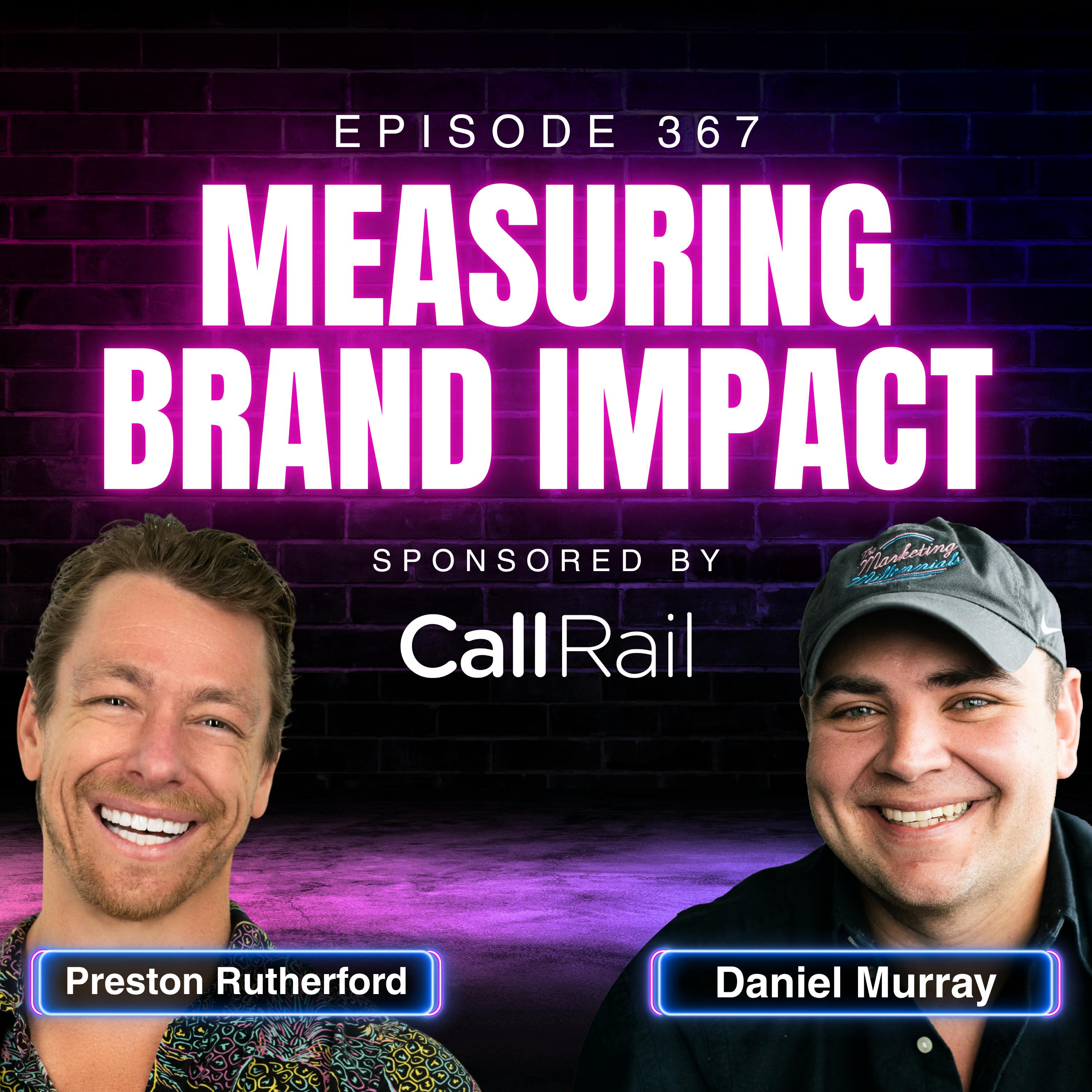
The Marketing Millennials
How To Measure Brand with Preston Rutherford, Co-founder of Chubbies | Ep. 367
00:42:01
Loading summary
Transcript38 lines
- [00:01]
CallRail Announcer
Proving your marketing ROI shouldn't be a guessing game. But when results are hard to track, it's difficult to know if your marketing strategy is working. Meet CallRail. In a few clicks, you can connect every conversation to the exact campaign that started it. So you can focus on what works and drive better marketing outcomes all in one platform. Try it free today@CallRail.com proveit.
- [00:28]
Daniel Murray
Welcome to the Marketing Millennials, the no BS marketing podcast. I'm Daniel Murray and join me for unfiltered conversations with the brains behind marketing's coolest companies. The one request I tell our guests stories or it didn't happen. Get ready to turn the up.
- [00:53]
Podcast Host
What is up everybody? Welcome back to another episode of the Market Millenn. I have Preston Rutherford here, co founder of Chubby's Loop Returns marathon data code dot com. But we're going to talk about a topic that I think a lot of people should be thinking about. They should be doing. They probably don't know how to do it or they probably not doing it right now, which is a different way to think about brand. People always say do brand, brand, brand. But what does brand actually mean? And Preston has actually a playbook to show you, like how to do brand but actually make it perform. So I'm gonna let you do more of an intro if you need to, Preston, but Chubby's is enough of a, like a case study to show that like, you know what you're talking about. But.
- [01:43]
Preston Rutherford
Oh man. Yeah, appreciate it. Thanks Dana for having me pumped to be here. And yeah, one of the co founders of a brand called Chubby's and some of the other stuff too. But yeah, basically just trying to demystify the whole thing and unfuzzify it if you will, so that you can actually start doing it. Because at the end of the day, it's all performance marketing. It's all growth marketing. It's just, you know, how you do it, how you measure it, how you think about it.
- [02:09]
Podcast Host
Okay, let's go into it because I think that's like the first aha moment that you should understand is like all marketing is performance marketing. So how could we make how could people start thinking about brand as performance marketing? And that's where I think the mindset shift needs to.
- [02:28]
Preston Rutherford
Yeah, totally. I think part of it starts with understanding the shortcomings of the way we measure bottom funnel, short term stuff that it's not perfect. And I think we know that to a certain extent, but we don't quantify the impact of it. So high level 85% of the data that you get from Meta, for instance, is modeled in and of itself because of iOS 14. And you just hover over the little I in Ads Manager and it's like all this data is modeled. And so it's like we used to kind of walk around this earth thinking like that's the be all, end all truth kind of thing. And I think once we get to a point where it's like A, have no idea how incremental this current spend is, meaning I spend this money and I get a purchase I wouldn't have gotten had I not spent the money, and then B, that a lot of the data is modeled anyways, then we can kind of get to a place where it's like, okay, we're already triangulating quite a bit, but then as it relates to how we can actually start doing this brand thing, like performance, right. I think at the end of the day there's some very basic things and there, there are better ways to, to measure this. But like from the Chubby's experience, which, I mean all credit to the team, I get none of this credit. Tiny, tiny, tiny piece or whatever. But like Chubby's coming off of like eight straight years of revenue and profit growth. They just, they reported earnings. I haven't heard the more recent ones, but for the first six months of 2025, like over about 90 million in revenue at like a 26% EBITDA margin, right? Which is just like killing it and growing, I guess well over 20% a year, I think maybe six months, year over year, like 40. So it's like there's something that's working with this whole thing, right? You just look at the results. It's a great example. So it's like it works. So then it's like how a lot of the way we approached it was let's just drive brand searches and you can poo poo brand searches all day. You know, you can talk about, well, that's because a TV drives brand searches. Or the more I spend, the more searches I get. But sure, but it's not just about that. It's per dollar spent, how many searches can I drive? And then for my brand, because that's just a representation of people thinking about me and taking some action. It's not necessarily a shopping action, but it's an action. But that's a great way to start. Like the reason we built Marathon is because you still have to take it further and like how, how much money do I make when I drive these searches outside of Short term, you know, clickbase, attribution. But, like, it's a great start just to start thinking about, okay, like, if I've got a dollar, how many searches can I drive? Whether it be with creating content, like, not even through paid media. But I think one of the things we can so easily forget as brands, especially once we get to a certain point, we're starting like, systematizing and looking for scalable things that are consistent. We get into this tunnel vision of just running meta, running Google, et cetera, et cetera, and you forget some of the earlier things that got us a lot of free reach and generated a lot of free memories. It's one of the things, just as a tactical recommendation that I always give to people is remember how you started and start doing some of that stuff again. Some of this fun stuff that's just crazy, that's interesting, that's different, that stands out. It doesn't have to be via ads. Right. So that's one of the things. And then the other thing is just like, start monitoring brand search maniacally. And not only that, but total clicks from brand searches so that you could see how you're actually converting what brand you're developing and then have someone own that metric. And there's no reason why you can't double it or triple or more. But, like, one of the realities is like, it's kind of like, I don't know, gravity. It just is. Like, if there's a brand that's 10 times bigger than you, they probably have 10 times more searches than you. Like, you can fudge it on the margins or whatever. But, like, that's just one of the truths that, like, if you grow that you generally can become a bigger business.
- [06:24]
Podcast Host
Yeah, because I mean branded. So branded search is literally people searching your name, which is like, not your problem.
- [06:33]
Preston Rutherford
You're having.
- [06:33]
Podcast Host
It's literally searching your brand. Brand's name. I want to go into like, okay, so Chubby's or other brands. How do you recommend actually getting that brand search? So, like, if I'm going to run meta ads to get a branded search or I'm going to do content, what is like that flywheel to ignite a brand search in your eyes? Or what did Chubby's do? Or what are other brands doing?
- [06:58]
Preston Rutherford
The mindset I would always take, and I wouldn't say Chubby's, at least when I was associated with it, and therefore I'm the one to blame, wasn't doing this perfectly. But it's like, always start from free. I think that's one of the things that we forget. Like, start with the free things that I can do first. And then paid is a thing you then gotta do, like from a free perspective. I mean, many ways to do it, right? And it depends on category and where you feel comfortable in terms of like where your skill set is. But like, find a way to make organic, social interesting to people, right? I mean, how can you be in the running to be the most interesting piece of content you see all day? You're really good at it. Like, you're a great example. You make stuff that's just interesting to people, that people want to engage with and share, right? There's no reason why brands can't do more of that. I think you just get in this crazy silo of thinking where we just stop investing in it. But like, there's a ton of free memory generation out there, you know, if we just do better, you know, and it's like, sure, do better. But like it's totally possible. So organic, social and then all the obvious stuff, like do things that. Whether it's like an interesting stunt or something interesting in the world, just something that earns attention, right? I think we kind of forget the idea that like at the end of the day when we're building a brand, a word that is very helpful for me just to kind of reframe is like, be famous, get famous. You know, how do people get famous, right? There's a variety of ways, infinite paths, right? But your goal is to get yourselves to be famous and so just like do that. And that requires creativity, that requires fun, that requires doing things that are different. And then of course you can. And like, I guess you could poo poo that too. But like that's the reality. Like it's our jobs as marketers to be interesting and to earn attention and to earn thought. And I think you do a great job of that. And then the other is like on the paid side, right? There are just like some tactics that people would probably freak out at, but that open up reach much less expensively, which I think everyone's struggling with, right? I mean, I go into a bunch of ad accounts and you just do like the account level report last 30 days, compare same days prior year. It's like spends up 20% reach down 30%, right? And that's just a really. And then like unique outbound clicks down some big amount. Generally those are the things that we're seeing and it's like, man, that's hard to grow if those are your economics from the ad Platform, you know what I mean? So we got to start adding in, in my opinion, just something to try. And there's a lot of data that supports like studies. And then now we've got a bunch of case studies drive engagements like optimize for engagements, optimize for follows, optimize for shares across all the ad platforms. Right now people are like, but you start paying for it. So it's lower about. Yes, obviously. Same thing when you start paying for purchases. You know what I mean? It's all the same stuff. Right. So. But there's a lot of studies that support the idea that like if I'm getting people to engage, to take action rather than like a reach campaign or a video views campaign, nothing against them and they could be great. They're probably great. Especially if you get that engaged view because I think focused time spent means a lot. But legitimately, like if I can get someone to raise their hand and like follow my brand or share one of my pieces of content, I, I would happily pay for that. So dtc, Twitter will probably on that, but that's fine. You know, that's why the CPMs are so low and that's why it, it works. So it allows you to reach more people, but it gets them to take action. Right. Which kind of helps to sear that memory in people's minds. And it's not like you stop doing direct response, but it's like spend a little bit of your budget on this stuff. Distributing your organic piece of content that got the most shares. Like it's a very kind of simple thing that, that also helps people understand. It can't just be like a straight up meme for meme sake. So just be obvious that like. Or be reasonable that like you want to pick a piece of content that in some way conveys who you are, what you do and then you're feeling your vibe. That's interesting. That earns engagement, that earns attention in the same way that I was just talking about earlier.
- [11:16]
Podcast Host
Yeah. I mean there's a company called dad Gang that who does this exact thing where he, he, I think you heard, but you've probably seen on Twitter, but he finds the most engaging piece of content and he optimizes for follows shares and he grew that following to like 250k. And then when someone goes to like dad Gang on Instagram, it looks like a, a huge brand with a huge community. And then you, he uses stuff on the platform like, like on Facebook you can create Facebook groups. On Instagram you can create the. I don't know, the commute. The little community of like people where you, if you start optimizing for that and then you can do organic drops on Facebook groups of like and stuff like that. So once you get people, you can start getting them to these like micro communities inside of the platforms too, which is an, pretty much an. Or is an organic way to start dropping things to your raising raving fans, which is what you're trying to do.
- [12:19]
Preston Rutherford
Yeah, you don't truly own any audience. Right. Like even your email list like all this shit. But like build owned audiences, right, is one of those things that just like pays you over time to your point. Build that Facebook group. Right. Run ads to build the Facebook group and yeah, organic reach is going down and blah blah, blah. That's just the reality of the platforms. Supply has to sort of like meet demand. But you got to do the best you can. And obviously you're trying to do as much of this as possible without paying for it. But when you start paying for it. Yeah, totally. That makes sense. And then you build these little communities where you've got ability to reach people and have them feel like they're a part of something. I think that's the other thing that people that we kind of forget about is like we're all little like monkey brain people. We just want to feel like we're parts of communities like that. That's what assigns the meaning to your pair of pants or your hat or your socks, your whatevers. Because we're all mostly selling commodities that anyone can copy right at the end of the day and we're trying to get a price premium for it. Like you got to do something because it's not price and features, because that's a race to the bottom. Right? I mean everyone who's competing on price and features, if you don't have some crazy supply chain differentiation or whatever, whatever, whatever. It's hard to become a long term sustainable growing business. In that path you can maybe get some short term wins. Right. But to be a decade and a half, two decades, three decades in and still growing and generating more and more profits, that becomes really hard if you're just competing on the level of price and features and you don't have communities that you kind of own.
- [13:57]
Podcast Host
I want to go into either the, the classic what happens to a lot of brands? But I want to see how you would fix it. We were talking before this about Lululemon, but a lot of brands get into the trap of these quarterly results have to hit a revenue number. They, they do it by just straight trying to do performance marketing like run as many ads as possible or. And as we talked about now, like there's, there's a cap on how much that. And every year it's going up and even if you're not running brand, it's going to go up even more because people like there's a, there's a frequency cap to it. There's. People get the fatigued of your ads, people get fatigued of your name. So how do you, how do we get out of this trap? Like the trap of quarterly results. I know we have to hit a goal, but how do we get out of the trap and things go back to doing the brand stuff that works.
- [14:57]
Preston Rutherford
Yeah, totally. And just to add a couple points to your observation, right, like stats like Facebook in their earnings, they put out average cost per ad changes and last quarter it was up 14% year over year. This last quarter I think it was 10 or 11 or something like that. So just the cost to play the game, to enter the auction is going up double digits and compounding every year. Right. So it's like man, that's tough because inflation's what, like 2ish percent? So 5x inflation is just the cost to play the game that's going up. That's bonkers. I read a triple whale report that says on Meta CPMs are up 25% year over year. Right. So it's just hard to do the same thing and find accumulating advantages. There's just more and more friction if you're just going to do the same thing over and over. So that's where it gets somewhat difficult. But yeah, as it relates to the short term piece. Right. It takes having a strong view. Right. I think if you're, if you're a bootstrap business, it's maybe a little bit easier, but you still want to, still want to keep growing. But a couple of thoughts, right? Especially if you have like a board or investors or whatever. First is like as quickly as you can stop looking at the revenue number, it's hard to do. But as quickly as you can stop looking at the revenue number and look at the profit number or the contribution. I talk a lot about contribution margin which is just revenue minus the cost of your goods, minus the cost of your marketing ads, minus discounts, start looking at that as a metric and, and trying to grow that, that maybe gets you 70% of the way there. Right. Just stop getting so obsessed with revenue as the mark of success. But rather what comes out after discounts, after marketing Spend, et cetera, et cetera. That being number one, number two is like, remember what we are to people. And I kind of talked about this a second ago, right. We're simply trying to create something that should always feel like it's the most popular kid at the party kind of thing, you know, and once it stops feeling like that, that's when really dangerous things, because we're just in the desire game, you know, Our goal is just to be desired. And when you use that as a filter, like, hey, is this discount promo thing where I'm kind of like selling my soul to hit this short term number, does that increase overall desirability for my full price product over time? Or does this anchor someone at a lower price and make them only want to purchase again when I come out with a bigger and bigger discount? Right. So like that as a filter is just a very tactical recommendation that I would absolutely suggest. Like a be okay, not positive comping on revenue, but be a little bit more maniacal and trying to just beat where you were on contribution and then just run decisions through the filter of desirability. Like, does this increase the likelihood that someone's going to want to pay my full price for my product over a long period of time? Yes. Cool, do it. No. Okay, maybe just we have to move inventory. Like at the end of the day, if you make an inventory buy that doesn't work or whatever, you got to move it to free up the cash. So I'm not saying never discount at all. There's always a reason to do it, but just view it as a system. The next thing is like, what is the business that I want to own? You know what I mean? Like you can take two identical businesses, two identical brands, same revenue, and like 99% of the impressions that this brand puts out into the world is like product shot on a white background. It's like 50% off if you buy today kind of thing and you're having to launch, constantly launch new products to just kind of keep up with the fading demand of your core. Launching into new Geos, launching new categories, you add a bunch of complexity to your business, blah, blah, blah. Have to churn through this ton of volatility, right? Because you're totally subject to the ad platforms or it's like a lot of what you put out there just people look at and they're like, this is freaking awesome. I love this. I love that I get to put this out there into the world. I love that they're making this stuff. Like it feels great. Same revenue Less discounts. Right. Less promo. Right. People are buying because you launch a cool new thing that is maybe part of your core, but they're just excited about it, or you launch a cool partnership or whatever. Just cool stuff that adds value to the customer's lives. I mean, that's how like, that's my opinion of why Lulu's faltering a little bit is there's. And there's a bunch of other stuff I think associated with it, but like just getting into this, I gotta orient everything around hitting this next number so that I've got like this very clean growth. Not that consistent growth is bad, but just the general idea of like losing the spark can be very dangerous. But to have the spark introduces a bit of it's it less. It fits less into a clean spreadsheet. Right. If you're going to do something that's really interesting and really novel and captures people's imagination. Right. I mean, I think if you look at a Lululemon, you know, they've really let aloe, your hat, which is an awesome hat or Vuori kind of come in. I just did like some quick analysis on Google Trends and found that like just over the last three years, you know, like the gain in search interest, imperfect metric, all the obvious caveats, has like more than almost tripled, I think for Vuorian Al, where they've taken over as the majority share. If you look at just like Lulu, Athleta, Aloe and Viori. So it's like just they stopped doing things that got people to search for them, you know what I mean? And I have no idea how much money they're spending. Probably find it in the public filings. I'm sure it hasn't gone down much, but general idea being they stopped doing shit that was interesting to people. So at the end of the day, let's optimize for that. Not necessarily like, oh, I gotta just make sure I'm hitting this revenue number now. I don't know what their profit numbers were, but I assume if they were just a little bit more focused on just like the profit march, it would also have been better. But I'm assuming a big part of it was just like losing what made them super, what made you super loyal to them, like we were talking about.
- [21:20]
Podcast Host
Yeah. I also think that for some odd reason like contribution margin and profits, not sexy like which it would for like, like saying you got like 100 million revenue, like sounds sexier than getting like 3 million in profit or something like that. They rather like get a hundred thousand in profit than like three, which is like a crazy thing to think about just because it's like an ego thing to say like we're a 300 million a year business instead of saying like we're a $10 million profitable business. Which is a sexy, it should be a sexy metric because that means you're making actual money. But it's just so, it's just, it's, it's funny because like it is. You see these brands on like D2C, Twitter or like founders bragging that they're like a 30 million dollar business. But you can easily spend money to make you a 30 million dollar business and have nothing squeezed out of it. Like, like if you could spend your way to a 30 million dollar business without having that SEC, that profit and contribution margin. And I, I wanted to go into something else that you said because it's pretty relevant to right now. You're talking about discounting and I want to get your take on like Black Friday. Cyber Monday is coming. A lot of brands are like, has discounted so much on those days that they become just a Black Friday Cyber Monday brand. Like they like people owning will shop those brands on Black Friday and Cyber Money because they know they have the best discount there and they won't shop all year. So what, how should people be thinking about their launches in the next week or so or two weeks or three weeks Cyber Monday or for next year if they already have their plan locked in with discounting and doing cool things with Cyber Monday Black Friday?
- [23:16]
CallRail Announcer
As marketers, we're all trying to answer the same question, which investments are actually driving revenue? And too often the honest answer is an educated guess. CallRail replaces that guesswork with proof. With the help of AI, you can connect every lead to the exact campaign that drove it, analyze your conversations and capture leads around the clock. That's why over 220,000 businesses use CallRail to market smarter. Stop estimating impact and start proving it. Try CallRail for free. Free@CallRail.com prove it.
- [23:55]
Preston Rutherford
Yeah, I was listening to a podcast earlier this year from Taylor Holiday of CTC and some of the data that he had. And so this was months ago, but it was like so far in 2025 or something like that, discounts are up like 40% year over year across all the brands you know, that he tracks. I don't remember the exact details, but the point being discounts are already way up this year for brands versus where they were last year. So I think a difficult thing that we're potentially going to see is that we've already done a lot of demand pull forward this year as brands to kind of hit a 2025 number. Not that I'm necessarily saying I'm worried or nervous about how they're going to do in Black Friday Cyber Monday, but just the idea that we've already been discounting quite a bit. So Black Friday Cyber Monday, whatever you're going to do, might feel less special to the consumer if it's purely kind of like discount driven. Which is why in general love to recommend like gifts with purchase or things that feel like you're getting something that is not a discount, even though it is a discount kind of thing. And I know more and more brands are doing stuff like that for Black Friday Cyber Monday, but something where it feels like a. I'm getting something like I buy two things and I get a whatever, a sock or a hoodie or whatever, whatever, whatever. The benefits of that I think are awesome. It's potentially harder to do on the upside. But as much as it's not that just saying, hey, flat 40% off is bad, but it's like less interesting to the consumer and it feels like straight up, hey, I'm devaluing the thing that I'm trying to create more value around over time. So that's, that's maybe one like tactical recommendation. What's also interesting, right, is I think a lot of people have launched Black Friday Cyber Monday or whatever. Like November sales already.
- [25:49]
Podcast Host
Yeah. And then it's like cyber month after. It's. But I think something cool that I, that I see chubby chubbies do and some brands do. I like the gift repurchase. They have that, the checkout experience where you can like make your way up to like get cool, like extra stuff so you get more. But I think also something that they do too, which I think brands can consider is like creating a loyalty program where you like, you can you opt in to get the, the Black Friday sire money. So now they're in like an opt in, opt in loyalty community. And then you have a loyal program customer for the whole other year and you have something to market to them for the rest of the year instead of just keeping like trying to get them for this one moment. You have like a loyalty program. I think that's a smart way. And then also dropping it earlier to that community. Having better discounts in the community versus like upfront. I think those are some ways to like counter the discounting a little bit is like give it to your most loyal people and like get more people into that loyalty funnel instead of having it by yourself for sure. I think is a smart way to do it as well.
- [27:05]
Preston Rutherford
Yeah, I think it all ladders up to what we've been talking about, which is like build more communities that you own. You know what I mean? And the loyalty piece is another one. I mean, I've been out of the day to day at Chubby's for a long time and I still am pumped when I get my Chubby's. It's Chubby's Collective is the name of our thing and where I get to use some points, you know, at checkout kind of thing. I. Maybe I'm the highest LTV customer ever. I don't know. But still, it's like I get pumped when I get to. When I get to use it. And then you've got like true classic. And I'm sure there are others who have like a subscription kind of situation, right. Where you. Or whether it's not a subscription, but you pay something and then you become like an elevated member. I don't know if it was like 12 bucks or something like that, but I did that and that's pretty cool too. Just get access to other cool stuff like cheaper shipping and blah, blah, blah. But like the economics of these things are kind of interesting. But then, yeah, I mean, creating a community where you get something that feels special and then cultivating that because it takes extra work to cultivate it. Like to run the program to do the early launch right. You got to plan around it. So like tactically it's a little more difficult but, but, but totally important. But like, like decision filters I always kind of come back to. Right. So like, how do we make this feel fun? How do we make this feel like I'm a part of something special? How do we make it feel like I'm getting more than just paying less for a thing? Because that just gets harder. It's a harder game to play over time because the 20 you do this year, 20 next year is generally going to be less effective. So you got to amp up to 25. And it's just a. It's a scary path. And to the extent we could just do things that, yeah, feel fun, feel different, feel like I'm a part of.
- [28:46]
Podcast Host
Yeah, like, like special SKUs limited to black Friday, like bundling limited to Black Friday. Like something like Christmas, like giveaway, like Christmas gifting bundle that we only run on Black Friday Cyber Monday. Like something that feels like fun to the brand. Not just like I go to your site and I could Purchase the same shirt on Black Friday. As for 30% off that I could have bought a month ago for a full price. Which is to me as a consumer, I would be saying to myself, hey, why don't I just wait a month to buy that shirt instead of buying it full price right now? Which if you're not available on that, then it might be a different story.
- [29:39]
Preston Rutherford
Yeah, totally.
- [29:40]
Podcast Host
So I want to just come keep like doubling down on this like topic of why to run brand. Because I think I'm a big fan of brand. I. I think like that's what keeps legacy businesses going forever. And like you said, I'm wearing aloe hat. I wear it because other people are wearing aloe hat. And it's a, it's a community driven thing in public. You wearing chubbies. I know you were co founder but you also a super fan of your own brand. And when you see other people wearing chubby, it's community in the streets too. So. And that's brand. But I want to talk about, you were bringing up a little bit about road and I know there's that celebrity aspect of road, but can we talk about like what you saw that made it so special as a brand and why it got acquired so fast? Because of its brand appeal for sure.
- [30:32]
Preston Rutherford
Yeah. So for context for, for listeners slash watchers or whatever. So they got acquired for some massive number. I don't remember what it was. Billion or something by Elf Beauty and the. As part of the public filings they had to do. They released the financials of Rogue and I'm gonna get some numbers wrong. But the point is still the same where you know, they were spending less than I think they were spending like 11% on ads, whereas many brands are spending 25, 30% kind of thing. And they were growing fast, had like a 34% EBITDA margin. Right. We're talking about profit. Sexy. Like that is sexy, man. That is amazing. That is a great business. And I think one of the things that was called out was like they didn't spend anything on paid media for the first two years. Now I don't know how true that is, blah, blah, blah, blah. But like focus the first two years on like organic community building. That's like what does that mean? You can come up with what works best for you, but like just creating a tribe around your shit is like the, the key. And, and so I think I don't remember what the multiple was, but it was like multiple times revenue, which not a lot of brands are getting multiple times revenue. Maybe you get an EBITDA multiple on acquisition. But just pretty crazy that, that, that that happened. And then the idea is like oh, but they've got Hailey Bieber and it's like well maybe but like up level that, like what is that? That's a lot of free reach. So it's like you don't need a celebrity to get yourself free reach or to generate a lot of memories. You just have to find creative ways to generate a lot of memories. Like that's ultimately what it all ladders up to. So like Chubby's was not started by some famous person, right. But like now I think a lot of, so like a lot of what we did in the early days was like try to just get a lot of reach with our organic social and to make our emails funny to where people would forward them and do stuff like that and do funny promotions or like group buying things or just fun things to take part of now. I mean you've got George KITTLE, you know, 49ers tight end, you've got the little bit of the Kelsey's hanging out. You've got this big thing that they're doing with the NFL and fantasy football and creating all this content and now it's less people internal creating content. It's like these creators who are just making these awesome videos but that fit the Chubby's vibe and reach their audience and all their people. And that's a way that you're running brand. It's not like a Facebook reach campaign or whatever. And so like variety of ways to do it, but it should all ladder up to like I just got to reach a lot of people with really cool experiences to generate a memory when they're not actively shopping. So that when they are shopping they automatically think of me. Right? The best business to own in my opinion if you're an ecom is or even not but is like A, when all of my purchases come not having to discount in theory, right. But B, if I'm Ecom like it should all ideally could all come from just people searching my brand name back to the thing we were talking about at the beginning, right? That's the best business to own. And like for Chubby's like the vast majority of new customer acquisition when we were acquired was coming through people who were searching the brand or coming direct to the site, right? A lot of people are still clicking on ads, blah blah blah. But I mean that is a business that you want to own and that's like resilience, that's predictable. When the vast majority of what we're doing is people automatically seeking us out and proactively coming to us rather than the brand having to go out there and be like, come on, click on my ad, please. I swear it's going to be awesome. 90% off.
- [34:14]
Podcast Host
Yeah.
- [34:15]
Preston Rutherford
So like that's the fundamental shift that we're trying to create.
- [34:18]
Podcast Host
I think, I also think when you started the mindset of social first planning, because social is an arm where you have, you have to be good at creating content to be able to get shares and likes and, and if you have, if you're not building that and emails, that too, like, you have to become good at creating content to get forwards and stuff like that. So if you start with those foundations of being good at something that can afford to shares your, it automatically makes your paid social better. Because now you create, you can create ads that also get shared and also get likes. And the problem is a lot of people are putting spend against bad content and bad content that's not going to get shared. And an impression is not a guaranteed attention. An impression is just, it gets shown up in your feed. If you want attention, you got to create content that is willing to be viewed. And that's why I think starting with what you, we said you've been saying from the beginning is like, start with learning that how to get someone to say your name or share your name, whether it's social first, community first, email first, content first, whatever you want to call it. But these are all like skill sets that you build that help you be better at every other. So when you go do paid social, when you go do paid campaigns, people are sharing, are, are sharing your stuff.
- [35:52]
Preston Rutherford
Yeah, yeah, yeah. When you brief influencers, right, like, what do you say? Why like help them think about. Because like you can brief in a way that leads to something that just falls flat and is blah. Or you could just help them be like, no, no, these are the things, this is the angle, this is the narrative arc, this is the positioning. This is exactly what we want someone to think and feel and exactly what we want them to say to their friend when they talk about this piece of like all of that stuff. To see that through. You could do all that, right? I mean, it's just this narrative storytelling at the end of the day is like what the, what is so essential? Yeah, yeah.
- [36:29]
Podcast Host
I think going back to even that is like before you become social first and before you become content versus figure out what your story is, your, your mission is, your, your brand voice is who you want to Be known in the market because it makes everything. The messaging, because it makes everything out. That's what Chubby's. That's why I think Chubby's is so great, because the message and email is the same on the website, which is the same as in paid social, which is same as in, like, regular social. The feeling and the. The vibe is exactly the same, which I think makes it great. I. When those pieces are disconnected and there's no clear audience, there's no clear who you're going for, who you're trying to serve, what feelings you're gonna have, you're trying to. I. That's why you start falling flat, for sure.
- [37:22]
Preston Rutherford
Yeah. And then an easy way to think about it sometimes is like, what are you not? Like, who is not my customer? And who's gonna hate this and be okay with that? Right? Because there. There needs to be a thing that is hateable. Like, if you're not hateable, you're just. You're not lovable either. You know what I mean? And so it's like. But when you're like, ah, it's like all aspirational, like, I want to be this, this, this. So does everyone. Everyone wants to be funny or everyone wants to be whatever, but when you can get a little bit more precise with, like, what content you make and. And why, and why someone would hate us, you know, that's a clarifying component of the process to go through. But I would encourage everyone to kind of like, clarify that and be like, who is my customer, who's not my customer? Why, what content I make, what do I not make? Why all that kind of stuff? So that when someone experiences your thing across all of these impressions you're putting out there on your own, earned, paid properties, they feel something. And it's a. It's a strong feeling because that's possible. Everyone, you know, it's like one of the most important things at the end of the day that is like, do they feel something? Is it strong? And it's okay if they don't like it, it's actually good because that means there's something not to like. And that means that there's going to be a lot more people who do like it and feel that thing that gets them past lethargy, which is like, I'm just going to stick with my incumbent. You know, I'm just going to keep going, get my shorts from whoever. No, it's like, boom. It gets me to act, change my behavior. And that's what we're trying to do. When we're starting these people, businesses, these brands.
- [38:54]
Podcast Host
Last question I have for you is what is a marketing hill you would die on?
- [38:59]
Preston Rutherford
Yeah, it's that roughly half of what you're doing should be demand creation. You know, not like 2% of your allocation of resources, but like roughly half of your people. Time, focus, money should go to stuff that like build searches rather than just drives that short term now it changes stage of company, blah, blah. But like it shouldn't be 2%, it should be a much larger percentage. Some would even say 60, 40 to brand. So I think that's like at the end of the day, like if more brands can figure out how to do that and go through that transition, they'll generate a lot more sexy profit dollars over any period of time. Yeah.
- [39:45]
Podcast Host
And the key here is too is profit is sexy, contribution margin is sexy and revenue is a great number. But if you're not doing it in a way that is the bottom line. Profit is not a contribution, Volume is not growing. You're pretty much not a growing business even if your revenue is growing. If you're staying 3 million each year and growing revenue, who cares?
- [40:13]
Preston Rutherford
Same business if I'm a founder, if I'm a manager, if I determine how people get bonused, you know, like in my organization, do it off of contribution. If I'm in the marketing org, don't do it off of hitting a revenue goal, do it off of like a contribution margin or a contribution dollar as the primary. You can have a matrix of course, but like that is a very nice way to change the way that people make decisions on a day to day basis.
- [40:37]
Podcast Host
Lastly, where can people find you and every and what you're doing?
- [40:42]
Preston Rutherford
Preston Rutherford on Twitter, on LinkedIn, MarathonDataCo.com or Marathon de Taco is how people have told me is more memorable. Marathondotaco.com check us out.
- [40:56]
Podcast Host
Cool. Thank you so much and this was great.
- [40:58]
Preston Rutherford
Thanks Daniel. Great to see you as always.
- [41:02]
Daniel Murray
Thanks so much for listening. Keep tuning in to hear more great insights from the cool, coolest marketers from around the world. If you haven't already, make sure to subscribe and follow the Marketing Millennials podcast on Apple Podcasts, Spotify, YouTube or wherever you get your podcast. And if you like what you hear, I would greatly appreciate you giving us a five star rating. It helps bring more marketers into our community.