← The Marketing Millennials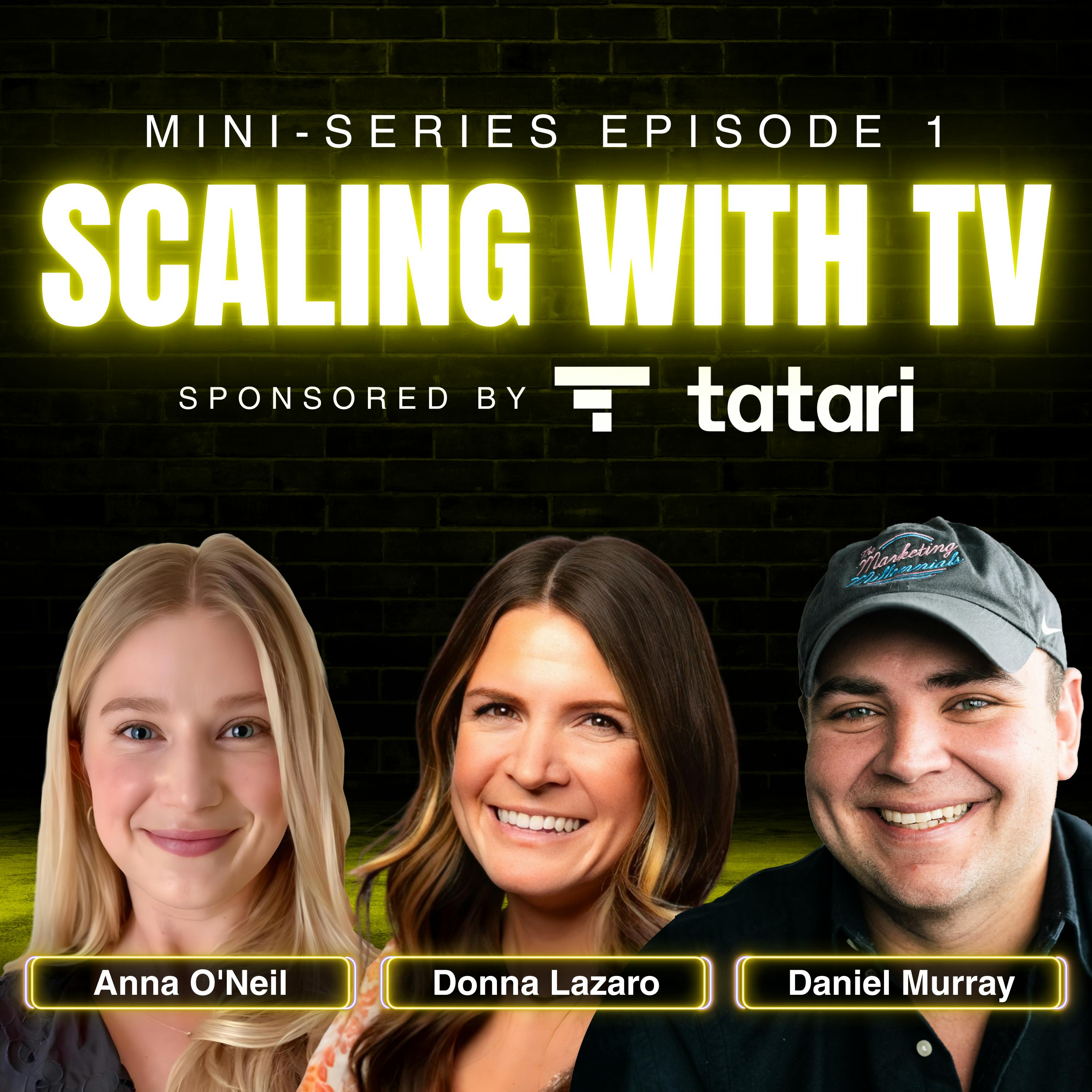
The Marketing Millennials
The Practical Playbook for Starting TV in 2026, with Donna Lazaro from Gabb
00:38:27
Loading summary
Transcript66 lines
- [00:02]
A
Welcome to the Marketing Millennials, the no BS Marketing podcast. I'm Daniel Murray and join me for unfiltered conversations with the brains behind Marketing's coolest companies. The one request I tell our guests stories or it didn't happen. Get ready to turn the up. We are back with another episode of the Market Millennials podcast. Today I have two guests, Donna and Anna. Donna is a senior director of Brand marketing at GAB and Anna is from Tatari and we're just going to have a good conversation about one of the most hot topics in 2025 and 2026 and beyond, which is TV and connected TV. So I'll let I'll start with Donna that you introduce yourself and then I'll move to Anna.
- [00:59]
B
Sounds great. Yeah. I'm Donna Lazzaro. I'm the senior director of Brand Media at gab. I've spent the last five years building and scaling our brand media strategy and leading full funnel initiatives to help grow our brand awareness and just support sustainable growth through our marketing channels and tv. Being one of those Excited to be here.
- [01:23]
C
My name is Anna, I'm from Tatari side I am a platform team lead here so work with some of our high growth clients. Yeah excited to be here in chat tv.
- [01:35]
A
I think the first thing I want to just lay down the foundation of what Tatari is Anna so people can understand and what makes it different from traditional TV buying or programmatic only CTV platforms?
- [01:51]
C
Yeah, absolutely. So most platforms just sell a slice of the TV landscape, so maybe that's programmatic streaming only or linear only while Tatari is a full convergent TV platform. So helping brands buy and measure TV across programmatic streaming and linear and it makes it feel a bit more like a digital landscape so you're able to optimize on a next day basis. So yeah, the platform enables clients to buy all inventory types which is the biggest differentiator that could be a highly targeted campaign like a lookalike automatically audience or retargeting. Or it could be as big as a Super bowl spot on NBC so we connect directly to publishers and avoid the extra ad tech markups. So for a small brand, more budget goes to media versus middlemen fees and then having everything in one platform also allows us to provide unified measurement across linear and streaming or programmatic and a true understanding of incrementality holistically across all TV buys and real time reporting.
- [02:59]
A
I think one also I just want to add on before we get to Donna, but as I know there's different maturity levels between tv. There's people who are just getting started and then there's the people who are already experienced with tv. So how, for how does it support both everybody in their journey?
- [03:21]
C
Yeah, absolutely. So for a lot of first time advertisers expanding into linear or connected TV for the first time, it can be quite daunting. So we help small brands scale on TV by making TV cheaper to test, easier to manage in house and measurable. So they're able to treat it like a performance channel rather than just a brand play. So brands are able to start at modest test budget, so lowering the barrier to entry. And these brands are able to ramp based on performance similar to a digital channel. And then for brands in a growth stage, Shatari's platform makes it easy to scale. So say that you are launching into retail. How can we scale TV efforts to support those pivotal moments in a brand's journey? And last but not least, mature advertisers, Obviously we know there's massive scale potential within tv, so we have specialized teams to support brands in those sorts of stages. So whether they're diversifying their media buys with premium ops, NPE buys, sponsorships, integrations, and then start to begin to think about upfront buys. So same exact platform, but different entry points for brands in different stages.
- [04:30]
A
Thank you for that. And with that context in mind, I want to talk a little bit about Gab. Donna. So for listeners who may not be familiar, what is Gab? Who are you building for? What makes your brand different from anyone in the market?
- [04:44]
B
Yeah, so Gab's mission is to help parents protect every childhood with safer tech for kids. And Gab was founded in 2018 and at the time, really the only option for a kid's phone was a traditional smartphone, which they're built for adults, they're not for kids. And so with that, Gab launched its first phone for kids that doesn't have social media or Internet access, making it a safer option than traditional smartphones that may have these other dangers that come with it that a kid isn't ready for. And since then, we've added different products to our lineup. Software solutions to help parents parent in this digital age that we're in, with safer tech options that can grow through age appropriate steps with the different devices that we have.
- [05:44]
A
Yeah, that's super cool. I mean, my kid's six months, so I'm ready thinking about tech I need to use for my kids. So it's also like, I think we're the millennials are shifting the narrative of later phones, later technology, later everything. So I think this is super cool that we don't have to worry about like, unlock phone and that journey of an unlock phone, which is kind of scary. But I also want to get into that. I mean, you, Gab, has been running TV since 2023 and not many of your competitors are in the TV space. So can you talk to us why you felt this was the right time to diversify your channels and why TV specifically?
- [06:34]
B
Yeah, great question. So in 2023, we launched TV like you said, and we felt like at the time we had, you know, a really good grasp on our core channels, you know, organic, social, meta, Google search. And we were really looking to scale and we felt that TV was going to be a great channel to add to our mix, provide more reach and scalability to help educate. Gab is the leader in the category. And so we've been breaking into this new category that people aren't aware of. And so we felt like TV through that different format compared to different formats on these different channels was going to help educate and tell our story a little bit more as well as, like I said, increase that reach, make people aware of us, build that trust with parents. I feel like there's this element to TV that adds credibility. You know, when you're showing up next to a Toyota commercial or whatnot, it adds that credibility. And, you know, we want to be top of mind again in our category as it may develop to be the leader, you know, in safe tech for kids. And yeah, it's really helped fill the funnel to then support our other channels.
- [08:01]
A
Yeah, I think that's one of the biggest things that people don't think about with TV is. And probably one of the biggest deterrents of TV is they don't. Since Meta and Google are these walled gardens, you think, oh my God, when you start turning on tv, you're just like, why is Meta doing better? Why is Google doing better? But it's like that whole halo effect of these things are doing better. And I love the point you made about, I think like, when you show up on tv, it has a perception you have more money and you're bigger than you are. Even if you're on a TV on a budget, it still makes you seem like you're bigger. But I want to let Anna add on to this and see what you have to chime in on.
- [08:51]
C
Yeah, totally agree with you, Donna. There. There's actually e marketer studies that have validated that credibility that is associated with advertisers that show up on TV versus other platforms. So that is definitely a reason why a lot of advertisers will shift over to TV on top of the incremental reach, which you also mentioned. And then in terms of that halo impact across other channels that both of you guys talked about, that is something that a lot of advertisers are starting to look at and look at their marketing mix more holistically and how TV may be impacting other channels. So Tatari's data science team actually has a report that can put numbers behind this. So we have a halo impact report that is able to show lift or boost to any other marketing channels that are trackable. So some pretty cool data validation in both of those categories.
- [09:44]
A
I also want to ask, I know smaller, usually smaller brands have a large percentage of their budget tied to the digital channels. How did that play into the decision making process of adding TV into your mix?
- [10:02]
B
Yeah, so we looked at TV as an additional channel, not replacing any other channel. But yeah, definitely complimentary to the core channels that we've been on. And I would say too a big as we were vetting different TV agencies and just TV in general, we really wanted, we know that TV can be a little bit harder to track compared to like meta. And so data was really important to us to be able to measure this as we hope to scale it at the time. And so we really looked at what Tatari had to offer in terms of data and what, what we could lean on and help data inform decisions. And so it helped grow and helped make that decision to lean into TV knowing that there was some data to fall back on. And yeah, not looking at it in the way of just it must convert immediately but really looking at it as a long term play and holistic growth and adding that into our media mix.
- [11:18]
A
Yeah, data data is definitely leadership savor language. Yeah, yeah. You can't win if you don't have data. Even if the channel is amazing channel, if you can show any increment incrementality lives, any incremental list on that channel or have any reports or show that it's helping other channels, they're never gonna trust you on that channel. So I told I like that. I mean when you're looking at a channel you have to look good. Especially in this day and age. Is the reporting good? How's the data flowing? Am I, is this platform going to serve that need so I can go into a leadership meeting with some like ammo and armor so beat up in that meeting.
- [12:07]
B
Yeah.
- [12:07]
C
And I know you mentioned TV was also a tool to build the funnel or fill the funnel. I'm curious to hear if that impacted retargeting pools across other channels, especially as you ramped up scale on tv.
- [12:21]
B
Yeah, definitely. We've had really successful big moments with TV in addition to just core performers. And so definitely, especially during tentpole moments for us, we've really landed great spots which has driven so much traffic to our site and being able to see that in Tatari's tool, seeing that spike to our website as well as, you know, other channels, a lift in branded search terms and things like that. And then again, our other channels help pick up, you know, that retargeting piece and really drive efficiency across a lot of platforms.
- [13:02]
A
I think one of the biggest worries I hear with a lot of people that I talk to when they're going into TV is creative. How am I going to create a TV ad? Do I need a huge budget to do? Feels so much different than meta creative or just social creative. So how did you approach your first TV ads? What's your approach to scaling that channel?
- [13:28]
B
Yeah, great question. So for us, we have an amazing creative and copy team and we put together internally a few, a handful of concepts and then we partnered with our research team and we actually sent out more of like a survey research form where we sent that out to our demographic and asked them questions. After seeing, potentially seeing this in a commercial format, how likely would you be to visit the site and learn more? And so we know we wanted to do more than one concept. We took the research from that study that we did and analyzed that internally and then picked some of those top performing or just leading indicators from our demo to then execute on. We had a variety. We have one that's pretty serious, one that's a little bit more humorous and having a variety. We have four concepts and having we have all four running at the same time and it's really helped us test and learn. And we found that some have landed better on different networks and has really just helped holistically shape our brand with the different concepts and frequency and things like that.
- [15:05]
A
I'll add one more thing that I see a lot of people doing this very well, especially smaller brands is I mean using your existing creative that you have on like meta and stuff where people just stitch together UGC or they stitch together or when they're doing ugc, they have it in mind that I need to do horizontal and vertical shots instead of just. I think that's like the biggest thing now is when approaching like a creative meeting or like creating creative assets, it's like, okay, I'm thinking there's a potential this might go on TV, it might go on YouTube, it might go on other channels that's actually shoot it in different ways so it's compatible. But I also, I know Anna, you deal with a lot of like clients with this. The same exact problem. What are you seeing and how are they dealing with that creative nervousness basically.
- [16:00]
C
Yeah, you actually took the words right out of my mouth. I was going to ask you. A lot of brands will hear some of the costs associated with creative production for TV and sometimes again that could be quite daunting and a barrier to entry for the channel. So we have quite a few brands that have tested UGC or existing social assets on tv. So maybe picking the top performer on their meta channel or TikTok or whatever it may be, stitching it together, making a TV spot out of that. Has gab tested that in the past and have you seen success versus some of your more TV specific concepts?
- [16:36]
B
Yeah, we haven't. Yeah, I've loved what you're both saying about ugc and UGC has done so well on our other platforms. At the time I felt like maybe in 2023 UGC wasn't as maybe prominent and so we definitely went more of like the polished route which has still worked. But we haven't tested UGC on tv. But I definitely have seen just in my own viewing, I've seen brands lean into that quite a bit. And so as I think as we're looking in the future to refresh our creative, I would definitely love to throw a UGC concept in there and see how it does.
- [17:16]
C
Yeah, absolutely. And I think the consumer research that you put into the TV specific concept is incredible too. That work ahead of time. And then last question from my side is a lot of brands will sometimes worry about creative burnout or wear out within tv, but we know TV has longer creative longevity versus some digital channels. So I was curious if you were able to keep that concept that you were talking about live on linear for an extended period of time. Maybe like a year, year plus.
- [17:47]
B
Yeah, we've actually been running all four since 2023. We've found that some are performing better than others. And so in the Tatari platform we've been able to adjust those weights and really lean into the ones that are doing better. But I definitely think from my perspective TV creative can last a lot longer than maybe burnout on these other channels. And so we're still going strong with the creative that we have. But I think that There's a few indicators that it might be time to look this next next year into refreshing some of that and maybe that makes.
- [18:28]
C
The upfront costs of creative production for Linear specifically easier to digest.
- [18:33]
A
Yeah, definitely going on that this topic on like what spots you have, you're putting connected TV on. I know a lot of brands worry that they're not going to be able that premium TV is out of reach. Right. So what is your strategy around primarily using Linear to build success around entertainment networks, co viewing networks like Nickelodeon or cartoon networks and sports like playoffs, college football, et cetera?
- [19:06]
B
Yeah, we've really leaned into the linear side of TV just for, you know, affordability and just the reach opportunities. We've booked hundreds of spots in college football below rate cards using, you know, Tatari's tool and just that partnership there. I feel like we've really been able to get great deals on these really large opportunities, high visibility opportunities. And in the beginning we've really used our budget to lean into fire sale opportunities where again large reach that we maybe wouldn't be able to I guess afford just upfront. But having that remnant inventory through fire sale opportunities to be able to test into something that we've wanted to, something like American Idol and be able to get some leading indicators if this is something to shift budget into or maybe it's not a good performance and be able to shift your strategy elsewhere. But yeah, we've continued since we've launched to allocate a budget for testing and that's kind of fluctuated in how much. But the adding in testing has, has really helped unlock new networks and audiences that maybe we weren't seeing before.
- [20:29]
A
And I just want to ask you something about just like Tatari in general. But like I know I've heard a lot about like fire sale like spots, what does that look like, how do they come up and how they purchased and how does that work when using Tatari?
- [20:48]
C
Yeah, absolutely. This comes up for all clients, all stages of their TV journey. It does require a bit of communication both internally for a brand and communication with your Tatari CSM just to make sure you're aligned on what budget makes sense, what CPMs make sense, what discount you would bite at, what types of opportunities you're interested in. But essentially Tatari's media buying specialist team gets past quite a few fire sales or deals. Kind of if there's leftover inventory, maybe you have a week, week heads up or a day's heads up. So it can happen really quickly, which is why the name is a fire Sale. So just having those discussions up front with your client, making sure you're aligned on budget, CPM, etc. Are super, super important. So when those flash deals do come up for a program that makes sense for your brand and your business, you're able to jump on them. And I think also that price point makes it again like an easier entry point. So maybe we're able to build confidence with those types of buys where you have a discount and build confidence that that performance does back out, which allows you to eventually buy future premium opportunities and unlock even larger audiences.
- [22:03]
A
I think that's a super smart just in general for brand, why brands should have like an allocated special like budget that they can tap into all the time that's meant for these type of fire sales or quick campaigns or opportunities that go up. I wonder like how's that structured in your budget? Don for like okay, fire sale comes up. I need to, I don't have to go through this 10 person approval process. I have to beg finance for money. How's it already set in your budget so I can hop on opportunities not only for like a fire sale, but any campaign you're running that like you could spend money quickly.
- [22:48]
B
Yeah, yeah. Going back to just like that test budget. With that test budget we know that like these fire sales would fall into that. And so being aware too of the time of year you're in. So if it's college football, being aware that some of those could come through or like I said like American Idol, things like that, being aware of the TV landscape and what currently is live was something that helped be able to just understand how much we needed to set aside and the ones that we needed to watch for and that we thought would be a good fit.
- [23:30]
C
I was going to ask if there were any performance factors as well because I know Tatari's data set does provide insight into genre performance. Or maybe you saw really strong performance on ESPN and that indicates maybe a World Series fire sale could make sense. What types of data points did you look at as a qualifier for fire sales?
- [23:50]
B
Yeah, great question. So we kind of like you said like leading indicators from other things too. Like we've noticed that, yeah, ESPN as well. And so really testing into, you know, different types of sports. Also if it's something that maybe we're unsure of, I would lean on my tatali rep to provide, you know, any kind of demographics if they could, if they had insight into that. And then really for us, really in that stage of scalability and growth, really looking at the cost with the CPMs and the household impressions and kind of predicting and seeing how we could back into it were some of those key points we were looking for.
- [24:37]
A
What are some of those key moments in Gab's like journey where you are. I know you said you're like, saving time, like budget for, like, those moments. What are those moments that you're saving budget for and how does that work?
- [24:53]
B
Yeah, so we have two big moments. Holiday, which is, I feel like most brands and then back to school as well. You know, kids being away from the home. And so, you know, parents really looking for something to stay connected with their kid while they're out of the house and away from them. And so, you know, really leaning into heavier investment during those times, you know, Black Friday cyber Monday weeks and really like adjusting, you know, end cards to highlight our promotions to drive urgency. We also more so during holiday, you know, there's a few different networks that, you know, we lean into, you know, Hallmark, where we may not. We're not doing that year round. But I do feel like there's some seasonality that we play into during those moments and just kind of seeing where while, you know, we don't have, you know, our competitors having a presence, you know, trying to show up in, you know, similar or maybe similar brands that have that same demo show up next to them in a commercial like on tv would, you know, add that credibility, hit that same demo. Kind of our. Yeah. Seasonal strategy.
- [26:13]
A
Yeah. I think one of the things also I'm getting from this is, I mean, like, one of the things you should do when you're getting into TV is figure out those moments, be very sure on, like, who your the audience is, and then you can go and like, for example, if more parents are watching Hallmark because it's like holiday movies. They love a holiday movie, a comfort movie. Let's go. Let's go to Hallmark. Or finding those, like, underpriced, like, buys that my audience is doing is I think you being able to, like, communicate that to any partner you're working with, whether you're working with a TV partner or agency or anybody is super helpful to be like, okay, my audience is parents. I have these moments that I want to hit parents. And what are Tatari giving those, like, spots? Where or where do you think those are the best spots? And then Tatari can come up with, like, what sample channels that you can hit on.
- [27:14]
C
Yeah, it's almost a combination of, like, that upfront planning work, finding the correct audience. So using competitive data, using share of voice data, MRI and Simmons is available. So again like indexing out where your custom audience is in the linear or connected TV landscape so that upfront work. But then on top of that Donna, you mentioned like the viewership with Hallmark changes especially around the holiday time frame. That's absolutely true. So the ability to be nimble and agile based on performance is also super important. So the second you start to see drop offs in performance on a network like Hallmark where viewership is shifting, I think that can really benefit a brand during those peak seasonal moments. So at what point do we see really strong performance with Hallmark double down and then at what point do we see drop offs in performance and need to scale back?
- [28:03]
A
I also, I also, I know you initially went came to TV for brand awareness but I, I do believe, I do believe, strongly believe that all marketing is performance marketing even if it's brand because you have to like if you don't, if you're not do performing, you're, you're probably something's happening. But you went in that mindset and it is a great channel for brand awareness to go capitalize those to educate that buyer. But how has that definition evolved for you as you've seen the impact across these other marketing channels?
- [28:42]
B
Yeah, I agree with you. I think that originally our thought leading into it was focusing on brand awareness and that's held strong even to this day. But I do think that there is a brand and performance element and have chatted with other to target clients as well and some of them really look at it as performance and I think it kind of depends on just the industry and brand. But yeah, we've held strong on that brand performance metric. But with that said, we've definitely seen TV as the scalable channel that feeds the whole funnel and so definitely have seen the effects of it in our performance. You know, the performance side of the business and again also on the brand awareness side too, seeing really strong lift there.
- [29:35]
A
I think it's also important what you said is when you are doing a channel for brand awareness or brand in general, like being able to communicate with your performance team that this is happening. So you can also get that credit across these other channels because if you run it in in silos or it's not connected to their dashboards or you're running it in, that can create a lot of issues that oh yeah, we're doing so great at performance marketing. Look how much better Meta is and look how much better at Google when you're running brand awareness campaigns that are actually having that halo effect or uplifting these Other channels. Anna, do you want to add on to anything on that part?
- [30:19]
C
Yeah, I think the way that GAV has approached measurement framework has been really amazing to see. Just making sure that the campaign is set up for success. We have clear benchmarks, clear objectives for the campaign and measurement models to track each component of the overall measurement framework. So definitely love to hear that. And yeah, I think TV can be looked at as an avenue for expansion across any sort of journey. So maybe a client is starting out with our self serve platform, which I know Gab did at one point. So using the tool independently, building out more of like a doctor approach to TV and being really nimble and then as they scale into brand, maybe that requires a bit more support from specialized teams.
- [31:05]
A
Donald, what advice do you have for like brands like yours that are growing, scaling, that are thinking of adding TV in their mix? What are some pieces of advice would you give them to jump on the TV train?
- [31:20]
B
Yeah, yeah, I've kind of hit on it throughout our conversation. But I would say, yeah, before you start, define what success looks like. Really understand the reporting options that are available when working with an agency. And I would say with that, start small with the test budget. Again like we talked about, I think that tv, it seems like you need, you know, millions of dollars to start out with. So yeah, being able to start small with a test budget and then just continue to test and build out that core plan.
- [32:00]
A
Anna, what advice would you give to those brands?
- [32:03]
C
Yeah, I think debunking a lot of the TV myths has been really fun. So the accessibility of data, performance data, specifically the agility that we offer to clients versus some of the locked in buys that that advertisers associate with the channel is exciting to see. And then the independence that our platform now allows for advertisers who are wanting to get into TV but maybe don't have the ability to hire a full fledged agency or look into upfront buys and pe, et cetera, and just want to run it like their other digital channels, I think. Yeah. All to say, I think barrier to entry is lower than expected. And I'm a big fan of letting the data talk for itself and allowing it to really frame up how you optimize your TV strategy. So maybe that looks like you're testing on linear connected TV programmatic in the front half and then as the data tells you a story and a direction to move in, we're able to flow with the data.
- [33:04]
A
One question I like to ask people on this podcast and ask everybody is what is a marketing hill you would die on. So Donna, what's a marketing hill you would die on?
- [33:15]
B
I would say consistent brand presence and like an always on brand does more than you think it does for the full funnel.
- [33:28]
A
I mean I'm going to plus one that I think any like in marketing consistency wins. Like it beats. It beats those one off great like advice or one off because you just become forgotten. People are busy now. You need to be showing up everywhere.
- [33:48]
B
Yeah.
- [33:50]
A
Anna, do you have a marketing hill?
- [33:52]
C
I do not have one off the top of my head but I think one that has become more evident throughout my time Tat Tatari is TV is not just a funnel filler and not just an awareness driver. It can also be used as a doctor tactic as well to drive lower or mid to lower funnel performance for brands and really help brands scale for all areas of their life cycle. So I've seen brands come in at as just a small growth brand and have now scaled to big box retailers. So just seeing that full journey has been exciting and counterintuitive to what I previously thought.
- [34:30]
A
I mean this was a Super bowl, but we saw like a lot of doctor tactics in the super bowl with like squarespace domains like telling that like to claim their domain like in this in a sly way you see like Mr. Beast and Salesforce doing like a QR code to win something. You're seeing like more of those doctor and then you're also seeing the top of funnel where you're telling like this emotional story. You're educating people, raising brand educating on like gut, health and fiber. But in a funny way like you. You do Donna, with your like like testing humorous I creative. I think you're seeing now like through all this creative that you have, you can go direct response or you can go educational or you can go in the middle of both and they all work for tv. Just offer storytelling or. And what is it like what you said but beginning. What is your goal with tv? Is it a brand awareness, storytelling, educating, play or is it a. I want a conversion and I want to test out if we can convert some people. So Donna, where could people find you if they want to connect or if they want to check out Gab?
- [35:46]
B
Yeah, I love that little plug. Yeah. Find me on LinkedIn. Donna Lazzaro. And yeah, be sure to connect with Gab's socials and we have some fun content over there.
- [36:00]
A
You might see me in your back end soon once my kid starts getting older.
- [36:05]
B
I love it.
- [36:07]
C
I love it.
- [36:08]
A
Now I'm educated by you coming on this podcast.
- [36:10]
B
Yes, we'll see you in five years.
- [36:12]
A
Five years. I'll be there. And how could people connect with you and what you're doing at Tatari?
- [36:20]
C
Also LinkedIn. But if anybody wants a platform demo, I obviously am working within the platform team. So love showcasing our product. So reach out on LinkedIn.
- [36:30]
A
Thank you both for joining and yeah, this has been awesome and appreciate both your times.
- [36:36]
B
Yeah, you as well. Thanks for having me.
- [36:38]
C
Thank you.
- [36:41]
A
Thanks so much for listening. Keep tuning in to hear more great insights from the coolest marketers from around the world. If you haven't already, make sure to subscribe and follow the Marketing Millennials podcast podcast on Apple Podcasts, Spotify, YouTube or wherever you get your podcast. And if you like what you hear, I would greatly appreciate you giving us a five star rating. It helps bring more marketers into our community.