← The Marketing Millennials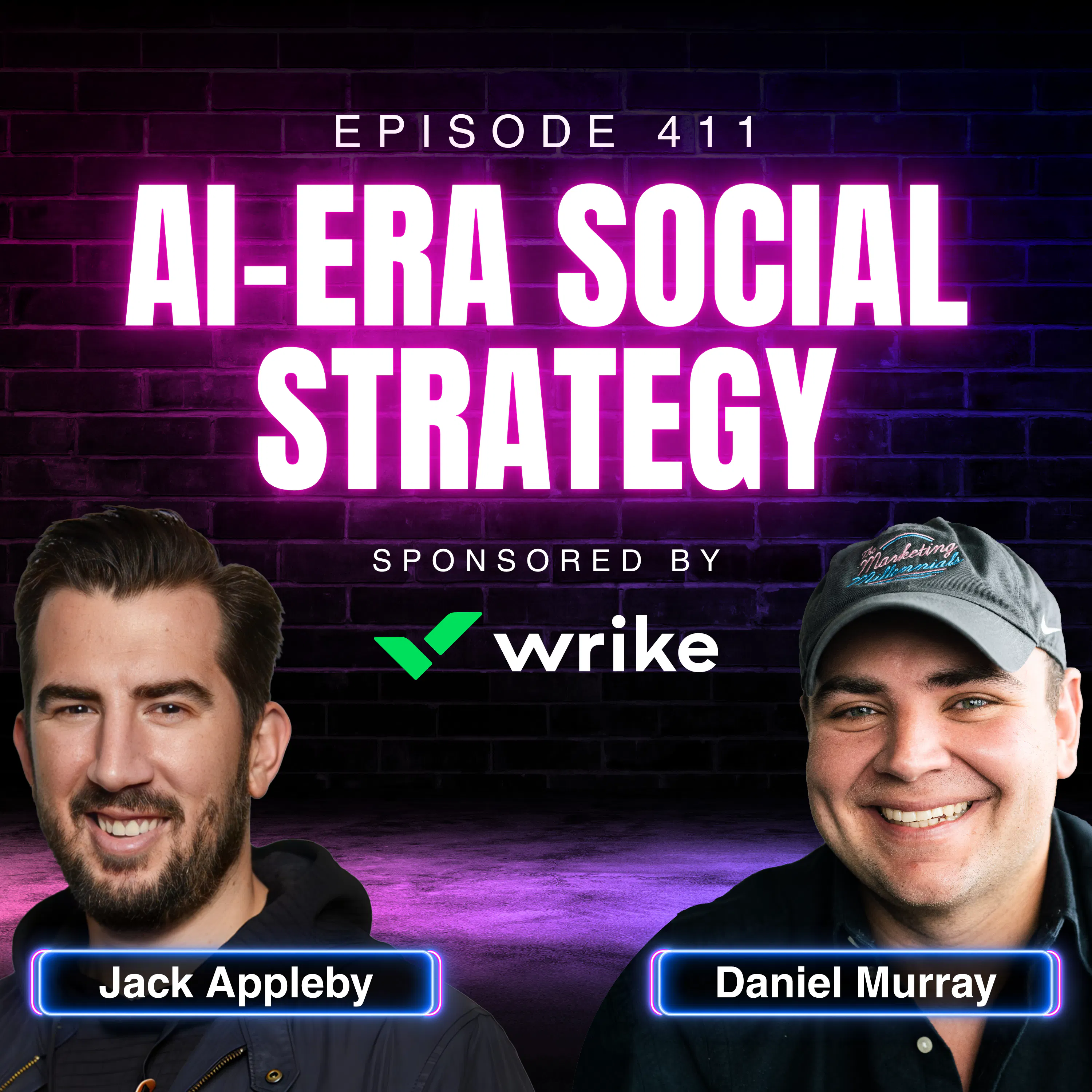
The Marketing Millennials
Social Strategy in the Age of AI with Jack Appleby, Founder of Future Social | Ep. 411
00:43:27
Loading summary
Transcript56 lines
- [00:01]
A
Ever think about how much time you spend doing admin versus real work? Wrike fixes it. Smart task management. AI that flags risks and one source
- [00:10]
B
of truth for your whole team. For real.
- [00:13]
A
Check it out@wrike.com TMM that's W R I K-E.com TMM
- [00:25]
C
welcome to the Marketing Millennials, the no BS marketing podcast. I'm Daniel Murra and join me for unfiltered conversations with the brains behind marketing's coolest companies. The one request I tell our guests stories or it didn't happen. Get ready to turn the up.
- [00:50]
B
We are back with another episode of the Marketing Millennials. And I have someone here who has been in social media over 30, 15 years. He's built social strategies for some of the top brands that you probably have heard of. Beats by Dre, Verizon, Microsoft. You probably heard a lot of them. He also writes newsletter on this topic. So who's better to talk about social media? And to be honest, he's grown two different followings, which is pretty cool. A basketball following and a a social media following. So who's better to talk about social media in the age of AI than Jack? So welcome to the pod.
- [01:25]
D
Thanks, man. It's funny, like marketing millennials, like, I feel like I'm millennials is such an interesting topic in marketing now. Like I'm 37. I'm like, oh, am I old in marketing now? I'm definitely old for the social media crowd. So like I feel like I'm like a good company now with, with a podcast with this title.
- [01:40]
B
Yeah, it's, it's funny because we used to be the generation people look at and now they're like, oh, Gen Z. And then in like 5 year gen Z is going to be like, there's going to be Gen Alpha in the workplace. And then especially in social media where it's getting more and more hype now. But it's still kind of seen as a get out of college role to a lot of people. So. Which we could talk about.
- [02:05]
D
Oh, I mean I, when I post some of my, like, yeah, when I post my thought leadership, sometimes like I'll get called crusty by people who are working in the industry. It's like, and it's like, I'm like, okay, I could be the old guy. That's fine. I'm cool with this.
- [02:16]
B
That's funny. You want to give a little background. I know I gave a slight background what you do, but your experience in social and how did you get into marketing?
- [02:25]
D
Yeah, man, come out of College, I didn't really know what I wanted to do. Had some like family stuff go down, so didn't even finish college. Like I'm like a semester short basically. But my college girlfriend's sister was like, hey, I think you'd be good at social media. Let me set you up with an interview with this like tiny 15 person social media firm. I got offered the job on the spot. Like just like had no idea what I was doing. And then somehow a year later, like I'm leading conference calls with Electronic Arts about like not leading social media strikes, but like leading these calls as like one of the first hires of this team. And then ended up staying in agency social for 15 years. Like you listen to some of the brands I worked on but like, because I got it in the space in 2011, ish, none of us knew what we were doing. Social strategy barely even existed at that point. Like when I started working in social, Facebook didn't have video. YouTube didn't have real time analytics. Like the number 301 plus was the number we would stare at until like maybe sometime that day would update with the real numbers of a video. Like we were making it all up. But I stayed in the industry. I think a lot of my peers of similar age kind of went off to brand marketing or like various other elements. And I've just always been so fascinated. I stayed in social, got to lead social for a lot of like cool tech brands and then along the way was just kind of tweeted and wrote on LinkedIn about my thoughts on the industry. Never to be a content creator, just to find jobs. But then eventually it grew to the point where I started my newsletter, Future Social. That's 85,000 subs. Like, I write a original essay once a week about social strategy and now I actually started my own consulting agency to get back in the works. I miss doing social strategy, which we came in with two Fortune 100 clients like right away and like it's been very fun. Like I was just. This industry has always been really cool. I'm fascinated by it. I think we do a lot of stuff wrong in it. I think we do a lot of stuff right in it and I think it's just forever going to change.
- [04:24]
B
I'm glad you're getting back into it. It's funny because we. I started creating content of marketing like six years ago or seven years ago and I didn't see myself a content creator because that wasn't even like a term in B2B back then. It was just people Putting out random stuff online. And now it's an actual way to make money, which is hilar. But I want to talk about AI because everybody's talking about AI, but specifically in social media, because I know a lot of brands, I know a lot of people are using AI to pump out a lot of content, but you could see that. So do you think, are we in the golden age of social media with AI, or are we watching it get destroyed by people using too much AI?
- [05:11]
D
I think that it's such a fascinating topic, right? Like, we see people who are terrified they're going to lose their jobs. We see people that are trying to replace themselves, where they're trying to scale themselves and, like, almost clone themselves by using, like a Claude cowork type of situation. I'll tell you that I'm excited about it and I'm not nearly as worried about the AI slop of it all as I think many people are. I think you And I are two guys who, like, use a lot of LinkedIn and probably more LinkedIn more than the average human. Right. There certainly is tons of like, for, like, again, lack of a better word, slop out there. But I think what's been really incredible is, like, the original thinkers who are still doing their own strategy, you can use AI to scale yourself in such tremendous ways like that. It's like, it's actually incredibly helpful. For me, I'm not worried about someone who pumps out tons of slop content because I just don't think at the end of the day they're going to succeed. Yes, it's like, wasteful on the Internet. Yes, we got to scroll past it. But, like, mediocre content, whether it's created by AI or not, it's just not going to perform the algorithms anyway.
- [06:21]
B
And I mean, I'll double down and say that even before AI, there was a lot of slop that just people. It wasn't as scaled and people didn't recognize the slop because it wasn't put into an AI and it has M dashes and all these things that people are calling out everybody, which I think it's weird that where there's like, AI police now out there that are calling people out for AI, which is. It's hilarious.
- [06:45]
D
It's the concern in LinkedIn discourse about, like, the AI police of. It drives me absolutely crazy. Something I talk about a lot now is like, oh, we're going to pretend like there wasn't a lot of human slop out there before. Like, there's so much mediocre Thought leadership and like, I will adamantly defend all of our right to like, be on the Internet, share our own thoughts. But again, the great thing about these algorithms is content that resonates with people, performs, and content that doesn't, doesn't perform. And that's where it's like, I have seen posts where, like, I can see it. I'm like, that is a hundred percent AI generated. But it really resonated with a lot of people. So what do I care if AI wrote it or not? If someone learned from it? Like, I'm not that worried about who's making it as long as we're all learning something from that content and. Or enjoying the content.
- [07:32]
B
Yeah. Because I mean, there's still like the same format, like, if it's relevant to that audience, if they're entertaining, if it's educational. And most of the time people are putting in original thought. They just weren't as great writers before and they let AI write a little better than they did before.
- [07:49]
D
So it's not like AI has changed my life. Like, I'm a writer by trade, but I have like severe adhd. I'm trying to run like four businesses at the same time. The fact that I can like open up Claude, I can whisper, flow into Claude and go like, rant for 10 minutes about like, hey, I, I saw this happen in the industry. I want to write an essay about X, Y and Z. Here's my thoughts on it. I just rant, rant, rant, like, can you make some sense of this for me? And it can bake out an outline for me, it can take a draft pass for me. It's still me, but it's allowing me to do work that's better structured, more readable. Like you mentioned the EM dash and the AI police. AI is a better writer than most human beings. But we, like. The reason we've always been told to make our marketing content at like a third grade level of writing is because that's like what most people understand. We're actually getting mad at AI for the thing that it's helping people learn how to do, which is consume more content because it's better written. So, like, I think people are just very insecure about it. I think AI can make us all incredible writers in a good way.
- [08:52]
B
I want to go into. I know you've talked a lot about how there's different between like, content creation and actual, like, social strategy. I want to go into what goes into social strategy because I think we have got into this era where people think that Content creators can replace social media managers, or social media managers don't need content creators, or there's all these battles online. But what is an actual strategy? What does it look like? Because you said some of the best people on social are the ones who are continuing their own strategy. So what does it look like developing the social strategy?
- [09:28]
D
Yeah, I mean, man, we could do like a TED Talk worth about like seven different things from what you just said. So, like, I think if we, like, if we stick to, like, what is social strategy? You kind of alluded to this. It's gotten a little lost in the modern industry. Like, there are people who are still building social strategies, but, like, if you look like discourse about social media and brands, it's always about tactical, it's always about creative. And we live in a culture where because trend content gets a lot of views, more and more trends are being viewed as a strategy. Whereas to me, like, the way I was trained, a social media strategy is how are you taking the brand and what they represent and the emotional value that they provide to an audience and then bringing that to life through social media. And like, we all know, like, we've seen the decision tree, like, is it educational content or entertainment content? And that's where we go further down into what a strategy is, into more tact, into more like emotional strategy and tactical. And then tactical even further down there is what platforms, what type of visuals or text are we doing. But I think the thing that I, that I end up writing about a lot, it comes through in a lot of my essays, is it feels like we're skipping brand strategy and social strategy in favor of very reactionary strategies to just like, whatever's existing on the Internet. Whereas with the brands I've worked for over the years, we weren't trying to respond to culture, we were trying to create culture, we were trying to create trends and make sure all of our content spoke to like, the emotional value you get out of the brand that we're working on.
- [11:01]
B
Totally makes sense of what you're saying, because I do, I do see there is a chase of virality out there. And it does work. I mean, if something's trending and you hop on a trend and you see it work, it works. But going back to what you just said, that could be part of the strategy, but it needs to layer up to like, the overall, what is our brand? What are we trying to messaging, what are we trying to message? Do we even have a brand strategy? And also I want to ask you, because there's also like, the fight between social and brand team. Because, like, brand wants to have this, like, perfect aesthetic social media feed, but it doesn't mean it fits like what works on social. So how do you, like, how have you partnered in the past with brand teams to make sure, like, the brand strategy and the social strategy work together? Maybe some of the things are not perfectly on brands, but there's guardrails to make sure we don't jump outside of the brand.
- [12:08]
D
It's funny, you're hinting at something I've wanted to write about for a long time and have not found like, the perfect words or format to do it, which is like, I think the thing that changed my career the most was I decided that it was my job to make people understand the ideas I wanted to do and I wasn't going to complain about it and I was going to be like, why doesn't my executive get social? Why does the legal team keep killing my ideas? Like, if I can't get my ideas bought off by those people, I decided that was my fault, not their fault. And what that, like, little mindset tweak did for me was it made me very, very good at selling social media strategy and ideas. Where I became like the second half of my agency career, I was very C suite facing, very executive facing, and my job became like I was flying around the world. Like, I sold a $17 million marketing strategy in Poland as like part of my job. And I think the things that like, really helped me start to sell in my own ideas, which I think is the, like we talk about, like, oh, the social team wants to make their own stuff. You need to do the work and the soft skills and the managing up to build trust with those teams, not just present them lots of social media ideas that may be perfectly on brand but are maybe tonally a little different. Or maybe you're building ideas that you feel are native for a platform but like a brand person who doesn't work on social may not understand the link there. So, like, the best advice I can give social teams is spend lots of times with your brand teams building trust. And you're not building trust by doing these huge plans for social strategy because they don't understand them. You're spending that time learning about how they view social, what they view brand as, what kind of taste they like, bringing them examples of things that you like and showing them how things work. Like, that was the. I didn't do this on purpose, but when I was at agencies, I was so fast by social, I was consuming lots and I became an encyclopedic of like let's say like 2010 social. What the biggest campaigns were to where like people much more senior me, they would come like, hey Jack, do you have an example for something like this? I was like, oh yeah, here's this, here's the results, here's all that. And I would take that type of work to. It's like, here's three brands that tried something that I want to do. Here's my own version of this. Here's the reason why I think it works. It's presented in like a very pristine deck. I'm dressed appropriately to try to sell something through. Like, I think it would behoove all social professionals to get really fascinated with selling social media as the method to get their own ideas made more often.
- [14:36]
B
I think two things you are also saying and alluding to is I think people realize that probably like 50% or more of the job is just like managing internally people. It's not actually the content creation part. And I think that's where the big difference between a good social media manager and a good content creator is. All that BS they have to deal with selling ideas eternally. Making sure brand is on the same page maybe sure, Demand is on the same. Like demand team is on the same page. Making sure growth is on our page. Making sure like the C suite doesn't get annoyed. Make sure lawyers don't get annoyed. There's so much of those skills that aren't learned by content creators and that social media managers have to master to win in social. Especially in these bigger companies where there are a lot of rules, a lot of guidelines, a lot of brand, a lot of stakeholders, a lot of things at stake from one post. Then a smaller team, a smaller company that's just coming up. Which is the advantage of smaller companies too.
- [15:43]
D
Totally.
- [15:44]
B
Yeah.
- [15:45]
D
Yeah. I mean and like you, you hit on something that's like such an important conversation in our industry right now, which is just like what do social media managers do now? Like that title can mean everything and nothing was it was the original social media title. And like a lot, there's a lot of people. It's been funny is like I build my newsletters. Like I have lots of people who work for agencies that have similar. Curse me. And then I have people who have been a team of one for 15 years and they're like freelance social media managers. So there's no right way to do any of this stuff. But I think that the thing that becomes really important as people are building their social careers is which area of their expertise are they leading into. Especially for social media managers where it's like, I would encourage almost all SMMs to get really, really good at social strategy because the admin part of the work, that can go more entry level at some point. Like, and I think a lot of SMBs will end up wanting coordinators on their teams. If you want to be a content person, if you're going from SMM to content creator, you better be incredible at making content. Because that's where like, if I'm like, I wrote an article last year about how if I'm building a team from scratch, I actually probably would hire a content creator before a social media manager. Not because I think the content creator will be amazing at strategy or because they'll be amazing at the SMM admin work, but because if I had to choose between okay strategy and okay content and great content and a strategy we'll bake out as we go, I kind of have to choose that ladder or the one that's more content creation based right now because of how the platforms work. Otherwise the content doesn't even get seen. So like, I mean, you and I have done this for a long time. We could go in 48 different directions. Of this conversation I would agree with
- [17:30]
B
to the point of like the starting point as content creator because I do think the one advantage a content creator has over a lot of social media managers is that they just understand the audience better than the social media manager at first and know how to create for that audience.
- [17:50]
D
Like something that's really curious about that now is these. I have found content creators are more interested in making original content for brands than many social media managers are, which is fascinating and bizarre and like also I think kind of a sign of we have to elevate what we view as social media strategy because originality does win, especially originality that actually shows the emotional value of the products. Like how can we build original ip, I think is so important in the space.
- [18:20]
B
How. How do you think about when you're thinking about a social media strategy? And I know we just talk about originality, but how do you think about content pillars inside? Like how much should be original, how much could be a little bit of back off news cycle trends and how much could be evergreen content that you know that works and you can continue doing it over and over and over because you know that type of content works.
- [18:53]
D
Yeah, I mean, so I'll give an example I'm working on right now. So like one of my consulting clients is a is an AI content creation company. Their specialties video. And I'm building their first ever true social strategy. They've already got a half million followers on Instagram from like that they've pieced together. But I'm building their first like proper in a deck. How do you scale out strategy? And as I work with them, I work with them differently than I would work on a soup brand, a fast food company, a tech brand, a. Because for them it's like what's the emotional value that they provide? They can generate these gorgeous videos from people who don't have great prompt expertise. So all of the pillars that I'm building them, after we build, I want to give away too much of their strategy. But all of the pillars that I'm building for them are based on mostly providing context for why their tool is very, very cool for them. It's going to probably be like, let's say like 20% to 30% is like I call it seasonal instead of trend because we might tie on to like back to school or Halloween to inspire some creation. The real time stuff, I think it can be very effective. I like what I call planned real time content a lot more than just true real than like really reactive real time. And that's where it's like the example our whole industry used. Like Taylor Swift plans a tour, having something in the bag ready for that tour launches is an example of planned real time. So it kind of depends on brands. I think the challenge with reactive trend content is you're spending a lot of time looking for a needle in a haystack. But there's a lot more interesting work to be done.
- [20:30]
B
I think it's hard if you're not chronically online. It's really hard to find those needles in the haystack. And also if you're not really good at taste, I would say it's hard to spot. This would be great for my brand versus I should not hop on this and I should not. That's why I think like what you just said, that planned out content needs to, you need to have bank stuff so you know it wins. Because otherwise you're just going to be sure your whole strategy is just off a reactive post. But I want to ask you too because like we talked about the content creation side but I think like one of the hardest parts of social media is like the, like the social part of social media where it's like that community management, making sure you're in the comments, making sure that you're, you're in the DMS Like I know you can't give an exact number, but how much of social media is media and how much is like is like social? Like media meaning like content creation and like social meaning like community management stuff.
- [21:33]
D
So it's funny, I got my start in community management. I was working like my very first social job was I was in an agency where electronic arts paid our agency to have community managers running around the clock. I actually worked graveyard my first year of my career because I was doing community management. I was overseeing a team of community managers on European hours. So what like one to one marketing can be incredibly effective. Like the reply to someone can make their day or the reply to someone who's having customer service issues can like absolutely make sure that they continue on with your brand. That said, as we've seen social change as we've gone from like the follower based years where your content really only went to people who hit the follow button to you to now where it goes like half and half. It feels like in the interest graph era with like an Instagram reel or a TikTok. I am more and more bullish every day on the thing we gotta focus on is the top of funnel of social media. So I think community managers are important but the way I think CM should spend their time is less just replying directly to every comment and they're operating almost more as like an additional arm of social team where it's like the commentary on other brands posts has become very, very popular. Now they're getting a lot of like pull and engagement from that kind of stuff because I think community, I think if we're being really honest with ourselves, very few brands have communities. What they have are people who comment on Instagram posts and TikToks. They're not a real community. There are some exceptions to that. But as a strategist and as someone who is responsible for telling brands how to use their budget, I think it's harder than ever for me to not justify spending most of that money to try to make the best contents possible so it gets seen by the most people possible. And if I'm making content that speaks to the brand and speaks to the products that will convert to sales, whereas things like comments are something I am less worried about than I've ever been before.
- [23:38]
A
Question is your team slow or is your processes broken if every campaign feels like it takes twice as long as it should. Take a look at Wrike. Wrike is an intelligent work management platform that connects briefs, approvals and timelines in one place. Wrike also learns your workflows and automates repetitive stuff and makes smart suggestions to
- [24:00]
B
keep getting more efficient.
- [24:02]
A
There's even a workload management so you can make sure nobody's buried and nobody's bored. With total visibility from brainstorm to launch handoffs, stop turning into hiccups. Go to Wrike.com TMM to stop chasing status updates and start doing the work.
- [24:23]
B
I know we, we're we're bouncing around and I know we, we started this talk on like AI, but I want to know like what, what parts of social should be doubling down on AI and what should be the human part of social? Like what should humans be focusing on?
- [24:43]
D
I mean the AI is so incredible at research, it's so incredible at framing ideas. I mean I'll just, I'll just tell you exactly how I'm using AI for my business. Like for like even for like how to hoop forever, right? My basketball business where it's, everything I do is video contents about my, my pursuits of playing pro basketball in my late 30s. I've worked in social for 15 years. I know what good and bad social looks like and I grew that account mostly pre AI, but I wanted to increase my watch through time of my videos. I have to make 60 second videos to qualify for TikTok creator rewards programs. So what I did was I built a ChatGPT agent where I was like when I give you scripts I want you to help me edit them to increase the retention so I can have as high of watch through as possible. And I learned things through that process that I either didn't know or had forgotten where it's like hey, like I give a script like hey, you know, at the 32nd mark of your scripts you actually are losing people because you're not building a secondary hook and you're not increasing the tension. It's like you're giving away the outcome of your videos too much. So I helped started working with all my scripts. I had a video a couple of weeks ago that was a minute 30 video, 90 seconds that 42% of people who clicked on the video watched the entire 90 second video and did a half million views on Instagram account that only has 110,000 followers. I couldn't have done that without AI helping me write the better version of the script, which is still very true to me. I took the script and I used all my own language and I tweaked and did things. But I think that's where it's like using it to help optimize your creative and cover the things that we don't have time to think about every single thing. That's where it's like really, really incredible. I don't think it should be doing your community management for you. I don't think AI replies are going to work nearly enough yet for it to be considered an option. But every task we do in social it's worth asking Claude or ChatGPT how could you help me do this better? And toying with it to see if it actually does help you do your job better.
- [26:52]
B
Yeah, I mean one AB test, I mean even with trial reels right now, like you could do a lot of those, those things. But also would you what I what I think that the human side of it, what you just said is it takes you and actually understanding social media to like no to ask the question to say at the like my videos are dropping off at the 32nd mark. Help me do something that like better. Like if I was not didn't know social media I probably would say hey, write the script great for social media so everybody watches it.
- [27:27]
D
Exactly.
- [27:28]
B
But if you knew that like at the my maybe a three second there was a drop off and I know how to read the metrics and I know that maybe at 30 seconds or the CTA there's no like a closed loop or like all these things that you know is needed but you don't have time to think about. A good social media strategist would know like what all this means. Someone who's new might just be have to do a bunch of research, guess and then play the game. Which makes you way behind than someone like you who's going to say optimize the things that I know I'm not good in the script.
- [28:05]
D
Yeah, I mean and that said like I think they are incredible like the new crop of social strategists will learn faster because of AI. Are there concerns that it's that it will maybe like limit their like ceiling of understanding? I understand that that perspective and I think there's some truth to it. Like you need to learn from being in the work, getting your 10,000 hours like doing the homework yourself. It can't, you can't just rely on AI to do everything. But I think we got to be honest with ourselves. I think this is the thing that I would encourage like all social media professionals. Whether you're worried about AI taking your job or you want the next promotion or you're worried about like you work from home. Do you get noticed enough content is so easy to make now that we will be held like if we want to be paid as social strategists or social content creators, our content has to significantly perform better then the AI content is pumped out so easily. Because how do we justify $50,000, $100,000, $200,000 salaries if we're not really outperforming content that takes 10 seconds to make? And I think that's why it's so important we continue to like get better at this stuff as humans.
- [29:15]
B
Yeah, I said from the like early when I used to like create LinkedIn content. Like if you just like doing B plus content and like A plus consistency, you'll pretty much like win out most people. Yeah, but the, the thing that's changing is like that B plus bar is getting higher and higher and higher as more people pump out content. More people get better with tools, more people. That's what's really changing. That's also why attention spans are like worse and worse because that be the way like people now see like B content. Like as we watch, we go back like us and watch an old movie and see how bad CG like all like the technology to make that movie. And now we see movies now like we might get bored because we like oh my goodness, that sucks. Like how did I watch a movie like that? People who understand plots and stuff will say this is a good or movie boss will say this is a good movie. But people who are looking for like fast paced movements, CGI realistic things might be, this is a lame movie. That's the same thing that's happening in social where content is just getting way more and more better.
- [30:30]
D
Yeah, it's like the phrase I use a lot is like it's easier than ever to make responsible content that checks every box. It's going to make your boss happy. Like super easy to do that. But I think that's where so much of where whether we're talking about like personal brands or like true proper brands, I think perspective is going to really, really matter. And like when I work with content creators on like content creators or executives of building their personal brands, it's easy for me to pump out a bunch of leadershipy type content for you. But what's going to make people remember you is a stance that you have an opinion that you have some. Like I worked with one guy where he obviously we can all work off of zoom every day but he's like, you know, one of my big things is like if I can't shake your hands like like real business gets done like in person. And that will never for me I'LL fly anywhere in the world to shake your hand is the phrase he said to me on this, on our like onboarding call. I just wrote that. I was like, I was like, congratulations, you just wrote a hook for yourself without realizing it. Like, that's a perspective where someone will remember you for that. Like, I've been writing long form for a long time. There's a couple stances that people strongly know that I have, that I'm very anti unhinged content, that I think we should be making far less trend content out there. They know that because I've hammered those perspectives and those perspectives are why I have a brand versus just bunches of content that are kind of sort of formulating who I might be to the Internet. So, like build your big ideas and support your big ideas, whether it's like a personal brand or a proper brand.
- [32:01]
B
Yeah, I say this in this podcast all the time. It's that hill you would die on is what you. Is what you should pump out a bunch of those hills because that's what makes you uniquely you who versus other people. I mean, you might have same stances as other people, but like your content where you are like anti trend or like anti IP infringement or anti all those, those, those are things that keep you unique, which is great. But I want to also go you've talked about a couple of times on this pod, like original content, like you need. People need to pump out original content. Besides that stance, right? What is like the formula that people should think about when pumping out original content for their brand?
- [32:47]
D
Yeah, I mean, I think this is where, because I was trained at agencies, like, thinking through like the emotional insight of a brand was a big part of our job is like, how does our products make their lives better? Or what is the like, even more simple? It's just like, what do they uniquely enjoy about our products? And it's funny, an example of what I use for original contents is still from like way back in the day. For me now I worked on this video game called Dying Light, where it's a zombie video game that kind of had every single thing a zombie video game would have. But it wasn't like perfect at any of them. It was pretty good at most things from a developer who had made a game that was totally broken before. So the social strategy I helped them build was, you guys, you're not unique in any one thing. Please God, let me market you as the target or the big box retailer of zombie video games, where we're constantly going to contextualize each Thing with you also have all these other things and I built them a short form series. Before brands were really doing that in the video game industry. We had our big trailer campaign but I built these things called Dying Highlights where there are 62nd once a week videos where we would show for example weapons was a big thing of that game in this original content series. We're like what is the most interesting way for us to do this thing? And one of my creative directors like hey, you know like that baseball sound like. I was like yeah, what about it? He's like, let's do that with the baseball bat video. Because the baseball bat's one of the weapons in there. And we made this crazy kill video of zombies. It's not based on anything. It's just like a really odd, unique creative idea that then ends with elevator music. That's like a little silly at the end. That video outperformed the million dollar trailers that we made. So like so much it's like what are you trying to portray? And then what's the idea to bring that to life? It doesn't have to be a series, can be an individual piece of content. But if you can't do that without the help of a trend, like if I often question like if you even have a brand like that you can build off of, people got to know like what they're going to get out
- [34:57]
B
of you and what is the research beforehand to get to the point of knowing. This is the emotional hook.
- [35:07]
D
Oh, so sorry. So something I should mention on that is like a perfect example is that's a game where the last time the people, last time customers bought from that game developer, the game didn't work. Like it straight up didn't work. So the reason we built this strategy that was very these micro trailers was we announced that it was all beta gameplay which for anybody who's not a gamer that means it's unfinished gameplay. Because what we wanted to really show was that this game works. Because commentator is like can they build a game that's not broken? Can they build a game that works here? So part the big overall strategy that we built was we have to show people your game even works long before launch. And that's why instead of doing tons of like CG work, I was like no, we're going to show alpha builds, we're going to show beta builds. We're going to tell people like this is where it's at right now. Imagine how this game's going to work in six months. So it's based off of the like, the audience perception of that brand was we don't know if they can build a great game. How are we going to solve that? We're just going to show them the game way ahead of time, which no games were doing at that time. Usually, like beta gameplay does not get shown like that. So we showed them that early and then we contextualize it with like these original ideas for each one. Like for a totally simple one. Like, guns were not in their last game. So we did like the 60 kills in 60 seconds video, just like an individual fun piece of content. Show some crazy kills and we snuck guns in there. And that was the announcement of guns, which we then did as a future piece of content. So there's like, there's all kinds of weird little strategies that play into it, but the homework is always, how do people perceive your product? And how are they going to use your product to make their lives better? Or in the case of a video game, far more fun.
- [36:45]
B
And do you have any great social media accounts out there that people can look at and be like, okay, they're running a great social strategy today.
- [36:57]
D
You know, it's funny is the one. This is last Halloween I'm still referencing. I think it was just so, so good, the, the Dunkin Donuts Spidey donut campaign that went so viral. And like, I love it for so many specific reasons. So if you're not familiar, every Halloween they have like a spider donut where it's a donut with legs and then puts a donut hole on top of the head. The concept for that campaign was a still image of the product, which is a spider donut that had a bunch of text on it because they gave it a personality. And that was 90% of the content for this very viral campaign was just bringing the donut to life as a character through still imagery, which is crazy. It's not high budget, it's just conceptually smart. And then the Spidey took over their social media. I think it made maybe like a stop motion video or two, but they just provided some character value for that donut. It cost them nothing to make that campaign. And they did tons of views. Another one from maybe a year or two that I also really loved is from Adobe. They did a campaign where it was called, I think it was man or Not, not man with a sign. It's. I forget the title of it, but what they were doing was they were taking signs just posted on the street for like dog walkers or movers and anything like that. And they had they partnered with this content creator and he would go up, take the sign off the, off the bulletin board, redesign it in Photoshop and Illustrator for them, and put a brand new sign up with that had all of their information still on it. So like one of them was like, it was just like a text sign, said like, man with a van, happy to help you move. Here's my phone number. They then took that off, designed like a proper poster and put that poster back up there which shows like, oh, here's how Adobe can help you make better creative things. And it shows the context in the real world of that while doing something very content creatory like affecting the real world. Thought it was a brilliant campaign.
- [38:55]
B
A lot of things you're like saying is taking a real life relevancy that people get in real life and baking in your product into that real life relevancy and making it into something that is relatable but also either entertaining or educational, but not overly selling the product. Like, okay, the video game example, you're showing how the game's played in a fun, entertaining way, but you're not saying go download the game every single time. You're just showing different clips, different highlights to get people to, oh, I want to play with that gun. Oh, I want to play the baseball. Oh, if I now when I'm playing, I'm going to think of that baseball sound when I'm hitting someone with a baseball bat. Like things like that.
- [39:41]
D
Yeah, I mean there's a, there's there's this interesting perception I'm seeing in the industry right now that it has to be either like fun contents or branded, like sells my product content, which is very odd to me because like how I was raised in agencies was like all of it is all of that content. Like I'm not like, sure, I might have to put up like buy my product here every once in a while. But like really we're trying to make original content that's compelling, that makes you naturally want to buy the product. They shouldn't be antithetical to one another. Every post we make should service that in some way. So if we're making trend based content, listen, there's exceptions to the rule. What am I? When Ashton hall went so viral for his morning routines last year, a video made me laugh a lot was when Captain Crunch had their mascot do a morning routine. Does that sell me? Captain Crunch? I mean, they had him eating Captain Crunch as part of his morning routine. So that was fairly clever. It's just content that made me laugh that time. You can do that sometimes that will like, that will always have a role in any overall social strategy. But most of what we're doing should be trying to make the brand as compelling as possible, not trying to tie the brand to the outside. Like just what happens on social media that day. I believe every brand can be absolutely fascinating and we just gotta like really like drink the Kool Aid and know how to make them into creative like entities out in the world.
- [41:02]
B
Yeah, because even like the Dunkin social campaign, that they didn't take a trend, they took something that is relatable in the real world that not at this moment, but people would understand, mix it with product. And people found that industry and they knew their audience would probably like Spider man or Spidey things. And they did read the research and it worked.
- [41:27]
D
And the character was literally the donut product. So people went and bought the donut.
- [41:32]
B
Exactly. Lastly, and I said this before, but I ask everybody in this podcast, what is a marketing hill you would die on?
- [41:40]
D
A marketing hill I would die on. I genuinely believe every brand is uniquely interesting and that like our jobs are to bring the brands to life and to build like culture around our brands. Not to always tie into other brands or tie into other cultural moments.
- [41:58]
B
I should say so if you're listening to this podcast and you think you have a boring brand or you can't bring your brand to life, you can. It might be a little harder than like cute donut holes, but it can happen. You just need either a social strategist or someone, someone thinking out of the box or a good content creator or someone to help you be uniquely you as a brand. So thank you so much for coming on. I really appreciate it.
- [42:27]
D
Thanks Ayo. Always fun.
- [42:31]
C
Thanks so much for listening. Keep tuning in to hear more great insights from the coolest marketers from around the world. If you haven't already, make sure to subscribe and follow the Marketing Millennials podcast on Apple Podcasts, Spotify, YouTube or wherever you get your podcast. And if you like what you hear, I would greatly appreciate you giving us a five star rating. It helps bring more marketers into our community.