← The Marketing Millennials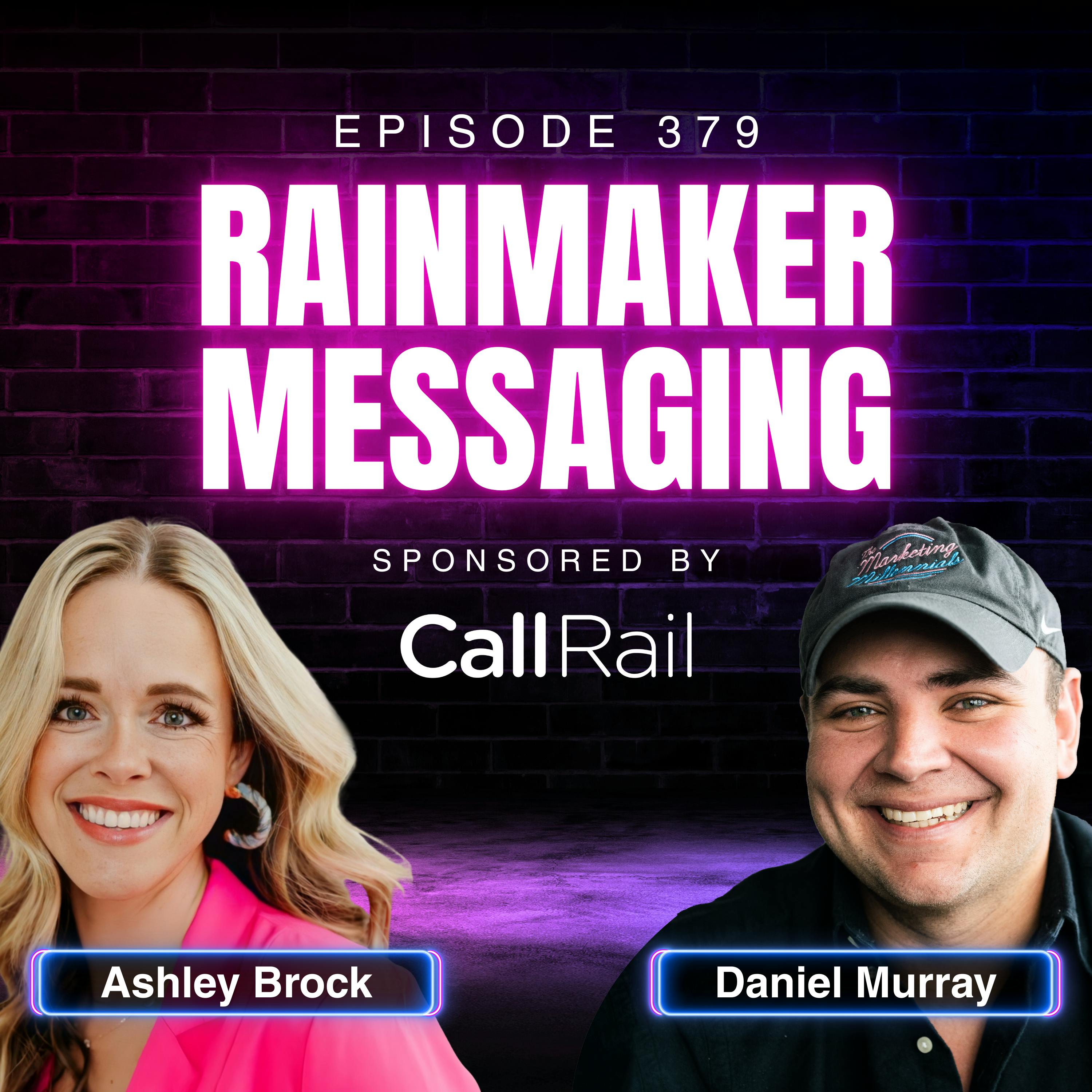
The Marketing Millennials
The Advertising Messaging Framework You Need To Use with Ashley Brock, CEO of Paid Ads Academy | Ep. 379
00:34:24
Loading summary
Transcript47 lines
- [00:01]
A
Proving your marketing ROI shouldn't be a guessing game. But when results are hard to track, it's difficult to know if your marketing strategy is working. Meet CallRail. In a few clicks, you can connect every conversation to the exact campaign that started it, so you can focus on what works and drive better marketing outcomes all in one platform. Try it free today@CallRail.com proveit welcome to the Marketing Millennials, the no BS marketing podcast. I'm Daniel Murray, and join me for unfiltered conversations with the brains behind marketing's coolest companies. The one request I tell our guests stories or it didn't happen. Get ready to turn the off. We are back with another episode of the Market Millennials podcast. Today, I have Ashley Brock here, and we're going to talk a little bit about messaging. And she has a framework that she has that is specific to what she does for a living. And we're going to dive into it, but I'm going to let Ashley talk about a little bit who she is and how she got into marketing.
- [01:17]
B
Yeah. So I'm so happy to be here. So my name is Ashley Brock. I am the founder of the Paid Ads Academy, and basically I'm. We teach entrepreneurs to do their own advertising. So I actually worked in four ad agencies for over a decade, spent 200 million on ads, and now we've grown from zero to nearly eight figures in less than three years. So it's been such a journey. And one of the things that I feel like has led us there is our messaging and, like, how so many people can run ads and do advertising, but when you're not specific about what makes you different, it's really hard for people to gain traction. So that's what we're gonna talk about.
- [01:51]
A
And I think the, I mean, the key word you have is rainmaker. Could you go into, like, what rainmaker means? And, and I totally agree on this side of. I think a lot of people know how to run ads kind of well, but they get lost in who they are, the positioning, how they're going to show up. One word could change a whole ad. So it's, let's, let's dive into this Rainmaker messaging framework.
- [02:18]
B
Yeah. So the definition and actually, like, everything that, that we built our brand on is about Rainmaker. So I'll explain Rainmaker, then we can jump into the, like, each letter. But basically, a rainmaker is someone who has an unusual level of skill that brings an unprecedented amount of revenue to a company. And as you know, marketing and advertising is one of the Things that can speed up results more than anything else. And it can also be such a place where people spend money and don't get a return when they don't have good advertising or good marketing. And I think people can have great offers, but if they don't communicate their offer in a valuable way, then people don't even know and they'll never buy. And so being able to create this framework, it was kind of years of just saying over a decade of trying to figure out the ads that did perform and the ones that didn't, what's the difference in the messaging? And then what I found is this rainmaker formula is cool because it's not just what you can say in ads. You can also apply this to any of your marketing, whether it's your emails, whether it's your website, whether it's your social posts. This framework has worked really well for my, my business and the businesses that I worked with, which is cool.
- [03:21]
A
Yeah. I think the cool thing about starting with messaging, it's like that trickle down effect in marketing where a lot of people skip the positioning, skip the messaging, skip everything and go straight to, hey, let's just run direct response ads. Let's run. Yeah, ads. We have good creative, let's try. And maybe it works for a little bit of time, but then the messaging doesn't fit the landing page, it doesn't fit the overall what you're selling and then you end up in this bad cycle. So let's go into the framework and how it works.
- [03:58]
B
Let's do it. So every letter means a certain thing. So the R is relevancy. And one of the things that I like to say is your ads need to be relevant to where people are at. So what I mean by that is R for relevancy. A lot of times people can advertise to their like to one like just the solution. Like, oh, let me. Someone's searching for a marketing agency or someone's searching for a chiropractor. Like I'm searching for the solution. But I think what a lot of people don't do well is they don't advertise to what's relevant to where the person is at. Which, which could be the symptom or it could be the problem or it could be the solution. For example, yesterday one of my clients was running some Google Ads and we'll use this as an example. Someone searching how to write a book. That person has a problem of they don't know how to write a book. But someone searching for book editing coach is already looking for the solution. And so very. It's very easy. You could spend 100% of your budget on someone saying, how do I write a book that's not actually ready to pay someone? And so being relevant and having ads that are relevant to different phases in the journey from symptom to problem to solution, that's the ring.
- [05:08]
A
I love that. I think relevancy in any content marketing, it works for anything where you have to, whether it's. And it could frame along, hey, is it relevant to the time of year? Is it relevant to the audience? Is it relevant to the interest of the audience? But I'd like the example of you problem solution. Because a lot of people are either going way too top of funnel with their advertising or they're just trying to capture existing demand in the market. And I think you need a little bit of both to win and different messaging for both.
- [05:47]
B
You do. And it's kind of like when people turn on their ads, they're like, man, I just want to sell today. And like, that's like going on a first date and being like, let's kiss. And it's like, I'm not ready for that. I don't even know you. I don't trust you, all those things. And I know you want the result, but typically over time, it will come. And so the relevancy piece, like an example, one more example of a client that I was working with. She's a nervous system regulation coach. Okay? And like, some people are searching for that. Some people are searching for someone to help them with the problem, which is burnout. They don't even know that nervous system regulation is a thing. They don't know the solution. They just know the problem. And there's some people that are in denial of them having burnout. And so they're just struggling with the symptom of. I feel like all my emotion is gone. I feel like I'm sad. I feel like all these things are happening. And so every. Every advertiser that's trying to get people that are unfamiliar or kind of familiar or very familiar, you have to be relevant to each of those. That's why the first one is r total sense.
- [06:45]
A
And it's also, I think you need all three of those parts that you said in the funnel, because relevancy to searching a symptom, searching the actual problem, or searching the actual solution are three different ways. And I think some people are really good at one or two. But I want to keep going down the. The relevancy to the A Now in Rainmaker, that's perfect.
- [07:08]
B
So the A is articulation. And one of my quotes that I've came up with this one is just what. It's just how you say what you're saying. And so one of the quotes that I've created is that articulation leads to elevation of your communication and being able. Like there's this study and it basically was saying it's like the 7:35. I think it's the 58 rule, but it's some. It adds up to 100. But basically it's saying only 7% are the words that you say, 35% is how you say them. And the other side is the body language that comes alongside it. And so I've seen people say, here's my ad script. And I'm like, the words look great, but how you articulate that message can really make a difference on if it's going to stick or not. So the A is articulation.
- [07:52]
A
That's a good one. Also, I think all the. All those parts, one is articulate. The way you say some is a fond choice. You decide to choose. It could be the creative behind that changes the articulation of those words. So there's so many different things that one little tweak articulates it a lot. But your example is more if you can do, let's say video ads or UGC ads or stuff like that, the way that creator or you as a business owner is coming off could mean the excitement. Could mean one thing, Monotone could mean one thing. So that's a great one.
- [08:34]
B
Yeah, no, I completely agree. So the next one is I, which is identifiability. And all it really is, really is saying is identify who you're. You're talking to and just say that. I had one of the things I had my clients do yesterday. This person has a $25 million. They're doing exceptional work. And then sometimes it's like you just need that perspective. And I was like, read me that script on that ad and go line by line by line. And the first sentence was like, do you ever feel like you're trying everything with your clients and it's not working? And it's like, I have actually no idea what your business is on that first line. Like, you're not saying who it is. It's like clients. It's like, yeah, a lot of people have clients, but I don't know if that's for me or not. So I'm skipping. And so calling out in your ads, who this is for. At the very beginning, as clearly and specifically as you can. It's so simple. But people just overlook it. And they're like, yeah, no, I said doctors, like four sentences in. I'm like, right. And they'll never make it to that part because they skipped the hook that was really boring and didn't call out who it was for. So that's. I. Which is identifiability.
- [09:34]
A
Yeah. So I'm just thinking an example. So me saying, marketers, if I'm trying to go to hey, marketers, you might. Or hey, demand gen marketers in Miami, you might have this like, problem. Let's talk about it. Instead of just saying, like, my clients, you're specifically calling out your like, ICP in the first sentence, basically.
- [09:59]
B
And the reason that that's actually helpful is not only for the consumer, it's informing the algorithm who to serve that ad to. So if the, if. If like a. The consumer is confused, the algorithm is too. Cause it's trying to pull like, what is this saying? What are people. Who is. Who's going to resonate with this sentence? And it's like, I don't know. Everybody could. Because it's not specific.
- [10:16]
A
I love that too, because especially with AI now, even on social, they're crawling captions, they're crawling transcripts, they're crawling everything. So if you're not saying those specific things, they're just gonna serve it to everybody. That's a great one. So, okay, so R A I. And now we're gonna go to the N part of it.
- [10:37]
B
Yep. N is an easy one. And it's just necessity and it's communicating why people need what you have to offer specifically. So I like to say that specificity creates necessity. And so the. It's very easy for anyone who's advertising anything to be like, I know why people should use this company. I know that obviously you can use this product for all of these three reasons. It's in your brain, it's not in theirs. So communicating like, here's the exact reason this product, like, you need this one, this is the service you should go to. This is the company, this is the one that you need. And communicating that specifically and not just saying, no, we're the best. It's like, why are you the best? Communicate that why they need it so specifically. And they will be like, oh, okay. If you didn't plan it in their brain, it's likely not in there because you're obsessed with your. What you're advertising or marketing more so than the Person on the other side of that ad is. So specificity creates necessity. That's in what are. So.
- [11:36]
A
So what are some examples of like someone being specific? Because you could say there's different ways of doing it. Obviously you can call out exact numbers where you could say instead of saying we have a hundred customers, you could say we have 121 customers or something, or we have a 4.9 to rating. Instead of saying 5 we are. We have 10, 5 star ratings or something like that.
- [12:02]
B
That. So that is one thing you could do. And actually it's like I talk about that credibility piece because it matters so much. And that's actually kind of close to the R, the last one, the Rainmaker is being very specific with the reviews and how much volume you have. The way that I think about necessity is actually how it differs for each person. The reason that you need to take action on something versus the reason that I need to take action on something is different because every person is different. You may care more about your time, I may care more the time something saves you. I may care more about the money that it saves me. I may care more about how it helps my team. And so this necessity, one. One of the things I like to do is I like to create multiple different ads for multiple different buyer types. So it's like this person needs the data and the logic. That's why they need to buy. Because 72 people have said this and they like. Or they're, you know, there's a 20% increase on average for our clients when they do XYZ. That's why they need it. But someone else needs something different. So when I create ads, I like to say, what are all the reasons someone would need to jump in? Well, there's urgency, there's scarcity, there's specificity because of the reason, the things that matter to them. And so just having different ads that speak to the different needs that someone might have when they're considering buying your product.
- [13:16]
A
Yeah, that makes total sense. So somebody might have. They're trying to scale revenue. Some people might want to cut internal costs. Some people are looking for a new tool to replace the current terrible tool. Some people are looking for integrations. Just call it like calling, calling that out in the ad instead of just being broad or saying, we're the number one software in the world, basically.
- [13:44]
B
Yeah.
- [13:47]
A
Okay, so M is the next one. As marketers, we're all trying to answer the same question. Which investments are actually driving revenue? And too often the honest answer is an educated guess. CallRail replaces that guesswork with proof. With the help of AI, you can connect every lead to the exact campaign that drove it, analyze your conversations, and capture leads around the clock. That's why over 220,000 businesses use CallRail to market smarter. Stop estimating impact and start proving it. Try CallRail for free@CallRail.com prove it.
- [14:30]
B
M is memorability, and the best I can do, because I know you like stories. So one of my clients, he owns two companies. One is a golf simulator company called Forefront, and one is a renovation company called New Edge. And so this person is currently installing a golf simulator in my basement while I record this with you. So it's really cool. And. And one of the things he does is he brings basements to life. And so I was looking at his Instagram, and I'm like, okay, I know I'm your client. You're not mine yet. It will happen. But I was like, hey, your Instagram says that you, like, renovate basements. I'm like, that is cool, but that's not memorable. And so. Because once I get something in my brain, it goes to town trying to figure out something that would allow it to be memorable. And so I'll give you the example of what I gave for him. But memorability can be created through alliterations. It can be created through rhymes or specific taglines. It's like, what is memorable? So I'll give you an example for his business. His basement said her is his Instagram bio said, we renovate basements. And the reason I care about his Instagram bio is because he is considering running ads. And the worst thing that someone could do is turn on ads and have a not so great experience when someone lands on the Instagram page. So I was like, let's create something that people remember. And so I came up with, we renovate and elevate your basement to take your bottom level to the next level. I'm like, that is so much better. He's like, that's sick. And I'm like, I know we're gonna update it today, but it's because that is like, hey, what do y' all do? That's a tagline. That's someone like, dang, that's good. That's why, like, what we created in my business that we trademarked was advertise your name, make it rain. It's I end every call, I'm in, every podcast, and every single thing with that tagline because it's memorable. And it's not just like, all right, bye, so everybody, everything that you can do for the companies that you work with, the, the advertising, the marketing you're doing. Having a tagline that's memorable, even if you're the one that creates it and says, hey, what if we said this? As long as it aligns with the brand, you need something that allows people to say, oh, it's that one that. I remember that.
- [16:21]
A
Yeah, I think you just doing. Even like a Rainmaker framework, it's easy to think about someone instead of saying, I have an ads framework that works. My framework is called Rainmaker. It stands for this blah, blah. Like it's memorable to say, like, oh, you have that Rainmaker framework instead. Yeah, I like that. I think it's figuring out how to be memorable. I think it's a lost art. I'll say. Like what you said, I think we skipped over a little bit. But it's important. But the importance of having actually updating your social profile that you're running ads from. If you're running from Instagram or Facebook and not having this blank page or a bad bio or no links or nothing in there, that's like your second landing page, basically. And people are showing your credibility when you land running an ad. So people who are not even posting regularly and makes it look like you're not a credible company.
- [17:22]
B
I completely agree. So memorability is big. And the next one is A, which is avoiding. And I just, I have a few things that I like to avoid. I have some clients that are in the top 10 of like all Amazon influencers. And I know that it's very common for people to be like, everyone was asking me, y' all been wanting this. And I know that that can work. So I'm not saying never do that. But what I am saying is in your ads, if you're advertising, like, let's say it's B2B. Let's say if it's service based, whatever it is, avoid saying me my. And I. I so much more prefer just when you run an ad saying, hey, are you. Cause there's only one person watching ad and just say, hey. Instead of saying, hey, I know y' all might be looking for someone to come into your business and create this automation. It's like, hey, are you struggling with getting the systems to talk to each other? Do you envision this day where you have everything, you walk in and it's all. I mean, there's a. There's a way that you can frame it so that you're just saying you. So one of the things That I just. Because it's a connection thing. Humans buy from humans. And so as much as you can do to connect by looking into the eye of the camera, not at the screen where they see you, but like looking into the eye of the camera saying, you, number one, it creates connection. The other thing I like for people to avoid, and this happens in advertising and marketing all the time. In fact, I bet when I say it today, you'll find somewhere that you can be like, oh, yep, saw them do that. And it's where people say their product or their service before they say, or they say their product and service first and then they say what comes on the other side of that. So for instance, someone will say, hey, when you enroll in our program, you'll get X, Y and Z versus flipping it and saying, here's the payoff. And that's created through our program. So it's like, hey, do you want to have utter, like freedom and time back in your team? Do you want people. You want to get applications of the right candidates every single day? That's exactly what's possible when you enroll in our employee automation software. So it's just flipping not what you do and then what they get, but what they get and then what you do in that order.
- [19:20]
A
So the main thing to avoid is being me. I and flipping it to who you're talking to, using you, using words that are speaking to. I think that's also a good lesson to every ad should be speaking to one person. And the way you said that only one person, that one person's watching that ad and the one time you're not speaking to nobody, there's not a room of people sitting and being like, I love this ad. It's bet only if you're maybe at a Super bowl party maybe, but on like a social media channel, that's not happening. So I like the way, the way you said that.
- [20:01]
B
That's exactly right. It's very rare that everybody's watching the ad like a movie. So just speak to the person who's the decision maker. So that is the things I like to avoid. So K is knowledge. And so the saying I have for knowledge is that lingo is bingo. And here's a story to explain that one. So one of my clients is a speech language pathologist and her best performing was just a blank ad with a pink background. And it said, slps, Are you tired of soap notes? I can help. And for Daniel and I, we're like, huh, SLPs. Soap notes. What are they talking about? I was like she's speaking the lingo of the people she's trying to attract. SLPS means speech language pathologists. And SOAP notes is one of the notes that they have to take at, you know, when they're. They've just met with a child and they're having to do this paperwork and it's like, hey, are you tired of the paperwork? What if you could use your skill another way? That was one of the best performing ads, because lingo is bingo. The people that saw that she knew the lingo knew that she knew what they were going through. And it was so simple. And it was just because what she knew about them, she spoke to. And it works so beautifully. So K is just use the knowledge, you know. So if you are advertising to a B2B software company and you know the CTO is struggling with these three things, speak in the CTO's language, like, are you tired of this, this, and this? But it's in his lingo that allows them to be like, ooh, they know what I'm talking about. So I trust them.
- [21:20]
A
I think that's super important because the CEO of the company I work for also always says, again, your content, just say CAC Say. Because if you need to spell it out, that person doesn't. You're talking to the wrong type of audience. Sometimes you can spell it out, but at least like, say cac cost of customer acquisition costs. Like you could say cac, customer acquisition cost. Just so people who might not know it, but spell out those, those lingosa people. Like, people want to know that you are the expert of things and you're credible. And if you don't speak the talk. The talk, you're not gonna. People will be like, hey, that's not a expert marker. That's not an expert plumber. That's not an expert. So I. That's 100% a great one. Like, show your knowledge in your ads.
- [22:13]
B
That's it. Because it all comes down to them trusting you. And when you do speak that way, they will. So, so the last two. So E is energy and E. There are days that some of my clients will send me ads. One of. One of my clients, he's a therapist. He has 22 therapists in his practice. He sent me an ad and I was like, I love that you put this ad together. And were you having a bad day? Because it sounds like that you might have recorded this ad after having like two hours of sleep. You got. You and your spouse had an argument and then you recorded this ad. I was like, this is not the one we're going to use. The script was right, but your energy was low. And so there's times when you gotta call a spade a spade. There's times I don't need to record because what I believe is that you transfer what you do have. You can't transfer what you don't have. So you can't transfer excitement and encouragement. And this is why you should buy this thing if you don't have it. So E all comes down to energy and just being self aware of when you should and should not record an ad so that you can transfer what you ultimately want. Because how you feel when you record is how they'll feel when they watch that ad. So really being intentional about that matters a ton. So that's why E is energy.
- [23:14]
A
That's something I need to work on. Even in like going to talk, it's talks. I'm pretty chill when it comes to things, but I think I'm trying to let people be comfortable when I'm then people listening to the podcast. But I think it's such a good point that if you go, if you're trying to get excitement, you have to be excited. If you're trying to get relaxing, you should be relaxing. If you're trying to get this, you should be. You should match the motion you're trying to portray in your ad. So.
- [23:41]
B
And you have a brand, I have a brand. We all have a different brand and we're different because we relate and connect to different people sometimes. And that's a good thing because not everybody. That's why I love when I run YouTube ads and people skip. I'm like, good, you hate my voice. You will definitely hate 20 hours of my training. Like you like, good. I'm glad I didn't pay for that ad. So I think it's good that everybody has like their vibe and their brand and what's true to them. But yes, there are times when it's like, hey, you want to get action? Emotion puts people in motion and logic can make people lethargic. So if you get to a place where it's like it's too instruction and there's not some. Sometimes that can be like, we all have something that we can take from somebody else. But energy is one of those things with ads that's magnetic.
- [24:20]
A
Let's go to the next piece of the puzzle.
- [24:23]
B
So R is the last one and it's reputation and it's why will they choose you over anybody else? And so the saying that I have for that one Is that credibility does not negate humility. Sometimes people are saving. Oh, I've actually have 20amillion downloads. Oh, I've been doing this for 27 years. Help people make millions of dollars. It's like the reason there's too many people out there just trying to make money or advertise something that they don't have the experience or the authority in. And so if you don't say why people should listen to you, they won't. In fact, I was in a mastermind group and I was training some other business owners on something and I started the training off and just started teaching. And I got interrupted by the leader in front of everybody and she said, she's like, ashley, Ashley. She's like, can you stop for just a second? And I was like, yes. And she's like, why should they listen to you about this topic? And one of the things that we had done in the business is we had had a million dollar day. And so I was teaching something about how that happened without them knowing that that had happened. And then, and then all of a sudden everybody's like, okay, I'm taking my notes now. Because they didn't know me. They were like, I don't know why I can trust her. And it's so you, any brand that has any experience, any credibility, any results, any features, like even on your the marketing Millennials page, you have some great credibility of different brands that you've worked with. That is so important. And too many people, they bury the lead. They don't put why people should listen to them and the authority that they work so hard to have, they put it too late in the ad. And so that one of the, the I, I feel like I saved the best for last. Your reputation and your credibility is why people want to buy from you specifically. So just making that, that's there because I think one of the things I say often is authority can lead to profitability because it shows why people can trust you. Because it all comes down to trust.
- [26:13]
A
Where are some places you can add them? Because I feel like you could add it, I guess a little on the bottom of the screen saying, Ashley Brock, like scales nine to eight to nine figure businesses as just like a title on the screen. You could like, where are some places in that? Because I know there's like things you should do up front in the hook and you're not going to add everything in the hook. So where in that do you usually see the best part of adding credibility?
- [26:42]
B
That's a great question. One of my clients Best performing ads. This person has an operations business. They do business operations. And her best performing ad is her first sentence. And it says I run an eight figure business. And then it goes on. And what I found was whatever. Just because she said I ran an eight figure, I run an eight figure business and had her Inc. 5000 like trophy in the back. That alone people are like, okay, well now I want to hear what she has to say. Obviously she knows something. And so I think it should be in the first two or three sentences and nearly even when I look at a landing page or I look at an ad having text on screen, having it in the caption, saying it in the words. I feel like people are so distracted today. As quickly as you can get that credibility on why they should listen to you, the better. So that everything else you say it's like framed on those first couple of seconds of credibility. So I like it sooner and I call credibility like hot sauce. It's like you can put that on everything and just put it everywhere. Let them know that you've done the thing and they can listen.
- [27:45]
A
I agree. I think the underrated ones that you said too is having something in the background that shows that like if you sell into Shopify, show that you've like have a million order like a million order company from whatever you scaled a million orders. If you're, you can add the caption, show different ways that you are credible, also that you don't have to say it. So there's multiple of ways. You can also add at the bottom saying we have this many fives, like 1400 55, five star reviews, whatever, just multiple ways you can never overdue social proof. I think, I think that's like what I've learned and there's so many different ways. But going back to your point in the beginning, I think the more relevant you can make that credibility the better too. I think if you say instead of saying we have 1154 clients, you could say 1144 marketers, trust us. And then you like you just upscaled the relevancy and the end of the Rainmaker. So you have the two bookmarks helping you at the same time.
- [28:56]
B
You do. And actually one of the strategies that relates to what you just said is one of my clients, he's a speaker and he has different relevant credibility based on what people are searching for. So if someone's searching for a tech speaker, he has all these tech companies as spoke at, you know, Google. And if he has a, a real, someone's searching for a real estate speaker he's like, oops, spoke at ReMax, spoke at this. So it's relevant and it's his reputation. It's the credibility married specified based on the type of speaker. And it's a duplicate page. He's duplicated the page 10 times. It's just the headline of the topic with the credibility below. It is just different on each one. It's so smart. Yeah.
- [29:36]
A
And I think it's also a good test. I feel like even tests should be so small that you could tell okay, that line of credibility did that. I feel like when people are testing ads, you're running split tests of two different things. You should just change one aspect and see like I added like the Shopify million dollar orders in the bag versus this one doesn't have it. Let's see what if that did anything. I added this credibility versus that credibility, added this relevancy versus this relevancy I had. All those tests should be done in a little silo so you can actually know what's up ticking those ads.
- [30:17]
B
I agree.
- [30:18]
A
Last question I have for you is and I ask everybody in this podcast, but what's a marketing hill you would die on?
- [30:25]
B
I would die on the hill that advertising is a learnable skill and marketing is a learnable skill. Yeah, I think so often I listen, I, I love the advertising agency I worked at and I know, I know you and so many people have agencies and they are wonderful. I, I think it's just an asset for anyone and everyone different aspects of marketing, which I think is so cool about this podcast because people are learning different aspects of marketing every single day. And so I will down the hill that it's something that you can learn and that anybody can learn and that it's worth anybody learning. Like if a doctor is listening to this podcast, in my opinion that's a smart move because even a doctor needs to have patience and so being able to have them become findable, that is the most important thing. So it's the hill I'd die on. Yeah.
- [31:10]
A
Even. Even learning it, as my mom always used to say to me that do the job of what you're doing first and then, and then hire someone so you know that. Okay, if they're doing marketing, are they doing marketing wrong or not? Or are they doing logistics? Are they doing it right? So learn at least like high level that this is what we need. You need as a business. Even if you're not going to be super skilled on that, know that like learn the framework because you, you should know that your ads need this so you can call it out. If someone isn't doing something like that, it just will help you. And I feel like every interaction is marketing. So whether you're doing a. Your personal brand is marketing. Your. Your business is marketing everything. So I think it's just like a learnable skill, but also an important skill that even if you learn a little bit of it for your personal brand, a little bit of your. For your business, or a little bit for, or it goes a long way. So I totally agree. Lastly, where could people find what you're doing in your, your, your academy and things you're doing like that?
- [32:21]
B
Yeah. Yeah. So Instagram is ads with Ashley. My party trick is when I walk up to people, I'm like, type in ads. Ads. And it's almost always me watch you go in like, oh God.
- [32:37]
A
Drum roll, drum roll. Okay, it's loading. There we go. Ads with Ashley. She's. She's up.
- [32:46]
B
Yes. That's my party trick. So ads with Ashley. And I have my, I have my just ads training. I have a five day class that I do just about every month and it's just teaching about ads. It's really cool.
- [33:00]
A
Well, thank you so much for sharing your framework. I think it's specific and simple enough that people can, if they apply one or two or three, they could change something about their ads today that should be able to help them. So thank you so much for coming on and sharing.
- [33:21]
B
I'm so glad. I loved it so much. Thank you for having me.
- [33:25]
A
Thanks so much for listening. Keep tuning in to hear more great insights from the coolest marketers from around the world. If you haven't already, make sure to subscribe and follow the Marketing Millennials podcast on Apple Podcasts, Spotify, YouTube or wherever you get your podcast. And if you like what you hear, I would greatly appreciate you giving us a five star rating. It helps bring more marketers into our community.