← The Marketing Millennials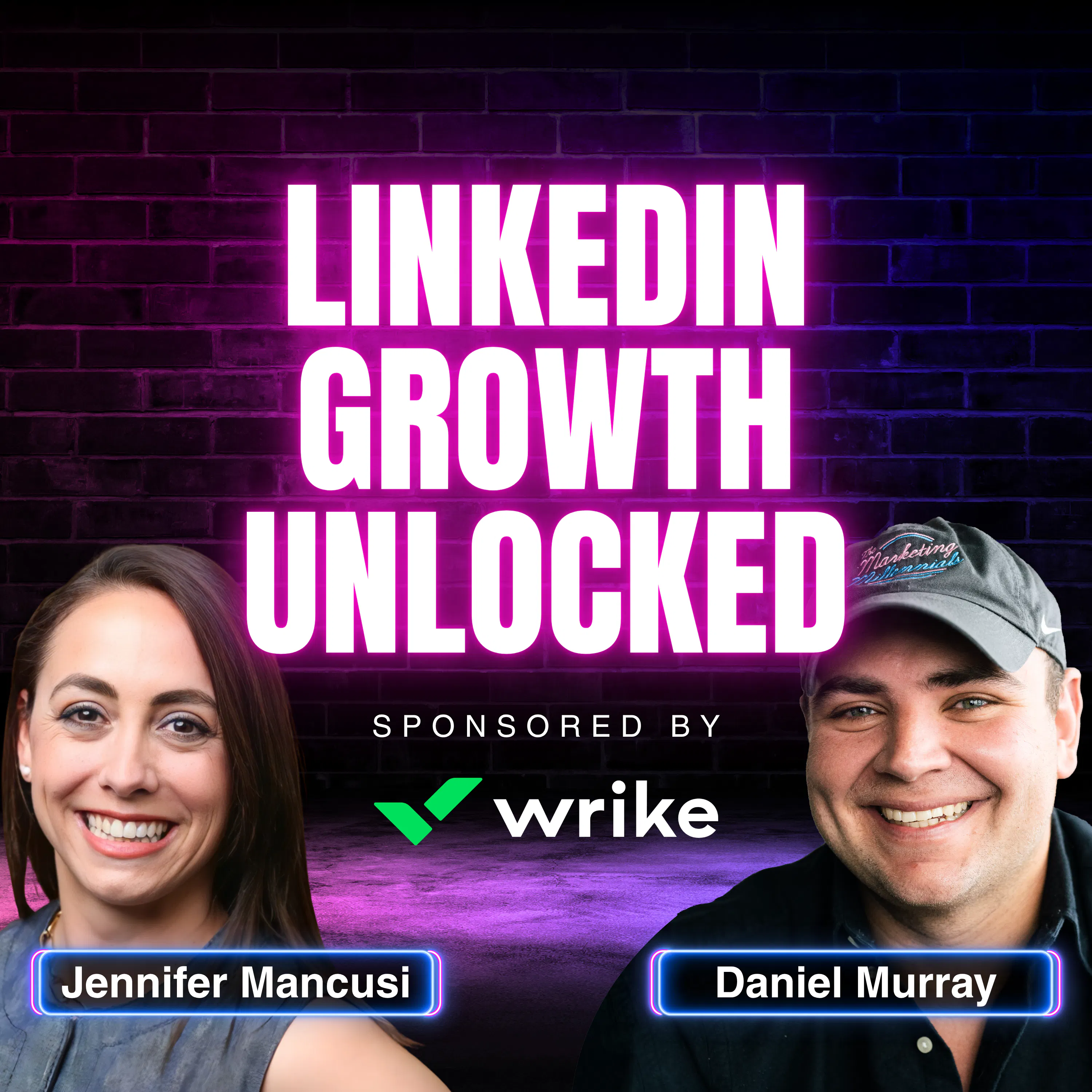
Loading summary
Transcript52 lines
- [00:01]
A
Pop quiz.
- [00:02]
B
Where do all your tasks live right now? If you don't have one answer, that's a red flag and a sign you need Wrike. Wrike is an intelligent work management platform that kills the friction, killing your speed. Visit wrike.com TMM to see what I mean. Welcome back to another episode of the Marketing Millennials. This episode I'm sharing is an episode where I was the guest. I jumped on the Marketing Demystified podcast and we talked about all things LinkedIn growth. We got into why commenting is one of the fastest ways to grow on LinkedIn, how to think about your content in three buckets, and why posting for yourself instead of your audience is the biggest mistake I see people make. If you're trying to build on LinkedIn, this is a great episode for you to listen to. Let's dive in. Welcome to the Marketing Millennials, the no BS Marketing podcast. I'm Daniel Murray and join me for unfiltered conversations with the brains behind marketing's coolest companies. The one request I tell our guests stories or it didn't happen. Get ready to turn the top.
- [01:20]
A
Hello everyone. Are you ready to be inspired, informed and empowered with actionable tips to transform your marketing game? You are in the right place. Welcome to Marketing Demystified. I'm your host, Jen Mankusi, CEO and co founder of Grow Getter, your growth marketing partner. So many people post on LinkedIn, maybe see a very little bit of traction or none at all, and then quietly deprioritize it. But LinkedIn is still one of the few platforms where organic reach is genuinely available. And the founders and other executives who have figured out how to grow on LinkedIn are building real business momentum. So today I'm joined by Daniel Murray, founder of the Marketing Millennials and Authority, a B2B LinkedIn growth agency that has helped build multiple seven figure media brands using LinkedIn as their number one organic channel. Today you'll learn what the algorithm rewards, how to write posts that perform like commenting is one of the fastest growth levers most people ignore, and how to turn one piece of content into something that works across multiple channels. Welcome to the show, Daniel.
- [02:30]
B
Thank you for having me. This is going to be fun. And we're on LinkedIn, so this is one good place to talk about LinkedIn.
- [02:36]
A
Totally. Totally. I'm a huge LinkedIn fan, but it can be a little bit of a mystery to people sometimes and even people that it performs really well for. It's not always like an exact science of, you know, add these three ingredients and get this, you know, delicious dessert at the end. Right. Sometimes it works the way you expect it to, and sometimes it doesn't. So I'm excited to dig into some of the tactics that you've put in place that. That work.
- [03:01]
B
Yeah. Exciting. Let's dive in.
- [03:04]
A
Awesome. So LinkedIn has kind of a reputation of being hard to grow, and I think that's becoming increasingly more true for brand pages and company pages. You know, people really follow people on LinkedIn, and sometimes companies struggle to keep consistent on brand pages if they're not getting as much engagement. So before we get into, like, growing on LinkedIn, can you talk a little bit about why founders should see LinkedIn as a channel for business growth in the first place and what makes it beneficial over some of the other channels?
- [03:37]
B
Yeah, I think one, obviously people are in the mindset of being in the business mindset on LinkedIn. So your audience is there for most of the people. I, I would say, like, if you're a plumber or something else, you probably should find a channel where your audience lives. But for a lot of businesses, your audience lives on LinkedIn. They're in the mindset of business when they're on LinkedIn. So. And what I've been seeing over the last, at least the last year is people pages are what people are following. So if you have a company, you should have multiple, a founder and multiple execs sharing your company mission, your company, what you believe in stories. There's a lot of things we can go into of what you should be posting, but it's a missed opportunity if you're not sharing on LinkedIn because there's not enough post on LinkedIn. And even if it feels like that. So the, the opportunity for organic growth and organic scaling is huge. But I know we'll get into some tactics on how to do it.
- [04:53]
A
Yeah, for sure. And I think you're right that, like, it is A, you know, LinkedIn is, is for people to follow people, but in the business mindset, and we really are speaking to like a B2B audience. So your point about a plumber, you know, if you're a B2C, maybe LinkedIn isn't your space and that's okay. But when we're talking about B2B businesses, that is where you want to be and people really do follow people. But I think that, like, the brand pages have their own kind of role and I like to look at them maybe with like, different metrics in mind or different success in mind, where a lot of companies are struggling to, like, build following on their brand pages on LinkedIn. But if your executives are really engaged on an individual level, first of all, it does help drive traffic to your brand page. And I like to think of a brand page as more of a landing spot that, you know, when I'm discovering a new business for the first time, one of the first things I'm going to do is see if they're active on LinkedIn and what kind of content they're posting. Maybe I'm not engaging with that content or I'm never going to follow their page, but I think it serves a little bit of a different purpose. And I think you're right that it's a missed opportunity if you, as an individual within your business that you're trying to grow, are not posting your own individual content, just leaning too heavily on the brand content because I think it serves like a much different purpose.
- [06:22]
B
I would actually say that in, and I know you've said this at the beginning, you can grow on a company page. And the way you grow on a company page, what I've seen, at least in the last like year, is through comments, like being actual the social part of social media. Social media is actually two things and people put it as one role. There's a social part which is like actually being active in on social media, making comments, responding to people that are like you in your community. And then the media part is distributing content. So what I've been seeing is that three or four years ago you could post a bunch of things on your company page and there was, there was scale there. Now there's less scale there because I think a year ago LinkedIn decided that they're prioritizing people over companies. So like only 1 or 2% of company pages get shown in the feed. So the way to do that, last year LinkedIn launched a feature called Common Impressions and Common Impressions you, if you get impressions by comments, people will see you in the feed and you're basically hijacking people's posts. Not hijacking, but being a part of someone who's popular's post. And if your post does well, you're going to get followers back to your page and you, you'll be more active. So I've been focusing more on the commenting strategy on the brand page and on personal pages. I've been following more. But I do believe you should still be posting on your company page and being active on your company page because I do think it is not only a landing page for your business, but also a place where you could share Your perspective be a thought. Your company could be trailblazing a thought like some thought leadership content on there. Your point of view show your personality. So I think there is a space for that. But the, the best combination is when you have executives posting. I think not. People have coined the term employee generated content. If you're, if your company, people in your company are posting along with your company page, that's like the ultimate strategy I've seen is having both those posts at the same time.
- [08:29]
A
Yeah, for sure. Okay, wait, so let's hold on to like stick on commenting strategy for a little bit because there's a lot of different ways that this can come into play. So when you talk about a commenting strategy for your brand page, it's. It wasn't always possible, but it is possible now to comment on other people's posts as a company page. And so I as an individual can comment on my own company content. I as a company can comment on other people's content. Like, what are some of the different things that you recommend? And like how, how should somebody think about commenting as a strategy on its own?
- [09:09]
B
So what I do is I have a bank of posts that are already made that if they fit a certain type of like perspective I want to share on someone's post. I'll add that. So there's two ways to think about commenting strategy is one is testing ideas you want to create content for. Because it's like a low left way of testing to see does this idea hit or not. And if it does hit, I can now put it on the main feed. That's one. The second thing is remixing content so content that you've seen perform before, you can bring it back as comments and get engagement that way and you'll be seen in the feed more as a comment. And then third strategy, what I do, since I'm a meme guy, I have different meme templates in one place. And if I want to quickly, if I see a post that's interesting, I'll, I'll have, I'll go into my meme templates. I'll be like, okay, this is the perfect meme for this. This post I'm going to comment from the market Millennials or a comment from Daniel Murray. And because I already have this banked amount of posts that is saved in our notion or however you want to save your, your post. So I recommend that you build like a, a content library where you're ready to post. And I think most people don't do that for commentary strategy. They do things on the fly or they use AI or they. They say something. But commenting is really a way to get yourself to stand out as a brand. And I'm growing the same amount I'm growing on my company page. Then I. Through comments, as I did two years ago, where I was just posting on the main grid and not doing as many comments. So commenting is a huge growth for company pages. So if your company page, I recommend having a commenting strategy.
- [11:08]
A
Yeah, that's a great tip to have the like a bank of sort of like your perspective if you have a thought on a particular topic, to just have that ready so you're not having to create it from scratch every time. I think that that's such a great tip and you're right. People think about doing that for content, but maybe not for commenting. I also love your recommendation of like, if you've got content that performed well that you've posted in the past, maybe it goes in your comment bank. I also think of it the opposite way. Like, if I comment on somebody's content and my comment gets a lot of engagement, if you get a lot of people reacting to it and replying to it, then that's an indication it might be something that you want to write about. Which I know we're. We're like, we're all over the place. We're out of order in terms of our conversation today. But that's just. I'm excited to that you brought up commenting early, but I think it's a great way to kind of when you see what works and what gets engagement to repurpose that and use it other ways.
- [12:12]
B
I also think it's a easier way to not. If you have a brand that has huge brand guidelines, it's an easy way to kind of step and test a little bit outside the brand guidelines to prove that this will work as a post before you post it on the main grid and have to have that conversation. So it's a good way to. I love comments as a testing way of testing posts to see if they will work on the main grid. A lot of times I will test posts before. Before I ever posted on the main feeds as comments. Yeah, some of my best viral posts were comments before, so. Wow.
- [12:53]
A
Yeah. So it's super important to have a commenting strategy for sure. All right. Before we get too far down the hole of, you know, doing things that work and making those recommendations, I want to talk a little bit about what doesn't work. What are some common mistakes that you see on LinkedIn that brands or founders are making that are just killing their performance before it even starts.
- [13:19]
B
Yeah, I think there are a couple. One is, I think so many people are writing like personal journals instead of like writing for their audience. Like you really need to like understand your audience pain points, what they like, what entertains them, what in what will inspire them and then write about that. There's, there's like five to ten common pain points that you could probably write about that you could spin up. But a lot of people think they have this like original idea and they like, why isn't it working on LinkedIn? Because it's, it doesn't have an audience for it. So if you're not getting traction, like the way in the algorithm works is they want, LinkedIn wants people to stay on the platform. So they're going to keep feeding the post to more and more people because they want people to say, but if they're not feeding your post to more and more people, that means they don't think your post is valuable. I know that's a broad term, but valuable to your audience or entertaining or inspiring. So they're not going to feed your post to more and more people. So that's the number one thing is that they, they don't do that. Secondly, they don't structure their post like what they hook. Like, like you got to draw someone in. Like the first couple sentences are the most important. And I also think images are hooks. Like I think if you like one of the things that work really well on LinkedIn are images. So images are a good way to hook someone in and take up the whole feed. So having a hook is another, another thing. And then I think now is like a call to action and a call to action to share, a call to action to comment, get more people in the feed. But you have to pay attention what platforms are doing like LinkedIn now has in the metrics shown like sends and saves as posts. So as. As a metric that is in their metric. So if those two things are what LinkedIn is trying to show you. So you should do things that are going to try get your post sent in the DMS or save. So if it's a like guides or something that someone can come back later or something that's funny that they will send to their friends, a screenshot to their friends or something that really sparks someone interest or is it something that's thought inspiring, you should do things that the platform wants if you want that. Otherwise you can keep doing, you could keep trying whatever you're trying to do, but just Know that it's not going to be seen by more and more people.
- [15:52]
A
Yeah, yeah. So I think that's a challenge that a lot of people are having is like, what does the platform want? Right. Because it does change quite frequently where, you know, I mean, there was a period of time where people would say, oh, answer this question in the comments and you know, to try to get additional, you know, people to comment on their post. And then LinkedIn started noticing. So if you had, if you wrote in your post that you were asking people for comments, then they would deprioritize it. Right. Like the algorithm is constantly changing. There's always new kind of rules of what makes a post successful, what makes LinkedIn want to show it to more people. So you're bringing up, you know, saves and sends. This is, you know, something that's a little bit newer. So if you're operating on a strategy where you're trying to get more comments and LinkedIn is now like putting more value into saves, I guess. How do you keep up to date onto what it is from a technical perspective that LinkedIn wants? I think the thing you said is that like LinkedIn wants to keep people on LinkedIn, right. So that's, that's one thing that is good to kind of just think about as a, as a whole, right? Like how do I keep people on the LinkedIn platform? But yeah, how do you keep up to date on this?
- [17:11]
B
I think the biggest, another mistake people make is if you want a channel to be your best channel, you have to like give that channel 100 effort. And the way you give a channel 100% expert, it's effort is you have to be. People might hate that and say you have to be a consumer on the platform and understand and look what is working on the platform, like look what people in your niche, what's working in your niche. And it's obvious that what's getting fed and what's not, if you are a consumer on the platform, but if you're there writing posts, posting and leaving the platform and then not coming back and not putting 100 effort, you're not going to get 100 results on the platform. Platform or another thing I see is a problem is people are on multiple platforms, like too many platforms at once and they're spread too thin on those platforms. If you want LinkedIn to be your best channel, you got to focus 100% on LinkedIn as the channel. And then once you got LinkedIn to a level where you know it's repeatable, you're Getting engagement, you're getting seen, then you could start moving to Instagram or X or whatever other channel you want to do. But I think a lot of people think that it's just like a post and I leave type channel, but that's not how social media works and that's not how you went on LinkedIn.
- [18:30]
A
Yeah, yeah. And, and I think a lot of those channels sort of require a, you know, an individual strategy. So if you are 100 focused on LinkedIn, you can't just be taking LinkedIn content and putting it on Instagram. That's not going to work for you either place. So yeah, that recommendation of kind of focusing 100% on the channel that you want to grow is a great one. So let's jump into some of the tactics for creating good LinkedIn content. You already started to touch on a few, right? You know, understanding what people want to hear about. What questions do people have? I think of it similarly actually to like search optimization, like what topics do people have questions about? If you're answering people's like, you know, keep me up at night questions on search or on LinkedIn or in other channels, that's how people are going to discover you. But yeah, how do you, how do you write a good LinkedIn or I won't even say post, but just good LinkedIn content? And then think about how do you think about some of the different formats like you mentioned, using images or you know, let's jump into some of those best practices.
- [19:46]
B
This hurts to say, but a lot of marketing ops are built on top of accidental processes. Wrike is a work management platform that fixes your workflows from the ground up. Let's say your approvals are buried in email, your assets are across three different apps and your Mondays are one long status meeting. Wrike has AI powered automation, whiteboard style collaboration and 400 plus integrations to connect everything into one scalable source of truth. Teams at Microsoft, Tiffany and Company, Southwest Airlines and thousands more already use it. Go to wrike.com TMM to get out of the weeds today. I think first is like with AI it's made it very easy to do research on what's working. So you can go in like perplexity or other places and say like what is the the top pain points for marketers that is showing up on Reddit, blah blah blah, social. What are the top posts you can go on like Grok for that's access tool and see what are the top marketing posts going on. So you could or whatever in your industry you Just add your industry and see what is trending in your industry and you'll have some ideas of what's working. You do the same thing on LinkedIn. Just see what's working. And when you see a post that is working or doing, save it and put it in your bank of posts to know like, this is a format that works. This is something that doesn't work. Like have a swipe file of things that work and don't work and you can go back to them and remix. The easiest way to start is remixing, like taking an idea and making it your own. So if you see something that went the same, got some attention, you can take it for in another industry. That's why I always think that pay attention to not owning your industry. Pay attention to what's happening in other industries, because you could take ideas from other industries and put it for your industry and now it's like a new original idea. That's what I kind of do sometimes with my meme templates is I will see, okay, this is going, this template is going good for finance. How could I make this a marketing meme or image or post because it's working for another industry and how could I remix it to make it so remixing is one easy way to do it. Also, like going off of like news that is relatable right now. So if something just launched, like OpenAI is launching new ads, like, what is your opinion on OpenAI launching ads on their, on their platform is taking relatable. Because what works in content in general is doing things that are relatable to your audience. The best type of content is relatable. And I think whether it's relatable in the news, a relatable show someone's watching. That's why I think you need to start with understanding pain points, but also understanding your audience, what they like outside of their pain points. Like, is your audience. Many millennials, do they like the Office? Do they like friends? Are they watching the Bachelor? Like what are they do what. What are they doing outside of work where you can bring in other things to make it relatable and use comparisons to things that they already know to make their. Your content more interesting and spice it up.
- [23:17]
A
Hmm. Yeah. And I think that that relatability and also authenticity really does perform well. And I found like with my own content on LinkedIn, if I try to craft something and I spend weeks making it perfect or whatever, like it doesn't perform as well as the thing that you just like have an experience, write about it in a way that you've learned something or you have new questions that you know are relatable to other people. Like something that sort of, you know, whenever I post something a little bit more in the moment and I don't overthink tends to perform better. And I think that's like you know that relatability and authenticity versus like trying to create a post or a piece of content that's gonna, that's gonna perform like, you know trying to create the performance is the thing that doesn't necessarily perform in my own experience.
- [24:12]
B
Yeah I think over engineering posts are one thing but I also think it's not over over. And you can. There are ways to just say like write a good hook, have an image that have an idea that's performed in the past and redo it. And it works like there is a. There are formulas to get a post to work multiple times. I think what the problem a lot of people don't do is repeat their winners like winner. It works in every thing you do in ads and social and something. If you have ideas that are winning, keep doubling down that you can remix it and make it in different formats, different styles. You don't have to be have a new idea every single day. Nobody's going to remember a post that you did three days away. Two weeks. If I asked you right now what do you post did on Monday, March 31, you're probably not I didn't even know that that was Monday. But I just say let's say I I asked you what you posted two weeks ago. You might not. I bet you're going to have to go look and look that your audience if you can't even answer that why do your audience is going to remember what you posted 2 weeks ago so you could remix as much as you want and keep the keep a running toe of like this, these, this idea, perform this idea. The beauty about organic social it gives you signals of your idea is working or not because you're not putting any paid behind it. It's saying like likes, shares, engagements are are signals that this idea is interesting to that audience. Even if you get 50 likes. But it's 50 likes of your ICP and everybody is in your ICP. You like okay, this one got 50 likes versus this one got 10. Like why did this get 50 likes? Maybe we should repeat this in a different way. Maybe we should change the hook, maybe we should change the image. Maybe we should do a different format and just try new things over and over and you'll find a Repeatable, repeatable ideas that are working over and over so you don't have to spend so much time posting. It's more changing your ideas and saying the same thing over and over because it is marketing or after all it's like you want to stay in your audience top of mind with you. Would you who you are over and over. That's why I think like if you have a repeatable format or repeatable messaging or repeatable thing, people will start knowing you for those that that idea that you repeating over and over and over and over because that's how you stay top of mind. It's not saying different things and trying to be 80 different things at once.
- [26:43]
A
That's such great advice because I think a lot what holds a lot of people back. I get this question a lot from people about how to post on LinkedIn effectively and everyone feels held back by this need to create fresh content all the time. And what you're describing isn't that at all. It's this create once, find what works and double down on the thing that works or like you say remix it. And so maybe we can talk a little bit about that. But I love this concept of sort of keeping that catalog outside of LinkedIn. I certainly don't do that. I don't know a lot of people who are keeping a running tally of what's working or like you said your comment bank. It sounds like there's a lot of behind the scenes work that can actually make your efforts on that on the platform a lot more effective. Which I think is a great, it's a great piece of advice.
- [27:44]
B
Yeah, I think, I mean as marketers we do it on every other channel that is not a paid like you're not gonna put out an ad an ad on paid social and not like track like clicks like impressions roas cost per click, cost per acquisition. And you're not gonna just be like oh let's repeat this one because I, I but I don't know the data behind it like there you just look at the data and if something performs once it's probably going to perform multiple times. And that happens in ads too of like people turn off their winners too soon. People take out their winning organic posts too soon. Just keep repeating them. I also think there's another thing that I want to bring up is everybody has a different goal on a platform. Your goal might be to get impressions and be top of mind to bring people off LinkedIn to get into your middle funnel. Your goal might be I want to be this is My only channel. So I want to be the thought leader on this channel. Your goal might be to I want to get leads for my business. You have to start with that in mind and reverse engineer that. And then also I think you, you have to have like your hill you would die on whatever. You need to have a content matrix of the hill you would die on. And always go back to like that messaging that you want to repeat over and over. So if you're, if your business is hill to die on as is say like we make we believe content re everybody should content remix. So that's your belief. You can come up with multiple categories under that belief and you'd always should connect back to that belief that you, that you're trying to bring out into the world. So you should do that work ahead of time so then you're not just throwing random things. The belief could like change met wording to stick better. Or you might believe that your belief actually nobody cares about. And we might have to think redo our messaging. But start with something and then you could rework it after things come, data comes back and you see, do I get engagement? Do I not? Do people care? Do people not care?
- [30:02]
A
Yeah, that's a great approach for sure. And I think it's an important point you made. You mentioned this earlier in the conversation about like what your audience actually cares about. And so figuring out if your core belief is something that people don't actually care about, then maybe that's a signal that you need to do some bigger work. But I think, yeah, like you would never, when it comes to advertising, you would never just like every week create a new ad, just totally fresh, totally brand new, not related to anything that you had ever advertised before. You just wouldn't do that. And you wouldn't base it on zero data. Right. So thinking about your organic channels as a paid channel potentially is a way to help optimize it. I want to talk a little bit about maybe measuring some of those metrics. I think it's an important point you made that like everybody has a different goal. So it's important to understand what your goal is before you start measuring the effectiveness. But what, what are some of the, the metrics that you're tracking that are maybe leading indicators or to show that your efforts are working? And how do you separate like the metrics that really matter from maybe something that's a little bit more of a vanity metric?
- [31:25]
B
It's funny because I don't, I don't think that any of those metrics are technically Vanity metrics. I think some of them are leading indicators and some are like metrics that you are that that matter at the end of the day to your business. Like I think likes signal one thing. I think comments signal another thing I like to look at especially on my is like shares because I think if someone is sharing your posts to other people they're like double cooking your idea and and sharing it to mobile alike is just like a nod that they're in. They're interested. A comment means you're doing something. There's a con a conversation starter or you spark something and then mine But a share is like or screenshot is where you want to get where the real virality happens where people are sending it off platform sharing in Slack channels. Like you should always. I always believe that you should optimize your content for shareability. Like get if you're. If your idea is shared with more and more people that's how you get more and more top of mind. That's how you. You create content that actually people care about. So I, I really double down on. On looking at the shares and sends because I think that those are. And I do the same on Instagram. Like Instagram I look if my post I get a reshares or remixes or I mean reshares or I mean shares to other people and or sent in the dms I know that my content is relatable to my audience and I should keep doing that piece of content.
- [33:10]
A
Yeah it's great getting it in front of multiple audiences beyond your own right. That's how your audience grows too with followers and I find that you know, I think it's interesting. I don't know if LinkedIn breaks this down as well as like Instagram does for example where you can see the percentage of your engagement even down to a specific post of your followers and non followers. But I think it's like that's how you get to the non followers right Is from people engaging with or sharing out your content to their audience.
- [33:47]
B
That and it gets the non followers because your followers are telling the algorithm that this post is relatable to them and it should share to more people like them in. In the feed so they're going to share to more marketers if your audience. That's why I never recommend that you send a post to your whole company and your whole company likes it because your whole company is like salespeople cs blah blah. So your whole. Your whole feed is going to be. It's confusing the algorithm to say like it's liked by all these different icp. It's not liked by who you, your icp. I mean if they see it in the feed and like it, that's on them. But if that's a tactic that you're using to like get more likes, it's, it shouldn't be because it's confusing the post of who the true audience is for that post.
- [34:40]
A
That's such an aha. That's like such a huge aha because so many companies are doing that and I see a lot of, you know, engagement with, you know, your own internal employees on company content and it feels like hey, you know, LinkedIn's looking for you to comment on this. But if it's then going to show it to more HR directors and more CFOs and you're trying to sell to marketers, then you're right, it's confusing LinkedIn as to whose audience because your HR director and your CFO probably have other HR directors and CFOs in there.
- [35:19]
B
Exactly. And then the problem is it'll go and trickle down and say okay, maybe I should show it to a CFO because CFOs and CFOs aren't liking it because it's not relatable to them. And then HR show it to a couple hr. Oh, HR directors don't care because it's some, your, your audience is age and it's showing it to all these people and then it's like, okay, I don't know who to show this to so I'm not going to. That's how I perceive it. I don't know exactly that it works but, but that, that's how it always is. If you get more marketers in your audience to like, if you're a marketing audience to like and marketers are liking it, get shows the more marketers because it's relatable and more marketers start liking it and then it's just like trickle down effect of like and of like more markers getting shown to more marketers because it's relatable to marketers. So that's why you should look who's actually lagging a post. If it's ever, if it's hitting multiple people, that's probably not getting to who the person you want to get in front of.
- [36:16]
A
Yeah, interesting. What's your opinion on hashtags on LinkedIn specifically?
- [36:22]
B
I think hashtags is just a categorizing of posts. It just categorizes and says that okay, this is a marketing post. I don't Think it helps you get more in the algorithm or get more viral. It just helps categorize it. This is a, this type of post.
- [36:40]
A
Yeah.
- [36:40]
B
So it's kind of like a, like a tab. It's not like anything. It's not a negative to do it. But if you have so many of them, it doesn't work. And I think even LinkedIn said, I saw someone say this. LinkedIn said that it doesn't really help you get more views. So yeah. Or more impressions. Sure.
- [37:02]
A
I guess I brought it up just in the conversation about the Personas. Right. And like if I hashtag marketing on my post, is it an indication to the algorithm that this post is about marketing? Categorize it in that way and show it to more marketers.
- [37:16]
B
But yeah, I think it also, I think it will help like, yeah, push it more to the. But again, it'll categorize it and then it will start saying show this to more marketers. And if marketers don't care, then it flops. So like that's where, that's why I said the number one thing is relatability when it comes to content. And you have to know that relatability. And it doesn't matter. I think it. People chase that virality number and I, I've done it multiple times. I know, like I'm not going to sit here and say I haven't chased going viral before, but I do think that having 100 people in your audience, perfect ICP liking your post versus 500 of random people, it's, it's way better to have that hundred of your ICP liking your post than. Yeah, people for sure.
- [38:08]
A
Now, when you're measuring success, are you using LinkedIn's native like reporting tools or are you using something else on top of it?
- [38:18]
B
No. Yeah, native reporting tools I'm not using. I mean, I think LinkedIn has gotten way better showing at least most of the metrics that people care about. But I think there's ways to create business. I think people are saying don't post links on LinkedIn. You can do links, but there's a certain way to post links. Sure. If you want to drive people off the platform, there's a certain ways to get people to do things to get them off the platform. So you can do things to get people off the platform. You just have to play the game. I think you have to play by the rule book to win on a platform. And it happens at any game, any sport. You have to know the rule book first and then you can bend the rules. After you know that rulebook. But if you don't know the rule book, you, it's hard to win at the game.
- [39:14]
A
So the reason I asked about the reporting is like I, I tend to have a hard time like identifying ICP in the report, in the LinkedIn reports, right? Because everybody is categorized as business development or whatever. And I'm like, well, who are the people that are seeing and engaging with this post? If everybody is business development, you know,
- [39:33]
B
and you know, I mean you, you sign it. If it is opposed to business development care about, then you're actually signaling the right. Because mine, my reporting says like marketing executive, marketing specialist, head of marketing. Like all. If I look at the front and it's like all, everybody has a marketing title. So I know that it's marketers that are liking my post. So. So if it's business development people who you care about, then it could be like that or that's what your posts are. What are signaling more to business development people?
- [40:09]
A
Yeah, I guess that's a category. It's like a job role in LinkedIn that is very broad and it sort of, it throws a lot of people into the business development category that I don't think are necessarily business development. Like if you actually look at their titles.
- [40:24]
B
I think the next step to do if, if you don't do that is go look at the people liking and Colin, your post and go look at the job path. That's one thing is amazing about LinkedIn is they have job titles on the other than other platforms like on Facebook. You don't have job titles on Instagram. Some people put their job on and some don't in their bio, but you don't have that. So LinkedIn you can go say okay look, these are all my likes. Okay, let me audit them, these 10 and it goes click on these 10 and say okay, these have, these are all my ICP or these are none of my ICP. I'm doing something wrong. So that's how I would do it. If the reporting is, I'll go look and say okay, oh this person, this person or your comments, these people are in my audience. It's signaling good that my post is getting fed to the right people.
- [41:13]
A
Yeah, I think that's such an important step because like we were talking about like likes or indicating one thing. Comments might indicate something else. If you are getting likes and comments and shares and follows from the wrong, you know, audience, let's say even your employees aside, right. If you're not doing that strategy of asking your employees to Engage with your content. You know, I've seen companies get really a lot of incredible engagement from job seekers. You know, they post a lot of great content about their company culture and who they are as a business, but it's not their buyers and their goal is to get their buyers engaging with their content. So if you just look at likes and comments and those raw numbers, it's going to look like hey, we're doing really well on LinkedIn. But taking that step, that next step that you described of like, well, who are those people that are engaging and you know, what are their job titles? What companies are they working for? Will help you figure out if the content is reaching the right audience.
- [42:15]
B
Yeah, it's interesting you said because I do, I think some too many companies like say okay, LinkedIn's this checkbox of okay, let me just post this role check, let me just post that. We're doing a webinar check, let me do this check. And it's like they, they're, they're caught, they're trying to follow a content calendar that works for them. But the problem with social in general is social is, is very, there's evergreen. I like to categorize posts into three different things. I think there's evergreen content which is like pain point content that will always work for my audience. So those are like try to true posts that will always work. And then there's like what is trending right now that I can remix for my industry? That's another section. And I know that will work too because it's relatable right now. And then there's another level is like original ideas that I'm testing all the time. And you should have banks of like these are evergreen posts that will always work. These are things that are happening right now in the industry that I want to get on top of because the new cycle is happening right now and if I miss the new cycle I'm going to be out of it. Or, and then the testing bucket, which, the testing bucket gets moved to evergreen if it starts working. So you, you, you have that. If you have those three categories of posts, you end up having a pretty decent strategy of getting stuff in the feed.
- [43:46]
A
Yeah. And it's, it's not over complicated. It's really simple. Actually the way you're describing it, it sounds simple.
- [43:54]
B
Right?
- [43:54]
A
And easy. It doesn't have to be over engineered or anything.
- [43:59]
B
I think, I think a lot of people, it comes down to maybe you're uncomfortable posting certain things or you, you think your idea is better than what your audience cares about so your idea your idea in your head wins over what actually your audience cares about and you have to play the if you want to be in the feed you have to do everything your audience cares about and nothing about yourself. You got to be totally helpful and or like in entertaining or inspiring and for your audience and nothing about yourself. And you can throw in a couple things about yourself because people start will do things for you once they become fans but if they're not fans they're not going to do anything anything for you so they'll they'll that's why I like doing 8020 like 80 I'm this content is zero click I don't care about a click like Amanda the w. Says zero click content. This is like things I I'm throwing out to the world for helpful and then I'm going to throw out that that event I'm going to do that I hopefully you attend or I'm going to throw out a a job post. So I'm going to throw out this and in the mix of those 80% of helping people while you're growing.
- [45:14]
A
Yeah I love that it's just add value and then you earn the right to ask for something in return at some point. Just can't do it all the time. Yeah, I love it. Well, thank you so much. Thanks for joining us today, Daniel, and for sharing your tips on how to grow organically on LinkedIn.
- [45:32]
B
Well, thank you for having me and you all are doing some good stuff, so keep it up. Awesome.
- [45:37]
A
Thank you so much. Please everybody make sure you're following Daniel on LinkedIn for his insights. If you enjoyed today's episode, please subscribe to Marketing Demystified wherever you get your podcasts. And join us next time for more conversations that help demystify the complex world of marketing. We'll see you then.
- [45:56]
B
Thanks so much for listening. Keep tuning in to hear more great insights from the coolest marketers from around the world. If you haven't already, make sure to subscribe and follow the Marketing Millennials podcast on Apple Podcasts, Spotify, YouTube or wherever you get your podcast. And if you like what you hear, I would greatly appreciate you giving us a five star rating. It helps bring more marketers into our community.