← The Marketing Millennials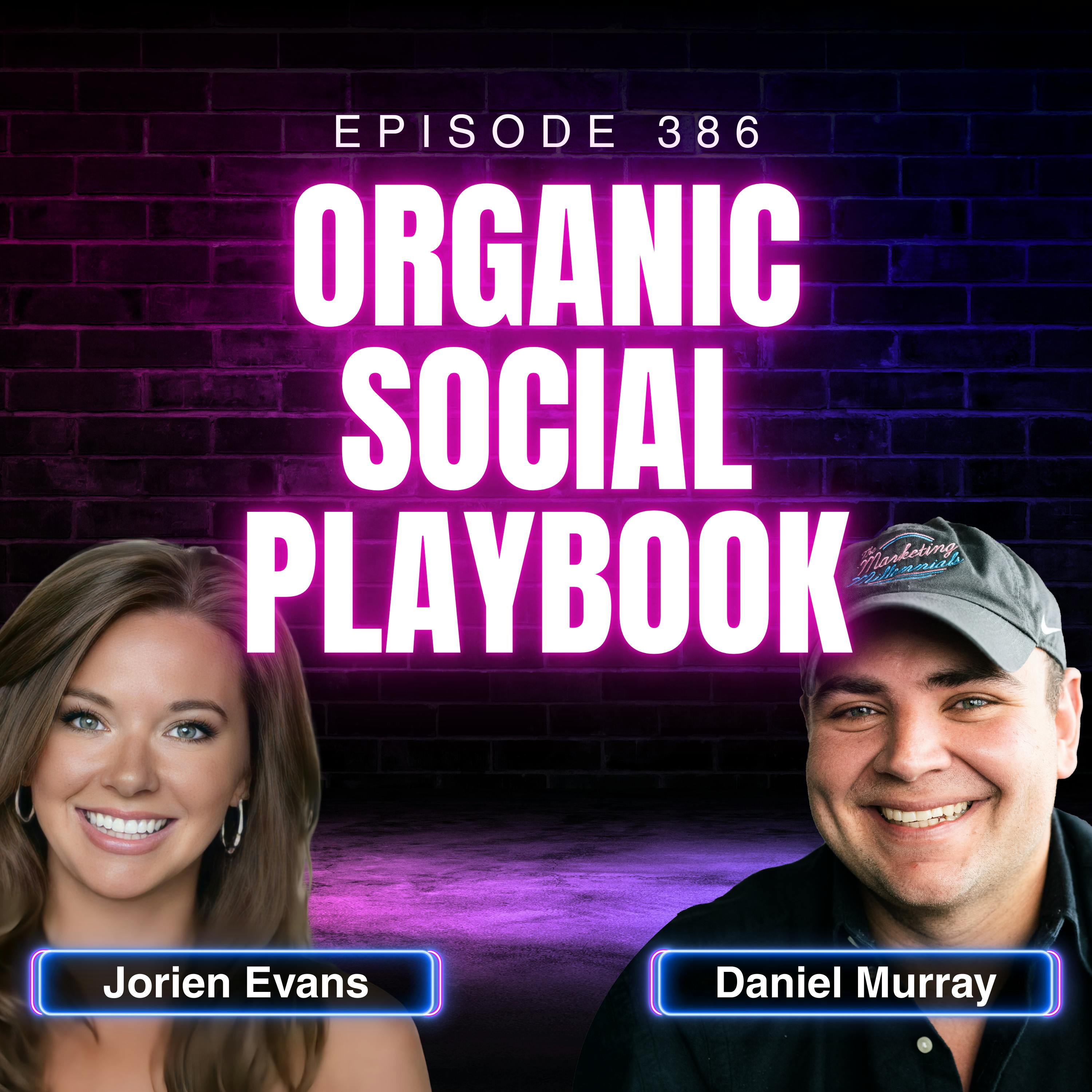
The Marketing Millennials
The Playbook Behind Organic Social Success with Jori Evans, Director of Social at MANSCAPED | Ep. 386
00:41:01
Loading summary
Transcript31 lines
- [00:02]
A
Welcome to the Marketing Millennials, the no BS Marketing podcast. I'm Daniel Murray and join me for unfiltered conversations with the brains behind marketing's coolest companies. The one request I tell our guests stories or it didn't happen. Get ready to turn the top. We are back with another episode of the Market Millennials podcast. Today I have a really cool guest, Jory Evans from Manscape. We are going to talk about how they're utilizing creators, how they're setting up for a big event coming up that people know happened in February, and we'll talk about that and yeah, all the good things. But I want to start off and welcome Joy to the podcast and ask her how she got into marketing. So let's kick that off.
- [00:58]
B
Thanks for having me. How I got into marketing. I tell everybody that it's never linear when you're starting your career on this. I was a comms major when you needed to have an Edu address at Facebook to be on Facebook. So social didn't exist. And I hate that. I age myself when I say that, but it's true. So social media hadn't really been carved out just yet in the marketing world. And after college, I was a diamond broker and a jewelry designer to quickly pay off student loans. And that evolved into me moving down to Austin, Texas, and running marketing for an estate and vintage jewelry website and learning how to integrate her jewelry with celebrities. So it was like pre influencer days of getting them into red carpets and film and. And magazine editorials and building kind of that muscle of how do we influence people? As Instagram is starting to grow, as Pinterest is starting to grow, I did that for about two years. And it was a really interesting type of world to be in. You're all of a sudden on the phone with, like, Dwyane Wade's agent getting Georgian jewelry for Anna Wintour's birthday. And then we had, like, Deborah Messing reaching out. Her father was a jeweler and we used her as an influence predating influencer content. And then I evolved into quickly going from somewhere with no red tape to build this small website to working for Microsoft out in Seattle and running all of their cloud and enterprise social media accounts. So I went from somewhere with the smallest budget, no red tape, to the biggest, you know, one of the biggest companies in the world with all of the red tape, but all of the access to measurement support, even then, you know, the legal support as well, which is great. And then not so great whenever you're working in social. So that was kind of My tipping point into the world of social. And from there I've gone and jumped around from a lot of different brands, from Groupon to Amazon Music to Taco Bell and then notoriously Slim Jim, which was like the crown jewel of Instagram meme marketing right at its very peak, which was always, you know, a fun one. And very much has informed where I'm at with manscaped right now too.
- [03:25]
A
So both are really fun brands too. Like some Jim, very fun brand to work with. Manscape, really. Like, I feel like there's always guardrails, but more freedom to have fun than a Microsoft or an Amazon music type brand. So you, you started your career having to place with all these celebrities. And celebrities used to be like the influencers before people started blowing up on social media. But I want to know, like, what is the process now to finding those per se, up and coming creators that are worth it, not overpriced, before they blow up on all these platforms. So what is your process to find those type of creators?
- [04:12]
B
Yeah, it's evolved, I want to say almost every six months now, because I think we are all so very Internet savvy now. Consumers are very Internet savvy as to when they're being sold to because it's such over consumption. So having smart marketing where people can associate yourself to your brand in a way that feels authentic is kind of what we're trying to break through. Um, I would say picking creators that feel authentic to the voice that you have portrayed within your brand and your humor and sticking to that is probably your best. North Star. Um, for instance, and to go back to Slim Jim, it was during COVID that we found Mark Rivier, who is now known as like, oh my gosh, what's his name now? I can't remember what he refers to himself. It's like Beats Daddy or something like that. But Mark was basically doing live streams in his living room in his boxers. And we reached out and we were one of the first brands to work with Mark. And we found him as somebody that would be big on Twitch, would associate with our audience. And one of the things that I learned very early on was giving them as much free rein as possible. And because Mark was an improviser, we had to build this contract around improvising. And one of the things about Mark was basically, you can do whatever you want, short of you cannot be charged for a felony. If you are charged for a felony, that totally voids our contract with you. And it was one of the craziest contracts. But the end Result was getting such organic content with Mark, and then a year later he's headlining Bonnaroo. He just completely blows up. And from learning in that negotiation and seeing the content and the result of it is what really taught me moving forward, of how I wanted to work with influencers and creators. When I arrived at Manscaped. We are very well known for affiliate marketing and finding a lot of our paid ads that come through to you. We also are known for podcast commercials. One of the things that we were missing is this kind of organic piece showing how much people love our brand and especially the humor. And what I built out early on when I started here was something called the Makers Network, was something I pitched to our C Suite. And really what it was was how do we get more authentic creators that want to make content for us, but in a way that gives them a lot of creative free reign. And one of the great things about Manscaped is that we're really small company. So you get to work really closely with our C suite, with our CMOs and collaborate on these ideas. And they're always very supportive. And I had a really great response from the team, and they said, here's a little bit of budget, which I think anyone who works in organic social knows. Hearing that you're getting budget, you're going, oh, my God, what do I do with a budget? I've worked with, I can work with a rubber band and a paperclip, and now I can write a check to somebody. Even if it's not that much, it's still something. And we're so scrappy and learning how to make that stretch as far as possible. So what I did was I started to look at film students and I found I slid into the DMs of these two filmmakers at USC and we were starting this campaign about face pics. And the insight was, how do we get men to send face pics more often and less dick pics? And we worked with a really great research group up in Canada called the Orgasm. Is it Orgasm Institute. Orgasm Lab. Orgasm Lab. To build a case. Not to build a case, but to do some research and build a research paper around why men decide to send dick pics. And what was really exciting about this campaign was for us to kind of reposition ourselves as a brand from ball trimming brand to a man care your, like everywhere brand. That we have shampoo, that we have beard trimmers, that we have nail clippers, we have cologne, we have boxers, we have all these different things. We're not just a brand about balls. And we tapped into these creators while also working with a creative agency and we gave a very short brief. The brief really was the insight from the research. And the other part of this brief was it's just gonna live in organic social. So no red tape. We're not looking to clear this for network television. We're not looking to hit a certain timeframe, we're not looking to hit certain product beats. What would you do with this? And we put it into their hands and they flipped around a piece of content. They shot it in a day and a half and they flipped around a piece of content that's now our most viral piece of content we've ever had as a company.
- [09:08]
A
Yeah, I remember the faking, taking a picture of down low and it's just like it's showing the guy's face at the end and you just thinking like, oh, is he? But it's also good because like I've been a manscape customer for a long time and I. It's kind of. I was scared to be a manscape customer, but just like telling people because people and I use it on my face. But like I assumed like if people think I have a manscape like razor, they're going to think something else of me. So I was like kind of low key. Like I have a manscape razor. But then like now it's like more normalized. But I think like brands like that's one thing of like changing the narrative of hey, it's not all about like grooming everywhere. It's about you can also. People also are trying to do face, like have a clean face. Which I think is a, a cool way of doing that. And yeah, I think that was a. It's just a smart home that came. Could you give it a little like I just want to go into detail because I know you also have a big campaign coming up. Like what is a process? Like what does it look like for people who want to create? You didn't know this was going to go viral, but it did go viral. But like what does it look like, the inputs to create that output? Like, what is it like from. I came up with like this idea came about, this was the. Then the brief was created and there's like, what does that look like? End to end?
- [10:39]
B
You know, for us it was such a different process. If you were to compare this to, you know, working with a typical agency relationship. And I don't want to discount working with a really great agency. We worked with a really great creative agency to come up with this campaign and come up with this idea about to send face pics instead. But when you work on the social end of it, you aren't as close to those agency creative relationships. You have to figure out how you support on organic, and I think you look at it as the lack of budget is almost a plus, then it is a disservice to you and you have to figure out a way that you work around it. One of the things that we worked around this was we didn't want influencer marketing. Everybody knows what influencer marketing looks like now. No one believes it. And when you work with these creators, one of the pluses is that we are not looking for these makers as influence or influencers. We're not looking for their channel following. We're not looking for how many followers they have. We are looking for really strong creative points of view and especially with younger creators that want to get their foot in the door and that are really hungry for it. I also want to just add that we compensate these creators, these makers. So this isn't like a, you know, you get some time on our channels and that's all that there is. There's compensation involved for them and then there's bonuses involved whenever it performs well. It's not a perfect set science yet. We really struck gold. Like, I want to say that, like with Zach and Ryan, these, these two students who have now graduated are really like just incredible guys as well. They really dialed in on what the brand was. But I think what was beneficial was a couple things was unlike working with an agency, you're going through, what does casting look like, what does the clothes look like, what does the set look like? And you have 15 to 20 different people in a room making all these decisions and signing it off. We kept this to about, I want to say, five people in the room to make these decisions. And for the most part, most of the decision making was left up to Zach and Ryan and to their discretion to keep it, to keep their vision kind of holistic throughout the whole thing. And so I really learned in this that the less cooks in the kitchen, the better. And that's how we came out with something so great and so quickly. And I think another component of this was I was really lucky to have the support of internal being okay with that process and really respecting the fact that the reason it was so good was because we were so hands off. Another thing that was really great was that our cmo, Marcelo, saw the content for what it was and said, I think this needs to go further. Than organic Social. Like why, why don't we put it some? Like, where do we put it? We put it on Netflix during WWE Raw one night and then all of a sudden it just took off on X organically. All of a sudden it's 100,000 organic views, then it's 1 million, then it's 2 million. And I think we cracked 100 million in under four months on organic views of this piece of content. And so what's beautiful about this was that because we struck such gold early on, it's only enforced this program and I've only gotten a little bit more incremental support to keep searching for these types of people. And then what's also great for Zach and Ryan is this builds into their portfolio and now I know that they're highly sought after filmmakers for these spots. And there are I think 22. So something that we've also started to think about and are building is working specifically with different film schools and trying to build maybe a feeder program where it's school credit mixed in with compensation for this. It's a way for them to build their portfolio and get their foot in the door. And we know, a lot of us, I think, know how hard it is for young creatives to get their foot in the door right now, especially with AI, that this is a way to kind of still and like still and try and instill the motivation that there is still a place for young creatives in this industry.
- [14:59]
A
What people also don't realize when they think of like organic Social is they, they don't realize that it goes beyond like your channels are one thing, but getting shares beyond other channels are something else that you could work towards. And when people are like having a social strategy, they're thinking, how could I promote this on my channel? But like promoting it on other platforms give it the ability to be shared by other creators, by other people. And that's actually what something you want. I think that's a really interesting thing, learning from that. And I also think the importance of having social in the room to like know, like getting the right shots, getting. Cause if social's not in the room of making these things, they're not getting the right shots for the right platforms. Making sure that, hey, do we have a shot for Instagram, do we have a shot for YouTube, do we have a shot for TikTok? Because all these platforms behave differently and if social's not in the room, you're not going to get that prime content to be able to work on all platforms.
- [16:04]
B
Right? I think One of the things that I noticed that we also benefited from was that this spot specifically got organically clipped around the Internet. We didn't realize how many people were gonna take the original piece of content. There was a 60 cut and a 30 second cut and how many people took it and ran with it. And then all of a sudden it's getting. I think it was written about in. Was it in Amsterdam, Christina, or like in GQ Denmark or something like that about the campaign was picked up. And then all of a sudden one of the people that worked for Save the Children about what a great subject matter this was. Like, all of a sudden this just started to reach pockets of people that we never imagined that it would reach. And then every time it showed up in front of a new audience, it took off again and again and again to the point that we're still having a hard time really tracking how far this has gone because it continues to this day garnering traction and more eyes. The thing that I wish that's difficult about it is that because of that opening shot with him opening his, like he's about to take the picture, is that it took us away from being able to get a lot of clearance for network television because of our subject matter and what our products do. We do run into that with network tv. You know, Disney's not gonna be like, yeah, let's throw that on before, you know, an episode of Hannah Montana. But, you know, it was a good learning experience that I think next time around with these creators, I would say, you know, there's always a potential that we could end up putting this in more places. Let's make a version that's a little bit more mindful of network television, which then kind of brings me into what we're going through working for Super Bowl. Super bowl has been another thing that we have done a big learning curve on. How do you promote this brand again for network television clearance on the biggest stage possible. And that's kind of what we've been going through the past three months or so as we've been working on the creative and the super bowl campaign.
- [18:07]
A
Let's go into that. I mean, that portion of what is it like with being in such a walking the line of a brand that has like crazy could go crazy versus not go crazy. What is it like toeing the line of making it on brand enough to like fit the manscape vibe, but also getting it approved to get further on networks and stuff like that? What does that look like when you're briefing and making sure it still toes that line, that it still fits manscape vibes.
- [18:43]
B
I think it's a really difficult problem to solve. And I think when we briefed everyone to pitch, we had a very extensive pitching process. There were a lot of places that threw their hats in the ring. I also do want to add that those creators who did the post picks clarity content, we included them in the pitching process for Super Bowl. So they were also these creators that we find and work with, we do want to elevate them continuously and have a longer term working relationship with them. And they were part of that process. I think what was really interesting about this was telling all these people, look, we need this to be cleared for network television upfront and also for us to know going into it of, okay, this isn't gonna feel like our normal equation of content that we would typically make. It's gonna feel a little uncomfortable for us too, because we know we're working alongside some significant guardrails that we don't typically work against. So there were a lot of different iterations of storytelling that didn't center around balls. And it was very weird for us to go, well, is it funny for our audience if it's netballs? Because we've created such like a cul de sac of a following. And it was a really uncomfortable process, I think, for us at first in a good way, in a good learning curve way, because that's where the brand is going. So I think it was a really good exercise for all of us to kind of start settling in and comfortable of all these different points of views and storytelling ways of. We're everywhere now. We dominate the bathroom. We're not just about a ball trimming company. So we had to shift a little bit in that comfort. But then what we always came back to was manscaped. Known for this notorious humor. And that was always our baseline. And our North Star is that manscaped humor. And as long as we could ground our scripts in that and that point of view, we felt like we were still on the right trajectory and not alienating any audiences, but also being able to bring in new audiences.
- [20:46]
A
Yeah, I like that. I think, I mean, I think going on like values versus just one messaging point is of like balls, for example. I think the values, if the values stay the same on a social campaign, then we're always going to be humorous. We're known to being funny. We're known to getting the message out in a fun way. We've done these viral campaigns and we're trying to go further than just Saying we do this one thing because we want people to know that people can also get a face razor or a body razor or whatever they're trying to get. And like you said, dominating the bathroom is a great line where it takes away from one area to the whole situation in a bathroom. I think that's a good way of guard railing it enough to say, let's just keep it at least PG but also be funny at the same time.
- [21:46]
B
So one of the ways that we figured out of wanting to kind of balance the scales a little bit was that we still have organic social to play around with. We still need to be able to promote that. Manscaped is in the Super Bowl. We have a very specific time slot. We are right before the coin toss, which is so great to be able to tell people exactly when your spot will play. That's very rare in a way that you can say, like, appointment television, this is when your spot's gonna air. And we thought that it was still interesting that you can't say balls on network television. So for organic social, what we did was we've built this strategy of content that's coming out right now of what it's like to build a Super bowl commercial at Manscaped when you cannot say balls, when you cannot refer to balls, when you cannot show anything like that. And so it's kind of a la the office of very lo fi content, to the point that, like, we even got our legal team being like, did we write this memo to you? Like, did we. Where did the. And it's all fake. You know, it's all meme stuff, but it's bringing everybody along for the ride. And it's engaging that audience that still loves that content, but getting them excited for the fact and kind of setting up the expectation of, like, this will not be a ball commercial, but it is going to be the manscaped humor that you know and love, I actually.
- [23:08]
A
Want to go into, because there's a lot of social conversation out there about should my brand do memes or not, or create memeable content or not. And I wanted. You've been at Slim Jim, which is a very memeable brand. You're creating a. You're creating a memeable content. And that's obviously how a lot of things get spread. If you see, I always tell people, if you look at your DMs from friends, 80% of it is probably memes or sending memes back and forth. And so if you're not creating memes as a brand, even you can get into the licensing problems and all that stuff. But I want to go into how you think about creating memeable content and what is that process like?
- [23:54]
B
Yeah, there's a couple different ways to think of it. The way that I kind of think about it for Manscaped and I thought about this way for Slim Jim is that memes is like the love language of bros and like the people who are following our. You know what I mean? Like, there's. I have a lot of different guy friends who talk about and they'll say, like, we haven't talked about anything of substance, but we've been sending memes back and forth for like three months now. And that's just how we interact. And for us it's like, well, how do we keep building that caliber of meme content for these guys to keep talking to each other? And we see it in our shares. The share stuff takes off like crazy. We're looking more for shares than we are for comments or engagements or reach. At this point. We want to be able to know that we're actually hitting the nail on the head of the way these guys talk about grooming for the most part. And then there's a couple other things that I think you have to be aware of because I don't think it works for every brand unless you're able to talk to your audience in a way that they talk about. They use memes in their DMs. I think that's the way you have to infiltrate it. But you also have to, as a social team, know what corners of the Internet you're familiar with and that there are corners of the Internet that you are not familiar with. And we have done a really good job working with makers of different meme creators who dominate different corners of the Internet that our feeds don't give to us right away. So we've got one side of meme creators that are very in touch with dating culture, female meme culture, and then we have another part of meme creators who are very into the deep, dark meme corners of the Internet that like, they know when a meme is starting to creep up with this type of audience and they're able to spit it out so that we're jumping on the train right away. And collectively, those together gives us a really well rounded kind of meme language with the audience that we already have and the audience that we're looking to tap into.
- [25:58]
A
Yeah, I think the key to me more any good social is like, you're the win. The relevancy battle and what trends to jump on battle. And those are two separate battles. Relevancy is like you hitting the nail on the head with your audience and then the trend battle is okay, you it's sneaking up on Reddit or it's sneaking up in this community. How do we like because everybody knows Instagram is a week late to whatever happening on Reddit. So how do we take that Instagram. I mean that Reddit meme that's starting to get fire and make it for my brand. And I think that's two different skill sets of knowing your audience and then curating the finding that up and coming next big thing which is I think what happened with which is two different skills. I think it's so hard to be someone who is great at relevancy and great at finding the next big thing. It's a hard it's a hard game to play.
- [26:58]
B
You have to be really trusting too of what you don't know and that you find people that do know what they know and letting them run with it. I think that's another component of this makers network is really expanding because and casting a wide net across all of these different channels because it's so impossible to be everywhere at once and the social team will just never be big enough. The tools will never be able to cover everything. And so you have to get really strategic on how you utilize all these resources so that you can seem as though you're everywhere at once for your audience. But also you're not burnt out. You're screen time isn't more than 13 hours a day kind of keeping your sanity as well and getting really strategic that you're not relying on just doom scrolling or looking at Sprinklr to try and give you those insights all the time.
- [27:53]
A
I think one question that people are going to ask just in general is for example the Facebook's campaign or the campaign you're about to run or working in this maker network. What are the key metrics you're looking at that are actually moving needle to more razors sold versus also what are the leading indicators versus I bet that face pick sold tons of razors. But how are you measuring those things behind the scenes?
- [28:28]
B
KPIs are really interesting conversation. We're having a lot of those conversations right now as super bowl comes up because there's so many different components and also these channels have changed so drastically in how they operate that how measurement looked a year ago on some of this content isn't apples to apples anymore on current content and how it Goes for instance, Instagram no longer measures impressions by it coming in your feed and on what is suggested for you. You only get the impressions. Now if it comes on your feedback, that changes how many impressions you're getting anymore. And so building these benchmarks have gotten really difficult. And so we're starting to look at this a little bit differently. Moving towards super bowl specifically, we're using face pics and then also we did a gray sweatpants campaign. They're very similar in the sense of like there was an influencer component, there was an online component, video component, there was a teaser component, there's meme components. And so the puzzle pieces are all there for us to kind of get some type of benchmar. The point of Organic social though, isn't to sell. It's for earned media, it's for brand recognition, it's for community building for the most part. But how do you measure the success that it's done its job? We're looking at a couple of different things. There's going to be influencer content, there's going to be audio content, there's going to be teaser content, there's going to be the. I can't give too much away of all of the things that are going into how we're going to measure this, but it's no longer engagement comments. Those aren't the big indicators of success. But I will say shares is there. Again, we know how people communicate and we want them to use Manscape as a communication tool when it comes to our meme content. And so for us, breaking into and having a sustained place in the meme ecosystem is kind of top tier. Like our marching order, I would say.
- [30:31]
A
For Organic Social, I think also which I've been thinking a lot about is with this new age of AI and having chat and Claude and all these places to surges, the importance of social gets even more important because brand mentions are how you get seen in these chats. So being seen all over and getting talked about on Reddit and that that was a cool ad or Manscape being talked about after the super bowl is just gonna. When someone search razors and they see like all these, all these mentions of Manscape on all these corners of the Internet bringing into the chat, it's actually going to be super important to another way of people are buying now, which I think was less important now. But being in the conversation is way more important than being just stuck liking on that platform. It's getting that conversation off the platform or in the DMs is way more important.
- [31:38]
B
These days, you're spot on with that. And we're hyper aware of the fact that it's organic conversation that's going to feed into these AI tools when it comes to talking about our brand and what are they going to say when they talk about our brand? And so that's why face pics was so such a great catalyst for all of this, because it's really informed some really great content on Reddit and like I said, in a lot of different spaces. And so we're really using that as a distinct blueprint. I will say we had a really great insight in the face pics versus dick pics type of conversation. It hadn't really been talked about. It's been very taboo. And so that. That only helped us. But again, it's created such a great blueprint that we're utilizing again as we go into super bowl, as we go into 2026.
- [32:25]
A
Have to. I mean, sometimes taboo is. Gets you in culture because, like, just knowing that, like, bros do that and your audience is bros is. Is something you have to be. Be a part. Like, gray sweatpants is very bro too. Like gym bro, gray sweatpants. Like, like, just. That's something that, you know you're in culture, and sometimes you have to be in culture even though it's uncomfortable. If you want to be, you have to turn off a lot of that audience that are going to hate you because you're going down that road to be with your true audience, which are the people who are going to love that you're doing Facebook first dick pics or gray sweatpants or whatever you're doing. You have to turn off people who are going to say that was inappropriate or like, why are you talking about this? Why is your brand all about this? Um, you have to. To be a standout brand, you have to be in the culture of your audience, not just the culture of everybody. I think to win.
- [33:33]
B
Yeah, you. If there's anything I really have learned a lot specifically with this brand, is that you can't shy away from it being uncomfortable because it is what it is. Men need to trim their balls like they want to trim their. We've got to talk about it. How are you going to talk about it? You know, and finding those ways in. And there's also the other component of partners want their other partners to trim their balls. So how do you talk to them about buying that for them? And so when we looked at this gray sweatpant insight, it was an insight that came. It's a point of view of women for the most part, LGBTQ2 community as well has this affliction for men in gray sweatpants. But we took that opportunity to say, okay, this speaks more towards women than it does towards men. Who do we work? What audience can we infiltrate on this that we wouldn't be able to otherwise? And we looked at the Bravo sphere and we reached out to West Wilson to do an influencer video for us. I think it's one of West's top performing videos. Got over half a million views in like a month, I think. And it's west walking around in like the worst lit video, talking about how much cake he's got in these gray sweatpants. And we had page and then all of a sudden all the Bravo liberties are coming in and all the women are commenting. Is this manscaped? And we started to slowly carve a way for us to be in the Bravo sphere when technically we would have no business otherwise. Kind of jumping into the Bravo sphere with a lack of strategy.
- [35:04]
A
I mean, but Wes is a great example of someone who also fits your ethos of your brand because he's good at film. He's a film video producer guy by trade, I think. I'm not sure.
- [35:15]
B
Yeah.
- [35:15]
A
And he also is like the bro of Summer House. So it's like one of the bros of Summer House, but it fits the bro. Like, he's good at film, he understands social, he understands what works. And also you're getting into this new audience of. Because to be honest, a lot of men don't want to make these purchases for themselves, even though they. They should be making the purchase for themselves. So you need to get their, like the girlfriend to buy it for them or the, the like someone to. Or the. Their partner to buy it for them, whoever to buy this, this purchase. Because men don't like to buy like, like the little things of like getting deodorant because it's just like super expensive. Like, it's just stupid. Like those annoying purchases. They rather buy the new golf club than buy a new razor. So it's right.
- [36:09]
B
You guys want like a three in one that does everything.
- [36:12]
A
Exactly the. The old school, like the head and shoulders, everything. Yeah, it's hilarious. But yeah, that's the culture. So I like that you understand. You have to. I like that your brand is understanding culture and that's what memes are. That's what Manscape is doing very well. Is there any other insight you want to give of, like, how. How like what it's like because to be in create a Super bowl commercial like, what is. Like, what is it? What it actually goes behind the scenes of, like, people think this, this magical, but like, how long did it take to like get to that point? How many hours extra hours I work because it's cool to have be in the super bowl, but there's so many things that go in. We talked before. You didn't have basically holidays because you're thinking about the super bowl campaign that's going live.
- [37:10]
B
So there's a lot of things. I mean, I think we sat in over 20 hours of pitches. I think maybe close to 20 hours of pitches. So that was really kind of one of the biggest takes on. Was sitting through all of these and not kind of also going cross side while you're going through 20, 20, you know, hours of people storytelling and trying to really remain. Okay, this is what our goal is because you heard some really great pitches, but it just wasn't technically, at the end of the day, the right one for us. I think also we're a relatively small company and we're all fully remote. And so I think for us it was really strategizing in communication because, you know, we're doing 30 minute call incremental calls. But then, you know, something else comes up. There's another contract we want to do. There's another way we want to spend this budget. There's, you know, and getting everybody kind of on the same page collaboratively, fully remote is something I think we've only gotten better at while doing this. And I think there's like, when you're working on super bowl, it feels like it's a lot of work and it's a huge lift, but at the end of the day, it's some of the best experience that you'll have. That's such a great thing to have on your resume. At the end of the day of I built a campaign for the biggest stage of marketing ever. And you'll take that into everything else that you'll do after and everything else will feel way less stressful than when you were working on the super bowl spot. But it's also really exciting because I think you're also getting able to. You're able to dream big. Like for this, for instance, this is about man care. You're everywhere. And this is kind of one of the first iterations of that Face pics was kind of a little bit of an intro to that. But this is like our big brand platform where we're not one product focus. This isn't a product launch for us. So this feels a little bit more creatively exciting that it's not focused on one product feature. And you know, how does it outrank better than our competitor? This is solely a story about manscaped and I think that's what's been exciting. And I also think what's been exciting about this was that we all really held hands and said we don't want an AI commercial. We don't want an AI infiltrated commercial. We want this to have as many creatives involved in this and part of building this and that it is not an AI heavy spot because that was a lot of pitches too. I mean we had pitches of everything you could possibly imagine. And I really appreciate the point of view that we all had was that this wasn't. We didn't want to go into a Super bowl that could potentially be the super bowl of AI commercials. We wanted to stand out that we were supporting creatives in a authentic capacity because like I said with the Makers Network, it's proved such a success for us to do so well.
- [40:08]
A
Thank you so much for this insight. This has been great and I'm so excited to see what you are doing for the super bowl. And everybody go check out the slot before the coin toss because that'll be manscape slot. So thank you so much and this was great.
- [40:23]
B
Thanks so much. Thanks for having me.
- [40:26]
A
Thanks so much for listening. Keep tuning in to hear more great insights from the coolest moments marketers from around the world. If you haven't already, make sure to subscribe and follow the Marketing Millennials podcast on Apple Podcasts, Spotify, YouTube or wherever you get your podcast. And if you like what you hear, I would greatly appreciate you giving us a five star rating. It helps bring more marketers into our community.