← The Marketing Millennials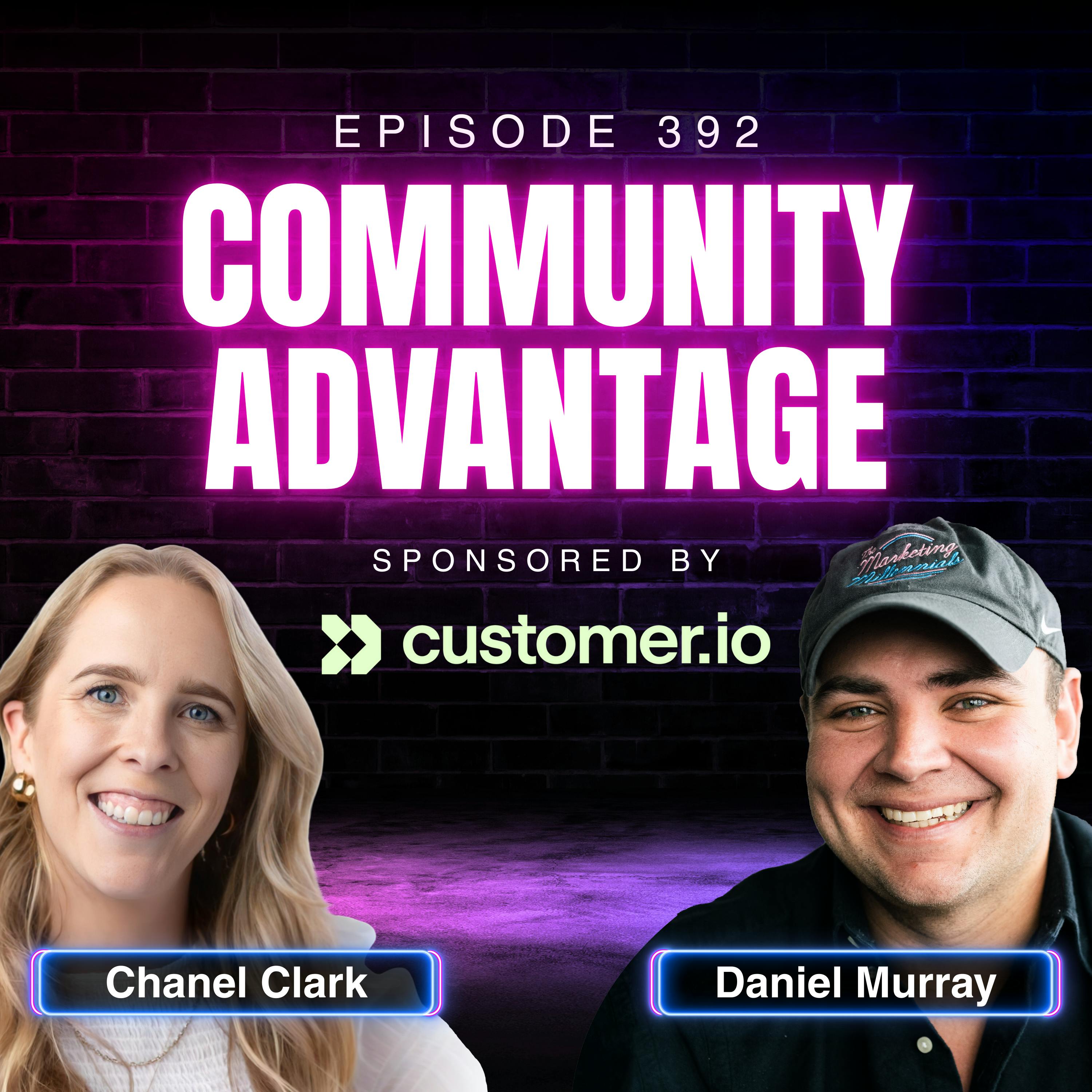
The Marketing Millennials
Why Community is the Future of Marketing with Chanel Clark, Founder of The Marketing Club | Ep. 392
00:45:38
Loading summary
Transcript57 lines
- [00:01]
A
Are you tired of marketing events where nobody's actually done the work? Unpacked is different. February 18th through 19th. It's virtual, it's free. Real life cycle marketers sharing tactics you can steal. Today, Register@CUST IO TMM. Welcome to the Marketing Millennials, the no BS Marketing podc. I'm Daniel Murray and join me for unfiltered conversations with the brains behind marketing's coolest companies. The one request I tell our guests stories or it didn't happen. Get ready to turn the up. We are back with another episode of the Marketing Millennials. And today I have Chanel on the podcast. We are going to talk about everything, community building. But I'll let Chanel introduce herself, let her tell her story how she got into marketing, and then we'll dive right into it.
- [01:10]
B
Amazing. Well, thank you so much for having me. I'm so excited to be here. Even though it's, it's 5am here and there's not a lot of people I get up this early for.
- [01:17]
A
So I appreciate you getting up. I know it's a. And you're on the other side of the world and the time zones are crazy and yeah, the only person I would get up at 5am is for my baby. So I really appreciate that you get.
- [01:30]
B
Up, you're right out there.
- [01:35]
A
Well, let's get into how did you like, what's your story like? How did you get into marketing?
- [01:41]
B
Yeah, I kind of fell into it. I think when I left high school I either wanted to be a photojournalist or a forensic scientist and realized very quickly I wasn't good at maths or science. So I sort of was thinking the photojournalism route and I went to university and actually started studying journalism. And I mean, this was a while ago, so marketing papers didn't even really exist. But through some of the papers I was doing in my journalism degree, there were a few marketing related papers and I was like, oh, this sounds really interesting and sort of started pursuing those. Got bored at uni very quickly, realized I wasn't really learning anything that felt tangible or relevant in the world that I was living in at the time. So ended up trying to look for work experience and actually landed myself a role as an intern at a social media company. And that was kind of like the deep dive head first straight into what marketing even looked like. You know, Facebook ads had just come out. Posting on Facebook and kind of sharing content had sort of just started. So that was really how I got into it. And then once I started, I was just obsessed and wanted to find out more and you know, what was this industry? What is marketing? And yeah, it kind of just went off from there.
- [02:55]
A
So what was like the moment you wanted to start the marketing club in Australia? Like what, like what is that moment you felt that there was like a need in the market for this?
- [03:08]
B
Yeah, I think like I, whenever I tell the story, I always admit starting TMC was an accident. It wasn't kind of like the big dream, the five year plan. I was in a head of marketing role at the time, totally on my own. So marketing team of one got handed a massive budget and said, you know, go do all the things. And the company actually didn't even have a marketing function before I got hired. So I had to build the marketing function and then go and do all the marketing. And I just remember, I mean I love building things that don't exist. So it was, it was quite rewarding for me to be in that position. But then I remember about a year into that role, I was booking our first out of home campaign. I had this massive budget, I had no idea how to do media buying. I didn't even know where to start. And I thought, God, it would be really nice to be able to talk to other marketers who have been in this position before. Because I was very sure that I wasn't the first marketer that had ever been feeling like this. And I remember thinking, right, if I was to build something for marketers to meet other marketers, what would that look like? And there were a few things that existed in the industry at the time, especially in New Zealand, but I was going to those and you know, often I was the only female in the room. We were hearing from marketers who had $20 million marketing budgets talk about how effective their campaigns were. And I was like, well, that's great for you, but I got to go back and beg for $5,000 to do a billboard. Like none of what you've said is really transferable. So there were just kind of enough indicators through my own marketing experience that what I was looking for and craving and that connection and even just finding other marketers going through the same troubles as I was, didn't really exist. And that was sort of where the idea for the marketing club started. I mean, I did one LinkedIn post and it was so innocent. I was like, if you're a marketer and you want to connect with other marketers, like I'm starting the slack over here, come join. And I genuinely thought it might have been a coffee Meetup for marketers, you know, once a month there might be 30 of us. I didn't even know if there were 30 marketers based in Auckland at the time, but I thought, you know, set up the thing and see what happens. And then within the first week, we had 180 marketers join the slack. And I was like, oh, this is, this is already five times bigger than I thought it was going to be. And then it just kind of absolutely took off from there. We started doing social networking events, educational events. The community started demanding it in areas where I wasn't even living. And then Australia was kind of the happy accident because there were so many marketers in Australia that were following me on LinkedIn that were seeing what I was doing with TMC in New Zealand and were like, hey, like, when are you bringing this over here? And then, yeah, I ended up moving to Australia, launched TMC in Australia last year and it's just gone like wildfire. We've got a community of over 15,000 now in under three years and it's just been insane.
- [05:55]
A
What would you say is your biggest growth lever you've been using to grow it? I mean, Obviously the first hundred became from a LinkedIn post that turned into a Slack channel. Usually it's funny how those things, you don't realize how many people are watching or need something until you put it out in the world. But it also shows that you had a good audience of marketers too, wanted to do something like this. But what has been your growth lever? I mean, getting the first hundred, that was the first part. Now what has been like the one or two growth efforts you've been using to take it from that 100 to 5k it is now?
- [06:34]
B
Yeah, I think LinkedIn still remains our core channel. It's obviously where marketers are hanging out day to day, connecting with each other professionally, seeking advice, et cetera, reading industry reports. So that remains kind of our core focus. But then I would also say the minute that we started doing events, I saw the momentum really build because we sort of took that online only community, brought it in person, started really being able to communicate with potential members in the community of what the experience was that we were building, what the vibe was, the kind of people we wanted to attract. And I mean, the minute that you make humans, you know, gather and feel like they belong and then get to know each other, that was sort of the thing that just propelled us into the thousands of members instead of hundreds.
- [07:17]
A
One thing that I think is hard about community too is like keeping retention and engagement up. So what are some things you do? I mean, you said events is one thing you do, but even getting people to events sometimes is a hard job. So what are some ways you keep like engagement up in the community? Community. So people are actually, are sharing their opinion, are talking to each other, are communicating.
- [07:44]
B
Well, I think when I designed tmc and especially as we've grown, because I mean a lot of it's just like the advice I give now is almost reverse engineered because obviously I didn't know what I was building as I was building it. But I think for us it's really looking at how we use all the different channels that we're on. So we've got a slack community, which is 247 access to marketers. We've obviously got our LinkedIn, we've got Instagram, then we've got our events. We've also launched a podcast. So all the different activities we do kind of suit different kind of marketers and the level of engagement that they're looking for. And we've also got our newsletter. So obviously our most engaged members are usually in our Slack, sharing opinions, tagging people, asking for help. Newsletter, kind of like the softer consumers. They're lurking, they're listening, but they're not really engaging. And then obviously we've got our events for the people who really heavily want.
- [08:32]
A
To be involved and for events. Could you walk me through how you decided, like the pricing model? Because obviously at the first it was a join a Slack channel. Was there pricing before you started, like joining this channel, but because I know, I know now you have like a tiered pricing model. So how did you come up with that and like know what to charge, who will pay? And also how did you, for the core members, like got in for free. How did that work?
- [09:05]
B
Yeah, the pricing model around TMC was probably the biggest decision, it felt like, of my life because for so long we were a fully free community and I was trying to hold on to that as long as possible and you know, like validate the thing, test the outcome, build community, rally the tribe, et cetera. And then it got to a point where it was actually hindering being able to do what I wanted to do for the community by having it operate as free and especially for events. Right. Like when events were free, it was very easy for someone to just decide not to come, which was an absolute nightmare. When we were trying to book venues, you know, we were getting brands interested in getting involved and we were trying to estimate for them how many people were going to show up. So when I decided that we needed to start charging, and at the time we only started charging for the events, we just community sourced it. And because we had at the time we'd like 1600 people in the slack, I said, look, we're going to start charging. If we charge X, it means that you'll get Y. What would be a price that you think these events would be worth? And we literally just put out a Google form to the community and said, what would you pay to have this kind of experience? And then that was with. And I mean, this is obviously not a great commercial model, but because we're built by the community, I was like, well, I'll ask the community what they'd be willing to pay. And then we use that pricing for the last two years for all of our events. And then this year we've just done another price increase. And again, that was community voters last year.
- [10:31]
A
Well, I think, I mean, it's just the motto of build the audience first and then reverse engineer, like, what products to build for them. So I think that's like the more the modern. I mean, not modern, but that's how a lot of people are doing it now. They have an audience and they build a need for what the audience has instead of the opposite of build a product and then find, find out if there is a need for the product.
- [10:57]
B
Yeah, yeah. And I mean, I, I bootstrapped tmc. You know, we're in our fourth year now. I bootstrapped it completely for the first three years. So if, you know, if we had an event and 110 people showed up, I had to pay out of my own pocket catering to feed 110 people. And it was a $4.50 spring roll that kind of broke me and made me realize I can't afford to keep doing this. But when we got feedback saying that we were going to transition to a fully paid community or have a pricing tier, everyone sort of said, chanel, we would have paid for this two years ago. Like, the value's always been there. I don't know how you held out for so long. And I was like, oh, my God, that would have been so good to ask everyone earlier. But I think then the community kind of rallied behind us because we'd already over and above proved the value. The minute we said that, like, oh, you need to pay for this now. They were like, well, yeah, this is the easiest decision ever.
- [11:49]
A
I mean, that's a good way to do, to like when you, like, that's like the free trial kind of Model where you, you get locked in on the, you get locked in, hey, I met some cool people. And then you, yeah, you have a two year free trial, which is kind of crazy, but at least, I mean you found it actually helped you learn more than if it was 30 days or 60 days. So you've learned what they need. There's actually a need here, what people will pay, what events should we do? And you can keep on asking the community what, what that is. I want to ask you also, like, what is, do you look at KPIs and metrics of like what success is? Like, what are you looking at on a weekly, monthly, yearly basis? Like, what are you trying to achieve with like what metrics do you look at? What is your goals for community?
- [12:48]
B
Yeah, I think for the last few years I haven't because it's kind of just been, holy shit, this is growing into something that I didn't think it would be. Now that we're sort of standing up a little bit more, especially in Australia, as a proper business, we've got revenue targets we want to hit this year, we've got member numbers we want to grow to, you know, we're starting to look at, you know, how much money do we need paid memberships to make in order to allow us to afford the kind of events that we want to do, etc. So for us, I think like community member growth will always matter because it's the size of the audience. So for example, our LinkedIn followers, Instagram newsletter subscribers, etc. And then the only other real metric that I'm paying attention to at the moment is just our monthly recurring revenue because that's allowing me to force forecast, you know, if we want to do these events, what kind of support do we need from sponsors? What can we fund ourselves, what are we anticipating that will make in order to be able to put that money back into the events, etc. So a lot of it has just been, you know, all of this again is in hindsight like none of this was the five year plan because I thought it was going to be a coffee meetup. So a lot of it is starting to just learn as the community grows, like, oh, okay, now this is the next goal. Oh cool, we hit that. Now this is the next goal. Okay, great. Now maybe we should have a five year plan.
- [14:05]
A
How do you like scale but also keep it feeling like personal feeling, niche feeling, because I think like that's a worry with when you get something big is okay, we can get to 15,000, but do people have the same connection they did when there was the first 100, the first a thousand. So what are you doing to try to make sure people still feel the same? That first hundred still feels the same. When you get 10,000, 15,000.
- [14:35]
B
Yeah, I think that's. If I had to hang my hat on something. That's probably the thing I'm most proud of is the feedback from members that we had when we were a community of 100 to now a community of 15,000. Have always said it never felt like we missed a beat in terms of providing the vibe that we promised or the experience that we said. And I think a lot of that for me has been really intentional. I mean, accidental, then turned intentional. But I have massively built TMC around me as a human. You know, a lot of businesses kind of lose that human element because it was never a human that started the thing, whereas TMC was sort of an extension of me as a marketer. And, you know, it's been a really interesting thing because obviously one human is not scalable. And I'm now experiencing that. You know, I'm doing events across Australia and New Zealand and everyone expects me to be at everything, and I'm like, I can't. I just physically can't. But to really, like, get the vibe of what we want to create. Right. I think because I. It's so inbred in what I wanted to create. It's been really easy to communicate then to our teams that are helping on the ground in different regions, like, what we stand for, how we want something to run. We've essentially, like, validated and proved that certain formats work, that, you know, the kind of brands that we want to bring on board. Like, it's actually been really easy for me. And I mean, I know some people might be listening to this and think it sounds like the hardest thing, but because it's just been an extension of who I am, all I've kind of had to do is sell people on me and what I stand for. And then it just so happens that that's attached to the marketing club that I run.
- [16:13]
A
Yeah, I think. I mean, I was going to ask you that. I mean, with community, eventually, many to many is like, how you have to thrive. You can't always go off of, like, Chanel is like. You can only be like, the anchor person that brings people together, like the Tom from MySpace vibes, but, like everybody's friend. But at the end of the day, it's also hard. How do you. Like, how do you. What are you thinking about? Of like scaling beyond you, making sure that like many to many people just don't only look at you as like the centerpiece of the community.
- [16:53]
B
Yeah, I think that's been an interesting one because I was trying to do that, you know, even last year I was like, hey, guys, like, it's, it's, it's still going to be the same experience if I'm not there. It's, you know, it's still my thing, even if someone else is contacting you about it. So I think at the moment I'm kind of learning what that looks like because I'm still so attached to the thing. And obviously that's been intentional as I've grown it and now that it's scaling, I'm like, I can't. And we're really focusing on who are sort of the members in different regions that we operate in. That could kind of be like the second me, like, who's really got the energy. Who are potential chapter leads for each region that we operate in, who are the people, especially in regions that I don't live in. Like, I'm based in Brisbane, so yes, I travel to Sydney or Melbourne or Auckland, et cetera for some of our events. But they'll start being people who always come to our events that will emerge as the regulars that only that region will recognize if I'm not always there. So when we do events, I'm always looking at, you know, who are the names that are always coming through who are almost like the power users of the community. They love us so much, they're becoming advocates for us. And then could they kind of be the ones that we sort of attach a region to? So it's not always on me to do it.
- [18:10]
A
Here's what I hate about most marketing conferences. Consultants who haven't sent a campaign in five years telling you to optimize your funnel. Unpack kills the noise. It's February 18th through 19th. Virtual and packed with practitioners who actually build the stuff. AI workflows, multi channel strategies, the stuff that actually moves. Anita. No one on one content, no panels where everyone agrees. Just advanced tactics from people in the trenches. Last year, over 3,500 lifecycle marketers showed up. Join them at Cust IO TMM. What would your advice be if someone wanted to take this model and like do it for a company like, they wanted to like run, I wouldn't say like the paid version, but they want to run their own community. What advice would you give to someone if they wanted to build a community to say like a plumbing Company trying to do a plumbing community or something like that.
- [19:12]
B
I think my biggest piece of advice, like I'm such an advocate for community, being attached to a person, a reason, a story. I think, you know, especially, you know, community is essentially a marketing angle, but it's all around creating experience and bringing people together and then almost like subset being able to market to people in a way that feels very organic. So I think having a reason as to, well, why didn't this community exist and why does it need to exist now? What is the value we get out of being a part of it? Is it going to infinitely make my life better, solve a problem? Or are you just trying to bring like minded people together? And this is interesting because I actually teach people now how to build community. And I always say to them, if people don't immediately resonate with the reason of why your community exists, because no one's building community. And we think like, oh God, I would die without that thing. It's just a nicer to have. It's like a 1% addition to our life. But I think being really clear on what is the purpose of your community existing, what is the value that it potentially provides people? And then what would people's lives look like if your community went back to not existing? And that's what I almost use as the North Star metric with TMC is no marketer dies if TMC doesn't exist tomorrow. But they lose connection, they lose the ability to go and network with each other. They lose being able to connect with marketers at different ages and stages of their career that they often wouldn't even be put in the same room as. They lose that sense of an industry coming together to kind of push things forward rather than everyone sort of doing things in silos. So I think being able to recognize this is what we're building for. And if we stop building the thing, then everyone would go back to it not existing. But that would be a depreciation.
- [20:59]
A
How do you reverse engineer that framework of saying this is the value we're trying to create for the people. This is our mission statement, this is what we are as a community. Looking back, how would you reverse engineer and tell people to do that if they were building a community?
- [21:16]
B
Yeah, I think I would start it was reversing to deep because it wasn't the plan. But I think as much as it wasn't the plan because I was the marketer, everyone says you are not your customer, customer, but for me, I was 100% the customer in this instance. So I Think being able to identify, what am I struggling with, being able to then talk to other marketers and being like, oh wow, you're going through the same shit, maybe we should talk about it. And then just kind of taking a gamble of, well, if me and my 20 friends that I know in the marketing industry are feeling like this, the problem is probably way bigger than we think it is. And then once we kind of validated that with the first few catch ups, like for the first six months of TMC's existence, all we did was social networking events. And that was as simple as, you know, meeting your mates at a bar for a drink. And that was literally just to provide the space for marketers to start talking. And I mean, one of the sessions I remember I went along with a notepad and a pen and I was like, what are you struggling with? You know, if we were, if we were to, if this was to be the best marketing club for you, like what would you get out of it? And I was just furiously taking notes, like bopping around the room telling everyone, you know, like, what do you want from this? What do you need? How can I help? And then, and obviously that was psychotic because we were never going to address everyone's problems. But what it did was validated for me instantly that those problems were there and they needed to be solved at some point. And then how do you kind of use the power of community to help solve that and really leverage bringing people together? Because even if it wasn't, if it wasn't necessarily even marketing, I think the power of the community that we've built is it's just like minded people coming together trying to solve the same problem.
- [22:49]
A
Yeah. Another thing too I wanted to know is like, I mean you have all these events, like what does it look like to build, like obviously the meetups make sense. You want to like, you go, let's meet up and get coffee or beers or whatever at this bar. But now you're doing like bigger scale events. Like what is the process of planning an event for a community? Like ticket versus not ticketed, sponsored versus not sponsored. How do you plan those type of things and figure out which one is the most valuable for the community, also most valuable to like keep the club generating, like sustaining.
- [23:26]
B
Yeah, well now that we charge for our events, it's a lot easier of a question to answer. When we didn't, it was kind of, you know, just gather the masses and then see what happens. But for the social networking events and even, you know, anyone looking at building community, I'm such a firm believer in MVP for launch. Right. Like, perfection will always be the death of you. So what is the smallest thing that you could do to test if people will show up? So for us, it was social networking events, because I thought, well, there's basically no lift for me. All I have to do is pick a bar or a restaurant, tell people to meet me there at a certain time, and then that's the thing. And then I just stand there with my. You know, I used to print out a little TMC sign and sit at a table so people knew to come find me. And that was as much event planning as went into that. And then we did that enough that that almost became, like, the quirky, homegrown, kind of, like, bootstrapped thing that we were known for. And then we're like, great, now we can lean on that as part of our personality and our community. Never expense these, you know, like, overpriced venues because they're happy to be, you know, at the neighbo neighborhood pub with all their marketing friends. The educational events was obviously a lot harder to do because, you know, we had to pick event topics, which we community source. We said, you know, we're looking at doing our first educational event. What are you guys struggling with? What do you want to learn? We even had the community vote, you know, Great. Once we solidified the topic, who do you look up to that you think would talk to this topic really, really well? And it was really good for us back when we started, because the first educational event we ever did, we actually got James Herman to talk before he became big and shiny and beautiful. And he'd just written his future demand book, so he was, like, handing them out for free. And he was like, oh, you know, like, hopefully this goes well. Obviously, we all know how that ended up, but it was really around. We almost. I almost put the pressure on the community of, like, well, you guys asked for this event. Now tell me what you want it to be. You know, I'm not going to sit here and dictate and build the thing that I think you need. I want you guys to be there with me every step of the process. And I think that was. At the time, I probably didn't realize how powerful that was. Now I can look back and be like, damn, that was a really good idea. But it essentially meant that community built that first event with us. So then when they got into the room, they were like, I have been asking for this event, and now I've seen it. They've executed on it. So I'm being listened to. I'm a valued member in this community. I've showed up, I've met people and then that was very much how we ended up doing our first full day conference. People were screaming at us probably from year two for a full day conference. And I mean, at that point we weren't even charging. And I was like, we can't do a conference for free. Like we've got no money. And I absolutely could not afford to, you know, fill a, fill a venue with 150 marketers. But again, we leaned on the community. We said, okay, if we're going to do a full day, you tell us what that looks like, you tell us the brands you want to be in the room, you tell us the speakers you want to hear from, you tell us the type of experience you want to get. And obviously in the background I had my assumptions and ideas and what I would want, you know, a TMC branded full day conference to look like. But for so much of starting, we have just leaned on the community so hard because they're the ones that have also, you know, similar to my experience, we're going to the events, we're having the experiences they didn't want. We're thinking, God, there's got to be something better. Oh, this is so frustrating. Why is a ticket so expensive? Why do these people not, you know, why am I paying all this money to hear from a CMO that doesn't feel like they know what the social media manager is doing? So we collated all that data and said, you help us build the experience that you think you're missing out on. And then that's exactly what we did. So that's sort of what I'd recommend anyone getting into that event space. Like, if you're doing it for community, then lean on your community because they're the ones you want in the room.
- [27:07]
A
I think this is also a validator for why to start Community. Because if you have just a general product or anything you're doing, the best approach is lean on those power users, lean on the community. To ask, what next feature do you want to see? What are we missing that you did? If we did an event, would you attend? What would it look like? Would you want us to connect you with people? I think we always talk about talking to marketer or talking to your audience, but I think Community brings it up to the next level where you can lean on the people who are actually raving fans or lean on the people who are actually engaged in everyday things of your brand or what you're doing. So I think that's a super important insight from this because everything you said, from pricing model to events, to building out in other places, it all came from user feedback. It's not coming from, hey, Chanel says we should go to Sydney and build the next thing. It came from. Like, hey, people in Sydney want to want this as well. Let's build it and see.
- [28:21]
B
I think the only thing that the community hasn't been in charge of in the last three years of building is the food that we put on at our social networking events. That's probably the only thing we haven't asked them for their opinion on.
- [28:34]
A
That's probably the biggest crime.
- [28:36]
B
You said right now, I mean, marketers love cheese, wine and crackers. So it was kind of just an inherent assumption that then no one complained about especially.
- [28:46]
A
I mean, Aussies love their wine, they love their, their coffee, they love their Aussie. I mean, Australia has, I would say, top coffee in the world.
- [28:55]
B
Have you been to New Zealand though?
- [28:58]
A
I've been to New Zealand, but I didn't. Is New Zealand better?
- [29:01]
B
New Zealand coffee is better. So there's a lot. So Melbourne is obviously like the coffee snob place in Australia. And then there's like Melbourne based people who actually admit that the coffee in New Zealand is better. They hate to admit it, but they admit it.
- [29:14]
A
Like Auckland or where?
- [29:16]
B
Auckland. Wellington. Yeah, like pretty much anywhere. It's just the brains.
- [29:20]
A
Okay, I got to do like a comparison now because when I went to I was 20, like mid-20s, and now I, I wasn't like surviving on coffee as a market now. Well, I was surviving coffee, but cheap coffee. Now I can be more of a connoisseur.
- [29:38]
B
Yeah, yeah. No, this is like the home slow roasted, all the, all the, yeah, bespoke little backyard kind of kind of stuff.
- [29:50]
A
One thing I was going to ask you too is besides asking for pricing earlier or meeting people to pay earlier, what are some, like if you would go back in time and say, I said, chanel, you starting this morning club knowing you're going to start a marketing club, what are some pieces of things that you would have done at the beginning that caused a little pain at the beginning, but now would have been really helpful.
- [30:18]
B
Yeah, I mean, some of this stuff still causes pain now just because the scale of how we're growing, organic growth is beautiful and it's free, but you can't control it. So there's always a catch 22 there. But I think knowing what I know now, if I was intentionally Setting out to build a community of this size, I think having a plan of actually what I was trying to do and almost like mapping out the stages at which I wanted to do things, you know, it was great to, you know, kind of be the voice of the community and say, like, what do you guys, guys want? I'll do it next. But then it kind of meant that I had no boundaries of what we do when we do it and why we do it. I was just so into, like pleasing the community and being like, oh, you asked for this event, Absolutely, we'll do it. We'll spin it around in two weeks, no problem. Oh, now you want this one. And I kind of lost. I didn't lose myself in that process, but I was just so focused on giving everyone the best possible experience right from the start that then it kind of set a rod for my own back because then everyone was like, oh, well, if we vote on it, we get it. And that's great for all the members. But when I'm the one, when I was team of one having to build this thing, I was like, God, there's a lot of demands coming through and they're very strong. And I felt like I was almost going to be exiled or cancelled by the community if I didn't pull through. Probably one thing is just having a really clear roadmap of what we were doing. I think to give myself grace on that as well, though, because I didn't know how quickly it was going to move. I hadn't really set up, you know, do we just do social networking events for a while? Do we kind of figure out what the cadence of doing those and educational events look like? You know, what is the purpose of the different formats when brands start to want to be involved? What makes more sense, you know, in terms of those formats for brands to get involved? And then I think another one would probably be getting help a lot earlier, like New Zealand or and even Australia. Now we're a fully full volunteer committee. So all of the team that I have that helps me build each of TMC in the regions that we operate are 100% volunteer. They only put in two hours a week. And obviously that's great for the help because we can't afford to pay anyone because up until May last year we weren't even making money. But, you know, the other side of that coin is that because it is a volunteer thing, if people get life busy, then the first thing they drop is doing the thing that they needed to do for tmc. So there's A lot of times where I'm still picking up all the things, you know, I'm based in Brisbane and I'm planning an event in Melbourne. I'm reaching out to potential sponsors in Auckland. I'm, you know, trying to have coffee meetups with someone in a totally different area. So I think trying to get help earlier and maybe part of that, you know, if we'd launch it as a paid community then we would have always had money to get that help or at least you know, like one part time person that could have done a lot of the heavy lifting on that. But again, I don't regret it because I think the way that we did it has worked. And yes, it's kind of harder now that we're scaling, but at the same time it allowed us to build so much of the foundations now that, you know, the OG members from 10 to now still being here three years later with 15,000 have said the experience hasn't changed. So I always kind of hate this question because I like there's things that I say I would like to have improved on, but then I know that they're the things that probably got us to where we are now.
- [33:39]
A
I think you did it the right way because just like learning from my experience with the events, we, when we first did our first event, we just launched a huge conference which was great, but we didn't, we barely, we didn't like, we went under like for the, like, we didn't, we barely broke even. We didn't even break even on that event. So if I would have done it over, I would have done like smaller meetup type things, would have done more like cheaper ways to. Before I went to this big event style because I thought, I mean we still got sold all the tickets and stuff like that. But there's so many things when you're building a big event that you probably know that okay, you need this. So this cost goes up and you need this. And food, you need extra food and you need this. And it becomes like all these expenses you didn't think about after you actually did it the right way in a natural way. Which is good because I did the complete opposite way you're supposed to do it.
- [34:39]
B
Yeah. I mean for us though, obviously doing the first full day conference was absolutely terrifying because then suddenly everyone's like, oh well if I got this experience in a three hour event, imagine what you're gonna promised me in an eight hour event. And I was like, oh my God. But we just stuck to what we know. We essentially used A format that we've been using forever. So our educational events, we kind of just had essentially three educational events back to back. So panels, different topics, using the speakers to kind of, you know, focus on different areas of the topic that we were addressing. But similar to what you just said, like, no one then really thinks about the small things. Like everyone wanted a lanyard with their name tag and of course we had to launch with merch and all those little things that for the community, they were like, oh, well, of course you guys are going to do that because you're the fun marketing community. You know, you're bringing the vibes back of the industry. So then it was almost like we had to like step up to that commitment of what does us doing a full day conference look like? You know, we weren't going to be able to lean on what a normal corporate conference looks like because that wasn't the vibe that our marketing club was. So people already kind of expected us to like, push the envelope, to do things different for our first ever one, which felt like a huge challenge. And then on top of that, we were charging, you know, less than half the price for our conference compared to what the industry was charging for similar conferences. Because we've always sort of. Well, I've always sort of said, just morally, you know, the only reason I built TMZ was because I couldn't justify or afford to go to the things that did exist in the industry. And then I wasn't even getting the value. So if we can do, you know, similar or better value for half the price so that we're not pricing almost a whole industry out, then we're always going to live and die by doing that. And I mean, yes, you know, on like 24 hours before the event. It definitely made things tough when I'm, you know, waiting for sponsor money to come in to try and pay for catering for the event, and I'm, you know, considering paying it out of my own pocket first just in case anything bounces. But I think it's been a really interesting thing to go through to be able to prove, especially in Australia and New Zealand, that we've been able to execute on similar or better events that the industry has been known for at literally half the price or most of the time free. And the only way we've done that is because of the community.
- [36:57]
A
Yeah, it's interesting. And then there's probably going to be different problems as you scale where you like. Okay. We have this access to a price that is accessible to the average marketer. Who can? But if we want to do a CMO type thing where people can afford to do something more expensive, like you could probably. Like, there's like, different things you think about once you scale. At first you're just thinking, hey, I was this market. That's the same thing with the market Millennials. I kind of started as I was like just a normal director or manager in marketing. And I didn't see people doing that. I didn't see people talking about that online, about the stuff in the trenches. It was all coming from cmos. I wanted it to be like more of a access to the everyday marketer. And that's always been the ethos behind things. So I think, I like that you keep to your core with what you're doing. And that goes back to the core of a community is if you keep that and you're authentic to whatever your belief systems are, it will probably scale naturally.
- [38:09]
B
Yeah, I mean, I'm pretty. That's probably like the one thing that I do like that, you know, the community is so centered around me as a human is then it's been very. I found it very easy to kind of be the brand custodian because it feels like I'm just being true to myself. You know, I never pitched it as a different thing or someone that I'm not attached to. It's literally just me, an extension of me. You know, even our first website, like, it basically just sounded like I just vomited on the page. And, like, one of the copywriters came in and was like, oh, we probably need to tighten these things up a little bit because this just sounds like we're reading your diary. And I was like, yeah, fair. Like, we do want to be taken seriously. But, you know, similar to what you said before, like, our problems now, it's not brand awareness or growing the community, it's the silly little things. Like, we used to outgrow our email subscription every single month because the members would grow so fast. Or we, you know, had to put ourselves on HubSpot as a CRM because we couldn't control the previous HubSpot we were using. So it's like. Like our problems seem so. Not even problems, they're like good problems to have. But when a community grows so fast, we almost outgrow every subscription that we're on within like six or 12 months. And then to get the money to have to afford the next tier, those are the kind of problems that we're dealing with at the moment, which is.
- [39:24]
A
Yeah, I think. I mean, that's the. I mean, that's also the thing in marketing is you. You said it from the beginning of, like, people, the $20 million marketer, you couldn't get advice because you had a low budget. But that one person who has the 5,000 budget, eventually, if they scale, are going to have the $30,000 budget, eventually they scale going to have the 100. And there's different problems when you have a $5,000 budget to a $50,000 budget to 100, and you start growing, and then you need people in a community to say, hey, okay, I have this. Like, I've been to the 5,000 community members to answer the 5,000. But also at every level to be. Because every level, there's a different headache that you experienced. But once you've gone through that headache, you can now give advice on that headache. But that headache was three years ago. The headache three years ago could have been, hey, I didn't have money to scale a slack subscription, and people couldn't do certain things. And now the headache is, okay, how do we keep up with our tech? Because we have to keep. Because the database keeps growing. How do I manage this whole tech stack? And then the next problem will be this, and it just starts growing. And then every stage then is a different person that you could ask to help solve those problems. Yeah, I think the last question I have for you, and I ask everybody in this podcast, is what is a marketing hill you would die on?
- [40:56]
B
Oh, I mean, I feel like this is so obvious, but just that Community is so much more powerful than people think. Like, I literally spoke about this the other week, and I think Community is becoming one of those channels, especially in marketing, and I do consider it a channel. I think it would be silly for people to try and say that it's not, but it's a channel that we can own. You know, like, if social media disappeared tomorrow, I'm still going to have the marketing club, the community I created, the experiences that we do. Like, none of that disappears. Whereas for me, social media, you know, and the algorithm and all of that, it's almost. It's borrowed land, and you can't build on borrowed land. Whereas community is such an authentic thing that you can create. So for me, I'm just such a. Like, I almost feel like I've. I'm trying to convince people that, like, this is the future of what really good, like, in person kind of experiences and marketing can look like. And I feel like I've been shouting it for so long and like, maybe people are starting to Listen now but that, you know, a few years ago I was just the crazy person shouting community. But yeah, I just think community is everything and it's not going away anytime soon and people who double down on it now are going to see the benefits very, very soon.
- [42:05]
A
Yeah, I mean, I think, I mean people are craving that connection with humans, especially in IRL and online. And I think there's something where like LinkedIn is great but it's hard to, to sift through just specific advice for you as a person on LinkedIn. So you need gated communities to get more niche, more advice to find people and then DMing people is harder because you might not be connected with them or you heard of my connection. So I think gated communities are what people are craving right now. So you were early on the train but I think there's like gated communities are things where these discord channels and slack channels and I think they're going to be keep growing and growing because the need for more niche, more connection based advice like I don't feel connected with the whole of LinkedIn where community feel very connected too.
- [43:09]
B
Yeah.
- [43:12]
A
Yeah. And where can people find you and what you're doing?
- [43:16]
B
I mean I'm obsessively on LinkedIn so LinkedIn would be the best place to look me up. To be honest.
- [43:23]
A
I'm either always on there for people who know she's not up. She thinks she's, she actually is like obsessive because she had her mom post the other day because she couldn't post. So she's obsessive.
- [43:36]
B
Let's just clear that one up. Mom stole my phone. And it worked out for the better because that post got like 250 likes like 60,000 impressions. So she was doing it as a joke because she's like, oh no, you can't miss your poor LinkedIn streak. And then her posted better than one of mine did.
- [43:51]
A
Yeah, I mean mom's know best. But that's funny because I. But I'll keep going. I just wanted to know that people, people, she is obsessed so that she can't break her street. So mom has to post. You could find her on LinkedIn. I bet your website, the Marketing Club.
- [44:07]
B
Yeah, LinkedIn website is themarketingclub.org I've got my own website as well. CHANEL CLARK MARKETING so yeah, a lot of what I do is obviously share the journey around building community. Now I'm actually teaching people how to build community as well, which has been massively rewarding. But yeah, I share all of that on LinkedIn every day.
- [44:28]
A
Well, thank you so much for coming on. And if everybody are interested in building community, hit up Chanel and go check out what she's building. And thank you for you all listening Till next episode. Thanks so much for listening. Keep tuning in to hear more great insights from the coolest marketers from around the world. If you haven't already, make sure to subscribe and follow the Marketing Millennials podcast on Apple Podcasts, Spotify, YouTube, or wherever you get your podcast. And if you like what you hear, I would greatly appreciate you giving us a five star rating. It helps bring more marketers into our community.