← The Master Investor Podcast with Wilfred Frost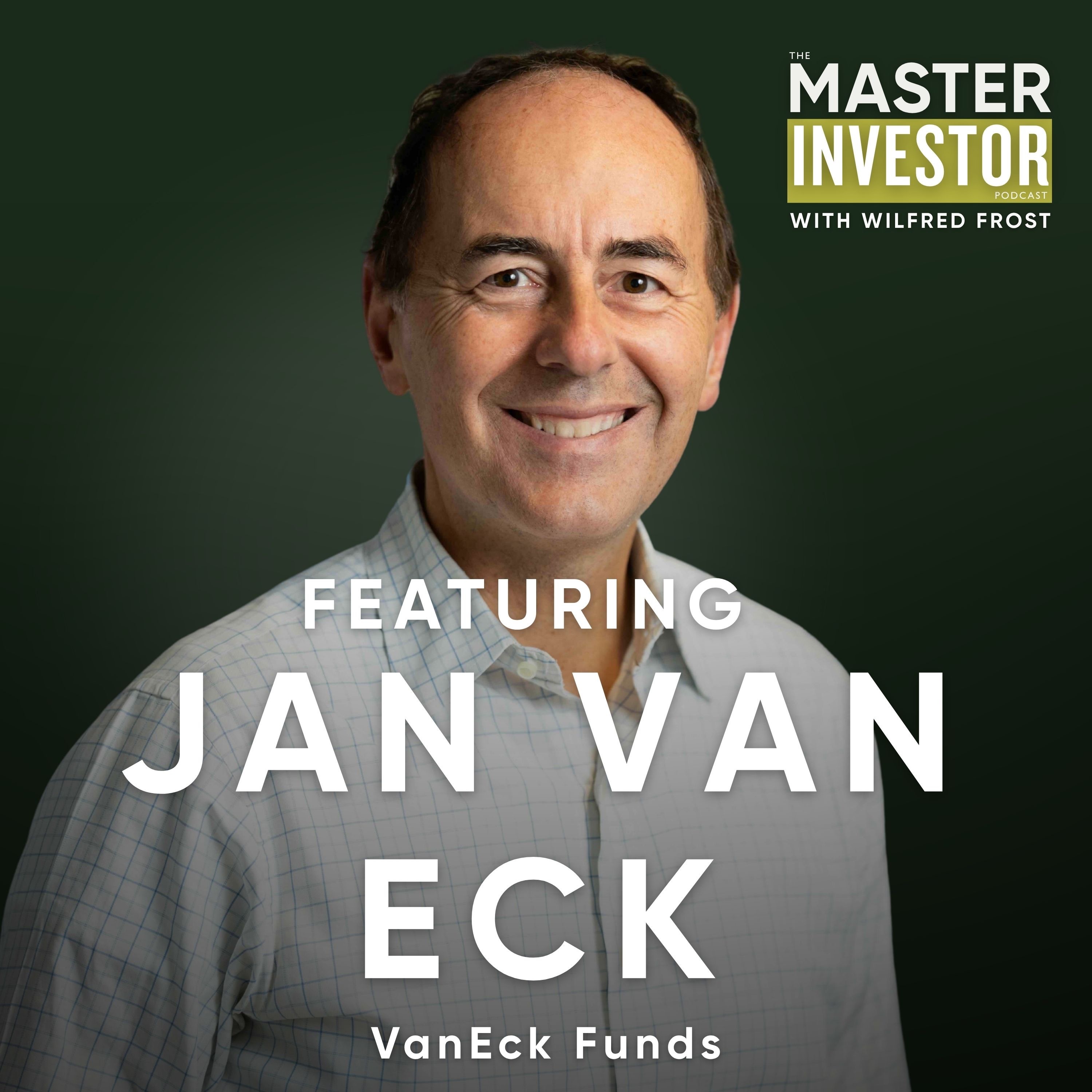
The Master Investor Podcast with Wilfred Frost
Memory Is A Bubble, But Nvidia Protected – Jan Van Eck On Semis Surge
00:53:52
Loading summary
Transcript103 lines
- [00:00]
Jan Van Eck
Well, what I would say within the AI ecosystem, Wilfred, there are bubbles, to use a word, that probably don't like that much. Right. I do think that the memory specific pocket is a moment in time. You know, one hates to call a top when something is like this. But I personally am wary about the memory stocks because in the medium or long term they don't have quite the competitive moat I believe that Nvidia does. I think we're in what we call a crypto winner and I don't think it's coming back. Like, I just don't think a lot of those projects and softwares will be at all interesting or alive in five or ten years from now. So the concept of blockchain and stablecoins are definitely there and bitcoin is there, but a lot of other parts of the ecosystem are just to me going away. It's such a big company, SpaceX, that we're glad as ETF sponsors to have it in the public markets. As you said, the amount of money here is absolutely staggering, right? It's just staggering. You're talking about cumulatively hundreds of billions of dollars. It's just the waves of liquidity that are going to be sloshing through the economy. I think, think will, you know, they'll be positive short term for economic growth and I think they will be absorbed.
- [01:30]
Wilfred Frost
Welcome to the Master Investor Podcast with me, Wilfred Frost, where we celebrate and learn from the success of the greatest
- [01:36]
Podcast Host / Interviewer
investors, business leaders and politicians in the world, giving you, our listeners, the edge.
- [01:42]
Wilfred Frost
The Master Investor Podcast is sponsored by LSEG Interactive Brokers, the World Gold Council and BMY Investments. Please do remember the views expressed in this podcast are for general information purposes only. Nothing in the podcast constitutes a financial promotion, investment advice or a personal recommendation. More on that in the show notes.
- [02:06]
Podcast Host / Interviewer
My guest today is Jan Van Eck, the president, CEO and owner of Vaneck and its associated companies, leading the asset management firm and ETF giant that was originally founded by his father in 1951. He has grown it to the Goliath that it is today, especially in the ETF industry with $225 billion of AUM. And he is a regular podcast participant, always sharing his opinions loud and clear, which we very much welcome here. Jan.
- [02:40]
Wilfred Frost
Welcome to the Master Investor Podcast, Wilfred.
- [02:43]
Jan Van Eck
It's great to be here for the first time with you.
- [02:46]
Podcast Host / Interviewer
I wanted to just jump straight in to the kind of ETF that I think is fair to say has really driven a lot of your performance in recent years, but is right at the center of everything in markets right now. And that is the smh, of course, focusing on the semis, which has had unbelievable performance of late. I think I'm right in saying it's
- [03:08]
Wilfred Frost
now $65 billion in AUM, is that right?
- [03:12]
Jan Van Eck
Something like that, yeah.
- [03:13]
Podcast Host / Interviewer
And obviously is now the go to place for people that want exposure to the area. Year to date it's up 58%. Over 12 months it's up 135%. Almost more impressive than that since inception
- [03:29]
Wilfred Frost
it's up 29% per annum.
- [03:33]
Jan Van Eck
That's crazy, right?
- [03:35]
Wilfred Frost
Unbelievable.
- [03:36]
Jan Van Eck
And that's really hard to do on a compounding basis. We should retire right now.
- [03:41]
Podcast Host / Interviewer
Yeah, exactly. Tap out now. But I'm sure you won't and that's why you're showing up for this podcast. But in the last year or so,
- [03:48]
Wilfred Frost
how much of that is price performance
- [03:50]
Podcast Host / Interviewer
versus inflows to get it to 65 billion?
- [03:53]
Jan Van Eck
Oh, price. A lot is price performance. I mean, I can't imagine that more than 10 or 20% in the last 12 months has been inflows.
- [04:03]
Podcast Host / Interviewer
That's interesting. I would have thought there was at least a significant more of inflows than that. And what do you think has been driving it? I mean, maybe it's a simple question, but is it the AI theme? Pure and simple?
- [04:16]
Jan Van Eck
Yeah. I mean, listen, I think the Vaneck investment philosophy is to try to take a big picture macro view. I call it 10 year macro. And what I mean by that is in 10 years, looking back in 2036, we were going to look back and say what are the very biggest themes affecting the world and therefore financial markets? And that hopefully filters out a lot of noise. But I think what we're left with is three things at least. AI, the rise of India and then the over borrowing by the us, your country, the UK and Japan leading the way. I would say. So yeah, from the AI perspective it's pretty simple. We have demand for compute up here, for this wonderfully efficient new technology and supply here. And so everything is. And the semiconductor is at the heart of that. Obviously I drill down a little bit further towards Nvidia. So one of the reasons our ETF has outperformed other semi ETFs is that it only focuses on the top 25 stocks and it allows the largest holding to rise to 20%. So it's really been riding the Nvidia train, if you will. And Nvidia itself is a whole separate podcast. Right. Of the incredible performance. So are we comfortable, I ask myself, with semiconductors today in Nvidia and I am. One never knows if a company can lose its competitive moats, but I think Nvidia will definitely be one of the leaders ten years from now, partially because it's the kind of mainframe of AI, if you will, not just a single chip manufacturer, GPU manufacturer like it used to be, which was not only cyclical but also highly competitive. And so, you know, I think Nvidia, with its software and its cost advantages that it has not only in the scale of production, but also because it produces more efficient chips per dollar of electricity or pound then I think, and with forward earnings only, you know, kind of in the low 20s, so all of those things. Even though Nvidia hasn't been the hottest stock in smh, our semiconductor ETF over the last nine months, I think it's a very solid piece of your portfolio. Sorry for the long answer.
- [06:49]
Podcast Host / Interviewer
No, no, I love it. And I mean Nvidia, I was looking at your most recent disclosure on this, I think is at 17% of it at the moment. TSMC is next at 9% and want to sort of dive into those in a second and totally acknowledge your leading point there, that, that you get that significant exposure to Nvidia and others. But, but it is interesting in the last, certainly this year, but as I think you just said, nine months, that it's not been driven by the likes of Nvidia. We always talk about whether an industry is going to be winner takes all or winner takes most.
- [07:25]
Wilfred Frost
And for a large part of the
- [07:27]
Podcast Host / Interviewer
last few years, I think it's fair to say that a lot of the semis were kind of left behind by the AI theme until recently.
- [07:35]
Jan Van Eck
Absolutely. I mean, the methodology of ReTF and some of it was thought and some of it was luck, Wilfred. But when you only pick the top 25 names, what's ended up happening, at least in this era of investing, I'll call it the last 15 or 20 years, is that large caps have really led the way. So by only having 25, there were probably. Well, there definitely are well over 100 semiconductor companies. By filtering out the bottom ones that were in more competitive spaces, you eliminated that drag, if you will. Now, that's not always true for all periods of time in investing, but over this period of time, it's really leveraged into these bigger winners.
- [08:24]
Wilfred Frost
In the short term, though, year to
- [08:26]
Podcast Host / Interviewer
date up 58%, clearly it's broadened out enormously. The memory stocks have been on a tear.
- [08:32]
Wilfred Frost
Can that be sustained?
- [08:35]
Jan Van Eck
Well, I, I doubt the perform. I mean, we just, we've just had historic performance in the month of May. So I, I doubt that's going to continue. But I don't think. See again, this is where I get to this kind of super macro view. If demand is up here and supply is here, then we're not in an irrationally priced market because the capital markets are telling entrepreneurs, come here, we need your capital, we are valuing your capital because we need to build out AI compute centers. And that's just not surprising. I think the reason that our way of looking at the markets with this 10 year view can work is because humans have this bias towards looking backwards. And when big trends happen, whether it's the rise of a country or the rise of a major technology, we just can't look backwards the last prior quarters of company earnings or a prior use of technology to really understand the scale of the build out. Now that's not always true. There are a lot of fake fads and technologies that don't play out. But this is one that clearly is grabbing all global markets by the throat and shaking them up.
- [10:03]
Wilfred Frost
In terms of just one final short
- [10:05]
Podcast Host / Interviewer
term question on this, you look at the Kospi, the Korean index, another all time high today. It's tripled in the last 18 months, which is just extraordinary for a national index. And it's been driven really by Samsung and SK High Hynix. The index itself was up 12% one day last week. Does that make you worry about the opposite? About what we saw say in late 2021 before we saw a big pullback in 2022 when you had sort of meme stocks going through the roof. I know all of these memory stocks, those two in particular have seen extraordinary EPS upgrades. It's very different from a, from a sort of meme stock type frenzy. But are there some similarities that flash read to you?
- [10:55]
Jan Van Eck
Well, what I would say within the AI ecosystem, Wilfred, there are bubbles, to use a word that probably don't like that much. Right. So going back to the end of last year, the question was what was the financial sustainability of the OpenAI ecosystem? Right. OpenAI as Chad, it's one of the leading model companies. Was Claude going to leapfrog it? And so the company is in the OpenAI ecosystem I call it. I mean that's obviously only a very loose description. Oracle that had leveraged into building Compute for them and Core Weave were both down 50%. So even within this sort of broader trend you will find pockets or that was a company specific pocket to your question. I do think that the memory specific pocket is a moment in Time. You know, one hates to, to call a top when something is like this. But I personally am wary about the memory stocks because in the medium or long term, they don't have quite the competitive moat. I believe that Nvidia does. And so I think entrants will come into that memory. There's no doubt there's a shortage right now, and that's giving them pricing power. Most of the reason that their. Prof. Are exploding is not because they're selling a lot more. They have limitations. It's because they have increased their prices. And that means that other companies that use that memory are going to be looking to economize on the use of it. So I'm with you. It feels bubblicious. And so it's not something that we're reducing our exposure in the memory space for our actively managed funds.
- [12:45]
Podcast Host / Interviewer
Nvidia's 17%, I think of the SMH, the next biggest TSMC, then followed by a lot of those big US names. Intel, Broadcom, AMD, Micron, Texas, Qualcomm, they're all 6 or 7%. Does TSMC have a similarly defensible moat as Nvidia? Slightly different, but similarly defensible.
- [13:05]
Jan Van Eck
I mean, yeah, it seems not only do they have the manufacturing capability, but they also have the capital to build these very, very expensive sort of manufacturing, chip manufacturing facilities. I would guess that, you know, one of the advantages that Nvidia has, ntsmc, is because they are working with broad swaths of the ecosystem. You know, kind of basically everybody, they are seeing where the technology is going in terms of customer needs. And so I, I think most people would say that TSMC will be, they'll be there in 10 years. They'll be a surviv.
- [13:51]
Wilfred Frost
This episode is brought to you by elseg, the leading global financial markets infrastructure data and analytics provider. To learn more about how ELSEG connects businesses, investors and markets worldwide, visit elseg.com this episode of the Master Investor podcast with Wilfred Frost is sponsored by BMY Investments, a trusted partner for many delivering financial solutions to investors, investors and institutions worldwide. This sponsorship does not constitute financial advice.
- [14:32]
Podcast Host / Interviewer
You mentioned already that the likes of Oracle or Core Weave pulled back significantly from a late October last year high down to the sort of March Iran war low. Oracle Halving, which is pretty significant given its size. And I heard you on other podcasts saying, therefore you don't need to worry about the AI bubble overall because it kind of already bursts. How do you get conviction to reload on the right names in those moments,
- [15:02]
Wilfred Frost
particularly given that such A big portion
- [15:05]
Podcast Host / Interviewer
of what we're talking about isn't listed yet. So you're kind of playing by proxy throughout that process.
- [15:13]
Jan Van Eck
Yeah, this is going to sound very much like or an ETF sponsor, but a diversified approach is definitely the way to go from a company perspective. You know, timing wise, when you're in the middle of a trend like this, you'd rather buy during a pull off pullback rather than leap in right now. Right. And that's. We talked, you know, several minutes ago about the flows into smh and I think a lot of the assets of the fund are people that have bought many years ago and are just letting the appreciation work. And I think that's healthy in a way that there's not a lot of quick money chasing it now. There is money chasing the memory stocks and they will chase the hot dots in the ecosystem to your point before, but I think overall we're still overweight semiconductors in our broad portfolio models, but we're itching to take a little profits here.
- [16:22]
Podcast Host / Interviewer
Let's talk more broadly now about Vaneck, about the business had to dive in on the SMH initially, but I hadn't realized this, I must admit before prepping that while the firm was founded in the 1950s, it only really got into the ETF game in the early 2000s.
- [16:42]
Jan Van Eck
2006. Right. We're 20 years into the ETFs.
- [16:46]
Podcast Host / Interviewer
Yeah, I hadn't realized that. It's now obviously a big, the biggest portion of your business, right?
- [16:52]
Jan Van Eck
Yeah. Oh, by, by far, I mean it's over, I think 95% of assets. Even though we do have an active, you know, we have active business and it's so specialized in gold mining resources and emerging markets. But it's important to us. I sit with our active portfolio managers.
- [17:11]
Podcast Host / Interviewer
It's interesting because we had Jeremy Grantham on recently and refer listeners back to that episode and he was one of the very first proponents of ETFs and he talked very warmly about the impact Jack Bogle of Vanguard had had on the industry and the wonderful mission that he had to, you know, reward his employers, his employees if they managed to lower the costs for customers. And that, that was a kind of new thing when, when Vanguard were driving, driving that, you know, 50, 50 or so years ago. Is that a core theme for you as you've driven this ETF business is, is ultimately, if you deliver for the, for the customer and lower costs that it will ultimately long term pay for you.
- [17:59]
Jan Van Eck
It's a scale game for sure. I think that especially in the Privates area and hedge funds. Active management can be a diseconomies of scale game. What I mean by that is if you just have too much money, you can't run an early stage venture fund or a small cap fund. They are what people call capacity constrained. You just can't manage too much money on it. ETFs are the opposite. They're a scale game. So the more aum, the more you can service a broader swath of clients. And then we don't compete with Vanguard in the core of people's portfolios. But for the specialty areas where we do compete, we try to have our fees be very competitive. Wilford. The last thing I would say, and that's the reason I do podcasts like this, and I was bearish on memory here, is that in the private area, the active side of the business where a money manager can align with investors or clients is to co invest. We have so many niche ETFs that we don't want to own all at the same time. So the way we try to align with our customers is by saying using our research and sharing our research what we like and what we don't like at any moment in time. So you know, that's, that's why we do these quarterly outlooks. Sometimes we're bullish about a lot of things and sometimes we're not.
- [19:36]
Podcast Host / Interviewer
And, and in terms of, you know, you mentioned the word active already and, and I guess this therefore might be stating the obvious a little bit with, with VanEck ETFs.
- [19:46]
Wilfred Frost
But, but a lot of people think
- [19:47]
Podcast Host / Interviewer
of ETFs as passive. And you either do passive ETF investing or you give your money to a money manager who does your classic active portfolio construction stock by stock. How quickly can you pull together a new ETF, for example, a new theme, or just around the ETFs that you already have. And do you define yourselves as active ETFs definitively?
- [20:16]
Jan Van Eck
Well, I think there's two ways in terms of active decision making around ETFs. One is which ETFs do you own? And if you have specialized ETFs like VanEck generally does, we have some broader ones. But do you own semiconductors or not? I mean these types of. Even though the tool may be passive in etf, but the decision how to weight them and how to time those investments is very active. And Vaneck's view, almost like the most important decision because the way we look at the world is asset allocation selection is really, really important to investors. And you know, Our history. We started the first gold fund in the United States. And you know, we think gold is a very powerful diversifier in your portfolio at various points in time. I'm not as always gung ho as my father was, but so. So that's an active decision. Then the second piece is does it make sense to have an actively managed etf? And I think that's bigger in the United States now than it is in Europe. But we do have selected actively managed ETFs. One I'll give you two examples of flavors. One is a stock picking or investment picking that targets I'll call it the crypto industry or digital assets. And we launched an Ethereum etf and I sort of started talking to clients. I realized no one had any idea what Ethereum was and why it would perform or what the risks were. And our job as a money manager is to try to describe opportunities but also risks. So I said, okay, let's pivot and offer an actively managed fund in that area so that you don't have to follow the vagaries of Ethereum or a particular Bitcoin miner or another payments fintech like Revolut. Let us follow the industry and shift things around actively. So that's like a active stock selection etf. And then we actually have an active actively managed asset allocation ETF for your real assets or commodities exposure in your portfolio. So if you don't want to choose between gold and oil or between oil and oil stocks, then we have that type of actively managed etf.
- [22:37]
Podcast Host / Interviewer
And what are the tickets for each of those two?
- [22:41]
Jan Van Eck
Node N O D E is the stock picking digital assets etf. And my colleague Matt Siegel is very active on Twitter if you want to spend some time reading his daily comments on stocks in his universe. And then RAX R A A X is the real assets allocation etf.
- [23:04]
Podcast Host / Interviewer
And to state the obvious to listeners, obviously Jan has an interest in those ETFs and nothing on this podcast constitutes direct financial advice.
- [23:14]
Wilfred Frost
And just to round off this kind
- [23:15]
Podcast Host / Interviewer
of ETF industry section of the conversation, Jan, I'm interested where you stand on the risk to the overall market that has come with the growing concentration that ETFs has led to. Again, it's much more the big S P500 ETFs type thing that has led to this. Not so much the active ETFs that you're talking about, but when you see the bears use that as one of the big fears they have, do you
- [23:43]
Wilfred Frost
think there's legitimacy to that point?
- [23:46]
Jan Van Eck
Wow, we probably don't have time to talk about all the market structure impacts, but I would say, let me tell you two areas that I'm particularly worried about and it's more in the fixed income area. Number one, just illiquidity of fixed income, right? If we have a bond ETF, only 5 or 10% of those bonds in that portfolio will trade on any given day. So that means that there has to be people behind the scenes brokers making markets in those bonds. And during market crises people tend to reduce their risk and Therefore those bond ETFs can trade less efficiently. Some might say more accurately, I would probably say more accurately. But still they will trade at wider spreads, meaning more expensive to buy and sell, and they'll probably fall in price. The second thing has nothing to do with the ETF industry, but my biggest concern about financial markets, as I mentioned before, is the spending by some of the governments in the developed markets. But sticking with the ETFs, I'd worry the most about fixed income Hi guys, it's Wilf.
- [25:02]
Wilfred Frost
I hope you're enjoying this episode. Just a quick reminder to please hit follow or subscribe on your podcast or video app so that you never miss an episode. And if you've got time, please do give us a five star rating and leave us a comment. It really helps other people find the podcast too. Now back to the episode in the
- [25:22]
Podcast Host / Interviewer
last week or so. I mean today, the start of this week aside, we did see bond yields pick up quite meaningfully. The sort of US 10 year getting above 4.6% having been relatively calm at 4.3 for a while. When you see moves like that, does it remind you of that big fear that you have? That big macro fear?
- [25:44]
Jan Van Eck
Well Wilfred, as you'd guess from my kind of 10 year macro philosophy, I love charts that are multi decade charts. I always say Anything less than 10 years is a chart crime if you have the data obviously. But if not, try to find an analogy that has a longer history. And 30 year bonds for Britain and Japan were hitting multi decade highs last year and that March has continued this year. I think for slightly different reasons. In each country you have a little bit of political turmoil maybe at the top or less certainty maybe than we have. So yeah, I think that's and government bond markets are some of the weirdest, most inefficient markets in the world from my perspective because they tend to lock into a certain mindset and really become disconnected from reality. If you remember before the European financial crisis or whatever that was, where Spanish and Greek bonds had lower interest rates than German bonds. I mean that never made any sense and then suddenly boom, they became repriced dramatically. So I guess I would say what's interesting to me and telling is that bond investors are requiring higher long term yields for the UK and for Japan. I'm very nervous about the US but timing is everything in life and so I do watch the 10 year Wilfred and I'm like the most, I tend to be the worry the most about it but I also know that we're in this era where other people aren't worried about it and so we didn't break out really to kind of longer term multi decade highs and the US tenure is still in a trading range. But it's something I really watch very closely. And just just to contextualize that the U.S. budget deficit sort of peaked at 6.5% two years ago and because of Trump's tariff revenue had been declining. And I'd predicted sort of a lower 5% budget deficit this year which is still very high. It should be no more than 3% but it was headed the right way. If the US is spending half a trillion dollars on this Iran war that would suddenly catapult us to again 6.5 or 6.9% my math budget deficit. And I just can't see markets not worrying about that.
- [28:34]
Podcast Host / Interviewer
I mean it's really interesting because I think in the last two weeks we've also seen the very strong correlation we're going to. So even if it was the UK that was the trigger of the last two weeks or Japan, everyone kind of moved in sympathy because of these bad debt dynamics which I do think is interesting. Even if the US isn't in quite as perilous a position as the UK or Japan, it kind of is likely to move in sympathy if we do see the 10 year or 30 year keep rising in yield in the U.S. do you think there is a direct negative correlation with something like the smh? Even though the SMH is playing into a theme in the long term that you believe in, do you think P multiples will be depressed even in those growth areas?
- [29:19]
Jan Van Eck
100% I don't think and I haven't actually and I look forward to talking with my clients and others about what would happen if there really was a loss of confidence in the US government's ability to meet its obligations. And I don't know if there'd be anywhere to hide Wilfred. I say that well, gold is a good medium or long term hedge, but I think if everyone were running away from the Financial markets probably gold would sell off, off as well. So I'm, you know, not, I, I don't see how semis would be immune from that to a certain extent you could say, well you know, the tech sector isn't that debt dependent and so there shouldn't be the direct link. But you know, I, I think when, when everyone's running for the exits, I don't, I, I don't think that anyone was, would be able to run in the other direction.
- [30:17]
Podcast Host / Interviewer
Let's talk about the opportunities then if we do head to a more inflationary decade, which I guess is a big part of why we've seen yields move higher.
- [30:28]
Wilfred Frost
Gold you think would see some selling in the short term but is attractive
- [30:32]
Podcast Host / Interviewer
in the medium to long term. And tell me a little bit about the GDX etf, the Gold Miners etf, which obviously you guys run and has been hugely successful at just the current level of price even if gold doesn't move. Are those miners all making good profits?
- [30:50]
Jan Van Eck
Oh yeah, they're gushing cash. They finally have escaped. They were really in purgatory for the last 15 years. First of all, gold wasn't high. August institutions like the bank of England, sorry, I can't avoid this, sold gold at about $250 an ounce by the way, late 1990.
- [31:14]
Podcast Host / Interviewer
Thanks Gordon Brown.
- [31:15]
Jan Van Eck
Yeah, there was just this era that gold was not an important part of people's portfolios anyway, so that started to get reestablished. But also the companies themselves had too much debt and couldn't control their costs of production. And investors got increasingly disappointed with those companies year after year. And the valuations, if you want to call them PE ratios, kept falling and falling and I think the bottom was kind of 2016 or so. Actually gold shares went down 90% from 2011 to 2016. So in 2011 people thought, oh, post financial crisis, government's throwing money at the markets, of course gold has to benefit. And then of course it didn't. So anyway, so these gold mine companies faced a lot of headwinds and their prices really cratered, but they've really rebuilt their balance sheets. They're borrowing less money, they paid a lot of that back and they're gushing cash right now. To me gold is though a very long term trend because I just think that given what we were talking about several minutes ago, even if you're not as worried about US government spending as I am, you probably will marginally put less money in, you know, in U.S. treasuries. And so gold is just to me reemerging as the number one global currency because if you, if it's not the U.S. i don't think it's going to be China. I don't think it's going to be India. They don't, they don't even to a certain extent they have capital controls themselves. They don't want to be an international reserve currency. Right. So I think that's, you know, and they culturally be buying a lot of gold. So anyway, that's why I think gold reemerges as the number one currency. It's a multi year, multi year process. I could see it trading sideways here for a while because it had such a run last year.
- [33:18]
Podcast Host / Interviewer
And do you think it is short term correlated with the S&P 500?
- [33:24]
Wilfred Frost
Long term not.
- [33:27]
Jan Van Eck
Gold takes on different personalities at different times. It will trade with the dollar at some points, it'll trade with inflation concerns at other points. But if you buy my thesis that it's a global currency, then most of recent moves actually make sense. Meaning last year it didn't matter that US inflation was low, demand was strong for gold globally as this alternative currency. So it doesn't really matter as much what's happening in the United States. And then it makes sense that if oil, sorry, if Middle Eastern Gulf countries suddenly have their source of revenue cut off and they need to have some cash to pay their bills, they're going to sell what they can. And gold is a big deep market. So it made sense after the Iran conflict started for gold to sell off. In my, you know, kind of my view as to what the global drivers are.
- [34:32]
Wilfred Frost
This episode is sponsored by the World Gold Council, the global experts on gold. They champion gold as a trusted strategic asset, provided market leading research to help investors understand gold's role and modernize how gold is owned, traded and used. Developing industry standards and market infrastructure. Learn more@goldhub.com this episode is sponsored by Interactive Brokers. Building wealth starts with the right broker and Interactive Brokers helps you reach your goals with powerful tools, global market access, low costs and unmatched financial strength. That's why the best informed investors choose IBKR. Learn more at ibkr.com masterinvestor.
- [35:26]
Podcast Host / Interviewer
I was looking through your list of ETFs and there's quite a few others that kind of play into this hard assets inflation type exposure world. You've got nuclear uranium, NLR which is nearly 5 billion in size. You've got rare earths and strategic metals, REMX, which is 3 billion and Oih Oil Services which is 2.5 billion, which Larry MacDonald, who's been on a few times to refer people back to that episode, has been, has been talking about a lot. Is this a concerted effort in the last few years to have these types
- [36:03]
Wilfred Frost
of ETFs available to people?
- [36:05]
Podcast Host / Interviewer
Have they been around forever and just caught a bid more recently?
- [36:09]
Jan Van Eck
They've been around forever. Wilfred when we started getting into the ETF business, we drew on our strengths in global resources and gold and emerging markets. So that was the first kind of ETFs and back then there weren't as many ETFs as there are now. So like these would have been the first to market. And we said, well people like to trade oil services or people will want to trade nuclear. Nuclear took a long time. I think it was found, you know, it was a year in the second or third year we were into ETFs so something like 2007, 2008. But it was so unpopular that even five years ago there were less than $20 million in the ETF.
- [36:57]
Podcast Host / Interviewer
Wow. So it's really.
- [36:59]
Wilfred Frost
And it's gone to 4.7 billion in
- [37:01]
Jan Van Eck
five years because the policy shift was so dramatic. I've hardly ever seen anything like it. And it wasn't really discussed by politicians. But in the US under Biden, basically the Biden administration got behind nuclear and also some important democr governors. So it then became bipartisan in the US and then internationally. Even Japan and all these countries that had walked away from nuclear. Many countries have active, besides China obviously have active nuclear programs. So yeah, that's what's led to the inflows and that has mainly been inflows. Wilfred over the last couple of years
- [37:41]
Podcast Host / Interviewer
I hadn't realized the scale of it picking up to that extent. But let's talk on em a little bit.
- [37:51]
Wilfred Frost
So is this a call for all
- [37:53]
Podcast Host / Interviewer
em or India specifically?
- [37:58]
Jan Van Eck
Well, I think Sometimes I say 10 year macro and my point is that sounds a little futuristic or uncertain. I actually think some trends are further out you go are more, you can have greater conviction, greater belief. So for example demographics, you can't fight demographics. Whatever is happening now, you pretty much know what's going to happen in 10 years with respect to shrinking populations or whatnot. Right. So India, when a country does that amount of pro business reforms as India has done under Modi and continues to do it even though it doesn't make headlines in the United States at least like last year, bankruptcy law, labor law, a whole bunch of different deregulatory pro business reforms took place. There's just no country that does all these pro business reforms, regardless, that doesn't grow at a higher rate. And projections are that India will be the size of continental Europe in 10 years. So that's sort of projection number one, importantly for investors is can you make money out of that? Because GDP growth doesn't necessarily translate into profit growth or stock market returns. It just so happens that India also several decades ago pivoted to a more pro equity culture when Infosys and some of their early tech companies went public and there was a lot of wealth created. And there seems to just be a social consensus that it's okay to be rich, even very rich in India anyway. So I combine those two things. Sorry, that's my pounding the table long term kind of macro view.
- [39:53]
Podcast Host / Interviewer
Yeah. And obviously, as you say, very attractive demographics, still growing working age population, which isn't the case for the likes of China. I'm really interested in, again, this other ETF you talked about, the wide moat that, that Nvidia has and some other companies. So it's obviously something you care about and you also have specifically a wide moat etf.
- [40:17]
Jan Van Eck
Yeah. So if I asked you who had the largest number of equity research analysts in the financial services sector, you probably would not come up with the name Morningstar. But that is in fact the case. I think they're not necessarily good at marketing that fact, but they built that out. And their equity research approach is what you're talking about, which is the premise is that markets are very competitive. It's very hard for one company to have above normal profits over a longer period of time unless they're lucky enough to have some kind of competitive moat. And that could include technology, it could be economies of scale or whatever. But their approach is to reduce the universe of all companies to those that they think have a competitive moat, which is a very small percent of the universe. I would guess 5% ish. Actually. I should calculate, I should know that. But ballpark, it's around there. And then they use a valuation formula because they project forward earnings and they say, well, we'll put in this ETF the stocks that are the cheapest amongst those with the competitive mode.
- [41:39]
Podcast Host / Interviewer
And it's grown to 11 billion in AUM. Is that as steady as she goes type growth? Is it rushed to that recently?
- [41:51]
Jan Van Eck
Yeah. No, I would say it's really not fair to compare it to the S and P. But of course investors did that and for many years, for several years, it outperformed the S and P. Not just that year, but cumulatively over its whole life. So that's where most of the growth in AUM happened. It's lagged. I mean, that was really heroic to have done that in 2023, for example, which was after the tech sell off in 22 was a recovery year. So there were really some good years for that approach. It's lagged a little bit because it's missed some of the explosions in semis, believe it or not. So it's lost a little bit of its assets in the last couple of years.
- [42:49]
Podcast Host / Interviewer
Talk me through where you are in crypto and when you felt the pull or when the argument became legitimate to you to offer crypto ETFs. And I guess I'm really interested in the take up of those, like the extent to which we still have a lot of marginal first time buyers of crypto assets out there.
- [43:10]
Jan Van Eck
Yeah, so we were the first ETF sponsor to file for a Bitcoin ETF in 2017. And the reason for that was very simple. I saw it as a competitor to gold. Some of our clients, of course, bitcoin was going up much, much faster than it has recently. And so we said just like this, platinum and silver to gold, bitcoin would be an alternative. It might not replace gold, but it'd be accompaniment. So sort of fast forward to where we are today. I think Wall street in the last year or so has basically taken the best of crypto. Sort of the blockchain, decentralized visibility aspect of blockchains and some of the other 24, seven capabilities and some of the programmability of money aspects. This is a little too wonky maybe, but we love wonky in 2026. I call it the year of corporate change. Where companies like bank of New York or J.P. morgan or Cumberland Trading in Chicago, big trading firm, they're trying to create what I would call corporate chains. Right. So get the best of whatever's out there. But I still want to control the ecosystem. Right. I still want it to be the Wilfred chain. Right. Or whatever it is, because I want to keep my customers in my network. And so that's kind of where we're at, where there are companies, almost all financial companies in the US now are using. Stablecoins are one aspect of crypto and trying to kind of capture an ecosystem. I don't think that's going to work for a lot of them. But anyway, that's how the technology adoption is evolving in my view in 2026. Kind of the year of corporate chains. And the winners are relatively few. So we still. Sorry, just for the rest of Crypto tokens. I just don't. I think we're in what we call a crypto winner and I don't think it's coming back. I just don't think a lot of those projects and softwares will be at all interesting or alive in five or ten years from now. So the concept of blockchain and stablecoins are definitely there and bitcoin is there, but a lot of other parts of the ecosystem are just to me going away.
- [45:45]
Podcast Host / Interviewer
So bitcoin itself or Ethereum, the two biggest. And by the way, I love the ticker for your bitcoin ETF is HODL H O D L which made me laugh. I didn't know that was the ticker. Are they still early innings or are they now halfway through their life cycle, late cycle,
- [46:07]
Jan Van Eck
who knows? My view is that bitcoin would achieve sort of half the market value of gold because gold has gone up and the price target of bitcoin is still multiples of where it is now. I mean I would just remind a lot of us investors seem to have forgotten that bitcoin hit all time highs last year and that this is the fourth year of the halvening. And so every four years bitcoin goes down a lot and that it's down this year is not surprising. In fact we basically predicted it. So anyway, that's very.
- [46:41]
Podcast Host / Interviewer
No, it's very upfront of you to say, tell me as a CEO of a financial firm how significant you think that the legislation has been in this space. Obviously there's been two big bites at the cherry for the US on this. Is it very damaging for traditional banks and a great opportunity for companies like you or is it marginal?
- [47:03]
Jan Van Eck
I think it's marginal. So as you know, we design a Thai theme every year and kind of what I on our tie this year, besides celebrating the Declaration, signing the Declaration of Independence, we talked about the three most important things in US financial history. Alexander Hamilton, fdr, who saved the banks, and the stablecoin bill of last year because it enabled for the first time in US history the ability of a technology company to compete against the banking system. Because otherwise all our financial lives are always. You don't have a life until you have a bank account and then everything flows through your bank account. Well, now these tech giants can compete against the banks, but the banks have faced competition before. The money market fund at the end of the 1970s offered much higher interest rates than the banks were able to offer. And so the banks lost a lot of money to money market mutual funds. But they certainly survived. There was a stickiness to their customer base I just don't think will go away.
- [48:14]
Podcast Host / Interviewer
As we start to wrap up, I kind of have a couple of final questions. One is the outlook for the short term again in the next few months is obviously going to be some big IPOs. SpaceX, the one that's grabbing the attention in the short term. There are some nuances to this process that people may not be aware of quite yet. The extent to which it's going to allow insider selling quite quickly. The extent to which they're going to be rushed into the indexes, particularly the S&P 500 and that will create sort of automatic buying in a way that isn't traditionally the case. Are those, if not red flags, amber flags in any way for you or do you think that's sensible?
- [49:01]
Jan Van Eck
I'm not religious about this. It's such a big company, SpaceX, that we're glad as ETF sponsors to have it in the public markets. And I think all the steps that they're doing actually makes a lot of sense. And it's a very small amount that is initially going to list 3 to 4%. Usually if a company has that small amount of shares being traded, it won't be eligible for inclusion. So they really have to drip this out over time. And as you said, the amount of money here is absolutely staggering. It's just staggering. You're talking about cumulatively hundreds of billions of dollars. And I mean how much did we raise in tariff revenue last year? 300 billion. So it's sort of like this. It's just the waves of liquidity that are going to be sloshing through the economy I think will they'll be positive short term for economic growth and I think they will be absorbed. One of the arguments about why aren't more companies going public is the fact that active money managers like we can in our active funds can buy IPOs. ETFs can't buy IPOs. I mean I don't really buy that argument, but that's a legit argument that we have fewer IPOs because they can't be included in these indices. And I think it's good to reexamine all assumptions. And when you have a large cap, well seasoned company like this, I mean this isn't some startup with no revenue that's trading at a trillion dollars, Wilfred. Right. This is a very well established company that's enter these indices.
- [50:58]
Podcast Host / Interviewer
It's going to be fascinating, absolutely fascinating to watch the road shows, the interviews on CNBC with with Elon and others, I think it's followed probably by some big AI companies as well. So I think it's going to be a fascinating few months ahead. I look forward to seeing it unfold. Jan as we wrap up, I wanted to end with a question we ask everyone, which is, which is just quite a simple one. What is your overriding piece of investment advice for our listeners?
- [51:27]
Jan Van Eck
Ask the big questions, right? Take the macro big picture view. I think what Vaneck has done since my dad started the firm in 1955 is really just bring the perspective of Dutch and English investors that they developed four or five hundred years ago, which is look at political risk, look at countries, are they pro business? Are they likely to reward equity and financial market participation and have a discussion about asset classes? China's rising, right? How big should your allocation be? India's rising today. How big is your allocation to India? Should you just take prior historical weights or should you say, maybe I want to own more of that, maybe I will. Well, hopefully people are in the AI trade, you know, what about gold? Are you involved in gold? Should you be involved? You know, why? What's your longer term perspective to take the big picture view? And you know, we always say we're not the source of knowledge. It's great to have discussions like this and to talk with other people in the market to test your hypotheses around that.
- [52:41]
Podcast Host / Interviewer
Jan I absolutely love it. And an answer that praises, you know, the original engineer of the British is something that's going to go down well with me. And it's been an absolute pleasure to have you on the Master Investor Podcast. Jan Van Ek, thanks so much for joining us.
- [52:57]
Jan Van Eck
Thanks, Wilfred.
- [52:58]
Wilfred Frost
Next week on the Master Investor Podcast,
- [53:00]
Podcast Host / Interviewer
we'll be joined by Tom Mischer, the CEO of kbw. Make sure to tune in for that
- [53:05]
Wilfred Frost
and please hit Follow or subscribe if
- [53:07]
Podcast Host / Interviewer
you haven't done so already.
- [53:09]
Wilfred Frost
The Master Investor Podcast is sponsored by Elseguard Interactive Brokers, the World Gold Council and BMY Investments. Please do remember the views expressed in this podcast are for general information purposes only. Nothing in the podcast constitutes a financial promotion, investment advice, or a personal recommendation. More on that in the show Notes this podcast is produced by Paradigm Productions and Master Investor limited In association with Birdline Media. If you've enjoyed the show, please do subscribe on YouTube or click follow on your podcast platform, and you'll be automatically notified each time a new episode drops.