← The Master Investor Podcast with Wilfred Frost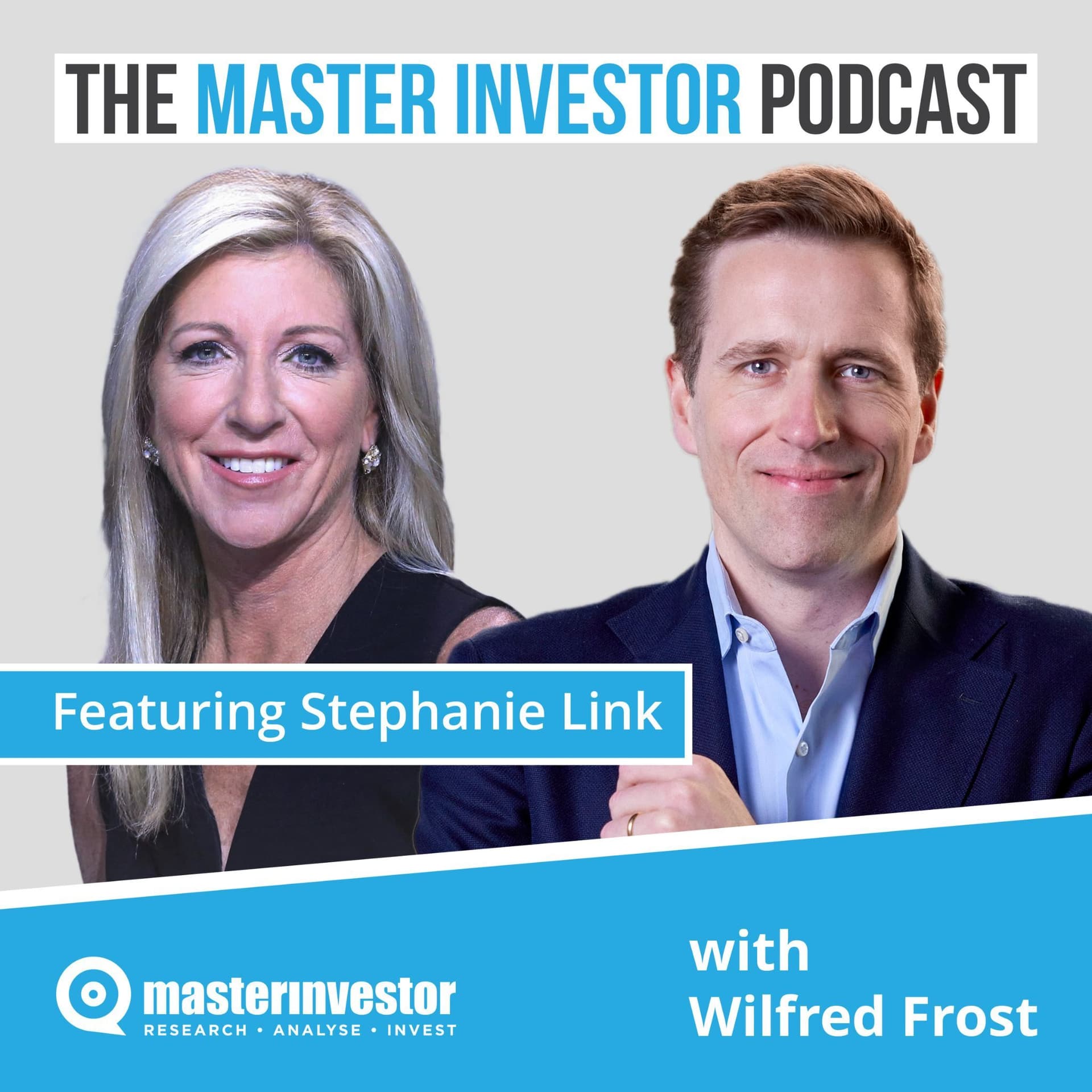
The Master Investor Podcast with Wilfred Frost
Stephanie Link: Brave, Bullish, and Beating the Noise
00:31:16
Loading summary
Transcript63 lines
- [00:00]
A
Back in April, I was like a kid in a candy store. It certainly wasn't easy to be buying. But when you have some really high quality companies down 10, 15, 20, 25% with good management teams, good market share, good balance sheets, good free cash flow, that's my cup of tea, as you would say.
- [00:18]
B
Welcome to the Master Investor Podcast with me, Wilfred Frost, where we celebrate and learn from the success of the greatest investors, business leaders and politicians in the world, giving you, our listeners, the edge. We're recording this on Tuesday 15th July. The FTSE 100 is up 10% year to date and the S&P 500 up 6.6% so far year to date. I am delighted to introduce my guest today. She's the Chief Investment Officer and Portfolio Manager at Hightower Advisors, a U.S. based wealth manager that has $150 billion in assets under management. She's a regular GU on CNBC and a very good friend of mine, Stephanie Link. A joy to see you, Steph, and welcome to the Master Investor Podcast.
- [01:07]
A
Oh, it's great to be here, Wilf. It's great to see you. Thank you for having me.
- [01:11]
B
It's really our pleasure. And I mentioned there the AUM at Hightower, $150 billion. And we were emailing before, of course, today that your personal AUM that you manage for them is $6.5 billion. And correct me if I'm wrong, but I think both of those numbers are quite a lot higher than when we last spoke on CNBC in 2022.
- [01:32]
A
Oh yeah, yeah. When I first started here at Hightower, we had my division, investment solutions, we had 800 million in AUM and that was in 2020. So today at 6.5 billion. I'm super excited. We have a lot of momentum and overall the firm does too. So it's just been really a wonderful experience to be here at this firm and also still to be on cnbc, although of seeing you.
- [01:58]
B
Well, you're too kind to say you have to say that on this podcast even if you didn't mean it, but I'll take it, I'll take it. Thank you very much. And I want to get into why and where you've built that success over the last five years at Hightower and your investment approach there and personally in a little bit. But wanted to start just broadly on the markets and we've had quite a few bearish guests so far and Jeremy Grantham outlining the bearish case very effectively last week for us. But it's good to offset that a Little bit, because you've been bullish in the short term, but also constructive on the US Markets for the last couple of years when there's been quite a few arguments against that.
- [02:38]
A
Yeah, well, I think what's interesting is despite the headlines of tariffs, of geopolitics, of inflation, what it's going to mean and is it going to come down and the Fed, are they going to cut, are they not all of these unknowns, for the most part, we still don't have a lot of answers, but we're getting through them. But despite that, the US Economy is growing two and a half percent. You know, I look at the Atlanta Fed Tracker, which is real time, what growth is, and all it does is input all the data points that we're seeing in the, in the economy. And I think that's pretty good, 2.5% in the face of all of these unknowns. And then of course, when we get through the tariffs, we're going to be able to focus on deregulation, which I think is very positive. And the tax bill that got passed two weeks ago, which I think is going to lead to significant CapEx. And so I think the growth in the economy can grow more than 2.5%, maybe it's 3. And a lot of that is driven by the US consumer. The consumer has a job. The labor market is strong, wages are actually above trend. Inflation has made progress. It may not be where the Fed wants it to be, but they have made progress and they continue to spend wealth. I mean, whether we are a nation, the US is a nation of spenders, whether we have it or not. And that consumer is 70% of our economy. So we root for the consumer. And then of course, we'll get into this in a little bit. But manufacturing, we have a manufacturing renaissance happening as well. Actually, it's around the world and it has everything to do with AI and data centers and grid repair and power. And so I feel pretty good. I kind of step back and say, why do I care about the macro? It's because it leads to better than expected earnings and earnings revisions are going higher. And our good friend Larry Kudlow taught me at least 18 years ago that stocks follow profits on the way up and on the way down. So I think the markets have a good shot at ending the year even higher than where we are.
- [04:34]
B
It's interesting, so many things to unpack there, including the nation of spenders point, which I guess certainly applies to the federal government over the last decade. And maybe we'll get to that in a Moment. But the core point here on your bullishness is it's predicated on thinking that the underlying economy in the US will continue to outperform.
- [04:54]
A
Yes, absolutely. I mean, I have to tell you, it's been very surprising to me that it's been as resilient as it has been. And I would also say that, so back in February I had 9% cash. So I wasn't super bulled up in the beginning of the year only because we just didn't know about tariffs and it was a concern of mine. But when we fell 11, 15% in April and I just kept on buying, I now only have 1% cash and that's because I really did believe that the economy was going to be resilient and that earnings would actually recover. And by the way, there's $7 trillion of cash on the sidelines. So I don't know, I'm not convinced that there were a lot of buyers back in April and May and in June and I think they're kind of frustrated, to be honest. But we have a lot of cash on the sidelines that could come in, which would be nice. It'd be a nice tailwind.
- [05:47]
B
And is the debt and the deficit a problem for you one day? Never in the short term. It sounds like you're constructive on its effect on the economy, at least in the short term.
- [05:56]
A
The spending, well, look, I think growth could in fact solve a lot of problems if we do continue to grow above trend. You know, Trend is only 1 1/2% growth. So there's that potential. There is also the potential of rates coming down eventually. If we ever get that, that would help the interest costs. But overall, I always worry about the debt and the deficits. Unfortunately, the US and the government, they kicked the can down the road and I think they're going to continue to kick the can. And unfortunately, I think my 18 year old daughter, when she's my age, she's going to have to deal with the debt and the deficits, not us, not you and I.
- [06:33]
B
When you see as we have in the last couple of days, whether it's the US yield being led by this week, the Japanese yield, when you see those kind of pickups, does it worry you or do you think ultimately kind of like we saw earlier this year in April, the administration or the Fed will step in if things get out of hand?
- [06:52]
A
I mean, I do think on the bond market that is certainly something to worry about. And look, I mean, there's a whole list of things to worry about. I worry When I don't worry because that means that we're complacent. Right. So I do think so certainly something to watch. But I do think that if we lost control of the bond market, I think the Fed would absolutely step in. They've proven that in the past and I think that they would obviously they watch the bond market very carefully.
- [07:19]
B
Let's just touch on the administration then, because it sounds like certainly as it relates to the market, your view is that net, net. They're having a positive effect.
- [07:30]
A
I think it's mixed right now, but I do think that this government is pro growth and we were all surprised that they started with tariffs and they started with such large numbers. They are walking a lot of that back and we don't know what's going on behind the scenes, but at the end of the day I think it's going to be manageable. But. But what I'm looking forward to is really the tailwinds from deregulation. It's a big deal. I know we're going to talk about the banks. It's very, very positive for the banks, but it's also positive for M and A activity in general. And so I think that that's what we're looking for. We want activity and I think we're going to get it. And then I also believe that at least getting through the tax bill, there's a lot in there, but I do think it is pro growth, it is pro business, and it will lead to continued CapEx. I mean, we talk about capex from the hyperscalers and they're spending on AI. They're going to spend $360 billion this year. Just the Big Ten hyperscalers. Can you imagine if now that companies know what to expect with regards to taxes and the policies in place, what they're going to do, they will then add to that CAPEX cycle and that is really positive. We haven't had a capex cycle in a very long time.
- [08:52]
B
It's really interesting and obviously the short term certainly seems like it'll boost GDP numbers. The question is, of course, as you say, if the debt pile has a comeuppance down the line. Let's talk about that deregulation and let's talk about the banks. An area close to my heart, as you know, Steph, and what, what great timing. We just had Wells Fargo, we just had JP Morgan and all of the banks reporting over the coming. And by the way, next week we have David Solomon on the podcast. So do send me your questions, Steph, for Him.
- [09:21]
A
That's terrific.
- [09:23]
B
And the D wrek point is so interesting because it's benefited Goldman a huge amount already just with people expecting of what's to come. So just touch on for our listeners who may be based all around the world why this is such a sort of sea change moment for the US banks.
- [09:41]
A
So the new administration, they want to obviously grow, as I mentioned, pro growth. They have put a lot of deregulations in place. So what do we expect? So number one, we had the bank stress tests that came out a week and a half ago and they were better than expected for the most part. All the banks passed and as a result they have to hold less capital and as a result they announced buybacks and they announced dividend increases. We also have other capital ratios that will be reduced as well. The slr, for example, puzzle three endgame. That's another capital requirement that will get reduced. And then there's an interesting one and I don't know if it's going to get passed and I don't know if you've heard about it, Wilf, but the SEC is working with the exchanges about lowering costs for companies to go public because we've gone from 8,000 public companies in 1996 to 4,000 today. And that just isn't efficient. And they want to change that. It's simply just too expensive to go public. And so all of these regulations get lifted. The banks are still going to have to have a lot of capital. So I don't want anyone to worry. But I do think that this is a multiple enhancing event. And so when people say that these stocks have had a nice run. Yeah, they have had a nice run. But I do think that they can continue to see multiple expansion because I think you're going to see earnings growth.
- [11:08]
B
Yes. So it's fascinating that you bring onto the multiples because I was going to come to that next. I mean these stocks have had an amazing run over the short term, some of them over the long term like JP Morgan, I mean JPM two and a half times book depending on which numbers you're looking at. And we all know that they've done a great job. Market cap's now 800 billion. It's closing in on a trillion dollars which is kind of surprised. Took me by surprise the other week and the numbers this morning were good. But you just have to step back and look at one headline factor, revenue actually declined. So again, I know you've got deregulation, I know you're constructive on the US economy, which is Important for banks. But is there a multiple that starts to worry you for a stock like J.P. morgan?
- [11:54]
A
Well, I'll tell you, I don't own J.P. morgan and I haven't in a long time because of that. Because it is so expensive. It is expensive for a reason. It's the best performing bank since 2008 by far. And they have the best management team and they do today. The earnings were pretty good. I mean, it was all driven by fee growth both in commercial and consumer as well as efficient, better efficiencies. What was disappointing was net interest income. I think you're going to see net interest income between now and the end of the year and into next year. I think you're going to see it grow and expand. We just are not there just yet. Wells Fargo had the same problem. Their net interest income was a little soft. But I do think there are other banks beyond JP Morgan that are cheaper, that have more upside than JP Morgan. So Wells Fargo, for example, Truist Financial. Truist Financial, by the way, trends at one times book, which is crazy for a bank that's really improving their overall operations. Bank of America trades a 1.2 times book. So I think there are other places within the banks that you can own and you certainly want to have exposure to either Goldman Sachs or Morgan Stanley because if you believe everything that I just said, they are really going to do quite well in terms of M and A and activity capital markets and that sort of thing. So I think you just want to be particular in terms of which ones you buy and just, I mean watch JP Morgan because they're the leader. But I have a hard time buying it at these valuations.
- [13:26]
B
And between those two investment banks you have Morgan Stanley, not Goldman.
- [13:29]
A
Yeah, Morgan Stanley. I do think the new CEO is, is, is better than, than he's getting credit for. And what was really interesting is at Morgan Stanley's financial services conference a couple of weeks ago, the CEO did speak and he was like giddy about the M and A activity in terms of the pipeline and the activity in general. And so I think that both are going to do well. Morgan Stanley has lagged Goldman Sachs. I don't think that should be the case. But they're both going to win. If I'm right, they're both going to win for sure.
- [14:04]
B
I know you also have a position in kkr, the massive private equity firm. Private equity stocks have come back, unlike some of the banks that we just touched on. Are you worried though about the sort of sea change in shift against them? After what's been a fantastic decade for the private equity companies, I think it's.
- [14:23]
A
Going to take a while. So I think you can own both. I just stepped back and, well, when I first got to Hightower, the number one question from advisors was, what are we going to do in private markets? What are we going to do with private equity? Are we going to offer options for our clients? And we are. And I think that it's part of an allocation and I think it's still a very small allocation for most people. And I think that is going to grow over time. It's a very nice diversification tool. So KKR is one of the best. And the stock, when I added to it, was down about 20% from its highs. So I wanted to take advantage of the pullback.
- [15:05]
B
And so, Steph, that's the view on the banks and financials. Just quickly, what are the other top two sector picks in the US Sounding like it'll be quite tied to the economy sectors?
- [15:16]
A
Yeah, I mean, I think there are two themes. One, it's all about within the industrials. I'm overweight. So we talked about, like, if you believe in AI, you have to believe in data center growth. And we only have 11,000 data centers around the world. So I think that has to grow. We haven't upgraded the US grid in 50 years. 75% of the grid is over 25 years old. And of course, you also need power. So all of those themes are where I want to be. That's number one. And number two, cybersecurity. I think that cybersecurity is going to be bigger than AI because of AI, AI is not secure. And so we have 4,000 companies around the world that public and private cybersecurity companies. And I think you're going to see massive consolidation and I think you're going to see the big five get bigger and make more and more acquisitions of the smaller players simply because they don't offer everything to a client just yet. And the other sad part about it is that even the big five are having cybersecurity attacks on themselves. So those are the two themes that I'm very overweight in within my portfolio.
- [16:24]
B
Let's touch on international because if I'm right, you, Hightower, you can invest internationally, but you just tend not to because of, I guess, the constructive view on.
- [16:33]
A
The U.S. you know what I do, Wilf, is I do want to have exposure around the world, but I would rather own US multinational companies that have exposure to if I want to be in Europe to Europe if I want to be in China, to China. I do own India, an ETF in India, because I do believe the demographics there are just incredible 1.4 billion people. It's going to be the third largest country by 2030 in the world and you have a Prime Minister and an administration that is very pro business and pro growth and they're going to spend $1.7 trillion between now and 2030 on infrastructure. So within India, I also like the.
- [17:13]
B
Infrastructure plays there and it's an interesting snapshot, by the way, in terms of the sort of terrible valuations we get in places like the UK because of that mindset. In the us it's where all the capital is and often whatever it is in a benchmark is irrelevant and it sort of leads to that kind of lower allocation and therefore lower prices. But they persisted for a long time and the US has outperformed. So I can understand why. Although I did say at the top, FTSE 100 is outperforming year to date. Well, hold on to that whilst we can. Let's touch on your investment style, Steph, that's led to that great growth over the last five years of your portfolio. Aum?
- [17:58]
A
Sure.
- [17:58]
B
What would you describe it as? What do you look for in a great stock?
- [18:01]
A
So a couple things. So I'm growth at a reasonable price, I'm very valuation centric and what I do is I kind of use my strategist hat to think big picture where I do I want to have exposure around the world and where do I want to overweight or underweight? Various different sectors. And then I think about themes and we talked about AI, we talked about cybersecurity, we talked about industrials and banks. Those are themes for me. And then I look at stocks underneath based on those themes. And I learned a long time ago from my good friend, our good friend Jim Cramer that it's really, really important to try to find the number one or number two player in any given industry. I used to look at number three and number four because they were always cheaper but they're cheap for a reason. And so if you can get number one on sale for whatever that reason is and they have a good management team because that's really important too, then I will, I will take a look. And that's my, the beginning of my, of my screen and my, and my filter back in April it was like I was like a kid in a candy store. It certainly wasn't easy to be buying, but when you have some really high quality companies down 10, 15 20, 25% with good management teams, good market share, good balance sheets, good for free cash flow. That's, that's my kind of, that's my cup of tea, as you would say.
- [19:21]
B
Well, I, I don't really like tea, but yes, people over here say that a lot.
- [19:25]
A
What?
- [19:26]
B
Steph, give me one of the names you picked up then in April when, when it was, you had to be brave. But it was on sale and it was a top, top quality company.
- [19:35]
A
So I bought Uber. It was down about 25% and I bought it and I never owned it wealth because it was always so expensive. But it got much less expensive. When I bought it it was trading at about 18 times EBITDA which is not cheap, but historically it's traded at 49 times last five year average. 49 times EBITDA. So I was able to get this on sale. A great management team and how do you not own a company? That is a verb, right? We always say like just go take an Uber. It's not go take a Lyft. Right. So a great management team, good new products. They're trying to improve the affordability. They are expanding into various different end markets as well. So I think that Uber was a good pick. It's up nicely actually since then too.
- [20:27]
B
Yeah, well, great timing on that one. So we're going to jump into now, Steph, your top five picks as we sit here right now. And you've already given us one of them in Uber. So next up you're going for Vertiv Holding. What is that?
- [20:39]
A
Yeah, so Vertiv liquid cooling in a data center. Right. So we're talking about data centers before and this company is going to grow Mid teens revenues 25% in earnings, incremental margins of 30 to 35%. They're going to outgrow the industry because of their product set and their product offerings because they're kind of end to end solutions if you will. And they're going to crush the competition. They're going to outperform the market by about 3 to 500 basis points and the CAGR is about 9 to 12%. So I like the story. The management team is. The executive chair is Dave Cody. He was at Honeywell for a long time when he was the CEO and the stock did amazingly well. So really good management team there as well.
- [21:27]
B
So next up you've picked Boeing and gosh, a company that has been beset with all sorts of problems during my time in the US and it looked like the problems were going away. Some came back so what's the latest on Boeing?
- [21:40]
A
So obviously they've had a lot of problems over the last several years, but they have a new CEO, Kelly Ortberg. He was at Rockwell Collins and when he was at Rockwell Collins he outperformed substantially, not only in the market, but also the industrials in general. He's an operator, he's an engineer and he's fixing the culture of the company. The problem was never demand wealth, the problem was execution and their products were not safe. And so he is fixing that, building relationships with the faa. And at the end of the day, they're a duopoly with airbus. They have 13 years worth of backlog between the two of them. And I think they're going to continue to, if they can execute, they'll continue to increase free cash flow. And that's what the stock trades on. They're at negative 2 billion in free cash flow today. I think by 2027 you're going to see $12 billion in free cash flow.
- [22:33]
B
Next up, you've gone for Palo Alto Networks. Tell us why.
- [22:37]
A
So Palo Alto has lagged a lot of the cybersecurity peers and they are going through a product transition. And that's what happens from time to time when you have new products that are introduced. You have to wait until they get there is the strong adoption. But this company is doing a really good job in terms of their new products momentum. The Stock trades at 13 times price to sales. CrowdStrike, which is the number one player that trades at 29 times price to sales. So I think there's a mispricing here and I like the management team a lot.
- [23:09]
B
They're both quite expensive though. If we're talking about price to sales, I guess 100%.
- [23:13]
A
But I really truly believe that you just buy cybersecurity and just hold it for a decade because I really do believe that this is a very long term theme.
- [23:23]
B
Well, that argument would have worked for one of your next picks, Amazon, and a lot of people obviously missed it at various times. Why is now a good time to buy Amazon?
- [23:32]
A
I think you win a lot of different ways with Amazon. There are the haves and have nots in retail. It's Walmart, Costco and Amazon are the haves. Everybody else is the have nots and wannabes. So Amazon I think is gonna do well not only on the retail side, but they're also doing a better job operationally on the retail side. So I think you're gonna see operating margin, expansion, expansion continue on the North America retail piece. I Think there's a lot of upside and untapped market share in internationally. We don't even really talk about the international retail aws. Certainly we know that cloud is still in early innings and advertising is. If you believe the economy is going to stay healthy, advertising will continue to be strong and AI will only help monetize that business. So trades are 14 times EBITDA, historical average is 18 times. Stock's only up 3% on the year. So I think you can buy it.
- [24:25]
B
You've got. It's really grown into that valuation, hasn't it, over the years? Dr. Horton tell our listeners who might not even know what they do and.
- [24:33]
A
Why it's a home builder in the Southeast and South, Central America and housing has been dreadful, dreadful. And that's because of interest rates. Interest rates need to come down for this stock to work. But the stock is trading at 10 times forward estimates. I think they have de risked the numbers. Numbers have already come down, meaning in terms of deliveries, margins and even earnings expectations. So really strong management. And this is also an issue of there's pent up demand out there. We have 5 million homes short in this country. The home builders in the US have underproduced for 15 consecutive years. They'd rather buy back their stock than actually build out because it's cheaper. And we have 5 million millennials that want to buy a first time home. 57% of Dr. Horton's revenues come from the first time buyer. So if rates come down pent up demand, I think the earnings can go much higher. But you have to be patient on this one.
- [25:32]
B
Really interesting. Well, Steph, as we sort of come to the last five minutes or so, I want to kind of focus on you a little bit more. And you're hugely, hugely successful woman in what is a very male dominated. And I just wondered for any of our female listeners if you had tips for how they can break through, I guess the many barriers that are in front of them.
- [25:54]
A
We still have a long way to go, but we've come a long way too. When I first started wealth, we couldn't wear pantsuits. So I actually go out on the road to visit advisors and I wear a pantsuit. But no, seriously, it's really all about your work ethic and keeping your head down and working harder and smarter than the next person. And also very, very important to find mentors, whether they're men or women. You need people to help you and to coach you, to guide you, to be able to be your advocate to more senior people. But it can be done. And it's interesting on the advisor side, 94% of women out there want a female advisor. So there are opportunities out there for in a lot of different places in the financial services community. But it's just been such a pleasure getting to know people, having friends, having mentors and just learning every day.
- [26:54]
B
Well, I love hearing that because this podcast is really about learning from and celebrating the success of people in this industry as if it's a sort of mentor for the mass market, as it were. So it's really fantastic, Steph, to have you as our listeners mentor today. This week on the episode Last three questions. They're the same three questions we go to with everyone. The first one, what is the best investment you've ever made? Top stock pick or more long term investment?
- [27:23]
A
The very best is probably General electric, which about seven years ago the stock was at $6 and people thought it was going out of business. And this speaks to Larry Culp, the CEO who got to the company and he turned the company around and he split off GE Healthcare, GE Vernova, and he kept the aviation piece to himself. So he's running that right now. And as we just talked about on Boeing, Aviation is a bull market. And I do believe that they are doing all the right things that this one people thought they were going bankrupt and now all three pieces are up so incredibly that it's been just really fun to watch and to see the success. But it really does speak to management.
- [28:11]
B
Wilf fun to watch, particularly when you hold it in that regard.
- [28:17]
A
The worst, I think it would have to be Vale, which is Materials company. I thought that the materials companies with exposure to China would actually do well. Unfortunately, this company was so poorly run and this again speaks to management that the stock just didn't do what I wanted it to do. And I held onto it way too long. I was too stubborn and that I learned from that. If the story starts to kind of drift from the original reason why you bought it, that's time to move on.
- [28:53]
B
And that's the Brazilian predominantly iron ore miner, right?
- [28:56]
A
Iron ore, yeah, yeah.
- [28:58]
B
So as we wrap things up, Steph, what is for our listeners the overriding single piece of investment advice you have for them?
- [29:07]
A
So the best advice that I got from my father who was in the business, he's 87 years old, he still is in the business, he's an fa. But the best advice that I got when I graduated college, he said it's time to start to invest. And I thought, well, what even is that? And he said buy some shares every month dollar cost average in the S&P 500. It's a very broad diversified index and have Vanguard or whoever you're going to use take the money out from your bank account every month. You're not going to write the check. And he was right. I wasn't going to write the check. I was going to take that $25 and go to the bar. But it was very good advice. Whether it's 10 doll, $20 a month, $200 a month, whatever it is, start early because the lessons are compounding is so incredibly powerful and it really will eventually lead to a nice pocket of money that you just weren't really expecting and you don't have to worry about it. It's the market up, is the market down. You're going to dollar cost average and over time The S&P 500 is up about 7.7% over the long term that's the total return. You'll be very thankful that you started at an early age.
- [30:20]
B
Well Steph, it's been an absolute pleasure to have you on and if you haven't got that $25 in the for the bar, it's on me next round. We owe it to you. We owe it to you for joining us on the podcast. Thank you so much. It's been a pleasure.
- [30:35]
A
Thank you Will. Great to be here.
- [30:36]
B
Next week on the Master Investor Podcast we'll be joined by the Goldman Sachs Chairman and CEO David Solomon. And please remember that nothing on the Master Investor podcast should be considered direct financial advice. There's more information in our show Notes on that. The Master Investor Podcast is produced by Paradine Productions and Master Investor limited In association with Birdlime Media. If you've enjoyed the podcast, please subscribe and leave us a five star review. We'll see you next week.
- [31:09]
A
Sat.