← The Master Investor Podcast with Wilfred Frost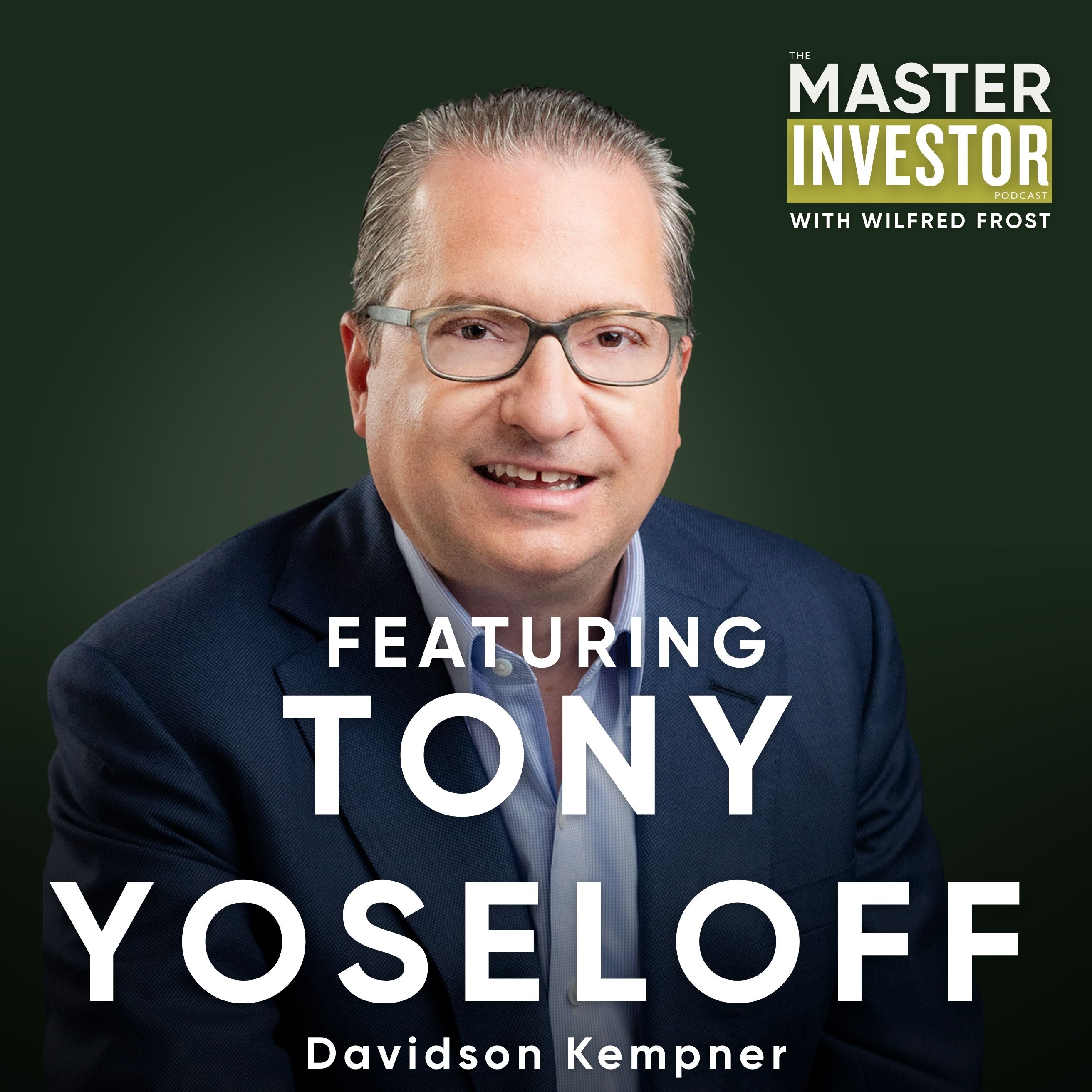
The Master Investor Podcast with Wilfred Frost
The Private Credit Unwind Is Coming – Tony Yoseloff
00:44:38
Loading summary
Transcript369 lines
- [00:00]
Tony Yosselov
It's really hard to know how long
- [00:03]
things are going to last in Iran,
- [00:06]
but I would say that it's not
- [00:08]
totally clear to me that we've killed the inflationary impacts of the early 2000s already.
- [00:15]
And so when you add onto that the potential for having an oil shock,
- [00:21]
that creates what could be potentially a very disruptive environment. Lending does go through cycles. There's no free lunch in this stuff. And you know, my truisms of investing are that capital chases returns and markets become efficient over time and just a tremendous amount of capital flow into this asset class, specifically direct corporate lending. And you know, that's just starting to catch up. True default rates in these markets are already 5 or 6% and have been the last couple of years.
- [00:48]
That's nothing to do with oil, nothing to do with Iran, nothing to do with, you know, some of the software
- [00:53]
loans that are getting a lot of press today.
- [00:54]
It's just because, you know, companies themselves have had a really hard time adjusting
- [00:59]
to higher interest rate environment.
- [01:01]
We sit at Davidson Kempner between public and private markets.
- [01:04]
We have very active businesses in in both. And you know, one of the nice things about public market investing is, you
- [01:11]
know, the market tells you every day
- [01:12]
what things are worth.
- [01:16]
Wilfred Frost
Welcome to the Master Investor Podcast with me, Wilfrew Frost, where we celebrate and learn from the success of the greatest
- [01:22]
investors, politicians and and business leaders in the world, giving you our listeners, the edge.
- [01:28]
The Master Investor Podcast is sponsored by BNY Investments, LSEG and Interactive Brokers. Please do remember the views expressed in this podcast are for general information purposes only. Nothing in the podcast constitutes a financial promotion, investment advice or a personal recommendation. More on that in the show notes.
- [01:52]
My guest today is Tony Yosselov, the executive managing member and CIO of Davidson Kempner, one of the most enduring and
- [02:01]
successful alternative asset hedge funds in the world.
- [02:04]
Some $40 billion in assets under management, predominantly in opportunistic credit and event driven investment. Tony, it is great to have you with us.
- [02:16]
Welcome to the Master Investor Podcast.
- [02:19]
Tony Yosselov
Thank you so much Wolf.
- [02:20]
It's really great to be here with you today.
- [02:22]
Wilfred Frost
Tell us about the background of the firm because it's not typical to some of the funds and CIOs we have on.
- [02:30]
Tony Yosselov
Davidson Kempner has been in business since 1983. We were originally the family office of Marvin Davidson. Marvin Davidson was a senior executive at Bear stearns in the 1960s and 1970s. When he retired, he wanted to run his money in a way that would both generate attractive returns but also be uncorrelated to markets. Marvin was an expert in arbitrage strategies from Bear Stearns, and he was joined a few years later with Tom Kempner. Tom Kempner came from a storied New York banking family, and Tom had a real expertise in trading troubled bonds from his time at Goldman Sachs and his time working with his family. And that became the origins of Davidson Kempner. We started managing money for people on the outside in 1987. And so now we've been in business for 43 years.
- [03:19]
Wilfred Frost
And when I say opportunistic credit event driven investing, is that the right framing
- [03:24]
of the focus of what you do,
- [03:25]
and for the uninitiated, tell us what that is?
- [03:28]
Tony Yosselov
Yeah, I mean, those terms mean different things to different people. On the credit side, we're best known for investing in stressed and distressed companies, but it's also providing growth capital for
- [03:40]
companies with maybe imperfect balance sheets or relatively new stories. And we do that globally, so we're investing in markets throughout the globe.
- [03:49]
Event driven investing, again, can also mean different things to different people. We're really referring to the micro events that are happening to the individual companies and not the macro events that are happening in markets. So that could be something as definitive as a merger, but it also could
- [04:04]
be much more subtle things.
- [04:07]
Companies selling businesses, companies reorganizing businesses, different
- [04:11]
larger events happening to companies, et cetera. And again, that business for us is global as well.
- [04:16]
Wilfred Frost
I want to hit now a couple of the big current environment, macro factors and how it informs what you guys are doing before we kind of dive into your way of investing. Again, in more detail in a moment, but the first one is Iran oil prices and what it might do to inflation. We've been speaking for a number of months now building up to this, and I was struck. Even before this latest conflict broke out, you were comparing the current environment to the 1970s. Clearly, we'd had glimpses of that in the last year, particularly with precious metals taking off, but we hadn't really seen the oil price spike yet. Tell me why you had been thinking that this next decade might resemble the 1970s anyway, and I guess with recent events, you must be increasing your conviction in that.
- [05:07]
Tony Yosselov
Well, well, I think there are really two pertinent decades or periods of time that you could look at in comparison
- [05:15]
to the current markets.
- [05:16]
One is the 1970s and one is the very early 2000s, which would have been the popping of Internet bubble 1.0. I think there are some similarities with
- [05:27]
one and some similarities with the other. I'd start out with some basic factors. The first of which is market concentration.
- [05:34]
So you've had incredible market concentration in
- [05:37]
equities with a handful of stocks really leading the charge.
- [05:40]
That tends to be synonymous.
- [05:42]
Now correlation is not causation, but that tends to be synonymous with high points in markets. And you can see that in the limited breadth of, let's say the S and P in both the 1970s with the Nifty50 stocks that were really leading the charge of that era, or in the early 2000s. There also are very long term implications
- [06:02]
of rates, shocks and rate hikes.
- [06:05]
You saw that in different ways.
- [06:07]
The 1970s decade produced three different attempts
- [06:15]
by the Fed to kill inflation by raising rates.
- [06:18]
Each one was cut prematurely. Each one led to even higher rates
- [06:22]
which led to kind of the legendary Paul Volcker period of time in the Fed in the late 1970s where you had short term interest rates in the low teens in terms of US treasuries AAA type debt.
- [06:35]
The end of the 1990s decade was
- [06:38]
sort of the end of a decade long period of inflationary environment in the U.S. with a risk free rate of 5 or 6% there.
- [06:46]
And it just took a very long
- [06:47]
time for that to kind of burn off. In terms of implications with where we
- [06:51]
are today, it's really hard to know
- [06:55]
how long things are going to last in Iran.
- [06:58]
But I would say that it's not
- [07:00]
totally clear to me that we've killed the inflationary impacts of the early 2000s already.
- [07:07]
And so when you add onto that the potential for having an oil shock that creates what could be potentially a
- [07:14]
very disruptive environment, I wouldn't bank on
- [07:18]
that, but it's certainly in the realm of possibility.
- [07:21]
I do think that the Western world is still adjusting to how higher interest rates going back to 2021, 2022. It's not the rate of return for Treasuries that things have reached. That's the problem by itself. If you go backwards, the 100 year history of the 10 year treasury in the United States, it's been between 4% and 5% on average. Having a risk free rate of around 4% is an average number over a very long period of time. The hard point was the 550 basis point rise in short term rates that you had in the 2021, 22 era
- [07:59]
and the steepness with which that happened
- [08:00]
over a 16 month period that was almost unprecedented. If you go back over very long periods of time
- [08:09]
again, people get used to certain things, 15%, 0% interest rates,
- [08:13]
people got used to that in the markets. They made their business decisions or otherwise based upon that. That wasn't totally irrational given the time period. People maybe thought we were going to be in an environment more like Japan where you had very, very long term, short term rates that obviously didn't materialize. And we're still digesting all the impacts of this.
- [08:31]
One thing I would note, because it's
- [08:32]
a little bit counterintuitive is you actually did make money most years in fixed income in the 1970s despite having those rate hikes in that period of time. It was a very hard time for asset classes other than commodities. But fixed income generally did okay.
- [08:46]
The reason is you eventually built up
- [08:47]
enough coupon with higher rates that it made up for bond principal losses you would take in the short term on rates going up. It was very, very tough if you were an equity investor in that period of time. Warren Buffett famously made his career buying stocks very cheaply in the 1972-74 downdraft. But there were asset classes you could do.
- [09:09]
Wilfred Frost
OK, so in terms of just where
- [09:12]
we are now, do you think that we have start even before the Iran war started, cutting interest rates too soon and I guess what are the implications of if, if that reverses or pauses? I mean, it's interesting to see Australia actually hiked rates today. Obviously that's an Iran war factor. But do you expect us to have to, to go back up again and what are the big implications of that?
- [09:36]
Tony Yosselov
I think it's in the range of possibility that that could be an outcome. That wouldn't be my prediction for 2026,
- [09:43]
but I think it's in the range of possibilities an outcome.
- [09:47]
And I think the implication of that would likely be recessionary in the U.S. i mean, I would note it's been a very long time since we've had
- [09:54]
a recession in the United States and I think that would be a tough one to swallow. I mean, one of the things I would note if you look at interest rates is just the curve has gotten a lot steeper in the last couple of years. There's obviously tremendous concern worldwide about the fiscal deficits that we have in the United States. On the other hand, it is the best alternative that's out there. And so you've had this trading range of 10 year treasuries, which is kind of what I look at as a bellwether, between 4% and 5%. Cutting short term rates will be good for a number of folks. The people it's by far the best for is the United States treasury because there's a disproportionate amount of U.S. debt, that's five years. And in, in terms of where rates are. But if inflation does wind up being even in the threes, it doesn't need to go back to the levels it was at in 2021, 22.
- [10:45]
Even if it winds up being in
- [10:47]
threes, I think it's going to be
- [10:49]
a hard environment for the Fed to stand pat.
- [10:51]
And again, I don't think that's going to be a 2026 issue, but I think it's certainly something that's in the real realm of possibility.
- [11:00]
Wilfred Frost
Just quickly, on oil prices, if they stay at this level and it stays for weeks or months, is that a real problem or is this level palatable?
- [11:12]
Tony Yosselov
I think in the short term it would be okay. And so if the definition is weeks
- [11:16]
and months, like a few months, let's say, even going into the summer driving season in the United States, I think
- [11:23]
that would be okay because people might
- [11:26]
see a light at the end of the tunnel in terms of where things were. And clearly there was a trend line downward in oil prices, which was probably deservedly so in the three or four years prior to this.
- [11:37]
But you know, the problem is that weeks and months can become months and
- [11:40]
years before you know it. I mean, it's funny I was thinking about this, or maybe not so funny in the COVID context, where there were,
- [11:47]
you know, events that we thought that were supposed to happen spring of 2020 that might happen fall of 2020 and happen in 2022 or 23, because, you
- [11:54]
know, the years go by quicker than you, than you think. And so, you know, if months become, you know, years or year, like that's just going to be a lot, a lot harder. And there just aren't easy answers to what's going on right now. There may prove to be an answer, but there's not easy answers.
- [12:17]
Wilfred Frost
This episode is brought to you by Elseg, the leading global financial markets infrastructure data and analytics provider. To learn more about how ELSEG connects businesses, investors and markets worldwide, visit lseg.com.
- [12:40]
The other big current macro related topic I wanted to touch on is private credit and I guess the unwind of private credit that we're starting to see. First question on that, Are you surprised to see this unwind that's kind of picked up a lot more coverage and pace in the last couple of months?
- [12:56]
Tony Yosselov
I'm not surprised to see it.
- [12:58]
And this is an asset class that I followed for close to 30 years at this point. So I have a lot of experience with it and I would give a Couple of answers to that.
- [13:09]
First of all, we've said repeatedly over
- [13:12]
the last few years that we think
- [13:13]
this is a mid and by private credit, I want to be clear, I'm
- [13:16]
talking about direct corporate lending. I think people use that term to represent different things and I'm not sure why. I don't believe all parts of private credit are created equal. I think there are some parts of it that might be better positioned than others in the direct corporate lending space, which is where by far the largest amount of capital has flown to. We've believed this was a mid single digit asset class in terms of expected rate of return for a very long time. There was a brief period of time in the early 2000s where it was marketed and described as a double digit asset class. But we just don't think that's the long term returns on this. If you look at where true default rates have been the last couple of years and you include what are called liability management exercises in public markets, which is when companies go to their lenders and say we don't want to pay you back in full, sometimes it's referred to by the press as creditor on creditor violence. In that case, the same thing happens in private markets too. It's just when companies go on a coupon holiday, so to speak, with the agreement of their lenders. But true default rates in these markets are already 5% or 6% and have been the last couple of years.
- [14:22]
That's nothing to do with oil, nothing to do with Iran, nothing to do with some of the software loans that are getting a lot of press today. It's just because companies themselves have had
- [14:31]
a really hard time adjusting to higher interest rate environment. A lot of these companies would be
- [14:38]
the lower quartile or half of companies
- [14:41]
that are out there. It's not necessarily some of the strength of some of the big public market companies that you have in terms of robustness of their business. So you've got a lot of companies with limited to no growth over the last four or five years in their earnings power.
- [14:54]
Then private equity firms in particular, which are by far the biggest borrower segment of this group, paid really high prices for businesses in the 2019-2021, 22 context. You take all those things together and you've got a story of default rates
- [15:10]
being much higher than were advertised.
- [15:12]
And then there's two things that happen that hurt you as a lender. One is that people don't pay you back.
- [15:17]
And number two is what you get back on the loans where you don't get paid back in full.
- [15:20]
And, and those rates have been coming down for 15 years. The recovery on first lien debt last
- [15:24]
year was 36 cents on the dollar. When I started my career in the late 1990s, the rule of thumb was 70 to 80 cents on the dollar.
- [15:31]
That's been a steady decline in what
- [15:33]
you get back on loans going over 15 years. It goes back to pre GFC, but it really accelerated pre GFC.
- [15:40]
And if you want to put this all in historic context, if you go to the 2000s decade, the average default rate on leveraged debt, leveraged loans was 5% to 6%. It's not like this is new again. What was new is you had a
- [15:53]
15 year period of time with 0% interest rates. During that period of time, borrowers could continue to roll over their debt. Lenders saw very few losses. There's this great term in the lending world. A rolling loan gathers no loss.
- [16:12]
If someone else is willing to take you out of par, you get your par and it doesn't really matter what happens to them.
- [16:17]
Eventually that comes home to. That comes home to roost.
- [16:21]
I do think that the institutional community
- [16:25]
had largely figured this out in the last couple of years. I think there had been a dramatic slowdown in institutional interest in the asset class. I think the leader in the clubhouse, so to speak, the last few years has been the retail asset class or retail investors. In terms of getting into this asset class, obviously we've all seen the headlines and that's starting to reverse itself a bit.
- [16:46]
But none of this is surprising to me.
- [16:48]
Lending does go through cycles. There's no free lunch in this stuff. And my truisms of investing are that capital chases, returns and markets become efficient over time and just a tremendous amount of capital flow into this asset class, specifically direct corporate lending. And that's just starting to catch up with where rates return are in the asset class.
- [17:08]
Wilfred Frost
I want to ask about your exposure and even the opportunities in fact that might come from it in a moment, but just quickly. There are some massive players in this like Blackstone and they've been getting creative, perhaps clever with their private credit fund. And then there's a lot of smaller players, the BDCs as well. Are they all exposed? Are they all facing significant trouble or is it going to be relatively selective?
- [17:37]
Tony Yosselov
I don't want to really comment on
- [17:38]
any one firm in particular, so I'll give a more general answer to it.
- [17:44]
So you know, first of all, in terms of the lending class, if you're doing direct corporate lending in the last
- [17:50]
five years and you're doing it in
- [17:52]
any scale, it would have been kind
- [17:53]
of hard to hide, you know, from
- [17:56]
some of these problems because we think
- [17:58]
the default rates are market wide. It's not necessarily just one asset class,
- [18:04]
I would say, in the software space in particular, you know, that's one where
- [18:07]
there are going to be some firms
- [18:08]
that have more of it and some
- [18:10]
firms that have less of it, but there's going to be virtually no firms that have none of it or almost none of it.
- [18:15]
And the reason for that is that software lending was over 30% of this asset class.
- [18:19]
If you look at advertised numbers, it's probably closer to 21 or 22%. But then if you look a level underneath the hood and you know, there's
- [18:27]
a, you know, rule in finance, you're always supposed to read the footnotes, right?
- [18:30]
And so there's a portion of that with this.
- [18:33]
If you looked at business services companies,
- [18:36]
right, A lot of those were effectively software businesses.
- [18:39]
If you looked at health care companies, a lot of those were effectively healthcare software companies.
- [18:43]
So there are companies selling software to the healthcare industry or hospitals.
- [18:48]
If you looked at technology companies, a lot of those weren't really hard technology companies, they were software companies. When you take all those numbers and aggregate them together, it's 30%, it's almost
- [18:58]
one in three loans were a software loan.
- [19:01]
If you were in the business at any scale, the chances are you had some software lending, you might have been less than 30% and therefore there were
- [19:06]
funds were more than 30%. Because obviously there were some lenders who had a strategy of only doing this sort of lending or mostly doing this sort of lending.
- [19:15]
It's not to say that every loan is going to be bad or every
- [19:18]
loan is going to not have a full recovery on it. At the end of the day, there just are obvious headwinds. When you've got coding agents out there that can do the work of what hundreds of coders used to do over a very long period of time, very quickly.
- [19:32]
Technological change is a theme in markets, both equity markets and credit markets, for
- [19:37]
a long period of time. Because I happened to have started my career in the late 1990s, I saw the Internet systematically destroy almost every business model over a 30 year period.
- [19:49]
Some of them ultimately rebounded and the
- [19:50]
business models became stronger, but many of them changed and weren't as profitable or weren't as good. And it does appear that AI is going to have some of these same implications as well. And so I do think some firms will be better prepared for this. And some firms will be worse prepared. But the bigger you are, the more likely it is that you have some market concentration in areas that would have been 30%, because how would you have avoided that in scaling your business?
- [20:16]
Wilfred Frost
So it sounds like you're implying that you've avoided exposure here. How have you done that?
- [20:22]
Tony Yosselov
Well, we don't have zero software exposure, so I don't want to represent that. I'd say we have very limited exposure to software on the credit side of our business. We do have equities businesses and convert businesses and other things that may have different positions. I look at recovery rates in these businesses. Right.
- [20:39]
And my experience over a very long
- [20:42]
period of time is we've been involved in the liquidation of many technology businesses. I mean, one of the things that I cut my teeth on very early in my career is we were the largest creditor, one of the largest creditors
- [20:54]
of some names that have long been
- [20:56]
forgotten to the dust heap, but would have been some of the big fiber names of the early 2000s. These are names like PSINet or X's Communications, and they're other ones that we were involved with that ultimately went on to be okay. But after very long periods of time,
- [21:12]
when there's obsolescence, the recovery rates tend to be worse. And the stories that people tell as
- [21:19]
to how you're going to get your money back tend not to work.
- [21:23]
So, for example, one of the things
- [21:24]
that you hear in rapidly declining businesses
- [21:26]
is there's an embedded customer base. And so the business will shrink and
- [21:31]
therefore you'll be okay as a creditor. Well, the business almost always shrinks more rapidly than you can work with that embedded customer base.
- [21:38]
And that embedded customer base is probably
- [21:40]
having the same issues with your product than the customer base that's left you, right? So that tends not to work. These businesses have limited to no hard asset value.
- [21:52]
And then, you know, another way that
- [21:53]
you actually can be successful in getting most or all of your money back as a stressed creditor is if there's
- [21:59]
a good business and a bad business, because you can shut the bad business
- [22:02]
and you can kind of reorganize around the good business.
- [22:04]
And perhaps the good business is good
- [22:06]
enough to be helpful to get most or all of your money back as a creditor. It may not be as an equity holder, but it is as a creditor. You know, most of these software businesses are a business. They're not a good business and a bad business put together. There are some, but it's not the majority of them.
- [22:21]
And so if things go bad, they go really bad. I mean, again, simplistically, when you're buying
- [22:27]
debt, whether you're buying it in the
- [22:28]
primary market and you're paying around par
- [22:30]
or whether you're buying it in the
- [22:31]
secondary market, you're typically capped out at par on the upside and you own
- [22:35]
all the downside of the instrument. You have to really be thinking about what can go wrong. Again, from my experience in many other businesses over very long periods of time,
- [22:47]
when things really start to go south, the value's not there.
- [22:51]
I'll point to one that's probably near and dear to both of our hearts, which is newspapers.
- [22:56]
There were at least newspapers that had
- [22:58]
tremendously valuable real estate or pieces of sports teams that could get sold off other ancillary assets when those businesses ultimately went bad in the early to mid 2000s. That doesn't exist for most software companies in the same way.
- [23:13]
Wilfred Frost
And just finally on this topic, I mean, to what extent is this now? I mean, you look at the s and P500, I know you guys don't just buy indices or whatever, but we're only down 3.5% this month. When we've had the war breakout, we've had issues around private credit flag up again. I mean, have these companies come clean
- [23:33]
on the scale of the troubles?
- [23:34]
Have they mark to market or not?
- [23:36]
Tony Yosselov
Well, I mean, first of all, I would separate what's happening maybe in the
- [23:40]
s and P500, which in theory is
- [23:42]
probably the 500 largest best companies in the United States.
- [23:45]
That's not entirely true. There are a handful of giants in the private markets as well. But the super majority of those companies would be the best and the brightest that the US has to offer in that area.
- [23:55]
I'd make two comments, the first of which is there's tremendous dispersion underneath the
- [24:00]
hood in the S and P in terms of single stock performance. It is absolutely true that the S and P is at or near all time highs.
- [24:10]
What's really changed is where that performance is coming from.
- [24:13]
Over the last year you had a
- [24:16]
long period of time where basically it was a relatively small number of tech stocks, culminating in the magnificent seven stocks,
- [24:23]
plus or minus that were really driving market performance.
- [24:26]
Those stocks have not done well collectively
- [24:28]
over the last 12 months.
- [24:30]
Everything else has done reasonably well. If you were to look at a comparison of the S&P 493 say so
- [24:36]
the other 493 companies compared to the
- [24:39]
Mag 7, it's done a lot better. If you look at measures of single
- [24:43]
stock dispersion so how individual stocks behave,
- [24:48]
it's been off the charts high on
- [24:50]
a 30 year look back, that means
- [24:53]
that a single stock is moving really rapidly up or down on average compared to the index itself, which seems reasonably calm because you've had this great rotation
- [25:02]
that's going on by the way.
- [25:03]
Again, you know, correlation, not causation. If you look at other periods of time that's happened Covid crisis, briefly, GFC Internet bubble 1.0 in the late 1990s and early 2000s. And so these periods of time tend to be corresponding with market tops or periods of significant market dislocation. Not what you're seeing today, but you're
- [25:26]
seeing this, you're seeing this through markets. So that's the backdrop that you have with this stuff. In terms of
- [25:36]
rotation, the public markets
- [25:38]
are leading the charge. In terms of some of the issues.
- [25:40]
Specifically in software, you've had public market
- [25:44]
companies, the best and the brightest, again, companies like Microsoft Go from 20s times EBITDA multiples to low teens times EBITDA multiples. That's not the quality of what sits in private markets. What sits in private markets is far lower quality. That might have been a 13x business at its peak in private markets and might be an eight times business today, but it's certainly there in public markets too.
- [26:11]
To say we sit at Davidson Kempner
- [26:15]
between public and private markets. We have very active businesses in both. One of the nice things about public market investing is the market tells you every day what things are worth.
- [26:25]
You may not believe that number, it might be a short term number, but
- [26:29]
fundamentally it tells you that. And the public markets have delivered very harsh messages to software companies in recent years.
- [26:41]
Wilfred Frost
This episode of the Master Investor podcast with Wilfred Frost is sponsored by BNY Investments and a trusted partner for many delivering financial solutions to investors and institutions worldwide. This sponsorship does not constitute financial advice. Hi guys, it's Wilf. I hope you're enjoying this episode. Just a quick reminder to please hit follow or subscribe on your podcast or video app so that you never miss an episode. And if you've got time, please do give us a five star rating and and leave us a comment. It really helps other people find the podcast too. Now back to the episode.
- [27:24]
Let's talk about overseas because you guys have quite a lot of capital deployed overseas. How much as we stand and do you think in general US investors are too inward looking?
- [27:39]
Tony Yosselov
So I absolutely think US investors are
- [27:41]
too inward looking and I think that's actually gotten worse over the last 10 or 15 years and my hope is
- [27:48]
it will get a lot better over
- [27:49]
the next 10 or 15 years again. When I started my investing career, that was kind of the heyday of what
- [27:56]
was then called emerging market investing. There was a lot of excitement about
- [28:00]
investing in Asia, a reasonable amount of excitement about investing in Europe as well.
- [28:05]
And then with the, quite frankly, massive
- [28:07]
outperformance of US equity markets compared to global equity markets, since the gfc, people started to look much more inward because they were earning better rates of return. We strongly believe in the diversification benefits that you get investing globally versus just investing in the United States or any one country. I know this is a global podcast and so there's listeners from all over the world for this. We believe those diversification benefits matter.
- [28:31]
I go back to investing happens in cycles, markets have cycles, but the cycles don't move evenly, you know, across asset
- [28:39]
classes or product types or around the world.
- [28:42]
I think the thing is, an investment manager is you need to have local
- [28:45]
boots on the ground, so to speak. You need to have local people with local relationships, language skills, obviously, and local knowledge.
- [28:54]
And that's how you can really be successful at that.
- [28:56]
It's.
- [28:56]
It's really hard to do just sitting
- [28:58]
in an office in New York or, or, or London with people who just grew up in the UK or just grew up in the United States. You need to have a much more diverse team in terms of where people came from and where people have relationships and knowledge, skills and that sort of thing.
- [29:15]
But we've been doing it consistently. We haven't stopped.
- [29:19]
It's not something you jump in and of and jump out of. It's been part of the ethos of our firm. We've had a office in London for over 25 years and have been investing in that market, European market, for over 35 years. And we've had an office in Asia for over 15 years and have been investing in that market for over 25 years. So it's a significant portion of who we are as a firm and what we do.
- [29:42]
We love the United States as a market and the United States is a
- [29:44]
great market as well. And we find many attractive investments here too. So I'm not trying to say it's not a great market, but I'm saying that the diversification benefits of being abroad allows us to really, we think, put together the opportunities that make for a
- [29:58]
Wilfred Frost
good portfolio, give us a country or particular investment you've made recently that people won't have been focusing on.
- [30:06]
Tony Yosselov
That's really taking off one of the things that we like to speak about.
- [30:10]
Is what's going on in India, which is one I'd make a couple comments.
- [30:13]
In India, it's a country with a
- [30:16]
growing profile and a growth story.
- [30:19]
A lot of investors have attacked that
- [30:21]
from an equity angle. Very few investors have attacked that from a credit angle. And, and there could be two reasons for that. Number one is it's still a market that's relatively small compared to some of the larger markets on the planet, although it is actually as a standalone one of the larger equity markets that's out there.
- [30:40]
But also people had very bad experiences in India as lenders 15 and 20
- [30:46]
years ago, and there was a dramatic
- [30:48]
change in the bankruptcy laws in the mid 2010s that was done actually to
- [30:53]
clean up a lot of those issues. There were a lot of zombie companies in India in that period of time where they had far more debt on them than they could ever repay. But there was a big stalemate between the sponsors who put together those companies and the creditors. And so if you were investing in Credit In India 20 years ago, you
- [31:09]
probably had a really bad experience or
- [31:11]
multiple bad experiences there. And that tends to scare people off the experience.
- [31:15]
The last 10 years with dramatic changes
- [31:18]
in the rules has been far better.
- [31:21]
And again, it's a big healthy market and it's growing.
- [31:23]
And so it's always helpful to have a tailwind behind you versus a headwind in front of you when you're investing. And so that's one where I don't think it gets enough attention relative to what's going on there. I'm not saying that we don't think equities are great there too. I'm just saying that we've been focused on the credit side.
- [31:44]
Wilfred Frost
This episode is sponsored by Interactive Brokers. Building wealth starts with the right broker, and Interactive Brokers helps you reach your goals with powerful tools, global market access, low costs, and unmatched financial strength. That's why the best informed investors choose IBKR. Learn more at ibkr.com masterinvestor.
- [32:14]
Bringing it back to Davidson Kempner and how you guys do what you do. Event driven is obviously a kind of broad phrase, and I know you're not trying to predict precisely what's going to happen in the world tomorrow with that title in mind.
- [32:29]
But is there an art to predicting
- [32:33]
events and specific things that are going to happen, or is it much more just about pricing the risks that are attached to one?
- [32:40]
Tony Yosselov
Well, it's both. And so when you're an investor in
- [32:46]
risk arbitrage strategies, which is a very old school Wall Street Strategy of basically making a prediction as to whether a merger is going to happen.
- [32:54]
You know what your upside is because you know what you're going to get
- [32:56]
paid for your stock if the company gets sold.
- [32:59]
You know what your downside is, because
- [33:01]
you spend a huge amount of time
- [33:02]
trying to figure out what you're going
- [33:03]
to lose if a merger breaks.
- [33:05]
That puts a market implied probability of success on a deal happening. And then you have your own probability
- [33:11]
of success, which is probably the art of understanding how these things work.
- [33:14]
Although you can use large amounts of
- [33:16]
data with this stuff. We have 25 plus years of data on every merger over a really long period of time that we can slice and dice in a million different ways if we want to do so.
- [33:25]
But fundamentally that's what the computer says. There's an art to knowing based upon
- [33:28]
tremendous amounts of experience, like what's going to happen and what's not going to happen.
- [33:32]
So that's a framework for investing. You can apply variants of that same framework to many other opportunities in the marketplace. You just may have more than a binary outcome.
- [33:42]
It happens, it doesn't happen. And so you have to understand on
- [33:46]
a path dependency basis, like what's going
- [33:48]
to happen to you in all those cases.
- [33:50]
And so there's an art that goes
- [33:54]
into that for sure.
- [33:55]
And I don't think there's a textbook
- [33:57]
or anything that's going to tell you to do that. Perhaps AI at some point will get smart enough to do that on its own, but I don't think it's there yet in terms of that sort of thing.
- [34:05]
But the more market experience you have, the more insights you have, the more you can see the entire playing field
- [34:10]
as opposed to what's going on.
- [34:12]
You probably can make pretty good predictions over time. And then on a probability weighted basis, you can figure out in the scenarios that you're correct.
- [34:22]
And that can mean multiple different things,
- [34:24]
what you're going to be able to make and what your downside is if you lose. And if you're good at setting odds, so to speak, in those periods of time, you can be a pretty successful
- [34:33]
investor over a period of time.
- [34:35]
The really nice thing about event driven investing versus market investing is the event is your catalyst. And so in a good market or a bad market, if the event happens, it will work out for you. You may make less money than you thought if it's in a bad market
- [34:47]
because perhaps the upside proves not to be as good.
- [34:49]
But fundamentally, the event happens, you exit the position, or the position is exited for you.
- [34:54]
Sometimes you Have a takeout and you
- [34:55]
go on that framework, that discipline of really understanding the odds.
- [35:00]
Again, a little bit of art, a little bit science gets honed over a very long period of time of doing this.
- [35:06]
Wilfred Frost
Give me an example. If we talked about the Paramount Warner Brothers discovery deal that's, that's had a lot of coverage of late.
- [35:14]
Is the art part of that gotten harder?
- [35:16]
Because there are so many random factors, whether it's which of the potential buyers the government is going to favor or whether someone's father's going to underwrite the deal or not, such that it will be accepted.
- [35:32]
Or are those all the types of
- [35:33]
factors that come up and that you basically gather data on and a gut feel of how to assess over time?
- [35:40]
Tony Yosselov
Well, I mean, look, as long as you know in advance what the factors are and you know, you think you
- [35:46]
have some ability to have predictive power,
- [35:50]
you just have to change your mindset as to what they are. I mean, I've had the benefit of being at Davidson Kempner during multiple Democratic and Republican administrations. And you know, most of antitrust law is, is sort of, you know, buy the books, textbook. You learn about it in law school, you learn about it in economics class,
- [36:10]
and they're career professionals to make these decisions.
- [36:12]
But every administration has its different political take on antitrust and applies it in different ways.
- [36:19]
And you have to be able to shift with that.
- [36:22]
I mean, in the case of the deal that you just mentioned, you know, you had two incredibly viable bidders for an asset that we viewed as incredibly
- [36:32]
scarce in terms of ability to replicate the asset.
- [36:36]
And so you didn't necessarily have to know which one of them was going
- [36:40]
to win or what the exact prices
- [36:42]
that they were going to pay for
- [36:43]
that to have been a very exciting opportunity.
- [36:47]
I do view these things probabilistically. So in any one given transaction, it may not work as well, or it
- [36:55]
may work better than you thought it might have based upon what your gut told you.
- [37:00]
But fundamentally, these things play out over time.
- [37:02]
You know, if you play the game 50 times, you know, over a 10 year period, you know, the odds do
- [37:06]
start to sink in.
- [37:07]
And if you've underwritten things well, you should do okay.
- [37:11]
I mean, that was a particularly interesting transaction because, you know, if someone hasn't
- [37:16]
started writing the book about it yet, there probably are five books that are
- [37:19]
going to come out of that transaction
- [37:20]
in the next two years, just given the cast of characters. And I think the media in general always likes to write about media companies
- [37:26]
and so
- [37:28]
those two things together.
- [37:29]
But it really is an interesting one. And you know, we're in a, we're in a huge time of change for what used to be called watching television or watching movies. And perhaps those terms won't be used
- [37:38]
in the same way in 10 or 20 years.
- [37:40]
And you know, what's going on with,
- [37:42]
you know, Paramount, Skydance and you know,
- [37:45]
Warner maybe on one end and separately what's going on with Netflix, I mean,
- [37:48]
those are certainly at the absolute forefront of it.
- [37:50]
Wilfred Frost
You know, that brings me then, you know, as we start to wrap up, Tony, to how you kind of promise your investors your scale of return. I mean, I presume it's not benchmarked, it's a real return strategy, is it? And probably quite uncorrelated. What's the promise to investors or the pitch of what this sort of strategy can or will return?
- [38:12]
Tony Yosselov
Well, we have different strategies at Davidson Kempner and so we do have strategies that are more liquid strategies and those tend to be more slow and steady wins the race in terms of what investors are looking. And so they're certainly looking for returns that are better than they might get in public markets. But you know, with very limited beta, low correlation to markets, very strong downside protection. I would say protecting capital is sort of a hallmark of Davidson Kempner in
- [38:42]
good markets and in, and in bad.
- [38:44]
And so that's one thing people are looking for. We have other strategies that are longer duration, that are largely illiquid by nature. Those are largely credit strategies, mostly opportunistic credit and asset backed lending, a smaller
- [39:00]
business in the real estate side.
- [39:01]
Investors in those areas might be looking
- [39:03]
for higher rates of return over time
- [39:08]
and they're more willing to lock up
- [39:09]
their capital to do so.
- [39:11]
And while we're not benchmark investors, I would say in general, the world of allocators is incredibly sophisticated and they're armed with huge amounts of data. And so they'll have opinions as to who's doing better than you or who you should be doing better than and what else you could have had in the portfolio. I mean, more and more allocators have fewer constraints in terms of how they can design their portfolios to achieve their objectives. So just because someone's saying, well, you did or didn't do better than the S and P or Treasuries or whatever it is, doesn't mean they don't have
- [39:44]
an opinion on how you're doing.
- [39:45]
Wilfred Frost
So, yeah, I mean, everyone analyzes, don't they? It's just not as immediately comparable, I guess. Two final questions, Tony, as we wrap up one about leadership and one about investment advice. And on the leadership, I mean, obviously you now run and have been for a while a firm that carries the names of its original founders still. And I just wonder how that has shaped what you do.
- [40:12]
Is it their values that still drive this company?
- [40:15]
Do you happen to share those values through and through or have you changed it in terms of the culture and the direction of travel since taking over?
- [40:26]
Tony Yosselov
You know, I'd say a couple of things in that. So first of all, I have the benefit where I worked personally with both Marvin Davidson and Tom Kempner. And so I do very much believe in the cultural values that we've built at Davidson Kempner over a 43 year period. Collegiality, teamwork, client first, things along those lines. But, but cultures are living, breathing things and, and our culture is not exactly what our culture was 10 years ago or 20 years ago. And that's a really good thing because, you know, you know, fundamentally our constituents are partners, are limited partners and our employees and the world at large. And people want different things from us today, internally and externally than maybe they wanted from us 10 years ago or 20 years ago. And if you don't continue to evolve what you're doing, you're not going to keep up.
- [41:14]
Wilfred Frost
And then just finally, Tony question we've asked all of our guests, what's your overriding piece of investment advice for our listeners?
- [41:21]
Tony Yosselov
You know, I'm going to share the piece of investing advice that I use
- [41:25]
internally, which is you always need to
- [41:28]
know in advance why you might lose money. And so if I were to look at like our best portfolios in terms of percentage of wins, Davidson, Kempner, they're typically in the 80 to 85% range
- [41:43]
in a given year.
- [41:44]
That means 15 to 20% of the time in a portfolio. For high performing portfolios, we might lose money. It doesn't necessarily mean every investment that you lose money in and that year will lose money, life to date.
- [41:54]
But it's just a period of time.
- [41:56]
You need to understand 1 in 5
- [41:59]
or 1 in 6.
- [42:01]
You need to understand like why you're not going to lose, why you're not going to make money in those 1 to 5 or 1 to 6 investments.
- [42:07]
Like you need to understand on a
- [42:09]
pretty precise level not just the market went down or something happened globally or something along those lines, like why could you lose money? And then what will happen to you
- [42:18]
if you lose money?
- [42:19]
How much money are you going to lose? And then you can figure out over time and we spend a lot of time tracking this Stuff like, what's your underwriting capacity? Right. You know, how often were you right with what you said you were going to be? And, you know, my theory is if you don't understand something well enough to understand in advance all the different ways that you might lose money, you either you probably shouldn't make the investment or just understand it might be a flyer, you know, versus something where it's a little bit more regimented. And that takes a lot of discipline.
- [42:48]
And, you know, look, I remember one of the first significant losing investments I had very early in my career at dk, you know, Tom and another one of our original partners, you know, went
- [42:59]
back and looked at my investing memo
- [43:01]
and they said, did he know in
- [43:02]
advance, you know, why he was going to lose money on this?
- [43:04]
And I.
- [43:05]
And I did. So it was okay.
- [43:06]
And I think that actually ultimately turned around.
- [43:08]
But, like, fundamentally, you just have to know, because otherwise, like, if you. If you don't understand the probabilistic nature of what's going to happen, like, very
- [43:15]
hard to be consistent in this business.
- [43:17]
So I think that works for everyone,
- [43:19]
you know, whether you're a retail investor,
- [43:21]
you know, at home with very few
- [43:22]
resources or at a big institution. But those are the. The words that we live by here.
- [43:26]
Wilfred Frost
It was okay in that example, albeit not ideal, but. But no very clear point there, Tony. And it's been a real pleasure catching up with you today. Thank you so much for joining us
- [43:36]
on the Master Investor podcast.
- [43:38]
Tony Yosselov
Thank you very much. I really enjoyed it.
- [43:40]
Wilfred Frost
So Tony Osloff there are from Davidson Kempner. Next week on the Master Investor Podcast, we'll be joined by the former Goldman Sachs CEO Lloyd Blankfein. Make sure to hit, follow or subscribe if you haven't done so already. And our thanks again to Tony.
- [43:56]
The Master Investor podcast is sponsored by BNY Investments, Elseg and Interactive Brokers. Please do remember the views expressed in this podcast are for general information purposes only. Nothing in the podcast constitutes a financial promotion, investment advice, or a personal recommendation. More on that in the show Notes. This podcast is produced by Paradine Productions and Master Investor limited In association with Birdline Media. If you've enjoyed the show, please do subscribe on YouTube or click follow on your podcast platform and you'll be automatically notified each time a new episode drops.