Loading summary
Transcript713 lines
- [00:00]
Stephen Rinella
Hey, American history buffs. Hunting history buffs, listen up. We're back at it with another volume of our Meat Eaters American History series. In this edition, titled the Mountain Men 1806-1840, we tackle the Rocky Mountain beaver trade and dive into the lives and legends of fellows like Jim Bridger, Jed Smith and John Colter. This small but legendary fraternity of backwoodsmen helped define an era when the west represented not just unmapped territory, but untapped opportunity for those willing to endure some heinous and at times, violent conditions. We explain what started the Mountain man era and what ended it. We tell you everything you'd ever want to know about what the mountain men ate, how they hunted and trapped, what gear they carried, what clothes they wore, how they interacted with Native Americans, how 10% of them died violent deaths, and even detailed descriptions of of how they performed amputations on the fly. It's as dark and bloody and good as our previous volume about the white tailed deer skin trade, which is titled the Long Hunters 1761-1775. So again, this new Mountain man edition about the beaver skin trade is available for pre order now wherever audiobooks are sold. It's called Meat Eaters American History the Mountain Men 1806-1840 by me, Stephen Rinella.
- [01:40]
Steve Rinella
This is the Meat Eater Podcast coming at you shirtless, severely bug bitten, and in my case, underwearless, the Meat Eater Podcast.
- [01:49]
Ed Newcomer
You can't predict anything.
- [01:51]
Stephen Rinella
The Meat Eater Podcast is brought to you by First Light. Whether you're check trail cams, hanging deer stands, or scouting for elk, First Light has performance apparel to support every hunter in every environment. Check it out at firstlight.com f I r s t l I t.com.
- [02:11]
Ed Newcomer
If.
- [02:11]
Stephen Rinella
You listen to last week's show, you.
- [02:13]
Steve Rinella
Heard me and Mo Fallon discussing my new History Channel show, which is called Hunting History. And that show premieres January 28th at 10:00pm so you heard us talk about a handful of the episodes on that podcast episode, but now you can go.
- [02:27]
Stephen Rinella
Watch the actual damn things by tuning.
- [02:29]
Steve Rinella
Into the History Channel. January 28, 10pm Eastern, 9 Central. Do your own math as you work Westward. Hope you enjoy it. You'll learn a lot. You'll have some laughs to be entertained. Check it out. Joined today by U.S. fish and Wildlife Undercover agent, retired. Right when you came in, I told you don't look retired.
- [03:00]
Ed Newcomer
Yes, retired. But I wouldn't. I wouldn't call myself an undercover agent.
- [03:04]
Steve Rinella
Well, that's what Crane called you.
- [03:05]
Ed Newcomer
Oh, all right, okay, straight up.
- [03:08]
Steve Rinella
Space Fish and Wildlife Special agent.
- [03:11]
Ed Newcomer
Yeah.
- [03:12]
Steve Rinella
Ed Newcomer. Retired because. Tell everybody why. I had no idea.
- [03:18]
Ed Newcomer
Yeah, well, I've been retired for two years, and that's only because all federal agents have to retire when they turn 57. So I hit mandatory retirement, and I.
- [03:27]
Steve Rinella
Was no old federal agent.
- [03:30]
Ed Newcomer
There are some exceptions occasionally, like if somebody's working on a particular case or something, they may extend their retirement so they can finish up that case.
- [03:38]
Steve Rinella
I see.
- [03:38]
Ed Newcomer
But it's rare. Yeah.
- [03:40]
Corinne
And you got to come in before 37, you said, right?
- [03:43]
Ed Newcomer
Yeah. You have to enter the academy honor before you're 37.
- [03:46]
Corinne
So it's not like you can do it as, like, a second. Like, you have a career and then have another career doing what you did.
- [03:53]
Ed Newcomer
I guess you did. That's what I did. But it was close.
- [03:55]
Corinne
Yeah.
- [03:56]
Ed Newcomer
I. I became a federal agent. I went. I arrived at the Federal Law Enforcement Academy literally about three weeks before I turned 37. So I just made it. Yeah. Yeah.
- [04:05]
Steve Rinella
And now you're retired.
- [04:07]
Ed Newcomer
Yeah. It's kind of nice.
- [04:08]
Steve Rinella
Except I'm so jealous, man.
- [04:10]
Ed Newcomer
The problem is, you know, you got a pretty good gig.
- [04:15]
Steve Rinella
Not as good as you got. Well, unless you're broke.
- [04:19]
Ed Newcomer
I'll tell you what. Being a special agent, most agents I know go right to mandatory retirement because they love it. They love their job. Being a federal agent is awesome, but being a special agent for U.S. fish and Wildlife Service is 10 times awesome. I. I was so. My identity was so tied up in my badge.
- [04:37]
Steve Rinella
Oh.
- [04:37]
Ed Newcomer
It. It was hard to retire. It hurt. It hurt. And I still. I'm very jealous of the. Of the people I know who are still agents, because I. I talk to them, and I'm like, oh, that sounds like fun. I want to do that.
- [04:48]
Steve Rinella
Really? So you miss it?
- [04:49]
Ed Newcomer
Oh, totally. Yeah. Every day. Every day. That's why it's fun to come talk about it with people like you, because I. It's just fun for me to reminisce. And I. I like making sure people know that, you know, these agents are out there and they're. They're doing a really good job and they're working their asses off for people.
- [05:07]
Mo Fallon
You know, it sounds like. Look, just reading from the notes that a lot of people are interested in that job.
- [05:13]
Ed Newcomer
Yeah. We get. When. You know, I was never involved in the hiring process, when we would hire the national agents, but I was always told by people at headquarters we'd get. You know, normally when we have a class of new agents, it's maybe 30 to 35 agents at a time that go through the Academy. And for those 35 seats, easily 3,000 plus applicants, easily more. Sometimes, sometimes they just cut it off because they get too many. And it's not, it becomes a burden to, for the, you know, managers to go through all the applicants to find the gyms.
- [05:45]
Steve Rinella
Hey, work with wildlife, carry a gun.
- [05:48]
Ed Newcomer
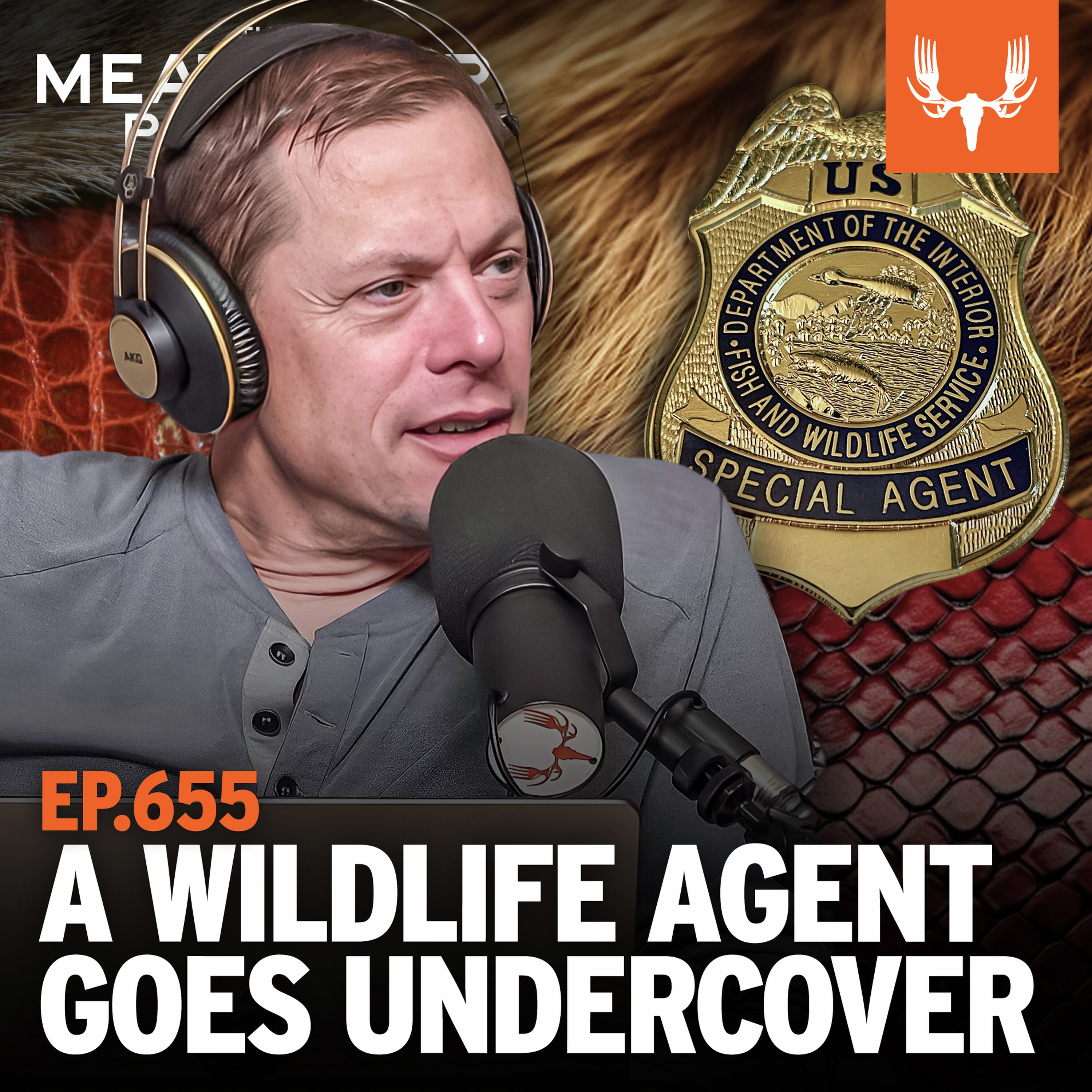
Yeah. And is that gold badge with a. With above bag? It's got a fish and a duck on it. It's pretty awesome.
- [05:54]
Mo Fallon
Is that part of the reason that you didn't start that job until 37 years of age?
- [06:00]
Ed Newcomer
Yeah, so totally. You know, this is totally straight up. I came out of law school interested in the job. I went to law school and I thought, okay, you know, finished law school? Oh, yeah, yeah. Law degree, great background to be a federal agent, law enforcement in general. And I always thought, well, if I don't make it into the academy or I don't get hired by law enforcement, I got a job.
- [06:18]
Steve Rinella
Right, you'll slum it.
- [06:19]
Ed Newcomer
As a lawyer. As a lawyer. But yeah, so I started applying pretty much as soon as I came out of law school.
- [06:25]
Mo Fallon
And what age is that?
- [06:27]
Ed Newcomer
Well, let's see, 26. You come out. Yeah, I graduated from law school 26. Yeah. So I applied the first time there were openings. So total, I, I applied four times before I got hired.
- [06:38]
Steve Rinella
Did you do the bar exam?
- [06:39]
Ed Newcomer
Oh, yeah, yeah. I'm admitted full on.
- [06:41]
Stephen Rinella
Lawyer.
- [06:41]
Ed Newcomer
Yeah, I was admitted in two states, Washington and Colorado, and I practiced law for 10 years kind of accidentally because I was waiting to get hired by the Fish and Wildlife Service.
- [06:50]
Steve Rinella
Are there a lot of agents who are lawyers?
- [06:52]
Ed Newcomer
Not a lot. There are some FBI hires a lot, but in the service, I, I'm not sure how many of us are eight or lawyers, but there's, there's quite a few.
- [07:02]
Stephen Rinella
It probably helps you when you're working.
- [07:05]
Steve Rinella
A case because you're probably able to analyze your evidence and analyze your case from a, from a somewhat objective perspective of how things are going to look in court and what the arguments are going to be. Making that up.
- [07:17]
Ed Newcomer
No, that's 100% right. When, when I did practice law, I was a prosecutor. And so what I kept seeing was, you know, I'm limited to what the detectives are bringing me. So whatever they do in their investigation, they give me their report and that's what I have to go with. Right. And every time I'd read an investigator's report, I'd be like, oh, man, that sounds like a lot of fun. And I bet I could have done that better than they did. And so when I Became an agent. I kind of brought that prosecutor background with me, and I kind of knew, all right, as I'm building the case against bad guys, this is what the prosecutor is going to want. This is what they're going to need. This is what a jury is going to need to hear, and this is how we're going to avoid losing on appeal. So it's very helpful to have a law degree, especially if you come from a kind of criminal justice background like I did.
- [08:11]
Steve Rinella
Did you have a wildlife background?
- [08:13]
Ed Newcomer
No. And that's. That's why it was hard for me to get noticed by the Fish and Wildlife Service. I finally, like. I reached out to this special agent in charge who was in charge of the West Coast, a guy named Dave McMullen, who is just an awesome US fish and wildlife agent. And I said, you know, I'm really interested in this job. I can't get an interview. I can't even get a call back. Right. And he was very nice, and he. He asked, you know, send me your resume. Let me see. He called me right back, and he said, yeah, Ed, I can tell you the reason you're not getting interviewed is there's nothing on your resume that indicates that you have any interest in wildlife. And. And, you know, it's kind of an eye opening. I don't know why I didn't think of it. I just assumed law degree was one of the educational qualifiers. I thought, you know, that's going to get me in. So he gave me some great advice. I. Here I was an assistant attorney general in the state of Washington, but on weekends, I was volunteering with the Washington Department of Fish and Wildlife game wardens and going out and doing whatever they want.
- [09:11]
Steve Rinella
Your resume?
- [09:12]
Ed Newcomer
Yeah, yeah. To do whatever they wanted me to do.
- [09:14]
Steve Rinella
You wanted the job?
- [09:14]
Ed Newcomer
I did. Well, these guys would have me out on. On the, you know, Puget Sound, middle of winter, pulling shrimp traps so they could check shrimp traps. And that's a hard. That's hard work to pull a shrimp trap by hand. I don't know.
- [09:25]
Steve Rinella
You were volunteering?
- [09:26]
Ed Newcomer
Yeah, I loved it. I couldn't wait. I couldn't wait to do it.
- [09:31]
Mo Fallon
Funny, we've all volunteered to pull a few shrimp traps out of the depths.
- [09:34]
Steve Rinella
Yeah, that sounds funny, don't it? Because most people pay to go pull shrimp pots. You've got to buy your license and everything.
- [09:41]
Corinne
Like, what made you want the. The job in the first place? Like, as a kid, were you into wildlife and hunting and fishing or.
- [09:49]
Ed Newcomer
I. I've never. I don't hunt. I Fished before, but I never got into hunting.
- [09:53]
Corinne
You just like nature and wildlife?
- [09:55]
Ed Newcomer
Yeah. Grew up in Denver and so, you know, my, my dad, mom took us camping up to the mountains all the time and I love it. I mean, you know, back in the day, we would, the whole family's car would pull over if we saw a hawk on a fence post by the side of the road. So it's kind of ingrained in us.
- [10:11]
Steve Rinella
Not shooting at it.
- [10:12]
Ed Newcomer
Not shooting at it, but.
- [10:15]
Steve Rinella
And then that's the first thing I want to get into. Yeah.
- [10:17]
Ed Newcomer
Oh, sure.
- [10:18]
Steve Rinella
Because this is the thing, Karen. Like the hawks, I gotta tell you. No, yeah, the hawk pox. But Corinne, I hope other guests aren't listening. Corinne doesn't usually get excited about a guest.
- [10:29]
Marie Paladini
That's not true.
- [10:32]
Steve Rinella
Corinne has a baseline excitement for all guests.
- [10:35]
Ed Newcomer
Okay.
- [10:36]
Steve Rinella
Corinne holds a baseline excitement for all gaps. But she had a, like a.
- [10:42]
Ed Newcomer
Speak, a spike.
- [10:43]
Steve Rinella
What was that? Speak a spike. A high spike for you. Coming on. Inspired in part by her, her discovery of roller pigeons and the trouble that roller pigeon enthusiasts find themselves in.
- [10:58]
Ed Newcomer
Yeah.
- [10:58]
Steve Rinella
And. And so I want, I want to get into this just as a way to lay the groundwork for what you, for what exactly you spend your time on, you know.
- [11:05]
Ed Newcomer
Sure, sure.
- [11:05]
Steve Rinella
So hence my joke about shooting hawks.
- [11:07]
Ed Newcomer
Yeah, no worries.
- [11:07]
Steve Rinella
I'm getting ahead of us. I'm getting ahead of us.
- [11:09]
Ed Newcomer
I got it. But to answer your question, I, I was interested in law enforcement from a real young age. I had, you know, I was one of these five year olds that ran around thinking they were going to save the family if there was a home invasion, you know. So, you know, growing up in Denver, I'm, I'm thinking I'll be a Denver cop, you know, someday. That's kind of what I figured. And then I saw at some point in my life, I realized there was such a thing as a game warden. And I thought, oh, cop for wildlife. That sounds pretty cool. I'll do that. That really interested me. And then it was until I was in college that I just literally stumbled across a job announcement for U.S. fish and Wildlife Special Agent. When I saw that, you know, it's like, oh, that's like the FBI for Wildlife. That's what I want to do. Right. You get the most jurisdiction, you have the most authority, you have the most opportunity to make a difference and do something good, you know, so kind of where I led.
- [12:00]
Steve Rinella
And then. Did you spend your whole career in la?
- [12:03]
Ed Newcomer
Yeah, I did. And that's another funny story because this going back to this, a special agent in charge, Dave McMullen, when he was talking to me about applying and how to get interviewed, he said, look Ed, you got to go to la. And I said, L. A, I don't want to go to la. I'm a Rocky Mountain boy. I want to work in the Rockies. I'm interested in, you know, Rocky Mountain wildlife issues. That's where I want to work as a special agent. He said, no, you got to go to L. A. He goes, there's this little, there's this little tiny firecracker of agent down there, a woman named Marie Paladini, She's a lawyer. You'll get along great. And that's where the action is, that's where the wildlife trafficking is. That's where all the big cases are. You got to go to LA because.
- [12:43]
Corinne
It'S a big port city.
- [12:44]
Ed Newcomer
Yeah, big port city and a big, you know, urban center where there's just every kind of culture you can imagine there. So, la, New York, Miami, if you want to be a special agent in the Fish and Wildlife Service and really learn about international wildlife trafficking and interstate trafficking, you got to go to one of these big ports.
- [13:04]
Steve Rinella
La, New York and where.
- [13:05]
Ed Newcomer
Miami. Miami's another big one.
- [13:07]
Marie Paladini
That's why we need like, you know, a prime time CSI type show.
- [13:13]
Ed Newcomer
Hey, that's. I'm all in. I'm all in.
- [13:15]
Steve Rinella
I could picture that. Yeah.
- [13:16]
Ed Newcomer
Yeah, so can I. I'm, I'm, I've, I've pitched it before, you know, like a ncis. But Fish and Wildlife, it'd be way better.
- [13:24]
Mo Fallon
Oh yeah, Superhero saving animals all over the world.
- [13:27]
Steve Rinella
I mean, come on, every episode they'd be making you resc. Cats and dogs. Well, I can picture cute little kittens and stuff.
- [13:35]
Ed Newcomer
Yeah, you know, that's actually, that's something else we should probably talk about cuz a lot of people who initially apply for the service, they. Sometimes, not a lot, but some people think that it's going to be about rescuing animals. And, and I got to tell you, in 20 years of doing that job, I, I rescued, literally rescued an animal less than half a dozen times. Because most of the time the animals you're dealing with are. They're done. Right. Even if they're alive in the trade, they're not going back to the wild.
- [14:04]
Steve Rinella
God.
- [14:04]
Ed Newcomer
And so it's, what you're trying to do is stop the wildlife crime to protect future animals, not the ones you're dealing with. Right there. So, you know, if you get upset about seeing dead animals or animals mistreated and you can't you can't translate that into, okay, I'm in law enforcement, I'll do something about this. And you're going to be emotionally crushed by that. This is not the job for you because it's not about rescuing animals.
- [14:31]
Steve Rinella
Yeah.
- [14:31]
Ed Newcomer
It's about rescuing species, but not animals.
- [14:34]
Steve Rinella
What's it, what's a case you worked? It would help people up top here. That would help people kind of best understand the work you were doing.
- [14:44]
Ed Newcomer
Yeah. And I'll give you that example, but let me just say that we have agents based all over the United States. Right. And so where you're based is going to dictate pretty much what you're doing. Right. So, for example, our agents here in Montana, you know, before wolves were delisted, they worked a lot of wolf poaching cases. They still work grizzly bear cases to determine whether or not it's self defense or not or whether it's a straight up poaching case. Agents in the Southeast work on different things than agents in the Northwest. Right. Because there's different animals there, there's different species listed under the Endangered Species act, or there's different animals trafficked. So the experiences between an agent based in Bozeman and an agent based in Los Angeles are huge.
- [15:31]
Steve Rinella
Got it.
- [15:31]
Ed Newcomer
Right. And the. I, I have never done some of the stuff that the agents in Bozeman have done. I've always wanted to, but, you know, I've never done a grizzly bear poaching crime scene because that doesn't happen in Los Angeles.
- [15:43]
Unknown
Yeah, yeah.
- [15:44]
Ed Newcomer
So anyway, you know, a typical. Excuse me, A typical case that I might have handled in LA involved trafficking of some wildlife, whether alive or dead, for commercial purposes. And so, you know, early in my career, I worked on a lot of caviar trafficking cases involving Russians. There's a lot of Russians in la and they all trafficked in caviar. Not all of them, but, you know, the caviar traffickers were Russians. And then I had an insect trafficking case, I had endangered fish trafficking case. So it, it, it's very variable.
- [16:23]
Stephen Rinella
Is the caviar, when you're working a caviar case, is it caviar coming in or caviar going out?
- [16:29]
Steve Rinella
And does caviar coming in matter to you? Because it's someone else's problem.
- [16:34]
Ed Newcomer
Yes. So with, and that's, that's actually a good point because sometimes it's animals going out. And, and we saw a change in that over the years. When I first started in the early 2000s, we were dealing with mostly wildlife coming into the United States. So things like beluga caviar out of the former Russian republics. Right.
- [16:56]
Steve Rinella
So poached there.
- [16:57]
Ed Newcomer
Yeah, exactly. And listed under the US Endangered Species act. So it makes it illegal to import or export.
- [17:03]
Steve Rinella
I got you. Yeah, that makes sense.
- [17:05]
Ed Newcomer
Yeah. So that's how we would get involved. And, and, and the United States is kind of unique because we do have the Endangered Species act, which lists animals for protection that don't live here. And not all countries are like that. We, we, we have taken an interest in helping to preserve the world's, you know, important wildlife. Tigers, for example. Right. We don't have tigers here in the wild, but they're listed as endangered under our law. So it's illegal just for someone to kill one or move it around?
- [17:35]
Steve Rinella
Never. That's never occurred to me. I had no idea.
- [17:37]
Ed Newcomer
It's kind of neat, is.
- [17:38]
Steve Rinella
Yeah, I never thought about that before. That we, we list exactly a fish in Russia.
- [17:44]
Ed Newcomer
Exactly. Yeah. And so, yeah, the idea is, you know, we want the entire world's environment to be there for everyone. When, when I worked in Africa as an agent, a lot of times Africans would, Would push back on me that Americans are too pushy about conservation. And I used to tell them, I, I'd say the whole room, I'd say, how many people have been to the U.S. very few people would raise their hand. How many people want to come to the U.S. everybody raised their hand and they'd say, well, if you come to the U.S. would you like to see bison? Would you like to see a bald eagle in the wild? Would you like to see a bear? Everybody raises their hand, right? Same thing. If I ask all you guys, hey, you want to go to Africa and see some lions? We'd all be on a plane tomorrow, right? So we want other countries in the world to protect their wildlife so that we Americans can go there and spend money to see it, hunt it, whatever. But, you know, and we want them to protect that stuff, you know, so we can go. But we're going to protect it here in the US So people from other countries can come spend money in the US and see it. And it's just, I think you, everybody in this room probably appreciates that wildlife has an intrinsic value. Right? It's just something we enjoy seeing, stalking, trapping, hunting, whatever you do. Right. But we want it to stay there. We don't want to use it up. We want it to be there. So Fish and Wildlife plays a really important role in making sure that species around the world remain wild for us. All of us.
- [19:18]
Steve Rinella
Excuse me. I was going to cough from it. Tell me about a roller pigeon, which I had never heard of before.
- [19:25]
Ed Newcomer
Yeah, so a roller pigeon is a. It's not an wild animal. It's a domestic pigeon. Looks just like the pigeon you'd see at the McDonald's parking lot, really. But they come from Birmingham, England originally. And all roller pigeons are descendants of the original Birmingham rollers. And what. What they are really is a bird that's bred to have a seizure in flight.
- [19:48]
Steve Rinella
And telling you, I have like, I've.
- [19:52]
Stephen Rinella
Had a lot of conversations.
- [19:53]
Steve Rinella
I've had pet pigeons. I have ne.
- [19:56]
Stephen Rinella
I had never. This is totally new to me.
- [19:59]
Ed Newcomer
Yeah, really?
- [20:01]
Steve Rinella
There's a bird that has synchronized. Synchronized seizures.
- [20:07]
Mo Fallon
Well, I know that I've told you my story that I shared with you before we started recording before, but I know we've had the conversation not on the. I feel like we had it on the podcast. Listen, if someone told another name for him other than roller pigeons, there's.
- [20:22]
Ed Newcomer
There's a different type of pigeon called a tumbler, but the tumbler really does its tumbling on the ground, which is kind of weird. But no, the ones that roll in flight, they're rollers.
- [20:30]
Stephen Rinella
What do you mean? They're having a seizure?
- [20:32]
Ed Newcomer
So that's the only way I can describe it is that while they're flying, if you're watching them and the guys and gals who are involved in roller pigeon hobby would. Would disagree with me, they would say we train them to do that. They don't train them to do that. Okay. There is no way they're training these birds. No, they're breeding them to have this behavior. And if you watch them, they'll fly. When a roller pigeon hobbyist or, you know, competitor is flying their birds, they fly in a kit and a kit is about 15 birds. And they'll basically, they fly in an orbit above your property. You let them out and you let them out when they're hungry. So they fly, but they're not going anywhere. So kind of come back and get fed and they fly in an orbit together. And usually when they make either a right or a left hand turn, the lead bird, there's usually a leader out in the front will be have a seizure. That's the only way to describe it. They whip their heads back, their wings lock up and they arch their backs and they start to flip backwards. And what I notice, what I think is going on is I think that you breed the leader to have a seizure on a right or a left hand turn the Other birds, you breed to have seizures when they see the leader have a seizure, and that's how complicated it can get. And these guys are very sophisticated about how they breed. And to win a competition, if all of us in this room were in a competition for. For me to win, my birds need to fly together in that kit, and they need to roll together as a synchronized seizure. So it looks like a waterfall. Yeah, it looks like a waterfall. It's really cool. And the trick, of course, is you got to make sure they'd recover before they hit the ground because they'll kill themselves. And so a lot of. A lot of birds die because they hit the ground or they hit a building before they recover from their little seizure.
- [22:25]
Mo Fallon
So how long is a normal seizure or the fall?
- [22:27]
Ed Newcomer
Seconds. Seconds.
- [22:28]
Mo Fallon
Okay. That's what I remember.
- [22:30]
Ed Newcomer
Yeah. But it looks neat, right? It kind of looks like a waterfall if they're doing it right.
- [22:35]
Mo Fallon
Yeah, I mean, it was. It was beautiful. I don't know how to describe it.
- [22:38]
Ed Newcomer
It's not beautiful really, but it's just weird.
- [22:40]
Mo Fallon
Yeah. I mean, it's. You're like, wow. I didn't know that could.
- [22:43]
Ed Newcomer
Exactly.
- [22:44]
Mo Fallon
That's a thing.
- [22:45]
Ed Newcomer
That's a thing. And then they're graded based on how well they roll. And then somebody. This. This thing's a world competition. There's something called the World Cup. And if you win the World cup, you can sell your pigeons to other. They're good breeders. Right. Because you've got high quality rollers. So you can. You can then start selling the birds that you breed as breeders to other people who want to compete and have this status.
- [23:08]
Marie Paladini
How much money is in that?
- [23:09]
Ed Newcomer
Like, they don't make any money in the competitions. They make money selling their birds. Yeah. So this is a status thing, you know, you. You want to be the World cup champion as a status deal in the.
- [23:21]
Steve Rinella
US what is the roller capital?
- [23:23]
Ed Newcomer
You like the city?
- [23:25]
Steve Rinella
Yeah. Like, where is it big?
- [23:26]
Ed Newcomer
It's big in all over. It's kind of interesting. It's big in inner city L. A. You know, Mike Tyson has roller pigeons. He's in.
- [23:36]
Stephen Rinella
I knew he was a pigeon.
- [23:37]
Ed Newcomer
Fancy roller pigeons. Yeah, he's into rollers.
- [23:40]
Marie Paladini
We're going to go down a deep.
- [23:43]
Ed Newcomer
Rabbit hole, you know, downtown New York City. On the roofs of houses, you'll see a roller pigeon setups.
- [23:50]
Steve Rinella
But when you see.
- [23:51]
Stephen Rinella
When I see a pigeon keeper.
- [23:53]
Steve Rinella
What was that movie with Forest Whitaker? He had pigeons. Phil, Phil, Phil. Nope, I don't got you on this one. Come on, dude. It's got the word ghost in it.
- [24:02]
Ed Newcomer
Ghost.
- [24:03]
Corinne
Ghost Dog.
- [24:04]
Steve Rinella
Wouldn't have it.
- [24:06]
Ed Newcomer
The.
- [24:06]
Corinne
What's his name?
- [24:07]
Steve Rinella
Yeah. Got famous.
- [24:08]
Corinne
Jim Jarman.
- [24:09]
Steve Rinella
Got famous from the Crying Game.
- [24:11]
Marie Paladini
The Way of the Samurai. Ghost Dog.
- [24:13]
Steve Rinella
Yeah.
- [24:14]
Corinne
Yeah.
- [24:14]
Stephen Rinella
So if you see a pigeon fancier.
- [24:17]
Steve Rinella
I always called them pigeon fanciers because I didn't know about this whole other aspect to it.
- [24:20]
Ed Newcomer
Yeah.
- [24:20]
Steve Rinella
Are they mostly roller people or there are other kinds of pigeon fanciers.
- [24:24]
Ed Newcomer
Lots of other kind of pigeons. There's, there's homing pigeons. There's these, you know, these decorative pigeons you see maybe at the National Western Stock show down in Denver. Yeah, that kind of stuff.
- [24:33]
Unknown
2025 is here and Mint Mobile has a resolution for you. Skip the gym. Skip the fad diet. Skip the resolutions you'll forget about by next month. Instead, make a resolution to save some serious cash by making the switch to Mint Mobile. And right now, you can get half off their three month unlimited plan. Mint Mobile is dropping huge savings for the new year by offering any three month plan for only 15 bucks a month. Even their unlimited plan. All plans come with high speed data and unlimited talk and text delivered on the nation's largest 5G network. You can even bring your current phone and your number. Switch to Mint and new customers can get half off an unlimited plan until February 2nd. To get your new wireless plan for just 15 bucks a month and get the plan shipped to your door for free, go to mintmobile.com meateater that's mintmobile.com meateater $45 upfront payment required, equivalent to $15 a month. New customers on first 3 month plan only. Speed slower above 40gb on unlimited plan. Additional taxes, fees and restrictions apply. See Mint Mobile for details.
- [25:39]
Stephen Rinella
Hey, American history buffs. Hunting history buffs, listen up. We're back at it with another volume of our Meat Eaters American History series. In this edition, titled the Mountain Men 1806-1840, we tackle the Rocky Mountain beaver trade and dive into the lives and legends of fellas like Jim Bridger, Jed Smith and John Colter. This small but legendary fraternity of backwoodsmen helped define an era when the west represented not just unmapped territory, but untapped opportunity for those willing to endure some heinous and at times, violent conditions. We explain what started the mountain man era and what ended it. We tell you everything you'd ever want to know about what the mountain men ate, how they hunted and trapped, what gear they carried, what clothes they wore, how they interact with Native Americans, how 10% of them died violent deaths, and even Detailed descriptions of how they performed amputations on the fly. It's as dark and bloody and good as our previous volume about the white tailed deer skin trade, which is titled the Long Hunters 1761-1775. So again, this new mountain man edition about the beaver skin trademark is available for pre order now wherever audiobooks are sold. It's called Meat eaters American history the Mountain Men 1806-1840 by me, Stephen Rinella.
- [27:12]
Steve Rinella
So let's get into how roller pigeon enthusiasts have gotten in trouble.
- [27:16]
Mo Fallon
I was going to say selling their good rollers is legal. Yes, correct. Yeah, but what part of roller pigeon fanciers their activity is not?
- [27:27]
Ed Newcomer
Yeah.
- [27:28]
Mo Fallon
Where do you get involved?
- [27:29]
Ed Newcomer
How does a fish and wildlife agent get involved? So as you can imagine, when a pigeon has a seizure in mid flight, especially a whole flock of them, every raptor within a mile or two is going to make a beeline for that little flock. Oh yeah, right. Yeah. It's like, it's like the deer that's got the limp. Right. It's going to draw all the predators right to it. So yeah, hawks and falcons, particularly juveniles, like juvenile cooper hawks, juvenile red tails that are, you know, learning to hunt. Anyway, they go right for these.
- [28:00]
Steve Rinella
They just set up.
- [28:01]
Ed Newcomer
Oh totally. And yeah, they can come in and take out your best birds. And yeah, so these guys get really annoyed that the hawks come in and kill their roller pigeons. So they start killing hawks and honestly, roller homer. Homing pigeon fanatics. And, and there's big money in, in homing pigeon competitions. They kill hawks too. And in fact, that's how I got onto this whole roller pigeon deal is.
- [28:26]
Corinne
What about peregrine falcons? Because you know, they're.
- [28:29]
Ed Newcomer
Yeah.
- [28:29]
Corinne
In big urban.
- [28:31]
Ed Newcomer
Yeah.
- [28:31]
Corinne
Areas now.
- [28:32]
Ed Newcomer
Same. Because especially since they hunt on the fly, they go after roller pigeons. Real, real, real good. So it just, it just depends on what hawks are in the area. Cooper's hawks are also aerial hunters. So they're more common than the peregrine. Yeah, but yeah, peregrines get involved in this as well. And that's how u. S. Fish and wildlife service agent gets involved. Because of course all raptors are protected by the migratory bird treaty act. It's pretty straightforward. You kill a raptor and you're, you're violating the mbta.
- [29:00]
Steve Rinella
So tell me exactly how this would flow to you. Yeah, so like what, what happens that you become aware of?
- [29:06]
Ed Newcomer
Right, yeah, so what, what happens with me is I'm working in Los Angeles and I, you know, I'm doing my job as an Agent. So I'm pretty well connected like with the wildlife rehab places. And I've got sources around. Somebody calls me and says, hey, we got an injured cooper's hawk came into our rehabilitation center and it's got a gunshot wound. So that piques my interest because that's illegal. And normally this would be a fairly low priority case for the Fish and Wildlife Service in L. A because we're working on wildlife trafficking cases, organized criminal activity ongoing. Right. Involving a lot of money and wildlife. But so happens I had nothing going on that day and I felt like taking, getting out of the office. So I said, hey, I'll come up and take a look. So I drive up to north la, that's part of the LA that's burning right now. And I find out when I get there, there's another hawk showed up in the same guy's front yard, dead, another bullet wound. So I actually treated it like a crime scene and I, I, you trace.
- [30:10]
Steve Rinella
You trace the hawk with chalk.
- [30:12]
Corinne
What have they been shot?
- [30:14]
Ed Newcomer
Quite that, not quite that bad.
- [30:15]
Corinne
What had they been shot with? Like a shotgun or.
- [30:18]
Ed Newcomer
So these were 22 caliber pellets, pump action pellets, which interestingly can be traced through. Through ballistics. Yeah. No, yeah, they come out of a rifled barrel. So they leave, they leave marks on those 22 caliber pellets. If it's a pump action rifled barrel, which you know, the good ones are.
- [30:37]
Steve Rinella
Sure, yeah.
- [30:38]
Ed Newcomer
So but they do use shotguns and they'll, they also will use, if they use a shotgun, they like to use subsonic rounds. Some of them will put these sound dampeners, these huge long barrels on the end of it. That gun was called a metro gun, I think. Did you ever hear of a metro gun? Yeah, it's like a extra barrel you attach to an 870 and it's, it's about four and a half feet long. So you end up with this. Makes it quiet, sanely long. 870, but yeah, it quiet. Sit down.
- [31:07]
Corinne
They're shooting them perched.
- [31:08]
Ed Newcomer
Not when they know they'll get them on the fly. With the shotguns. Yeah, with the, with the pellet guns, they'll do it approached. Yeah, they'll wait for them. A lot of times the particularly cooper socks, they'll come sit right on the pigeon fanciers lofts and they'll just walk back and forth and it's easy pickings. So I, I didn't do the chalk around the dead bird. But what I did do was I canvassed the neighborhood. I went and Started knocking on doors and just asking questions of neighbors who happen to be home. And be a question you'd ask, you know, identify. You do the classic federal agent flip of your credentials and you identify yourself. You tell them you're investigating a possible wildlife crime in their neighborhood. That gets their interest. They want to hear more. And you start telling that, you know, you're investigating some hawks being killed and you explain the mbta, because nobody, understand, nobody knows, has heard about the mbta, explain that it's illegal to kill hawks. And then, you know, if you got the bad guy's house there, you're going to get a certain reaction, you're going to know. But most of the time people are very shocked, very concerned that somebody's shooting in their neighborhood in la, and they love hawks, they don't want to see hawks killed. And inevitably, as happened in that investigation, some people started to tell me, oh yeah, every once in a while I hear these loud pops. I don't know where they're coming from. One lady told me she found a big bird dead in her yard with big yellow feet. I'm like, well, that was probably a hawk. So I knew, I'm, I knew I'm in an area, right? And finally I get to a house and I'm like, well, tell me about your neighbors, right? And she points to all the houses around, well, he's a realtor, he's a police officer, whatever. She finally comes to this guy's house, she points to this house and says, well, that guy, he loves birds. He wouldn't do it. And I said, what do you mean he loves birds? Oh, he's got lots of pigeons. I was like, okay, I had my suspect's house now, right? So it turns out I go interview that guy and his name was Marty and he was a, he was a racing pigeon fanatic. So this guy actually made big money, like ten plus thousand dollars a time on a race if he won. Sometimes those races can be like 50 grand if you win A.
- [33:18]
Corinne
Is that like illegal gambling kind of money or is it.
- [33:21]
Ed Newcomer
No, not necessarily. Yeah, it's like a pot sort of a thing. Yeah, there's a pot. So he vibed real, real bad and asked me if I was armed. Gave me all the, you know, red flag, creepy things. But in the end I actually got him to confess that he did kill hawks. So easy conviction on that. He confessed, he pled guilty. But the more I thought about, the more it nagged at me that, okay, there's a lot of, there's a lot of Pigeon fanciers around the country. And if this guy is motivated to kill hawks, probably some other ones are. So I just started digging and I realized it'd be really difficult to infiltrate. The best way to get these guys is to do some type of undercover work. And you, you characterized me as an undercover agent when you introduced me. We don't talk like that really. But I did a lot of undercover work during my career, middle part of my career in particular, a lot. And this was one of the big cases I ended up doing. And I found that there was this. These group of roller pigeon guys operating in LA is a fairly large group associated with the National Birmingham Roller Club, the nbrc. And the fact the president of the NBRC lived in la. So I really just started to ingratiate myself with these guys online and, and ask a lot of questions. Said I wanted to get into it.
- [34:39]
Steve Rinella
Okay.
- [34:40]
Ed Newcomer
I got invited, yeah. Got invited in to, to learn about the hobby and, and get involved.
- [34:47]
Steve Rinella
How long did it take for you were, how long did it take for you were introduced to the rafter control?
- [34:54]
Ed Newcomer
Shockingly, it was very quick. Yeah, I mean, I got invited to go to some pigeon shows where that they have where they, they show off their birds. They, they buy and sell the good breeders, they show equipment. And you know, funny enough, I, I had an undercover Persona all set up. I'd already been doing undercover work by that time, but obviously did not use the name Ed Newcomer. But I ended up on one of their web pages with a photo with me with a bunch of these guys who ended up, I ended up arresting a year and a half later. And on the little caption down below, it says, you know, the inner city roller club welcomes a Newcomer to the group. We put that up on the bulletin board in the office. There's. It's kind of nice, but at first.
- [35:39]
Steve Rinella
You'Re like, they found out.
- [35:41]
Ed Newcomer
Exactly. Yeah. Yeah. Whenever you see my identity. Yeah. You see your name and prints. Like, wait, oh, the context is correct. Okay.
- [35:47]
Steve Rinella
It's not capitalized exactly.
- [35:50]
Ed Newcomer
So. But at that very first, you know, meet they, that I went to, I saw this funny looking cage sitting there. And I knew immediately it was a goshawk trap because I, I'd already. I knew what these things looked like. And there's this guy selling a goshawk trap for 100 bucks. So of course I go up and I'm like, what's this cage for? You know, I'm trying to get into this hobby. I don't know, what do you use this For. And yeah, he didn't miss a beat. He says, oh, that's for catching hawks, but don't tell anybody because it's illegal. And I'm like, you know, could you say that into my lapel mic? You know, be nice. So, and. And that went on once. That kind of opened up it. Then once one of the guys on the inside has made a statement to me about a hawk trap being present on the property and what it's for. It gave me an excuse to talk to everybody about, hey, I saw that weird cage. What. What's this deal with hawks, dudes is something I need to be worried about. Where I live, floodgates just open immediately. And yeah, everybody was talking about it. I went back. My boss actually wasn't too excited about me. That. That little firecracker of a lawyer that I ended up working for down in LA that Dave McMullen told me I needed to work with, she wasn't excited about this case. She's like, these migratory birds is low priority. We need to work on trafficking cases. And I said, no, just let me go do one of these meets on the weekend. Let's see what happens. I came back and showed her that undercover video where everybody was talking about killing hawks. And I pointed out to her that, look, there's 250 people in LA who are members of the NBRC. The president's here. There are people all over the country that are members of the nbrc. And I didn't meet a single person at this meet who didn't admit they were killing hawks. And she's like, well, we got to work this case then, you know, and then we were off and running. I was a year and a half. I spent every weekend at a pigeon at that point.
- [37:42]
Mo Fallon
Like, what's the goal? Yeah, that's what, like, for me or them for you? Because it seems to me like it'd be. It'd be easy, like you got the one guy to confess, but that's not really helping the bigger picture.
- [37:54]
Ed Newcomer
Exactly.
- [37:54]
Mo Fallon
And so how do you work that into being like, if we do this, it's going to make a difference.
- [37:59]
Ed Newcomer
Yeah.
- [37:59]
Corinne
Like, did you need a dead raptor to tie to an individual, like, over and over and over again or.
- [38:06]
Ed Newcomer
Yes, yes. That's ideal is, you know, the. The quintessential body. It's a murder case. Right. It's a hawk murder case. So you want that body, but you don't necessarily need it, because attempt to do these things is also a violation. But what you got to get past is their ability to create reasonable doubt by saying that that trap is used for something else. Right. It's used to trap raccoons or whatever. So you. You got. If you're going to go for the attempt, you got to prove that they know that they're trying to catch a hawk. And so you got to do that undercover work, get those admissions on tape. And so the goal here is, with that first case I did with the guy, the. The racer, Marty, you know, it's a misdemeanor violation. He didn't get arrested. He basically paid a ticket. Right. And it was a big fine, but it didn't get in the paper.
- [38:57]
Marie Paladini
What kind of.
- [38:58]
Ed Newcomer
I think he paid. It's about five grand. I think it was pretty good. Fine, but.
- [39:02]
Corinne
And the word.
- [39:03]
Ed Newcomer
Never spread the word to his friends, maybe, but it doesn't get out in the bigger community that, you know, what happens then is every. All his buddies say, well, you idiot, you shouldn't have admitted you did it. And too bad, Marty got caught. I'm not going to get caught. Right. So what you want is deterrence, and you got to deter people. And the best way to do that is to catch a lot of people. And then catching a lot of people catches the attention of the media, and that tends to get the word out.
- [39:35]
Mo Fallon
Public shaming.
- [39:36]
Ed Newcomer
Public shaming. Yeah, we didn't use those terms, but, yeah, that's what it is, really. And that's effective. It's really effective. So, you know, you know, Abraham Lincoln said something that I love, and that is that the law without enforcement is simply good advice. And if people don't know you're out there enforcing the law and you're catching people, they just. It's just advice.
- [40:01]
Steve Rinella
Then what prevents the. What prevents the cage guy from saying, in the end, he says, well, what I didn't tell you is I just relocate him, so maybe you can get me. Maybe it's like a legal possession. But I didn't kill it, right? You don't know that I killed it.
- [40:18]
Ed Newcomer
Right.
- [40:19]
Steve Rinella
I forgot to say, I just move them away and let them go. So, yeah, I possessed it for a minute, but that was it.
- [40:23]
Ed Newcomer
Yeah. And some of them did try that. But the way the mbta, the Migratory Bird Tyranny act is written is it's illegal to catch them. It's not. It doesn't matter. If you want to catch one and relocate it, you have to have a permit from the US Official Wildlife Service. So that didn't necessarily get them out of it, but it would have been good jury Sympathy. Right. But there were some, some of these guys actually told me, I'd ask them, I'd say, what do you do with it after you catch it in this trap? Oh, and a lot of them told me, don't release them because hawks will learn to not go in a goshawk trap. And so if you release a hawk, it's just gonna set your fellow roller pigeon guys up to have a nightmare because they're gonna have a hawk preying on their pigeons that you can't catch in the business.
- [41:05]
Steve Rinella
You know what we call that? Trap shot.
- [41:08]
Ed Newcomer
Yeah, yeah. Well, that's true, right? Animals aren' yeah. So let's see, where were we on this? So I, I get into these clubs and basically presented myself as somebody who was interested in getting involved. They did, they did kind of check me out a little bit. They wanted to know where I lived. And we had to add the COVID was pretty good on that case because these guys were dangerous. Some of these guys lived in South Central la, you know, right there. I mean, I was the only white guy at some of these meetings. And a lot of them, we'd run their. Anytime I could, you know, figure out who they were, we'd run them. A lot of them had felony convictions for assaults, gun crimes, drug crimes. One guy in the middle of the investigation comes up with a warrant for gang rape out of LA County.
- [41:55]
Corinne
And that's what I was going to ask you earlier. Like we've had game wardens on that have told us like poaching cases will often lead to like larger other, you know, criminal activity. Did you run into that a lot?
- [42:09]
Ed Newcomer
Yeah, absolutely. Especially when you've got more organized, you know, criminal activity going on. If you're talking about somebody who has two or three extra trout or, you know, whatever kill, kills a buck when they shouldn't have, whatever, that's, that's kind of a one off. But if you got somebody in, systemically and systematically involved in committing crimes that, you know, there's, there's a couple of things that people will kill you for or hurt you for. Three things. I always say, one is to protect their liberty and the other is to protect their money, all right? And to protect their house. And when you are, when they are involved in an ongoing criminal activity, you're gonna, as a law enforcement officer, you're endangering all three of those things for them. You're going to take their money, potentially their revenue source, you're probably going to do a search warrant on their house and you, they definitely think their liberty's at stake. And those are the things that make people really dangerous. Yeah. So, yeah, so we didn't take any chances with these guys. In fact, every time. Every time I'd come in on a Monday morning after meeting with them, my. My boss would kind of shake her head and say, this is too dangerous. We need to. We need to take this down. I'm like, no, no, we got to go farther. We got to catch more of these guys. We need more. And then a really crazy thing happened. I happened to be up in Oregon for a firearms qualification and defensive tactics training, because at the time, Oregon, Washington, California, Idaho were all part of the same region. So we'd get together as agents for training and stuff. And I'm up there, and I'm literally wrestling around on the ground with an agent named Dirk Hoy, who was based up in Portland. And we're, you know, we're resting in between, doing some ground fighting, and I'm like, what are you working on, Dirk? And he goes, oh, I got the weirdest case. I'm working on this case involving these pigeons that flip backwards. I couldn't believe it. I mean, literally, here I am in the prone position with Dirk between my legs, and he's telling me this, and I'm like, I'm doing the same thing. And from that moment forward, Dirk and I started to collaborate, and we realized he was investigating members of the National Birmingham Roller Club up in Oregon and Washington and Idaho and Montana. And here I was with the. Investigating the guys in Southern California.
- [44:22]
Steve Rinella
Same thing.
- [44:22]
Ed Newcomer
Same exact thing. They were doing exactly wide network. And because it was getting around among the club, here's the best way to kill hawks. These guys were. Were sending each other schematics on how to build traps. They were talking about the best way to shoot, how to poison, how to drown. I mean, really. Oh, yeah. They were giving each other. Once we really got into it, the culpability here was just through the roof.
- [44:45]
Steve Rinella
You know, if you would have embedded yourself with cottontail rabbit hunters in the.
- [44:49]
Ed Newcomer
60S, you would have made some good cases.
- [44:52]
Steve Rinella
No, 60s would have been too early. Right.
- [44:54]
Ed Newcomer
Well, MBTA was around then.
- [44:56]
Steve Rinella
Okay.
- [44:56]
Ed Newcomer
Yeah.
- [44:57]
Steve Rinella
You'd had a very similar experience, I think.
- [44:59]
Ed Newcomer
Yeah, yeah, It's. It's true with. So people who. Who raise pheasants, you know, for hunting clubs, they'll do it too, because hawks. Hawks will hit the pheasants. So, yeah, it's a temptation.
- [45:11]
Mo Fallon
I'm sure there's some chicken people that have hobby farms with chickens.
- [45:15]
Ed Newcomer
Totally.
- [45:16]
Mo Fallon
I mean, they're a Threat to our chickens.
- [45:18]
Ed Newcomer
Totally.
- [45:19]
Mo Fallon
My wife's not into that, but she's, you know, she doesn't like when a hawks. But flying above, of course.
- [45:24]
Ed Newcomer
You know who are some of the worst offenders are guys who are involved in fighting because they're killing predators. Oh yeah.
- [45:31]
Steve Rinella
That can't hold his own against you.
- [45:33]
Ed Newcomer
Nope. Because they don't have their little, you know, that little knife doesn't wear his.
- [45:36]
Steve Rinella
Blade around all day long.
- [45:39]
Ed Newcomer
So you know, then you got a double whammy because that's a state violation to be involved in fighting. And then you've got them killing hawks. But that's a hard case to make.
- [45:47]
Steve Rinella
So when you tell, tell me how this, like, like how does this wrap up? Like how do you. How do you bring it to a close?
- [45:54]
Ed Newcomer
Well, the cool thing was Dirk and I agreed immediately what the strategy was. You know, we got to get as many people as possible. He was having peregrines get killed up in Portland. So a little higher priority. So what we decided was there's too many people to get all of them. So what we did is we focused on club leaders. People who were, who were, you know, setting the example. Anybody who is a president of a local club, we targeted that. The president of the National Birmingham Roller Club, who is one of the worst killers of them all. And we decided, all right, once we have good evidence on all this, this tar our target group, each of us have a target group. We'll do our takedowns at exactly the same time. We'll coordinate everything. We'll do our search warrants, we're going to arrest everybody and we'll do it all on the same day. And then the word doesn't get out, evidence doesn't disappear. And then we can try to get the media's attention to. In order to deter people. Neither Dirk or I were interested in having our names in the paper. We wanted. We wanted the roller pigeon community to know that they had been infiltrated and that everything they had said and done had been recorded and that they were going to look real bad. So they needed to clean up their act. So that's. That's how it played out. About 14 months after I started, we did our takedown. We even Dirk, even there was a Montana game warden that got implicated in the whole damn thing. Which was very depressing for both Dirk and I. But also we really wanted to get that person because you know, that's a bad image to have.
- [47:28]
Steve Rinella
Sure.
- [47:28]
Ed Newcomer
Wildlife law enforcement officer involved. He didn't end up getting charged because Dirk couldn't prove that he actually killed a hawk. But we had an agent here, I think it was Bozeman, might have been Missoula, I can't remember. But we had one of our agents here go interview him. And the minute the agent came in and rolled the gold and said, hey, I'm here to talk to you about hawks, the guy said, he literally said, I want my union rep. And the very next day he retired. Oh, yeah. So that. That's pretty damning right there. Right. But he didn't end up getting charged because Dirk just couldn't. Couldn't prove that he'd actually killed a hawk. But it's just obvious he was involved. In fact, one of the guys I arrested in la, we had him in handcuffs in the back of the car, and the first thing he said was, do you know? And he named the Montana State Game warden. Yeah. Hoping that. Hoping that would get him out of it. Yeah. And let me just say the Montana. It's Montana Game and Fish, right? Isn't it? Okay. They've changed their name since I. Okay. It's like I can never remember.
- [48:29]
Steve Rinella
It's been FWP for long.
- [48:31]
Ed Newcomer
Has it? I can't. Never.
- [48:32]
Corinne
Colorado.
- [48:32]
Ed Newcomer
Colorado. A few years ago, Colorado changed. It always confuses me, so I can never remember. But to their credit, they were awesome. They were not interested in having an officer in their ranks who had, you know, violated the law. So they were very cooperative and they were very glad to see him go. So, you know, that's. That's good news.
- [48:49]
Steve Rinella
How many rest did you guys make?
- [48:50]
Ed Newcomer
I ended up arresting seven people in la. I can't remember how many Dirk got up here in Oregon and Washington, but it was a. It was a good case and made a lot of. Made a lot of attention. And the. The thing I really, really was proud of is it. It empowered the people in the roller pigeon community who opposed to hawk killing, who often had been kind of shouted down and bullied. It gave them a voice to come out and say, you know, we told you guys, you know, we gotta stop this. And so it was good. And, and the best part is, even today, if you go on the roller pigeon chat rooms and email groups or whatever, you'll see somebody's like, well, I'm pretty sure there was an undercover agent at that last fly.
- [49:32]
Steve Rinella
Oh, really?
- [49:33]
Ed Newcomer
Yeah. And they're very. Well, there very well could have been, but that's the ideal situation, right? You always want them looking over their shoulder like, oh, crap, those. I used. I arrested this guy early in my career who was a Japanese national and he used to refer to us as the Fish and wild guys. And I always, because he couldn't, for some reason, he couldn't pronounce fish and wildlife. So he'd say, oh, that's fishing wild guys. They're always out there. And I, I just want people to know that, that, you know, if you, if you end up committing a federal wildlife law and a Fish and Wildlife agent gets on you, you're cooked. I mean, every agent I know is so tenacious and so committed to their job. It is, it is true. What, it's what they say about federal agents. Once they're on you and they, they have evidence that you did something, they're not giving up. They'll get you. It's just a matter of time.
- [50:23]
Stephen Rinella
This show is sponsored in part by BetterHelp. It's time to ask yourself, what do you want 2025 to look like? Every New Year's brings you 365 blank pages waiting to be filled in 2025. Maybe you're ready for some changes. Or maybe there's a part of your personal story you've been wanting to revise. Life is not about resolutions that fade by February. It's about taking control and being the author of your own life. Think of therapy as your editorial partner, helping you write new chapters and create the meaningful story you deserve to live. Therapy can help you learn positive coping skills and how to set boundaries. It can empower you to be the best version of yourself. Remember, it's not just for those people who've experienced major trauma. BetterHelp is fully online, making therapy affordable and convenient and serving over 5 million people worldwide. Access a diverse network of more than 30,000 credentialed therapists with a wide range of specialties. Write your story with BetterHelp. Visit betterhelp.commeeater to get 10% off your first month. That's BetterHelp. H E-L-P.commeater 2025 is here and Mint.
- [51:40]
Unknown
Mobile has a resolution for you. Skip the gym. Skip the fad diet. Skip the resolutions you'll forget about by next month. Instead, make a resolution to save some serious cash by making the switch to Mint Mobile. And right now you can get half off their three month unlimited plan. Mint Mobile is dropping huge savings for the new year by offering any three month plan for only 15 bucks a month. Even their unlimited plan. All plans come with high speed data and unlimited talk and text delivered on the nation's largest 5G network. You can even bring your current Phone and your number, switch to Mint and new customers can get half off an unlimited plan until February 2nd. To get your new wireless plan for just 15 bucks a month and get the plan shipped to your door for free, go to mintmobile.com meateater that's mintmobile.com meateater $45 upfront payment required equivalent to $15 a month. New customers on first 3 month plan only. Speed slower above 40gb on unlimited plan. Additional taxes, fees and restrictions apply. See Mint Mobile for details.
- [52:46]
Steve Rinella
How do you create the distinction between, like, when does someone violating a state's law become federal?
- [52:55]
Ed Newcomer
Yeah, great question.
- [52:56]
Steve Rinella
If it becomes.
- [52:57]
Ed Newcomer
It does.
- [52:57]
Steve Rinella
If it becomes a Lacey act, does that involve you? Then, yes, a Lacey act violation?
- [53:02]
Ed Newcomer
Yes, it can. So the best way to explain that is the. If you think about the FBI's relationship to say, to the Montana Bozeman Police. Right. If a car gets stolen here in town, that's a state issue, right?
- [53:21]
Steve Rinella
Yeah.
- [53:22]
Ed Newcomer
Local police are going to handle that. If that car crosses the state line into Wyoming, now that's a federal offense. The FBI can get involved. And the reason for that is the jurisdiction of the Montana law enforcement ends at the border. So it becomes difficult for them to conduct investigations outside the state. For the feds, that's not an issue. I never cared about a state line. That never, never crossed my mind. Right. So if I, you know, if something crosses state lines, it often triggers a federal law that makes that a federal offense, allowing the FBI or Fish and Wildlife or Secret Service or whomever to get involved. And a lot of times it's done at the request of the state. So we, we in LA often got calls from Montana, Colorado, Wyoming, from game wardens that said, hey, you know, this LA guy came in and killed a big elk out here illegally. And can you help? Yeah, heck yeah, we can. If he ticked, if he killed an elk illegally in Montana and he drove the meat, any part of it, antler meat, hide, whatever, back to la, that's a Lacey act violation, which makes it a federal offense.
- [54:30]
Steve Rinella
You can assist in the investigation.
- [54:31]
Ed Newcomer
Yeah. So we bring the resources of the federal government to help the state. That's really what the Lacey Act's all about. Even though it, you know, it's not like we're stealing the case from the state. Yeah, A lot of times what I would do as an agent, that's how it happens in the movies. And taking this one over, Perkins and I, that makes my skin crawl. That makes my skin crawl. Because it's really not the way it works out in the field, honestly, what I would normally do if I had that situation is I would get with the Montana warden and I'd say, all right, we got him on the Lacey, what do you need? Here's my report, here's that, here's all the evidence. What do you need to make your state case? And then we together, we would say, who's going to get the best punch out of this? Right. Who's going to get the best penalty? And sometimes it's the state. Sometimes. In many cases, the states are. Have much harsher penalties for wildlife crimes than the feds do.
- [55:25]
Mo Fallon
Well, it's interesting to hear you say that because we often cover this sort of stuff and like, it never fails. 9 out of 10 times at the end of the discussion, we go, some only got $300 and losses his license for like a year.
- [55:38]
Ed Newcomer
Right.
- [55:39]
Mo Fallon
Like, that's barely a slap on the wrist.
- [55:42]
Ed Newcomer
Yeah.
- [55:42]
Corinne
Are you guys automatically taken over if it's federally managed, like waterfowl, for instance, or.
- [55:48]
Ed Newcomer
Yeah, it. We can. Right. If it's a federally managed animal, we can take. Take it over, as you say. But especially with waterfowl, we generally, even though we have primary jurisdiction over waterfowl, all migratory birds. Dove. Doves too. We don't, you know, bust in on that. Because the U.S. fish and Wildlife Service, we're all special agents. We're plain clothes investigators. We don't have a patrol function. Right. You know, I drive a unmarked car. I don't have a dispatcher telling me where to go. So uniformed game wardens are ideally suited to enforce waterfowl hunting. Dove hunting.
- [56:24]
Corinne
Yeah, we don't. Talking about just like someone going over the limit or what if it's like a larger scale thing?
- [56:30]
Ed Newcomer
Yeah, again, we would. If a state's got an investigation going, we would join them.
- [56:36]
Corinne
Yeah.
- [56:37]
Ed Newcomer
Versus taking it over from them. Yeah, yeah, we don't do that. Did you not cool.
- [56:41]
Steve Rinella
Did you ever work any cases that involved people in the. In the restaurant trade?
- [56:50]
Ed Newcomer
Yeah.
- [56:50]
Steve Rinella
Serving poached wildlife or serving illegally captured wildlife that was making its way into the restaurant trade?
- [56:58]
Ed Newcomer
Yeah, I didn't in particular, but there are some cases that, that that's come up even in la. A lot of the Asian restaurants will serve wildlife that's taken. Turtles in particular, reptiles, sometimes fish. So we, yeah, we got involved in some of that. But you know, it reminds me, I told you earlier that, you know, early in my career, what we dealt with was a lot of wildlife coming into the United States. Right. About halfway through, maybe around 2000. Between 2005 and 2010, we started to see more and more native wildlife leaving the United States. And that as China and Vietnam, you know, became richer, the emerging economies, you had all these people there who had money to spend, and so they. They started to spend it on exotic stuff and wanting it alive. Alive and dead both. Yeah. For the food trade and for the pet trade. So we started to see a lot of native animals leaving the United States, in particular reptiles. The turtle population in the southeastern United States has been absolutely decimated by the demand for turtle meat and pets in China and Vietnam. And it's become a big part of what the U. S. Fish and Wildlife Service does is combating the trafficking of animals that are native to the US or at least North America.
- [58:25]
Corinne
Are our black bear gallbladder still a thing? Because that's something like. As a hunter, we always. Like you always. We always heard about it, you know.
- [58:33]
Stephen Rinella
Did you know it used to not be able to.
- [58:35]
Steve Rinella
In some states, maybe all states, there was rules.
- [58:39]
Stephen Rinella
You could possess, you couldn't possess.
- [58:43]
Ed Newcomer
Right? Yeah.
- [58:43]
Steve Rinella
Like you were. They changed it to be that you're allowed to have like one or something.
- [58:48]
Corinne
I don't know.
- [58:48]
Steve Rinella
But it would be that you, like, you couldn't remove it from the field.
- [58:52]
Ed Newcomer
Right.
- [58:52]
Steve Rinella
Of even your own.
- [58:53]
Ed Newcomer
I did know that.
- [58:54]
Steve Rinella
Okay.
- [58:54]
Ed Newcomer
Yeah. And even now it's not legal to sell it, right? You could.
- [58:58]
Steve Rinella
That's correct.
- [58:58]
Ed Newcomer
You could keep it.
- [58:59]
Steve Rinella
But I think, I think some. I don't. I don't know if it's even state or federal, but I remember reading somewhere that it was like, if, if, if you legally harvest a bear and you legally tag your bear, you are allowed to. For whatever. There's no prohibition on you having it.
- [59:13]
Ed Newcomer
Right, Right.
- [59:14]
Steve Rinella
You can't sell it. But at a time it was. You couldn't have it in possession, right?
- [59:17]
Ed Newcomer
Yeah.
- [59:18]
Steve Rinella
So ostensibly, if you had a whole ungutted bear in your possession in a truck, you were like technically in possession of a gallbladder.
- [59:26]
Ed Newcomer
Exactly.
- [59:27]
Steve Rinella
Okay.
- [59:27]
Ed Newcomer
Yeah. It's kind of like having a loaded firearm in a truck. Right. It's like you're dead. You find that gay bar is going to give you, get you for it. Yeah, yeah. It was like a per se violation.
- [59:36]
Steve Rinella
So how would. How does stuff something like that. Or take like spotted cats, I don't know, whatever jaguar hides, gallbladder, whatever the hell you know about. How does it flow from, you know, people that are in the, you know, in some rural area, you got some kid who's collecting turtles.
- [59:56]
Ed Newcomer
Right.
- [59:56]
Steve Rinella
Like, how does it flow and eventually wind up On a container ship. You know, I mean, like, like who's the sort of. Who winds up being the kingpin or the, the, the sort of export agent on domestic wildlife? Like what does it bottleneck through?
- [60:13]
Ed Newcomer
Yeah. So it varies, of course, depending on the wildlife and who's interested in buying it. Right. So. But let me give you a classic example of this absolutely phenomenal case that our agents did on the East Coast. It was called Operation Broken Glass.
- [60:27]
Steve Rinella
Oh, Elvers.
- [60:28]
Ed Newcomer
Yes. Yeah. Good for you. Yeah. Glass eels. Right. That was an example where, you know, for years, decades, generations even, maybe there's been a glass eel fishery on the East Coast. And it's always.
- [60:43]
Corinne
Isn't it. There's only a couple states where it's legal to harvest them. Like Maine and somewhere else, I think.
- [60:49]
Ed Newcomer
Yeah. And I'm not familiar with.
- [60:51]
Steve Rinella
So there's a limited legal harvest just for listeners sake. Like if you go to a sushi restaurant and you get unagi. Okay. Like smoked eel.
- [61:01]
Stephen Rinella
That eel.
- [61:03]
Steve Rinella
They're raising and finishing those eels in Asia. They're sending the juveniles, but they can't propagate them.
- [61:11]
Corinne
Yeah.
- [61:11]
Steve Rinella
So basically they're buying us bait like baby eels or glass eels or elvers. They're buying the babies in order to raise them and make a processed food item.
- [61:24]
Ed Newcomer
Exactly.
- [61:24]
Steve Rinella
But it's so complicated to propagate them because they propagate out in the middle of the. Like.
- [61:28]
Ed Newcomer
Yeah.
- [61:29]
Steve Rinella
Down. Like off the. Off of Bahamas.
- [61:31]
Corinne
OC.
- [61:32]
Steve Rinella
Yeah. Off of Bermuda and Sargasso Sea. So. And there's some legal trade, but it's augmented greatly with illegal harvest. Correct.
- [61:40]
Ed Newcomer
Hugely. Yeah, yeah, yeah. They're like salmon, Right. They go from fresh water to salt water and. But yeah, and glass eel, just for your listeners, you know, the reason it's called glass eel, because it's. They're almost see through when they're young. They're just these little slippery things. So anyway, there's been a. There's been a legal harvest of those allowed. But what happened was this increased demand, as you described, in Asia for the eels that are used in, in sushi restaurants. What happened was it's the local guys who are skilled at catching, you know, elvers. And what happens is these Chinese guys were showing up in those communities and they were going out to the different fish shops asking to buy eels and offering absurdly high prices.
- [62:27]
Steve Rinella
Local fish shops.
- [62:28]
Corinne
Yeah, yeah, we're in, we're in the process of writing a book right now and I did some. We're doing a thing that. About that.
- [62:36]
Ed Newcomer
Cool.
- [62:36]
Corinne
And it was something like $2,000 a pound for what? For elvers?
- [62:41]
Ed Newcomer
Yeah. It's crazy. Holy.
- [62:43]
Corinne
Yeah.
- [62:43]
Marie Paladini
Sea cucumbers, I think.
- [62:44]
Ed Newcomer
Yeah.
- [62:44]
Marie Paladini
Geez.
- [62:45]
Ed Newcomer
Well, you know, sea cucumbers is another good example we could talk about. But basically. Basically, you know, in answer to your question, what happens is they put the word out. Yeah. Somebody from the. From the end consumer seller shows up in that community and offers that high price and then corrupts the local guys who know how to do it. And that's true around the world. That's how it works with rhino horn in Africa. That's how it works with sea cucumbers in Mexico. It's always the end consumer seller. And I don't want to just say Chinese because I don't want to, you know, disparage Chinese. But right now, China is a huge consumer of wildlife. So we'll use China as the example. Somebody from China shows up that speaks English and starts offering a lot of money for whatever they're after, and it just snowballs and gets out of control. And the local people are corrupted. This. This guy, there's kind of various levels of kingpins. You might have the local east coast guy who's the kingpin organizing five fishermen who are then giving him all the elvers. He sells them to the Chinese guy, who's kind of a kingpin, but he's moving it on to the next guy. And eventually it gets on that container, and it ends up over in.
- [63:58]
Stephen Rinella
In china, but it's on a container.
- [64:00]
Ed Newcomer
With aerators and sophisticated.
- [64:02]
Stephen Rinella
I mean, they're a bit.
- [64:03]
Steve Rinella
It's like. It's not like you're, you know, it's not like you're sending batteries.
- [64:07]
Ed Newcomer
Yeah.
- [64:08]
Steve Rinella
Are you guys gonna keep them alive?
- [64:09]
Ed Newcomer
Yeah. Yeah. That's hard.
- [64:11]
Corinne
Are you guys involved with a lot of, like, inspections in port cities, like, going on to ships and. Or do you have to have a reason to go look for stuff?
- [64:21]
Ed Newcomer
No. Fish and wildlife agents and inspectors. We have a uniformed division called the inspection division. And those. Those are basically customs officers. Their authority is at the ports of entry. They. They look and act just like customs officers. They just wear a brown uniform. But we have full customs authority. Sometimes even u. S. Customs doesn't remember that fish and wildlife service has full customs authority. So when I was an agent, I could show up at the airport and I could crack open any package I wanted. I could search any passenger I wanted. I could go through their luggage. Because the lacy act gives us customs authority. Yeah. It's kind of nice. Yeah.
- [64:57]
Steve Rinella
Let's go back to the elvers Thing for a minute.
- [64:58]
Ed Newcomer
Yeah.
- [64:59]
Steve Rinella
If you are working a case like that, do you have sympathy on the locals who you use the word, like, corrupted? Is there ever an element of. Entrapment's not the right word, but, like, if you're going to someone, you know, who's hard on their, you know, hard up, and you make this offer to them, you know, 2,000 bucks. What is 2,000 bucks a pound? Right.
- [65:31]
Ed Newcomer
Is.
- [65:32]
Stephen Rinella
Is that guy of interest to you?
- [65:34]
Steve Rinella
Are you mostly interested in the person who is recruiting, or would you naturally try to work that case to who is exporting?
- [65:44]
Ed Newcomer
I think every Fish and Wildlife special agent who knew what they were doing would focus more on the. The drivers. Right.
- [65:52]
Steve Rinella
Okay.
- [65:52]
Ed Newcomer
So they're going to try to get up as high in this chain of bad guys as you can, but it doesn't mean you ignore the other bad guys. Right. I always, you know, there's this obsession sometimes with only getting the kingpin. Well, I'll tell you what, it can take years to get a kingpin. And while you're working on it, a lot of crimes occurring. Right. Oh, and so there's absolutely no excuse for not getting the lower level people, too, in part because they can often become great informants. Right. You catch those people at the lower level, they don't want to go to jail, and they want to minimize their penalty. They'll often cooperate in exchange for a lower sentence. So you focus on the whole picture. Right. But of course, if you were to only catch the local guys who are fishing for the elvers, you're not doing your job because the bad guys that are buying them are just going to find other people to do it. So, yeah, you want to focus as high as you can because you want to kill it. You want to kill the trade or you want to kill the illegal trade. That's the goal. And you're not going to do that by focusing on just the kingpin or just the catchers. You got to get them all.
- [66:58]
Steve Rinella
Yeah, yeah.
- [66:59]
Ed Newcomer
As many as you can, anyway.
- [67:01]
Steve Rinella
Did you work a case? I think Karen was saying, did you work a butterfly case?
- [67:05]
Ed Newcomer
Yeah, yeah. It's like the. The first kind of case I. I did that was kind of bigger on my own, and it's just coincidence that I got assigned to it. But there was this Japanese national named Yoshi Kojima who was kind of notorious for trafficking in endangered butterflies.
- [67:24]
Steve Rinella
For what purpose? Decoration.
- [67:25]
Ed Newcomer
Decoration.
- [67:26]
Mo Fallon
Why is that funny, Corinne?
- [67:27]
Ed Newcomer
Everybody laughs.
- [67:28]
Marie Paladini
The whole. The drama of, you know, you're just.
- [67:33]
Mo Fallon
Writing the script in your head.
- [67:34]
Marie Paladini
Yeah, I'm just Picturing every episode of this, like, new Undercover, you know, it's just.
- [67:43]
Corinne
It's like the butterfly collector is actually the head of the triad.
- [67:48]
Marie Paladini
It's not. Yep. It's not. It's not about drugs. It's about all this other stuff and weird, you know, interesting kind of interests of decoration or food or whatever.
- [68:00]
Steve Rinella
Yeah. I haven't really watched any serial shows since Dukes of Hazzard, but the way it works in Dukes of Hazzard is every episode a new bad guy comes to town.
- [68:11]
Marie Paladini
Yeah, I mean, like, right.
- [68:12]
Steve Rinella
So every episode is like a new critter.
- [68:15]
Marie Paladini
I mean, this is like.
- [68:16]
Corinne
I thought Boss Hog was the bad guy.
- [68:18]
Steve Rinella
You had. There was always tension, always tension between Roscoe, Pico Train and who is the Cletus.
- [68:28]
Ed Newcomer
Right.
- [68:28]
Steve Rinella
And then, you know, Bow and Luke and. Who drove the. The tow truck? Cooter.
- [68:35]
Corinne
Where'd Boss Hogg fall into this?
- [68:37]
Steve Rinella
He's always. There's always the mayor and Boss Hogg. Every episode a new new bad guys. Usually pair of bad guys comes into town and they like, align with Boss Hog, often double crossing him. They're vanquished in the end by Bowen Luke something. You will get blown up by dynamite on an arrow. And then like a week later, like, a new bad guy emerges. And for this show, like every episode is. I hate to tell the butterfly episode.
- [69:07]
Ed Newcomer
I hate to tell you this, but Cooter was probably a bad Elver poacher. I'm pretty sure he was either that or Hawks. He was killing hawks. One or the other.
- [69:17]
Steve Rinella
I'm sure he was. Well, you know, Bo and Luke were. Were convicted moonshiners.
- [69:22]
Ed Newcomer
There you go.
- [69:22]
Steve Rinella
So they were. They're troublemakers.
- [69:24]
Ed Newcomer
Anyways, one crime leads to another. Yeah. Probably poachers too.
- [69:28]
Steve Rinella
So off that subject and off subject of how good of a TV show this is going to wind up being, so. Yeah, butterfly decorations.
- [69:35]
Ed Newcomer
Yeah, they're. They're displayed.
- [69:37]
Steve Rinella
What, in a glass case?
- [69:38]
Ed Newcomer
Sometimes. Yeah, A lot of. You'll see them a lot on, in. In frames on people's walls. Start paying attention. Even in TV shows, you'll see them in the background in frames on walls with their wings spread like needled.
- [69:49]
Steve Rinella
Are you ever watching the show and be like, oh, yeah, you're not supposed to have that one?
- [69:52]
Ed Newcomer
Well, no, I haven't seen that. I haven't seen that. There's. There's tons that are legal, right?
- [69:56]
Marie Paladini
Like the designer kind of made a mistake.
- [69:59]
Steve Rinella
Well, the monarch might get listed.
- [70:00]
Ed Newcomer
Yeah, right, exactly. And a lot of times butterflies that are not a problem here or not When I say problem, I mean they're not valuable, they're not traded. Are super valuable in other countries.
- [70:12]
Corinne
Does it? Because there's like species that are classified as endangered here and then there's like the International Union or something or other.
- [70:21]
Ed Newcomer
Yeah.
- [70:22]
Steve Rinella
Iucn.
- [70:23]
Corinne
So like the eels are listed by I think the icu.
- [70:27]
Ed Newcomer
I'm glad you brought this up.
- [70:28]
Corinne
And then they're not here because.
- [70:30]
Steve Rinella
International Union of the iucn.
- [70:34]
Ed Newcomer
Yeah, I forget what the C stands for, but it's concert. Anyway, so, but I. So in terms of the law and law enforcement and crimes, the IUCN means nothing.
- [70:46]
Corinne
Okay.
- [70:46]
Ed Newcomer
Yeah.
- [70:47]
Marie Paladini
The International Union, they're just like, we think these speaks.
- [70:50]
Ed Newcomer
Yeah. And it's not to say that their science isn't legit and that it should be, but for. From a special agents perspective, we care about two things. One is is it listed as endangered or threatened under the US Endangered Species Act? Because that's the only, that's the law that has criminal penalties. The second thing we care about is whether or not it is listed under either Appendix 1 or 2 of the Convention on International Trade and Endangered Species. That's cites.
- [71:16]
Corinne
Yep.
- [71:17]
Ed Newcomer
And the reason we care about that is because CITES is, it is incorporated into the esa. So the Endangered Species act allows us to enforce the CITES provision. So it becomes a violation of the Endangered Species act to import or export an animal in violation of cites. So CITES and the ESA are what special agents are looking at. And a lot of butterflies. There are a number of butterflies listed as endangered under the US Endangered Species Act. So obviously we care about that. But then there's a whole ton of butterflies that are listed as either appendix one or two under cites. And so we also care about that.
- [71:56]
Stephen Rinella
So you can be.
- [71:57]
Steve Rinella
Yeah, you can, you can be on CITES but not be endangered.
- [72:01]
Ed Newcomer
Yes.
- [72:01]
Steve Rinella
For instance, bobcats, IUCN has them as a species of least concern. They're, they're in some states they're a non game animal. In some states they're listed as a fur bear. But they still are cites.
- [72:14]
Ed Newcomer
Right, Right.
- [72:15]
Steve Rinella
Because they, they resemble. Yes, I guess the logic of it, which probably doesn't matter to you guys, but the logic of it is it's a spotted cat.
- [72:22]
Ed Newcomer
Right.
- [72:23]
Steve Rinella
And so in trying to track all these endangered spotted cats around the world, you need to pay attention to bobcats so that you don't have spotted cats that aren't bobcats moving as bobcats.
- [72:34]
Ed Newcomer
Right.
- [72:34]
Steve Rinella
Or so I could be screwing that up, but something like that.
- [72:36]
Ed Newcomer
Right? Yeah. And with cites, remember it's an international agreement. Right. So say if Canada wants to put bobcats on as CITES Appendix 2 and they get enough support among the CITES membership and it's voted that bobcats become as CITES too. The US is obligated to enforce that law. Yeah. So even though we wouldn't have put them on cites, if Canada wants to or Mexico wants to put them on and they get the votes, then we're obligated to enforce that.
- [73:06]
Steve Rinella
And that becomes your responsibility in the field.
- [73:08]
Ed Newcomer
Exactly. Yeah. So we're always looking sight anytime, anytime we realize an animal involved in something is a cites animal or listed as threatened or endangered, it piques our interest because there's probably some illegal activity afoot. Yeah.
- [73:23]
Steve Rinella
I want to, I'm, I want you to tell the full butterfly story, but I want to tell you.
- [73:28]
Ed Newcomer
Sure, yeah.
- [73:29]
Steve Rinella
Well, how much ever you'd like to share funny anecdote is when years ago we were in doing some work in Guyana and had these two river turtles. Then they had their native words for them, but I remember they would, there's one turtle that even the tribe we were with, in explaining the turtle they would be like, there's the meat turtle and there's the cites turtle. And I couldn't figure out, it took me days to figure out what they were saying. I'm like, oh my God, he's talking about the CITES tree, the cities tree. Because they used to traffic in those turtles. They would sell those turtles and they knew them like, you know. The damn cities turtle.
- [74:08]
Ed Newcomer
Yeah, the one you touch. The one you don't touch. Yeah, yeah. And most countries don't have anything like the Endangered Species act, so they, they rely only on what's listed in cities. Great Britain for example, you know, they have their own wildlife act but when it comes to international species, they're, they're only enforcing cities, you know, so yeah, butterflies. Butterflies, yeah. So this, I was pretty new agent and we got a tip that this guy Yoshi Kojima was coming to International Bug Fair at the LA Museum of Natural History, which. Go ahead and laugh but there is such a thing as the bug fair. It's actually the largest event that the Museum of Natural History hosts every year in L. A. They get about 10,000 visitors a day. And it's everything. It's kids running around who are interested in, you know, scorpions. And then there are these serious collectors that go and they sell high end butterflies to each other basically. But some of these things, you know, the most endangered bird wing butterfly could go for $10,000 for a male, female pair. Easy. Alive, no. Dead. Yeah, they're Not. They're not really valuable alive. People want them displayed, pinned in a frame or in a display box. So again, it's a status thing. Friend of mine describes it as kind of like the obsessive baseball card collector. Like somebody who would spend $10,000 for a obscure baseball player.
- [75:34]
Corinne
Art or something.
- [75:35]
Ed Newcomer
Yeah, yeah. Or art. Yeah, yeah, yeah. I have another friend who talks about it like it's, you know, if you. If. If you steal a Van Gogh, what do you do with it? You know, where do you display your stolen.
- [75:47]
Steve Rinella
Your buddy see that?
- [75:49]
Ed Newcomer
Yeah, exactly. Yeah, yeah, yeah. He's. He always really good buddies. Yeah. He described it as, you have a secret room in your house with a secret door, and when certain people come over, you open the door and you're like, my van go. Right. I mean, what's the point? Yeah, but that's. That's kind of the driver for these things. And they're beautiful. They're. They're cool. But anyway, Yoshi Kojima was. Had already been on our radar screen. This agent named John Mendoza in California had tracked him for years and believed he was going into Death Valley national park and the Grand Canyon national park and poaching butterflies and then selling them overseas himself. Himself. Yeah. So John had been doing a lot of surveillance, trying to catch Kojima in the act. But as you can imagine, doing surveillance in Death Valley or it's not easy because you're going to get seen. Right. And eventually, to John's chagrin, you know, justified chagrin, he was ordered by his commands, chain of command, to close the investigation. And I. I loved it. When I picked up the Kojima case, first thing I did is I looked up John's old reports, and his closing line on that last report was awesome. You know, it's just like, you know, he just dimed out his supervisor. He's like, my supervisor ordered me to close this case. Closed is pretty sharp.
- [77:03]
Steve Rinella
For what reason?
- [77:04]
Ed Newcomer
You know, didn't think it was a good enough priority, didn't think it was going to succeed, whatever.
- [77:09]
Steve Rinella
Okay.
- [77:10]
Ed Newcomer
You know, 20 years ago and farther there, there were still some agents around who. Who didn't really understand why it was important to work on international trafficking cases. Didn't think it was important, disagreed that it was important. So, you know, I don't know if that was the case there. Sure. It just happened. So the story was Kojima's coming into la. We had an informant who we were working with, and we. And my boss said, this is a great opportunity for you to work with an informant. You're going to go to the fair. The informant's going to make the contact. We're going to see if Kojima will admit to anything. Kind of see? Right. So I thought my job is just to get the guy wired up and supervise, make sure nothing bad happens. So I meet with the informant the night before. We show him how to work the equipment. He goes to the fair the next day. And for whatever reason, Yoshi Kojima.
- [78:02]
Steve Rinella
Can you. Can you real quick?
- [78:04]
Unknown
Yeah.
- [78:04]
Steve Rinella
Who the hell's the informant?
- [78:05]
Ed Newcomer
Informant? Is somebody else involved in the insect trade? Yeah, I'm not gonna name him, but.
- [78:11]
Steve Rinella
Who'S already been caught or they're like.
- [78:13]
Ed Newcomer
No, he was kind of irritated that Kojima was undercutting all his prices. Yeah. And that happens a lot.
- [78:20]
Marie Paladini
So you keep. You keep certain informants involved in.
- [78:25]
Ed Newcomer
Yeah, yeah.
- [78:26]
Marie Paladini
In your orbit.
- [78:27]
Ed Newcomer
Okay. Yeah. I mean, to be a good agent, you really have to. You have to make contact with people in the trade. Right. And you have to develop trust with them and try to get them to help you. Because animals can't tell you what's going on. They can't call you. No. No wolf or grizzly bear or California condor is going to call you and say, guys are shooting me. So, yeah, you get to know a lot of different people, and the motivations are varied. Sometimes you'll arrest somebody, and then they're like, well, I'm not going to go down for this by myself. I'm going to be an informant for you and get a better sentence. Other times, it's people who are trying to do things legit, and they're getting undercut by people like Kojima, and they're pissed off, so they're going to turn. Sometimes the best people to go to are ex wives, ex girlfriends, ex boyfriends, ex husbands. I'm telling you, you're investigating somebody, and you find out they're divorced. The first person you talk to is their ex. Definitely. Definitely. They will give you fantastic information about what's going on. Oh, yeah. I've had so many wives invite me, give me permission to search their husband's garage or whatever, because they're just tired of the reptile smell out in the garage. Yeah. It's happened more than once.
- [79:40]
Steve Rinella
So think about my own wife. I mean, once she's like, please go look in the garage.
- [79:47]
Ed Newcomer
Yeah, that's.
- [79:48]
Steve Rinella
That's out there.
- [79:49]
Ed Newcomer
That literally happened. We showed up at a house in San Diego and knocked on the door, and the wife answered, and we identified ourselves. And she said, what's he done now? And we explained It. And she goes, oh, his garage, our garage is full of reptiles. And my partner said, can we take a look? She's like, yeah, you walk out and there's. There's endangered monitors out there. And yeah, he was, he was in trouble in more ways than one. But anyway, so I go to the fair thinking I'm just going to be kind of overseeing our informant, right? But Kojima is very cagey. He's the number. He's the guy that invented the phrase fish and Wild Guys. And he, he was very paranoid. He, John Mendoza had actually gone out and interviewed him at one point, kind of frustrated because he knew his case was getting shut down. So he just thought, well, what the heck, I'll go inter Kojima and Kojima. Later, when I was working Kojima undercover, Kojima bragged to me about how he had outsmarted the Fish and Wild Guys and this agent. Oh, this. Which is a dumb thing to say to an undercover Fish and wildlife agent.
- [80:58]
Unknown
2025 is here. And Mint Mobile has a resolution for you. Skip the gym. Skip the fad diet. Skip the resolutions you'll forget about by next month. Instead, make a resolution to save some serious cash by making the switch to Mint Mobile. And right now you can get half off their three month unlimited plan. Mint Mobile is dropping huge savings for the new year by offering any three month plan for only 15 bucks a month. Even their unlimited plan. All plans come with high speed data and unlimited talk and text delivered on the nation's largest 5G network. You can even bring your current phone and your number. Switch to Mint and new customers can get half off an unlimited plan until February 2nd. To get your new wireless plan for just 15 bucks a month and get the plan shipped to your door for free, go to mintmobile.com meeteater that's mintmobile.com meateater $45 upfront payment required. Equivalent to $15 a month. New customers on first 3 month plan only speed slower above 40gb on unlimited plan. Additional taxes, fees and restrictions apply. See Mint Mobile for details.
- [82:05]
Ed Newcomer
And. And the Kojima case really kick started a long few years of me doing pretty complicated undercover work. I. I actually ended up starting undercover businesses and working the roller pigeon guys. And I made some great undercover cases. And it was all because I learned how to do undercover work. Getting Kojima. It took me three years to get that guy. And my boss was absolutely a fantastic mentor. She's one of the greatest undercover Fish and Wildlife agents ever, as far as I'm concerned. Marie Palladini. And she really tutored me on how to do this work. Because what happened at the fair was Kojima would not talk to our informant. He talked to him, but he just wouldn't. He wouldn't get tripped up and say anything even remotely incriminating. So by the end of the day, I was kind of frustrated that our informant wasn't getting anywhere and it wasn't his fault. So I just. You know, it's a public insect fair, so I just walked Kojima at a booth. He was selling stuff, so I just walked up, and I was like, what's this? What's that? I don't know anything about this. And for whatever reason, we hit it off. He just loved telling me about all these butterflies. And nothing he had for sale on the table was illegal. It was all legal stuff. He wasn't that stupid. Right. But one thing he did that was really weird. He. I think he was trying to impress me. He pulled out from underneath the table, which is usually where the illegal stuff is, this live beetle in a little Tupperware container. And this beetle is called a dynasties beetle. And you'd know him if you saw them, because you probably only see them in a museum. They're huge, six inches long, maybe. And they have a giant horn. Yeah. Sometimes they're called rhinoceros beetles, but they're just. Yeah.
- [83:45]
Steve Rinella
Wasn't it. Wasn't it Doug Emlen?
- [83:47]
Marie Paladini
Yes.
- [83:48]
Steve Rinella
We interviewed a guy that works on those horn beetles.
- [83:50]
Ed Newcomer
Oh, yeah. Cool. The horn actually looks like a job.
- [83:53]
Steve Rinella
Not working your way.
- [83:54]
Ed Newcomer
Yeah. And I understand.
- [83:55]
Steve Rinella
Worked.
- [83:56]
Ed Newcomer
He works.
- [83:56]
Steve Rinella
It works in a university way.
- [83:58]
Ed Newcomer
Yeah, yeah, yeah. And they look like they'd be really ferocious. Right. But anyway, it's alive. And I was like, oh, where'd that come from? And he goes, oh, I brought it up from South America. Shh. And the reason he shushed me is because generally, it's a violation of USDA regulations to bring a live insect into the US So that's not the crime of the century. But here he was admitting he'd done something illegal. So I thought, that's good. But I. I didn't know where to take it next because I. I didn't really done undercover work. So the weird, weird. You're undercover there I am, just kind of impromptu. I'm just talking to him, making sure I identify him as Yoshi Kojima. Just trying to do whatever I can. Right. But the weirdest thing was, at the end of the day, I'm just loitering in a group, and I feel somebody tapped my shoulder, and I turn around and it's Yoshi standing there. And I actually kind of, you know, I kind of panicked a little bit because I'm like, you know, why are you here? And he had this box in his hand and he said, here, for your collection, to start your collection. And he gave me this cardboard box. I open it up and it's full of just crappy, you know, butterflies, dinged up wings, moths, nothing. And on the top, he wrote his email address.
- [85:12]
Steve Rinella
Yeah.
- [85:13]
Ed Newcomer
And I went back and told my boss this, and she goes, this is the perfect situation right now.
- [85:19]
Mo Fallon
I don't want to spoil what I already know because I, I listened to.
- [85:23]
Ed Newcomer
The interview she recorded that she didn't tell me she was recording that interview.
- [85:28]
Mo Fallon
The one you did with Leanne for npr.
- [85:31]
Ed Newcomer
Oh, telling the story. Oh, yeah. Years ago. Yeah. Yeah.
- [85:34]
Mo Fallon
Because like now looking back at that, you know, the reason that maybe you got a little preferential treatment.
- [85:40]
Ed Newcomer
Maybe.
- [85:41]
Mo Fallon
Maybe.
- [85:42]
Ed Newcomer
Yeah. I don't know if it existed then or not. Oh, I didn't get weird vibes from him then. But what you're getting to is later. Kojima definitely had a crush on me later. I don't know if he did, then maybe.
- [85:53]
Stephen Rinella
You know what?
- [85:53]
Steve Rinella
I was.
- [85:54]
Stephen Rinella
We. I have a friend whose sister worked.
- [85:59]
Steve Rinella
Undercover narcotics, and she was at the time in her late 20s. And I was asking her a million questions about her. She's. She's out of it now. She did it for a long time. And she said they always think there's going to be a relationship. Always.
- [86:19]
Ed Newcomer
Interesting. Interesting.
- [86:21]
Steve Rinella
If it's in the role she played.
- [86:23]
Ed Newcomer
Yeah. Okay.
- [86:24]
Steve Rinella
She played.
- [86:24]
Ed Newcomer
Yeah, it's. And it's. As a young woman, it's hard. I mean, you know, I was telling you about my boss, Marie. She did a lot of undercover work when she was younger. And it's, it's a problem because the bad guys will hit on you, you know, and, you know, you got to be. Obviously you can't get in a relationship with an informant or a bad guy. That's just not cool.
- [86:47]
Steve Rinella
But I want to tell you something funny that she told me about it.
- [86:49]
Ed Newcomer
Yeah.
- [86:50]
Steve Rinella
I said her, she was like out of state drug buyer, right?
- [86:54]
Ed Newcomer
Okay.
- [86:55]
Steve Rinella
So she would periodically show up in a town to buy.
- [86:58]
Ed Newcomer
Right.
- [86:58]
Steve Rinella
She lived in the town. Her, her cover was that she lived elsewhere and would travel to buy.
- [87:02]
Ed Newcomer
Okay.
- [87:04]
Steve Rinella
And I said, well, how do you avoid, like, if some drug dealer wants you to go in his creepy ass house and you're undercover, how do you not go? She said, I would say, I'm not going into your creepy ass house.
- [87:15]
Ed Newcomer
Exactly. Exactly. And. And I'm sure she would. She would tell you that there's a temptation to go in, right? Could. Because as a law enforcement officer, how often do you get invited into the bad guy's house, right? Normally you got to have a warrant, right? But if you're undercover and they invite you in, you don't need a warrant.
- [87:34]
Steve Rinella
Come on.
- [87:34]
Ed Newcomer
Yeah, you get this free opportunity to look around, but it's super dangerous to do that. Super dangerous. And it, you know, it happened to me with Kojima. He invited me into his place and I had to make a call. And at the time, there's a different story, but, you know, I had a cover team behind me and they lost me in LA traffic. And we pulled into Kojima's underground apartment, and in there I was like, oh, well, my cover team's definitely not going to reacquire me now, right? And so I thought, well, I'll make a fake phone call to my cover team. I'll say, hey, Yoshi, yeah, we can go check out your place. But I gotta make a call because I gotta change this appointment. And. And Murphy's Law. I step out of the car and my undercover cell phone actually fell, landed right on the antenna, and broke into, like, three pieces. So now I have no way to contact anybody, and I gotta make a call. Am I going to go into this apartment when nobody knows I'm there, or am I gonna, you know, get out of this?
- [88:31]
Mo Fallon
Did you feel like this guy was. Could be physically dangerous?
- [88:35]
Ed Newcomer
I was, you know, physically. I was never afraid of Kojima. Like, he. He wasn't going to beat me up, but, you know, I can't defeat a gun. Kojima's got a gun, and I don't know who else is in his apartment. And he's so paranoid about the fish and wild guys. You know, if he's got a friend or two friends in that apartment, they're going to beat the crap out of me till I tell them who I am. I can't. Once I'm in there, it's hard to extricate, right? So you never want to assume that this little guy is not going to hurt you, because anybody can hurt you with the right weapon, right? So anyway, I. I did it because I'm like, I got to see in this apartment and. But I knew I had limited time because what my cover team is going to do, they're going to follow certain protocols to reacquire me, right? And if they can't find me pretty soon, they're going to Notify the LAPD that we have a missing undercover agent, and that's going to cause helicopters and black and whites to be in the neighborhood. So I knew I had a limited amount of time to get in and out of that apartment. And it was fine. It worked out fine. I made sure I stayed closer to his front door than he did. But getting into that apartment was amazing because he. His whole apartment was filled with butterflies and. And these illegal beetles that he'd been bringing up from South America that he was selling, claiming, selling in Japan for $10,000 a piece. I don't know whether that's true or not. But anyway, it was. I. I got in and out of there in about 10 minutes. And by the time this is. I had no cell phone. So I raced to the local, like, 7 11, find one of the last remaining pay phones in the city of Los Angeles, call the office. And yeah, the cover team was getting ready to call the lapd. We just, Just got out.
- [90:19]
Steve Rinella
Check back in.
- [90:20]
Ed Newcomer
Just check back in. Yeah, that was fun.
- [90:22]
Mo Fallon
Other than, like, seeing some evidence of what's going on there. Like, I mean, did you have expectations of what his apartment is like? Like, it. Was, it. Was it like a super nice apartment? You're like, oh, my God, this guy's crushing it in his field because look at this apartment. Or was it dingy and dirty and dingy and dirty.
- [90:43]
Ed Newcomer
I mean, it's nice. Nice place, right? Nice building, but dark. Kept his curtains closed. Just gross. Like, you know, they had a big wraparound couch, but there was only one place to sit, and everything else was just stacked with butterflies or butterfly containers. The grossest thing was two gross things, actually. One is I looked down the hallway of the apartment from the living room and there was like a T. I assume it went to a bedroom on the right and a bedroom on the left. And then there was a bathroom. And the door was open and I could actually see into the bathtub. And there was a. This disgusting black ring all around the tub. It was like a Silence of the Lambs.
- [91:20]
Steve Rinella
Like he had some weird living in that tub maybe.
- [91:22]
Ed Newcomer
Or he didn't. Or he. I don't know. But the second gross thing was he very proudly goes to the kitchen and opens the cupboards to the. Above the sink. There's nothing, no food in the cupboards. It's all Tupperware bins filled with these beetles.
- [91:38]
Mo Fallon
So it's more of a warehouse.
- [91:39]
Ed Newcomer
Yeah. Yeah. He lived in Kyoto, but he had this apartment in la and it was just kind of his base. He did Ultimately admit to me that he did poach butterflies out of Grand Canyon and Death Valley. But what he was doing now, he didn't do as much poaching himself. He hired people to go, and he eventually tried to recruit me to go out to Death Valley and collect. Collect butterflies for him. Yeah. Yeah.
- [92:02]
Stephen Rinella
Was he.
- [92:03]
Steve Rinella
You take a guy like this. Is he, like, does. Does he imagine himself as mostly legitimate, but now and then, I'll fudge the line.
- [92:14]
Stephen Rinella
Or is he a.
- [92:16]
Steve Rinella
Is he a career criminal?
- [92:17]
Ed Newcomer
He was committed. He. He described himself to me as the world's most wanted butterfly smuggler. He took pride in the fact that Fish and wildlife was after him, and he took pride in bragging that he outsmarted us, which as soon as I heard him say, you know, he outsmarted John Mendoza, I was like, no, you didn't. Number one, no, you didn't. And number two, I'm gonna catch you. I'm putting you in jail, dude. That is, if that went through my mind. When he said that, I was like, nope, I'm never quitting until I put Yoshi Kojima in jail.
- [92:47]
Steve Rinella
How did you. How does it go about the event? I mean, at some point, you got to make an arrest, right?
- [92:52]
Ed Newcomer
Yeah, there were a few ups and downs with him. He was real touchy. And, you know, it would take a long time to explain how that whole case transpired over three years. But suffice it to say, there were two times during my relationship with him in an undercover capacity where he cut me off. He got. He got mad at me, so he would stop talking to me. At one point, what he wanted to do was he wanted to go into business with me and have me sell butterflies for him online that he would send me from Japan. And very clear. Obviously, it doesn't take a rocket scientist to figure out what he wanted was a fall guy. Right. So when the Fish and wild guys came coming, he would feed them. Ted Nelson, which was my undercover name, he'd feed them Ted, and he'd slink away, and he'd hope Fish and wildlife would be happy because they caught Ted, right?
- [93:42]
Steve Rinella
Yeah.
- [93:42]
Ed Newcomer
So I knew that was his plan going in, but at one point, he wasn't sending me enough butterflies, like, he wasn't sending me the endangered stuff. So I created this undercover ebay account where I looked like I was selling some stuff on the side. And what I hoped, he would ask me, my plan was he would come back and say, hey, Ted, where are you getting these? And I'd say some baloney line like, oh, I got a dealer, a supplier out of Germany, and he's terrible. He sends me horrible material. And I hope that Kojima would then say, well, I can give you that.
- [94:15]
Steve Rinella
Right.
- [94:16]
Ed Newcomer
But instead, he turned me into the local tip line for the California Department official. No, I got it. This game warden called me. His game warden called me one day and he goes, hey, Ed, I know you're doing a butterfly case. We got this weird tip on our tip line at some Japanese guy turning in some guy. And I'm like, oh, send it to me. And I listen to it and it's like, yeah, turning in Ted Nelson for selling cities material that he doesn't have permits for.
- [94:41]
Stephen Rinella
You are kidding me.
- [94:43]
Ed Newcomer
Yeah. So at that point, case is done, right? Because. Because Kojima, I'm thinking, I can't get him now because if I stay in the business, Kojima thinks he turned me in. If I. If I stay in the business, he's going to think I'm an informant. He's going to think I turned. So I let it go. And my boss, Marie, was like, okay, it's done. You're never going to get this dude. So I literally put it aside and I started working on High Roller. Yeah, that's something. High Roller came up. Like I said, I had nothing to do that day, right? So I went out and did that hawk case. But about a year later, right in the middle of High Roller. So I'm all, Now I'm doing a different undercover case with a different Persona where I play a much rougher guy than I was portraying with Kojima. I get a tip that Kojima's coming back to the fair, and I'm like, I'm gonna take one more shot. So by this time, I have got a striped suit.
- [95:40]
Steve Rinella
So they're going, you're just out of jail.
- [95:41]
Ed Newcomer
No, but I did have a giant handlebar mustache because I grew a big mustache to kind of fit in with the pigeon people better. And I go to the fair, and my plan is I'm gonna find him, and I'm going to accidentally, in quotes, air quotes, run into him, and I'm going to see what happens. So I. I go to the fair, I find him, he's in the big hall doing his usual thing. He's got his fanny pack in the front where he usually carried about $10,000 cash in his fanny pack. I don't know how this guy never got robbed walking around la, but whatever. So I wait till he's moving from one hall to the other, where you got to go through, like, this narrow walkway, and I come the other direction. And he looked like. He looked scared out of his wits when he saw me. But I immediately went out and said, hey, Yoshi, it's so good to see you. And in the conversation, I very quickly let out that I owe him a huge debt, and that caught his interest. And I said, because of the advice you gave me about how you handled the fish and wild guys, I didn't get arrested. I said. I said, some asshole turned me in to Fish and Game, and they came to my house. They did a search warrant, but because of the advice you gave me, I had everything hidden somewhere else. They never found a thing. They couldn't prove anything. And thanks to you, Yoshi, I'm not in jail.
- [97:02]
Mo Fallon
Is this what they call a double cross in Corinne Show?
- [97:06]
Ed Newcomer
He bought the whole thing, man. He bought it hook, line, and sinker.
- [97:10]
Marie Paladini
Excellent material.
- [97:12]
Ed Newcomer
So he. He takes me to lunch, and at that.
- [97:18]
Steve Rinella
And at that moment, he liked that handlebar mustache.
- [97:21]
Ed Newcomer
He did. It turned out, people, I think he did like the handlebar mustache. Yeah. But he. He takes me to lunch at this awful Korean restaurant in, you know, Koreatown in la. I'm not sure we had beef. I'm not sure what the meat was in that.
- [97:38]
Corinne
You're like, man, I might need to investigate this place.
- [97:41]
Ed Newcomer
I'm telling you, it was not good. But he was so convinced at that point that I was also a bad guy. And now I gave him the line I initially planned to. He said, where are you? Where are you getting your material? And I said, I got a German supplier, but he gives me crap. And boom. He immediately said, oh, I can give you the material. Perfect condition. And right then, I knew I had him because he said, look, I'm going to go back to Japan, get on Skype. We'll start talking by Skype early 2000s, right? And I'll show you what happened to those guys. Yeah, what happened to Skype? I was just thinking about that as I was coming here. Zoom killed Skype. So he says, we'll talk by Skype. I'll show you what I've got. You tell me what you want. Pay me, I'll send it to you. And I was like, this is perfect, right? I'm gonna. I'm gonna record him on camera making incriminating statements. And that's exactly how it played out. The only thing that was weird is after we were at lunch, he wanted me to drive him to a. Like a. I don't know what you call it. A sauna in Koreatown.
- [98:48]
Steve Rinella
Sure.
- [98:48]
Ed Newcomer
And the whole hot bath. Yeah.
- [98:51]
Steve Rinella
Chris gonna do this. This scene. Deciding Crimper her TV show.
- [98:55]
Ed Newcomer
This is.
- [98:56]
Marie Paladini
I just want to know what restaurant you went.
- [98:58]
Ed Newcomer
I can't remember. He did take me later. Like, later that weekend, he took me to dinner at Lowry Steakhouse, which is pretty nice because he bought the whole.
- [99:06]
Steve Rinella
Thing because she's already picturing the network saying there's not enough sex. Corinne's like, but wait, but wait.
- [99:11]
Marie Paladini
We got a scene there. It spice it up a little bit.
- [99:15]
Ed Newcomer
So the whole way to this bath house, I'm driving him there, and he, you know, he's asking me. He starts asking me, who, what actors do you like? And I didn't know. So I just said, I just started.
- [99:28]
Steve Rinella
Kiefer Sutherland.
- [99:29]
Ed Newcomer
I do, man.
- [99:30]
Steve Rinella
Big time, man. I'm not hitting on you either.
- [99:33]
Ed Newcomer
Just looks like, wow, wait till I get my mustache. I'll grow my mustache back. I'll be irresistible to you. So anyway, on the way there, he starts, I. He asked, what actors do you like? And I. I just named somebody, right? Whatever. Brad Pitt. And he goes, oh, he's gay. I'm like, oh, Brad Pitt's gay, okay. And I'd say, who else? He'd say, who else? Tom Cruise. Oh, so gay. Everybody I named was gay. It was this. And I was like, I didn't really understand what was going on.
- [100:01]
Steve Rinella
You're like, geez, I must be gay.
- [100:03]
Ed Newcomer
Well, I think he was trying to hint. This is now he's like, trying to hint that he's either bi or gay. And it kind of played out after that when we. When we started to talk on Skype, we started to do a lot of deals with butterflies. He starts sending endangered stuff. Like, he would send stuff to me that I would then take to the University of California, Riverside, to make sure I had it I.D. right?
- [100:27]
Steve Rinella
Oh, yeah.
- [100:28]
Ed Newcomer
So they have a big entomology department. So I'd get it, and I'd immediately drive out there and have them look at it, and they'd be like, where did you get this?
- [100:36]
Steve Rinella
Long story.
- [100:37]
Ed Newcomer
Yeah, I mean, this is a, you know, internationally known entomology university. And they're like, we cannot get this for research. We can't even. These don't exist. And you're. You're getting them in the mail. So Kojima had a very, very sophisticated network around the world. He had the good.
- [100:57]
Steve Rinella
Where are you getting the.
- [100:59]
Ed Newcomer
The money?
- [101:00]
Steve Rinella
Yeah, like, how do they. How do they.
- [101:01]
Stephen Rinella
As you're getting the money, how are.
- [101:03]
Steve Rinella
They sort of confident enough that they're going to Wind up getting the money back.
- [101:06]
Ed Newcomer
Sometimes you. You don't know, Right. Sometimes you do spend money in an undercover situation and you do get ripped off, and that just happens.
- [101:13]
Steve Rinella
But you have to live under sort of price cap, right? Like, you couldn't go and say, I need $10 million to buy a butterfly, Right. They're gonna be like, no, no, no, you're not good.
- [101:21]
Ed Newcomer
Yeah. So you usually ask for more than what you. What you need. Right? So I can't remember how much I had to start with is like maybe 30 grand or something.
- [101:28]
Steve Rinella
Like, little con man budget.
- [101:30]
Ed Newcomer
Yeah, exactly. So what you're doing is you're to avoid entrapping people. You don't want it. You can't entrap people. Right. So you got to offer reasonable rates for these things. You can't. And. And so you take the risk that they might walk away from you or they might steal your money. That's just part of the. Part of the risk. Yeah, but he didn't. He wanted the money and he provided the stuff. But as we were talking, it became clear that he had a thing for me. And, you know, that's fine, whatever. It just became really awkward when you're on a Skype call with somebody and they want you to take your shirt off and stuff like that. It was very uncomfortable.
- [102:07]
Steve Rinella
I would have had butterfly tattoos all over.
- [102:08]
Ed Newcomer
Yeah.
- [102:10]
Marie Paladini
That's just the real attraction happening there.
- [102:12]
Ed Newcomer
You know what was the worst part is at the time I was married and, you know, we would have a lot of these calls at when it was convenient for him, because one of the things that really made him mad is if you were not available when he wanted to talk.
- [102:26]
Steve Rinella
Good.
- [102:26]
Ed Newcomer
So he's in Japan, you know, whatever. 12 hours ahead. 13 hours. Yeah.
- [102:31]
Steve Rinella
He's winding down for the night.
- [102:32]
Ed Newcomer
Yeah. And I'm. I'm winding down for the night. He wants to talk.
- [102:35]
Steve Rinella
Like my time zones. Wrong.
- [102:36]
Ed Newcomer
Yeah. 12, 1 o'clock in the morning, I'm on Skype and my wife has to be extremely quiet. She cannot come into that room. She cannot make any noise because he'd be very alert to. I thought you lived alone. I thought you were single. Right? Yeah, so that was. That was stressful because he wanted to talk almost every night for a couple months. It was pretty rough. But I ended up, you know, back then, we didn't. You couldn't. I didn't have a fast enough computer to record screen on the screen, so I just had a video camera set up to the side that he couldn't see. And I just Record him and me on this call. And man, I got some incredible incriminating statements. Just about how much material he had, how much, how, how he would get his species, which species he could get. I remember once I, I expressed some interest in an endangered butterfly out of the Caribbean. And he said, well, it'll take me a couple of weeks, but I can get you one.
- [103:29]
Steve Rinella
Name one of these butterflies for me.
- [103:31]
Ed Newcomer
Well, the big one that, the final one that I got was the Queen Alexandria butterfly. It's the largest butterfly in the world.
- [103:38]
Steve Rinella
And you pull one up, I want to see what it looks like.
- [103:40]
Ed Newcomer
They're about, the female's about the size of a small dinner plate, maybe 10, 10, 11 inches across. And the male, the males are generally colorful, but they're smaller.
- [103:50]
Marie Paladini
You can click around there. There's like someone's head next to it for comparison. It's like the, it's.
- [103:58]
Ed Newcomer
Yeah, they're big.
- [103:59]
Marie Paladini
Yeah.
- [104:01]
Unknown
20, 25 is here. And Mint Mobile has a resolution for you. Skip the gym, skip the fad diet. Skip the resolutions you'll forget about by next month. Instead, make a resolution to save some serious cash by making the switch to Mint Mobile. And right now you can get half off their three month unlimited plan. Mint Mobile is dropping huge savings for the new year by offering any three month plan for only 15 bucks a month. Even their unlimited plan, all plans come with high speed data and unlimited talk and text delivered on the nation's largest 5G network. You can even bring your current phone and your number. Switch to Mint and new customers can get half off an unlimited plan until February 2nd. To get your new wireless plan for just 15 bucks a month and get the plan shipped to your door for free, go to mintmobile.com meateater that's mintmobile.com meateater $45 upfront payment required, equivalent to $15 a month. New customers on first three month plan only. Speed slower above 40 gigabytes on unlimited plan. Additional taxes, fees and restrictions apply. See Mint Mobile for details with these.
- [105:09]
Corinne
With these cases like the butterfly one, I'm sure a lot of other ones. Were you in a position where you were having to work with another country's law enforcement?
- [105:22]
Ed Newcomer
Yeah, I worked a little bit.
- [105:24]
Corinne
Did Japan get involved with the butterfly.
- [105:26]
Ed Newcomer
Thing at all or interest? Interesting question because later we tried to get some help out of Japan and I, I went through the Homeland Security law enforcement attache based in Tokyo and we did not get, we got minimal cooperation.
- [105:42]
Corinne
That's what I was getting at. Like does chat, like when you're dealing with something like that's ending up in China or coming out of China. Like, is there any kind of cooperation or.
- [105:52]
Ed Newcomer
It depends. Sometimes it's great. Yeah. Sometimes China is actually really good. Just kind of depends on the species, who's involved. The interesting thing with the Japanese government is, and the Homeland Security attache told me this, they consider undercover work to be dishonorable. So when they heard that it was an undercover agent who had, you know, basically built a case against a Japanese citizen, they weren't that interested. No kidding. No, but just. It didn't matter. We had everything we needed on Kojima. But, yeah, eventually he. I owed him some money, and he made some flirtatious statements to him. And I basically kind of hinted that things might heat up if he came back to la, because he was. I had an arrest warrant for him. We just needed to get him. And then he came and we hooked him up at the airport. Yeah, it's fun.
- [106:43]
Steve Rinella
Were you present?
- [106:44]
Ed Newcomer
I was there, but I. We wanted to kind of see what he said after he was arrested. So I wasn't part of that. I didn't see him till the next day.
- [106:52]
Steve Rinella
But you interacted with him?
- [106:53]
Ed Newcomer
Yeah, because when you arrest somebody in the federal system, you move them. You take them into the jail for the evening, and then the next day you're responsible for moving them to the court. So I had to go pick him up at the jail and move him over to the district court.
- [107:06]
Steve Rinella
How's that conversation go?
- [107:07]
Ed Newcomer
It was. It was funny. He. He looked. He's excited to see me when I first walked in. Then he saw my belt, badge, and he saw I was wearing a holster and I had handcuffs.
- [107:16]
Steve Rinella
He's excited to see. Like, he thought you were in trouble too?
- [107:18]
Ed Newcomer
No, I think he thought I was there to bail him out. Pretty sure he thought I was there to get him out.
- [107:23]
Corinne
Was he an American citizen?
- [107:25]
Ed Newcomer
No, Japanese citizen, but he. He claimed he. He was very good at weaving lies. So he. He made up a whole American life where he claimed to have a wife and a half Japanese, half, you know, Anglo kid. And so he claimed he had a passport, an American passport, but he would never tell me what name the American passport was in. So I didn't think he was telling the truth. But we didn't know for sure if he had an American passport. And he was pretty tricky. He would. He would tell people. He would tell. If he knew all of us. He might tell you, hey, I'm in Grand Canyon. But he really was in Japan, right? He might tell you, I'm in Utah, next week. And so what you would hear, the buzz you would hear among the insect trading community was very confusing and conflicting about where he was. It's tricky.
- [108:19]
Corinne
How's that?
- [108:19]
Steve Rinella
I always tell sons of right where I'm at.
- [108:22]
Corinne
How's that?
- [108:22]
Steve Rinella
Start doing that, man.
- [108:24]
Corinne
How does that work in cases where you're dealing with, like, your target is not an American citizen as far as, like, sentencing and getting them in jail and, like, what ends up happening?
- [108:36]
Ed Newcomer
Yeah, I actually did a lot of cases against foreign nationals, and I was involved in extraditing a number of those people. And it's a long, very complicated process, but it is possible that, you know, extradite people back here to the United States, whether they're Americans or foreign nationals. And I did that in a number of cases. The. The. The way it should work out is a foreign national should not get bail. Right. Unfortunately, sometimes they do. And I've seen foreign nationals flee.
- [109:07]
Corinne
Just stop on a plane.
- [109:08]
Ed Newcomer
Yeah, yeah. And that. That's really frustrating when you're the case agent, because now, thanks to a judge who stupidly gave this guy bail, now you got to spend possibly years trying to hunt this guy down and then get him back. Right. But generally, a foreign national who commits a crime in the US or where there's US Jurisdiction, can be sentenced here, no problem. You get them back here, they go through their trial if they want one, or they plead guilty and they're sentenced. The thing that's most interesting about foreign national, though, is if you're convicted of a felony in the US and you don't have US Legal residence, you're immediately deported after you finish your sentence, and you cannot return to the US So that's actually a big deal. A lot of people want to come to the U.S. they want to, you know, take advantage of our banking, our business. They want to go on vacation here. They want their kids to go college here. And once you're convicted of a felony and you get out of jail, you know, Kojima got out of jail and was immediately turned over to Immigration and Customs Enforcement. They drove him to lax, they watched him get on a plane, and boop, he went back to Japan and is not allowed to return to the US Ever.
- [110:17]
Steve Rinella
Was he then arrested in Japan?
- [110:19]
Ed Newcomer
I don't know. I doubt it. I doubt it.
- [110:22]
Steve Rinella
But would you send a file case like that to them to say, hey, heads up?
- [110:26]
Ed Newcomer
Yeah, I've done that before. I've shared information with South Africa.
- [110:30]
Steve Rinella
They just might not give a. Might not have time.
- [110:32]
Ed Newcomer
Sometimes they do, sometimes they don't. Yeah, it's their business, you know, if they do or don't. I've worked real closely with Germany on some cases, actually. A case involving. Remember when Justin Bieber got busted for the monkey?
- [110:44]
Steve Rinella
Yeah.
- [110:45]
Ed Newcomer
Germany needed to serve Justin Bieber with some papers because Justin left the country before they were able to give him his fine. So in German law, they had to serve him personally. So they were like, how are we going to do this? They called me, I happen to know some German cops who are working the case, and they said, hey, we got to serve Justin Bieber. Can you do it? And I was like, hell, yeah, I can serve Justin Bieber. That was one of the best days of my life when I tracked down Justin Bieber, gave him German paperwork work to pay a fine.
- [111:16]
Marie Paladini
Oh, my God.
- [111:18]
Steve Rinella
So how much time did. What's his name?
- [111:20]
Ed Newcomer
Kojima. He got just under two years, so I think it's about 21.
- [111:25]
Steve Rinella
A lot of restitution and fines and stuff he did.
- [111:27]
Ed Newcomer
He never paid him, but. And nothing you can do about that. We confiscated whatever property we could and did a US Marshall sale on it. I think it the Property had in LA. We only got about 16,000 out of him, but, you know, two years. Two years, yeah.
- [111:42]
Steve Rinella
Imagine that conversation.
- [111:43]
Ed Newcomer
Yeah, exactly.
- [111:43]
Steve Rinella
When you're like, what are you in here for? You know, like, Norm MacDonald, the comedian Norm MacDonald used to have a joke where he's talking about the hierarchy, you know, in prison, like, the worst you did, you know, the higher he is, he's talking about O.J. going to prison. And when he finally went to prison for stealing memorabilia, that he would sit so low on the hierarchy, but he would say, like, no, man, I killed my wife in a waiter with a knife. And all the guys like, no, you didn't. We saw that trial. So it's like when you're in there on butterfly theft, it's gotta be a weird position you occupy.
- [112:16]
Ed Newcomer
Yeah.
- [112:16]
Corinne
International smuggler is what you tell everybody.
- [112:18]
Steve Rinella
That's good. You're right.
- [112:20]
Ed Newcomer
Yeah.
- [112:20]
Steve Rinella
I'd leave the butterflies out.
- [112:21]
Ed Newcomer
Exactly.
- [112:22]
Steve Rinella
They'd be like, well, what were you smuggling? Nothing.
- [112:27]
Ed Newcomer
Contraband. Contraband.
- [112:28]
Steve Rinella
Contraband, yeah, exactly.
- [112:30]
Mo Fallon
Did you have any or. Or possibly many. Any instances where you really felt scared for your life? Like in situations where maybe you got into that apartment and also.
- [112:39]
Ed Newcomer
And you thought, oh, yeah, you know, I was lucky. And the service has been lucky in general. We haven't had an agent shot in the line of duty since 1968.
- [112:48]
Marie Paladini
That was shocking.
- [112:49]
Ed Newcomer
Yeah. And of all things, that agent was ambushed by duck hunters.
- [112:54]
Mo Fallon
Fully ambushed.
- [112:55]
Ed Newcomer
Fully ambushed? Yeah.
- [112:57]
Mo Fallon
Like they set him up.
- [112:57]
Ed Newcomer
They set him up? Yep. They set him up. They knew he was coming down a dike. He's working with a state game warden. They knew he was. I think it was Illinois. I think it was Illinois. Illinois, yeah.
- [113:08]
Stephen Rinella
You can tell me.
- [113:08]
Steve Rinella
Louisiana.
- [113:09]
Ed Newcomer
Coming down a dike. They set him up. They hid. They popped up right in front of him, shot him point blank. What? Yeah, he, like, he lived. He was. He had a show. He had a shoulder holster on at the time, and they. They were loaded with birdshot because they were duck poachers.
- [113:24]
Corinne
But that was their first mistake.
- [113:25]
Ed Newcomer
That was their first mistake. So he. But it was close. You know, his close range is like 10 yards is close. And he. He was drawing his pistol. He had a shoulder holster. He was drawing this revolver. And most of the shot hit the revolver and he tried to fire back, but for whatever, it somehow disabled his pistol. And he was hit. He got hit in the eye and the head. And. Yeah, he lived, though. He stayed an agent. Yeah. But anyway, to answer your question, you know, I always considered LA to be like a higher risk place to work, but I was lucky. I. You know, I think in my whole career, I had to chase one guy on foot. I wrestled one guy to the ground, I pulled my gun often, but I only ever came close to shooting one person and, you know, didn't have to. But I never felt like I was ever in a meeting. I never felt super scared. There were moments when people said creepy things to me where I. I realized, I need to get out of this situation. But it never got to the point where, you know, anybody ever physically assaulted me or drew a gun on me. There have been agents that have had guns pulled on them, which is pretty.
- [114:32]
Steve Rinella
Scary when you pull your gun. You mean just like to be like, yeah, get down. You're under arrest.
- [114:36]
Ed Newcomer
Yeah. We'll show to be ahead of them on the OODA loop, right?
- [114:39]
Steve Rinella
Yeah.
- [114:40]
Ed Newcomer
Yeah. I always want to be ahead of the bad guys. Yeah. So you know an agent who retired a long time ago, who's deceased now, a guy named Sam Ahola. When he retired, he said something very profound at his retirement party. He said, you cannot be in law enforcement for 20 plus years and not have had a few close calls, including the ones you don't know about. And that last, that last part, that really hit me. I. I had been on maybe 10 years when he retired and that I had never thought of that before. And, you know, if somebody's gonna assault you, it's not your Choice. It's their choice. Right. So you don't know. You don't know if somebody's thinking about killing you, looking at you to see if they could get the upper hand on you.
- [115:27]
Mo Fallon
And, you know, we're hiding in the bushes like that.
- [115:29]
Ed Newcomer
Yeah.
- [115:30]
Mo Fallon
One story we heard.
- [115:31]
Steve Rinella
Yeah. We had a game warden. We did this couple volumes of the series called Close calls. Near Death experiences with people.
- [115:40]
Ed Newcomer
Yeah.
- [115:40]
Steve Rinella
And we interviewed a game warden who he had a close call that he didn't know about, but then later happened to interview. Later happened to interview a serial poacher. And in the interview, the serial poacher who he's been arrested on other charges. He's been arrested on drug charges or domestic violence or a handful of charges. And he's interviewing him because of potential connection to a poaching case. But he's in trouble now, so now he just wants to talk. He tells the story about a night in Colorado, and the warden interviewing him realizes he's telling him a story about himself.
- [116:20]
Ed Newcomer
Oh, man.
- [116:21]
Steve Rinella
About his plan to kill the guy.
- [116:22]
Ed Newcomer
Wow.
- [116:24]
Steve Rinella
But the guy didn't follow him down the right road.
- [116:26]
Ed Newcomer
Wow. Yeah.
- [116:27]
Steve Rinella
And he's sitting there being like, he's talking about me. Like, I remember that night.
- [116:31]
Ed Newcomer
Yeah.
- [116:31]
Steve Rinella
He's like. He's. If he turned down my road, I was going to give it to him right through his window.
- [116:35]
Stephen Rinella
Oof.
- [116:36]
Ed Newcomer
Yeah. How many times? You know, you never know how many. If it ever happens, he's been living his life.
- [116:41]
Steve Rinella
No idea.
- [116:42]
Ed Newcomer
And so I always kept that in mind, what Sam had said at his retirement party, that, you know, you just can't predict what people are going to do. Yeah.
- [116:50]
Steve Rinella
All the undercover things got to be scary, man.
- [116:52]
Ed Newcomer
It is. But it's also so fun. It's so. It's so rewarding to. To know that you're in there and they're. They're believing. They're believing what you're saying, and they're saying these incredibly incriminating statements in front of you. Sometimes it is just so fun to. To leave the undercover contact and just be like, I got them. I got these guys.
- [117:12]
Steve Rinella
But how often do you end up liking the guys?
- [117:15]
Ed Newcomer
You know, it's weird. I. There were times when I got to like the people I was working undercover, especially, like, in High Roller. I respected some of those guys. They reminded. I went to an inner city high school, and they reminded me of people I knew in high school, and I liked them, but, you know, they're just blatant killers. They're blatant lawbreakers. And I just have no respect for that.
- [117:39]
Steve Rinella
So it always. Yeah.
- [117:41]
Ed Newcomer
What I.
- [117:41]
Steve Rinella
It affects the affection.
- [117:43]
Ed Newcomer
Yeah, it does. It really does. I mean, I guess it's, I like you, but you need to have consequences. And I'm going to see what you do when those consequences are delivered. Right. So what I'm more interested in is what happens after these guys are caught. Do they accept responsibility? Do they change their ways? If that's the case, I can like those people. Right. But if they nub their nose and they call me a jack booted thug and I made up everything and I fabricated everything and they don't take responsibility, I don't have any respect for that person. So can't. Can't really like a person like that.
- [118:14]
Steve Rinella
So if you do, if you do undercover, take the Japanese individual you do undercover. But then because of the way your agency works, you don't vanish.
- [118:25]
Ed Newcomer
Right?
- [118:26]
Steve Rinella
Right. You gotta. He's not like, whatever happened to that guy? Right?
- [118:30]
Ed Newcomer
Right.
- [118:30]
Steve Rinella
It's like, there you are, right. You're like, oh no, I'm me. I'm Special Agent Blank. Anyone can find out what my family history is, where I live. How does that not wind up stressing you out? That all of a sudden you're a known thing? And if they ever had some kind of vengeful impulse, it's like they know exactly who betrayed them.
- [118:51]
Ed Newcomer
Right? Yeah. And this is where I think sometimes our agents get too paranoid. They act like they're secret agents, not special agents. And the bottom line is, we're not secret agents. We are special agents. And at the end of your undercover, you are going to have to sign affidavits and you may have to go to court and testify. And you're not going to do all of that with your undercover name. You're going to, you're going to be known. And the way you know, I had so many situations where after I had worked somebody undercover for a year or more, I would run into them in court. And now I'm in a suit and tie, I'm clean shaven now I'm referred to as Special Agent Newcomer. They know me as Ted Nelson or whatever. It's like this weird disconnect in their brain. I had people wave and smile at me in court. Yoshi Kojima waved and smiled at me while he was in belly chains with his hands chained in front of him. I had high roller guys smiling and waving at me in court. And I could never figure it out. And I think it's just, there's like this disconnect. They don't Associate me with Ted Nelson. I'm. I'm now the agent who's treated them decently since the case has gone down, you know, but more to your point, I, I did have a case once where I arrested a guy. He became a fugitive because he jumped bail, and I spent years trying to get him back. Eventually caught him in Mexico. We extradited him. His two sons absolutely hated me. I mean, hated. And these guys had guns. They were former Israeli army. They knew how to use guns. And I was worried about those guys because they knew who I was because now I'd signed all these affidavits, I testified in court against their dad. And they're adults, you know, so when I drove home, I did counter surveillance. Whenever I drove home. I took different routes home every day. I never drove directly from the office to my driveway. I, you know, I, I keep going in my bedroom. And you. You just have to be careful. You have to be aware that there are people may be planning things. You don't know. But it doesn't mean you don't do your job. I mean, these, these guys. Sometimes you hear game wardens or federal agents say, well, I'm not going to get killed over a deer. Well, it's not. If you're doing your job, it's not your choice. If some deer poacher decides to ambush you, take a shot at you just for doing your job. Yeah, you darn right might get killed for, you know, over a deer. Well, like, that's your job.
- [121:26]
Mo Fallon
You said, though, you're possibly going to take away their money.
- [121:30]
Ed Newcomer
Yeah.
- [121:30]
Mo Fallon
Their house, their liberty.
- [121:32]
Ed Newcomer
Right, exactly.
- [121:32]
Mo Fallon
So it's not just the deer.
- [121:33]
Ed Newcomer
Yeah. And sometimes, you know, you were talking about the low penalties, right. Bad guys don't know what the. That they might get off with just probation. They think they're. They think they, they sell an illegal butterfly, they're going to go to jail for 10 years. So their ignorance of the law may cause them to react in a way that's not. Not right. But bottom line is my, My belief on this is you become a federal agent in any whatever agency but Fish and Wildlife, Secret Service, FBI, whatever, you're making a commitment that you're going to carry a gun, you're going to physically arrest people, you're going to threaten their liberty, their money, their house. Right? And with that comes certain risks. And if you are not willing to accept those risks, then you better not be a federal agent. You better not do undercover work. It's not mandatory you do undercover work. It's. They ask you do you want to do this undercover case, and if you say no, you don't have to do it.
- [122:24]
Mo Fallon
Did you have a conversation with your wife or spouse before you started doing undercover work?
- [122:32]
Ed Newcomer
No.
- [122:33]
Steve Rinella
Is that why they're not your wife anymore?
- [122:35]
Ed Newcomer
Well, I don't know why my wife's not my wife anymore. But, you know, there were times when it was very stressful on the relationship because she did not. Like sometimes when I carried my gun off duty, I always carried my gun off duty. And there were times in LA. 10, 10 million people live in LA, right. I was working on a case involving Russian caviar traffickers. And these are probably mobbed up people.
- [123:00]
Steve Rinella
Yeah.
- [123:00]
Ed Newcomer
And I'm talking about, I'm taking a million dollars worth of caviar from them at a time, right. When I seize it at the airport. Million dollars. Definitely get killed over a million dollars. One time, my wife and I are at a restaurant in Santa Monica. I'm, you know, I'm off. We're just having dinner. We happen to be seated at the window and these two, two Russian dudes walk by who are connected to the guy I just seized a million dollars worth of caviar from. And they, they do the double take. They recognize me because I. We had just done a big search warrant at this caviar processing place. They saw me, I interviewed them, and I just looked at my wife. I was like, we gotta go, we gotta leave. And you know, that's not. She was planning on a nice dinner out. And that all changed. So.
- [123:46]
Mo Fallon
Oh, man, my heart rate's going up.
- [123:48]
Ed Newcomer
Just listen to that.
- [123:49]
Steve Rinella
Yeah, that was your caviar order.
- [123:51]
Ed Newcomer
That was kind of an oh, crap moment, you know. Another time, take that caviar to go. Exactly. Gosh. You know, one, one time I went, I just went into a McDonald's during high roller. I still have my big mustache, but I had to go down to the U.S. attorney's office. So now I got my mustache, but I'm in my federal agent suit, you know, my uniform, my black suit, white shirt, plain tie. And I thought, I'll just go to McDonald's, get a Coke. I walk in and two people in front of me. I'm like, how do I know this guy, right? I hear his voice, I'm like, I know this dude. And I realize he's one of the guys in Operation High Roller. He's one of the bad guys. And I just, I put my sunglasses on and I turned around and I walked out. And he never saw me. Or if he did see me, he never made the connection. Guy, guy in a suit versus who he was seeing on the weekends. But, you know, I'm in a city of 10 million people. What are the odds I'm going to run into this guy? I just was working undercover six days ago. You know, that's freaky. And what if they see you?
- [124:50]
Steve Rinella
You also have developed a probably very heightened spatial awareness and you're probably more likely to, well, recognize and you know who's going on.
- [125:00]
Ed Newcomer
One thing we haven't talked about is I worked five years of my career. I worked in Africa as an agent based at an embassy overseas. And I did not realize how, how stressful it was to constantly be on like that deep yellow alert. I was more on yellow hot, you know, deep yellow or light red alert in Africa than I ever was in la. And when I came back, I just had this huge release of tension that I didn't realize I had. Oh, and I've talked to other federal agents who were based overseas when I was HSI and FBI and they said, they said they had the exact same reaction. They came back from Southern Africa and they just like, like they just had their muscles relaxed.
- [125:41]
Mo Fallon
And that's because it's just a more hostile place.
- [125:44]
Ed Newcomer
Yeah. And there's, there's so much gun crime. Right. Just related just being a person there. You are constantly, you know, you don't even stop. When I lived in Africa, if you're driving at night, you don't stop at red lights. You're insane if you stop at a red light. Yeah. You slow down, you look. But if nobody's coming, you go. Because that's where car hijackings happen. Is it stoplights at night in Pretoria? So you just don't do it. And, you know, I, I won't get the gun stuff in Africa, but yeah, people get killed all the time over stupid stuff in Africa. And so not only now are you a federal agent working overseas on rhino horn trafficking.
- [126:24]
Steve Rinella
Which people die, which people every year? All the time.
- [126:27]
Ed Newcomer
Yeah. And yeah, life is cheap in Africa. Right. They'll kill you for anything. And if you're talking about $100,000 rhino horn, they'll definitely kill you. So you've got the law enforcement aspect, but then you also have just going to the grocery store is super dangerous. So, yeah, you know, I don't want to scare people. I never got in trouble in Africa. Never had anybody try to do anything to me. But at the same time, I never went from a store and directly got into my car. I, I'd walk to Another car. I'd look behind me before I got in the car. I'd sometimes walk around the car, just do something unusual to. So that I'd see somebody change their behavior around me. So, yeah, you do get in this mode of being on yellow alert all the time. And back, back to your question. If somebody's going to do undercover work, they don't automatically become a secret agent. They just have to be careful. Right. They're still a special agent. They have to do their job, and they're gonna have to just suck it up.
- [127:23]
Steve Rinella
Are you gonna go now and launch a whole second career?
- [127:28]
Ed Newcomer
So, since I retired, I've been doing some adjunct teaching at Cal State, which I really enjoy.
- [127:33]
Steve Rinella
On law enforcement?
- [127:34]
Ed Newcomer
Yeah. Criminal justice. I teach criminal justice, administrative law. I do some consulting here and there. But if you don't mind me plugging, please. I'm in conjunction with Cal State. I'm starting a podcast called Nature's Secret Service where we're going to focus on wildlife crime, interviewing people involved in it, and try to talk about what drives it. Some of the things that happen, some of the interesting stories should be fun. It's gonna. Should. First episode, should launch in, like, early March.
- [128:01]
Steve Rinella
Oh, great.
- [128:01]
Ed Newcomer
So nature, Secret Service. Anybody wants to look for it, they can find it.
- [128:05]
Steve Rinella
And that's in conjunction with who?
- [128:06]
Ed Newcomer
Cal State University.
- [128:08]
Steve Rinella
Congratulations.
- [128:08]
Ed Newcomer
Yeah, thanks. Should be fun. I don't know if I'll be a good, you know, host, but we'll see how it goes, right?
- [128:13]
Steve Rinella
I think you'll probably do all right.
- [128:15]
Ed Newcomer
I get some tips from you if I need them.
- [128:18]
Steve Rinella
I don't know, that's where I'd go for him. I think you got it figured out.
- [128:20]
Ed Newcomer
Well, I think. I think it'll be fun. Mostly it's going to be talking to, you know, law enforcement professionals and. And when you get two law enforcement people talking, the good stories come out pretty quick. So I'm pretty sure. I'm pretty sure we'll get to some good stuff.
- [128:34]
Steve Rinella
That's great, man. Congratulations.
- [128:35]
Ed Newcomer
Thanks. Yeah, yeah.
- [128:36]
Steve Rinella
Thanks for coming on the show.
- [128:37]
Ed Newcomer
Oh, it's been a pleasure. I appreciate it, but you're very welcome.
- [128:39]
Steve Rinella
I appreciate it. Thank you.
- [128:40]
Marie Paladini
Yeah.
- [128:40]
Mo Fallon
Thanks, Ed.
- [128:42]
Ed Newcomer
Yeah. Nice to meet you guys.
- [129:09]
Stephen Rinella
Hey, American history buffs. Hunting history buffs, listen up. We're back at it with another volume of our Meat Eaters American History series. In this edition titled the Mountain Men, 1806-1840, we tackle the Rocky Mountain beaver trade and dive into the lives and legends of fellows like Jim Bridger, Jed Smith, and John Coulter. This small but legendary fraternity of backwoodsmen helped define an era when the west represented not just unmapped territory but untapped opportunity for those willing to endure some heinous and at times violent conditions. We explain what started the mountain man era and what ended it. We tell you everything you'd ever want to know about what the mountain men ate, how they hunted and trapped, what gear they carried, what clothes they wore, how they interacted with Native Americans, how 10% of them died violent deaths, and even detailed descriptions of of how they performed amputations on the fly. It's as dark and bloody and good as our previous volume about the white tailed deer skin trade, which is titled the Long Hunters 1761-1775. So again, this new mountain man edition about the beaver skin trade is available for pre order now wherever audiobooks are sold. It's called Meat Eaters American History the Mountain Men 1806-1840 by me, Stephen Ranella.