Loading summary
Transcript638 lines
- [00:00]
Steve Rinella
Hey folks, Steve Rinella here. Spring it is coming on hard and First Lights kicking off a sale you.
- [00:05]
Cal
Don'T want to miss.
- [00:06]
Steve Rinella
Right now you can save big on the same field gear we trust, from base layers to outerwear and everything in between. Whether you like to spend time covering.
- [00:16]
Cal
Serious miles in the mountains, or whether.
- [00:18]
Steve Rinella
You like to perch up on a ridgeline and glass and glass and glass, or you like to post up in a tree stand down in the thickets, well, now is the time to reload your kit without breaking the bank. But don't drag your feet. This sale will not stick around for long. Head to first light.com and gear up before it's gone. That's F I R S T l I t e.com.
- [00:54]
Scott Fitzwilliams
This is the Meat.
- [00:55]
Cal
Eater Podcast coming at you shirtless, severely bug bitten, and in my case, underwearless. We hunt the Meat Eater Podcast.
- [01:04]
Scott Fitzwilliams
You can't predict anything.
- [01:05]
Steve Rinella
The Meat Eater Podcast is brought to.
- [01:07]
Cal
You by First Light.
- [01:08]
Steve Rinella
Whether you're checking trail cams, hanging deer stands or scouting for elk, First Light has performance apparel to support every hunter in every environment. Check it out at first light.com f I r s t l I t e.com.
- [01:26]
Cal
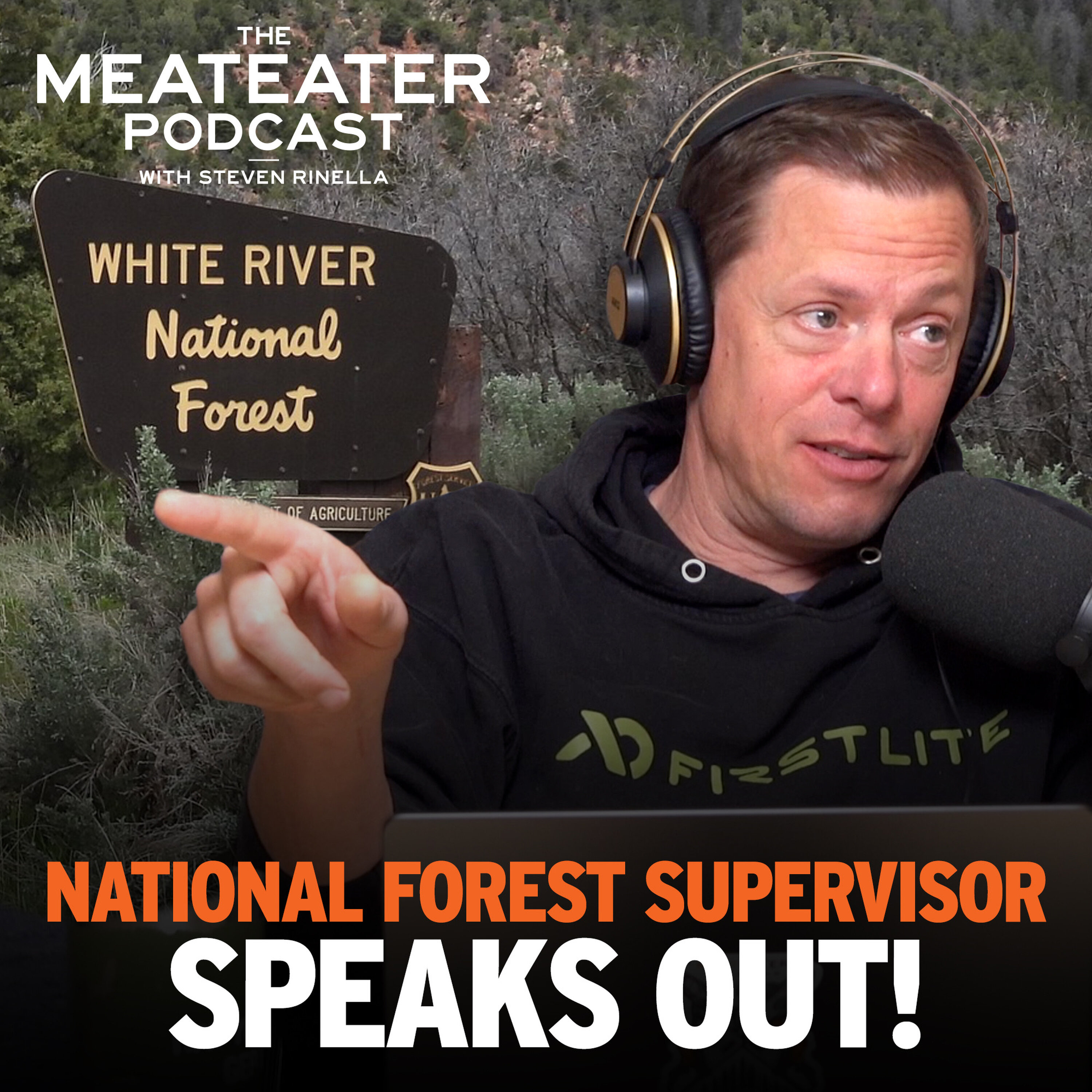
Joined today by Scott Fitzwilliams. Scott is here for a very important, sorry, a very important, not important, a very important discussion about our public lands, our U S National Forest system. Scott got on our radar. I guess it was. Well here I'll tell you the exact date Scott got on our radar. Late February 2025 when in our community, in our circle, there was circulated a headline White River Forest supervisor Scott Fitz Williams resigns amid slashing of agency workforce. Then the follow up sentence. Fitz Williams guided the 2.3 million acre forest for 15 years, helping manage soaring visitation in an annual $1.6 billion impact in Colorado, the most trafficked forest in the country. Spanning 2.3 million acres, the White River National Forest has 11 major ski areas, eight wilderness areas, four reservoirs regularly hosts more than 17 million visitors a year. The forest supports more than 22,000 jobs with forest dependent workers in its communities including Aspen, Breckenridge, Carbondale, Eagle, Glenwood Springs, Meeker, Rifle and Vail earning 960 million years according to the Forest Service economic analysis of its top 111 properties. The term I'm not hip on but properties the forest annual impact of $1.6 billion of financial activity in its communities ranks as the highest in the agency. And the gentleman we have here joining us today was prompted to leave that post at the age of 60 based on some of the things that are going on right now with attacks on federal land management agencies. So we're going to talk about that story. But first, welcome, Scott.
- [03:51]
Scott Fitzwilliams
Good to be here.
- [03:53]
Cal
First, Cal wanted to say something.
- [03:55]
E
Oh, well, you know, it's customary on this, this here podcast and we talk about other things and rarely do we even introduce our guest or acknowledge their existence during that time. So we're ahead of schedule on that. But on the other things topic.
- [04:10]
Cal
Yeah, the newsy part.
- [04:11]
E
The news.
- [04:11]
Cal
Now people write in like, hey, when you do the newsy thing up front, you know, and I'll be like, that's a great name for this. The newsy part.
- [04:17]
E
Yeah, no, not afraid to run with that.
- [04:20]
Cal
This, this, this. Matt, what you're talking about matters a lot to me because this is like in many states, this is a thing that a lot of hunters and anglers rely on.
- [04:31]
Scott Fitzwilliams
Is.
- [04:32]
Cal
And I'll, I'll leave off a version of it. Not leave off, but I'll mention to a version of it is in some states, all water trappers.
- [04:41]
E
Yeah.
- [04:41]
Cal
Like, it's how they conduct their, it's how they conduct their business.
- [04:45]
E
Yeah. Is, is there, I mean, there's a version of this that is, that is like class warfare almost. Right. So I mean, this is one of the most accessible ways to get out and recreate for, for the vast majority of us. North Carolina Senate Bill 220, I think it got heard yesterday, but there's always, you always have a dog in the fight. So North Carolina Senate Bill 220, Section 4. Specifically, if it were to pass, it would become illegal to launch a vessel. And this is primarily kayaks, canoes, small vessels off of the public road right of ways. Meaning that certainly in, in a lot of states your, your public roads have an easement. It's like shoulder to shoulder where you can, you can park. And if public ground abuts that shoulder, it's, it's legal access to that public ground or in this case, public water. So you would, you would be charged with, I think a Class 4 misdemeanor in the state of North Carolina if this were were to go through. As Steve pointed out, if you are a trapper, this is very important. But if you're even a large water angler, this would eliminate a lot of access to water and it would in a lot of places become prohibitive to go, go fishing unless you have access to a larger, larger boat.
- [06:26]
Cal
So let's be frank. It's, it's a war on high schoolers and college kids how else they supposed to get in the water?
- [06:33]
E
Yeah. Oh, yeah. So all those.
- [06:36]
Cal
Every bridge in this area, you go like cruising out north of town, west of town, north, northwest of town. Every bridge?
- [06:44]
E
Absolutely.
- [06:45]
Cal
In the summer, you can't go to any bridge without some college kid climbing in the water.
- [06:48]
E
And I mean.
- [06:50]
Cal
I mean, I know it's a different state, but this is like a fight that gets fought. This is a fight that gets fought. Like access, Stream access. It's like, it's. It's the same plot. Now what am I trying to say here? I'm trying to make an analogy. The same issue. It just gets fought in like, little different.
- [07:10]
F
Right.
- [07:10]
Cal
Micro ways.
- [07:12]
F
But this isn't just stream access. This could be a lake, a pot, like anything.
- [07:16]
Cal
Yeah, yeah. But I mean, like, it's. It's. I don't know the particulars here, but it's usually coming like this. It's. It's. People have. There's some dude and he owns riverfront property or he owns lakefront property. And there's nothing that burns his ass more than looking out the window. And here comes some dirt bag floating by.
- [07:38]
Scott Fitzwilliams
Yep.
- [07:38]
D
Catching fish.
- [07:39]
Cal
And he's like, how in the world could it be. How could it possibly be that I own this? In some cases, I own both sides and I gotta wake up to some dirt bag fishing.
- [07:53]
Scott Fitzwilliams
Yep.
- [07:55]
Cal
I mean, like, fish how. And then they get on the phone and whatever.
- [08:00]
F
Every other day, there's like a video that shows up of some landowner screaming at someone for being in the water that they're legally able to be in.
- [08:09]
Scott Fitzwilliams
Yes.
- [08:10]
Cal
You know, every day.
- [08:11]
F
Yeah.
- [08:11]
Cal
So it's always that. It's like. And. And this is like a public. They're putting it as a public safety issue. It's not. This is someone talking about. They're, they're. They're talking about something that's not what they're talking about.
- [08:22]
F
Does the person that proposed this bill own some. Some land? Some waterfront land?
- [08:28]
Cal
Someone. Someone has his ear.
- [08:30]
E
Who. Whoever introduced this bill may be friendly with some of those folks.
- [08:35]
Cal
You get a picture of the phone call. He's like, they're all in the. I can't figure it out. When I bought this place, I thought. But there's all these kids floating by. They're parked up and down the road. Hell, someone's gonna get hit.
- [08:48]
F
Yep.
- [08:48]
E
So this is in fact.
- [08:51]
Cal
Yes, someone's gonna get hit. That's the problem.
- [08:54]
E
You know, this is such an established form of access in use in, In North Carolina. There's guidebooks and maps of where it is, you know, good places to launch, safe places to park, et cetera. So this is not like a brand new thing. All of a sudden people started showing up to, to, you know, that dirt baggy spot that I have to drive past in order to get to my pay to play boat launch for my big boat and that. Yeah, so that's exactly what it is. So people need to be aware of this. North Carolina Senate Bill 220, specifically Section 4 would turn you in to a misdemeanor.
- [09:40]
F
Does this thing contrast with like an existing access law in North Carolina? Like a high water mark y public domain kind of thing?
- [09:50]
E
Yeah. So, you know, oddly enough, it wouldn't touch the, the water access in the state of North Carolina, their water access law, but it would just say as long as you try to do it from here to here, it's illegal now and you're, you're going to get a misdemeanor. One of the, the folks who wrote in on this sums it up pretty well. Says North Carolina has had a long history of excellent water access and has a constitutional right to use traditional methods to hunt fish and trap game. This bill seems to be in violation of that, so.
- [10:30]
Cal
Amen.
- [10:31]
E
Yep, that's one of the good ones.
- [10:34]
Cal
It's a war on college kids.
- [10:36]
E
It is for fishing.
- [10:39]
Cal
You know, I was, I like, I try not to do this, but now and then I'll catch myself just like looking through like stuff on social media, you know, which like never leaves me where I want to be mentally. No, but this guy's got a video so funny. It's like there's this dude fishing. He's like, you tell he's in a kayak or something and he's got, he's got one of those like fishing GoPros. So it's not aiming, it's aiming at him fishing, but it's not aiming at like what's going on around him. But you can see that he's like at a bridge and he says, he goes, hey buddy. You tell, he's like addressing someone. Hey buddy, I'm not trying to come after you on this, but just like, let me give you a little life advice. If someone's fishing a hole, you don't want to come in and start fishing it. And often the Disney's, you're off like a little kid. Oh, well, you know what, I wasn't gonna do this, but now since we're.
- [11:33]
D
On legislation, no wonder they're warring against those college kids. Oh yeah, Rude bastards.
- [11:40]
Cal
No, this is a little Kid's voice. One more piece of legislation. Peace. Years ago, I can't remember what the hell year it was. California made, in my view, an enormous mistake when they banned mountain lion hunting. They banned lion hunting with dogs. They banned mountain lion hunting now in California. Thanks to this wisdom, they now.
- [12:15]
D
1990.
- [12:16]
Cal
Yeah, they now. One of the. One of the funniest things about the lion ban in California, I might. I might be fudging my numbers a little bit, but they're basically this. It was like, hunters used to kill about 350 mountain lions a year in California. Take a wild stab at about how many mountain lions get killed every year now by animal damage control specialists.
- [12:39]
D
More around 350.
- [12:41]
Cal
Yeah. It was like they were like, okay, dudes, buy licenses and they hunt lions. Let's get rid of that. And then we'll start paying people to kill those lions and put them in the dumpster. And it's created where there's a problem now where. And like, I has. I don't want to necessarily call it. I want to choose my words carefully. It has been observed in California that. That. Man, I hate to say this, because I don't want to, like, feed into. I don't want to, you know, I don't want to do that thing where you're trying to get people to agree with you, and so you create, like, a false narrative. It has been observed by some people who are, like, pretty good on mountain lions and pretty good on human wildlife interactions. It has been observed that in the decades since then, there has been less pressure on lions to avoid the kind of human lion interface. Really good biologists, really good lion experts. Dudes that we know.
- [13:44]
E
Bart George.
- [13:45]
Cal
No, Bruce. Bart. Oh, yeah. Bruce is hunting these. Bruce is in Idaho or Washington state. Bruce is in Washington state, yeah. Okay. Whole career in chasing mountain lions. And he has observed that over the years in these states where they've put, like, heavy restrictions or banned lion hunting, you see an increase in human lion conflicts because they just don't. The lions just don't have a perception of, like, trouble. They don't associate humans with trouble. We've had on. A researcher, Bart George, is even working on a project where they'll go out and they'll get a. They'll get a collar on a mountain lion that's causing trouble, like killing pets, killing livestock, whatever. They'll get a collar on it and they'll see, can we train this lion to avoid people by. Because it's wearing a collar, we know right where it is. So we're going to go and play the sound of human voices. When he was doing this project, he would use this podcast. He would play this podcast to the lions and monitor how close can I get to the lion before the lion will move? And at times he would get 15ft, 30ft from the lion playing human voices before the lion moves. Then they put dogs on it and tree the lion and mess with it. That's not the word he uses, but they mess with it. They harass it.
- [15:08]
D
Yeah, we did a whole episode on it called Living with Lions.
- [15:11]
Cal
Living with lions. They worry it. That's what they say in Europe. They would worry the lion with dogs. And then you let some time go by and then you come and play human voices to the lion. Is the lion like, oh shit, these guys, these people are trouble and he wants to leave? Well, Bart had found some positive reinforcement that some level of human pressure, some level of inconvenience around humans and the use of dogs pushes lions away and makes them kind of like less inclined to come near human voices. We had on some guys on the show, we had Wyatt Brooks on the show and Wyatt Brooks was hunting shed. Hunting. Hunting shed antlers with his brother Taylor. And his brother Taylor was killed by a mountain lion in El Dorado County, California. And those guys came on the show or sorry, Taylor, who's passed away, obviously did not, but Wyatt came on the show to talk about Taylor's death. In response to this, Senator Marie Alvarado Gill has introduced a bill, SBA 18, which she views would enhance public safety and reduce loss of livestock by establishing a five year pilot program in El Dorado county during which permitted houndsmen with trained hounds may haze problem mountain lions away from areas where they pose a threat to public safety, livestock or pets. I like, that's great. I applaud it. I don't mean to trivialize it. I just, I guess it's a step in the right direction. I would be so much happier. And I don't. I know it would take like an act of God, meaning an act of Congress to undo the mountain land hunting ban, but I think that that's what needs to happen in California.
- [17:03]
F
The thing is that, that I find with that might happen with this is the anti hunting folks. The animal rights activists would probably look at this as a negative, like it's bad to go haze those lines. And they should be looking at it, you know, like, don't go bother those lions, don't harass them with dogs. And they should be all for it because it's probably going to save some lions lives.
- [17:29]
E
Right?
- [17:29]
Cal
Yeah. My view on it and, and reluctance to dig into it too much. Not reluctance to dig into it, but like choosing my words carefully is I like, I don't think of mountain lions like as a negative.
- [17:43]
E
Right.
- [17:44]
Cal
Like if I saw a mountain lion in my yard, I'd be like, cool. When we have bears coming in, I like encourage my neighbors to not tattle tale on them because I'm like, if you tattletail on that bear, it's dead. Yeah. They're not going to spend a bunch of money and have some guy spend two days moving that bear 200 miles away so it can walk back here.
- [18:01]
E
I, I believe I told your wife one time, I'm like, katie, you didn't pull the trigger, but you loaded the gun.
- [18:10]
Cal
I know. I'm always like, can't, don't tattletail on bears. Because if, if like, if one person tattletales, they kind of like, ah, we'll keep an eye on it. When 10 people tattletail, that bear's dead.
- [18:23]
F
When I lived in Eagle, Colorado, we're part of, you know, near the White River National Forest. Occasionally we would get reverse 911 calls saying there's a mountain lion in your neighborhood.
- [18:35]
Scott Fitzwilliams
No way.
- [18:37]
F
And usually in like late winter. And so like, you know that lions on the hit list, right?
- [18:43]
Cal
Yeah. So in my choose my words carefully. Thing is I look at it like I like, like I look at it as regulated. Mountain lion hunting under quota systems and bag limits and seasons is in no way detrimental to having a healthy population of lions. I think it was wrong, it was ill advised to ban lion hunting. And I look at this as a positive because it's like a step in the right direct, hopefully. But I just can't act like I'm glad about it because I'm super scared. Alliance.
- [19:23]
E
Yeah. And Steve's trying not to like use the, the fear argument. There's, I, I don't know if there's, there's been a study that like definitively proves hunting reduces wildlife conflict. But at the same time it's like, well, areas that don't have black bears don't have black bear conflict and areas that don't have lions don't have land conflict.
- [19:51]
F
I was doing some research for a project Steve and I are working on and it was regarding the black bear situation in New Jersey when. What was his name? Bill Murphy.
- [20:03]
Cal
Murphy.
- [20:03]
F
Murphy outlawed essentially like first it was he outlawed it on state and then he let the management plan expire. So bear hunting became completely illegal. In New Jersey for a couple.
- [20:14]
Cal
And then he had what I believe they call to be a mea culpa.
- [20:16]
F
Yeah, he got. He listened to people who were real pissed off. Is that what you mean?
- [20:21]
Cal
No, he said I was wrong.
- [20:23]
F
Yeah. But anyway, they did a study during that time frame of human bear conflicts. And. And you said there's no like study that's been done on increased conflict, but it was something like 237 increase in bears killing pets, bears breaking into cars, bear, you know, all the thing. So it was like the outlawed hunting and that stuff shot through the roof. So, you know.
- [20:55]
E
Yeah, there's.
- [20:58]
Scott Fitzwilliams
Sure.
- [20:59]
Cal
Anybody could set up their own little experiment, have a garden and then have a bunch of rabbits eat in the garden and then do a couple high profile killings of some of those rabbits and you will see the other rabbits are like she's. I'm going to middle of the night now. Not doing that in the morning anymore. You know, it's just. It's all right, Scott. Tell me about your career, man. How'd you wind up like, how'd you wind up there? How'd you wind up as the White River Forest supervisor? What was your path?
- [21:29]
Scott Fitzwilliams
Oh, it was a long path. You know. I grew up in Wisconsin and ended up in Colorado for graduate school and tripped into an internship with a place called the Forest Service. I knew nothing about. I knew the difference was you couldn't hunt in parks and you could hunt on the forest. That's what I knew the difference. And so started my career and bounced all over the country. I think I worked in seven states. I was in Cody, Wyoming, Jackson, Wyoming, Dickinson, North Dakota. I was on the national grasslands out there. And then I went to Sitka, Alaska for five years.
- [22:06]
Cal
Really?
- [22:06]
Scott Fitzwilliams
Yeah.
- [22:07]
Cal
For the Forest Service.
- [22:08]
Scott Fitzwilliams
Yeah.
- [22:09]
Cal
And that was on Tongas.
- [22:10]
Scott Fitzwilliams
Yeah.
- [22:10]
Cal
Working on Tongas.
- [22:11]
Scott Fitzwilliams
On the Tongas. Yeah. I. I was Jim Batestol's boss.
- [22:14]
Cal
Really?
- [22:15]
Scott Fitzwilliams
What you know, you guys had.
- [22:16]
Cal
Oh sure, man.
- [22:17]
Scott Fitzwilliams
Yeah. Yeah. And then I went to Oregon for a few years and Eugene and then ended up in. Back in Glenwood Springs on the White River. So I started as an intern in Colorado and ended up finishing my career in Colorado.
- [22:32]
F
What kind of work were you doing like throughout those.
- [22:35]
Scott Fitzwilliams
You know, I started really originally I started kind of in the public affairs and legislative affairs world for a few years and then I became a line officer, district ranger and then I was a recreation, wilderness, minerals land staff on the Tongas. That's. I worked on that. That's why Jim worked for me. And then. Yeah, because He's a geologist. He's geologist. Yeah. And so. And then I was. I've been a line officer, you know, either a district ranger deputy, four supervisor, four supervisors. So it's been great. I mean, to work in so many incredible places is, you know, I'm so grateful for this career. It's been unbelievable.
- [23:16]
Cal
Can you explain for folks what is the scope of a force supervisor? And then if you could talk a little bit about how that can get more and more complex as you enter into a forest like the White River Forest.
- [23:30]
Scott Fitzwilliams
Yeah. So the way the agency is set up, we. We. They give line office or delegated authority for a chunk of land. And in case of a forest, a forest depends where it is. You know, on The Tongass, it's 17 million acres. On the White river, it's two and a half. And, you know, in the east, there's smaller forests, and basically, you have all responsibilities for that piece of ground. I always told people it's toilets, the targets, and everything in between. You're responsible for everything. And so, you know, you're responsible for the money, you know, the budget, the targets, the accomplishments, the people. And. But these jobs now, you know, in these line officer jobs, they've really evolved into, you know, part of a community. You've got to be the, you know, you're the name, you know, the face of the agency in that community. And so, you know, and as we collaborate and we work together, it's, you know, it can get complex because you're the one that signs the decision for that timber sale or that new trail or, you know, closing that trail. And. And your name's on it. And so.
- [24:44]
E
Or you may add like a mine up on the Tongas or oil and gas, or, well, the Industry Greens Creek.
- [24:51]
Scott Fitzwilliams
Mine and the Kensington Mine up in Juneau. Yeah, those are huge mines. And. And so, you know, and I think, like, we all know, I mean, everyone loves this public land and wants to see it managed a certain way. And so it gets a little harder and harder as people. Just not a certain way. My way, my way.
- [25:12]
E
I want it done for hunting and fishing specifically.
- [25:16]
Scott Fitzwilliams
Yeah. But, you know, Gifford Pitchot, who started the Forest Service, he and Teddy roosevelt back in 1905. And I still believe in this, and I hope as the restructuring that has taken place, this doesn't go away. They purposely set it up where it was very decentralized. We want the decision making where the communities are. We want the decision making where the, you know, where it affect. You know, how. Where it affects people. And that has been. That's why I love the job is I rarely in all the years got told you need to do this on this project from a boss or from above. And that's the way Pinchot and Roosevelt wanted it. They wanted it decentralized on the ground.
- [26:00]
F
Disregarding what's happened in the last couple months. Was that consistent from like that ability to be decentralized? Was that consistent from like one administration to the next?
- [26:11]
Scott Fitzwilliams
Yeah, I mean, ebbs and flows and different emphasis. That's always been the case and. But we've kind of always navigated through that and. And save a few. There's always been a few things where it's been top down, some. The. I don't know how many revisions of the Tongass forest plant.
- [26:31]
Cal
Oh yeah.
- [26:31]
Scott Fitzwilliams
Oftentimes that became extremely politicized and Washington kind of ran that or some undersecretary.
- [26:39]
Cal
Yeah. In that case it fell into like a administration's. One administration would put a major plan into effect and another administration would call it into question.
- [26:50]
Scott Fitzwilliams
Right.
- [26:50]
Cal
And you just probably got to roll with that. Right?
- [26:52]
Scott Fitzwilliams
Absolutely. And you know our laws, National Forest Management act And on the BLM side, Flipma, they're set up to put 10, 15, 20 year plans together. A force plan that's supposed to take some of that level, some of that. It's like, okay, here's how we're going to do it for the next 15 years. And it's worked well and I still have hopes it's going to work well, but certainly under, you know, with current restructuring, I'm not sure. I just hope we maintain that decentralized management and decision making because I think Pinchot and Roosevelt had it right in 1905 and I think it still applies today. It's just harder because there's more people.
- [27:34]
Cal
Hey, here's something that happens to me and pretty much everyone I hang out with. Some show will come out, you know, and you really want to watch it, but it's on whatever streaming platform that.
- [27:42]
Steve Rinella
You don't subscribe to.
- [27:44]
Cal
So you go online, you're like, oh, I can get a, I can get.
- [27:47]
Steve Rinella
A three month subscription for free.
- [27:49]
Cal
And then they'll just start billing my credit card, but I'll cancel it after.
- [27:51]
Steve Rinella
I finish the show.
- [27:53]
Cal
And then you don't. And then a long time later you realize you've been paying for that stupid subscription for like a year or whatever.
- [27:59]
Steve Rinella
This happens to a lot of people. This is why you should check out Rocket Money because it is a personal finance app that helps you find and cancel unwanted subscriptions and it does a lot more. It monitors your spending and helps you lower your bills so you can grow your savings. Rocket Money has over 5 million users. They've saved those users a total of $500 million in canceled subscriptions, saving members up to $740 a year when using all of the app's premium features. Now again, cancel your unwanted subscriptions and reach your financial goals faster with Rocket money. Go to rocketmoney.com meater today that's rocketmoney.com me eater rocketmoney.com me eater I'm telling you, man, there's nothing quite like it gives me chubby just thinking about it. You hit the call and way off in the distance, a tom fires back. You work him in, watching his body language shift from cautious to committed. Then that moment, the one every turkey hunter dreams about all winter. Zach Gobbler locks eyes on your decoy and comes running in. And if you're using the right decoy, you don't need to then settle for a 40 yard nervous shot. Because with the right decoy, you can get that bird in your lap, putting on a wild, aggressive turkey show. I mean, I'm talking where he's fighting the decoy. I've had him sitting there trying to mate with the decoy. It's the best thing in the world. But to pull it off, you need realism like you need decoys that don't just fool turkeys at a distance. You want a decoy that fools him when he's up there at point blank range beating the snot out of it. That is why Die Hard turkey hunters insist on Dave Smith decoys. Their unmatched realism fools even the wariest of toms into thinking they're staring and fighting a real bird. And unlike inflatable decoys that crumble when shot, DSDs are built tough. They last season after season, even if you screw up and put a little TSS into one of them. To top it all off, every DSD turkey decoy is made right here in the good old US Of A. Made in America. Check out the full lineup@davesmithdecoys.com and take your turkey hunts to the next level.
- [30:23]
Cal
As a forest supervisor, you got to wake up every day. Someone has to be pissed at you.
- [30:30]
Scott Fitzwilliams
Pretty much, yeah.
- [30:31]
Steve Rinella
Can you lay out a little bit?
- [30:33]
Cal
And you can keep it. You can keep it true to Colorado, we can leave tongus in the rearview mirror for a minute, but can you. Can you explain a little bit like the push and pull?
- [30:42]
Scott Fitzwilliams
Yeah.
- [30:42]
Cal
I mean, it's got to Be like, you got. Just to give you a sense of what I'm picturing. You can correct me if I'm wrong. I mean, it's gotta be like a lot of fire conversation, cattle conversation, logging conversation, access conversations, preservation conversations, huge conversations around wildlife, dealing with state game agency, like. Like who is trying to get a hold of you, you know, throughout the year. Right. To tell you how you ought to be doing things.
- [31:10]
Scott Fitzwilliams
All of the above, Steve. It's. It ebbs and flows a little bit. Vegetation management, you know, timber harvest, fuels projects are all. Can always be a. A pinch point for people. You know, people. And certainly in Montana, it's. You know, that's. Montana, in this region is one of the most litigated regions as far as fuels projects and timber sales and stuff. You know, it's. It's. It's the contrast of leave it alone, preservation first, conservation use. You know, that's whatever it is. It doesn't matter if it's cattle, if it doesn't matter if it's, you know, logging, mining. People just have visions of what their national forest should look like and don't want to change. It's getting harder because so many people are moving from places that they think it's a national park.
- [32:07]
Cal
Yeah.
- [32:08]
Scott Fitzwilliams
I mean, what are you doing cutting trees? Well, we've been doing it since 1905. I mean, it's part of our mission that's in legislation requiring us to do that. And the toughest ones these days, especially in places like Vail and Aspen and Summit county, is individual landowners with the easement. Or a lands issuer needs something. They're tough because they're generally rich and.
- [32:40]
F
You mean you're talking like second homeowners that butt up against.
- [32:43]
Scott Fitzwilliams
Exactly.
- [32:44]
F
Yeah, there's a lot of that that's.
- [32:46]
Scott Fitzwilliams
Been really challenging over the years, but it's all challenging. But it's.
- [32:49]
Cal
But like, help people understand what you're talking about. I have a sense of what you're talking about. But say people that aren't real, that don't follow the politics of.
- [32:55]
E
Yeah.
- [32:56]
Scott Fitzwilliams
As more and more people move into the urban interface, you know, the forested lands, a lot of it, they have to get an easement from the Forest Service to put a driveway in or to put a power line in or to. Or they have a crappy survey and they ended up building part of their house, which happens all the time on national Forest system lands. And then. And then we say, hey, you got to move your house. Or there's this thing called the Small Tracks Act. They can Purchase the land. If, if, if it was proven, it was done accidentally, you know, bad survey or something. So, so as more and more people coming into these areas are building these homes in the forest and up in the hills, you know, they require all these easements and right of ways and permits and things like that.
- [33:40]
Cal
Got it.
- [33:41]
Scott Fitzwilliams
It's one or two people that consume a tremendous amount of time and they just don't understand because they're lawyered up. Totally lawyered up. And they know people. Well, I'm going to call so and so. So that bugs me because it's not a collective society, wide discussion of how we should manage a landscape or a forest. It's just one dude with a house. And yet my staff is spending three days a week working on that, you know, project. So.
- [34:11]
Cal
Got it.
- [34:12]
F
How is it dealing with the big ski industry corporations? Because, like, you're, you're, you're in a position, you were in a position where a lot of national forest managers aren't.
- [34:22]
Scott Fitzwilliams
Yeah.
- [34:22]
F
You know, dealing with so much of that.
- [34:24]
Scott Fitzwilliams
Yeah, it's, they're big companies and, and, but most of the ski areas have been permitted. I think it would have been harder when they were permitting new ski areas. You know, now it was more about can they do this expansion, can they replace this lift or build this new restaurant? It's still tough. I mean, those numbers you talked about at the beginning, the 22,000 employees and, you know, $1.6 billion contribution to GDP, most of it's from that industry. I mean, they employ a lot of people and pour a lot of money. But it's challenging because you look around the west and where we have these resort communities, it's completely changed. I mean, nobody can afford to live there. You know, it's crowded, it's expensive. It's, you know, 70% of the homes, for example, in Summit county, where Breckenridge and A Basin and Keystone are. 70% of the homes are second homeowners.
- [35:24]
E
70, right.
- [35:26]
Scott Fitzwilliams
Well, so no one can afford to live there. And so then you struggle with, like, all these mountain towns dealing with, with affordable housing and those ski areas, too.
- [35:37]
E
Like, they'll tell you that they can't exist without a summer program as well. So it's not just in the winter when there's a ton of snow and the animals aren't visible.
- [35:46]
Scott Fitzwilliams
Yeah, we permitted the first on Vail Mountain, the first summer uses. The Congress passed legislation to allow them to do things like zip lines and, you know, alpine coasters and things like that. We were the first forest to do that. The part about our forest is the White Rivers. All the big resorts are there and so we're always first in experimenting with whatever it might be. But you know, they're a great partner and they're, you know, I like working with innovative creative industries and they're one, you know, they're always looking at the next best thing.
- [36:24]
Cal
Got it.
- [36:26]
Scott Fitzwilliams
But I think we have to step back and realize, okay, the impacts are real. It's only 4,000 acres of permitted land that they have their permits on that.
- [36:36]
Cal
They actually all total.
- [36:38]
Scott Fitzwilliams
Well, no, on the White river it's only 40,000.
- [36:43]
Cal
Oh, I'm sorry. Okay.
- [36:44]
Scott Fitzwilliams
But say one resort, say a resort like Snowmass, I think it's about 4,000 acres under permit. 40,000 acres of, of land is under permit in skiers on the White river. Not out of 2.3 and a half million. That's not a huge amount.
- [37:02]
Cal
Yeah.
- [37:02]
Scott Fitzwilliams
But the, the, the impact is way past that, you know, because it just brings people and lots of them. And so I think we've got, I think that's something. In the future we're gonna have to really start to recognize this, these resort towns and these, you know, kind of high end tourism places. We're going to have to manage that in some way that at least realize that the effects are way beyond the resort or whatever.
- [37:27]
Cal
Yeah.
- [37:27]
E
Oh, just the, you know, all these towns, you know, like that is the industry there. It's support the ski areas over anything else. And when I used to go to meetings in the ski town that I lived in, it was just amazing. Like the piddly stuff that the community would get involved in. Like horseshit. On mountain bike trails that were actually.
- [37:52]
Scott Fitzwilliams
Right.
- [37:52]
E
Just game trails that people started riding mountain bikes on. And the like amount of noise pollution the mountain would put off.
- [38:03]
Scott Fitzwilliams
Yeah.
- [38:04]
E
During non ski season times of year. Right. That I mean if you got up at elevation where they were doing the work, you could hear almost conversations a lot of the times from miles away. Yeah.
- [38:18]
Cal
I don't think you should be allowed.
- [38:18]
E
To ski the trash associated.
- [38:20]
Scott Fitzwilliams
Where do you stand on that?
- [38:21]
E
Insane too. You know, that's, you know like you go hike the ski lift lines, you know, during non ski season. And the amount of underneath the chair lifts, just great. And you know they do like cleanups and stuff. But I mean there's so much stuff.
- [38:40]
Scott Fitzwilliams
Yeah.
- [38:41]
D
How much does it cost for a ski area to permit say 4,000 acres? Like is it, isn't it, is it an annual thing?
- [38:49]
Scott Fitzwilliams
Yeah, it's, it's a really complicated Formula that I can't explain, but it's based on the revenue you derive from activities on national forest. So if the lift is on national Forest restaurants on national Forest, obviously a permit, you know, the pass. So it's, you know, on our forest, which was by far the most. It was 70, 65% of the entire nation's fees collection. We collected about $28 million from the 11 resorts.
- [39:20]
Cal
Wow.
- [39:20]
Scott Fitzwilliams
Yeah.
- [39:21]
Cal
Is it fair to call it like a profit share? Does it not work as a profit share? It's like a revenue share.
- [39:26]
Scott Fitzwilliams
No, it's just like a permit. I mean, just like a grazing permit. They pay.
- [39:30]
Cal
No, but you said that they pay relative to revenue.
- [39:33]
Scott Fitzwilliams
Yeah, no, it's just relative tanks.
- [39:37]
Cal
If they're visitation tanks, they'll pay us less money.
- [39:39]
Scott Fitzwilliams
Okay, yeah, yeah, exactly. There's a minimum, obviously, but yeah, their businesses aren't tanking of late anyway. So nationwide, we collect about $35 million off of ski areas in the country. Here's the little catch is not one penny of that comes back to the. To the forest that it was. It is the only thing we permit that no money comes back to the local forest. And there's been a act in Congress called the shred act that has. That has. Yeah, I forget how what did x ski area.
- [40:20]
Cal
But anyway, that was. Whatever it stood for was an afterthought.
- [40:23]
Scott Fitzwilliams
Absolutely.
- [40:24]
E
They just had to come up with the good.
- [40:26]
Cal
They want to be shred. Figure out that wrestling later.
- [40:29]
Scott Fitzwilliams
But it would. It would return a good portion of the money back to where it came from, which I've been advocating for, because they. There's a lot of work not just associated with the resorts, but all the people that come with it. And.
- [40:42]
Steve Rinella
Well, how the hell did that get pulled out of.
- [40:45]
E
How.
- [40:45]
Cal
How did that get pulled out of the general system? Like, if you do like. Like timber harvest, cattle leases, you get some of the revenue. But how did skiing sit in a.
- [40:55]
Scott Fitzwilliams
Different landscape when back in the 90s, when it used to be outfitter and guide fees used to go to the US treasury, campground fees went to the US Treasury. It all went to.
- [41:06]
Cal
So there was examples.
- [41:07]
Scott Fitzwilliams
Then there was what was called the fee demo program, where we got to keep all those fees. Now we get to keep all the outfitter fees and all the campground fees and everything. And then they looked at ski areas and they specifically looked at the White River Forest and said, we're not giving that one force $28 million. So that's basically how it got it. Got it.
- [41:27]
Cal
It's just too much jingle Too much.
- [41:29]
Scott Fitzwilliams
Jingle in one place. And so now there's a way they can spread it out. But now because of the budget, there's a term in Congress, the legislative Congress in the budget bills called scoring. And it's like golf. And I know how much you like golf too, Steve. You don't want a score. The Office of Management Budget gives a piece of legislation a score and it's a financial and the more you score, the less chances has. So in that case, I'm sorry, I'm not following. Yeah, it's, it's, it's a, it's a budget score. And they would look at it and say okay, that's $45 million. That's normally going to the U.S. treasury. The 10 year score is $450 million. You don't want to score $450 million because they say you got to find that money somewhere else because we're not going to, you know, lose that $450 million over 10 years to the Treasury. So it's, the problem is it scores. OMB gives it a score of 450 million for a 10 year. So we haven't, it hasn't been passed bipartisan bill that has significant support on both sides of the aisle. But just what it is right now, it's a bummer because it's the only fee we collect.
- [42:48]
Cal
When you run a forest, how do they present to you or do they present to you some version of a P L Like what are the expectations of a forest?
- [43:03]
Scott Fitzwilliams
Yeah, each forest is allocated a budget. Now they've changed a few things and centralized more and more of the budget. But forest for most my career and you'd wrestle for, you know, make your point and say you get this much money and you're going to get this much in recreation, this much in timber, this much in grazing. And with that money, we expect you to achieve these targets. I'm going to give you, you know, the regional office will give me X amount in timber. We want you to produce 25,000 cubic feet of timber or million board feet or whatever it is. Same with grazing. If you get this much grazing you gotta, you know, administer this many grazing permits and, and recreation is a little more obtuse. But miles of trail. We used to get trail maintenance dollars and you get a certain amount of trails, we expect you to clear this many miles of trails. So and then, I mean throughout my career, I mean it was a. You didn't spend overspend that if you did, you better have another buddy that could cover you another Forest that. Because budgets are spun up at the regional level.
- [44:15]
Cal
Got it.
- [44:16]
Scott Fitzwilliams
So the accountability was there. We weren't. You know, it's called the Anti Deficiency Act. If an agency spends more that's appropriated. And I've never seen it happen because it's a big. No. No.
- [44:28]
Cal
Got it.
- [44:29]
Steve Rinella
Do they.
- [44:30]
Cal
Is there ever an expectation articulated to a forest supervisor about how much economic activity your forest should facilitate? Is that part of your mandate or is that just something that happens out of it happens by chance?
- [44:46]
Scott Fitzwilliams
No, they don't say, we want this much economic activity, but they say we want you to be able to produce this much board feet of timber. Or we need you. You're getting this minerals money. We need you to get that mine approved or get the EIS done. And same thing with recreation. Yeah. I mean, that's a. It's always been a driver in the national forest system is. Is the economics and not. Not to the. You know, that doesn't mean we don't get to balance it, but it's important for sure.
- [45:21]
Cal
Yeah. Like fiscal responsibility.
- [45:23]
Scott Fitzwilliams
Oh, yeah, yeah. Yeah. That doesn't mean there's not areas to improve. I mean.
- [45:28]
Cal
Yeah.
- [45:28]
Scott Fitzwilliams
What.
- [45:29]
Cal
What is an area to improve?
- [45:30]
E
I want to get to the areas of improve, but I'd love to get like, how, how is like the permitting for a mine work? Is it on the same. Because I always get wrapped up with the mining acts.
- [45:45]
Scott Fitzwilliams
Yeah.
- [45:45]
E
And I'm like, yeah, mines don't make us any money.
- [45:49]
Scott Fitzwilliams
Yeah.
- [45:50]
E
But based off of how you explained the permitting for a ski area, now I'm like, okay, well, obviously the mine has to have some sort of a revenue share there as well, or percentage of revenue.
- [46:03]
Scott Fitzwilliams
Well, they, they. The 18. You know, we're still operating under the 1872 Mining Law, and it's been amended and there's been tweaks to it. But where, where there's not a revenue sharing of. Of hard rock, minerals, oil and gas, you know, leasing, you know, locate what we call leasable minerals. It's 25%. You know, everything that comes off of a federal mineral. 25% comes back to the government.
- [46:32]
E
Not mineral, oil and gas.
- [46:33]
Scott Fitzwilliams
Yeah, 25 federal mineral state. I'm sorry. And what about coal?
- [46:37]
Cal
Is that under mining or is that under oil and gas?
- [46:40]
Scott Fitzwilliams
Coal's under mining. So it's under the 1872. That's considered locatable. So coal, gold, silver.
- [46:47]
Cal
Okay.
- [46:48]
Scott Fitzwilliams
Precious metals. So they have to pay a land use fee, you know, for occupying that piece of national forest. But they don't pay, you know, if they get.
- [46:58]
Cal
They don't pay for the loot. The stuff.
- [47:00]
Scott Fitzwilliams
Not, not like they do oil and.
- [47:01]
Cal
Gas and not like they do with timber.
- [47:04]
Scott Fitzwilliams
Nope. No.
- [47:05]
E
But if you read like if I were to pop up the 1872 Mining act right now, which I got in.
- [47:11]
Cal
My, I got in my pocket.
- [47:12]
E
Yeah. Well, I mean this is. I can't believe you. Because it is referenced all over and depending on what historical source, like you read about when it was enacted, it was like, oh, this is really how it's going to be. It was kind of a joke when we wrote it. As was like the diamond clause too. So depending on what source it was.
- [47:33]
Cal
Like, you mean it was written by the. It was written by the extractor.
- [47:37]
E
Yes. And it was. But it was also written in a like, well this will never go anywhere hahaha type of way. But it's $5 an acre, a surface acre.
- [47:48]
Scott Fitzwilliams
Yeah. That they pay a fee.
- [47:50]
E
Is that still the, Is that still the thing?
- [47:52]
Scott Fitzwilliams
It's. Yeah. I don't have a lot of. I haven't dealt with mines. Yeah, it's cheap. It's ridiculous. But the law hasn't been changed. And so yeah, locatables are hard, you know, because those are just. I like dealing with oil and gas leasing. It's nice, organized, process is clear. Locatables are really complicated and I'm not.
- [48:19]
Cal
I'm not a big minerals guy. Can you, can you help me understand, like how is oil not a locatable? Like what the hell does locatable mean?
- [48:29]
Scott Fitzwilliams
The terminology, I mean covered under the 1872 Mining Law. So those are, those are what we normally think of mining gold, silver, lead, zinc, where you dig something out of the ground. When oil and gas came into play, we evolved a little bit and said, wait, we'll lease these lands. So they'll be leasable minerals. And so we just use the term locatable and leasable because two different completely processes manage those and regulatory structure.
- [49:07]
Cal
And for the forest, for the taxpayer, the, for the American taxpayer, they're doing. The American taxpayer is doing better on a timber harvest. They're doing better on a ski lease, they're doing better on oil and gas than they're doing on mineral extraction.
- [49:27]
Scott Fitzwilliams
If you're looking just at what direct payments go to the treasury or to the agency.
- [49:32]
Cal
Yeah, okay.
- [49:33]
Scott Fitzwilliams
For sure.
- [49:34]
Cal
All right, you brought up. There's things that could be done better, but I feel like we're a little bit burying the lead. So I don't want to. Let's jump ahead here. I'm trying to sort all this out in my head.
- [49:48]
Scott Fitzwilliams
If.
- [49:48]
E
If I were to go back and say, here's our guest, Scott Fitzwilliams, please, let's start. We're going to talk about government waste on national forests, and we're going to learn how national forests work and how we're pissing away all this money.
- [50:05]
Cal
That's how you'd have kicked it off.
- [50:06]
E
Yep.
- [50:07]
Cal
Oh, I was going to come in, like, that's interesting. I was going to come in, like. Scott resigned over certain actions that are taking place coming down from Washington, D.C. decisions that are being forced, things that are being stripped away from a level of local control and local expertise. And then he said, hey, listen, man, there's plenty of ways to clean up, but this is ditching the baby with the bath water. I don't know.
- [50:45]
E
That's nice, but let's play the Spencer Newharth game. Which one's gonna get more clicks?
- [50:52]
Cal
Okay. Which approach is more appealing to you?
- [50:56]
Scott Fitzwilliams
I think I'm thinking about, you know, people listen to the show and stuff, you know, context of what's been going on. And, and. And it's been pretty wild since the inauguration. I mean, you know, first thing has happened is we all got this email that said, fork in the road.
- [51:13]
Cal
Yep.
- [51:13]
Scott Fitzwilliams
And we all deleted it because we go to training that says when you get spam email, delete it. Because it came from a source we'd never seen before. It was bizarre. Hey, you can retire right now and get paid till October. And so. But it turned out to be real. So that was what they called the deferred resignation program, which I took. Oh, you did?
- [51:36]
Cal
Okay.
- [51:37]
Scott Fitzwilliams
Yeah. Because I was going to retire in the next year and a half.
- [51:41]
Cal
Yeah.
- [51:42]
Scott Fitzwilliams
But they offered to pay me till October. I'm good. I'm eligible to retire. So it wouldn't affect my retirement. So. And then, then it was. The next thing that happened was what we called the Valentine's Day Massacre, where we. We just got a letter and said, you need to fire all these people. And that was rough. We had 16 on our forest. But I know the forest here, the Custer Gallatin. It was in the 40s and it was. We had to give him this. We had to call them up, give him this letter that said, you're fired based on your performance, which was a complete lie. A complete, utter lie. Their performance was fine. Some of it just had their performance rating. So that wasn't fun. And it was. And on our forests, 15 to 16 were field level people. They worked. Employee called a permanent part time They're a permanent government employee, but they only work half the year. The field season, they started about now, finish after hunting season, and then they go work in the ski resorts or whatever.
- [52:55]
Cal
Yeah, at what salary?
- [52:57]
Scott Fitzwilliams
They're like GS5. So the, the cost to the, the half of the year they're paying for us is. Is 18,000 bucks.
- [53:04]
Cal
Okay.
- [53:05]
Scott Fitzwilliams
So annual salary of about 40, $42,000. 18, $19,000. But they get healthcare and things like that. And most of those were paid with fee money. So it wasn't taxpayer money. It was the fees we collected. Maroon Bells and campgrounds and outfitting guides and stuff. And they clean toilets, clear trails, do fire patrol. That didn't make any sense.
- [53:30]
Cal
That was out of fee money.
- [53:31]
Scott Fitzwilliams
Yeah, fee money. And I had to fire six people who were paid for by the counties. We have pretty well off counties, Pitkin county and Eagle county and Summit County. And for years and years they've been actually giving us the feds money because they wanted more people on the ground during the busy season. Because we just didn't have enough money to have patrols and people clearing trails and cleaning up human waste and all that stuff. So we had to fire people who were paid for by counties that didn't save any money. That's what was.
- [54:07]
F
How common is that? In other. Is there other forests that have similar systems where they're.
- [54:12]
Scott Fitzwilliams
Yeah, lots of forests have. The other big fee we get is we get grants in most. I don't know how much. In Montana, but certainly Wyoming, you get grants for what we call the sticker fund, where you. Your ATV stickers and your snowmobile stickers.
- [54:27]
Cal
Sure.
- [54:28]
Scott Fitzwilliams
The state gives us money to hire people to, you know, have ATV crews. And so we had to let people go that were paid for by the state.
- [54:37]
E
Yeah, because your off road vehicle stamp, your OHV stamp that you can like in Montana, you can buy it online with your hunting license that is that specifically earmarked for trails and possibly campground too?
- [54:53]
Scott Fitzwilliams
Yeah, and trailheads. And I'm more familiar in Colorado, but it's a great source of money. I mean, and we had whole crews that were paid for by the state, some of which because they were in this probationary period, we had to fire. Didn't make sense. That's when I started to think this is not a restructuring.
- [55:11]
Cal
Why did it need to come? As it was a performance issue that's just like a legal issue. I'm sure they, they're anticipating litigation.
- [55:17]
Scott Fitzwilliams
Right. Which they ended up losing. And some of these people were judges ordered in some states and Some districts are now back to work. I'm not sure what is efficient about. We paid them the whole time that they were fired because the judge ordered back pay. And so there's nothing efficient about that.
- [55:36]
Steve Rinella
This show is sponsored in part by BetterHelp. Now let's talk numbers. Traditional in person therapy can cost anywhere from 100 to $250 per session, which adds up fast. But with BetterHelp online therapy, you can save on average up to 50% per session. With BetterHelp, you pay a flat fee for weekly sessions, saving you big on cost and time. Therapy should feel accessible, not like a luxury. With online therapy, you get quality care at a price that makes sense and can help you with anything from anxiety to everyday stress. Your mental health is worth it, and now it is within reach. There's a ton of ways in which therapy can be helpful to a person. It can help you learn positive coping skills. It can help you set boundaries in your relationships. It can help empower you to be the best version of yourself. And it can help you also to learn how to think before you talk and think before you act. Make sure you're making the right move. Your well being is worth it. Visit betterhelp.commeeater to get 10% off your first month. That's better help h lp.commeater.
- [56:51]
F
Did you feel oblig?
- [56:52]
Cal
Did you.
- [56:53]
F
Oh, I don't know if you can answer this, but did you feel obligated, like you had to have the official, like, you're fired based on performance conversation? Did you feel obligated to have another conversation with them and be like, look my hand. Like, I can't.
- [57:07]
Scott Fitzwilliams
Yeah. Oh, yeah, yeah.
- [57:09]
Cal
I.
- [57:09]
Scott Fitzwilliams
And I'm sure I would have gotten in trouble for it, but.
- [57:12]
E
Right.
- [57:12]
Scott Fitzwilliams
I just told him this is not true and you know it's not true. So that was just hard. And that's when it really started to hit me. Like, the next thing they offered was a voluntary early retirement program. So tons of people are taking retirement. So you're losing. You know, we've hired all our new employees and now people like me and many of my colleagues are failing. So we're losing the, you know, institutional knowledge. And then they just offered fork in the road two because they didn't get as many as they wanted. So. And then we expect reduction firings. You know, you didn't take any of that. You're gone coming in the next couple months. And so I just, I've never ran away from a challenge. In fact, I'd love to fight all Kinds of fights, but maybe I'm just too old. And I was like, I can't be part of the dismantling of this organization. And that's how I see it right now. It's, you know, we're just. There just doesn't seem to be a plan. Like, okay, let's sit down together and figure out. Or give us a number, say, Forest service. We need. You need to cut 20% and let us figure out, okay, that's what we don't need. It was just this random, bizarre, you know, go fire these people.
- [58:32]
Cal
Okay, yeah.
- [58:34]
Scott Fitzwilliams
That didn't make sense to me. And I didn't want to be part of that because I can't support it. I can't.
- [58:38]
E
But would you say your forest was like, without waste, without inefficiencies and frauds and things like that?
- [58:47]
Scott Fitzwilliams
I tell you, in 35 years working for the government, I've seen inefficiency, saw some waste. I didn't see fraud and abuse. I can't recall, like an actual fraudulent activity. I've seen contractors try to defraud the government, where we paid a contractor to do something and then they didn't do it or fudged it or walked out on it or defrauded it in some way. But I haven't seen people defraud it. Does it go on? I think in the context of natural resources, the fixes I would have was hoping for was one. And I don't know if I bet you my colleagues in the park service and BLM would similar. We got really top heavy as far as too many people in Washington and regional office at the expense of what we're supposed to be doing. That's on the ground doing the groundwork. That's what the public wants. They want clear trails clear, and they want fuels reduced, and they want the cows taken care of. They want garbage picked up. And we were. I would have made that adjustment. And you know, the other thing I think we've really got to come to grips with, and you guys talk a lot about this stuff, is the redundancy in regulations like Endangered Species act or the Archaeological Protection act of section 106. So when we do a project, we have really good biologists who work on that piece of ground. And maybe there's a crissy bear or wolf or whatever the listed species is, and they design mitigation. You know, we're going to do this fuels project or cut this trees, but the biologist comes in, but the way the process works on Endangered Species act, then we send that Biological evaluation to a biologist in an office in Montana. It would be in Helena, who has never seen that piece of ground ever. And then they make an evaluation of what we should be doing. So you have two agencies making redundancy. I think we've got to really step back on that. The people on the ground know we have biologists that know how to protect these species. Maybe there can be just a concurrence. But with the fish and Wildlife Service, you know, when we have archaeological protection, we have to go through what's called section 106 consultation. So we have an archaeologist. We. They find a site or some resource, then they have to write up a big fat report, send it to the state SHPO office, state historic preservation office. And they either agree or don't agree with us. And if we don't agree, then there's a group of national archaeologists who can. Seems like a lot of archaeologists looking at the same piece of ground. And only one of them is looking at the ground. The other people don't see the. They're in an office somewhere. And I've always thought that when I worked in Wyoming, we had such great bear biologists and working with the state and then we'd send our biological evaluations to Cheyenne where they'd never been on that piece of ground. I think we got to look at things like that. And just the redundancy in government, I think is something I think needs to change. Governments were set up to be a little inefficient and slow. And I think that's by design to protect the public, to protect the taxpayers money. But I think there's a lot we can do. And I just don't think getting rid of the person that makes $18,000 a year that clears trails is going to fix any of that.
- [62:35]
Cal
When I've looked at the. The. When I've looked at the cuts that have come to the federal land management agencies just. And I'm singling them out because it's of interest to me and because I know some stuff about it.
- [62:46]
Scott Fitzwilliams
Right.
- [62:47]
Cal
I've wondered aloud why there wasn't an. Why there wasn't an approach like this, like a layout that you would get your cabinet in place, you'd get your administrators in place, and you would come to them and say you have 90 days, you have 120 days. It seems always works like that, right? 90. That's like the magic numbers. You have 90 days, you have 120 Days. It's like doing 12 reps when you're exercising just the number of People, why not seven to come to me and present to me how are you going to cut your budget by 30%? And then you have the professionals in these spaces propose, make a proposal in your mind, like, why was that not the approach to use? Like, if you had to get in the head of it, like, why. Why not use that approach? Which seems like, like. And how in business that would be a thing that would happen?
- [64:00]
Scott Fitzwilliams
I don't know. I think there was just a more urgency than I've ever seen. Trying to think of how many administrations I've been through. So the first change I was through was when Clinton got in office. So someone add up all those presidents since I've been working. But the urgency in this one just seemed to be we got to do it now. And that's why, you know, we just sent out and fired people and things like that, as opposed to, you need to give me a 25% cut. I don't know, I don't care how you do it. Or you could say, you know, I still want to emphasize these things, but you got to cut 25%. I don't know. That would have seemed to make more sense. And then why. Why let people like myself or others, like there was no rhyme or reason to who we let take this early resignation program, deferred resignation program. Some people, we shouldn't have offered it to them. I mean, they're going to replace me. So what good did it do to pay me to do nothing for six months? I don't understand that. I don't know. They could have just said, no, you're not eligible for this. I don't know. I. You know, there's a. It's big change, you know, I think, Cal, I told you this, that I don't know how beneficial it is in today's world. But the Forest Service is about the only agency. I don't know, maybe in all government, but certainly in all the agencies. We all talk about Fish and Wildlife Service, Park Service, blm, that we've our head. Our chief has always been a career person. We've never had a political appointee until now. It's the first one. Tom Schultz is the new chief from Idaho. I heard he's a good guy. But that's the first time in our history we've ever had a non career employee become chief. So change is on the way, which is fine. I don't know what's the difference anymore in today's world, but anyway, I don't know what the future holds. I'm worried about A couple of things. The one is, do we dismantle the agency to the point where we become ineffective, where they actually can prove you guys can't do shit? We're headed that way. I mean, based on what I'm seeing, by the time I left, we had lost 27 people. Between firings and people just saying, I'm going somewhere else. 27 people in 30 days, 50 people in a calendar year. Who's going to be left to do the work? And then when people get pissed and say, see, the Forest Service can't do it, maybe we ought to let the states handle that.
- [66:51]
D
Can I interject? It seems like that's always been a. You've probably seen this Cal Brody, too, work some of the outfitters that we've worked with over the years, some have good relationships with the Forest Service. And I've often heard outfitters refer to you as the forest disservice. Right. And then now on the Instagram, when, when you can see sort of some people, sort of the ones that are on board with what's going on now, they're like, listen, I've been cutting this trail out myself way before any Forest service trail crew comes in here and does this. We haven't relied on them anyways because we've been in here doing it because this is our business. Right?
- [67:31]
Cal
Yep.
- [67:32]
D
Right. That's like a common thing. That's always been a theme. Right. Where.
- [67:37]
Scott Fitzwilliams
Absolutely. And it's also been true. I mean, when I was guiding in Wyoming, I. Foresters never cut out the trail. They're system trails now. We don't cut out trails that are not system trails. They're just the outfitters trails. They're not supposed to be cutting them.
- [67:52]
Cal
Out or whatever, but one time asked about that, I was trying to see what it requires to make your own trail with a chainsaw. And I was dissuaded.
- [67:58]
Scott Fitzwilliams
Yeah, bad idea. What?
- [68:02]
Cal
I was going to hide my trail.
- [68:03]
E
One of the first meetings I went to here in Bozeman when I first moved to town, I listened to a fellow who happens to be in the conservation world just berate the Forest Service for not maintaining the illegally built mountain bike trails.
- [68:20]
Scott Fitzwilliams
Yeah, mountain bikers over the last decade are the worst. Most bastards will build a trail anywhere. And that they have this theory, it's like, well, we have 3,000 miles. Yeah, but I've been on those mountain bikers. Oh, yeah.
- [68:35]
D
Absolute hard working suckers, man trails.
- [68:43]
F
Oh, yeah.
- [68:44]
D
I'm telling you, I've been up drainages where like. Yeah, like I was here A month ago and there was no sign. And now there's. It's not like it's a trail. There's jumps and ramps and banks and.
- [68:55]
F
Swales and sometimes in wilderness areas where they're not even.
- [68:58]
Scott Fitzwilliams
Oh yeah. Supposed to add.
- [69:00]
Cal
That's my list of people I don't like.
- [69:01]
Scott Fitzwilliams
But it's a good example of some of the conflicts today's world. Like literally I've had these mountain bikes say to me, well, we've already, you know, people have already done all those trails. Well, that's an unsustainable model because sooner or later you will use them all and we'll just keep building more and more and more.
- [69:17]
Cal
Yeah, that's good. I like that you engage with them on logic.
- [69:19]
Scott Fitzwilliams
It. Right.
- [69:20]
Cal
Well, if you using it makes it that it's not good anymore, so then you need to make a new one that would end with all things being.
- [69:27]
Scott Fitzwilliams
A mountain bike trail.
- [69:28]
E
So you should just sell your bike.
- [69:30]
Cal
Now because you're headed to the same place.
- [69:32]
E
Yeah, exactly.
- [69:33]
Scott Fitzwilliams
Yanni, back to your question. I think there's some truth to it. And, and.
- [69:39]
Cal
I got. I can't sit idly by. This has been the thing I've been thinking about for a long time. Well, you go ahead then. I'll go tell them the truth in it.
- [69:51]
E
Forest Service lines are kind of a co op model, right. Like you, there's always going to be a user, even in a user pay system, right. Like if you're an outfitter, you're. You're operating under a permit that you pay for. You're not going to sit there and, and wait for the Forest Service to clear those trails. You got to do it, get things prepped. You're going to, you're going to do it.
- [70:13]
Scott Fitzwilliams
And if you're. A lot of those outfitters are using the trails that not a lot of people use. So you take your, what little money you have or the staff you have and okay, I got to send mine to the folk, you know, the places around Eagle and aspen, because there's 8,000 people a day on those trails and only seven outfitters a week on the other ones. So I could see their frustration, especially when you have blowdowns and stuff. And I think we were, we got, I said a little bit. We kind of lost our way a little bit too much overhead and not really focusing on what we really needed. And man, if I was in charge of reforming, I would have flipped everything upside down. Said, we are going to fund the ground first and then fund what's left. You Know we're going to fund the overhead last.
- [70:55]
F
But like I've been places like where we used to turkey hunt, you know, with your buddy in Nebraska where like that national forest is like, it's like a symbol. Right. There's like this anti federal government sentiment and that land is like they look at it and they just, they get mad because they can't do whatever they want on it.
- [71:16]
Steve Rinella
Right, sure.
- [71:17]
F
So there's an aspect of that involved too. And so I don't think that's the case with the White room.
- [71:21]
Scott Fitzwilliams
No. But no, they love the places. Like there's places, you know, Idaho and parts of Montana and Utah. But.
- [71:31]
Cal
Yeah. Where public land like stands in the way of your ambitions.
- [71:35]
F
Yeah, yeah.
- [71:35]
Scott Fitzwilliams
Or whatever it might be. And it stands for the federal government, which we don't like.
- [71:39]
E
I was also, I get seen as an apologist sometimes. But you know, it's like mother nature does not follow your, your multi use plan either. So if you have budget for a thousand miles of trail clearing and you're in, you know, that burned over pecker pole zone and you have a windy summer, you can legitimately clear a thousand miles of the same trail.
- [72:06]
Scott Fitzwilliams
Yeah.
- [72:06]
E
And never get to the other trails because it's just like. And I like we have a lot of trails historically, you know, where we'd leave the first couple hundred yards down and nasty and stuff and then we'd clear the rest of it.
- [72:22]
Scott Fitzwilliams
Right.
- [72:22]
E
We'd have our own kind of personal trail for the.
- [72:24]
Cal
I'm talking about. That's what I wanted to make.
- [72:26]
Scott Fitzwilliams
Yeah.
- [72:26]
Cal
And one you'd never know was there. But man, you had to go through hell and also like whack. You're on the trail.
- [72:32]
E
You could go in there and do like a full 72 hours of busting your ass, cutting, cutting it, cutting trail and, and even make a nice little stack of firewood for yourself when you come in there later. And the next weekend you go in there and you're like, oh, trail's gone. Yeah, trail's gone. As if nobody had ever been in here.
- [72:54]
Cal
Yeah.
- [72:55]
E
Yeah.
- [72:55]
Cal
I, I want to speak to a thing that you alluded to and do you remember how early we were talking about mountain lions?
- [73:01]
Scott Fitzwilliams
Yeah.
- [73:02]
Cal
And I'm like, my end goal is to restore mountain lion hunting in places where it's been lost in the service of myself as a hunter and other hunters to get to that end goal. I wind up feeling guilty if I were to play the card that mountain lions are these terrible dangerous creatures. Like the ends in that case, like the End wouldn't justify the means. Right. My end goal is that I want lion hunting.
- [73:35]
Scott Fitzwilliams
Right.
- [73:36]
Cal
But I can't get there through a disingenuous path of base sowing fear of mountain lions.
- [73:41]
Scott Fitzwilliams
Got it.
- [73:42]
Cal
Right. Which is a tempting way to go.
- [73:44]
Scott Fitzwilliams
Hell yeah.
- [73:44]
Cal
It's effective too.
- [73:45]
Scott Fitzwilliams
Yeah.
- [73:46]
Cal
The minute you tell everybody this mountain lions are gonna kill your kids, we.
- [73:49]
D
Don'T hunt them, it's right up there with predator control.
- [73:52]
Cal
It's a way to get where you want to get.
- [73:53]
Scott Fitzwilliams
Yep.
- [73:54]
Cal
Now, I'm a public lands user, I'm a public lands defender. But there's a. Just out of moral honesty, I think that it's a little conspiratorial. Maybe you. Maybe you disagree. I think it's conspiratorial to suggest that lawmakers are saying the pathway to being able to sell off all the public lands is to emasculate land management agencies to the point where they do a terrible job. At which point we'll be able to go to the public and say, look, what a mess, let's sell it.
- [74:33]
Scott Fitzwilliams
All right.
- [74:34]
Steve Rinella
Because it's like a little.
- [74:35]
Cal
It feels out there to me.
- [74:37]
Scott Fitzwilliams
Well, it also would require a lot of connections and a lot of people involved with the same conspiracy.
- [74:44]
Cal
Yes.
- [74:44]
Scott Fitzwilliams
So when I say I'm worried about the dismantling, I'm worried about the dismantle. Like what if we. The basic maintenance of them, the basic stewardship of the land, being able to respond to the public. I think that's what. I don't think we're. We're there. There's. I don't think people are smart enough to pull that off. I really don't. In any part of government to Even Congress to like, okay, we've got the. Because that would take time.
- [75:10]
E
Yeah.
- [75:10]
Cal
It's like, it's like a. It's like a 50 year plan.
- [75:12]
Scott Fitzwilliams
Right. However, based on what I'm seeing and talking to people at the highest levels who are working with these people in Washington, there is a general disregard for maintaining the management and stewardship of public lands. It's like, they're fine. So there is still producing. Let's produce more timber and mining and stuff and take care of the cows. But the rest of that stuff, we don't have to worry about the end.
- [75:43]
F
Result of the cuts and the inefficiencies that would result from that could also ultimately result in. Let's just get rid of it.
- [75:54]
Scott Fitzwilliams
Yeah. I think that I'm with. I think that's a long stretch. That would.
- [75:58]
Cal
I hear that a lot.
- [76:00]
Scott Fitzwilliams
Oh, yeah. We do hear it a lot. And, and.
- [76:02]
Cal
And you hear the mountain lions are going to kill all your kids.
- [76:04]
Scott Fitzwilliams
Kids, exactly. Boy, don't you guys think people on both sides of the aisle would lose their mind if we really started to sell off public lands or even transfer them to the state?
- [76:17]
Cal
That has been in 2015. It sure looked like that. People lost their minds in 2015.
- [76:27]
Scott Fitzwilliams
Yeah.
- [76:30]
Cal
I don't know if there's been a fundamental shift because there's been a. I think it's a little harder right now to. It's a little harder right now to pick and choose policy. And there's more pressure to get aligned on a wholesale, across the board, fashion within ideology. And it's harder to go like, yeah, all that's great, but this thing. No way.
- [77:03]
Scott Fitzwilliams
Right, right.
- [77:04]
Cal
It's kind of like you need to. There's a temptation to, to endorse an entire initiative for fear of cracking.
- [77:16]
Scott Fitzwilliams
Right.
- [77:17]
Cal
The coalition.
- [77:18]
Scott Fitzwilliams
Right.
- [77:18]
Cal
But where I say that. And I was start. I was feeling that. But in looking at. It's been interesting to look at conversations around tariffs right now when you get into people's money, you find there's a lot of people going like, no, no, no, didn't like this, don't like this. Not what I signed up for. I didn't sign up for losing millions of dollars overnight. So there you see people that are aligned with an ideology.
- [77:47]
Scott Fitzwilliams
Right.
- [77:48]
Cal
Saying like, hey man, I'm into all this, but this part, not into.
- [77:51]
Scott Fitzwilliams
Right.
- [77:52]
Cal
So you're seeing that around the tariff discussion where allies are starting to pick apart what they don't like. So we'll see. Cal and I messaged about this over the weekend where Senator Heinrich, who's a Democrat from New Mexico, avid hunter, great guy. He put forward a piece of legislation saying, hey, let's leave selling public lands, selling federal public lands out of the budget reconciliation process. It didn't pass. What I thought was really interesting is our state, we have two Republican senators. Senator Daines and Senator Sheehy supported it.
- [78:47]
Scott Fitzwilliams
I saw that.
- [78:49]
F
Zinky too, right?
- [78:50]
Scott Fitzwilliams
Yeah. But he verbally supported.
- [78:54]
Cal
Yeah. So in this state. Okay. In Montana, you can't win.
- [79:02]
Scott Fitzwilliams
You could lose elections over public land.
- [79:05]
Cal
You have to. You cannot win.
- [79:07]
Steve Rinella
You have to.
- [79:08]
Cal
You have to be pro public land.
- [79:10]
Scott Fitzwilliams
Yeah.
- [79:10]
Cal
In this state. And they were outliers in their party. Right?
- [79:17]
Scott Fitzwilliams
Yeah.
- [79:17]
Cal
This. This thing that Hunter did. Didn't. Didn't pass.
- [79:19]
Scott Fitzwilliams
Yeah.
- [79:20]
Cal
51 was 51 to 49.
- [79:22]
D
It's close.
- [79:23]
Cal
That is up to 100, right?
- [79:25]
E
Yeah. 11 Democrat did not vote and yeah. She and Danes were the only Republicans to vote for it.
- [79:39]
Cal
In that case, when you say, like, people, Democrats, Republicans, whatever, would lose their minds. I don't know, like, I'm not like a DC Insider, I don't know all the conversations that went in, but I think that it was clear that like, Montanans would lose their minds.
- [79:54]
Scott Fitzwilliams
Yeah.
- [79:54]
Cal
But I don't. Montana's a small state, but even so.
- [79:58]
E
I've been digging into, like, land use.
- [80:00]
Cal
Small, Small population.
- [80:01]
E
Sorry. Nevada. You know, Nevada successfully lobbied for larger land sales on. On the BLM side for affordable housing.
- [80:15]
Scott Fitzwilliams
Right.
- [80:16]
E
So far, they've sold 18, 000 acres in the name of affordable housing.
- [80:21]
Scott Fitzwilliams
18,000.
- [80:22]
E
18,000 acres of BLM ground since 1996. I think.
- [80:27]
Cal
How affordable is the housing?
- [80:30]
E
Nobody knows.
- [80:31]
Cal
But that I, I laugh when I think about the affordable housing aspect. I'm like, really?
- [80:36]
F
Well, there isn't any. They didn't.
- [80:38]
E
Yeah, unfortunately. I mean, there's. There's people on both sides of the aisle who are like, oh, yeah, we do need affordable housing. If this is the way we can do it, we can do it. But the math provided by Bloomberg law yesterday was 30 acres out of that 18, 000 have actually gone towards affordable housing. And 30 acres out of 18,000, like, tiny houses.
- [81:00]
Cal
Like, what are you talking about?
- [81:01]
E
Well, and that's the thing.
- [81:03]
Scott Fitzwilliams
Restricted houses and things like that.
- [81:05]
E
And you know, a huge pushback, right. Is you have landowners who strategically purchased on the edge of BLM being like, well, that stuff's always going to be open. So my property value is based off of access to Bureau of Land Management. And the fact that, like, my view is never going to be blocked by another house or housing development. Right. So our state government, who a lot of people argue on behalf of, is like, well, the states can do it better. Well, right now the states aren't doing.
- [81:39]
Scott Fitzwilliams
Anything with state trust lands.
- [81:42]
E
Well, they're not. They're not mandating any sort of restrictions on second or third homes.
- [81:50]
Scott Fitzwilliams
Got it.
- [81:50]
E
Deed restricted housing. They're not doing the work, but they're asking for more land.
- [81:56]
Scott Fitzwilliams
Interesting.
- [81:57]
E
And this is an extremely unpopular opinion, especially for. Yeah. Who goes up to Helena and talks to these folks. They don't want to hear it, they just want more land.
- [82:07]
Scott Fitzwilliams
Right.
- [82:10]
E
So I think there's a giant disconnect between the federal government and the people on the ground because the feds are like, oh, yeah, easy button. Sell 400,000 acres of BLM ground, which is under flip my right now. Right. It's already gone through the nepa process and flip my. They've been earmarked for a long time, 400,000 acres of BLM ground. But there's also a lot of conversations around an additional 500,000 acres of U.S. forest Service ground, which hasn't been done before. And that's going to take some, some serious effort.
- [82:43]
Scott Fitzwilliams
Yeah.
- [82:45]
E
Again, you have all these people who are like, oh yeah, that makes sense. Public land sales on behalf of this to address affordable housing. But nobody's actually doing the work to address affordable housing. They're just saying if we give this over, people are going to be like, oh, see, the government's doing something about this, but there's no follow through.
- [83:12]
Scott Fitzwilliams
No. And living in places that you guys are familiar with where there's very little affordable housing, it's the biggest issue. I've spent more time in the last six years of my career dealing with housing and affordable housing. We actually have a program. We got the legislation passed and we're the first one in the country. The White River. I gotta stop saying we. They. And it was in the 2016 farm bill. President Trump actually signed it. Where we have what's called administrative sites, where we used to have a district office or a boneyard or something. We have them all over the place or we have, you know, crappy housing on them. Now that this legislation allows us to lease this property to, we got to give a right of first refusal to a community, a county, a local government. And in exchange for the lease, they will build us employee housing and then they get to build other all affordable housing. So we have a project in Dillon, Colorado where we have 11 acres, beautiful, overlooking the thing. We used to have like six crappy falling apart forest service houses on. It's now been bulldozed. We're working with the Summit county government where they're going to lease it and they're going to build $121 million worth of affordable housing. Deed restricted application, actual affordable housing. And instead of paying the government for leasing the land, they're paying us in kind by building us a new fire shop and giving us housing. That's a cool program, but that's not.
- [84:54]
F
On the side of a mountain somewhere.
- [84:56]
Scott Fitzwilliams
Right.
- [84:56]
F
Like, it's like I'm assuming kind of in town.
- [85:00]
Scott Fitzwilliams
Yeah, it's, it's next to it. Like you're not a nice site.
- [85:03]
F
You're not going to build some big affordable housing complex.
- [85:06]
Scott Fitzwilliams
All over the country we have those administrative sites that are underutilized. I think. You know, I started my career, my first permanent job was in Jackson Hole where 98% of the county is federal land. And I don't know how the federal government can't play a role. I think we should, you know, but man, every acre sacred there.
- [85:26]
Cal
Well, I tell you, when I. On this issue, one of the areas where I felt like that I had a knowledge gap would be. I would want to. What I'm asked is I want to have the authority to say. I want to be the final say. And I'll visit every patch of ground and I'll say, would this lead. My litmus will be this. Would this lead to a loss of wildlife habitat?
- [85:58]
Scott Fitzwilliams
Yeah.
- [85:59]
Cal
If it's yes, then it's no. If it's no, then it's yes. The case you're bringing up where it's like, it's already a developed landscape, it's in a town, it's a developed landscape, it has buildings. It's not like on the side of wildlife habitat right now.
- [86:19]
Scott Fitzwilliams
That makes sense.
- [86:19]
Cal
That's different to me than, than I agree. Other. You know that. That's different to me in other cases. And when you look at the acreage, I feel like when you look at the acreage, it will have to stray. Like it'll have to stray from already developed sites.
- [86:38]
Scott Fitzwilliams
Yeah.
- [86:39]
Cal
Like, do you feel that you're going to get there?
- [86:41]
Scott Fitzwilliams
I. I don't. I hope not. I mean, I think.
- [86:43]
Cal
No, I mean, do you think there's enough already developed sites to like, fuel this ambition?
- [86:48]
Scott Fitzwilliams
No, not to. To fill the gap of what we, you know, to. To meet affordable housing needs? No. You would. But there are still some spots that, again, you, if you were king, you get to look at and decide it. Where it's just, I don't know, survey from 100 years ago, where it's like, it, it's kind of. It's. It's not developed. There's nothing on it, but it's. There's a little spot right by Eastvale or.
- [87:11]
F
Yeah. It's not like valuable wildlife habitat, it's.
- [87:14]
Scott Fitzwilliams
Just range technically, but it's also surrounded by a hotel. And so like, it's 40 acres. We should build housing on that. But it's not designated administrative site, so. But I'm with you 100%. I don't think we can. You start to crawl up the mountain and, and the other thing, it should be for some public good, not let's just sell it off so a rich person could buy it and build a second home. Yeah, like this whole issue of affordable housing, deed restricted housing. I can get on board some of that.
- [87:41]
Cal
Do you feel that there's a way that you would take this affordable housing issue that's, that's forward right now and let's say we have a way that we. There's a checks and bat or there's a system to measure like is this achieving the goal?
- [87:55]
Scott Fitzwilliams
Right.
- [87:55]
Cal
If the public is behind affordable housing, is this creating affordable housing? And that seems like to me like a thing that you could either, that you could, that you could put numbers around and understand if this is true in execution or not. Like define affordable housing and then someone will monitor to make sure that this is being effective in creating affordable housing. Is there a way to get there with land swaps where if we're talking, if we define like these are like marginal pieces, isolated pieces, marginal pieces of wildlife habitat that are close to urban centers or suburban centers. We're going to open these up. Is there a way to pull this off where there's not a net loss in public acreage and we get better stuff in.
- [88:42]
Scott Fitzwilliams
I think we could get a gain in actual acreage and I think that's kind of been the trend because the place closer to the resort, if you will, or closer to town is going to be worth more than some streamside up the hill, some in holding up the hill. So I think that's a great way to do it. The problem is if, I don't know it would, I don't know if the states could do it. I guess the counties would have to zone that to say this has to be affordable housing. We're not helping the situation if we're just making more second homes. That's what's wrecking all these communities. It's. And I don't.
- [89:18]
E
Well, look at Park City, Jackson Hole, Big Sky, Salt, Second Homeland, Bozeman. Like the neighborhood I live in just, just filled up magically with the, the, the, the heavy snow gone. Including my next door neighbor who's sidewalk I've been maintaining in their absence. Right.
- [89:40]
Scott Fitzwilliams
Yeah.
- [89:41]
E
There's a shitload of housing there that nobody is living in until the weather gets nice or they're VRBO or whatever. If you look at the newspaper here in town, it's been. Every week there's been a. Oh, that affordable housing thing, nobody liked that in, in the Gallatin Valley.
- [90:01]
Scott Fitzwilliams
We need it. Just build it somewhere else.
- [90:03]
E
Well, yeah, exactly. And Ketchum, Idaho, there's a great project for housing for, for Forest Service.
- [90:11]
Scott Fitzwilliams
It's the same leasing program. Yeah.
- [90:13]
E
Yep, same leasing program. The town doesn't like it. It's going to put too Many people who go to the bars was one of the quotes. In one spot, the bar owners are like, sweet.
- [90:26]
D
The other built this town, makes this town great. Let's not have them here.
- [90:32]
E
Yeah. The other affordable housing project that they did squeak through in zoning to, to get one more level on an existing property downtown. Right. That all turned into vrbo.
- [90:46]
Scott Fitzwilliams
Yeah.
- [90:47]
E
There's no, no affordable housing there. And so you cannot tell me like, it'd be like, you parents should chime in on this, your kids like.
- [91:00]
Cal
I.
- [91:01]
E
Can'T live in my room anymore. You're like, well, why is that? Well, I got too much shit everywhere.
- [91:06]
F
Sounds familiar.
- [91:07]
E
I need another room.
- [91:09]
Cal
Do you go to which I say, why don't you clean up your room?
- [91:13]
E
Right. And that's the situation that we're in over and over and over again. I mean, examples everywhere. It's like, well, we don't want to block people sight lines by letting somebody build a four story building in town. So we would like to build up on that hillside or in that migration area or in winter range because we can't affect anybody who's lived here for 30 years. Park City, Utah. Right. That is a fully itinerant workforce. And all of those houses like you go through like I haven't been there in years. But it's all like old mining house, single story, little tiny homes that are overwhelmingly like VRBO vacation rental properties.
- [92:02]
Cal
No.
- [92:02]
E
Right. It's like we can't ignore that problem and expect this new acreage.
- [92:12]
Scott Fitzwilliams
Right. If you're not going to fix it, we should. That's the going to the public land should be towards the end of the resort. More of a last resort. But if you're going to do that, while you don't control short term rentals, you don't control the number of second homeowners. Again, it's not going to be sustainable because we're going to be in the same place because there'll be more people that are going to take buy this land and use it for second homeowners. Got to address the affordable housing. It looks like Bozeman's building a lot of apartments. Are those deed restricted, any of them or.
- [92:45]
E
I'm not sure. I was just the, the last couple that have been in the paper have been in the downtown core. Like there's a conversion of a senior citizen center that would allow a lot more people to live downtown. People are up in arms over that.
- [92:58]
Cal
Yeah. That I don't understand. Getting up in arms over that, man.
- [93:02]
E
It's just like, where the hell that's.
- [93:03]
Cal
A great place to put people.
- [93:04]
E
Right. We just don't listen. We're all here because we love the out of doors but we'd rather construct more stuff on the out of doors if it affects my parking downtown.
- [93:16]
Cal
We're getting terribly local now.
- [93:18]
D
You did, you brought up land swaps. Did you administrate much of that? Because that's a big thing that you know, we talk about. Especially now with corner crossing, you know, back up in the news where it sure seems like you could like just quickly make a bunch of these quick moves and consolidate the private people's spots and then you know, not have the private in holdings on the forest of the BLM and everybody would be better off. How come that's not easier to pull off?
- [93:52]
Scott Fitzwilliams
You said quickly. And I was thinking There's a 64. We have a 64 step process for land exchanges. Land deals are hard. You gotta praise everyone and you gotta. So that just title work, that just takes time. And when you're using check reported land or trying to consolidate. I, I think you're right on. I think we need to do more of it. It's getting a little harder. People are getting punkier about it. Used to be like, oh, you give this little part up in town to someone and then you get all this acreage or close to town and everyone loves it. But now just like we've been talking about the whole every, every piece seems to matter. You can't give that piece up.
- [94:34]
E
Right. Well try finding like an apples to apples comparison.
- [94:37]
Scott Fitzwilliams
And then the parables and the values are changing so fast and so it's getting harder. But I think where congress can help is do legislatively mandated ones where you don't have to. It's like they tell you, okay now go figure out the acreage. But you're doing this through legislation as opposed to when it's a discretionary action by a forest supervisor. We have to go through the public benefit determination which of course gets into values and all that stuff. But I think it's absolutely what we need do more of and that we could get help legislatively. But they're tough. I mean you guys are. Have heard of the one over in the crazies and with the Yellowstone Club and stuff. And it's pretty good exchange but there's some folks that don't like it.
- [95:26]
E
Yeah, yeah. I mean you're giving up elk habitat for mountain goat habitat. Right. Is one way to look at it.
- [95:32]
Scott Fitzwilliams
Don't know enough about it.
- [95:33]
E
Can't draw. Can't draw a mountain Goat tag. But you can sure hunt over the counter elk in the crazies. Durfee Hills would be another great one that was proposed for land exchange. I mean that's, that's a whole ecosystem would be kind of a strong word. But it's a whole region with its own elk herd, all public, totally landlocked. You can fly in there and it's like. But the exchange for that is like antelope country.
- [96:05]
Cal
Oh really?
- [96:06]
E
Right. So like trying to find again like find that apples to apples comparable and, and, and then you have historical use. You know, there's still plenty of folks who have, who have hunted that place and, and traditionally hunted that place for decades and there just is not a comparable swap type of thing. You know, it's getting hard proposed if.
- [96:26]
Cal
You know when I get that job, if I get be the yay nay man.
- [96:30]
E
Yep.
- [96:31]
Cal
Part of what I'm going to look at and I suggest the Forest Service adopt this is how much what biomass does that piece of land host or support? An important word and in any swap, any swap would be are you gaining biomass that you're supporting or hosting?
- [96:55]
F
Well, the White River National Forest supports the largest elk herd in the world. So it'd be a big ass biomass.
- [97:01]
Cal
And that's how you help do it.
- [97:03]
Scott Fitzwilliams
And we support the largest biomass of elk hunters in the world.
- [97:08]
F
Yeah. Speaking of which, like what, what like what's going to happen this fall when like if you could crystal ball it based on all the cuts that have been made. Like when people are trying to get into their elk spot. Like is it like are they going to be able to get there? Is there going to be safety issues when they do get there?
- [97:27]
E
Like it's going to be a Covid poop pandemic. Yeah.
- [97:30]
Scott Fitzwilliams
This is where I need to push all those fear buttons and well that's.
- [97:32]
Cal
The thing is this is another one. Man, I hate to keep doing this. This is another one that people are throwing out there that I'm not buying.
- [97:38]
F
What.
- [97:39]
Cal
I'm not buying that like that there's like an existent. That it's an existential crisis that trails won't be cleared. I don't, I don't view it as existential.
- [97:49]
E
I, I think for, let's say like you know, I have a bunch of friends that are in, in this position where it's like young families, their best way of getting out is, is through like established campgrounds. No, with, with a camper, that type of thing.
- [98:08]
Cal
Campgrounds is a real problem that.
- [98:09]
Scott Fitzwilliams
Here's what I. We Had a budget meeting. So we already knew we were going into this field season we will have zero seasonal workforce. The people we just hire temporary for the summer. So we knew that. So that's zero is zero. Normally we would have 50 or 60 or something like that. So that's, you know, there could be less people clearing trail and things like that. We fired, you know, these, what would be like crew leaders, the people that are permanents but they only work half the year and so that'll be problematic. Will it be like, are people gonna go, oh my God, what happened? I don't think so. The road maintenance budget on the White river when I left, because we had a budget meeting because they signed the continuing resolution. So we know what our budget's going to be the rest of the year. Pretty much our road maintenance budget, we have 2,800 miles of road, was zero. So that's how much. And normally we give that money in agreements to counties because they have better equipment and more people. Now we have a small, we have a grader and a three person crew. So we'll clean the culverts, that blowout or whatever beavers fill up if you.
- [99:27]
F
Got someone to do it.
- [99:29]
Scott Fitzwilliams
Yeah, we have three people. We've lost two. But so you, for you folks in.
- [99:34]
E
The white, you recreationists in the, in the forest over there, if you see this three person crew, I'm sure they'd really like to know the areas that also need work.
- [99:42]
Scott Fitzwilliams
That's right.
- [99:43]
Cal
The road system feels. Existential is maybe too big of a word.
- [99:47]
Scott Fitzwilliams
Right.
- [99:47]
Cal
But, but the road system that work feels to me like a real issue.
- [99:51]
Scott Fitzwilliams
Right. But it, it's also something like one year, you may not notice it. Two years, three years. Just like a road, you know, it's just the way maintenance of infrastructure works. The recreation budget on the busiest recreation forest in the country. So discretionary. So we've got our people we paid for, but then like to clean toilets. The toilet contracts and you know, toilet paper and whatever stuff was 140,000 bucks for two and a half million acres and 18 million people comes to about 9 cents per visitor, if you're wondering.
- [100:26]
Cal
You're kidding me.
- [100:27]
Scott Fitzwilliams
Yeah.
- [100:27]
Cal
So will it be, Is that intact, the budget, the toilet paper budget?
- [100:36]
Scott Fitzwilliams
No, it's not. Literally we don't have enough money. We were looking at, and I don't normally get involved with this, we're like in the detail, but they were looking at. Normally these sites are pumped three times a year. We're going to do them once. Well, those are. It's not going to be great. So will people see things? Yes. Will it be like, you know, it's not going to be the end of the world? I think depending on fire seasons and flood seasons and things like that, I think there'll be some change. I'm worried a lot. So when there's a fire of any significance, there's what's called an agency administrator. It's one of us line officers. So if there's a fire on the White river or you know, on the, on the Gallatin here, the, the local line officers, the ad agency administrator. And we, we, we have overall responsibility. Even if thousand firefighters come in, we're still overseeing them. We go through a ton of training and stuff. They do the work, but we set objectives. We, you know, things like that. Here's what I want you to do with this fire because fire crew would come and just spend money and put it out. I mean, but you know, here's what resources. I want these houses protected as a priority. A lot of us that are retiring are the most experienced people doing that. You know, in our region in Colorado, we lost two of the three most experienced. That won't matter if there's not a bad fire season. But if it is, that's the stuff that's going to add up. And so that's the stuff I'm worried about in the future. I don't, I don't see a, a land sale real quick, but this stuff matters.
- [102:18]
Cal
Can I hit you with a thing I'm worried about?
- [102:20]
Scott Fitzwilliams
Yeah.
- [102:20]
Cal
Maybe you can tell me if this is a reasonable fear.
- [102:22]
Scott Fitzwilliams
If you should sleep at night.
- [102:25]
Cal
I'm worried about this. I could picture a forest supervisor in a left leaning state. So let's say a forest supervisor in Washington. A forest supervisor in California says, fine, I'm closing my forest because I don't have the staff.
- [102:51]
Scott Fitzwilliams
Right.
- [102:51]
Cal
And they use it to score political points. Is that possible?
- [102:56]
Scott Fitzwilliams
Before I left, we got explicit direction that shall not happen. Okay.
- [103:02]
Cal
I was hoping that because I could picture someone saying, I'm taking my marbles and going home.
- [103:08]
Scott Fitzwilliams
We call it the, you know, the Washington Monument strategy.
- [103:13]
Cal
You know, I'm not familiar.
- [103:15]
Scott Fitzwilliams
Park service is masterful at this. Cut the park Service budget. Close them out.
- [103:20]
Cal
Oh, yeah, yeah.
- [103:21]
Scott Fitzwilliams
And close the Washington Monument and make screams and said, what happened? And so we've never done that. We've never taken that. I think there's going to be some things that are going to require it at least. When I left a month ago. If you had, if you could show your budget, couldn't support a campground being open. It had to go all the way to the secretary's office to get approval. So that's going to be hard to get a campground.
- [103:48]
Cal
So they're like reviewing a campground site. We have this beautiful four visitor site here. We'd like to get back up and running.
- [103:57]
Scott Fitzwilliams
If. If a forest supervisor proposes to close any public facility, it's got to be run up the chain. So I. I don't think you have to worry too.
- [104:06]
Cal
So they're like, they're anticipating and taking.
- [104:09]
Scott Fitzwilliams
Because it would happen.
- [104:10]
Cal
It's called the Washington Mall strategy.
- [104:11]
Scott Fitzwilliams
The Washington Monument.
- [104:12]
Cal
Washington Monument strategy.
- [104:14]
Scott Fitzwilliams
Close the Monument.
- [104:15]
Cal
Fine, I'll close.
- [104:15]
E
Yeah, yeah, I have.
- [104:17]
Scott Fitzwilliams
You can. The Park Service gets away with it. They've gotten away with it since 1994. I mean, you guys are all too young for that. But when The Republicans in 94 took control of the House for the first time in 40, 40 years, right? They went after everything. The Contract with America and Newt G. Was the speaker of the House, and they were cutting and stuff, and they went after the Park Service pretty harshly and they cut their budget pretty good. And the Park Service said, fine. And Mike Finley was the superintendent of Yellowstone here. And he was like this with President Clinton. He was really close to him and Ted Turner and he eventually went on to run the Turner Foundation. But they just said, fine, we'll close the gates, we'll close Old Faithful and I mean, you know, little newspaper you get when you go into the park after those budget cuts, like, it was like, bambi's gonna die because of congressional budget cuts. I ain't really, really. Oh, yeah.
- [105:17]
Cal
They just played it.
- [105:19]
Scott Fitzwilliams
And within a year and a half, there was the. Give the Park Service as much money as you want, supported by congressmen on both sides, and they got all the money they wanted. But the Park Service has gates and they can do that much better.
- [105:35]
D
Go ahead.
- [105:35]
Scott Fitzwilliams
And back then, things weren't quite as volatile as they are politically, but it was awesome to watch. It was like, damn, how'd you guys do that? They cut our budgets and we didn't get any of it back.
- [105:46]
D
That would be my worry, is that with lack of employees, there's probably some amount of enforcement employees that will not be on the ground anymore. And if you. And it kind of links up to the same thing of. With the maintenance, if that's not getting done. Well, I think we saw it once in Eagle county, and this is just what I was told. So I don't know. And I'm not going to bring up the spot with. So I don't want to burn it, but because the road couldn't be maintained and the ruts got too big, it was too dangerous. They just closed the road. And so I don't know if that was the actual reason, but instead of, like, being able to drive way up in there, you had to hike from the bottom. And it was a heck of a much longer hunt at that point. But if there's no one to enforce that gate and people just start going around it, and then we end up with, like, what you see down in Alaska when you're flying into your moose spot. And the ATV trails just go farther and farther every year, and the big swamp buggy trails go farther and farther every year.
- [106:45]
Cal
Zero enforcement action.
- [106:47]
F
Yeah, it could become like, you know, wild west, lawless stuff, like people doing whatever they want, Right?
- [106:53]
Scott Fitzwilliams
Yeah.
- [106:53]
D
Okay, so is that a real worry? I should have.
- [106:58]
Scott Fitzwilliams
Yeah. I'm hesitant because I don't want to, like, hey, this. I mean, to go out there and do bad stuff.
- [107:04]
E
You know, it's happening right now, though, right?
- [107:07]
Scott Fitzwilliams
I mean, it's a huge concern because what I've seen, and the data shows the biggest deterrent is just boots on the ground. Doesn't have to be a cop with a gun, just that they see a white truck or back in the day, a green truck, people behave more. I mean, it's just the way it is. And without those people out there, I absolutely think we're gonna have that kind of. There's no one to go to take care of it. And then people get frustrated. Why aren't you doing anything about that? That's the public service cycle. I hate to see broken. And what I'm at least at this stage and whatever reform is being done to our public land agencies. This is.
- [107:48]
F
Is there a law enforcement aspect to the National Forest Service? Like, I know we used to see, like, BLM officers, like, forest service rangers, man.
- [107:58]
Scott Fitzwilliams
There's law enforcement officers. Again, it's just part of the culture of our agency. We. We just. We're not the enforcement people. And so, you know, our forest, the busiest in the country, and the most visitors and the interstate running right through the middle of it. There's now one. When we're fully staffed. We have three.
- [108:20]
Cal
So pistol pack and rangers.
- [108:22]
Scott Fitzwilliams
Yeah, fully, you know, vested or whatever they call the.
- [108:27]
E
Yeah, they can actually arrest you.
- [108:29]
Scott Fitzwilliams
They can arrest you. They are. The state has. They can enforce some state law, you know, state violations. And. And, yeah, we have.
- [108:38]
E
Because the. You can also have a lot of people who have the authority to write citations.
- [108:44]
Scott Fitzwilliams
Yeah, those are called force protection officers. FPOs where you go to a 40 hour class, you could learn how to. So that's good. A bunch of people we fired were the Force Protection Officers. So that's too bad. So we got to get more people trained. And, and so cumulatively I'm worried about.
- [109:01]
E
That, you know, but it's not part of the, the budget discussion. Especially after this last, I, I, I don't know, order that, that Schultz sent out. I did like his letter to the Forest Service, by the way. That was good. Yeah. But I imagine it would be a logical discussion to be like, okay, we have 0.9 cents per visitor to spend on toilet paper and we can only pump all these toilets once. So what if we close three of.
- [109:35]
Scott Fitzwilliams
Them and keep five open?
- [109:36]
E
Yeah, right.
- [109:38]
Scott Fitzwilliams
More that, that is what my predecessors are going to have to all of them. That's what's going on across the country is the massive prioritization. Again, we're $36 trillion in debt as a nation. Every aspect of government should be doing this. $36 trillion. If your kid's not my kid and your kids, your kids, they're going to.
- [110:01]
Cal
Deal with this dude.
- [110:03]
E
But the thing is we're not dealing with it like that. Right. So prior Biden administration. You'll love this.
- [110:10]
Cal
Why?
- [110:10]
E
Because I said Biden. You know, the Infrastructure reduction or sorry, Inflation Reduction Act. You know, I heard a lot of people inside the Forest Service. I'm really nervous about this influx of cash because it didn't end up gets getting spent on the, the boots on the ground stuff, the people, the stuff the people can see and rely on. And it got spent in positions that are pretty far removed from the end user.
- [110:51]
Scott Fitzwilliams
Yeah, that's absolutely true.
- [110:54]
E
And did those positions get cut during these.
- [110:57]
Scott Fitzwilliams
Yeah, they did. And a huge amount of that money is unspent. Yet first of all, you throw any that kind of money, I mean you throw a billion dollars at the Department of Defense or multibillion dollars in the case of IRA and bipartisan infrastructure bill. That was a huge multi billion dollar pump to the Forest Service. We're not set up to kind of spend that kind of money. Department of Defense, you give me a billion dollars, that's one plane got it done. We're not set up for that. So that was just poor planning. And now a lot of that money has not gotten to the fuels work. A lot of the GAO money, Great America Outdoors money, which you know, your senator was big and Senator Daines was getting Passed again, influx of money and we're not getting it out there to the ground fast enough. That's the restructuring. I'd like to see why. Let's evaluate what's wrong. Well, we don't have people in the right places. Takes engineers. When you're redoing a campground, you gotta have engineers. Well, this force doesn't have one. So it sits there and it sits there and it sits there. So there's plenty to fix and plenty to evaluate. I just, I worry too as we keep going back and forth. This has been the biggest swing. Trump, Biden, Trump. Now like these eight years have been like why we are going so far. I don't even remember transitions between Bush and Obama. Yeah, they talked more about this, but they were seamless. Now we're getting these big swings and I think that's like the world we live in is just more things. In the Biden administration we had to label everything we did as climate change stuff. Oh really? I didn't know that clearing that trail was okay.
- [112:51]
Cal
Well, we've talked about that a bunch. You had to take for a while. You had to find a way to do what you felt was necessary, but you had to re articulate the reason behind it. And it led to just some like, some crazy, like very elastic thinking that kind of became almost of self parody, I thought.
- [113:09]
Scott Fitzwilliams
Yeah. And the emphasis on monuments and wilderness areas and stuff, I'm all for that. But it's being done. It's been pushed by the ends of the spectrums. And now in this administration it's going to be oil and gas, livestock and timber. And there's just something just came out in the Forest Service where they want a 25% increase in timber production. And the Secretary has declared pretty much every piece of national forest land in the country as an emergency. And it's called secretarial's emergency declaration. And what that can do is now that's designated the NEPA process. The process changes considerably. There's only two alternatives. Either you do it, it's action or no action. So that cuts your analysis. Well, what about this alternative? What about this? Ah, see there, you do it or you don't, there's no objections. You know that internal process where someone could say I object to this and we evaluate it and we can implement it immediately. And so you either litigate to stop it immediately or it's going to go through and it's around fuels forest health. I don't know if that's such a bad thing. It's just such a Big swing, you know.
- [114:31]
Cal
Yeah. Well, I offered my services on land swaps. I will also offer my services. I will come in and unilaterally be red light, green light on timber projects. And trust me, there are a lot of timber projects that I will give a green light to.
- [114:46]
Scott Fitzwilliams
I think you would, too.
- [114:47]
E
I.
- [114:48]
Cal
So there I'm going to be busy.
- [114:49]
E
Because, you know, it's a free market deal. Like, I. I'm not lighting my hair on fire over the. The timber mandate.
- [114:57]
Scott Fitzwilliams
No.
- [114:57]
E
Because, I mean, I don't. In a lot of Montana, I don't see anything changing. There's a lot of chunks of forest that people walk into and they're like, oh, my God, this should be cleaned up. Well, you're gonna have to pay out of pocket to have somebody go clean.
- [115:15]
Cal
Expensive work.
- [115:16]
Scott Fitzwilliams
A couple thousand bucks an acre.
- [115:18]
E
How much?
- [115:19]
Scott Fitzwilliams
Oh, a couple grand for fuels work that. Just that. Where there's nothing merchantable at the end.
- [115:23]
E
Where it's not merchantable. Right. And we don't have.
- [115:25]
Scott Fitzwilliams
That's a lot of money.
- [115:27]
E
Right. For us. Like, plus, like. Like Missoula is such a great example. Right. Like, when Steve was going to school there, I was growing up. Right. We really had three lumber mills right there. We have zero now.
- [115:40]
Scott Fitzwilliams
Right.
- [115:41]
E
Right. There's still a lot of forest around Missoula, and a lot that I think people would really argue needs to be. Something's got to be done here.
- [115:49]
Scott Fitzwilliams
I don't know this for a fact because I'm not an expert in the industry, but there were no tariffs on Canadian timber.
- [115:55]
Cal
No, I thought there was.
- [115:56]
Scott Fitzwilliams
I mean, they had led to the emergency order. They. At the end, they pulled out a timber. Lumber was not tariff because we don't have the capacity. We can't produce enough lumber here in America to keep the builders going. So the builders must have got to someone and said, hey, don't do this, because you're going to jack the prices through the roof, dude.
- [116:16]
Cal
There was recently a big. They wrapped it up, but there was a big clear cut in. There was a big clear cut in our area where we hang out in southeast Alaska.
- [116:27]
D
Oh, I thought you're going to talk about my spot there in Wisconsin.
- [116:30]
Cal
No, he's private.
- [116:33]
E
Clear cut knocked down like 12 trees.
- [116:35]
Cal
There was a big clear cut in southeast Alaska, and it was tribal land, but there was a bunch of land swaps to put the package together.
- [116:45]
Scott Fitzwilliams
Yeah.
- [116:45]
Cal
Okay. So it wound up being that I.
- [116:47]
Scott Fitzwilliams
Worked on that land.
- [116:48]
Cal
State moved to federal and Federal moved to tribal. And the tribal state, whatever the hell. And in the end, they put together a cut and we got to watch this cut over the summer and over many summers. And I'll tell you, man, that wood, okay, those trees go into the ocean cutting logs with the bark on and then they go onto a barge and they do not touch American soil.
- [117:14]
Scott Fitzwilliams
Nope.
- [117:14]
Cal
That is overseas.
- [117:17]
Scott Fitzwilliams
Used to be used to build.
- [117:18]
Cal
It doesn't even get like, I mean, if some bark falls off in the ocean, that's as much processing as that wood is getting in the US dude. And it's gone. And then you hear about losing our capacity on lumber and stuff. It's like, dude, it's going over in the round.
- [117:34]
Scott Fitzwilliams
Yeah, yeah, it used to be.
- [117:37]
Cal
And I don't even know where to begin. Like, you can look and be like, well that seems crazy, but I don't even know where to begin to start. Like, I don't even know how to begin addressing a problem like that.
- [117:46]
Scott Fitzwilliams
That. Well, it used Tongass lumber. Used to not be you. They've approved special provisions to send it in the round overseas. It used to has to be manufactured at least on three sides, you know, in, in America. But the industry is in such dire straits up there. And yeah, I mean the reality is the old goth industry cannot survive, period.
- [118:09]
Cal
I mean, well, this same outfit, the same tribal court that did this clear cut, they now, they announced a 99 year moratorium on old growth.
- [118:21]
Scott Fitzwilliams
Oh, no kidding.
- [118:22]
Cal
Yeah, I don't know if they'll stick to it. Yeah, there was internal strife. They announced a 99 year moratorium and they closed that cut early. So I want to go ahead then. I want to ask a last question. I just want you to clarify a point.
- [118:39]
Scott Fitzwilliams
I just wonder. I've thought a lot about. I don't know if it'll be fixed, but you know, how much advocacy and environmental groups and stuff own some of the extremes. And I think people have got to really look in the mirror and start saying, what are we really fighting against? Is it fighting against something we're really concerned about or is it, this is a really good way to keep our money flowing because this model has worked really good. Demonize, say the sky is falling, Find an enemy and then say, send us money, we'll save amp, you know, whatever. And I think about that a lot and I think about maybe I can work on that in my retirement to try to bring more collaboration to these discussions about force management.
- [119:24]
Cal
I want to ask you a retired guy question.
- [119:26]
Scott Fitzwilliams
Yeah.
- [119:29]
Cal
In all these conversations that are happening right now, I just want to clarify a personal, like a personal guiding Strategy here in these conversations that we're having, I've tried to initially, in issues about federal land management agencies, I've tried to be, like. To remain, like, somewhat cooperative because I've been very clear over the years about, like, the things that matter to me. Right. Things that matter to me is like, hunting and fishing issues and wildlife habitat. And I joke about if I was the emperor of the country, what I would do, and it would be all wildlife all the time, right? And I would. If I was the emperor of the country. But I'm not. No one's asking me to be, right? So I've tried to look at this issue and say, okay, there are economic troubles in the country. We overspend. Right? There's problems in the country at a macro level. So instead of saying that business as usual is the only acceptable path, I've tried to, like, find a way in my mind, to be a little more constructive and say, okay, what are the objectives? What are we trying to achieve? What are the objective realities here? And how could it be done in a way that doesn't. That is less negative for Americans in my community who use natural resources and. And raise their families and. And spend their time and out, you know, in nature. Okay. With. With that rambling sort of precursor, what I'm going to say. I'm just, like, setting this question up. If someone had come to you based on what you know about the Forest Service, if someone had come to you and said, we need to find efficiencies, like, we have to find efficiencies, we have to spend less money. We have to save money, and we don't want to impact the American taxpayer who's utilizing these lands. We want to have minimized impact on that taxpayer, like our customer, so to speak. And they said to you, here's the. The. The 10% cut package. Okay, bring me a 10% cut package. Drink, bring me a 20% cut package. Bring me a 30% cut package, at what percent would you start to be, like, impossible?
- [122:02]
Scott Fitzwilliams
Wow. My colleagues are still working. Probably kill me when they hear this. 40%.
- [122:13]
Cal
Really?
- [122:13]
Scott Fitzwilliams
30 to 40. And here's why.
- [122:16]
F
Is that you like specifically for White river or Forest Service wide?
- [122:19]
Scott Fitzwilliams
Forest Service wide.
- [122:20]
F
Yeah.
- [122:22]
Scott Fitzwilliams
There are things that we need to come to grips with. Did an analysis before, it's cool thing about computers and SharePoint sites and stuff. Did an analysis that. So Forest Service has a Washington office and has nine regional offices. Denver, Missoula, Albuquerque, Salt Lake, blah, blah, blah. And then there's the field, then there's the Forest and. And then those four assessed districts, 35% of our employees, of all our employees non fire. You got to set fire aside because none of this discussion had anything to do with fire. 35% of our employees had work at a Washington office or regional office. That seems high because people in Washington regional offices make a lot more than people on the ground. It's well over 50% of our salary. Costs as an agency are not where we deliver this. It's not the mission delivery that alone. There's no company that can survive on those numbers. I mean service companies are different. But if you're producing something or if you have a service to deliver, I mean I know ski areas really well. I know for a fact that if they put over 50 great point percent of their, you know, Vail resorts or corporate offices in Broomfield, it's on the mountain because that's where the money's made. That's where the mission is delivered. So there's a problem. I think I've said it a couple times. We got upside down and is where our mission was. Delivering the mission and all the things you want to protect from your constituents. Our communities, our clean water and all that stuff that all happens on the ground for cheap now. Fuels, projects and stuff get expensive when you, you know. The other thing I think you have to look at is big things. You know, we have. And again my colleagues would kill me. We have a huge research department in the Forest Service created because when back then there was not a single university in the country that researched any natural resource or forestry issues. So we created, we have a state and private division, whole thousands of people because there were no state foresters. Now every state in the country has a whole state forestry division. But yet those were legacied in over years and years. So 30%, 40% between 30. It's just. I just believe in is the people on the ground and I'm biased because that's work I did. Do we need policy people? Do we need, you know, cio? But that's the cheap part of the job. So I don't know what's going to happen. You guys don't know what's going to happen. This is kind of crazy times in our country. But I always tell people public lands are not in the constitution. Nowhere in the constitution are they. And yet I believe it is one of the great experiments in democracy. No other country in the world says here's what we're going to do. We're going to take whatever 7% or whatever the percentage of our Country's land based. We're going to put it in public trust, managed for everyone, owned by everyone. And what an experiment in democracy. And so far, 125 years, we're doing all right. But I remind people it's not in the Constitution. There's no guarantee that it can stay. And so the end game is stay involved, pay attention. I guess I'm not ready to light my hair on fire and say the public lands are going away, they're going to sell them all. I'm going to pay attention now, obviously, because my. But I think your listeners should pay attention. I think there are things in the system now that require especially for hunters and anglers and people who enjoy it the way we do. Pay attention. This is a time to pay attention. You know, get involved with that NEPA process a little more, make sure your voices are heard, because there is no guarantee in the Constitution that this crazy experiment will continue.
- [126:51]
Cal
Thanks for coming on, man.
- [126:53]
Scott Fitzwilliams
Pleasure to be here.
- [126:54]
Cal
What are your hobbies? What are you going to do now?
- [126:57]
Scott Fitzwilliams
Turkey hunting starts Saturday. So, you know, I love to hunt and fish and. And get outside.
- [127:07]
F
You're gonna stay where you're at in.
- [127:09]
Scott Fitzwilliams
Colorado for a while.
- [127:10]
F
Yeah.
- [127:10]
E
I mean you're sitting here right now because you're on a fishing tour, right Y.
- [127:14]
Scott Fitzwilliams
And visit some friends tour. But yeah, my brothers and I, you know, I'm from Wisconsin and listening to you talk about how you grew up with your brothers. Identical. I mean we were just across the pond from you on the Wisconsin side and we're building. We're almost done. We're building the cabin in the Up. Oh yeah. Up west of Waters Meet. That's where we went as kids that, you know, there was. With six kids in a cop salary. There was no Disneyland vacation. So we're just. They're just about done. I write the checks. I write checks to pay for things because they do. They do the work. Yeah. Because they're there. I mean they're back there and so be doing that and I don't know. I'm not ready to not be involved. I've gotten some calls about some work and we'll see. I'm gonna take two months to see what's out there and then I. I love this stuff too much. I like to mix it up too.
- [128:15]
Cal
Much and man, I. Well, just the fact that you're. The fact that you're passionate about the forest, you're passionate about public lands, you put in a lot of years.
- [128:27]
Scott Fitzwilliams
Yeah.
- [128:28]
Cal
You have opinions. I can't vet whether all of Your opinions, I mean, you know enough. You know more than I know. So I can't say that all your opinions are right or wrong or whatever, but just the fact that you care. I would sure hope that people that need to start, the people that do need to make decisions about where money goes and what money is there. If I knew that they were reaching out to guys like you to get an opinion that they could give in an honest way now that you're not there anymore, I would be like, well, that sounds like a good idea to me. So hopefully some conversations will happen for you, you know, where someone can say like, well, now I can tell you what I actually think and here's what I think.
- [129:08]
Scott Fitzwilliams
Right.
- [129:08]
Cal
And no one's gonna fire me for it.
- [129:12]
Scott Fitzwilliams
Good feeling.
- [129:13]
Cal
Yeah. You know, we always have a hard time having agency people on the show because they're so paranoid. But it's nice to have the, like, you're here in a post paranoid sense.
- [129:22]
Scott Fitzwilliams
Yeah, I would have come on and said most of this while I was working. That's what I got my reputation for. Although I would have got in trouble, but not fired. But I don't think what I had to say was all that controversy.
- [129:37]
Cal
You're not saying you're not.
- [129:39]
Scott Fitzwilliams
I'm not hacking on anyone. I just, I think there's changes coming and some of them are good, some of them gotta figure watch for.
- [129:47]
Cal
Yeah, I want to talk to the guys that are like that, recognize a reality and recognize how can we do this in the, in the best way possible and not in a ways that are kind of like ham handed, knee jerk reactions. So thanks, man.
- [130:07]
Scott Fitzwilliams
You bet. Glad to be here.
- [130:08]
Cal
No, appreciate it. Thanks for coming on.
- [130:10]
E
Thanks, Scott.
- [130:37]
Steve Rinella
I'm telling you, man, there's nothing quite like. It gives me chubby just thinking about it. You hit the call and way off in the distance, the time fires back. You work them in. Watching his body language shift from cautious to committed. Then that moment, the one every turkey hunter dreams about all winter. Zach Gobbler locks eyes on your decoy and comes running in. And if you're using the right decoy, you don't need to then settle for a 40 yard nervous shot. Because with the right decoy, you can get that bird in your lap. Putting on a wild, aggressive turkey show. I mean, I'm talking where he's fighting the decoy. I've had him sitting there trying to mate with the decoy. It's the best thing in the world. But to pull it off, you need realism like you need decoys. That don't just fool turkeys at a distance. You want a decoy that fools him when he's up there at point blank range beating the snot out of it. That is why die hard turkey hunters insist on Dave Smith decoys. Their unmatched realism fools even the wariest of toms into thinking they're staring and fighting a real bird. And unlike inflatable decoys that crumble when shot, DSDs are built tough. They last season after season, even if you screw up and put a little TSS into one of them. To top it all off, every DSD turkey decoy is made right here in the good old US Of A. Made in America. Check out the full lineup@davesmithdecoys.com and take your turkey hunts to the next level.