Loading summary
Transcript1,288 lines
- [00:00]
Corinne
This is an iHeart podcast.
- [00:04]
Jake Hofer
You've got the land, you've got the deer. But the season's closing in and your mind's racing with more questions than answers. I'm Jake Hofer and this is back 40, a limited series show on Wire to Hunt, part of Meat Eaters Podcast network. Each episode I'll be asking eight whitetail hunting pros a focused, thought provoking question about hunting and land management. How do I hunt the best part of the farm with less than ideal access? Should you?
- [00:31]
Ace Alexander
That's what the real question is. Stand without good access is not a good stand.
- [00:36]
Jake Hofer
Search Wire to Hunt and hit that follow button to listen to back 40.
- [00:39]
Ace Alexander
Now.
- [00:49]
Jake Hofer
This is the Meat Eater podcast coming at you shirtless, severely bug bitten, and in my case, underwearless.
- [00:56]
Ray Macias
We hunt with the Meat Eater podcast.
- [00:59]
Jake Hofer
You can't predict anything. Brought to you by first light. When I'm hunting, I need gear that won't quit. First Light builds no compromise, gear that keeps me in the field longer. No shortcuts, just gear that works. Check it out@first light.com. that's F I R S T L-I-T.com. a lot of talk these days about the death of late night television. Oh, yeah, you probably don't know where I'm going with this.
- [01:30]
Corinne
I don't know where you're going with it, but I've been paying attention to the talk.
- [01:34]
Jake Hofer
Yeah. Someone even said it's a. It's a by the Colbert. Losing his show is a. It's bad for the. It's against the Constitution. You aware of this?
- [01:47]
Corinne
I was not aware of that claim.
- [01:48]
Jake Hofer
I read it today. But I'm going somewhere with this real quick. But I mean, the dude makes, you know, he makes 20 million a year. $20 million a year and the show loses $40 million a year. Reason I bring this up is you know how in those kind of shows they always go, Great show for you tonight, ladies and gentlemen.
- [02:07]
Corinne
Are you going to start doing that?
- [02:08]
Jake Hofer
No, because they're not being. They're not going to be able to do it for long.
- [02:11]
Ray Macias
Someone's got to carry on.
- [02:12]
Jake Hofer
Someone's got to say it. Great show for you today, ladies and gentlemen. Good thing we record in the morning. That's why I said today we should.
- [02:21]
Corinne
Just try to air late night and you can be the new late night shtick thing.
- [02:26]
Jake Hofer
Yeah. Or. Yeah, or we do like a deal where we do some analytics and find out when people mostly listen to the show and just cater to that group.
- [02:35]
Ray Macias
Yeah.
- [02:36]
Jake Hofer
Like 10am we do a Traffic report?
- [02:39]
Corinne
Yeah.
- [02:40]
Jake Hofer
Well no, because I want to steal the late night group. Wait till we get a band in here. I mean one of those late night shows had their budget. They had to get rid of their band. We can fit a band in here, right?
- [02:52]
Corinne
We've got some very talented gifted individuals. Like I've seen Phil on all kinds of instruments for the kids flute. Who plays the drums in here? You could bang on drums now and then.
- [03:05]
Jake Hofer
I gotta get a suit and tie because those guys for some weird ass reason wear suits and ties. I'll never understand.
- [03:11]
Corinne
Yeah, new nighttime guys.
- [03:13]
Jake Hofer
Nighttime show guys wear a suit and tie.
- [03:14]
Corinne
Yeah, we could.
- [03:16]
Jake Hofer
Sports guys wear suit and ties, which.
- [03:18]
Corinne
Seems we could have.
- [03:19]
Jake Hofer
Why are you not dressed like you do in sports? What's that?
- [03:21]
Corinne
We could have first light make you a special suit for the show.
- [03:24]
Jake Hofer
Great show for you this morning, ladies and gentlemen. We have on. This is great. This is like. This is. This is mega producing on Karen's part to bring this whole thing together. We have on the co owners of. Pardon me, Bischoff's.
- [03:40]
Ace Alexander
Okay, you got it.
- [03:41]
Jake Hofer
The co owners of Bischoff's, the animal kingdom, a taxidermy shop in Hollywood, California, Ace and Ray. Okay, the shop here. I'm. I'm. This is Corinne's intro. It's great. The shop is 300 years old this year.
- [03:59]
Corinne
103.
- [04:00]
Jake Hofer
What did I say? 300 history. By that number. I've been married 71 years.
- [04:14]
Ray Macias
Goes back to Spanish California.
- [04:16]
Jake Hofer
I've been married 71 years and. Yeah, and I'm 15 years old. The shop is 103 years old this year. It's known for creating prop animals for movies and films. But more recently they become famous as the go to spot for pet owners who want to preserve dogs, cats, birds, you name it. The pet guys. Now the reason, one of the reasons you boys are here, Ace and Ray, is because our. We have a sort of. This is a little bit of a problem here because we have a like official taxidermist John Hayes from Hayes Taxidermy Studio. Don't you for a minute think you're gonna jump out? Don't you for a minute think you're here to steal John Hayes's thunder? Okay, But Corinne put it to John Hayes. Do you do pets? To which John Hayes said no.
- [05:14]
Randall
Right.
- [05:15]
Jake Hofer
I'm not gonna get into why. But he's. He doesn't do pets. And so therefore we had to bring you fellers in to fill our pet niche. But also just a totally different world. But I just don't want you to start thinking that you're like all John Hayes now.
- [05:31]
Corinne
Yeah, yeah, but like, if you want.
- [05:34]
Jake Hofer
He'S gonna get a hat that says he's gonna get a Hayes taxidermy hat says better than.
- [05:40]
Ace Alexander
I mean, you did bring a hideout, so.
- [05:42]
Jake Hofer
Yeah, no, no, that's nothing to do with John Hayes. Okay, Listen, I don't want to confuse. Yeah, we're going to show him a bunch of Hayes tax dermy work and say, like, how could you improve upon this? So from. We caught wind. We caught wind of. We caught wind, you guys, because you. Recently there was a recent article in the LA Times which, which caught our fancy. Here's a passage from the article. Ace Alexander, raise your hand.
- [06:15]
Ray Macias
For those of you listening, the guy.
- [06:16]
Jake Hofer
In the middle, who I like how they point out in the article who is 40 years old. Are you still 40?
- [06:22]
Ace Alexander
I'm still 40.
- [06:23]
Jake Hofer
Okay.
- [06:23]
Ace Alexander
Yeah.
- [06:24]
Jake Hofer
And Ray Macius. Am I saying that right?
- [06:27]
Randall
Macias.
- [06:28]
Jake Hofer
Macias, who is 55. Can't screw that one up. The four. Still 55.
- [06:36]
Randall
Still 55.
- [06:36]
Jake Hofer
Okay, good. That shows how fresh this article is.
- [06:38]
Randall
Right?
- [06:40]
Jake Hofer
The fourth. The fourth. Owners in Bischoff's long history have steered the company to meet the new demand. Meaning pet stuffing? Well, not stuffing. We'll cover details describing each other's good friends. The two men dress similarly. This is such, like, weird things. I wouldn't cover. The two men dress similarly. Okay. They like to wear black T shirts and black pants. Which one of you is not doing that? Checks out though. Let me see your pants. What color are your pants?
- [07:11]
Ace Alexander
Grayish. Dark wash. Why do they care about that? I have no idea.
- [07:15]
Ray Macias
Yeah, if someone featured this place, they'd say the same thing. It's a lot of guys between the ages of 25 and 45 wearing olive and tan colored clothing.
- [07:26]
Jake Hofer
It reads like a GQ feature. Like the first sentence is, George Clooney takes a bite of his flan. Yeah, well, you know who they usually do that to in the media. I guess it pisses women off. But like, even women politicians, they're always this commentary about what they're wearing. Always, like, what are they wearing? What are they wearing?
- [07:46]
Corinne
So superficial.
- [07:48]
Jake Hofer
But this being the LA Times, I guess it's important for them to point out that you guys wear. You like to wear black clothes because that way the blood doesn't show.
- [07:56]
Ace Alexander
Probably shop clothes. You know.
- [08:01]
Jake Hofer
It says you guys are so in sync. And we're going to have 90 minutes to find out if this is true. The article says you're so in sync, you sometimes finish Each other's thoughts.
- [08:11]
Ace Alexander
Damn. Wow.
- [08:12]
Jake Hofer
I didn't realize that you start a thought. What are you thinking right now? You say right now. I'm say right now. I'm thinking right now.
- [08:21]
Randall
I think it's okay.
- [08:23]
Jake Hofer
Then tell him what he's thinking.
- [08:25]
Ace Alexander
That is pretty wild to be here.
- [08:26]
Jake Hofer
Is that what you think?
- [08:27]
Ace Alexander
Yeah. I'll take it. Checks out.
- [08:32]
Jake Hofer
You got that right.
- [08:33]
Ace Alexander
Yeah.
- [08:36]
Jake Hofer
Now, since taking over the business, both have transitioned to primarily vegan diets. Is it like the ice cream person that doesn't eat ice cream anymore?
- [08:46]
Ace Alexander
No, no, no. See, for me, I just like eating. I eat meat. I just eat clean meat. You know what I mean? So it just means I like my greens and I like my meats. I don't be an Edmond. It's not.
- [08:58]
Jake Hofer
Yeah.
- [08:59]
Ace Alexander
You know, sound like I like to eat vegetable type. I eat healthy. You know what I mean? Like to my standards of what? Everybody has their own idea of what healthy is, depending on what you read.
- [09:09]
Jake Hofer
Okay. We're just checking out the LA Times.
- [09:11]
Ace Alexander
Yeah.
- [09:11]
Corinne
Was that inaccurate reporting?
- [09:12]
Jake Hofer
Because primarily. Primarily vegan would mean if you eat mostly vegetables.
- [09:17]
Ace Alexander
Yeah, he leans more towards a vegan diet. Yeah, for sure.
- [09:20]
Randall
You do once in a while. Like weekends I, you know, I eat whatever I want, so. But during the week, I kind of keep it. Try to keep it as clean as possible for my own, you know, for.
- [09:33]
Jake Hofer
Listen, I'm not here to tell you what to eat.
- [09:34]
Randall
No, no, of course not.
- [09:35]
Ray Macias
We're just fact checking.
- [09:37]
Randall
Right.
- [09:38]
Jake Hofer
Bischoff's used to be the taxidermist to the stars in the trophy area, but now we're taxidermists in the pet preservation area. Then you got a quote that I don't agree with, but it's probably true for your clientele.
- [09:54]
Ace Alexander
Yeah.
- [09:55]
Jake Hofer
He says people no longer hunt now. They just love their pets, which I would mostly agree with in Hollywood, California. So we asked them to come on and talk about their. Their unique. The history of Bischoffs and their unique niche. And assuming you still. You guys are still in the movie business.
- [10:13]
Randall
Yeah, we are.
- [10:14]
Jake Hofer
Okay, cool. So we're gonna, we're gonna talk about all that, like an aspect of taxidermy that you're. That our listeners are probably unaware of. But first in the news, Seth's wife in the news. No. Okay, let me find what we're going to talk about with Seth's wife. Everyone knows Seth's wife should know. Seth's wife is a Kelsey Morris. I was gonna say.
- [10:37]
Ace Alexander
Does she have a name?
- [10:39]
Jake Hofer
Her name is Kelsey Morris. If you need to know, where's my picture. So we, we're, we're. Right now, Randall and I are recording our third volume of Meat Eaters American History. We did the Long Hunters 1763-1775, and that was about Daniel Boone and the deer skin trade. Then we did the Mountain Men, 1806-1840, which is about folks like Jim Bridger and the beaver skin trade. And now we're recording the Hidehunters, which is about the buffalo skin trade. And that goes from 1865, the close of the Civil War to 1883, which was the last big kill. Kelsey Morris, the artist, has done all of our covers. She did a skull. She did. We had for long hunters. Should be in here somewhere. The original tell happened to it. Oh, it's in the kitchen. For the long hunters, she did us a white tailed deer skull with a bullet hole punched in his head. For the mountain men, she did us a Rocky Mountain beaver trapper. A mountain man. Where's the, where's the thing we had a minute ago that I was showing.
- [12:04]
Ray Macias
You in your email?
- [12:05]
Jake Hofer
Is it.
- [12:06]
Ray Macias
It's an email from Hunter.
- [12:07]
Jake Hofer
Oh, that's the problem. Can you send it to me? I can't find it. Huh. Must have deleted it or something. Oh, no, got it, got it, got it, got it. Where was I?
- [12:24]
Ray Macias
For the listeners at home, there's now an image on Steve's computer.
- [12:27]
Jake Hofer
Well, I'm gonna show it to the camera if you give me a second.
- [12:30]
Ray Macias
No, no, but this, I'm just, I'm doing the thing for the people that are driving right now.
- [12:34]
Jake Hofer
Oh, oh, that's good. Yeah. For the mountain men, she did a Rocky Mountain beaver trapper. Mountain men. For the hide hunters, we did the thing that was most logical to us because we want all the. When, when it's all said and done, it'll look like a collection. It looked like a collection. You'll, you'll go on to Apple Books or whatever the hell and you'll be like, oh, this is like a thing. Like these all go together and they're, they track through time. Well, we had to do a buffalo skull with bullet hole in it. Bullet hole punched in his head. But that's not where the hidehunter shot him.
- [13:13]
Ray Macias
That's a great point.
- [13:13]
Jake Hofer
So it's a factual problem. They didn't shoot him there. And we, we describe in great detail shot hidehunter shot placement which includes some horrifying shot placement.
- [13:27]
Ray Macias
Deliberate, deliberately horrified.
- [13:29]
Jake Hofer
What's. It was an example. I'll give you an example. For the most part, they shot for the lights, meaning the lungs. However, we explain in great detail what a stand was like, how they managed their shooting. The objective was that you get 40, 50 of them in a pile. You didn't want them scattered all over hell because it was hard for the Skinners. You'd want them in a pile, so they do a thing called a stand. When doing a stand, you had to be careful about the first one you hit. If you hit it in the heart, it might run 100 yards, and that causes too much chaos. So they wanted to anchor them. No. Oh, it's just. It's terrible. They wanted them to wobble around. They wanted to, as they put it, make them sick. They'd shoot the wound. They would call it making them sick. So the first one or two, they'd like to hit them right in front of the hips.
- [14:27]
Ace Alexander
Oh, gut shot.
- [14:28]
Jake Hofer
The only. We were. We're teasing Reeva because Reeva's been engineering for us. And the first woman that made. It's a. It's a. It's a male heavy story. The story of the hide hunters, I would imagine, tends to be. For whatever reason, tends to be a lot of guys running around in the hide hunters. But we laugh with Reva because the first woman that we quote. The first woman that we quote in the whole project is saying it was so fun to watch daddy and the guys shoot. They would shoot and make them sick.
- [15:03]
Ray Macias
It's like the most disturbing line of text in the whole thing.
- [15:07]
Jake Hofer
So we're like, Reeva perk right up when a woman came in, but then was immediately disappointed. So they. But they rejected our. They rejected the publisher. Not rejected. Like it's not a good word for it.
- [15:19]
Ray Macias
They asked for alternatives.
- [15:20]
Jake Hofer
They didn't like the skull because it looked too much like the other skull.
- [15:23]
Ray Macias
With the hole in it, which is fair.
- [15:25]
Jake Hofer
Yeah. Yeah. And in these kind of things, you can pitch a fit. But you're burning. What are you burning? Capital.
- [15:34]
Ray Macias
Capital.
- [15:35]
Jake Hofer
Yeah. You're burning capital.
- [15:37]
Ray Macias
Do you want to spend it on that or on something else that.
- [15:39]
Jake Hofer
Really? Yeah. Or would you rather fight about. If they come back and they're like, hey, how come there's only one woman and she's crazy? Right. Then you can. Then you can. Right. Fight about that. But. So we don't want to fight about the COVID So, Seth, we. We're going to settle up on the original picture. Yeah. So it's not a hit to your family finances. Good.
- [16:02]
Ace Alexander
That's what I like to hear.
- [16:04]
Jake Hofer
And now we're going to do this. Where do I aim it, Phil, just directly in front of you. Can that camera zoom in, though? It cannot, but I don't know if you can slack this to be random. I can put it on the screen on the tv. How about that?
- [16:16]
Ray Macias
That's even worse.
- [16:18]
Jake Hofer
Maybe hold this over there. Maybe hold this over there. No, it's going to be out of focus. These cameras are on manual focus, so if you hold it right up to the camera, it's going to be fuzzy. How about that?
- [16:28]
Ray Macias
It's coming your way.
- [16:29]
Jake Hofer
Okay, I'll put it on the TV and on the screen. That's one way to do it. Yeah, the best way.
- [16:36]
Ray Macias
You're surrounded by a bunch of barbarians, Phil. I'm sorry.
- [16:40]
Jake Hofer
Just make it work, Phil. That's good news. It's good news for Seth. Yeah, it's kind of bad news for Kelsey because she was explaining to me that she's a little bit in vacation mode right now. She is. But yeah, she can really be in vacation mode when she's actually on vacation. Until then, keep her busy. And. And we're working on that right now. Right here in this all. All damn day long.
- [17:06]
Ray Macias
All week long.
- [17:08]
Jake Hofer
Here's a little tidbit that we. Here's just one little tidbit from.
- [17:11]
Ace Alexander
Look at that thing.
- [17:12]
Jake Hofer
Yeah, here's one little tidbit from hide hunters. This is one of my favorite little tidbits. And it's just packed full of freakish stuff. There's a guy that sh. There's a hide hunter. What was his name? Shoots a. Shoots a buffalo. Goes up to skin it or shoots it and it stands up and goes to attack him. No, no.
- [17:32]
Ray Macias
Is it Kelly?
- [17:33]
Jake Hofer
Yeah, I think it is Kelly, the.
- [17:35]
Ray Macias
Fort Benton guy shoots.
- [17:35]
Jake Hofer
Shoots up by Fort Benton, Montana, shoots a buffalo, realizes it's not dead, gets his pistol out to try to finish it off. It stands up and comes at him. He's in such a hurry to get on his horse and get out of there that as he's jumping on his horse, accidentally shoots his horse in the neck. So now the wounded buffalo is chasing the wounded horse and they both die.
- [18:00]
Ray Macias
And he walks away.
- [18:01]
Jake Hofer
Kelly walks away unscathed. Geez. Yeah. There's a lot of 70, 000 words of this stuff. Rough day for a horse man.
- [18:10]
Ray Macias
A buffalo.
- [18:11]
Ace Alexander
Yeah.
- [18:11]
Jake Hofer
70, 000 words of this stuff. And it also explains in great detail not just that, but sciency stuff. A lot of sciency stuff. Like you never knew so much about mills production, steam engines, industrial belting. History of guns as you will when you have this does this. Do you cover a bunch of different states? Where does this mostly take place? The main action we get into occurs. I mean, it's all over because there's certain, like, you know, one minute you're out in New England because of hemlocks and tanning, like how tanning work. But the main action, western Kansas, north Texas. Oh, really? Eastern Montana. The real big, like, I would have thought, like the Dakotas. No, no.
- [19:09]
Ray Macias
I mean, that's in there.
- [19:10]
Jake Hofer
Yeah. Real big chute. Well, go ahead.
- [19:13]
Ray Macias
I was going to say it's like eastern Montana bleeding into the western part of the Dakotas and northern Wyoming, but, like, the. The heart of it is along the train tracks and I mean, because it all follows the railroad.
- [19:24]
Ace Alexander
Yeah, yeah, yeah.
- [19:25]
Jake Hofer
A way to think about it, too, is that, like we begin the story, the hide hunt. The big final hide hunt didn't kick in until the mid-70s, 1870s. So at that point, the population was kind of reduced down to these real core pieces of habitat. Like the fringes. Yeah, all the fringe was gone. Do you know what I'm saying? Yeah. It was just like you had these sort of like, main population kind of like down. Like down the center of the Great Plains. Gotcha. By that point, people thought of it, there was the northern herd and the southern herd, because all the transcontinental railroads and the Oregon Trail and stuff had kind of, by that point, cleared the middle out and pushed everything away. So people would talk about it distinctly.
- [20:18]
Ray Macias
Like north of the Platte and south of the plat.
- [20:21]
Jake Hofer
Yeah. I mean, even in that era, there was the north herd and the south herd.
- [20:25]
Ace Alexander
Gotcha.
- [20:26]
Jake Hofer
And it was kind of that main. Those sort of like, main population centers. And so the hide hunt occurs in two stages, like the southern herd, who's. If you imagine, like, the core of the southern herd would be the top of the Texas panhandle, the Oklahoma panhandle, and then up into Kansas. From there was sort of like, that's where you could still go and. And see a million animals. Oh, really? Yeah. Like, you could still go and lay eyes on a million animals in a group. And northern herd was smaller at that point. That's a good question. Probably.
- [21:02]
Ray Macias
I believe it was.
- [21:03]
Jake Hofer
Yeah. Probably a little smaller.
- [21:05]
Ace Alexander
Yeah.
- [21:05]
Jake Hofer
But you could still go to Mile City, Montana.
- [21:10]
Ace Alexander
And.
- [21:11]
Jake Hofer
And maybe not look at a million, but look at a lot.
- [21:14]
Ray Macias
Yeah.
- [21:14]
Jake Hofer
Look at hundreds of thousands.
- [21:16]
Ace Alexander
Yeah, yeah.
- [21:16]
Ray Macias
They're. I mean, in the early 1880s, they're. They're killing hundreds of thousands, you know.
- [21:22]
Ace Alexander
Cool.
- [21:23]
Jake Hofer
Speaking of buffalo, here's the thing. We've been working on. I'm guessing Phil can't see this. So our cookbooks, our wild game cookbooks, we always have jerky recipes in our wild game cookbooks. We're coming out with buffalo jerky, bison jerky, whatever the hell you want to call it. We call it American buffalo. But then just to. This is the first thing we talk about in our Hidehunter series. The first thing we talk about is why the words bison and why the words buffalo and which one is right. I'm a buffalo man myself. Randall tends toward bison, but I've bullied him into being a buffalo man. I buffaloed him.
- [22:00]
Ray Macias
It's better for storytelling.
- [22:02]
Jake Hofer
I buffaloed him into being a buffalo man. There's a whole long story here. 90, like there's the fashionable number. At one time we had 32 million, 40 million buffalo in our country. Now we got half million. Of those, 94% are privately owned. We don't get into this in our story really, but there's a part of this, like private producers, private ranchers save the animal from extinction. And today they're the ones that keep it like ecologically viable, genetically viable, and present on the landscape. Like when you're driving down the road and you see a buffalo, 9 out of 10, it's because a guy owns it.
- [22:45]
Ray Macias
It's livestock.
- [22:46]
Jake Hofer
Yeah, yeah. Which is like I'd rather have, I'd rather have tons of wild ones. Politically, I believe in maneuvering for more wild ones on the landscape. Like we need to recover the species. But right now it's. It's strength comes from its popularity as a game meat or as a wild meat. A farm raised wild meat. So we're doing these jerky packs where we take the recipes from our cookbooks and cook them into American buffalo jerky. A lot of buffalo stuff going on right now around here. You guys ever stuff a buffalo?
- [23:26]
Ace Alexander
Yeah.
- [23:28]
Jake Hofer
Really?
- [23:29]
Corinne
When's that available? Oh, we're teasing it. So like a week early.
- [23:34]
Jake Hofer
August 11, 2025. I'll be fighting a big old halibut that day. August 11, 2025 is the launch date. We're just launching in classic pepper. More flavors to come. Stay tuned.
- [23:51]
Corinne
Add a new site.
- [23:53]
Jake Hofer
Meat eatersnacks.com Meat eatersnacks.com Hunting demands preparation, persistence and gear that will not quit on you. That is why I wear first light. This isn't about hype. It's about no compromise. Gear built to perform, built to last. Whether it's their industry leading merino wool keeping me comfortable through the cold and the hot. Or their durable outerwear. Shrugging off the elements, First Light is built to help you go farther and stay longer. Designed by hunters for hunters with a deep commitment to conservation and land access. No shortcuts, no excuses, just gear you can count on. Head to First Light Dot com. That's F I R S T L I T E. No. Is this. Is it the. Is the next thing. Are we just into the show now?
- [24:49]
Corinne
Yes. We can skip the stolen valor stuff if you want, but I thought it was funny.
- [24:55]
Jake Hofer
We're talking about. See, because you guys op. You guys occupy, like, a unique niche and taxidermy. But we were talking about a guy saying, like. Like, at what point is taxidermy stolen Valor? Meaning, like, if you. If you hunt deer and you have a hunting cabin and you go buy a giant buck, a giant stuffed buck and put it in the taxidermy in your cabin to a way that people visiting your cabin might logically be like, he got that buck.
- [25:24]
Ace Alexander
Yeah.
- [25:25]
Jake Hofer
But you didn't. You bought it. Is that Stolen Valor? And so we're trying to weigh out, like, how this whole thing works, but you guys, you don't need to weigh in on that, because I don't want you to alienate your clientele.
- [25:36]
Ace Alexander
No, no, no. I mean, it feels. It just depends. If they actually hunt and then they go purch. They go purchase something huge from us, then it seems a little bit, like, stolen. That. But if they're just, like, stylists or house decorators.
- [25:50]
Jake Hofer
Yes.
- [25:51]
Ace Alexander
Or people who just, you know, they're not in the hunting world.
- [25:54]
Jake Hofer
Yeah.
- [25:55]
Ace Alexander
Then it might not be still valid.
- [25:57]
Jake Hofer
That's where we landed. That's where I landed. I landed as, like. Are you using it in the way. That could be deceptive.
- [26:03]
Ace Alexander
Yeah. Yeah.
- [26:04]
Randall
That's one thing.
- [26:05]
Ace Alexander
Yeah.
- [26:05]
Jake Hofer
Right.
- [26:06]
Ace Alexander
Yeah.
- [26:06]
Ray Macias
Or is it. I mean, I think, like, if it's. If it's someone, you know, if it's, like, a friend's animal or something, like, you have a sentimental connection to it, like it has meaning to you other than.
- [26:16]
Jake Hofer
I just took possession of all my dad's tax.
- [26:18]
Ray Macias
Yeah.
- [26:19]
Jake Hofer
Well, four pieces.
- [26:20]
Ray Macias
Yeah. I've got a buddy's. I've got a buddy's fish in my garage.
- [26:25]
Jake Hofer
That's stolen valor. Now everybody's gonna think Randall caught that fish. Buddy passed away. I'm sorry. My condolences. What kind of fish? Is it huge?
- [26:35]
Ray Macias
It's a big. It's a giant snook, and it was his dad's, actually.
- [26:39]
Jake Hofer
Is there. Okay. No, no, no, no, no. If I walked into your garage and you weren't home. Would I think, holy. Randall caught a big. What was it?
- [26:49]
Ray Macias
Snook?
- [26:51]
Jake Hofer
Yeah, that's stolen valor. Do you have.
- [26:54]
Ray Macias
I didn't catch this if I'm not home, though. If you're in my garage when I'm not home.
- [27:00]
Jake Hofer
Yeah, but that's stolen valor. I would be like, oh, shit. I didn't know Randall was a snook fisherman.
- [27:05]
Ray Macias
Yeah, I guess. I guess in the absence of any context, you could jump to that conclusion. But most people walk in, they say, oh, that's a. Like, where'd you get that? That's a big snook. And I'll go, it was my buddies.
- [27:19]
Corinne
Does it look old? Like it's. It's a. It's not particularly. It's the original one, not a replica. Right.
- [27:25]
Jake Hofer
I think, like, if there's been multiple times where you have given stuff away after a trip, like, I always regret it. Like, you're. You're bear from the spring. You gave. I think you gave to Chili the skull. Yeah, I gave my.
- [27:40]
Ray Macias
I gave my shoulder mount to Chili.
- [27:41]
Jake Hofer
And Chili's gonna boil that up and put it on his shelf and be like, that's from the hunt I was on with Steve. Steve got that better or else it's stolen. Valley. Yeah. I think that is just like, he. He's gonna display that as. But that bear was so small, it'd be stolen. Embarra. I wasn't gonna bring it up, but he wants to claim that he can. Go ahead.
- [28:01]
Ray Macias
Well, the funny thing about that snook, too, is when I walked into my buddy's office one time, and I was like, holy, that's a big snook. Where'd you get that? And he goes, oh, he spread this out because my dad caught it. And then I got it when he died. And now I have that fish, and I do the same thing.
- [28:18]
Jake Hofer
Oh, here's a taxidermy question. Yeah, so this. This. I got this bear well over 20 years ago. Did you shoot all them holes in there? Dude, this bear's been through hell. No, I only shot him one time. It was actually, like, maybe that.
- [28:33]
Corinne
Maybe that's the book.
- [28:34]
Jake Hofer
No, no, no. This has been. This has been employed as a half dozen Halloween costumes. I mean, this thing's been through hell. Is this. Here's the thing I worry about. There's nothing you can do to save this now, right? Or how would you save it for the audio listeners?
- [28:51]
Ace Alexander
What are we doing here?
- [28:51]
Jake Hofer
Oh, sorry. Yeah, sorry, Phil.
- [28:53]
Ray Macias
I was on up until this point.
- [28:55]
Jake Hofer
You're not I have what looks like a polar bear, but it's a black bear. And I. And it's. It's sun bleached. I keep. I keep it out. We have a. Like an outdoor patio that's kind of covered, and I keep it over the couch. And so over the years, it bleached to, like a polar bear. It's my favorite thing, really. Not my favorite thing. One of my favorite specimens. I feel like it's gotten wiry. It needs a good shampooing. So I was saying not soft, among other things.
- [29:23]
Ace Alexander
Yes.
- [29:26]
Jake Hofer
I want to give it a good shampooing, but I'm afraid if it gets wet, it's just going to fall apart.
- [29:31]
Ace Alexander
It's going to get stiff and fall apart on you. You agree? 100. Yeah.
- [29:35]
Jake Hofer
What could I do? What could I. Is there anything I could do?
- [29:38]
Ace Alexander
You could oil it.
- [29:39]
Jake Hofer
I did feel it maybe. Maybe a little longer. What oil would you put on there, in your professional opinion?
- [29:49]
Ace Alexander
You know, even McKenzie Oils is, you know, there's plenty of taxidermy companies that have oils. Just a leather oil, baseball glove oil, you know, any kind to just kind of seep into there a little bit, brush it on, and then. Honestly, I'd lay a mesh and then latex it. Just because you see these tears over time. You wear that thing, you pull it together. You need something to hold it together. Otherwise it's going to. It's going to end up breaking on you eventually.
- [30:13]
Jake Hofer
So if I shampoo it, I'm screwed.
- [30:15]
Ace Alexander
Oh, yeah. It's going to be stiff as a rock. I mean, it's. It's. Yeah, you can't because you're rehydrating it. So unless you're going to mount it. No, it's. It's going to inanimate. It's not going to work.
- [30:24]
Jake Hofer
But out of sentimental value, I could latex it.
- [30:29]
Ace Alexander
Well, you'd have to. You'd have to lay like a little layer of mesh over it with adhesive, like flexible adhesive.
- [30:36]
Jake Hofer
Got it.
- [30:36]
Ace Alexander
Because that'll create a bond pretty much. It'll be like a skin on the skin, just kind of holding it. So if you go to tear this, that holds it together. And then you can, like latex over that or back it with something else. Whether it's.
- [30:46]
Ray Macias
Felt like a drywall patch.
- [30:48]
Corinne
Yeah, like a drywall patch, except it's.
- [30:51]
Ace Alexander
Got to be flexible.
- [30:51]
Jake Hofer
Flexible, yeah, for sure. Do people ever bring you stuff like this in your shop?
- [30:55]
Randall
All the time.
- [30:56]
Jake Hofer
Do you turn them away? Usually if it's like.
- [30:58]
Randall
Most of the time, we really it's not because we don't want this, because we're so busy with other things that, you know, we don't really have the time. And then our guy, like, he mentioned he passed and all.
- [31:09]
Jake Hofer
Your rug guy?
- [31:10]
Randall
Yeah. So it's like, unfortunately, we haven't found anyone yet, you know, so we. We mostly turn them away.
- [31:19]
Jake Hofer
So if I came in and I was like, please, you turn me away?
- [31:26]
Ace Alexander
Well, it depends how much capital you have. But then it just. It pulls us away from bigger, more important projects sometimes.
- [31:34]
Jake Hofer
More important.
- [31:39]
Ace Alexander
Or better, paying. Whatever you want.
- [31:40]
Ray Macias
This looks like. This looks like a passion project.
- [31:43]
Jake Hofer
Yeah.
- [31:43]
Ray Macias
It doesn't look like.
- [31:45]
Ace Alexander
Yeah.
- [31:45]
Jake Hofer
I'll tell you, I wasn't planning on getting this out, but. But in our. When you guys came in, we got to talking about just obviously tax there. I mean, it brought to mind my main problem in life right now, but I'm gonna pursue. You might think it's crazy because it's probably, like, a lot of money for what I'm sitting here with, but I'm gonna pursue this mesh adhesive solution.
- [32:06]
Randall
Definitely.
- [32:07]
Ace Alexander
Absolutely. Yeah.
- [32:08]
Jake Hofer
What am I looking at? How much. How much money am I looking at to fix that up?
- [32:12]
Ace Alexander
I mean, it's not. It's just time, Honestly. I'm in. Fries. 450.
- [32:19]
Jake Hofer
Oh.
- [32:19]
Ace Alexander
Oh, that's worth it to me.
- [32:20]
Jake Hofer
It's worth it to me.
- [32:22]
Ace Alexander
It's my first bear like that, you know? I mean, that's your first bear.
- [32:25]
Jake Hofer
Wow.
- [32:25]
Ace Alexander
Yeah.
- [32:27]
Jake Hofer
How old? You wouldn't guess it from looking at it. It was a huge bear. You couldn't roll that sucker over.
- [32:32]
Ray Macias
Should have seen this thing when it started.
- [32:36]
Jake Hofer
So did you guys go to taxidermy school? Like, how'd you. How'd you. You know, how do you get in?
- [32:42]
Ace Alexander
Just the old timers at Bischoff's. Yeah. Yeah.
- [32:45]
Jake Hofer
Well, so you started out working there?
- [32:46]
Ace Alexander
Yeah, yeah, yeah, for sure. So it was old man Larry. He was like my mentor, and he was part of the. Some of the original Bishops. He was there maybe the 40s, 50s, and he's passed on. But, yeah, I just came in. I was doing just music before that, and I. Friend of mine, I was like, hey, Gary's going out of town. Blah, blah, blah. Can you watch the shop? And then I met Larry, and he was mounting a crow in the back, and he's like, hey, come here. You know, let me show you how to mount a crow. And I was like, this is kind of interesting. You know what I mean? And it just kind of went from there.
- [33:23]
Jake Hofer
But you were working There, though.
- [33:25]
Ace Alexander
I was. Yeah, I've been working there for, like. Yeah, yeah, four or five months. And then Larry came in, and then it just. It's just, you know, started picking things up while working there. Yeah, it all started coming together.
- [33:38]
Jake Hofer
Ray, what about you?
- [33:40]
Randall
Well, a little bit later on, he mentioned that Gary wanted to retire and they wanted to sell out. So we just jokingly said, well, let's jump in, let's buy it, you know, because he knew the numbers. He was running the shop, so.
- [33:55]
Jake Hofer
Oh, how long had you been there at that point?
- [33:58]
Randall
Well, I had him. I had just been there once or twice to visit him.
- [34:03]
Jake Hofer
Oh, so you guys were buddies? Yeah, yeah. How were you guys buddies?
- [34:09]
Randall
Well, we met through music.
- [34:11]
Jake Hofer
Like, what kind of music?
- [34:12]
Ace Alexander
Just rock music.
- [34:14]
Jake Hofer
Like, you guys like to play?
- [34:15]
Ace Alexander
Yeah, yeah. We had different projects, and then he had some songs, and then I was gonna do some vocals on the songs. And then just through the years, we became friends. And then I think for whatever reason, we were driving by the shop one day, and I was just like, dude, you gotta check out the shop.
- [34:28]
Randall
Yeah.
- [34:29]
Ace Alexander
And then he checked it out. He's like, oh, like, wow, this is impressive. It's like a natural history museum that you can be up close with.
- [34:34]
Jake Hofer
But you didn't know anything about taxidermy.
- [34:36]
Randall
I mean, I knew about it, but I really, you know, it never crossed my mind, like, to, you know, get into it. Oh, my God, you know, like, I want to learn or anything like that. I just thought it was so cool, like, to see the specimen, you know, all the species out there and beautiful. And it's like he said, like stepping into a museum. So it was, you know, just so impressive. But I never really thought about how is it done, you know, why is it done? Or to really go deep into it. Until he mentioned that, you know, they wanted to retire. And he said, the numbers look good, so.
- [35:18]
Jake Hofer
Oh, so he says to you, yeah, you. You're aware that taxidermy is a thing, right? And you like looking at it. And then Ace says, do you want to buy a taxidermy studio? To which you're like, yeah, yeah, let's do it.
- [35:35]
Randall
Let's jump on it.
- [35:36]
Ray Macias
You know, it's the classic rock music to taxidermy Pipeline.
- [35:41]
Randall
It's a slippery slope.
- [35:43]
Ace Alexander
Yeah, sure. Slippery.
- [35:46]
Randall
Yeah. So, you know, we just jumped in and we got into it, and I just rolled with the punches, you know. So one time, I remember we were about to close the deal, right? And he said, hey, I'm staying late, because, you know, I wasn't really there yet, huh?
- [36:04]
Ace Alexander
Yeah, you weren't there yet.
- [36:06]
Randall
I'm staying late. I'm skating a coyote. And I said, hold on, I'll go over there. Let me do it. So I go, just show up in the evening and started skinning a coyote. You know, he was like, kind of showing me around. So that's kind of my first try at actually.
- [36:22]
Ace Alexander
Yeah.
- [36:23]
Randall
Doing, you know, how many people?
- [36:25]
Jake Hofer
How many? Like what, what, what is this, like bishops? At the time, what was the scale of the business?
- [36:31]
Ace Alexander
I mean, employee wise.
- [36:33]
Jake Hofer
Yeah. Or just whatever. Like what you're, you're cranking out what kind of work?
- [36:36]
Ace Alexander
And I mean, it's hard to say because it just depends on the size of the project. So sometimes it'll be like a big movie project and they want like an animatronic cow that's laying outside with a lot of servos and stuff going on. So that.
- [36:48]
Jake Hofer
A lot of what?
- [36:48]
Ace Alexander
Servos and just electronics.
- [36:50]
Randall
Mechanical.
- [36:50]
Ace Alexander
Yeah, yeah. So it'll be like a, you know, rv, whatever, those little motors and then. So that project takes a lot more time, you know what I mean? So it just depends. And we're doing a lot of things at the same time. So you'll see a mount being done, pet being finished.
- [37:08]
Jake Hofer
You'll see like a hunting mount being done. Yeah, A pet being finished.
- [37:13]
Ace Alexander
A fake life size bear that's ten foot, you know, being fabricated for something where they don't want to use real fur for whatever reason, you know. So like we have a bunch of different projects going on at the same.
- [37:24]
Jake Hofer
Time in a studio.
- [37:27]
Ace Alexander
Studio, yeah, yeah, exactly. But how many people were working there depends on project.
- [37:31]
Jake Hofer
Normally. Bring them in. Yeah, bring them in. Depending on what's going on.
- [37:34]
Ace Alexander
Yeah. So on average like six. Six is kind of like the straightforward number. But then we bring in subcontractors on electronics. There's phenomenal sculptors, Jesse. We got a lot of people who.
- [37:46]
Randall
Are just great mold makers and things. It depends on how big the project and how our timeframe. So sometimes, you know, the studios, the movies are always like, can you. Do, you know, can you have it by Friday? And it's like, yeah, sure.
- [38:02]
Jake Hofer
Yeah. That's like what I call Seth's wife Bar.
- [38:07]
Ray Macias
Did you guys have like. Other than music, did you, did you work in like a. Another. I mean, did you. Were you an art. Like a physical. Did you sculpture or painting or drawing or did you have a mechanical background?
- [38:19]
Randall
I have a mechanical background.
- [38:21]
Ray Macias
Okay.
- [38:21]
Ace Alexander
Yeah, yeah.
- [38:22]
Randall
So I used to. I used to have a smoke check station in California. We do you know, emission inspections for vehicles so they don't pollute. So I had a license, I was a technician, you know.
- [38:34]
Jake Hofer
So it's your hand, you were handy.
- [38:36]
Randall
I was handy and I did, I, I did go to school for the electronics, you know, like low voltage stuff. So that kind of came in handy when it came down to servos and mechanical stuff and electronic stuff.
- [38:49]
Jake Hofer
So on the average day you guys could be mounting a buck from some Joe Blow that brought a buck in that killed one. Hunting right to like making stuff for movies.
- [39:01]
Randall
Yeah. Sometimes he's working on us on, you know, on that or not taxiderm piece. And I'll be working on a, on a structure for a. For a dead dog or something that they're gonna need, you know, like wow.
- [39:12]
Corinne
Like that's so.
- [39:13]
Randall
So. And then we do. He does the final details. I'll get him ready for, you know, just for the final painting and brushing and details. So we kind of like switch over like.
- [39:28]
Corinne
Huh.
- [39:28]
Ace Alexander
Yeah. So we got to see. I mean like he could weld. He does all the other stuff. You know. A lot of the that kind of stuff I do more. I do like the finished work, the airbrush and all that kind of stuff.
- [39:37]
Jake Hofer
But God, I want a good job down there, man.
- [39:40]
Ray Macias
At least it's internship for a while.
- [39:42]
Randall
Yeah, it's interesting. I mean it's, it's challenging because every time, you know, you gotta. We start from scratch and we gotta figure out, you know, every time's a little different because they always want some different, you know, it's. Sure, it's rare when we do like the same thing, you know, like the same kind of prop. So they always want something special about it. Yeah.
- [40:07]
Jake Hofer
Let's back up to music for one sec. So the Blizzard of Oz just died, you guys. So if I just give me thumbs up, thumbs down.
- [40:18]
Ace Alexander
Yeah.
- [40:19]
Jake Hofer
War Pigs.
- [40:21]
Ace Alexander
Yeah, good.
- [40:22]
Jake Hofer
Crazy Train.
- [40:24]
Randall
Yeah, really good.
- [40:26]
Jake Hofer
That's all.
- [40:26]
Ray Macias
Let the record show that to both of those questions, they responded in the affirmative with a thumbs up.
- [40:32]
Jake Hofer
War Pigs was like a tentative. It was like they thought about it. But Crazy Train was like yes, that was a no brainer. Okay, let me hit you with this one. Him doing all them stupid reality shows.
- [40:43]
Ace Alexander
I don't know about that.
- [40:45]
Jake Hofer
They didn't thumb. It felt like a thumb down to me.
- [40:48]
Ace Alexander
I'll go, I'll go between.
- [40:50]
Jake Hofer
You don't want to speak of the dead.
- [40:52]
Randall
It was somewhat entertaining, but.
- [40:54]
Jake Hofer
Yeah, the Osbornes is very entertaining.
- [40:56]
Ace Alexander
Yeah, for sure.
- [40:57]
Jake Hofer
I never watched it. I could tell you a long 15 minute story about a crazy train that involves me and Craig Kemp from high school. But I'm not gonna. That leaves us one more. It'll be like an appendix. Can we do. We should start doing appendixes on the show. Post credit scenes. Like an appendix. After the show, you do the parts you couldn't fit in there.
- [41:21]
Randall
Footnotes.
- [41:22]
Corinne
Yeah.
- [41:23]
Jake Hofer
How does the, how does the movie. Trust me, I'm like, I'm gonna get to like just the, the emotional aspects of the pet trade. But. Or the pet business. But how, like how does movie business come to you? Do you know me? Like, like who, who comes to you? Is it an agent, is it a director? Like, like how do they explain their vision?
- [41:44]
Ace Alexander
I mean it's, they just. Everybody reaches out. Whether it's prop master, whether it's, you know, anybody in the production will reach out. I mean, at this point, I think it's established enough. I mean even long before we were there, Gary, Mary, were there, the previous owners that they just give us a call. Literally. It's just, we pick up the phone, Bischoffs. And they'll be like, hey, we're working on this show. We need a fake pig. Someone's gotta stab it. There's gotta be blood coming out the other side. We gotta drag it, make it flexible, make it heavy. The actor does, you know what I mean? And then, and then they'll be like, but we need it in two weeks.
- [42:17]
Jake Hofer
Yeah.
- [42:21]
Ace Alexander
And then you got to, you know, you got to figure it out. Yeah.
- [42:24]
Randall
Then we tell them, yeah, we need at least two weeks. And then they're still working on it. And then five days go by and they give us a green light. So for the same deadline. Well, they go back and forth and figure things out.
- [42:37]
Ray Macias
Yeah.
- [42:38]
Jake Hofer
Are you able to like, can you name some films that people might have seen some of your stuff in?
- [42:43]
Ace Alexander
Yeah, for sure. We did Westworld, we worked on Landman, Yellowstone, Yellowstone, a lot of Yellowstone stuff. All the 1923. A lot of the Taylor Sweden stuff we definitely worked on. I was just in. What were those things for? I forgot. I was just. I mean the thing is, by the time the shows come out, I don't even know what it was for.
- [43:04]
Randall
Sometimes we don't even know the show. We just have the production company name and, and we don't know.
- [43:10]
Jake Hofer
So you never, you never like follow along? No, it's out of your life. Are you ever watching a show and.
- [43:15]
Randall
You'Re like, oh, that's what we find out. Be watching something Netflix and oh, that's, that's, you know, that's us.
- [43:23]
Ray Macias
Now, some blood comes out of that pig going left to right. That's it.
- [43:28]
Jake Hofer
So do you often. Because of the. Because of the rules in filmmaking. And I know it's not a hard and fast rule, but there's, like, there are way. You know, when you started seeing. Once upon a time, you started seeing, like, no animals were harmed in the making of the movie. Does that. Like, how does that fit into your work? Meaning if you have an old specimen, it was already dead from another reason. Are you able to use it, or does everything have to be synthetic?
- [44:00]
Ace Alexander
No, no. So, yeah, it's just pretty much you didn't kill it for the purpose of the film.
- [44:04]
Jake Hofer
Yeah, that makes sense.
- [44:04]
Ace Alexander
So if we had an old hide, for example, like, even we've had donated hides from, like, the Wolf Conservation center, say, for example, and they naturally pass. They'll, you know, they'll, like. You guys can process. Because otherwise we're just gonna do a commute operation.
- [44:17]
Jake Hofer
Yep.
- [44:17]
Ace Alexander
So we'll save the hide and we can use that hide. And it's not, you know, we didn't kill it for the purpose of the film. We just had the hide.
- [44:24]
Jake Hofer
Yeah, like in a movie when they're eating a steak.
- [44:26]
Ace Alexander
Right, Exactly.
- [44:27]
Jake Hofer
They didn't go out and.
- [44:28]
Randall
Yeah, but someone else did. Same with us.
- [44:39]
Jake Hofer
So you guys don't, like, go get the. Go get the rifles and go try to figure out what's gonna happen. Hit me with the. Hit me with the pig one. Okay. So they want. There's a pig. Yeah, they need a pig. They want to pick. Oh, I was just watching. The other is a. It was a Corsican movie. I can't remember the name of it. Anyways, in it, they got a pig hanging there.
- [44:59]
Ace Alexander
Okay.
- [45:00]
Jake Hofer
It's about Corsica.
- [45:01]
Corinne
Oh, I saw that. Is it, like a gangster? Like, it's like the father's name of the movie the father is involved in, Like. Like local mafia.
- [45:09]
Jake Hofer
And then it's like the Corsican mob.
- [45:12]
Corinne
I forget the name of that film.
- [45:13]
Jake Hofer
Either way, in it, they got a pig. They show up. There's a pig in a truck. Pretty soon, the pigs hanging there.
- [45:20]
Ace Alexander
Yeah.
- [45:20]
Jake Hofer
So you get a call about a pig. Like. Or let me just. Let me give you a fake example because you already brought up the pig. Let me bring up one. Like, I say, I'm doing a movie. A guy, the. The protagonist hits a deer at night with his car, and it's a key part of the movie that he hits a deer at night. So we need a deer. We need a. He needs to hit it, it needs to be that. There it is on the road. There's going to be quite a bit of focus on the deer because of the plot. How would you. Where do you start? Like, how would you think about that problem?
- [45:55]
Ace Alexander
Well, I mean, that's probably an easier one because there's a lot of deer hides we have. Yeah. I mean.
- [46:00]
Jake Hofer
Yeah.
- [46:00]
Ace Alexander
No, I mean, just truthfully, I mean, it's not something super exotic that you're looking for.
- [46:04]
Jake Hofer
Okay.
- [46:04]
Ace Alexander
You know, and then we just see the hide, see what they want, if they needed to move or be flexible.
- [46:10]
Randall
So we'll probably start with the two of them for. For the. For the purpose of, you know, you're gonna shoot it. You get a frame. When. When he's gonna get hit by the car.
- [46:18]
Ace Alexander
Yeah.
- [46:19]
Randall
They'll be standing. Right.
- [46:20]
Jake Hofer
That's what I was gonna ask. Like in. In a scene like that where there's, like, a standing deer, a deer, like, flying through the air, and then, like a dead deer.
- [46:27]
Randall
So that we would probably.
- [46:28]
Jake Hofer
Multiple deer.
- [46:28]
Randall
Yeah, there's. There's multiple deer.
- [46:30]
Jake Hofer
I see.
- [46:30]
Randall
If you're gonna get out of the car and then drag it somewhere, and obviously it has to be flappy, kind of freshly dead killed, you know, whatever. So you need a floppy one. So you would need a couple of them. At least two of them.
- [46:43]
Corinne
And when you.
- [46:43]
Jake Hofer
And you're making it look like. Obviously, you gotta make it look banged up.
- [46:47]
Randall
Yeah.
- [46:47]
Ace Alexander
Oh, for sure. Yeah. You gotta do the blood, the guts, the whole. We do, like, silicone, so we'll make molds, we'll sculpt pieces and then lay silicone, paint that up. Then you can put blood over that. And then it just looks gruesome. When you. When you go up to it, you.
- [47:01]
Corinne
Know, when it's floppy, what are you stuffing it with?
- [47:05]
Randall
Well, so we.
- [47:07]
Corinne
Or is that a trade secret?
- [47:08]
Randall
It's kind of a secret, but we try. But we try to keep it, you know, the structure of. Or the anatomy as close as possible. So that kind of. We learned that.
- [47:17]
Ace Alexander
Yeah.
- [47:18]
Randall
You know, through a lot of the ones that weren't so good at the beginning. So we learned that we. We need to have the. The anatomy kind of, you know, certain parts need to be, like, really more structural. Structural firm than. Than. Yeah.
- [47:36]
Corinne
Interesting.
- [47:37]
Ace Alexander
It's kind of hips in the shoulders.
- [47:38]
Randall
Yeah. And the head, obviously.
- [47:40]
Corinne
Huh. It's like a new kind of. A new kind of mount. I know John Hayes does like soft coyotes, and we have a soft bobcat, but he always wants them to look alive. Right.
- [47:51]
Jake Hofer
He doesn't want.
- [47:52]
Ace Alexander
Yeah, right.
- [47:53]
Corinne
But I'm just wondering, like, you know, who knows, maybe you want a different kind of. You want a floppy dog? Yeah, floppy. I don't know, Roan at home that you just got in.
- [48:02]
Jake Hofer
Yep.
- [48:02]
Corinne
Tanzania.
- [48:03]
Jake Hofer
Sure.
- [48:04]
Ace Alexander
Yeah.
- [48:05]
Jake Hofer
Oh, by the way, I know a guy. I know a guy that has a full sable and a full round hide.
- [48:12]
Ace Alexander
Okay.
- [48:13]
Jake Hofer
So if you get a movie call.
- [48:15]
Randall
Oh, definitely.
- [48:16]
Jake Hofer
You get a movie call, come talk to me.
- [48:18]
Ray Macias
And he might be willing to trade them for a mesh backer and a bit of latex.
- [48:23]
Randall
Okay.
- [48:23]
Ace Alexander
Okay.
- [48:24]
Jake Hofer
I mean like professional, personally done. Fleshed and salted.
- [48:27]
Ace Alexander
Okay.
- [48:28]
Jake Hofer
Everything down to the nut sack.
- [48:30]
Randall
Wow.
- [48:31]
Ace Alexander
Tanned and ready to go.
- [48:32]
Jake Hofer
No, not 10. Salty. Just keep me in mind. Hunting demands preparation, persistence, and gear that will not quit on you. That is why I wear First Light. This isn't about hype. It's about no compromise. Gear built to perform, built to last. Whether it's their industry leading merino wool keeping me comfortable through the cold and the hot, or their durable outerwear shrugging off the elements, First Light is built to help you go farther and stay longer. Designed by hunters for hunters with a deep commitment to conservation and land access. No shortcuts, no excuses, just gear you can count on. Head to first light dot com. That's F I R S T L I T E dot com. So let's say we do this deer. We're gonna do this deer thing as I described. I don't want to pry.
- [49:30]
Ace Alexander
Yeah, yeah.
- [49:31]
Jake Hofer
But I'm like, hey, what, what should I budget for this now? Don't, don't. Just like, like, are we talking? I don't want to pry.
- [49:41]
Ace Alexander
Yeah, he's prying.
- [49:45]
Jake Hofer
Let's put it this way. Let's put this one.
- [49:47]
Corinne
Talk about in the number of figures.
- [49:48]
Jake Hofer
No, yeah, let's put this way.
- [49:49]
Ace Alexander
Yeah.
- [49:52]
Jake Hofer
I go and say, hey, I just killed a nice buck. I want a full body mount of my buck to display in my house and I want it to look like the second before I shot it, alive and well. Beautiful.
- [50:03]
Ace Alexander
Yeah.
- [50:05]
Jake Hofer
And then I come with the same deer and I say, hey, I want it to look like I just ran it over, but bad. Which of these projects is more expensive?
- [50:18]
Ace Alexander
As long as you bring it and you give us good amount of time, they would both be, you know, I mean, it'd be cheaper to get you a busted up looking thing.
- [50:25]
Jake Hofer
It is.
- [50:25]
Ace Alexander
Yeah, yeah.
- [50:26]
Jake Hofer
But you got to make all the latex.
- [50:29]
Ace Alexander
But we already have all the molds and everything for it, so we. You know what I mean? And we we do it so often that it's just.
- [50:35]
Jake Hofer
You don't have to like, re. Sculpt.
- [50:36]
Ace Alexander
Yeah.
- [50:38]
Ray Macias
And you're probably not doing a ton of detail work with something like that.
- [50:42]
Ace Alexander
Yeah, we just throw dirt on it. If you want it really messed up.
- [50:48]
Jake Hofer
Then you Bill. When they read their invoice, there's a. There's a line item for dirt. Yeah. All right. So there's that business, which is very different. You had traditional taxidermy, which people kind of understand that.
- [51:04]
Ace Alexander
Yeah.
- [51:05]
Jake Hofer
How in the world. Like in. In Bischoff's history, how did. How did the. The pet.
- [51:13]
Corinne
Oh, hold on. Oh, you can continue.
- [51:17]
Jake Hofer
In company history, what was the moment that someone said, like, we're laughing about crin. John Hayes, do you do path. John Hayes says no. What was the moment in Bischoff history? Okay, tell me the name of. It's animal. It's not called Bischoff's. It's.
- [51:35]
Ace Alexander
It's Bischoff's. Yeah. Bischoff's is the name of the company. And the animal kingdom is just like the slogan that goes with.
- [51:39]
Jake Hofer
I got. At what point in Bischoff history was it? The answer is yes.
- [51:46]
Ace Alexander
Well, I think Roy Rogers trigger was. Was done at her shop.
- [51:52]
Jake Hofer
Really?
- [51:52]
Ace Alexander
Yeah. So, I mean, that was a pet.
- [51:55]
Jake Hofer
And Roy Rogers horse.
- [51:56]
Ace Alexander
Yeah. Everett mounted it. Yeah. At her shop here.
- [52:00]
Jake Hofer
Oh.
- [52:00]
Ace Alexander
Many years ago.
- [52:02]
Jake Hofer
Oh, my God, that is incredible.
- [52:08]
Randall
And also a buck, Remember?
- [52:10]
Ace Alexander
Yeah, Buck as well.
- [52:12]
Jake Hofer
Yeah.
- [52:14]
Ray Macias
I mean, if you walked up on that, I'd kick it. You'd have.
- [52:17]
Randall
No, it's like, wake up.
- [52:20]
Ray Macias
You would have let the. Let the record show that there's now a dog. A stuffed dog.
- [52:25]
Ace Alexander
Wow.
- [52:26]
Jake Hofer
What kind of dog is that? A pug?
- [52:28]
Randall
No, it's a Frenchie.
- [52:30]
Ray Macias
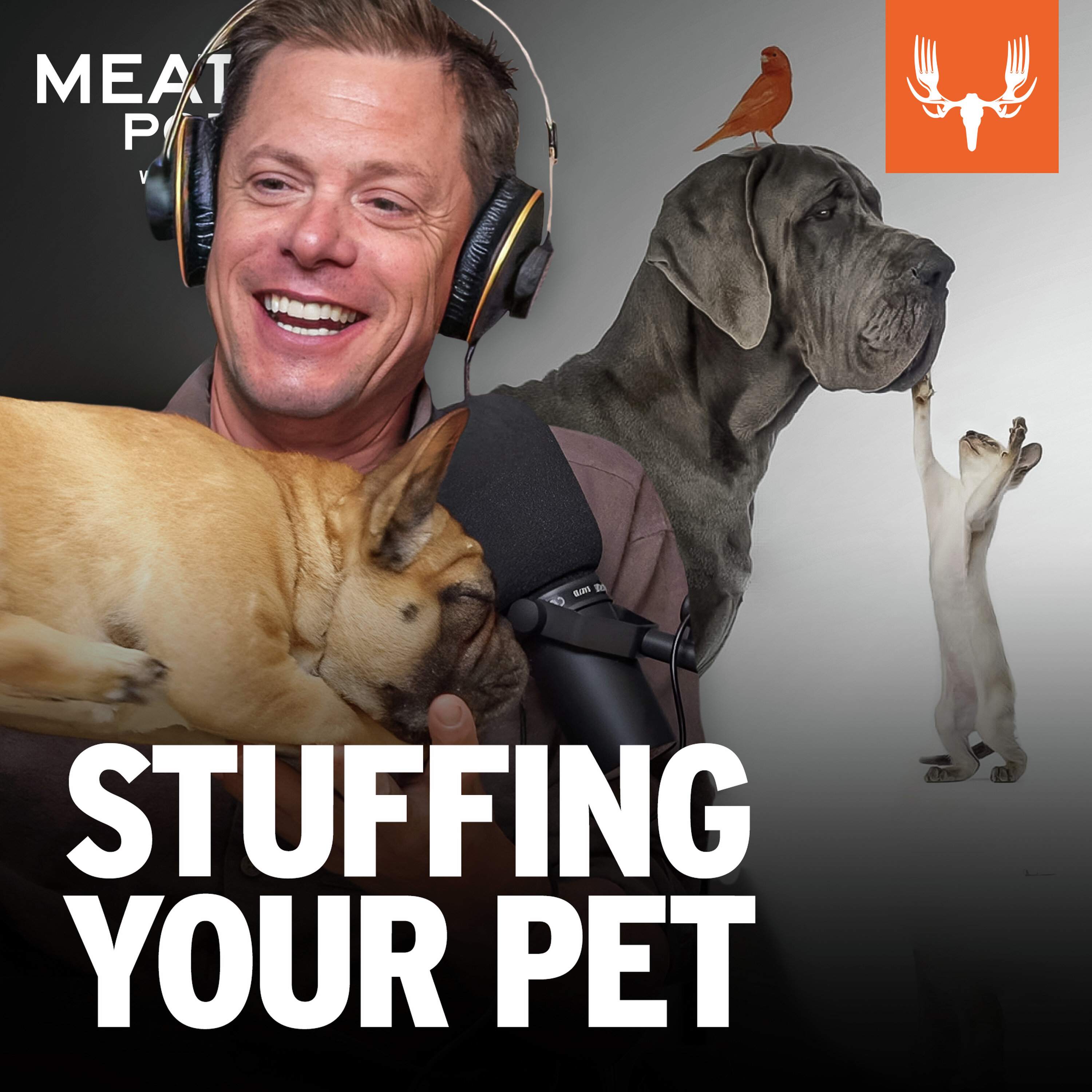
There's a stuffed Frenchie on the table that is sleeping.
- [52:36]
Jake Hofer
And it looks very real.
- [52:38]
Ray Macias
Yeah. It's got wrinkles.
- [52:39]
Jake Hofer
And you got a picture of me sitting here. Randall.
- [52:42]
Ace Alexander
Yeah.
- [52:44]
Jake Hofer
Whose heart is this?
- [52:45]
Ace Alexander
That's a client's heart. Actually. It's a pretty.
- [52:48]
Jake Hofer
That's that dog's heart. He wanted his dog's heart.
- [52:51]
Ace Alexander
Yeah. Yep. Smile after saying that.
- [52:56]
Jake Hofer
So how do you. How do you do that? Is it freeze dry or something?
- [52:59]
Randall
Yeah, freeze dry.
- [53:00]
Ray Macias
So I had a question about that.
- [53:02]
Jake Hofer
A lot of questions. You grind that up and eat it.
- [53:05]
Ace Alexander
Technically.
- [53:05]
Randall
Technically.
- [53:07]
Ace Alexander
I mean, not with what we inject it with, but.
- [53:08]
Jake Hofer
Oh, you inject.
- [53:09]
Ray Macias
Perhaps the strange part about the heart to me is like, if I took my dog to you and said, I want my heart, and obviously we can't, you know, these are your clients. So we don't. But like when they get it back to like, oh, I've never seen that before. You know, I've never seen my heart.
- [53:27]
Jake Hofer
You ever think about that? Yeah, you never get a good look at your own heart.
- [53:31]
Ace Alexander
Yeah, that's true.
- [53:32]
Randall
Well, they've seen it done. You know, they've seen the, the sample. So yeah, they get a good idea how. What they're getting. So.
- [53:38]
Ray Macias
Yeah, that is.
- [53:40]
Jake Hofer
I could see tracker. Oh, yeah.
- [53:43]
Ace Alexander
Getting done like that and it wouldn't.
- [53:44]
Jake Hofer
Be that different than the way it is now. Yeah, it just kind of lays there. I mean.
- [53:48]
Ray Macias
Yeah, I was gonna say I, I spend, when I'm at home, I spend 95% of my time around sleeping dogs.
- [53:55]
Ace Alexander
Yeah.
- [53:55]
Randall
Yeah.
- [53:56]
Jake Hofer
And you can spend 100% and I can't spend dogs.
- [53:59]
Ray Macias
But like, I, I could never tell you that that wasn't a live dog.
- [54:03]
Jake Hofer
That is. There's nothing about work that's freeze dried.
- [54:07]
Ace Alexander
Yeah, it's a, it's a hybrid. It's a.
- [54:10]
Jake Hofer
Okay.
- [54:10]
Ace Alexander
Yeah. Yeah, we do a little bit of everything. It's like a weird.
- [54:14]
Jake Hofer
Yeah.
- [54:17]
Ray Macias
So what.
- [54:18]
Ace Alexander
Wow.
- [54:20]
Ray Macias
What is the freeze. Like, could you explain the freeze drying process? I mean, I think most people are familiar with like standard taxidermy. You're tanning the hide, you're putting it over a mold, then you're, you know, molding and painting and stuff like that. But what is the freeze dry product like? You start with a dead dog, Right. What do you do?
- [54:41]
Randall
So we prep it. Obviously we got to do some skinning.
- [54:44]
Ray Macias
Yeah.
- [54:44]
Randall
In our case, you know, all the organs and fatty tissue has to be removed because those things don't freeze dry. Well, except, you know, obviously, if you do it separately. But so we prep them. We. We actually cast a mold out of their body. So we have the same, the perfect same dog's body. So that's how you get to.
- [55:12]
Jake Hofer
So you know where to end up.
- [55:14]
Ace Alexander
Yeah.
- [55:15]
Randall
So, but the head, the skull is still. It's all there. It's intact. You know, the legs, all the skeletal.
- [55:23]
Jake Hofer
Structure like that leg will freeze dry. Good. Because there's just nothing to it.
- [55:27]
Randall
Right.
- [55:27]
Ace Alexander
It's just fats and oils is what makes it difficult in the freeze dryer. So you got to get rid of pretty much fats and oils. Just don't freeze dry.
- [55:33]
Jake Hofer
Okay.
- [55:34]
Ace Alexander
Yeah, that's the biggest thing. And then we sometimes we'll 3D scan and then digitally print the bottom. You know what I mean? Some of the, like the body portions and stuff like that, because we, we're big on 3D printers and scanners because we've got quite a few of them just for the film industry. If they want like a quick paw that matches something, we can 3D print it, you know what I mean, and then figure that out. So we've meshed a lot of different Ian Edomina Industries into what we do.
- [56:00]
Randall
The pits.
- [56:01]
Ace Alexander
Yeah, yeah.
- [56:01]
Jake Hofer
Who's, who's dog is this?
- [56:06]
Ace Alexander
I don't know if he wants to be named, but it's a client.
- [56:08]
Jake Hofer
It's a client's dog. Does he know it's here?
- [56:10]
Ace Alexander
Yeah, yeah.
- [56:12]
Jake Hofer
That's incredible.
- [56:13]
Ray Macias
Yeah, it really, it really is.
- [56:17]
Jake Hofer
Dude, that dog looks like it's laying there sleeping.
- [56:19]
Ace Alexander
Yeah, yeah, he's.
- [56:20]
Corinne
I'm getting all emotional.
- [56:22]
Ace Alexander
Yeah. Think of all the moments.
- [56:24]
Randall
Yeah.
- [56:25]
Corinne
Think about your own dogs laying there.
- [56:26]
Jake Hofer
Thinking about when he's alive. How, like that, how big of a dog? Like, does the size matter?
- [56:32]
Randall
It does. Obviously bigger dogs, it's a lot more work and it takes a lot longer. In the, in the actual freeze dryer.
- [56:37]
Jake Hofer
You should see Corinne's dogs.
- [56:38]
Corinne
Yeah, we got it.
- [56:39]
Jake Hofer
Yeah. Great.
- [56:40]
Corinne
Great Dane and, and Lind is upstairs. So they both.
- [56:44]
Ace Alexander
How, how, how many pounds?
- [56:45]
Corinne
But 1, 1. 120 and 130 something.
- [56:50]
Ray Macias
So he's calculating how much time it's in the freezer.
- [56:54]
Ace Alexander
We just got one in.
- [56:55]
Jake Hofer
He's working up an invoice.
- [56:57]
Ace Alexander
Someone came in from the east coast that he's on and it was about £160.
- [57:01]
Randall
Yeah. So that's the biggest so far.
- [57:05]
Jake Hofer
You want him frozen? Probably. Yeah.
- [57:07]
Ace Alexander
Yeah, for sure. Yeah. Yeah. And that's the biggest thing is people sometimes, I mean they're not, it's not like a hunter who knows what they're doing the prep work for. So. Yeah, they don't know to freeze. So you know, there's times where like they've, you know, you're mourning morning and.
- [57:22]
Randall
They, they just have them out for 24 hours or hair starts to slip. Yeah.
- [57:28]
Jake Hofer
Latex.
- [57:29]
Ace Alexander
Yeah. And age, you know, honestly age. Sometimes they lose a lot of weight.
- [57:34]
Jake Hofer
Yeah.
- [57:34]
Ace Alexander
And we got to be honest with you, if you bring in a 17 year old.
- [57:38]
Randall
Yeah.
- [57:39]
Ace Alexander
Dog who lost X amount of pounds and you're like. And you show me a photograph when they were three, four years old.
- [57:44]
Jake Hofer
Yeah.
- [57:45]
Ace Alexander
We can add a bit of weight, but we got to be realistic about.
- [57:48]
Jake Hofer
Yeah, but that goes in Hollywood. That goes on all the time.
- [57:50]
Randall
Get it, try to make it look good.
- [57:54]
Jake Hofer
Yeah. I mean, if we had a band, this is where they would play. Hey, we've got some, two Musicians in the room.
- [58:01]
Ace Alexander
There you go.
- [58:02]
Ray Macias
Huh?
- [58:04]
Jake Hofer
All right. I, I don't even know where to begin.
- [58:07]
Corinne
That's just. Yeah, it's wild.
- [58:10]
Jake Hofer
That's why it looks great.
- [58:12]
Ace Alexander
Nice.
- [58:14]
Jake Hofer
Back when I was. I don't know where. I don't know where things stand attacks through me now, but when I was younger it would be like you just order all these molds. I mean like, let's say you're doing. Let's say, let's say you do whitetail deer. Right. You just order a mold. Right?
- [58:30]
Ace Alexander
Right.
- [58:30]
Jake Hofer
Yeah, for the most part. I mean like for most work, be that you go on to taxidermy.com and it's like head to, you know, shoulder mount looking. Right. Yeah. But. And you guys, there's no.
- [58:45]
Ace Alexander
Yeah.
- [58:45]
Randall
That's why Texas get into it. Yeah. So there is no, no forms.
- [58:52]
Ray Macias
French bulldog.
- [58:52]
Jake Hofer
No French bulldog. Yeah. You don't go French Bulldog. 25 pounds. No sleeping.
- [58:57]
Ace Alexander
Yeah, yeah. 4 inch nose to eye.
- [59:00]
Jake Hofer
Yeah.
- [59:00]
Ray Macias
The cute little paw cross thing that.
- [59:02]
Jake Hofer
He used to do.
- [59:04]
Randall
Yeah. So that's where I think that's where the big difference is. There is nothing pre made or, or there's nothing we can order that's.
- [59:12]
Jake Hofer
It's all from scratch.
- [59:13]
Randall
It's all from scratch.
- [59:16]
Corinne
His little heads on his little paw with the little like, it's like. Yeah, like cheek extra skin.
- [59:22]
Randall
Yeah.
- [59:22]
Jake Hofer
So is the first, is the first step. So he, he never got. You never sent this to get tanned?
- [59:30]
Ace Alexander
No, no, no.
- [59:32]
Randall
That's where the freeze dryer kind of takes over. You know, the freeze drying kind of is like the tanning process, but it's, it's, it's done by the removing the moisture off and kind of. It's pretty much the same result.
- [59:49]
Ace Alexander
Yeah.
- [59:49]
Randall
I mean obviously this is brittle. You know, it's, it's, it's, it's. I mean it's stiff.
- [59:54]
Jake Hofer
Yeah. Would you, would you expect that this is, this, is this will last?
- [59:59]
Ace Alexander
Oh, yeah.
- [60:00]
Jake Hofer
Because.
- [60:00]
Ace Alexander
Because we do a little bit of a weird hybrid thing. We, we make sure that if you just put this in a freeze dryer without doing kind of like the hybrid thing that we do with it, it wouldn't last because fats and oils just, they're not going to freeze dry. It's Ian Ed Emanuel two, three years, you'll have slippage, you'll have falling apart. Yeah.
- [60:22]
Jake Hofer
But when you. Here's a.
- [60:24]
Corinne
Are those like the actual ears?
- [60:26]
Ace Alexander
Yes.
- [60:26]
Corinne
Yeah. Okay.
- [60:27]
Ace Alexander
Yeah, yeah.
- [60:28]
Jake Hofer
No insert in there.
- [60:29]
Ace Alexander
No insurance. Yeah.
- [60:30]
Jake Hofer
Okay. So when you thought when you thaw an animal out, is it, is the clock. Like, the clock's ticking now. Right?
- [60:38]
Randall
Right.
- [60:38]
Ace Alexander
Yeah.
- [60:39]
Randall
Yep.
- [60:40]
Jake Hofer
That's what I'm just curious, like, without.
- [60:42]
Randall
It.
- [60:44]
Jake Hofer
How are you hustling so much to wind up with something so realistic with, like, the proper folds in its neck and all that? Like, once you thought out, you got to start working on it. I mean.
- [60:53]
Randall
Yeah. So we.
- [60:54]
Jake Hofer
You have how many. How many hours, days, till it's got to be kind of, like, done.
- [60:59]
Randall
So we probably. We start working on. Let's say start on it today, and you get to a certain point and then you put it back in the refrigerator. So next day we pull it out.
- [61:08]
Jake Hofer
Okay.
- [61:08]
Randall
And you continue until probably two days.
- [61:12]
Ace Alexander
Yeah. I mean, you gotta. You gotta keep it cool. You gotta keep it frozen. So, I mean, it's not like you got to get it all done now.
- [61:18]
Randall
Yeah, not at one go.
- [61:20]
Ace Alexander
Yeah. Like, I could start on it, you know, have it pretty much ready to go. Maybe I got the mold, and then I'm like, okay, wait, it's Friday. You know, I want to go. Have a good weekend, whatever it is, pop it in the freezer. Then maybe Sunday night, come out, pull it over to the fridge. By tomorrow morning, Monday morning, it's, you know, thought out. And now we can go to the next step.
- [61:39]
Jake Hofer
Yeah, yeah. How distraught are people when they bring you their pets?
- [61:46]
Randall
Well, we get a variety of people. Some people are just normal, you know, not too emotional. Some people are really emotional sometimes, even when they call. We understand. So we try to be empathetic to their situation. And so that's kind of a different. It's like we're talking about going back from a deer to a. A pet to a fake thing. So you're on the phone.
- [62:16]
Jake Hofer
Yeah.
- [62:16]
Randall
So you're on the phone with someone that wants a snake for a show, and then the next call is someone crying over the dog, you know, over their head. So it's.
- [62:25]
Jake Hofer
It's a range of emotions.
- [62:27]
Randall
Yeah, it's a range of emotions. And also when they come in, you know, we have people from the studios come in, checking out, hey, I want to look at your crows. And they're going. And then we got someone bringing on, you know, their pet. It's. It's. It's very contrasting, you know, different energy. Different energy, different clients.
- [62:45]
Ace Alexander
Yeah. So we made a little. Like, there's like a little side pet room, like, almost like morning when you bring a pet in.
- [62:50]
Randall
Yeah.
- [62:51]
Ace Alexander
You go to this private room, and you kind of, you know, you can sit there, take your time. Just so it doesn't take Away from your experience, you know, I don't want a studio person to come in just like, hey, man, how's it going?
- [63:01]
Jake Hofer
Yeah, you got like some old lady crying over a cat. Yeah. Yeah, Picture that.
- [63:05]
Ace Alexander
Yeah.
- [63:06]
Jake Hofer
Do you. Do you wash the hides on those dogs thoroughly?
- [63:09]
Ace Alexander
A lot of.
- [63:10]
Jake Hofer
If I did my dog, I'd want to smell like my dog. Like kind of half rot. What? This, this is gonna be a tricky one. I don't want you guys to damage your business or anything. There's gotta be. Right. Like people are gonna have expectations and then they're gonna come in, you know, and you gotta be like, here it is.
- [63:43]
Ace Alexander
Yeah, yeah.
- [63:43]
Jake Hofer
And then they're gonna respond.
- [63:45]
Ace Alexander
Yeah.
- [63:46]
Jake Hofer
That seems to me fraught. That seems to me like that's gotta be a tricky moment. You gotta be having your fingers crossed.
- [63:54]
Ace Alexander
Well.
- [63:55]
Jake Hofer
That they're gonna be like, oh, perfect.
- [63:57]
Randall
Yeah.
- [63:57]
Jake Hofer
And not some other emotion because they're. Because again, it's emotional.
- [64:02]
Randall
It is.
- [64:02]
Ace Alexander
Yeah. It's different. Yeah.
- [64:03]
Randall
Well, so far we haven't had a. A bad experience, so we're pretty confident. So now when people come in and pick up their pets, we're pretty confident they'll be, you know, happy.
- [64:12]
Jake Hofer
Oh, dude, if I own this dog, I'd be thrilled.
- [64:14]
Randall
Yes.
- [64:15]
Jake Hofer
I don't know if some slept like that, but I'd still.
- [64:17]
Ace Alexander
Yeah, well, you gotta pick your pose.
- [64:20]
Randall
That's the thing.
- [64:20]
Ace Alexander
So if your pet sleeps a different way, you can take your. You know, we just get.
- [64:24]
Jake Hofer
Because people got pictures of their dogs.
- [64:26]
Ace Alexander
Sleeping and I would say like one to three pictures. Sometimes they'll send me like an album of a thousand.
- [64:31]
Jake Hofer
Yeah.
- [64:33]
Ace Alexander
And I'm like, so which one do you want? Yeah, one for the body pose.
- [64:38]
Jake Hofer
Yeah.
- [64:39]
Ace Alexander
One for facial expression.
- [64:41]
Jake Hofer
If you guys did my dog, it'd be super easy because when my dog sleeps. Just looks dead anyway.
- [64:47]
Randall
Yeah.
- [64:48]
Jake Hofer
So it'd just be like. Just make it look like a dead dog. Can we get it between AC and Ray just for like a really nice clean shot of it. We've gotten some good shots, but not. Not the whole body or anything like that.
- [64:58]
Ace Alexander
Just for the audience.
- [64:59]
Jake Hofer
Is it okay to slide it? I don't know how one handles the.
- [65:01]
Ace Alexander
Stuff it up over. Yeah, yeah.
- [65:04]
Jake Hofer
Oh, even the bottom. Show the bottom of that thing.
- [65:07]
Ace Alexander
Yeah, yeah.
- [65:08]
Jake Hofer
Wow.
- [65:09]
Corinne
Oh, wow.
- [65:12]
Jake Hofer
Damn.
- [65:12]
Ace Alexander
Yeah. Cuz you can't ride.
- [65:13]
Jake Hofer
God, that dog looks great, Phil.
- [65:15]
Ace Alexander
Is that good? It's great.
- [65:17]
Jake Hofer
Yeah, it's.
- [65:18]
Ray Macias
It's really kind of spooky how that.
- [65:21]
Jake Hofer
Makes me want to get our dog stuff.
- [65:22]
Ray Macias
Yeah.
- [65:23]
Randall
See, that's the Thing with people by tracker.
- [65:25]
Jake Hofer
Come with me.
- [65:29]
Corinne
Killed for the making of this product.
- [65:30]
Ray Macias
The difference is you want to get them stuffed today.
- [65:37]
Randall
Yeah. So people, it's not for everyone. You know, some people, of course not, you know, like they have a negative reaction to the actual aspect of.
- [65:46]
Jake Hofer
Sure.
- [65:46]
Randall
Preserving your 100.
- [65:48]
Jake Hofer
Dude. You're dealing with a fraction. Pet owners.
- [65:51]
Randall
Yes. And. But people don't realize like when they see the final product, when the final outcome, it kind of changed their perspective on, on how to look at the, the actual, you know, process.
- [66:06]
Ray Macias
Yeah.
- [66:06]
Randall
Or the, or the, or the. Just the thought of, you know.
- [66:10]
Ace Alexander
And then also we do have, we have a bunch of other options. So like a common person will come in. We have an acclimation machine, for example, so you can just do the ashes and we have an artist that can get you a custom portrait. We can do the podcast. So a lot of people go for like the generic normal.
- [66:26]
Randall
Yeah.
- [66:26]
Ace Alexander
Kind of preservations. And then some people do like a partial preservation. Some people just want the skull bronzed.
- [66:31]
Jake Hofer
Did you just say a paw cast?
- [66:32]
Ace Alexander
Yeah, yeah, yeah.
- [66:34]
Ray Macias
I thought he said a podcast, but.
- [66:36]
Jake Hofer
I knew he didn't, but I thought that's what.
- [66:39]
Ace Alexander
Yeah, yeah, yeah.
- [66:41]
Jake Hofer
Oh, just like an imprint for him.
- [66:42]
Ace Alexander
Exactly. We do like bronze, you know, podcasts or. I mean, and then some people want the skull, you know, they want like a bronze skull. So we'll do that as well.
- [66:50]
Jake Hofer
Really?
- [66:51]
Ace Alexander
Everybody has. I mean, that's the way the heart came about. One person asked for it.
- [66:56]
Jake Hofer
Like Vincent Price or something wanted that. Like, who wanted that?
- [66:59]
Ace Alexander
I can't even remember who the first person. Yeah. It was. But then it's. It like somehow other people start to know about it. And then we just said, well, we might as well.
- [67:06]
Randall
Same thing with the. What the pot. I remember someone.
- [67:09]
Ace Alexander
Yeah.
- [67:09]
Randall
Just asked, you know, oh my God, I would just love to get his spa and preserve. So like, like, okay, well, we'll do it, you know.
- [67:16]
Jake Hofer
Yeah.
- [67:17]
Ray Macias
But unless it has that yeasty smell that's. I mean, for me, that freedom attraction of the dog's ball.
- [67:23]
Ace Alexander
Yeah.
- [67:23]
Jake Hofer
I mean, come on.
- [67:24]
Ray Macias
I, I'm wondering about like just, I.
- [67:26]
Corinne
Mean, dust some Fritos on.
- [67:28]
Ray Macias
Because there are, there are certain animals I feel like out there, like wild animals, game animals, that when you taxidermy them, they don't ever really have like the full magic, you know, they're dead. Yeah, I know, but like this, like, like if you saw a mountain lion like that or. I'm sort of wondering about like the, the bleed over between this freeze dry technique. And what we think of as traditional taxidermy.
- [67:53]
Jake Hofer
Like why, why are people not doing well? I guess they do, because I remember I used to sell otters to a guy that would freeze dry them and sell them a long time ago. Like that didn't look like that. I can tell you.
- [68:02]
Ray Macias
Bear Paw would be wild.
- [68:04]
Ace Alexander
Yeah, I mean you can do.
- [68:05]
Jake Hofer
Oh yeah. Can you do Bear Paw?
- [68:07]
Randall
Yeah.
- [68:07]
Ace Alexander
We could do a better ball. Yeah. I think the biggest thing.
- [68:10]
Ray Macias
Yeah.
- [68:11]
Ace Alexander
Some of the chambers, a lot of the freeze dried chambers just aren't too huge. So you got a size issue. And then also like the amount of space that you do. You know, we could fit 15 of these, these guys in one chamber. If we fit in a mountain lion, we're going to charge you a lot of money for that mountain line to sit there for four months in the freeze dryer.
- [68:27]
Randall
We could have done four of these.
- [68:28]
Ace Alexander
Guys for these guys.
- [68:29]
Jake Hofer
Yeah. Because it's filling up your real estate. Yeah.
- [68:32]
Ray Macias
A squirrel.
- [68:33]
Jake Hofer
Yeah, that'd be cool.
- [68:34]
Ace Alexander
Yeah, we freeze dry screws. I mean, I think it would great like if you had like a Caracal cat or whatever, you know, like, I think because you'd have the skeletal structure in there and I think that's what messes up those mounts a lot of times.
- [68:45]
Jake Hofer
I got you.
- [68:45]
Ace Alexander
Some of the forms are great, but not as good as natural.
- [68:47]
Randall
So when you order the forms, they have no, no detail. They're just plain, you know, foam forms with no detail. So that's why you don't, you don't get the, you know, the wrinkles, the expression on the actual.
- [69:01]
Jake Hofer
That's a really good point. That like the, the, the, the native structure. Meaning the skull. Like the native structure is there.
- [69:08]
Randall
Yes.
- [69:09]
Jake Hofer
And the paws. Like the structure is there.
- [69:11]
Ace Alexander
Yeah, exactly. You got all the skeletal structure and same thing with the faces. I mean the face is the core of the mount. So if you were to do any kind of wild cat, I mean, it's just, it would make more sense to have the natural skull and everything, the natural ears. Because I mean, I've done them traditionally, but it's just. You're sculpting now. It's up to the sculptors, it's up to the artist, you know, and it's not up to the, the way he really was. Naturally.
- [69:34]
Randall
Yeah.
- [69:34]
Jake Hofer
So that dog's skull is in.
- [69:36]
Randall
Yes.
- [69:36]
Jake Hofer
This mountain right here, right? Yes.
- [69:38]
Ace Alexander
Yeah.
- [69:38]
Jake Hofer
Wow. If you guys married?
- [69:41]
Ace Alexander
Yeah, we're both. Yeah, I'm married. Yeah.
- [69:43]
Jake Hofer
What do they think about your line of work?
- [69:46]
Ace Alexander
Well, they love it.
- [69:47]
Randall
I mean, they're okay with it. I mean, it's, it's, it's, it's for us, it for, it's interesting, you know, it's, it's, it's fascinating. It's not like even when people ask, oh, so what do you guys do? What is, you know, it's just interesting to spark a conversation just on the fact that, yeah, it's so random, you know, so out there.
- [70:13]
Jake Hofer
Hunting demands preparation, persistence, and gear that will not quit on you. That is why I wear First Light. This isn't about hype. It's about no compromise. Gear built to perform, built to last. Whether it's their industry leading merino wool keeping me comfortable through the cold and the hot, or their durable outerwear shrugging off the elements, First Light is built to help you go farther and stay longer. Designed by hunters for hunters with a deep commitment to conservation and land access. No shortcuts, no excuses, just gear you can count on. Head to First Light dot com. That's F I R S T L I T E dot com.
- [70:59]
Corinne
I'm still fascinated by how you guys took over the business and even got into doing this at this level. You know, I mean, this is, this, you know, this looks incredible, amazing. And it seems like all the techniques that you've developed to apply to this work is just, you know, it's not like you were, you know, apprenticing for decades, you know, and yeah, it's just mind blowing.
- [71:27]
Ace Alexander
I think it's a lot of the, just the random stuff, like we're talking about that every day and I think the studio's pushed us a lot.
- [71:33]
Randall
Yeah.
- [71:33]
Ace Alexander
Because we've, we've had to come up with so many ways of, like, how, I mean, there's times where we've sold a job and we're like, now how are we going to do it?
- [71:40]
Randall
Yeah.
- [71:42]
Ace Alexander
They want an elephant and they need it in this. You know what I mean? Like, whatever it is, I'm like, like, okay, it's going to take this long to make the mold. We got to do the fiberglass. So I think all those freak out moments led us to like piece it all together to be able to do something.
- [71:56]
Jake Hofer
Do you, do you ever do work on, on like time and material? Because you don't know what you're getting into.
- [72:05]
Ace Alexander
We do, but we, yeah, I mean, we do time. I mean, we definitely, we price it all out, of course, material, time. Also just what we're getting out of the way because a lot of the studios, like I said there, it's all last minute stuff. So it's not, it's not like 100 just drops off. Hey, man, I'll pick it up in six months. Yeah, no big deal. If you go seven months, just make sure it looks great. Yeah. Whereas the studio is like, hey, can I get progress pictures? Yeah, I get it. But like right now I don't want to send you a photograph of a phone form.
- [72:35]
Randall
Yeah.
- [72:35]
Ace Alexander
It looks nothing like what it's supposed to be.
- [72:37]
Randall
And then they're gonna try to change this, you know, the. Oh, my God, I wanted, you know, and they're gonna kind of make changes while we're in that. We're in the middle of the process.
- [72:47]
Jake Hofer
And then what I meant by time, materials, like in the trades we. Like when I used to work for my buddy Ronnie, we would do jobs that were a bid.
- [72:56]
Ace Alexander
Yeah, right.
- [72:57]
Jake Hofer
You're like, it'll, it'll be this. And if we lose money or make money, that's the price.
- [73:00]
Randall
Right.
- [73:01]
Jake Hofer
Or some things that were more open ended. It'd be like, we're gonna work on the project at blank dollars an hour plus our materials, because we don't know what we're getting into. So you normally come back with a. It'll be this.
- [73:17]
Randall
Yes.
- [73:17]
Jake Hofer
And then you lose money or make money on. On how well you can fulfill.
- [73:21]
Randall
Right.
- [73:21]
Ace Alexander
Yeah. I mean, at this point, I think we got a good idea of where it's going to land. So if we say, oh, it's gonna be whatever, 6800, they'll be like, okay. Well, you know, and we kind of know, we're, you know what, we're banking on it. How much the latex is, the foam is, the, you know, whether we're using natural hide or faux furs or whatever.
- [73:39]
Jake Hofer
Yeah, yeah.
- [73:40]
Randall
No, go ahead.
- [73:42]
Jake Hofer
I was gonna ask, what other pets have you guys done, other than dogs?
- [73:47]
Randall
Well, we do cats. Hamsters.
- [73:52]
Jake Hofer
Hamsters.
- [73:53]
Ace Alexander
Rats. Yeah, rabbits.
- [73:55]
Randall
Rabbits. Bearded.
- [73:57]
Ace Alexander
A goldfish created dragons.
- [73:58]
Jake Hofer
Can you play?
- [73:59]
Ace Alexander
We did do a goldfish once.
- [74:00]
Randall
Oh, we.
- [74:01]
Ray Macias
Yeah, it was in the article.
- [74:02]
Ace Alexander
Yeah, we did. I remember that.
- [74:04]
Jake Hofer
Hamsters.
- [74:05]
Ace Alexander
Oh, yeah, hamsters. Little rats, little baby rats. Like there's, you know, sometimes a kid will have a rat and a naturally pass. And they'll be like, oh my God, I love this. And they'll come in and. Yeah, we'll do it. Yeah. I mean, if that's what you want.
- [74:17]
Jake Hofer
I mean, Hollywood families keep rattling.
- [74:21]
Ace Alexander
You did a wallaby Pet Wallaby. Petty. Horses. We've done horses.
- [74:26]
Jake Hofer
Of course.
- [74:26]
Randall
Yeah.
- [74:28]
Ace Alexander
But now horses are done traditionally because it's just. You don't want to freeze dries.
- [74:33]
Randall
Yeah, there's no. There is no.
- [74:35]
Jake Hofer
You guys did Roy Rod your company did Roy Everett.
- [74:39]
Ace Alexander
Yeah, he was a taxidermist at the time who did it?
- [74:42]
Jake Hofer
Yeah. You guys weren't even born yet.
- [74:43]
Ace Alexander
No, he was. He was amazing. Yeah. Yeah.
- [74:46]
Randall
I think he's still at a museum somewhere. Right.
- [74:48]
Ace Alexander
They sold in an auction. It's I think somewhere in the Midwest now. I think it's sold for like a quarter of a million. I don't know, something like that.
- [74:55]
Jake Hofer
Have you ever done a pet cow?
- [74:57]
Ace Alexander
We did it. Yeah. We do that every once in a while. We do the two headed cow. Yeah, that's a two headed cat. That was natural. That was a stillborn or whatever it was. We did that for somebody as well. A lot of longhorn. You know what I mean? Just your natural, like, you know, they'll keep the hide and then we'll just do the head mount.
- [75:13]
Jake Hofer
Well, how many pieces are coming out of your studio every year?
- [75:17]
Ace Alexander
I don't know.
- [75:18]
Jake Hofer
Is there something out the door every day?
- [75:20]
Ace Alexander
Yeah, yeah, definitely. Yeah.
- [75:22]
Randall
Pets.
- [75:23]
Corinne
Oh, my God.
- [75:24]
Ace Alexander
Yeah, Pets. And I think we have rentals too. So we have a. So that's another weird thing. Yeah. So somebody will come in and then we have a big short showroom with everything you can think of. So we have a bunch of fake stuff, we have a bunch of real stuff. So you can come in and you'll find like a line paw that's hinged where it'll swipe. So if you're working on a commercial for whatever and you need that, it will just be like, oh, perfect. That's the one I want. Boom. Pick it up, we'll ring you up, you'll bring it back. It's a weak rental. Drop it back off. That's how it is. Yeah.
- [75:56]
Jake Hofer
How many employees you got now?
- [75:58]
Ace Alexander
There's like six. Seven. Seven.
- [75:59]
Jake Hofer
Oh, okay.
- [76:00]
Ace Alexander
Yeah.
- [76:02]
Ray Macias
And then a list of subcontractors.
- [76:03]
Randall
Yes.
- [76:04]
Corinne
That just seems incredible though.
- [76:08]
Jake Hofer
Explain the subcontractor thing. There's like guys out there that have these particular skill sets.
- [76:12]
Ace Alexander
Yes.
- [76:12]
Jake Hofer
And what are they doing when they're not doing the work for you?
- [76:15]
Randall
Well, they work for other studios.
- [76:17]
Jake Hofer
Oh, okay.
- [76:17]
Randall
So they're like constantly. Either, you know, one studio to another.
- [76:24]
Jake Hofer
And that doesn't cause problems for you?
- [76:26]
Randall
Well, no, not, not really because we have, you know what? We, we have a. A list of many. So if one's not available, we go to the next one and eventually things work out.
- [76:40]
Jake Hofer
Give me an example of. Give me, give me an example. Give me example of a Guy that's not on pay, not on staff, who you call.
- [76:48]
Ace Alexander
Yeah.
- [76:48]
Jake Hofer
For special assignments. Like. Well, I don't understand.
- [76:51]
Randall
It would be more like sculpting.
- [76:53]
Ace Alexander
Yeah. So like David Grasso, he's a phenomenal sculptor. Okay, great. So he. He will.
- [76:58]
Jake Hofer
He.
- [76:58]
Ace Alexander
I think he was the one who sculpted, I think, the snakes for Landman. Yeah, I think it was. Yeah.
- [77:03]
Jake Hofer
For what?
- [77:04]
Ace Alexander
For Landman. So he digitally sculpted the snake. Like the whole snake was digitally sculpted. He sent us the file. So he worked from home on that thing? Yeah, on the computer. He digitally sculpt the whole thing to our measurements, to everything. We went back and forth. And he sent us a file, we 3D printed file, made a mold out of it, silicone, casted the snake. So they're flexible. Put wiring or whatever they wanted to do in them. And he'll float around. So then he'll just. He'll do projects for another studio. But these are effect studios that he mostly works with.
- [77:33]
Jake Hofer
Okay.
- [77:33]
Ace Alexander
So it's like Hollywood studios where they'll call him. And now he's got a sculpt for the new whatever film that's coming out, you know, so he just floats around. So for us, it's not like, oh, they're taking our sculptor. It's. No, I mean, everybody can do what you do, you know, that's cool.
- [77:49]
Corinne
I didn't get to that episode yet in Landman. I just started watching it. So. Billy Bob Thornton.
- [77:54]
Ace Alexander
Yeah, yeah, I remember those snakes.
- [77:58]
Jake Hofer
I watched that one. You guys ever do a black mamba? Cheers and kill Bill. There's a black mamba in there, but it's alive. But then there's like, obviously some of your guys work is not your work, but someone's work is in there.
- [78:13]
Ace Alexander
Might have been Gary at the time. Yeah, yeah, yeah.
- [78:16]
Jake Hofer
Not sure.
- [78:17]
Corinne
I. I have to ask you about cloning, which I saw on your website. It says inquire about cloning.
- [78:25]
Randall
Yeah, yeah. So we don't. Obviously we don't do that in house.
- [78:30]
Ace Alexander
Right.
- [78:30]
Randall
But there is. There's a company in Texas, it's called ViaGen.
- [78:34]
Ace Alexander
Right? Yeah. So there's a company in Texas called ViaGen. We. Yeah, they're amazing. I mean, they do great work. So we take the samples. We're just affiliates with them. We help them out, and they help us out. So a client will come in. The most important thing, though, is you can't freeze the pet. So the pet say your pet naturally passes away. And you wanted to clone them. You can refrigerate them, but you can't Freeze. Freeze the pet, because it'll crystallize a sample and they won't be able to get the DNA. Okay. So that's one step that sometimes people kind of skip up on, and then they won't be able to do the cloning. But we just take five samples. So it'll be generally a couple from the ear. You know what I mean? Small little samples. We put them in little vials and we overnight them to them. But because if we're doing the full preservation, we need to take those from specific hidden spots. So sometimes when the vet does it, they do it from, like, the top back, and then we get the. You know, and then they want to preserve their pen.
- [79:25]
Jake Hofer
It's got a dimple.
- [79:26]
Randall
Yeah.
- [79:26]
Ace Alexander
You know what I mean? Now it's like. And then they take huge samples when you only need, like, tiny little samples, because they're not thinking about the preservation, they're just thinking about getting a good sample. So we take them from, like, the. Like. For example, if I was to take from here, I'd go from, like, the inner hip. You can't see it. It's already tucked the inside of the ear really deep in the ear canal where you can't see it. You know, areas like that.
- [79:47]
Randall
Yeah.
- [79:47]
Corinne
Wow.
- [79:48]
Jake Hofer
Have you ever done a pig getting suckled by all of its little piglets?
- [79:53]
Ace Alexander
We did do the little piglets. We did. Jesse sculpted those little piglets.
- [79:58]
Jake Hofer
I'd like that.
- [79:59]
Corinne
Hey, you know, we have a big.
- [80:00]
Jake Hofer
Old pig getting suckled by its pig.
- [80:02]
Corinne
We have two fetuses in the freezer.
- [80:04]
Jake Hofer
You should give them to those guys.
- [80:06]
Ace Alexander
There you go.
- [80:06]
Randall
Yeah.
- [80:07]
Corinne
Yeah. Steve killed a pregnant sow in Texas a few years ago. And then we vac sealed a couple of the. Yeah, we still have fetuses.
- [80:18]
Jake Hofer
I'll sell them to you.
- [80:21]
Randall
Do you have people.
- [80:21]
Ray Macias
Do you have people come in just to gawk?
- [80:24]
Randall
Yeah, all the time.
- [80:26]
Ace Alexander
Yeah, yeah, yeah. It's tough because you're in the middle, you know, I mean, it's working, but it's. You know, it's nice. It's a compliment because people just wanna. Some people go into town and be like, hey, I heard about this place. And they'll just roam around. The thing is, is nothing's roped off at her shop. So you can actually walk up to the polar bears, to the tigers, to the lions, and, you know, just hang out with them, take a photograph with them, whatever. It's not like a natural history museum where you're roped off with a scene in the background.
- [80:52]
Jake Hofer
Yeah.
- [80:53]
Ace Alexander
Like, now you can actually come in and feel what a polar bear feels like. Huh.
- [80:57]
Jake Hofer
That's cool. I'm surprised you guys can pull this off with only six or seven people. I mean, who answers the phone?
- [81:04]
Randall
It's between me and him. You guys are like, yeah, well, we're working on everything, so it's just incredible.
- [81:11]
Ace Alexander
I mean, we've had. We've had some front desk people, but it's difficult because they go into their spiel so fast sometimes that there's a lot of. There was a lot of relay, you know what I mean? Between, like, everything when. Especially when they wanted a custom, say, for example. And it just takes so long to get somebody trained up to really take on that position of knowing how to. Because you got to be creative on the spot. They're going to be like, hey, this deer's got to get hit, but he's got to have a hinge and his arm's got to twitch at the end. And we need it like. Like by Friday. So what do you got? Yeah. And then, you know, front desk is.
- [81:45]
Jake Hofer
Just gonna be like, my first day.
- [81:48]
Randall
We don't have that.
- [81:49]
Jake Hofer
You know, I'm new here. The front desk is like, let me go get Ace. Yeah, you're on the phone anyways.
- [81:54]
Ray Macias
It's not like ordering a pizza.
- [81:58]
Jake Hofer
Yeah, I can see that.
- [81:59]
Ace Alexander
So because of that, I'm like, you know what? Just. I'd rather just pick it up, be like, hey, yep, we'll have it by Friday. It's this much. We'll do it with this. Whatever, servo. We'll make a little clamp thing for it, whatever. Yeah, yeah, yeah.
- [82:12]
Randall
So it's kind of. It's. It's. We need to train someone, but it's gonna. It's gonna take months, you know?
- [82:17]
Jake Hofer
Yeah, we tried.
- [82:18]
Randall
We tried. I mean, and it's. It's. It's very difficult.
- [82:22]
Jake Hofer
So at this point, if you had to, like, if you had to pursue one path, the film business or the pet business, like which. Which are you more in love with?
- [82:37]
Ace Alexander
Well, in love. They love what the studios or consistency of.
- [82:40]
Jake Hofer
Yeah, but what's consistent?
- [82:43]
Ace Alexander
Well, it used to be the studios, but then the strike starting happening, then covet started happening. So that. That kind of made the industry go up and down. And then you got cgi, you got AI. I think at this point, the smart move would be leaning towards this. The, you know, here towards this, here towards the studios, because it's fun and you're just doing cool projects.
- [83:03]
Jake Hofer
Yeah, yeah, yeah, I could see that.
- [83:05]
Ace Alexander
Yeah.
- [83:06]
Jake Hofer
Yeah. Do you feel that the pet getting pets stuffed or taxidermied or what? Taxidermy. What do you, what word do you guys use?
- [83:12]
Randall
We use preserve.
- [83:13]
Jake Hofer
Preserve.
- [83:14]
Ace Alexander
Okay.
- [83:18]
Jake Hofer
Like, what is the sort of line, the graph line on pet preservation?
- [83:24]
Randall
Well, it's.
- [83:25]
Jake Hofer
It's not. There's no way it's stable.
- [83:27]
Randall
No. Well, I mean, it's actually pretty consistent.
- [83:31]
Jake Hofer
Really?
- [83:31]
Ace Alexander
Yeah, it's consistent and growing, I'll tell you that.
- [83:33]
Randall
And for the last.
- [83:34]
Jake Hofer
So it's up. It's a gradual.
- [83:36]
Randall
It's last five years, it's been significantly up.
- [83:40]
Jake Hofer
Okay.
- [83:41]
Ace Alexander
Okay. Yeah. I mean, I think people think of the old ways of doing it because we got. I mean, we have mounts at the shop that were done dogs. I mean, from the 30s and 40s. These bad plaster just like newspaper coming.
- [83:53]
Jake Hofer
Out of their ears and stuff. Yeah.
- [83:55]
Ace Alexander
You can see Celsius are just kind of like. Like wire poking outside and stuff. And I think people think of that. So I think until it gets ingrained in their mind that like, you actually are going to get your pet to look like your pet. It's going to take time for people to see. And I think it's slowly starting to come out with social media and everybody being like, oh, wait, actually, that does look good. Yeah.
- [84:14]
Jake Hofer
I mean, well, yeah. And also people now, like more and more and more. Not that you get your relative stuffed, but people now more and more act like pets are.
- [84:25]
Randall
Oh, definitely.
- [84:26]
Ace Alexander
Yeah, exactly.
- [84:27]
Jake Hofer
You know what I'm saying? It's like a much more of a trend right now to have a dog and pretend it's like a person.
- [84:31]
Randall
Right.
- [84:31]
Ace Alexander
100.
- [84:32]
Jake Hofer
But. But that's, but that does. That falls apart because you don't get people stuffed, preserved.
- [84:37]
Ace Alexander
Some people do.
- [84:38]
Jake Hofer
Is that legal?
- [84:39]
Ace Alexander
I think I've seen it done a couple times. Not in the U.S. now we get calls for it.
- [84:43]
Randall
I mean, you know, we don't know if someone's calling, if it's real or they just messing with us, but they've asked, you know.
- [84:51]
Ace Alexander
Yeah.
- [84:51]
Jake Hofer
What do you say?
- [84:52]
Ace Alexander
Just not.
- [84:52]
Jake Hofer
Not our business.
- [84:53]
Randall
Not. Not.
- [84:56]
Ace Alexander
I think there was a story of a girl who. She called and I think she got it done. She was. She had to get an arm amputated. Oh, yeah. And she wanted to get a skeletal articulation of the arm.
- [85:08]
Jake Hofer
Yeah. People send us those pictures.
- [85:09]
Ace Alexander
Yeah.
- [85:10]
Jake Hofer
Of. Of their arm. Skeletons done and whatnot. There's a guy had his finger done.
- [85:14]
Corinne
Had his finger done and it was like the Michigan hello. Or it was something.
- [85:18]
Jake Hofer
He just had his finger on a pedestal.
- [85:20]
Corinne
Oh, okay.
- [85:20]
Jake Hofer
He had it stuff.
- [85:22]
Ace Alexander
Yeah.
- [85:22]
Jake Hofer
Preserved.
- [85:22]
Ace Alexander
Exactly.
- [85:23]
Jake Hofer
But you don't want to do that.
- [85:24]
Ace Alexander
Work that's not that way down. It's just, you know, we just haven't. It's just not on our radar yet.
- [85:30]
Ray Macias
Well, you think it's, you think it's stressful to have someone come in and look at the pet for the first time and be like, so you nailed it, dude.
- [85:37]
Jake Hofer
Your finger, you know. Damn sure. Yeah.
- [85:39]
Ray Macias
Or your uncle.
- [85:43]
Jake Hofer
Oh, that's true. Yeah. If you had your uncle done and you're like, I want him to look like he did when he was reading.
- [85:48]
Ray Macias
And you're like, like, hey, just so you know, we've never done this before.
- [85:54]
Jake Hofer
I tell you, though, I'm blown away by the quality of that dog. I mean, all like. I know we've been like having a couple laughs about stuff. I mean, just from a, from a, I mean, from a technical, like a technical standpoint, that dog is incredible.
- [86:09]
Ray Macias
The minute I, the minute I saw it, it changed my entire perspective on the idea of stuffing a pet.
- [86:15]
Randall
Right. Yeah. That's.
- [86:17]
Ace Alexander
That happens.
- [86:18]
Jake Hofer
Yeah. What you don't, I guess what you don't have. And it's, and it's probably, it's. It's a trade off. It's because it's so perfect. You can't get the soft. You can't get the feeling of having stuffed it.
- [86:35]
Ace Alexander
No. Yeah.
- [86:36]
Jake Hofer
Because then it's not gonna, you know, I mean, it's like, it's either like, like, is it going to be soft and squishy or is it going to look like absolutely. Like, Like a dog.
- [86:44]
Randall
Right.
- [86:45]
Ace Alexander
Yeah. Sometimes people want to do like a soft version of their pet. Thing is, we'll do it for television and film, but with a pet, it just won't last.
- [86:52]
Jake Hofer
So I see.
- [86:53]
Ace Alexander
We get requests for it all the time and I'm just like, you can't get the structure. Yeah.
- [86:57]
Randall
And I guess people kind of love the thought of, of, you know, having their kind of like cuddly pet. Like you're saying fluffy, floppy. You know, it sounds good in, in theory, but yeah, when it comes down to the technicals and durability and, and also looks. It's not gonna look. You know what I'm saying?
- [87:20]
Ace Alexander
Thing is, these hips, like, for example, like, you got this with these hips that, those tan highs that are sitting in this room right now, you'd have to soak them to get a good stretch. To be able to get full hips. Right. It. To get a soft hand, you can't soak them. Yeah. So you're never going to get that stretch.
- [87:36]
Jake Hofer
To get a what?
- [87:36]
Ace Alexander
To get a. Like, if you have those soft ends to keep it soft and pliable, you can't get it wet, you know?
- [87:42]
Jake Hofer
So now, you see that bobcat back there? I wetted him and stretched him back out. Randall, grab that bobcat.
- [87:47]
Ace Alexander
He's pretty stiff now. Or.
- [87:48]
Jake Hofer
Yeah. It's like. It's a trade off. Either.
- [87:51]
Randall
Right, Right.
- [87:52]
Jake Hofer
You either want to get him back. Like I put him back on the stretcher board.
- [87:55]
Ace Alexander
Yeah.
- [87:56]
Jake Hofer
But feel it. You can tell.
- [87:58]
Randall
Oh, yeah.
- [87:58]
Ace Alexander
Oh, yeah. Yeah.
- [87:59]
Jake Hofer
It's a bummer.
- [88:00]
Ace Alexander
So that's the thing.
- [88:00]
Jake Hofer
It's like a trade off.
- [88:01]
Ace Alexander
Yeah. It looks like a tube. There's no structure.
- [88:03]
Jake Hofer
Yeah.
- [88:04]
Ace Alexander
If you just stuff this with cotton batting, you're just like, oh, here's a little soft stuff.
- [88:07]
Randall
It's gonna look like a sock, you know?
- [88:08]
Ace Alexander
Yeah.
- [88:11]
Jake Hofer
You got the wrong way, Randall. Belly out, buddy. I know. Show them spots. Yeah. It looks incredible. I would. I would definitely see that. Like, I get the point. You're saying if someone knew that they could have. And I never. I've never seen them alive. But, I mean, I look at enough dogs over the years.
- [88:29]
Ace Alexander
Yeah.
- [88:29]
Jake Hofer
If someone knew that they could have a dog look that good, that they'd be more inclined to do it because they're probably picturing their mind. Like when you go into a pawn shop and there's, like, crazy looking. We did a whole calendar called up old taxidermy. Right. They're like, picturing that. I don't want my dog bag all bug eyed, you know?
- [88:48]
Ace Alexander
Yeah. Just like I was. Weird.
- [88:49]
Ray Macias
Sydney used to always talk about getting her our first dog stuffed.
- [88:54]
Jake Hofer
Preserved.
- [88:55]
Ray Macias
Preserved.
- [88:55]
Corinne
Client here, guys?
- [88:57]
Jake Hofer
Yeah.
- [88:57]
Ray Macias
No, well, he's. He's in ashes now. But I always. I would always say to her, you're gonna walk in there and you're gonna look at his lip, and it's just gonna be like, you're never gonna get that dog lip right. And, you know, you spent 12 years, like, messing with his lips and face and, like, you know it so intimately. It's got to look like that, or else it's just.
- [89:19]
Ace Alexander
Yeah, yeah.
- [89:20]
Ray Macias
Alienating.
- [89:21]
Ace Alexander
Yeah.
- [89:22]
Jake Hofer
You know, my kid got a bear to spring, a nice bear. And I call him. Why did I call him about this? Oh, I know why I was out of town, but I was talking to taxiderms, and I'm like, here's the deal. Everybody always gets them growling like a rug. It's always that he's got his mouth wide open, and I'm like, I've come to Appreciate. I've done the same thing, but I've come to appreciate the closed mouth rug. Because when you see bears, and I've watched a great many bears, they're generally not running around their mouth. Okay.
- [90:00]
Ace Alexander
Yeah, that's true.
- [90:01]
Jake Hofer
And I'm like, so you could have it look like all the teeth and everything, or you could take my recommendation and we could get him with his mouth closed. How do you want it? Yeah, what do you think? He said he's 15, open mouth. Oh, yeah, absolutely.
- [90:16]
Ace Alexander
Super snarled.
- [90:17]
Jake Hofer
Aggressive.
- [90:17]
Randall
Yeah, of course.
- [90:18]
Jake Hofer
Have you ever done a pet in a, in an aggressive posture?
- [90:25]
Ace Alexander
We got it. We got a request, and I can't name his name. He's a famous person. You know what I'm talking about? Yeah, yeah.
- [90:33]
Jake Hofer
He wanted his dog and it's aggressive.
- [90:35]
Ace Alexander
He has a cat, but it's somewhat of a wildcat. So I kind of understand it a little bit. It's a domestic, like, it's like a Savannah cat mixed with, I forgot, Savannah. Something else.
- [90:46]
Jake Hofer
Okay.
- [90:46]
Ace Alexander
And he wanted up cat.
- [90:48]
Jake Hofer
Yeah.
- [90:48]
Ace Alexander
And he wanted it on a branch, but kind of aggressive, almost like it's gonna pounce on something.
- [90:52]
Jake Hofer
Are you gonna do it?
- [90:53]
Ace Alexander
Yeah, definitely. Yeah.
- [90:54]
Jake Hofer
Who was it? Well, tell me what now? Tell me the, tell me the initials. I'll tell you my initials. SR 1 for 1.
- [91:07]
Ray Macias
I mean, some of the charm in pet cats is that they don't like you.
- [91:10]
Ace Alexander
Right, Right.
- [91:11]
Ray Macias
Like some of the charm of the pet cats that they come in and swipe you run away. So I get it.
- [91:15]
Ace Alexander
Yeah.
- [91:17]
Jake Hofer
But I, I, I would also picture, just from a business standpoint, unless it's cost prohibitive, like I'm guessing, people are going to be people that are emotionally attached to their pet are going to have a looser wallet than someone that's getting five or six things a year because they're a big hunter. Right. They're gonna look at it differently. But I would picture that if someone wanted like, like I, I like river otters a lot. So I catch an otter, I would, I could picture a world in which I'm like, no, man, I want some. Like that. Yeah, an otter. Are you doing that kind of stuff too?
- [91:52]
Ace Alexander
Yeah, yeah, absolutely. I think we're doing. What are we doing? I mean, it's just the pelt, but a seal pillow right. Now, remember that seal that what seal pelt? We're doing a couple seal pelts for the mammal care center. So we get calls too, from nature centers.
- [92:05]
Jake Hofer
And what are you doing with the seal pelts?
- [92:08]
Ace Alexander
They just wanted to preserve it, as in an exhibit. Yeah.
- [92:10]
Jake Hofer
Like a hide.
- [92:11]
Randall
Yeah, yeah, like a hide.
- [92:12]
Jake Hofer
Like what's hanging around in here, right?
- [92:13]
Ace Alexander
Exactly.
- [92:13]
Randall
But it's going to be obviously freeze dry, so it's going to be stiff on a board, you know, like on a nice board.
- [92:19]
Jake Hofer
Freeze dried, Yeah, A freeze dried hide.
- [92:23]
Randall
Yeah.
- [92:23]
Ace Alexander
You know why though? Because we wanted to keep the, the fins beautifully intact, you know, I didn't want to have to like recreate them in a poor manner where it's not keeping the structure and the integrity of it.
- [92:34]
Jake Hofer
Understood.
- [92:35]
Ace Alexander
Yeah. So that we kept the fins, the bottom fins, the side fin, you know what I mean? And then we laid it out flat. So now when you go to see it, you get the real anatomy of the actual fin. And it's not just my version of it. Having not hung out with seals.
- [92:50]
Jake Hofer
Hunting demands preparation, persistence and gear that will not quit on you. That is why I wear their First Light. This isn't about hype, it's about no compromise gear. Built to perform, built to last. Whether it's their industry leading merino wool keeping me comfortable through the cold and the hot, or their durable outerwear shrugging off the elements, First Light is built to help you go farther and stay longer. Designed by hunters for hunters with a deep commitment to conservation and land access. No shortcuts, no excuses, just gear you can count on. Head to first light dot com. That's F I R S T L I T E dot com. Can you hand that cat back over here a minute, Randall? Yep.
- [93:39]
Ace Alexander
Sorry.
- [93:42]
Jake Hofer
Let's say I had a cat and I like I have a cat and I just skin it and flesh it it. Okay. And I send it to you and I don't want to get it tanned, I just want to get it freeze dried. Is it all the same? Like I just get it back and it's freeze dried and I can hang it up for the rest of my life on a wall.
- [94:05]
Randall
Pretty much, yeah.
- [94:06]
Ace Alexander
I mean you'd have to flush it still, you know what I mean?
- [94:08]
Jake Hofer
No, I'm gonna send it to you fleshed and dried.
- [94:10]
Ace Alexander
Yeah. If it's flesh and dried. Yeah. I mean, but you don't want to salt it because it might. You're not salt. Okay then.
- [94:17]
Jake Hofer
No, everything we do, we flesh it. It goes on a wooden board. Well, easy flip. But no, it's like, it's just beam. Yeah, yeah, it's like flesh and beam and then it goes to the tannery like that, right?
- [94:28]
Ace Alexander
Yeah.
- [94:28]
Jake Hofer
So there's a world in which I could send you and I wouldn't have any Shrinkage?
- [94:32]
Ace Alexander
No, you wouldn't have shrinkage. But it would be stiff. It wouldn't be nice and floppy like this.
- [94:36]
Jake Hofer
Stiff or stiffer maybe. Stiff, stiff. Stiff as a board.
- [94:40]
Ace Alexander
Oh, yeah, you'd lose all the. It'd be like these ears.
- [94:44]
Jake Hofer
So that's not a good replacement.
- [94:46]
Ace Alexander
No, no, no. You want to do just a commercial tannery and get it nicely. Yeah. All right.
- [94:52]
Jake Hofer
I was thinking about, I was getting excited for a minute there.
- [94:55]
Ace Alexander
Yeah.
- [94:55]
Ray Macias
I was thinking about different animals. You could get freeze dried and I thought a big old beaver sitting there.
- [95:01]
Jake Hofer
That's what I was thinking. Hayes right now is doing a big 50 pounder. Yeah, he's from, from the Boston with the Boston. Oh, really? They want that big beaver done in a three point football stance. But it's a hefty beaver.
- [95:19]
Ray Macias
But I'm just trying to picture freeze drying the tail because there's so much fat.
- [95:23]
Jake Hofer
Oh, that'd be hard. That is nothing. But.
- [95:25]
Corinne
Yeah, yeah.
- [95:26]
Ace Alexander
What would you do for that? You gotta get rid of all that fat.
- [95:28]
Corinne
Yeah.
- [95:28]
Ace Alexander
You have to skin that tail out, get it all out. Take as much as you can. Just leave. Leave the best structure you can while still keeping the, you know, removing all the. Making sure the integrity is still there. It's gonna last.
- [95:40]
Jake Hofer
Yeah. Now I don't want to pry, but. But I'm gonna help me out here. But I've done nothing other than pride. I want to pry, but I don't wanna. I just like, I'm sensitive of getting into it. Like, you know, getting into big. You know, like someone's saying to me like, so what do you, how much do you sell a book for? Yeah, it's like, I don't know, man. Dude, it's complicated question. Yeah, I don't feel like telling you. Help me understand what I'm looking at here with this dog.
- [96:05]
Randall
Probably around the range of three grand.
- [96:09]
Jake Hofer
That's it.
- [96:10]
Ace Alexander
Yeah. No, yeah. It's not.
- [96:13]
Jake Hofer
You could have told me eight and I'd have been like. Yeah, it makes sense.
- [96:15]
Ace Alexander
Yeah, yeah.
- [96:16]
Ray Macias
I thought my mind went to 10.
- [96:18]
Ace Alexander
Yeah, yeah.
- [96:18]
Jake Hofer
Three grand.
- [96:19]
Ace Alexander
No. So it's.
- [96:21]
Jake Hofer
We, that's a lot of work.
- [96:23]
Ace Alexander
It is. But we, we kind of know.
- [96:27]
Corinne
I'm saying they can up their prices.
- [96:30]
Jake Hofer
I didn't call around like you got. Do you have competitors?
- [96:34]
Ace Alexander
Not necessarily. I mean, there's a guy on the east coast who's great. He's a friend of ours.
- [96:38]
Jake Hofer
Did you send business his way?
- [96:40]
Ace Alexander
Yeah, yeah, we've worked together. He's freeze dried some stuff for us as well before. Yeah. Yeah, before, you know, years ago, he used to freeze dry stuff for us as well. He's the only other guy that really, I think, is really in the. In the business. Yeah, but he's way out east, so it's. I mean, there's. There's a lot of people everywhere. There's business for everybody.
- [96:56]
Jake Hofer
That. That's what. That's kind of what I was getting at with why I thought the price be more is because. I thought the price be more because it's. There's a little bit of a scarcity or a special circumstance or whatever, you know?
- [97:11]
Ace Alexander
Yeah, no, definitely, I think. Well, yeah, most people.
- [97:14]
Jake Hofer
That's a very reasonable. That's very economical. Economical dogma.
- [97:20]
Randall
That's why we have a high volume of pets, because it's. It's pretty reasonable.
- [97:24]
Jake Hofer
You know, you're not gouging. You're not gouging.
- [97:26]
Corinne
Wow.
- [97:26]
Ray Macias
What about a hamster? What are we looking at?
- [97:29]
Randall
Probably, what, 1200, 12 on 900.
- [97:32]
Ace Alexander
1200 bucks? Something like that.
- [97:33]
Ray Macias
Way more value in the dog.
- [97:34]
Ace Alexander
Yeah. Yeah, absolutely.
- [97:36]
Jake Hofer
Yeah.
- [97:36]
Ace Alexander
I mean, the hamsters just. It's more so just because you gotta be. They slip easy.
- [97:40]
Jake Hofer
The hair on a hamster slips easy.
- [97:43]
Ace Alexander
Well, because they thaw out so quickly. You know what I mean? So if you're, you know, you got your son or whoever that was mourning this little hamster or whatever it is, he's gonna. He's gonna be crying for a while, you're gonna be consoling them, and then by the time you bring the hamster in, if you didn't freeze right away, then we got to do the skin and we got to do everything. And sometimes there's, you know, you got to be careful with the slippage. You got to do it fast.
- [98:02]
Jake Hofer
Now, some part of you. Some part of you. When a parent comes in with a hamster and they're like, little Jimmy's so upset about his hamster, some part of you has be thinking, little Jimmy's just gonna have to get over it. But that's bad for business. So you're just like, sure, bring it in.
- [98:21]
Ray Macias
You don't have to say anything.
- [98:22]
Ace Alexander
It's fine. No, but it's, you know.
- [98:26]
Randall
No, we get it. We get the attachment part of.
- [98:29]
Jake Hofer
Sure, yeah.
- [98:29]
Randall
You know, I have a dog. I'm attached to my.
- [98:32]
Jake Hofer
Are you gonna do your own dog?
- [98:34]
Randall
Probably something, you know, I'm not sure what, but I will definitely do some, you know, create some memorial for him.
- [98:41]
Jake Hofer
Really?
- [98:42]
Ace Alexander
Yeah.
- [98:42]
Jake Hofer
How about you? You got pets?
- [98:43]
Ace Alexander
Yeah, well, I had a cat. It was 18 years old when he passed away. He passed away. Memorial Day.
- [98:47]
Jake Hofer
Just know.
- [98:48]
Ace Alexander
Yeah, yeah, yeah. But did you freeze it? Well, when he passed? Yeah, it's, you know, and we have the acclamation machine. Thing is, he was already 18. He lost a lot of weight. He wasn't in his prime. So it's not like. Even if I wanted to preserve him, like, you know, And I will advise people of that as well. Like, if you come in and you got an old boy who's, you know, not in the best shape, I'll tell you. No, maybe that preservation might not be the best thing for you and hunting.
- [99:13]
Jake Hofer
We'll say that would have been a nice buck next year.
- [99:15]
Randall
Year, Right.
- [99:16]
Jake Hofer
That would be a nice cat.
- [99:17]
Randall
Last year.
- [99:20]
Ace Alexander
Seven years ago.
- [99:21]
Jake Hofer
Yeah.
- [99:22]
Ray Macias
Do you ever have people who want to fix things on their dog?
- [99:26]
Jake Hofer
Like, when.
- [99:26]
Ray Macias
When I've got labs. So by the time they're 8 or 10, they're covered in lumps, and you can usually see them. Do people come in, they're like, could you just smooth out that big fatty.
- [99:37]
Jake Hofer
Bulge on the side of his ribs?
- [99:38]
Ace Alexander
There's tumors.
- [99:39]
Randall
Yeah.
- [99:40]
Ace Alexander
You know, these are pets, but there's a lot of that. There's a lot of hair loss. Sometimes. You know, the hardest thing is actually because we mix the studio side with the faux fur stuff.
- [99:49]
Jake Hofer
Yeah.
- [99:49]
Ace Alexander
They, you know, IV marks from the vet clinics. Because when they do surgeries and stuff, they shave.
- [99:54]
Ray Macias
Yeah, yeah, yeah.
- [99:55]
Ace Alexander
So we got to do a lot of the hair transfer work, the flocking work that we do for the studio. Fake stuff, and we bring that over to the Preservation Center.
- [100:02]
Jake Hofer
You can make it. If a dog had a shave surgery.
- [100:05]
Randall
Yeah.
- [100:05]
Jake Hofer
You could try to get it back to where it looked. Right?
- [100:07]
Ace Alexander
Yeah, yeah, yeah. Create the. The fur to. How in the hell did you do that?
- [100:11]
Corinne
You guys need a charge?
- [100:12]
Ace Alexander
Well, we do it for the studio.
- [100:13]
Randall
Yeah, yeah. So we.
- [100:15]
Jake Hofer
How do you. How do you dye the fur? Like, we gotta take some hair and get it the right color.
- [100:20]
Ace Alexander
I mean, we have an array of, like, a lot of fur. And if it's short hair, we do this flocking method with longer fibers. Like. Like this dog, for example. Say the ear was slippage. There was some slippage. We'd use long fibers.
- [100:33]
Randall
We just flock it. It's kind of electromagnetic like.
- [100:37]
Ace Alexander
Yeah, man.
- [100:38]
Jake Hofer
I gotta feel like there's gotta be so much information. Your guys. Heads.
- [100:42]
Randall
Yeah.
- [100:42]
Jake Hofer
That if all the people that work there died, no one's gonna walk back in there and fire this business back up. Yeah, that's what I'm saying. Like a Garage, like if you're a mechanic, everybody could die.
- [100:56]
Randall
Yeah.
- [100:56]
Jake Hofer
You're gonna find, you know, other guys could come in and. Right. But on this, I feel like the institutional knowledge.
- [101:03]
Randall
Yeah. It's just the.
- [101:04]
Jake Hofer
Would be like just all that junk.
- [101:06]
Ace Alexander
And that's what's difficult too, even for us to find the right hands when we want to bring somebody else on is, you know, because sometimes, like, I don't want to, you know, we don't want to be doing everything all the time. You know what I mean? But there's times where I'm like, but it's got, but it needs to look a certain way. So until I could find that hand that can do. And we have some great hands, but until I can find all the pieces to make sure like that the quality. Quality controls everything. It's got to go out looking perfect every time, you know, so that's, you know, so yeah, there's a fear of like, we step away. Who's going to jump in if you.
- [101:39]
Jake Hofer
Did right now, have to. I'm sorry, go ahead.
- [101:40]
Randall
So that's another kind of like a problem for expansion because we want to expand. You know, we are expanding whether we want or not. But the problem is sometimes we so overwhelmed with so much, you know, work that it's kind of. We try to find, you know, like he says, the hands. But it's very difficult, you know, to, to, to find that person that's gonna, you know, get it or, or, and then stay and stay, you know, and like it obviously, because you kind of have to like, you know what you're doing.
- [102:14]
Ace Alexander
Yeah.
- [102:14]
Ray Macias
And you can't, you can't just tell them to go watch a couple YouTube videos to learn.
- [102:19]
Randall
No.
- [102:20]
Ray Macias
Some technique.
- [102:21]
Randall
Yeah. I mean, it's hell helps if they watch a video, but, but it's all, it's all hands on, very specialized.
- [102:26]
Ray Macias
Yeah.
- [102:27]
Jake Hofer
Where. Where do you look like I bet you'll get from coming on here? You'll get resumes from people. Yeah, but you probably get resumes all the time. And, and, but, but if you had to go look like, if you had to find a hire, I mean, I, I just would assume you're going to look in the traditional taxidermy pathway, right?
- [102:44]
Ace Alexander
Yeah, I think. Yeah. I mean, Joseph was a great hire. He just came in that he was moving from Arkansas to California and he walked in one day with a photograph of all his mounts. Okay, good guy. Straight up, stand up, dude. And he just, he's like, look, check it out. Just moving out here. I'm gonna be out Here soon, I think he was studying. He wanted to be a pastor. And now he's in Idaho. He's a pastor in Idaho. So he was there. He's told me, I'm gonna be here for four years if it's okay with you. Here. Here are my mounts. He was phenomenal. Yeah. So talented. Great.
- [103:13]
Jake Hofer
He came and worked for four years.
- [103:14]
Ace Alexander
Yeah.
- [103:14]
Jake Hofer
Out of Arkansas.
- [103:15]
Ace Alexander
Out of Arkansas. Stayed in Los Angeles, went to the master seminary, whatever it was, and then put in great work. And then we kind of taught him the studio side of it because he was. He was more from the traditional tax room side of it.
- [103:26]
Jake Hofer
Yeah.
- [103:27]
Ace Alexander
So I was like, but I gotta rush this. You know what I mean? Like, these are all, you know, we do little tricks to kind of skip a lot of, you know, because sometimes you got to cut corners to make things happen for film that you wouldn't do with, like, a hunting mount because.
- [103:38]
Jake Hofer
Of the deadline, because.
- [103:40]
Ace Alexander
So. But he was great, you know, but it's difficult to come across people like that. That. Yeah. Who have that talent, natural skill, integrity, ingenuity.
- [103:47]
Jake Hofer
Just.
- [103:48]
Ace Alexander
You don't even have to. You just turn over and he's already doing the right thing.
- [103:50]
Ray Macias
And there probably aren't that many people coming from taxidermy school that are like, Hollywood.
- [103:55]
Randall
Right.
- [103:56]
Ray Macias
That's where I'm.
- [103:56]
Jake Hofer
Yeah, that's the other thing is, you know, I'm sure there's a lot of. At least in our world, a lot of guys that are into taxidermy, you know, are. Want to. Want to live in rural areas because they like to hunt. And frankly, that's what a lot of their clients are because they're doing hunting mounts, you know, like. Like their bread and butter is whitetail deer shoulder mounts.
- [104:15]
Ace Alexander
Yeah. Yeah, exactly. You know. Yeah. It makes sense. Yeah. I mean, we'll get our mounts, but we get a lot out of state. You know, people still bring stuff in a lot of Colorado, New Mexico, Brooks, you know, just, you know, all around California. We'll get some. It was a bit decent last year just because there was good rainfall. So it was a little bit better, but it's just a little forkies for the most part. You're not gonna.
- [104:37]
Jake Hofer
But you'll do. You do those too?
- [104:39]
Ace Alexander
Yeah, generally do. Yeah. Yeah, yeah. So we'll do those as well. Yeah. Huh.
- [104:43]
Jake Hofer
How many hours you work a week?
- [104:45]
Ace Alexander
Depends. Well, we.
- [104:47]
Randall
Surprisingly. It's pretty. Pretty normal schedule, you know.
- [104:51]
Ace Alexander
Well, it.
- [104:51]
Randall
Only when we have a certain project that is due and it's.
- [104:54]
Ace Alexander
It's.
- [104:55]
Randall
It's going to require, you Know, weekend or maybe long days, nights. It happens. But we try to keep it as normal as we can.
- [105:06]
Ace Alexander
Yeah, our hours are pretty much 9 to 4, Monday through Friday, which are short hours. But if there's a big project that comes in, if it's worth it to stay, it's worth it to stay.
- [105:18]
Randall
And it's really never nine to four. You know, we say four, but you're still there afterwards. Be there at 5:30, you know.
- [105:25]
Ace Alexander
Yeah, but.
- [105:26]
Jake Hofer
Yeah, yeah, but you're still able to keep some normal.
- [105:30]
Randall
Yeah.
- [105:30]
Jake Hofer
With all that movie work, you're still to keep a normal life.
- [105:33]
Randall
Yeah, we tried.
- [105:34]
Ace Alexander
Yeah, yeah, yeah. All right, man.
- [105:38]
Jake Hofer
What am I forgetting to ask you about? You wish I would have asked you.
- [105:40]
Ace Alexander
About trying to think freeze drawn fish. Now we don't really freestyle fish.
- [105:47]
Randall
No, no fish.
- [105:49]
Ace Alexander
I think you pretty much got it.
- [105:50]
Randall
No, we cover it.
- [105:52]
Jake Hofer
Haze. That won't touch fish either.
- [105:55]
Corinne
I don't.
- [105:56]
Jake Hofer
Yeah, Hayes don't do fish. Hayes is stuck on.
- [106:00]
Ace Alexander
You know, they just, you know what it is?
- [106:02]
Jake Hofer
He's got what he, you know what he does? He's got what he does that he likes doing. And I think he was telling us, I think he was saying he's not a fish man.
- [106:09]
Randall
Right.
- [106:10]
Jake Hofer
And fish taxidermy is weird now because there's no part of the fish. Yeah, I mean it's just like, like you could, there's, there's no part of the fish.
- [106:17]
Ace Alexander
Right now we have this guy Robert. He was Robert's fish mounts for years. I think he retired now, but we bought his whole mold collection. So we have like almost a thousand molds. I mean, you're talking, we have, keeping all this stuff. Yeah, we have a little warehouse up north. I mean outside of the super expensive area, you know, way up north out of Los Angeles. And there's a 16 foot whale mold.
- [106:42]
Randall
Yeah, like shark molds. You know, shark molds.
- [106:46]
Ace Alexander
I mean, leather bag, turtle like. Yeah.
- [106:48]
Jake Hofer
So you just walk into your warehouse now and then and just dig around looking for something you swear must be in there.
- [106:52]
Ace Alexander
Oh yeah, we have them all marked square. Everything's lined up. Everything's kind of a 12 is going to be silicone, whatever the salmon, you know, section, you know, so it's, it's all marked up.
- [107:04]
Ray Macias
One question I had earlier was, what does your store look like? Is it in like in an industrial park? Is it on a, a street that people walk up and down? Like, where's the. I'm just trying to picture in Hollywood the taxidermy shop. Like, do you get foot traffic?
- [107:23]
Randall
Do You. So it's kind of.
- [107:25]
Ray Macias
What kind of places are next to you?
- [107:26]
Randall
It's kind of mostly industrial area, but then we have a, a pathway for bikes and people walk there too, right in front of, of the shop. So yeah, some people, sometimes we have the, you know, the roll up door open. They could see from across the street and they just look and come in like it sparse their, you know, their attention, you know, so they like just walk in and check it out.
- [107:52]
Ace Alexander
Yeah, y.
- [107:53]
Randall
We do get some foot, foot traffic. People don't really walk out on the, on the sidewalk. Right. There's really nobody walking on the sidewalk but they, they have that pathway to, to walk. So that's where they kind of see us. And there's. We're next to a city yard at la. City yard, you know, one of those big yards where they keep the trucks, the maintenance and, and, and then some other studios, right?
- [108:17]
Ace Alexander
Yeah, there's a lot of studios kind of around there. It is kind of like an artsy, somewhat artsy area, but it's not in the bus. It's not like in Hollywood. It's north. So you have a little, and you know, more industrial space. And then. And my buddy's next door, Mark.
- [108:29]
Randall
Oh yeah.
- [108:31]
Ace Alexander
So he does like. It's like an MMA gym, which is easy because then I can go from here and I can go work out. Work out over there. Absolutely.
- [108:38]
Jake Hofer
Dude. I get over there every couple years. I'm going to come in and say, hi, man.
- [108:40]
Randall
Oh, absolutely.
- [108:41]
Jake Hofer
Yeah, I would love to come check it out. We should have done this there.
- [108:45]
Corinne
Yeah, I know.
- [108:45]
Jake Hofer
Yeah, we thought, we know we kicked around trying to come to your place, but just like scheduling was kind of hard. Just a lot of, A lot of. We said a lot of travel this summer and stuff going on, but our original intention was to record in your place.
- [108:58]
Ace Alexander
Yeah, that would have been great.
- [108:59]
Corinne
Well, next time we're there we'll just, we'll tack it onto a schedule and we'll do another episode.
- [109:05]
Randall
Absolutely.
- [109:06]
Corinne
Yeah, we'll do that.
- [109:07]
Jake Hofer
Be great. We'll come out there and do a 30 minute flopper. Yeah, man, I tell you though, I can't bring it up enough. That dog is unbelievable, man.
- [109:16]
Ace Alexander
Dogs. Yeah. Appreciate it.
- [109:18]
Jake Hofer
Yeah, yeah, it's cool. It's a really nice. I mean, like I said, you guys are good sports about having some, you know, about having a couple laughs, but holy, man, the dog speaks for itself. That's why it's, it's incredible looking.
- [109:31]
Ray Macias
Yeah, we've had a lot of strange objects and things Pass through the studio and this is like. There's like a power to that dog.
- [109:40]
Jake Hofer
I wish you could leave that dog here, but probably not a good idea.
- [109:45]
Randall
We could work something out.
- [109:49]
Corinne
Rental fee.
- [109:49]
Jake Hofer
Oh, do you guys have. Do you guys have cats and dogs in your rental area?
- [109:55]
Randall
Oh, definitely.
- [109:56]
Ace Alexander
Yeah. Absolutely. Yeah. Sometimes they'll donate hide or whatever it is if they just do.
- [110:01]
Randall
Yeah, the neighbors, you know, I got a. A neighbor's cat that, you know, died and he said, you know, take it. You know, maybe I'll see it in a movie some. Somewhere, you know, sometime, like, perfect, let's do it.
- [110:14]
Ace Alexander
Yeah.
- [110:15]
Jake Hofer
Do you guys ever grab stuff from the side of the road that looks interesting?
- [110:18]
Randall
No.
- [110:19]
Ace Alexander
No, not necessarily.
- [110:21]
Randall
Usually it's really beat up, you know, it's like run over and it's blood, guts everywhere. So it's not.
- [110:28]
Ray Macias
Yeah, you just go to those for inspiration.
- [110:31]
Ace Alexander
Your movie work, exactly. Photographing. Yeah. That's gonna be this way.
- [110:36]
Jake Hofer
Yeah.
- [110:37]
Ace Alexander
And it's actually. I think it's illegal in California to.
- [110:40]
Jake Hofer
Well, I don't know, because a lot of states have been making it that you can. There's been an odd trend. There's two trends that sort of surprise me in cultural hunting. Cult hunting culture trends. That's not the right word. Hunting legal trends. One trend is to let kids hunt younger and younger and younger. Right. That seems like counter than what would actually happen. You could picture that they would make it. That they had to be older and older and older. Like make it more stressful.
- [111:10]
Ace Alexander
Strict. Yeah.
- [111:11]
Jake Hofer
But there's a tendency that let kids to let it be a family decision. There's also a surprising tendency to loosen roadkill salvage laws rather than make them more strict.
- [111:25]
Randall
Interesting.
- [111:26]
Jake Hofer
You know what I'm saying? Like, if you. If you said to someone who didn't follow this, like, do you imagine over the years it became more strict or less strict to pick up roadkill? They would go, absolutely. More strict because everything's more strict.
- [111:38]
Ace Alexander
Yeah, sure. It's always about. Yeah, yeah.
- [111:41]
Jake Hofer
So they like. Like our state, where we're at right now. It used to. I. I mean, I would do it anyways. My friends would do it anyways. As civil. Like civil disobedience.
- [111:50]
Ace Alexander
Right.
- [111:50]
Jake Hofer
I don't want to bring up like rows of parks.
- [111:52]
Ace Alexander
Yeah.
- [111:52]
Jake Hofer
But like civil disobedience to like pick up deer and eat them. Yeah. Because you'd be like, guilty as charged.
- [111:58]
Ace Alexander
Yeah.
- [111:59]
Jake Hofer
Like a dead deer. The guy in front of me hit.
- [112:02]
Randall
You know, like, what's the problem with that?
- [112:04]
Jake Hofer
So he's. Now you can't Right.
- [112:06]
Ace Alexander
Yeah, yeah, absolutely.
- [112:07]
Jake Hofer
Where I said, remember that whole area? I don't know what it was a couple years ago, it was like state after state. Oregon, I think maybe state after state after state said, okay, if someone hits it and you want to put it to use, you just gotta call and.
- [112:19]
Corinne
Yep.
- [112:20]
Jake Hofer
Which makes total sense.
- [112:21]
Randall
Yeah, it makes sense.
- [112:22]
Ace Alexander
No, I agree. Does anybody, you think anybody tries to purposely truck it?
- [112:25]
Jake Hofer
That's what, you know, what they thought of here. Because here you have. Here you have. We have a lot of lar. Like a lot of somewhat rare large mammals. And so there's some that are exempt. Meaning, like take like a bighorn sheep. Yeah, a bighorn sheep. Like a big, mature bighorn sheep. Ram is going to have a lot of value. Would have a lot of black market value. And so they're, they're. They're not part of the roadkill rule. It's just the more common stuff. Deer, deer, elk, moose.
- [113:00]
Ace Alexander
Okay.
- [113:02]
Jake Hofer
Like, you know, more sort of like a. So, you know, common animals, high food value.
- [113:07]
Ace Alexander
Yeah.
- [113:07]
Jake Hofer
But they've pulled out some of the stuff that they don't want to give people a reason to act like they got it in their truck. Meaning, like, oh, I road killed a mountain goat. They'd be like, you road killed a mountain goat, so you can't. There's no excuse to have certain animals. I think I'm guessing. Guessing. But it's like. Yeah, they don't want to create a pathway for you to have certain rare animals in your possession by claiming that whatever happened to them. It's probably some part of the thinking on it.
- [113:34]
Ace Alexander
Right. That makes sense.
- [113:35]
Jake Hofer
The other part of it, which is interesting here, I'm not sure if this is true. In other states, you take the whole thing. You can't pick and choose. So our buddy Yanni, he had a roadkill moose. Big critter.
- [113:47]
Ace Alexander
Yeah.
- [113:48]
Jake Hofer
You can't gut it on the side of the road.
- [113:50]
Randall
No.
- [113:50]
Jake Hofer
Like, when you take it, you take it it.
- [113:52]
Ray Macias
Yeah.
- [113:53]
Ace Alexander
Wow.
- [113:53]
Jake Hofer
So you got that whole son of a. Has to be loaded onto a trailer. You can't just go get the parts you want.
- [113:58]
Ace Alexander
Yeah, yeah.
- [113:59]
Jake Hofer
You can't just get like the good meat and leave it laying there. They're like, no holding moose, which de. Incentivizes some. You know, you got to go get a flatbed trailer. Yeah.
- [114:07]
Randall
You know, and a lot of help, you know, to get it out.
- [114:10]
Ace Alexander
Yeah.
- [114:10]
Jake Hofer
So they make it a little bit hard, but picture, if not, you just jump out of your truck and pull the gourmet cuts. And then like A half butchered moose on the side of the road.
- [114:21]
Randall
You're traveling with your toilet in the back of the.
- [114:25]
Jake Hofer
Yeah. That make for an interesting drive. You know, if you're like watching dudes on the side of the road. Watching dudes on the side of the road.
- [114:32]
Ace Alexander
Do that road chefs.
- [114:34]
Jake Hofer
Yeah. Well, man, I'm glad you guys came, man. It's a lot of fun for all that. It's such a cool business. So unique.
- [114:41]
Randall
We really appreciate it.
- [114:42]
Jake Hofer
How often do TV shows call you guys wanting to do like a reality show about your shop?
- [114:47]
Ace Alexander
All the time.
- [114:47]
Randall
Yeah.
- [114:48]
Jake Hofer
When you always say no.
- [114:50]
Ace Alexander
Yeah.
- [114:50]
Randall
At this point. Yeah.
- [114:51]
Ray Macias
I mean they just finished each other's thought there.
- [114:55]
Jake Hofer
Oh yeah. Good job.
- [114:56]
Ace Alexander
She was right.
- [114:57]
Jake Hofer
It was. No, you finished our thought.
- [114:59]
Ace Alexander
She was right.
- [115:00]
Jake Hofer
So you get calls and they're like, hey, we want to do a reality show and blah, blah, blah. People crying about their pets.
- [115:08]
Ace Alexander
Yeah. Just about the shop and the whole thing. And it's just the reality world is a, is a wild world where they just infiltrate on your personal life so much. And I like to keep my, my personal.
- [115:19]
Randall
Yeah. And also I think it'll inhibit a lot of our, our, you know, everyday.
- [115:25]
Jake Hofer
You think.
- [115:27]
Ace Alexander
For sure it would, it.
- [115:29]
Randall
Would kind of slow down our, our, you know, production or process everything. So.
- [115:34]
Ace Alexander
And then trade secrets, you know, like it's been. The shop's been around since 1922. There's a lot of stuff that stays within those walls. So it'd be. I don't want to be the guy that exposes everything after over 100 years of the company. But hey guys, I want to make a little bit of money and show my face off so that, you know, and ruin the whole business. You know, it's bigger than us also.
- [115:55]
Ray Macias
On the pet side of things. It's so sensitive.
- [115:57]
Randall
It is.
- [115:58]
Ray Macias
It's like if you had a funeral home and somebody approached you about a.
- [116:02]
Jake Hofer
Funeral home, the other funeral home would.
- [116:06]
Ray Macias
Probably start getting a lot more clients.
- [116:08]
Jake Hofer
Yeah. You gotta like get wait favors from everybody.
- [116:11]
Ace Alexander
Yeah.
- [116:11]
Jake Hofer
You know, your, your uncle's part of a reality TV show. Can you shine here?
- [116:16]
Ray Macias
Camera crew just sitting there waiting for the paper.
- [116:18]
Randall
It's just.
- [116:18]
Ray Macias
Yeah, yeah.
- [116:20]
Jake Hofer
I could totally picture it. I'm not at all shocked that you guys get. That's gotta be. Half your phone calls is people wanting to picture. Yeah, yeah. Well, thanks for coming in again, man. I love it. We're gonna come visit your shop.
- [116:32]
Randall
Absolutely.
- [116:33]
Ace Alexander
Yeah, yeah. Appreciate it.
- [116:34]
Randall
Anytime.
- [116:35]
Jake Hofer
Thank you, Chrome.
- [116:36]
Ace Alexander
Yeah, we appreciate you.
- [116:38]
Jake Hofer
I mean Craig books all the guests, but this one this one was a. This was good.
- [116:41]
Corinne
No, it wasn't my idea. I didn't see that article first. That was Bergsmith.
- [116:44]
Ace Alexander
But this is.
- [116:46]
Corinne
I'm really glad it. It happened.
- [116:48]
Ray Macias
Trophy guests.
- [116:49]
Jake Hofer
That's a good way to put it. And should you ever wind up with a cat or dog that doesn't have a home, we would be happy to take it off your hands.
- [116:58]
Randall
Absolutely.
- [116:59]
Ace Alexander
We'll send you something.
- [117:03]
Jake Hofer
And I think maybe. Are you gonna send your dog down when it passes? I mean, I. I would be cool, but I don't know. You got a couple years to figure it out.
- [117:13]
Ace Alexander
Yeah.
- [117:14]
Jake Hofer
Yeah, I got a couple years figured out, hopefully. All right, man. If you get a box from Seth, keep it cold.
- [117:20]
Randall
That's right.
- [117:23]
Jake Hofer
All right. Thanks, dude. Thank you.
- [117:25]
Ace Alexander
Appreciate it.
- [117:25]
Randall
Thank you.
- [117:26]
Ace Alexander
Thank you, Sam.
- [117:53]
Jake Hofer
You've got the land, you've got the deer. But the season's closing in and your mind's racing with more questions than answers. I'm Jake Hofer and this is back 40, a limited series show on Wire to Hunt, part of Meat Eaters Podcast Network. Each episode, I'll be asking eight whitetail hunting pros a focused, thought provoking question about hunting and land management. How do I hunt the best part of the farm with less than ideal action access? Should you?
- [118:19]
Ace Alexander
That's what the real question is. Stand without good access is not a good stand.
- [118:24]
Jake Hofer
Search Wire to Hunt and hit that follow button to listen to back 40.
- [118:28]
Corinne
Now, this is an iHeart podcast.