Loading summary
Transcript301 lines
- [00:00]
A
This is an Iheart podcast.
- [00:04]
B
Hey, it's the meat eater. Buy a tea, get a tea sale. Plus, you can save on all kinds of gear from August 19 to 24 for a limited time, buy one meat eater graphic tee, get another one free while you're over there. You can load up and save on gear we trust in the field, including yeti coolers and drinkware, Moultrie trail cams, premium optics knives from Montana Knife Company and more. The season opener sale runs now through August 24th only at store.themeeter.com.
- [00:59]
C
Foreign.
- [01:06]
A
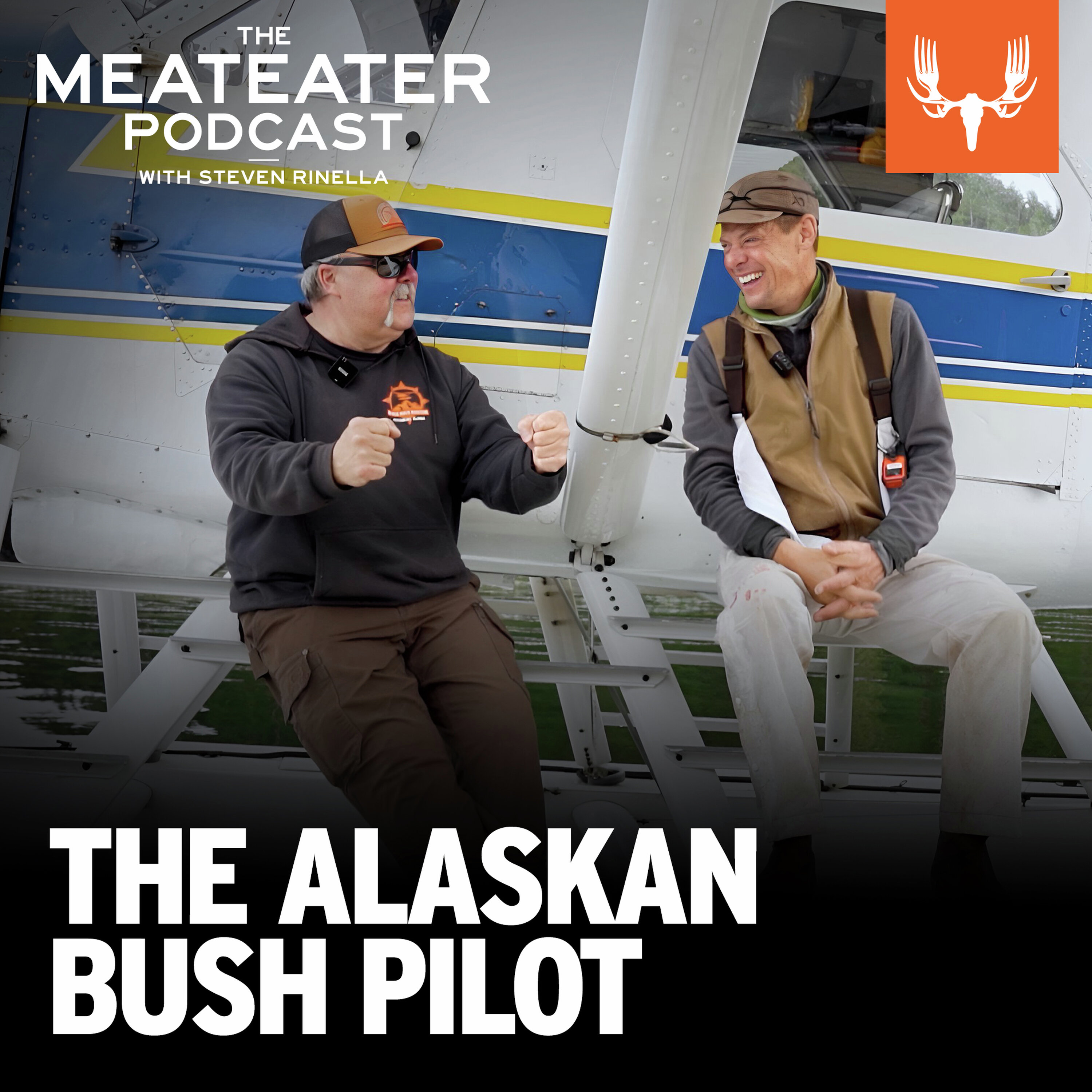
Welcome to this. We're going to call this an Alaska flop. This is a flop episode, meaning we record it. It comes right out and we're in Alaska. So it's an Alaska flop. And I'm here with my friend and I like to think of him as my personal pilot. Vance, here's a Robertus.
- [01:26]
D
Robertus.
- [01:27]
A
Robertus.
- [01:28]
D
Okay.
- [01:28]
A
We always call you Robertus. Hey, I, I knew Van Vance is. Vance is a float plane pilot. This is his float plane right here. This is a personal plane. You'd call him like a, you know, you're a bush pilot. Yeah, like an Alaska bush pilot. Flies on floats. I knew Vance prior when he was flying down here in southeast Alaska for an aviation outfit. He left the aviation outfit, started his own aviation outfit called Black Rock Aviation. And he's a one man, one plane show.
- [02:02]
C
Right, right.
- [02:02]
A
You've been flying for how many years, float planes?
- [02:06]
D
23 years.
- [02:07]
A
How long flying in general?
- [02:09]
D
About 30.
- [02:10]
A
Born in Nebraska.
- [02:12]
D
Colorado.
- [02:13]
A
Oh, Colorado.
- [02:14]
C
Yeah.
- [02:14]
D
Lived in Nebraska for a while as a kid.
- [02:16]
A
Yep. Born in Colorado, lived in Nebraska, came to Alaska. At what age?
- [02:21]
D
I was probably about 35, 36 somewhere.
- [02:25]
A
Okay. Had you always known you wanted to fly?
- [02:27]
C
Yeah, yeah, it was.
- [02:28]
D
Kind of grew up out in rural areas and like the. Just watching crop dusters and stuff.
- [02:34]
A
Oh, that's how you got interested.
- [02:35]
C
Yeah.
- [02:36]
A
So at what point if you wanted to be a pilot and you want. And you want to, you know, and you love remote areas and you like to hunt, you like to fish.
- [02:42]
C
Yeah.
- [02:44]
A
At what point in your life, at what age would you be like, man, if you're going to do it, do it in Alaska. And what drew you to that part of it?
- [02:54]
D
I worked for, for the airlines as an aircraft mechanic for several years before I finished all my ratings.
- [03:01]
A
The big airlines.
- [03:02]
C
Yeah.
- [03:02]
D
I worked for Continental Airlines way back when and wrenching on airplanes.
- [03:05]
C
Yeah, yeah.
- [03:06]
D
Worked for Boeing. Anyway, I saw those guys that, you know, dragging the black suitcases around and none of them were smiling.
- [03:15]
A
Yeah.
- [03:16]
D
So it's like living out of a suitcase. And the ones I knew were all divorced or different, you know, going through a divorce.
- [03:21]
A
So drinking in hotel bars every night.
- [03:24]
D
Oh, yeah. I'm like, yeah, I don't think I want to do that route, but I want to fly. And then I had my private light. I actually had my commercial rating. And then I went and went and got a float plane add on. And I'm like, okay, that's it. That's what I want to do. I want to fly floats. Yeah, I kind of knew I wanted to do that. But getting in the door somewhere to do it, it's the tough part.
- [03:44]
A
What do you mean getting.
- [03:45]
D
Getting the hours before someone will even put you in the. In the seat.
- [03:49]
A
Oh, you mean like to hire you. You gotta have hours, commercial hours.
- [03:53]
D
You gotta have float time, you gotta have Alaska time. You gotta have.
- [03:56]
A
Got it.
- [03:57]
D
You know, all this. Everyone has all these requirements, but.
- [04:00]
A
Gotcha. So it takes a while to get. You need to have the job to get the job.
- [04:04]
D
Right. You gotta start somewhere else. Usually in Alaska, like flying wheels or something.
- [04:09]
A
I see.
- [04:09]
D
Okay. I flew out of Bethel Fairbanks for a year and then racked up a bunch of hours up there. And then I got back down here as a. To fly floats.
- [04:18]
A
And this is like. This is like the world's capital float plane activity. Southeast Alaska.
- [04:25]
D
I don't know if it is anymore. It used to be. Lake Hood's pretty busy with float planes too up in Anchorage and stuff.
- [04:31]
A
Okay, got it.
- [04:32]
C
Yeah.
- [04:33]
D
There's not as much industry as there used to be here as far as like commercial industry. There's the. There's a tourism, but there used to be a lot of logging camps and stuff. And that kept float planes real busy almost year round.
- [04:45]
A
Got it, Got it. So as that. As that industry dried up, that's affected how many float plane operators are working and how many hours you can get.
- [04:54]
D
I would say so, yeah. Guys aren't flying as many hours as they used to.
- [04:59]
A
Got it.
- [04:59]
D
Unless you're hauling. Unless you have the mail contracts or something like that.
- [05:02]
A
Yep. And a ton of guys, like a ton of guys in your occupation do flight seeing.
- [05:07]
D
Right.
- [05:07]
A
But you, you tend to do. You do some of that when you do. But you tend to work for outfitters. You fly guys like us.
- [05:14]
C
Right?
- [05:15]
A
Yeah. You don't do as many flight seeing tours as you do kind of like working. Working operations.
- [05:21]
C
Right.
- [05:21]
D
I'll do.
- [05:22]
C
Yeah.
- [05:22]
D
Fishing lodges and. And you know, people with cabins like you.
- [05:26]
C
Remote.
- [05:26]
D
Remote stuff.
- [05:27]
A
Y.
- [05:28]
D
Hunters. Yeah, stuff like that. But yeah, everyone has to do tours too. Just fill in the gaps and make some extra, extra money for the year, you know.
- [05:37]
A
So how do you, here's the thing that often comes up and you, you guys get sick of asking about it. How do you, like, how do you, in your mind, how do you quantify the risk of being a float plane pilot in Alaska and just to just real quick like you guys are flying by. You're not instrument flying.
- [05:59]
D
No.
- [05:59]
A
You're flying by what you can see.
- [06:01]
D
Visual.
- [06:01]
C
Yeah.
- [06:02]
D
Visual flight rules.
- [06:03]
A
Visual flight rules. So like how. Because it's the. Anytime I'll talk to people and be like, oh yeah, we have a cab and we go out to our cab and we charter a plane and, and people always comment on like, what is the risk? How, how do you picture, like how do you deal with or imagine the risk of being a pilot? Like, you have to know. I'm sure you do.
- [06:23]
C
Yeah.
- [06:23]
A
You have to know. In your career a lot of pilots who've had wrecks, some, some survived, had wrecks and some died. Like, how do you begin to think about it.
- [06:36]
D
If you're not thinking about it, about the risk? If you're not, if you don't have a little bit of a, you know, if something doesn't scare you anymore?
- [06:45]
A
Uh huh.
- [06:45]
D
I mean, even just a little bit, then you're probably not, you know, if you're too numb to it, then you probably shouldn't be doing it, you know.
- [06:54]
A
Oh, you think so?
- [06:55]
C
Yeah, yeah.
- [06:56]
D
I mean there's, that's risk out here, you know, I mean, but, but do.
- [07:00]
A
You, do you ever feel like as a pilot, do you ever, you don't feel afraid because you like you're making like you're always making your calculation like you're the final second say, but yeah, like we go or we don't go.
- [07:11]
D
Right, Right.
- [07:11]
C
Yeah, yeah.
- [07:12]
D
But there's still always that, you know, that.
- [07:14]
C
Yeah.
- [07:15]
D
That gut feeling is like, yeah, nope, not gonna do that. You gotta, you gotta listen to that.
- [07:19]
A
Do you get, you get like, do you get like a feeling?
- [07:22]
C
Oh yeah.
- [07:22]
D
You do?
- [07:23]
C
Yeah, yeah, yeah.
- [07:25]
D
You don't want to be flying and, and, and have that, but you get into situations where it's a little windy here, a little gusty there and it's like, yep, I'm not landing there, you know? No. Good.
- [07:37]
A
What is it? What is the biggest enemy? Is it, is it visibility or wind?
- [07:44]
D
It's usually a combination. Yeah, it's usually like, it's usually just like wind shear gusts and visibility.
- [07:51]
C
Yeah. Yeah.
- [07:52]
D
A Lot of times it's a combination. Here in Southeast, you get all of it at one time. You get low visibility with gusty winds and. And just. Yeah, it's all. It's all. It could be a combination of it. It could be. I don't know. But the, the winds are. They could be pretty bad sometimes here, you know, get up in the 70s and stuff. But. Yeah, you're not flying during that stuff.
- [08:22]
A
70 miles an hour.
- [08:23]
C
Oh, yeah.
- [08:24]
D
In the wintertime. But yeah, we don't fly in that.
- [08:27]
A
There's this idea and I always tell people this. I don't even know if it's actually true. Is it like when you're in an area that's all water and you're on floats, isn't it some solace that you can always. There's always a place to land. Or is it not that simple?
- [08:40]
D
Depends on the water.
- [08:42]
C
Yeah.
- [08:43]
D
The middle of straits. When it's eight footers, what happens then? You might get it down, but it.
- [08:49]
A
Ain'T gonna be soft.
- [08:50]
D
Ain't gonna be soft. And it may not stay together on you.
- [08:52]
A
I see.
- [08:53]
D
It may bust the part on you.
- [08:54]
A
So what is the best. How. How do you describe. Like, what kind of seas can you land in or what kind of seas? Does it become inadvisable?
- [09:04]
D
Well, I mean, you can land in two footers pretty easy in this way, but you start getting any bigger than that, it starts. It's pretty rough landing.
- [09:12]
A
So, like six foot is no good.
- [09:14]
D
No. Yeah. No good.
- [09:15]
C
Yeah.
- [09:17]
D
Because.
- [09:17]
A
Yeah. There's nothing smooth to hit.
- [09:19]
D
No. You're gonna hit one wave and go into the next one.
- [09:23]
A
Got it, Got it, got it.
- [09:24]
C
Yeah.
- [09:27]
A
There's a thing that I used to think it wasn't true back. It's gotta be true. Okay. We talked about rough weather, rough water. Let's talk about calm water.
- [09:35]
C
Yeah.
- [09:36]
A
Is it true that you can have a body of water be so still that you need to create chop?
- [09:43]
C
Yeah.
- [09:44]
A
So that when you start going, the float's got something to bounce on. Or else like the surface tension of the water holds the plane in.
- [09:51]
C
Yeah.
- [09:51]
D
It's almost like a suction.
- [09:52]
C
Yeah. It'll.
- [09:53]
D
It'll keep you down on the water. You gotta have some ripples sometimes like small lake or something that's just flat calm and you need the whole lake to get off.
- [10:04]
A
You'll cut circles.
- [10:05]
D
You'll do a circle or two, make some ripples, and then once you hit those, boom. You'll pop off the water.
- [10:10]
C
Yeah.
- [10:10]
A
Because it'll actually like skip you up a Little bit.
- [10:12]
C
Yeah.
- [10:13]
D
It'll break that tension. Yeah, you can lift one float at a time too. It's called glassy water. Yeah, it's. It's a thing.
- [10:20]
C
Yeah.
- [10:22]
B
Just last night I was laying around on my extremely comfortable Helix mattress with my two boys watching a nature documentary with a very good thing about the world's forests where I actually learned some stuff I didn't know before. And man, we were comfortable. The dog was up there with us. The helix lineup offers 20 unique mattresses, including the award winning Lux and ultra premium elite collections, Helix Plus, a mattress designed for big and tall sleepers and Helix kids mattresses which my kids have designed for growing bodies endorsed by child sleep experts. How will you know which Helix mattress works best for you and your body? Well, it's easy. You take the Helix sleep quiz and find your perfect Mattress in under 2 minutes. Your personalized mattress is then shipped straight to your door free of charge. It's brilliant packaging too. You just like carry it up and poof, there's your mattress. Very easy. And Helix knows there's no better way to test out a new mattress than by sleeping on that sucker in your own home. That's why they offer a 100 night trial in a 10 to 15 year warranty. To try out your new Helix Mattress, go to helixsleep.commeater for 27% off site wide. That's helixsleep.comme eater for 27% off site wide. Make sure you enter our show name after checkout so they know we sent you. Helixsleep.com meater anywhere worth going is worth going. In good boots. You can find your perfect pair with the Cobas. My, my, my beloved friend Clay Nukem agrees with me on this and my beloved friend Ronnie Bame all agree on this that like man, if you don't got a good pair of leather boots on, you just like don't have that good ready feeling that the three of us like to have. If you ever wondered if you can pull off boots with your perfect style, you owe it to your feet to pull on a pair of to cobas. Being confident is about being different. It's about being yourself. Find comfort in the traditions of the west and confidence from making it your own. Honor the west by leaving your own boot print to Kova's crafts quality western boots for everyone. From generational ranchers and lifelong cowboys down to first time boot buyers. Every one of Taco's boots are handcrafted with over 200 meticulous steps for broken in comfort right out of the box right now. Get 10 off at the covas.commeater when you sign up for email and text. That's 10 off at t-e c o v a s.commeater to covas.commeater see the site details to covas. Point your toes west. The show is sponsored by Liquid iv. I got a Liquid IV story the other day. We were camping with my kids, got up real early, drank way too much coffee, hiked up a thousand foot hill, looked around, hiked back down. When I left, it was kind of cool out. When I got back down, it was hotter than Hades. I was like, ugh.
- [13:16]
A
I did not plan my day accordingly.
- [13:18]
B
By just drinking a bunch of coffee and doing that. That's when I dove in. Had some Liquid IV to get myself feeling better. Liquid IV is powered by live hydro science, an optimized ratio of electrolytes, essential vitamins, and clinically tested nutrients that turn ordinary water into extraordinary hydration. I'm telling you, it leaves you feeling a lot better. It's three times the electrolytes of the leading sports drink. So when you're feeling depleted by hot weather and exertion, it perks you back up. Man 8 Essential vitamins and nutrients always non GMO, vegan, gluten free, dairy free, soy free. Just one stick and 16 ounces of water hydrates better than water alone. And you'll, you'll jam it right down because it tastes good. Savor the last bits of summer with Liquid IV. Tear poor, live more. Go to Liquid I dot com. Get 20% off your first order with Code Me Eater at checkout. That's 20% off your first order with code Meat eater@liquid I.com.
- [14:17]
A
When you're like in your area, there's lakes you'll land on. But let's say you were in an area and you only had to, like, you're in an area and you're, you're in an area you never been for just whatever reason. And you're determining, can I land in a lake or not? What are you looking for?
- [14:36]
D
Well, you look for the size for one. A lot of times I want to, I'll look at maps and, you know, try to get some measurements because you.
- [14:44]
A
Need how, what, how many yards of water?
- [14:46]
D
Oh, probably 900 is nice to have 900 yards.
- [14:50]
A
Okay, so a lot.
- [14:52]
D
Yeah, I mean, especially for a lake you haven't been into.
- [14:54]
C
Right.
- [14:55]
D
So then you're also looking for the approach and departure if there's, is there, is there terrain, is there trees Is it. Can you come in flat over the. Out of the creek that it's draining out of it or whatever. Is there. Is it one way in, one way out?
- [15:11]
A
Yep.
- [15:12]
D
Can you do a step turn in there? Is it wide enough for that? Yeah, it's quite a few variables.
- [15:17]
A
Yeah. And then you got to think like, you always have to come into the wind.
- [15:21]
D
Not always. If you can land downwind, but you can land downwind.
- [15:24]
C
Just.
- [15:24]
D
It's going to increase your ground run. When you touch down, can you take.
- [15:29]
A
Off with the wind?
- [15:30]
D
Oh, with the tailwind?
- [15:32]
C
Yeah.
- [15:32]
A
You can?
- [15:33]
C
Yeah.
- [15:34]
D
I mean, you know, experienced pilots, you can do it.
- [15:37]
C
Yeah.
- [15:37]
D
You don't want to do that if you're just starting out on floats, but yeah, you always want to take off into the wind is preferred.
- [15:43]
A
Well, sometimes when you come in here, you circle.
- [15:45]
C
Yeah.
- [15:45]
A
What are you doing?
- [15:46]
D
Looking for debris.
- [15:48]
A
Oh, that's what you're scouting for debris logs. And I always picked you up there calculating wind directions. You're just looking. Is it clear? Yeah, got it, got it, got it.
- [15:57]
C
Yeah.
- [15:58]
D
That and also the wind. But I can usually tell the wind before I get here. I've been in here so much. But yeah, you can usually tell the wind from a distance after you've been flying for a while. But that's the biggest thing on floats is reading the water and knowing where the wind's coming from.
- [16:13]
A
Got it.
- [16:13]
D
What it's doing.
- [16:14]
A
So what's the. What's the worst thing clients can do when you charter a flight? Like, what's the most annoying thing passengers do?
- [16:24]
D
Put a camera right in my face. Yeah.
- [16:26]
A
Next to that. I don't pass the worst. That's. That's. That's him, you know, or touch the control. Like, I understand your policy. Once. Once a guy.
- [16:33]
C
Yeah.
- [16:34]
A
Not an interview person, but once a camera guy.
- [16:36]
C
Yeah.
- [16:36]
A
Points a camera. You. He's done. Right. He's to a new air carrier.
- [16:40]
D
Well, no, if. It's not necessarily that. It's like if they have. If they ask first and like, you know, I'm gonna. Can I film you? That's fine. But. But when I started to take off roll and they stick a camera in my face.
- [16:51]
A
Oh, you don't like that?
- [16:52]
D
Yeah, when they.
- [16:53]
B
If I done that, I haven't done that.
- [16:55]
D
It's going to be like, you know, I need to see where I'm going. You're obstructing my view, for one. You know.
- [17:00]
A
You know, one of the funniest things I've seen you do.
- [17:01]
C
Yeah.
- [17:02]
A
Funny to me, we were Taking off out of your, out of your shop, your hangar. And we're like coming out of your hangar and coming out into the. I mean, just for people listening, where Vance's hangar is, when he comes out of there, there's like commercial airline traffic.
- [17:19]
C
Yeah.
- [17:19]
A
I mean, different. But I mean it's like, it's a busy airspace.
- [17:22]
C
Yeah.
- [17:22]
A
There's other float planes. There's an airport. My neighbor, I had my neighbor with me and, and it was like you were coming out because you're flying like you just gotta see what's going on. I remember you reaching forward, reaching and grabbing my neighbor. He was leaning forward to look at something. I remember you doing this.
- [17:38]
C
Yeah.
- [17:38]
A
Because you needed to check for traffic. It's like being in a car, you know, you're like, I need to look out that way, see what's going on before I pull out.
- [17:47]
C
Yeah.
- [17:48]
A
So that. And then what, what kind of. What's the dumbest question you ever got about from when you're flying with somebody?
- [17:53]
D
Oh, geez, I don't know. There's lots of them, but.
- [17:56]
A
Too many to name.
- [17:57]
D
Yeah, too many to name. Like people that are off of ships, they'll ask, what, what's that? What's that? What's the elevation?
- [18:05]
A
You know, at the ocean?
- [18:07]
C
Yeah.
- [18:07]
D
They get off a cruise ship and then they get on your float plane on the same body of water and they'll ask what the elevation is on this lake. Like, well, you're on the ocean still.
- [18:16]
A
You got off that ship right there, you're at zero. Zero.
- [18:21]
D
I tell them like four feet, cuz that's that six feet. If I was sitting off the water, that's how high they are off the water.
- [18:26]
C
Yeah.
- [18:27]
A
Here's, here's my, here's my last question for you because this is a fantasy I have. Well, first I'll set it up with a story. I was just in Africa with my family and we were flying in small aircraft. We were flying in caravans.
- [18:38]
C
Yeah.
- [18:38]
A
A lot of caravans here. So my boy, my older boy, 15 year old, he sitting up front, right? Okay. He fancies himself that just by observing a pilot. He's got it.
- [18:52]
C
Yeah.
- [18:52]
A
Okay. So we get on another plane and my Little boy, who's 10, gets invited to ride up front. And my older boy, then who's miffed cause he likes to be up front, right. He says, well, a lot of good it's gonna do us having him up front if something were to happen to the pilot.
- [19:12]
D
Cause your older boy thinks he can fly it.
- [19:13]
A
Cause he's after observing, he's like, I'm cool. Like, if this guy has a heart attack, I'm cool. What? Like, when I sit there, I'm always thinking, like, let's say, I don't know, Vance has a massive heart attack and, and, and. And dies. You know, what am I going to do? Is it, like, odd? Like, people have this fantasy. I don't know if you know this, but people have this fantasy. We joke about it. Is anyone ever that's never flown gonna, like, get the hang of it in time to figure it out?
- [19:44]
D
I don't know. It depends on the person, I think. You know, I mean, like, if they're, you know, if they've grown up operating things like boats and cars and, you know.
- [19:54]
A
Yeah.
- [19:54]
D
They're mechanically, you know, they might, like.
- [19:58]
A
You might be up there and fiddle around enough to get where you could at least.
- [20:01]
C
Yeah.
- [20:01]
A
Survive the landing.
- [20:03]
D
Yeah, possibly.
- [20:04]
C
Yeah.
- [20:05]
A
You hear that, Seth?
- [20:06]
C
Yeah, yeah.
- [20:09]
D
Yeah. You know.
- [20:10]
A
You know, I asked him what he's always doing over here. Now. I understand that.
- [20:14]
C
Yeah.
- [20:14]
D
You wouldn't want.
- [20:15]
A
He's got this little. Vance has this little thing he likes to fiddle with right here. I didn't think it did anything, but it does. It has something to do.
- [20:22]
D
Trim wheel. It's a trim.
- [20:24]
C
Yeah.
- [20:24]
A
I just thought he likes doing it because it never feels like anything happening.
- [20:28]
D
That's because I'm holding pressure on the yoke and, you know. You don't feel that? I feel it. And then I take the pressure off with this and I can release pressure on my arms.
- [20:37]
C
Yeah.
- [20:37]
D
So.
- [20:38]
A
So what's an old pilot? When are you too old to fly?
- [20:44]
D
I don't know. 70, 60.
- [20:47]
A
60?
- [20:47]
D
I'm joking. No, I'm almost 60.
- [20:50]
A
Yeah.
- [20:50]
D
No, I don't know. I think as long as you're. You feel healthy enough to do it, you know, I think, you know, the airlines. I think the cutoff is 65, I think.
- [21:00]
A
Okay. But you could do this later.
- [21:01]
D
Oh, I could do it.
- [21:02]
C
Yeah.
- [21:04]
A
You could be licensed and keep flying.
- [21:05]
D
Yeah, into my 70s, 80s probably, if I wanted to, but. Yeah, I don't think I want to go that long, so.
- [21:11]
A
Do you like the stress of being your own guy, your own plane, your own guy, handling your own business? Do you prefer that stress over the stress of being in charge of a big operation with tons of planes and tons of pilots? It's probably different stresses, but both stressful.
- [21:26]
D
I prefer this, really.
- [21:28]
A
Is it more peaceful being a loan operator?
- [21:31]
C
Yeah.
- [21:31]
D
I mean, you're working hard, but it's like you're doing it for yourself though.
- [21:35]
C
You know what I mean?
- [21:35]
D
Just like any self employed person. Right. It's just a little more satisfaction and in your job, you know, because it's, you're not, you're not doing it for him or them, you're doing it for you.
- [21:47]
A
But man, you got, when it's busy time of year, man, you got long days.
- [21:51]
C
Yeah.
- [21:52]
A
For instance, I knew you had all, I knew all kinds of junk you do every night. I had no idea that every night you gotta wash the plane to get the salt water.
- [21:59]
D
Well, I have help.
- [22:00]
C
I do have.
- [22:00]
A
Oh, you do have help with that.
- [22:01]
C
Okay.
- [22:02]
A
Yeah.
- [22:02]
D
Ariana's helped me this summer. She's great.
- [22:04]
A
So.
- [22:04]
C
Yeah. Yeah.
- [22:05]
A
But it's a job, man.
- [22:07]
D
It's like we don't soap scrub it every night. We at least rinse it off so you get the salt off of it. Yeah, but, yeah, it's, but more.
- [22:14]
A
Yeah. I guess my point, rather than just, just simply washing. My point is it's not like when you're done, you like park and walk away.
- [22:21]
C
Right.
- [22:21]
A
There's a lot.
- [22:22]
C
Right.
- [22:23]
A
And then every blank hours you got to do this and every blank hours you got to do that.
- [22:28]
D
Yeah. That's any. But it's, you know, it's, it's, it's, it's a short season, you know, I mean, it's pretty hectic. But you know, in another two months it'll be, you know, real slow. So.
- [22:40]
A
Yeah, you got time to take care of stuff.
- [22:41]
C
Yeah.
- [22:42]
A
Well, so tell people. So you fly anything within how many miles of catch can. What's the farthest you roam?
- [22:49]
D
Longest charter I've done is probably up to Juneau.
- [22:52]
C
Yeah, okay. Yeah.
- [22:54]
D
Two and a half hours.
- [22:55]
A
You know, so now I know people, I know people that are pilots.
- [23:03]
D
Who.
- [23:03]
A
Say that they like to fly with you because you're such an exceptional pilot.
- [23:07]
D
Oh, well, thanks, whoever they are.
- [23:09]
A
Captain Mack.
- [23:10]
C
Oh, yeah.
- [23:11]
A
Cap Mac is a pilot.
- [23:12]
C
Yeah.
- [23:12]
A
And he's like, that's my pilot. He likes you.
- [23:15]
C
Yeah.
- [23:16]
A
So Black Rock Aviation, that's a little bit a glimpse into the life of a, of, of a float plane pilot. A lot of people have dreams of coming up and being pilots. Yeah, I, I, I, I don't. Yeah, I had it and I just realized that it's probably better to charter a plane.
- [23:34]
C
Yeah.
- [23:35]
A
You know, I used to think like, I'm gonna get my own plane. And now I'm like, no, you're not. Yeah, it's, you're gonna fly.
- [23:40]
D
It's a commitment.
- [23:40]
A
Yeah.
- [23:41]
D
You're gonna do it.
- [23:41]
C
You know, commitment. Yeah.
- [23:43]
D
If you're gonna do that.
- [23:44]
A
So. Blackrock Aviation out of Ketchikan, Alaska. Vance Robertus.
- [23:50]
D
Robert.
- [23:51]
A
I'll never remember that dude. Vance Robertus, sole proprietor, Pilot, private. Owns his own plane. Flies around a mechanic, too. Mechanic too. Flies around beautiful Alaska, getting everybody to their fishing spots on time.
- [24:07]
D
Yep, that's what we try to do.
- [24:09]
A
Thanks for doing the interview, man. I appreciate it.
- [24:11]
D
No problem.
- [24:11]
A
All right, thank you, everybody.
- [24:24]
B
Foreign Buy a tea. Get a tea sale. Plus you can save on all kinds of gear from August 19 to 24. For a limited time, buy one meat eater graphic tee. Get another one free. While you're over there. You can load up and save on gear we trust in the field, including yeti coolers and drinkware, Moultrie trail cams, premium optics knives from Montana Knife Company and more. The season opener sale runs now through August 24th, fourth only at store.theme eater.com.
- [25:00]
A
This is an I heart podcast.