Loading summary
Transcript85 lines
- [00:00]
A
This is an iHeart podcast.
- [00:07]
B
So your AI agents, they make the team that uses them more productive, right? But if they aren't connected to other agents or your data or your existing workflows, how productive can they really make your teams?
- [00:21]
A
Any business can add AI agents. IBM connects your agents across your company to change how you do business.
- [00:28]
B
Let's create smarter business IBM.
- [00:35]
A
Fall is.
- [00:35]
B
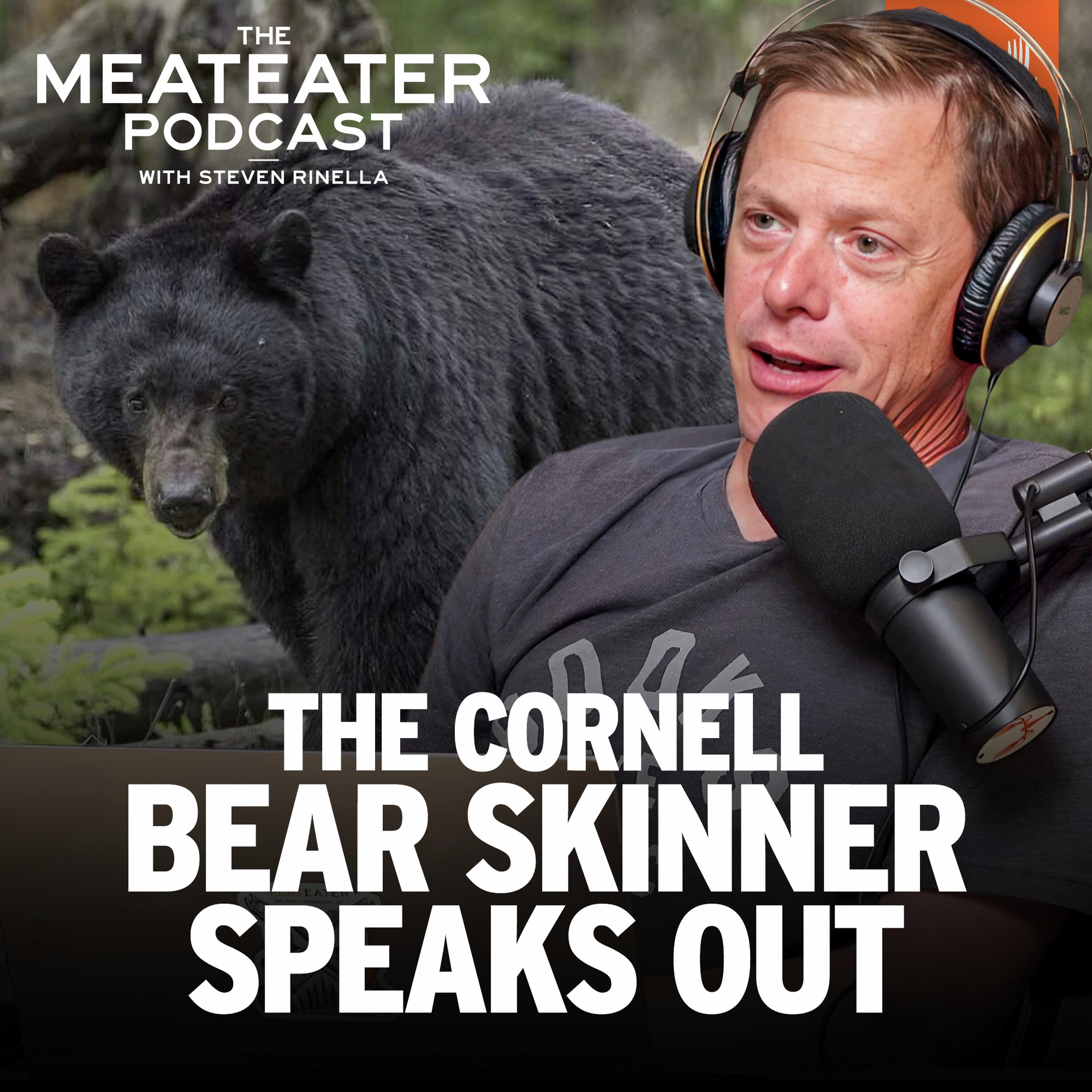
In the air and whitetail week is back at Phelps. Game calls. We have a large assortment of deer calls to get those big old bucks close. Save $20 on our deer calling kits and 40% off our popular Omega hybrid grunt call. Check out the full lineup@phelpsgamecalls.com okay, ladies and gentlemen, it's an emergency drop of Meat Eater podcast. An emergency drop. We did one of these when the guy rescued the people out of the outhouse. That was that emergency drop. No, but it was an American hero. This is an emergency drop we have on American hero. Aaron Chin from Cornell University. If you're a news buff, if you are a news buff or if you're a hunter and you read your text messages a couple weeks ago around the week of September 8th, I would say you probably got all kinds of people texting you an article about some students from Cornell University who were in trouble, out of trouble, getting in trouble for having skinned a bear in their communal hall at college. Right now I typed in Cornell Black Bear skinning into Google and I have the Cornell Daily Sun. I'm looking at an article there. I'm looking where it was covered in an op ed in something called the Dartmouth. And it's a person complaining about them saying that it's not what you're allowed to do, it's what you ought to do. And it's the real lesson behind this. Covered in the Ithaca Voice, Cornell students found Skinning Berry, NBC News. Two Cornell students killed bear and skinned it Back at blank. A long spirited Reddit thing. People magazine, people.com Two college students killed 120 pound bear. I heard it was bigger. Aaron, you don't have any idea where the 120 came from, do you?
- [02:45]
A
No. No idea. I was around, around a 150. I know, I know how much my buddy weighs and you know, I picked him up, it's is, you know, a little lighter than that. So 100.
- [02:54]
B
Nothing wrong with 120 pound bear. Here's an Outdoor Life article. Here's a big discussion on rock slide. I could go on and on, covered all over. And it was one of those things that everybody sends me. The article about the Two kids at Cornell who were in trouble or were not in trouble for having dared kill a bear on campus, or could not kill a bear on campus, but kill a bear and process it in a communal space on campus. And then as I followed the story along for a couple days, it turns out that police, game wardens, the student handbook, it turns out no one could find anything that was actually wrong. We. I said to Cran. I said, we have to talk these guys. I'm dying to talk to these guys. So here we have one of the butchers, Aaron Chin from Cornell. We're gonna hear. We're gonna hear his story. We're going to hear about what it's like to all of a sudden be part of a national news story. What it's like to probably be real scared for a minute and then feel relieved. And then what's the. What's the next hunt plan? But, like, first, let's. Let's start off. So you're at Cornell University. You're from. You're from San Diego, California, correct? Yeah. What's. Give me your hunting background. How did you get started hunting?
- [04:09]
A
So I didn't start until the very, like, tail end of high school. I. My parents, we never really did that. We weren't really an outdoorsy family, but that was something I was super into as a kid. I'd read Bushcraft manuals, and I'd watch these survival shows. So I started shooting, shoot archery, thinking, like, early middle school and whatnot. So that was always kind of in the back of the mind. I shot Olympic archery for the longest time. I started teaching that performance archery, which primarily catered toward. I mean, that's where the money is in the archery.
- [04:39]
B
What's performance archery mean?
- [04:42]
A
It's. It's just the bow shop I. I worked at.
- [04:44]
B
Oh, I thought I meant a discipline called performance archery.
- [04:47]
A
No, no.
- [04:47]
B
Oh, I'm sorry. Yeah. Yeah. An archery shop.
- [04:50]
A
Yeah. And a lot of the guys were big bow hunters. You know, I was super curious, and I started shooting traditional archery with kind of the hopes of being able to. To. To. To hunt traditionally with. With just a. With a. With a bare bow and. Yeah, I went out a couple times in San Diego. Hunting in San Diego is. Is really difficult. All public land. It's kind of one of those things where you got to get lucky. Right. Time, water there. So I went out for turkey once and then. And then deer another time, but pretty much very little success, very little experience. That's. That's why part of the reason I chose to go to Cornell One besides that, really good engineering school. But you know, the proximity to the woods. I saw the deer management program and I'm like, I can, I can kind of learn all, learn all the skills and live, live the life. Learn all the skills that I wanted to as a kid. And now that there's, there's forests and there's their state lands to do that. So.
- [05:42]
B
Yeah, yeah, there's a real, like we spent some time on the campus recording some podcasts a couple years ago. And there's like a hunters community. There's like a hunters community at Cornell. Yeah. And so when you came out there, you guys, how did you become aware of. So you're a junior, third year, is that right?
- [06:02]
A
Correct.
- [06:02]
B
Okay, how did you become aware of, of spring black bear season? Like, like what did you dig into? Like how did you, how did it hit you that like, hey man, let's go out and, let's go out and do a little bear hunting.
- [06:14]
A
You and your buddy saw it on the DEC website. Read, you know, reading through all the rules, looking at the seasons like, well you can. And the biggest thing is when I.
- [06:22]
B
First got here, sorry, not a spring bear season. Fall. I'm sorry, fall bear season. Yeah.
- [06:26]
A
Like you get, everyone gets a black bear tag with the, with all their, with all their accoutrements and, and also.
- [06:33]
B
When you buy a hunting license, you're issued a black bear tag. Uh huh.
- [06:36]
A
Everyone gets a BlackBerry guy like a regular. Yeah, sounds like this, this could, this sounds really cool. And I saw, I saw a recipe somewhere like, like black bear pastrami.
- [06:46]
B
Okay.
- [06:47]
A
I don't know where. And I was like, that, that sounds delicious. I mean I love a good straw. Me on rye. I'm like, you know what? 2 and 2. Let's maybe really cool. I was reading about them and at this point I'd got a rifle. So I was like, well this could be like a very realistic, realistic thing. So I started looking, looking into it and it's the first, it's the first big game season of the, of, of the year. So we're like, all right, you know, tests aren't going too crazy. Academics are pretty chill. Let's, let's, let's get her done. Let's figure it out.
- [07:14]
B
And, and you and your hunting partner, you guys go out and you guys are hunting public land. Is that right?
- [07:19]
A
Yes, public land.
- [07:20]
B
And, and how did you, how did you kind of hit on like, here's the spot, here's what we're going to try. Here's where we're Going to hunt, like lay that out for me.
- [07:28]
A
A lot of, a lot of research, a lot of e. Scout in. So I'd look at the DEC kind of there they have the bear harvest reports. So I was looking at the regions where they have the highest, you know, bears reported in 400 square miles. From there I look, I look what's closest to the university because we're full time students essentially. So we're, we're the closest state forest that we can, we can hunt. And from there, reading articles, figuring out like, well, they're going to be, they're going to be berries trying to get fat for the winter. So I honed in on a, on a piece of, piece of state forest and I started looking for water features. That was the biggest thing. Swamps where, where I think like berries and shrubbery that they'd be foraging on. And then we went there our Friday. We, we right after classes we went out and the first thing we, yeah, we went out. We, we scouted and then the next day we, we kind of set up and figured it out.
- [08:27]
B
Yeah, and when you guys set up, you and your hunting buddy, when you guys set up, did you guys set up in blinds or were you trying to like still hunt? You trying to do a stand hunt? Like, what was your strategy?
- [08:37]
A
Still hunting. So the day before on Friday, we found like fresh bear. Oh, and tracks everywhere. So we're like, all right, this is a spot.
- [08:44]
B
Okay.
- [08:45]
A
Going to bed down the next morning because you know, we're just. Season hadn't open open yet. We're just looking around. So essentially there was a, a little like a grove or like a, like a, there's a little clearing and there was a, there's some shrubs in the middle of it. So that's where we saw kind of like paths and, and they're still uneaten berries. So we decided the next morning you.
- [09:07]
B
Knew you were looking at an active feeding area. Okay. Yep. And you guys set up and it was that. And it, it was the, was it the first day of the season that you guys got a bear?
- [09:17]
A
Yeah, first day.
- [09:18]
B
Okay.
- [09:19]
A
Like, like, like 9 o'. Clock. But we didn't get it in that clearing. We heard, we heard scratching and, and like climbing in, in a pine grove about like a hundred yards to the side. So we moved out to there. We waited in our first position. We moved out. We sat there for a good amount and then we, we lost track of it. There was a, there's a pine grove and there was a hill, like a really steep hill. So we Sat there for a good 30, 45 minutes and we, we stopped hearing the scratching. So we thought to ourselves, hey, maybe, maybe the bear. Clover, clover leafed around back to, back to that original clearing. So we go back and we don't see anything. We're like, all right, let's, let's pack up. We'll go back out in the afternoon. And just as we're rounding a corner, my buddy, he sees it. I don't, I don't, I'm behind this corner. So I just see him, you know, his eyes go, go full killer. He chambers around and I'm like, and I, and I cover my ears because, because we've got a pretty good kind of know each other's body language. I knew he wasn't, he wasn't just looking, looking through. And yeah, he pops off a shot and we, we, he gets it.
- [10:30]
B
And was it. Did you have the big track and job or did you find it pretty quick?
- [10:34]
A
Really, really quick. It was like a 40 yard max shot. It was pretty close. And then we're shooting 180 grain.308. So that, that thing dropped pretty, pretty fast.
- [10:46]
B
Got it. Okay, now here's where things get interesting. You guys, you guys live on campus, correct? Okay. You don't have an apartment, you don't have a house. You rent. You live on campus. Had you even, had you guys got around to being like, well here's what we'll do if we get one. Or were you just not even thinking about that and you're just gonna take it as it comes, or did you have like a. If we get one, here's the butchering plan.
- [11:18]
A
We thought about everything and yeah, we're gonna go to a buddy's place, but last minute, I think he had some, some emergency to tend to. So the place we were going to do, it closed off and, and we were really paranoid that, you know, the, the meat would spoil. I wanted to get it cooled as fast as possible. We opened it up, but just to, just to get it all processed and in a fridge as fast as possible. So we're like, well, our one, one, one place was gone, so might as well do it there. And it was in the morning, I think it was around like 10 o'. Clock.
- [11:45]
B
Okay, so explain what this place is, where you take it. Like what on campus? Like what is the place you bring the bear to?
- [11:52]
A
Just, there's like a communal kitchen on the, on the first floor of kind of the, the residential building. It's like a really, it's like a real really open space. There's like study tables and whatnot. But it looks more like a. Like one of those, those modern. Like a, Like a, Like a coffee shop.
- [12:07]
B
Okay.
- [12:07]
A
So a lot of space and then. And then concrete floors because we, you know, carpet would just be a dick move.
- [12:13]
B
But it's meant for people to do their cooking. Okay, so presumably there's a big table in there and you guys, you guys bring in. You bring in the bear onto the table.
- [12:30]
A
Correct.
- [12:31]
B
Who's around when you do this? Like, like, who's in the room?
- [12:35]
A
There's not a lot of people. There are a couple people studying, but no one really comes up and makes a big deal of it. It's in the morning, Saturday morning, so people are still probably in bed, hungover and whatnot. So we had a couple people just throughout our two, three hours of processing. They'd walk by people. People would, you know, try to take pictures or, like, just don't have us in there. And most, most people were super curious, like, hey, we'd love to try some. That's, that's really interesting. We're explaining, I mean, the whole idea of stewardship and whatnot, and we were aware it was going to be pretty graphic, but just explaining, hey, this is this. None of this goes to waste. And for the most part, it was, you know, people were really, really curious. Low foot traffic, especially in the morning. That's why we chose to, like, all right, we can. We thought we'd get, you know, yelled at by an RA maybe, but we didn't. We didn't expect it to blow up to the extent of which it did. The RAs were chill, actually.
- [13:27]
B
Yeah. So when you, when you thought, okay, we're going to go into the communal area, we're going to go into the dorm kitchen, and we're going to process our bear. You weren't having conversations like, hey, this could lead to very serious trouble. And all this news attention, like, you were just kind of doing what made the most sense in the moment, and you figured anything that came up would just. You just be able to resolve it through conversation.
- [13:52]
A
We think we both thought that, you know, maybe it'd be a, like a little blurb. You know, people talked about it. It was like, oh, that's. That's kind of. That's kind of odd. But we didn't expect for it to blow up. We. We were really diligent in reading all of the, the rules, you know, regulations. Like, we made sure we did everything by the buck because we knew, you know, we were going to be under scrutiny. So, hey, we're going to, we're going to clean up. We're going to use, you know, bleach, Lysol wipes and whatnot. We're going to, we're going to keep it, you know, public image where no, no, no blast in heavy metal or music at all. We're pretty, we're thinking about that. We didn't know it was going to cause that much of a backlash a day late.
- [14:31]
B
But you knew, like, but you knew the dorm rules and the campus rules, and there's no thing saying, like, thou shalt not process a big game animal in community kitchen.
- [14:43]
A
Yep. Nothing. Nothing that said against it. You know, we, I even, you know, I labeled my, my meat bags too, because that's what they wanted. Later on that would bite me in the ass because people would be like, oh, we, we figured it out. We know where, you know, people to get this kid.
- [14:56]
B
Oh, because you're storing it in a communal freezer. Okay.
- [15:00]
A
For the time being before I could get it out to. To people off campus. Indeed. Yeah.
- [15:04]
B
Got it. Mega important announcement. In fact, the most important announcement you ever heard. The third volume in our Meat Eaters American History audiobook series is available for pre order right now. Meat Eaters American History The Hide Hunters, 1865-1883 tells the story of the commercial buffalo hunters who drove North America's most iconic large mammal to the brink of extinction in the years after the Civil War. You'll learn all about these guys, guys like Dirty Face Jones, Skunk Johnson, and Charles Squirrel Eye Emery. How they organized their hunting expeditions, what they took with them, how they hunted, what rifles they shot, how they processed their kills, how they suffered and died in the field, and the true stories of what drove them to do it in the first place. You'll also learn about the economic factors that made this a viable profession and what happened to those millions of buffalo skins once they were shipped east. And like we do in all of our Meat Eaters American History projects, you'll hear a ton of wild stories and bizarre details from this era. And don't worry, we didn't leave out any of the gory details. Pre order. Meat Eaters American History The Hide Hunters, 1865-1883. Wherever you get your audio books. And you'll be ready to dig in when it's available to listen on October 14th. All right, so Saturday comes and goes. You guys get your bear, you get the bear processed, and then it winds up being that Sunday night. What happens Sunday night? Someone. Someone finally Says I have to take a stand and report these young gentlemen for having cleaned a bear in the dorm.
- [17:01]
A
Something like that. So there's a. There's a local Facebook group. It's called, I think Ithaca or Tompkin County. Scanner. Scanner. Beats. It's this one. One guy who's just constantly monitoring, like, police and fire radio. I used to be a volunteer firefighter. So this guy, like, we're on. On route to a call and this guy pings up. It's like, this is crazy. This is. I think it gets like an old retired guy. So he. He. Someone sends me a screenshot of the page and like, oh, that's. That's really interesting. And I'm. I'm. I'm like shopping or something. I'm not even on campus. And they're like, cupd is there. There are police department.
- [17:36]
B
Oh, the guy that monitors the scanner is saying, hey, law enforcement is at Cornell. And that's how you get word that law enforcement is there.
- [17:50]
A
Yeah, yeah. They're like. They're acting indigo. They're investigating. Backup is caught.
- [17:55]
B
And you're like, I wonder if this has to do with me.
- [17:58]
A
Yeah. I was like, oh, yeah. They said in the report, bear skinning. I'm like, what? Everything's packaged up. It's. Everything's super cool.
- [18:04]
B
I mean, that's how you became aware of this?
- [18:07]
A
Yeah. I was like, huh, interesting. I go to sleep Monday morning and it's like everywhere.
- [18:13]
B
I'm like, oh, so that night, you didn't go down there that night to see what's going on?
- [18:19]
A
No, no, because I. I was walking back. So after done shopping, they were, you know, there's nothing there. It's a pristine kitchen. So we. We walk and there's. There's no one.
- [18:27]
B
There's like lights flashing and ambulances and. Okay, okay. So you wake up Monday and then what's going on?
- [18:38]
A
It's all over. Like. So I'm not. I'm not sure if you're familiar with side chat. A lot of universities have like a regional, like, social media, and it's a lot of the keyboard warriors and whatnot. And people have started circulating pictures of the. Of the, you know, the bear of us processing it. Were people the day before came up to take, you know, ask if they could take pictures. We're like, we weren't sure about. But, like, we know people were going to do it anyway, so it's like, hey, just don't put us in it. And. Yeah. And then. And then it was. It just. It just overnight Just became a huge sensation.
- [19:11]
B
And at what point did someone want to come talk to you though? Like, at what point did law enforcement want to have a word with you?
- [19:20]
A
I think it was, might have been Sunday night actually. I don't. They're just like, hey, we want to clear. Clear, clear the, clear the error because they saw my, my net ID on, on the package meet and whatnot. They're like, hey, you did nothing wrong, but we just want to, we just wanted to hear. Yeah. And then, and then I was like, oh, you didn't think too much about it. And then Monday the whole like the world figured out. But PD was super supportive. A lot of them are on the deer management program. The guy officer I spoke with before had a 300 pound black bear on his game camera. So he's talking about go hunting and whatnot. So they just wanted to hear what was going on because I, you know.
- [19:56]
B
So they look into it and I read that like the game wardens are like, he's got a license. It's bear season. It's a legal bear. The police department was like, these guys do anything wrong? We didn't violate the student handbook. But it seems like in the media coverage there's like somewhat of an expect. There's somewhat of an expectation or sense of surprise that there shouldn't be repercussions for this.
- [20:25]
A
Yeah, there's. I guess it's just something that not everyone's familiar with. You know, a lot of people, there's the, the rumor that it was a cub. That was, that was the big thing. And people, people, people started freaking out. People didn't even know it was season. Like if you look at, on the online forms, people are you in? And like, well no, it's legal there. People couldn't fathom that. We drove like two hours to our, to our spot and drove back. There's just a lot of, a lot of Internet discord.
- [20:52]
B
So. Yeah, so people, yeah, like they're not educated about the whole thing and something, they're eager that something must be wrong here. Yeah. And then did, did the campus. Like who would be. Who's like the campus authority. So did the campus authority at some point in time come and ask you any questions or say like how did you clean up or where is the bear now? None of that happened.
- [21:16]
A
Yeah, none of that happened. At one point because of the news coverage, I think one of the student support people reached out. They're like, hey, we're here. We know you're probably, you know, if you're going through A stressful time. We're here. It's like, it's okay if I. If I. If I. If I. If I hang myself or something. They don't want to get sued. But they were, you know, university didn't. Was super. No one said anything. I mean, we. We didn't. We didn't do anything wrong. I heard through, like, the, you know, dean and vice principal president was contacted at some point, but they're like, man, you know, I mean, we were. We were just. We were just. We're just doing what we.
- [21:48]
B
What we were doing, you know, so we reached out. I don't. I don't know why. I don't want to name. I don't want to say who. We reached out. We reached out to contacts we have. This not be hard to solve. We reached out to contacts we have at Cornell. The contacts we have at Cornell had. We're just thrilled by. It's so great to know that there's still kids that know how to do this kind of stuff. Just goes to show the caliber of the students we have. You know, someone's like, oh, they. They. They might be interested in my program at the school. And they're like, but I don't. We didn't want. They don't want to give names out. So it was kind of like, well, we'd have to check and make sure it's okay. Like, I can't just send you their contact information. But it was like, no one, you know, no one that. That Corinne communicated with our producer. No one that Corinne communicated with expressed anything other than like, oh, that's cool. Let me see if I can find them for you. And so, you know, all's well that ends well. But let me ask you this. Like, let's say, you know, later in the fall, okay, you get a deer. Do you do the deer? Do you process the deer in the communal kitchen? Or have you had enough?
- [23:02]
A
Oh, hell no. I. My. My buddy is like, a bunch of people open their doors. They're like, they saw that what happened. They're. They're like, all right, all right, all right. You're. Come. Come. A lot of people open their doors. I'm super grateful. People reached out they. To, you know, organizations that I'm known to. I'm affiliated with. And they're like, hey, we're. We're always here. I mean, of course, the keyboard warriors and the. And the basement. But people have been. Been overwhelmingly supportive. I mean, we were talking about lab of O. Ornithology last year. They. They let. They were gracious and Mary Margaret's been super helpful with helping me clean my, my, my skulls with dermisid beetles and. And Professor Keith Tidball on Facebook, kind of really respected figure defending. You know, I'd hear construction workers too. I remember when it was with. When I was High point talking about, I'm like, wow, okay, this is, this is the talk of the town. And for the most part, people in the real world have been pretty, pretty supportive.
- [23:59]
B
Yeah. So it's not that. So you're not going to go back to the dorm, but it's not because you're scared. It's because you got better options.
- [24:06]
A
Yeah, pretty, Pretty much. And then, you know, I don't want part two happening. I mean, it took. That's kind of asking for it, you know.
- [24:14]
B
Yeah, I got you. So would you say that in hindsight, do you feel that in hindsight, are you glad you did what you did because it advanced this conversation, or do you feel like it, like it, like it put this thing out there to test and you kind of learn from the experience and it gave you sort of a snapshot of, you know, your university, your community. Right. That's one approach. Or you could have the approach of saying, in hindsight, I really could have done without all the distraction. I shouldn't have gone process my bear at the dorm.
- [24:49]
A
I'd say a little bit of both. I think I should have been a little bit more. I should have. I should have prepped for the worst and realized that some people would, you know, would, would, would, would blow up. I didn't think it would become that, that large. And definitely if we probably do in the woods next time. Um, but also that, like, looking back, no regrets for what we did, how we. We conducted ourselves. Like the fact that we thought about the implications and we were, we went through, we're. We're very con. Considerate of just our etiquette and, and kind of how we conducted ourselves when we were processing. I think there's a little, little bit of both. So.
- [25:26]
B
Yep. I'll tell you why I like you guys. It's not because you caught that bear up in the dorm. What I like about it is you come. You're from somewhere else, you come to New York, you find out there's a bear season. You do the work, you scout, you spend time online, you do the research, you make calls. A lot of guys would be like, you're never going to get a bear. Why even bother? I'm not going to go out. You're never going to Get a bear, blah, blah, blah. You ignore all that and you go out and you had success. That's cool. Love to see it, man. Like, good American hunting. Elbow grease, dude. So I love it. I'm glad. I was so thrilled to see. As I followed the story along, I was so thrilled to see that nothing bad happened to you guys. I was thrilled to see the way people are like, hey, man, this kind of stuff, or some people in our world are like, this kind of stuff should be celebrated. Like, you know, they're. They're producing food for themselves. They're taking responsibility. They're. They're staying in accordance with the law. It advanced the conversation. Everybody got a little smarter about everything. And, yeah, I don't think I'm going out on a limb when I say you're an American hero.
- [26:34]
A
I appreciate it, Steve. It means the world.
- [26:38]
B
True American hero. In fact, Aaron Chin, thank you for coming on, man. I love hearing your story and tell congratulations to your. To your hunting partner, the trigger man. And I'm glad for you guys. And I can't wait to hear about your next hunting adventure.
- [26:54]
A
Thank you. I appreciate it.
- [26:56]
B
I do appreciate it. Good luck with your studies. You got a couple more years to go, then you're going to be entering the engineering field. So that's good. Okay. Thank you, man. Good luck with school. Fall is in the air, and whitetail week is back at Phelps game calls. We have a large assortment of deer calls to get those big old bucks close. Save $20 on our deer calling kits and 40% off our popular Omega hybrid grunt call.
- [27:49]
A
Check out the full lineup@phelpsgamecalls.com this is an iHeart podcast.