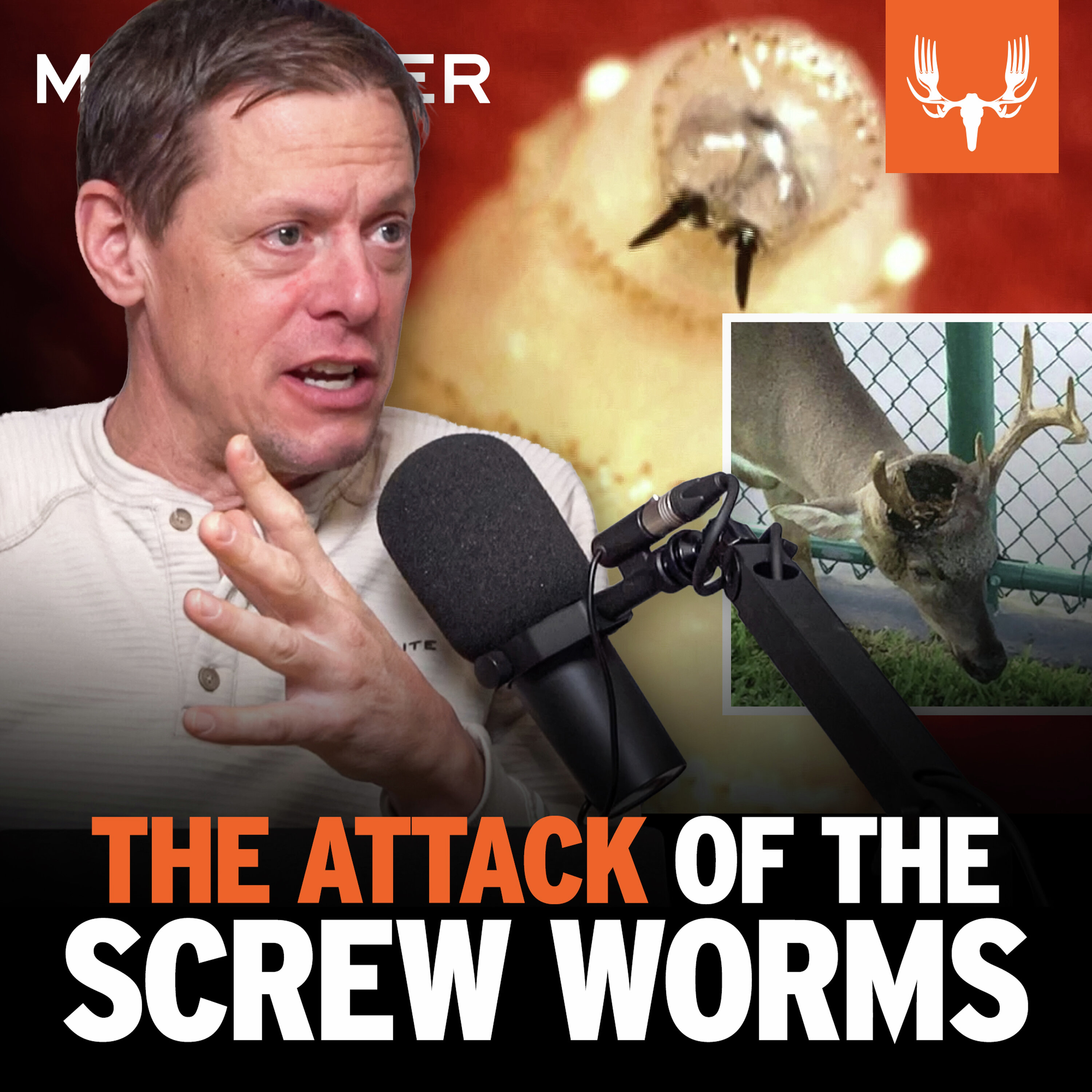
Loading summary
Transcript680 lines
- [00:00]
A
This is an iHeart podcast.
- [00:02]
B
Guaranteed human. Okay, so you know, t mobile 5G home Internet is easy on the wallet. But here's some big news. It's now the fastest 5G home Internet according to the experts at Ookla Speed Test. And yeah, it's a great value because you get a 5 year price guarantee. T Mobile 5G home Internet. It's the fastest 5G home Internet at a great price with savings that stick. Check availability@t mobile.com homeinternet price guarantee. Exclusions like taxes and fees apply. It's the fastest. Based on Ookla Speed Test intelligence Data from the second half of 2025. All rates reserved.
- [00:45]
C
If you're an H Vac technician and a call comes in, Grainger knows that.
- [00:49]
D
You need a partner that helps you.
- [00:51]
C
Find the right product fast and hassle free. And you know that when the first problem of the day is a clanking blower motor, there's no need to break a sweat. With Grainger's easy to use website and product details, you're confident you'll soon have everything humming right along. Call 1-800-GRAINGER clickgrainger.com or just stop by Grainger for the ones who get it done.
- [01:23]
B
This is the Me Eater podcast coming at you shirtless, severely bug bitten, and in my case, underwearless. You can't predict anything. Brought to you by first light. When I'm hunting, I need gear that won't quit. First light builds, no compromise, gear that keeps me in the field longer. No shortcuts, just gear that works. Check it out@first light.com. that's F I R S T L I T E.com joined today by Caleb Hubbard, a veterinarian entomologist of the Hubbard Entomology Lab at New Mexico State University. We're here to talk about the screw room. Can we call it epidemic pandemic, how it's going to kill everybody?
- [02:11]
C
No, no, I don't, I don't think.
- [02:12]
B
Like make necessarily good, like make it seem vital.
- [02:15]
C
Well, I think one of the things is that I'm trying not to cause panic, that you think that's kind of the biggest thing, but it is a kind of a big problem. So the screw worm fly is this, you know, parasitic fly that feeds on living flesh. The US had done a really good job of pushing it out of the United States, out of Mexico, down to Panama. We've kind of been holding it there for the last 20 or so years. But since 2023, we've essentially had cases of it that have been occurring there's been 15,000 or so cases in Mexico, and as of November of this year, there was a case 60 miles from the US border. So it's a.
- [02:53]
B
It's coming to a cow near you, correct?
- [02:56]
C
Yeah. And if you look on the USDA's APHIS website, they say it's not a concern of getting into the US but we do have cases that are close. And so it's something that getting the information out there is kind of the biggest thing about it.
- [03:10]
D
Yeah.
- [03:10]
B
When I've read about in the news, they make it seem that like, you know, when we reached out wanting to get someone about screw worms reading about the news, it's like moving at an alarming rate.
- [03:20]
C
Yeah.
- [03:21]
B
Coming to a cow near you.
- [03:22]
C
Yeah, very much so. Or a cow or any wildlife or humans or Fido, your dog. So it, it'll pretty much feed on, on any vertebrate, they say, even birds. But for the most part it's going to be your, you know, your larger animals, your companion animals, things like that. But.
- [03:40]
B
But yeah, okay, we're going to dig in on that. This is good. And veterinarian, just so folks know an entomology. Explain what an entomologist is.
- [03:48]
C
Yeah, yeah. So an entomologist is someone that studies insects or bugs in different ways. Yeah, my background's veterinary entomology. So that means that I work with really all the, all the pests that cause disease or, you know, are problematic in animal and animals. Traditionally we're working with, you know, livestock, so cattle, poultry, things like that. But I'm actually a. At New Mexico State, I'm hired as an urban entomologist. So that's all the creepy crawlies that kind of bother you in and around your home. So if that's bedbugs, cockroaches, scorpions, anything like that. But I justify also that something like screwworm or, or my background is in flies. No one likes flies in their house. And so it's kind of like, you know, any of that interaction with humans. And so that's where, you know, I come in with all this kind of screw arm stuff.
- [04:40]
B
But you got, you got just thrown hardcore into the screw room situation, though.
- [04:43]
C
I would say that I got thrown into it, but I think I initially volunteered and then was kind of voluntold to kind of go because this is a major issue. It is. And it's kind of one of those things of making myself kind of available to do whatever, you know, I'm new to New Mexico. I just moved to New Mexico in August, and I don't know, I'm really enjoying the state overall, but I don't know where I heard this, or maybe I just came up with it. You know, New Mexico's number one at being lasted everything. If it kind of. Kind of comes to education, if it comes to, you know, a lot of things like that.
- [05:18]
B
He's not ingratiating himself. No.
- [05:21]
C
So, but. But. But here's my thing, is that my goal here is to make New Mexico. Not that when it comes to screw, is that we should be prepared. That we should be able to be, you know, be able to get this information out there, especially to, you know, a group of people that aren't being reached out to hunters and outdoorsmen in general. And so my goal with communicating all of this is to situate New Mexico in. In a place that we can be prepared because we don't have the finances like Texas does. We don't have kind of the resources that our neighbors do. And so it's, you know, getting all of this information out there because, you know, I'm only one person. And so New Mexico, obviously, is a huge state, and we have a lot of economic activity when it comes to hunting and outdoors. And so it's reaching out to all of those people and kind of. I can't do it alone. And so that's kind of my. My goal here is to make New Mexico into a state that we can be an example for everybody else.
- [06:20]
B
All right, so we're gonna dig into heavy on screw worms. But first we gotta talk about a couple things. This. So first. Doug, give me your hand. Phil, zoom in on this.
- [06:28]
A
Oh, I was right.
- [06:31]
B
I lost. Not yet.
- [06:36]
D
I thought you were asking me to marry you or something.
- [06:39]
B
I was at. I was at the sheep show, okay? Wild Sheep foundation convention, deal. Trade show. And I'm doing this little thing, signing books, taking pictures and whatnot. And these dudes come up, and I had seen them around because they're all dressed up like gunfighters. Spurs.
- [06:58]
D
And you notice that kind of thing.
- [06:59]
B
Yeah, all dressed up like Wild West Gunfires with this gals carrying a stuffed raccoon around, costumes. Pretty soon, I take note that they're in line to come up and chat. This gentleman explains what they do is they're the people that put on at a ghost town. See, they have their own Virginia City down there. Like, we have a Virginia City, we have a ghost town. They have one too. So he says Virginia City, and I'm thinking ours, but he means theirs Explains that they're the people that do the gun they put on like the gunfight, the wild west gunfight, and they happen to show up in their reenactors. Yeah, reenactors. Reenactors. So he hands me this, gives me his business card and I lose it. So this I think. I think that he invented this. If you want. I lost his damn business card. But he's a gunfighter in Virginia City, Nevada and he runs around at. In Reno and he dresses up like a gunfighter. I think that people can prove me wrong. I think he invented this. I'm holding the weasel here. Hold out your arm now, Doug. All right.
- [08:19]
A
It'S a slap brace.
- [08:20]
B
Do it again. Here's a pine squirrel.
- [08:23]
D
You want the other arm or you.
- [08:24]
B
Yeah, the other arm. Now I think he invented that.
- [08:31]
A
Need to have it sound here just for the, for the audio audience. Put it near your. The mic. Yep.
- [08:36]
C
Yeah.
- [08:36]
B
If he invented that, he deserves a Nobel prize in taxidermy.
- [08:40]
A
Dude. Sorry, can't really hear.
- [08:42]
B
My daughter is going to lose her mind when she sees that.
- [08:44]
D
I wondered why I was here. Now I know.
- [08:47]
B
What do you think of that?
- [08:48]
D
I don't know. I think it looks good on me.
- [08:50]
B
These are slap. These are tube skinned. We got a tube skinned irmin. A tube skinned pine squirrel converted into slap bracelets. I think I met the inventor. But you can never trust a reenactor. Do you know what I'm saying?
- [09:10]
D
I.
- [09:11]
B
What was the last time. Tell me, when was the last time a reenactor? Because, because it's. They, they. They inherently are living a lie. I know a couple of those guys can't trust reenactor.
- [09:24]
D
Yeah, I don't know. I trust.
- [09:26]
C
I'm joking.
- [09:27]
B
I'm joking mostly. Okay. Doug's here, so I did that. Oh. Couple announcements to make in three days. Okay. I'm going to be at. I was just talking about being at the wild sheep show. The sheep show. Wild Sheep foundation show. If you on YouTube watched our. Or wherever you watch stuff. Our Tanzania hunts. The. The guy I was hunting in Tanzania with is Morgan Potter. He's the. The professional hunter I was with. Great guy, very funny, very smart, great guy. He and I are doing a talk at Safari Club International in. In Nashville, Tennessee. So Safari Club International has like a convention. I don't know what they call. Yeah, I think they call it a convention. The Sci Show. Morgan and I are going to do a talk about our experiences. Kind of like from the perspective of someone that doesn't know anything. Like an idiot like me, Africa idiot and an Africa expert. And we're going to give A lecture at Safari Club on February 19. We're not all the money, so you got to get a ticket, but all the money goes to sci. So what you got to do is you got to go on SCI's website and you got to get like you become a member and that allows you to go to the show. Then you'll see you can get a ticket to come to our talk. Again, doesn't go to me to Morgan. All the money goes to sei. It's a non profit. Hunting rights, some conservation work organization. Check that out. So also more news. Mediator podcast is going to two times weekly starting March 9th. Somewhat cringe wording, somewhat replacing Radio Live. What you're going to have is you're going to have the interview show which is like right now we're fixing to talk to this veterinarian entomologist. Well, you know who I want you to turn me on to. Do you have any colleagues who are forensic entomologists to study like how to tell how long a guy's body's been laying there?
- [11:24]
C
Yeah, yeah. It's an interesting field. There's only a couple people that do forensic entomology. We did some forensic entomology where I did my PhD. My PhD advisor developed a class and kind of did some of that. But there's really only, you know, five or six people that kind of do it as a career. There's one guy at Texas A and M. Jeff Tomberland, who kind of is one of the forensic entomology people. He's actually doing some stuff with poaching in Africa and. Yeah, yeah. And so I am. Yeah. Actually I have a call with him tomorrow. Can you. Yeah, yeah.
- [11:59]
B
Grease the wheels a little bit for me?
- [12:00]
C
Absolutely.
- [12:00]
B
All right. You don't know any Neanderthal experts, do you?
- [12:05]
C
Unfortunately, no.
- [12:08]
B
What was I getting at? Oh, we're splitting the show. So we're gonna have the regular interview show like we have now that we're gonna have a news show. So we're having a news and commentary show which will come out every week very close to it being recorded. Okay. And the news and commentary show will allow us to. We're going to be doing. It's the same crew from Radio Live, but we're gonna. Much of the same individuals from Radio Live, but it's not beholden to a certain place in time and it's going to be new current events dominated by current events. So you'll be able to get up to date news and commentary at the news show. So two drops per week. The energy that goes into Radio Live will transfer over to the news and commentary show. That all starts March 9th. We're also fixing up a brand new studio so you'll see that there's like a new studio area too in connection to all this. Got a correction really quick.
- [13:04]
C
Sorry, Steve, before you get into this, could we get cell phones off the table?
- [13:06]
B
We're getting a little bit of fuzz.
- [13:07]
D
Sorry.
- [13:08]
C
Thank you. Now you're good. I should have warned you before.
- [13:11]
B
Oh, where's the correction that. I said it was kind of dumb because it wasn't a good correction.
- [13:14]
A
Oh, here, let me find.
- [13:16]
B
Where'd that go?
- [13:16]
A
Let me find that. I didn't put that in.
- [13:19]
B
Oh, why not? I said I want to talk about it, but it's dumb.
- [13:22]
A
I forgot to do that.
- [13:23]
B
Oh.
- [13:26]
D
Something about the wolf.
- [13:28]
B
No, here's a correction. No, it was Colorado wolf Recovery Goals Episode 820 Correction. Okay, ready for this? He even tells me that I can feel free to fact check this. And it's like a. It's like a sort of correction. He says at the end of the episode, you guys were discussing Colorado's wolf reintroduction episode, the end of episode 820, and Steve mentioned that CPW's Colorado Parks and Wildlife's goal for wolves is 30 to 50. He says this is only partially true. Okay, but he's right.
- [14:13]
D
This is a.
- [14:14]
B
This is a correction. The reintroduction goal in Colorado to re. Is. The reintroduction goal is. Is to put to reintroduce 30 to 50, not to establish a population of 30 to 50. The goal is to cut 30 to 50 loose. Okay, that's not the stated recovery goal. He goes on, this is me quoting him. In fact, there is no official number for a desired population in the finalized plan for a recovery goal. However, there are only guidelines for down listing from the state endangered species list. Okay? If they have at least 50 wolves for four years, they can down list two state threatened status. If they maintain a population of at least 150 wolves for two years, they will delist from the state endangered species list. He goes on to say, I was saying that and I stand by this. I was saying In Colorado, unless 60% of the people in Colorado move away and those are replaced by Utahns and Nevadans or something, those are replaced by different, a different strain of human. You will never see a hunting season for wolves in Colorado. I stay. I stand by that. I gave that as an. A piece of opinion. He says, though, once the wolf is delisted in Colorado, so that Once they hit that 150 wolves for two years. He says there is supposed to be, and I'm quoting here, consideration for making wolves a game species. But he goes on to say, and this is a wildlife professional. I don't want to give his name. This is a state wildlife professional that wrote this in. I'm not gonna. I'm not gonna. I'm not gonna. What do you call that nowadays? Out him, Dox him?
- [16:23]
D
Docs him.
- [16:24]
B
Oh, yeah, I got docs his brother. He says, but if we've learned anything from wolf policy in the past, there will be much litigation and hogwash to prevent management of wolves by hunting. So even though the stated number is a bit higher than Steve said, and there is in fact a provision in the plan to consider reclassification to a game species, it does seem likely that the wolf population will continue to increase significantly with no clear final goal having been set. Here's a correction from Florida.
- [17:05]
C
That. Is that.
- [17:06]
B
Is that. That. That's a great. That's the kind of. See, pretty soon we're going to start a correction of the week contest.
- [17:12]
D
Yeah, I like that one.
- [17:14]
B
That guy could have. He was a winner.
- [17:17]
D
Yeah.
- [17:17]
B
Yeah, he was a winner.
- [17:18]
A
It was all my bad because I put it in the notes kind of not. Not clearly.
- [17:23]
B
What did me.
- [17:24]
A
When I put the 30 to 50 goal, I'd put it under. Oh, like, that's fine. Yeah, I'd put.
- [17:30]
C
You don't need to take the bullet.
- [17:31]
A
No, well, I'm.
- [17:32]
C
That's.
- [17:33]
A
That. That's part of it. But the guy's right. So it's.
- [17:36]
D
That's.
- [17:37]
A
That's good. He. I mean, there are probably people in the audience saying, no, no, no, no, no, it's. And you're right. You guys are all right.
- [17:46]
B
Where was I?
- [17:48]
A
Florida.
- [17:49]
B
Okay, here's a correction that would not win. Oh, we need to get. I was talking about the other day. We need, like, a new. Do we have our own email address for the podcast?
- [18:01]
A
Yes.
- [18:02]
B
What is it called?
- [18:03]
A
Themeater. Podcast. Themeater.com.
- [18:06]
B
Where do those go?
- [18:08]
A
They all filter, mainly to our community manager.
- [18:11]
B
But do we get all of those? We get all of those. Okay.
- [18:15]
A
Oh, no. I ask him to filter stuff.
- [18:18]
B
Well, don't. I don't know that he knows. What I think is interesting. Do you know what I'm saying? Like, what is the. Like, the risk would be because. No, my wife doesn't think. What I think is interesting is interesting. What's that?
- [18:31]
A
I've asked him to cast a wide net and forward me a bunch of different, funky, weird things. I think. I think, I think he knows.
- [18:39]
B
Because out of every 10 things that I think is interesting, I tell my wife, she finds nine. Not interested.
- [18:44]
C
Sure.
- [18:44]
B
You can't trust not equating him to my wife. I'm just saying, like, you know, no two people are the same.
- [18:51]
A
That's true.
- [18:52]
B
Here's a not winner. This guy, in fact would the opposite of win Correction of the week.
- [19:01]
D
You're going to correct his correction?
- [19:02]
B
I am. His correction is titled Misrepresenting Opposition to the Florida Bear Hunt. I enjoy. He goes on. I enjoy your show.
- [19:18]
C
Compliment sandwich.
- [19:22]
B
I enjoy your show, but feel the need to offer you a new perspective on a story you recently reported on. As a resident of rural Florida, I'm surrounded by the controversy surrounding our state's recent black bear hunt. While you presented thoughtful views on the battle between those who support and and oppose bear hunting in Florida, I feel you overlooked an important concept in the argument. He goes on, though I don't bear hunt, I'm a lifelong hunter and angler. In addition, my professional training is in fish and wildlife management and my previous career had me frequently collaborating with wildlife managers nationwide. In addition, I currently work at an environmentally focused nonprofit, so I rub elbows with a diverse group of outdoor minded individuals. He could win a composition.
- [20:23]
D
Yeah, this sounds like Midwest passive aggressive to me.
- [20:26]
B
Well, if he was going toe to toe with most of the people that write us a letter, he would win a composition award.
- [20:31]
D
Sure.
- [20:34]
B
Not the hack like I there's I like. I prefer like when it looks like EE Cummings wrote in.
- [20:42]
D
Yeah.
- [20:42]
B
You know.
- [20:42]
D
Yeah.
- [20:46]
B
While you report. Did I say that already? Oh, okay. He goes on. While you're reporting included key details behind the quote animal rights folks opposing the bear hunt. It left out a glaring reason why so many Floridians oppose it. In general, the hunt is being broadcast as an example of animal populations outgrowing their habitat, when in most cases it's actually a case of habitat being reduced around the animals. He goes on. See dog. Dogs. Doug doesn't know where it's going to fall.
- [21:28]
D
I read it, but now I've forgotten everything.
- [21:31]
B
He doesn't know if he's going to agree with him or not. Yeah, well, that's going to pit me against Doug. He goes on.
- [21:36]
D
Have an open mind about this.
- [21:38]
B
Outsiders have certainly heard of the development happening all across central Florida, but believe me, unless you have lived it, you have no way to comprehend the complete eradication of fish and wildlife habitat occurring daily throughout this state. He goes on. Florida's development Friendly building codes allow for thousands of acres to be cleared and developed at an incredible pace. Make no mistake, this is no way environmentally sensible development. This is clear cut, corner to corner, bulldozed, filled and compacted development seemingly everywhere. When developers clear land in Florida, no wildlife is left. Nothing. Not a bug, a bird, and certainly not a bear. I don't agree. I don't disagree with any of this. He hasn't gotten to the park.
- [22:32]
D
I'm waiting.
- [22:35]
B
He hasn't gotten to the correction yet. He's just laying the groundwork. Here's the clincher. Here's where he brings it home. Bear habitat is being removed at an unheard of pace. His words here, that's the majority of what's behind opposition to the hunt. Floridians, hunters and anglers alike view wildlife policy in this state as a failure due to continued declining habitat, the likes of which had never been seen in the South. Many hunters I know oppose the bear hunt for this very reason. It's viewed as a cop out by the Fish and Wildlife managers and an excuse for declining habitat. It's important this opposition to the hunt is represented correctly because many of them are hunters themselves. Here's. Here's why. Here's where you're. No, no. If you still hunt deer and you still hunt turkeys and you still fish, you're. What you're saying isn't true. They're losing habitat too.
- [23:45]
D
Sure.
- [23:45]
B
So are you quitting all hunting out of protest for the state not getting a grip on development? How are you cl. How are you saying, oh, no, I oppose having a bear season, but I support having a deer season. I support having turkey season. Come on. Yeah, you just. No, it's just totally not true. Unless this guy writes in. If he writes in and says to me, oh, no, here's a correction to your correction to my correction. And it's that I have quit all hunting. I boycott any kind of hunting and fishing in Florida out of a protest to rampant development in Florida. Then I'll say, okay, I believe you, but there's no way that's true. You're not. It's like you're not willing intellectually. You're sort of holding out that a bear is somehow different than a state managed game animal because of your perceptions.
- [24:44]
D
He's. Or the animals are dealing with loss of habitat. They are. You have. Well, right. And so you have more animals competing or on less habitat. Consequently, you have overpopulation.
- [25:00]
B
You know why? He's also wrong. He's also wrong because the total number of Bears. If what he was saying was true, you would be. I mean, it is true.
- [25:14]
D
I'm not the premise. Yeah.
- [25:15]
B
Development, like, yeah, development in Florida is out of control from an environmental conservation standpoint. It's in rough shape. The state is in rough shape. Development's out of control 100%. But that is not what the bears like right now. That is not what the bears are like. Bear numbers in Florida are growing. Bear numbers in Florida, right? Yeah. Bear numbers in Florida. Bear numbers are black. Bear numbers in general around the country. Bears are moving into new places regionally. Like they're moving in new places locally and they're new moving into new places more broadly.
- [25:53]
D
So they're pretty adaptive. Yeah.
- [25:54]
B
It's taken them 150 years to figure out how to deal with people, but they're figuring it out. And like, he's just mixing up two things. This month, iHeartRadio is celebrating the stars of the 2026 Winter Games. Representing Vienna, Virginia Ilya Malinin is redefining what is possible on the ice. Known as the quad God, the reigning world champion arrives in Milano Cortina as the only skater in history to land a quadruple axel in competition. He isn't just performing a routine, he's pushing the laws of physics. Malinin steps onto the Olympic ice, looking to turn his technical revolution into pure gold. For more Winter Games gold, search olympics on the iHeartRadio app. With CarGurus Discover, you can skip the filters and describe what you're looking for in your own words. Simply type what you want and Cargurus Discover instantly surfaces real listings that match your exact needs. It's no wonder Cargurus is the number one most visited car Shopp site according to similar web's estimated traffic data. Buy or sell your next car today with cargurus@cargurus.com. go to cargurus.com to make sure your big deal is the best deal. That's C-R-G-U-R u s.com cargurus.com another one. This is a little more science. You might like this one. We'll get to the whole screw room thing. Don't worry. Dude. Alan Lazara, who's come on before, he's an ER doctor. He's an ER doctor and he's been on the show. He has a particular focus and done a lot of work in tree stand injuries. Very interesting guy. He wrote in there's this new treatment coming out for frostbitten hands and feet. The reason I bring this up because people that like to cook wild game. I mean, cooks in general. But a lot of my buddies who are avid wild game cooks use sous vide machines, sous vide wands to hold water at a very specific temperature. Right. Like if you're trying to hold. If I told you, hey, put water on your stove and hold a pot of water on your stove at 139 degrees for three days, you're not going to do that. If you put a sous vide apparatus in a pot of water and you set it at 39 degrees for three days, that son of a. Is going to be 39 degrees for three days. 139 degrees for three days. There's some new stuff and it just was published in the Academy, the academic emergency medicine journal, about seemingly having great luck rewarming frozen body parts in sous vide baths. Because you can get the perfect temperature and hold it and hold it. Because anyone that's ever frozen your fingers, you stick them in hot water. That is not the way to go.
- [28:45]
D
No.
- [28:46]
B
Painful. So he's pointing out like he's not. Dr. Lazar is not suggesting that you go get in.
- [28:53]
D
Here comes a disclaimer.
- [28:54]
B
Yeah, but okay, re. This is from his. This is from the, the journal. Rewarming frostbitten tissue with skin to skin top contact or warm water. Okay. Treatment includes removing the person from the cold environment and rewarming frostbitten tissue with skin to skin contact or warm water immersion. Okay. Rubbing. No good. Typically in the emergency department or field, this is accomplished with a warm water bath that is frequently exchanged to target a warm. To target a water temperature. Son of put it in because you.
- [29:40]
D
Have to exchange because it's, you're not holding the temperature.
- [29:43]
B
No, no, no. Check this out. You're trying. They'll, they're, they're, they're, they're trying to get water at 98. 6. I didn't know.
- [29:52]
D
This makes sense.
- [29:55]
B
So you freeze your hand, you freeze your fingers. The, the medical treatment would be to try to get water at 98. 6, stick your hand in there. And then he says they're constantly swapping it out with new water. But there's a dry heat. No good. Like holding it to a fire. Not advisable. Rubbing it. Not advisable. Skin to skin contact or a water bath at 98.6. He says typically in an emergency room setting, you're swapping out the water. Swapping out the water. Swapping out the water. Here, set your sous vide at 98. 6. Just in the winter. Turn it on, put it in the ground to go.
- [30:34]
D
Yeah.
- [30:34]
B
Every time you freeze, your fingers come in, dunk them in there.
- [30:40]
D
It sounds like a big whirlpool to me. Yeah.
- [30:43]
C
It kind of reminds me of Star Wars. Luke Skywalker kind of. You know, he's on Hoth, and they stuck him in. That got wicked cold. It's called Back to Tank. Yeah. Okay. There you go. And it seems like, you know, they're just taking it from Star Wars. I'm sure these scientists were.
- [30:56]
B
Yeah, they were. They were hot on to sue before anybody else was.
- [30:59]
C
Yeah.
- [31:00]
B
Here's a quick comment, and then. Then we're all. Then we're all in on screw worms. Speaking of Dr. Lazara, a guy just wrote in. He was listening way back into the. Into the deep cuts. He was back in episode 192 with Dr. Alan Lazara. And episode 192 is called Bleeding out with Dr. Alan Lazzara. In it, we had a discussion about bluegills biting men's nipples.
- [31:30]
D
I remember this.
- [31:31]
B
Okay. This guy wrote in from Michigan. He actually calls them blue gales.
- [31:38]
D
I wondered if that was a spelling error when I was reading the notes.
- [31:41]
B
And Brody said, do people in Michigan call them bluegills? And I'm like, I think they kind a little bit do. But you'd also call them a gill. Yeah, but there is a little bit of a bluegill. No, bluegills. No, I can't think of that. I get what he's getting at, but I think it's a pretty clean bluegill.
- [31:57]
D
Yep.
- [31:58]
B
Bluegill. Or you'd say gills. This guy has this to say. He. He says, almost every man that swam in my grandpa's pond has had this happen to him. Me included. Is this a correction? No, it's like an observation.
- [32:20]
A
Yep.
- [32:21]
B
He's a fabricator.
- [32:22]
A
It was a note.
- [32:23]
B
He's a fabricator. It's a note. I. I'll critique it in a minute, but first, I'll tell you what the note is. He says the pond was stocked only with bluegills, which were fed little fish pellets by my grandparents. We attributed the nipple biting to the similar appearance of these pellets to hard nipples in cold water. We believe the fish would mistake the nipple for a pellet and bite us. We would almost always come out of the water looking like a marathon runner who forgot to put tape on their nipples. This pond brings it even tighter to home. This pond happens to be just 30 minutes south of Ann Arbor where Dr. Lazaro was working. Lest you question the relevance.
- [33:19]
D
I don't know.
- [33:20]
B
I don't think that's it. I think I agree that that's your assumption, but plenty of nipples have been bitten in plenty of ponds that aren't fed wild. These are wild fish biting nipples.
- [33:32]
D
Body hair seems to attract them, too. I've been bit, like, on different parts of my body in those kinds of ponds with.
- [33:40]
B
You ever been skinny dipping and had your packer bit?
- [33:43]
D
No.
- [33:44]
B
Me neither.
- [33:45]
A
Yeah, lucky you guys.
- [33:48]
B
All right, okay, back to screw worms.
- [33:54]
D
It always comes around, man.
- [33:56]
C
Always does.
- [33:57]
B
How long as screws are screams are progressing northward, as you explained.
- [34:03]
C
Yeah.
- [34:04]
B
How long has there. Like, what is the sort of. What is the early understanding of screw worms? And how long have humans been talking about screw worms?
- [34:14]
C
Yeah.
- [34:15]
B
And where have they been talking about screw.
- [34:17]
C
Yeah, so. So it. It's called primary screw worm or New World screw worm, because it's a problem of the Americas. And so the first kind of, like, true, documented case was actually in French Guyana in a penal colony. So in 1858, the French kind of noted, oh, hey, yeah, we have these prisoners that are being eaten alive by something. Yeah, humans. We have no idea what it is. And so they send in this guy cockerel, who ended up, like, realizing that they were fly maggots and kind of described it there. And then it kind of went dormant for, I guess, whatever that math would be 60 or 70 years. And so then it was the 1930s in the US that we started documenting these cases where we were seeing cattle that were being infested. And so pretty much since about the. The 30s is kind of like when it's been on our radar of being this big problem. And then from the 30s to about the early 1970s was kind of the heyday of control. They developed this thing called sterile insect technique to get rid of the flies. And then since the 70s, at least in the US we pushed it out and then kind of have had to work with different. Different governments. So we worked with the. The Mexican government to kind of build a facility to release sterile flies to push it out of Mexico. And then it was 2001 or 2002 that we worked with the Panamanian government to essentially, our one sterile fly production facility is down in Panama, and all of the flies are essentially going there to be released to kind of control it from moving northward, essentially. And so normal.
- [36:04]
B
A normal maggot. People associate maggots with eating undead stuff, correct? Yeah, but this is a maggot that'll eat on living. Yeah, but why won't a normal. Why does a normal Maggot. I'm sure there's many kinds. I recently heard disco rice. Why does a normal maggot want. Why does he want dead stuff?
- [36:35]
C
Yeah, so it.
- [36:37]
B
This is.
- [36:38]
C
This is one thing that I. I tell my students or anybody. Why questions are hard. Right. Because it. It goes down to there's a why. And I can tell you, you know, I don't necessarily know if we completely know why one maggot is going to be specialized for dead tissue. And. And a lot of it does have to do with, you know, if you're thinking about a normal maggot that you would see, they're not actually feeding on the tissue, they're feeding on the bacteria, and they're feeding on kind of all the gross decomposing material that's there. And so that's what they're actually using. So, like, I did my PhD working on house flies, and we kind of create this, what we called larval media is essentially how we made new house flies. And really it's just a combination of, you know, like bran and alfalfa and yeast and kind of. It smells good until you put flies in it. But all we're doing is creating a bacteria and yeast soup, essentially, so that the maggots can feed on that. Um, and so that I don't know if we actually know, like, what. What exactly it is, but.
- [37:34]
B
So they're after whatever else is going on, like. Like what I keep calling a normal man. Yeah, they're after whatever's going on.
- [37:45]
C
From.
- [37:45]
B
The decomposition process, not necessarily digesting rotten protein.
- [37:50]
C
Correct. Yeah, yeah. And they're doing. They're doing a combination of. Of all of that. But. Yeah. That what differentiates them is kind of. It really has to do just with that one's feeding on living tissue. You know, it's a fascinating thing that there's actually a therapy. It's called medical maggot therapy that they. And there's a. There's a guy, Ron Sherman, who was the first person to get maggots FDA approved to put them into wounds, to actually clean out wounds. So he developed these.
- [38:21]
B
What kind of maggots that.
- [38:22]
C
So that's a. It's Lucilius aricata. It's just like a common green blowfly that you would see. And they found that, again, they're not feeding on living tissue. And there's been some different studies that have shown that the maggots are just as good as a doctorate or better at cleaning up the edges of decomposing wounds.
- [38:39]
B
Doesn't say much for you. Guys are just as good as a doctor.
- [38:43]
C
Well, you know, you know, it's like.
- [38:45]
D
Lyrics coming out of this guy over here.
- [38:46]
C
Well, you know, it's one of those things, like I, at least I'm a PhD, not an MD, so I'm just throwing shade at them. So it's okay.
- [38:54]
B
Yeah, just I don't want to stay too long on the normal kind of maggots. But the more commonly available maggots.
- [39:01]
C
Yeah.
- [39:02]
B
In your local ditch. But in your local summertime ditch is, you know, you know, the peculiar, like as much of the stench you just said, like you could make a maggot medium. What was in the maggot medium you make?
- [39:16]
C
Yeah. So for house flies, which isn't going to be blowflies, That's a whole other thing. And we can talk about that. The housefly stuff is bran alfalfa, yeast, dried milk.
- [39:27]
B
You say it smells okay?
- [39:28]
C
Yeah, it smells like you're baking until you put flies in it and then.
- [39:32]
B
Yeah. Why do they. Why do. Why do the. Like when you look at a rotten thing laying there in your mind, it's like what you're smelling is the rot.
- [39:45]
C
Yeah, Right.
- [39:46]
B
But you put maggots on it, it creates its own stench.
- [39:50]
C
Yeah. And I'll be honest, I don't know if the, your traditional or run of the mill blowfly maggots are producing this like, terrible odor. That is one thing, though, about primary screwworm, that there is a specific odor that comes off of the larvae that attracts more flies to that wound so that they will lay more eggs. But I, I can't actually speak to what is what exactly. That is, I think some of it, you know, if you're, if you're thinking about it, is they're churning up all of those like, volatile things. Right. So if you just have your case.
- [40:24]
B
The thing that smells like baking until you put the maggots on it. So what are they doing that's making it stink?
- [40:30]
C
Yeah, so. So some of that just has to do with the latter process that we're dealing with it. And so pretty much the entire time that the maggots are in their, their little container, they're fine. What we do is we take advantage of their biology. So when they're getting ready to, to pupate or kind of form that chrysalis, like a butterfly, would they look for a dark, dry place to kind of hide out. And so what we do is we say, hey, like, like the cracks and Janice's old dog. Exactly. Yeah. Yeah. Is we say, hey, we want to take advantage of this. So we dump water on them and we say. And we essentially force them out of their container into a secondary container that then we can just collect them all up and essentially cleanly pick them up. So really what the odor is is a combination of the maggots. Now we have rotting material that had maggots in it. Some of the maggots have died and started decomposing. Up until that point, you end up not having a super terrible odor. I will also say, though, that, like, I'm pretty nose blind at this point. I've been working with, with flies for over a decade and anytime that I've had people come in, they're like, oh, no, this is terrible. And I'm like, there's very particular smells that I'm bothered by. But fly maggots is not necessarily one of them.
- [41:42]
B
Yeah. So no. I could probably go toe to toe with you on nose blindness. We were texting yesterday. There's this machine we're going to talk about, the Nasal Raider. You ever hear this?
- [41:53]
C
No.
- [41:53]
B
Is that what it's called? Yeah, there's a way. There's a machine. I'm not kidding you. We're going to have. We're going to talk all about it. Coming up, if you get. Let's say you're a municipal.
- [42:07]
A
Nasal ranger.
- [42:08]
B
Nasal ranger. Let's say you get a stench complaint. This is the craziest thing. There's a thing called the nasal Ranger. You can go buy it. Someone calls and says, man, my neighbors, whatever they got going on, Right? Yeah, stinks, hog farming, beetle works, cleaning skulls, whatever, you got a complaint, sewage. But it's sort of like. It's like a little bit subjective.
- [42:32]
C
Yeah.
- [42:33]
B
Like, I could go over there and be like, I don't see what the problem is. My wife would go over there and be like, good lord, that's a problem. Right. So the nasal Ranger, you. It's a machine you put over your nose and there's a little meter that meters that you're breathing fairly.
- [42:50]
C
Okay.
- [42:52]
B
You can't breathe too little, you can't breathe too much. So it's like you gotta breathe sucking on that sucker in a way that is like holding the needle in the right spot so you're breathing like a normal person.
- [43:05]
C
It's the opposite of a breathalyzer.
- [43:06]
B
And it's. Yeah, yeah, yeah, Breathalyzer, yeah. Breathalyzer is like blow, blow. And you're like my body.
- [43:13]
D
Like a guy. Like a guy who's experienced that.
- [43:16]
B
Listen, this is so old, I can tell it without hope. I don't get him in trouble. I'm not gonna say who it is. Did I already say who it is?
- [43:22]
D
No.
- [43:24]
B
I have a buddy. I have a buddy who claimed in the old days, long ago, he had claimed to develop a breathalyzer evading breath technique. He felt that he was able to channel. Secretly channel fresh air up through his nose, feed the breathalyzer without drawing into his inner self.
- [43:53]
C
Do you follow me?
- [43:53]
D
Guy went to some dead shows into his inner.
- [43:57]
B
Without letting the air come in and find out what all is going on inside of him.
- [44:02]
A
Did he have, like, a separate diaphragm and lung cavity?
- [44:07]
B
It was a breathing technique. I'm just gonna leave that there.
- [44:10]
A
Okay?
- [44:10]
B
I'm not gonna name the guy.
- [44:12]
D
Why? Would that get him in trouble?
- [44:14]
B
No, if he was saying. If he were to get breathalyzed by a law enforcement officer, he was saying, you can't catch me because I have a way. I. I have a way that they don't know I'm doing it, but I'm funneling in gusts of fresh air into my nose, straight out my mouth.
- [44:33]
C
It's like those didgeridoo players that do the circular breathing, you know?
- [44:37]
B
Circular breathing? Yeah, the nasal ranger. It then puts a number to the stench.
- [44:44]
C
Okay, how does it do that?
- [44:47]
B
I haven't finished the video yet.
- [44:49]
D
Okay, based on your breathing? Based on your particular breathing.
- [44:52]
B
No, no. It's like there's a woman that. There's a whole video where she's demonstrating how it works. You go to the stinky area, she says, you can go stand. I'm staying five feet from the hog farm because the neighbor's fence goes up to the hog farm. So I can stand in the neighbor. I can stay in the yard, put my nasal ranger on, and the meter makes sure you're breathing at a norm. Like, what would be the normal person's breathing? Meaning you can't go. That's not normal. Right. And you can't go like this. For you people just listening, I'm plugging my noise because that's not normal. So the nasal ranger makes you do a normal breath.
- [45:37]
D
It seems like it's a little superhero or something.
- [45:40]
C
Nasal ranger.
- [45:41]
B
You do a normal breath, and it's got these carbon filters on it and whatnot, and it spits out a stench. Rank.
- [45:49]
C
Yeah. Interesting.
- [45:52]
B
It's fascinating.
- [45:53]
C
Yeah. Well, it. You know, you were talking about forensic entomology before, and, you know, traditionally we do think about it from this, you know, telling when. You know, we call it kind of the period of insect activity, not when when they died. But it's. Most of the forensic cases that people are working on aren't body cases. They're. They're working on cases of lawsuits. And so they're hired by a legal team of, you know, someone my PhD advisor over the years had worked on, oh, a poultry farm is being sued by a, you know, a group of homeowners. And they're saying poultry farms producing flies and smell. And so he's kind of an expert witness and goes out there, does trapping and does all of this stuff. And so we think about it from that case. As, you know, that's really what people that do forensic entomology will do a lot of those cases, or stored product pest things, or a home that is infested with termites for, let's say. And there was a negligent home inspector that didn't actually look to see. And so they'll bring in someone and say, oh, no, this termite infestation has been here for 10 years. So they. They did that. Then there are the people that are testifying in court on saying, like, yes, we collected these maggots, and we can tell that they were two days old or. Or whatever. And so that means that the body was put here on, you know, June 14th or whatever.
- [47:11]
B
Yeah. But years ago, I was renting a house, and there was a basement I wasn't supposed to utilize, but we would utilize it. So I was. I was down there all the time, and I knew what was down there. Down there is all kinds of cockroach killer boxes. One day I call him and I said, man, there's a bad cockroach problem in our house. Oh, we've never seen that. And I couldn't be like, come on, I've been in the basement. I had to just take it. So we got the magazine on dead stuff. The screw worm hit me with the life cycle of how a screw room works. Like, he's. I'm assuming he's got to have an entry point like a wound.
- [48:03]
C
Yeah, yeah. And so. So the female screw worm fly, the one that's gonna lay the eggs, they're looking for a wound or an orifice of some kind. So, you know, you can think mouth, nose, oh, you know, anus, vulva. Those are kind of the places that we're traditionally seeing them in cattle, at least. Okay. And so they're looking for those, but we. And so they will lay in those locations. But the bigger concern is a wound, and that that wound could be anything from an animal that, you know, you run it through a chute and it, you know, it gets cut or it, it could be a, you know, a, an antler that's fallen off. And so you have this open kind of spot or.
- [48:42]
B
Oh, really?
- [48:42]
C
Yeah, so anything like that. And so locations that could be open. The literature says kind of even something like a tick bite location is enough. And so they're attracted to these open wounds. Female comes in, dumps a bunch of eggs. She'll lay a little wound on that little wound. Those eggs hatch in 12 to 24 hours. They start then those maggots essentially, they're super, super small. You can't actually see them, or you can, but. But most people, if they were looking at an animal, wouldn't be able to see it. They start burrowing into the skin.
- [49:16]
B
So not a big old disco rice style.
- [49:19]
C
No, no. So. So initially they're like, I could see them. But when we're talking to people, we generally say that they probably would go undetected for two to three days. And so.
- [49:29]
B
Really?
- [49:29]
C
Yeah, and so. And so they're pretty small.
- [49:31]
B
So you would just look.
- [49:32]
C
Yeah.
- [49:32]
B
At a distance and just see a festering wound.
- [49:34]
C
Yeah, yeah. And so. And that's the whole thing. And so the, those maggots will hatch again. For some reason, the larvae start producing this, this odor that then draws in more flies, that it will then lay more. Yeah, so. So that's actually something that's really interesting. This scientist, John Welch, who's kind of dedicated his life for the last 60 or so years doing this in the mid-90s, he actually trained a dog to detect screw kind of infestations. Yeah. And so. Yeah, so there's like a little bit of work there. It's kind of a fascinating thing. It's kind of like people will use dogs to detect bedbugs and things like that as well. Okay. So then those larvae kind of continue to develop. They go through what we call these larval instars or larval stages. So that's like a five to seven day period. And so here. I don't know. This would be bad for the audience, but so those would be. Yeah, so those would be maggots that are.
- [50:29]
B
Zoom in on this.
- [50:30]
C
All right, that would be three. Doesn't quite work. Three to four. Three to four days old. And so. All right, and. And again, so those are, these are significant.
- [50:41]
B
Like it'd be the biggest one in here. Just for people that are not watching but listening. The biggest one in here would be barely suitable as ice fishing bait.
- [50:59]
C
Yeah. And so those are probably three to four days old. And so they'll kind of be in this wound for five to seven days. During that time, again, they're attracting more and more adults that are laying eggs. And so you can get all these different life stages. At that point, they say, hey, we're ready to kind of become a, an adult fly. So they crawl out of the wound and into the, the soil where they then pupate. So again, that chrysalis type of a thing that you'd have with a butterfly, they hang out in that stage for, you know, six to eight days, and then they emerge kind of as adults. And so depending on the temperature, you can kind of, you know, it's a two to three week kind of total life cycle. But one thing is, is that with an infested animal, like you can, you can kill an infested animal in five to seven days. And so it's.
- [51:53]
B
And it's. What, what is killing? Like, if you ran. Let's say we take a, A cow. A cow gets a nick from barbed wire or pick.
- [52:06]
C
Give me, give me.
- [52:06]
B
The most common reason to see on your. On cattle was the most common reason you'd see a cut on a cow.
- [52:11]
D
You know, barbed wire is a good one. Okay.
- [52:13]
B
It gets hung up in the barbed wire.
- [52:15]
C
Yeah.
- [52:15]
B
It's a couple of cuts on it. Yep. The fly finds it.
- [52:20]
C
Yep.
- [52:21]
B
They get on it, it dies in two weeks.
- [52:24]
C
Yeah.
- [52:25]
B
Yeah, it could, right?
- [52:26]
C
Yeah.
- [52:27]
B
You do an autopsy? Someone does an autopsy.
- [52:30]
C
Yep.
- [52:30]
B
They're like, like what, what, what actually killed it?
- [52:34]
C
Yeah. You know, it's kind of like with, with anything right there, there could be a number of different things. So we, depending on where you were, you know where that site was, and they burrow in. You know, you could be eating.
- [52:46]
B
They burrow.
- [52:47]
C
Yeah. So that's, that's part of the reason that the name screwworm exists is one, the larvae have these ridges on them that kind of look like a screw wood. The other thing is that they, they say they screw into the, the wound. Essentially they're burrowing their way through the cavity of the animal.
- [53:02]
B
And so I was thinking of them somehow I was thinking more of them. Like.
- [53:06]
C
No. Like on the surface. Yeah.
- [53:08]
B
Like the hide or something.
- [53:09]
C
No. And so they go. So they're going straight in. Yeah. And so they could be eating vital organs. They could be doing anything like that. The other thing that we think about.
- [53:17]
B
But they could see they could get in there and be like, like eating lung.
- [53:22]
C
Yeah. So what happened? So we had a. We had an outbreak of screwworm in the Florida Keys in 2016. Okay. It's the last time that we had a, an outbreak in the U.S. oh, so this is not like. So. Yes and no. It was the first time that we'd had an outbreak. We still don't know where the flies came from. Like it's this whole wild kind of thing. Okay. Yes. Yeah, maybe not. I'm. I'm not going to say anything.
- [53:45]
B
That's called just. That's called reckless.
- [53:46]
C
Yes, yes, very much so. Can we retract that from the record?
- [53:50]
B
I don't know what. It's just reckless. I don't need any second word.
- [53:53]
C
So. So yes and no. So to answer your question, there are incursions that occur all the time. But the thing is, is that in 2020, 2016, we didn't have this kind of like, you know, this kind of infantry essentially that was moving forward. That's super close to the US this was kind of like it popped up. And then we were able to wipe.
- [54:13]
B
Them out in cattle.
- [54:14]
C
No. So cop. It popped up in key deer. And so what happened.
- [54:17]
B
Which is a threatened.
- [54:19]
C
Yeah, it's a threatened or an endangered species. And so what ended up happening there is that they, the, the people, you know, they're essentially like pets down there. And so they're people kind of just like.
- [54:31]
B
Hold that thought for a minute. So I want people like if you're listening and you're not familiar with key deer. Keys deer. Key deer. Not to mistaken with coos deer.
- [54:39]
C
Correct.
- [54:39]
B
There's this little, little teeny white tail that's like, like they're cute. Yeah. But he's no more afraid of the waters of muskrat. I mean they'll swim around. You should go check them out. Like a little teeny deer. But they're like a. Nowadays in the old days you would have called them subspecies. I think now you'd call them an. Type, an eco. A whitetail ecotype down in the Keys that there aren't many. They get. You can't hunt them. They get hit by cars. They haven't been hunted in so long. They're very tame. But it's like a but a but a species of concern for sure that they'll blink out.
- [55:20]
C
Yep. And so what ended up happening was it kind of went undetected or unreported for a while and then people started noticing, hey, why. Why is, you know, my, my pet deer stumbling around and what they ended up realizing was when they checked out the first couple animals was that screwworm had essentially gone. Laid eggs near the antlers and had burrowed their way through the skull of the animals and were eating the brains of the deer on his pedicle. Like the antler base? Yeah.
- [55:51]
B
You're kidding.
- [55:51]
C
Yeah. Yeah. I have some. Some wild photos that are just kind of here.
- [55:55]
B
Send them to Phil.
- [55:56]
C
Okay.
- [55:57]
B
So Phil wants to see him.
- [56:00]
D
You were talking about, let's say, a cow got stuck in some barbed wire and she got a cut on her leg. And so that's a long ways from the brain as opposed to a deer getting it in the antler and it's going right into the brain. How long does that take to. I mean, what. What's that process?
- [56:18]
C
Yeah. So some of it is you. You potentially wouldn't have, you know, complete migration in. In that location. What would be the best way for me to send the.
- [56:26]
D
Oh, sorry.
- [56:29]
B
If you're on a thread with.
- [56:30]
C
With Corinne, you can send them to her and then she can afford them on. Okay, can I just give. Because I don't. I don't. I'm not connected to the Internet or anything here.
- [56:37]
A
Okay.
- [56:38]
C
Yeah. Can I just give you my computer and you can just send this PowerPoint over?
- [56:42]
B
Oh, yeah, man. Let's get some photos going. So you know what we're thinking about doing. You got some good photos.
- [56:48]
C
Yeah.
- [56:49]
B
So we do this calendar series. We did like effed up deer stands.
- [56:57]
C
Yeah. Have one in my house. Oh, you do?
- [57:01]
B
I don't want. I'm getting out of the calendar business. But we might do one last calendar called Effed Up Wildlife Diseases.
- [57:09]
C
Yeah.
- [57:10]
B
And it's just every month it's a picture of a terrible wildlife disease.
- [57:13]
C
Yeah.
- [57:14]
B
And that's going to kind of close out the series because no one will buy it.
- [57:17]
C
I don't know. You're going to have a bunch of entomologists that want to buy it.
- [57:19]
B
The problem is with the series is every year, like, people buy them a little bit.
- [57:25]
C
Yeah.
- [57:25]
B
A little bit less all the time.
- [57:27]
C
Okay.
- [57:27]
B
Because calendars fading out. But to have a calendar that was so disgusting. You follow me? Yeah. So disgusting that no one bought it. It would just end the calendar, maybe.
- [57:39]
C
Or it becomes really, really popular.
- [57:41]
B
No, it's going to end it. Effed Up Wildlife Diseases. We'll put January can be screw worm.
- [57:47]
C
Yeah. Yeah. It could be. It could be screw worm. You know, it could be blue tongue.
- [57:50]
A
It could be EHDV calendar off, like one slide.
- [57:53]
C
Yeah.
- [57:54]
A
I'm looking at just.
- [57:55]
B
The calendar was called One Effed Up Wildlife Disease.
- [58:00]
C
Yeah. Yeah. But do we want to put this in the video version or are we gonna. Okay, 100.
- [58:08]
D
It's gonna get some kind of warning.
- [58:09]
B
Yeah, YouTube's not gonna push it. There's a question I wanted to ask you earlier that. Can we back up too? We got you so whacked out now by this. We'll get the pictures drop. But it was a question I wanted to ask you earlier. What can you explain real quick? We have a thing we like. Like what are the, you know, like a meat bee, we call them. A meat bee.
- [58:32]
C
Yeah.
- [58:33]
B
Like let's say you're cleaning fresh. You're cleaning fresh fish. Okay. Or you're eating a burger out in your yard. The bee that comes to that, his motivation is nothing like a fly, right?
- [58:47]
C
Yes and no. You know, they're looking for a protein source. So depending on, on what it is. So there are things, there's a bunch of different species. They could be wasps that will feed on meat. There are things called vulture bees actually that will feed on decomposing material and stuff like that. I had a colleague in California that did some work on them. So again, they're looking for a food source. So it's going to be a similar thing depending to lay as like no.
- [59:12]
B
Fly comes to a fresh fish. He's never looking, he's, he's not looking to eat the fish.
- [59:17]
C
Depending. It depends on the fly. And so obviously you're going to have some organisms that are going to, you know, your blow flies are going to be looking for a, you know, a place to lay their eggs. But then some of your standard, you know, run of the mill near your house fly or something like that, it might be coming there to lay eggs or it could just be coming there to, you know, defeat as well, you know.
- [59:37]
B
And he might eat fresh fish.
- [59:40]
C
Yeah.
- [59:40]
B
And then he might later come back and be like, no, I'm going to lay my eggs on it now that it's rotten.
- [59:43]
C
Yeah.
- [59:44]
B
Okay.
- [59:44]
C
And so again, it's going to be a it. That's the one problem with, with anything is that there's nuance in all of these. And so you are going to have some stuff with, you know, any of these blow flies or a lot of the blow flies that are coming into look for, you know, a place to lay their eggs. And you will see that, you know, we've done some forensic work where, you know, we're putting a dead pig out in the environment and then collecting maggots and stuff like that for our forensic entomology class. And you will see, you'll see blowflies that are showing up within you Know, two minutes of us unloading it from a truck. Okay. And then those guys are looking for a place to lay eggs. They're attracted to the, you know, the smell of death, the decomposition, everything like that. But once the body cavity and everything like that opens up, you're going to get egg lay, but you also are just going to get them feeding on secretions and everything like that. That. That exists there as well.
- [60:40]
B
So how many species of fly in the US I don't know how you guys would divide it up. Like, I know that you have, like, diptera, so you have, you know, little midges and no see ums, and like. But how many species of fly are out there? Like, visible. Clearly visible flies?
- [61:02]
C
Oh, I. I don't know if I could tell you a number.
- [61:06]
B
I would say that many.
- [61:07]
C
Yeah. Yeah. And again, the diversity of them, you know, it, you know, goes from everything to a mosquito, which, you know, you could see to your horse flies. Right. Like, so in. And then you have, you know, no see ums, your kilicoides or your leptocon ops, you know, these biting midges that are transmitting pathogens and things like that.
- [61:26]
B
So, yeah, it's just like dozens and dozens.
- [61:28]
C
Yeah. Or thousands, probably. Yeah.
- [61:31]
B
No, kid.
- [61:31]
C
Yeah. And so in. And again, in the US I couldn't tell you exactly. I'm not someone that does fly systematics of kind of understanding all the relatedness, but, you know. Yeah, there's.
- [61:42]
B
There's a ton of them, perhaps thousands of flies. Okay. Yeah. All right. So when we got y' all screwed up with, trying to get the pictures, you were laying out, talking about the. The key. Key deer.
- [61:54]
C
Yeah.
- [61:54]
B
Is it keys or key?
- [61:56]
D
I think it's key.
- [61:56]
C
I think it's key deer. Key deer.
- [61:58]
B
You were laying that out, and we're talking about the getting into the brain Doug was bringing up. Let's say it. Let's say a cow gets a cut on its leg.
- [62:05]
D
Yeah. Or something.
- [62:06]
B
It's hip. No. So there's no, like, you know, you can't. He's not in the lungs. He's not in the brain.
- [62:12]
C
Yeah.
- [62:12]
D
Yeah.
- [62:12]
C
And. And so again, in. In those types of situations, you probably. It's just going to be invading that tissue there. It's not going to.
- [62:19]
D
And.
- [62:20]
C
And move. It's not like it's targeting the brain or something like that. It's. It's just looking for an open. An open wound. So wherever that open wound is, and then that is essentially then at that point going to be expanding out. So you're just going to have this cavity that is forming. And a lot of times what ends up happening is that if it's not something where it's like complete consumption, it's actually the, you know, a secondary bacterial infection that ends up being the problem. And so, you know, just, just think of a.
- [62:45]
B
So the one with a fever.
- [62:46]
C
Exactly. And again, like, what you'll see clinically in animals is kind of, you know, a lot of those standard, like, failure to thrive symptoms that you would see, you know, drooping head animals that are isolating kind of a lot of these things, you know, a very specific odor that's coming out of it. And then wounds that essentially, you know, might even look small on the surface, but it's a deep cavity that. That's going inwards. And again, all of that is just opening up for, you know, secondary bacterial infection. So.
- [63:16]
D
So do they like horn flies, face flies? You know, stuff that I've dealt with, cattle do these. Are they also attracted to like, eyes and nose and that they're around the head all the time?
- [63:28]
C
Yeah, yeah. So. So horn flies, not as much. Sometimes you, sometimes you will see them in and around the. The head. You know, I guess that's where the, you know, with horn flies. But generally you're seeing horn flies like on the back of the animal and everything's like that. So, yeah, these guys, they, they will be because they're going to be attracted to, you know, the nose and the mouth and things like that. But it, it's really. They're looking for those kind of open wounds.
- [63:57]
D
So, yeah, those are wounds. So it's a little bit different.
- [64:00]
C
I'm not.
- [64:01]
D
Face flies.
- [64:01]
C
Oh, okay.
- [64:02]
D
Horn flights. Yeah, but. So that's different. Okay.
- [64:09]
C
What.
- [64:09]
D
I'm. The other thing that. And I asked you about this before being. It's going to weird question, but. Oh, I was a Catholic boy, you know, and when, when you sure you.
- [64:21]
B
Want to talk about this here, dog?
- [64:22]
D
Let's talk about this quickly. And I remember the nun saying there was a purpose for everything. Right?
- [64:28]
B
Like, oh, okay, I thought we were. Yeah, never mind.
- [64:31]
D
And so the purpose of. And you can. And I've always, I've thought about that. There's a lot of things that, you know, didn't make sense to me then, but that always made sense to me. Like there's a purpose for everything. Mosquitoes have a purpose. Flies have a purpose. You know, maggots, decompose, decomposition, all of those sort of things.
- [64:51]
B
This is a very human centric perspective.
- [64:55]
D
Right, but. But what's the purpose? I mean, Isn't it like an evolution there? Isn't there? What's the purpose of this?
- [65:03]
C
Yeah, so that's the thing that's. It's funny. And you, you know, posed this before, and it's, you know, kind of most of the time, if you ask an entomologist or you ask someone, it's like, oh, you know, should we just get rid of all the mosquitoes? They'll talk about ecosystem services, bats and whatever else it's eating. Right.
- [65:17]
B
Like, what would be the cost of getting rid of mosquitoes?
- [65:20]
C
Exactly. Yeah. And. And someone can. You can steal, man, an argument kind of. Again, this. This USDA researcher, John Welch, had. He. Who has worked on this, he's like, my goal is to get rid of them. He was like, I don't see any purpose for them.
- [65:34]
B
He wants to be God.
- [65:35]
C
Yeah, yeah, very much so. And. But he's. He's worked his entire career. You know, I remember seeing him talk after the key deer kind of thing in the Florida Keys, and he was at a conference and he broke down crying at how, like, horrible it was just seeing these animals that, you know, they're collecting up, animals that are staggering around that they're having to euthanize. And. And again, he's like. He's like, my goal is if I could, I would get rid of them.
- [66:01]
B
So history, I mean, just history has not been kind to that sentiment.
- [66:06]
C
Correct. Yeah.
- [66:07]
B
But I want to talk about. So the key to your deal. We kind of. We didn't finish the story.
- [66:12]
C
Yeah, there's still.
- [66:13]
B
There's not right now. A whole bunch of key deer getting killed by screw arms.
- [66:18]
D
Correct.
- [66:18]
C
Yeah.
- [66:18]
B
What happened?
- [66:19]
C
Yeah. So back in the 1930s.
- [66:23]
B
No, we're just in 2016.
- [66:25]
C
Correct.
- [66:25]
B
Okay.
- [66:26]
C
But what. What essentially happened. This goes back to the 30s and the 40s and the 50s. How we eradicated it originally is that these two USDA scientists came up with this idea called sterile insect technique. And pretty much it takes advantage of the screwworm's biology. So what they figured out was that female flies only mate once. And so if you can produce a bunch of male flies and you can throw them out in the environment, they'll meet up with a female mate with her. And since she only mates once and she got the signal that she mated, she's not ever going to produce viable offspring. And so what they essentially did in 2016 is they went in and they did a bunch of sterile releases of flies and they knocked the population out, and they completely eradicated screwworm from the Florida Keys using this sterile how are they sterilizing them? I. Cobalt. And it's a, essentially it's a radioactive cobalt that they're using and they're irradiating flies. And some of it is like a process that I was, you know, we were, we were kind of going through this thing. But. Yeah, so they're producing down in Panama Currently about 110 million flies a week. Yeah.
- [67:34]
B
Radiating them.
- [67:35]
C
Yeah, yeah. And so they're irradiating them to the in. And again, they're using a radioactive isotope.
- [67:42]
B
And people are just enough to kind of kill his nuts.
- [67:46]
C
Yeah, yeah, exactly. And so that's, that's what they're doing. And again, these two scientists first were, were playing around trying to figure out like how they could do it, what they were doing. There was some previous work that had shown that you could do this in a, in another fly species. They were like, hey, can we try it with screwworm? And they were able to figure out, you know, it is, it's kind of like that fine line between I sterile flies and nonsteroflies. And over time they actually had, they've had mistakes where they didn't sterilize the flies appropriately. That happened down in Mexico.
- [68:20]
B
Good enough.
- [68:20]
C
Correct. Yeah. And so currently we only have this one sterile fly facility. There was one in Mexico when we were trying to eradicate it that they've now taken offline that was producing 500 million flies a week. And so. Yeah. And so. And again, we're just flooding the environment with these flies any to essentially be like, hey, we want to find any female fly and so they can mate and then we wipe them out that way. It's a brilliant technique. It's just kind of like over time with everything. Right. It's this evolutionary adaptation of, you know, over time we've had our sterile flies that don't compete. And so then they've had to change the strain that they've used. So they've gone and essentially collected new flies, colonized them. It's this whole kind of like fascinating process that they're doing. But that's kind of been the, the game plan. And so that's what they did.
- [69:13]
B
Go into an area where there's a blow up.
- [69:15]
C
Yep. And flooding with millions of, of sterile flies.
- [69:23]
B
Okay, we got what looks to be my dog on the right.
- [69:27]
C
Yeah.
- [69:29]
B
Well, I gotta ask you, I'll tell you about something.
- [69:31]
D
Yeah, yeah.
- [69:34]
A
Subscribe to the audience.
- [69:35]
B
Well, no, I got a question though. I got not, not a question, but the other day, you're the perfect audience for this. You guys Both are the perfect audience for this. The other day, I'm talking about buddy Kevin Murphy. He's talking about when he's a kid working on a. Working on a farm. And I said, what was your, like, what were your responsibilities? He's talking about working on the farm when he's a little kid. And he was talking about. One of the things they would do is he would work on the. They were experimenting with artificial insemination. They had a bull. There's nothing to do with Warren. Flies. Yeah. If you ever heard this or not, this might be common practice. They had a bull, they rerouted this bulls pecker. You follow me? Yeah. So it was going off backward. Rerouted his pecker surgically. Had a vet come in, re.
- [70:34]
A
Just flipped around.
- [70:34]
B
Yep. They took out. There's like a noise. They took out like they took out like the packer. It's not a. It's not a baculum, but like the rigid structure. Took it, removed it to the point where a guy was able to keep it, removed it and rerouted it. Then they would hang a giant. Imagine a necklace that's like a ballpoint pen hanging on his neck. Why an ink blotter hanging on his neck.
- [71:07]
A
Poor guy.
- [71:08]
B
You turn him out with the cows. He can tell when a cow's in heat. Oh, yeah, he jumps up there. But he's been rerouted, so it doesn't do anybody any good. Does him good, but not the cow any good. But when he jumps up there, he ink blots her with his ink blotter. Then all the kids got to do is he looks out and there's another cow with the ink blot on her. She must be ripe.
- [71:38]
D
And then you go with AI AI it. Yeah.
- [71:41]
B
Have you ever heard of that?
- [71:43]
D
I had not. I was thinking, well, this must be a new way of gathering semen from. Makes nothing but sense if you're doing AI. I mean, the old way is just let that bull out there.
- [71:55]
B
Yeah, that's the, that's the old way, Steve. So neither you guys ever heard of that?
- [72:02]
D
No, no.
- [72:02]
B
It's very interesting, man. Very interesting. You can make like a, a movie about that.
- [72:10]
D
Yeah. We just stand and watch the cows and go, oh, she's ready. You know, I mean, that was just a daily, daily thing.
- [72:16]
B
I thought that was really something. So you releasing all these flies? Yeah, millions. Now, about this, the process here of, of putting the steriles out. Can you give me an estimate? And maybe you can't like take the key to your situation.
- [72:31]
C
Yeah.
- [72:32]
B
So you're On Big Piney or whatever. One of those key. One of those keys. This is probably impossible to say, like how many to be effective, do you need to put so many flies out that the majority of the flies on the landscape are your doctored flies or will a percentage ultimately do it?
- [72:57]
C
Yeah, so I, I couldn't tell you what that number is actually going to be. One thing that's actually interesting about them is that they, that the flies exist in kind of a relatively low adult number, like 2 to 300 per square mile type of a thing.
- [73:13]
B
Really?
- [73:14]
C
Yeah, yeah. And so it's one of the. And actually I just, I just learned this when I was in a world Deer. Yeah, yeah. And so it was something that I recently learned when we were, when we were doing a, A workshop. And. And so again, you're just, you're just hammering that environment. And so. Yeah, maybe, maybe there is. I wouldn't even want to estimate how many adult flies are in that environment. And again, you're just. Let's just, just dump as many as we can. So like in the.
- [73:41]
B
Theoretically, be that on a property, on an island, on a whatever, that there could be just like as low as like some number of hundreds of males.
- [73:53]
C
Yeah.
- [73:54]
B
But you could go there and be like, I'm gonna put thousands.
- [73:56]
C
Yeah, yeah. And that would be the kind of, the idea overwhelm their proof of concept with any of this. They actually, when they were testing all of this, they did it on the island of Curacao to wipe out the screw and problems that were there. And so they actually started thinking of the director. Yeah, it's. I actually, I couldn't tell you exactly.
- [74:14]
A
Where it is in the Caribbean.
- [74:16]
C
Okay. And again, they were using this as kind of this. Okay, well, flies aren't moving in, so we can see what we can do kind of in this situation. Oh yeah, yeah.
- [74:26]
B
You're not worried about new ones coming across.
- [74:28]
C
Yeah. And so clean it up with, with this situation. Again, like in the Florida Keys situation, I was just looking, they dumped 180, 188 million flies. And, and so. Yeah. So over about a one month or a couple month period. And yeah, they're just hammering that environment.
- [74:49]
B
They're just gone.
- [74:50]
C
Yeah.
- [74:50]
B
But dudes that are living there have to be walking out. And it's got to be like. Seems like there's flies everywhere.
- [74:56]
C
Yeah. You know, that's something that I've, I've asked some people about is kind of like, well, if, if we get screwed in the U.S. you know, are people going to be okay with this idea. Just because. Because they kind of will do two different things. And it's kind of an interesting situation when we think about public's perception of science in general. Right. It's kind of a change over time. The way that they release these either is with ground release chambers where they essentially. They're boxes that are full of these pupae, or they drop them from airplanes. And so they release them out of airplanes. Out of the back of airplanes. Yeah, the adults. And so. And then they'll fall to the ground.
- [75:36]
B
And so new kind of chemtrail.
- [75:37]
C
Yeah, well, and. And you know, it's a. They do that in California for Mediterranean fruit fly. You know, they're releasing, you know, multiple hundred million flies a week in California to control Mediterranean fruit flies. So it's. It's something that is done. It's just not something that a lot of people know about. And so. And also something that's really small versus, you know, you know, here's. Here's an adult fly. It's your standard kind of blow fly size.
- [76:01]
D
So it's the same technique with the fruit flies.
- [76:04]
C
Yes. Yeah, exactly.
- [76:05]
D
That. You're. That. Sterile flies. Still. Still stable.
- [76:09]
C
Sterile.
- [76:10]
B
Because I would never. I saw that dude hanging around. No. I think I would recognize him as not being a normal one.
- [76:16]
C
So.
- [76:17]
B
And again, electric blue.
- [76:19]
C
Yeah. And so those are. One thing that's interesting is that they actually will change color depending on what they feed on. Just kind of a really strange thing. We have in the US Though, a very closely related fly that looks nearly identical. And so it's kind of a challenge when it. When it comes down to it, of differentiating them, you can do it. Not that difficult if you look at it underneath the microscope. But, you know, we have this secondary screw worm that is common. It doesn't feed on living flesh. It doesn't do anything like that. And so we end up kind of. That's one of the problems that you end up running into is identifying them and putting out traps to try to monitor for them. Is the attractant that the USDA has essentially developed also attracts all the blowflies because it's essentially just a combination of a bunch of chemicals that then mimic rotting flesh, essentially.
- [77:14]
B
So if now when you go in, like, let's say you go into a community, agricultural community.
- [77:22]
C
Yeah.
- [77:24]
B
And you're like, hey, y' all got a. You know, there's a. There's a screw worm outbreak and we're going to. We're going to dump 200 million sterile flies.
- [77:34]
C
Yeah.
- [77:36]
B
How many days is it until all those sterile flies are gone.
- [77:40]
C
Yeah, I couldn't put a number on it there. There is specific kind of criteria of when you can call an area eradicated that they do so for an area to be, you know, free of. No.
- [77:59]
B
How long will those bugs live?
- [78:02]
C
So an adult fly in the environment will live a few weeks. Okay. And, and so. And again, it'll just continually propagate. And so what? And that's part of the reason.
- [78:12]
B
But they can't because they're sterile.
- [78:14]
C
No, correct. And so. And that's what you are looking for. But there's going to be some individuals that mated with a, you know, a non sterile fly. And so that's why you kind of have to do these releases over and over. And while you're doing that, you're monitoring and looking for if the flies you are collecting, if they're sterile or if they're not sterile. And so that's, that's part of the process as well. And so it's kind of a continued release over time. It's not just like, you know, let's just drop all these flies this one time. You want to continue to do it because you're going to in essence miss some of them at some place at some points.
- [78:49]
B
Yep. Why is there. And I know that, you know, the press will kind of, they like be. I mean it's a negative way, but people will look and there's a sensational quality to it. Okay. There's like flesh eating flies. Right. There's a sensational quality to it. People are going to read it. But from talking to you, it seems like it's almost a non problem if it's so easily remedied. Like, is there a scenario in which it could get like, do you, is there a scenario in which you could go haywire to where you're not able to produce enough to catch it?
- [79:26]
C
So that's part of the problem is that yeah, we, the USDA and kind of researchers in general have, we've relied on sterile insect technique and that's been the, the whole focus of everything like that. But we can't say that it's a non problem because currently us doing sterile releases isn't controlling the problem.
- [79:46]
B
Where is it not.
- [79:47]
C
Where is it not controlling the problem in Mexico? That. So the thing is, is that it, if sterile releases were controlling the issue initially, it never would have moved out of Panama. And so it moved out of Panama. And then since 2023 it's been moving its way up through Mexico. And so we're doing Sterile releases in Mexico. And the big concern really, when it comes down to it, and again, it's not a concern as it is more of an infrastructure problem, is that we have one facility that's producing flies. You know that the COPEC facility in Panama is producing 100, 110 million flies a week, but if it gets into the US we're going to need 5 or 600 million flies a week. And part of the problem is, is that we now have to, you know, it's like when you build infrastructure for anything is that we're, at this point, we're, oh shit, if it gets here, this is a problem. But it's a two, three year lag time to build a facility to be able to produce flies. Because this isn't a, oh, hey, let's just bring in these flies. It has to be you, you have radiation, you, you know, all of the security clearance and security kind of protocols and safety that go into, you know, having, you know, nuclear, you know, radioactive elements in an area to irradiate flies is something. And then it's also the idea of, well, we're now bringing flies that aren't sterile into this environment. And one thing as a researcher that's very challenging is that the USDA has essentially said, hey, we're the ones that are doing this, we're working on this problem. And so like, no one in the US can bring flies to do actual research here in the US because they don't want it getting out. Okay. And so the USDA has kind of put this, this block on that. And I totally understand, they want to be able to control the situation. And it's been, hey, you know, we have this thing that works. No one needs to worry about it. But now they're like, okay, let's do something. They just put out a call for, you know, they dedicated $100 million to try to get researchers to apply to try to do something. If it's extension, if it's outreach, if it's actually doing monitoring for, for things like that.
- [81:57]
B
But it, but the only tool right now, the only known tool to combat is the sterile.
- [82:03]
C
Correct. And that's part of the concern is that that's not working. And that's where we put all, we put all our eggs in that one basket. And so now it's, what do we do? And the other thing is, is that back in the day, you know, I, I had a couple students that I talked to them, they come from beef cattle background in New Mexico and they're like, oh yeah, my Grandparents talked about, you know, during calving season, because that's another place that you'll see it is in the navel. And so during calving season, they would go out, they would. They described it to me as, as that purple stuff, whatever it was, or some, you know, organophosphate or something like that that they were applying. And it did great. The problem is, is that all of those products have, because we haven't had it be a problem, they've all been taken off of EPA registry. They've been taken off of, you know, FDA registry. So currently we have two products that are under emergency use that can be used in animals, and there is nothing else that's developed or licensed to even treat animals with. And so it's a, it's kind of this multi pronged approach and then from the insecticide side to try to control them. No one's worked with screwworm. And so on a label, if it doesn't say that you can use it on screwworm, you can't use it on screwworm. And so you have to follow what the label says. So if it says it's for horn flies and face flies and stable flies and house flies, great. But if you end up using it for screwworm, well, you're now breaking the law. And so it's a.
- [83:25]
B
Why is that? Like, I know that on chemical compounds, when you get a patent on a chemical compound, you're actually patenting the application.
- [83:31]
C
Yeah. And with some of that. Yeah.
- [83:34]
B
Okay, so who says you can't use.
- [83:36]
C
It for the epa? So the EPA is. So the epa.
- [83:40]
B
So not the manufacturer, patent holder.
- [83:42]
C
No. And so.
- [83:43]
B
But you're violating federal law.
- [83:44]
C
Correct. When they get that license, it will say on the label, this is used for termites or this is used for.
- [83:50]
B
Permitted for use in.
- [83:52]
C
Exactly. And so that's the problem is that, you know, we have lots of products that are probably effective, but again, none of us have been able to do the work. And there is, you know, talking to my USDA colleagues, there's like. Yeah, there's a whole lot of work that we don't know, like, even standard, just like behavior stuff. You know, a lot of my work that, that I do is insect and animal behavior. And so it's, you know, we don't necessarily know how they move, how they're interacting, like in. Because we kind of put all of our eggs in this one basket. And also when we did all this work, we did it all in South America. And so it. We have a very different climate, you know, in New Mexico in southern New Mexico in the. The tip of Texas is as reservoirs where, you know, screw them would continually develop because it doesn't get cold enough during that period of time. The rest of the U.S. you know, luckily, like here in Montana, if screw room showed up, it might be an issue during the summer, but it's going to die out and kill them. Yeah, it'll kill them in the winter, but that's the big problem with those southern states and. Or, you know, that those southwestern states. And so there's a lot of these different things that we don't know that we're kind of like, all right, what do we do now? And so it's kind of rushing to figure out, like, what can we do? What can we not do? And again, we have to follow all of the, you know, all of the laws that exist. And so if it's. If it's cattle or if it's, you know, a big concern, is that it. It's. If it gets into wildlife, what do you do? Then this runs rampant. Right.
- [85:16]
B
Has anybody drawn a line? Well, I'll explain what I'm getting at through a different thing. I had a buddy of mine that worked on a project years ago, they were trying to draw a line at what could possibly be the northward spread of the Burmese python. And it would just be that you would put them in burrows.
- [85:37]
C
Yeah.
- [85:38]
B
Like, and make enclosures, put them in burrows, and then see if they carled out in the spring or not.
- [85:43]
C
Yeah, right.
- [85:43]
B
Because that's the thing. It's like at a point, it's too cold. They can't overwinter.
- [85:47]
C
Yeah.
- [85:48]
D
What.
- [85:49]
B
What would be the line along the U. S. And. Or have you guys really refined.
- [85:53]
C
Yeah, no, so. So that's something that, again, there. A lot of it is. It's funny, up until maybe, honestly, probably the last year, there wasn't a whole lot of. There was like, all the historical old work that was done. It was really hard to find, though. You know, even from a teaching perspective, if we're trying to talk about screw room, I'm, like, trying to pull images and stuff like this, and it's, you know, I'm scraping the bottom of the barrel. And so a lot of this stuff wasn't, like, old references to things that.
- [86:18]
B
May or may not have.
- [86:19]
C
Exactly. And some of that had to do with, like, the USDA is like, it's down in Panama. Like, we don't like the effort that we're going to put in to prepare all of this new material. It isn't a issue for us at this moment. So when it comes to kind of the expansion like there, there were cases that it potentially would get up to Canada. Oh, and really though, you're going to see a kind of this centralized, you know, up through, up through Colorado, Utah.
- [86:51]
B
No.
- [86:51]
C
Yeah. And so, and so you will see it in those locations. Again.
- [86:55]
B
It.
- [86:56]
C
Our biggest concern now at this point is livestock movement because obviously we have animals that are, that are moving and they get shipped from, you know, let's say New Mexico and then they get shipped over to Colorado or they get shipped to Montana or they, you know, who knows? And then it's, well, we imported a case. And so then it exists in this area. And so it may not stick around. But if you have an impact where, you know, I know that back in the 30s, there was in one section of Texas, SCREW Worm killed 188,000 cows in one year.
- [87:31]
B
Are you serious?
- [87:31]
C
Yeah.
- [87:33]
B
What time frame was that again?
- [87:34]
C
That was in 1933. In one year. 33, yeah. And so when we first started seeing it.
- [87:39]
B
Damn.
- [87:39]
C
Yeah. And so it is a big concern. And again, it's that problem of stopping forward progress. And that's where, you know, talking about this idea of is it a concern? It is a concern because at the moment we haven't been able to completely stop forward progress. And so it's, you know, part of my whole thing here is to be able to communicate because it, it isn't something of, well, hopefully it doesn't ever come to the US And I don't have to deal with it. Right. But if it does, we need a whole lot of people to be able to identify. Oh, hey, this looks weird. Hey, I can submit a sample to, you know, to confirm that that's what it is. And then we can, you know, you know, the USDA has kind of put out their, their game plan on what they would do like quarantine in an area so that you restrict animal movement and things like that for that.
- [88:30]
B
So the animals are going to be more likely. The animals are me. More likely to move at long distances than the flies flying around.
- [88:37]
C
Correct? Yeah, so. So the literature says that like these flies can fly 10 to 15 miles in practice. I will, will say, you know, it's the one thing that science says. And what happens practically, like there's some studies that show that house flies will fly 20km and it's like one mark recapture study that someone did. It's like, no, they're gonna fly, you know, 100 yards to your, your neighbor's farm, you know, and so the movement doesn't exist. And. And again, like, screw room has relatively narrow tolerances for temperature. One thing that's interesting about them is they won't fly over bodies of water.
- [89:12]
D
Oh, really?
- [89:12]
C
Yeah, they'll fly along it. So like a riparian area. But if, like, the reason that we had. We stopped the movement eastward.
- [89:21]
B
Keys again, you know, I gotta tell you about. Yeah, this would be interesting too.
- [89:26]
C
Yeah.
- [89:26]
B
And it's kind of applicable, man, like in, in sort of the immediate post 911 era. I was working on a magazine piece where I was at a, A.
- [89:42]
C
I.
- [89:43]
B
Was at like a convention. They called it a stock detective convention that dealt in livestock theft. And. But it had this whole biosecurity element to it.
- [89:54]
C
Yeah.
- [89:55]
B
They had found in Afghanistan when they're doing all their raids on Al Qaeda areas, they had found where they were like, swapping information about livestock diseases. Okay. Like they were at least exploring the idea of a biohazard livestock thing. So this guy was there and he presented and I sat in on the presentation and they ran models of, say a person went to a stockyard and I can't remember where the stockyard was. I mean, it was somewhere in the central U.S. like Kansas or whatever. They're like, say a terrorist went to a stockyard and they ran a scenario where he swabbed the nose. He swabs a half dozen cows at a stockyard with an anthrax form. And they ran a model about its explosion. And it was like, alarming, like movement of animals. It kind of makes me think of this where. With the thing in the keys. Like, do you ever have. I don't want to give anybody any ideas out there.
- [91:09]
D
Yeah, I know.
- [91:09]
B
I don't know how many Al Qaeda dudes listen to the show, but like, has anybody ever brought this up, that it could just be like a, A, like a economic weapon?
- [91:19]
C
Well, yeah. And. And that's something that we see with, you know, it's a concern with any of these, either invasive species that we think of. You know, it's bioterrorism at that point. And, and it is, it's. It's thinking about the movement of. If it's screwworm, if it's, you know, a big thing is cattle fever tick, which is a huge deal. And so, like, if you were to move those into the U.S. that's going to, you know, or even bringing in, you know, a thing that I think is kind of relevant is, you know, with blue tongue virus, which is transmitted by these, these biting midges. You know, when we have Outbreaks. You know, currently there's some weird dynamics of blue tongue going on in Europe. Like you end up halting trade because of those things and the economic damage and kind of, you know, the downstream consequences that exist are. Are present. And so it is something that is, it is thought about what that really looks like. I don't know. You know, it's, it's. I'm not sitting in on those meetings of people strategizing people even plausible or not, but I think it would be plausible. Right. I think that if you were to do that, it would just be a matter of, you know, with something like that, you'd have to start a colony and you'd have to do all this stuff to then get them to then bring them to the US and what. That would look like some level expertise. Yeah, exactly.
- [92:42]
B
You know, a while back, it was a few months ago, maybe the Trump administration floated the idea that like, they're trying to, you know, they like, attacked egg prices. Right. The Trump administration was like, trying to like, lower beef prices. And there was this conversation of, I don't even know that Doug might know how this works, but there's this conversation, well, let's bring more beef from Argentina. Let's bring more beef from Mexico.
- [93:09]
C
Yeah.
- [93:12]
B
This has the plan and all that, right. I mean, like, you show up with a truckload. Like you show up at the Douglas, Arizona crossing.
- [93:20]
C
Yep. And I don't know.
- [93:21]
B
I don't know how it works, but like, presumably you show up with a truckload of cows, our guys, Customs or whatever the, the veterinarian aspect of customs in. Yeah, that's got to be a real question. Right. So where'd they come from?
- [93:34]
C
And yeah, so all the animal ports of entry are currently closed due to screwworm with Mexico.
- [93:39]
B
Oh, they are?
- [93:39]
C
Yeah. So that was kind of a non.
- [93:41]
B
Idea. Yes. You could bring packaged meat.
- [93:43]
C
Yeah, yeah. So you could do something like that. And one thing again, I'm. I'm new to New Mexico, but one thing that is interesting, you know, I guess for everybody, is that New Mexico has the largest animal port of entry anywhere in the US so we import more than 50% of the cattle that come across from Mexico at the Santa Teresa border crossing near El Paso.
- [94:03]
B
And it's closed because of screw.
- [94:04]
C
It's. So all of the border crossings are so Douglas, Columbus, any of them in Texas. We currently are not importing animals from Mexico because of Screw. So what that looks like in different ways, I don't know. I'm not an economist, so I can't speak to some of that. But what it it. Yeah, they're, they're currently closed and so. And when they do reopen, who, whose.
- [94:29]
B
Call is that to make?
- [94:30]
C
Usda it's. Yeah, it's a faces call and I think that you know, there are going to be some downstream consequences. You know, I have a, I have a colleague who you know, works with, you know, he works in, in cattle and he was talking about, you know, just the drivers that you know, would be bringing those animals across to then truck them. You know, the border has been closed for multiple months and it's like they had to go find new jobs because that was their job. So what's going to happen when the ports open back up? Are they just going to, you know, they all have new jobs? You know, it's kind of like when I got you, you know, when the, when the government fired all these USDA employees, it's like, oh hey, we know we actually needed those people. But yeah, like they can't just sit there. So they went and found new jobs.
- [95:11]
B
Did they doge a bunch of screw room guys?
- [95:14]
C
So not. I think they, they tried with a lot of these things. They were like, oh yeah, you've been here for, you know, because it was all these temporary employees. So if it was screwer or it was high path avian influenza, they were like oh yeah, we need to fire all these people. And they're like oh no, we need those people. So they like, they fired them and then like took away their government emails and then brought them back. And it like I, you know, I'm, I'm very good friends with the people that run the screw lab and it's been a very. And a lot of just usda.
- [95:43]
B
I got a handful bodies. They're like oh shit, we fired him. Yeah, call him back.
- [95:47]
C
Yeah, yeah, well and come back. And that's kind of the whole thing. Right. And, and so it is, it's. There's a lot of these infrastructure pieces that we don't know what it's going to look like. And there's a lot of people that want that border to open. But the, and there's going to be policies. So like currently the, the process will be, you know, the animals are already dipped with Kuma foss when they come across the border anyways, like to deal with cattle fever, tick or other ectoparasites. But they're going to be treating them with ivermectin and moving them across the border when that ends up opening Covid medication.
- [96:20]
B
Those jokes.
- [96:21]
C
Yeah, haha. For us, it's one of these things that it's like. It's a. It's been something that has been used for so long in both human and animal production systems. And so. But there are going to be all of these different things that go on. But yeah, currently the borders are shut down because of that. So they're. Yeah. What that looks like moving forward. I know that there's, like, rumblings that people want it to open, but it also doesn't seem like we're anywhere near that actually being the case.
- [96:53]
B
Let's jump to an area. Let's jump into an area where there's like high rates. Okay. Like a real trouble spot.
- [97:00]
C
Yeah.
- [97:03]
B
We keep talking about it with cattle, but it's. It's like in an area that has screw worm. It's gotta. It's somewhat indiscriminate, right?
- [97:10]
C
Correct.
- [97:10]
B
Like, I mean, like. Yeah, there's not like a deer strain and a cow strain. It's like all things get hit.
- [97:16]
C
Yeah. And I focus. I focus mostly on cattle here.
- [97:20]
B
Just pull that picture because I saw a dog.
- [97:22]
C
Yeah, correct. And so in Mexico, currently, the. If you look at the distribution of. In that middle one's a video too. If you click on it. Oh, you can't. Okay. No, it's okay. Yeah. So. So in Mexico, the number one infestation is in cattle. Number two is in dogs. And part of that, though, is brain pan opened up. Yeah. Yeah. And so. And then that.
- [97:47]
B
They got through the bone.
- [97:48]
C
Yeah. So. So they're just chewing through everything.
- [97:51]
B
They can chew through your bones.
- [97:52]
C
I don't know exactly how that all looks, to be completely honest, but yeah, it's not great. And so again, so it is. It's indiscriminate and a lot like my dog. I talk. I talk a lot about cattle, but that's because that's the thing that we look at. Right. Like we're looking at animals. We're running them through a chute. We're doing all of that.
- [98:11]
A
That appears like alive.
- [98:13]
C
Yes. So. So that's a key deer that has its brain essentially eaten.
- [98:19]
A
So it's alive with like a hole in its skull.
- [98:23]
C
Correct.
- [98:23]
A
And its brain exposed. That is the beautiful.
- [98:27]
B
But they didn't get in on him. They didn't get in on him because he dropped his antlers.
- [98:32]
C
No, no. So. So that's just a scratch or Jones head. Yeah. And so again, it's. It's one of these things that my concern. And again, like wanting to communicate to a group, you know, a group of outdoors people. Is that we're not looking at animals. You know, we're not looking at wildlife because we're, you know, we're not rounding up deer and running them through a chute to inspect them. Right? Yeah, yeah.
- [98:59]
B
You don't take a dry. You know, no one's taking a drive every morning. You see how the herds.
- [99:02]
C
Exactly. And so the problem is, is that, yeah, it's going to get into wildlife, and it's going to run rampant in wildlife, because wildlife are going to get to places people can't get to. Sure. And then it's going to exist, and you're going to have animals that die, and then those maggots are going to crawl off, pupate, emerge as adults, and they're going to infect some other animals, and it's going to be this, you know, propagating issue.
- [99:24]
B
Yeah. Like, it could live in a deer herd.
- [99:26]
C
Correct.
- [99:26]
B
It could live in a deer herd somewhere for some period of time before a stockman realizes.
- [99:32]
C
Correct. Yeah. And so. And that's kind of the. The concern. And so in Mexico, you know, talking to these veterinarians that we brought up for this training, they were saying, like, we asked about wildlife. They're like, oh, yeah, 100% is in wildlife. We just. We can't. We can't document those cases. And so because of that, it is. It's this kind of. This area that kind of exists that we don't really know what to do with. And even when it comes to, you know, outreach and stuff like that, we can go to a, you know, Cattlemen's association meeting. We can talk to brand inspectors. We can do a lot of that type of stuff. But when it comes to communicating to a bunch of hunters or outdoors people in general, it's a more challenging kind of environment to be able to communicate to them, to develop, you know, different tools to be able to, you know, do that. You know, a couple of colleagues of mine, we're putting together a survey for New Mexico where we want to survey hunters, you know, kind of outdoors people, cattle producers, and the general public. I recognize that there's a certain type of person that answers surveys, but it is still one of these things that we want to be able to survey.
- [100:44]
B
Do you answer surveys?
- [100:45]
C
Yeah, yeah, it could be. That could be the first question, but.
- [100:47]
D
It is the one that I get.
- [100:49]
C
Yeah, but it is something people. Yeah, yeah, it's. It's something that in the next couple of weeks, that. That's something that we're going to put out to try to just see what people Know what people don't know.
- [101:02]
B
Yeah. Tell people what to look for. Like you're on the woods, you're out running around, whatever.
- [101:06]
C
Yeah.
- [101:06]
B
And here you see a blank.
- [101:08]
C
Yeah. So. And so some of that is going to be challenging. Right. Because if you. If you see a dead animal and you see maggots, you'll see that. Right. Like that's just going to happen with a decomposing animal. And so some of it is just a matter of if you see that that's something that you should be reporting.
- [101:24]
B
A dead animal. Maggots.
- [101:25]
C
A dead animal with maggots.
- [101:27]
B
You saw us just this morning report a dead owl in a tree.
- [101:29]
C
Exactly. Yeah. And so. But again, it's one of these things that it will be especially important if and when Screw Room gets here. But it is going to be kind of a early reporting thing as well. So depending on the. The state that you're in. I had. Oh, yeah. In New Mexico at all of our extension offices. I know Arizona is doing a similar thing. We have these collection kits that people can request or get. And pretty much what it comes with is a set of tweezers. Got it. It comes with a vial that has 70 ethanol in it, and then it comes with a QR code. And it pretty much says, collect maggots from these different locations. And then essentially you can then submit it to the New Mexico Department of Act.
- [102:16]
B
From live stuff?
- [102:17]
C
No, from. And from dead things as well. I think that it's one of these things that we're looking more for a living animal that has things in it. But for hunters, you know, you're not.
- [102:29]
B
Going to get that.
- [102:29]
D
You just harvest a deer.
- [102:30]
B
Yeah.
- [102:31]
D
If you immediately look it over, I mean, everybody.
- [102:34]
C
And that's. And that's really where, you know, I'm trying to communicate is. Yeah, you're going to be looking at animals in a way that the rest of us aren't. Right. And. And again, we're. Especially in southern New Mexico where, you know, we have a number of those exotics and everything like that. It's going to be something that people are handling those animals because they've harvested them to look them over, look for maggots, anything like that. And so obviously, if you were to come across an animal and just skull and bones in the. You know, and am I saying that you should collect maggots? Probably not. But it also wouldn't hurt, you know, part of the New Mexico Department of Ag, and, you know, ag agencies in general across the country, part of what they're doing right now Is processing samples, if it's adult flies, if it's maggots.
- [103:20]
B
Just to monitor.
- [103:21]
C
Yeah, just to monitor the wildlife.
- [103:23]
B
Agencies take interest yet or is it mostly the ag?
- [103:26]
C
So it's mostly the ag community. So in New Mexico, we Fish and Wildlife put out kind of a call. It was an email to anyone that drew a tag last year, essentially saying, hey, be on the lookout for this. I don't know of any other agencies that are currently doing that though I think that it is a really great thing to kind of be able to do that. So like I got an email, a colleague of mine got an email and was like, oh, okay. Actually they're doing something. But that's part of the challenge is because it is this whole other group that we don't traditionally interface with. And so it's getting those people involved. And the other challenge is that, you know, every state has their own state response. Obviously it's all governed by the usda. But what Texas is doing and what New Mexico is doing and what Arizona is doing, what California is doing, they're all slightly different. And a lot of that has to do with kind of funding structures and where stuff like that is, is coming from. And so, and the way that people are developing things. And so again, my kind of call is, is if you see something, say something in a lot of ways, because I, I think that it's, it's something that is going to be a concern. And if you're concerned about the environment, you're concerned about the, the health of wildlife, you know, that's a, that's a big concern. And on that front, you know, we.
- [104:48]
B
Have a lot of conversations about mortality events with wildlife. And there's this question of like, is it a population level impact? Meaning someone might look and say lead ammunition can lead to some raptor death because they're ingesting fragments of lead from carcasses they scavenge or left by hunters. And someone might counter that by saying that happens. It's not a population level impact. Or wind turbines, you know, on certain bird species might be like, yes, for sure. But it's not a population level impact. The same way you'd look and you'd say here, like man, cars hit and kill a lot of deer, right? Most every week you see a new dead deer somewhere around these neighborhoods that we're in right now. Yeah, but it's not a population level impact. In your opinion, is it possible to have population level impacts on wildlife considering that it has, that this stuff needs to be wounded?
- [105:48]
C
Yeah, yeah, I I couldn't say like truly. I think some of it, what that really looks like. I think if it were to just run rampant, you potentially would see that. You know, I'm thinking about, you know, like oryx in New Mexico or something like that. I could see a population level impact there. Right. Are you going to see that in.
- [106:09]
B
An area we have a thing that's confined to a relatively small area anyways and it's not a huge population anyways.
- [106:14]
C
Yeah. Or, you know, or we're talking pronghorn populations in New Mexico or anything like that.
- [106:17]
B
Good point.
- [106:18]
C
Yeah.
- [106:18]
B
In a, in a, in a reduced vulnerable population, a population level impact could be for adults.
- [106:25]
C
Correct. And so that's where I think you're going to see impacts. Do I think that it's, there's going to be a population level impact to white tailed deer? No, probably not.
- [106:34]
B
Like it's like it's additive mortality for some populations, like the key deer.
- [106:38]
C
Yeah.
- [106:39]
B
Losing a handful of mature animals is a hit.
- [106:41]
C
Yeah. And so I think they lost 150 deer or something like that, which is a huge number with what the population is. And so I, I can't speak to, to that from the that and I also don't know if, if anyone has ever tried modeling it or anything like that. We, we say that it'll have an impact on wildlife, but that's the challenge is that how do you actually, you know, it hasn't been here for like in being endemic for 50 plus years. And so what that looks like how they were modeling how they were doing any of that. It's completely changed. And so yeah, I don't know. I can't definitively say, but some of these more vulnerable populations, I could imagine it being a, a concern. And, and then that's going to change, you know, tag allocation and anything else like that. And so it's going to be a kind of concern overall.
- [107:41]
B
We mentioned getting on dogs in Mexico. On dogs. Is that mostly like are they seeing it on. That's just like feral dogs, street dogs.
- [107:49]
C
Yeah. Yeah.
- [107:49]
B
So not so much pets.
- [107:51]
C
No. So you'll see it in pets as well.
- [107:53]
B
You might have your dog come home, be like what in the world?
- [107:55]
C
Correct. And so that's actually something that currently whenever an animal is brought from a endemic zone in Mexico across the border, the, the animals are supposed to have a certified vet inspection. And that's one of the things they would look for. And that's one of the. So that's the reason that it currently exists for companion animals is so that Screw. Because screw them coming across and. And that, you know, some people are very concerned about. That's how screw them would get here is because, you know, we already have my body.
- [108:25]
B
Yeah. I don't want to rat him out. And the dog's dead anyway. So long ago, he. He smuggled a Mexico dog home.
- [108:32]
C
Yeah.
- [108:33]
B
Named it number seven and died long ago.
- [108:36]
C
Okay, but you're not.
- [108:38]
B
You wouldn't be able to waterboard it out of me who did it, though.
- [108:40]
A
Okay, what about wild hogs?
- [108:44]
C
Yeah, I know.
- [108:44]
A
In Texas.
- [108:45]
C
Oh, yeah, Correct.
- [108:46]
A
A huge fear around.
- [108:48]
C
So.
- [108:50]
A
Yeah. Around squirms.
- [108:51]
C
Yeah. So. So that's. It sounds like hogs and wild hog hosts. Well, just think about, you know, them, you know, interacting, wounding themselves or others and then kind of what that's going to do. And then the movement.
- [109:02]
B
They all got a problem.
- [109:03]
C
Exactly.
- [109:04]
A
In so many Texas, like, suburban, urban areas.
- [109:08]
C
And it's funny, you know, when we've. When I've been in strategy meetings about, like, all right, well, what happens, because it'll probably get to Texas first is just with that really exposed border and where the cases are, it'll probably get into Texas first. And so we're like, all right, it's probably more of a concern for us to deal with, you know, screw them coming from Texas than it is from Mexico. And so we're kind of thinking from that. That eastern side of our state where we have a bunch of cattle production. Yeah, we have a. We have a bunch of cattle production, and there's a huge wild hog problem there. And so we're like, all right, this is a. This is a place that we need to be able to monitor and kind of deal with when it comes to a lot of that is. Yeah. So. So wild hogs are. Are definitely a concern. And it's kind of like, all right, well, what do we do with them? Just, you know, it's. It's already a problem just from their damage, let alone from now they're going to be carrying screw room around.
- [110:03]
B
What do you got, Doug?
- [110:05]
D
I got a new band name. It's called the New World Screw Worms.
- [110:09]
B
That's like heavy metal. It's like. It's like gwar.
- [110:12]
D
And the album is called Problem of the Americas. I.
- [110:16]
B
That's good album.
- [110:22]
D
I.
- [110:24]
B
I could see a band, Problem of the Americas.
- [110:27]
C
Yeah.
- [110:28]
D
That's what I wouldn't be.
- [110:29]
B
Death metal.
- [110:29]
D
Oh, yeah, yeah.
- [110:30]
B
Screw Worm is hardcore. Yeah. Hardcore death metal.
- [110:34]
D
Yeah.
- [110:34]
B
Like the kind of stuff you don't even want your kids to listen to. That's the Kind of music Screwer makes.
- [110:40]
D
Beyond that, I. I thought when I saw this title and started reading a little bit about it, I'm like, well, this ought to be interesting. And it's been fascinating.
- [110:50]
B
You came down here thinking you wouldn't be interested. I thought I had you come because I knew you'd be interested.
- [110:55]
A
Well.
- [110:57]
D
I didn't know how interested I would be. The whole thing with cattle, I mean, I've, you know, like.
- [111:02]
B
Yeah, I know. You're out of the biz.
- [111:03]
D
You cut the antler. I'm sorry, the horns off. I just remember this blue coat was the blue stuff that would spray.
- [111:09]
C
Yeah.
- [111:10]
B
Doug was a stockman, but he retired.
- [111:12]
D
Yeah, but so you cut the horns off of cows, and then in the. You know, if you do it too, or too late in the spring, then the flies get in there and then the mag. But the maggots do a really great job of cleaning up all of the. It's just all these weird things. You saw life and death on the farm kind of stuff. And so those were all the images that were going through my head. And. Yeah, I think I've had everything else answered.
- [111:40]
B
Doug, you. You're going on a speaking. You have some speaking engagements coming up where you're going to discuss Screw Worm.
- [111:47]
D
Well, I'm gonna try to. I'll tell you what, I'm gonna try.
- [111:49]
B
To work it into these form Screw Worms. There you go.
- [111:52]
D
Yeah.
- [111:52]
A
Incorporate that into your musical repertoire.
- [111:54]
B
Yeah. Where are you gonna speak?
- [111:56]
D
I'm doing some fun stuff. I will be at Pheasant Fest, as I have been for the last several years, and talking on the habitat stage about working with the Fish and Wildlife Service on a. On a project in our. On our farm. And I'm also talking on the path to the upland stage about making a contribution to conservation and building a conservation resume. The other couple of talks are really, you know, kind of fun. One of them is all of the county conservationists in the state come together for a convention every year, and then they bring in all these other people, and I'm going to be the keynote speaker there, talking about working with landowners to move conservation forward. And then in North Northern Illinois Forestry association, sort of the same idea that if we're going to do anything on a landscape level, we really need to involve private landowners. And a great way to do that is through sharing the land and getting things done on private property, like burns and that sort of stuff where you need a lot of people for a short period of time. That's one of the things we're going to be talking about there is getting people involved with conservation on private land.
- [113:13]
B
Do you have a way if people want to check in, if people want to track the activities of Bubbly Dog? Where do they go to find out where you're going to be if someone wants to come meet you or hear you?
- [113:24]
D
Sharingland.com and you'll have an events calendar. Yeah, there's an events calendar there. And, and then on my website, dougduran.com there's an events calendar there too. You can follow me on Instagram and you know, ignore the stuff that you don't want to read about and pay attention to. Pay attention to the stuff that you.
- [113:44]
B
Do, you know, and then where do people. What's the best resource for people that want to read up on Screwworm?
- [113:51]
C
Yeah, so I guess a couple of things that the USDA and APHIS have done a really good job at kind of putting out a lot of really good resources kind of over time. And so if you just, you know, Google screw room, you'll end up finding some different, some different resources there. If you're kind of interested in what's going on in New Mexico specifically or in kind of some of these southern states. So you can go to my website, hubbardlab.com. yeah.
- [114:22]
B
How'd you end up with the lab named after you?
- [114:23]
C
Yeah, so. Well, that's my last name. No, I got that.
- [114:28]
B
So you founded the lab. Yes, because we have a guy on like Monteith, he has a, he has a.
- [114:33]
C
His lab.
- [114:33]
B
They call it the Monteith Shop. But yeah, like. Yeah, he's a researcher that has his own shop.
- [114:37]
C
I, I will say that I'm. I'm just not creative. And so it was one of those things of.
- [114:42]
B
But you founded. I don't mean how'd you want. I mean why it's named that. But you came in.
- [114:46]
C
Yeah, yeah.
- [114:46]
B
So you came in and founded. Yeah. An entomology lab, correct?
- [114:50]
C
Yeah, so I got hired as an assistant professor at New Mexico State. And so part of my job is I'm 75% research. And so with that was starting a lab to do different, different projects. And so, you know, we do everything from scorpions, Arizona bark scorpions to cockroaches to, you know, we'll probably do some kissing bug work. We do have a lot of housefly stuff. We're doing a bunch of screw worm stuff as well.
- [115:13]
B
How many grad students are floating in and around your.
- [115:16]
C
Yeah, so, so currently I've only been here a couple of months and so I have first student that's going to be starting here in about a year. But she's an excellent undergrad. I have a technician, I have a couple undergrads, so it's five or six of us. We're kind of expanding out currently. I will say that that's one thing that's fascinating is running a lab. If anyone hasn't talked about this, it's. It's more like a business than I ever thought because it's finding the money to pay these people, it's supervising them. It's kind of coming up with all that stuff. Um, and so, yeah, and so I got. I got hired to kind of do a lot of just cool work and then screw room kind of popped up and it's like, all right, that's where I'm going to shift my focus, at least for the time being. And so, yeah, so Hubbard lab.com on Instagram, it's NMSU Urban Entomology.
- [116:06]
B
I put a nasty. Do you put up nasty disease photos on there?
- [116:08]
C
So. So we're kind of. We're in that building stage currently where, where, you know, I. We're just going to be talking about some of the projects and I. But I think over time we probably will just kind of informational stuff about screw or anything like that. And. And so, yeah, I will say, though, if you're looking for specific information, you know, on what is directly going on, USDA kind of updates it on. On cases that are currently going on. They keep it up to date weekly. APHIS does. I mean, so there's a number of decent resources. I can provide some of the links and stuff like that, if that's something that people want. I guess. Two of the other things that I would say, though, is one, the biggest thing that people can do is share this information. Right. You know, I've been asked like, all right, how can we prepare? How can we do anything like that? Just like anything, it's getting the information out there because that's the. That's the biggest thing, you know.
- [117:05]
B
South Texas.
- [117:05]
C
Correct.
- [117:06]
B
Southern New Mexico, Southern Arizona, presumably. Southern. Southern California.
- [117:10]
C
And so that's. That's going to be one of these things. And. But it's important for everybody to know. You know, we. We had imported cases in Maryland in a human. You know, and so it's a. Yeah, and so that was. That was a case. You can look at the news headlines. It was maybe October or something like that. There was a guy that came back from an endemic country that had screw him, like in his arm or something like that. Yes. It's great, man. But again, it's a, it's a concern. And so it's not just something that we should be focused in, in southern New Mexico or South Texas and so getting that information out there.
- [117:42]
B
So that's how it could hit the, the Florida Keys. Yeah. And.
- [117:45]
C
And again, some dude coming in. Yeah. And. And there may be. I, I heard some rumbling that they actually figured it out. I, from what I knew, they had never figured out exactly where it came from or how the incursion occurred, because it is, it's kind of strange. It just like popped up in the Florida Keys and then we didn't see it anywhere else. But it's just one of these things of getting out there, you know, talking. You know, we all elected a bunch of people, right? You know, and, you know, it's great. You, you had our senator in a couple weeks ago, and I, I really enjoyed kind of listening to his philosophy when it comes to, you know, the outdoors and conservation and everything like that. But I think that it's important to communicate with our elected officials and tell them, hey, this isn't something that is just a concern for this group of people or it's out of sight, it's out of mind, because it's down in Mexico. You know, we, you know, there's a saying that, like, parasites don't have borders. Right. Like, they're just going to hop right across. And so we, we need to be able to do that. And so communicating with your elected officials, even if it's not finding funding to fund some of the research or anything else like that, it's just saying, hey, this is something that's important to me or could be important. Yeah. And so I think that that's kind of the, the big takeaways on finding information, communicating that kind of. Overall, I guess two other things I guess I would say is, you know, if you want to support kind of our ongoing work, you can, you can donate on my website to kind of our efforts. If it's urban entomology, if it's screwworm, if it's anything like that, or there's just, you know, there's. Doesn't have to be me. There are lots of other people that are trying to do. Yeah. What it comes down to is, you know, we're trying to, especially in New Mexico, I will say, is that we're kind of, you know, grassroots effort on trying to get out, communicate. We don't have the backing like a state like Texas does. And that's something for me is that I Don't want New Mexico to be left behind. And it in a lot of ways is just kind of like that, that ugly stepchild. Right. And so I want to be able to advocate for the state and be able to put out as much good information and as much good research as any of the other, you know, well funded and kind of backed states, you know, Texas and California. And so that's why I'm out spending my time communicating this because it's, it's something that I may not be from New Mexico, but I call myself a New Mexican at this point. And so yes, I recognize I started the podcast by talking about, you know, New Mexico not being great at a lot of things, but my whole goal is to make sure that we, we are prepared as we possibly can. And then the last thing is, is that I do want to hear from people on their, what their knowledge of screw room, how concerned they are. Because one thing that we want to be able to do is develop educational material and, you know, material that will resonate with people if it's producers, if it's hunters, if it's the general public. And we can't get that without feedback.
- [120:55]
B
And so to get early detection.
- [120:57]
C
Exactly. And because that's going to be the, that's going to be the biggest thing is the buy in. Right. We need to get people to buy in. And if it's cattle producers, well, we need to get cattle producers to report it. Cattle prices are super high. Is a cattle producer going to want to say, hey, I have this thing and they can't move their animals? Oh, you know, and so that's where getting hunters involved, you know, explaining to cattle producers, hey, this is this. We recognize that, you know, a lot of people have echoes of the way that the most recent pandemic was kind of handled. And you can have your own opinions on how that was handled, but that's not the goal here, is to kind of it, it is to control it. And then let's get back to normal. And there's a lot of, I think, learning that can be taken from how we handled Covid. And I know that the government is kind of taking, you know, the government doesn't do a good job at taking opinions. But I will say from the meetings I've been in, people are recognizing, hey, let's not do what we did before if and when it gets here.
- [121:55]
B
And so let's listen to people.
- [121:57]
C
Exactly.
- [121:57]
B
And taking a diverse set of viewpoints.
- [121:59]
C
Yeah. And that's where it comes down to getting that information from people of Hey, I want to know if you don't care at all. You know, it's like there are some people that aren't concerned about cwd. Right. And so with something like that, I want to hear from people and see where their concern is, because if I'm. I'm employed and I paid by the taxpayers in New Mexico, so I am here to answer to them and to develop information for them overall.
- [122:25]
D
Yeah.
- [122:26]
B
Okay. Caleb Hubbard, veterinarian, entomologist. The first one we've ever had on the show. Maybe the last, maybe not, because you did a bad job. Okay, well, we're gonna switch to forensic entomologists from there.
- [122:41]
C
I will say Jeff does kind of a combination of everything. He does forensics, he does in veterinary entomology, so. Yeah.
- [122:47]
B
So not. Not the last.
- [122:48]
C
Yeah.
- [122:49]
B
Potentially better name.
- [122:51]
C
Yeah.
- [122:51]
B
It's just we've been at it a long time.
- [122:52]
C
Yeah.
- [122:53]
B
We've only had one on. I'm no statistics man. Yeah. You know, what are the odds?
- [122:57]
C
Yeah, well, you know, you had Dr. Schmidt, you know, with the pain index and everything.
- [123:04]
B
Oh, yeah, yeah.
- [123:05]
C
You had. You had one another. He's.
- [123:08]
B
No one knows it because we didn't talk about it. We also had a guest on who happens to be an aquatic entomologist, but he wasn't there to talk about that.
- [123:14]
C
Oh, okay.
- [123:15]
B
So let me redo it. Dr. Caleb Hubbard, one of many entomologists you have heard from. And we'll hear from on the meteor podcast of the. You can't. So many entomologists can't keep them. Straight from the Hubard Entomology Lab at New Mexico State University, and also the beautiful and lovely Doug Duran. Thanks for joining. This is an I heart podcast. Guaranteed human.