Loading summary
Transcript462 lines
- [00:00]
James H. McCommons
This is an iheart podcast.
- [00:02]
Steven Rinella
Guaranteed human. Okay, so you know t mobile 5G home Internet is easy on the wallet, but here's some big news. It's now the fastest 5G home Internet according to the experts at OOKLA Speed Test. And yeah, it's a great value because you get a 5 year price guarantee. T Mobile 5G home Internet. It's the fastest 5G home Internet at a great price with savings that stick. Check availability@t mobile.com home Internet price guarantee. Exclusions like taxes and fees apply. It's the fastest. Based on OOKLA Speed Test intelligence data from the second half of 2025. All rights reserved.
- [00:45]
Podcast Announcer
Welcome to Meat Eaters 12 and 26 presented by Multri Mobile and Onx Maps. 12 of Meat Eaters biggest and baddest hunts from the last year released throughout 2026. These are long form episodes so you get more of what you love. The first one up is my Baited Bear hunt in Manitoba. If you've ever wondered what a baited bear hunt is like, you'll love this episode. My favorite part was watching a younger bear spend an hour trying to figure out how to get a creatively hung beaver carcass down from a tree. Check it out now on Meat Eater's YouTube channel and be on the lookout for more 12 and 26 in the coming months.
- [01:32]
Steven Rinella
This is the Meat Eater Podcast coming at you shirtless, severely bug bitten and in my case, underwearless. We hunt the Meat Eater Podcast.
- [01:42]
James H. McCommons
You can't predict anything.
- [01:44]
Steven Rinella
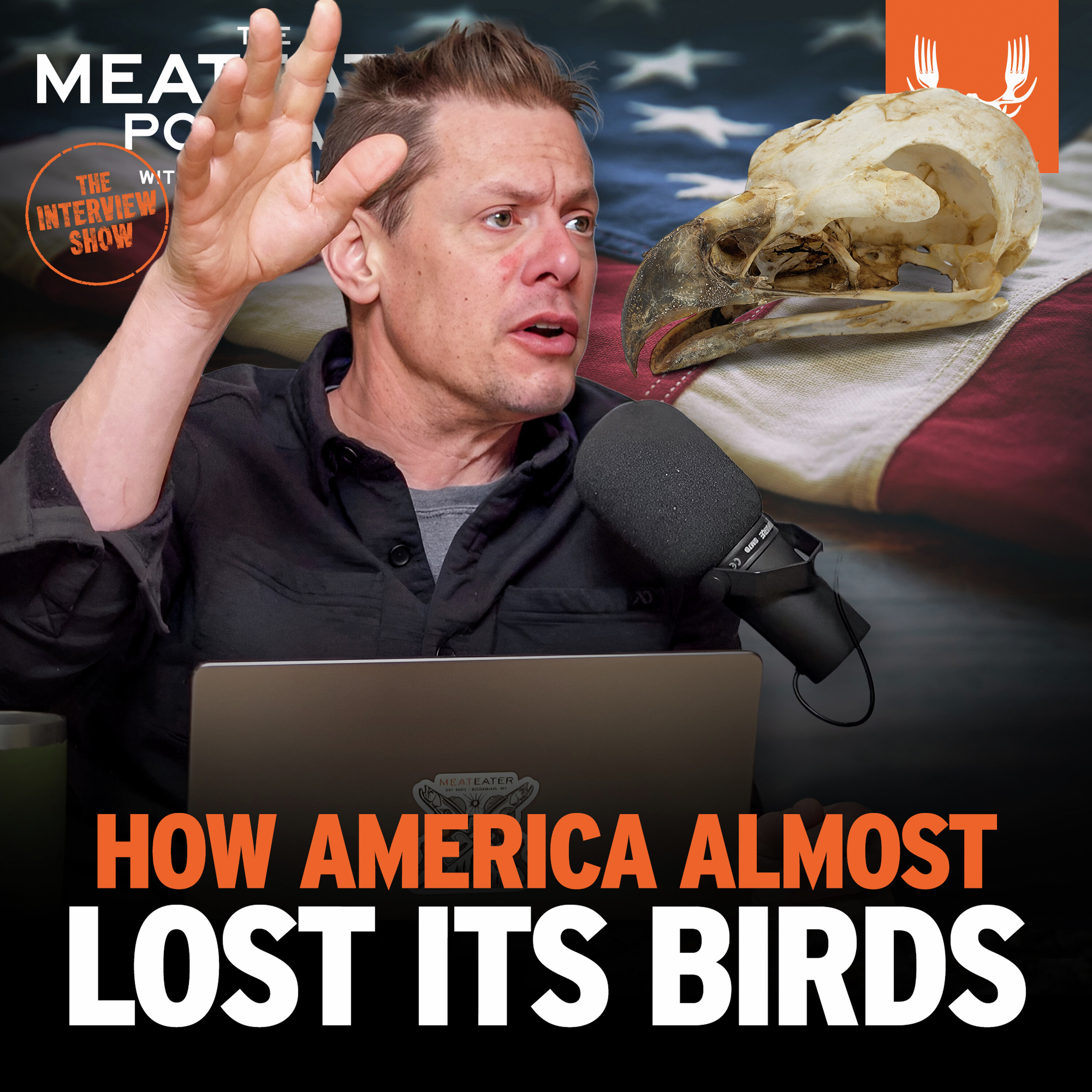
Brought to you by first light. When I'm hunting, I need gear that won't quit. First light builds no compromise. Gear that keeps me in the field longer. No shortcuts, just gear that works. Check it out@first light.com. that's F I R S T L I T E dot com. Okay, everybody. We're joined today by author James McCommons. We're going to talk about how America nearly wiped itself out of dozens of species of birds during the. During what we can think of as the dark days of American conservation. Lost several of those birds to extinction and then brought a great many of them back from the brink of extinction. The name of his book is the Feather wars and the Great Crusade to Save America's birds. James McCommons is a emeritus. Does emeritus. When you're an emeritus professor, that means you're a former professor.
- [02:48]
James H. McCommons
Right.
- [02:48]
Steven Rinella
But in good standing.
- [02:49]
James H. McCommons
But in good standing.
- [02:50]
Steven Rinella
So what would you do? Like give me something you would do to not be. Just to be able to be that you were A former professor and not an emeritus professor.
- [02:58]
James H. McCommons
Well, you have to ask for it first. You do? Yeah, you have to ask for it. Has to go through a committee and before they grant it to you, so.
- [03:06]
Steven Rinella
Oh, so it's like a gift.
- [03:07]
James H. McCommons
Yeah, well, yeah, it's an honor.
- [03:09]
Steven Rinella
It's an honor to be an emeritus professor.
- [03:11]
James H. McCommons
Right. And then oftentimes, particularly at a research based institution, you get to keep your office, you know, you get to keep a lot of the grad students and you get to continue your work.
- [03:23]
Steven Rinella
Oh, okay. All right. And then sometimes you see professor emeritus.
- [03:29]
James H. McCommons
Well, I don't know.
- [03:30]
Steven Rinella
You don't know about that?
- [03:31]
James H. McCommons
No.
- [03:32]
Steven Rinella
Okay. Either way, he's an emeritus professor at, get this, Northern Michigan University in Marquette where he taught journalism. Journalism and nature writing for 20 years. What's Robert Traver? He's kind of a big deal up there.
- [03:49]
James H. McCommons
Oh, yeah, absolutely, absolutely. So, yeah, we would.
- [03:52]
Steven Rinella
Anatomy of a Murder and all that.
- [03:53]
James H. McCommons
Right. Anatomy of a Murder is very important to the community.
- [03:57]
Steven Rinella
That is.
- [03:58]
James H. McCommons
Sure. But we have Jim Harrison, which I think you had a show about, so without a doubt. And then, you know, some other writers that we would go off and do field trips on in this book. George Shirus is in this book. He was a world's first wildlife photographer. We would go out to where his first wildlife photographs were taken and read some of George's stuff.
- [04:25]
Steven Rinella
Oh, God.
- [04:26]
James H. McCommons
Yeah.
- [04:27]
Steven Rinella
You know, years ago, I was working on a. I was researching a book that I never wrote about the Great Lakes. And I was hanging out at Lake Independence there.
- [04:36]
James H. McCommons
Yeah.
- [04:36]
Steven Rinella
And it was like the whole, you know, like the. The Anatomy of a Murder Murder.
- [04:43]
James H. McCommons
The.
- [04:43]
Steven Rinella
The. The couple was camped there.
- [04:46]
James H. McCommons
That's right. Yeah.
- [04:47]
Steven Rinella
And the guy was like a military guy involved with putting some kind of equipment in there. And then the, the wife, like, depending on who you ask, there was like a bear hanging around the campground. She goes down to the local bar, runs into some guys in the local bar or whatever. The. The guy comes and kills a dude in the bar. And I went in there and I had heard how you can still see a bullet hole in the wall.
- [05:13]
James H. McCommons
Yeah.
- [05:13]
Steven Rinella
And I went and asked the bartender, I'm like, hey, man, is there really a bullet hole in here? From like the whole anatomy of a Murder thing? And he goes, the reason it doesn't make sense, he says, where everybody thinks there's a bullet hole. The bar wasn't at that wall back then. He goes, back then. The bar was over on that wall. So he goes, it doesn't make sense to me that the bullet Hole is over there. Yeah. Are you familiar with all this?
- [05:36]
James H. McCommons
Yeah.
- [05:37]
Steven Rinella
Okay.
- [05:37]
James H. McCommons
Yep. I've been in the Lumberjack Cafe.
- [05:39]
Steven Rinella
Was that what it is? Okay.
- [05:41]
James H. McCommons
Exactly.
- [05:42]
Steven Rinella
Yeah. His stuff's cool, man. Like, you know, his writing about all the fish and stuff and the fishing quotes and all that. And when they made the movie with tells his name, the same dude from It's a Wonderful Life. Jimmy Stewart.
- [05:55]
James H. McCommons
Stewart, Right, right.
- [05:56]
Steven Rinella
Like he's always running around, trout rolled up and.
- [05:59]
James H. McCommons
And he's, he's tying flies in the courthouse.
- [06:02]
Steven Rinella
Yeah. And he's always like, he comes in with trout wrapped up in his newspaper.
- [06:06]
James H. McCommons
Right.
- [06:07]
Steven Rinella
That's good stuff, man. That's good stuff. Yeah, there's so there's kind of like a little bit of a literary, you know, there's like a literary aspect to that town, you know.
- [06:16]
James H. McCommons
Absolutely. Yeah. Robert Travers, you know, wrote some pretty profound things about, you know, wanting to be in the environs of trip where trout live.
- [06:26]
Steven Rinella
Yeah.
- [06:26]
James H. McCommons
And. And that how important that was to him. Yeah.
- [06:29]
Steven Rinella
He had cool fishing quotes. He had cool fishing quotes that still stand today.
- [06:32]
James H. McCommons
They do.
- [06:33]
Steven Rinella
They're good fishing quotes. So what got you into the bird story?
- [06:38]
James H. McCommons
So, you know, George Shirus is in this book and George Shirus.
- [06:42]
Steven Rinella
So I want to point out the listeners.
- [06:44]
James H. McCommons
Sure.
- [06:46]
Steven Rinella
The way with the taxonomy of moose.
- [06:49]
James H. McCommons
Right.
- [06:50]
Steven Rinella
The giants, you have the Yukon moose, and then in the Rockies there's other ones. There's like some people argue. There's a Newfoundland moose in the Rockies. Our moose here, Colorado, Montana, Idaho, Washington and elsewhere. That is the Shirus Shirus moose.
- [07:11]
James H. McCommons
Shirassi. That's right.
- [07:13]
Steven Rinella
But that's the dude, right?
- [07:14]
James H. McCommons
It is.
- [07:14]
Steven Rinella
Okay.
- [07:14]
James H. McCommons
It is, yeah. You know, on one of his expeditions. So he was the world's first wildlife photographer. He was taking Pictures in the 1880s, 1890s, before anyone else. He was a lawyer from Pittsburgh whose family would come to the Upper Peninsula to summer. And starting off with his grandfather and his father.
- [07:38]
Steven Rinella
He's from where again?
- [07:39]
James H. McCommons
Pittsburgh.
- [07:39]
Steven Rinella
But they would go to Michigan's Upper Peninsula.
- [07:41]
James H. McCommons
Yeah. Because Pittsburgh was known back then as the hell. Hell with the lid off. It was a nasty place.
- [07:53]
Steven Rinella
Just because it was industrial.
- [07:54]
James H. McCommons
Yeah. In the 1880s, without a doubt. And so a lot of the well known and wealthy families in Pittsburgh would go someplace to spend summer. And the Shiruses were trout fishermen. And his father first started going up to the Upper Peninsula very early on, like 1830s.
- [08:17]
Steven Rinella
Okay.
- [08:18]
James H. McCommons
And then the family started to go up. They established a relationship with. With some folks around Marquette and they got a camp not too far from Marquette. And that's where George, who was a lawyer, first started experimenting with taking pictures of animals at night.
- [08:39]
Steven Rinella
Oh, is that right?
- [08:39]
James H. McCommons
Yeah. So he would go out on Whitefish Lake.
- [08:42]
Steven Rinella
You wrote a whole book about this.
- [08:44]
James H. McCommons
I did. I did tell people that book, and that is how I got interested. But he would go out on Whitefish Lake and he had a chemical flash that he would hold up. They would listen for deer coming down to the shore, and then they would jack like the deer, and then they would push in slowly with the boat. George would stand up with this chemical flash, take the picture. Took him three years to get an image, but he took a lot of images at night. And then the other thing.
- [09:14]
Steven Rinella
I'm familiar with the pictures. I had no idea that that's why they look so strange.
- [09:18]
James H. McCommons
Yeah. They were called the midnight series of pictures. And then.
- [09:23]
Steven Rinella
So you had a chemical flash.
- [09:24]
James H. McCommons
Chemical flash. And then what he found out was that he could put a trip wire up.
- [09:29]
Steven Rinella
Okay.
- [09:30]
James H. McCommons
Set these things at night and then put them on trails, and the deer would trip them. And so he got pictures of deer, but also pictures of birds and other animals as well.
- [09:41]
Steven Rinella
He was like trail. He's running trail cameras.
- [09:43]
James H. McCommons
He's the inventor of the trail camera. Without a doubt, he was the one. He put it. He took a patent out on that device, but it was never really practical for anybody else to use.
- [09:54]
Steven Rinella
Got it.
- [09:54]
James H. McCommons
Yeah.
- [09:55]
Steven Rinella
Wow.
- [09:55]
James H. McCommons
And so that's where I got interested in writing this book was I had done a story on, or this book on George Shirus. And the third thing Shirus was, he was a congressman for two years from Pennsylvania, and he introduced the Shair's bird bill in 1904, which was the forerunner of the Migratory Bird act and the Migratory Bird Treaty.
- [10:21]
Steven Rinella
Oh, I didn't know that.
- [10:22]
James H. McCommons
Yeah. And so that was where I thought, there's a bigger story to this. And then when I was writing that book, it's called Camera Hunter, I really had to learn a lot about that period of the 20th century and late 19th century and who all these people were. Many of the characters in this book were friends of Shirus, including Theodore Roosevelt and. And then. So that's how this book came about.
- [10:50]
Steven Rinella
Yeah. Well, you know, when you start thinking about a book like that, like, I'm kind of. I'm working on a project where I'm kind of in the phase right now of. You might, you know, what you're going to do. You know, you know, you're going to do something like whatever, some. Some, you know, you know, kind of like, well, I'm gonna do a thing about the blank. But then you get into that phase where you're like. And. And I'm gonna have to. The. The themes of it. You know, you start the. The. The ideas start taking shape. You have the umbrella.
- [11:25]
James H. McCommons
Yeah.
- [11:26]
Steven Rinella
But then later you realize that, man, there's gonna be a lot about this or a lot about that, or I imagine the takeaway, like, the takeaway is going to be this. When you start thinking about the story of birds in America, particularly the ones that we hunted to extirpation, near extinction, extinction, what emerged in your mind as kind of like the takeaway for people? Or, like, what is the thing that if you were. You think in your head, like, if I don't achieve that for the reader, I will have failed?
- [11:58]
James H. McCommons
Well, I think at this point, Shirus, when I got interested in doing it, and Shyrus came from this point of view as a hunter. He was a deer hunter. And his first bill was only to protect certain birds, game birds at that time. And then later, what happened was with the Migratory Bird act, they expanded that to all birds. So I was looking for a way to tell the story how Audubon, the Audubon Society, the folks who were professional ornithologists and the hunters all came together to make this happen. And so I wanted to explore more of that story. And so that was part of it. And like anything you say when you first write your book proposal, which you're pitching to your publisher, I want to write this book. You know, it's not going to be exactly the same when you're done at the end.
- [13:01]
Steven Rinella
It'd be kind of the same.
- [13:02]
James H. McCommons
It may not be. You don't know where you're going to go yet because you haven't done the research.
- [13:06]
Steven Rinella
I shouldn't say it's not going to be kind of the same, but. No, no.
- [13:09]
James H. McCommons
Well, yeah, and. But, you know, they want a table of contents. They want all these things, and I understand that.
- [13:15]
Steven Rinella
No, I'm not hacking on them for wanting them. And it's a game everybody know. It's like. It's a dance you do. But you know the writer Ian Frazier?
- [13:23]
James H. McCommons
Sure.
- [13:24]
Steven Rinella
Okay. He's on the show, and he mentored me when I was young. I remember him telling me, he said, if I ever had to write a book proposal, the first thing I'd do is throw it away.
- [13:35]
James H. McCommons
It would be great to get to the point. You don't have to write a book proposal.
- [13:38]
Steven Rinella
That's where he was. And he wasn't knowing because he's like, I don't know what the book's gonna be about.
- [13:43]
James H. McCommons
Right, right. And so that was. You know, this one was. I just started hitting the road, hitting archives, and then, you know, see where it went.
- [13:52]
Steven Rinella
You started out doing archive work.
- [13:54]
James H. McCommons
Yeah. Yeah. Well, and to tell the story, one of the interesting stories in here is how after the Migratory Bird Treaty was okayed by Congress, there was going to be a test case that literally somebody was going to go out and violate it. And then that would go up through the courts to make sure that it was a constitutional law. And in this case, it was the Attorney General of Missouri, who was a duck hunter. His name was Frank McAllister, and that he was telling everybody in Missouri, like, ignore the law. Spring hunting is okay. Everybody should go spring hunting. And I'm going to go spring hunting. And.
- [14:43]
Steven Rinella
Yeah, back up, because I got confused.
- [14:45]
James H. McCommons
Sure.
- [14:47]
Steven Rinella
You mean they. They just knew that someone would. Not that they planned that someone would. So they knew that there would be a violator or they were planning a violator?
- [14:55]
James H. McCommons
Well, it was kind of a. It was kind of both in the sense that Missouri, Kansas, Iowa, and. And sort of that part of the Mississippi, Missouri area.
- [15:07]
Steven Rinella
Okay.
- [15:07]
James H. McCommons
These folks were deadly against the migratory bird training.
- [15:10]
Steven Rinella
Okay, I thought you meant they were putting. They were like, okay, Bob, you go break the law so we can test this in the courts.
- [15:17]
James H. McCommons
In one instance that happened before this.
- [15:19]
Steven Rinella
Okay.
- [15:20]
James H. McCommons
Yeah. The Weeks McLean act was tested like that. But anyway, when. When the Migratory Bird Treaty happened, these states were still not happy with it. And they were saying that, you know, we still own the birds. The federal government has nothing to do with this. They can't tell us what to do. We're going to have a spring shooting season. And Frank McAllister, the. The attorney General said the same thing. The young game warden, federal game warden, who covered seven states, his name was Ray Holland. Ray Holland said, I'm going to bag the Attorney General. And so he sort of followed him. The Attorney general went to a duck club in Nevada, Missouri, and shot over 100 ducks. Holland got himself onto the. The property and was able to arrest the Attorney General. The Attorney General was fined for shooting these ducks. And then the case went all the way up to the Supreme Court. The Attorney General actually argued his own case in front.
- [16:28]
Steven Rinella
Seriously?
- [16:28]
James H. McCommons
Yeah, in front of the U.S. supreme Court and lost. And that was the test case for the Migratory Bird Treaty.
- [16:38]
Steven Rinella
And they held that it was sound law.
- [16:40]
James H. McCommons
Yeah, it was sound law.
- [16:41]
Steven Rinella
What was his argument?
- [16:42]
James H. McCommons
His argument was that the states and this. This was the argument previously up to this time, all through, like, you know, the 20 or 30 years prior was that birds belong to the states, all wildlife was, was owned by the states, and the federal government had no jurisdiction.
- [16:58]
Steven Rinella
Okay.
- [16:59]
James H. McCommons
And what this movement was about with was for the federal government to take jurisdiction over birds. Birds were a public trust. Migratory birds moved from state to state, that each state having its own laws, its own bag limits, when, you know, birds were going to be shot, what seasons didn't make any sense biologically with their nesting and migratory patterns. So slowly but surely, the feds moved in to take jurisdiction over those birds, and it culminated in the Migratory Bird Treaty Act.
- [17:35]
Steven Rinella
Okay.
- [17:36]
James H. McCommons
Yeah. And. But that was a great story. And I had just heard a little bit of that when I wrote the George Shirus book. And I thought, I'll start there. So that's where I started the book was. I got. I want to go find out more about Frank Holland or Ray Holland arresting the Attorney General. And I found his papers in Connecticut in, in a college in Connecticut. And there was an unfinished book, biography, it was a finished biography that he wasn't able to get published. And I thought, okay, there's got to be two or three chapters in there about this great thing he did back then. And there was. And so this kind of wonderful anecdote that goes on for 10 pages in this book about how these guys arrested the Attorney General came from that.
- [18:30]
Steven Rinella
Got it.
- [18:30]
James H. McCommons
Yeah. Yeah.
- [18:32]
Steven Rinella
You know, people like, like a lot of people in our audience, our audience are pretty familiar with the, the commercial duck hunting era. Like, for instance, right outside the door here, we have. I don't know if you notice coming in, we have a big punt gun.
- [18:47]
James H. McCommons
Oh, I didn't see that.
- [18:48]
Steven Rinella
No, we have a Holland and Holland London made punt gun.
- [18:53]
James H. McCommons
Okay.
- [18:53]
Steven Rinella
Like a commercial duck hunting gun.
- [18:55]
James H. McCommons
So that was made in England.
- [18:56]
Steven Rinella
And yeah. You know, it's funny, it's got the address on it on the top of the barrel painted over in some kind of gunmetal, like some kind of like a paint you use to paint like a, like a, like a cannon on a boat.
- [19:14]
James H. McCommons
Yeah.
- [19:14]
Steven Rinella
But then the action is very ornate and fine, you know, but if you look, if you can kind of like look through that paint, you can see that there's an address from Holland and Holland. We made a big punt gun shooting video that we haven't finished yet. But anyways, just in conversations we've had on the show, we've talked about commercial duck hunting. And I don't want to leave that out of our conversation. But the thing we haven't touched on too much. Is that what we now regard as songbirds? Right. That these, at a time, were, like, a heavily exploited bird.
- [19:47]
James H. McCommons
Yeah.
- [19:48]
Steven Rinella
I always joke about in, like, my. My father's bird taxonomy, he knew game birds. He was a duck hunter. He hunted upland birds. He knew his game birds. He knew two or three other birds. Robins, blue jays, chickadees, crows. But most birds he saw were tweety birds. And they were like. That's what they were. And they were not of interest. Not of a tremendous interest.
- [20:18]
James H. McCommons
Right.
- [20:19]
Steven Rinella
Because he had that. He had that. And I'm not even criticizing it, but he had that, like, hunter's value system of. These are the birds that are important are. Yeah. These are the birds that I'm interested in. These are the birds that we pay attention to. These are the birds that have regulations. These are the birds we eat.
- [20:38]
James H. McCommons
Right.
- [20:38]
Steven Rinella
And a couple other common ones. Butternut. He was more like me, tweety bird. But at a time, like, tweety birds
- [20:46]
James H. McCommons
back then, they called them dicky birds.
- [20:48]
Steven Rinella
Okay. But at a time, man, there were people, like, hunting these things.
- [20:53]
James H. McCommons
They were.
- [20:53]
Steven Rinella
Yeah. Tell people about sort of the extent of that and who and what and why was going on.
- [21:00]
James H. McCommons
So robins, particularly in the south, when robins go south into winter, they flock up. And a lot of farmers would catch those birds in nets and they would feed them to their hogs. But people also ate robin pie. And so, yeah, without a doubt, flickers were eaten and many woodpeckers as well. What I talk about in this book is how immigrants came from Southern Europe, parts of Italy, and from. From Eastern Europe who had a. A tradition of eating small birds. And so when they came to America, particularly like in, you know, 1910, 1900, they were hunting small birds partly because they were poor and this was a way to put protein in the pot. And so there was. There's an incident that I write about in Pennsylvania where a lot of these landowners in these farmers just hated the idea that these foreigners were coming out from Pittsburgh on the trains and going on their land and hunting small birds. But, yeah, shotgunned them. Shotgun, yeah. Anything else? Woodchuck. Whatever it took. I mean, it was just getting meat and taking meat back.
- [22:27]
Steven Rinella
But there's one of my colleagues that I worked with on our cook. We have a couple cookbooks, and I worked with a woman named Krista Ruane. She has Italian. As do I. She has Italian ancestors on the side of her family. And she talks about. I don't want to get the guy in trouble. She Talks about her grandfather. Like, she remembers that her grandfather still putting them in, you know, putting him. Putting songbirds, whatever he could get his hands on, putting them into his sauces.
- [22:59]
James H. McCommons
Yeah.
- [22:59]
Steven Rinella
And he'd just cook them down and shred them. And it'd be like any other meat you could throw in there, but in the pot could be like local. Just things he kind of got out of his yard or whatever. And it was just like a food item, you know.
- [23:10]
James H. McCommons
That's right. That's right. And you could put them on a spit, you could put some bread on him, some pork and, you know, you could do it that way. Yeah.
- [23:19]
Steven Rinella
And were they. But like that kind of. I want to talk about the. I want to talk about like the commercial restaurant trade and the feather trade.
- [23:27]
James H. McCommons
Sure.
- [23:27]
Steven Rinella
Just to. To wrap up on the songbird thing, was there ever. Were they able to have population level impacts? Like take robins would that type of harvest. Was it able to have a population level impact? Like, did we ever see robin numbers decline to a dangerous level?
- [23:46]
James H. McCommons
Well, I think robin numbers did decline, generally, but on a localized level, yes, without a doubt. Particularly like in the south, in Louisiana, there were, you know, tens of thousands of robins that were killed. And people. I've got a little anecdote in the book where people were, you know, killing these birds and then bringing them in a new Iberia on a string and selling them for, you know, 25 cents or 50 cents a string.
- [24:20]
Steven Rinella
Okay.
- [24:21]
James H. McCommons
So it was kind of a. An annual thing to be able to buy robins on the street at that time.
- [24:29]
Steven Rinella
Okay. Talk about the, the, the. The. The feather trade, because this is the thing, like people can picture. I, like a lot of people can picture that when people don't have a lot of money, a lot of other game isn't around. You know, we didn't have. A lot of the times we're talking about deer numbers had already been depleted, even going back to the mid-1700s, you know, so when you get, you know, whatever you get into the late 1800s, there's not as much game around. People want to hunt, they're hunting birds. But the feather trade is not personal use. The feather trade isn't going out and getting some grub for yourself. The feather trade is like, is business, you know.
- [25:14]
James H. McCommons
Yeah. I think, you know, people always hunted for feathers, for stuffing, you know, mattresses, feather fans, like face fans. But it was around the 1870s, 1880s, where this fashion trend started of having bird feathers, you know, in your hat, in women's hats, and that grew fairly Quickly that it was. Everyone needed to have these, you know, these, these bird hats as they called them.
- [25:46]
Steven Rinella
That's what they called them.
- [25:47]
James H. McCommons
Yeah, yeah. There were names for bird. Yeah, bird hats.
- [25:50]
Steven Rinella
You'd be like, I'm going to go to the store and get my mom a bird hat.
- [25:53]
James H. McCommons
You could get a bird hat. Or there was one called the Three Story which was a very tall hat and very wide one as well.
- [26:01]
Steven Rinella
All loaded with feathers.
- [26:02]
James H. McCommons
All loaded with feathers, right. In fact, these things kind of became, as time went on through the 1880s and 1890s, as the designers competed with one another, these hats became more ostentatious. They had to try to outdo one another. So they got bigger and, and then it wasn't just feathers. They were putting taxidermy birds on their heads. And so it wasn't unusual to see 3, 4 birds arranged with maybe some natural materials that would show the bird.
- [26:37]
Steven Rinella
Yeah.
- [26:37]
James H. McCommons
So it was like wearable taxidermy.
- [26:40]
Steven Rinella
It kind of ties into this like you talking that like sort of arms race. Not arms race, but I can't remember who, but someone was observing how fashion always becomes self parody. Meaning someone will make a wide leg jean and then they're like, oh yeah, you think that's wide? Do you know what I mean? Or like, oh, a little hole in your jeans is cool. How about I remove the entire front of my jeans, you know, and that's how like fashion goes to self parody. And then the thing vanishes. So it's funny to think of feathers being like, oh, you think a few feathers are cool, right? Well, here's a bird right here.
- [27:23]
James H. McCommons
It's exactly what happened. And they got more ostentatious. Sometimes they were really close fitting hats, almost like a cloche hat and they were all feathers. And then each time a new season happened you'd have to get a, a new feathered hat. So I mean we're talking about sort of Victorian fashions. Very long dresses, bustles, you know, lots of petticoats. Women had a lot of clothing on and then it was often topped off by these big hats. And I talk about how some women could not, would have to put their head out the window in order to ride on a streetcar or in a, on a, a coach because their hat was so big.
- [28:12]
Steven Rinella
That was so damn big.
- [28:13]
James H. McCommons
Would not, it would not fit inside.
- [28:15]
Podcast Announcer
Welcome to Meat Eaters 12&26 presented by Moultrie Mobile and ONX Maps 12 of Meat Eaters biggest and baddest hunts from the last year released throughout 2026. These are long form episodes so you get more of what you love. The first one up is my Baited Bear Hunt in Manitoba. If you've ever wondered what abated Bear hunt is like, you'll love this episode. My favorite part was watching a younger bear spend an hour trying to figure out how to get a creatively hung beaver carcass down from a tree. Check it out now on Meat Eater's YouTube channel and be on the lookout for more 12 and 26 in the coming months.
- [28:55]
Steven Rinella
Was there, like, if you picture for the bee that, you know, at a time, like you go back to the 50s or whatever, be like. Like a mink fur. That was good.
- [29:06]
James H. McCommons
Yeah.
- [29:07]
Steven Rinella
If you had a muskrat fur, if you had a possum fur, not as good, but a mink fur was the shit.
- [29:12]
James H. McCommons
Yep.
- [29:13]
Steven Rinella
Did consumers have a notion of what. When feathers were the rage. Did consumers have a notion of what feathers they wore meaning was there? Was there. Were they aware of that this is a very rare feather or that this is sort of an exclusive feather?
- [29:32]
James H. McCommons
So the breeding feather, the most popular feathers were many of, like the Florida wading birds, egrets. And the snowy egret especially, was its breeding feather. The air grat, I think is how you pronounce it.
- [29:48]
Steven Rinella
That's the feather.
- [29:49]
James H. McCommons
Yeah.
- [29:49]
Steven Rinella
The egret.
- [29:50]
James H. McCommons
Yeah. There's this long breeding feather that the bird gets. And that was. It was quoted more than once that it was worth more than its weight in gold. Didn't weigh much, of course.
- [30:05]
Steven Rinella
Yeah, you can see good. Superlative or whatever.
- [30:08]
James H. McCommons
Exactly. But it was a beautiful white feather. And so those were really popular. And the plume hunters absolutely went after those birds because.
- [30:19]
Steven Rinella
Snowy egrets.
- [30:20]
James H. McCommons
Yeah, snowy egrets. And. And then the rosy at Spoonbill was. Was very popular. And that was often for face fans. They were very pretty, of course. So, yeah, there. There was some pecking order. The. One of the famous things that.
- [30:36]
Steven Rinella
That was a good pun right there. Did you know? Did you know or did you just do it on accident?
- [30:41]
James H. McCommons
I just did it. That's good. I didn't know it.
- [30:43]
Steven Rinella
Phil, you catch that pun?
- [30:44]
James H. McCommons
It was great.
- [30:45]
Steven Rinella
You caught it. Did you catch it before I pointed it out? No, I didn't. That was just you, Steve. Congratulations.
- [30:54]
James H. McCommons
The.
- [30:56]
Steven Rinella
Oh, do you know. Can I. Do you know about the great ISBEL pun controversy? I remember hearing about it. I do not remember the details, though, how they. They made a pun and then they insisted that they did it on purpose. But you think that we tell our guest, okay, a meeting with some friends and we're at this place and they bring a caviar dish out. One of my friends winds up with a caviar egg stuck right here on his lip. Okay. And he says, marilyn Monroe. And then goes, ha, okay. And he claims he knew all along and made the roe joke to us. We felt there was a delay and that it occurred to him that he had made.
- [31:56]
James H. McCommons
After he knew that this was on
- [31:58]
Steven Rinella
his lip, like he was just going on the fact. No, no. Someone said, hey, you got a piece of egg right here. And he says, oh, Marilyn Monroe. Ha, meaning roe, fish, egg. So he's like, oh, no. Even when I said Marilyn Monroe, I knew I was making a roe joke. Other people at the table felt that there was a delay. And you could see him realize after saying it how spot on it was Marilyn Monroe. We never could settle it. We considered trying to get security camera footage from the restaurant.
- [32:35]
James H. McCommons
Yeah.
- [32:35]
Steven Rinella
To see the look in his eye when he realized. You following me, right?
- [32:43]
James H. McCommons
That he made a. Yeah.
- [32:45]
Steven Rinella
He claims to this day that he did it on purpose. Either way, the pecking order, did you lose your train of thought?
- [32:55]
James H. McCommons
I used to have an editor who would tell me puns all the time, and then I would tell him to shut up and he would say, we have a lot of pun around here.
- [33:04]
Steven Rinella
I'm not going to take it that far. So does it peck an order to birds?
- [33:07]
James H. McCommons
Well, and so Frank Chapman was a banker, and he was a famous ornithologist, and Chapman wrote for Forest and Stream magazine. He later became the curator of birds at the American Museum of Natural History. He'd done all kinds of things later in his career, but early in his career, when he was a banker and these feathers were appearing on women's hats, he went down and did what is known as his famous sidewalk survey. Oh, I heard about this. He went to the shopping area in New York, took a notebook, and noticed that 500 some women out of 700 had feathers in their hats. And because of his. His ability to look at these hats and tell what kind of feathers they
- [34:04]
Steven Rinella
were, he was that good.
- [34:05]
James H. McCommons
He was very good. Right. And. And he could tell that they were, you know, flickers and woodpeckers and many. They were backyard garden birds. And then he wrote an article for Forest and Stream magazine saying, women are wearing the feathers of our songsters. And. And so that was part of that movement.
- [34:24]
Steven Rinella
But, yeah, so he was like, so he's in New York and he's the
- [34:29]
James H. McCommons
heart of the millinery or hat, but he's.
- [34:32]
Steven Rinella
But he's seeing like Perhaps locally sourced birds.
- [34:35]
James H. McCommons
Oh, yeah, yeah. In fact, Forest and Stream did an article right around that time where they. They went to one of these millinery houses and talked about how many birds were being shipped in from Long island and that they were coming in every day. Birds in meat, as they called it. They had just been shot with dust shot, and now they needed to be processed.
- [34:57]
Steven Rinella
What's the shot they would use?
- [34:59]
James H. McCommons
So dust, they called it dust shot. Collectors still use it today. Ornithologists that are still permitted to collect. It's very, very fine with the shotgun.
- [35:09]
Steven Rinella
Do you know, like, how you would, you know, like, nine shot today would be about. That's. Someone's gonna crack me on this. That'd be about as small as you're gonna find. Would be like a nine shot.
- [35:25]
James H. McCommons
I'd have to look in the book. I didn't.
- [35:27]
Steven Rinella
I'd be curious what it is.
- [35:29]
James H. McCommons
I didn't know what it was myself, but I talked to a collector at University of California, Davis, and that's what they use, and they call it dust shot. Because I was trying to find somebody to tell me, okay, what were they using at that time? And if you got too close to the bird, you could blow it apart. Yeah.
- [35:47]
Steven Rinella
So are you trying to find it? Gross shot?
- [35:51]
James H. McCommons
Dust shot. Yeah. Looking for Miller.
- [35:53]
Steven Rinella
Yeah. Like, what shot size was dust shot did? In your book, you mentioned, like, people looking for eggs, right? Bird eggs. But that's just like. That's just people looking for something to eat. Or is it different than that?
- [36:09]
James H. McCommons
It was both. So there was this practice called ology. So if you were interested in birds at that time, say 1850s, right after. Right after the Civil War, you did three things. You. You shot birds, you took their eggs, and you took their nest. And. And that was sort of the. The entry into birding at that time. And the reason was that optics weren't very good and there really were no good field guides at that time. So if you were interested in birds, you went out with your shotgun and your dust shot, you. The birds are hungry.
- [36:49]
Steven Rinella
That was a birding trip.
- [36:50]
James H. McCommons
That was a birding trip. Yeah.
- [36:51]
Steven Rinella
Oh, number 12. Number 12. So, okay. About 1.20, 1.27 millimeters. Wow.
- [36:59]
James H. McCommons
Is that smaller or bigger than number nine? That's.
- [37:02]
Steven Rinella
It's descending.
- [37:03]
James H. McCommons
Okay.
- [37:04]
Steven Rinella
I didn't even heard of it. Like, nine is small.
- [37:07]
James H. McCommons
Yeah.
- [37:07]
Steven Rinella
You know, nine would maybe be like, you know, might have applications, you know, like, some guys will shoot morning doves.
- [37:14]
James H. McCommons
Yeah.
- [37:15]
Steven Rinella
With nine.
- [37:16]
James H. McCommons
Okay.
- [37:17]
Steven Rinella
That's small. Yeah.
- [37:18]
James H. McCommons
Yeah.
- [37:18]
Steven Rinella
Eight is a more common dove. Yeah, 12. Number 12. I've never heard of it. So smaller than that, I guess, just
- [37:26]
James H. McCommons
for ornithologists that have a permit to do this. So. So you would shoot the bird, you'd bring it back, you would. You'd probably have a big thick volume because again, there's not really a field guide to take out there with you. You'd identify the bird and then you would taxidermy the bird as a study skin and then put it away. And then the other thing you would do is you would collect their eggs and blow the egg out and put some nomenclature on the outside in India ink. And part of it was at that period they were still studying, you know, where did birds occur. Okay. What subspecies was what, what was the color, the morphology of the egg. Yeah, all those kind of things. And then they would take nest. That practice was known as nightology. So these were like the three things that.
- [38:26]
Steven Rinella
Look at my nose that. That night. I mean, dude, I've never heard ology. Ology or nightology is collecting bird eggs but not to eat, but like the collection of bird eggs.
- [38:38]
James H. McCommons
Right.
- [38:38]
Steven Rinella
And then nightology is collecting a bird nest. Many American children are nightologists. Well, there were more back pains them to leave a bird nest, you know, I mean.
- [38:52]
James H. McCommons
Right.
- [38:52]
Steven Rinella
It pains them to leave a bird nest in a tree. Once they confirm that it's been vacated, it's painful to them. So.
- [39:00]
James H. McCommons
So we still do 9 ology today. Yeah. I mean, people bring them home to look, but the other, you know.
- [39:08]
Steven Rinella
Yeah, my kids are like, there's no way. There's no way I'm going to leave that nest.
- [39:12]
James H. McCommons
I'm going to take it on the Christmas tree. Yeah, there you go. There you go. So ologists were people who were interested in science, and many of them were young. They were young men. Always tended to do this.
- [39:27]
Steven Rinella
Like affluent, affluent people.
- [39:29]
James H. McCommons
Yeah, well. And I guess what I'm leading up to here to say that a lot of ologists were just interested in egg collecting. Collecting bird eggs didn't have any science behind it. It was more like stamp collecting or coin collecting. It was kind of a craze at one time, really.
- [39:49]
Steven Rinella
Displayed in what way?
- [39:50]
James H. McCommons
Well, you would display them in your cabinet of curiosity. Have you heard that? Yeah.
- [39:56]
Steven Rinella
You know, so mine's more of a box.
- [39:58]
James H. McCommons
Well, exactly. So it was. People entertained back then in the parlor, and they would have a cabinet in their parlor, or they might have a whole room where they would display items of scientific interest, which could be seashells, eggs, fossils. There was a lot of interest during the gilded age of that period in scientific discovery. And there was a lot of magazines you could read because magazine journalism was big at that time too. And there was a magazine called the Oologist. There was a magazine called the Nightologist.
- [40:36]
Steven Rinella
There was a magazine about it.
- [40:38]
James H. McCommons
Absolutely. Yeah. And so you could read on how to do it. You could buy and sell those eggs, trade those eggs. So a lot of ology, a lot of ologists, and there were tens of thousands of them around the country at that time, were not all that interested in birds or interested in science. They were simply interested in these kind of things that looked like. Like they were pretty baubles in many ways that you could put. Put in your cabinet. And this is, this is creating.
- [41:08]
Steven Rinella
What you're telling me. I'd never heard any of this. What you're telling me is creating like a really interesting context that isn't often observed about Theodore Roosevelt. Because when you're reading Theodore Roosevelt biographies or talking to Theodore Roosevelt biographers, they always make a big deal about his collecting. Yeah, but no one ever points out that. I'm aware of that word. Be like, like many young men of his means. He was a collector. You sort of get the sense that it was like a freak thing.
- [41:45]
James H. McCommons
No, not at all.
- [41:46]
Steven Rinella
It was like a thing people were doing.
- [41:48]
James H. McCommons
Absolutely.
- [41:48]
Steven Rinella
Yeah. No one ever does a good job of conveying that he was one of. One of many or a sort of. He was a product of his time.
- [42:01]
James H. McCommons
Sure. Well, I certainly mention that in my book.
- [42:04]
Steven Rinella
Yeah.
- [42:05]
James H. McCommons
And I also mentioned Franklin Roosevelt was also a collector of birds. And I went to Hyde park to look at his bird collection. And it's all there in his cabinet of curiosity. He has mounted birds and they would, they would preserve them with arsenic. And his. His mother was afraid of FDR using arsenic, and so she sent his birds downriver to New York City. And a professional would do his birds, but Teddy, Teddy would, Would do his.
- [42:42]
Steven Rinella
Like she was hip to the idea that it was hazardous.
- [42:45]
James H. McCommons
Oh, yeah. Oh, yeah, yeah. And, and, but yeah, Theodore had his own museum specimens. His father was one of the founders of the American Museum of Natural History. So Theodore got to hang out at the museum and learn from some of the taxidermists there. And if you go there today, I think on the first floor, there are still a couple of his mounts there. Got it as well.
- [43:12]
Steven Rinella
I want to ask the same question. I asked about songbird hunters around the egg collectors, bird collectors, private collectors. Did it have a population level impact?
- [43:27]
James H. McCommons
Yes, particularly on, again, localized level. And, and and sometimes with certain kinds of birds. So ologists would trade or sell these birds and the prices would depend on the difficulty of finding the egg. Okay, so one ologist said that to get a peregrine falcon egg, you had to climb. And he said once you visited the nest of five duck hawks, which were peregrine falcons, you're living on borrowed time. And if you look at the list that I found in the oologist of the price of these eggs, any kind of raptor egg was much more expensive than the other ones.
- [44:15]
Steven Rinella
I could definitely see that you'd have population level impact on that for a handful of reasons, like lo cundity low density. But then you can pretty much go into an area and if you're like a good observer, you can probably go into an area and spend some time there and be like, there's one there, there's one there and there's one there and that's it.
- [44:38]
James H. McCommons
Right, right. So they would go back and forth. Now some many birds would lay a second clutch. And so if you did this ethically, you would take one clutch, allow them to lay the second clutch, and then reproduce. But a lot of these folks were, but a lot of these folks were greedy and they were trading and selling and so they would go back time after time after time after again in order to do this.
- [45:05]
Steven Rinella
Man, I can't believe. It's kind of blowing my mind that I catch wind. All kinds of weird stuff. I had no idea this was a thing.
- [45:13]
James H. McCommons
Yeah, yeah. So what the hell's the word again?
- [45:16]
Steven Rinella
Nidology.
- [45:17]
James H. McCommons
Nidology, right.
- [45:18]
Steven Rinella
No, that's ness.
- [45:19]
James H. McCommons
That's ness. Oology. T. Gilbert Pearson, who was the head of the National Audubon Society in the early part of the century, I think he was the president for 20, 25 years. He grew up rather poor in Florida and he was a neurologist. And so he would collect all these eggs and he would go back time after time after time to get as many as he could and he would sell them. He actually traded his egg collection to a small college in South Carolina in order to go to school. And then his job was to go there and get an education while he was there, take care of the cabinet, the curiosity cabinet, which was a museum at the Scholar. So he actually traded his egg collection for this. So, you know, some of these bird protectors started off this way as young people.
- [46:14]
Steven Rinella
Yeah, you know, I'm like in my own work right now. I'm, look, I'm spending a lot of energy looking at the fur trade as A continuum, you know what I mean? A lot of times when people get into the fur trade, they're talking about colonial America or whatever, but, like, looking at it as the thing that never ended, and the observation I have that I'll spend time on, that I'll write about, is. The enormous difference between the people that collect the fur and the people that ultimately wear the fur. Meaning the difference between a
- [47:04]
James H. McCommons
kid that
- [47:04]
Steven Rinella
grows up on a ranch in Nevada and catches a few bobcats every year and a Russian oligarch's wife who ultimately wears those bobcats. Not only a big difference, but there's a somewhat of a culturally, Like a mutual disdain. Right. The egg guys, though, like, did the. Did the egg trade. I know the feather trade did. But did the egg trade, like, kind of hatch a.
- [47:40]
James H. McCommons
That was the pun.
- [47:42]
Steven Rinella
What's that? Oh, I knew that.
- [47:47]
James H. McCommons
I guess you could say it flew over your head. Or is that really a pun?
- [47:50]
Steven Rinella
But, dude, that was a good one, Phil.
- [47:53]
James H. McCommons
Thank you.
- [47:54]
Steven Rinella
I knew that it hatched. Were there, like, poor kids, like farm kids, whatever. Like poor kids that wouldn't have been the kind of people that had a parlor and a curiosity box who were just hip to the idea. They knew. They're like, listen, man, people will pay money for these eggs. Yes, but they weren't. They weren't aspiring ornithologists. They were just collectors.
- [48:21]
James H. McCommons
That's right. Absolutely. There were plenty of folks like that. Pearson, actually, T. Gilbert Pearson, he loved birds, but that's exactly what he was doing. You know, one year someone wrote to him through the oologist and said, I will take all the bird eggs from that part of Florida. And so that's what he did. He went out and collected like crazy.
- [48:40]
Steven Rinella
Got it. And he wasn't coming to it as an. As a bird enthusiast. He was coming to it as like, hey, if they're going to pay for it, I'll get it.
- [48:47]
James H. McCommons
Yeah, exactly. I have my own collection, and I know where all these birds are and going to do that. But, yeah, there were a lot of people who did that, even the bird collectors. Many of the shotgun ornithologists who went out and collected their own birds, they didn't have time or they couldn't get everywhere they needed to get for certain birds that they wanted so they could buy them or they could contract with people who called themselves taxidermists, but they were basically just contract hunters who would shoot those birds for them and bring them back.
- [49:27]
Steven Rinella
Whether we're talking about market hunting for ducks, which is just supplying restaurants, meat markets with duck Meat, or we're talking about the feather trade. Shooting egrets, spoon bills for decorations, or we're talking about egg collecting. Like. Like any of these things. We're talking about when and how extensive. What, when did the damage start to show? Like the resource damage, when did it show and how extensive did the damage get, regardless of what the ultimate use was. Like, what were we seeing in terms of birds that we now think of as abundant that weren't, or birds that we know were wiped out?
- [50:18]
James H. McCommons
Right.
- [50:19]
Steven Rinella
Like, when did it become apparent and how bad did it get?
- [50:22]
James H. McCommons
Probably by the 1880s, 1890s, when the American Ornithologists Union formed in 1883, they created a committee at their second. At their second meeting to look at bird protection. Because these guys were. I called them birdmen in the book because they were all men, but they were collectors. They were scientists, mostly self educated because there was no university courses for to become an ornithologist. They had this committee that went out and then studied what was happening with birds. And they identified plenty of places where birds are being wiped out. Cape Cod was one. I think that the year that they did the. They created that committee, they figured that there were 60,000 turns that were shot for the feather trade in a year. In a year. And because where New York was located, birds were disappearing through Long island, the Cape, along New Jersey, Barnegat Bay, and further down into the Carolinas too, eventually, by 1890s, what were they killing the terns for? Feathers. Feathers. There were all kinds of. There were a lot of different kinds of birds were used. Gulls were very popular as well.
- [51:53]
Steven Rinella
Yeah, I don't think of them as having like a crazy tricked out feather like a heron does or something.
- [51:58]
James H. McCommons
No, that's true. But there was a need for a tremendous amount of feathers, whatever. And then some of them, you could die and so you could change that.
- [52:11]
Steven Rinella
But anyway, so a seagull that throws a white feather that might have turned up on the market as a red feather.
- [52:17]
James H. McCommons
Yeah, as something else. That's right. That's right. But I've got a picture in the book that herring gulls were used to make a hat and a tippet set, as I think, as they called it. And so at one point, by the 1890s, it was estimated, and I did talk to a biologist on Nath who said, look, we weren't taking really good. We didn't have good science back then. But it was estimated back then that 95% of Florida's wading birds disappeared during this period because of the Feather trade. And clearly most of the known rookeries were wiped out. And then that kind of continued through Louisiana and Texas as well. So it was very evident by the 1890s that the showy birds were just being wiped out. And it was clear because the prices had gone up so much from scarcity.
- [53:19]
Steven Rinella
Got it.
- [53:19]
James H. McCommons
That they were hard. Harder to get.
- [53:21]
Podcast Announcer
Welcome to Meat Eaters 12 and 26, presented by Moultrie Mobile and ONX Maps. Twelve of Meat Eater's biggest and baddest hunts from the last year released throughout 2026. These are long form episodes, so you get more of what you love. The first one up is my baited bear hunt in Manitoba. If you've ever wondered what a baited bear hunt is like, you'll love this episode. My favorite part was watching a younger bear spend an hour trying to figure out how to get a bravely hung beaver carcass down from a tree. Check it out now on Meat Eater's YouTube channel and be on the lookout for more 12 and 26 in the coming months.
- [54:01]
Steven Rinella
The thing about just being alive, you know, in America, in a lot of places you go, you're sort of haunted
- [54:09]
James H. McCommons
by
- [54:12]
Steven Rinella
past image, you know, or. Or you're haunted by a sense of absence. Right. Like you could go to a place like, if I'm just thinking around here, you know, you could go to a place where mountain men would talk about hillsides full of bighorns and they're seeing 3, 400 bighorns on a hillside. You just ain't gonna happen now. Or, you know, herds of buffalo that you watch cross a river for three days, all day. Right. And you feel that absence. But it's interesting to think that in, that you could be in Florida right today. You could be on vacation down in Florida on the beach. And you're like thinking back, you could think back to maybe an era of greater abundance, but you can also think back to an era when you probably wouldn't see any of the things you see.
- [54:59]
James H. McCommons
That's right. That's right.
- [55:01]
Steven Rinella
You know, be like an example of, oh, no, it's better now. Like, it's been worse.
- [55:06]
James H. McCommons
Right, right.
- [55:06]
Steven Rinella
Which is true again and again on all kinds of game animals and things. But you just don't, like, I don't anyways think that, you know, you imagine like that you're on a shoreline, that you could have been on a shoreline back then and there were no herons. You see egrets all over in pastures. There were no egrets in those pastures.
- [55:22]
James H. McCommons
Yeah, I think, you know, I'm from Pennsylvania, and originally, and Pennsylvania had about 500 deer left around 1900 in the entire state. And I can remember when we did not see eagles. This is, you know, 1960s when I was growing up, we didn't see eagles. There were no bears in that part of Pennsylvania. Now today there are eagles, there are bears. And so, yeah, same thing's true with birds as well. They've come back. They're still not as abundant as they could be and maybe will be in the future, depending on how we take care of them. Right. But yeah, I mean, things around 1900 were pretty bleak. And it went through not just birds, but through, you know, deer, big game animals. I have a chapter in this book about George Bird Grinnell and Theodore Roosevelt founding the Boone and Crockett Club. And that did have effect also on birds as well.
- [56:29]
Steven Rinella
Yeah. Sometimes today you hear politicians and they'll talk about, like, deregulation as though it's the greatest thing in the world. What saved America's birds is regulation.
- [56:42]
James H. McCommons
That's right.
- [56:43]
Steven Rinella
Like, if we had stayed, it wasn't even deregulated. It was unregulated. If we had stayed unregulated, they'd be gone. Saving wildlife in America was regulation. It was enacting regulation. When the, when people started to really realize that we were going to lose stuff. And we did lose stuff because the passenger pigeon went extinct in 19. I think it was 1913. I mean, it was effectively extinct well before that.
- [57:09]
James H. McCommons
Right.
- [57:10]
Steven Rinella
The last one died. Ivory built, woodpecker wiped out.
- [57:15]
James H. McCommons
Right. Carolina parakeet.
- [57:17]
Steven Rinella
Carolina parakeet wiped out. But when it got to where they, where people started to try to get a grip on it, how, like, how did that take place? Like what. When you, if you go look and you have this sense of urgency, they're vanishing. They're still hunting them without regulation. Where do you even, like, where do you begin? Like, what were the first things they decided to try?
- [57:45]
James H. McCommons
Well, yeah, I think that was the heart of the book, was to look at how these different groups came together to stop this from happening. The politicians and the legislation really came later, partially because of public pressure to do something. But, you know, the Audubon movement started in the late 1880s. It went away for a couple of years. I mean, that's a long story. But it was resurrected by these women in Massachusetts. Then it spread to different states. These were what they called the bird sentimentalist. We want to save these birds.
- [58:28]
Steven Rinella
They called themselves that.
- [58:29]
James H. McCommons
They did. They did.
- [58:30]
Steven Rinella
That seems like. That seems like a slight.
- [58:32]
James H. McCommons
Well, it was to some degree, because it was often run by women who again, the moors of the time was they're sentimental, they're soft headed, they're too soft hearted. Even some of the bird men who were concerned about this were very suspicious of the Audubon Society. Because I shoot birds, I don't look at them. And then the hunting community came in. Partly because of market hunting. They wanted to stop market hunting. And they saw that there was a synergy between all three of these groups. And then that continued into the 1900s and eventually began to enlist the politicians. But it was a slow process. But part of it was people were looking around and there were just fewer birds. And I think the passenger pigeons decimation, the way the populations dropped off very quickly, really hit people hard.
- [59:34]
Steven Rinella
Is that right?
- [59:35]
James H. McCommons
Yeah, I think, you know, a lot of, I say in the book that a lot of people never took a train and went across the Great Plains and saw, you know, these great herds of buffalo that were then, of course, you know, being killed. But if you're east of the Mississippi, you probably witnessed the passing of the passenger pigeons, which was an epic, you know, sight to see where, you know,
- [59:59]
Steven Rinella
so that was at the time. I know it happened fast, but like, that was a thing people saw happen. They saw it happen and it struck them emotionally.
- [60:10]
James H. McCommons
It did, it did, it did. You know, again, a lot of them hunted them. The passenger pigeons were market hunted. They were eaten in restaurants, in cities. But at the same time, it was something people grew up with, was seeing the sky darkened. It sounded like thunder. It would kick all the dust up from the land and these birds would take hours to pass by. It was just a sight of nature that no one will ever see again. It happened in their lifetime. It was gone. And I think that's true of some other birds as well. Birds that were sort of favorites to be on the farm or be in your backyard were just not there anymore
- [61:04]
Steven Rinella
at that time, was it like, were the, were the hunters and then the preservationists or the sentimentalists were there? Were they kind of like uneasy partners
- [61:16]
James H. McCommons
somewhat at the same time? Some of the sentimentalists were hunters.
- [61:21]
Steven Rinella
Yeah.
- [61:21]
James H. McCommons
You know, and, and, you know, certainly. And were eating meat and were eating birds that they were buying down at the, the market. And so they understood that. So I think it was a matter of, of over time coming together, saying, we can, you know, we can work together. And then it was not so much that, well, we don't like hunters, we don't like market hunters, and we don't like game hogs. The pot hunter. And the pot hunter was again, the subsistence hunter who had no restraint because of the laws or you could ignore him. So they were going out and shooting 100 ducks. And then the sport hunter tended to be someone who felt that there ought to be laws and there ought to be some limits. Now, at the same time, when sport hunting first started in the 1870s, 1880s, the whole idea was to kill as many things as you could. That was a good day in the field. And George Shirus talks about that. Even when he introduced his 1904 bill to protect game birds. He said, I would go out on a day and kill 200 birds and just bring a few home and leave the rest there or take them into town and sell them. And it was part of this whole mentality of the Gilded Age, that we live in a limitless time and there's always going to be more. Why? Because there always has been more. And just like the buffalo and I talk about it in the book, that this began to change. People started to realize you can't cut all the trees down, and someday you will cut all the trees down, or someday you're going to kill all the buffalo or you're going to kill all the Canada geese. And that's where the term conservation comes in. And Alexa. And that doesn't really come in until the 1880s, 1890s.
- [63:26]
Steven Rinella
So what were some of the legislative steps that helped sort of get a grip on things or get things under control?
- [63:34]
James H. McCommons
So the American Ornithologist Union first came out with what they called their model law. And it was a law that they were asking states to pass to protect non game birds. And that was non game birds. And so they. They kind of left all the game birds to sports.
- [63:53]
Steven Rinella
People got it. Like, they'll sort that out.
- [63:56]
James H. McCommons
Exactly, exactly. Although later that changed. And. And so you had some states that adopted these laws, but there wasn't a lot of money for gay mordens, you know, to enforce it. There were the sheriff's departments in these little. These little counties did not want to arrest anybody for shooting birds. Sometimes their own families were involved in shooting birds. And so it really wasn't until the Lacey act, which, you know, you know, I'm sure a lot about.
- [64:28]
Steven Rinella
No, explain it. Explain.
- [64:29]
James H. McCommons
Well, you know, the Lacey act was. John Lacey was a lawyer from Iowa in 1900. And I look at my notes a little bit because I try to remember, in 1900, he passed the. What became known as the Lacey act. And that was to try to prevent market hunting, market hunters from Bringing birds across state lines. So if you. If you shot birds in Kansas that were in violation of that of Kansas law, let's say Kansas had a bag season. If you could pack them into barrels, put them on a train, and get them across the border, you could just sell them. And so his. So the Lacey act was that birds can't be sold or wildlife in general can't be sold outside of a state where it was killed illegally. And that started to put a damper on feather hunting and meat hunting. And it was really the first federalization of wildlife and birds.
- [65:41]
Steven Rinella
Okay. So that was one of the initial introductions of the idea that a state couldn't just decide to wipe something out. That's right under the argument that, hey, it's our state. Don't tell us what to do.
- [65:55]
James H. McCommons
Exactly. So places like Louisiana and other these states along to Mississippi, Missouri, that were still allowing lots of duck shooting could no longer. Their market hunters could not get those birds out of the state and sell them in Massachusetts or Pennsylvania or Chicago.
- [66:16]
Steven Rinella
Got it.
- [66:17]
James H. McCommons
So it really cut down on a lot of that because we hear the
- [66:21]
Steven Rinella
Lacey act now in terms of all kinds of things. Like you could poach a whitetail buck and bring it to in Illinois and bring it to a taxidermist in Indiana and wind up getting a Lacey act violation or it happens around fish. But it was conceptualized as a bird thing.
- [66:36]
James H. McCommons
Yeah. And it was also. There were Lacey agents that were created at that time, federal agents that were going into cold storage facilities and finding, you know, thousands of birds and barrels that they knew had been killed illegally, and then they were confiscating them.
- [66:55]
Steven Rinella
When you heard that term birds and barrels, do you have any idea what that means?
- [66:58]
James H. McCommons
Yeah, I mean, you could pack a bird in a barrel, in a brine,
- [67:03]
Steven Rinella
cleaned birds, or do they mean, like feathered birds?
- [67:06]
James H. McCommons
You clean the bird, and you could pack it in a zinc barrel and you could pump all the air out of it, and then you could keep it in a cold storage for years. So these cold storage. I have one whole chapter called Cold Storage Man. And I found this Great book in 1904 about a guy who started off being a market market hunter, then he became a cold storage man.
- [67:33]
Steven Rinella
Okay, explain. Explain it to me again. So I got a bunch. I shoot a bunch of birds.
- [67:37]
James H. McCommons
You say you shoot a bunch of birds, you know, and initially you could put them into an ice house with natural ice.
- [67:44]
Steven Rinella
And so you might just gut them and put them in an ice house.
- [67:46]
James H. McCommons
That's right. And then try to keep them for Six months, and then ship them because you got a train now in many places now you have train transportation. And you could put them in these ice boxes and get them to Chicago and get them to New York. I mean, a lot of market hunting went on locally and. But once ice came along and they. And trains came along, then you could start transporting birds and other wildlife, you know, a thousand miles, which is what happened with passenger pigeons. Passenger pigeons would roost, and for weeks people would just kill him. The pigeoneers, as they were known, they were hunters, could kill them and ship them out on trains.
- [68:29]
Steven Rinella
Okay, but explain the barrel thing to me.
- [68:32]
James H. McCommons
So with this guy, I mean, and I'm not an expert on this, but with this guy that they arrested, who was known as the. He was known as the quail King. And he was. Raid. His ice house was raided, and they found tens of thousands of birds in his ice house. And he had some in these zinc barrels where, I think so an airtight barrel. Airtight barrel. Pumped all. And. And that when the warden who came in cut open the barrel, they took some of the birds and cooked them and said they tasted quite well.
- [69:12]
Steven Rinella
Really?
- [69:13]
James H. McCommons
Yeah, yeah. Now that seems like a long time.
- [69:17]
Steven Rinella
So he's like creating some kind of like anaerobic environment by sucking the air out of a barrel.
- [69:22]
James H. McCommons
Exactly. So, you know, in the chapter, he talks about how he initially got into this business. So he married. He was. He was in. He was in Illinois. He married a woman from Illinois, but he wanted to take her back to New York to meet the relatives. It was. It was spring. It was still kind of cold. He shot a few plover and he shot some prairie chickens. He put him in his suitcase, and then it was in a cool baggage car. When he got to New York, he pulled the birds out. He walked down to an open market, you know, open air market at that time. And people surrounded him immediately and wanted to buy his birds. And he said he named an outrageous price and they bought his birds.
- [70:10]
Steven Rinella
They wanted to buy them to eat them.
- [70:12]
James H. McCommons
Yeah, exactly, exactly. And. And you know, and he's like, wow, you know, they. That's a great price. Then he started looking around at the. At the other people who were selling birds there and just saw that their birds were just bad looking birds and just kind of spoiled and whatever. No wonder everybody wanted his birds. His birds still look fresh. And he said, I can make a lot of money if I can get these Illinois birds to New York on ice and make money. And that's how his whole business started.
- [70:46]
Steven Rinella
Selling Illinois birds in New York.
- [70:48]
James H. McCommons
Yeah. And then as Illinois got shot out, then he moved out to Iowa and Nebraska, and then he stopped hunting completely and just became a cold storage man, A refrigerator man. What they called him. Yeah. What was that guy's name? Well, I'll have to look. It was a great book to find. Was called the. That's why I wrote it down, so
- [71:12]
Steven Rinella
I couldn't remember Cold Storage Man. What was his name?
- [71:15]
James H. McCommons
That was. That was the name of. Of the. What people used to call him the Quail King and the Cold Storage Man. And you're asking me a question. I can't find.
- [71:28]
Steven Rinella
Type that in, Corinne. Quail King, cold storage man, 1904.
- [71:32]
James H. McCommons
1904, I think the book was called the Tale of the Gun.
- [71:36]
Steven Rinella
The Tale of the Gun, yeah.
- [71:38]
James H. McCommons
Yeah. And he wrote it in 1904 about his. It's a memoir. Being a market hunter and in his life, it was a great find. I just found it on the Internet and I thought, this thing works perfect. Yeah, yeah.
- [71:50]
Steven Rinella
So if we. If we left off where we're talking about Lacy act, right, what, like, so Lacey act predated the Migratory and Songbird Treaty or whatever.
- [72:03]
James H. McCommons
That's right. So. So 1900 was really the first federalization of. Of wildlife, where the federal government's now moving in and saying, you know, we're going to do something about.
- [72:16]
Steven Rinella
And people are probably having a fit.
- [72:18]
James H. McCommons
Absolutely. Particularly the millinery industry, the market hunters. They're all worried. 1904, George Shirus III introduces the Shirus Bird Bill, which was something like the Migratory Bird Treaty, although George was just saying that only game birds should be protected. But what he is saying at that point is that the states cannot protect these birds, and they're not acting in coordination. So as a duck flies, you know, south to north, north to south, it's being shot in every state pretty much as it's going, because there's not uniform regulations across that. Shirus knew that law was not going to pass, but he wanted to introduce that concept. And he was a lawyer, so he had worked out this legal theory of National Powers Act, Police Powers act, to do this. And he knew it wasn't going to pass in Congress then because there were a lot of states rights folks that said, we don't want the federal government, you know, stepping into this.
- [73:30]
Steven Rinella
Sure, man. This conversation never ends.
- [73:32]
James H. McCommons
Right. So over the next few years, though, a lot of bad things were happening. Birds were still, you know, dying off. Now there's no passenger pigeons flying around. The Audubon Movement, the Boone and Crockett Folks, and all of these movements and public pressure is starting to mount on this. So in 1911, 12, it bubbles up again and that becomes the Weeks McLean Act. The other thing that happened at that time was the American Game Protective and Propagation association, which is this long. They eventually made their name a lot shorter. But that was the ammo and gun manufacturers that said, we want to help out and we want to start this organization because we're getting afraid that our people aren't going to have anything to shoot at our sport hunters. So that's when the hunters really moved into this bird protection thing and they decided that their aim was stop market hunting completely. Yeah, Protect migratory birds, get the feds involved. And they came together with the Audubon Society to push for the passage of this act. Now, the Audubon Society came in and said, we will help you however, you have to include non game birds.
- [75:11]
Steven Rinella
Okay.
- [75:12]
James H. McCommons
And that became the Dickey Bird Amendment, which was bringing in the.
- [75:16]
Steven Rinella
It's like a Tweety Bird.
- [75:17]
James H. McCommons
Yeah, Tweety Bird, exactly. Bringing in these little birds. Now there were still birds.
- [75:21]
Steven Rinella
So that was like an add on.
- [75:23]
James H. McCommons
It was an add on. Yeah. It was the Audubon Society that came in and said, well, we basically support bird collection. However, you're just supporting game birds.
- [75:32]
Steven Rinella
Yeah, you got to add the dickey birds.
- [75:34]
James H. McCommons
Yeah, you got to add the dickey birds. So it was called the Dicky Birds Bird Amendment now, which is British slang for little bird. Like we would say tweety bird here. So they, they added that amendment. And then the American game folks were good lobbyists, aggressive lobbyists. And the Campfire Club was involved in that time. There were some other groups there and they all came into Congress and they lobbied for the passage of the Weeks McLean Act Act. And then that was passed in 1913. And then there was a, A. The Agriculture Department had to create rules. And so there was like, you know, no hunting before sun comes up, no hunting after the sun goes down, no spring shooting, close, closed season on certain birds that were in danger of, of, you know, extinction, including the wood duck at that time.
- [76:37]
Steven Rinella
Okay.
- [76:37]
James H. McCommons
And, and that raised a lot of concern from these states down south that were, you know, Missouri and some of these other ones that still wanted this. You know, they still felt that the state was, was the ownership of birds. Now, two important people involved in that time were Howard Taft, who was Roosevelt's vice president. Taft had been a judge and a lawyer. Later, the U.S. supreme Court. Justice Taft said the wheat Maclean's act is unconstitutional because there was law that Said the states really do own it and it's going to lose. And there's also a guy named Elihu Root. He was a senator. He had also been Secretary of State under. Under Roosevelt. He'd been Secretary of War under Taft. And so these two people told Shirus, look, your law is unconstitutional. And if it gets tested, which it did, guy shot two coots, and it went all the way up to the Supreme Court. So he said the way to get around that is.
- [77:49]
Steven Rinella
Well, when they were pointing out that it's unconstitutional, they supported the idea.
- [77:53]
James H. McCommons
They supported the idea.
- [77:54]
Steven Rinella
They just thought it was bad legislation.
- [77:55]
James H. McCommons
Yeah, they thought, you know, they thought George's legal theory was just not going to. Was just not going to make constitutional muster with the Supreme Court.
- [78:04]
Steven Rinella
So they're advising him.
- [78:05]
James H. McCommons
They're advised rather than.
- [78:07]
Steven Rinella
They're. Rather than being an adversary.
- [78:08]
James H. McCommons
So. So the end around of all of this is like, you need to go to Canada and. And get a treaty. If you get a treaty with Canada that basically we're going to protect birds. Not only that go across state lines, but also go across international lines, because that's what.
- [78:26]
Steven Rinella
Migratory bird treaty.
- [78:27]
James H. McCommons
Exactly. M. Bird treaty. Because most of the ducks are nesting in Canada and then coming back south. So if you get a bird treaty under the Supremacy Clause, It circumvents the Supreme Court. And so that was the end around. You know, you're going to lose in court. And so let's go for the treaty. And that'd be the end around. Now, they negotiated with Canada, not Mexico, because Mexico was still in a revolutionary state at that point.
- [79:03]
Steven Rinella
But they joined in later.
- [79:04]
James H. McCommons
They did. 1930 we reopened.
- [79:08]
Steven Rinella
So the ability to have that is based on this treaty. But what is the treaty called?
- [79:14]
James H. McCommons
So the treaty is called the Migratory Bird Act Treaty, but it had to
- [79:17]
Steven Rinella
have been adopted by Congress, right?
- [79:18]
James H. McCommons
It was adopted by Congress, just. Yeah, about 19. 19. 1920.
- [79:23]
Steven Rinella
They made it like, law law.
- [79:25]
James H. McCommons
Yeah, they made it a law. But those guys in Missouri, including the attorney general that I talked about earlier,
- [79:31]
Steven Rinella
they were still not buying it.
- [79:32]
James H. McCommons
They were still not buying it. That's when they shot those ducks. That's when they were caught by the federal warden. It went up to the Supreme Court. Frank McAllister, the attorney general, argued the case in front of the court, and the court said, you know, it doesn't make any difference. It's a treaty, and that supersedes all states rights, and that's what it was.
- [79:55]
Steven Rinella
But was this McAllister guy, was he violating his own state law? Because by that point, they probably had like kind of a fake law. Like they had a law that no one paid any attention to. Or did they not have any regulation in his state?
- [80:07]
James H. McCommons
They had regulations that they could. That they had a spring shooting season that extended beyond what the feds had said, the spring shooting.
- [80:14]
Steven Rinella
So he wasn't. But he was legal in his state.
- [80:18]
James H. McCommons
He was.
- [80:18]
Steven Rinella
Okay.
- [80:19]
James H. McCommons
He was. He was. It's a great story, actually, when what
- [80:25]
Steven Rinella
ended up happening to that guy McAllister.
- [80:27]
James H. McCommons
Well, he was going to be the governor, but he thought he was going to be the governor, but this didn't help.
- [80:32]
Steven Rinella
This cost him votes.
- [80:34]
James H. McCommons
Yeah, this cost him votes. And he ended up becoming a lawyer for the Kansas City Insurance Company. And he was actually arrested with some Kansas City insurance executives. When he was arrested, they were all shooting out, you know, shooting these birds. And so I went to Stoltz Lake, which is this little duck Club of 25 people in Nevada, Missouri, just to go there.
- [81:02]
Steven Rinella
They're still there.
- [81:03]
James H. McCommons
It's still there. And to see where are those guys
- [81:06]
Steven Rinella
aware of the sort of role their club played?
- [81:10]
James H. McCommons
Not completely. It was kind of funny because, you know, they were saying that they thought it was all a setup, that, that, that that was sort of how the. It had trickled down, that the attorney general was set up. And, and he actually did this on purpose in order to test the law. That's not true.
- [81:26]
Steven Rinella
Oh, okay. So it's, it's become, over time, it's become that it was a little more benevolent.
- [81:31]
James H. McCommons
Yeah.
- [81:31]
Steven Rinella
In reality, he was like, no, I'm going to do what I'm going to do.
- [81:34]
James H. McCommons
And, and, and, and he got to this club and these. It's a great story. These guys followed him down. They got out at 4 o' clock in the morning at this little town and there was a taxi driver there and they said, take us out to the duck club. And the guy said, well, what duck club? He goes, the one max at. They called him back and they actually took him out to the club. And on the way out, they said, you can't get in there because it's locked. Keep to keep the game wardens out. He goes, don't worry, Mac will let us in. And it wasn't locked and they were actually able to drive right in, got dropped off, knocked on the clubhouse door, dragged one guy out of bed.
- [82:16]
Steven Rinella
So apparently those guys had the open fields doctrine and didn't need a warrant. No, because it was game. It was a game by.
- [82:24]
James H. McCommons
Yeah, yeah, yeah.
- [82:25]
Steven Rinella
So because he got in there under subterfuge, they did.
- [82:28]
James H. McCommons
They Did. I don't know that much about the law, but that's exactly how they did it.
- [82:33]
Steven Rinella
Well, so that's like this could be a follow up, like an addendum if you ever do one for your book. There's a lively debate right now where if a game warden suspects that there's a violation occurring on private property, he doesn't need a warrant. Okay, sure. So if a game warden standing on a public road and you're shooting away on your private property.
- [83:04]
James H. McCommons
Right.
- [83:06]
Steven Rinella
He can walk on over.
- [83:07]
James H. McCommons
Sure.
- [83:08]
Steven Rinella
In a way that like a cop cannot do.
- [83:11]
James H. McCommons
Right, right. Okay.
- [83:12]
Steven Rinella
And there's this thing, the open fields doctrine. And it's like it gives game wardens a level of latitude on private property that normal police don't enjoy in terms of their ability to go and check out what's going on.
- [83:27]
James H. McCommons
Right.
- [83:27]
Steven Rinella
Like, like the. If they know hunting to be taking place, that gives them what they need to go onto the property and then see is there a violation occurring. They don't need to be motivated by knowledge of it occurring. And this is being tested now there's, you know, private, private property rights advocates are arguing why in the world would we allow wardens to violate what they perceive to be their constitutional rights and that you'd have like illegal search and seizure, whatever. Why is that okay for a game warden? And so it's being tested. I would picture I'm an aspiring poly market. Better. If I was a poly market betting man, I would go and create one. About, like in the future, I think that we will see, and I'm not saying I agree with this.
- [84:22]
James H. McCommons
Right.
- [84:22]
Steven Rinella
In the future we will see a reduction in game wardens abilities to go and do their work on private property.
- [84:33]
James H. McCommons
That's like your body.
- [84:34]
Steven Rinella
Yeah. Your buddy that caught the. Like your body that caught the bad guy.
- [84:39]
James H. McCommons
Well, considering how much private land there is. And, and Right. So you could only do it on public land.
- [84:45]
Steven Rinella
Yeah, yeah, public land. Do whatever you want.
- [84:47]
James H. McCommons
Right.
- [84:48]
Steven Rinella
But they're, what they're contesting is that, you know, that they can go do what they want. That a game where it can go over and be like, what's up boys? Which happens all the time.
- [85:00]
James H. McCommons
Yeah, right.
- [85:01]
Steven Rinella
You know.
- [85:02]
James H. McCommons
Right.
- [85:02]
Steven Rinella
I've been sitting out there duck hunting in cornfields and you turn around, it scares you because there's a game warden stand there. And some people are like, how could that be true? You like how like a cop. You know what I mean?
- [85:11]
James H. McCommons
Sure.
- [85:12]
Steven Rinella
Like, how could that be? How can you be standing here? All of a sudden you're on my place. Where's your warrant? You know, it's a robust debate right now.
- [85:20]
James H. McCommons
Interesting.
- [85:21]
Steven Rinella
Yeah. So when's your book out?
- [85:26]
James H. McCommons
It comes out March 17th.
- [85:28]
Steven Rinella
Oh, we're good.
- [85:29]
James H. McCommons
Yeah.
- [85:30]
Steven Rinella
Okay. It's. Yeah, you can basically get it now because you, you know.
- [85:34]
James H. McCommons
Yeah, you can pre order it now, one day before. That's right.
- [85:37]
Steven Rinella
Yeah. And it just like when you do that, it just shows up. A lot of times they ship early too. Congratulations. I'm holding a thank you for people watching. I'm holding a G. What's called a galley copy. Says not for quotation, not for resale. Uncorrected proof in the vernacular. We know these as galley copies.
- [85:56]
James H. McCommons
Sure.
- [85:56]
Steven Rinella
So when you get yours, you'll get a brand spickety nice hardcover book.
- [86:02]
James H. McCommons
Yeah. And it's got some. Two inserts of, you know, slick photos in there and. And I found a lot of great historical photos as well, you know. Oh.
- [86:12]
Steven Rinella
They also call these advanced reader copies, as it says right on the COVID Idea being this little. Little publishing inside. If you realize that there's a review for a book the day the book comes out, a smart feller might be saying, well, how does he know the book's not out yet?
- [86:30]
James H. McCommons
Yeah.
- [86:30]
Steven Rinella
So they sent them one of these advanced reader copies. So that's what I'm holding. I want people to realize if they order the book, they get like a. Like a legit book.
- [86:37]
James H. McCommons
Yeah. You know, this is just an attractive looking book.
- [86:40]
Steven Rinella
Attractive looking book again. It's called the Feather wars and the Great Crusade to Save America's Birds with James. James H. McCommons. Irish name.
- [86:53]
James H. McCommons
Absolutely lul.
- [86:56]
Steven Rinella
All right. Thanks so much for coming on, man. I appreciate it.
- [86:59]
James H. McCommons
Thank you. I appreciate it too. It's been fun. Foreign.
- [87:28]
Podcast Announcer
Welcome to Meat Eaters 12 and 26, presented by Multri Mobile and OnX Maps. Twelve of Meat Eater's biggest and baddest hunts from the last year released throughout 2026. These are long form episodes so you get more of what you love. The first one up is my baited bear hunt in Manitoba. If you've ever wondered what a baited bear hunt is like, you'll love this episode. My favorite part was watching a younger bear spend an hour trying to figure out how to get a creatively hung beaver carcass down from a tree. Check it out now on Meat Eater's YouTube channel and be on the lookout for more 12 and 26 in the coming months.
- [88:06]
James H. McCommons
This is an I heart podcast.
- [88:09]
Steven Rinella
Guaranteed human.