Loading summary
Transcript536 lines
- [00:00]
Steve Rinella
This is an iHeart podcast, Guaranteed Human.
- [00:04]
Clay Newcomb
Hey, it's Clay Newcomb here from Bear Grease and I want to tell you about my new 12 and 26 film. Presented by Moultrie and ONX. These are 12 of Meat Eater's biggest and baddest hunts from the last year that are going to be released through 2026. These are long form episodes, or what I call films, so you're going to get more of what you love. My film will take us into the deep and cold, rugged country of southwest Utah on a lion hunt with hounds, where we traveled over 80 miles in five days on mules. But the best part, I'm hunting with the legendary lion hunting family, the Mechams, but also one of the country's top mulemen, Ty Evans. This is about mules and lions. This is the kind of place where winter hangs on tight and every track in the snow tells a story. If you've ever wondered what it's like to pursue a mountain lion in big country on mule back then, this is the episode for you. Check it out now on the Meat Eater YouTube channel and be on the lookout for more 12 and 26 in the coming months.
- [01:22]
Steve Rinella
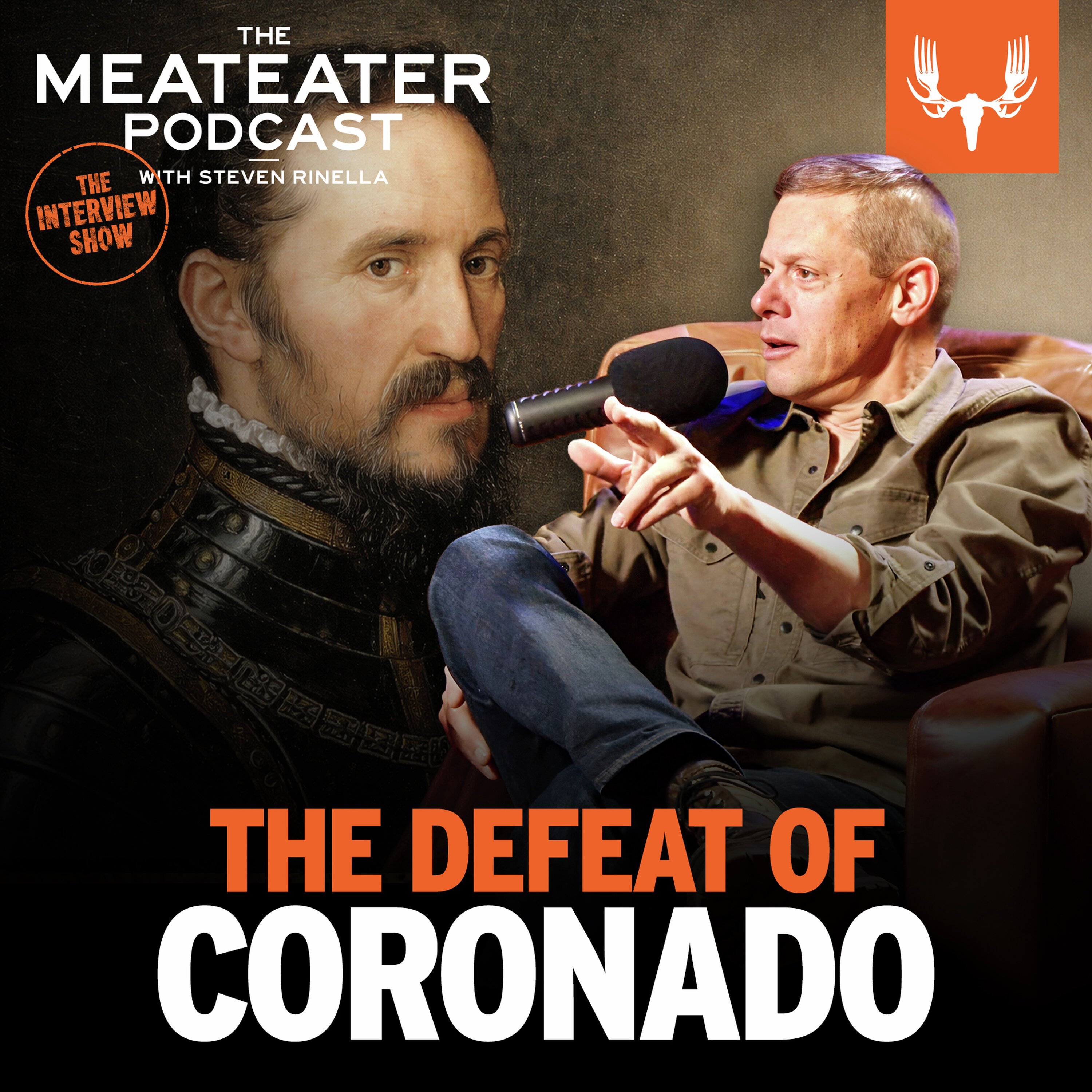
This is the Meat Eater podcast coming at you shirtless, severely bug bitten, and in my case, underwearless podcast. You can't predict anything. Brought to you by first light. When I'm hunting, I need gear that won't quit. First light builds. No compromise, gear that keeps me in the field longer. No shortcuts, just gear that works. Check it out at first light.com that's F I R S T L I.com joined today by Peter Stark, rejoined by Peter Stark, author, adventurer, here to talk about the insane, insane, almost hallucinogenic, crazy, crazy Coronado Expedition. Yeah, a hallucinogenic quality to the journey was like the some of the first conquistadors to push their way up into the American Great Plains, the Texas Panhandle. And just the wild things. The wild violent defeat that befell the Coronado expedition.
- [02:41]
Peter Stark
And part of the reason why it was so wild and crazy and hallucinatory, because they had no idea of what was up there.
- [02:49]
Steve Rinella
No.
- [02:49]
Peter Stark
00. They called it El Norte Mysterio. So the mysterious North. Yeah. And if you look at the maps from that era, you go north of a little bit, north of where Mexico City is now and it's just, it's literally just blank spaces. And then they kind of sort of shove China in over there on the, on the left side, like China's right about somewhere often. And they're thinking that California, some island. And. And they say, well, we're thinking like China and Greater India are near the island of California. And so these guys are like, you know, talking about going into the unknown. They are utterly clueless and they have a huge expedition and a huge mission.
- [03:29]
Steve Rinella
Yeah, we're going to tell that whole story. Peter's new book, the Lost Cities of El Norte, Coronado's Quest, the Unconquered west and the Birth of American Indian Resistance. And Peter was on before. I'm trying to remember, like you were on with your. When you.
- [03:48]
Peter Stark
It was young Washington when we did and we had a. We had a really fun, wide ranging conversation. It was about my book. Young Washington was about young George Washington in his 20s when he was a real mess up in the, in the wilderness of the Ohio Valley and, you know, accidentally set off the French and Indian War and, you know, stuff like that.
- [04:06]
Steve Rinella
I want to touch on that for a minute, um, because there's a thing in there that I don't think was relevant at the time.
- [04:12]
Peter Stark
Okay.
- [04:13]
Steve Rinella
We talked before the assassination attempt on Trump in Butler, Pennsylvania. Oh, we talked before that, right?
- [04:23]
Peter Stark
Yes.
- [04:23]
Steve Rinella
Let me tell you a funny story about that. It has to do with Washington.
- [04:28]
Peter Stark
Okay.
- [04:28]
Steve Rinella
But first I want to tell you this. This is a personal thing. I'm not going to embarrass you, but this is a personal.
- [04:32]
Peter Stark
You can embarrass me all you want. And I've got plenty of counter ammunition too.
- [04:38]
Steve Rinella
I might even mention this to you before. But like a thing like we, we were buddies. Way like we were friends long before I had kids.
- [04:45]
Peter Stark
Yeah.
- [04:45]
Steve Rinella
So my.
- [04:46]
Peter Stark
Long before you had a TV show. Long before you had. I mean, you were building closets the last I remember.
- [04:51]
Steve Rinella
Yeah.
- [04:51]
Peter Stark
Working tree.
- [04:52]
Steve Rinella
Yeah, doing tree.
- [04:52]
Peter Stark
Doing tree work.
- [04:53]
Steve Rinella
Stone closet shelving.
- [04:55]
Peter Stark
This is in, in the late 90s, I think.
- [04:57]
Steve Rinella
Late 90s. We were buddies.
- [04:59]
Peter Stark
Yeah. You had hunting. Hunting. But yeah.
- [05:01]
Steve Rinella
So writing. My oldest kid is about to turn 16. So way before that. But you had young kids. Like, you had young, young kids.
- [05:06]
Peter Stark
Young, young kids.
- [05:07]
Steve Rinella
And the thing that was like, was so funny. I always wanted to tell you this. Maybe I have told you this. You'd like drop in, you know, we'd be hanging out, different writers and stuff be hanging out and you'd like drop in for a beer, right? You drop in for a beer and we'd be in for like a bunch of beers. But you'd drop in for a beer and like race home. And I always thought that guy's a lunatic.
- [05:30]
Peter Stark
Oh, tell me about it, dude. Yeah.
- [05:35]
Steve Rinella
I was like, why in the world would you go home, go five o'?
- [05:40]
Peter Stark
Clock? Totally unclear to me.
- [05:41]
Steve Rinella
Then it's like this guy's got his schedule all whacked out. You know, you'd be like, gotta run.
- [05:47]
Peter Stark
Well, the other.
- [05:48]
Steve Rinella
I used to be like, that dude's got his priorities crooked.
- [05:51]
Peter Stark
On the other one, we. I don't know if we talked about this on the. The last time we were here, but, you know, we had this classic crazy hunt on the Missouri Breaks. It was the second time you went down there. The first time we went down with Sandy Frazier. And then the next year we went with Fred Hafley. And remember that. Just like this incredible Arctic front moved in. Yeah. And I just remember the first night the campfire flames were like flat on the ground. You know, they weren't. There was no heat, they were just flat. And it was a big, like a big campfire. And, you know, that's kind of my standard for campfires that don't work. And then, and then, and then the next day, you know, there was already ice floating in the river. That, that first day that we were paddling, and then we camped with a flattened campfire. And then the next day, or might have been the day after that, we started paddling again and the river was just clogged with ice. I mean, you know, like, like you had to dig your way through it. And I grew up on a frozen lake in Wisconsin, so I've got a lot of experience on what to do and not to do on ice, because I've done a lot of the things you don't do and, you know, figured it out. And so, so we were. You and, and, and, and Matt were in one canoe and Fred and I were in another canoe and we started paddling across. And we were planning on going down river. That whole lower stretch of the Missouri, you know that. The really remote stretch. It's like once you're in, you're in. And, and Fred and I got partway out in the river and we're like digging through these ice floes and I was saying, you know, if we tip over here, we're just dead. There's like. There's not even a question about it. Don't even think about it.
- [07:33]
Steve Rinella
You can't move through it.
- [07:34]
Peter Stark
You can't move through it. You couldn't climb onto it, you couldn't swim through it. And the water's so cold. I mean, I guess you could climb into a swamp canoe, but that would last not very long. And you're not Getting that canoe to shore. And so I said to Fred, you know, I don't know about this. This feels really sketchy to me. And Fred turns back, he's in the boxes. Yeah, we're daddies now. We shouldn't be doing this stuff.
- [08:02]
Steve Rinella
Then I'm like, I don't know. So if you die, who cares?
- [08:06]
Peter Stark
And then we don't care. And then we deliver this to the Ranella brothers and they say, oh, we do this all the time, like on the maps, you know, another one where it's like, you were pre Children, free spouses. So, yeah, you know, that's the standards change.
- [08:22]
Steve Rinella
What I wanted to tell you about. I want to dive into Coronado because like I said, it's just. It's the most fascinating story. But I was talking to. So a writer named Selena Zito wrote a book called Butler. Oh, she's like, very quick because she's from Pennsylvania.
- [08:40]
Peter Stark
Okay.
- [08:41]
Steve Rinella
She's a columnist and writer. And after the assassination attempt, she did like a very quick turn book on the assassination attempt called Butler. I mean, it's her backyard. You know, I was talking around the phone and she was saying, you know, that's the second president to be shot there.
- [09:02]
Peter Stark
I hadn't heard this.
- [09:03]
Steve Rinella
Well, I'm like, well, who else?
- [09:05]
Peter Stark
Oh, when?
- [09:07]
Steve Rinella
Washington. Yeah, during the, like in the lead up to the French and Indian War. Like. Like General Washington was shot there.
- [09:17]
Peter Stark
Yes, yes, exactly. He was not a general. He was.
- [09:20]
Steve Rinella
No, but he was.
- [09:21]
Peter Stark
He was. He was like a lower.
- [09:24]
Steve Rinella
Yeah, he's like a lower ranking English officer sent on a mission and they got in some.
- [09:28]
Peter Stark
No, he wasn't an English officer. He wanted to be a British officer. They wouldn't let him into the British officer ranks. So he was a Virginia Colonial militia officer. And that was a cause of resentment for the next. I mean, we're still living with it today. And one of the.
- [09:46]
Steve Rinella
But you tell that story. But it's just funny that, like, you know, I'm like, messing up every detail. It was funny when she said that to me, like, he was the second one, you know, meaning that it was in that vicinity.
- [09:57]
Peter Stark
Well, and I think there, you know, there were several times when he was really shot at and, and one was, you know, during the, you know, Braddock's defeat when, you know, the. The British column under Braddock, General Braddock was marching towards Fort Duquesne, which now Pittsburgh. And, you know, they're like the might of the British Empire marching through the woods and in columns, like the Red Coats and columns and thinking they're invincible until they get close to what's now Pittsburgh. And all of a sudden all hell breaks loose. And they can't even see, they can't even see anyone to shoot at because the Indian warriors are so well hidden. And they're also joined by like kind of, you know, French guys who are also good woods, woods fighters. And so they don't even know who to, who to shoot. And Washington is the one who survives that, that battle even though he was, he was an aide de camp to Braddock. Because Braddock, they wouldn't let him in as an officer yet he wanted to tag along, you know, that Washington did. And he ended up. Braddock was wounded, mortally wounded. And almost every British officer was killed almost instantly. And the officers, the British officers are wearing really bright uniforms. And I, I, I've got to look into this. Just the actual color, even though I'm partly colorblind, but the, the, it's gonna
- [11:23]
Steve Rinella
be hard for you to look into.
- [11:24]
Peter Stark
Yeah, well, my wife helps me on this one a lot. And, and, but the, the, the officers were really easily recognizable because they had, you know, really scarlet uniforms. And the regular soldiers were red but not so red. And, and Washington, you know, the officers just got wiped out instantly. And, and Washington survived that battle. And he had like four bullet holes through his like, hat and his coat. And he had, I think at least two horses shot out from under him. And I'm pretty sure this has been some years since I did this research. But I think one of the reasons he wasn't killed instantly is because he wasn't wearing a British Royal officers God uniform. And it was more like a, you know, like a, like the buff colored thing that they were wearing.
- [12:19]
Steve Rinella
Wouldn't that be funny? If that's, what, if that's like, if you like, you know, you take history and move it down to these like, these like crystalline moments, you know, of like turning points. If that, like the fact that he didn't have that bright red coat.
- [12:31]
Peter Stark
Right, yeah. That the Continental army would have never,
- [12:34]
Steve Rinella
the Continental army would have never won, you know, in America. Would not have happened.
- [12:39]
Peter Stark
Yeah, exactly. I mean, and it was, it's a really interesting moment. And now there's a film that's coming out about young, called Young Washington, which, you know, I think they use my book as a source, but it's not like, based on my, they don't license your book. It's, you know, these are historical events, but it's the thing I'm, I've written about. But I think that's A highlighted moment in the, in the film, just what we're talking about.
- [13:03]
Steve Rinella
You know who was there. You know who was there that day?
- [13:06]
Peter Stark
I do. Boone. Let me tell you what Boone did. Your buddy, as I remember this, he was like a wagon driver driving a freight wagon, right? Yeah. I mean you're the. I defer to you on Boone because you know what? He's.
- [13:18]
Steve Rinella
Yeah. He's like, he was like a lowly.
- [13:20]
Peter Stark
Yeah. And he and his buddy, I think his cousin were also driving a freight wagon. And so they saw what was happening. I think they just crossed the river, the Monongahela. And when all this chaos broke off, so they cleverly unhitched their mules from the wagons, turned around and ran with the teams in the other direction. Is that right?
- [13:44]
Steve Rinella
I like to imagine that that was, that that was deeply influential for Boone and his knowledge of like guerrilla.
- [13:54]
Peter Stark
Yes.
- [13:55]
Steve Rinella
Warfare tactics and like bush war.
- [13:58]
Peter Stark
Oops, sorry. Damn. It always happens me. But, but that was, that was bush war extraordinaire in that it was so dramatic. And yeah, I think you're totally right. That, that, that was a really formative experience with him. And he could have, you know, he could have kept, you know, courageously riding his freight wagon forward and you know, it just wouldn't have worked out. He had better instincts than that.
- [14:25]
Steve Rinella
It was, it was on that trip. Who was Boone? Like it was on that trip, on that campaign that Boone met. Was it John Finley? Yeah.
- [14:36]
Randall
One of the other teamsters had been to Kentucky.
- [14:40]
Steve Rinella
It was on that campaign about.
- [14:43]
Peter Stark
Boone learned about what's over. Yes.
- [14:46]
Steve Rinella
Like, like he learned there is a
- [14:49]
Peter Stark
gap to get through to the Kentucky.
- [14:52]
Steve Rinella
He learned it was a route through and then set off to find the Cumberland Gap, if I'm not mistaken.
- [14:58]
Randall
Yeah. Cuz Finley had been involved in Indian trade down the Ohio River.
- [15:02]
Peter Stark
Okay.
- [15:02]
Randall
Prior to his service as a teamster. And so it was like a campfire story, I believe, according to Boone's, you know, you know, Boone story. It's like they were sitting around the campfire late at night and Finley's telling him about what's over the mountains.
- [15:17]
Steve Rinella
So if I was going to do a movie about this, I would have Boone and him talking about all this, you know, the Cumberland Gap and all that. And I'd have washing to come on.
- [15:27]
Peter Stark
Be like, get it.
- [15:29]
Steve Rinella
Straighten up, man. Do you know what I mean? Like interrupt a man.
- [15:40]
Peter Stark
Yeah. And it was Finley. He didn't do any surveying, did he? I'm thinking of a different guy, but, but I know there was a.
- [15:48]
Randall
The Duke of Cumberland did a survey, I believe over like in that.
- [15:53]
Peter Stark
In that area.
- [15:54]
Randall
But yeah, I don't think Finley was surveying.
- [15:56]
Peter Stark
I mean, because one of the big problems was that George Washington and you know, these soon to be founding fathers were big landholders. And the lands over the mountains, you know, which were really Indian lands and with many different tribes and that they wanted to survey those lands and you know, like, stake them out. And so in, in 1774, Washington and. And other founding would be soon to be founding fathers sent a team of surveyors over the mountains and the Chinese got really mad and. And you know, pulled their equipment off and I think sent them home. But that was really the beginning of this. Of this. Know that whole Ohio Valley conflict was those first surveyors coming in and like staking things out.
- [16:47]
Steve Rinella
Yeah.
- [16:48]
Peter Stark
And so Washington had a big part in that too.
- [16:50]
Steve Rinella
Yeah. Dude, mix it up. Let's jump to corn.
- [16:53]
Peter Stark
Yeah. Talk about mixing it up.
- [16:54]
Randall
Back in time to go.
- [16:55]
Steve Rinella
We're going to go. We're going to go wi. So we're going to go from 1774 to 1540. Okay.
- [17:01]
Peter Stark
We're going.
- [17:01]
Steve Rinella
We're going back a couple hundred years. So now I want to,
- [17:08]
Peter Stark
I want
- [17:08]
Steve Rinella
to let you set the scene here a little bit, but I wanna bring up something I find interesting about this and you can, you can set scene like where the New World was at at this point. But you're, you're just always trained, like when you're a kid and you're reading about these early explorers, you're. You're always trained a little bit to like laugh at the. I. The. Some of their notions. The fountain of youth. Yeah, the cities of gold.
- [17:37]
Peter Stark
Right, right.
- [17:39]
Steve Rinella
Oh, how stupid, how silly. They thought that there was these like, cities of gold that were up in New Mexico or Texas. You know, how naive. Right. But they are hauling, like the Spanish are hauling fortunes.
- [17:56]
Peter Stark
Exactly. Out of South America and Central America.
- [18:00]
Steve Rinella
Yeah, it's like, it's. They weren't making stuff up.
- [18:05]
Peter Stark
No, no.
- [18:06]
Steve Rinella
I mean, like they had arrived in cities. They had like legitimately found cities where they're like, these people are loaded and with gold.
- [18:15]
Peter Stark
There were empires, you know, it. Literal empires and emperors. And so like, they ransomed Pizarro, ransomed the Incan emperor for a literal room full of gold. I mean, literally. Yeah. And then they killed them and they melted down the golden bars and, you know, shipped it.
- [18:33]
Steve Rinella
But so it wasn't insane. It was like, there's got to be more of this out there, you know, so.
- [18:39]
Peter Stark
Yeah, I mean, that's a really good framing for the story because, you know, we know the, the, you know, if we want to. I don't want to go too far back, but, you know, the Portuguese started sending ships in the 1400s to India and getting spices and, you know, discovering those were worth a lot, you know, very valuable trade. And then the. The Spanish are saying, wait, we want a hunk of that action. And then Columbus comes along and says, comes up with this wacko idea. And it wasn't that wacko, but he said he needed a lot of money to do it. He said to the king and queen of Spain, he convinced them to fund an expedition to go west to find the Indies. So, you know, we know the story. He runs in to this unexpected continent, the Americas. And then, you know, the Spanish, the Spanish conquistadors and explorers work their way through in very few number of years. And so in 1520, that's when Cortez, illegally, against the king's orders, marches to Tenochtitlan, which is now Mexico City, and knocks off.
- [19:48]
Steve Rinella
Is that how you're supposed to pronounce that?
- [19:50]
Peter Stark
I hope so. Tenocheet line.
- [19:53]
Steve Rinella
Yeah.
- [19:56]
Peter Stark
And. And he knocks off the Aztec empire. And one of the reasons he can do that with like a few hundred men, I mean, one, he has these horses with armor which are like, you know, Sherman tanks compared to what the native warriors have. And the other is he's very clever in. He's. He finds the tribes that they're more than. I mean, they're like culture civilizations who are enemies of the Aztecs. And he says to those guys, hey, I can help you knock off the Aztec emperor. And so that now he has thousands of. Of enemy warriors. And that's how he knocks off the Aztecs so quickly. And then. And that's 1520. And there's all sorts of wealth and gold and empires and land and, you know, incredible, as you say, loads of treasure. And that. That's 1520. And then 1533, Pizarro finds his way into the Andes, you know, way south and South America, and he finds the Inca empire. And. And, you know, and the emperor and, you know, kidnaps the emperor. Room full of gold, you know, piles of gold being shipped out of. Out of the Inca empire, out of the. The Aztec empire. And. And then. So that's 1533, 1536, this rumor comes down that there are more wealthy empires to the north and nobody knows what's up there.
- [21:24]
Steve Rinella
And. And some of that comes out of like, there's that. Explain that. Like Alvarez expedition.
- [21:33]
Peter Stark
Yeah. Not Navarez what was his name? Navarez.
- [21:36]
Steve Rinella
Okay. But the Cabeza de Vaca, there's like the Moore, like the dude called, like the Moore and Cabeza Vodka. And those guys have just that crazy.
- [21:45]
Peter Stark
It's so crazy. And that kind of sets the tone. So that was. I have to get the dates right, but that was the late 1520s. Okay. And somewhere in there, you know, Ponce de Leon was in there, and, you know, the Fountain of Youth story was emerging. But they were, they were really trying. The Spaniards were really trying to get onto. From. From the Caribbean islands like Cuba and what's now the Dominican Republic. Get onto Florida and, and, and start colonizing Florida and. And, you know, make that part of the Spanish empire. And so that. And they were having a hard time doing it. And so in the late 1520s, there was a huge expedition sent under the. The. The commander was a guy named Navarez. And that. Essentially this huge expedition. Many ships got completely wiped out by hurricanes and then by native warriors. And to make a long story short, four guys end up surviving, and they managed to raft their way partly down the Gulf coast from. From Florida, and some of the main guys make it that far, and then they die. But they raft partway down the Gulf coast from Florida, and I think they get maybe about as far as the Mississippi River Delta. And then, you know, more shipwrecks, raft wrecks, disaster. And then the four survivors start walking and they know, like, New Spain is some way that. Somewhere that way.
- [23:17]
Steve Rinella
Dude, when you look at a map, it is the crazy thing. Yeah, but they're like, in. They're on the Gulf Coast.
- [23:21]
Peter Stark
Yeah.
- [23:22]
Steve Rinella
And they're.
- [23:23]
Peter Stark
And they're aiming for Mexico City, you know, and. And they're four guys, and they're dozens
- [23:30]
Randall
inland.
- [23:32]
Peter Stark
And there are dozens and dozens of Indian tribes, you know, and. And these are like four random guys coming up from the coast. And part of what. What saves them is among the four, there is a Moorish slave named Esteban. And so he has what's.
- [23:50]
Steve Rinella
I was named after him.
- [23:51]
Peter Stark
He's a dude. Yeah, he's a dude. That's right. You could probably talk your way through dozens of tribes, thousands of miles to arrive in Mexico City. And so, so, you know, he had black skin and he was really. He was like a good performer. He could sing and he could dance, and he had. He had like, bells on his wrists and colorful clothing. You know, he was really unlike the Spanish Spaniards dress. And so it came to be that the, that the native people in various tribes started coming to him as A medicine man and respecting him as a medicine man. And so these four guys managed to sort of get past tribe to tribe using their, you know, medicine powers, their spiritual powers to kind of pave the way and protect them. And it took them seven years to get to what's now the west coast of Mexico. They got to basically where the headquarters of the Sinaloa cartel.
- [24:58]
Steve Rinella
That's what's so crazy, man, because now, like, you get a couple delayed flights and you get somewhere two days. Day late. Two days late. You're like, dude.
- [25:07]
Peter Stark
And then when they. And then when they show up, there's a. Another conquistador coming up from the south and taking. Taking Indians as slaves and. And really brutalizing that west coast of Mexico. And so some of his guys are on a slaving expedition, and they see these four random, you know, like, wild men walking out of the bush, and they. And they're dressed in animal skins, these guys, you know, and the. The four guys and the Spanish slavers. Conquistador slavers. Like, who are these guys? You know, these guys, really? No, it's like in the. In the documents, they. One of them responds in perfect Castilian Spanish. It's like formal, you know, he's all ragged. Yeah. Yeah.
- [26:02]
Steve Rinella
Like assumed dead. Oh, yeah.
- [26:05]
Peter Stark
Assumed dead for years. Seven years. And. And then. So then they get back to Mexico City, you know, then they explain who they are. They're eventually brought back, brought to Mexico City.
- [26:15]
Steve Rinella
Those dudes had to be like, let me get this straight. You're saying
- [26:20]
Peter Stark
it's such an unbelievable story.
- [26:22]
Steve Rinella
And as you're saying, you walked from Florida.
- [26:28]
Peter Stark
Like, this is where the space alien rumors really start.
- [26:34]
Jordan Sillers
On blood trails. The stories don't end when the hunt is over. They just get darker.
- [26:42]
Peter Stark
I seen something in the road. I instantly thought it was a sleeping bag. And there was a pool of blood. Oh, my God. He doesn't have a head.
- [26:51]
Jordan Sillers
Blood Trails is a true crime podcast born in the outdoors, where the terrain is unforgiving, the evidence is scarce, and the truth gets buried under brush and silence.
- [27:02]
Peter Stark
Indications where he should be right there. And. But he wasn't.
- [27:06]
Jordan Sillers
This season, we're going to deeper. From cold case files to whispered suspicions. From remote mountains to frozen backwoods. Each story begins in the wilderness and ends in darkness. Because out here, there are no witnesses, no cameras, just fragments. And the people left behind trying to piece them back together.
- [27:27]
Peter Stark
He's not an honest person. He's incapable of being honest. Somebody, somewhere knows something.
- [27:33]
Jordan Sillers
I'm Jordan Sillers. Season two of Blood Trails. Premieres April 16th. Follow now on Apple, iHeart, YouTube or wherever you get your podcasts.
- [27:47]
Peter Stark
So then they get to Mexico City and, you know, they're greeted like, wow, these guys are survivors. And they. And they, you know, it turns out, you know, maybe they really did travel all this way. And in Mexico City, you know, which is now, it's been converting from an Aztecan empire, you know, capital with all the stone pyramids. They're ripping down the stones and making a big cathedral and, you know, transforming it.
- [28:10]
Steve Rinella
Oh, they were re. They were repurposing the stones, the bloody stones.
- [28:14]
Peter Stark
I like to think into the, you know, the sack of the theater. I write about this. I write about this in some detail, actually. And one of the things they have to do, really. Yeah, yeah, this is.
- [28:25]
Steve Rinella
This is like a little cathedrals out of those stones.
- [28:27]
Peter Stark
Out of those stones. And then one of the things I had to do, I did quite a lot of research. I mean, it was really interest. Interesting that this. The Spaniards in that era, you know, conquering the South American and Central American empires, you know, there were very developed religions and the Aztecs were, you know, famous then and now for their human sacrifice. You know, it was like they needed. They believed that the gods needed to be fed blood. So there would be sacrifices all the time on top of these pyramids. And one was like, I can't. You know, it was like 20 stories high or something. And so once the Aztecs are conquered, then the. The. The Spaniards are saying, well, we're going to bring religion to these people. And so they get workers. I'm sure many of them are native, you know, slaves to pull the pyramid down. You know, the many pieces, like there are 70 of them in the. In Central Mexico on big square and start making a big cathedral. And. But the Spaniards are really freaked out about the spirits of the Aztecs and these other religions. And so whenever they would come across a. Like a chamber of worship or any spiritual thing having to do with these. These. With these religions, they would bury it, they'd seal it underground because they'd have to seal the spirits in. And so as I point out in this book, and I wandered around this area a lot in Mexico City where the cathedral's built, and there's been really cool archeological work there done in recent decades. But they built the cathedral. It's almost on top of what was called the tower of skulls. And it was like a tower of.
- [30:12]
Steve Rinella
I've read about that tower and there
- [30:14]
Peter Stark
are pictures of it. It is amazing. You know, all these skulls. It's like a huge well with all these skulls on the inside.
- [30:22]
Steve Rinella
What do you mean pictures of it?
- [30:24]
Peter Stark
There are pictures of it?
- [30:25]
Steve Rinella
Yeah, yeah.
- [30:26]
Peter Stark
Archaeological photos. It's been excavated.
- [30:29]
Steve Rinella
How many are in there?
- [30:31]
Peter Stark
Hundreds and hundreds. I, I can, we could. Well, later we'll see if we can call some up. I actually have some on my camera because I took.
- [30:40]
Steve Rinella
Pull that up, Phil. Need something to do over there. What's it called?
- [30:46]
Peter Stark
The Tower of Skulls.
- [30:47]
Steve Rinella
Okay, keep going.
- [30:48]
Peter Stark
In Mexico City and so they, you know, they built this cathedral on top of those, of those Aztec, you know, sacrifice sites. Try to seal everything in the ground. Sure. And you know, part of my, you know, this is sort of speculative, fun premise is that, you know, when Coronado marries his 12 year old bride in that cathedral, they're like standing on top of the Tower of Skulls and some of those spirits aren't all that well sealed in there and they eventually kind of get into his head. I mean, this is like a metaphor really. Yeah. So, so then what happens is the, the, the, the four shipwreck survivors get to Mexico City, which is being transformed from the Aztec capital into a, into the capital of New Spain. And you know, these, the Pizarro and.
- [31:40]
Steve Rinella
Oh, oh, there you go.
- [31:42]
Peter Stark
There's some skulls in the Tower of Skulls. I've got a, I've got a picture on my cell phone. I've got one that's clearer than that about that. You really see it's kind of an outline of, of skulls.
- [31:55]
Randall
It's probably too late to redesign the studio.
- [31:58]
Peter Stark
Yeah.
- [32:01]
Steve Rinella
Okay.
- [32:03]
Peter Stark
I mean this is what we're looking at underground in, in the center of, of Mexico City. And it's, it's, there have been big excavations there and probably the last 20 years and, and now it's, it's really cool because you can walk down and some of them and they're just right, not part of everything. So the four shipwreck survivors, you know, brought to Mexico City, the Cortez has just knocked off the Aztec empire like 25 years earlier or 15 years earlier. And Pizarro has just knocked off the Incas three years earlier. And you know, there are all these like piles of gold coming, you know, being discovered in these empires in Central and South America. And so everybody asks these four shipwreck survivors, hey, do you guys see any like gold up there or empires? It's so wild. And these guys are like, you're having
- [33:01]
Steve Rinella
to run into an empire.
- [33:04]
Peter Stark
Did you run into the empire in your seven years of shipwreck? And these guys are kind of like well, I'm not sure. We're not sure about that. But it's all, all it takes is like there's just some rumor that gets started and.
- [33:21]
Steve Rinella
Yeah. Like some dudes told us about whatever.
- [33:23]
Peter Stark
Yeah. Or they told. I think, I think the, the closest thing to an actual detail was that that there were, they'd heard about seven cities up there. There were seven cities and, and, and that, you know, this is like in the south, north of Mexico, whatever's up there and you know, what's now in the American Southwest. And, and that directly feeds in to this old, old Spanish Iberian story that when the Moors conquered the Iberian peninsula, like in 750 A.D. or something, that the Catholic bishops, seven Catholic bishops took all the wealth and all the gold from the, the church, you know, the cathedrals from seven cathedrals. And the seven bishops took the, the piles of wealth and gold and they put them in seven boats and they sailed west across the ocean and founded seven wealthy cities across the ocean. Yeah. So, so that became when. When it was heard that there were seven cities somewhere north of Mexico City people that, oh, those are the seven cities of gold. You know, this is what we've been talking about for 500 years. And, and there they are. And so this whole thing just gets cranked up and, and they send a reconnaissance party up there.
- [34:45]
Steve Rinella
This, this isn't like this way, this rumor mill thing.
- [34:49]
Peter Stark
Yeah.
- [34:50]
Steve Rinella
Isn't an isolated incident because we're talking about, in a project I'm working on right now, we're talking about like the French up on the St. Lawrence.
- [35:01]
Peter Stark
Oh, that's a cool story.
- [35:02]
Steve Rinella
And again, they like, they get, they take some indigenous people, bring them, bring them back to France, and then they kind of, they're grilling them and grilling them and grilling them. And you can see that they, they sort of pick up on what they want to hear.
- [35:19]
Peter Stark
Yeah, that. I mean, that's exactly it.
- [35:22]
Steve Rinella
They're like, oh, yeah,
- [35:25]
Randall
yeah.
- [35:26]
Steve Rinella
Way up there is a place like what you're talking about. But then it gets kind of like crazier and they're like, oh, and there's people that, that have no anus.
- [35:35]
Peter Stark
Oh, okay.
- [35:36]
Steve Rinella
There's a, there's a people that are just one legged. There's also a place that's like all everything is gold, you know, and again, they're like legitimately trying to find it, but you get a sense that the indigenous people are like, yeah, just kind
- [35:53]
Peter Stark
of play along, you know, and they don't really know what these, these, these Europeans are talking about asking Them and
- [35:59]
Steve Rinella
ask them and eventually.
- [36:01]
Peter Stark
Okay, yeah, sure, whatever the neighbors find, whatever you need, go talk to the
- [36:06]
Steve Rinella
neighbors, because there's none of that here.
- [36:09]
Peter Stark
That comes into this Coronado story too. Yeah, big time. And so, and then. So they send the. The Viceroy Mendoza, who's. He's like the king's representative of Spain and he's arrived in just the year
- [36:24]
Steve Rinella
before this scouting mission.
- [36:26]
Peter Stark
Yeah. So Mendoza. Well, Coronado is a protege of the Viceroy Mendoza. Mendoza has been sent to New Spain by the king to rein in Cortez because Cortez is like thinking all of New Spain is his, you know.
- [36:41]
Steve Rinella
Okay.
- [36:41]
Peter Stark
And. And the king of Spain says, vice, you know, Mendoza, my trusted man, you're my viceroy. You go and reign in Cortez. And that's how Coronado is like a young protege of Viceroy Mendoza comes with. From Spain to Mexico with Viceroy Mendoza. Then the, the rumors of gold start to the north. And Viceroy Mendoza sends scouts up to see if they're true. And he sends this dude, among others, a guy named Fray Marcos, who. There's a long story that I won't go into, but it's a, you know, another long, dramatic story. And, and Fray Marcos comes back, you know, months later and says, oh, yeah, yeah, I saw those. I saw this, you know, incredible city up there and, you know, the golden cities, incredible stuff.
- [37:27]
Steve Rinella
He says he firsthand saw.
- [37:29]
Peter Stark
He said he's firsthand saw it. And then he gets back to Mexico City and.
- [37:34]
Steve Rinella
Well, then why is he saying that?
- [37:37]
Peter Stark
That's a question for the ages.
- [37:39]
Steve Rinella
People wondered.
- [37:41]
Peter Stark
Yeah. And, and, and then. But so he gets. I mean, maybe it's the same thing, like he's telling people what they want to hear and, and, you know, maybe he didn't tell them exactly that, but he said, yeah, there are big. They're big tall cities up, up that way, which, in fact, there were the Pueblos. The Pueblos. And, and so he goes back to Mexico City and. And, you know, it comes back, oh, yeah, there are seven cities up there. And so now it's just like this frenzy starts in Mexico City. All these people want to invest in this expedition and take part in it and, you know, invest in it too, because they know they're going to find piles of gold north of, you know, in the. In the mysterious north. They just know it. It's, you know, it's happened in, in Mexico. It's happening in the Andes with the Incas. So it's happened in other places too, in the south. And, you know, they're golden cities and piles of gold. So this, it becomes this massive effort. And it's now, it's believed to be close to 3,000 people. You know, hundreds of Spanish Spaniards dressed like conquistadors with armor or with leather armor and, you know, lances and armored horses, and then thousands of Aztecan warriors accompanying them and thousands of. There are at least a thousand horses with this, with these guys, and there are maybe 5,000 sheep and there are thousands of cattle. It's. That's unclear how many exactly cattle. But this is all to feed this expedition. You know, you can imagine like 3,000 people that doesn't even include the, like, their wives along, their children along their, you know, cobblers and gunsmiths and everything else. So you need all this food, you know, on the hoof to feed this expedition. And. And so it heads north in the spring of 1540.
- [39:45]
Steve Rinella
And they're going up there to raise hell.
- [39:47]
Peter Stark
They're going up there, they're going to go find the golden cities and take.
- [39:51]
Randall
And take it.
- [39:51]
Peter Stark
Yeah, yeah, that's the plan. And. But there's a whole, you know, other dimension to this story. Well, there are two dimensions. One, the, the. The real wealth it would, it turned out, was, and they were realizing it at the time, was not so much in the gold which you could, you know, take and then go spend, but was in taking fertile lands and making those your encomiendas, your. Your own estates. And they'd be worked by, you know, partially enslaved people or native labor. And so that's where you could really make a lot of money by having a big estate that was, you know, fertile estate that produced a lot. So that was one thing they were looking for in addition to the golden cities. And then the, the other thing that was going on, which I'm spacing out now as they're coming north, they, they are told by the king of Spain and through vice, Viceroy Mendoza, the king of Spain is saying, we're not going to have any more of this brutality stuff that's been going on. You know, we're not going to go like, hacking up the Aztecs or the native people. We're not going to go steal their food. We're not going to go hang them. We're not. We're going to be humane. And it's like there's supposed to be this whole shift in the Spanish empire that it's going to be humane rather than cruel, you know, rather than forceful. And so Coronado is under orders from Viceroy Mendoza. You have to be kind with the native people. You can't Raid villages. You have to really. Yes. You have to be humanitarian. And so Coronado now has this, you know,
- [41:36]
Steve Rinella
order, but he didn't stick to that.
- [41:39]
Peter Stark
He tried to for about a week.
- [41:42]
Steve Rinella
Okay.
- [41:43]
Peter Stark
I mean that he tried to. And, and that as he, as soon as he got going north that he had guys with them who were ex, you know, ex cruel conquistadors. And they started running out of food. They, you know, like their supply trains were separated and they needed corn rather than just cattle. And so the ex conquistadores go into a village and just take food. And the native people attack. And one of the ex conquistadors is trying to flush some native warriors out of a patch of brush and he forgot, forgets to put down his visor on his helmet. Bam. An arrow right in the eye, kills him dead. Okay. And he's the chief of staff to the whole expedition. So that causes all his buddies to go up in arms, you know, Samiegos, the chief of staff now shot with a native arrow in the eye. So they say, okay, we've got to punish these natives, show them a lesson.
- [42:46]
Steve Rinella
So where is this in Mexico still?
- [42:49]
Peter Stark
It would be, it would be like north of, well, far north of Acapulco. But you know where, where like Kulia Khan and Sinaloa is? Yeah, it'd be in south of there.
- [42:59]
Steve Rinella
Okay. They haven't even hit the U.S. no,
- [43:01]
Peter Stark
they're out there months away. Yeah. And so, so they, they, because their buddy got hit in the eye with an arrow. You know, the conquistador's buddy, they hang a bunch of the native warriors and the native people and you know, kind of ran. They just randomly set snag a bunch and hang them. And that's sort of like the beginning of this is not the humane expedition that it was cracked out to be. And, but that, that, that story goes way on to the north. You pick it up from here. I can, I can, I can, I can keep going with it. That, that, that they spend six months basically. And I calculated that if you put the, all the animals and people nose to tail on that expedition, it would stretch for 15 miles. Oh, you're kidding me. And I was thinking, yeah, think of all that, that, that dust and the piles of dung and it's track, you know, just massive. Hotter than hell and hotter. Yeah. And I mean, how, how do they do that? It's just, it's hard to imagine, but they finally, they finally get up. After months, they finally cross into what's now southern Arizona.
- [44:24]
Steve Rinella
Okay. So they entered, they entered Into Arizona.
- [44:28]
Peter Stark
Yeah, I mean, but just right next to New Mexico, it'll be south of Phoenix and south of Tucson.
- [44:33]
Steve Rinella
Because people have done a pretty good job of piecing together what this route is. Even though there's like certain questions here are certain.
- [44:38]
Peter Stark
And just in that, that's where the real questions is, right in that area. And I think you've had, haven't you had Denny Seymour on here? Yeah, yeah. So she's, yeah, she's one.
- [44:46]
Steve Rinella
She's looked at that question.
- [44:47]
Peter Stark
She's really looking at that. And so she has, you know, she, she's done research and in one valley and then there's another valley and there's discussion which route was which and were they both used or how did that all work? But she's found cool stuff. I mean, it's amazing. She's done great work.
- [45:04]
Steve Rinella
When they hit what's now the U.S. did they have a sense of how far they were? Like, what was their comprehension of how far they were going to go? Because, I mean, they ultimately make it up into Texas and Kansas.
- [45:18]
Peter Stark
They make it, they almost make it to Iowa. You know, where did they think it was? Like, where's the. I figured out they were just a few weeks short of getting to Chicago, which was, which was. Then it was serious. It was an Indian portage at that. I mean it was for, for thousands of years. But they were headed that way. And so, so their aim was to get to the seven cities and they, they knew it was up there somewhere. And you know, Frey Marcos had reported, yeah, there are seven cities up there and they're, you know, 100 days travel away or 80 days travel or whatever. And so, so then after Fray Marcos reports this and the expedition starts coming up, you know, by sometimes by pieces, sometimes huge chunks, it finally crosses what's now with Coronado. What's now it would be like if you know where Phoenix, you familiar with Phoenix. And if you look east of Phoenix, there's this big mountain range right there. You know, big deserty, tall mountain ranges called the Superstition Mountains. And if you go on the other side of the Superstition Mountains, I mean even today you can look at Google Maps, there is just not a whole lot of human presence at all. I mean, almost zero and you know, desert and rough. Well, they cross that and they, they call it the Days Poblado because there's no food for 15 days and they. People are starving. And you know, the Aztec and warriors, you know, they're like the, the, the lowest in the, in the pyramid. The food Pyramid. They're the guys that get, you know, they have to be carrying their own food or they die. You know, once in a while they'll eat a horse. Three guys poison themselves by eating plants around a little spring they found. And you know, it's like these luscious, like really salad looking greens.
- [47:06]
Steve Rinella
That hungry.
- [47:06]
Peter Stark
Yeah, they're so hungry, they just, they just slam them down. Die. And they die. Die. Yeah. And, and they finally emerge from the northern end of the days poblado. And then they go over some smaller ranges and they go over a ridge. There's this. The story is more complicated than this, but they go over a ridge and they see this pueblo which is, you know, pretty big one, seven stories high. But Fray Marcos, who's with him has been saying these are like golden cities. And yeah, it's pretty high, but it's built of like a rock and, and, and you know, it's not like big smooth dungeon walls and gates and everything.
- [47:55]
Steve Rinella
Now that think I, I feel like I've read about this and I feel like I read some writer historian speculating that maybe he looked at it from a distance when it was like lit by the evening sun.
- [48:08]
Peter Stark
Yeah, that's one theory.
- [48:11]
Steve Rinella
Trying to like give, give him some credit to be like, well, maybe the sun was hitting it in a way that it looked like it was gold.
- [48:18]
Peter Stark
Yeah, it looked like it was gold. Well, and part of the story. Yeah, exactly. That's one of the theories.
- [48:24]
Randall
Did they just dismiss what Frame Marco was saying? At what point did his word not hold any.
- [48:30]
Peter Stark
When they came over they ridge and the guy, one of the chroniclers said you would not have been. Wanted to be there to hear the words that were thrown on Fray Marco. Humiliating, man.
- [48:46]
Steve Rinella
And I like, oh, stone. See, I thought it was gold.
- [48:52]
Peter Stark
And, and I mean part of that story, it's there, there's so many aspects and details, but the, the with frame Marcos's reconnaissance party, Esteban went and, and so, and he was like a real, you know, rugged traveler. So was Fray Marcos, actually. But. So Esteban apparently had a weakness for native women and he liked to collect turquoises. And so by the time he got. He was the first guy to get to this city, the pueblo. But he, the, the, the, the Zunis. It was a, the Zuni pueblos.
- [49:28]
Steve Rinella
I've been, yeah.
- [49:29]
Peter Stark
Have you been there?
- [49:30]
Steve Rinella
Oh, yeah, I've been there with Zuni dudes. And he went to that old, the old pueblo site and I'm kind of pointing out the Coronado stuff. Yeah, I mean like, dude, like it was yesterday, though.
- [49:38]
Peter Stark
It was like, yesterday.
- [49:39]
Steve Rinella
Yeah. You know what I mean?
- [49:41]
Peter Stark
Like, oh, my God. Yeah.
- [49:44]
Steve Rinella
Yeah.
- [49:44]
Peter Stark
And. And you could be right on. I had a. A Zuni guide who. Who grew up there. He grew up a mile from that. The. This. This first pueblo was called a Hawaku. And he said, well, you see that. That patch of, you know, of trees over there? That's. That's my grandmother's house. That's where I grew up.
- [50:01]
Steve Rinella
Yep.
- [50:01]
Peter Stark
And, you know, and so we're standing on the ruins of Havaku, and he's saying, yeah, well, the front gates here. And they. They would come from that path over, you know, that pass over there. And as you say, it was like. Yeah, it's like, you know, you're going. You're walking through the park, you know, in your local park. And he's pointing out this.
- [50:19]
Steve Rinella
It's like, us earlier, like. Like, for us, in our culture, like, talking about the American Revolution and stuff. Like, to the Zuni, you know, I mean, these were. I mean, like, to the Zuni today, it's like a major.
- [50:32]
Peter Stark
You know, I mean, it's a major event, and it's a major thing, like,
- [50:35]
Steve Rinella
culturally in the telling. And there's. They have the familiarity with it that we would have with all the Civil War and the Revolutionary War.
- [50:44]
Peter Stark
Oh, yeah, yeah. It's just. I mean, very. Yes. Yeah.
- [50:46]
Steve Rinella
For them, it's like, well, that's. That's where this happened, and that's what happened. And it led to this.
- [50:50]
Jordan Sillers
And on Blood Trails, the stories don't end when the hunt is over. They just get darker.
- [51:00]
Peter Stark
I seen something in the road. I instantly thought it was a sleeping bag. And there was a pool of blood. Oh, my God. He doesn't have a head.
- [51:09]
Jordan Sillers
Blood Trails is a true crime podcast born in the outdoors, where the terrain is unforgiving, the evidence is scarce, and the truth gets buried under brush and silence.
- [51:20]
Peter Stark
Indications where he should be right there. And. But he wasn't.
- [51:24]
Jordan Sillers
This season, we're going deeper. From Cold Case files to whispered suspicions, from remote mountains to frozen backwoods. Each story begins in the wilderness and ends in darkness. Because out here, there are no witnesses, no cameras, just fragments. And the people left behind, trying to piece them back together.
- [51:45]
Peter Stark
He's not an honest person. He's incapable of being honest. Somebody, somewhere knows something.
- [51:51]
Jordan Sillers
I'm Jordan Sillers. Season 2 of Blood Trails premieres April 16th. Follow now on Apple, iHeart, YouTube, or wherever you get your podcasts.
- [52:04]
Peter Stark
So, Esteban, so, you know, he ends up at Hawaku and they. And they soon kill him because they figure out he looks. There's some. He has some resemblance to an enemy warrior. They don't like the way he's treating women or whatever. They kill him. And. And so it's unclear whether Fray Marcos makes it all the way to the pueblo, the Sunni pueblo, Hawaku, or if he's, like, saying, you know, several days in the rear, and. And. And gets the report of Esteban's death from. From native guides who are kind of like, running back and forth. So it's not clear if Fray Marcos actually laid eyes on. On the pueblo during the reconnaissance run, but he's certainly had a. He made it very abundantly clear that these were wealthy cities and then seven wealthy cities in the north. And I, you know, so he's an interesting personality. And I. I've kind. I've described him in. In my Lost Cities book as that. In a way, he's like a. A, you know, in a mountain endurance athlete. He, because he's been with. He was on the Pizarro expedition, and, you know, so he might have witnessed that room full of gold. And he's also like, you know, these guys often go barefoot, and, you know, he's this frame. Marcos is like, a serious traveler. And I think of him, like, as being this endurance athlete that just can cover, you know, dozens and dozens of miles a day, which I'm sure he was, because the reports of how far he'd go, and I think that he was, you know, invested with his passion to, you know, to collect Indian souls for Christianity. Got it. So, I mean, that was one way for a. For a friar to, you know, really make a name for himself in the church and in the eyes of God, you know, you could save thousands of heathen souls, millions of them. So I think that was a really a real driving force for Fray Marcos to, like, get this whole expedition up there, because not only were they looking for the golden cities, fertile land, they were also looking for India, which they thought was just over the mountain there. And. And then they were also. They were charged by the king and queen of Spain with saving souls, with converting them from, you know, heathenism to Christianity, so called heathenism. And. And so that it was. I describe it in this book, it's like there's a special unit embedded with this huge cavalcade. And there are these Franciscan priests who are, you know, they're like the spiritual spearhead of the. Of the. Of the whole operation. And. And Free Markets is one of these guys. And so so he had kind of a personal interest, I think, in. In. In. In leading, you know, and convincing.
- [54:52]
Randall
He was out there for the gold.
- [54:54]
Peter Stark
He was. He. He wasn't there for the gold. He was there for the souls. And. And, yeah. So they come over the rise and there's the alleged city of gold. And it's like this shit storm comes down on Fray Marcos. And, you know, I'm surprised they didn't kill him on the spot. Well, they couldn't, because, you know, he's a man of God. That would not, you know, that would not have been good if you were. If you were an ordinary, you know, citizen.
- [55:16]
Steve Rinella
He would have.
- [55:16]
Peter Stark
He would have been so dead, probably in the worst ways. And so then, making a long story short, not that long. At this point, they march up to the. Across the plain and you. I think you probably heard this story, some of it, and towards Hawaku, and they stop what's described as a crossbow shot away. So that's probably like 300 yards, I think 400 yards when you're the ballistics guys. And wouldn't you say a quarter mile maybe.
- [55:51]
Steve Rinella
And, man, I don't know, with those
- [55:52]
Peter Stark
crossbows, they might have been really good ones.
- [55:56]
Steve Rinella
Yeah, they're like cocking them with their feet and stuff.
- [55:59]
Randall
We're also not in the practice of launching arrows at 45 degree angles.
- [56:03]
Peter Stark
Yeah, exactly. And so they. But anyway, they're a crossbow bolt shot away and they stop. And meanwhile, this, like, actual squadrons of Zuni warriors have come out with what they're called BO priests, the Zuni priests in the forefront. And the Zuni priests have poured down a line of cornmeal across the plain. Huh. And it's very clear what this cornmeal line means. It means do not cross this line.
- [56:36]
Steve Rinella
It's a line in the sand.
- [56:39]
Peter Stark
Yeah. And. And so at this point, I never
- [56:42]
Steve Rinella
heard this detail about the cornmeal.
- [56:44]
Peter Stark
Oh, the. Yeah, that's one of the coolest details. And it's happened at other pueblos as well after this, during the expedition. And so it was a real thing. And. And so then, you know, Coronado, you know, these guys are in horses and armor and banners, and, you know, I'm sure they have all their finery on. And Coronado has a. A suit of gilded armor, gilded helmet, huge plume, you know, armored horses. And they. And they ride up and they stop at a cornmeal line and they. By requirement of the king and queen of Spain, they pull out this document. It's called a requieriamento, which means, like the Requirement. And they're required by the king and queen of Spain to read this document to the Zunis three times in Latin.
- [57:34]
Steve Rinella
And this, this movie needs to be called the Requirement.
- [57:38]
Peter Stark
Yeah, well, so here the requirements go like this. It's actually, I think, the requirement. I don't know if it's a requirement applying to the Zunis or it's a requirement applying to the Conquistadors that they
- [57:48]
Steve Rinella
have to read the document home it. So it's red in Latin, it's redland. There's no.
- [57:53]
Peter Stark
3 times.
- [57:53]
Steve Rinella
There's no effort to translate.
- [57:55]
Peter Stark
Well, suppose there's supposedly, you know, some accounts say that there was a one guy on the, you know, native guy on the expedition who knew what. He'd have to know both Spanish and Nahuatl, which is the language. So it might have been translated as far as Nahuatl, but no farther than that.
- [58:16]
Steve Rinella
Hey, we tried.
- [58:18]
Peter Stark
We tried. And so the requiriamento, it's not very long, but it basically goes like this, you know, reading out in Latin. Okay, you all are children of Adam and Eve, and God created Adam and Eve. And God's embodiment on Earth is the Pope. And the Pope power is embodied in the king and queen in Spain. And we are representatives of the king and Queen of Spain. So, I. E. In according to middle medieval logic, we're speaking directly from God is kind of the way this. Yeah, this is the preamble, sort of like the Declaration of Independence. Like, here's where the power comes from. Yeah, we're. We're representatives of God. And you have two choices. One, you accept us to send fathers among you and, and, and show us, show you our ways in. In. In religion. Or two, and, and if you do that, option one, you'll be treated with the utmost kindness and generosity and care. Option two is you refuse to let fathers come among you. And what will happen is we'll kill you all and enslave your women and children. So take your choice. One or two.
- [59:48]
Steve Rinella
That's the requirement.
- [59:49]
Peter Stark
That's the requirement. And, and so, you know, and they're like literally parked at the cornmeal line and at this point somewhere, you know, and everybody's getting agitated. I think the Aztec and warriors, these guys are serious, serious, you know, they're like the native warriors in the eastern woodlands, I mean, you know, or the plains or any, any North American native warriors, very serious about warfare and skilled, and they're getting agitated. And the Zuni warriors, they're all, you know, they're all, they all have Bows and arrows. And they start like launching these warning shots towards the Spaniards and their horses. Oh they do? Yeah. And first they're, they're at a distance, these warning shots. And the way the Spaniards describe it is like these guys, these Zuni warriors, you know, they, they were shooting these stray shots that weren't very accurate. But I mean, you know, like a native archer, you know, these guys, they're described as being able to hit a rabbit while they are running the warrior and the rabbit's running and hit it with an arrow. So these are not straight shots. These were extremely accurate. But they got closer and closer and finally one of the arrows pierces Fray Marcos's ro. Not Fray Marcos, Fray Luis's robe and pins it to the ground. At that point all hell breaks loose. And Coronado says, what's the. Essentially it's the Spanish charge. It says Santiago y Sierra Espana, which means Saint James, that's the patron saint of Spain. Saint James enclose Spain. Like protect us Saint James. We're going to go charge. And then they charge on their horses and they, they, they, they, you know, essentially route these, all these, you know, several hundred Zuni warriors who chase back into the pueblo and some are, some are killed by, on the, on the plane, but most get back into the pueblo and they, the seven story havoc pueblo. And they, they pull up all the ladders and, and meanwhile that. So yeah, so okay, they, they pull up all the ladders and so now Coronado's guys are so weak from hunger because they've gone across this despoblado, you know, so they, some of these journals say, yeah, it was that all we wanted was food. You know, at that point it was just food. It was like the gold was almost secondary. Yeah. And so they swarm around the pueblo and the, the harque boost harque busiers, you know, you know the muskets are like a cannon on a, propped on a stick that are on a stand, the ones we see in the Remington painting. Those guys are so weak with hunger they can't stand up to shoot.
- [62:53]
Steve Rinella
Oh really?
- [62:54]
Peter Stark
That bad? And so, but you know, there's still enough guys and I think especially the Aztecan warriors play much more a part of this than the Spanish accounts let on. But you know, they're surrounding the pueblo and they're swarming it and, but these pueblos are built like fortresses. The lower walls are totally blank by design and you know, not a door, not a window and they're tall so you just can't get up them. But there's one ladder and behind this hanging down that the Zunis apparently forgot to haul up. And the Spaniards find this one ladder. And Coronado, you know, he's. The guy is like 30 years old, you know, early 30s.
- [63:41]
Steve Rinella
Oh, he's young like that.
- [63:42]
Peter Stark
He's young. He's borrowed his wife's money to fund the expedition. And as his team, he married Beatrice when she was 12, and she was one of the richest women, probably was the richest woman in New Spain. She had all these estates and so. And a pretty fierce mother. And so he used her money to fund this expedition. And you know, I was saying, well, he didn't have the money, so he did it in a time honored way. He borrowed his wife's money. And so, so he's under a lot of pressure, and so he sees this ladder and he wants to be the guy, you know, the warrior, the, the. The point, the leader. And so he gets off his horse and he, in his golden armor, he starts up this ladder. He does, he does. Personally, there are many accounts of this eyewitness from the front leading from. Well, for a moment. And he's partway up this ladder when like this entire avalanche of boulders comes down on him. And, you know, it was like a, Like a trap, a booby trap. And he just got crushed to the ground, including a huge slab hit him on the, Directly on the helmet. And he would have died right there, except he had some of his, his key captains who were also armored through their bodies on top of him to protect him from the, you know, this complete pummeling of rocks. And then they managed to drag him away and he was very seriously head injured and, you know, was in, out for hours, if not longer. And he awoke and he was in some tent off to the side of the field.
- [65:25]
Steve Rinella
Knocked him out good, though.
- [65:27]
Peter Stark
Knocked him out really good. Yeah. And I mean, you can imagine a slab of stone on a metal helmet. Oh, it's like, you know, you talk about the NFL. Hits to the head on a helmet like this is, you know, big, huge blow. And so then when he awakes, he's learned that his men have taken the pueblo, which is kind of right, but kind of not because basically the Zuni warriors just fled out the back and screw this, they'd already cleared out all the women and children and anything of value. And one of the really cool parts of this story, I think, having to do with the whole all, all those, the pueblo areas, I mean, there are many different pueblos through that whole region. You know, each is a different Society, community. And many of them have a place of refuge. I mean, I think they all. And so the Zuni have this really cool place of refuge. It's called Dawai Yelani, which is. Or Corn Mountain or Thunder Mountain. And it's this huge mesa that's several hundred feet high. You know, unscalable, unless you know exactly what you're doing. And it gets enough rainfall and there's enough soil that they can grow crops up there and they have villages and wells and they're totally. So they can be totally self sustaining up there. And you know, I describe it like having a spaceship just hovering over the Zuni Valley where you can hang out indefinitely. And so that's where the, the people from Havaku and the warriors and eventually most of the people in the Zuni Valley end up on the top of Dawa Yelani. And so, you know, it's like they're in no hurry to come down. And you know, Coronado and his guys are looking around like, how, how can we get at these people? You know, it's like we can't even get a hold of one of them.
- [67:16]
Steve Rinella
Like they still want to get them.
- [67:17]
Peter Stark
Well, yeah, I mean, they're looking for the soils to save and gold to, to take. And so, you know, and finally the Zuni send like an emissaries to, to Coronado and, and they meet peacefully and that the, the, the Zunis, at this point, Coronado and his guys have like a few little gems and like a little pebble of gold and they hold it up to the Zunis and say, do you guys have any of this? And there's more dimension of the story, but essentially it goes like this. Do you guys have any of this? And the Zunis say, oh, that, that, oh, no, we don't have any of that. But if you keep going that way, you'll find a whole lot of it.
- [68:07]
Steve Rinella
Again, the neighbors, in fact, we'll give
- [68:10]
Peter Stark
you guides to get there. They're making a long story short, that's how they almost end up in Chicago. And. Yeah, and that, that they're, they're really cool cultural dimensions.
- [68:21]
Steve Rinella
It's like, like I've read about this, this move they do. And it seems like historians recognize that it really is manipulation.
- [68:32]
Peter Stark
Yeah,
- [68:35]
Steve Rinella
they are legitimately taking the pressure off and just getting them some. Getting them out of here.
- [68:41]
Peter Stark
Well, you know, yes. I mean, there are some historians who have said, no, I don't think that's right.
- [68:46]
Steve Rinella
Okay.
- [68:47]
Peter Stark
But others have said, yeah, that they were deceived. I mean, that there was a conscious deception. And I'm, and I think that's kind of almost the common wisdom these days, the common take on it. And you know, I really went into this in great depth for several years and read every kind of possible account of what went on.
- [69:08]
Steve Rinella
Don't they eventually get, when they give him a guide who's supposed to take him, don't they eventually get fed up with that guy?
- [69:15]
Peter Stark
Yeah, so, yeah, so, so what happens is that there's the Zuni. What you have to realize, and I, I, I address this quite a lot in the book. So like, the Zunis have all these different communities, but they're separate and, and yet they're, they're interrelated and they're actually, you know, some are enemies with each other, but mostly not. And they're interrelated, you know, and they're, they're close culturally. They have different languages and their religions are somewhat different, but they're, each one has like a council of elders. And these council of elders are, it's, it's like a non hierarchical system of governance. It's, you know, there's no like king, there's no one chief. And so what, partly what happens is the Spaniards, like, they get to Hawaku or the Zuni Valley and they say like, you know, where's the king's house, where's the castle? And they keep asking it over and over. They can't find it because there, there isn't one. And that was one of the reasons that the Aztec and the Incas were so easy to knock off. I mean, relatively speaking, because they're looking
- [70:21]
Steve Rinella
for like, they're looking for the head of the snake.
- [70:23]
Peter Stark
The head of the snake, yeah. And, and that's, that's what worked for them in those, in the South American empire. But in the Pueblo culture, in the Pueblo cultures, you know, I describe it as like this huge interwoven fabric and you know, Coronado could come up there and slash at it all he wanted, but it's not, you know, it's not going to really make much of a difference. And so you're not going to get
- [70:42]
Steve Rinella
them to capitulate because you capture some specific feature.
- [70:46]
Peter Stark
Yeah, they've been, this is not their first rodeo, so to speak. And, and they have these refuges where they can just disappear and in, in these mountain refuges and, and the Spaniards, their enemies just can't get at them. So they're, they're very resilient, you know, to, to attack in, in, in, in many fashions. And then, but what Happens is the Zunis, so they're, you know, you've been there. It's like, it's very remote. I mean, even today it's, you know, western New Mexico. And the Zunis, you know, put out word, I think on they're very established trading trails, including all the way to the coast and way inland and down to Mexico City. The Zunis send out messengers to the east to. Not to what's now, you know, where Santa Fe is and Albuquerque, you know, the Rio Grande Valley, which is several hundred miles to the east of Zuni. And if you go just beyond the Rio Grande Valley, there's a, it's like southern part of the Sangre de Cristo range where it's like a divide where rivers flow down to the plains on one side and, and into the Rio Grande on the other side. So it's, it's a, it's like a natural kind of subcontinental divide almost. And on top of that divide is a very elaborate pueblo called Kikuye because it's known today as Pecos. And it's a, it's a national historic site, the ruins of it. And this is a massive, highly developed pueblo that's been at the epicenter of like almost cross continental trade for centuries. And the. So the people of Pecuye trade with the people of the plains with, you know, buffalo hides and meat and other things. And they have corn from the pueblos to the east and seashells from the coast and ma. Feathers from the.
- [72:44]
Steve Rinella
Oh, really? Okay.
- [72:45]
Peter Stark
Yeah, yeah. The macafa is a huge deal. And so this, this posos is like this international emporium of trade, you know, would be very. Climbing 15 miles southeast of Santa Fe today. And they. So the Zunis send, send their messengers to Pecos and, and you know, it's like they collaborate. What are we gonna do about these guys? And so there's a, the leaders that some of the elders are actually younger guys, one's older, one's younger from Pecos, come to the Zunis and meet Coronado and say. And tell them about, you know, Coronado's asking, well, like, what's out there? Blah, blah, blah, you know, and they have. And they said, well, yeah, I mean they're these like these big planes with more animals than you can ever imagine. And in fact, there's a tattoo of one of these big animals meaning a bison on, on one of the, on one of the, the Pecos guys. Oh, really? Yeah. And so he, and so they point to the, the Pecos guys, the diplomats from Pecos Point. Yeah. See that there? It looks like an ocean full of these things. And. And the Spaniards are. Oh, that sounds pretty cool. Let's. Let's check it out. So that's when Coronado, he's in Zuni, you know, howaku. And he's set up like a. Like a court, you know, like a throne with an awning. And, you know, he's like the king of whatever deserted pueblo. And, and so, you know, he's. He's. He's smart about it. He's, you know, he's a well organized guy. And so he sends. He decides to send out reconnaissance parties. And one goes from Zuni to the east towards Pecos, and then aiming for the Buffalo Plains, and one to the west, where they hear there's a big river. And they think maybe they're going to hit China or. And. Or something. You know, they think China is over there. They've heard there's a big river. I think another one maybe going to the southwest. But, you know, looking for the ocean. Yeah, there are other guys looking for the ocean.
- [74:59]
Jordan Sillers
On Blood trails, the stories don't end when the hunt is over. They just get darker.
- [75:07]
Peter Stark
I seen something in the road. I instantly thought it was a sleeping bag. And there was a pool of blood. Oh, my God. He doesn't have a head.
- [75:17]
Jordan Sillers
Blood Trails is a true crime podcast born in the outdoors, where the terrain is unforgiving, the evidence is scarce, and the truth gets buried under brush and silence.
- [75:27]
Peter Stark
Indications where he should be right there. But he wasn't.
- [75:32]
Jordan Sillers
This season, we're going deeper. From Cold Case files to whispered suspicions, from remote mountains to frozen backwoods. Each story begins in the wilderness and ends in darkness. Because out here, there are no witnesses, no cameras, just fragments. And the people left behind trying to piece them back together.
- [75:53]
Peter Stark
He's not an honest person. He's incapable of being honest. Somebody, somewhere knows something.
- [75:59]
Jordan Sillers
I'm Jordan Sillers. Season 2 of Blood Trails premieres April 16th. Follow now on Apple, iHeart, YouTube or wherever you get your podcasts.
- [76:12]
Peter Stark
So the expedition that. The reconnaissance party that sent to the east gets to Pecos, and they. The. The diplomats and Pecos say, yeah, we'll. We'll give you. Let's see, how does this work? We'll give you guides to take you farther east and out onto the plains. And so this party goes out onto the plains. You know, it's a smaller reconnaissance party, and, And. And they see buffalo, you know, and it's like, this is amazing. And then. And one of the guides, you know, like, figures out they're looking for gold. And he says, oh, well, actually there's a lot of gold, but we got to go farther for it. And the Spaniards say, like, are you sure there's gold? Yeah, there's gold. You know, my buddy Bigote's back in Pecos, has a golden bracelet. And so you can imagine that suddenly the reconnaissance party spins around, goes back to Pecos.
- [77:14]
Steve Rinella
Oh, to see the bracelet.
- [77:15]
Peter Stark
Yeah. See the brace. Because I don't know. So, you know, they end up torturing pagodas to try to get the bracelet. And, you know, relations go south at this point.
- [77:26]
Steve Rinella
Oh, my God.
- [77:27]
Peter Stark
Yeah. And so that they, they essentially regroup because winter is coming on. They regroup in the, in the pueblos, which are north of Albuquerque. Like between Albuquerque and Santa Fe, there are a lot. It's a very populated Puebloan area and, you know, really good agriculture along the Rio Grande. And the. Meanwhile that as part of this whole thing. I mean, this story is so crazy. I can just go on and on because there's so many different dimensions. But one of the crazier ones is that Viceroy Mendoza doesn't want these guys raiding villages for food. So Viceroy Mendoza is going to have a convoy of ships supplying them with more food and warm clothing and more ammo and all these things. And it's going to go up the west coast of Mexico. And everybody's thinking, well, the Coronado rod is going to be up the west coast of Mexico. And so this, this big flotilla under Captain Alarcon, who's a cool guy and leaves great journals, starts going up the coast of Mexico and goes into every little bay and inlet, you know, sticks down across and looks for Coronado expedition. And it's like they're not, they're not seeing it. And meanwhile, the coast is. Let's see, I'll do it your way. But, you know, it's like, you know, here's Baja and here's the, you know, Sea of Cortez, and here's Mexico. And so Coronado starts on the coast, but he goes straight north. And so meanwhile, the coast is veering like that.
- [79:08]
Steve Rinella
Yeah, yeah.
- [79:09]
Peter Stark
And the ships are going up like this and they, they get, you know, towards, towards the head of the Gulf. And. And then Coronado is looking for the ships, and the ships are looking for Coronado, but there's like 400 miles of desert between. And so this is a problem. And the ships have the warm clothes and they, the, the, the Aztecan warriors and plus the Spaniards, you know, they're all from like These really subtropical or temperate climate. Oh yeah, they're out there now, man. And they're in the high elevation. Yeah, like Zuni, I think is 7,000ft. And you know, it's high, high mountain, high desert. And they're getting hit by blizzards and they're, you know, just about dying. And they, they finally established a winter quarters over in, at a pueblo near what's now Albuquerque in the Rio Grande. And they, it seems they forcefully take it from the, the, the Puebloan people, even though they say they we just moved in, they borrowed it. Yeah, yeah, they borrowed it. And so there ends up being even the account, the Spanish accounts don't point to a lot of violence at first, but it soon becomes violent and including when the Spaniards are freezing their butts off and they notice that the Puebloans have robes. I'd love to have one made of turkey feathers. I mean, it's like the original down coat. Oh, wow. And they have bison robes. Really warm. And the Spaniards are like in their, you know, summer jogging clothes from down and. Yeah, yeah, subtropics. And so the Spaniards sent an expedition to a pueblo, a neighboring pueblo, to collect feather capes and buffalo. Feather capes and buffalo capes. And the Puebloans don't want to give them over the capes, so the Spaniards just grab them. And then one guy rapes a woman. And then the Puebloans start getting really pissed. They, one night they, they run, they run the Spaniards horses out of the corral. You know, it's like, it really feels like they kind of figured out how do we get to the weak point of these guys. Yeah. And you know, what's the. I could just imagine this council of elders, like chewing this over. Many councils of elders, they have so much power, you know, the Spaniards, you know, with their, their, their steel and their horses. But if we could just get at those horses, we could really undercut them. And so they, they stampede the horses out of a corral. And they've never seen horses, you know. Yeah, horses disappeared from North America. Like, I can't remember. Thousands and thousands.
- [81:57]
Steve Rinella
Twelve thousand years.
- [81:58]
Peter Stark
Yeah. Ice age.
- [81:59]
Steve Rinella
Right.
- [81:59]
Peter Stark
Yeah. And, and so then, then, so now their horses are gone and the Coronado sends out his right hand man to go find like what, what's happening, the horses. And he finds a lot of them in like a, a fenced in area near one of the pueblos and like inside the pueblo walls. And the, the Puebloans are shooting arrows at the horses to see how easily it is to kill these guys.
- [82:27]
Steve Rinella
Oh, really?
- [82:28]
Peter Stark
And ours are Running around. And, and so he reports back to Coronado. This is what they're doing. And Coronado says, go take that pueblo. And that ends up being this bloody massacre. And the Puebloans eventually surrender. You know, they're supposed to hold up, make the sign of the cross to surrender. And they surrender. But this guy, that Corona's right hand man, pulls him out and ties him to stakes and burns them at the stake and you know, just essentially murders them.
- [83:01]
Steve Rinella
Yeah.
- [83:02]
Peter Stark
And after that things really go south.
- [83:05]
Steve Rinella
And so now then they get like sadistic, man. Like they're like cutting people's hands off.
- [83:09]
Peter Stark
Well, that, that comes later. That's with Onate. But I mean that. He was famously did that in Acoma. That's like, what is that, 1599, I think. But, but they were doing. Yeah, they were putting dogs on guys, you know, chaining guy, you know, chaining people up and setting war dogs on, on the, on the Puebloan people to, you know, torture them and get information out of them. And then so they, they, they end up regrouping that, that winter. And then in the spring, they launch this big expedition to go find the gold. Like these alleged golden empires where they're giant canoes on these rivers and their golden bells hanging on these canoes. And these chiefs sleep under trees with golden bells jingling in the wind. And so they, they, they aim for this thing, for this, these eastern empires. And they are given two guides. And the guides, this is what you're referring to. One is, one is a. You know, there were slaves who were taken in, in from the eastern tribes in combat. And so these slaves are, they're like guide slaves and guide captives. And they start leading Coronado in all the wrong direction. And then Coronado, one of the guides, start contradicting each other and that ends up being a mess between these guides. And they finally start veering where the real treasure is supposed to be northeast. And that's where they get to Kansas.
- [84:51]
Steve Rinella
One of my favorite details out of this, and we've, we've talked about it and wrote about it, is when they're on the Texas panhandle.
- [84:59]
Peter Stark
Yeah. And they start Yano. Estacado. Yeah.
- [85:02]
Steve Rinella
When they start finding the, the, the, the, the, the, like the Buffalo people, the nomads.
- [85:07]
Peter Stark
Right.
- [85:08]
Steve Rinella
Someone remarks on that. They pressure, flake their stone knives with their teeth.
- [85:13]
Peter Stark
Oh, really? Oh, I didn't know that. Yeah, I believe it though, dude.
- [85:16]
Steve Rinella
You know, I mean, yeah, imagine that.
- [85:19]
Peter Stark
That would, could you do that?
- [85:21]
Steve Rinella
No, no, they pressured. Yeah. He says they sharpen their blades on Teeth.
- [85:24]
Randall
And he says they, he also describes like the, the teepees. And he says they have, you know, they live like Arabs.
- [85:32]
Steve Rinella
Yeah.
- [85:32]
Randall
And he makes this connection between.
- [85:35]
Peter Stark
So, nomadic.
- [85:36]
Randall
Nomadic, yeah.
- [85:37]
Peter Stark
Yeah. And I think that's a really interesting point too, that, that, you know, again, Coronado, it couldn't attack these people because he'd move into attack and they just like, pack up in the night and move. And they could probably move faster than he could. And so, you know, the, the lack of actual settlements was a real detriment to what he was trying to achieve. This, you know, this idea of conquest and taking possession because every time he took. Tried to take possession of something like the people who live there, just like, okay, we're out of here.
- [86:09]
Steve Rinella
Yeah, sure, we'll just move.
- [86:12]
Peter Stark
That's your patch.
- [86:14]
Steve Rinella
What. Talk about this for a minute is. Tell me about this idea that, that as the expedition starts to fall apart and Coronado's getting duped and things seem more and more kind of tenuous and a little more chaotic, that he, he's losing his mind.
- [86:37]
Peter Stark
Yeah, I'm, you know, I'm really firmly convinced of this, and I, I haven't seen any interpretations like this, partly because the science is so new that. So he, you know, he gets wanged on the head by literally, it's called. Described as a slab of rock on that. Going up that ladder the first time. And then they, he and his, you know, in this first stab out into the plains, they go through the Texas Panhandle, they get up to Kansas, and the land starts getting really good up there, but it starts turning to winter. You know, it's getting into fall, and they don't want to get caught in winter on the plains. This is. So this would be the winter of. It would be fall, 1541. And so Coronado says, okay, let's go back to our winter quarters in the Rio Grande Valley where it's a little bit warmer, and we'll regroup there and then we'll come up this way in the spring, you know, with our full force. These lands are getting more fertile that the, the guides are saying, you know, the big empire is just over that way, that golden empire. So we're going to regroup and come back, you know, next spring. So they go back to their winter quarters in the Rio Grande near Albuquerque, and they're holed up there, and the relations with the natives are really tense. It's come to be called the Ti Huish War, it's now known as. And in the spring, they're about to launch again and you know, nice day and people are in high spirits and Coronado and his, one of his main captain go and have a horse race against each other. And as they're galloping along this plane, the saddle girth and Coronado's horse breaks. And it's. The people on the expedition thinks it's because they've been stored for so long. You know, they're new saddle girls but they've rotted. And his saddle girth breaks, the saddle spins, he falls off, he lands underneath the other guy's horse. The other guy's horse at full gallop kicks him in the head. Good. He's out for like three weeks in a coma. I mean way out. Really way out. Yeah.
- [88:50]
Steve Rinella
Oh, I didn't know it was that.
- [88:51]
Peter Stark
Yeah, yeah, totally gone.
- [88:53]
Steve Rinella
Totally different than the rock hitting him in the head.
- [88:55]
Peter Stark
Totally different. I mean that was not good. But this is worse. This is like near, near death. You know, everybody's saying he's, he's near death.
- [89:02]
Steve Rinella
Yeah.
- [89:03]
Peter Stark
And, and so then when he finally starts coming out of that coma he's like, you know, strange and he's really paranoid and he doesn't want anybody, you know, kind of he, he wants to be protected himself from his men and he's you know, trying to gear himself up for this next phase but it's clear that he, he's like really wanged out. And then the news comes in that there's been a native uprising down near that Arizona border where they've tried to establish a midway station. Yeah. So the way back to Mexico City is cut. There's no hope of resupply. Essentially they're trapped out here and, and it's like Coronado is just, it kind of goes into depression and not kind of, it goes, he literally goes into depression and, and paranoia and like it
- [90:05]
Steve Rinella
was all for nothing. So I mean he's recognizing that this whole thing is.
- [90:10]
Peter Stark
He doesn't want to go back. You know, he could still go farther up towards Kansas and you know, get to Iowa.
- [90:15]
Steve Rinella
If he goes back, he's, he goes back.
- [90:17]
Peter Stark
Oh yeah, he's shamed. Oh yeah. Oh total, yeah. Total unbelievable shame. Humiliation, failure. And spent all his wife's money, his mother in law's money, Viceroy Mendoza's money. Yeah. And, and the, the guys on his expedition have invested in, in the expedition themselves. And so he's in this situation where it's like I just what happens that this is in one of the journals that when he was in this condition which really sounds like, you know, I've dealt with depression and it really, it feels so true the way the brain thinks in these circumstances, the depressed circumstances. And so he's coming out of this coma, he's you know, in this pueblo room, you know, and it's like winter and he's closed in and he, he comes out of the coma and he, and then he remembers that when he was a young man in Salamanca that a math mathematical friend of his, and mathematical in this case means like astrological friend, told him that he would go away and he would become famous in foreign lands and then he would take a big fall and die. And this convinces him that he's about to die right here. And he says, you know, these are according to like the literal journals written by guys who were, who were there at the time. He says, I just want to go back and die in the arms of my Beatrice in Mexico City. And so now he has to figure out how is he going to turn like 2, 2000 or 3000 gold hungry Spaniards and Aztecs around and he kind of lays a plot to do it. I mean he's clear enough to do that, that he, and he probably has help but he, he manages to get, start a little rebellion among the soldiers, among the little group who convince their officers to like sign on with something and they convince somebody else and somebody else until he gets this like packet of signed papers from the officers which, which don't say like we're going back. They're kind of non committal but they're these signed papers and he locks them up and he said well I got all your signatures saying that you want to go back. So now we're going back.
- [92:47]
Steve Rinella
And you just met in that move. Yeah, you mentioned a thing a minute ago that kind of informs that move and I forgot about when I'd read about this is that guys on the expedition kicked in money. Yeah, I kind of forgot that. Like, like some, like a lot of these guys.
- [93:07]
Peter Stark
A lot of guys, yeah, they're like
- [93:08]
Steve Rinella
yeah, I'll throw in with you and I'll throw in my own investment. And so not only is he, not only is like Coronado got to face this right. The, the failure. Yeah, but there's people, you know, lower ranking individuals that are also screwed.
- [93:26]
Peter Stark
Exactly. And not only lower ranking, that a lot of these guys are aristocrats but they're second sons. And, and so they've come to the New World as Coronado has as a second son seeking a fortune and they don't have one at home but they're, you know, there are a lot of opportunities, you know, knockoffs, empire in the New World. And one of the great quotes that I didn't end up in a book because I saw it after. After I'd finished the draft, is that one of the. One of the, like, the clerics in Mexico City in 15. Late 1530s, when this expedition is mounting up, says, like, well, it's a good thing. It's a good thing Coronado took all these guys, these young aristocrats out of. Out of Mexico City because there are a bunch of, like, no goods floating around like corks on water. Yeah, it's.
- [94:17]
Steve Rinella
It's because, like, you could picture that if you were just like, enlisted men, you know.
- [94:21]
Peter Stark
Yeah.
- [94:21]
Steve Rinella
And you go on this trip as, like, as you imagine a contemporary soldier under a command structure, and then you realize it's a fool's errand. You might be relieved when someone says, I screwed up. Let's go home. But in this case, you got a lot of people who are, like, really invested, literally invested in the success, probably even down to the Aztec warriors. Like, they're planning on getting something.
- [94:46]
Peter Stark
They're planning on getting. Yeah, some of them.
- [94:49]
Steve Rinella
A bunch of these people are probably going to be like, yeah, it's time to go home. But there's going to be a big contingent that is like, what are you talking about? Yeah, we have not.
- [94:59]
Peter Stark
And so there was a huge rebellion. I mean, his guys, I mean, the real knights, you know, the guys who were the higher stuff up, the. The, you know, the mounted guys with armor and everything else, they rebelled. They said, no, we're not going to do this. Yeah, we'll go back up to, you know, up to Iowa, up to the. Looking for Hara Hay. The. The pro. The. The next promised land. You can go home. You know, we'll. We'll keep going. And he. He wouldn't let them do that. And, you know, and then he started saying, anybody talking about going home, I'm gonna have hung. Hanged. And so it was anybody who resisted going home. Yeah. And so really.
- [95:41]
Steve Rinella
So he.
- [95:41]
Peter Stark
Okay, so he was. And. And there was a. There was a couple from Mexico City. And like, he was a, you know, he's like a cobbler or something, and she was his wife, and they were kind of little entrepreneurs. And, you know, she was saying, yeah, I want to stay here. You know, this is like land of opportunity. And he said, you talk like that again, you're gonna be strung up by a rope. And so it. I mean, this is testimony that came out literally in an inquisition afterwards. You know, this is direct words.
- [96:08]
Steve Rinella
Oh, yeah. They investigated.
- [96:10]
Peter Stark
Yeah. Like, whether he abused the Indian.
- [96:11]
Steve Rinella
So he's like, I'm going home. Everybody's going home. We're done.
- [96:17]
Peter Stark
We're done. And the only people.
- [96:19]
Steve Rinella
Sounds like my wife on a fishing trip. Everybody's going home.
- [96:24]
Peter Stark
Steve, you are not staying. Just to make that clear,
- [96:28]
Steve Rinella
this vision trip is over.
- [96:32]
Peter Stark
Yeah, so it was kind of. Yeah, it was very much like that. And then. But the people he did allow to stay were the. Were the friars because, you know, it was going to be their mission to start, you know, to, you know, save souls. And so I think almost all of them stayed, and I think about 95% were soon dispatched by. Oh, I don't know.
- [96:57]
Steve Rinella
That doesn't sound like.
- [96:58]
Peter Stark
There's. There's a big cross up in. In, like, central Kansas, almost northern Kansas. Huge, you know, like 30ft high. And it's. It's a cross that marks the spot of the martyrdom of Frey Padilla, because he was trying to start a mission up there in. In. In that. They call it the land that they were searching. The first big one up there was called Quivira.
- [97:22]
Steve Rinella
Oh, yeah, yeah.
- [97:23]
Peter Stark
So you've heard of that. I mean, that's Quivera. It's like, you know, the mythical land of treasure. And so when Coronado was turning around, Frey Padilla said, well, I want to go back to the land of Quivera and start a mission. And Coronado said, okay, yeah, you can have some mules, you can have this, you're gonna have that. You're gonna have some servants. And so Frey Padilla went up there and started a mission. And then it's not entirely clear what happened, but he might have started to try to go farther east to find the next golden land, you know, the next hope for Golden Land Hare. And that. It's described that one day he was. I think he was walking maybe east or whatever, and he was approached on the other way. All these Native warriors with bows and arrows raised. And the story goes he gets down in the path or the road and he starts praying to God. Next thing happens is he's a pin cushion that tips over. And now there's a cross up there. A huge cross. Yeah.
- [98:25]
Steve Rinella
So when, like, in. In the title of your book, in the subtitle, you say, in the Birth of the American Indian Resistance. I mean, this really. It's kind of like an interesting. If we're talking about, like, what became the United States.
- [98:42]
Peter Stark
Right, right.
- [98:44]
Steve Rinella
This is like an interesting case where you had these invading conquerors that were. I mean, they were defeated and sent packing.
- [98:54]
Peter Stark
They were. That's. It's a remarkable story. And. And in that sense. And I, you know, it's. It's become known. It's. It's. It's known as the first named war in what's now the United States between Europeans and Indians called. It's called a T Wish War. T I G U E X. And that. Yeah. The Spaniards were thoroughly defeated, sent back, thwarted, you know, in some ways crushed.
- [99:23]
Steve Rinella
And that, like, for a long time, though, because that's the weird, like, picture from. The picture from the native perspective at that time would be like this just outlandish thing shows up. Outlandish just seems like, like insurmountable. Like. Like.
- [99:37]
Peter Stark
Like a God. Like. Yeah. I mean, like, like outer space people. Yeah.
- [99:41]
Steve Rinella
And then you figure it out. You figure it out. They go away. And then a long time passed decades before. Yeah. And it probably felt like, oh, we won.
- [99:52]
Peter Stark
Yeah. Yeah. And, you know, the Spaniards didn't send a serious expedition for another. I think it was 60.
- [99:59]
Steve Rinella
And even then, for a long time, for a generation, or at least, it
- [100:03]
Peter Stark
would have felt like they beat. Yeah, exactly. Yeah. They repelled invading people.
- [100:09]
Steve Rinella
And the invading people went away.
- [100:11]
Peter Stark
They went away. They went away. And. And you know, that's the subtitle is A Birth of American Indian Resistance. Because it was like the. Those especially the Puebloans, you know, they wove themselves together in this. In this real net that. That didn't really have to confront the Spaniards directly in terms of warfare, but really just outsmarted them in a lot of ways. And. And the Puebloans understood how to survive in that climate way better and. And. And how to get food. The Spaniards were. I mean, they were utterly helpless without. Without this Puebloan corn. They, you know, they were.
- [100:48]
Steve Rinella
Yeah.
- [100:48]
Peter Stark
Or the buffalo on the. Yeah.
- [100:49]
Steve Rinella
It's like it, you know, learning, recognizing that. That the landscape plays in your favor. It has elements of, like, an insurgency.
- [100:59]
Peter Stark
Yeah, yeah, yeah.
- [101:00]
Steve Rinella
You know, I mean, like. Like, you. You create. You create a structure that's hard to sort of like, decapitate. You find a way to, like, not confront in big battles.
- [101:11]
Peter Stark
Right.
- [101:12]
Steve Rinella
You pick your moments.
- [101:13]
Peter Stark
You pick your moment. I mean, Washington did that a lot in the Revolutionary War. You know, he tried to avoid, you know.
- [101:17]
Steve Rinella
Yeah.
- [101:18]
Peter Stark
Avoiding the.
- [101:19]
Steve Rinella
The way to win is not fight.
- [101:20]
Peter Stark
Yeah. Keep the army.
- [101:23]
Randall
And also just the individual, like, the individual acts of. Oh, it's. It's over there. It's not. Here is what you're looking for, like, all these little individual. You know, there's a Larger political resistance, a large individual acts of. Of working for one's own self interest. And.
- [101:41]
Peter Stark
And it feels so much like it's coordinated. I mean, that's, you know, and, you know, I think some historians initially didn't believe that, but, you know, if you really look at the documentation, there's more coming out. More. Oh, yeah.
- [101:53]
Steve Rinella
And the tendency for. The tendency for so long is to ignore that people had a. Like. That indigenous people had, like, a strategic awareness and, I mean, or even communicated
- [102:06]
Peter Stark
with each other over. Over, you know, 100 miles. It's like, oh, they're in one campfire over there and one campfire over there, and there's no connection between the two.
- [102:13]
Steve Rinella
And again, man, it's not. You know, you look at these other areas, it's like. It's not an isolated strategy.
- [102:19]
Peter Stark
No, not at all.
- [102:21]
Jordan Sillers
On Blood Trails, the stories don't end when the hunt is over. They just get darker.
- [102:29]
Peter Stark
I seen something in the road. I instantly thought it was a sleeping bag. And there was a pool of blood. Oh, my God. He doesn't have a head.
- [102:39]
Jordan Sillers
Blood Trails is a true, true crime podcast born in the outdoors, where the terrain is unforgiving, the evidence is scarce, and the truth gets buried under brush and silence.
- [102:50]
Peter Stark
Indications where he should be right there. But he wasn't.
- [102:54]
Jordan Sillers
This season, we're going deeper. From cold case files to whispered suspicions, from remote mountains to frozen backwoods. Each story begins in the wilderness and ends in darkness, because out here, there are no witnesses, no cameras, just fragments and the people left behind trying to piece them back together.
- [103:15]
Peter Stark
He's not an honest person. He's incapable of being honest. Somebody somewhere knows something.
- [103:21]
Jordan Sillers
I'm Jordan Sillers. Season 2 of Blood Trails premieres April 16th. Follow now on Apple, iHeart, YouTube, or wherever you get your podcasts.
- [103:34]
Peter Stark
And in this case, Randall, as you were saying that, you know, misleading them. So one of the cool things about the misleading was that, you know, when they first had, like, the slave guides, the captive guides, and they're leaving Pecos, you know, which is now the Sangre de Cristo Range, and going towards the Buffalo Plains, the guides lead them towards, you know, like, towards Texas, to the. To the south east, and they get to a place where they're, you know, they're just like. They're lost on the Buffalo Plains. They don't know what to do. And it. It turns out that the, like, the real settlements, they eventually learn that the one guide rats on the other guide. The real settlements are up to the northeast at, you know, Quivira, where The land is way richer than it is down on the, on the Texas panhandle. But the, the thinking is, I mean one notion is that the guides and the Puebloans who told the guides to do this were leading the Spaniards and this, you know, huge, huge party that's massively hungry all the time out into these barren regions where there were, there was just not enough food to sustain. And so it was like they're going to starve them out by sending them, sending him into, into it, into a deserted desert area.
- [104:57]
Steve Rinella
So what last question for you is what, what comes to Coronado?
- [105:04]
Peter Stark
That's. Yeah. And well, he gets him. Well you know the way I frame this is he starts out the spring of 1540 at the head of the grandest cavalcade the New World has ever seen. You know, 2,000 guys and banners, blah blah blah. And he comes back two and a half years later carried on a litter, a broken man, depressed with 100 followers kind of stumbling behind. And Viceroy Mendoza, the accounts go greet him very coldly.
- [105:37]
Steve Rinella
Man and his wife, you want to talk about a pissed off wife too,
- [105:40]
Peter Stark
the mother in law as a whole, she's a, I mean she took Cortez on mano a mano in, in legal lawsuit. She was a real battle, you know, ready to battle. And so, so then. But Viceroy Mendoza, you know, this is his, you know, his protege that he's been bringing along for decades said, you know, okay, I'll give you this kind of side job, you know, he's like on the city council, I think he also gets to be the governor of Nueva Galicia which is up near what's now Puerto Vallarta. Okay. And, and then, and the word comes out that he abused the Indians. And so then he gets hauled into Mexico City and there's like several years of an inquiry into what he did and there's you know, the testimony that thick, you know, books of the testimony that come out and he ends up being acquitted. One of his like right hand man, his main captain Cardenas gets convicted, ends up doing like after much, you know, legal turmoil, ends up doing some community work and on the Mediterranean coast in Nirmalaga, that's how all the punishment came down for. That's only person who's who who was tried, convicted for abusing the natives. And then, but Coronado stayed in Mexico City, you know, and had, I can't remember, they had six or seven kids and, and I, and he, he served in some capacity on the civil council, a city council. But I came across this letter and I later Found it and quoted in one book, but in the archives in Mexico City reporting on Coronado after he'd come back. And this letter in Spanish, you know, written in 1544 or something said. Or the report, I think the viceroy of the king said, you know, ever since he came back from that expedition, he hasn't been the same person. They say he took a fall from a horse and has never been the same. Really. It's in.
- [107:49]
Steve Rinella
It was acknowledged at the time.
- [107:51]
Peter Stark
Yeah. And it's funny, I've only seen that in one book, and I. I didn't. I saw it later, but I found. I came across it in these archives and it was like. Like. Oh, that is amazing.
- [108:00]
Steve Rinella
The connection was made at the time.
- [108:02]
Peter Stark
It was made at the time. Yeah. He was never the same. And he. You know, what's. It's like he's more. He's like, being kept at home with his wife and children.
- [108:15]
Steve Rinella
Yeah.
- [108:16]
Peter Stark
And his home's, like, on the. On the square, you know, it's like kitty corner to Cortez's palace. And so he's being kept. And his wife in his wife's house, his wife's family's stone mansion. And they. And this letter says, and at this point, he is more fit to be governed than govern.
- [108:37]
Steve Rinella
Really?
- [108:37]
Peter Stark
Yeah. So, I mean, that's just like.
- [108:41]
Steve Rinella
At the time.
- [108:42]
Peter Stark
At the time.
- [108:42]
Steve Rinella
Wow.
- [108:43]
Peter Stark
And so. And so that's one of the things which I. I bring up to some degree in this book. It's like, you know, here's a case of, like, brain damage. I mean, it's really clear. It's really clear. If you know anything about cte, which I. My father, I think, had it. So I followed it for years, and it's. It's only been studied seriously for, like, 20 years or so.
- [109:05]
Steve Rinella
They were. They were like, a long ways away from identifying that until really, I mean,
- [109:10]
Peter Stark
just in the last few decades, you know, now we're talking about so many, you know, NFL football players, and 20 years ago was not even mentioned, I don't think.
- [109:19]
Steve Rinella
And it's a. It's an interesting pursuit, like a historian thing.
- [109:23]
Peter Stark
It'd be that
- [109:27]
Steve Rinella
you would track down that in history. You would track down individuals that had. That had behavioral patterns.
- [109:38]
Peter Stark
Oh, really?
- [109:40]
Steve Rinella
You know what I mean?
- [109:40]
Peter Stark
That you can recognize.
- [109:41]
Steve Rinella
I wonder if you would find more like these. These inexplicable figures in history or whatever, that you might find more things of. Like that. Like more cases where. Where someone might have suffered that from traumatic brain injuries.
- [109:57]
Peter Stark
Yeah. I mean. Well, just think about how Many, you know, for millions, thousand, hundreds of thousands of years, humans at war have been bashing each other on the head. Yeah. Yeah. And that's one of the things I've another fun research for this book dug into this that I think it's something like 10% and it might. Is it. I think it's Neanderthals or. Or very early people. 10% of the males have had what's called prepanation. That's when it's. It was known, a medical procedure relieving brain pressure. Yeah, you drill a hole in the head and relieve brain pressure and. And that relieves. Relieves evil spirits, basically depression. And so this has been something that's. That humans have been living with for. Since the beginning.
- [110:44]
Steve Rinella
That's crazy to think, man.
- [110:46]
Peter Stark
There's another aspect of all this that just in the big picture to bring up and then we can take it wherever. But part of my thesis is that thanks to the Puebloans, they managed to thwart Spanish settlement in what's now the West. You know, and later there were the Apaches and the Comanches, but the Puebloans were really the first line and they. And they kept their cultures remarkably intact to this day and alive. Yeah. And so the Spaniards, you know, they. They like on the map, they claimed all the way up to, you know, what's now Canada and that they said, this is Spain. And it was like just a joke because they had. They had Santa Fe. They had a settlement at Santa Fe. And that was kind of it. They had a few scattered settlements, but they had a very light colonial presence. And, and for. For, you know, they established Santa fe in like 1609 or 10 or something like that. And then. So. And then once the US Westward movement started, you know, we can go back to. To Daniel Boone. Those guys come over the mountains in like 1774. Right. And they start settling the Kentucky Valley. And it. It took British, then American, you know, resident citizens, 200 years to get from the Atlantic coast to the Mississippi River. Yeah, settlement. And it took them less than 50 years to get from the Mississippi river to the Pacific Coast. And one of the reasons is there was no. I mean, of course there were Indian tribes, but there were. There was no colonial presence. There was no empire hanging on to that. The Spain said, yeah, that's ours. But I mean, it was. There was no sign or sight of Spain at all. And so that's part of my thesis is that that this, this. This the Puebloan, you know, blockade, I call it, kept the. What's now the western US in something of a power vacuum in terms of European powers.
- [112:56]
Steve Rinella
Yeah.
- [112:56]
Peter Stark
So then when the US Came, pushed west in the westward movement, it just rolled through.
- [113:01]
Steve Rinella
You know, this is a theme I've touched on a lot in American history is particularly in the west, but it's applicable in other parts of the country, too. Is that looking at it now, your tendency is to. To compress the timelines, Right. That it was like the European powers hit the coast and just.
- [113:24]
Peter Stark
Oh, yeah, right, right.
- [113:25]
Steve Rinella
Do you know what I mean?
- [113:25]
Peter Stark
Yeah, but it's just. It's like you assumed it was like preordained progress.
- [113:31]
Steve Rinella
Yeah. It seems. It just seems logical, right, that, like, did it hit and happened.
- [113:36]
Peter Stark
Yeah.
- [113:36]
Steve Rinella
But you imagine Randall and I just finished a project about the buffalo hide hunters, and a lot of that project takes place post Civil war. Okay. So 1870s, on the test, on the planes, on the Yano Estacado.
- [113:51]
Peter Stark
Okay.
- [113:51]
Steve Rinella
And it has. It has a. That's when we talk about Coronado, but.
- [113:56]
Peter Stark
Okay.
- [113:57]
Steve Rinella
It has a very frontier feel. They're getting killed by Comanches. Okay.
- [114:03]
Peter Stark
They're like post Civil War.
- [114:05]
Steve Rinella
You're talking post Civil War, they're getting killed by Comanches. They're looking at maps that have big holes in the maps. And it's been 300 years.
- [114:18]
Peter Stark
Isn't that wild?
- [114:19]
Steve Rinella
300 years. And there were other Europeans messing around there.
- [114:24]
Peter Stark
It's so crazy.
- [114:25]
Steve Rinella
And you take, like where we're sitting now, right? And you start going back. So we're going to go from now, and we're going to go back 300 years, right. To try to get, like. What does that mean? This, like, it's where you're sitting now and you're going back to like the American Revolution.
- [114:43]
Peter Stark
I mean, like before the French and Indian War.
- [114:45]
Steve Rinella
It's like that is the distance what separates you now from the French and Indian War or whatever, which you can't even fathom, was separating, like those buffalo hide hunters on the plane.
- [114:57]
Peter Stark
Civil War buffalo.
- [114:59]
Steve Rinella
Post Civil War. Buffalo hide hunters who felt like they were on a frontier, they're getting killed by Comanches. That distance separates them from the first people that showed up there and got killed by names.
- [115:10]
Peter Stark
Exactly. Yeah.
- [115:10]
Steve Rinella
I mean, it was a long, long. It was longer than the history of our own country.
- [115:17]
Peter Stark
Yes.
- [115:17]
Steve Rinella
They were like, still that they were in conflict with Europeans, with European people.
- [115:23]
Peter Stark
Yeah. Yeah. It's bizarre and. And it just doesn't enter our consciousness. And I think that's one of the reasons I wrote this book.
- [115:29]
Steve Rinella
Like, it just happened.
- [115:30]
Peter Stark
Yeah, yeah.
- [115:31]
Randall
I mean, like the, the Christopher Columbus to the American Revolution is a shorter period of time than Coronado to the US Claiming all that country like Guadalupe Hidalgo.
- [115:49]
Peter Stark
Right, right.
- [115:50]
Randall
I mean, that's 306 years or whatever.
- [115:54]
Peter Stark
Yeah, yeah. I mean, it's three centuries. Yeah. And you know, I make that point. It's like three. It thwarted, you know, European expansion into the West. The Puebloans and other, you know, especially the Puebloans thwarted European expansion into the west for three centuries before it really came in with the, with a westward movement. Yeah, it's. In terms of our historical perspective, it's just we have such an orientation in our American history with, you know, with good reason a lot of ways. But it's, it's focused on the Atlantic coast, you know, like that's the epicenter and then everything flows out from there. But in fact, the Spaniards were way earlier coming from the south. I had one guy, I was doing a radio call in show.
- [116:46]
Steve Rinella
Those are really productive.
- [116:50]
Peter Stark
You've been there, right?
- [116:52]
Steve Rinella
And, and always glad I did those.
- [116:55]
Peter Stark
And. But one guy, you know, and I was talking about this Coronado story and one guy. I mean people are really interested in this history. But one guy called in and said.
- [117:03]
Steve Rinella
Well, it was like, oh, that kind of. I thought you remember you got to do those call ins where you got to do like, they'll set you up and you got to call 13 morning shows. Oh, and the morning show dudes have
- [117:12]
Peter Stark
no idea what you're calling. They call it a radio. Radio tour.
- [117:15]
Steve Rinella
Yeah, guys, like some guy. Peter. I don't know, Rose of kind of. What's going on, Peter?
- [117:23]
Peter Stark
How's it going this morning? Morning. Yeah, exactly.
- [117:28]
Steve Rinella
We gotta go.
- [117:29]
Peter Stark
And then, and then sometimes what I've had, sometimes I'm sure you've done this. It's like I've had. You got an AM station and FM station back to back and then it's like an AM station. Yeah, yeah. I was going, I was going, tomorrow's all caffeinated. I'm ready to go. And then you get to the FMCs. Okay. Now we're gonna look at this history very seriously. So I had this. It was a, A call in.
- [117:51]
Steve Rinella
Yeah, dudes are calling.
- [117:53]
Peter Stark
Yeah, kgvo actually. It's a. It's pretty. It's a pretty big known one. And they're screening the calls.
- [118:01]
Steve Rinella
They're screening the calls.
- [118:03]
Peter Stark
No, they come, they come flying guys.
- [118:05]
Steve Rinella
Like, what's the drunkest you've ever been? Anyways, get to your story.
- [118:11]
Peter Stark
I'm sorry. Well, that, that'd be good too. So, so anyway, this, this call, this guy calls in, you know, it's really, I'm telling this sort of, you know, Coronado story and early American history and the Spanish, you know, coming up from the south. And, and he said, well, yeah, so it's like, you know, it was like the, the, the Spanish did an end run around, you know, North America and around the British and North American history. And I said, no, the Spanish wouldn't call it an end run. They'd call it going right up the middle. Yeah, it was 100 years earlier.
- [118:49]
Steve Rinella
Yeah, well, man, it's been great once. Once again, Peter Stark new book. The Lost Cities of El Norte, Coronado's Quest, the Unconquered west and the Birth of American Indian Resistance. Peter, thanks for coming on, man.
- [119:06]
Peter Stark
That was really fun. Steve, one last question.
- [119:08]
Steve Rinella
Do you got one more in you Got two more in you?
- [119:10]
Peter Stark
Poison Arrow?
- [119:11]
Steve Rinella
No, no, no books.
- [119:12]
Peter Stark
Oh, you can do another one. Yeah, yeah, I am, I'm thinking, I'm, you know, I'm gonna have to pick your brain. What's like, like you must have spirit book projects lying around. Oh, I got it.
- [119:23]
Steve Rinella
No, I got some, I got a handful. But at some point I'm just gonna fish, man.
- [119:29]
Peter Stark
But yeah, so I, I'm, I'm thinking, you know, more along these early exploration and I, you know, I wrote this book historia. That's, that's done really well. I'm still doing really well. And, and this, this book has some of the kind of that rock and roll feeling like this craziness.
- [119:44]
Steve Rinella
Yeah.
- [119:44]
Peter Stark
Astoria has. These two are very similar. And so I'm, I'm kind of looking for something along those lines. And it's probably, you know, west. Towards the west. And I, I have something in mind. I won't go into it exactly, but another thing is a cannibalism is always a good seller. People like to read about cannibalism. They do.
- [120:10]
Steve Rinella
It stirs you up. I do. I'll give you one hot tip. And I would have warned you, though. I gave the same I. David Grand. He was kicking around his next book.
- [120:18]
Peter Stark
Oh, really?
- [120:19]
Steve Rinella
And after.
- [120:19]
Peter Stark
Oh yeah, I took care of that
- [120:20]
Steve Rinella
guy, you know, here's a hot tip for you.
- [120:23]
Peter Stark
Okay.
- [120:24]
Steve Rinella
And I'd laid out a book for him.
- [120:25]
Peter Stark
What was that?
- [120:26]
Steve Rinella
I don't. Maybe he's halfway done with it. He acted like he was honestly interested.
- [120:32]
Peter Stark
A book about. Tell you. Oh, you can't tell me.
- [120:35]
Steve Rinella
Well, not now.
- [120:35]
Peter Stark
I mean, get.
- [120:36]
Steve Rinella
Phil's got to turn the equipment off.
- [120:38]
Peter Stark
Oh, okay. I see.
- [120:40]
Steve Rinella
I was telling him what his next
- [120:42]
Peter Stark
Book ought to be.
- [120:42]
Steve Rinella
Yeah. Okay, well, tell you.
- [120:44]
Peter Stark
I just. I got a David Grant story. I got a David Grant story. So when I was researching that young Washington book. So that came out in 2018, so it was like 2015, 2016. Yeah. And you know, I always keep kind of a file of possible book ideas and I was researching that and. And George's young wife. George Washington's young life. Sorry. And his older brother had been, you know, kind of cut his teeth in the war of Jenkins Ear as a young Royal Navy officer. And War of Jenkins here, that's pretty interesting. So I dove into.
- [121:20]
Steve Rinella
Never heard of it.
- [121:21]
Peter Stark
And then. Well, and then there was this like crazy story growing out of the war of Jenkins Ear about this British Navy fleet that went around the coast of south tip of South America and shipwrecked on the western coast of. Of South America and ended up, you know, cannibalizing each other. And that ended up. Oh, then I pitched it to my agent, you know, no, I, I was about to pitch it to my agent like this is kind of a wild story. And then I have this, my agent's voice as a Stewart. My agent's voice. No, that's about British. You want to write about Americans. And so then it turns out then you know, the wagers. It's the wager.
- [122:02]
Randall
Yeah.
- [122:06]
Steve Rinella
Slow him down.
- [122:10]
Peter Stark
Anyway. Well, we can talk about poison arrows after. But you know Warner's Herzog's poison arrow that he said not to touch.
- [122:17]
Steve Rinella
Yeah.
- [122:18]
Peter Stark
These Opata native warriors in what's now Sonora, Mexico had these arrows that were tipped with. The Spanish called. Called it yerba de la flecha, you know, leaf of the arrow that they dip their tips in. And the Spanish were terrified of it because if it seems like if it hit you directly, you'd like kind of fall over dead. But they had armor on so you know, they wouldn't really get hit much. But it turns out if you just got a little nick from that arrow, like one guy, his arm just started deteriorating and falling off like a piece of a well done pot roast. And so it would, it would deteriorate your body and the, the crime. The journal say that like. Yeah, 17 of these guys, Spaniards, like they died from the poison arrows were the most horrible stench and painful death. And so this is the, that flesh eating poison.
- [123:18]
Steve Rinella
What do they think it was made out of?
- [123:20]
Peter Stark
Well, I really looked into that. It's, it's, it's from a. You know, euphorbia is a, it's a plant. They're like, it's so complicated. I've asked like three different biochemists about it that there's so many different species that are, that are related and a lot of them have, have toxins of various types in them, various combinations. But I'm thinking that these arrows, they might have been, there might have been two different types of poison. One on the arrow tip or more one that was a quick acting one and that, that got in your bloodstream and another one that was a slow acting rot the flesh, you know, combination. So it's like when the Spaniards came to opa. I said, well, you know, let's check our farmer pharmaceutical shelf here and see what we can and how we can incur the most pain on these people. Yeah, yeah. So it's, it's wild. I mean, they're really sophisticated.
- [124:17]
Steve Rinella
Yes, it's, that's cool because you don't think of, you know, you always think of the aerotoxins in Africa, South America. You know, a lot of people don't think about aerotoxins.
- [124:27]
Peter Stark
Yeah, I mean there's a, like high desert plant or, you know, desert shrubs.
- [124:30]
Randall
I was going to walk away from this conversation with your larger point about Indian agency in the Southwest. Now all I can think about is describing necrosis as a well done pot roast.
- [124:42]
Steve Rinella
So that's my.
- [124:45]
Peter Stark
Okay, well, I'm sorry, I'm sorry to footnote it with a discussion. You know, a vivid image about this is, this is why the, the colonial powers didn't establish a very strong presence in the Southwest because they were like turn being turned into pot roast.
- [125:01]
Steve Rinella
Sure. All right. Boy, check it out. There's so many. I mean, obviously we didn't even scratch the surface, man. Peter Starks, the Lost Cities of El Norte, Coronado's Quest, the Unconscious Conquered west and the Birth of American Indian Resistance. Peter Stark, thanks for coming on the show.
- [125:18]
Peter Stark
Yeah, thanks, Steve. Thanks for having really fun.
- [125:47]
Jordan Sillers
On blood trails, the stories don't end when the hunt is over. They just get darker.
- [125:55]
Peter Stark
I seen something in the road. I instantly thought it was a sleeping bag. And there was a pool of blood. Oh, my God. He doesn't have a head.
- [126:05]
Jordan Sillers
Blood Trails is a true crime podcast born in the outdoors, where the terrain is unforgiving, the evidence is scarce, and the truth gets buried under brush and silence.
- [126:15]
Peter Stark
Indications where he should be right there and. But he wasn't.
- [126:19]
Jordan Sillers
This season we're going deeper. From Cold Case files to whispered suspicions, from remote mountains to frozen backwoods. Each story begins in the wilderness and ends in darkness. Because out here, there are no witnesses. No cameras. Just fragments. And the people left behind, trying to piece them back together.
- [126:41]
Peter Stark
He's not an honest person. He's incapable of being honest. Somebody, somewhere knows something.
- [126:46]
Jordan Sillers
I'm Jordan Sillers. Season two of Blood Trails. Premieres April 16th. Follow now on Apple, iHeart, YouTube, or wherever you get your podcasts.
- [126:59]
Steve Rinella
This is an I heart podcast. Guaranteed human.