← The MeidasTouch Podcast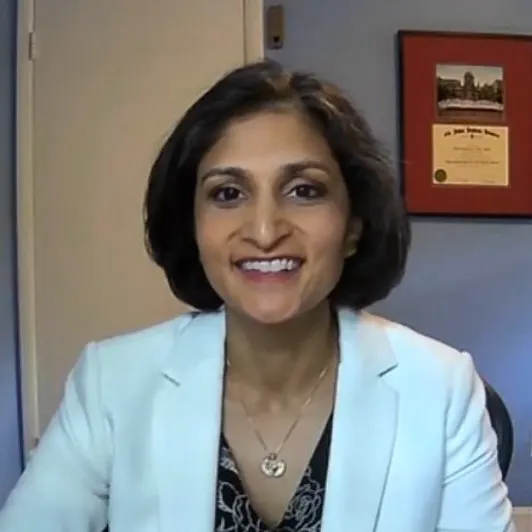
The MeidasTouch Podcast
Meidas Health, Episode 5: One of the Nation's Biggest Future Healthcare Leaders Speaks!
00:36:19
Loading summary
Transcript39 lines
- [00:01]
Ad Sponsor
This episode is brought to you by Lifelock. Not everyone is careful with your personal information, which might explain why there's a victim of identity theft every five seconds in the US. Fortunately, there's LifeLock. LifeLock monitors hundreds of millions of data points a second for threats to your identity. If your identity is stolen, a US based restoration specialist will fix it, guaranteed or your money back. Save up to 40% your first year by visiting lifelock.com podcast terms apply hey.
- [00:31]
Business Colleague
Let'S talk about your expense report.
- [00:33]
Podcast Host
I didn't submit an expense report.
- [00:34]
Business Colleague
You will Custom saddles and dog training services are not within policy.
- [00:38]
Ad Sponsor
What are you talking about?
- [00:39]
Business Colleague
SAP Concur uses advanced AI to audit and automatically detect out of policy expenses. It's the breakthrough I needed to focus more on our future.
- [00:47]
Dr. Mina Seshamani
These are my future expenses.
- [00:49]
Business Colleague
Yes, and self defense classes are out of policy.
- [00:52]
Dr. Mina Seshamani
I'll need self defense classes.
- [00:53]
Business Colleague
You will?
- [00:54]
Dr. Mina Seshamani
For what?
- [00:54]
Business Colleague
It's a big dog.
- [00:55]
Dr. Mina Seshamani
SAP Concur helps your business move forward faster.
- [00:58]
Warby Parker Ad
Learn more@concur.com what makes a great pair of glasses? At Warby Parker, it's all the invisible extras without the extra cost. Their designer quality frames start at $95 including prescription lenses plus scratch resistant, smudge resistant and anti reflective coatings and UV protection and free adjustments for life. To find your next pair of glasses, sunglasses or contact lenses, or to find the Warby Parker store nearest you, head over to warbyparker.com that's warbyparker.com this podcast.
- [01:31]
Podcast Host
Is supported by Progressive, a leader in RV insurance. RVs are for sharing adventures with family, friends and even your pets. So if you bring your cats and dogs along for the ride, you'll want Progressive RV Insurance. They protect your cats and dogs like family by offering up to $1,000 in optional coverage for vet bills in case of an RV accident, making it a great companion for the responsible pet owner who loves to travel. See Progressive's other benefits and more when you quote rv insurance@progressive.com today. Progressive Casualty Insurance Company and affiliates PET injury is an additional coverage and subject to policy terms.
- [02:00]
FanDuel Ad
The NBA playoffs are here and I'm getting my best in on FanDuel. Talk to me Chuck GPT what do you know? All sorts of interesting stuff, even Charles Barkley's greatest fear. Hey, nobody needs to know that new customers bet five dollars to get 200 in bonus bets if you win FanDuel, America's number one sportsbook 21 plus in President select states must be first online real money wager five dollar deposit required bonus issued is non Withdrawable bonus pass that expires seven days after receipt. Restrictions apply. See full terms@fanduel.com sportsbook gambling problem. Call 1-800-GAM hi, everybody.
- [02:31]
Podcast Host
Welcome to episode five of Midas Health. I'm delighted to have one of the nation's biggest healthcare leaders join us for episode five. The purpose of this is to help inform. We're not trying to be redmi political. We're. We're just trying to inform on issues that matter. We know that we're reaching millions through this platform and we want to respect your time, which is why we brought you some of the nation's best, because we know the best are not currently at the highest levels of government. Episode two. We had former FDA commissioner Dr. Robert Califf. Just last week. We had one of the senior leaders at the who and I'm excited to welcome a friend and what I think is going to be who I think is going to be one of our nation's future Secretaries of Health and Human Services. Maryland's current state Secretary of Health and Human Services, Dr. Mina Seshamani. Meena, thank you for being here. I was just so delighted to see you in this new role. Thank you.
- [03:29]
Dr. Mina Seshamani
Thank you so much for having me.
- [03:32]
Podcast Host
Well, so me that, you know, there's a lot going on and first and foremost, I'd like you to introduce yourself to this audience. It reaches millions, and I just want to give you the floor to tell us a little bit about your career journey and how you ended up as Maryland's Secretary of Health.
- [03:50]
Dr. Mina Seshamani
Sure. So I feel very privileged to have the opportunity to have this career path that has really enabled me to both take care of people and have impact on the ground and to work at higher levels in policy to really shape the system in which people can care for patients by training. I am an otolaryngologist or a head and neck surgeon, and I have practiced full time on the ground. I also have my PhD in healthcare economics. And so I have been able to leverage both that on the ground experience as well as, you know, my economics and policy expertise, both in leading care transformation for a major health system, in leading the Office of Health Reform in the Obama administration as we were implementing the Inflate, the Affordable Care act, and most recently leading the Medicare program, where we implemented the inflation Reduction act and stood up for the first time the Medicare drug price negotiation in the history of the Medicare program, among many other things that we did. Now I have the opportunity to bring that back to my home state. I moved to Maryland 20 years ago for Residency. I suppose I just needed myself. It's wonderful to now have the opportunity to lead health for my home state, to really ensure that we are improving the health and well being of all Marylanders in a holistic way.
- [05:28]
Podcast Host
That's awesome. That is an incredible background and just a huge fan of your career impact, your arc, you know, as a fellow physician, just physician leaders doing what you're doing at the skill that you're doing. Society really needs that, you know, I do. Before we dive into your current scope and how you're addressing and really responding to some of the changes at the federal level and what Maryland specifically is doing. So I want to spend the bulk of our time just giving listeners a sense of how states are responding and being proactive, just like Maryland is. Can you talk a little bit about the Medicare price negotiation work that you did and the impact that that's having for Americans? Because I sometimes feel like this gets lost on people, just the impact of that and how transformative it was. It is. And you know how it was decades in the making.
- [06:21]
Dr. Mina Seshamani
Oh, so Medicare has been in existence since 1965. In 2003, that was the first time that there was a prescription drug benefit in the Medicare program. And the inflation Reduction act, or the prescription drug law as we would call it, was really the biggest changes to Medicare prescription drug coverage in two decades since prescription drugs had been brought to the Medicare program. So one big piece of that was enabling Medicare to finally negotiate directly with pharmaceutical manufacturers on high cost drugs. Previously, Medicare could not negotiate directly. And so this is a very important opportunity for us to be able to reward the kind of innovation and enable people to have access to that innovation for cures and therapies that people need at a price that they can afford. And in standing up that program, we had to do it in two years. So really engaging drug companies, patients, clinicians, health plans. How do we set this up in a way that really encourages that innovation for what people need to see those breakthrough therapies and also enable people to have access to them? Because you can have all of these innovations, but if people can't access it, then is it really going to help improve the health of populations? And in the first year alone, we had participation for all 10 drugs that were selected, high cost drugs, common blood thinners that are used, diabetes medications. And we estimated that had those negotiated prices been in place in 2023, it would have saved the Medicare program $6 billion. But even more importantly, I think it would have saved people with Medicare out of their own pockets, $1.5 billion. And this really resonates with me because before I took the role leading Medicare, I had one woman who was on Medicare and we would get on our smartphones on Goodrx so that I could try to prescribe her an antibiotic that she could actually afford. Now another provision is that no one pays more than $2,000 in the calendar year for their prescription drugs. So again, this is just one of many examples of where we were able to bring significant improvements to the Medicare program for the 68 million people in this country who really rely on this program to be able to stay healthy and.
- [09:04]
Podcast Host
Well, yeah, I love that. You know me to. I think you solved for something again that I feel like was decades in the making, obviously since 2003. And I also think it's something that we tend not to talk about to the public a lot. And I think public awareness of the impact of this sometimes gets lost. Where, you know, for example, if you're on Eliquis, if you're on a diabetes medication like Januvia River, Oxyban, another type of blood thinner, you mentioned them. These are some of the most commonly prescribed drugs that you guys negotiated down the price. And so people, some of the most commonly utilized drugs, if you're a Medicare beneficiary, you're paying less or you're going to be paying less as a direct result of work that I think sometimes I'm sure, you know, I get the question a lot. Why does this work? Why did that work even have to be done in the first place? You would think that this is just something that would have been negotiated up front. But can you give a sense of why the complications of, of our, of our health policy at the highest levels? Why. Why did this even have to be done in the first place? You would think that this is something that would have been baked in 2003.
- [10:21]
Dr. Mina Seshamani
Well, I think this is where Medicare really is. And I would say many government programs, there are three levels to them. There's the law that establishes these programs that's at like the 50,000 foot level that gives, you know, the creation of a program and the general framework and the legal authorities for implementing a program. Then you have the regulations that happen in the executive branch of governments. That's more at the 25,000 foot level, which is where I was when I was leading Medicare and which is where I am now leading the Department of Health in Maryland, where we have legal authorities that are given to us by the legislature, then how do we implement that to enable a framework at that 25,000 foot level for then people on the ground to be able to have real impact in the lives of those they serve. And that's that third layer where you have health plans and patients and their families and communities and clinicians and drug manufacturers and others, all in that health care ecosystem that within the guardrail set by the law and the regulations are now functioning in the healthcare market. And so that's why sometimes it can take a while for a law to change, to then enable a change to occur in the regulations and enable a change on the ground. And this is also why it's so important that we are all communicating with each other, because none of us alone can fix problems in healthcare and none of us alone can really significantly improve them. And you know, you mentioned the drug negotiation. A less well known perhaps example is that now, for the first time, Medicare pays for care navigation and for supporting family caregivers. Those are ideas that came to us directly from people on the ground, from primary care docs who say, you know, I have a patient coming in who has a wound and I'm here trying to tell the family member, here's how you can do the wound care. And, you know, just wondering how that's going to go. And that's where it's like, we need to provide some resources because again, we all know that if you can enable people to navigate the system, to get the care they need, to get the care they need at home, you're going to keep them healthier, keep them out of the hospital, enable them to live productive lives. So really that partnership and that back and forth is so critical, especially in an area like healthcare, which is very complex and very personally affects all of us.
- [13:12]
Podcast Host
So well said. So well said. Are you worried about the future of what happens with this program in terms of, you know, I know that there was the initial tranche, then there's the next tranche, and then so on and so forth. And this was not just the 10. And then we're done. Wondering what you think is the future of future Medicare direct negotiation on price, on pricing?
- [13:34]
Dr. Mina Seshamani
Well, I mean, as many of you may have seen, the Trump administration put out a press release saying that they were continuing statement, I think, saying that they were continuing, you know, with the drug price negotiation. We have again, the legal authorities that must be followed. We also have all of the guidances and regulations that have been put into place that lay the framework for how negotiation will be done. And my hope is that as this program continues to mature, that there continues to be that dialogue of what are our common goals in health care and how can we all work together to achieve them.
- [14:17]
Podcast Host
It seems to me that you would have to try really hard to give a good, compelling, apolitical reason not to continue this. I can't think of one. As a clinician, I'm not the health economist that you are. But just thinking from the patient point of view, why you wouldn't want to pay less for the most commonly used drugs amongst a huge Medicare population or set of beneficiaries, I don't know what the reason would be to say no to that. And so I'm with you. And I hope they, they really mean what they say. I want to move on to your great work at Maryland. Congratulations on the transition. Everything's happening pretty fast. You know, Mina, I think everybody that's listening to this sees a news series of news headlines coming from the federal government that induces anxiety. You know, and I talk to people across both sides of the political aisle. I think no one's spared from feeling anxious. And a lot of changes are happening at hhs, how they're communicating on critical health information. Just human capital seems like it's being cut. I'm wondering how you, as the head of a major state department of health are coping with this and how you're adapting.
- [15:34]
Dr. Mina Seshamani
Absolutely. I mean, I will say there is definitely a lot of uncertainty. There is a lot of change happening. And in times like these, it is so important for us to return to the fundamentals. Why do we go into health care? We want to have a positive impact on people, on their, on our communities, on their lives. And how can we maintain that focus, that North Star as we are navigating headwinds? I will say one of the reasons that I was so thrilled to have the opportunity to come to Maryland, alongside it being my long standing home state, is because states really are a laboratory for innovation. Being at a state level, you're really close to the ground with your communities to be able to forge new partnerships and connections, for example, between food and healthcare or healthcare or workforce training and healthcare institutions. There's just those opportunities to really connect the dots and innovate. That can be more difficult at a federal level where you are higher up and looking across the entire country specifically, because at the end of the day, health care is local and does require that state based, state based view. Alongside that important role that states play, there's a very important role that the federal government plays. I think there's an opportunity for the federal government and I did this when I was at Medicare to see what is happening on the ground, to see where there are innovative ideas and programs that are working. And then how can we take those and scale those so that more people can benefit from them? And a way that the federal government does that is both through funding mechanisms and through data surveillance and sharing. And I think a lot of what we are seeing now is disruption in both of those aspects of the federal state partnership where, you know, we at the state level are really looking for, you know, innovative ways to continue to improve the health and well being of our local communities. And that really is that federal, state partnership of having federal funding alongside state funding to be able to support these initiatives. Medicaid is a very good example. Our public health services are a very good example. And then there's also that aspect of where we partner with the federal government where something affects not just our state, but the country as a whole. And I'll give you a very tangible example of this. As you and our listeners probably know, the Trump Vance administration rescinded the, what's termed the COVID funds. Those are, they're not just for Covid. Those are funds for broader public health work that were given and created during the time of the pandemic. So that's why the shorthand is Covid funds. But it's really not for Covid work. It's for laboratory surveillance and more advanced technologies and for public education and outreach and immunization. And, you know, we used those funds to invest in some of our public health labs for more advanced molecular testing. That may seem to be a very esoteric science geek term, but here's how it applies. There were people who came down with listeria in Maryland. We were able to use these more advanced lab techniques to identify the genetic strain of that listeria between the people who, who contracted the listeria and liverwurst from boar's head. We then partnered with the federal government to say, hey, we have this going on. Where else are you seeing listeria? Because a virus or bacteria doesn't say, oh, there's a state boundary. So now I'm not going to cross that state border, Right? So we partnered with the CDC to have surveillance tracking across the country. And As a result, £200,000 of boar's head liver worse was recalled and we managed to stop this outbreak at 60 hospitalizations and 10 deaths before it got worse. That is a perfect example of how these quote, unquote, Covid funds have been used to improve not only the health of Maryland, but the health of the population. Writ large in our nation. And that it's not just about the funding, it's also about that partnership on the data. Because the federal government has that perspective, has that economy of scale to be able to take what one state is doing and, and spread it writ large and be able to utilize it across the country. And that is where we need to keep moving forward, not only in our public health surveillance, infectious disease and otherwise, but also in prevention of chronic diseases, in addressing substance use and behavioral health issues. So really that is a fundamental tenet to how we can best improve health in our country, that federal, state partnership.
- [21:08]
Podcast Host
I mean, everything you say is rational. I think it makes sense. I there isn't a hint of partisanship and everything you say, it's very patient, centric, makes sense. That's your background. You have an incredible background and set of experiences. Do you feel like you're able to have that conversation and, and, and influence and be able to have an iterative back and forth with your colleagues at the federal level right now? Because I'll say for those of us watching what's happening, who are not in a position and an appointed position at the state or federal level feels like there must be silos or that there's sort of this is how we're going to do things, funds are going to be dramatically reduced and then the worry is that people will be ultimately impacted. And I'm wondering, do you feel, or are you worried about your ability to persuade and to frankly, still protect and allow for Maryland citizens to have what they're used to having? I'm curious, your, your feelings on both influence having the ability to have a conversation and what the next four years look like.
- [22:21]
Dr. Mina Seshamani
I think it is critical and it is a priority for me leading the Department of Health to continue to push these kinds of on the ground, data driven, thoughtful conversations. Again, healthcare is complex. There is no silver bullet. There is no one way to do things. So there are going to be different ways to approach things. And that is actually a strength when we all come together and we figure out what do we want to try. So absolutely, I'm prioritizing, continuing to partner with federal colleagues to engage on what are we seeing on the ground, how can we work together to be able to address things in a constructive manner that also goes to what we do within the state of Maryland. Maryland has a huge asset in all of its people and all of its organizations where we can work with all the organizations in Maryland, the people in Maryland, to be able to hear on the ground what is going on. So that we can best address their needs. And this is also where I think the state comes into play. The Moore Miller administration just, you know, past its, its budget and in fact really doubling down on the investment in our local communities. You know, I mentioned, I mentioned Vin about how at a state level you have that opportunity to connect across programs. One innovative way that we're doing so is we're taking some opioid funds and we are now investing in targeted Medicaid interventions for people who are incarcerated 90 days before release. Because we know that if we address substance use disorder for people who are eligible for Medicaid upon release and we address that while they're still in custody, it increases the likelihood that they will thrive upon reentry and they will not end up in the same boat. And thinking about how bringing together the criminal justice system, the behavioral health system and Medicaid to really impact this population that otherwise could just end up bouncing back into jail. The costs associated with that and the opportunity costs of a life of someone who's not able to interact in society. So I think that there are many ways that the Moore Miller administration, through this budget, is seeking to really have those innovative ways to continue to move forward along our fundamentals as we were talking about. And in fact, even with innovative programs like this, this budget balances the budget and actually has $2 billion in cost savings, the most in, I think, at least a decade for the state of Maryland, because it's all about how do you spend money in a smarter way? And that's the conversation that we are engaged in locally in the state of Maryland to make sure that we are continuing to invest in our communities, in their health and well being and that we seek to continue to have with our federal partners.
- [25:47]
Podcast Host
Mina, I thank you for bringing in that program. Just you've always been entrepreneurial and I'm very happy to hear that. What are. Give us a few other of your top priorities for at least as you're scoping out your roadmap and the initial parts of your tenure. What are, what are other things that you know, maybe two other things that you're really focused on for the next few years.
- [26:12]
Dr. Mina Seshamani
Absolutely. Number one is improving the health and well being of Marylanders. Is. Is the vision, how that plays out in the Department of Health in Maryland. There are four administrations. There's the Public Health Administration, the Developmental and Disability Services Administration, Behavioral Health Administration, and our Healthcare Financing and Medicaid Administration. And I think importantly, as a department, being able to, as we were talking about vin, connect across those so that we can make sure that we are really caring for people, not just treating a particular disease in a particular program, but really thinking across as to how we can continue to innovate to support more holistic care. That includes being able to see how we can most effectively utilize our dollars around chronic disease prevention, public education, around our vaccinations, around our epidemiologic surveillance, to how are we best leveraging our Medicaid program to keep people healthy, to keep them in their communities, to be able to support the myriad of experiences that impact someone's health. For behavioral health, I gave you that example of that, you know, behavioral health and Medicaid partnership with our criminal justice, with our justice work and being able to continue to develop a continuum of care and behavioral health where people are cared for at the very early preventive stages, not just when they end up in an institution and for disability services. That is the true epitome of person based care where caring for people with disabilities involves the entire family and the community and also requires us to take a look at how we can continue to provide that top level care while also looking at our sustainability and making sure that the money goes in the most effective way possible. So really, across all of the aspects of our department of health, we have the opportunity to touch people's lives in Maryland from the moment they are born, even before they are born, to the day that they die. And really taking that to heart as we do our work.
- [28:39]
Podcast Host
You know, listening to your comments on behavioral health as a priority is how much of that, you know, I'd say across the country, I'm sure the, your colleagues in the other 49 states would would say that's a big priority as well. And I am wondering, here in Washington state, we always talk about access, and I'm wondering how you're thinking about access. Is it more human capital to behave or health support? Is it, you know, training up more mental health providers, wondering how we, how, how you're thinking about cracking that, that challenge?
- [29:12]
Dr. Mina Seshamani
That's a great question. And I think it is a combination of things. First, I think it's important that we are ensuring quality in our provider community and really making sure that, you know, one of the things that we do is licensing of behavioral health providers and how are we ensuring that people who are providing services are providing quality service and really being, being able to protect people who seek behavioral health services. I think a second area that you mentioned is access. And I think especially with behavioral health, how do we meet them where they are? So another example from our budget is that now we are expanding our mobile crisis program to serve 20 counties where we can go out to people in urgent behavioral health need with a highly trained team. And this again comes back to those connect points where you are then reaching people where they are. You're providing that access for crisis response and then getting them to a same day facility so that they can be better managed to avoid that hospitalization, the ed boarding that institutional path. And there's also again that connect point where before someone calls 911 and it goes to the police and are, you know, instead now having this partnership with justice so that we can, we can better address what people's needs are. So I think that is another area that we are really focusing on as an example from our current budget.
- [30:53]
Podcast Host
That's fantastic. Thank you. Thank you for enumerating that. I think that specificity is really helpful for all of us just to understand what we can, where there are gaps, what we can do, particularly what the country can learn from the great work of Maryland and your leadership. Because I think Maryland's often led when it comes to state based health reform. So the years and you're doing so across a range of dimensions. You know, before we wrap, I want to be respectful of your time and the time of our listeners. I feel like we should address a big elephant in the room which is health information. I spend a lot of my time focus on public health communications and information. And I'll say from my personal vantage, it has become challenging to just reflexively respond to the next headline that is surprising to see whether it's how we're hearing the measles vaccine be talked about, how we're thinking about vaccine approvals, whatever it might be, sort of solid truths and foundations being challenged. And I think it's always good to be, you know, revisiting prior assumptions and that's not a bad thing. But I wonder for you, as a big time leader for our country, leading a premier state department of health, how you're thinking about your remit and your scope and how and how to inject your voice into what I think is information chaos when it comes to healthcare especially. I'm wondering your point of view on that.
- [32:29]
Dr. Mina Seshamani
Well, first, absolutely. There is a role for those of us in healthcare to be out there speaking to data, being approachable and answering people's questions, addressing confusion as it arises. This is for someone in my role leading a state department of health, for a clinician like yourself, Vin. Right. I mean people ask their doctors about information to our pharmacists and our nurses and our health plans and our hospitals. However, as a I think you said I'm a big time healthcare leader. I'm also a healthcare leader who knows that not everybody wants to listen to her. Certainly my children sometimes. But also, it's so important that we are partnering on the ground with our community partners because they're the ones who are going to know better what people get, what they don't, how they can take advice and information and apply it in their everyday lives. So I think equally and perhaps even more important than what you or I could do is in this podcast telling everyone, go engage with your local community, with your neighborhood group, with your local place of worship. Because that is where a lot of people get their information and that is where they can get information that is much more pragmatic and tangible. Tangible and actionable for them. So it is so important that we are partnering broadly to be able to provide people with info to again, to come back to where we started, Vin, to return to our fundamentals. When we are dealing with all this uncertainty, we have an opportunity to link arms, to roll up our sleeves, and to approach things with our ultimate vision and goal of serving all of our community together.
- [34:35]
Podcast Host
Love that. Dr. Mina Seshamani I always mix up the pronunciation of your last name. I don't think I did it at the end. Thanks Department of Health the leader of the Maryland Department of Health, we are privileged to have you. Thank you for your time.
- [34:52]
Dr. Mina Seshamani
Thank you again Vin for having me.
- [34:54]
Midas Ad
Can't get enough Midas? Check out the Midas substack for ad Free articles, reports, podcasts, daily recaps from Ron Filipkowski and more. Sign up for free now@midasplus.com like your favorite travel guide, T Mobile's network knows all the spots because T Mobile helps keep you connected from the heart of Portland to right where you are on America's largest 5G network switch. Now keep your phone and T Mobile will pay it off up to $800 per line via prepaid card. Visit your local T Mobile location or learn more@t mobile.com keepandswitch up to 4 lines of your virtual prepaid card. Allow 15 days qualifying unlock device, credit service port in 90 plus days device and eligible carrier and timely redemption Required Card has no cash access and expires in six months.