← The Mello Millionaire with Tommy Mello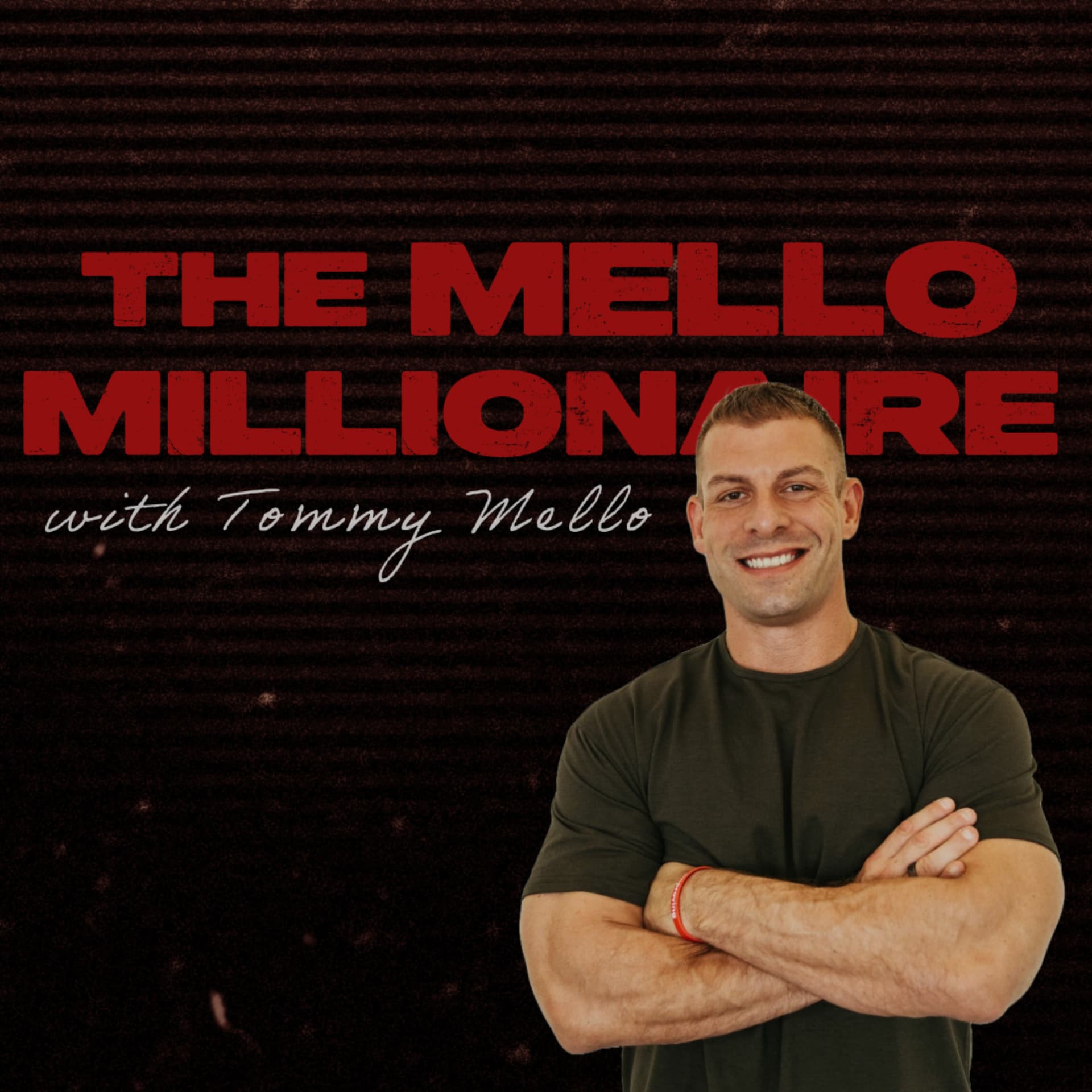
Loading summary
Transcript86 lines
- [00:00]
Leo Pareja
In my 20s, all I cared about was awards. Like I wanted to be the number one agent on the planet at the largest company in the world. I was very highly driven by that. I actually did it. And it was the most empty and meaningless feeling of my entire life.
- [00:17]
Podcast Host (Mellow Millionaire)
Bold, focused, unstoppable. Leo Pareja is a real estate force, entrepreneur and culture shifter.
- [00:24]
Leo Pareja
Agents who use AI are going to put agents that don't use AI out of business.
- [00:28]
Podcast Host (Mellow Millionaire)
As CEO of XB Realty, he helped steer one of the fastest growing brokerages in the industry, changing how agents create ownership, scale teams and expand globally.
- [00:38]
Leo Pareja
I think the next couple of years will be the most transformative years in real estate.
- [00:43]
Podcast Host (Mellow Millionaire)
From producing agent to executive operator, Leo has built, led and scaled multiple businesses, earning a reputation for decisive strategy, high standards and straight talk leadership with a sharp read on markets, people and performance.
- [00:56]
Leo Pareja
The agents that don't adopt technology get rendered obsolete by the agents that do.
- [01:01]
Podcast Host (Mellow Millionaire)
Get ready. This episode will challenge how you think, raise your standards and upgrade the way you build wealth and leadership. Welcome back to the Mellow Millionaire.
- [01:11]
Tommy
Today is awesome because this happened to be by chance. I've got Leo Pareja in town and he's an expert in sales business real estate based out of Miami. You guys might have heard of XP Realty. He's the CEO and it's one of the fastest growing real estate brokerages in the world and a core subsidiary of EXP World holdings, the cloud based company with market capitalization of around 4 billion. Appointed CEO of April of last year, 2024, Leo now leads a company that has transformed the traditional brokerage model through its virtual first platform and innovative approach to agent growth and community. With deep experience as both entrepreneur and industry leader, Leo is uniquely positioned to talk about the future of real estate, the power of technology, what it takes to thrive in a shifting market.
- [02:00]
Leo Pareja
Thanks for having me, Tommy. I'm excited and like you said this, this was a happy coincidence.
- [02:04]
Tommy
I really appreciate you being here, brother. You want to just tell us? I always like to start with a story about how you made it and what you're. Where you're at today and what you're interested in the future.
- [02:14]
Leo Pareja
Sure. So I'm. I'm born and raised into real estate. Even though I didn't come from a real estate family, most, most people enter the residential real estate space as a second or third career. I, I feel lucky enough that I fell into it at 19 years old. While I was in college, I got my license and sold. My first transaction was to myself at 20 years old, I bought a property with an FHA loan. My dad was my co signer. I used my commission as my own down payment and rented out three rooms and house hacked before it was a thing. And then that summer I ended up selling my fraternity brothers and any sorority girl who take my call 11 homes during my summer vacation and made $60,000 as they say that that was, that was that tipping point in my brain where I said this is what I'm going to do with the rest of my life. I then went on to have a pretty awesome couple of years. Thought I was special and thought I was, you know, God's gift to real estate and realized I had a license during the greatest bubble in the history of the world. Got my ass handed to me, lost everything. And the financial crisis turned out to be one of those very important educational processes of my life because that's where I, I went from being a entre, a solopreneur, a self employed person to a business owner. And I scaled and I learned how to win government contracts and do RFPs and became one of the top agents in the world. Then I went on to do a lending fund and then I did a tech fund where I ended up raising close to $50 million of venture and private equity and scaled that business to be 80% market share in the United States from a distribution standpoint to real estate agents. And after I exited those businesses, I got a cold call from the founder of exp and this is my first job in my 40s that I've ever had and I lead a publicly traded company and we're, we're about 4 billion in revenue, about a $2 billion market cap company. But Nasdaq, you know, S&P 600, where's.
- [04:15]
Tommy
The real estate market? What are you excited about?
- [04:18]
Leo Pareja
One thing is, you know, and I was one of the, I would say louder voices during that whole thing and I have strong opinions of the, you know, plaintiffs attorneys and I don't think they cared about consumers. I think they're just trying to get paid. But more importantly, I like, I've been a really big advocate for transparency. I think if you have a consumer first strategy and again, this is agnostic of industry. You know, I think if you do what's absolutely best for the consumer, in the end you win. And that's been my philosophy whether I've been in real estate, tech or finance. Right. I think the goal of capitalism is to remove as much friction as possible so they pick your product and service over everything else. Right. I think Human beings go for the path of least resistance, right? Whether, you know, it's my Apple watch and my Apple phone and my Apple wallet and my AirPods that are in my pocket. It's like four pieces of technology. And it's not that I'm obsessed with what Steve Jobs built as a human being versus the frictionless ecosystem he designed. Think about your favorite products and services. That's like the reason Jeff Bezos is one of the richest men in the world is because he made it painless for us to get what we want when we want it, as soon as possible, with the least amount of friction. Real estate is one of the most frictionful experiences American consumer makes. It is not simple, it is not painless. There's a ton of complexity from title and mortgage and all the other things. So I don't, you know, I believe that consumers will still over index on having an expert advisor help them through a super expensive, highly infrequent, highly emotional thing that they only do on average three times in their whole life. Where, where I think of the future right now, I think AI is going to fundamentally change everything. And that's not just hyperbole. I, I actually found it and scaled the tech company so I'm, I'm more technical than the average CEO. That's not, that's not a, an engineer where I think everything's about to shift is the gatekeeping of technology is not what it used to be. So once upon a time when I founded a tech company, I relied solely on engineers to build everything. Versus with the advent of large language models where you can vibe code, even if it's just like the first wireframe and the layout and I can, you know, verbalize with context what I want it to look like and then give it to an engineer. That's a game changer, the speed at which we can do stuff. And I believe that in the next three to five years, most B2B SaaS products will no longer have the UI experience that, that we're used to. Right. Most B2B SaaS products are an interface that sits on top of a data layer. And I think what it's going to look like is more like that little talking bubble where, where you either type into it what you want to know, like, tell me how many garage doors we have in inventory. You don't actually now need to go to a display that has these predetermined visuals like you like how many customers did inbound calls did we get? You know, who have we not talked to in a while? Like what supplier? Like pick your industry and pick your KPIs and you'll be able to contextually talk to it. So I spend, you know, I speak at conferences often as of late I feel like I have anxiety. I can't go fast enough. Right. I'm 43 and I've experienced two gigantic tech jumps in my professional career. One was high speed Internet and again I grew up in the real estate business but prior to high speed Internet I actually had to drive into the office physically to look up listings. Zillow didn't exist. It was like this gatekeeping of information. I had to physically drive somewhere and then print stuff out and give it to you if you wanted to buy a house. And high speed Internet democratized that. And then the, the next giant step that changed everything in my industry was mobile, right. I went from having to print maps on MapQuest and, and we'd drive around with those like multi page books. And so what both of those technologies did was actually compress time, right. So if it, it, it used to take me, you know, three or five days to schedule appointments and you know, get information to people back and forth fact stuff, I can do it in minutes now then mobile, you know, made it even faster because I didn't have to go back to the office to look stuff up. I could just do it on my phone, I could schedule an appointment, I can get a, instructions on how to show property from my car. And so if something used to take days or weeks, I could now do it in minutes or hours. That's, that's the gigantic leap forward that I'm seeing with AI and I, and I. Something I'm hyper aware of is everything's overhyped in the short term and everything's underhyped in the long term, right. So like I think everyone's, it's, it's exhausting to hear AI as much as we do, but I think over the next five or ten years it'll be more impactful than we ever dreamt. And so it's this balance of staying in curiosity and testing and trying and not getting kind of lost in the hype.
- [09:10]
Tommy
You know, we, we spent millions and millions of dollars building probably one of the more advanced data lakes with Power BI and pulling in from APIs. And I just went through 20 hours of advanced AI training and learned a lot more. Like I use ChatGPT 80 times a day. It knows me, I do complex IRR all this stuff. But now I'm starting to give it way more complex things. And you've heard of N8N8N. And we're going in and I'm hiring the top minds. I can't pay a hundred million dollars to get one guy, but I'm paying the top minds that I could get because speed is everything. And my. We're building ChatGPT Enterprise over the top of all of it. And that's, you know, I know a lot of private equity. I know a lot of these guys doing venture capital, they're looking at this stuff, but lawyers are going to be out of work. The I'm so glad. 20 years ago I fell into garage doors. I didn't know that it was going to be because everyone is going be a developer, go into dentistry, da da da da. And I'm like, man, I really like what I do. But now we're essential. I mean, during COVID we were essential. Now everybody I know that's a developer, most of my real estate buddies, a.
- [10:15]
Podcast Host (Mellow Millionaire)
Lot of the people even doing SaaS.
- [10:17]
Tommy
Products are like, we want to go into HF, we want to go into roofing, we want to do this. Because I don't think even though Tesla's going to have the robots next year, they're not going to be doing skilled labor anytime soon. But that's what's scary to me. And I'm not considered the smartest guy in the room per se, but when I just heard Elon might be doing a home service fund, those aren't the type of guys I'm used to going against. So I got to move quick, quick, quick. The one thing I found in our industry that you'll really appreciate is private equity guys can never build this company. They, they, they don't know. They, they kind of look down upon blue collar people.
- [10:52]
Leo Pareja
Private equity looks down on operators because they're not. And so they, they still. Private equity doesn't exist with the practitioner who's an operator.
- [11:01]
Tommy
And that's you want. I was at this panel and there's five of the top guys in the world. And they said, what we've learned is you gotta figure out how to keep the founder in the business and still excited. And I think that they think, well, you can't cut your way to higher profit margins and ebitda. And I think that that's what they just said, hey, how hard could it be replacing garage doors and H vac units and mowing lawns? You know, we can hire anybody out the street and they're not, if they're not on time, fire em. And it's like, no, there's a lot more to this but they, these some of our people that didn't have a mom growing up. You know some of them pass 10th grade but they're really good faithful like hardworking, loyal people. But you're right, I'm very nervous. I'm skeptically I guess I'm cautiously optimistic. Bill Gates came out and said 10 years nobody will need a job like you won't have to have. And so I started looking into that. What do you think about I'm not a social. I love capitalism so much. I was at the founder of Service 10 he goes I'm, I'm so sad because my kids won't have a purpose like I do to build something from nothing. Like what do you think is going to happen? I mean AGI, when is this happening? Nobody knows what's your speculative and then what happens to society and wanting to grow yourself?
- [12:13]
Leo Pareja
That that's a very you know, open ended question that no one actually knows the answer to. So the one thing that I do know and again I'm, I'm a, I'm an optimist and I think we have to be to be entrepreneurs. Like it's not a choice, it's a DNA thing. So one is I would go back over 2000, 5000 years of recorded human history and you know the printing press fundamentally changed society and knowledge was gatekept by scholars and the church and when the first books were printed it, it allowed for literacy at scale. Right. And then the, the railroad and the, the, the engine right. There's been these dramatic jumps in productivity. If you actually read headlines from you know the eras of when this happened it was the end, it was the end of the world as we knew it because these jobs were being eliminated. So one is I think we're a tribal species and what that means is we crave human interaction. So I, I think as, as certain repetitive jobs go away and when you look at any advancement in technology it's normally that it's some logical process. So I think over time we will over index on human experience and I was recently about six months ago at an event with a bunch of private equity and some of the biggest direct to consumer brands in the world. It was super interesting because the capital allocators were investing in, in real life events from sports teams to arenas to non replaceable human experiences. And then the direct to consumer brands were actually investing in similar opportunities that had direct to consumer live events. Meaning that. Let's talk about the last couple of hype cycles you and I have been a part of. I live in Miami. That's the epicenter of the crypto hype. Five, six years ago, I couldn't go to anything in Miami and have some tech crypto, bro, tell me about how everything was going on chain NFTs were going to replace all smart contracts. And, and like, again, I live in the epicenter of it. And like six years ago I was like, oh, this is happening definitively. Someone would come up to me and be say, title insurance and settlements won't exist because everything's gonna be a smart contract. And again, kind of like you just said, just fire them. I'm like, do you realize that titles kept across 3, 500 disparate municipalities in this country with different rules and states? And do you know that that's all like government regulated and like there is no magic button wand, anything? And so when, when, when I hear, you know, we won't have a purpose, like a, I don't see it from a technology standpoint. And two, like, we designed this stuff and we built it and I think we'll still crave certain parts of the human experience. So I have a habit of not worrying about stuff I can't control.
- [15:06]
Tommy
It's tough. I mean, when you think about AGI, when you think about this code is smarter than all humans combined. And people think it's 10 years. Some people think it won't happen in our lifetime. But the one scary thing is you had robotics and next year they say they can make basic mills, they can walk the dog, they can do tasks or they can mow the lawn. That's the beginning. And when it starts to learn on its own, and that's why these data centers now it's a race against China. But I still feel like it's the best opportunity I've ever had. 10,000 baby boomers a day retiring. 12% of them own a business. Most of them don't have a next of kin. There's so much opportunity. But it is to me is like, I enjoy myself, I go on vacations, I do fun stuff with my fiance. Never been married, no kids. So I haven't started that chapter yet. But it's a race and it's speed and I'm not learning all the time. That's why I love this podcast, because I'm learning so much from you. Have you seen all that show about Uber is they had to cheat. What do they call it, the gray gray zone or whatever, where they used to get around regulations in Portland and some other areas. Like you got to Break glass to get these things through. But somebody's always got to figure it out. I was watching this investment panel, some of the smartest people in the world on AI, they said, I wouldn't invest in what's hot today. You're not probably going to rebuild ChatGPT, but there's something next coming. And that's what venture capitalists do. They take a 20 shots and hopefully one of them score.
- [16:25]
Leo Pareja
And well, the, the way I verbalize it to someone this morning when we're talking about AI, I said, listen, we're playing with Napster and MySpace. I don't believe Instagram and YouTube have shown up yet. And so what I'm encouraging everybody is to stay in curiosity, try taste, right?
- [16:40]
Tommy
Like, I like that, I like that analogy.
- [16:43]
Leo Pareja
Like, look, MySpace was first and Facebook improved upon two or three things. And like, you know, my kids and folks that are Gen Z have no idea what I'm talking about when I say Napster, MySpace or LimeWire. And let's, let's just go down to that analogy. Limewire and Napster failed because they didn't understand copyrights, right? It was simple stuff like, and then YouTube basically, right? A distribution of content came up about and said, hey, we're going to only do it with unique stuff that you give us the rights to. And then boom. But limewire and Napster were first.
- [17:18]
Tommy
Oh yeah.
- [17:19]
Leo Pareja
And then, you know, Facebook and Instagram, MySpace was first. So go back to the, the end of the 1800s with a gilded age in the United states. We had 118 railroads within like 30, 40 years, we had three, right? So there's, there's this like crazy boom in opportunity, right? I like to say that capitalism, I said about the removing friction, but the goal to create opportunities or a lead funnel in any business is to have an outsized return on effort or dollars, right? Meaning if I spend a dollar and I can make $5, whatever a funnel is, whatever customer acquisition challenge you go after, you do it for as long as possible. And to quote Gary Vaynerchuk, marketers ruin everything, right? Because if you do it very successfully, every other competitor goes, well, Tommy's crushing it with this one strategy. And you will be able to do that for 3, 6, 12, 18, 24 months and then everybody else will catch up or, or the platform will monetize it differently.
- [18:17]
Tommy
I think of Pizza Hut 20 years ago, said they make most of their money off of data.
- [18:21]
Leo Pareja
I heard this, this stat yesterday that when a lead converts through ChatGPT, it closes at like 600 times. Better than Google. And the reason people trust it more, intuitively, we trust it more because as of right now, they haven't put sponsored ads. But they will. I promise you they will. Why wouldn't they? They haven't figured out how to make money yet. So when, when you look at almost every product, go to market, you know, land and expand, get as much reach as you can, and then you try to figure out the optimization for monetization. But I'll give you a sample size of one question in your sphere of influence, Facebook, Facebook and LinkedIn, probably the two most prolific ones. For this example, have you noticed in the last six months, friends that, you know, couldn't string a sentence together are now Shakespeare?
- [19:14]
Tommy
I have noticed that.
- [19:15]
Leo Pareja
And instant, like intuitively, right? Like you can, you can, you can see the person's name and then all of a sudden you read the first two sentences. You, you maybe see the EM dash or you see the emojis. Oh, yeah, yeah, yeah. How quickly do you go. You just skip. Like, you don't actually read it immediately. You invalidate the robot. You're right, exactly. So right now, the reason leads convert so much higher from a chat GPT response is because we still trust it. Like, we will build a reaction. So 1999 email open rates was ridiculous. It was like 20, 30, 40, 50% on a cold list. We loved email so much. Tom Hanks made a movie about it. And do you remember how excited you were when you got a phone call like in 2002 or.
- [20:00]
Tommy
Or even the doorbell rang?
- [20:01]
Leo Pareja
The doorbell. Text message, email. We're like elder millennials, right? Like they said, we were the first generation not to see the sidebars in a browser. Right. So it. This is a moment in time. Nothing lasts forever. No, you know, funnel conversion metrics. Because what happens is if somebody hacks it and figures out how to get a 5 to 1 return, that's called arbitrage. Everybody runs towards it. Either the platform monetizes at a better clip, right. Facebook ads, YouTube ads, Instagram ads, or everybody does it, and you'd get down to like a 1 to 2 return, a 1.5 return. And then that's different. Diminished insurance kick in?
- [20:38]
Tommy
Well, yeah, you know, in the garage door industry, you know, I studied 2017. I decided I'm gonna go study H Vac because it was a 250 billion market. Cap Rogers was a 10 at the time. And I said, who is. Who's got all the private jets that I know? They're all, hi, guys. So I went to every Hundred million dollar shop in the country. I learned what financing meant, I learned service agreements. I, I really studied arbitrage and ebitda. Ebitda, Ebida. And that's. So we built in the same framework but now we're building all these tools like AI dispatch. Like now it could do regression testing. It could actually dispatch for dollars. Put Tom Brady in the super bowl at the right time. They could understand the best person to run that job. Like if you're an elderly person that was a vet and we can match that up, we know we're going to be more successful. It's really not, not bad things to do. This isn't like black hat wrong things to do. And I'm trying to stay above board with everything we do. And it's a race I think. And you're right, a lot of people try to rip off and duplicate, but it's very hard to. I always say we're a technology company that does garage doors. The problem I have with most my vendors is it's very hard. If you think about a garage door, how many different variations, permutations and just you could get different sizes, different insulation, different styles, different window sections, different radius track. So a lot of it's made on demand and you can't. There's no small machine that like can make your gutters like these are massive. 25, 30. Each machine's a $30 million machine. It's gotta be warehouse. Somebody might come up with something to keep it a little bit closer like Amazon did. But that's why I like this industry because the combinations and everything else. So it's like how do you get the product quicker, better, faster for your clients.
- [22:18]
Leo Pareja
I've always loved industries that have a higher barrier of entry or legal complexity. A higher barrier event, A high barrier of entry.
- [22:26]
Tommy
That's, that's the problem is anybody could start a garage door company off the streets. You know, they're not much licensing, but.
- [22:32]
Leo Pareja
Maybe for the installers. Right. Versus the manufacturers versus how much you convert it.
- [22:36]
Tommy
Yeah, you're right. There's not a lot of great manufacturers that can compete. What I like what we're trying to build right now is systems to talk to their systems. Like I want to know what's on hand. Did you have a mess up order? Then I could call my client, be honest with them and say this was a order that messed up with the manufacturer. I could get this in the ballpark. You were thinking, because they're selling it to me for pennies on the dollar and those are like the advanced thinking. I love this stuff. Have you ever heard of a guy named Greg Hagg, 72? Sold. So Greg lives down the street in Paradise Valley. Known pretty well. He's starting a. He's all over the tv. Only here I think he used to be. But he's like, you know, Tommy, he's like, the way I'm running this is, I'm not going to take any fees.
- [23:17]
Leo Pareja
To sell a house.
- [23:17]
Tommy
He goes, I own the title companies. Most of the time they don't have to use my title company. I also now own, you know, the, the pest control companies. When you move in, I got access to the pool company. He's like, I'm playing the long game. But he goes, I'm making it a lot easier. You know, sometimes they'll use my lender. And so.
- [23:37]
Podcast Host (Mellow Millionaire)
And he's like, even if they don't.
- [23:38]
Tommy
He goes, eventually someone's going to do it. What are your thoughts on that?
- [23:41]
Leo Pareja
Yeah, no, I believe in capitalism. I think especially like specific to our industry. One of the things that I don't think was well articulated during all that litigation last year is we actually have had multiple forms of doing things right. There's companies that do it for a flat fee. There's companies that do prefer for a percentage. There's companies that will do it a la carte fee. It's pretty straightforward in business. And this applies to your business. If you are too expensive, you go out of business. If you do it for too cheap and don't have that magical ibita word that neither one of us can pronounce, well, you go out of business, right? And, and there is a happy medium between the product and service. You're willing to render a consumer for the product and service they're willing to accept. Right. So both Walmart and Whole Foods will sell you ahead of lettuce or blueberries or paper. And you know, at Whole Foods it's going to be like organic and you know, disintegrate when you're trying to wipe your hands. Versus bounty at Walmart. And both are phenomenally multi billion dollar businesses. They serve a different consumer sector. It's a different experience level. Right front of the bus or a PJ versus Spirit and frontier both get you to where you're going. They service a different customer. And I think the argument of like, I'm playing the long game, I'm like for a certain segment of the market and this is the one thing I love and it's, it's, it's, it's very an American ethos right. So Canada, the top four banks in Canada service 80% of the purchase mortgage business in Canada. Four banks, 80% of the market. Number one in the US is Rocket. Right. We all know who Rocket is.
- [25:19]
Tommy
Yeah, my cousin works there.
- [25:21]
Leo Pareja
They have 8.6% market share.
- [25:23]
Tommy
Are they out of Detroit?
- [25:24]
Leo Pareja
Out of Detroit, yeah.
- [25:25]
Tommy
That's where I'm from.
- [25:26]
Leo Pareja
U.S. right. 88.6 is number one in market share.
- [25:30]
Tommy
Yes.
- [25:31]
Leo Pareja
We have thousands of lenders and then it goes down from there. Right. So no real estate company, no garage door company has 100 market share. Forget that. We, we have the Sherman Act. But by the way, which is 70%.
- [25:44]
Tommy
Is that's why you need a strong competitor. That's why Bill Gates gave Steve Jobs the money.
- [25:48]
Leo Pareja
Right. And when, I don't know if you know the story of Japanese cars in the US but like when Honda was growing so fast, they actually launched Acura as a sub brand to create a competitor. So it's, it's, it's part of our American ethos as a, as a culture. And so I don't, I don't like. Good, let him create a differentiated product. And you know, again, one of the things that we do as a company is I look at myself as a platform. So like I want to be the iOS in the app store and let my agents build their own apps. Right. Versus I'm not trying to build a super app. And so 72 sold has their own mousetrap and they'll capture some market and so will other agents, you know, with ranging business models.
- [26:31]
Tommy
Where do you spend your money? I mean, literally, like you've probably got enough money where you don't need to work.
- [26:36]
Leo Pareja
So the fun part about being a human is like, there's no rule book or rule set that has to happen. Right. And, and I'm, I'm a, I'm a husband and a father and my kids are 10 and 8. And the, one of the thoughts that I've been really hyper aware of right now is that there's seasons to life. Right. In my 20s, all I cared about was awards. Like I wanted to be the number one agent on the planet. And I, and I actually achieved it by the time I was 28 at the largest company in the world. I wanted, you know, 30 under 30. I wanted number one in the world on this list and number. And like I was actually very highly driven by that. And the craziest thing is I actually, I, I, the dog caught the car. Like I actually did it. And it was the most empty and meaningless feeling of my entire life, because I didn't feel any different. My EBITDA was not higher. It was actually probably lower than other years where I was optimizing for net. Net profit. Um, and so I feel very lucky that I. I got my ass handed to me in my 20s, right? I lost everything and rebuilt it before I had kids. What it put me is in these really interesting relationships and rooms at a very young age. And I asked every single older man or woman who had made hundreds of millions of dollars what they would do different. And they were all super clear, like, it didn't even take two seconds that it was, don't screw up time with your family and your loved ones. You can't get it back. And so the other thing they told me is there is an indifference point past a certain number. And I've had friends exit from 20 million to a billion dollars. So, you know, we. The last two companies my wife and I exited, we already had the house. We have. We live in a very nice neighborhood in Coral Gables, Miami. You know, we. I have a Model S with everything on it. She has a Model X with everything on it. Our kids go to one of the best schools in Miami. Nothing changed. Like, past a certain indifference point.
- [28:33]
Tommy
What is that point? What is your view of that point? Because I just heard Andrew Tate saying 25 million was.
- [28:38]
Leo Pareja
So. I hear the 2025 million all the time. But the reality is it's for the lifestyle that you optimize for. So one of the things that I can tell you as an entrepreneur, I held resentment to the words lifestyle, business, or SMB because it felt not big enough. And then I went and did one where I raised a bunch of money and had big numbers involved. But the reality is, I think most of us. And again, this, I. I blame the culture and the glorification of the entrepreneur and the massive eggs and the massive raise. But at the end of the day, it's like, how much money do you actually need to live the life you want to experience the things you want to experience? And so I. And. And I am eternally grateful for the stuff I can't control. Meaning, like, my DNA, my iq, the parents I had. So I have a lot of context to that statement. And so, you know, I don't think we can control certain parts of the dm, but I, like, I don't need or want for stuff, right? Like, I don't. I don't have sports cars. I. I love spearfishing and the water, but I don't buy a boat because I've done the math and, like, charting's cheaper. So that. That question I think is, like, how do you. How do you prioritize time and effort? Like, for me, time with my 10 and 8 year old and my wife, my siblings, my parents, my cousins is actually the most valuable thing on the planet for me. And back to the DNA thing, it's probably because I'm Latino and I was bred to do that, but it's how I prioritize things. So for me, it's experience over things. Right? Like, we spend two to three months every summer on the road with my entire family. And I run a global company, so we spend time in the south of France and Barcelona and wherever we want all the way to, you know, the west coast and surfing in Costa Rica. And again, like, that is expensive. But I don't, you know, have a Ferrari habit. So I think it's. And by the way, there's no right or wrong. Like, this is like, there's no rule set here. And the one thought I go back to all the time is, in two generations, no one will remember you or I lived.
- [30:42]
Podcast Host (Mellow Millionaire)
Oh, yeah.
- [30:42]
Leo Pareja
So just really enjoy the ride.
- [30:44]
Tommy
That's really good, man. I really like that. So.
- [30:47]
Podcast Host (Mellow Millionaire)
But you still.
- [30:48]
Tommy
Geno Wickman, you familiar with him? Yeah. He was on a podcast recently and he said, I sold my EOS system, 87.5% of it. And he goes, tommy, a massive pot of gold. I won't even go into the numbers, but I felt so empty. And a lot of people have that when they sell their business, they got freedom, they could do whatever they want, but they kind of lose purpose. There's a great book of Man's Search for Meaning. I talk about it in every podcast, I think. But you still want to. Like, like, some people are like, man, I retired for a year and I just was, like, driving myself nuts.
- [31:23]
Leo Pareja
Yeah. So. So, A, I love his stuff. And we actually have a partnership with Eos that we. We preach in. In our. In our ecosystem. B, is part of the entrepreneurial experience is that it becomes your identity. So I've exited three times. And, you know, after the first one, it was painful and traumatic, and then the second one, you're like, okay, now.
- [31:44]
Tommy
I like, know what to expect.
- [31:46]
Leo Pareja
Simple things like, hey, my email is now leo@leopard.com. it's no longer at the business. Right, Right. Because that's like, that email was with you for 5, 10, 15 years. Like, even just little things of how you log into the bank, you have to change that email because that domain no longer belongs to you. Yeah, right. And so one is identifying who you are outside of the identity you've built as an entrepreneur, by the way, I, I spent about six months spearfishing. I got really good at it. I'm a rescue diver. But you know, as, as I was on my third spearfishing trip of that week after we sold the last business and I was contemplating buying the spear fishing charter, I was like, whoa, whoa, whoa. Like my brain's doing that thing where like, I think when you are a builder, that's your thing, right? So look, I, I know people who sold their business and buy a ranch and become like really good at that, but then they optimize and love and play and do that. So again, most things you, you can't know it without experiencing it, right? So like that famous Jim Carrey quote is to that. It's like, I wish success and money and fame on everybody so they know how empty and meaningless it is. You don't know what you don't know. And there's a principle that I talk a lot about. I did a keynote about it yesterday where I said progress over perfection, progress over destination. Because like, there is a body of psychology that says that the only commonality on happiness comes from progress, right? So take, take the woodworker who can take a piece of wood and turn it into a chair. Take the steelworker who can take, you know, raw and turn it into a sword, a hammer. There's actually a documented amount of happiness in manual labor and blue collar work of taking something that's raw and turning into a completed product. I view myself as highly creative in though my, my canvas is business and sales and conversion. Like, if we can go from X to Y, I like that. And it's that iterative process that I enjoy. And so again, I've been pretty fortunate to do it in multiple industries and experience it. But once you zoom out and you understand like demand, cta, cac, ltv, ebitda, margin, gross net, all that stuff. Like, to me it's like colors in a palette and I'm painting, right? And so like, and I say that because I have an art degree and so I actually did paint and do sculptures in college. And then I went into the business side and enjoyed that 10 times more. So I think it's just finding out what gives you joy and passion in, in the season of life. Like, I don't miss my kids jiu jitsu when I'm in town. Like, I travel very little and when I do travel, I concentrate and try to do as much as possible, like fitting this in because we were in town. What I care about in this season, over anything, is making sure I can take my son to Jiu Jitsu, my daughter to her singing class, and make them breakfast and dinner. And math drives everything in my brain, like, my daughter's 10 years old. I probably have, I don't know, 700. Put her to bed nights before she's like, dad, leave me alone. I got it. Think about that. And so that's a finite resource that I can't buy more of.
- [34:59]
Tommy
I love that man. Yeah, well, I was on this stage and I said, listen, guys, when I die on my casket, I don't want to say, best garage door guy, best entrepreneur, best leader. I want to say best dad. And I don't have kids yet.
- [35:13]
Leo Pareja
Well, I. I would one up that and said, when I take my last breath, I want those people in the room because they care enough to be there and hold my hand.
- [35:20]
Tommy
I love this man. I want to talk. Just a couple quick things, then we'll get you out of here. You know, a lot of people who do you look up to a lot in the business world? And why? Because a lot of them are frustrated. They're just not happy people.
- [35:32]
Leo Pareja
Yeah, no, I think that is a fantastic question, and I've been asked that a lot. Like, who are the two people historic.
- [35:38]
Tommy
And all that stuff?
- [35:39]
Leo Pareja
And, and honestly, the question I always go back to is my dad. First of all, we are all flawed human beings, right? So do not put anyone on pedestal, including me. Right? Like, I. I say to my people, like, oh, you're this and that. Or like, look, at the end of the day, we're just trying to figure this out as we go along. And you shared fatherhood as a goal. And it's, by the way, it's like, central to my identity and what I love to do most. And I was super clear. I wanted to be a dad from the, like, since I was 6 years old. I was talking about my future wife and kids. To me is like, look up to the folks that you can learn from, but don't put anyone on a pedestal. Like, Like, Steve Jobs is regarded as one of the greatest entrepreneurs of. Of our time. If you read his book, he's kind of an. And a shitty dad. And I actually regard that higher in my hierarchy of needs. Right? So when I look at someone I would admire, I want to look at, like, how are they seen as a father, husband, brother, son? That's way more interesting to me because Everything else is just a skill or a tactic or system, in my opinion.
- [36:45]
Tommy
You know, there's a guy you should meet. He's 80 now. 81. Robert Ciardini. Know if you ever heard of him, wrote the book Influence. He's a amazing guy, Amazing dad, amazing grandpa. Is there one book that other than the Bible, the E. Myth, the Richest man of Babylon? Just going through a few here. But is there a book that's kind of out of the norm that really just changed your life?
- [37:08]
Leo Pareja
Yeah, you have a couple. So again, real estate. Right. Like the one that. And, and, and by the way, the, the question asked differently is like, did you ever. You remember reading the Picture of Dorian Gray in high school or college? It's. It's a book about a character who reads a book and it fundamentally changes the course of his life. And for me, it was Rich Dad, Poor dad by Robbie or Kiyosaki. Right. Super basic real estate book. A lot of people in real estate said that that business changed their life because again, being millennials, like, we didn't have the glorification of entrepreneurs growing up. Like, we were basically told go to college and get a job and hopefully climb the, the, the, the ladder.
- [37:46]
Tommy
The corporate ladder.
- [37:47]
Leo Pareja
Yeah. But that was the first book that explained leverage of people time to money for me, you know, kind of almost in that category of like, that's too easy. But I'll give you a fun Nerdy systems. One that fundamentally changed everything in my brain, which is David Allen's getting things done. And it's, it's really like a framework of how the brain works from short term memory to long term memory storage. And how to create a for. For folks who have the schedules we have where I've officially ran out of time. Right. I lead an organization of 83,000 agents in 27 countries with 2300 staff people. I will never get anything, everything done. Right. And so it's the radical prioritization of do, delegate, delete. Yep. And being at peace with stuff not getting done.
- [38:30]
Tommy
I love that man. I would say I got to delegate to elevate. I'm working right now, getting ready to start with my let's. And I always used to listen to him say, I could work three shifts in a day. And I just always looked at him and I always say, I'll out delegate you all day. Like, I don't want to be in control. Like, and I want my people to fail fast. I mean, failure is not an option. We need to fail. We'll just fail quicker. Why they're so load in the gun. We've missed the target 80 times now. We're hitting bullseye every time.
- [38:53]
Leo Pareja
But again, going back to my seasons, like When I was 21, I did work like 8 in the morning to 10pm at night and that was the right season for that. Now I, I like don't want to and don't care to and that's okay. Yeah, right. Could I be more productive or more successful? Sure. But you know, I want my kids to be there at the end.
- [39:11]
Tommy
That's so cool. How do people get a hold of you if they want to reach out?
- [39:14]
Leo Pareja
Leo, social, Instagram, my name at Leopard.
- [39:17]
Tommy
I'll let you close us out, man. I, I, I know we should have talked more about exp and everything, but I just kind of went with this. Just wanted to know more about you, so.
- [39:24]
Leo Pareja
No, absolutely. And, and I, and that's the beauty of this era, right? Like once upon a time, in order to get to know people, like, we happen to be able to do it in person. But even the ability to be in each other's orbit is because of this visibility, Trump's ability. So I would tell people to stay in curiosity and taste and play. Right. Whether that's AI or social, I think there's this paralysis by analysis of I have to get it right. And in this era, I think volume trumps everything. That's probably true in every era, but it's, I'm hyper aware of it in this one.
- [39:59]
Tommy
Well, it was a pleasure to have you on. I really appreciate it. This was killer.
- [40:04]
Podcast Host (Mellow Millionaire)
Thanks so much for listening to this episode. Like always. We're going to close it out with the Tommy Truth, which is a little slice of wisdom from me to you that can help guide you in whatever you're striving towards right now. So I built my billion dollar net worth by reading books. You don't have to believe me. It's true. If you're a young entrepreneur trying to figure out how to become a millionaire, I'm going to give you you five books that you have to read right now. The first one is by Daniel Pink. To sell is human. And it's a lot to do with behavioral science. And selling is not a bad thing. Selling is what we do all over the world. Every time you meet a girlfriend or you get your son to make his bed, you're in sales. To sell us human. The next book is a must. This one's a signed copy, my good buddy Robert Ciadini. It's called Influence the Psychology of Production Persuasion. It's a must read. It's a big book. You can listen to it on audible. Robert Sherini, the best psychologist in the world. The next one is by Morgan Housel. The Psychology of Money. Most people don't teach how money works. Compound interest, how to use it, to grow it. And you got to read this book.
- [41:05]
Tommy
If you really want to understand money.
- [41:06]
Podcast Host (Mellow Millionaire)
The next book is by two authors I know very, very well, Dr. Benjamin Hardy and Dan Sullivan. The Gap in the Gain. This book explains to always live in the gains. Some people live in this world where the cup is half empty. Live in the gain your whole life. You'll be happier. And the last one is by Tim Grover. I got to meet this guy. He's a gangster. He got to work with some of the best people in the world, like Michael Jordan and Kobe Bryant. Be relentless. Go after your goals. Don't let anybody get in your way. Read these five today, you'll be more successful and you'll become a millionaire really soon.
- [41:37]
Tommy
And that's it, guys.
- [41:38]
Podcast Host (Mellow Millionaire)
We'll talk to you next week.