Loading summary
Transcript18 lines
- [00:07]
Nate DeMaio
Hey, folks, it is Nate. Before we get started, I want to ask you to consider two things. I'm talking to you today at kind.
- [00:14]
Bobby Pickett
Of a pivotal moment in the history.
- [00:16]
Nate DeMaio
Of this history project that you know as the Memory Palace.
- [00:21]
Bobby Pickett
Here's the first one.
- [00:22]
Nate DeMaio
On November 19th, I have a book coming out, and I am delighted about that. For years, I have wanted to collect the sorts of stories that I do in this podcast in a book, like something that you can hold in your hands, give as a gift, and something that could live on your shelf. As a kid, I grew up loving these old paperback collections of Ripley's Believe it or not, also things like where the Sidewalk Ends, the poetry book by Shel Silverstein. It's collections of short pieces that you could turn to again and again. You could find new things every time you took it off the shelf and maybe find that they connect differently this time now that you're that little bit older or a little bit changed since last time you read it. And I want to make one of.
- [01:05]
Bobby Pickett
Those books, you know, but for adults.
- [01:08]
Nate DeMaio
That might have a little bit of that same magic. And I'm excited now to see that if that magic trick works. And so I am here today, days before its release on November 19, to encourage you to order the book, to help it jump out of the gate with some momentum so other readers might find it, especially people who don't listen to the show like you do. So that is thing one and thing two is deeply related. This show, book or no book, successful book or flop, will go on. And it will go on, thanks to listeners like you. Each year, we at Radio Utopia ask you directly to support the work that we do. We are one of the rarest, and I am more convinced all the time in this time of increased media consolidation and corporate nonsense and private equity raiders, that independent media is vital. I look around my industry and I see layoffs and cost cutting at big podcast companies. I see terrific shows getting worse because some corporate suit says they need to come out more often the episodes and more often that the people can make them or at least make them well. Or these shows are just shutting down because some investor needs someone to cut some bottom line to meet second quarter estimates. And that doesn't happen at Radiotopia. At Rodeotopia, what shows sound like, how often they come out, is up to people like me. The people make them. And whether those shows survive and thrive, it's up to you, honestly. Listener support provides the foundation of each of these shows, including mine. It allows me to keep the lights on at the Memory palace even in times like these when ad revenue is vanishing. It has allowed me in this last stretch, which has been fairly rough honestly, to wait out the storm. It is thanks literally to listeners like you. So if you would like to join the tiny fraction, the select group, the elite squad who contributes if you want to do it this time, in this moment, for this show and for the uncertain times here in these United States, it is a perfect time to join them and join us. You can donate to help this show and the work that Radiotopia is doing, the fight we are fighting in this very strange landscape. We are very proud of what we have built together and we would love you to be a part of it. So donate today if you can at Radiotopia fm. Donate and thank you so much. Hey folks, you are about to hear one of my very favorite Memory palace stories.
- [03:48]
Bobby Pickett
I have been doing this show for.
- [03:49]
Nate DeMaio
15 years and this is one of the ones that I feel like speaks to what this show does well and I am re releasing it for two reasons. One, because it is one of my favorite Halloween stories and it is just about Halloween. And two, because I need your help if you are a longtime listener to the show. I've got a book coming out on November 19th and I am trying to make sure that people find out about this book and find out about the show. So if there is someone in your life who you might want to introduce.
- [04:15]
Bobby Pickett
To the Memory Palace, I think this is a good episode for them to hear.
- [04:18]
Nate DeMaio
You can share this episode or any of your favorite episodes. And thanks so much. This is Late One Night.
- [04:25]
Bobby Pickett
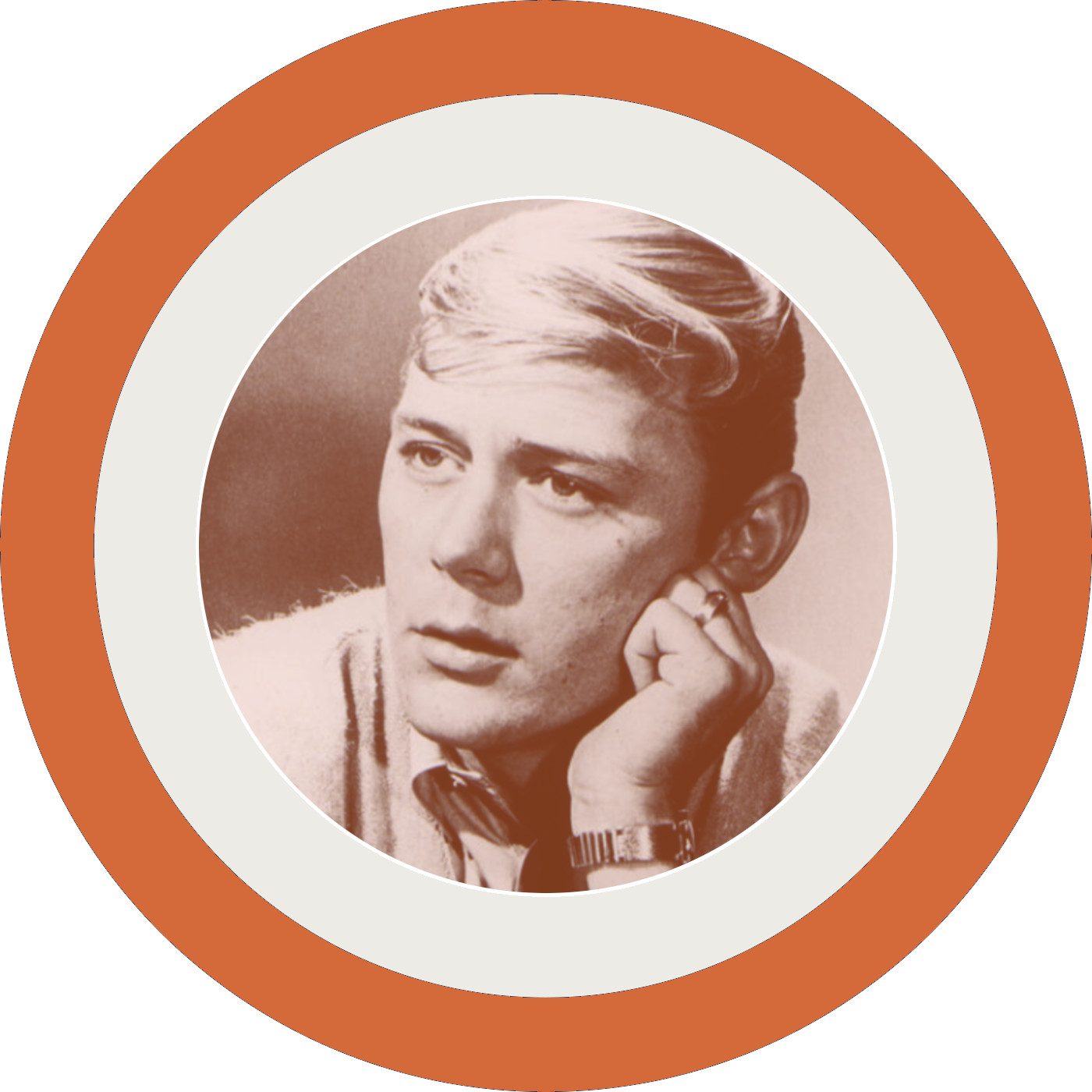
This is the Memory Palace. I'm Nate demaio. The sound of the chains, the creaking door, the lumbering footsteps. They'd recorded all that before Bobby had shown up in the studio right on Sunset Boulevard, a stone's throw from Hollywood High. That location alone still had some magic in it for Bobby Pickett. Only six years since he'd graduated high school himself on the wrong side of the tracks in Boston, not long after his ill fated stint in post war Korea. All kitchen duty and bordellos and blown curfews and court martials. And just months since he'd come out to California to make it to take a chance on his henchmen to the teen bully in a beach party movie, good looks and his fourth best singer in a five man boy band voice. But he was starting to find his footing. Make friends, make connections. Meet that guy at the bar who knows the girl who works on the desk of Some agent who knows this producer who knows this woman who's one of the mistresses to the aging actor he used to play the buttoned up dad on that sitcom and is trying to pull together his next project. That whole hopscotch of happenstance and hustle that can look in the right light, the right number of drinks into the right night like a straight line to stardom. He'd been having a blast, but didn't really have that much to show for it, beyond stories so far. But there he was in an honest to goodness recording studio in Hollywood. He even wore a pork pie hat for the occasion, just like the one Sinatra wore in the photo on the back cover of in the Wee Small Hours of the Morning. Now, make no mistake, he knew he was no Sinatra. But he knew he didn't need to be. Not for this. In a way, he'd been preparing to sing this song for years, since he was a kid walking home with his buddies after some creature double feature some Saturday afternoon or cracking them up with his impressions at Rivia Beach. This wasn't the dream, recording the song, it was a lark. It was a stepping stone, something to do before he landed that pilot, that scene stealing walk on that movie role that would make him a matinee idol. This wasn't the dream, but it was coming. He could feel it. How could he nod as he stepped in front of the mic lock of his blonde hair sneaking out of his Sinatra hat in a real Hollywood studio with a real engineer twisting knobs and flipping switches and a real record producer taking a drag from a cigarette and giving him the thumbs up. Then rolling playback. Then Bobby just goes, I was working.
- [07:08]
Narrator
In the lab late one night when my eyes beheld an eerie nails it.
- [07:15]
Bobby Pickett
One take, two at most.
- [07:18]
Narrator
And suddenly, to my surprise, he did the Monster Mash. It was a graveyard smash. It caught on in a flag. He did the Monster match.
- [07:35]
Bobby Pickett
He knew the song inside and out, writing it. It all come out in a rush. He and his buddy Lenny, just laughing and riffing over and over over a four chord progression they'd heard a million times in a million songs. It was so fun. They'd trade off lines, they pitched on the guest list. The Wolfman, the Zombies, having fun. Dracula would have to bring his son because it would rhyme with fun. Bobby named the band at the Monster Party of the Coffin Bangers. Lenny named the backup singers the Crip Kicker 5. It was so easy. Not because writing a novelty song is easy, but when you start with a premise that's kind of genius, that Dr. Frankenstein had been working in his lab late one night. And the second the monster rises up from his slab, he starts a dance craze. The song writes itself from there. It took him 30 minutes, just half an hour when they could have been doing anything else but decided to write a goofy song about monsters. That's Bobby Pickett doing all the male voices. Dr. Frankenstein, his monster. There's a little bit of Igor in there, I think. And that is him as Dracula, however many centuries old, rising from his coffin to complain about the kids today. And then the producer says, we got it. And they go back into the booth and they listened back over the studio speakers 3 minutes and 12 seconds of catchy pop absurdity. Monster Mash was released on Garpax Records in August of 1962. The B side, the song on the other side of the record was hacked together from outtakes. It's called Monsters Mash Party. It's a different version of the instrumental backing track of Monster Mash with some pointless noodling on a B3 organ and Bobby ad libbing some bits in the various voices. And it is borderline unlistenable. But the A side, this is the part of the story when the record spins. We see our hero mugging and vamping and leaving it all on stage at a honky tonk in Dallas to six bewildered people. But then he's in a vets hall in Lewiston, Maine, and teenage girls are screaming, looking up from the crowd with hearts in their eyes. And then he is lip syncing at a local news show in Bakersfield. And then he is in Hollywood, backed up by a young band called the Beach Boys on October 20th, just in time for Halloween. Monster Mash by Bobby Boris Pickett. The record company threw in the Boris to make it sound spookier, was at the top of the Billboard singles chart. And then everything was happening all at once. American Bandstand commercials. He lands a role in a pilot for a TV show. A second banana to Ricardo Montalban. He goes on game shows. There are groupies, famous friends, wild parties. Someone tells him that Elvis asked one of his boys to get him a copy of the 45. The king had heard people talking about this monster match but hadn't heard it yet. Ultimately said it was the dumbest thing he'd ever listened to. But still, Elvis had heard Bobby's record. Bobby was on his way. He could feel it. The course of his life set by a half an hour spent goofing around in the piano one day with his buddy Lenny, set by a 3 minute and 12 second pop song. This is the part of the story when things start to go wrong. You have likely heard enough tales of Hollywood to have seen it coming. They do have their familiar shapes and rhythms. I am recording this in a room in my house with a view of the Griffith Observatory up there in the Hollywood Hills where James Dean and Natalie Wood and Sal Mineo's characters played out the tragic end of Rebel Without a Cause before each of those actors went off to meet their own tragic ends. Bobby Pickett's story isn't one of those Hollywood tragedies. It doesn't end abruptly with some metaphorical needle scratch, though it felt that way to him as he describes it in his memoir published by a very small press in 2005, just two years before his death of leukemia at the age of 69. As on the day his pilot was set to air, a year after his number one single had made him the hot young thing in town the very day his career was supposed to catch fire. Kennedy got shot and then they preempted his pilot and then they never got around to airing it and he was sure everything was over right then, but instead he had just flipped over to the B side of his career when the bookings slow down and your calls stop getting returned when you start looking for someone to blame. Though usually Bobby Pickett blamed himself. Why did he let them call him Boris? Bobby Pickett was a cool name. Bobby Boris Pickett. What was that? Why did he have to make those faces when he sang now? He needed to do it to make all the monster voices. And yes, granted, where would he be without the monster voices? But still, he looked ridiculous in that first year. He was always touring and Monster Mash wouldn't have broken so big if he hadn't have done all that touring. But still, maybe he should have been trying to write a follow up, a great single that could have showed he was more than a one hit wonder. Instead, he ended up dashing off an LP's worth of monster Mashed Clones, Blood Bank Blues, Graveyard Shift, the Sinister Stomp, Me and My Mummy. It sold okay, but if he was going to spend his time on something that was just going to sell okay, shouldn't he have taken a risk, tried to rebrand himself instead of chasing the same high, instead of recording Monster Holiday just in time for Christmas, there were nights when he'd run into stars. Real ones, people he'd known a bit back when they were all just hustling. Jack Nicholson, Harry Dean Stanton. Once he got backstage after Seeing Bobby Darin in Miami, went up to him and said, remember when we were on the same bill some years back? Sure, sure. The Monster Mash guy, Boris with the funny faces. And yeah, that was him. Probably always would be. And there are worse fates, though it may not always feel that way than being a has been. At least you had been. Not everyone gets to be. And there were times there when life's jukebox flipped the record over just in time, out of nowhere. And Bobby would get a residuals check just when things were getting desperate. And then once in 1973, out of nowhere, he never really figured out why they re released Monster Mash and it took off again. Brought him back to the top 40, peaked at number 10, 11 years later. It was great. He pulled the band back together, played some big shows, tried to get something going again, but never really got it going again. He released a Star Trek parody called Star Trek flopped, but one night soon thereafter, in New York, just as Saturday Night Live was taking off, he saw the cast and its creator, Lorne Michaels, all out for dinner, saw them as fellow travelers, entertainers. And he went up and introduced himself, asked if they had heard Star Trek, and they were not impressed. The Chevy Chase is nice. I always remembered that. Always liked Chevy for that. And there were darker days when he would wonder if his record was ever going to flip back again. He lost a child. He got divorced. One time he and some friends bought a bunch of cocaine in Colombia. Kilos of the stuff would have made hundreds of thousands of dollars if they were able to sell it back in LA as planned. But he lost it all, went home with nothing, Barely made it back alive, or at least not in jail. Then there were years he spent lamenting how his deals were written, how his labels should have been out there making him a fortune on licensing opportunities, but was blowing it. And then monster rap didn't blow up like he'd hoped. It was the 80s. Rap was big, he figured, you know. And so there were years, most years, when he'd just wait for October, when there would be someone who'd want to hear him sing a song, some gig, some appearance, maybe a convention, something to help with the rent nights when he couldn't believe he was singing this same song. 15, 20, 25, 35 years later. 3 minutes and 12 seconds. The half an hour spent goofing around in 1962, that constrained him, it felt like that defined him, that ruined him, it could seem. Some nuts. 3 minutes and 12 seconds, a half hour out of his life, when he could have been doing anything else. But there is a flip side to that story too, and I suggest we let that one spin and keep bringing the arm back over and over. Let it play on repeat. 3 minutes and 12 seconds. A half hour when he could have been doing anything else that gave him an extraordinary life. Not just American Bandstand, not just a number one record, but a lifetime of Octobers when he'd hear himself on the radio while coming home some night on the 101, the windows down, the air starting to finally feel like fall. Or he'd hear it online at the supermarket and the checkout guy would have no idea. Maybe Bobby would tell him, or maybe it would be his secret. It would feel good either way. In those nights, always at night on some carnival midway or headlining some Halloween hayride weekend spooktacular in Western Massachusetts. Say when he'd take the stage and make the faces and say those same old lines and people would love it. He'd be 45 years old or 55. He'd be a 63 year old man who still had it. It could still make him laugh, still make him dance. Kids, their parents, everyone. People who knew all the words. Maybe some people who knew like he did that a lot of Hollywood stories have far worse endings than his. To get to do something you love at 45 or 55 as a 63 year old man, even if you have to wait all year to get to do it, can feel like a miracle. Some nights when he realized that people still loved his song, that he never had to wonder whatever happened to the Transylvania twist? Because every Halloween they do the mash.
- [18:57]
Nate DeMaio
This episode of the Memory palace was written and produced by me, Nate DeMaio in October 2019 with research assistance from Eliza McGraw and engineering assistance from Elizabeth Aubert. The show is a proud member of Radiotopia, a network of individually owned and operated independent listener supported podcasts from prx, a not for profit public media company. You can follow me on Twitter and Facebook @TheMemory palace, on Instagram and Threads, Thememory palace podcast on substack@theMemoryPalacePodcast substack and you can right now purchase the Memory Palace True Short Stories of the Past. My book from Random House. If you're listening to this before November 19, 2024 you can pre order it which would help me tremendously. If you are listening to it after while you are living in a world in which it just be there right at your local bookstore and certainly available with a click or two in all the usual online places. I am extremely proud of this book. It collects favorite stories from the podcast, has new stories that will only appear in the book, and I couldn't be more excited about the COVID and the illustrations and the found photographs. It's a beautiful thing. I really think that a lot of you are really going to love it and want it on your shelf for years to come. Thank you for being a part of this thing with me. Thank you for listening. And there are more stories to come.
- [20:35]
Narrator
Radiotopia from PRX.