Loading summary
Transcript11 lines
- [00:07]
Nate Demeo
Hey, folks, it is Nate. Before we get started, I want to ask you to consider two things. I'm talking to you today at kind.
- [00:14]
Eliza McGraw
Of a pivotal moment in the history.
- [00:16]
Nate Demeo
Of this history project that you know as the Memory Palace. Here's the first one. On November 19th, I have a book coming out, and I am delighted about that. For years, I have wanted to collect the sorts of stories that I do in this podcast in a book, like something that you can hold in your hands, give as a gift, and something that could live on your shelf. As a kid, I grew up loving these old paperback collections of Ripley's Believe it or not, also things like where the Sidewalk Ends, the poetry book by Shel Silverstein. It's collections of short pieces that you could turn to again and again. You could find new things every time you took it off the shelf and maybe find that they connect differently this.
- [00:58]
Eliza McGraw
Time now that you're that little bit.
- [00:59]
Nate Demeo
Older or a little bit changed since last time you read it. And I want to make one of.
- [01:05]
Eliza McGraw
Those books, you know, but for adults.
- [01:08]
Nate Demeo
That might have a little bit of that same magic. And I'm excited now to see that if that magic trick works. And so I am here today, days before its release on November 19, to encourage you to order the book, to help it jump out of the gate with some momentum so other readers might find it, especially people who don't listen to the show like you do. So that is thing one and thing two is deeply related.
- [01:33]
Eliza McGraw
This show, book or no book, successful.
- [01:37]
Nate Demeo
Book or flop, will go on. And it will go on, thanks to listeners like you. Each year, we at Radio Utopia ask you directly to support the work that we do. We are one of the rarest, and I am more convinced all the time in this time of increased media consolidation and corporate nonsense and private equity raiders, that independent media is vital. I look around my industry and I see layoffs and cost cutting at big podcast companies. I see terrific shows getting worse because some corporate suit says they need to come out more often the episodes and more often that the people can make them or at least make them well. Or these shows are just shutting down because some investor needs someone to cut some bottom line to meet second quarter estimates. And that doesn't happen at Radiotopia. At Rodeotopia, what shows sound like, how often they come out, is up to people like me. The people make them. And whether those shows survive and thrive, it's up to you, honestly. Listener support provides the foundation of each of these shows, including mine. It allows me to keep the lights on at the Memory palace, even in times like these when ad revenue is vanishing. It has allowed me in this last stretch, which has been fairly rough, honestly, to wait out the storm. It is thanks literally to listeners like you. So if you would like to join the tiny fraction, the select group, the elite squad who contributes, if you want to do it this time, in this moment, for this show and for the uncertain times here in these United States, it is a perfect time to join them and join us. You can donate to help this show and the work that Radiotopia is doing, the fight we are fighting in this very strange landscape. We are very proud of what we have built together and we would love you to be a part of it. So donate today if you can at Radiotopia fm. Donate and thank you so much.
- [03:43]
Eliza McGraw
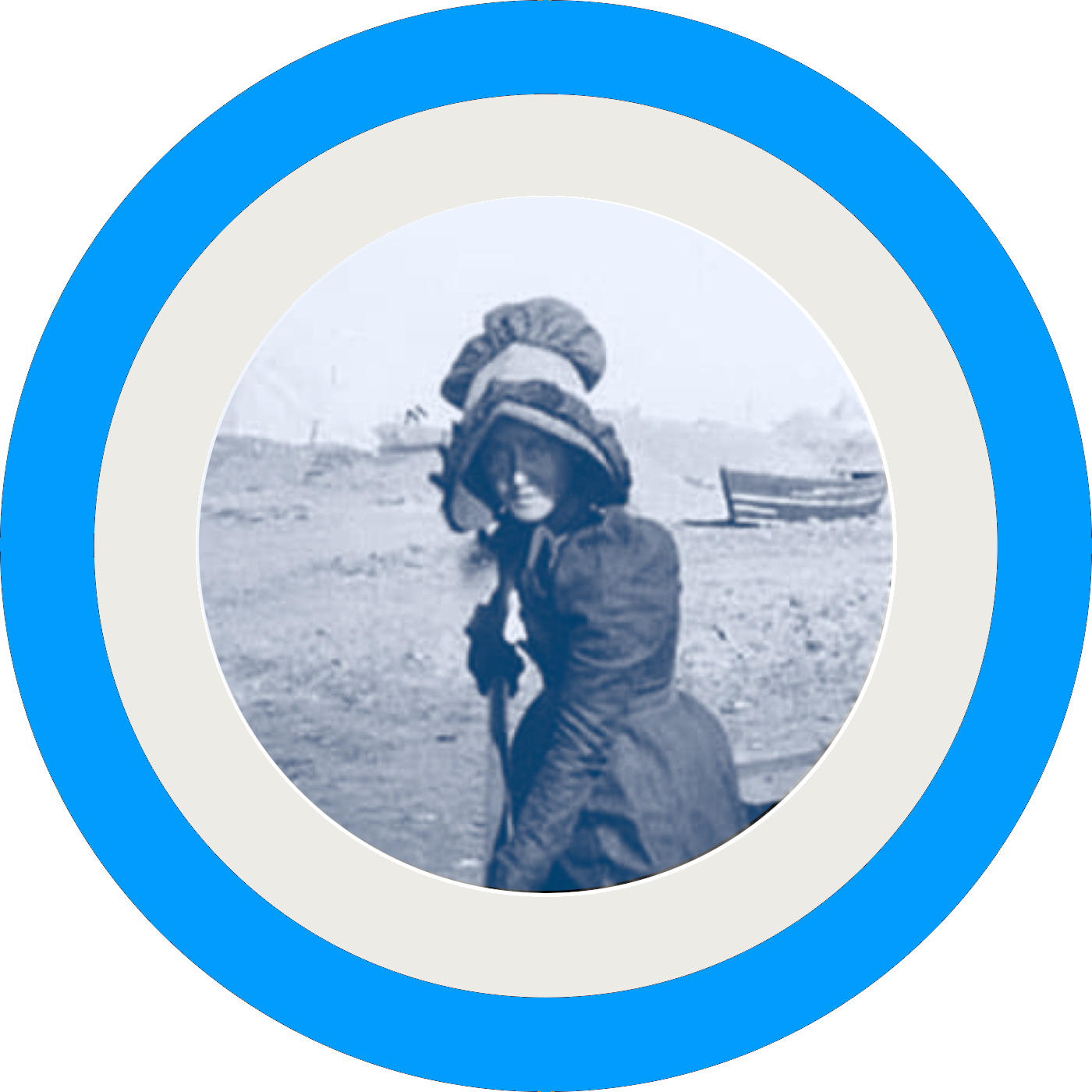
This is the memory palace of Netimeo. She came from Nicaragua. She came from Spanish parents, Spanish nobility, came from the family who had governed Nicaragua since as far back as the 1600s. But how she came to live in Nevada in the late 1870s no one really knows. But there then we find Firminia Sarris. She is just about 40. She is the mother of four. She is quite short, you can see that in an old portrait. But the broad shoulders, you can also see she probably didn't have those when she first arrived. She looked out of place, by all accounts. When she showed up in Virginia city, Nevada, around 1879, it had been a bustling boomtown. But by the time she got there, the boom had been dampened, first by a massive fire, then because the silver mines that had fueled its rise had lost their shimmer. Didn't seem to be much of value left in the hills. But there was Firminius Sarras, looking like no one else they'd seen around there, and Virginia City was used to strangers. It was one of those Western outposts that had drawn so many of the many immigrants who had come to America seeking better lives, German and Dutch and Scottish and Swedish and Chinese, there to try and pull those better lives directly out of the dirt, or to sell shovels or feed or entertain or wash the clothes of those who were. But there weren't a lot of women, and none who dressed like her, prim and pious, in black taffeta, her hide, neck dress and bonnet, a gold cross and a gold chain on her chest, a Spanish lady, as she wrote in a document, perhaps to set right the frequent misperceptions that she was Mexican or Native American. She wanted people to know that she was not who they thought she was, though if she told people about who she actually was, the events in people and places that shaped her, that made her the woman she was at 40, past the midpoint of most lives being lived then in the American West. No one wrote any of that down. So we do not know, don't have much of anything that would even help us guess what combination of lived experience, what balance or imbalance of nature and nurture, of trauma and epiphany. Fickle happenstance or hardened fate had her in Virginia city, Nevada, in 1879, dropping her two youngest children off in an orphanage and dragging her two teenage daughters out through the desert and into the hills. What happened in the hills? We can do our best to guess. We know plenty about the various ways that prospectors plied their trade as they tried to find something of value in them. Thar we can picture picks and shovels, pans to sift for gold in the streams swelled by winter melt, look to weather records, find a week of punishing heat, a stretch of brutal cold, try to hear wind rattling bony pines or otherwise. Imagine ourselves there. Picture this mother and her two daughters wonder at how that goes. How on board could two bored teenagers. It was the 19th century and so much was different. But how could they be otherwise, these two girls who found themselves in the Nevada wilderness with their mother doing something that neither mothers nor girls essentially ever do. What happened in the hills while they looked for a glint of gold, a sliver of silver, took some crumbling rocks and dropped them in a cup with water and ammonia, some flecks of powders they likely bought at some outfit or in town months before and waited to see if the water turned blue. And so they knew there was copper there, knew that some mysterious chemical something had taken place some unknowable time ago and made this rare and shining thing that you could extract and pack and carry and lay out on the counter in front of a man with a monocle and a scale and trade for money in some amount that would in large part dictate how you lived your life. Historians sift through clues about Firminius Saras, find a man in the mining camps in the general area with the same name as the one listed as her one time husband. But they never find that guy anywhere near where she was. Historians can place her prior to her arrival in Virginia City in black taffeta and San Francisco, a bustling metropolis, the gateway, the Golden Gate to the rest of the world. But those historians cannot tell us why in that city of possibility, of economic opportunity, teeming certainly with men of means who Might want to keep company with a Spanish lady. With ships departing just about daily for just about any place a person might want to be, this woman chose holes in hillsides in Nevada. Historians have searched and sifted, but found very little of substance before the time that she did. Firminia Sarras registered her first claims in 1888. Two small copper mines discovered after years spent in the hills. Whatever was happening up there. Eight years documented only in the briefest of references. The marriage of her eldest daughter to a schoolteacher. The birth of Firminia's first son, who had the last name Marshall, though the son of which, among the handful of Mistress Marshall known around the territory, no one can say there are just these tiny specks glinting in some historian's light as they search the past for signs of her. Nothing ever bright enough to illuminate much at all. But in 1888, with her two claims, two modest minds, all hers, the glinting fragments get larger and the light a bit brighter. Money can do that, can raise one's profile, put one's name in various ledgers, in the newspapers, on contracts and deeds to properties the people down the road can look to use to try to piece her story together. Her words were rarely recorded. The ones that were do not say much. And so there is little we can do but spread these shiny fragments out on the counter and see how it all adds up. Let me tell you about the copper Queen, as Firminia Sarras came to be called. Her friends, it seemed, called her Mina. There is a Nevada town called Mina. It is likely named after her. She was a Spanish lady, as she always insisted on being called from Nicaragua, who lived one of those improbable American lives. A wearer of pants when very few women wore pants. A prospector when next to no women were prospectors. A successful prospector in a time and a place after the silver mines ran dry, when that, too was an exceedingly rare thing to be. She was a lover of men, of younger men, it seems. History has her pairing up with one after another. Historians speculate that this might have been in part to protect her claims, both physically. The Wild west was actually wild, and a young man with a gun was useful to have around. And legally, she was married five times, which she may have done to help keep her from getting ripped off by a system that simply did not let women in, didn't let them even try to succeed. And let's not forget that there were likely other reasons she liked having young men as lovers. She did succeed. She made many, many claims in the 35 years, stretching from the day she arrived for whatever reasons in Nevada, whatever combination of elements of experience having made her a person capable of living the life she lived from that day in 1880 until her death in her mid-70s in 1915, there were more successful prospectors than Firminius Aras. There were people who built business empires, snapped up other people's claims, Consolidated holdings held them. Firmini Saras was able to leave her descendants pretty comfortable. A couple of her claims are still mined to this day. But if we look at the shining things she dug up from the ground and try to find the life of Firminius Sarras in there we find a life as we do when we find her for the first time at 40 years old, spent living as she pleased, and a life spent living it up throughout her career as the Copper Queen. Whenever she was given the chance to cash out when the market was high and the offers were good, rather than hoarding her literal treasure, she took the cash and then took herself to San Francisco, Stayed in the finest hotels, bought fancy things, ate fancy food, was entertained by gigolos. That is in the historical record. And I say good for her, though I am pretty sure she wouldn't care at all what any of us thinks this episode of the Memory palace was written and produced by me, Nate Demeo in September of 2024. This show gets research assistance from Eliza McGraw. It is a proud member of Radiotopia, a network of independently owned and operated listener supported podcasts from prx, a not for profit public media company. If you are listening to this right when the episode comes out fall of 2024 then it is a great time to pre order my book, also called the Memory Palace. A collection of beloved stories and new stories, found photos and illustrations that I just found out the other day when I got my first review book list called Ceaselessly Entertaining. Which seems like a good thing to be if you are listening to this later down the road then you could just walk to your local bookstore or go online and get it. If that's true, I hope this book is doing well. And dear listener, a lot of whether this book does do well will hinge upon whether you will become a dear reader or help others who don't know the show. Find the show and find the book. With your help. I think this book, this ceaselessly entertaining book apparently might have a shot of being something in the world. In the meantime, if you want to read tweets or facebook posts of mine, you can find them at Thememory palace or on Instagram and threads at Themory Palace Podcast or on my substack newsletter thememorypalacepodcast.substack.com or you can always drop me a line at nate themorypalace.org I'll talk to you again.
- [15:02]
Nate Demeo
Radiotopia from PRX.