Loading summary
Transcript51 lines
- [00:01]
Nate DiMeo
This episode is brought to you by Magic Spoon.
- [00:04]
Unknown Co-host
Now I'm going to tell you, as a kid, man, I ate a lot of cereal every morning there with the.
- [00:09]
Nate DiMeo
Bowl reading the back of the box.
- [00:11]
Unknown Guest
But as an adult, I kind of dropped off. You know, cereal just isn't really in my routine. You know, I didn't want all the.
- [00:18]
Nate DiMeo
Sugar and also you need protein in the morning.
- [00:20]
Unknown Guest
And then I found Magic Spoon and cereal is back in my life. You can feel like a kid again while still eating like an adult without the sugar and with a ton of protein. And they have also turned their super popular cereal into high protein treats that are light and crispy and taste just like those classic crunchy cereal bars. They are so delicious and they are the perfect on the go food. Every serving of Magic Spoon high protein cereal has crazy macros, 13 grams of protein, 0 grams of sugar and 4 grams of net carbs. They come in so many nostalgic flavors like cocoa and cinnamon roll. I have to say the fruity one pretty much rules. Magic Spoon's high protein treats are crispy, crunchy, airy and an easy way to get 12 grams of protein on the go. They come in mouth watering flavors like marshmallow, which again rules chocolate, peanut butter and dark chocolate. Get $5 off your next order at magicspoon.com memory or look for Magic Spoon on Amazon or in your nearest grocery store. That's magicspoon.com memory for for $5 off.
- [01:26]
Nate DiMeo
This episode of the Memory palace is.
- [01:27]
Unknown Co-host
Brought to you by Progressive Insurance. Fiscally responsible financial geniuses, monetary magicians. These are things people say about drivers who switch their car insurance to Progressive and save hundreds. Visit progressive.com to see if you could save Progressive Casualty Insurance Company and affiliates.
- [01:43]
Unknown Guest
Potential savings will vary.
- [01:45]
Unknown Co-host
Not available in all states or situations.
- [01:51]
Nate DiMeo
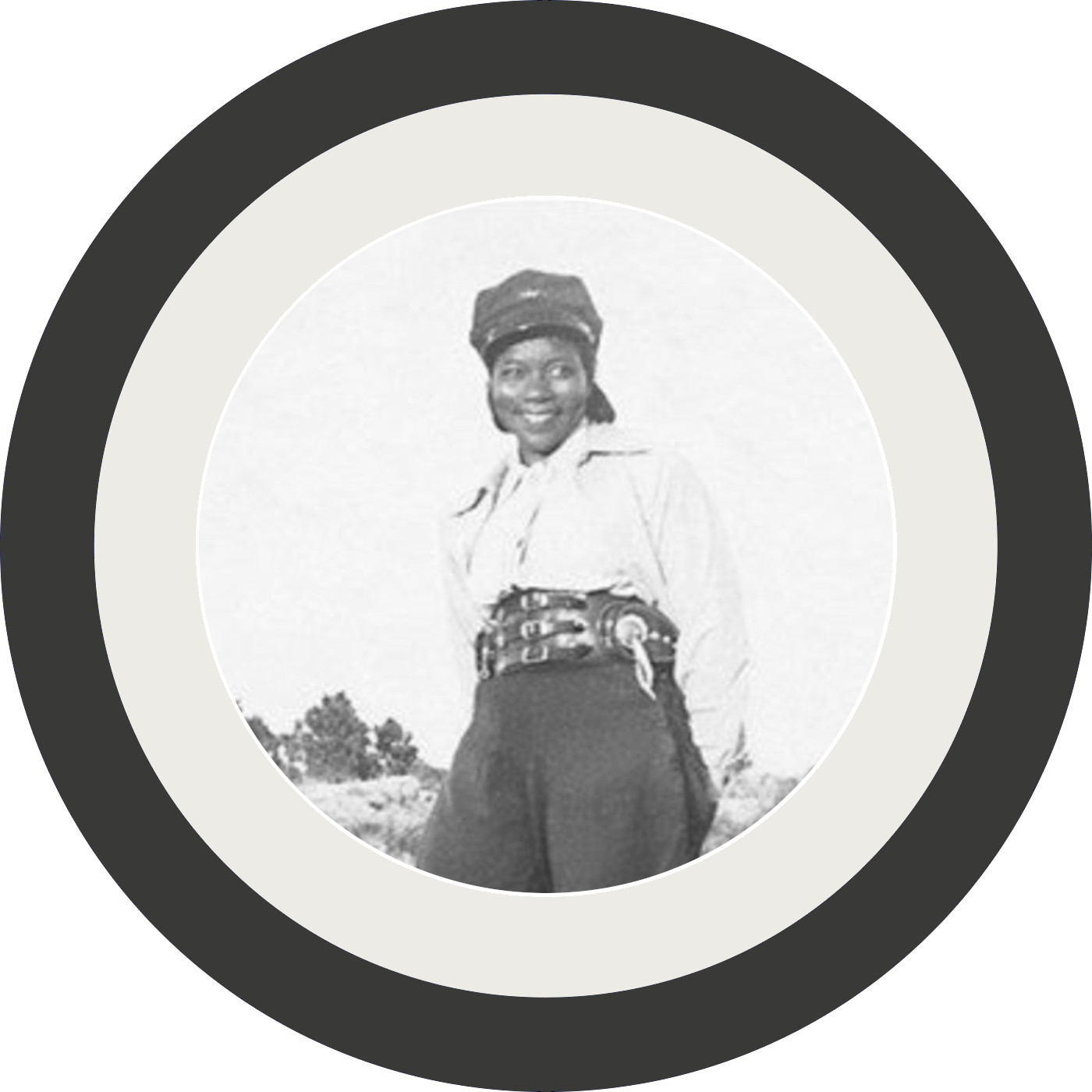
This is the Memory palace. I'm Nate DiMeo. It is the freedom, right? That is the thing about motorcycles. The speed, sure. The agility, of course, but it is the freedom. The person on the bike, on the Harley, on the highway, the cars, the trucks stuck in traffic, but that biker weaving their way through faster toward the open road. The freedom of the open road. The loner, the lone figure in the vastness of the desert landscape. Or up the California coast, the wild Pacific, crashing redwoods. That's the thing. Advertisers know it. A man on a motorcycle, a woman on a motorcycle could sell you a cigarette, vacation, anything that feels like escape from whatever gridlock you have driven your life into. Hollywood knows it has given us Marlon Brando, the wild one. Peter Fonda again and again. A wild angel born to be that way. See him, an easy rider on his chopper with Dennis Hopper American flag helmet. An image once so counterculture cool, but at this point so American, you could probably just swap it in for the flag itself. Freedom itself. It is the freedom. And that is the thing about Bessie Stringfield, the story she would tell. And let me tell you that for most of her life, the story of her young life wasn't always true. But there is freedom in that, too. Making up your own origin story. Bob Dylan did it in a time before the Internet, when it wasn't easy to fact check some stranger's claims. It was a time honored American tradition. So in that tradition, Bessie Stringfield told people she was born in Jamaica to Jamaican parents, but she was probably born to black American parents around 1911 in North Carolina. No one's quite sure where the Jamaica part came from, but that was the story she told. And in that telling and in the way she lived, Bessie wasn't about where she came from. She was about where she was going. And she was always going. Ever since she got her first motorcycle as a teenager. Whether she got it from a kindly Irish woman who took a liking to her or not, whether that kindly Irish woman existed or not, somehow she got a bike, and that was that. Bessie Stringfield spent her life riding through the Jim Crow south, outrunning racists and cops and mobs. Literal angry white mobs who couldn't catch her. Women did not ride motorcycles. Black women really didn't ride motorcycles. It wasn't just unladylike, it was supposed to be impossible to control, to command. Harley Davidson. They are a whole lot of machine. One time a Miami cop wanted to arrest her when he saw her by her bike. Couldn't be hers. She told him she'd prove it. Did tricks he'd never seen. She had learned those tricks out on the road. Stunts she'd perform in small towns, at fairgrounds to pay for gas money, a sandwich at some segregated shop. She'd stay with black families she'd meet on the road or sleep out behind a filling station.
- [05:02]
Unknown Co-host
There were obstacles, of course.
- [05:04]
Nate DiMeo
Any good road trip has its obstacles. You get stuck out in the rain. Sometimes you get a flat, sometimes you walk. But sometimes you sleep out under the stars. Sometimes you get to meet the best people you never would have met otherwise. If you are Bessie Stringfield, sometimes those people get to meet you. She rode all throughout the 1930s, in the 40s, during the war, she got a job as a courier, taking packages from military base to military base all over the country. At one point she had seen so much of it, she decided to see it all. She started to do this thing where she'd take a coin and toss it wherever it landed on the map. That is where she'd go. She became the first black woman to ride in all of the lower 48. Later, there would be trips to Europe, South America. Eventually she settled down in South Florida, though settled down isn't quite right. She'd ride just about every day. Became known as the Motorcycle Queen of Miami until her death at 82 in 1993, 10 years before she was elected into the Motorcycle Riders hall of Fame. Let me say the name Marlon Brando again. Let me conjure Brando. Lets see that leather jacket, that riding cap with the black visor. Cool as hell. Let me invoke Peter Fonda. Steve McQueen making his great escape. The Fonz. Why not Arnold Schwarzenegger, the Terminator, Tom Cruise in a bomber jacket and Ray bans outrunning an F14.
- [06:36]
Unknown Co-host
Iconic.
- [06:38]
Nate DiMeo
Now let's see Bessie Stringfield, a black woman in a white jumpsuit, black boots, a black sash around her waist. A black riding cap with a white brim on a Harley Davidson. Metallic blue leather saddlebags loaded with provisions. Because she's not going to be home for a long while. See her on the open road, whichever road you like, through whichever landscape. She is smiling, she is flying. She can outrun anyone who'd try to stop her. She'd like to see them try.
- [07:10]
Unknown Co-host
Iconic.
- [07:11]
Nate DiMeo
You could probably just swap that out for the American flag. The Freedom is the Thing.
- [07:33]
Unknown Producer
SA.
- [08:18]
Nate DiMeo
This episode of the Memory palace was written.
- [08:20]
Unknown Co-host
And produced by me, Nate DiMeo in February of 2025. This show gets research assistance from Eliza McGraw and Eliza McGraw, my friend who has helped me out on the show for years has a new book out.
- [08:34]
Nate DiMeo
And it is wonderful and it is, I tell you, right on theme for this episode.
- [08:38]
Unknown Co-host
In a way it is called Horses.
- [08:41]
Nate DiMeo
Women in a Partnership that Shaped America. It is a fascinating and wonderfully readable history of the United States told through the stories of trailblazing riders and trainers.
- [08:53]
Unknown Co-host
And performers and their horses.
- [08:55]
Nate DiMeo
It is a perfect gift for the.
- [08:57]
Unknown Co-host
Horse lover, or the history lover, or the reader of women's history, or heck, simply the reader.
- [09:03]
Nate DiMeo
So order Astride Horses.
- [09:05]
Unknown Co-host
Women in a Partnership that Shaped America by Eliza McGraw Wherever you buy your.
- [09:10]
Nate DiMeo
Books, the show is a proud member.
- [09:14]
Unknown Co-host
Of radiotopia, a network of independently owned and operated listener supported podcasts from prx, a not for profit public media company.
- [09:22]
Nate DiMeo
That is out there fighting to support independent artists and media makers in a sea of corporate nonsense.
- [09:29]
Unknown Co-host
I am happy, as always, to be aboard as I like to do from time to time. I want to tell you about a.
- [09:34]
Nate DiMeo
New show that has recently come aboard.
- [09:36]
Unknown Co-host
The good ship Radiotopia. It is called the Recipe from the.
- [09:40]
Nate DiMeo
Rightfully beloved home cooks Kenji Lopez Alt and Deb Perlman.
- [09:44]
Unknown Co-host
In each episode they talk about the.
- [09:47]
Nate DiMeo
Essential ingredients and techniques of a beloved.
- [09:50]
Unknown Co-host
Everyday dish and then the little things.
- [09:51]
Nate DiMeo
That make that dish really sing.
- [09:53]
Unknown Co-host
How to do that in your own kitchen.
- [09:56]
Nate DiMeo
From listening to how it works for.
- [09:57]
Unknown Co-host
Them, you will figure out what works for you.
- [10:00]
Nate DiMeo
It's going to make you better at cooking the food that you like to eat.
- [10:04]
Unknown Co-host
It's called the Recipe. You can learn about it and all the other Radiotopia shows at Radiotopia fm.
- [10:11]
Nate DiMeo
If you want to follow me on.
- [10:12]
Unknown Co-host
Twitter or Facebook, I am Hememory palace there on Instagram and on substack. I am the Memory palace podcast on Blue sky, which I think I've been using a little bit more than anything else. I'm Nate DeMaio as I am in my waking life. If you ever want to write me a note, you can to Nate at the Memory Palace Us. I've recently had some really wonderful email exchanges with listeners. I really do always appreciate hearing from folks and you of course can always buy my book while you're buying Eliza's book. Hers again Eliza McGraw, author of Astride.
- [10:55]
Nate DiMeo
Horses Women in a Partnership that Shaped.
- [10:58]
Unknown Co-host
America is available where you get books.
- [11:01]
Nate DiMeo
As is the Memory Palace True Stories.
- [11:03]
Unknown Co-host
Of the Past available now wherever you buy books and audiobooks. Talk to you guys again.
- [11:22]
Unknown Producer
Radiotopia from PRX.