Loading summary
Transcript7 lines
- [00:02]
Nate DiMeo
This episode of Memory palace is brought to you by Magic Spoon. I was remembering the other day about how before going to college you're on the campus tour and then you get to the dining hall and the tour guide is telling you, but mostly telling your parents about all the variety and all of the healthy options. But then you get to college and pretty much everyone is going to the cereal bar. Pretty much every meal, pretty much every day. Like all of the sugary cereals their parents wouldn't buy for them. Now they are mixing giant bowls of chocolate with fruity cereal and frosted cereal and wondering why the freshman 15 is real.
- [00:36]
Unknown
But now adult you, you can get.
- [00:39]
Nate DiMeo
Some of that back without feeling bad about it. Magic Spoon Makes 0 sugar. High protein cereal in all of those nostalgic flavors you can mix to your heart's desire. You can pretend you're in college again. Heck, they even have cereal protein bars. So if you are running out of the house and you want to pretend that you almost slept through your anthropology midterm, you can just grab those. Get $5 off your next order at magicspoon.com memory or look for Magic Spoon on Amazon or in your nearest grocery store. That's magicspoon.com memory for $5 off.
- [01:16]
Unknown
This episode of Memory palace is brought.
- [01:17]
Nate DiMeo
To you by Acorns. Listen, money cannot buy you happiness. That is just the truth. But it's hard to feel happy consistently if you don't feel secure financially. And for me, as I was growing up, as I was becoming an adult, things started to change for me when I started to play a more active role in building that sense of security. Not just earning the paycheck, but taking care of the money in that paycheck. Looking out for future me and his security, putting that paycheck to work for that guy. It can make all the difference. And Acorns is a terrific way to to do that for yourself and your own life. Acorns is a financial wellness app that helps you take control of your money with simple tools that make it easy to start saving and investing for your future. You don't need to be an expert. Acorns will recommend a diversified portfolio that matches you and your money goals. You don't need to be rich. Acorns let you get started with the spare money you've got right now. Even if all you've got is spare change. Ready to take control of your money? Sign up now and join the over 13 million all time customers who have already saved and invested over $22 billion with Acorns head to acorns.com memory or download the Acorns app to get started. Paid non client endorsement compensation provides incentive to positively promote Acorns tier one compensation provided investing involves risk. Acorns Advisors LLC and SEC registered investment advisor. View important disclosures@acorns.com memory.
- [02:46]
Unknown
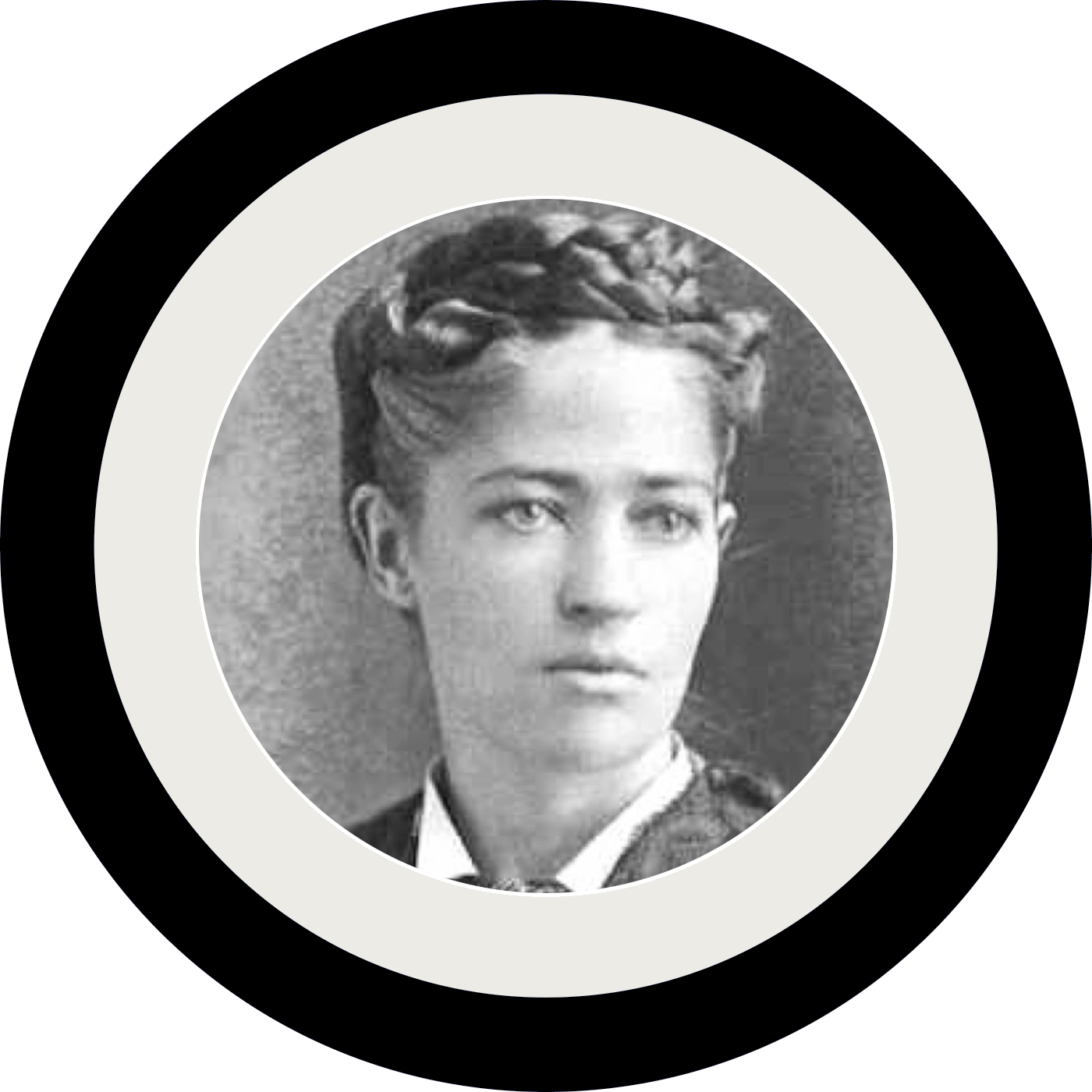
This is the Memory Palace. I'm Nate DiMeo. There were chips in the china and that wasn't going to fly. And let's talk about the china first. Though the dishes themselves didn't seem to have been Josephine's primary concern, it was good china, dating back, it appears, to the 1670s, which even in the latter half of the 1800s when the China was being chipped, made it plenty old. The set was a treasured heirloom in the respected Ohio family into which Josephine Garris was born, a family of successful merchants and craftspeople. Her great grandfather was an important figure in the development of steamships. And so when at 19, Josephine was introduced to a handsome 27 year old man of even greater means, a budding captain of industry, it all seemed quite natural for her to ascend to the role of society wife, a woman of leisure, a thrower of parties, a connoisseur of life's finer things. Upon taking the name of her husband, John Cochran, Josephine added an E to that name because it seems it seemed more European and therefore more appropriate for a woman of her leveled up social class. But there were chips in the china. She would tell the help to be careful. It was delicate, it was old, it was valuable, and it was necessary. The people that were coming to dinner in the Cochran home were the finest in all of Shelbyville, maybe even in all of western central Ohio. The creme de la creme could not be served that creme on chip china. So she would admonish the servants to be careful. They might not understand its value monetary, aesthetic, historic, coming as they did from the humbler classes, but they should be able to understand that delicate things needed to be treated with delicacy. Yet there were chips in the china. One thing about being a person of leisure is, is that you need to fill that free time. So much of our lives are determined not just by how much free time we are afforded, but by what we choose to do with it. When it is granted. Our passions are our fixations, the talents. Those passions and fixations call upon the skills we apply and develop or don't. The things that catch fire, the things that fizzle, the things we fall into like a feather bed or like a tiger trap, the things that take hold of us or that we can't let go. Josephine Cochran couldn't drop the dishes. She would have a dinner party. There'd be food and drink, sparkling conversation. And while she was there, smiling at the wife of a local politician or laughing at a joke made by a man who ran Mills, part of her would be in the kitchen in the future, worrying about what would happen to the china. And then the dinner would end. And instead of retreating to her chambers or stepping into a warm bath drawn by a servant, she would be in the kitchen, watching over her staff as they cleaned and chipped. It just kept happening. Her china. Eventually, she decided she would just do it herself, if you want something done right, yada yada. And she found she could do it. She could, in fact, leave her china clean and intact. But she also found washing dishes sucks. She had never washed dishes before, and having done it, was done with it. And while other women of her time and of her class may have done any number of things, bought an extra set of china or just accepted the occasional chip, then filled their free time when they weren't obsessing about the china, learning French or mastering lawn bowling or reading the sonnets of William Shakespeare, or raising money for the construction of a statue to honor a local hero in the town green, or. Or make tiny figurines of a favorite dog breed in modeling clay or what have you, Josephine Cochran spent her free time inventing the washing machine. Now, a couple of caveats here. There had been attempts at washing machines before, but hers was different and better, and hers really is the progenitor of the ones we have now. She thought of the rack with the slots that each plate slides into, different ways to hold them in place. She also realized that the key to the whole thing was water pressure. It needed to be high, not china chipping high. But she needed a lot of pressure. And the second caveat is less a caveat, I suppose, than a note to tell you that she had assistance when she needed to figure out how to execute her idea. How to make the slots the plates slide into, how to crank up the water pressure, all sorts of things. She was helped by one of her household servants, a handyman construction guy named George Butters. And I say that not to diminish her accomplishments. Think of every genius sculptor or printmaker or conceptual artist who had a cadre of assistants executing their ideas. Think of every lab assistant and postdoc whose names you don't know, whose work was critical to the scientific accomplishments of the historic figures, whose names you do know, I know Elton John throws a big Oscar party. I do not know who sets the tables. I note it, I suppose, to point out that here was a woman with everything it took to be an inventor and an innovator, drive and determination and ideas and creativity. And an example in her great grandfather, the steamship pioneer. She was a woman who had material resources, had servants to lean on, had the approval of her husband to do any of this, which was a rare thing in their day, and who had the time, the free time, thanks to her position. But her position would change right around the time that she invented the dishwasher, right when she should have been in the thrall of the thrill of it all. Her husband got sick and soon she was a widow. And she wasn't destitute. But her circumstances changed. She needed money more than she had before, and she needed something new to organize her life around now that her dinner party days were over. But she had already invented that. Josephine Cochran spent the rest of her life as a businesswoman. She patented her dishwasher in 1886, becoming one of the first women to have her name and her name alone on a US Patent. The next year, she started the Garrus Cochran Dishwashing Company out of a shed in Shelbyville. She realized she wouldn't be successful for a while, selling the machines to homeowners. Very few of them had the requisite hot roof, running water, but hotels did, large restaurants, and she found her market. She won a prize at the 1893 World's Fair, where she had been the only female inventor in the competition. She was a tireless saleswoman. She had to deal with all manner of sexism and misogyny. She found it nearly impossible to get loans and big capital investments. But she knew success every year until her death at the age of 74 in 1913. Two years later, the company she left behind was acquired by a company that eventually became KitchenAid, which was acquired by Whirlpool. And the machine she left behind eventually became what the lucky among us now use instead of spending forever washing dishes, which, almost a century and a half later, still pretty much sucks. And we can thank her and think of her and then go off to figure out what to do with that extra free. This episode of the Memory palace was written and produced by me, Nate DiMeo in March 2025. The show gets research assistance from Eliza McGraw, author of the new book Horses, Women and the Partnership that Shaped America. This show is a proud member of radiotopia, a network of independent listener supported podcasts from prx, a not for profit public media company. I want to take a second to welcome a new member of the Radiotopia family Never Post a new show about the Internet. This is a big ambitious program, really impressive and really good. Has fantastic sound production, a revolving cast of contributors all looking at the Internet and our lives on the Internet and our lives with the Internet from all angles. I love a big ambitious show with fantastic production and think you might too. Go to Radiotopia FM to find out more about Never Post and all the other Radiotopia shows. I'm happy to announce that I'm about to hit the road in April with a Southern tour. A deep, deep Southern book tour. I've got dates in San Antonio and Houston and Gainesville, Florida in Montgomery, Alabama, Oxford, Mississippi and New Orleans. I'm very, very excited to get down there. Not only have I never done a Memory palace event in any of these cities, I've never even foot in Alabama or Mississippi. This will leave only North Dakota and Montana as the lower 48 states that I've never been to. If you want information about those dates, you can go to themorypalace Us events. I would love to see you there. Please help me spread the word. Or follow me on Twitter and Facebook. Hememory palace on bluesky at date Demeo on Instagram and substack he Memory palace podcast and you can always drop me a line at Nate thememorypalace Us. I'll talk to you soon.
- [12:35]
Nate DiMeo
Radiotopia from PRX.