Loading summary
Transcript1 lines
- [00:02]
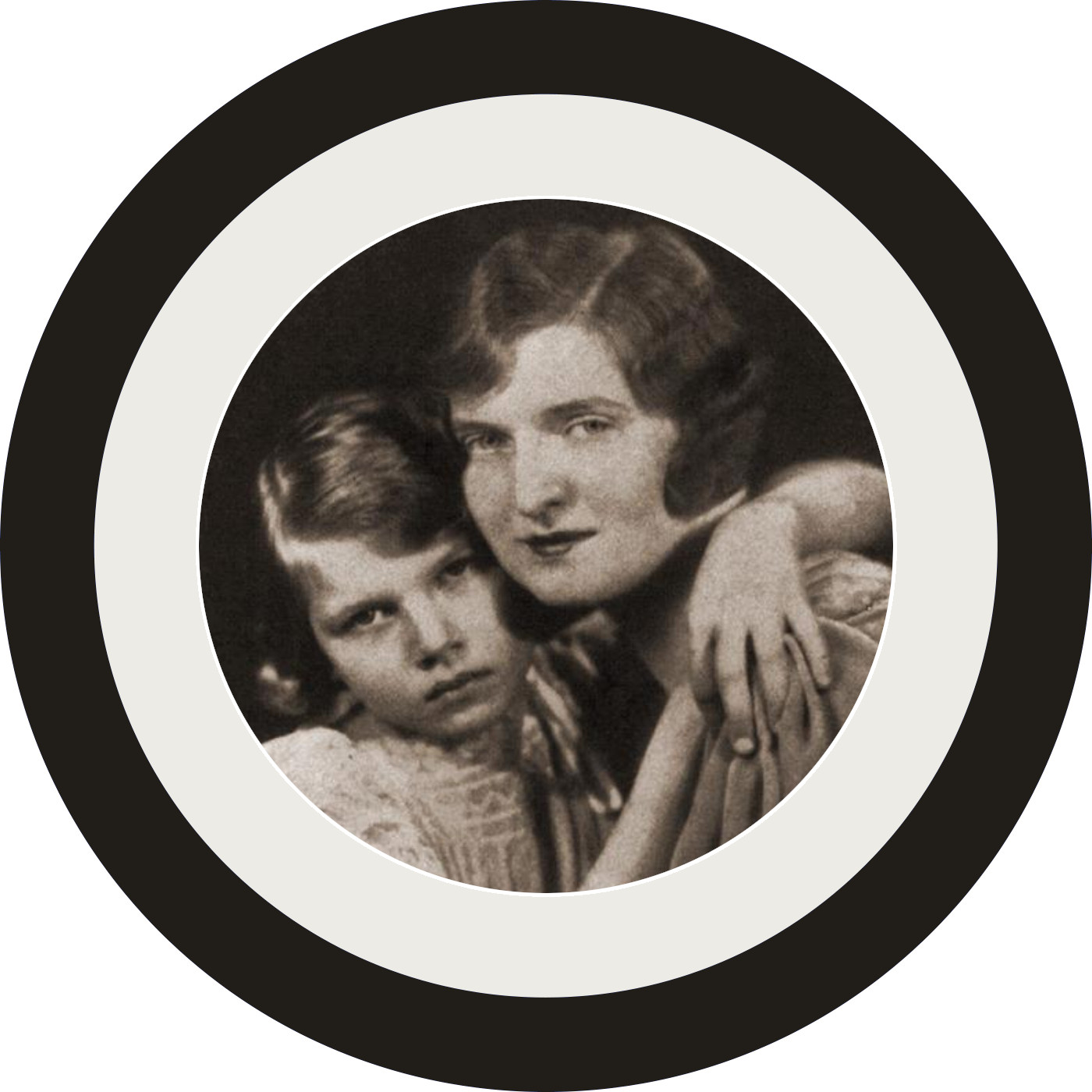
Nate DiMeo
This episode of Memory palace is brought to you by Progressive Insurance. You chose to hit play on this podcast today. Smart Choice make another smart choice with Auto Quote Explorer to compare rates from multiple car insurance companies all at once. Try it@progressive.com Progressive Casualty Insurance Company and affiliates not available in all states or situations. Prices vary based on how you buy. This is the Memory Palace. Hello, I'm Nate dimeo. There is the body. How one lives in that body. How that body helps one perceive the world. How one forms memories based on those perceptions. And there are stories, the ones we tell ourselves about ourselves to process and form and reinforce those memories and perceptions. And the ones we tell to others for much the same reasons. Nan Britton said she told her story to make happier conditions for motherhood and childhood in these United States of America. And she explained in the foreword to her 1927 book, she told it to try to push forward a cause, the legal and social recognition of all children born out of wedlock. Her own child, Elizabeth, is pictured on the first page of that book, a studio photograph, a blonde girl in a white dress, bobbed hair, straight bangs, a strong brow. She is maybe 3 years old in the picture. There is something serious, maybe even wary, in her expression, as though she somehow had a sense of the trials that awaited her, though of course she couldn't. But her mother did. She says so right there in the book when she writes that she was well aware that in telling her story she would be introducing the none too kindly world to her child. But she thought the world should know her because Elizabeth was the president's daughter. It was the idea of him at first. In 1910, the year she turned 14, Nan Britton would walk home from school in Marion, Ohio, with her teacher, and she listened to Ms. Harding talk about her older brother. Lots of people talked about him there in Marion. It was a small town, everyone knew everyone. So every once in a while word would filter down to Nan about Warren Harding, an apparent go getter, really going places. And Nan's teacher was very proud of her brother and the places he was trying to go. And so she'd go on and on about him. And when Nan heard one day that Ms. Harding's brother was running for governor, why, that was just about the best thing she'd ever heard. At 14, to Nan Britton, a hometown hero who was running for governor, was just about the apotheosis of American manhood. And so Warren Gamaliel Harding became her Timothee Chalamet, or one of those dudes from BTS or Nick Jonas or Jonathan Taylor Thomas or Davy Jones or Elvis. Pick your dreamboat. She put pictures of him up on her bedroom wall. She talked about him all the time, which annoyed her parents. Her mom would point out Harding's negative traits. He'd chew tobacco. He was 31 years her senior. But ultimately her mom and dad thought what was the harm? A teenage crush. A weird one maybe, but those happen. It was a phase. Except it wasn't. There is a copy of one of those pictures of Warren G. Harding that was once on Nan Britton's wall. It's printed in her book. She cut it out with scissors from a poster from his first gubernatorial campaign. And what to say about it. If you know what Warren G. Harding looks like in his various presidential portraits, just lop off about a decade. Hair's a little fuller, face a little less. And if you don't know what he looks like, he looks like a guy in a campaign poster in 1910. Receding hairline, heavy brow, Roman nose. Face that looks a little perturbed. Like the put upon headmaster of an elite east coast boarding school. Regrets accepting the position years ago and leaving the classics behind. He is no Chalamet, but who am I to say it is not 1910. I am not Nam Britton. Perception is different. Bodies are different. The story she told about hers is all butterflies. The thought of Warren G. Harding made her go wobbly. The thought of Warren G. Harding started to make her parents a little shaky too. It is one thing to love Nick Jonas in 2005, fresh off of Camp Rock and start a Tumblr page. Or to be a kid named, say, Tanya Terwilliger tuning out her Spanish teacher in 1997 because she's wondering if she should be Tanya Terwilliger Taylor Thomas or if she'd just take JTT's last name when they got married. The chances that any given teen would meet their teen idol are very low. But Marion, Ohio was a small town in 1910 and Mr. And Mrs. Britton got concerned when they found out that their 14 year old was arranging her schedule so she might be in the right place at the right time. When Harding's car, she knew it on site. She'd memorized the license plate. Might pass through the intersection of Mount Vernon Avenue and Brightwood Drive. The intersection of cute crush and concerning obsession. One day her father bumped into Harding. He told Nan about it. Later that night the two men rode in a streetcar together clear across town. Talked the whole time. Her dad told candidate Harding all about his daughter's Silly puppy love phase. Harding suggested that he meet with the girl. Nan would see that he was just a normal guy, a much older one at that, and the spell would be broken. And that would be that, he would later say. It is said that they met in his office, they had a brief pleasant chat in which he conveyed the message that one day before too long, she would meet a nice boy her own age who would prove to be the man of her dreams and he sent her on her way. Maybe that was true. Maybe their first meeting happened just the way Warren G. Harding said it did. But Warren G. Harding said a lot of stuff that wasn't true. Harding was president for two years and change from March of 1921 until his death in San Francisco in August of 1923, probably of a heart attack, maybe a stroke. There was no autopsy, but it was somewhere in that zone. His presidency is consistently ranked by historians as one of the worst. A short tenure, a slim resume of marginal accomplishments. But more importantly, his administration was wracked with scandal after scandal. There was corruption and graft, basically up and down. And if the financial scandals weren't sexy enough, there was plenty of sex. Historians don't entirely agree on the number of extramarital affairs he had during his 31 year marriage to Florence Harding, but he has been credibly linked to 10 different women. Could have been more. He not only has a well documented pattern of undertaking sexual relationships with women who were not his wife, but he and his wife have a well documented pattern of going to great lengths to hide those liaisons, of paying people off, of literally destroying evidence, usually in the form of love letters. Harding love love letters. So much so that the one correspondence that seems to have escaped destruction, the one between he and Carrie Fulton Phillips, the the wife of a longtime friend, runs more than 8,000 letters long sent over the course of a decade. They came to light after Phillips death in 1960. You can read them online if that is your thing. Extramarital affairs. That was Warren G. Harding's thing. Washington whispered about it all the time. At one point he was so concerned that word was going to come out about his many affairs that he decided to get ahead of the story. He convened a closed door meeting with members of the D.C. press corps and came clean. He gave a quote to the attended members of the Clubby Boys Clubby Cohort of Washington political reporters that one of them kept in their notebooks until after the President's death. It's a good thing I'm not a woman, the President said. I would always be pregnant. I can't say no. Nan Britton said things went down differently. Her book goes into detail, extensive detail, about the many years she spent thinking about and then knowing and then sleeping with Warren G. Harding. There is no mention of a meeting in his office arranged between him and her father, with Harding charming and proper, proverbially patting her on the head and sending her on her way. Her story goes this way. She had spent months following him around or waiting around, hoping he'd drive by, standing on the sidewalk below his office, watching him through the second story window as he worked at his desk, and then meeting him for the first time one evening at sunset. Summer. She was walking down the sidewalk swinging a pail of milk she had just fetched from a neighbor, certainly the quintessence of what one does with a pail of milk, and she stopped to pick a wildflower and lo, there was Harding. The heart throb. Her heart throbbed. She looked up. He smiled, he tipped his hat gallantly. He said good evening. And she was just done for. And though you might leave that scene recounted in chapter six of her book, the President's Daughter with its wildflowers, with its chivalrous decorum with its on the nose pail of fresh milk, the very definition of a high school English class example of symbolism or re virginal purity, thinking this is kind of sweet. I will direct you farther along in the text, several chapters later, to the next meeting between Nan Britton and Warren Harding. She is 19 years old, a recent secretarial school graduate living in New York City who sends then Senator Harding. His was a rapid political rise, a letter you might not remember me, but you met my father, yada yada. Do you know of a job for an eager young woman willing to move to Washington D.C. and he does remember her. The job. Maybe he'd see what he could do. But he was going to be in Manhattan soon. Perhaps they could meet. And of course they could. And when they do, Harding doesn't just say he remembers her, remembers passing her on the street as she paused to pick a flower growing from a crack in the sidewalk. He tells her that since that evening, since he then a 45 year old man passing a then 14 year old child on the street had been filled with the desire to possess her. Nan Britton's book suggests that this is just about the most romantic thing a middle aged man could say to a 19 year old about her 14 year old self. But this is not her book. So I am free to say that this middle aged man profoundly Disagrees. I will also say that they consummated their relationship in a New York hotel room overlooking Broadway about a year later. The senator was 51. Nan was 20. She writes, I became Mr. Harding's bride, which he called me on that day. I will also say that afterward their hotel room was raided by the vice squad police, presumably tipped off by the front desk, just busted into the room while they were lounging around in bed. They were going to get taken downtown. But then one of the cops noticed gold lettering inside the senator's hat. Said WG Harding. Was he that WG Harding? He was. Then there was no problem. They accepted a $20 bribe, an amount that Senator Harding thought was a total steal, and off they went. And their relationship went on more or less that way for the next several years. Clandestine encounters in hotel rooms in New York and then More frequently in D.C. she became pregnant in 1919. Her best guess was that it happened in his Senate office. Harding told her she should take something called Humphrey's eleven, a homeopathic abortion pill with a spotty record for results. But she refused. She couldn't see how it would ever work on her if she wanted the baby so badly. Elizabeth was born later that year. Harding quietly paid for a mother and daughter to live in a house in New Jersey. By 1922, her secret child support was coming in envelopes, hand delivered by Secret Service agents as part of their duties working for the new president. The Secret Service did other things, too. When Nan would be brought to the presidential mansion, they would keep watch to make sure no one walked into a coat closet off the Oval Office. She wrote that she and Harding repaired there many times in the course of my visit to the White House. And in the darkness of a space no more than 5ft square, the president and his adoring sweetheart made love. The president didn't meet his daughter, though. Didn't want to. One day, Nan surprised him, Told him that if he just stepped to his office window, he could look out across the lawn to Lafayette Park. He could see Elizabeth sitting on a bench there. He didn't. He didn't move. He didn't look. Before long, he was dead. Nan Britton had heard about Harding, about his many mistresses, but she never believed it. There was no way that someone who looked at her the way he did, who said the things he said, who felt like he did about her, could run around with other women. She saw it in his eyes, heard it in the tone of his voice, felt it in his touch. She felt was the story she told Herself. It was the story she believed he had told her he would take care of her and their child forever, no matter what. But he didn't. He left them nothing in his will. She filed a lawsuit. But when asked to provide evidence of her affair, she had none. She had burned all of it, the love letters, because he'd asked her to. And so she put out a book, which was no small feat today. This would be easy. This is a time of the tell all. This is a time of selling one's story, of selling one's life rights, of multiple competing documentaries and multiple competing streaming platforms or simply posting through it. But no one had kissed and told before. No one had told all before, had leaned into a scandal in this way that is so familiar now. She was rejected by every publisher. She had nearly had the plates for the printing press destroyed by the vice squad after they confiscated them. It took a judge's ruling to get them back. $20 bribe wasn't going to do it this time. So she found a way to self publish. Articles came out and condemned her. Called her a liar and a pervert. Called the book pornographic. A congressman from Arkansas introduced a failed bill to ban it. Called it a blast from hell. But the writer, H.L. mencken, writing in the Baltimore sun, called it cloying and sappy and cringy. But believable. He said he wasn't interested in her overly romantic account of Warren's mushy lovemaking, but he was deeply interested in the way that so many people in and out of the government were working to suppress her free speech. Especially considering that she was speaking out about a president that Mencken had declared to be the worst head of state in modern history. The review gave the book an air of legitimacy. Bookstores couldn't keep it on the shelves. People had never read anything like it before. She sold 110,000 copies. Her critics decried it as lascivious exploitation at best at slander and lying for profit at worst. Said she was only in it for herself. But she said otherwise right there in the introduction. She wanted to help unwed mothers and children born out of wedlock. That's what she wrote. And the historical record says she tried to do just that. She used a significant part of the proceeds from the book to start a foundation. They had meetings. They took minutes. They sought statistical data on out of wedlock births. They wrote to prominent figures. Eleanor Roosevelt, Clarence Darrow. Their assistance in pushing forward a cause that should, by all rights be right up their alleys. But that didn't go anywhere Though other charitable efforts have achieved less, while not having been burdened by having a national pariah at its and the rest of the money went to good use. She put food on her table, she paid rent, traded her and her daughter's privacy for their financial security. They moved several times. There are some suggesting that they had to as their infamy followed them, but we don't entirely know. They chose not to talk to the public. Nan Even when reporters came to her after the letters of Harding's other mistress came to light in the early 60s, even when given the chance to claim vindication, she just kept living her life. She died at the age of 94 on the eve of the Clinton administration. She died quietly with no publicity. Good for her. Elizabeth married a building manager in Chicago, had kids, lived a normal middle class life. Could thank her mom and her mom's book for a lot of that. Every now and then a reporter would find her, especially after the Clinton and Lewinsky scandal, wanted to know how she saw it. Historians would come to her wanting her help in proving that her mother's story was true. She'd send them on her way. She died about a decade before a project that used DNA analysis proved definitively that she was the President's daughter. Proved that her mom had told her the truth. But she never needed proof. This episode of the Memory palace was written and produced by me, Nate DiMeo in July of 2025. This show gets research assistance from Eliza McGraw. It is a proud, proud member of Radiotopia, a network of independently owned and operated podcasts from PRX, a not for profit public media company. I was thinking the other day about how this medium that I work in, the business that I'm part of, it just, it just kind of always moves forward. You know, it's like what's the new miniseries that people are listening to? What's the new true crime thing? What's the. What's the daily news that I'm listening to in the daily. And it is too rare that people go back and celebrate great work. And I was thinking about a series by my colleague Caitlin Prest in her show the Heart that she did some years back, a series she called no. It was produced back on the cusp of the MeToo movement and the Harvey Weinstein trial and listening back to it now and you have a great chance to do that as it had just been re released. I am struck by how not just pressing but how vital it was and remains. So you can check out the Heart and all the other shows from RadioTopia at RadioTopia FM. If you ever want to drop me a line, you can do so@natehemmorypalace us. I also have to apologize. I'm usually quite good at seeing and responding to messages, but I just noticed that some change in my spam filter meant that a bunch of notes in the last month or so went in the wrong folder and I'm just looking at them now. So I apologize. But normally, and going forward, that's not a problem. You can also follow me on social media very, very occasionally on Twitter Hememory palace, slightly less occasionally on Instagram and threads at the Memory palace podcast and on bluesky Aiddemayo. Talk to you guys again. Radiotopia from PRX.