Loading summary
Transcript28 lines
- [00:02]
A
This episode of Memory palace is brought to you by Express VPN. Using the Internet without ExpressVPN is like taking every phone call on speaker. Do you want everyone to hear everything when your doctor or your bank or.
- [00:15]
B
The co worker with whom you have.
- [00:16]
A
Been plotting to take down your manager is on the other line? No, you do not. Express VPN keeps what you do on the Internet private. Everywhere you go online, it is run through some server that is owned by someone who is legally obligated to sell that information about where you go and what you're doing there to advertisers. And who wants that? I do not. That's why I use ExpressVPN. And when you use ExpressVPN, 100% of what you are doing gets rerouted to go through their secure, encrypted servers. Real Internet privacy that is easy to achieve. Just fire up the app and click a single button and you are in the clear. And now you can do this at their lowest price ever. With plans Starting at just $3.49 a month, I'm about to head overseas. And who knows what sort of shoddy Internet security I am going to encounter? Well, actually I do know none thanks to ExpressVPN, which works in 105 countries, including where I'm going, just like it does at home in the U.S. secure your online data today by visiting expressvpn.com memory that's E X P-R-E-S-S V P-N.com MEM to find out how you can get up to four extra months. Expressvpn.com memory this episode of the Memory.
- [01:35]
B
Palace is brought to you by Quince so I live in Los Angeles where.
- [01:38]
A
Winter means slightly chilly, but I am.
- [01:41]
B
Heading to colder climes for a trip to a place with real winter. And as I was looking in my.
- [01:46]
A
Closet recently and finding metaphoric tank tops and flip flops, I was thinking to.
- [01:50]
B
Myself that the thing about living in.
- [01:52]
A
LA is that you never have that nice wool coat that everyone on the.
- [01:55]
B
East coast seems to have because it.
- [01:57]
A
Is never worth it to buy one.
- [01:59]
B
You're only gonna need it for a.
- [02:00]
A
Week here and there.
- [02:01]
B
But here's the thing.
- [02:03]
A
At Quint's, which is my go to spot for high quality great looking staples. I just got a fantastic wool overcoat at a price that not only would be worth it even if I were just gonna be using it for a.
- [02:14]
B
Week is a veritable steal because its.
- [02:17]
A
Classic styling means that it is going to look great whenever the next time I'm in real winter winds up being and the quality means that it's going.
- [02:24]
B
To look just as great as it does today.
- [02:26]
A
And if you want high quality staples.
- [02:27]
B
That you can build your wardrobe around.
- [02:29]
A
At a price that is 50 to 70% less than other retailers, this is a real thing and it is ad copy.
- [02:34]
B
But really it feels like so much.
- [02:36]
A
More when you factor in the million bucks that you are going to look like. Then you want to go to Quint's.
- [02:41]
B
Refresh your wardrobe with quint.
- [02:43]
A
Go to quince.commemory for free shipping on your order and 365 day returns. Now available in Canada too. That's Q U I n c e.com memory free shipping and 365 day returns. Quince.com memory.
- [03:02]
B
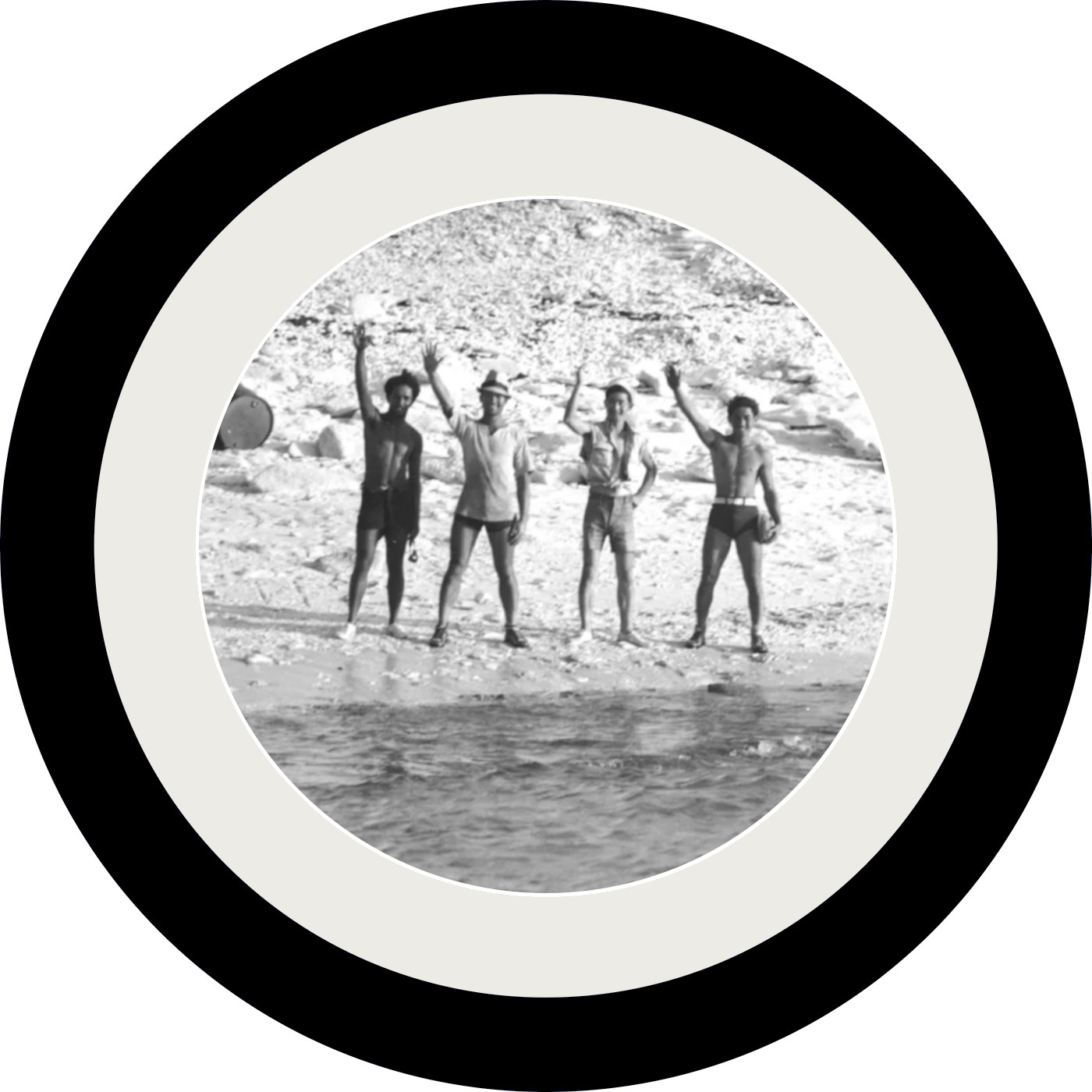
This is the Memory Palace. I'm Nate dimeo. They were called into the principal's office and asked if they wanted to go on an adventure. They probably knew they weren't going to get in trouble. They those first boys, the six of them, they were good kids, some of the best students and best athletes at the best boys high school in Honolulu. They were just about to graduate, on their way to big things, going places in their lives. That was why one's parents agreed to send you away from home to attend the Kamehameha School, to seek opportunity. And here was one seeking them. Their principal explained that he had been visited by an envoy from the United States government. It was organizing expeditions to a handful of islands in the South Pacific. They were tiny. They were deserted. They were among the most remote places on Earth, smack dab halfway between Hawaii and Australia. There were scientists, it seemed, who wanted to study them all, overseen by a renowned naturalist from Johns Hopkins, a man who'd been alongside Admiral Byrd during his first and second expeditions to Antarctica and who had recently been in the news there in the middle of the Depression for leading an expedition to the Gobi Desert that had brought back dinosaur eggs. This new expedition needed some assistance, so why not graduating seniors from the illustrious Kamehameha School, young men who not only excelled academically but who were also children of the Pacific Islands, kids who had grown up fishing and swimming and camping, who were athletic and hardy and resourceful. The principal made it clear this was a great honor for the school, for the boys, an opportunity they simply could not pass up, though why would they want to? And so In March of 1935, a naval ship manned by 12 crew members and six recent graduates of Kamehamehai set out from Honolulu Harbor. A week at sea, 1600 miles in the land of no land, just rolling hills of rolling ocean, sometimes sprawling plains, sometimes canyons cleaving the landless landscape, sometimes mountains rising and roaring and then breaking like a spell. And then, land ho. The cry came up from the crew as they approached the first of three islands. But what was this land? It was hardly land at all. A white beige bump there, barely at the edge of the horizon. But as they drew closer, it didn't really seem to grow any larger. It was like spotting a boat in the distance, drawn closer, but then just more ocean spreading out beyond it, off to cascade down the jagged edge of the world. The first stop was Jarvis island. At only 1.7 square miles, it was twice the size of the other two islands on the itinerary. Howland and Baker. When they got off the boat and explored, they quickly discovered that there was nothing really to explore. 1.7 square miles is nothing. From farthest point to farthest point, it took you only 20 minutes to walk across. And these weren't Hawaiian islands. Weren't the islands that they knew lush and rainbowed? Jarvis, like Howland, like Baker, were deserted desert islands. No people, no water, no streams or springs. There were no trees. There was little shade. There were no exotic animals, just birds and mice living among whatever grass and scrub and shrubs that had managed to take root among the rocks and the sand. And as they explored or wandered around for a bit, same thing. There wasn't a single moment when they couldn't turn and see other people on the island. There wasn't enough distance to allow them to disappear into the distance, nor could one descend out of view over yonder hill when there were no hills. And In April of 1935, on each of these three islands, in the precise center of absolutely nowhere, two Hawaiian kids and four Navy men were left with tents, some meager supplies, and enough fresh water to last them the next few months until the ship came back for them. Their instructions were to set up camp, to keep a precise log of weather conditions, to collect specimens of the scant flora and fauna, to plant coconut palms, taro, and other Polynesian staples they brought with them, and to survive. The boys knew how to do that. They had grown up fishing and foraging, could hunt and pluck a bird and make a fire to cook it over. The sailors knew all that, too. They had been trained, had read their manuals. They could do it, but they kind of hated doing it. At least there, when one enlists in the Navy, when one lives in, say.
- [08:06]
A
The Texas hill country or California's Central.
- [08:08]
B
Valley or the the pine scented woods of southeastern Vermont, wherever one could be forgiven for resenting having been sent to this tiny desert island when you had just been stationed in Oahu. And so later that summer, that summer spent a stone's throw away from the equator, on an island with no water and no shade, when a naval vessel appeared in the horizon, more or less on schedule, which was a relief. They had no radio, no way to communicate, so they'd just been holding on hope that their ship would come in. The three military men were delighted to hop on board and put their time on this desert island behind them. The two Hawaiian kids stayed behind. The captain of the relief ship had come with orders someone had to stay in the island. And with those orders came the ability to order the sailors to do just that. But the boys volunteered. While the sailors had been suffering in the shadeless hill, less entertainmentless isolation of Jarvis and Howland and Baker, the young graduates of Kamehameha High School were having the time of their lives fishing, swimming, making surfboards out of discarded crates, doing push ups, singing songs, finding a really cool stick, running on the beach, looking up at the stars, grabbing a rag, figuring out some way to tie it into a tight little ball that they'd never quite be able to replicate again, but was super fun to throw around for a while until it kind of unraveled. They were kids. They'd grown up in rural Hawaii in the 1920s and 30s, kids of Pineapple farmers, weavers and fishermen. They didn't just know how to live this way. They knew it was kind of life. It was better by far than that that had been led by a previous generation of Hawaiian men who had been brought to those Same Islands some 50 years before. In the 1870s, 1880s, crews of men sailed there as part of a rush for guano. All over the world, the great powers of Europe, the emerging ones of the Americas, scoured the seas to find and occasionally fight over islands devoid of humans, but filled with birds. Birds who, over the centuries of nesting and resting, covered those islands with thick coats of feces, nitrogen rich feces that could, if harvested, be brought back to places where humans did live to fertilize its fields and increase crop yields, to feed growing human populations. So these men were put to that task. It was as disgusting and as grueling as you might allow yourself to imagine. The work lasted only as long as the guano did. It took about a decade to harvest it all. It is likely that no one set foot on those three islands until the boys of Kamehameha High school did from 1935 to 1942. 135 young men just like these first six who had been called to the principal's office. All Hawaiians at first, recent graduates, and then as time went on, high school seniors and some juniors were sent from Honolulu to these far flung desert islands in teams of two and later four. They would live there in shifts, typically for three months at a time. Though often they would choose to extend their stay, stick around for another tour of duty. Two of the kids in that first expedition stayed on Jarvis island for nine months straight. They got paid pretty well, actually. Three bucks a day, which was about 20% more than most of their fathers were earning every day on pineapple plantations. It became a particularly prestigious thing at the school. You wanted to be chosen, you wanted to go and test your mettle out there in the sun like those other guys had done. They looked up to them, so they followed in their footsteps. They logged the weather, they collected biological samples, they planted a garden with limited success. They built semi permanent shelters, built a makeshift lighthouse on one of the islands radio towers, and they did all the rest on those islands where there was nothing. They swam, surfed, they fished. There were so many kinds of fish. They collected shells. Each was so different if you just took the time to notice there was so much there. One of them was a particularly good writer. He would go on to work at newspapers and write books. George knew a new west, and while he was paid to watch the weather, he saw so much more like this. We were stopped by the sight of the ocean covered with leaping porpoises. From one corner of the eye to the other and as far out toward the horizon, all we could see were scattered porpoises moving rhythmically in the same direction. Like a grand military review. Circumstance drew them into brotherhood. If things started to get tense, if they started to annoy each other, they had this ritual where they'd play two on two football, full contact. They'd get it out of their system and things would be fine afterwards. They'd gone to school together. They had all grown up the same way. There just wasn't that much stuff to fight about. There was nothing to compete over. No grades, no rewards, no girls. There were sharks, there were storms. There were times when things got hairy, when the ships would be delayed and they wouldn't know how long they would be delayed for and they started to worry about water. There was one time that one of the kids, Carl Kwaylue, got sick. They had to radio for a pickup. They'd never had to make that kind of call before. And they waited for days, and he just got sicker. And by the time they got him on the ship, it was clear that his appendix had burst and he died on the way home. It was just brutal for him, for his family, for his three friends who he'd gotten to know better than his family in some ways, his friends who had tried to keep him alive. At one point, and this was incredible, the guys could not have been more excited. They heard that they were going to have a visitor. Amelia Earhart was planning her solo circumnavigation of the globe, and Howland island was going to be one of her refueling stations. And a bunch of Navy guys showed up, and they all worked together to build an airstrip and build an actual building, a place with walls and a roof and a shower fit for the famous aviator. One of the kids, mothers sent them curtains to maintain everyone's modesty. When this woman arrived in the land of men and boys. Before that, none of the guys had even thought to put anything up to block the sun. And they were thrilled. And she never showed. And then the sailors left to go search for her and her drowned plane. And the boat that was supposed to come and relieve the boys, bring more water, send some of them home, was conscripted in the fruitless search for Amelia Earhart. And it didn't come back for them for three whole months, Three months of rationing and of rationalizing, of bringing into reason their unreasonable state of solitude and maybe heartbreak, maybe fear, things they didn't write down in their logbook. At some point, we do not know the specific date or if there was a specific date, whether this information came in slowly over time, or even if it ever truly became clear to them during their time on the island, or if it was only later on. But at some point, they learned why they were really there, that their mission, either as told to their principal by that government agent, or merely as their principal chose to tell them, wasn't scientific, wasn't about flora or fauna. It was strategic. When the first wave of colonization swept through the South Pacific in the 18th and 19th centuries, as England claimed New Zealand and Fiji, as the French dominated Tahiti, the Spanish, the Philippines, Germany, Guam, and on and on, there was little use for places like Jarvis and Howland and Baker. There wasn't enough guano there anymore, and there was no water or precious metals or lumber or labor to exploit. But in the 1930s, the United States government found new value. The islands were small, but they would Be big enough to land an airplane someday. If America's emerging airline industry wanted to fly people from San Francisco to Sydney, they would need places to stop and refuel. But moreover, if America itself needed to fly to Japan or to China to drop bombs one day, they wanted these islands. An international law said that a country couldn't claim territory as their own if no people of their own lived there. So FDR's government got to thinking and sent an envoy to Kamehameha High School. Three young men lost their lives as unwitting colonists. The first of natural causes, his burst appendix. But the other two. They were just out cleaning fish down by the beach one day when they heard Japanese planes. It was the day after Pearl Harbor. They'd received a radio report about the attack just hours before. And now four of them were running for cover in an island where there was no cover. And two of them were blown apart. The other two were left to be bury them and barely survive other attacks and wait 55 days until the Navy, scrambling toward war, could spare a boat for their rescue. The young men returned home and were thrown into the war. Like the world's other young men, they were told not to talk about the roles they played as the first colonists of what was then in American territory. And so they didn't. Not for 70 years. In 2002, an archivist working in a natural history museum in Honolulu found one of their logbooks and noticed that some of the entries were written by someone who had the same last name as one of her co workers. It turned out to be her grandfather that started a research project in oral histories that led to a museum exhibit and books, a television documentary on Hawaiian public television. And in 2015, the one time colonists were given formal recognition by the United States government for their service to their country. When they were young men, few of them were still alive to receive it. They had all just left the islands and lived their lives. They grew up to be writers and professors, cops. One was a mayor. They had families, illnesses, accidents. Many perfect days. Whether they noticed them as they were happening or not, they remembered their time on the islands like it was yesterday. Some days, some days not at all. Some days the whole thing felt like a dream. Some nights it would be. They got home, they lived their lives. There was so much there. This episode of the Memory palace was written and produced by me, Nate DiMeo in February of 2026. This show gets research assistance from Eliza McGraw. It is a proud, proud member of Radiotopia, a network of independent artist owned, listener supported podcasts from prx, a not for profit public media company. If you ever want to drop me a line, you can send me an email to Nate thememmorypalace us. You can follow me variously on bluesky@nate demaio, on Facebook the Memory palace and on Instagram are threads he Memory palace podcast. I'll talk to you again. Radiotopia from prx.