Loading summary
Transcript46 lines
- [00:02]
Nate DeMaio
This episode of the Memory palace is brought to you by Lumen. Lumen is the world's first handheld metabolic coach. This thing is cool. It is a sleek black device that you blow into that measures your metabolism through your breath. It gathers data that figures out, for instance, whether you are burning fat or carbs. And then it gives you tailored guidance to help you meet your health goals, improve your nutrition or your workout or your sleep, even how you manage stress. And it is also pretty fun. Like you breathe into it, this thing in the first thing in the morning, and then it helps guide you through.
- [00:38]
A personalized nutrition plan.
- [00:40]
You can do it before workouts or before a meal, and it will give you real time data that you can use to stay on top of your health game, helping you optimize your metabolism, which is one of those secret keys to everything, your energy level, your fitness. So if you want to take the next step in improving your health, go to Lumen Me memory to get 15% off your lumen. That is L U M E N ME memory for 15% off your purchase. Thank you, Lumen, for sponsoring this episode.
- [01:21]
Hey, folks, it is Nate. Before we get started, I want to ask you to consider two things. I'm talking to you today at kind.
- [01:29]
Of a pivotal moment in the history.
- [01:31]
Of this history project that you know as the Memory Palace.
- [01:35]
Here's the first one.
- [01:36]
On November 19th, I have a book coming out and I am delighted about that. For years, I have wanted to collect the sorts of stories that I do in this podcast in a book, like something that you can hold in your hands, give as a gift, and something that could live on your shelf. As a kid, I grew up loving these old paperback collections of Ripley's Believe it or Not. Also things like where the Sidewalk Ends, the poetry book by Shel Silverstein. It's collections of short pieces that you could turn to again and again. You could find new things every time you took it off the shelf and maybe find that they connect differently this.
- [02:13]
Time now that you're that little bit.
- [02:14]
Older or a little bit changed since last time you read it. And I want to make one of those books, you know, but for adults that might have a little bit of that same magic. And I'm excited now to see that if that magic trick works. And so I am here today, days before its release on November 19, to encourage you to order the book, to help it jump out of the gate with some momentum so other readers might find it, especially people who don't listen to the show like you do.
- [02:43]
So that is thing one and thing.
- [02:46]
Two is deeply related.
- [02:48]
This show, book or no book, successful.
- [02:51]
Book or flop, will go on. And it will go on, thanks to listeners like you. Each year we at Radiotopia ask you directly to support the work that we do. We are one of the rarest, and I am more convinced all the time in this time of increased media consolidation and corporate nonsense and private equity raiders, that independent media is vital. I look around my industry and I see layoffs and cost cutting at big podcast companies. I see terrific shows getting worse because some corporate suit says they need to come out more often the episodes and more often that the people can make them or at least make them well. Or these shows are just shutting down because some investor needs someone to cut some bottom line to meet second quarter estimates. And that doesn't happen at Radiotopia. At Rodeo Topia, what shows sound like, how often they come out, is up to people like me, the people who make them, and whether those shows survive and thrive. It's up to you, honestly. Listener support provides the foundation of each of these shows, including mine. It allows me to keep the lights on at the Memory palace, even in times like these, when ad revenue is vanishing. It has allowed me in this last stretch, which has been fairly rough, honestly, to wait out the storm. It is thanks literally to listeners like you. So if you would like to join the tiny fraction, the select group, the elite squad, who contributes, if you want to do it this time, in this moment, for this show and for the uncertain times here in these United States, it is a perfect time to join them and join us. You can donate to help this show and the work that Radiotopia is doing, the fight we are fighting in this very strange landscape.
- [04:38]
We are very proud of what we.
- [04:39]
Have built together and we would love you to be a part of it. So donate today if you can, at Radiotopia fm. Donate and thank you so much.
- [04:57]
This is the Memory Palace.
- [04:59]
Hi, I'm Nate DeMaio.
- [05:01]
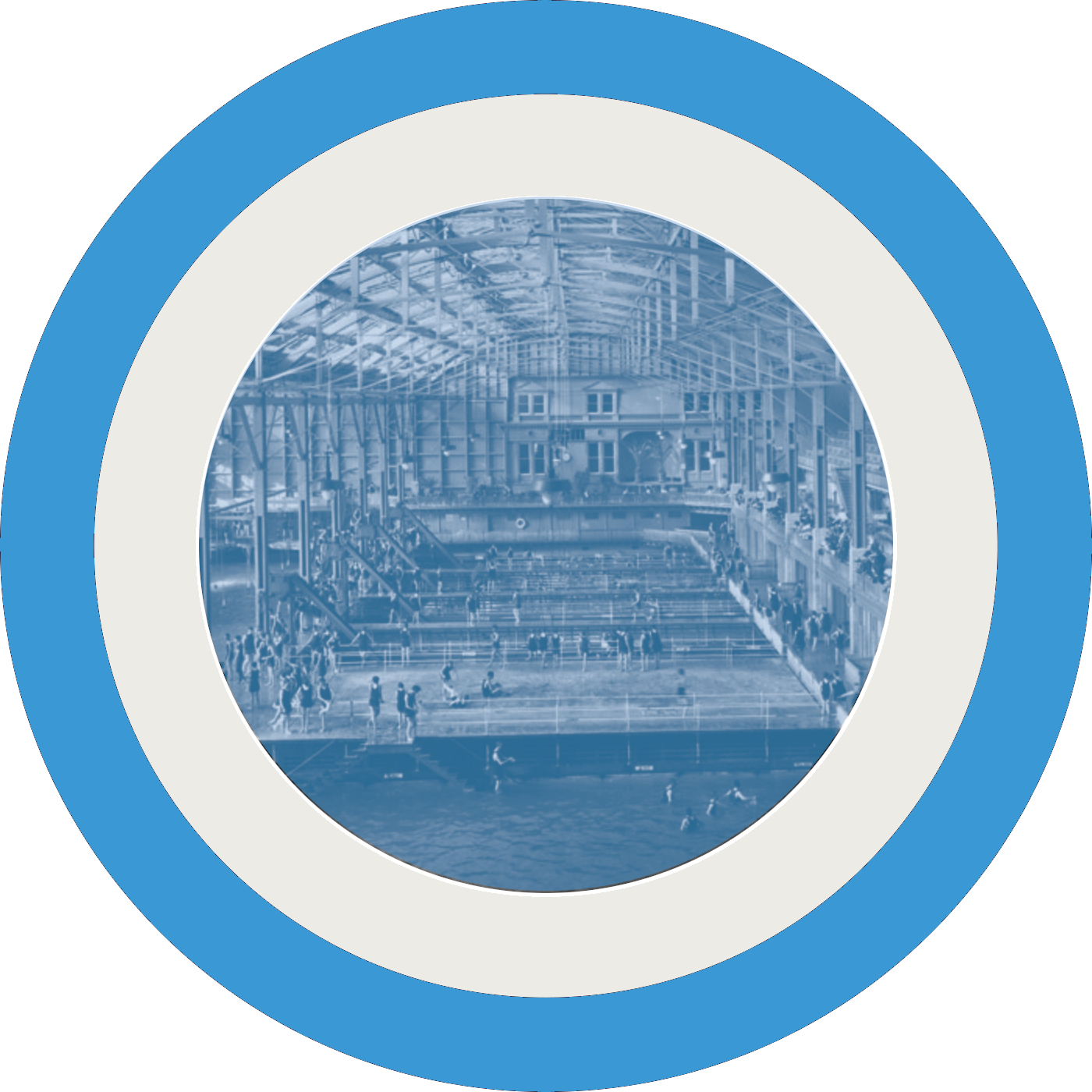
The tide would come in and everything would turn beautiful. Adolphe Sutra would come to the land's End, down the sandstone cliffs to the beach Point Lobos in San Francisco, to the rocks crusted with bleached barnacles, blue black mussels cracked and gull pecked or agape mid gasp in the open air, dished anemones dormant and dulled, dead, seeming grayish green, huddled together, clinging like the pale pink sea stars untwinkling there in the sun. But then the tide would roll in, water would rush in and pour and pool and the rocks would hold the sea and its wonders for a while. And Adolph Sutro would walk, stepping from still dry rock to still dry rock, careful not to slip cut his palm or soak the cuffs of his woolen dress pants or the leather soles of his leather shoes. And you'd look down at the small fish deposited there to swim about for a bit. The scuttling hermit crabs. See the anemones bloom again to vibrant life, stretch out their tiny wisping tentacles, watch their color return. Bright greens and pinks, scarlet spined urchins or purple or midnight blue in the morning light. Starfish sparkling now, silvery clouds, too, reflected in the tide pools. He was an immigrant. Adolphe Sutro, a German and a Jew, Came to California right after the gold rush. Sold cigars in San Francisco and then in Nevada, when the prospectors who'd rushed westward rushed a bit backward for the silver that had been found there. He made his first fortune and made his name when he figured out a way to dig tunnels that could draw waters that filled mines outside. Made them safer, made them more profitable. But what made his name endure in the small way that it does, if only in San Francisco, if only in stories like these, was when he figured out how to bring water inside. Sutro left Nevada, put his money into land in San Francisco, which is never a bad investment. Eventually, Mayor and it seems, a lover of tide pools. And so he bought a mansion in a fire sale, rebuilt it into a grand resort above those pools at Point Lobos, and at some point during the building up of that resort, a glorious Victorian, white turrets and gingerbread at the cliff's edge. While he was building up the business of it all, how to draw in tourists, give guests things to do, reasons to stick around the grounds and not seek other pleasures in other parts of the city, to other men's profit planning. Gardens and galleries, restaurants and a museum of curiosities, anthropological artifacts, taxidermied animals, natural wonders. His thoughts turned back to the tide pools. Did the idea come in slowly, a drip, drip of thought and insight, bringing his creative brain back to life? Or did it all rush in at once, a wave of inspiration? I don't know. But I know that the world's largest indoor swimming park opened in that inlet at the land's edge in March of 1896. A massive structure with a stunning wall made of 100,000 square feet of glass panes, letting visitors look to the ocean just outside, out to the horizon and up to the clouds, to the sun streaming through the arched glass ceiling towering above There were gardens and galleries and restaurants. A museum of curiosities, natural wonders, all of that. What brought people by the thousands to the land's end, to Sutro's baths, was the water. Seven swimming pools, six saltwater, one fresh each just huge, each 500ft long, 250ft wide, laid out side by side, pointing out to sea. Ringed by wooden walkways extending out from bleachers and private changing rooms, snack bars, everything but the pools. Each with a slide, diving boards, ropes and rings and things we're used to now, but then. No, there had never been a place like that where so many could run and jump and dive and soak and splash year round. Some of the pools were heated and warm and wonderful all winter. Stay in for hours. Let your workday slip away the worries of the week. Let Sutro's baths bring you back to life. The boiler that would heat the water was also used to heat the towels that were waiting for you when you got out. Wrap yourself up, dangle your feet over the edge of the pool, or lean back in the bleachers, watching everybody have the time of their life. Watch the way the sunlight through the glass ceiling played on the surface of the pools. The way its reflection danced on your girlfriend's face. How her wet hair shone as the day's light would change the color of that wall of windows at the edge of the ocean. Orange sunsets, silver rainstorms, rosy dusk turning dark. And then electric lights blinking on when you still weren't used to electric lights blinking on. Seven swimming pools fed by the tides. Adolphe Sutro had figured it out. Mid tunnels and channels, spillways at high tide, the ocean would supply all the water he'd need. Fill the whole place up in under an hour. It was like that every day. Invite the ocean in, invite the people in, and it would be beautiful for a while. The baths aren't there anymore. There was a fire at the resort. A couple, actually, but it was mostly business. It was an expensive place to run and tastes changed. Other entertainments caught people's attention. Different diversions brought them to life. Instead, the place started to fall apart. The upkeep wasn't kept up. Turned one of the pools into an ice rink. And that was fun, but wasn't enough. The place shut down and then burned down in 1966. The tide comes in, the tide goes out. SA.
- [12:16]
This episode of the Memory palace.
- [12:17]
Was written and produced by me, Nate.
- [12:19]
DeMaio in November 2024. This show is a proud member of Radiotopia, a network of independently owned and.
- [12:25]
Operated listener supported podcasts from prx, a.
- [12:28]
Not for profit public media company.
- [12:30]
If you want to support this show.
- [12:32]
And this network and mission driven artist owned independent media, well now is the time.
- [12:39]
Go to Radiotopia FM.
- [12:41]
Donate today this here in November of 2024 is a remarkably busy and maybe consequential time in the 16 year history of this program. 16 years I've been doing this. I have a book coming out on November 19th. I think I've wanted to have a book coming out for pretty much all.
- [13:01]
Of those 16 years.
- [13:03]
A collection of stories from the show and more. If you're listening to this episode after that date, after November 19, 2024, then.
- [13:11]
It is already in stores.
- [13:12]
It is already out in the world. I'm fairly nervous, so I'm a little bit jealous of you right now because, you know, whether this book is doing anything, it collects beloved stories from the podcast, it has new exclusive stories, and there's a series of memoir stories that are like nothing I've ever done before.
- [13:30]
That someone told me recently kind of.
- [13:31]
Unlocked the whole memory palace project for them, which I think was kind of the goal.
- [13:37]
And this book is lovely.
- [13:38]
It has photos and illustrations and a cover I couldn't be more proud of. I'm very curious to see what happens when it gets out into the world, but on some level, whether anything happens, you know, if this book has a chance to take off, in truth, that will probably hinge on listeners like you. This book, like this show, doesn't quite fit into the marketplace. It is just its own thing. It is a bit between genres, it is a bit difficult to describe, and the marketplace doesn't respond well to things like that. It's kind of hard to sell this book. It's been hard to get reviewers to review it. It's been hard to get people to pay attention. I think readers will like it, but first they have to find it. And that might just require your help. So that starts with buying a book, most importantly, because sales drive sales. But it is also going to require word of mouth.
- [14:29]
So if you like this book, tell.
- [14:31]
Somebody about this book.
- [14:33]
Friend to friend, book club to book club. If you own an indie bookstore, if you have a podcast or a book blog or a TikTok account head, help.
- [14:42]
Me spread the word.
- [14:43]
And if there's some way that I.
- [14:44]
Can help you do that, you know.
- [14:46]
Appear on that podcast or do an interview for your blog or whatever it is, drop me a line and let me know@natehemmorypalace us. Help this book find an audience that might not be able to find it on its own. If you want to follow me on Twitter or Facebook, I am there at Thememory Palace. I am also on Instagram and threads@theMemoryPalacePodcast. I am on Blue sky even because like, this whole thing is nuts and weirdly, I think I might like it there. I'm aatemayo there and I am on substack with a newsletter@theMemoryPalacePodcast.substack.com and that's a mouthful and I'm sorry for all the messaging, but I got books to sell, I got a podcast to do. I have a network to help during its fundraiser right now at Radiotopia fm. Donate. But luckily I have you guys out there listening. I really appreciate it.
- [15:41]
Thank you so much.
- [15:42]
There are more stories on the way SA.
- [17:52]
Radiotopia from PRX.