Podcast
The Mental Mastery Alliance
Hosted by Adam R. Walton · EN
Every belief is a limiting belief if you don't have the ability to question it. Question everything! Free Yourself.
39episodes
Episodes
Newest firstAll episodes
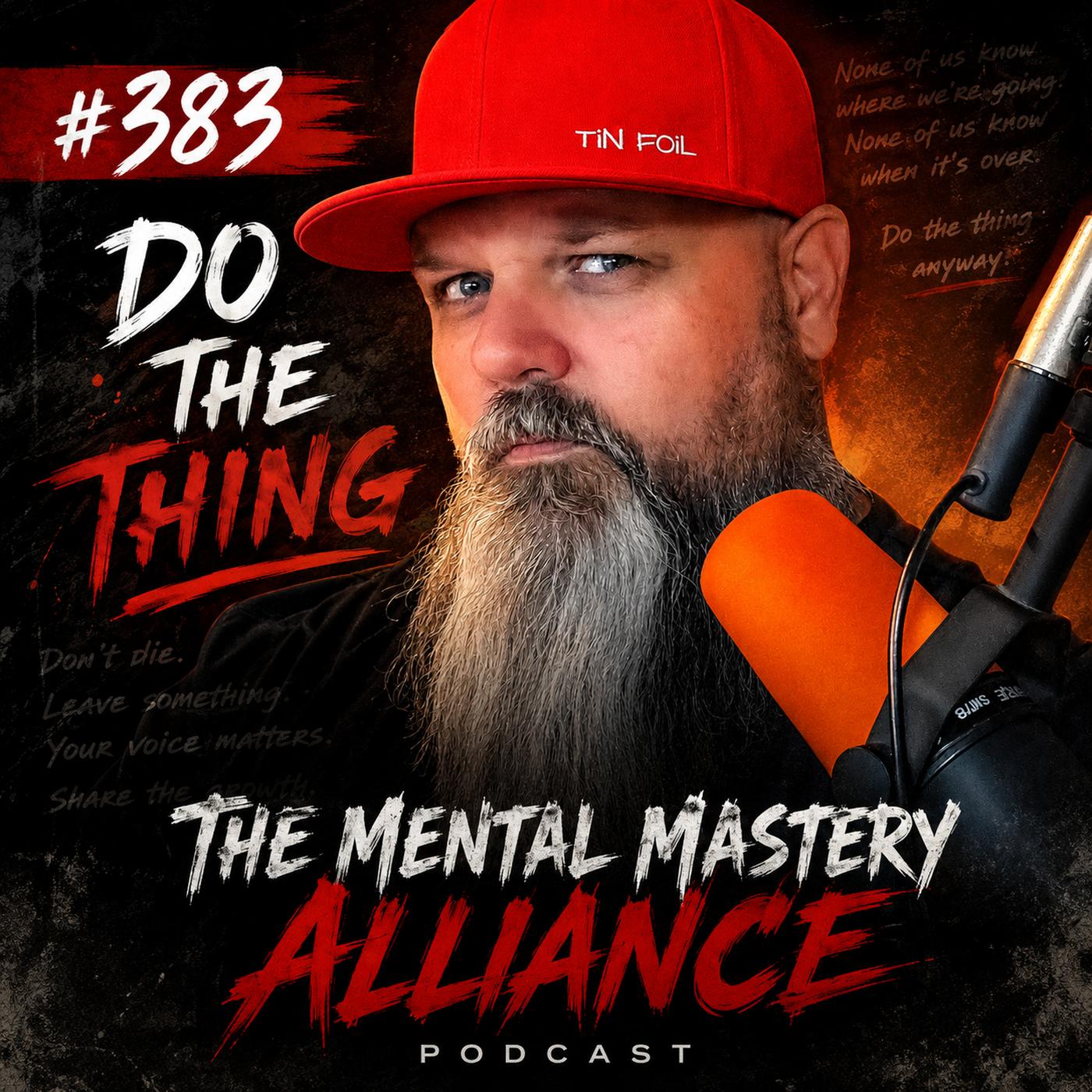
#383: Create the Thing. Do the Thing.
4d ago00:19:53Tap to summarizeHow many incredible ideas have died because someone waited for the perfect time?In this episode of The Mental Mastery Alliance, Adam explores one of the greatest obstacles to living an extraordinary life: the belief that we have to be ready before we begin. From reflecting on the legacy we leave behind to questioning the programming we've accepted as truth, this conversation is a reminder that life isn't waiting for permission slips, perfect timing, or universal approval.As Adam looks back on years of podcasting, he shares why documenting your thoughts, your growth, and your journey may become one of the most valuable gifts you ever leave behind. He challenges the idea that certainty is required for action, arguing instead that growth comes from embracing mystery, questioning assumptions, and creating before you feel qualified.This isn't just an episode about podcasting.It's about painting the picture you've never painted.Writing the book you've been talking about for years.Starting the business that's been sitting in your notebook.Launching the podcast.Making the phone call.Creating the art.Living the life that keeps whispering your name.Because humans aren't here simply to consume.We're here to create.In this episode:• Why creating is one of the deepest expressions of being human• The surprising legacy hidden inside your own voice• Why perfection is the enemy of momentum• How programming shapes the limits we place on ourselves• Learning the difference between what to think and how to think• Why mystery is often more powerful than certainty• The freedom that comes from questioning everything you've been taught• Why your next chapter begins the moment you decide to act• The simple challenge that could completely change your lifeIf you've been waiting for the perfect moment to start, this episode is your reminder that perfection never arrives. Momentum does. And momentum begins the instant you decide to create.Create the Thing. Do the Thing.If this episode lit a fire in you, don't let it become another moment of inspiration that fades by tomorrow morning.Take one step.Record the first video.Write the first page.Launch the website.Start the podcast.Post the artwork.Send the email.Apply for the opportunity.Whatever "the thing" is that keeps calling your name, go do it.And when you do, come back and tell us. Tag The Mental Mastery Alliance on social media and show the community what you created. There is something incredibly powerful about people witnessing one another choose courage over comfort.If you're looking for deeper conversations that challenge the way you've been taught to think, visit TheMentalMasteryAlliance.com. You'll find every podcast episode, original articles, exclusive content, and our TiN FOiL apparel for those who aren't afraid to ask better questions.If the show has helped you see yourself, your life, or this reality a little differently, the single biggest thing you can do is share it. Send this episode to one person who has been sitting on an idea they keep talking themselves out of. You may never know how much that simple act changes the direction of their life.Finally, if you believe in what we're building, leave a review wherever you listen. Every review helps more independent thinkers discover the show, and every new listener strengthens a community built on curiosity, integrity, and the courage to think beyond what we were taught to think.Your future isn't waiting for permission. It's waiting for action.Create the thing. Do the thing. Then become the person who wonders why you ever waited.
Transcribe →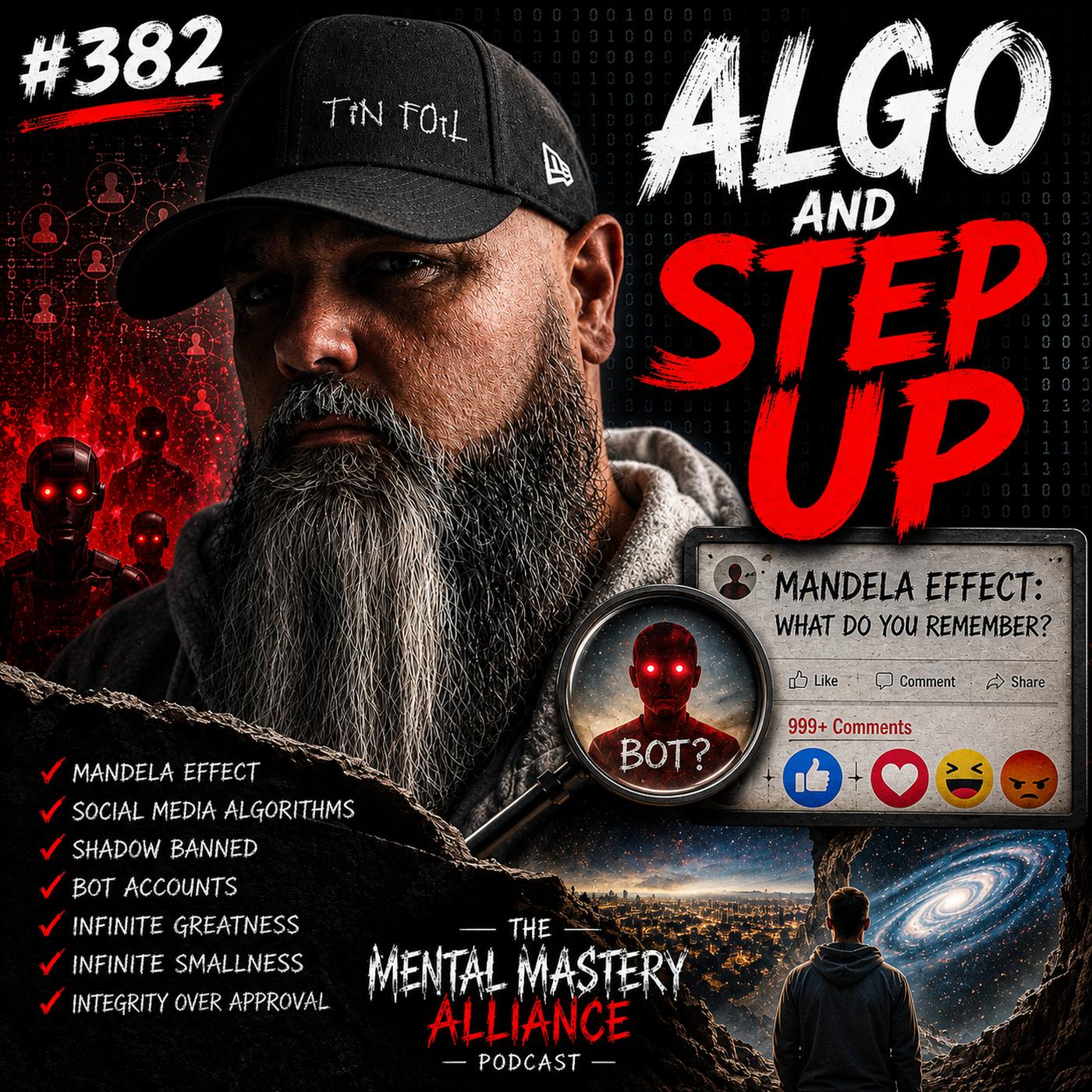
#382: If You've Triggered the Bots, You're on the Right Path
2w ago00:22:01Tap to summarizeWhat if the algorithm isn't your enemy?In this episode of The Mental Mastery Alliance, Adam dives into one of the biggest misconceptions surrounding social media, creativity, and online criticism. Using a viral Mandela Effect post as the catalyst, he explores why negative comments, bot accounts, shadow banning, and resistance might actually be signs that you're moving in the right direction.From Facebook's changing landscape to the psychology of programmed thinking, this conversation challenges the way we interpret criticism and asks a much bigger question.What if the resistance you're experiencing is part of the path instead of proof you're on the wrong one?Along the way, Adam explores the idea of "bot people," infinite greatness versus infinite smallness, the dangers of seeking approval online, and why integrity will always outlast algorithms. More importantly, he reminds listeners that the people who genuinely need your message aren't the loudest voices in the comments section. They're often the quiet observers whose lives change because you had the courage to speak.Whether you're building a business, creating content, starting a podcast, launching your art, or simply trying to become a more authentic version of yourself, this episode is a reminder that every meaningful journey comes with resistance.Stop fearing the hecklers.Learn to recognize them for what they are.Then keep creating anyway.In this episode:• The surprising lesson behind a viral Mandela Effect post• Why social media algorithms aren't as simple as they appear• Shadow banning, monetization, and adapting to a changing internet• The concept of "bot accounts" and programmed thinking• Infinite greatness and infinite smallness as a way of understanding reality• Why integrity matters more than approval• How resistance creates growth in business, creativity, and life• Why the people you're trying to help are rarely the ones attacking you• The courage required to share your gifts with the worldIf you've ever questioned yourself because of criticism, worried about what people think, or held back from creating something meaningful, this episode is for you.Ready to think beyond what you were taught to think?If this episode challenged your perspective, don't keep it to yourself. Share it with someone who's been sitting on an idea, a dream, or a business because they're afraid of what people might say. You never know whose life changes because you pressed "share."????️ Subscribe to The Mental Mastery Alliance Podcast so you never miss an episode designed to challenge perception and expand awareness.???? Visit TheMentalMasteryAlliance.com for exclusive content, articles, podcast archives, and TMMA merchandise, including our signature TiN FOiL hats.???? Follow The Mental Mastery Alliance on Facebook and Instagram for daily conversations, thought experiments, and content that asks better questions instead of offering easy answers.???? Have a question, an idea, or a topic you'd like covered on a future episode? Reach out directly. Your message could become the inspiration for an upcoming show.⭐ Finally, if the podcast has helped you see the world a little differently, please leave a review. It only takes a minute, but it helps the show reach people who are searching for exactly these kinds of conversations.Until next time... embrace the resistance, protect your integrity, and never stop thinking beyond what you were taught to think.
Transcribe →
#381: The Toxic Parent-Child Relationship
2w ago00:30:21Tap to summarizeYour childhood can explain your patterns without being allowed to become your permanent identity.In Episode 381, Adam explores five toxic parent-child dynamics that often follow us well into adulthood: turning the child into the emotional parent, using humour to continually make them smaller, making love feel like a debt, competing with the child instead of celebrating them, and punishing boundaries while calling it love.Through personal experience, uncomfortable honesty and the occasional wildly inappropriate detour, Adam examines how these patterns can manifest as guilt, self-sabotage, people-pleasing, fear of visibility and the belief that choosing yourself is somehow an act of betrayal.But this episode is not about blaming parents or adopting victimhood as an identity. Awareness is where the healing begins. Your parents may have installed some of the original programming, but once you can see the pattern, changing it becomes your responsibility. The metrics may describe the odds, but they do not get to write your ending.You may have been shaped by what happened to you. You are not required to remain trapped inside it.Listen now, share the episode with someone who needs it, and join the conversation at TheMentalMasteryAlliance.com.And while you’re there, grab an official TiN FOiL hat and represent the people willing to think beyond what they were taught to think. Available now at TheMentalMasteryAlliance.com.
Transcribe →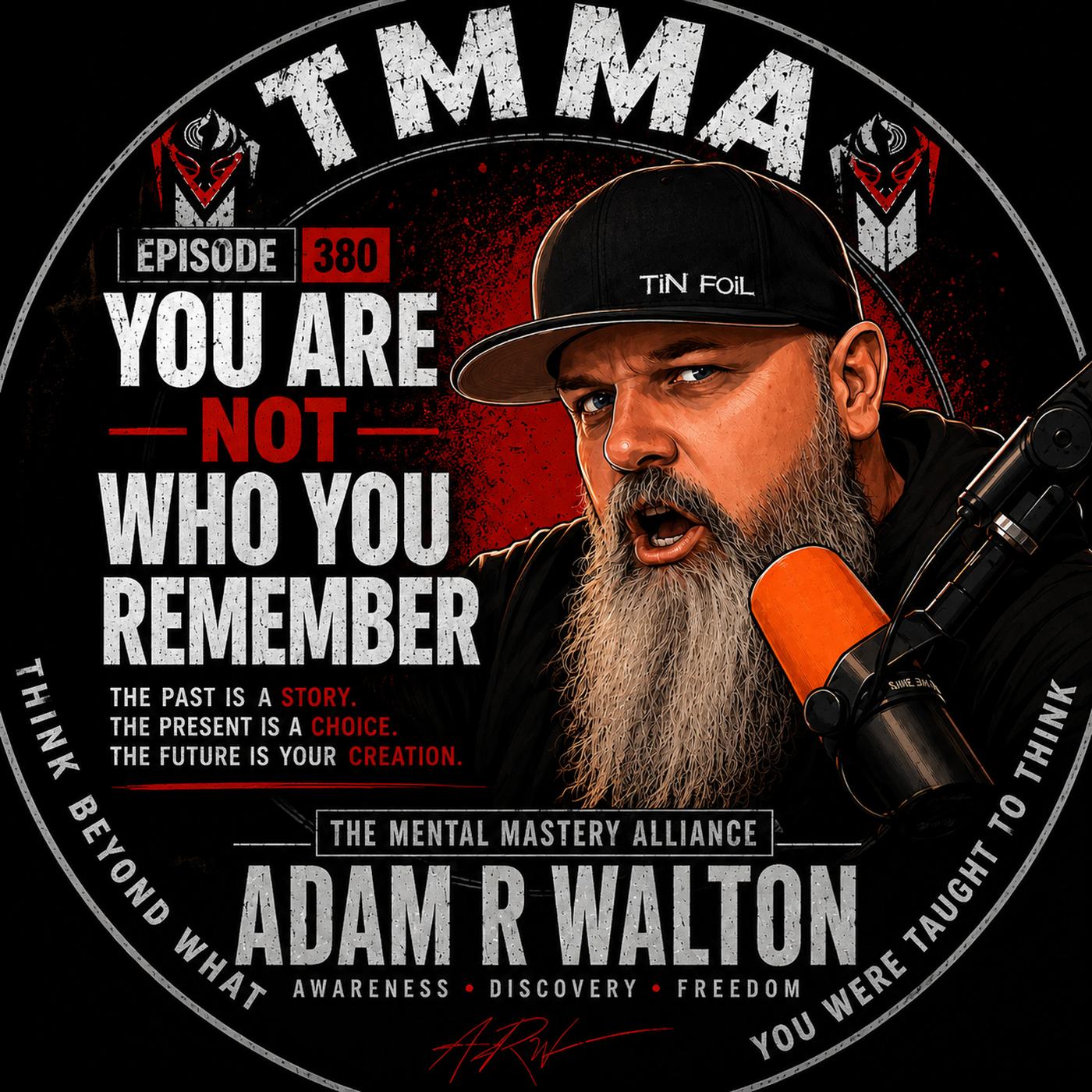
#380: You are not who you remember.
3w ago00:30:53Tap to summarizeWhat if the version of yourself you’ve been carrying around for years… isn’t actually you?In this thought-provoking episode of The Mental Mastery Alliance, Adam explores one of the most overlooked ideas in personal growth: the difference between who you truly are and the story you’ve been telling yourself about who you are.From childhood nostalgia and the changing perception of time to memory, identity, public opinion, and the observer within, this episode challenges listeners to question whether they’re living in the present or simply replaying an edited version of the past.Is nostalgia helping you appreciate life… or quietly keeping you trapped?Why do we judge our younger selves using today’s wisdom?Who are you without your job, your title, your past mistakes, or the labels that were handed to you?Throughout the episode, Adam dives into reality, perception, assumptions, personal responsibility, consciousness, and the power of creating a new identity instead of defending an old one. If you’ve ever felt stuck, weighed down by past experiences, or convinced that “this is just who I am,” this conversation may completely change the way you see yourself.Because maybe the greatest prison isn’t your past.Maybe it’s your memory of it.If this episode resonates with you, share it with someone who’s ready to stop living from yesterday’s identity and start creating tomorrow’s reality.Visit TheMentalMasteryAlliance.com for more episodes, articles, coaching, and exclusive content. While you’re there, don’t forget to check out our TiN FOiL hats and other merchandise for those who aren’t afraid to think beyond what they were taught.If you’re enjoying the show, please subscribe, leave a review, and share the podcast. Every share helps us reach more free thinkers who are ready to question, grow, and create a life on their own terms.Think beyond how you were taught to think.
Transcribe →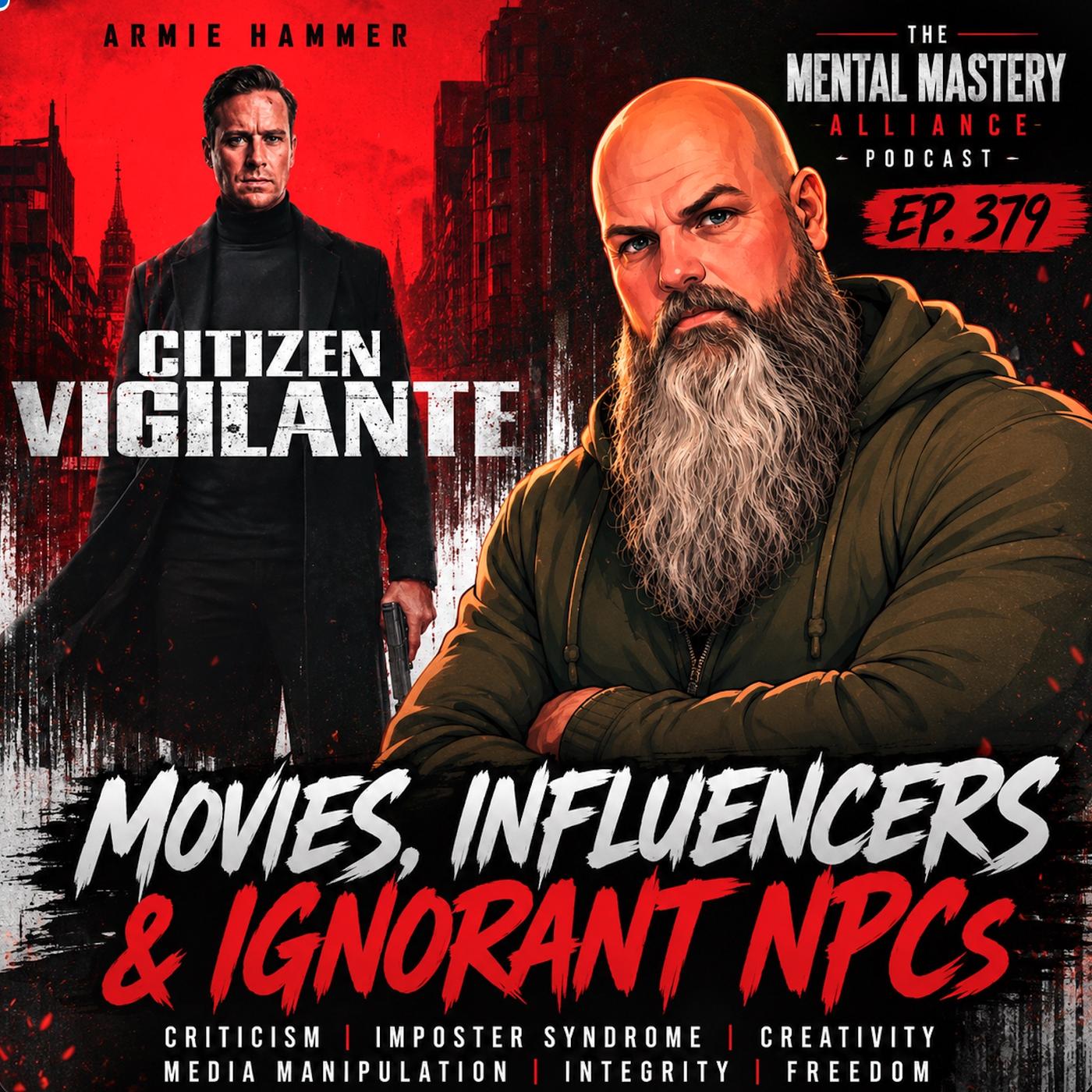
#379: Citizen Vigilante | Influencers | Ignorant NPCs
Jun 2900:27:25Tap to summarizeIn Episode 379 of the Mental Mastery Alliance Podcast, Adam Walton takes listeners on a thought-provoking journey that begins with a review of the controversial film Citizen Vigilante before expanding into a much broader conversation about creativity, criticism, integrity, media influence, and the state of modern society.Using the film as a jumping-off point, Adam explores why so many people hesitate to create, speak their minds, or pursue their goals out of fear of criticism. He challenges the idea that outside approval should determine personal expression and argues that genuine growth comes from thinking independently rather than conforming to popular opinion.The conversation also examines influencer culture, imposter syndrome, social media algorithms, media narratives, and the increasing polarization that dominates public discourse. Rather than offering definitive answers, Adam encourages listeners to question assumptions, recognize patterns, and develop the confidence to think beyond the perspectives they’ve been handed.Throughout the episode, he reflects on the importance of personal integrity, choosing meaningful conversations over endless online arguments, and refusing to let negativity dictate the direction of one’s life. Whether discussing creativity, controversy, or culture, the central message remains the same: think for yourself, stay true to your principles, and never allow fear of criticism to silence your voice.If you’ve ever felt pressured to fit into someone else’s narrative, this episode offers a reminder that your greatest strength lies in your ability to think independently and create authentically.Join the AllianceContinue the conversation at TheMentalMasteryAlliance.com, where you’ll find every podcast episode, articles designed to challenge conventional thinking, and exclusive TMMA merchandise.Show your support by checking out our embroidered TiN FOiL hats and other apparel at:https://www.thementalmasteryalliance.com/category/tin-foilYour support helps keep the podcast independent and allows us to continue producing content that encourages critical thinking and meaningful conversations.Have your voice heard! Leave us a review, send us your thoughts, or become part of the discussion.Website: https://www.TheMentalMasteryAlliance.comInstagram: https://www.instagram.com/TheMentalMasteryAllianceEmail: info@TheMentalMasteryAlliance.comLeave a voicemail or send us a text: 647-338-1265 (standard messaging rates may apply)Don’t forget to tag us using #TMMA or mention @TheMentalMasteryAlliance on social media for a chance to have your comments featured in a future episode.Until next time… keep questioning, keep creating, and remember to think beyond how you were taught to think.
Transcribe →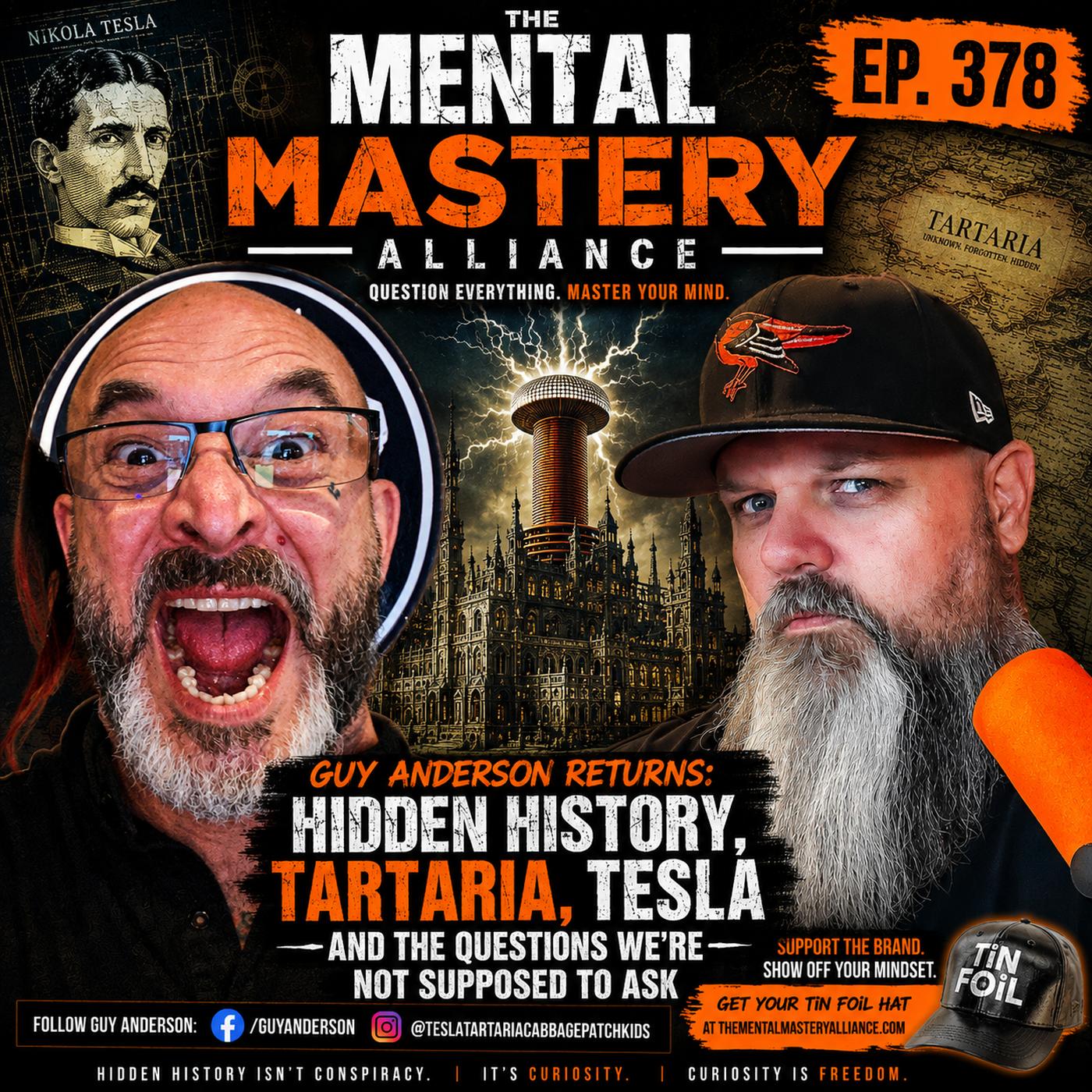
#378 | Guy Anderson Returns: Hidden History, Tartaria, Tesla and the Questions We’re Not Supposed to Ask
Jun 2202:03:26Tap to summarizeIn Episode 378 of The Mental Mastery Alliance, Adam sits down with returning guest Guy Anderson for another deep dive into the ideas, theories, and historical rabbit holes that continue to challenge mainstream narratives. From the mysteries surrounding Tartaria and forgotten civilizations to the work of Nikola Tesla and the possibility that much of what we believe about our past deserves a second look, the conversation ventures far beyond conventional thinking.Throughout the episode, Guy shares his unique perspective on hidden history, alternative timelines, and the importance of questioning accepted stories rather than blindly inheriting them. The discussion explores the nature of free thought, pattern recognition, and why curiosity itself may be one of the most powerful tools available to anyone seeking truth.As always, the conversation isn't about telling listeners what to think. It's about encouraging people to think for themselves, follow the evidence wherever it leads, and remain open to possibilities that exist outside the boundaries of consensus reality.Whether you're fascinated by Tesla, ancient civilizations, Tartaria, or simply enjoy exploring unconventional ideas, Episode 378 delivers another thought-provoking journey into the unknown.Follow Guy Andersen:???? Facebook: https://www.facebook.com/profile.php?id=61554902532473???? Instagram: https://www.instagram.com/teslatartariacabbagepatchkidsBe sure to check out all of The Mental Mastery Alliance links and community resources. And if you want to support the brand while showing the world that you think beyond how you were taught to think, head over to the website and grab yourself a TiN FOiL hat. Every hat helps support the show and lets you wear your mindset proudly.
Transcribe →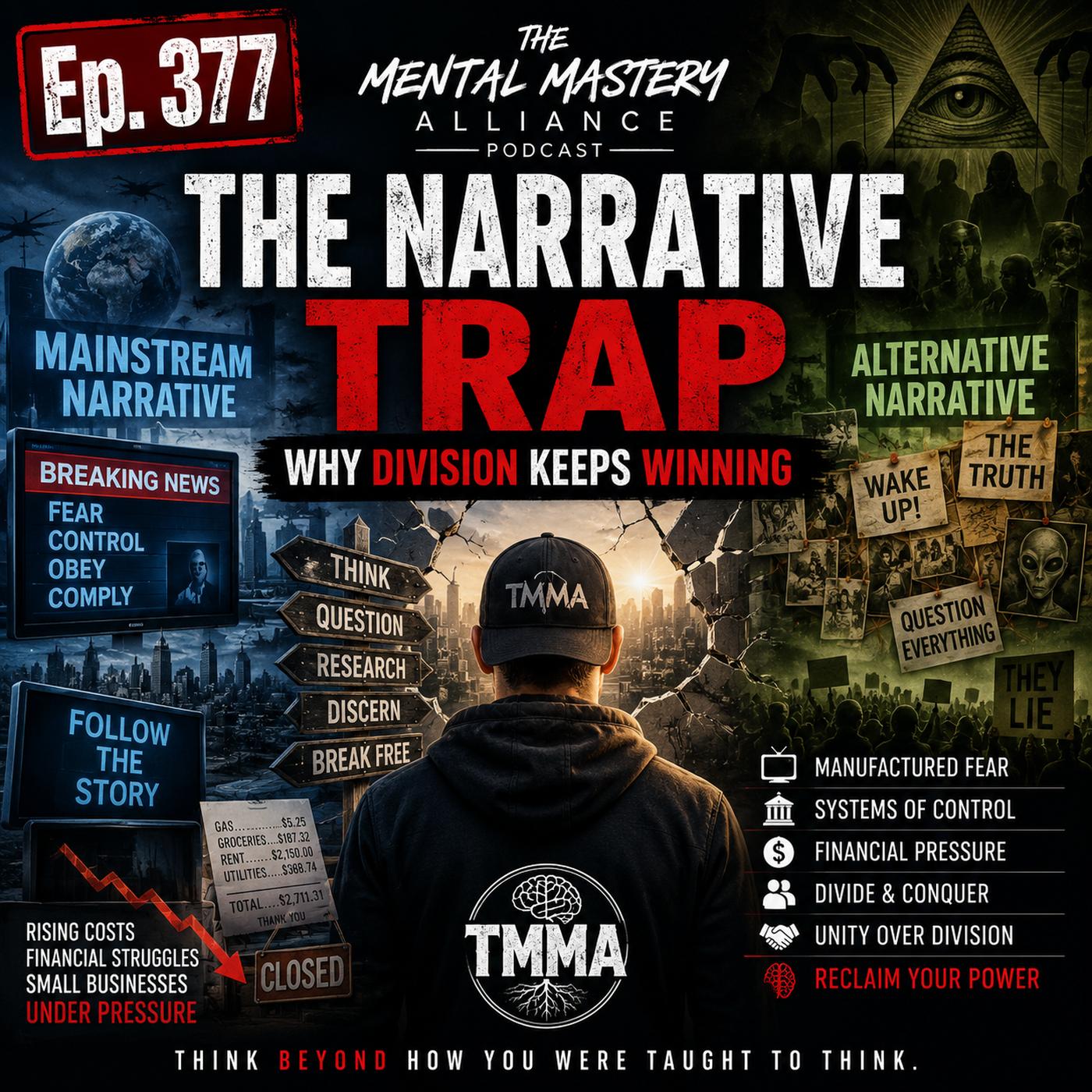
#377: The Currency of Fear
Jun 1500:29:18Tap to summarizeIn Episode 377 of The Mental Mastery Alliance Podcast, Adam explores the growing divide between mainstream narratives and alternative narratives, challenging listeners to question whether either side is providing the complete picture.Using a viral video discussing COVID-era policies, government accountability, financial hardship, and social division as a jumping-off point, Adam examines how fear can be manufactured from multiple directions. He argues that many people transition from accepting official stories unquestioningly to becoming consumed by counter-narratives, never realizing that both perspectives can keep them trapped in the same cycle of fear, outrage, and emotional manipulation.The conversation moves beyond politics and into deeper territory, exploring how division has become one of the most powerful forces shaping modern society. From pandemic debates and economic struggles to cultural conflicts and identity politics, Adam suggests that much of the chaos people experience stems from being encouraged to fight one another rather than examine the systems and incentives behind the conflict itself.Throughout the episode, he discusses the increasing financial pressure facing everyday people, the rising cost of living, the challenges facing small businesses, and the importance of developing self-reliance in uncertain times. Rather than advocating anger or resistance through force, Adam encourages listeners to reclaim their power through critical thinking, personal responsibility, meaningful relationships, and a willingness to step outside the narratives competing for their attention.This episode is ultimately a reflection on perception, free thought, and the importance of maintaining curiosity in a world that constantly demands certainty.If you've ever felt caught between competing versions of reality, this conversation offers a reminder that independent thinking begins where blind belief ends.If you enjoy the show, be sure to follow, subscribe, and leave a review on your favorite podcast platform. Every rating helps us reach more people who are searching for deeper conversations and alternative perspectives.For coaching opportunities, exclusive content, podcast updates, merchandise, and everything happening inside the Alliance, head over to TheMentalMasteryAlliance.com and explore all of our links, resources, and community offerings.And while you're there, don't forget to check out the legendary TMMA Tin Foil Hats. Equal parts conversation starter, statement piece, and badge of independent thought, every purchase helps support the podcast and keeps these conversations flowing.Remember: Think Beyond How You Were Taught To Think.
Transcribe →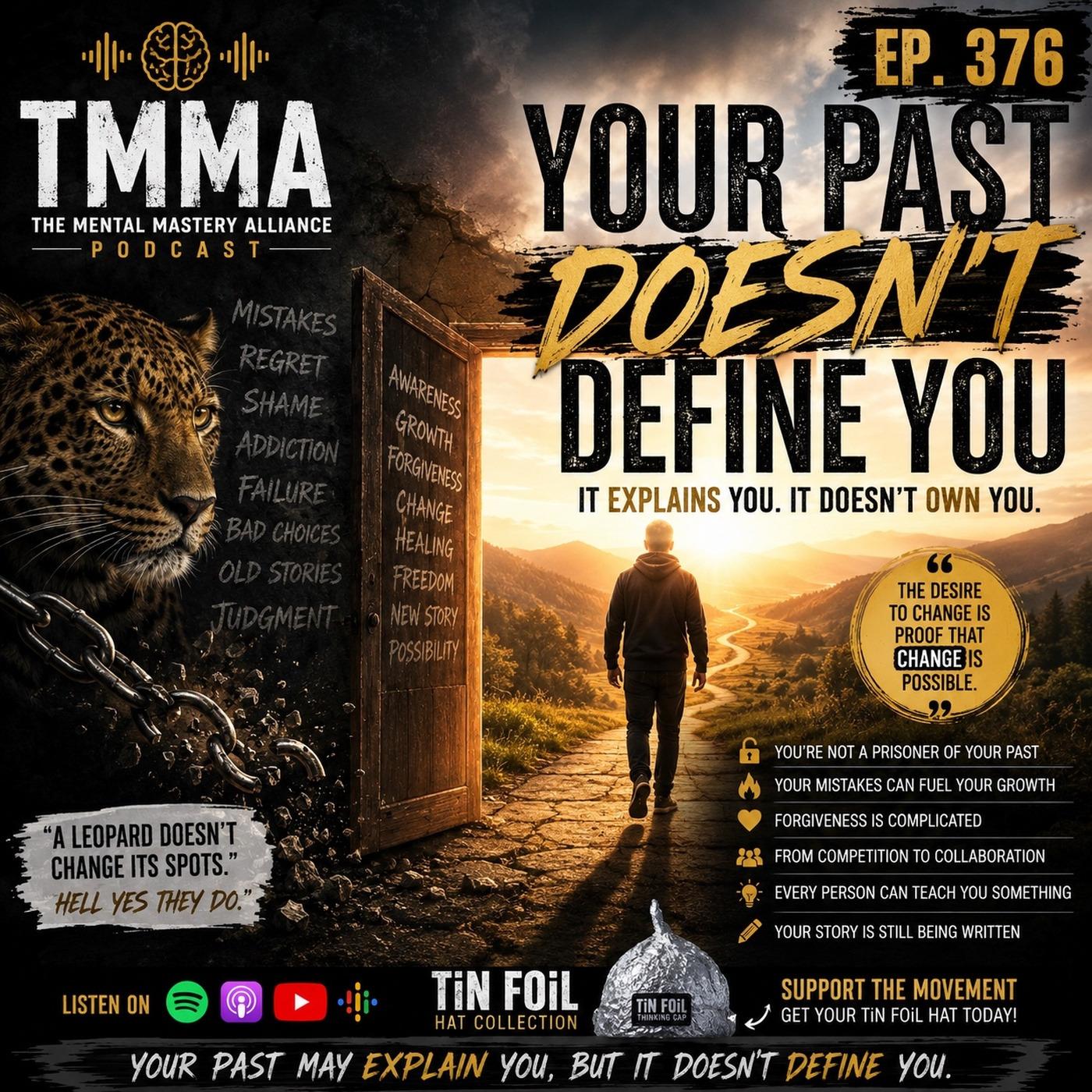
376: Your Past Doesn’t Define You
Jun 800:28:43Tap to summarizeWhat if the worst thing you’ve ever done isn’t the thing that defines you?In this thought provoking solo episode, Adam explores one of the most damaging beliefs many people carry through life: the idea that people cannot change. Using the old expression “a leopard never changes its spots” as a starting point, he challenges the assumption that our past mistakes, failures, addictions, relationships, and poor decisions somehow lock us into a permanent identity.Drawing from personal experiences, coaching stories, addiction recovery, and lessons learned through years of self reflection, Adam shares why our mistakes often become the catalyst for our greatest growth. He explores the difference between living as a prisoner of your past versus using your past as fuel for transformation.This episode dives into:• Why the desire to change is proof that change is possible• How painful experiences shape personal growth• The dangers of defining yourself or others by their worst moments• Why forgiveness is often more complicated than people realize• The hidden selfishness that can sometimes exist behind making amends• Lessons learned from being fired and how apparent setbacks can become unexpected gifts• Addiction, identity, and the stories we tell ourselves• Why judging others by a single chapter of their life rarely tells the full story• The difference between competition and collaboration• Taking responsibility without carrying shame forever• Why every difficult person may be teaching you something valuableThroughout the conversation, Adam reminds listeners that growth is not about perfection. It is about awareness, adaptation, and becoming more conscious than you were yesterday. The bad moments do not disqualify you. In many cases, they become the foundation upon which a better version of yourself is built.Your past may explain you, but it does not define you.If you’ve been carrying guilt, regret, shame, or old stories about who you used to be, this episode offers a different perspective and a reminder that transformation is always available.Connect with The Mental Mastery Alliance:???? Website: TheMentalMasteryAlliance.com???? Instagram: @TheMentalMasteryAlliance???? Email: info@thementalmasteryalliance.com???? Text or Leave a Voicemail: 647-338-1265If you enjoyed this episode, please subscribe, share it with someone who needs to hear it, and leave a review. Every review helps us reach more people who are searching for deeper conversations and different perspectives.???? Looking for official TMMA gear?Check out the TiN FOiL Hat Collection and support the movement. Every purchase helps us continue creating podcasts, content, interviews, and conversations that challenge conventional thinking and encourage independent thought.Think beyond how you were taught to think.Unity Over Division.
Transcribe →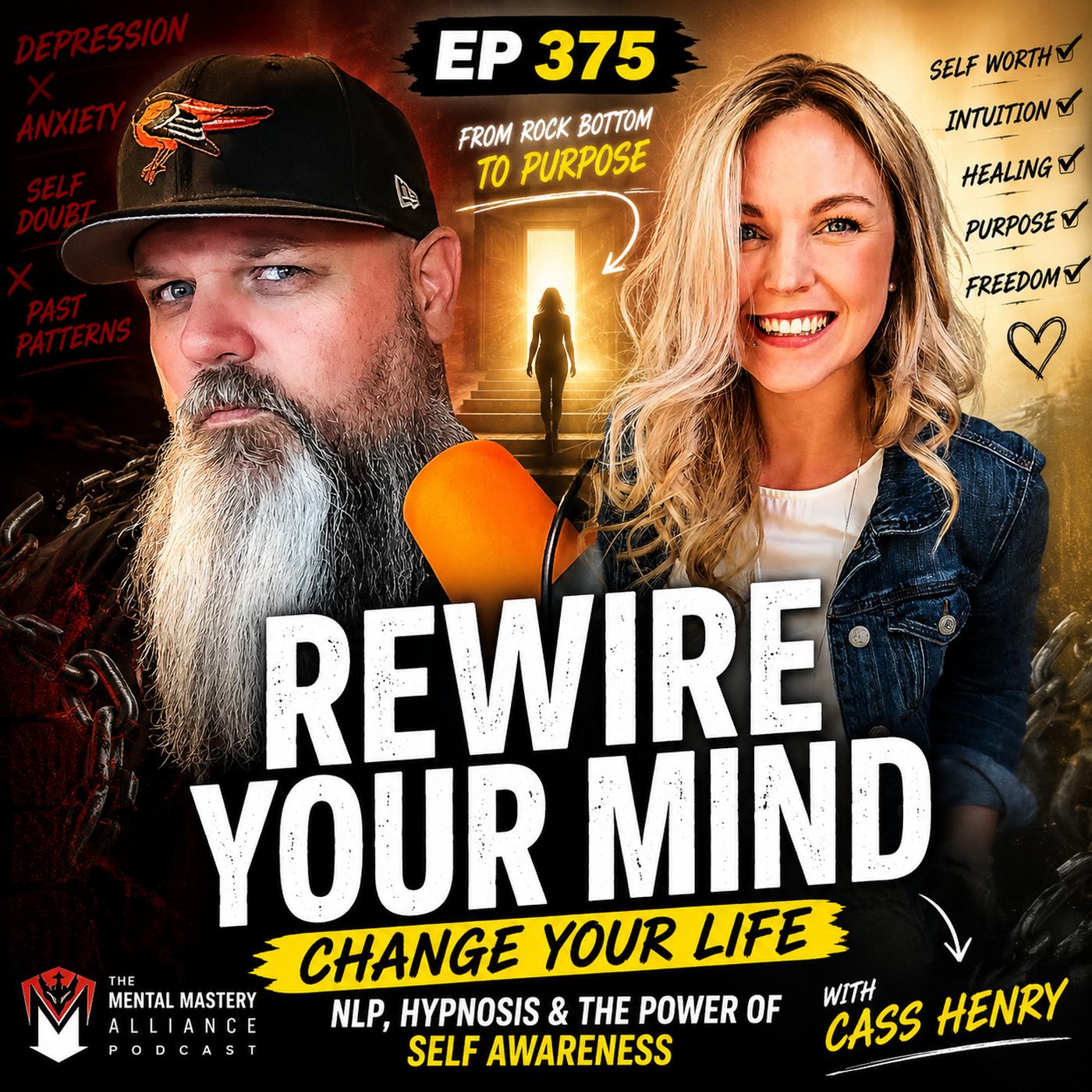
#375: From Depression to Purpose, Rewiring the Mind with Cass Henry
Jun 101:11:28Tap to summarizeWhat happens when someone reaches the absolute bottom, only to discover that rock bottom was actually the foundation for something greater?In Episode 375 of The Mental Mastery Alliance Podcast, Adam sits down with Cass Henry, NLP practitioner, hypnotist, coach, and entrepreneur, for a deep conversation about depression, intuition, self worth, personal transformation, and the hidden programming that quietly shapes our lives.Cass shares her powerful story of battling suicidal depression, anxiety, destructive relationships, and self doubt before a series of life changing moments pushed her toward personal growth and healing. What began with a simple vision board eventually led her through the worlds of personal development, NLP, hypnosis, and deep inner work.Together, Adam and Cass explore:• The difference between depression and existential burnout• How childhood experiences create unconscious beliefs that run our lives• Why so many people stay trapped in unhealthy relationships• The connection between self worth and personal success• How intuition differs from fear, ego, and conditioning• The role of shadow work in personal transformation• Why changing behavior alone rarely creates lasting change• The hidden power of internal dialogue and self talk• Breaking generational patterns and inherited limitations• The search for authenticity in a world full of noise and distraction• Building communities of conscious, growth minded people• Learning to trust yourself instead of outsourcing your decisions to othersThis episode moves far beyond surface level self help. It dives into the uncomfortable but necessary work of examining the stories we tell ourselves, the identities we've inherited, and the possibility that many of our greatest struggles may actually be preparing us for who we're meant to become.Whether you're navigating depression, questioning old patterns, rebuilding your confidence, or simply searching for a deeper understanding of yourself, this conversation offers practical insights alongside powerful personal experiences.As always, remember that your current chapter is not your final chapter.Connect with Cass Henry:Website: www.casshenry.comBook a Call: www.casshenry.com/callInstagram: www.instagram.com/_casshenryEmail: hello@casshenry.comPodcast: Transform Your Life Podcasthttps://podcasts.apple.com/ca/podcast/transform-your-life-podcast/id1644142075If you're ready to challenge your thinking, question your programming, and see beyond the surface, visit The Mental Mastery Alliance and don't forget to grab your official TiN FOiL hat from the store.
Transcribe →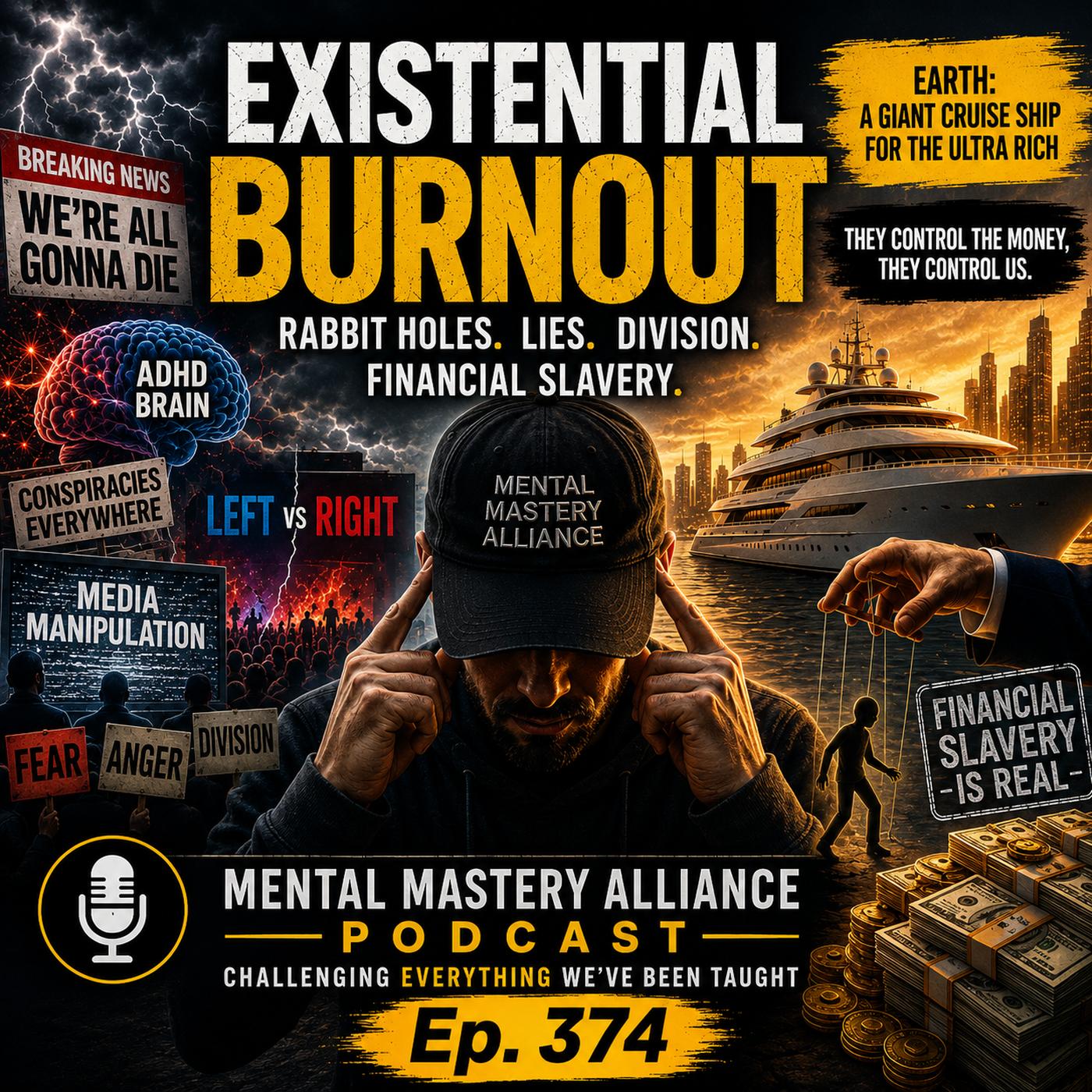
#374: Existential Burnout
May 2700:27:34Tap to summarizeWhat happens when the pattern recognition goes too far? When you can’t unsee the systems, the manipulation, the division, the fear, the financial pressure, the constant noise?In this raw and unfiltered episode of the Mental Mastery Alliance Podcast, Adam steps completely out of “host mode” and speaks openly about exhaustion, burnout, ADHD pattern recognition, conspiracy fatigue, societal division, media manipulation, financial slavery, and what it feels like to exist in a world that increasingly feels disconnected from reality.This isn’t a polished motivational speech. This is a real conversation about energetic depletion, information overload, and trying to remain conscious in a culture built on distraction, outrage, and extremes.Topics include:• Existential burnout and social fatigue • ADHD, pattern recognition, and overstimulation • Media manipulation and engineered division • Financial slavery and the illusion of modern freedom • Politics as spectacle and entertainment • The collapse of nuance and middle ground • Conspiracy overload and emotional exhaustion • The importance of protecting your energy • Why givers burn out faster than takers • Recharging yourself without disconnecting from purposeIf you’ve been feeling mentally drained, emotionally overloaded, or spiritually exhausted by the state of the world, this episode may hit harder than most.Sometimes growth isn’t about waking up harder. Sometimes it’s about learning when to step back, recharge, and stop feeding chaos your attention.????️ The Mental Mastery Alliance Podcast Thinking beyond how you were taught to think.???? Coaching / Collaboration adam@thementalmasteryalliance.com???? Instagram The Mental Mastery Alliance Instagram???? Grab your official TiN FOiL hat here: Shop TiN FOiL Hats???? Website The Mental Mastery Alliance Website
Transcribe →