Podcast
The Midlife Edit
Hosted by Jen Weinstein · EN
Think of The Midlife Edit as your favorite music magazine, but for the midlife woman who's done shrinking. Host Jen Weinstein brings real conversations with guests who've lived it...alongside honest talk about identity, reinvention, hormones, and the 90s music that still lives rent-free in your head. Honest, a little irreverent, and zero apologies for who you're becoming. New episodes every Tuesday.
45episodes
Episodes
Newest firstAll episodes
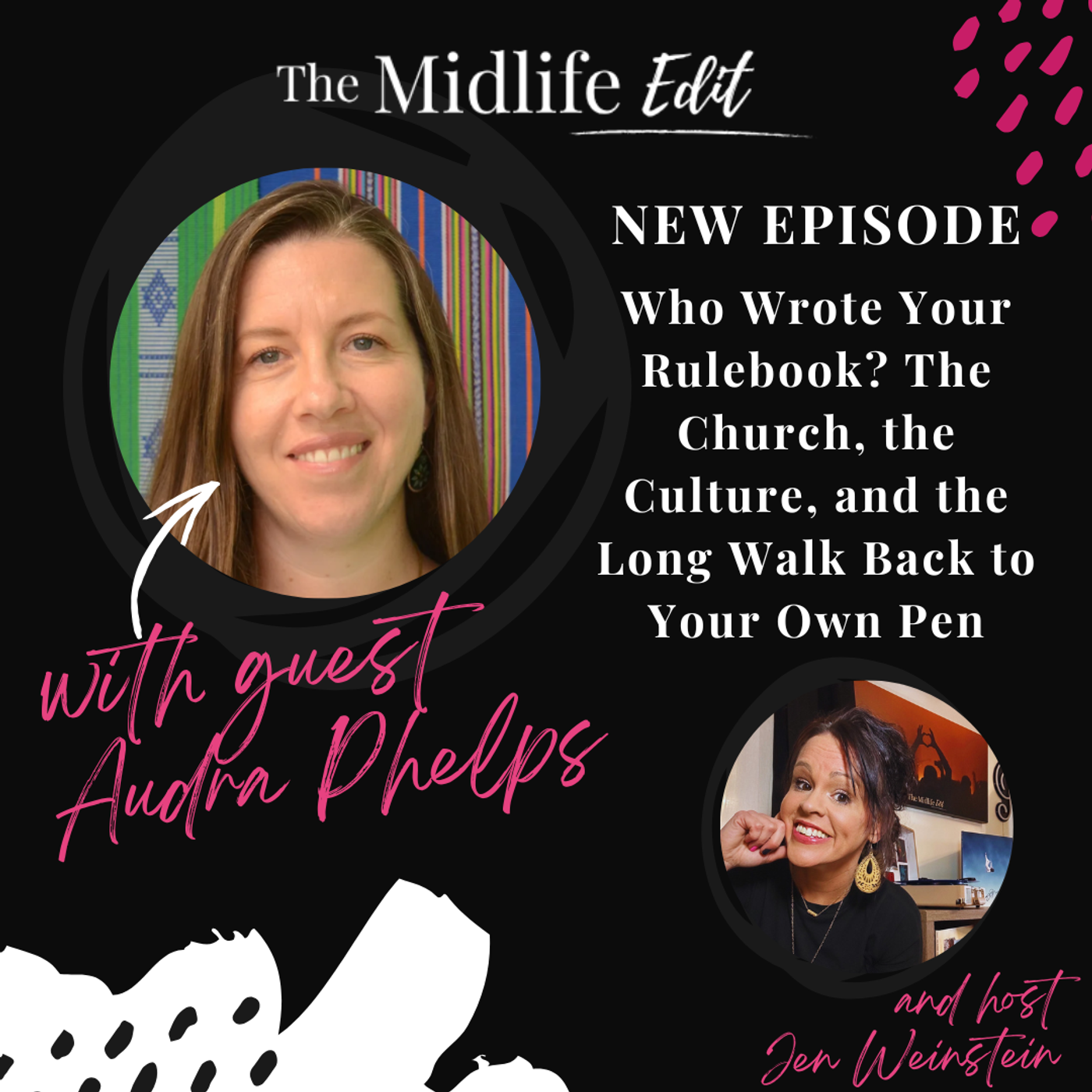
Who Wrote Your Rulebook? The Church, the Culture, and the Long Walk Back to Your Own Pen
1w ago01:06:55Tap to summarizeAudra Phelps grew up Mormon, married in the temple at 20, and spent the next decade doing everything right — and doing everything she was told. On today's episode she and Jen skip the standard "growing up in the church" recap and go straight for the good stuff: the moment she realized she didn't even like the apple pie she'd been baking every Thanksgiving for her husband, and what came unraveling after it.This is the second stop in Jen's Hold the Pen series — and Audra, without any prompting, uses the exact word "ghostwriter" to describe what religion did to her story. Turns out you don't need to have grown up Mormon to recognize every second of this conversation.In this episode:What a "good" Mormon wife and mother looked like on paper — and how little choice was actually built into it (00:32)Ten years of quiet doubt, and what that looked like day to day, including the anxiety and panic attacks Audra didn't understand at the time (09:00)The "alphabet exodus" — how a move overseas to Kazakhstan gave her the physical distance to start questioning everything (12:25)The pie story. Thanksgiving, eight years after leaving the church, standing in her kitchen resenting a dessert she didn't even like — and realizing she had no idea what her own favorite pie was (17:52)Why leaving isn't the same as being free, and the loneliness that showed up right alongside it (26:06)Telling her parents — the hardest conversation, harder than telling her husband (29:54)Building a family mission statement with her kids instead of handing them a new script to replace the old one (33:06)The coaching program that saved her marriage — and the question underneath it: does today's Audra still choose the same husband? (38:30)What NLP coaching actually is, explained in plain English (50:07)Why so many women leaving high-control situations land in MLMs, and how Audra helps women rebuild financial independence from zero (52:45)The invisible rules Audra still catches herself following, eleven years out (56:39)This week's Edit In / Edit OutEdit In / Edit OutJen is editing in trusting herself to make the decision, and editing out cleaning her baseboards before guests come over. Audra is editing in doing something for herself before she opens her laptop, and editing out worrying about the dishes in the sink.Connect with Audra PhelpsInstagram: @mamaaudraofficialWebsite: mamaaudra.comTiktok: @mamaaudraFacebook: Mama AudraYoutube: Mama AudraDon't forget to sign up for the Backstage Pass - it hits your inbox every Sunday! Sign up here.And continue the conversation and go deeper in the Edit Room!
Transcribe →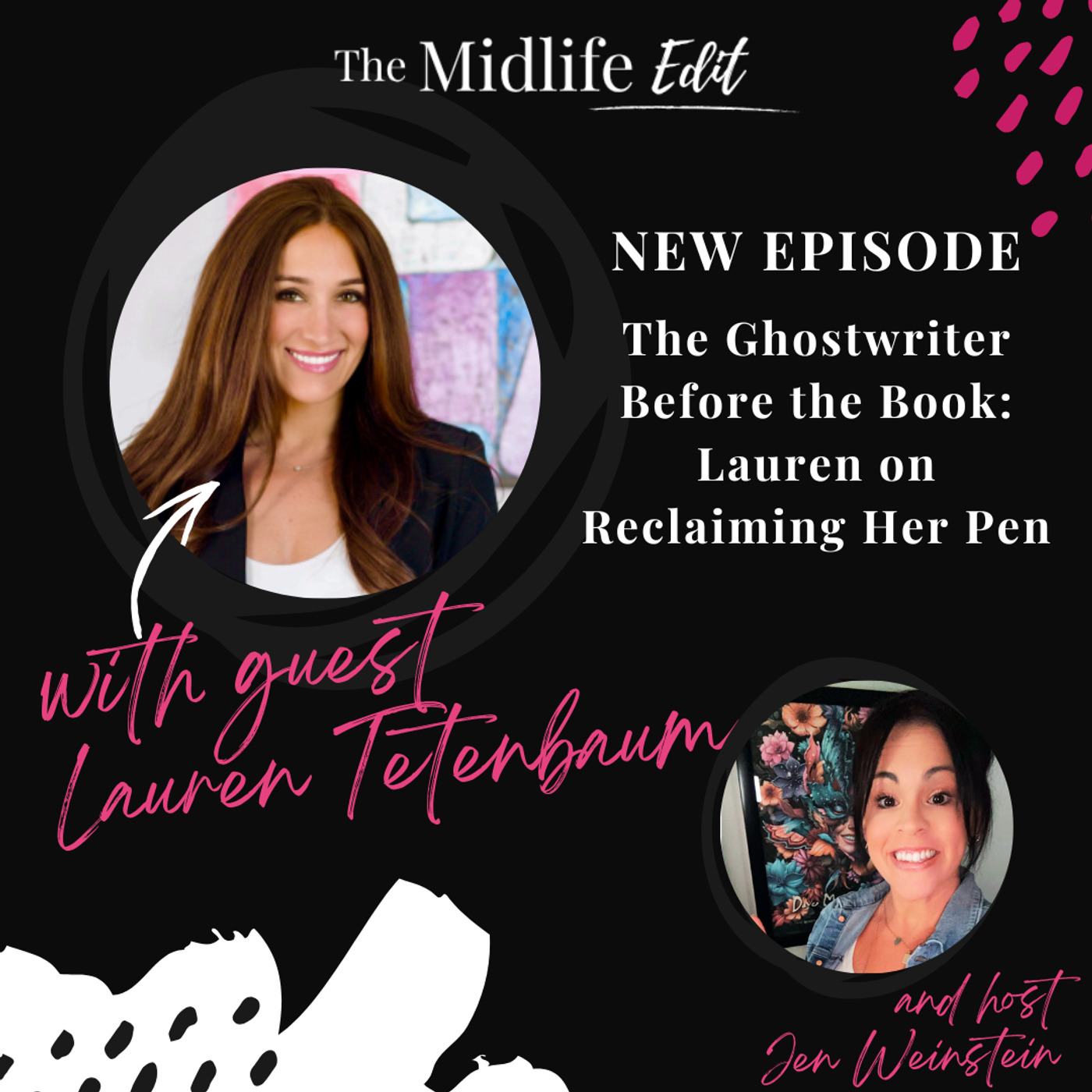
The Ghostwriter Before the Book: Lauren Tetenbaum on Reclaiming Her Pen
2w ago00:53:40Tap to summarizeBefore Lauren Tetenbaum was the therapist and author everyone wants to talk to about menopause, she spent fifteen years as someone else's voice — literally. As an immigration attorney, she represented abuse and asylum survivors in cases where the stakes were life and death. She fought for parental leave policy at a time when asking for it made her a problem. And somewhere in the middle of writing everyone else's story, she started asking who was writing hers.This is the conversation before the book — reinvention, imposter syndrome, and what it actually costs to hold someone else's pen for a decade and a half before you pick up your own.In this episode:Fifteen years as an immigration attorney representing abuse and asylum survivorsWhat it felt like being someone else's voice when the stakes were life or deathFighting for parental leave policy — twice — and the pushback she got from other womenThe pivot from lawyer to therapist, and what each reinvention cost her versus what it gave backImposter syndrome as a gendered experience, and what she tells clients who are questioning a leapThe "ghostwriters" of her own life — career identity, unsupportive bosses, and letting go of voices she didn't actually respectThis week's Edit In / Edit OutHer book pick for the summer and what's on her Y2K playlistGuest links:Book: millennialmenopause.comPractice: thecounselor.comInstagram: @thecounselorConnect with The Midlife Edit:themidlifeeditco.com@thejenweinsteinJoin The Edit Room: https://www.facebook.com/share/g/19AtNYVeyh/Enter The Edit Box giveaway — closes July 31st. Enter here: https://themidlifeeditco.myflodesk.com/editbox
Transcribe →
The Ghostwriters: Five Hands That Have Held Your Pen
3w ago00:26:49Tap to summarizeA Hold the Pen Story — Follow-up to Episode 75A few weeks ago, Jen told you to hold the pen. This week, she's naming who's actually been holding it.The pen doesn't get handed over all at once — it's passed quietly, decision by decision, season by season, until one day you look down and realize the handwriting isn't yours. In this episode, Jen breaks down the five ghostwriters that show up again and again in midlife: the family, the culture, the relationship, the caregiver, and the job. None of them are villains. But if you're going to take the pen back, you have to know who's been writing.This is the trailer for a whole season — each ghostwriter gets its own full episode in the months ahead.In this episode:[00:08] Recap — why "Hold the Pen" struck a nerve, and the question everyone kept asking back: who's actually been holding it?[04:56] Ghostwriter #1: The Family — inherited opinions, the quiet filter of "what will they think," and why belonging can feel conditional even inside your own home.[06:42] Chasing approval vs. rebelling for attention — and the moment Jen realized she was trying to earn belonging instead of asking why it felt conditional in the first place.[10:45] Ghostwriter #2: Culture — the invisible contract women sign without realizing it, and why it's the hardest ghostwriter to challenge because it just sounds like common sense.[13:09] Ghostwriter #3: The Relationship — the difference between healthy compromise and quiet erasure, and the real test: does your partnership have room for two authors instead of one editor?[16:33] Ghostwriter #4: The Caregiver — motherhood, stepmotherhood, and caring for aging parents. Why caregiving convinces us that self-erasure and love are the same thing.[20:21] Ghostwriter #5: The Job — how productivity quietly becomes identity, and why rest starts to feel like something you have to earn.[24:08] What's coming this season — a full episode dedicated to each ghostwriter: the family, the culture, the relationship, the caregiver, and the job.[25:52] Housekeeping — The Edit Box giveaway extended through July 31, winner announced August 1, plus how to get involved with The Backstage Pass newsletter and The Edit Room.Quotable"None of these ghostwriters are villains. Most of the time, they were simply the closest hand to hold when we were young, or too busy, or too overwhelmed, or too tired to hold the pen ourselves."Links & Housekeeping🎁 The Edit Box Giveaway — extended through July 31 | Winner announced August 1📩 Sign up for The Backstage Pass newsletter here.💛 Join The Edit Room on Facebook📸 Follow @thejenweinstein on Instagram — tag two friends for extra giveaway entries⭐ Leave a five-star review, subscribe, and share the episode
Transcribe →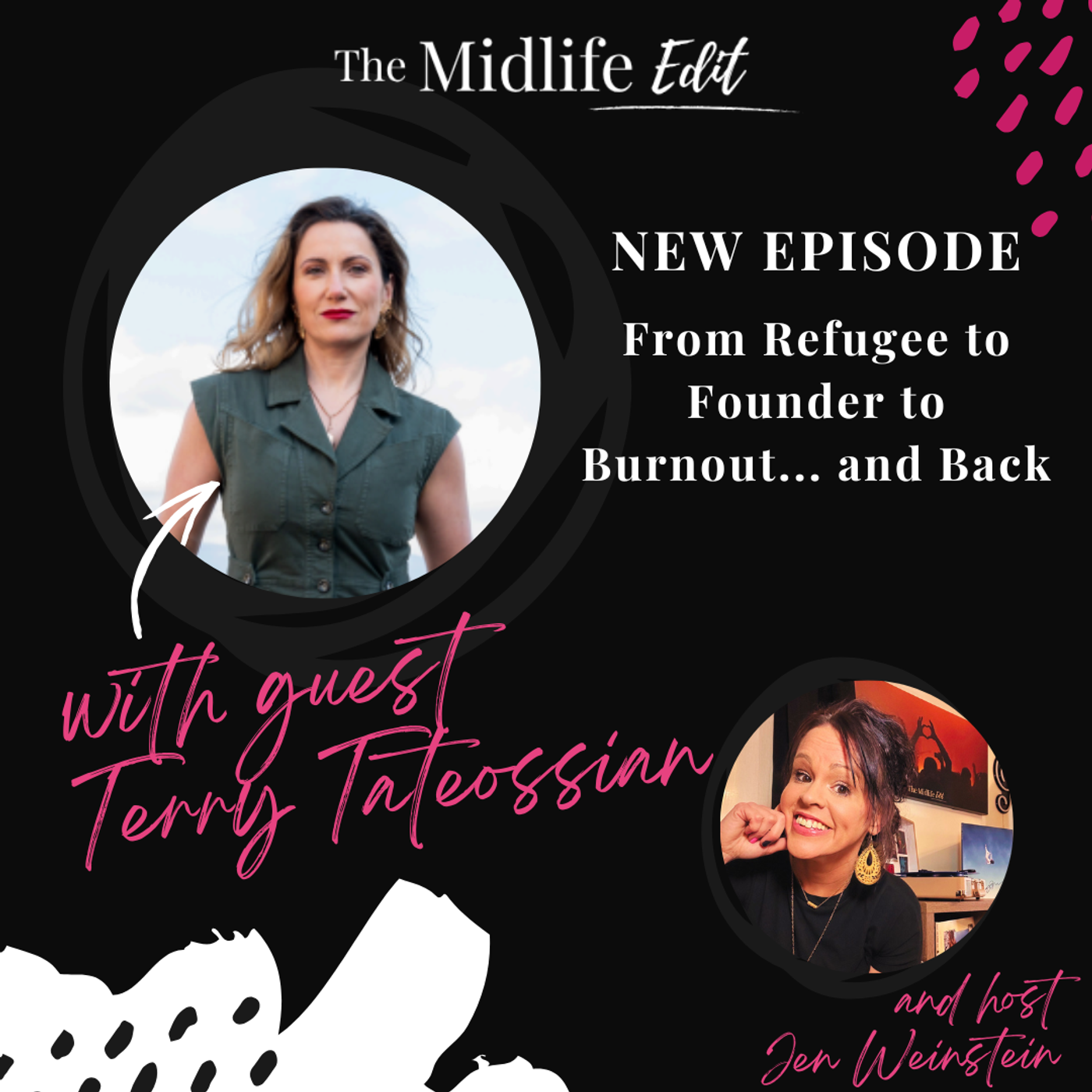
From Refugee to Founder to Burnout and Back: Terry Tateossian's Reinvention Story
Jul 1400:54:25Tap to summarizeTerry Tateossian's life reads like three different biographies stitched together — refugee at 11, tech entrepreneur through the dot-com boom, Forbes contributor and 40 Under 40 founder running a 40-person agency, and now a health and mindset coach after her own body forced a reckoning. Jen and Terry talk about what it actually felt like fleeing communist Bulgaria as a kid, why Terry never internalized being "the only woman in the room" as a disadvantage, the uncomfortable truth about women undermining other women at work, and the eighty-pound weight gain and undiagnosed perimenopause that finally slowed her down. It's a conversation about immigration, ambition, burnout, and what it means to stop measuring your worth by a number on a scale.In this episode:Fleeing Bulgaria at 11 and the 30-day asylum interrogation in AustriaLanding at JFK in 1989 and learning five languages in a refugee housing complexBecoming a "40 Under 40" tech founder during the dot-com boomWhy Terry never saw being a woman in tech as a disadvantage — and the surprising place she actually faced pushbackThe real conversation about women undermining other women in the workplaceBurnout, an 80-pound weight gain, and perimenopause hitting at 37 with zero warningTwo ER visits she thought were heart attacksWalking away from the business she built to rebuild her health insteadWhy "paper thin" isn't the goal — the case for strength, muscle, and resilience over a number on the scaleTerry's retreats and coaching work with 700+ womenHer take on AI music (and why she started making her own)Guest links:Website: houseofrose.comInstagram: @howgoodcanitgetFacebook: How Good Can It GetConnect with The Midlife Edit:themidlifeeditco.com@thejenweinsteinJoin The Edit Room (private Facebook community)Enter the Edit Box giveaway — deadline extended, enter here
Transcribe →
Hold The Pen
Jul 700:17:23Tap to summarizeWhen was the last time you made a decision nobody else influenced? Not your husband, your kids, your job, or your therapist...just you. This week, Jen shares the story behind a line that came out of nowhere on July 4th and cracked open something bigger: the difference between a permission question and a desire question, and why so many of us stopped noticing we'd handed our pen to someone else.This isn't about losing yourself. It's about the thousand small, reasonable-sounding moments that add up to someone else authoring your story — and how to get the pen back.In this episode:The question Jen couldn't shake, and why she couldn't answer it eitherThe line that came out of nowhere on July 4th at 9:52pm: "Somewhere along the way I forgot I was allowed to hold the pen"Why handing off decisions isn't a personal failure — it's biology plus conditioningThe real difference between asking "what do I want" and asking "am I allowed"A simple one-week challenge: before every decision, ask "Would I still choose this if nobody else's opinion existed?"Why "The Edit" was never just a content formatThis week's challenge: Try the pen test. Before you make any decision — big or small — ask yourself if you'd still choose it with no one else's opinion in the room. Just notice. Don't change anything yet.The Edit Box Giveaway (enter by July 15, winner announced July 16):Sign up for the Backstage Pass newsletter at themidlifeeditco.comJoin The Edit Room here.Invite a friend to The Edit RoomFollow @thejenweinstein on InstagramTag 3 friends on one of the giveaway postsConnect:Newsletter: themidlifeeditco.comThe Edit Room (Facebook): linkInstagram: @thejenweinsteinLeave a 5-star review — it helps this reach the people who need it
Transcribe →
Wanting More Isn't the Problem. Apologizing for It Is.
Jun 3000:22:04Tap to summarizeThis week starts with a mirror. Jen catches her own reflection mid-morning-routine and doesn't recognize the woman looking back - not because she looks older, but because she looks unedited. That moment cracks open two things Jen's been sitting with: why women apologize for wanting more in midlife, and what it means when you stop recognizing yourself.She names the "guilt tax" that comes with every role - wife, mom, stepmom, employee - and the double standard that lets a 25-year-old be called "driven" for the exact thing that gets a woman in her 40s, 50s, or 60s met with judgment. She gets specific about the particular bullshit stepmoms face when they dare to say it's hard. And she addresses the tension head-on: how does "I want more" square with last week's Edit Room post about editing OUT chasing the goalpost? (Spoiler: both things are true. Receiving and reaching aren't opposites.)This one traces the guilt back to its root - the eldest daughter conditioning, the quiet training to disappear - and lands on Jen's own permission piece: she's done apologizing for wanting this show to be big.In this episode:The "guilt tax" on wanting more in every role women carryThe double standard between ambition at 25 vs. ambition in midlifeWhy stepmoms get told "you knew what you signed up for" — and why that's wrongReconciling "let it be enough" with "I still want more"Where the guilt was actually learned (hint: it's generational)The mirror moment, the editor-in-chief metaphor, and what it means to stop cutting yourself from your own storyThis week's question for the Edit Room:What's the one thing you're done apologizing for, starting right now?Keep it going:Backstage Pass newsletter (Sundays) - Join The Backstage PassThe Edit Room - Join For Free Now
Transcribe →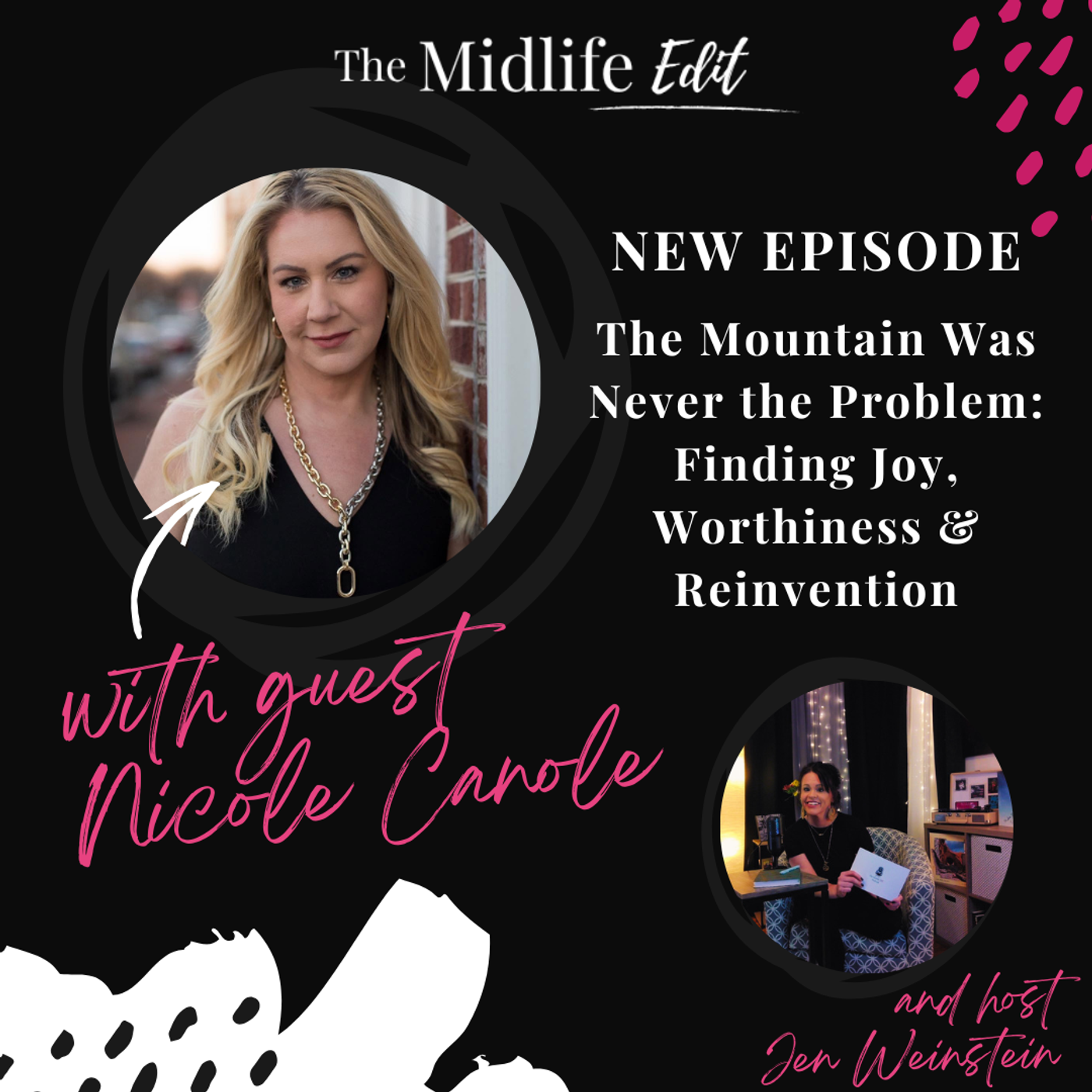
The Mountain Was Never the Problem: Finding Joy, Worthiness & Reinvention with Nicole Canole
Jun 2300:40:33Tap to summarizeWhat if what everyone calls a midlife crisis is actually a return to yourself?In this episode of The Midlife Edit, Jen sits down with entrepreneur, Harvard graduate, endurance athlete, and joy-seeker Nicole Canole for a deeply honest conversation about achievement, worthiness, grief, reinvention, and learning to receive.Nicole shares how losing her father to suicide shaped her relationship with success, why accomplishments never fully silenced the voice telling her she wasn't enough, and how climbing literal mountains taught her that the hardest battles are the ones happening inside.Together, Jen and Nicole talk about overachievement, imposter syndrome, GLP-1s and weight loss, learning to fuel your body, giving up alcohol, finding community through music festivals, and why turning forty isn't about having a crisis—it's about finding joy again.Because maybe we're not falling apart.Maybe we're finally free.In This Episode:• Why "midlife crisis" might actually be rediscovering yourself• Growing up with worthiness wounds and learning to heal• Losing a parent to suicide and the lasting impact of grief• Harvard, success, and why achievements don't always feel like enough• The truth about motivation and why nobody can do the work for you• The emotional gap between knowing and doing• What climbing mountains taught Nicole about life and control• Weight loss, GLP-1s, and learning to fuel your body instead of punish it• Giving up alcohol and finding joy without it• Music festivals, rave culture, and the power of community• Learning to receive instead of constantly proving yourself• Why failure can be a better teacher than success• What's next for Nicole and her mission to help others find their worthConnect with NicoleInstagram: @nicole.canole,@east_and_ivyJoin The Edit RoomLooking for your people?The Edit Room is our free Facebook community for women navigating midlife, reinvention, music, perimenopause, relationships, identity shifts, and all the messy, beautiful parts in between.Come join the conversation, make new friends, and remember—you don't have to figure it all out alone. Join Here! Subscribe to The Backstage PassGet behind-the-scenes stories, music recommendations, favorite things, and weekly reflections delivered straight to your inbox.Because we're not done yet.We're just getting started. Get the Backstage Pass now!
Transcribe →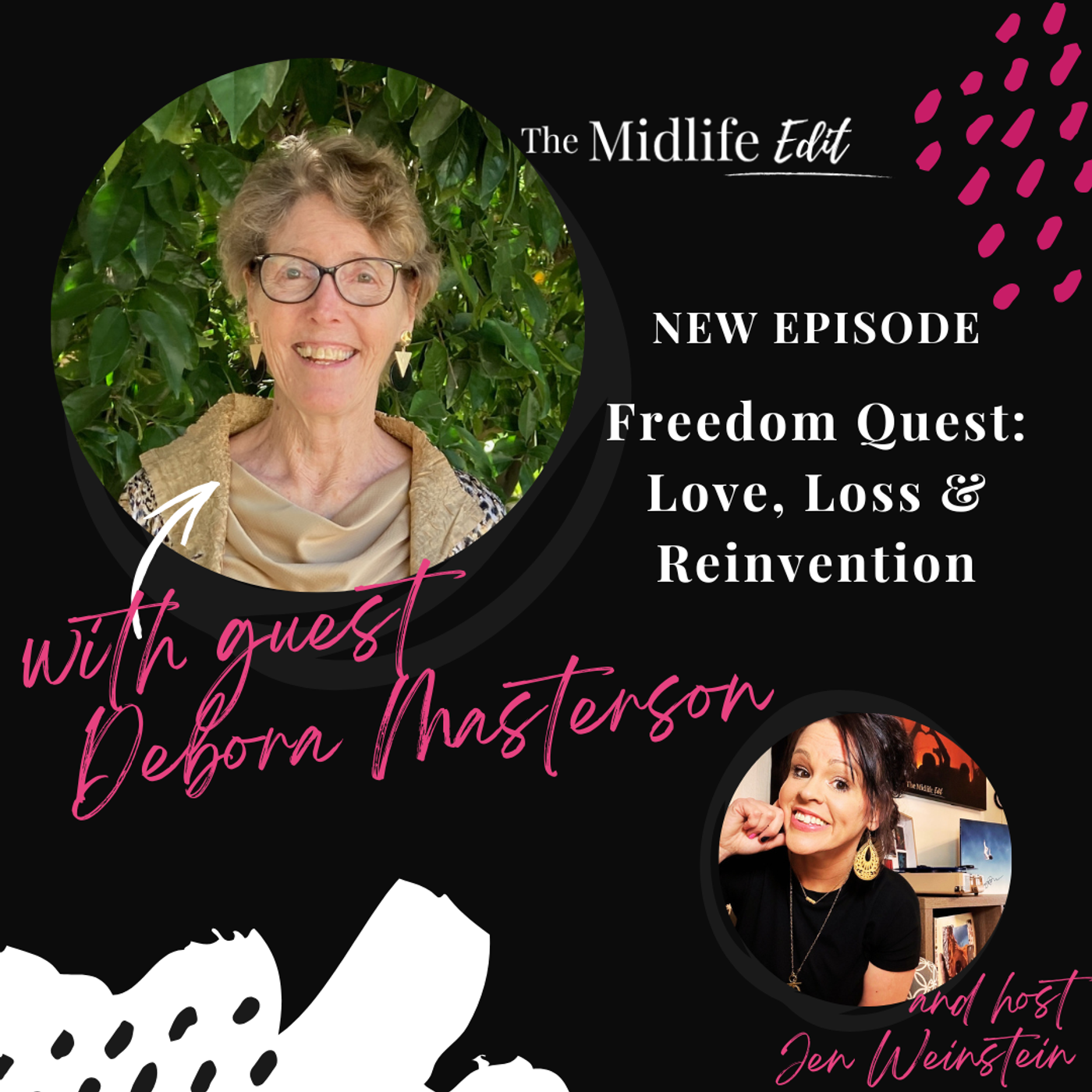
Freedom Quest: Love, Loss & Reinvention
Jun 1600:54:14Tap to summarizeDon’t Be Afraid: Music, Reinvention & Finding Your Way Back to Yourself with Debora MastersonWhat happens when you stop letting fear make your decisions?This week on The Midlife Edit, Jen sits down with debut novelist, musician, educator, producer, and lifelong creative Debora Masterson for a conversation about music, reinvention, grief, creativity, and learning how to say yes to yourself at every stage of life.Debora’s debut novel, Freedom Quest: A Love Story, is inspired by the real-life story of a 1970s rock band, a decades-long love story, and the late partner she eventually found her way back to after 26 years apart.But this episode becomes so much bigger than a book.From touring with Sammy Davis Jr. as a young singer and dancer, to building a television agency in Los Angeles, to learning bass guitar later in life and joining a band in her seventies, Debora shares what it means to keep evolving — even when the world tells you it’s too late.This conversation is for anyone who has ever:wondered if they missed their chancefelt afraid to start overtalked themselves out of something they wantedneeded permission to reinvent themselvesforgotten that creativity doesn’t expire with ageWe talk about:The real story behind Freedom QuestReconnecting with the love of her life decades laterWriting through grief after losing her partnerWhat Sammy Davis Jr. taught her about opportunityWhy she believes fear stops more dreams than failureLearning bass guitar later in lifeWhy music becomes attached to memoryThe difference between being a writer and becoming an authorAging, creativity, and refusing to shrink yourselfThe importance of saying yes before you overthink itThis episode feels like sitting in a coffee shop with someone who has truly lived.Listen + Follow DeboraWebsite: https://deboramasterson.comInstagram: @freedomquestbookListen to Freedom Quest on Spotify Get your copy here! Loved this episode?Share it with a woman who needs the reminder that it is NOT too late to begin again. And if you loved this conversation, don’t forget to rate, review, and follow The Midlife Edit Podcast.Want more conversations like this?Join the Backstage Pass newsletter - The Midlife Edit’s weekly note filled with music, midlife reinvention, honest conversations, podcast updates, playlists, and reminders that it’s never too late to become more yourself.Sign up here!
Transcribe →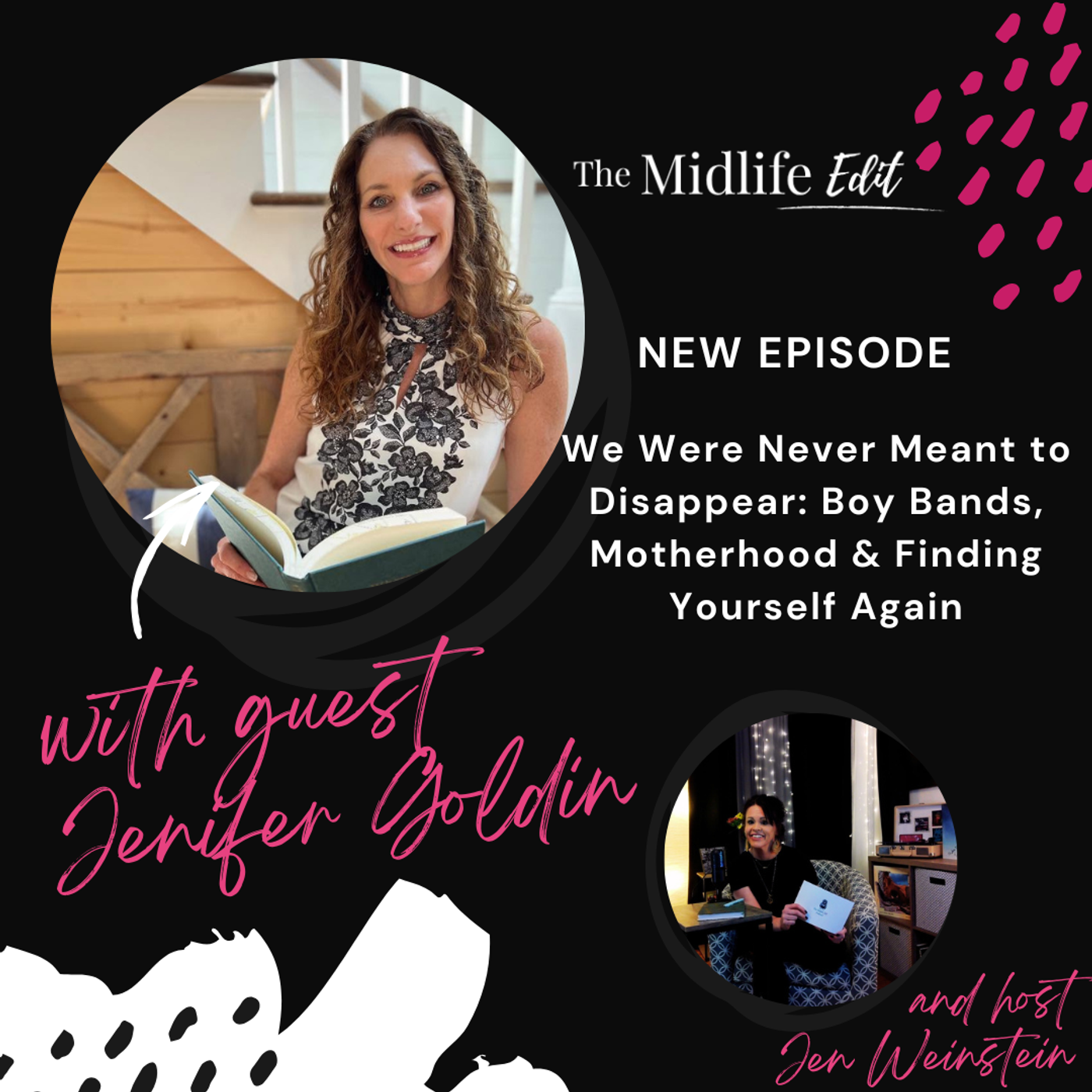
We Were Never Meant to Disappear: Boy Bands, Motherhood & Finding Yourself Again with Jenifer Goldin
Jun 900:51:31Tap to summarizeWhat if the reason women are reconnecting with boy bands, 90s music, and nostalgia has nothing to do with the music itself?In this episode of The Midlife Edit, Jen sits down with author Jenifer Goldin to talk about motherhood, identity, burnout, friendship, social media pressure, and the versions of ourselves we thought we lost forever.Inspired by her novel Moms Love Boy Bands, Jenifer shares how women in midlife are reclaiming joy, creativity, and the passions that patiently waited for them underneath motherhood and responsibility.Together, they discuss:Why moms in midlife are reconnecting with boy bands and nostalgiaThe pressure of modern motherhood and social media comparisonWhy women deserve joy, fun, friendship, and escape without guiltGrowing up as eldest daughters and people pleasersThe “geriatric mean girl” phenomenon in adulthoodThe music that shaped us in the 80s and 90sRediscovering passions after motherhoodJenifer’s journey from audiologist to published authorWhy creativity matters in midlifeThe magic of taking risks and becoming yourself againThis episode is funny, emotional, nostalgic, and deeply validating for any woman who has ever wondered:“Who was I before everyone needed something from me?”Grab your coffee, put on your favorite 90s playlist, and settle in.Connect with Jenifer GoldinInstagram: @jenifergoldinwritesWebsite: authorjenifergoldin.comBooks: Moms Love Boy Bands Moms Who Read Romance NovelsAnonymous Mom PostsFollow The Midlife EditInstagram + TikTok: @thejenweinsteinWebsite: themidlifeeditco.comIf this episode resonated with you, please share it with a friend and leave a review - it helps more women find these conversations.
Transcribe →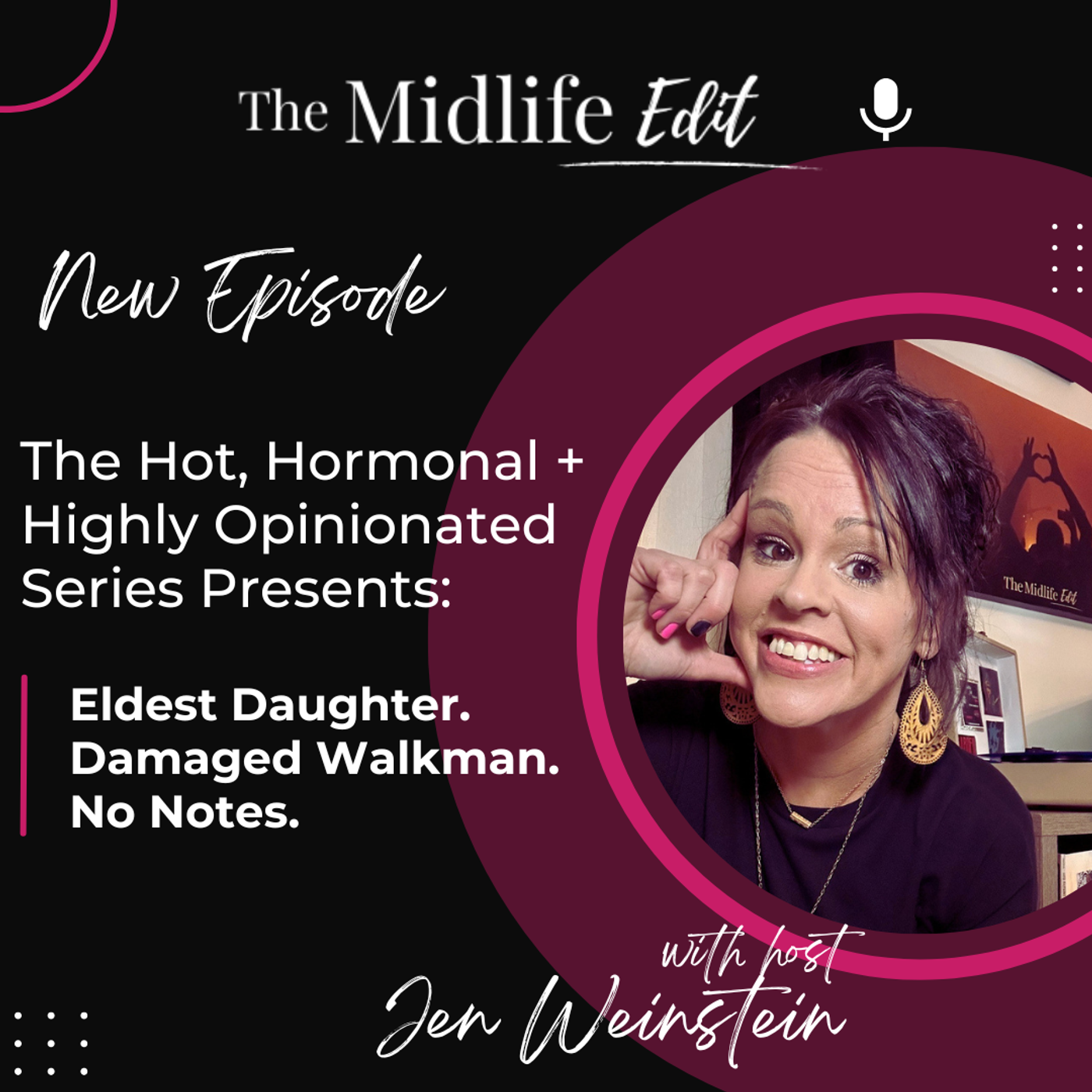
Eldest Daughter, Damaged Walkman, No Notes
Jun 200:39:17Tap to summarizeEPISODE DESCRIPTIONThink of a song. Not your current favorite. Not the one you'd put on a playlist to impress someone. The one from when you were 13, 14, 15 years old. The one you played so many times the tape warped. The one that felt less like entertainment and more like survival.This episode is about that song. And about why you needed it.In this solo episode of Hot, Hormonal & Highly Opinionated, Jen goes deep on the intersection of two things that defined a lot of us without us realizing it: being the eldest daughter — and the music that basically raised us when no one else was available for the job.This one got personal. Consider yourself warned.WHAT WE COVEREldest Daughter Syndrome — what it actually is: It's not a cute TikTok trend. It's a whole psychological pattern that a lot of us are still paying off in therapy co-pays. The eldest daughter — whether by birth order or by emotional default — is the kid who figured out early that things worked better when she kept it together. The helper. The peacekeeper. The one who read the room before she could read a book. The one who was always told "you're so mature for your age" like it was a trophy.She became an expert at anticipating everyone else's needs. She helped raise siblings, made lunches, babysat, settled arguments, translated adult emotions — and became a little adult while she was still a kid herself. The most capable one in the room. The most invisible one in the room. Same person.Why the music did what people couldn't: Music is safe because it's borrowed. You're not the one feeling the feeling — the artist is. You're just nearby. For a kid who was told — without words — that her feelings weren't the priority, standing in the proximity of someone else's emotion was everything. The rage you couldn't show? There's a song for that. The exhaustion of holding it all together? There's a whole genre for that. It's called grunge. We owe it a debt.The songs that wrecked us weren't random. They were precision targeted. That's not nostalgia. That's coping.THE SPOTIFY PLAYLISTAll 13 songs in order — 🎧 The Eldest Daughter Playlist — put it on next time you're driving alone. See what comes up for you. That's kind of the point.NEXT WEEKJen sits down with Jenifer Goldin, author of Moms Love Boy Bands — and if this episode resonated, you are going to want to be there.CONNECT WITH JEN📱 Instagram: @thejenweinstein 🎙️ Leave a review — it takes two minutes and makes a real difference. 🔔 Subscribe so you never miss a Tuesday drop.A NOTE FROM JEN"The songs that wrecked you at 14 weren't random. They were precision targeted to the exact feelings you had no outlet for. That's not nostalgia. That's coping. And that kid? She wasn't dramatic. She wasn't being too much. She was doing the best she could with what she had — and what she had was great taste and the good sense to use it as a lifeline."
Transcribe →