← The Millionaire Real Estate Agent | The MREA Podcast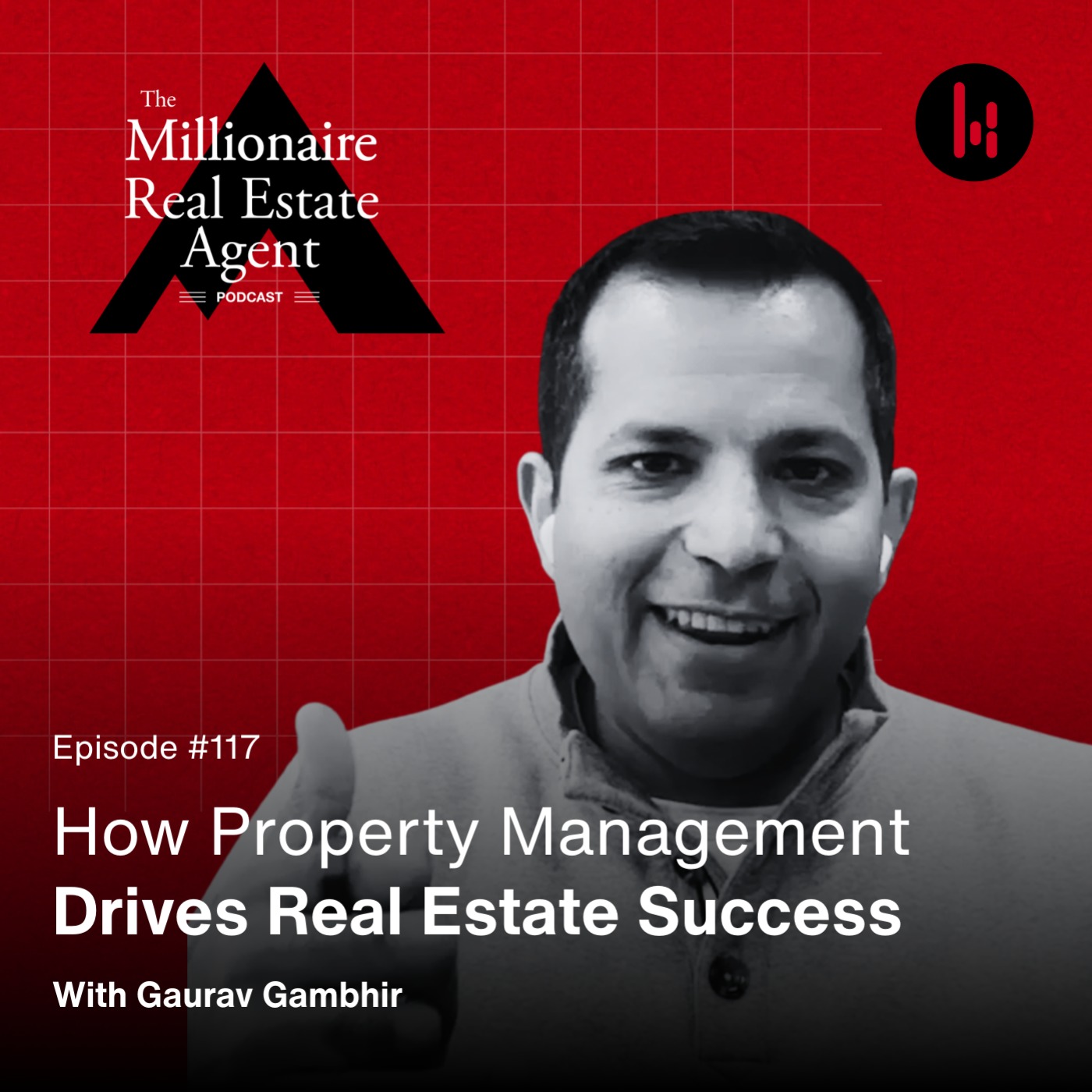
The Millionaire Real Estate Agent | The MREA Podcast
117. How Property Management Drives Real Estate Success With Gaurav Gambhir
00:48:02
Loading summary
Transcript104 lines
- [00:05]
A
Hey, everyone. Welcome back to another episode of the Millionaire Real Estate Agent podcast. I'm Jason Abrams, and this is the place where we lift the curtain on the world of real estate like never before. Every week, I sit down with visionaries, pirates and mavericks. We're here to document, demonstrate, and most importantly, demystify their game changing models and systems. What secrets propel them to the top, and how are they living their dreams? This is about passion. It's about strategy. But above all, it's about real, tangible success. So buckle up and let's dive in. This is the Millionaire Real Estate Agent podcast. Jason. I want to build an empire, friends. I hear it all the time. So now let's talk to someone who has. Today, we're going to talk to a gentleman who runs many businesses. Their team, a perennial, almost 1,000 units each year. He owns market centers and brokerages, property management, insurance. The list goes on and on. Hailing from the city of Brotherly Love, I am talking about none other than, than Gurav Gambier. Friends, today we are going to focus specifically on how he built his team and how he runs the property management company that services over 5,000 properties and is one of the fastest growing property management companies in the United States. Sit back and buckle up. This is Gaurav Gambier, and I am joined by a brother of mine because I've known him that long. Gaurav. How are you, my friend?
- [01:57]
B
I'm doing great, Jason. Hope you're doing well.
- [01:59]
A
I am doing well. It's an honor to have you. I want to jump right into this thing. We're going to unpack the incredible wide world of property management. But before we do, I want to ask you the question I ask everyone else. How did you end up in the greatest industry in the world?
- [02:14]
B
I must be very lucky to be able to get in this industry because I came to study computer science to be the best programmer the world has ever seen.
- [02:25]
A
You're so far from that. You're so far away.
- [02:28]
B
And I started that way. I graduated from a wonderful Drexel University in Philadelphia, got a job in an amazing corporate company called Unisys, and I was set to get started, and then 911 happened, and I lost my job before I started.
- [02:44]
A
You're kidding me. I didn't know that part of the story. Did they just send you an email?
- [02:48]
B
Interestingly, I got married to my high school sweetheart at the age of 22 because I had a great job with a great paying salary and it was a great career start. So I thought since we had a long distance relationship. We can get married and then start the journey together. Because I was going to make some decent amount of money. And on our honeymoon in Hawaii, paid by my parents, I get a phone call, only one phone call that actually worked. And I got a reception. And it was my manager who said, if you are here today, you are safe because you're starting two weeks later. There's a hiring freeze. Unfortunately, I can't get you started.
- [03:24]
A
That's devastating, man. You must have felt like the world got pulled out from under you.
- [03:28]
B
I actually, many people may not know this. I actually told my wife, let's just jump from the cliff. I'm not kidding, I'm not kidding. I actually, in that moment, if my wife wasn't there, I may have jumped because the world just shattered.
- [03:44]
A
Yeah, everything you had been working for, all your plans.
- [03:47]
B
But I also an immigrant to the country, so I would have had visa issues if I didn't get a job very soon. I borrowed money from my parents, I had student loans to pay. I got married and I got another person in my life as sort of a burden on my family that now I have a wife who also needs to go to college and I have no money and no place to stay. So I didn't want to be that burden on my family.
- [04:06]
A
Let's back this up for a second. Hang on. Because you mentioned it, you're an immigrant to this country. Where does your journey begin?
- [04:13]
B
I came to this country in 1997 from India and I was 18 years of age at that time, came with my family where in India. First of all, I was born in a place called Punjab, moved to Bombay and then moved to New Delhi as a capital. So we moved in India a little bit. And then after I graduated from high school, came to us for further studies. Because US is a melting pot and opportunity for the world. And there's opportunities, especially in computer science, which was my focus.
- [04:42]
A
All right, fast forward so you don't get the job. 911 is fresh on everyone's mind.
- [04:47]
B
Right.
- [04:48]
A
What do you do next?
- [04:49]
B
So we came back after our honeymoon. I think the last few days were tough, enjoying our honeymoon. And then I came back. My dad used to own an Indian restaurant. So we sat at a dining table trying to pretend that we were happy and it's all great. And at dinner we said, I got some news to share. And my mom says, even we got some news to share. I said, that's interesting. Sure. Why don't you go first? No, no, you go first. And we said you know, listen, they lost my job, but we'll figure it out, you know, but we're going to end up staying in the house for a little longer. I need some more money, and we don't know what we're going to do, but I need you to, you know, we need. We need some more money to support my life. But I'll work and we'll figure it out. But at least you have a business. My dad used to own an Indian restaurant. So he said, at least you have a business and maybe I'll work in the Indian restaurant. Saying, oh, by the way, dad actually sold the restaurant.
- [05:34]
A
That was their news.
- [05:37]
B
My dad got into a misunderstanding from his partner, who pulled a smart one under the rug with him and basically took the restaurant away from him. So my dad was devastated. So now my family, with my dad, doesn't have a job or business where my mom used to work as well. I don't have a job. My wife doesn't have a job, and we are. And my sister. So we have five of us in a house, five adults, two in college, one just graduated who's unemployed, and parents who don't have any money right now. And that's how my life started. This was in 2002.
- [06:07]
A
This is a screenplay that must be made. I'm adding in the comedy, and I know it was dramatic and tragedy for you. I'm finding it hysterical. So now you're all in this house. What happens next? How do you end up in real estate?
- [06:20]
B
One thing that I've learned from my dad, you don't never give up. You never, ever give up. So the first thing my dad said, you know, it's the best thing that happened to us. And I said, are you kidding me? And he said, this is the best thing that happened to us. We have a clean slate. We'll start again. My dad has been a serial entrepreneur all his life, probably built about 15 businesses, successful in each one of them. And he's moved around, and he's been working as a business owner since 19 years of age. Unfortunately, he passed away two years ago. But, you know, at that point, he just looked at me and said, clean slate. Don't worry. I've done this 10 times. We'll figure it out. And that was a great. A big, big help for me. I don't think I would have been as strong unless I had the backing of my parents around me. And my wife was extremely strong as well. So we said, okay, let's go out. So I started making calls. They started looking at different opportunities as well. I met a college friend, I spoke to him and that I was looking for an opportunity, and he was starting a software business for an appraiser. So he was writing code for him and he said, listen, I'm one person. Could you help me design this thing and we can sell it? So I got into that business with him because I had software experience. And I said, I'll help you out and we'll figure out in the next one year how the immigration is going to work out. But I need to make money today, so let's get started. My mom and dad started a jewelry shop, a small one. And then I started with my friend software, met an appraiser who wanted us to write the code, started asking millions of questions, how does the appraisal industry work? So learned a lot about real estate. We worked for about a year, didn't really get much because it wasn't paying two people's salary. And then I found an opportunity to work in a company as a software engine or as a networking person who were willing to do a sponsorship for me for my immigration. So that was priority. You can't live in the country unless you have legal status. So I took that opportunity. That company happened to be in real estate. They were warehouse and shopping center owners. They owned 2 million square feet of real estate. And then I got there as a software engineer, helping them with the backend computer stuff. Interestingly, very entrepreneurial through my parents and my family. I started asking him, so let's say if I was working with you, and I saw you working something every day, instead of me just providing support to you, I came to you and said, jason, you do this every week. You're offering writing a playbook or you're interviewing people. Could I do something to help you make things better? And you may look around and saying, sure, try that. Maybe you can do this. So that's how I started with my then owner or the boss of the company saying, how can I help you? So at one point I saw he was in meetings, left a lot of paperwork on the table and asked me to scan it. And I started looking at it and said, what does triple net mean? What does ROI mean? What does a least abstract mean? What does a mortgage mean? What does amortization mean? So I started asking him questions and he started answering it. And he says, you know, you're a pain. You ask too many questions, but I'm happy to answer it. And then I started learning more and more and more. And I used my software engineering background, started Creating some templates because we didn't have iPhones, we didn't have apps at that time. So I wrote code to create models, financial models for him so he does not have to analyze properties on paper every time.
- [09:33]
A
Guy must have loved it. You're like his secret weapon. After a short time, he saw what
- [09:37]
B
I did and he said, what else can you do? This is absolutely amazing. You're saving me 10 hours a week valuable time. And then he said, can you do this? Can you do a proforma for 10 years? Can you do a lease abstract and save it so I can send to the banks? So then I started learning more and more. And at one point I said, instead of me asking you questions, can I go and take classes someplace where I can learn all these things? And I said, go and take a real short course. I said, you know, that's a great idea. Would you pay for the $600? Because I don't have the money. He said, only if you do it on the weekends and evenings, I'll pay for it. And I did. So I went to real estate school to learn, so I can probably help and grow in my job better. Had no plans of getting into real estate. It was just an education thing.
- [10:21]
A
That's incredible that you didn't set out to become a real estate agent, yet you become one of the top real estate agents in the world. And it's not that long of a period of time.
- [10:30]
B
2005 end is when I got my license and then I started working with him for a while. And at one point I asked him a question as I was building up more confidence, you know, getting into my journey. And I asked him a question one day. How do I make a million dollars? Show me the path. Just a dreamland, because I was making maybe about 60, 65, 70,000, about 20, 27 to 2006 and 7. And I said, can I ever make a million dollars? And he said, no, nobody makes a million dollars. And I said, wow, like, then I'll never make a million dollars. And I don't think he was thinking much about it. So I came back home, told my wife, I said, hey, guess what? I found out something today. I will never make a million dollars. And she's like, nobody does. And I said, yeah, but I will never get a chance to try it. And she said, what are you thinking? I said, I'm going to go try to make a million dollars. And she said, are you nuts? You have a great job, you're building up, you're getting experience. Why are you going to leave your job to try to do what? Do you have anything in mind? I was like, no, I have a real estate license. That's the only thing I have. So I thought to myself and said, okay, If I make $70,000 a year working in a job and that takes 50 hours of my time, if I can work nights and weekends and I can make half of it, I will have the enough comfort level, then go take a leap of faith in myself that I can make. If I put in more hours, I can make double the money and I'll make my salary fair. So I said, okay, six months. I'll give myself six months. I'll start working on it. So I started working nights and weekends, open houses, calling people friends and family and anybody and everybody I knew. I started talking to them, saying, can I help you? Can I help you? Can I help you? I would say it took me about a year, not six months. And then I went to my boss and said, is there any scope for me to grow much larger in this company in the future? And I said, listen, you gained so much above you is me. I'm not going anywhere. So I said, okay, I respect that. And I said, you know, can I then please try and invest in myself and take a leap of faith in me? He was surprised, and he said, you got to give me six months as a notice period. You can't just leave. And then I gave that six months, had a transition plan. And interestingly, my first company was Keller Williams. I lasted there for two months.
- [12:48]
A
Jay.
- [12:49]
B
I left Keller Williams because I thought I wasn't getting the support that I needed. But now, knowing what I know, it was my silliness, my arrogance, my lack of effort, because I was looking for a very easy button for me to say if I went to a larger company, they're going to show me and do. And I didn't want to do the time and effort into it because I had a full time job.
- [13:12]
A
Sure.
- [13:12]
B
So knowing now what I know, I think that was my mistake. But then I left and I said, I'm going to start my own brokerage company.
- [13:18]
A
Two months into the biz. Wow. Okay.
- [13:20]
B
One thing I forgot to mention in between is that during my three years of when I had my real estate license, I kept learning more and more and more. I took all my brokers classes in those three years without selling a single piece of real estate. So with education, I had gained so much more confidence that I felt very comfortable with the business. So I sort of did my bachelor's degree in real estate for three years by learning and taking classes, but not selling real estate. So when I started getting out, I went to my. That appraiser friend that I wrote software for, and I told him that we're going to start a new real estate company because I know what the newer agent would want. Just like me, I knew what the larger companies had to offer. But I'm going to create a different model for them to be able to provide support and lead generation. And then I'm going to create a financial structure that made sense. So I convinced him to become my broker of record to launch a new company. Okay, 18 months. We hired 70 agents.
- [14:16]
A
Wow. Big growth.
- [14:18]
B
Big growth. I think the market was great. People were looking to get into real estate. I was out there. There was one company shutting down. I bombarded every one of them. I met with them, we did seminars, and it was a great growth. And that's. I think I went on a tangent and a long story, but that's how I got into real estate. And I was going to do brokerage business.
- [14:37]
A
Man, it's such a big story. The success, though, really starts to multiply because you start selling a tremendous number of homes and then ultimately end up owning brokerages. So how would you quantify the success that you've had? When you look up now, how many home sales a year are you a part of in one way or the other?
- [14:54]
B
So our brokerage company in Philadelphia is about 1100 agents strong. Our team is about 60 people strong, and we will help about 7000 families a year under the organization.
- [15:07]
A
And it's huge numbers. But you ended up deciding to build that within Keller Williams. So what's the thing that happens where you're building on your own? I mean, do you read the mrea? Is that how it. How did it happen?
- [15:18]
B
I got to the point where we were building our independent company, and at one point, I started losing agents to some larger companies. Keller Williams, Berkshire Hathaway, and other companies that were out there. And I went to my team and I said, why are you here? Why aren't you going to these companies? Because I was losing one of our top players. And I said, hold on, let me just reconsider the decision. So we all sat down in a room and I said, give me five things. Why you are still here? Why aren't you going and joining everybody else? The common factor that came out was, Gaurav, we are here for you because we admire and love you. We are here for our loyalty. We lose people to larger companies because of brands Sometimes. And I think there are some other resources and education that we can provide in this company. But we're still here because we want to be loyal. I went home and cried and I said, I am the bottleneck. Wow. For the kids of my team that could be staying in a Disney resort and they may be staying in a different hotel because they're losing 20, 30% of their volume because they are loyal to me, I said, I'm the bottleneck. So then I said, I can live like that. I can't live like that. I have too much pressure on me. So I started looking around and I interviewed almost every brokerage company that exists at Jason, everybody that in the city of Philadelphia that had a sign up. I met with them. And then there was nobody better than Kel Williams for the business model. And I'll summarize it in one statement. That was the only company that allowed an entrepreneur to build a business within a business. And I am so glad I made the right choice. Everybody else wanted to make me an employee or take control. Keller Williams was the only business concept that. Have you said where entrepreneurs thrive?
- [17:05]
A
That's it.
- [17:06]
B
I could not have come up with those three words, but that's how I felt when I came to kw. Again, it's brilliant.
- [17:11]
A
And gang, this is the part of the show where we're going to switch into a model so you don't have to take the notes. I'm taking the notes. If you don't get the notes, go to mreanotes.com and sign up. They come out every Thursday as a PDF because you're known in the ecosystem not for the 7,000 real estate deals you're a part of, but for the giant property management company that you're scaling nationally right now. As you look up today, how many homes do you manage?
- [17:37]
B
Close to 5,000 homes in about 14
- [17:40]
A
states at this point, and growing incredibly quickly. Now. You've spent years toiling and getting these systems right and now you are hitting scale. And gang, that's why you have to understand this. Let's start this way. What's the argument for property management? Because there's a lot of brokers and agents who completely dismiss it or don't even think of it. So give me the pitch, give me the argument to spend any time thinking about property management.
- [18:06]
B
So that's very interesting. You said that people are for some reason afraid of property management. I don't know why.
- [18:12]
A
Well, because it's dealing with millions of headaches of other people's problems at scale. And that's terrifying. Just in case you didn't know, Gaurav, that that's why you're like a firefighter who only works with arsonists when you're managing property.
- [18:24]
B
That is so true. If it rains, it's your fault, right?
- [18:27]
A
So that's why.
- [18:28]
B
That's why I got into management, because nobody else wanted to get in there. And I think that's what everybody should remember as well. If you keep doing what everybody else is doing, the competition is very high. But if you get. If it's a road less traveled, then there's a much better opportunity for success at a very high level. So when we started property management about 11 years ago, and that also happened by coincidence. A funny story. I'll share in a bit, but I think that's where the value comes in. Most agents and brokers are afraid to take a path less traveled. And I went right head on in that path for that reason.
- [19:02]
A
When we did our pre interviews, you said to me, let's start with number one, this offers reoccurring revenue that you can grow. And that was really interesting to me because most real estate agents are transactional variable revenue. Why was that important to you?
- [19:16]
B
Because as my story goes, I never got into real estate wanting to be just a real estate agent. I started in to see how I can build a business around it. And I felt to myself, if my income is going to be unpredictable month after month, and I have so much responsibilities on my head that I have to take care of my family. I was already married. I thought I need some predictability. I need to be able to have something that I know what I can expect going into the next month and how can I find that? So I've used this phrase, and if I'm repeating myself, I apologize that I thought everybody's going from the front door and I'm going to go from the back door.
- [19:51]
A
Smart. Which kind of leads us into number two, which you said that having the management company allows you to have deeper client relationships. Why is that?
- [20:00]
B
You do a transaction, you meet someone, you spend the time, you get to know them, and then the life cycle of that transaction or that client is about seven years. We try our best to stay in touch with them with, with different formats, you know, different touch programs. But there's nothing like handling their money on a monthly basis. So that's when they are vested with you as compared to you speaking to them. So when, when your client calls you asking and understands that they are believing in you, for them to manage, for you to manage Their money, it's a different relationship. So that creates unique opportunities.
- [20:32]
A
I guess I didn't think of it as managing their money, but you have found a way to be to stay very needed and useful in their life in between transactions. Which kind of leads us to the next one which is this gives you strategic marketing positioning because there's no one else making that offer.
- [20:49]
B
And on top of that you are managing one of the biggest assets of their life as well. Everybody's excited about real estate, everybody talks about investments, then they're talking to you and saying where else can I invest? Because it's like building a team. If you help those clients build a great team, the comfort level for them to buy more assets becomes easier. The number one reason why people don't go buy invest in real estate if you ask them, would be I don't want to manage it. The stress of managing it, it's not the roi, they understand the benefits, it's I don't have the time to manage it. And then why can we provide that support to them to be able to be their back end partnership so that we can add the value that they're looking for. And once you do that Jason, that becomes absolutely a growth opportunity where not only them, their friends, every other future opportunity and when they're looking to sell something, guess what, you get the first right of off market deals that you might be interested in buying it. And that's how I've grown my personal portfolio. I have never gone in the MLS and bought a property. It always came to me somehow in an opportunity and majority of them was around property management clients that said I would like to sell this, invest in something else or I am not happy with this particular asset and I want to sell it and save money for a different opportunity, sell me a different, less in a different desirable neighborhood that I'm not in that I like with her. That's where we came and said you know what? But I may have somebody who's interested. And let's talk about the market value and what you're looking to sell it for. And at some point I know all the data, our investors know all the data. What's happening the last 12 months, that's
- [22:18]
A
the last bucket which is it's an incredibly resilient market that's by and large data driven which has to appeal to your engineering sensibilities.
- [22:26]
B
So I'm a very numbers driven person. So I'll give you some facts, this is how I think today and about five years ago when we started expanding it's 14 million homes are owned by investors, give or take. There are 42 million homes that are investments. About 14 million are single. Are investments owned by single individual investors. 70% of all units, 4 units or less are owned by individual investors. Wow.
- [22:53]
A
Is that right? The media would have you believe that the blackrocks of the world that these giant investment companies are somehow cornering the market. But this would tell us the opposite of that.
- [23:04]
B
Majority of the investments are owned in multifamily world by those REITs. Individual investors own about 40% of all rental units. An average individual investor owns between one and two units. Gosh. I bet if anyone goes and talks to their existing clients and asks them, do you own another investment property? They'll be surprised with the number of people they'll say yes. Oh, I moved from Alabama and that is currently rented. I moved from the other home and I was in the university and me and my wife were there and then we bought a new home. We kept it. There's about 60 to 70% of people today that have interest rates less than 4%. That creates an opportunity. In my career I have never seen an opportunity like today that there are more accidental investors that don't want to sell because of their low interest rates and they are going to become accidental investors. Rentals are high, interests are low, the gap is much bigger and they don't want to sell.
- [24:09]
A
And so you look up and think you can get a decent percentage of the 14 million homes that are in this group. And all your wildest dreams, and the wildest dreams of every real estate agent listening could kind of come true.
- [24:24]
B
That's true. About 6 million homes or transactions are done a year. My pool of people are 14 million. How do I get into the larger pool? By creating long term relationships where they continue buying more assets. Out of the 6 million, if 20% are investments, I get the opportunity there before anybody else.
- [24:41]
A
Yeah, for a million sales.
- [24:43]
B
That's correct.
- [24:44]
A
That's genius. All right, well if that's not enough to get your blood boiling, nothing will because I'm sold. Now I didn't know those numbers, but you're going to see Jason Abrams Property Management coming to a town near you. So if I'm out there and I'm like, this all makes sense to me. You told me in our pre interview, by and large, there's two ways to go about it. Number one, start your own property management company. Number two, partner with an existing one. They both have pros and cons and I kind of want to unpack each of these if you're going to go build it yourself, you told me the first step is legal licensing and compliance, which, by the way, is enough to get 99% of our audience to not want to do it. But walk me through what you mean.
- [25:23]
B
I mean that most of us are doing property management without knowing it. Most of the agents, if I have a landlord that have helped them, they'll call me and say, gaurav, do you know a good painter? Gaurav, I'm traveling and my client wants to come to the office and drop off check. Just hold onto the check. By the way, could you go to the bank and just deposit for me? Could you just make sure the H Vac guy gets to the house? Do you know a good H Vac person? Do you know a good electrician?
- [25:46]
A
Everything you're describing, I did as an agent. Every single thing you did. I'm not saying I did it all often, but I've done every one of those things.
- [25:54]
B
If anything goes wrong, you will all assume that those people are not going to be upset with us or not not not put a lawsuit against us. If the damage is big enough, you will be. Your ENO is not covered. You're not getting paid to do that job, and you're acting like a property manager. And even if you're not getting paid a dollar, you're still working on behalf of a future opportunity that has a financial structure behind it. So you're getting paid for future business because that's what you're going for. So that can be held against us. So taking all those things into consideration, make sure that there's a license coverage if you start your own property management company or you perform those services, that it has a separate entity and an ENO insurance because most of the brokerage companies are, or the market centers or brokers are not going to be covering property management under their E and O. So I think it's important to have that in mind.
- [26:46]
A
Genius. So, number one, if you're going to do this, do it compliant, get licensed, protect yourself with E, and make sure that as you run the business, you stay compliant. All right, bucket number two, you said systems and technology. I can't decide if it's because you're a tech guy by nature or if I could run this whole business with a sheet of paper. But the technology today is incredible. Gaurav. Why would you?
- [27:07]
B
Incredible. And also think about if it's not my one thing, I'm not going to be able to use all the expertise that comes in the technology process. The Reason why I'm in Keller Williams today, even though we are doing a large amount of business, is because I don't do what Keller Williams does and they do it really well. So why I'm going to try to leverage that, and I've learned this in my life much sooner, is that I rather leverage things and then get places faster than worrying about, you know, this is a phrase that I heard, you know, if you dribble fast enough, you feel like you're doing a good job. But if you throw and pass, you can move faster and further ahead. Instead of working very hard here and extra hours. Can I team up with somebody? Can I pass this along? Can I use them? Can they hold my hand and pull me up faster? And we all benefit just because there's a CRM, just because there's a software. Property, property management. We had a friend of mine that owned about 150 units in property management and they had a great property manager. But when we were talking in masterminding together, we realized that that property manager did not use some of the features that existed in that management company in the management software. Same software. And they were allocating another 15, 20 hours worth of week for years because they did not know that there are some features available. And I think that kind of experience is very hard to duplicate and you miss out the opportunities on them.
- [28:23]
A
So if I'm going to go start tomorrow, is there a piece of software you'd point me in the right direction of? I'm catching you off guard, but give me a couple names because I'm sitting here and I want to know.
- [28:31]
B
I'll give you a couple that I know people use and I'll give you the one that we use. So we use appfolio A P P F O L I O I think it's an amazing software. Another one that people use a lot is called Buildium. B U I L D I U
- [28:43]
A
M All right, so then that's the piece of technology. You say build systems early. And what I like about this is you said in that you need to build your team. You laid it out as leasing, property manager, accounting and maintenance. Those really are the four buckets.
- [28:59]
B
Yes. The maintenance is the one that nobody wants to do. That's one of another reason why nobody wants to be in property management. I don't. The emergency phone calls 247 support managing the contractors invoicing that it takes a lot of for property management to do the right way. And I think that's important if you're going to be offering services and managing other people's assets. You have to be prepared to offer the best value you can. Otherwise you're doing injustice to them and their families who are relying on you. So I would suggest that everybody spend the time to create those relationships and make sure that you have the support available and not just I collect your rent and I send the money back. That is a very small portion of property management.
- [29:37]
A
It's interesting because I think if you were to go interview people that have had bad experiences with property managers, the number one thing that they say is every repair costs too much.
- [29:45]
B
Correct.
- [29:46]
A
And they feel like they were taken advantage of.
- [29:48]
B
Correct. And if you have good resources available, then you can provide the value to those owners where they're going to be happy. The ROI gets better, they'll come back to you to buy more investment opportunities. If their experience is bad, then they're going to stop at that moment. And saying investments is not for me. You miss out on future growth.
- [30:07]
A
Then you put this bucket next of servicing and pricing. Walk me through the services and then can you help me understand how you price for your services?
- [30:15]
B
At this point, we have two buckets. One is, and there are owners out there. The number one reason they'll say, I don't want to give you property management because I have a bad experience in repairs and maintenance being super expensive. I'm very hands on. I'm going to do it myself. My son lives close by or I've been, I, I know the house better. No problem. We have owner handles maintenance so we'll do everything else and then the owner can go and do their own maintenance. Jason, you'll be surprised after the first call on a Saturday night at 8pm when they are with their family or traveling and a phone call comes to us and says, I know I manage my own repairs. However, I need help today. And that's the moment when they realize that it is extremely helpful. Or they'll say, I send a plumber. They charged me X dollars. I thought it was cheap. And now it's leaking again. It has damaged the unit downstairs. Could you send somebody again? So that's one. And second is full service. Full service do way over and beyond.
- [31:21]
A
Okay, walk me through some specific math here because the world wants to know
- [31:25]
B
from the point of visiting the house when it's vacant, creating more than you know, more than just walking and understanding what the house needs in repairs and maintenance, I think it's a lot about compliance. City of Philadelphia, for example, you need a rental suitability license, you need a commercial activity License. If you have a bedbugs addendum, if you don't give those things to a client at the time of moving in, if the tenant becomes default in paying rent and you don't have those documents on the day of moving in, you cannot collect any rent from that date until the default. Wow. All rent is forgiven. Wow. Most of the loaners would not know that. So helping them understand local compliance laws, township rules and regulations, and that's what we are learning across the country is that most people don't understand the legality behind all those things. So we'll walk them through all those things, we'll help them get compliant, we'll make sure that paperwork is completed and then we'll also analyze and say how can we get your H Vac on a six month program so that it doesn't go bad every three years? The life cycle is seven years.
- [32:29]
A
What you're talking about. I owned a rental property in a city and the guy didn't pay and I needed to take him to court. And they said you just have to get your landlord license before you can set the court date. But in order to get the license, I had to get the city in to inspect the property and this guy wasn't letting anyone in. Gaurav. I was in this terrible cycle. It took me four years to get myself out of it.
- [32:49]
B
Unfortunately, that happens a lot. So that is part of the education that we do with the owners and we'll understand their goals. Why did you buy this investment? Were you an accidental landlord or are you looking to invest in more? What is your plans? We may have other opportunities that we can help you grow. If we did a great job here, are we arguing about a 1 or 2% of management fees which is $7 a month or $10 a month more, or are we talking about saving you thousands of dollars in the ROI and future growth? I think once you establish that relationship, it's different.
- [33:17]
A
What do you charge to manage a property?
- [33:19]
B
Full service between 7 and 8% depending on the condition of the home. If the home needs a lot more work, we will charge a little bit more. And some of the subsidized housing where there are different kinds of inspections needed and need to be rehabbed to get the place ready, then we'll charge between 9% and 10%.
- [33:37]
A
Got it.
- [33:37]
B
All commissions, just like real estate in management as well as negotiable.
- [33:41]
A
Everything's negotiable. Friends. Then the last bucket here. Vendor and partner network. If you're going to open a management company that's kind of. Kind of the thing.
- [33:49]
B
It is extremely important because you're only as good as what your vendor program. People don't worry about the management fees or the leasing fees. They're used to all those things. They always pinpoint the plumber charging X number of dollars and if they made a mistake, not going back. So if you have the right relationships, and most people, most realtors and brokers do, actually, because when we're selling homes, our homeowners will ask us for recommendation. We have them. So having them. So in my mind, going back to the idea of start your own, you have the right vendors that you're recommending. You may or may not understand the compliance. Some do because they may have their own investment properties. Make sure you get it licensed and reduce your liability. And that's a great way. But then you have to decide who's going to be doing it. It's not how to do it, it's who to do it. That's what we learned. You know, so when we were. When we realized through Gary in one of the rooms that Gary asked, there's a phrase he used called dynamo. And the idea was, what other industries could you be working in around your real estate? So you're not only making money in the transaction, you have a long relationship. So I stood up and thought to myself that I was. You know, our team was called the condo shop. So I thought we were the best in the country to sell condominiums. And then I realized around the room who had their hands raised, that they were doing way more business in the team than I was. And so, well, that's not gonna work. I'm not the best in doing that. So then I started thinking to myself, what else do I do? I said, I want to do property management. And then I realized that we were doing property management at a much higher level, and I didn't realize it. That's when we started thinking and saying, you know, I asked a few friends of mine, you know, we were managing about 2,000 or so units at that time, why aren't you doing property management? And the answer that came by was, I don't want the headache. It's not enough money. And then we discussed, you know, in detail what the benefits were. And then we also discussed who's going to do it, it's not where. Gaurav, you can teach us, you know, tell me the software, tell me the, you know, give me all the playbook. Here's a Contracts, his management agreements, who's going to do it. So that became a challenge. And then lastly, it became a challenge was I don't manage any units today, even if I manage five, or put in my own investments into it. How am I going to afford to pay somebody 50, $60,000 a year on day one and then train them and hope they don't leave? Because then I don't want to get the job back so that the risk was too high.
- [36:03]
A
That's it. And so that's what led to this idea, number two, which is why I don't want to own my own. I'm going to partner with somebody.
- [36:10]
B
Correct. So my goal was, I'm going to help as many people as possible because I believe in this so much. It has changed my life in this business. It has created opportunities beyond. It helped us launch an insurance business. It helped us launch a title partnership. It helped us launch a repair and maintenance behind it. So that allowed us to grow our organization much larger. But then I realized all the people around me were not asking me how to do it. Deep down inside, they're asking me the question how? But they really were asking me who. And then we said, it's very hard, very, very hard to create a new who in every city and every town across the country. So we said, okay, if we don't teach you how to do it, we learn how to do it. I'm going to become the who so that you don't have to worry about that who. And I'm not going anywhere. We have over 50 employees. We can help do a lot more stuff on the back end with today's day and age. Think of it as an expansion hub model.
- [37:07]
A
I get it. Totally. So if you're going to go out, you're going to partner with someone, I said to you, okay, what do I even look for? You said, number one, look locally, Then number two, check their network, then do your research, and then start meeting with them. Which I think is a pretty good process. What am I watching out for, what am I looking for, and what am I looking for that I don't want to find?
- [37:28]
B
The first thing that I think when I go through that process is not just about finding anybody who's doing a good job. I think it's important to know how long they've been in business and how much they have grown. Because if you are trying to get into this business and you have high aspirations like your other businesses that have grown, is that company capable of growing at the pace that you want to grow with them? Because you may outgrow them very fast or they may not be able to handle the growth that you're going to bring on top of it. And then your clients struggle and have a bad experience and that destroys long term relationships for your existing business. So you have to be very careful on that. Is that company going to be able to grow and scale at the level that you want to grow as well? And another thing that I would say is that what's the guarantee that, you know, as if, as if I wear my real estate agent hat only I have relationships, I like to add value, but I don't want to lose those relationships. So if I refer the client to somebody, what is the guarantee that, that I will not lose that management company to take my client away for future investment opportunities or I'm going to be arguing with them. So people lose those opportunities by referring business. So how do you make sure that you actually retain that relationship? So you know, from our company what we do is we sign a non solicitation and then the expansion that we're doing, we form a joint venture that partners so our local partners have a skin in the game and an ownership structure that prohibits any fear coming to mind at that time.
- [38:52]
A
How do I figure out if I'm a good candidate to be in a JV with you or a company like yours?
- [38:58]
B
First they should figure out do they have enough need to provide that resources
- [39:04]
A
and what does that math look like? If I say to myself, Jason, I need to be able to direct blank number of investors a year, what am I thinking?
- [39:10]
B
50 units in the first year, about 100 units combined in two years. If you think you are able or if you're helping enough investors or you have relationships with enough investors that are going to need those services. I think it's, it's worth going the path of starting a management company if it's about a five or ten units over a year. I think a good relationship with a local management company, going through the process, making sure there's some documents tightening to protect your relationships. I think that's a great path. You know, keep the leasing, keep the
- [39:39]
A
sales and when you look up in these JVs because you're now running a lot of these things. Yeah, I'm trying to assess and I don't know how to ask the question. So you help me. How much money can I make? Like on average when you look up like I'm trying to decide is this anything worth doing? How should I think about it?
- [39:56]
B
I'll give you simple math. Let's say a management company, each property makes $150 management fees. Okay, in a year, it's about 1,800. Let's just round it off to 2,000. Okay, so if it's $2,000 a year in management fees, if you did 50 of them, that's $100,000. If you added some late fees, some repairs and maintenance, admin fees. If you added some compliance document processing fees, there are other, other additional fees that you charge. Plus leasing. If an average tenant stays in a place for two and a half years, that means 40% of the portfolio will be leasing every year. If the rental is about 2,500 bucks. Now you're talking about 40 units. At 2500 bucks is another $100,000. So now you're up to $200,000 plus in gross income with after all the expenses, I think there's enough money to be made within a hundred unit portfolio and then people will sell and you can add insurance. Even at 100 units, I think there's potential to make over $100,000 for the person who's creating the lead generation opportunity.
- [40:59]
A
Man, I know. You just got people's attention. So, Gaurav, if people want to learn more about this, they're driving and they're like, hey, that's me. How do you want people to reach out to you?
- [41:07]
B
I'll give my email address out. It's Gaurav. G A U R a v@tcsmgt.com There it is, friends.
- [41:18]
A
Gaurav, let me just tell you this, dude, I love your story. And I didn't know it all until today. I absolutely love it. I find it inspiring. And the fact that you have found a part of the real estate business that everyone avoids like the plague. And you talk about it with the the passion and the mission. Three times. You talked about how you owe it to the families of the people that own these homes to manage them. Well, I can't tell you how special that is. That's why you're my brother, dude. I love how you see the world. Thank you for everything you're doing.
- [41:51]
B
Thank you for having me here. And I hope I can help few other people create opportunities like I have created for myself and people around me. Don't discount the property management world. That's the only advice I can give you is explore the opportunity. You'll be amazed.
- [42:05]
A
Okay, that's like a broad reaching episode. And candidly, there's a handful of people in the entire world that can talk about property management at the level that Gurhov can. You know why? Because the vast majority of property Management companies that are in existence today manage less than 100 homes. He's managing over 5,000 of them. And as I think, think about it, because I laid in bed last night and I asked the question, what did I really hear? And by and large, friends, I think you have two paths. Number one, I go out and I find an existing property management company and I partner for them. Number two, I start and I build my own property management company. So let's first capture the why you would do it. Here's the reality, gang. If you're trying to get upstream on future buyers, property management is an incredible business to be in because everyone that's renting these properties is the first time home buyer or the second time home buyer of tomorrow. So the reason you see the large aggregators getting into rental.com and having rental properties and signing literally hundred million dollar deals to bring more rentals into their portals is to get upstream on the buyers. They want to teach these people why it makes sense to buy a house. They want to be in a business relationship with them, collecting rent every month. They're trying to earn their trust to get them at to the point of transaction. That's why they're all rushing upstream. And for that reason alone, you have to look at the property management business. The next one is it's a listing tool, it's a lead generator. Because at some point every landlord makes the decision to either A keep it or B, sell it. You know what happens? Generally someone owns a property and everything is going great and then they get the wrong tenant and it's an absolute nightmare. And it's on that day, day on a walk up the courthouse steps that they make the decision to sell the property. Do you want to be the first phone call? You know who the first phone call is, right? It's the property manager. And so in that way, it's an incredible listing tool to have. And then finally, number three, it's an incredible service to provide for your existing client base because every landlord that I know that makes their bones in the rental business desires to own, to own more than one piece of investment real estate. This is called multiplication, not addition. So you land a client, then go sell 5, 10, 15, 20, 100, 500. There's no limit number of properties to them. When you offer the turnkey property management solution. And now here we are. Here's your choices. Find one to partner with. By the way, I pick Gorov. I think he's crushing it. Or number two, go build it yourself. And he laid it out. If you're going to go build it yourself. And I took the notes. Gang, you're going to learn everything you can about the rules. The differentiator in this business is the knowledge and the data and the systems. Then you're going to create deep relationship with the clients, the money managers. You're going to understand the systems that these people need to run the business. Then you're going to ask clients, you're going to talk directly and ask them, do you want to have an investment property or do you already. Because I'm the manager. And then finally, you're going to wake up every single day in the service of the owners of those properties and in the service of the people that live there. And that's important because nobody wants a property management company that the tenant hates. They want you to make their life easier. Is there anything easy about anything I just described? Absolutely not. Could it be incredibly financially rewarding? You better believe it. Here's the question. Do you want to add a new pillar into your business? And is that pillar property management? Figure that one out and you got something. Go forth and do likewise. There it is. That wraps another episode. Friends, I don't know what you're taking out of this. I really don't. I'll tell you what I want you to be taking out of it, which is these are the people that are having tremendously big lives. And the reason it's happening is because. Because they're setting up the models and systems to do just that. Gary Keller told me that leadership is teaching people how to think so that they do the things they need to do when they need to do them, so that ultimately they get the things they want when they wanna have them. And that's what I want for you. You're all leaders, but it begins with leading ourselves. Hey, gang, if you're enjoying this as much as we are, I want you to subscribe. Hit the button right now. Do it on YouTube, AMAZ, Apple, Spotify, or wherever you get your podcasts. We also send out a newsletter at the conclusion of every show to make sure that you get the highest points in the models and systems that were discussed. So if you want to sign up, I need your name and your email address. Head over to The Millionaire Agent podcast.com Millionaire Agent podcast.com Enter your name and your email address and every week that new newsletter will be in your box. Friends, you just went on a journey. I hope that what happens between now and the next time we meet is absolutely wonderful for you. Thanks for listening. I'll see you next week.
- [47:16]
B
This podcast is for general informational purposes only. The views, thoughts and opinions of the guest represent those of the guest and not Keller Williams Realty, LLC and its affiliates, and should not be construed as financial, economic, legal, tax, or other advice. This podcast is provided without any warranty or guarantee of its accuracy, completeness, timeliness, or results from using the information. You must comply with the TCPA and any other federal, state, or local laws, including for B2B calls and texts, Never call or text a number on any do not call list and do not use an autodialer or artificial voice or pre recorded messages without proper consent. Contact your attorney to ensure your compliance.