← The Morning Edition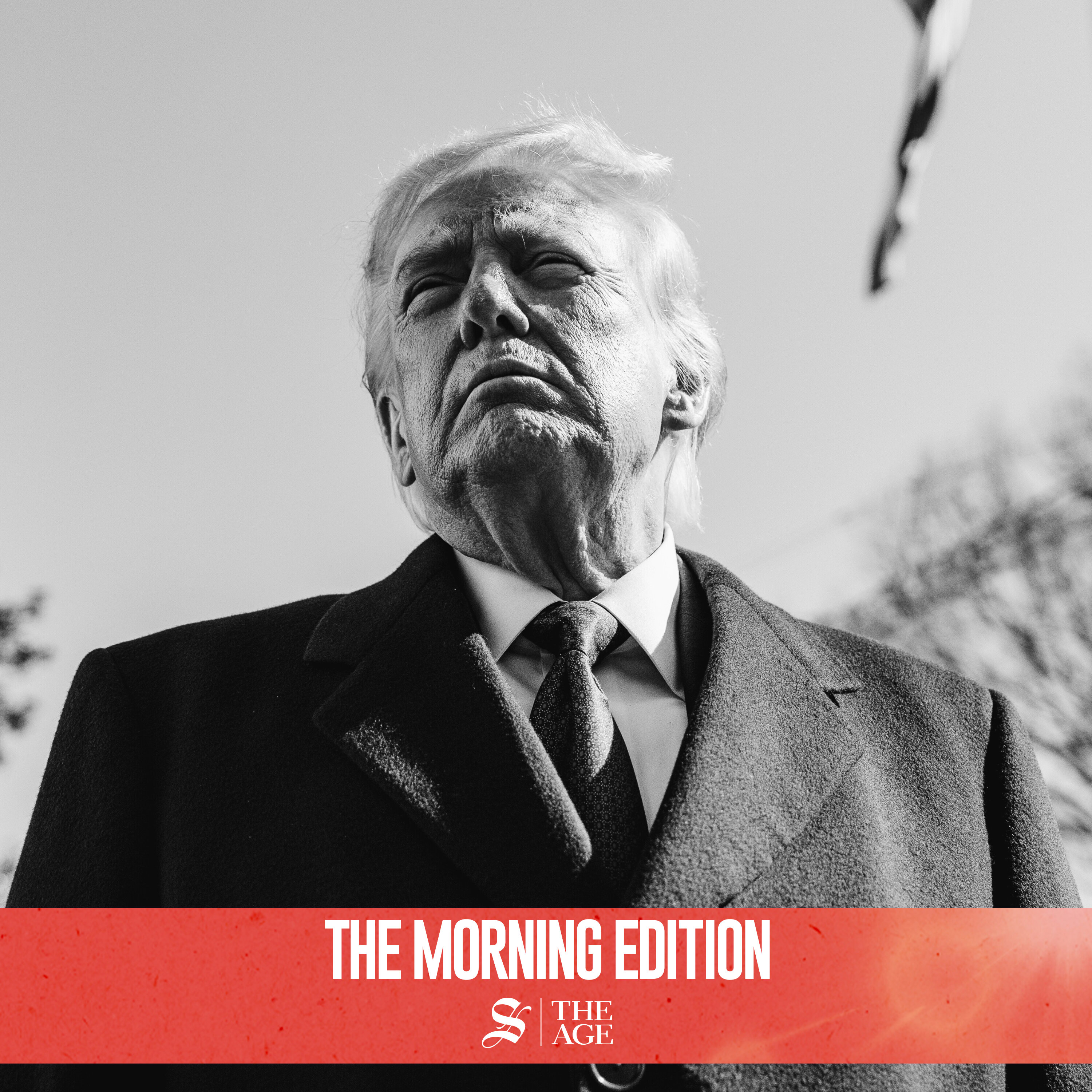
The Morning Edition
Abuse claims against Trump in the missing Epstein files: will it bring him down?
00:19:07
Loading summary
Transcript83 lines
- [00:04]
A
Only days before Donald Trump declared war on Iran, another Epstein files bombshell dropped this one relating to allegations against the American president. An investigation revealed that the Department of Justice withheld more than 50 pages of FBI interviews and notes from conversations with a woman who accused Donald Trump of of sexual abuse decades ago when she was between the ages of 13 and 15 years old. I'm Samantha Sellingra Morris and you're listening to the MORNING edition from the Age and the Sydney Morning Herald. Today, Foreign Policy magazine deputy editor Amelia Lester on what some Democrats are calling the largest government cover up in modern history. And if it could hurt Donald Trump. It's March 3rd.
- [00:57]
B
Amelia, welcome to the podcast.
- [00:59]
C
Thanks for having me, Sam.
- [01:00]
B
Okay, let's just begin.
- [01:02]
A
Can you briefly take us through these
- [01:03]
B
allegations against Donald Trump that are contained in the more than 50 or so
- [01:07]
A
missing pages from the recent release of the Epstein files?
- [01:12]
C
Yeah. So I just want to flag for listeners that this is a little confusing because in the original tranche of documents that was released by the Justice Department last year, there was a set of tips that came into an FBI hotline after Epstein was arrested which were completely unsubstantiated claims about Trump and what Trump may or may not have done and Epstein as well, which I think really muddied the waters here because that was reported on a lot when those documents came out. But what we have subsequently discovered in the files is a set of allegations which come from a woman who says that she was sexually assaulted by Epstein and Trump as a minor allegations President
- [01:53]
D
Trump sexually abused a minor related allegations that President Trump sexually abused a minor introduced to Trump by Epstein in the early 1980s and then alleging that Trump assaulted her when she was roughly 14.
- [02:07]
C
There were four interviews that the FBI did with her, but only one of those interview summaries was released. And guess what? It was the interview summary about the Epstein accusation, not the Trump accusations.
- [02:25]
B
And okay, this is massive. Now, we do know, like you've just said there, that these allegations against Donald Trump, they are unsubstantiated.
- [02:33]
A
But do we have any idea about
- [02:35]
B
how credible they might be? You know, we do know that the FBI interviewed this woman multiple times. So does the fact that the FBI interviewed her multiple times suggest one way or another that her allegations were credible?
- [02:47]
C
I don't think we can say one way or the other. But what we can say is that as you pointed out, the FBI did four interviews with her. Only one of those interviews has been released. And there's a sense that maybe there was a desire not to release the Others because they related to Trump. The reason why we even know about these other interviews is basically to do with the indexing of all these documents, because the index shows the three other interviews and various investigative journalists whom I should shout out here, such as Roger Sullenberger, who has a substack, and also NPR discovered that there was this big gap in the documents based on the indexes. So I think we can't say one way or the other whether they're credible. I should point out that this woman who made the allegations, they came out many years after she says that they happened. And the reason for that is she says that she didn't know who Epstein was until she saw a photo of him after he was arrested. So these interviews took place in 2019, many years after Epstein and Trump were accused of sexually assaulting her.
- [03:51]
B
Democrats in the Congressional committee investigating Epstein
- [03:54]
A
say that this is, quote, the largest
- [03:55]
B
government cover up in modern history. That has yet to be. We'll see borne out as to how truthful or not that is. But many lay people like myself would be listening and thinking, okay, is there some untoward conduct here? Like, you know, is there some suggestion
- [04:11]
A
that someone else has purposely removed them to shield Trump?
- [04:14]
B
Because that sort of. Certainly that's what certain Democrats in Congress are saying, and it's what a lot
- [04:19]
A
of people would think. Right.
- [04:20]
C
Look, let's look at the facts of this. In February, after Trump has been elected, in part because people who was very senior or would become very senior in his administration promised supporters that they would release the Epstein files. So he gets into office, and then the very next month, February, Bondi says on TV that she has the, quote, unquote, client list, Epstein's client list, on her desk.
- [04:43]
D
The DOJ may be releasing the list of Jeffrey Epstein's clients. Will that really happen?
- [04:49]
E
It's sitting on my desk right now to review. That's been a directive by President Trump. I'm reviewing that. I'm reviewing.
- [04:57]
C
She clearly gets into trouble for that because we hear nothing else about it until July when the Justice Department says that Epstein didn't maintain a client list and that it won't make any files public. And it's only when a bipartisan initiative by Reps. Ro Khanna and Thomas Massie introduces the Epstein Files Transparency act in November of last year that we finally get some sense of what is in these files. So all I can say is that the theme throughout has been, we don't want to show you what's in these files.
- [05:29]
F
And everybody knew that there was more there. Pam Bondi had made promises to release the names. The Trump administration. Whatever we find out, whatever the ground truth is, it's very clear that they haven't been straightforward, they haven't been transparent, they haven't been honest. And I think that's one of the reasons the Democrats now.
- [05:52]
B
So is this, I mean, is this
- [05:54]
A
a smoking gun of sorts?
- [05:56]
B
Even if these allegations, even if they're
- [05:58]
A
not true, which of course we don't
- [06:00]
B
know, is this something that could really hurt Trump?
- [06:03]
A
I guess, because of course, like you
- [06:05]
B
say, he has completely ran on a mandate of, you know, there's this conspiracy amongst Democrats and it all revolves around
- [06:12]
A
Epstein and we are gonna let everything out.
- [06:15]
B
And, you know, it seems like time after time after, like you've just set out. There seems to be a lot of effort, of course, to conceal what's in these.
- [06:24]
C
But what's interesting, Sam, is that when you go back to what he said during the campaign, he never actually promised to release the files himself. I was very careful before to describe. It was essentially his proxies around him that pushed this idea that we needed to release the Epstein files. When he was directly asked about it during the campaign, he essentially demurred, or he would say, yeah, I'll think about it. But he was never the one out there saying, I want to publish these files. And in fact, when Bill Clinton testified in the House last week, under duress, under a subpoena, Trump said that he did not approve of that, that he likes Clinton, he does not think Clinton should be forced to testify about Epstein in Congress. So one theme the whole way along has been while Trump supporters and his proxies really want to push this issue to the fore, Trump himself has never wanted to talk about it.
- [07:11]
A
But tell us about the possible political
- [07:13]
B
ramifications for Trump, especially as American senators. They're looking at the midterm elections in November and they're thinking, okay, how much
- [07:22]
A
of a liability is Trump gonna be? Do we stick with him? Is this our time to leave?
- [07:27]
B
Because, yeah, I mean, Democrats obviously are of course hoping to capture the House.
- [07:33]
C
One thing that I think is worth watching is the House Oversight Committee is trying to compel Trump to do exactly what they compelled Bill Clinton to do last week, which is testify in front of the committee about everything he knew about Epstein. It's very mysterious to us, nature of their friendship, why it ended. Even Clinton last week said it ended over disagreement about property. Trump has previously said that their 15 year friendship ended because Epstein was stealing his girls from Mar A Lago. So it would Be nice to know a little bit more about the nature of the friendship. The Wall Street Journal last year released a birthday card that Trump wrote to Epstein in 2003 that was very mysterious. It said, we have certain things in common, Jeffrey. Enigmas never age. May every day be another wonderful secret. I think that the American people would be very interested in the House asking Trump, what is the wonderful secret that you and Epstein shared over all those years that you were friends? The question is, though, whether this becomes a more pertinent issue than all the other issues that are currently consuming American voters. So there is a war in Iran going on. The economy is on shaky ground. Trump is very unpopular right now. In fact, he's as unpopular as he was after January 6th. But it's unclear whether that's as a result of the Epstein files or whether it's because people are feeling an economic pinch. And that's exactly what he campaigned on
- [08:54]
A
fixing for them after the break.
- [08:58]
C
The only thing that the men in these files have in common is that they all had a great deal of either power or money or both. And there's something very disenchanting about how deep that network goes.
- [09:20]
A
Okay, now, obviously, you've just mentioned the
- [09:21]
B
Iran war, which, as we record this on Monday morning, it's escalating, Right? Of course, there was a joint Israeli American bombing of Iran. We know, of course, Iran's been retaliating. Just this morning, we've heard that more than nine people are dead near Jerusalem in retaliatory strikes.
- [09:37]
A
So, of course, I have to ask
- [09:38]
B
you about the timing of this revelation by NPR and other journalists. Some people have speculated that his strike on Iran or. Or the timing of it, because we know, of course, this would have been planned for months. The timing of it might have been in part to deflect from the Epstein files yet again.
- [09:54]
A
What do you make of that?
- [09:56]
C
I'm one of those people who thinks that conspiracies are often a little bit more complicated than what is the likely more simple scenario. The neocons that actually have wound up surrounding Trump, the people who he denounced during his first term, but who pretty much make up his inner circle in his second term, have been wanting to bomb Iran for two decades now. So the fact that they're now in charge and getting to it is interesting, the timing. But I also think that that's been a push in Washington for a long time.
- [10:25]
B
It certainly has. I mean, that's what Trump has said, right? Like this I'm accomplishing something that no other American president has been able to accomplish. So let me go.
- [10:34]
C
And it is interesting, though, that it happens right now in his second term, a year into his second term. Because the big question that experts are asking about this bombing campaign over the weekend. Well, there are two questions. The first question is why now? There was no immin. He didn't go to Congress for war authorization, which is what you need to do if there is not an imminent threat to the American people. And then the second question they're asking is, why Iran? Because Iran didn't pose that imminent threat
- [11:01]
A
to the U.S. i mean, if anything,
- [11:03]
B
it's weaker than it has been in God knows how long.
- [11:05]
C
Right.
- [11:06]
B
I mean, its allies have essentially evaporated. China, Syria, Russia.
- [11:14]
C
And Trump seemed to be distancing himself from Netanyahu in recent months. There's a lot that's very mysterious about the timing and the choice to attack right now. I suppose if one was being generous to Trump, he'd say that he thinks that it's important to strike the regime while it's down. It's been weakened by the protests that have been happening in December and January. But I think as with Venezuela, he doesn't have much of a plan for what happens after that.
- [11:38]
B
And yeah, it's interesting. I'm reflecting just as you speak on something that David Sanger, the White House correspondent for the New York Times, wrote just I think, over the weekend, the headline was something like this. This is a war of choice, like not of necessity. And you have to wonder how, I guess, this will impact Trump ahead of the midterm elections as well, because American soldiers are, of course, inevitably, tragically going
- [12:00]
C
to die, have died. There's two or three, I think that it's been reported today, have already died in this campaign. And the war is very unpopular. It seems like the most recent polling that was done before the weekend suggested that only about 20% of Americans really wanted this war to happen. Of course, which makes sense. I just keep wondering whether Trump of the first term went, he campaigned on the idea that this forever war, the forever wars, were part of what catapulted him to power. Americans were sick of seeing people in the Middle east getting bombed by Americans. And it's just mind boggling to think of how far he's come since then. Bringing it back to Epstein. I think a lot of this has to do with who he's chosen to surround himself with in the second term. In the first term, he had people around him such as, remember Mad Dog James Mattis, people who were very experienced in the military and who were able to kind of give him the check he needed in the second term. People like Susie Wiles as chief of staff, they just want to facilitate whatever whims Trump has. It's a very different environment to the first term.
- [13:02]
A
And now, Amelia, some of our listeners
- [13:04]
B
might not know, but you are absolutely no stranger to the American political establishment.
- [13:08]
A
You're from Sydney originally, but you lived
- [13:10]
B
in the US for more than 15 years. First outside of Boston. You went to Harvard. You lived in New York City for 11 years. You were in Washington for a time. And of course, now you write about geopolitics and other matters for Foreign Policy magazine. So I do want your opinion. Do you think we are ever likely
- [13:25]
A
to see these missing Epstein files that
- [13:27]
B
we've been speaking about that contain these FBI interviews with allegations by this woman who says that Trump abused her as a minor? Because we know that Robert Garcia, the top Democrat on the Congressional committee investigating Jeffrey Epstein, said that he and other Democrats have been working to demand that
- [13:43]
A
the remaining unreleased files get released to the public.
- [13:47]
C
Yeah, and in fact, there are Republicans who really want them released, too. Marjorie Taylor Greene has been really disenchanted by how this administration has handled the Epstein situation, and she was a big Trump supporter ahead of the 2024 election. I don't know if we will ever know. I mean, I think the thing that really shocks me about these files is how widespread the exploitation of girls was by both Democrats and Republicans. The only thing that the men in these files have in common is that they all had a great deal of either power or money or both. And there's something very disenchanting about how deep that network goes. It suggests to me that there are a lot of powerful interests who don't want us to understand the full extent of it. And I'm not sure that with the American political system being such a football right now between Democrats and Republicans, that we'll ever have that kind of consolidated power, which will enable us to see the full extent of the file.
- [14:50]
B
I mean, I have to say, it's so depressing.
- [14:52]
A
I mean, can you believe this is where we are?
- [14:53]
B
I know that we're all thinking this, but that. I mean, you think about what Nixon went down for, what previous American political figures have been ruined by, and here we have the President of the United States with allegations against him that have now been hidden, that he's sexually abused a minor.
- [15:12]
C
Look, again, I don't know what to make of those claims, and they are unsubstantiated, and Trump does deny them, but but what I come back to is how mishandled these files have been all along. Just remember the fact that Ghislaine Maxwell was interviewed last year and said that she never saw Trump involved in sexually inappropriate activity. And as a result of that, she was interviewed by Todd lynch, in fact, and as a result of that, was immediately moved to a lower security prison. So I'm not getting out my red string just yet, but I am pointing out that there's something here which is weird.
- [15:46]
B
It's just weird, Right? Absolutely. And also weird, as we've discussed, has
- [15:51]
A
been the entire release of the Epstein files. Right.
- [15:53]
B
I mean, mishandled at best.
- [15:56]
C
The Justice Department have made the rollout of these files such a mess. It is so disorganized. They have made no attempt to file or classify them in a way that is useful for the public to consume them. And I think that's a strategy, because if you make the whole thing look like a mess, it's very hard to pull anything meaningful out of it. Whether that strategy is because Trump did anything criminally wrong, or maybe the most likely explanation is he's maybe just a little bit embarrassed about this friendship. It was a friendship that he had 15 years a long time ago. We know that he cut ties with Epstein for whatever reason. The two men cut ties a long time before Epstein was even arrested. So it could just be that he's embarrassed by the whole thing. He wants it to go away. And, you know, in my more rational moments, that's kind of where I land on this, because Trump's the most scrutinized man in history.
- [16:46]
A
Yeah.
- [16:47]
C
So the idea that these kinds of. He's already been found liable in a civil court for sexual assault. He's been looked at from every angle for many, many years now. So where I kind of land, ultimately is that he might feel a little embarrassed about the friendship. And that's why we've had this sort of drip, drip strategy.
- [17:07]
B
And that's so interesting. And, of course, you just mentioned there his civil liability for sexual assault against E. Jean Carroll, the American writer and column.
- [17:15]
A
So there is definitely a part of
- [17:16]
B
me that thought, well, he weathered that no problem. What's the possibility that this will damn him? Because these are, of course, just allegations that was proven in a civil court.
- [17:25]
C
Exactly. I just think that we have to distinguish between whether he wants to be talking about this, and it's pretty clear that he doesn't, and whether or not there's some kind of there. There in conspiratorial terms.
- [17:38]
B
Well, Amelia, it is such a pleasure to have your insight.
- [17:41]
A
Thank you. So thank you so much for your time.
- [17:42]
C
Thank you for having me.
- [17:57]
A
In other news today, a Sydney scientist has revealed in a new study that honey from bees, which have fed on a diverse range of flowers, produce the most antimicrobial honey which might be helpful to fight superbugs. Melbourne raised F1 superstar Oscar Piastri is Australia's highest earning athlete from last year, banking $57 million. And the Reserve bank has defended its handling of interest rates in the battle against inflation, revealing that almost 200,000 more people would be out of work and mortgage holders hit with much higher repayments if it had more aggressively tightened monetary policy. You can read more at theh.com au or smh.com au Today's episode was produced by Chi Wong. Our executive producer is Tammy Mills. And our podcasts are overseen by Lisa Muxworthy and Tom McKendrick. If you like our show, follow the MORNING Edition and leave a review for us on Apple or Spotify. Thanks for listening.