Loading summary
Transcript27 lines
- [00:00]
A
Since recording this episode, Nationals leader David Littleproud formally announced that the coalition has split, saying he discussed the matter with opposition leader Susan Lee and that she had forced the coalition into an untenable position. It comes after his frontbenchers sensationally quit the coalition shadow cabinet on Wednesday night. The coalition is in disarray after the resignation of three Nationals front benches on Wednesday. The senators, including Bridget McKenzie, breached shadow cabinet solidarity when they voted against Labor's hate crime laws. The spotlight is back on opposition leader Susan Lee's authority as the coalition is again split on a key policy issue and having already briefly broken up earlier this term. That no doubt much to the relief of Prime Minister Anthony Albanese, who has faced backlash from rushing the bills through Parliament without enough time for proper scrutiny. I'm Julia Karkatzel filling in for Samantha Selinger Morris, and you're listening to the MORNING Edition from the Age and the Sydney Morning Herald. Today, federal political correspondent Natasia Chrysanthos on the rocky first few parliamentary days of the year. Welcome back to the POD tas.
- [01:24]
B
Thank you for having me.
- [01:26]
A
So it's been a turbulent few days in Parliament to say the very least. And as we record, remains a fast moving situation. Let's start with the two bills that passed the Senate Tuesday night, one on hate speech and the other on gun laws in response to the Bondi massacre. What changes to the law can we expect?
- [01:46]
B
So, as you say, there are two components. The first one, which has kind of become about hate crimes, gets to the issue of cracking down on radical extremism, basically. So one core part of that bill is new powers for the government to designate certain groups as hate groups and then outlaw their activity. And this is designed to bring the threshold lower than a terrorist designation because that has quite a high threshold. So this new hate group designation is designed to capture neo Nazi groups as well as radical Islamist groups and shut them down. In addition, this has new powers for a minister to cancel or refuse a visa to someone who's been spreading hateful or extremist views. There are also stronger penalties for people who preach hatred to children, for example. And then the second component is the gun laws. And so what this does is beef up background checks before people get gun licences. It restricts gun ownership to Australian citizens. It limits the kind of guns that can be imported. And it also sets up a national gun buyback scheme. But this will really rely on the states because it's the states who set a lot of laws around, for example, how many guns you can own. So the Efficacy of the gun laws in terms of gun ownership will happen in tandem with the states and that will be a more piecemeal process, one to watch.
- [03:13]
A
And this, what's been called an omnibus legislation, it looked quite different a few days ago before it was split into two and its most contentious element was dropped. Can you tell me more about that process?
- [03:27]
B
This all came in the context, I guess, of the post Bondi environment, where opposition leader Susan Lee was calling for Parliament to be recalled and pass a bunch of laws on issues that the opposition had outlined. Labor went away and department officials over the break and drafted these laws very quickly. And so what we ended up with then was one big bill that labor put forward that was going to capture the gun laws and the hate laws in the one package. And the idea of that was to kind of force bipartisanship, I suppose, and kind of call on the Parliament to pass them all together in an uncomplicated way. Of course, that did not happen. It is not guns that are the problem, but it is radical Islam that is a problem. What happened in Bondi was an Islamic extremist attack in this country.
- [04:13]
A
That's what happened.
- [04:14]
B
We are only going to rid the scourge of anti Semitism in this country if we all rise above our parties and do it together. We had the coalition come out unhappy about the gun laws and then a range of issues arose with the hate laws. The key issue that you just pointed out, Julia, with the hate laws was around an anti vilification offence. So this would have made it illegal basically at a federal level. A lot of these laws already exist at a state and territory level, but we've written into the criminal code that it was unlawful to kind of, you know, incite and promote hatred against people on the basis of race. Now, crucially, race according to case law, it captures Jewish people, but it doesn't capture Muslims, for example, because Jewish people are deemed to be both a religious group and an ethnic group, whereas Muslims, for example, are just a faith group. So we quickly then had a widening of that debate for people who wanted the laws extended to all religions. There's also been a protracted debate over this issue for years and years over whether it should be extended to people on the basis of gender identity and sexuality and disability. So basically, it opened a can of worms around how we regulate and criminalise speech in Australia that tends to rear its head every few years. And with that kind of came all of the usual discontent. So we had the Greens upset about that legislation because they wanted it to.
- [05:40]
A
Go Further, far from narrowing these laws, the amendments that labor have agreed to in this dirty deal with the coalition expand the reach of an already unreasonable crackdown on free speech. There are real questions about the constitutionality of this expansion.
- [05:58]
B
We had the coalition then upset about it because there were other issues with restricting free speech. And basically it all got too complicated and the government ended up dropping that quite core component of the law which actually got to hate speech articulated by regular people. And so that was pulled by the government at the kind of last minute. And we ended up voting on a watered down version of that bill.
- [06:23]
A
But despite that being pulled, the Nationals, Greens and independent senators chose not to vote for the hate speech bill on Tuesday night in the Senate. We know that the Nationals shadow ministers did this against the coalition's previously agreed position on the legislation. So what were some of the non negotiables for them?
- [06:43]
B
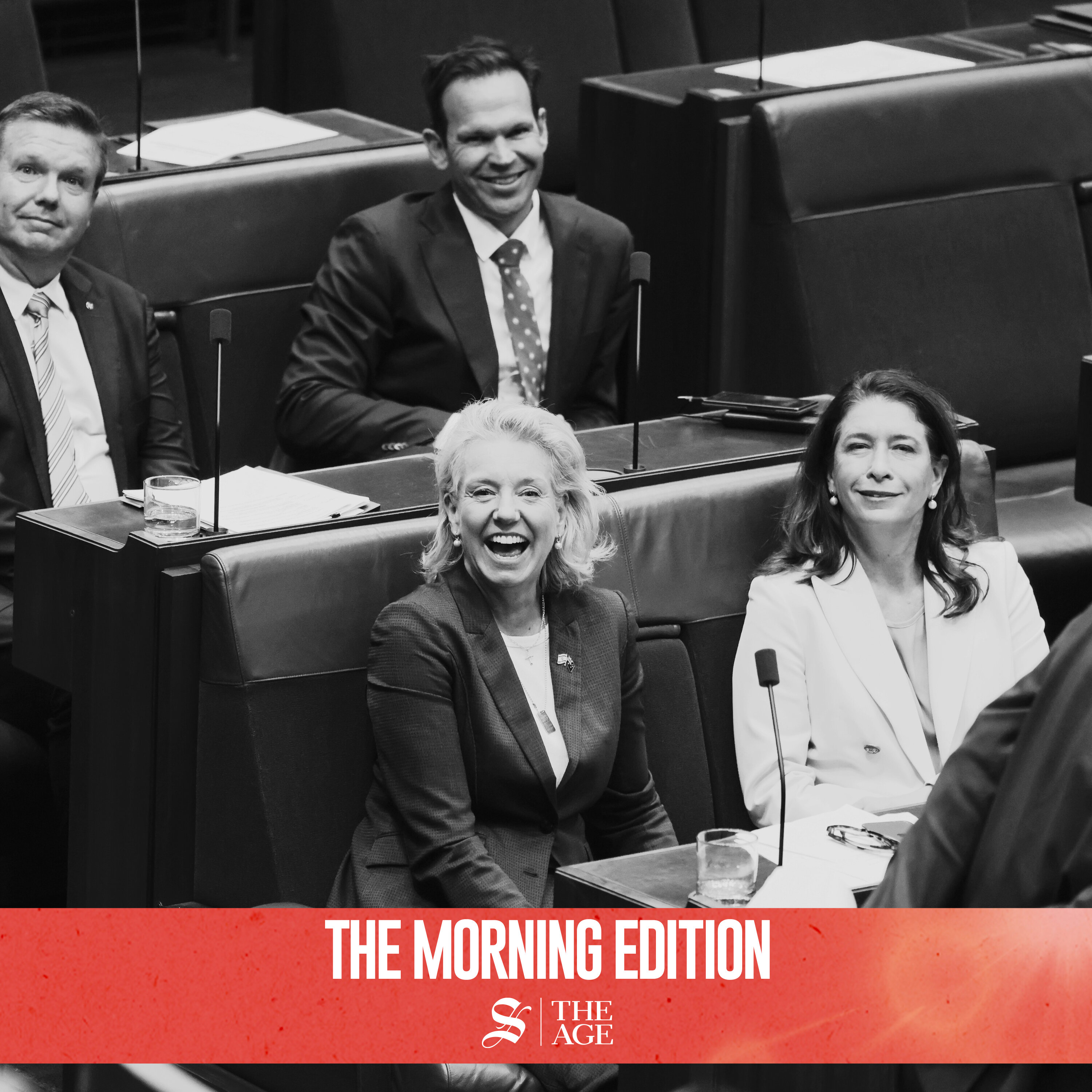
Yeah. So then what was left of this hate crimes bill without that vilification clause was the stuff around hate groups and stricter rules on visas and all of that. So you then had the Greens rejecting that bill because they argued that it would unfairly scapegoat migrants. And they were also worried that, for example, pro Palestinian groups could be designated hate groups under the terms of the legislation. So they opted out the liberals or the coalition. There were still free speech concerns within the coalition about how hate groups were. So you had National Senator Matt Canavan, for example, retain up to the last minute issues with the kind of restrictions on free speech inherent to that hate group law. Susan Lee, as we have discussed, has spent the entire summer calling for the government to crack down on hate preachers and Islamic terrorism and all of that kind of stuff. So it would have been very untenable for Leigh to reject the hate crimes law in its entirety as well as the gun reform law. And it would have been untenable for her as well, I think in the if she didn't look like she was being constructive. So she came in with an approach. Whereas we need to get these laws over the line in some form. She proposed a raft of changes to the government. The government agreed on them and there are few checks and balances. For example, these laws will have to be reviewed in two years to make sure that they're working effectively and that the opposition needs to be consulted before a group is designated a hate group. And she has spent a lot of this week kind of begging and insisting behind closed doors for the nationals to get on board. And there have been very tense conversations between her and Nationals leaders. But at the end of the day, what we saw on Tuesday was the Nationals in the House when it came time to vote for this bill, the Liberal MPs voted for it. And that includes people like Andrew Hastie, who have also got, you know, quite prudent free speech concerns. But the Nationals abstained for that vote and they said, well, we're going to put forward amendments in the Senate and if those amendments are rejected, then we're going to vote against the bill. And then that's what happened at 11pm on Tuesday night. So you had these quite. They were great images from our photographer here, Alex Ellinghausen, of the four national senators sitting on the other side of the chamber. And they ended up voting with the Greens, which Susan Lee pointed out was quite a bizarre position for the Nationals to find themselves in. And they're kind of. They're smiling up at Alex Ellinghausen as they go their own way on this one.
- [09:08]
A
And then we saw three of them, the Nationals, shadow ministers, resign from the cabinet on Wednesday. Was this inevitable following their, I guess you could say disloyalty, like, just how bad is it that the ministers chose to go against the wishes of their leader and their coalition colleagues?
- [09:27]
B
This goes to a dynamic in the Parliament that we see again and again, you know, crossing the floor has consequences. But most importantly, both cabinet and shadow cabinet, which are the group of people who are designated with portfolio responsibilities and the benefits that come with that as well, are expected to toe the party. And it is untenable for a political party to operate if it's frontbench who are the leadership of the party, don't kind of align in their public statements with the rest of their colleagues. And so there are only four nationals left in the Senate at this point. Three of them have shadow ministerial portfolios and responsibilities and those three voted against the position that had been outlined by the leader. And so we saw a similar thing happen, very different circumstances, but very much like last year when Jacinta Price said that she didn't have the confidence of Susan Lee, similar to when Andrew Hastie, who was then a frontbencher as well, said, I want to speak my mind, and he resigned from the opposition front bench. These three senators are now in a position where they have defied the party position. And so their leadership role is in many ways untenable. So it's very difficult for Susan Lee to continue kind of projecting authority in the party room if her own front bench kind of acts to defy what she has set out as the party position.
- [11:00]
A
And what have we heard from opposition leader Susan Lee about these developments. We know that members are working to minimise as much damage as possible, avoid a formal split of the coalition. But is that what you think will happen?
- [11:13]
B
I think what we're hearing, again, like you say, to try and mitigate the fallout here is a lot of putting the blame back on Labor. And this is where you could say, you know, the situations with Price and Hastie versus these guys are different. Price and Hasti kind of that evolved in their own, like, you know, was very much self led. The argument now to kind of salvage this situation is, well, everyone was forced into a position they didn't want to be because labor rushed these laws and forced them to vote very quickly and kind of didn't extend the negotiation period. So we're hearing at this point, Nationals and Liberals, MPs kind of like play down the consequences, I suppose, for the coalition and for Lee's leadership by shifting the onus or shifting the blame back to the government for this situation.
- [12:03]
A
After the break.
- [12:05]
B
I think what is clear after, you know, tragedies and challenges that are faced by a nation including Bondi, is that people do look to leaders. They expect kind of a moral authority. They expect decisiveness. They expect people to rise above politics.
- [12:28]
A
And that was one of the major criticisms on Albanese. How rushed the legislation was and how little time all these MPs and senators had to go through the legislation. How does this all look for Albanese? Because we know that Albanese has had to capitulate on these bills early and that that was off the back of weeks of criticism about his response to the Bondi massacre. Now the coalition is imploding. Maybe it could be a welcome distraction.
- [12:55]
B
I'm sure Albanese would be very pleased by this distraction. You know, the last four weeks of headlines have really focused on him, his actions or lack thereof. And, you know, Lee has done a. What has been an effective job of prosecuting that case against the government. Whether that ends up rewarding her politically is yet to be seen. And a lot of the polling that's come out so far, we've seen Albanese take a huge fall in his personal popularity and performance ratings. We've seen labor slide back a little bit, but, you know, we haven't seen the coalition, for example, jump in and make up that ground. We haven't seen Lee go forward in personal performance either. A lot of that has actually gone towards one nation. And so we're in a situation this week where both our poll, the Resolve Political Monitor and News poll have One nation sitting at kind of record levels of popularity. But either way, there has been this fall in the government's stakes that Leigh, you know, should be riding on to be kind of crude in political terms. And instead they've ended the week in this way, so that I assume will be quite disappointing for her and ironic, given that they have kind of had the upper hand, if you will, in this kind of political dynamic for the last four weeks.
- [14:16]
A
And do you think this gives us a kind of indication of the parliamentary year ahead, or is this. Was this too rushed a process to really give us a realistic look?
- [14:25]
B
It'll be interesting, right, because Albanese, he was so strong at the end of last year, and the kind of narrative around him was, okay, this guy's here now for the next three years, he's got this huge majority in the lower house, kind of nothing can really stop him. And then we had the kind of expenses situation at the end of December, take a bit of shine off the government, followed by this very horrific attack, which is really a time then when Australians look for leadership. Our polling as well has shown that they found that lacking in general when it comes to Albanese. So he has got a lot of, you know, ground to make up in showing that he has the leadership qualities that people are looking for in times such as these. His popularity and his performance ratings are now kind of at their record low phase like he had. And it kind of mirrors, you know, he had a big dip after the Voice. He had a big dip around this time last year when there were a few other anti Semitic incidents that were, you know, dominating news headlines. And Peter Dutton at that time was really attacking the government over that as well. So the question will be how he recovers, you know, whether he retains the support from his caucus. And it is worth saying that especially after the election, he does have a very loyal caucus. But there is nonetheless kind of, I guess, public support to be regained on his part. So that will be a journey now going into the year. And I think we can see with the coalition and One Nation, who's now come back this week for the first time with Barnaby Joyce in the lower house as a representative, that kind of spectra of One Nation will continue to haunt the coalition. And, you know, I think it would be fair to say that the posturing on gun laws from the coalition this week as well, and the decision to vote against those was also like One Nation was part of the mix there too, because One Nation was also mounting its own campaign against the government's gun reforms. And so the nationals are really going to be competing with one nation there. And that is going to keep dragging Susan Lee to that side of the debate. And how she wades through that will kind of ultimately determine whether she stays on.
- [16:31]
A
And MPs did pay tribute to the victims of the Bondi shooting on Monday. But do you think that now, after all this political infighting, it's kind of undermined those efforts for peace and unity after one of Australia's worst ever terror attacks?
- [16:48]
B
I think what is clear after, you know, tragedies and challenges that are faced by a nation including Bondi, is that people do look to leaders. They expect kind of a moral authority, they expect decisiveness. They expect people to rise above politics. I think the whole post Bondi environment has been really challenging in that way. And I think in the federal space, you know, you've had both opposition leader and prime minister talking about unity, talking about a desire for bipartisanship that hasn't been apparent in about a month. This was pitched by the prime minister as a way for the parliament to come together. But very quickly, you know, the nature of how quickly the laws came out, the fact that they were presented as that one package that kind of served to wedge the Greens and the opposition, people saw that as a cynical political tactic. And so even from the start of this week, there was a lot of politics. What we've ended up with is two bills that have passed and, you know, Albanese is saying these will make Australia stronger. But neither had consistent support across the parliament. So it kind of hasn't offered that coming together or a kind of healing moment where I think people can look to the federal parliament and say, okay, we've dealt with this and now let's move on in a kind of more united way.
- [18:09]
A
Well, thank you so much for your time today, Tas. It's been fantastic.
- [18:13]
B
Thank you.
- [18:25]
A
In other news today, there are growing concerns that Snapchat's enforcement of Australia's world first under 16 social media restrictions is failing vulnerable teenagers. And for the first time ever, renewables supplied most of the energy to power Australia's east coast. You can Read more on theage.com or smh.com au Today's episode was produced by Josh Town. Our executive producer is Tammy Mills. And our podcasts are overseen by Lisa Muxworthy and Tom McKendrick. And if you like our show, follow the MORNING Edition and leave a review for us on Apple or Spotify. Thanks for listening. I'm Julia Karkatzel. This is THE MORNING edition.