← The Morning Edition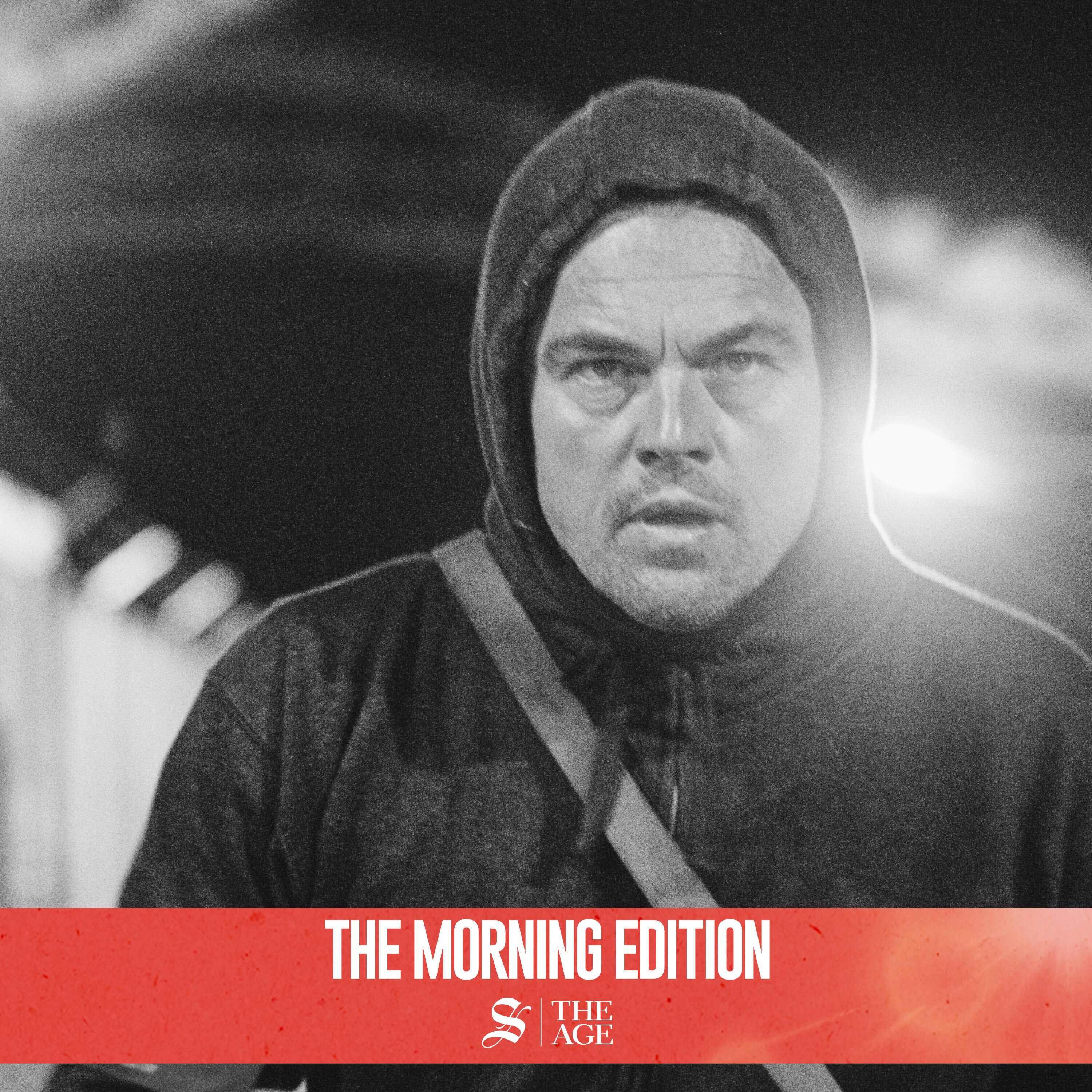
Loading summary
Transcript54 lines
- [00:03]
A
By now you've probably seen the Reddit threads blowing up over which movie should win the best picture Oscar today. How can Ryan Coogler's Sinners, a vampire horror musical set in the Jim Crow era, not win, say angry cinephiles, noting that it's also the most nominated film in Oscar history. And yet one battle after another. The Leonardo DiCaprio starring film about a government that has devolved into an authoritarian reg is touted as the favorite. I'm Samantha Sellinger Morris and you're listening to the Morning Edition from the Age and the Sydney Morning Herald. Today, senior culture writer Carl Quinn and culture and lifestyle writer Nell Jarrettes on which films tend to win at the Oscars and which often get shut out and whether Timothee Chalamet will, yes, be punished for those comments about the ballet and the Opera. It's March 16th. Welcome, Carl and Nell, to the podcast.
- [01:06]
B
Thanks for having us.
- [01:08]
A
Okay, Carl, let's start off with you. Can you just tell us how the Oscars actually work in terms of the voting system? Like how much does popularity come into it? Does that sway those who are voting or is it something else?
- [01:20]
B
I think the one thing to know is it is a popularity contest, but it's a popularity contest amongst a subset which is Academy members. And there's around about 10,000 of them. And that's up from it was just under 6,000 a bit over a decade ago. So they've expanded it considerably. And part of that was out of the whole, there was a famous survey that the Los Angeles Times did which found that the average age of an Oscar voter was, I think it was 67, and most of them were white and most of them were male. So there was a real push towards diversity and that has.
- [01:54]
A
Okay, but who are they?
- [01:56]
B
There are members of guilds in the first instance. So there are cinematographers, there are actors, there are directors, there are people who are members of these various guilds. So the guild memberships make their nominations in their respective fields and that's the first stage. And then those sort of long lists get reduced to a short list and then out of those come the nominees and then all the members of the Academy get to vote.
- [02:21]
A
But how is it a popularity contest? How does that.
- [02:23]
B
Because they're still people. Because these are still people who are having conversations with everybody else about like, who do you like? What have you seen? What's good? So there's a kind of self reinforcing chatter. And Hollywood is a, it's an industry town. So people there are all Talking about what they're liking, who's, you know, hot at the moment, you know, so there is a popularity element to it, no question. So it is about acknowledging craft, because these people know what it takes to do these things. So they bring a certain degree of expertise to any of this, but they're voting outside of their field of expertise as well, you know, so they're. They're being swayed by discussion, they're being swayed by sentiment. They're being swayed by. Is this Leo. Leo DiCaprio's year? You know, has he. Has he earned it?
- [03:07]
A
Well, let's get into that.
- [03:09]
C
Like.
- [03:09]
A
Like how many winners, regardless of what category they're in, is it because this is just that person's moment, you know, it isn't necessarily the best, you know, male performance, or it isn't necessarily the best picture, but, for instance, Parasite, you know, perhaps there were previous films in previous years that were foreign language that absolutely many people would have thought that was the best film. But was the guild just not, I don't know, enlightened enough to realize these films do not need to be in English? You know, English isn't the be all and end all. Like, is it sometimes just about when the guild catches up with, I guess, the films where they are? You know what I mean?
- [03:43]
C
I feel like that probably is often the case in Parasite's case, I reckon that absolutely deserved the win, no matter what, for the film that it is. But I think there definitely is a bit of the guild feeling they may potentially have to catch up a little bit. If that is the case and if that could be proven without a shadow of a doubt, I feel like that's really disappointing, and I feel like that almost cheapens the Oscar to a certain degree, because you want a film or a filmmaker or an actor or an actress or whoever to win for a project that deserves that win, you know, you want it to align with what they created that year or the year prior. And so it. It. That just all of a sudden feels strangely almost like political if, you know, we're getting to a point where all of a sudden the guild is like, oh, okay, you know, Leo hasn't gotten his award yet, his, you know, best actor award yet. Let's. Let's just give it this time when probably there are earlier films in which he was far more deserving for that.
- [04:53]
A
But so many of us do think that, right? We watch the Oscars every year and we go, oh, my God, they gave it to this person because they should have got it for the other film. That they were nominated for X many years.
- [05:02]
B
For me, the classic example of that was Al Pacino winning for Scent of a Woman. I think it was 1992, and I think that was maybe. Maybe I'm going to say it was his seventh or eighth nomination. He. He had done much, much better work before that.
- [05:17]
A
That was really not an amazing.
- [05:19]
B
No, it wasn't an amazing film. I mean, what I take away from that film is Al Pacino going. And that was like.
- [05:25]
C
That was, to be fair, is now very famous.
- [05:28]
A
But did he get. Did he get any Oscar noms for Serpico?
- [05:31]
B
Yeah, he got Dog Day Afternoon, Serpico, the Godfather, you know, like, he. He had done an incredible body of work which had not won him. You know, I mean, he'd been nominated, so he'd got the.
- [05:44]
A
But is it political? Like, for instance, one of those films he was nominated for, I think, you know, features a transvestite, Dog Day Afternoon. So when that movie came out, Dog Day Afternoon, was the guild perhaps just not ready? You know, were they like, oh, that's a bit too far out for us?
- [05:58]
B
When, of course, look, I think you'd have to. You'd have to drill down and see, well, who else was in the field and who won. And I can't. I can't cite that off the top of my head, but I mean, I would just say that sometimes I've heard the theory that sometimes an actor, like. And this could be a factor with Timothee Chalamet this year, right? Sometimes an actor bursts out of the blocks and they're doing great work early in their career. Leonardo DiCaprio, there's a theory that it took him, Gilbert Gray, so it took him years to win because he'd been, you know, people go, oh, he's young. He's doing great work. He'll be around forever, right? He'll have his chance. Right? So that happens with. Particularly with male actors, maybe slightly less so with female actors, because there's tended to be a sense that they have a shorter working life. I think that's increasingly not. Not the case now, but that has historically been the case. So I think maybe there's a. There's a sort of, like, a lot of this stuff is like, it's ineffable. It's. It's sentiment and it's a perception. And it's a kind of like, how do you make sense of what went on? Rather than like, well, this is definitely the. What's going on here? You can't say with certainty. But I do Think.
- [07:05]
A
Yeah.
- [07:05]
B
With. With DiCaprio, that that was the case. It probably was the case with Pac. It was probably the case with Dustin Hoffman, which may be something with Chalamet this year. Right. I mean, on the Chalamet thing, let's just make it clear. He is not going to not win the actor because of what he said about opera and ballet. That is nonsense. The voting was already closed. Right. So whatever. Whatever people thought about that and what he said about opera and ballet, it will have no bearing on whether or not he wins. It may have a bearing on how people respond if he wins, you know, if he gets up on stage.
- [07:36]
A
Right. And let's just clarify, of course, we're talking about what he said about ballet and opera. Basically, no one going to see them. People are freaked out online.
- [07:45]
B
And I don't want to be working in ballet or opera or, you know, things where it's like, hey, keep this thing alive. Even though no one cares about this anymore. All respect to the ballet and opera people out there, I just lost 14 cents in viewership.
- [07:59]
A
You're saying, though, the people who vote, they're just human. They're swayed by all kinds of just, you know, petty human emotions. Why will they not be swayed by.
- [08:06]
B
Because voting was already closed. Voting was already closed. They'd already cast their votes. It's a simple timeline thing. Right. So what he said lobbed after voting. Closed.
- [08:16]
A
Okay, so do you think that it would have impacted had it fallen before voting?
- [08:21]
B
It could have gone either way.
- [08:21]
C
I reckon it could have. With the insane backlash that he'd gotten in a matter of days, I reckon it absolutely could have made a difference. But I will say with Timmy, I have to call him Timmy. I know him as nothing else. In Timmy's case, I feel like he's really kind of leaned into over saturation territory, even well before the ballet and opera comments. And so I am really intrigued to see what direction the best actor category goes in, because if Michael B. Jordan wins, I will be on over the Moon. I think playing twins is feat enough. That would be incredibly challenging. And he creates two such distinct characters throughout that, you know, you really connect to Timmy and Marty Supreme. He's wonderful and you really believe he's embodying that character. He is that awful character. But it's almost like he took too many of those traits into his real life while campaigning during awards season. And I'm very curious to see if he has kind of shot himself in the foot a little bit.
- [09:34]
A
Okay, well, let's get into these films that we're referencing here because Nell, I'm gonna go to Hugh here for a minute because before we started recording, the three of us were chatting about the big contenders, of course, for this year's Oscars for best Picture. And Nell, we chatted about a couple of them that are not only major contenders, but they're also aligned with certain issues that people are getting very fired up about now. And of course we are talking about Sinners and one battle after another. So tell us about these films. Why do you think they're such contenders and what is it that you see that they're align? Tell us about that.
- [10:05]
C
So I'll start with Sinners. That's basically Ryan Coogler's take on the vampire genre essentially. For those who haven't seen the film, the gist of it is twin gangsters return to their hometown in Mississippi, it's during the Jim Crow era and they want to open a juke joint, but over time it becomes overrun by vampires. That's basically the film put simply. Ultimately the movie, it's a metaphor for the exploitation of black culture and specifically the, you know, commodification of blues blues music by white lid studios. And so the vampires themselves, at least in part, they pretty much represent like white appropriators literally sucking the creative energy or, you know, the soul out of black art without, you know, enduring the associated traumas.
- [10:57]
B
Let me in, man. There's some weird shit going on out here.
- [11:04]
C
Then on the other side, the other massive contender this year is one battle after another. As you said, that's Paul Thomas Anderson's film. It's largely about a washed up revolutionary who's living off the grid. But he's ultimately forced back into the radical life when his daughter comes under threat from an old enemy. One of the best names I think in movie history, Colonel Lockjaw, like, come on, that name is just fantastic.
- [11:32]
B
Yeah. Studied the rebellion text a little harder. I need to find my daughter. Well then call us back when you have the time.
- [11:40]
C
And so what's going on beneath the surface in that film is that it's really exploring, I think, sort of that exhausting cyclical nature of ideological conflict. Right. Like kind of asking that question, can true revolution ever really end or can it ever really properly be accomplished? And then at the same time it's also, you know, critiquing the sort of self destructive nature of extremism. And that's on, you know, any side, or both sides, whatever it may be. And kind of, I guess also highlighting the potential consequences of political obsession as well, because there are a lot of people in that film who you could say are sort of politically obsessed in a way. And so you only really need to take one look, particularly at the US right now, I'd say, to sort of see how timely these two movies are. Racism, immigration, disillusionment in, like, current political and cultural structures. This is also incredibly present right now. And both of these movies really touch on those themes quite heavily. So it's kind of no wonder, I think, that so many people have jumped on them so feverishly.
- [12:56]
A
We'll be right back. Carl, do you agree? Do you feel like there are films this year that they're main contenders? Yes, because they're fantastic films, but also perhaps partly because they're aligning with what we are seeing in the real world.
- [13:13]
B
Yeah, absolutely. And it's fascinating. I mean, I think One Battle, I'm not sure that it's a. That it has a really clear political position, but it absolutely speaks to something about the moment we're in. And I think it's one of a. You know, it sits amongst a cluster of films. I'd put Eddington and Civil War and even Begonia into the same space. In a way. They're all films about the collapse of the center in, in American political life in particular, but more broadly Western political life. And I think they, they just have enormous, enormous kind of pertinence to the moment we're in. But One Battle also manages to be just a rip roaring kind of, you know, adventure kind of, you know, action movie with one of the best sort of chase scenes I've seen since Bullet. It's just amazing, you know, it's unbelievable. So it gives you. It gives you just that pure visceral thrill whether or not you buy into what it's got to say about the state of modern politics in America. But, yeah, I mean, they're really interesting films. Potentially, though, they will alienate some Academy voters. And I think that in the, in the race to who, what wins Best Picture, there's always a chance of an, of what some people might think of as an outsider sneaking through. I mean, the classic example was when Green Book won, you know, and I think that was up against Black Panther and blackkklansman, if I remember correctly. It was like. And they were great films, really political films. But of course, you know, that was back in 2018. So, you know, the Academy membership is. Although it's more diverse than it was, there is still, you know, a big cohort of old white men. And, you know, they aren't necessarily going to buy into some of this stuff. So a film like Hamnet, which I happen to think is an absolutely amazing piece of work that has something incredibly powerful to say and quite universal to say about grief, about motherhood, certainly about parenting. It has a lot to say about sexual dynamics. It is, in its own way, quite a political film, I think, like gender political film. It's got something fantastic to say about the transformative power of creativity in dealing with grief. You know, it turns a moment of grief into a moment of transcendent art. Both, you know, within the writing of Hamlet the play and in the creation of Hamnet the film. It is about grief and it's about transcendence through creativity.
- [15:42]
A
He's got more inside of him than any man I've ever met.
- [15:46]
C
Who are you looking for?
- [15:47]
B
William Shakespeare? I could see that film sneaking through because it is, in some respects, although it is, as I say, kind of political in its own way, it's not an overtly political film in the way that One Battle Is or Sinners is. I suspect people Academy voters like, like general audiences, I suspect they respond most strongly to films that seemed to be pertinent to their lives, whatever is going on in their lives at a given moment, without being overtly political. I think the more overtly political a film is, the. The more resistance it's going to meet by from some people. Some people would just go, oh, it's true. Political. I don't want to. I don't want to be lectured. If you. What was it? Is it Louis B. Mayer? Who was it Louis B. Mayer who said, you know, if you want to say, send a message, use Western Union? You know, it's like the idea that movies should be about entertainment, I think still holds sway amongst a lot of people in. In Hollywood. And let's not forget that the Oscars are about Hollywood celebrating itself. So.
- [16:48]
A
And Nell, I really wanted to ask you about today's ceremony because, of course, obviously the Oscars are an entertainment moment in and of themselves. And last year's ceremony was criticized for being a bit lackluster, but this year, of course, we've got the specter of American President Donald Trump looming over everything. So are you expecting any breakout moments, any drama? Is there anything you think that we might see?
- [17:11]
C
You would think so, right? You'd sort of think, surely something's going to be said, something's going to happen. But if I'm being honest, based on what we've sort of seen so far, I mentioned the awards season just before. We've already Watched many ceremonies. You know, we've been through Critics Choice, BAFTAs, Golden Globes, actors, formerly the SAG Awards, and we just haven't been hearing much said or at least much like sort of overt political statement set on stage. It doesn't really kind of look like many people are really grabbing this opportunity by the horns to make a statement. That being said, I feel like there could be the possibility that seeing as the Oscars is, you know, films night of nights, massive night for cinema and filmmakers around the globe, maybe they are just waiting for that moment to really make a massive statement.
- [18:07]
A
I wonder if there's a creative person, whether it's an actor or, you know, someone more behind the camera who's from Europe. I wonder if they'll, if they win and they take the time to make a statement just because there's been so much anti Europe sentiment coming from Donald Trump's camp, whether it's, you know, J.D. vance sort of schooling all the European leaders at a Munich conference. I mean, there's just been so much hammering of the European countries. Are there any sort of candidates there for European figures who may be in a position to.
- [18:36]
B
Here's hoping there's somebody from Greenland. That'd be great.
- [18:39]
A
Yes.
- [18:40]
C
I mean, the only sort of European person that came straight to mind would be Skarsgrd because obviously sentimental values, bizarre up for awards and Skarsgard's and the best actor or best supporting actor, Best supporting actor category and could win like there is a chance that he could win there.
- [18:58]
B
So my theory on this is that this is the big one, right? And so if you're going to make a statement that reaches as many people as possible, there's no point in doing it at the Actor Awards or the Golden Globe. Maybe the Globes, they've got reasonable profile, but really you're better off keeping your powder dry. Right? Say it once. Say it. Well, say it in the. On the biggest platform that will get the biggest headlines, it'll get the most media attention. Right. So if you. But there is also, a few months ago, Jennifer Lawrence was on, I think on a talk show and she was basically addressing the whole idea of sort of celebrity activism and saying that it maybe is counterproductive and that it can put a lot of people off. And I think she was addressing the whole, the whole notion that people like her are seen by a lot of people as being incredibly privileged and they're removed from the everyday concerns of, you know, regular people. So them leaping in to talk about whatever it might be, health care or immigration or whatever can feel like they're lecturing from on high to people and it can actually be counterproductive.
- [20:10]
A
So that is interesting.
- [20:11]
B
I think you go, you go to the Kamala Harris election campaign and there was a lot of celebrity endorsements. What effect did that have? It actually arguably put a lot of voters off. Right. It actually made it look like this is the, you know, political entertainment elite and they're telling us how we should live our lives. That did not wash with blue collar workers in America.
- [20:34]
A
Okay. Well, we'll be looking with great interest to see if, you know, if they, if they do it today. So thank you so much, Carl and Nell, for your time.
- [20:42]
B
Pleasure.
- [20:43]
C
Thank you.
- [20:54]
A
Today's episode of the Morning Edition was produced by Julia Carr Katzel. Our executive producer is Tammy Mills. Tom McKendrick is our head of audio. To listen to our episodes as soon as they drop, follow the Morning Edition on Apple, Spotify or wherever you listen to podcasts. Our newsrooms are powered by subscriptions, so to support independent journalism, visit theage or smh.com au subscribe. And to stay up to date, sign up to our Morning Edition newsletter to receive a summary of the day's most important news in your inbox every morning. Links are in the show Notes. I'm Samantha Sellinger Morris. Thanks for listening.