← The Morning Edition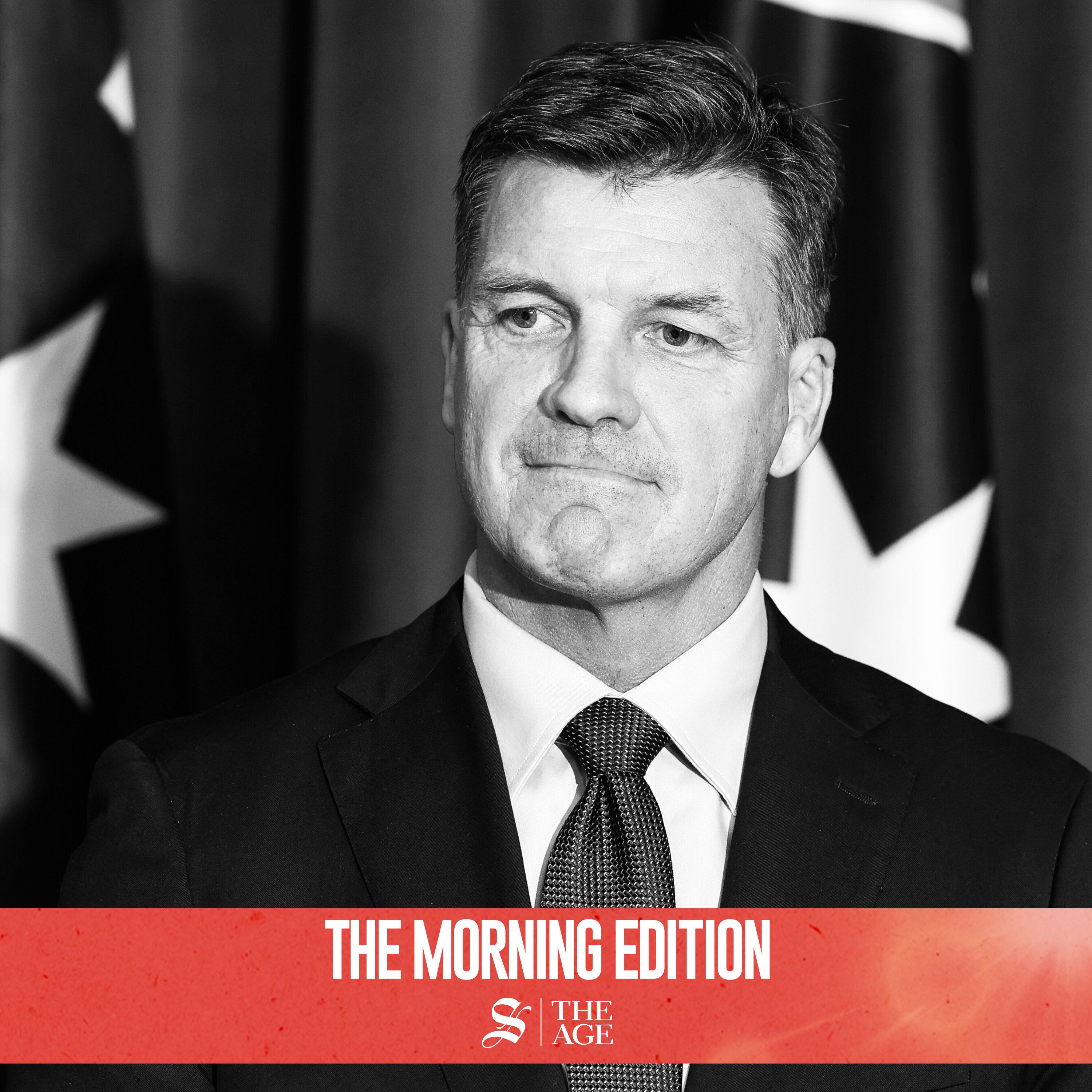
Loading summary
Transcript26 lines
- [00:06]
A
Our character is essentially Anglo, Celtic and Judeo Christian. That's what has made our country attractive to migrants included, and we should keep it that way.
- [00:17]
B
That was former Prime Minister Tony Abbott on the position that he would like the newly minted coalition leader, Angus Taylor to adopt, saying that for the coalition to win voters back from one nation, it needs to take a harder line on immigration and move away from diversity. I'm Samantha Sellinger Morris and you're listening to the Morning Edition. From the Age in the Sydney Morning Herald today, political analyst Sean Kelly on how far Angus Taylor will go in cracking down on immigration and his connection to Tony Abbott. It's February. Welcome, Sean, back to the podcast.
- [01:04]
C
Thanks for having me on again.
- [01:06]
B
Okay, so we need to talk about all things Angus Taylor, but let's start off with, I guess, just how bad a position is he in right now in terms of his chances of succeeding as an opposition leader? You know, maybe full stop, or maybe in comparison to other opposition leaders in the past. Like, just how much is he up against it? How bad a position is he in, Sean?
- [01:28]
C
Oh, I mean, he's in an awful position. You know, there was a new poll out this week in the Sydney Morning Herald and the Age, and it's disastrous for the coalition and it captures that tail end of Susan Lee's leadership. Tries to do a bit of a comparison as well with how things might change with Angus Taylor as leader. Certainly he's doing a little bit better than Susan Lee was, but only did the tune of being precisely even with one nation now in the voting. So we're talking about one in four Australians will give their vote to the coalition. One in four Australians will give their vote to one nation. So that is a pretty awful situation to be starting from. The other massive obstacle he faces is just time. Labor are, you know, huge favourites to win the next election. Of course, anything's possible in politics, but it is certainly very difficult to tear them down from the huge majority that they have. That that means that the coalition winning government is at least four or five years away in all likelihood. And opposition leaders just don't tend to last that long. Sometimes they do, but the thing about lasting that long is it gives the government huge opportunity to tear you down. So Bill shorten, for example, did very well at the 2016 election, but by 2019, the government had had six years to tear him down, six years to kind of poison the. You could see Bill Shorten's personal numbers falling over that period. And, you know, that meant labor lost the supposedly unlosable election in 2019.
- [03:07]
B
Incredible. And I really want to get to, I guess, at its very crux, you know, the main issue, of course, is immigration. That's what one nation obviously hits hardest with. And I noticed with great interest that on the ABC, just the other day, political analyst Jacob Grieber said that Angus Taylor was playing footsie with one nation with regards to his immigration stance. So is that true? I guess. What is Angus Taylor's stance on immigration?
- [03:34]
C
Well, he. He is treading a little bit carefully at this point. The thing about Angus Taylor is that his reputation, as far as he has one, is mostly pretty unknown. He doesn't have a lot of policy success or political success to point back to. But as far as he is known for anything, it's for being a kind of traditional liberal in economic terms, free trade, global trade. And a big part of that is actually supporting some reasonable level of immigration. It's a recognition that you actually need immigration as a significant part of the Australian economy. So he's partly coming from that angle. But on the other hand, the coalition clearly in competition with one nation at this point, there is a lot of pressure from the Conservative side of that party to take a very hard line on immigration. Angus Taylor's main competitor for the leadership over the next few years, the person will be coming up right behind him is Andrew Hastie. Andrew Hastie has taken a very hard line on immigration, which puts pressure on Angus Taylor to run a pretty hard line, quite apart from the pressure that's coming from one nation. What he has said so far, he has a particular soundbite, which is the numbers have been too high and the standards have been too low.
- [04:51]
A
You've heard me talk already about key priorities, immigration. We've got to make sure that we get the standards up and the numbers have been too high. But we've also got to make sure that Australians who want to come to our country, or foreigners, indeed, who want to come to our country, who don't believe in our way of life, who want to bring the hatred and violence from another place to our shores, that the door is shut.
- [05:19]
C
I think that's a really dangerous phrase. Standards have been too low because while he can point to examples where arguably migration, clearly migration policies have let us down, Bondi being the obvious and recent one, more broadly, I think it really sounds as though he's smearing a very large group of people, or at least it risks sounding like that. And the problem for Angus Taylor is that his party has a bit of form on this. Peter Dudden, very recently the leader of course talked about Malcolm Fraser having been made a mistake by bringing in groups of Lebanese migrants. More recently at the last election, Jane Hume talking about Chinese spies helping the Labor Party. Jacinta Nabijimbra Price apparently in line for promotion under Angus Taylor talking about Indian migrants being more likely to vote labor and labor, you know, speeding up their migration, I think was the quote. And so any comments on migration are likely to be read in that framework. Now that's a bit of a double edged sword for the Liberal Party. I think they'll be happy that some people are reading them that way. You know, it's a pretty loud dog whistle that they'll be happy some people will hear. But I think it risks alienating huge numbers of people as well. We have to remember, quite apart from the many, many, many people who are very supportive of migration because it's done wonderful things for this country, there are also just very high numbers of migrants in this country. One third of Australian residents were born overseas. So this is very dangerous political territory for the coalition, I think.
- [07:01]
B
Well, that's right. And I thought the broad understanding was that the Liberal Party was going to have to skew more to the center if it were to have any chance of surviving as a party. I mean, Angus Taylor, when he won the leadership of the party, he himself admitted, you know, if there was going to be an election today, it's possible that, you know, his party would face extinction. So what are the chances that he has any interest in skewing towards the middle? Because we do know that just on this issue of immigration, his quote when he took the mantle of the leadership was our borders have been open to people who hate our way of life. People who don't want to embrace Australia and who want Australia to change for them. People who hate our way of life. That's very strong language.
- [07:42]
C
It is very strong language. There was a bit of backgrounding in the Australian to the tune of Angus Taylor wanted to leaned pretty heavily into some cultural issues and the Australian flag, the primacy of the Australian flag into the description. I think being that the overabundance of welcome to countries. I mean these are issues which caused Peter Dutton a lot of trouble. I think that he thought was were a real positive but really helped typecast Peter Dutton as a particular type of right wing culture warrior. And so I think there was this open question about whether Angus Taylor wants to go down that path, whether he can play footsies with those types of issues without being cast the same way Peter Dutton was cast. You know, so, again, I think we're in dangerous territory. And it really speaks to the structural problem facing the Liberal Party. They have two groups of voters they need to win back to mean that more than one in four Australians wants to vote for them. Some of those people are currently saying they'll give their votes to one nation. Some of those people have been giving their votes the last couple of elections to teal candidates. So how does the party craft a set of policies and a set of messages that brings back both the people who have gone to one nation and the people who have gone to the teals? And it's very hard to see exactly how the coalition does. And that goes to the other big split in the coalition at the moment, which is between urban areas and regional areas. The reality of the coalition is that it has become a grouping representing rural and regional Australia. It holds a tiny fraction of urban seats, but it needs to win those urban seats back. And, you know, we're talking about migration. Migration tends to be more focused on those urban areas. So when the coalition is pursuing a kind of hardcore anti immigration line, of hardcore anti immigration rhetoric, it risks alienating those urban centres. Angus Taylor was pushed on the weekend about whether migration should be banned from certain countries or certain races or religions. And he was very clear that it should not be limited in those ways. And then the conversation was very clearly about Islamic Australians. And he gave a pretty strong defence, I think, of, you know, the vast majority of. Of Islamic Australians. So there's clearly some tendency in him to not go all the way over to the Pauline Hanson side of things. But he kind of faces a bit of a Susan Lee issue. You know, you can say these things for a little while, you can kind of play footsies for a little while, but there's a conservative part of your party that unless you're going all the way or keeps seeking for somebody more conservative who's willing to say things exactly the way they want them to be said.
- [10:44]
B
After the break.
- [10:46]
C
I think my greatest question at this point, and I think it is the greatest question for the country, is just how toxic this debate around migration becomes. We cannot possibly overstate how significant it is that Pauline Hanson is doing as well in the polls as she is. We know that the greatest force behind one nation's rise historically has been dislike of immigration. A secondary force, related force, is distrust of government. Those are two very strong forces at the moment.
- [11:30]
B
I really want to ask you about the Tony Abbott question. He, of course, our former Liberal Prime Minister and Angus Taylor might follow in his footsteps in terms of his stance on immigration. You know, it just regards what you were saying about many within the party who of course, want to move it to the right to more conservative views. Because Tony Abbott gave an interview that I know you and I were discussing before recording to ABC reporter Sarah Ferguson over the weekend. I was a bit flabbergasted because of what Tony Abbott had to say about immigration. So just briefly tell us what he said, because then I want to discuss with you what the connection, I guess, is between Tony Abbott and Angus Taylor.
- [12:06]
C
Yeah, sure. He said he preferred the approach to immigration of the 50s, 60s and 70s.
- [12:13]
A
I quite like the way our immigration policy was run in the 50s, 60s and 70s, where there was an expectation on integration from day one and ultimately assimilation.
- [12:28]
C
He preferred the sense that migrants had to integrate immediately and assimilate with time. That diversity in itself wasn't all it's cracked up to be.
- [12:41]
A
There's got to be a lot more stress on our unity and far less on our diversity. And this idea that our diversity is somehow our strength, I think, is profoundly misguided. I think that we are.
- [12:55]
C
You know, these are pretty strong comments. It's worth remembering that the white Australia policy really was still in effect until 1966, when Harold Holt, a liberal, reversed it. So, you know, Tony Ebbard certainly didn't come out and directly say that he was in favour of the one Australia policy. He was referring to the general approach to assimilating migrants. But they're still pretty strong comments. And it's hard to know with Angus Taylor's comments because Pauline Hanson said, you know, they are a little bit broad and vague at the moment, but he's certainly talking about wanting people who love their country, who are proud, to stand in front of the Australian flag. He's certainly not using Lang like a simulationist. Things are matters of degree, and it's hard to know exactly how far he'll go in that direction at this point, but there will be a lot of pressure on him to move in that type of direction.
- [13:49]
B
And I did want to pick up on one thing that you just said about Tony Abbott and about what he said about quite liking the immigration approach of the 1950s, 60s and 70s. You're right. He absolutely did not specify directly that he wanted to return to the white Australia policy, but certainly that's the first thing that came to my mind when I heard his comment. So maybe just tell me, what's the link between Tony Abbott and Angus Taylor? And do you think that Abbott might have an impact or have Angus Taylor's ear on this and perhaps push him to the right. Because we know that Angus Taylor's career began with Tony Abbott's blessing in 2013. Right.
- [14:27]
C
Look, we know that Tony Abbott is still quite active within the Liberal Party. He's very keen to drag the Liberal Party around to his view of the world. Obviously off by Malcolm Turnbull. When he was Prime Minister, there was a sense that the party was going to go in another direction, away from Tony Abbott. And I think, you know, it's reasonable to say some of his energy, a fair bit of his energy in recent years has been spent trying to drag the party back in a Tony Abbott esque direction. And, you know, he, he has succeeded to a fairly great extent. I think what those comments speak to at a broader level is the powerful role that nostalgia plays in our politics. It, it plays historically a very strong role in conservative politics, but I think we are beginning to see it take on a role in left politics as well. There is a sense among broad swathes of people that our society has taken a wrong turn somewhere. And people will put that down to different things. Some people will put it down to technology, some people will put it down to the particular operations of capitalism, neoliberalism. Some people will scapegoat migration. But they are, they are all different forms of nostalgia. Nostalgia isn't necessarily a bad thing in itself, but we need to always be wary of the way that it simplifies debates because the novelist Adie Smith made this point. You know, nostalgia is all very, well, you can say that things were great 30, 40 years ago, but that is not true for all people. There were some people who, vast numbers of people in this country for whom life is pretty rough. A few decades ago, they were essentially excluded from much of society. So, you know, we need to be wary of the blunt force of nostalgia.
- [16:10]
B
Definitely. We only have to look at what's happening in the United States. Obviously there's much bigger forces at work there. But of course, that's what make America great again. I mean, talk about nostalgia.
- [16:19]
C
Exactly right. I think my greatest question at this point, and I think it is the greatest question for the country, is just how toxic this debate around migration becomes. We cannot possibly overstate how significant it is that Pauline Hanson is doing as well in the polls as she is. We know that the greatest force behind one nation's rise historically has been dislike of immigration. A secondary force or related force is distrust of government. Those are two very strong forces at the moment. We know 10 years ago, I think it was a third of Australians thought migration was too high. That is half of Australians now. So there is a potential for this debate to get very ugly. I think Angus Taylor, maybe he does well, maybe he doesn't. For me, that is not as important as the structural forces which are roiling Australian politics right now.
- [17:18]
B
Thank you so much, Sean, for your time.
- [17:21]
C
Thank you again.
- [17:31]
B
In other news today, lawyers for the ACCC will return to the federal court in Melbourne today for its blockbuster court battle with Coles. The case alleges the supermarket giant created illusory discounts on a range of household goods. And a religious charity run by controversial Sydney bishop Mar Murray Emanuel has launched plans to spend $2.2 million building a luxury home with six bedrooms, a library, a music room and an extensive underground garage. The development is the latest property move for the tax exempt One Jesus limited Which has bought a string of homes for people with special needs. Read these headlines and more on the sydneymorningherald.com and theage.com Today's episode was produced by Josh Towers. Our executive producer is Tammy Mills, and our podcasts are overseen by Lisa Muxworthy and Tom McKendrick. If you like our show, follow the MORNING Edition and leave a review for us on Apple or Spotify. Thanks for listening.