← The Morning Edition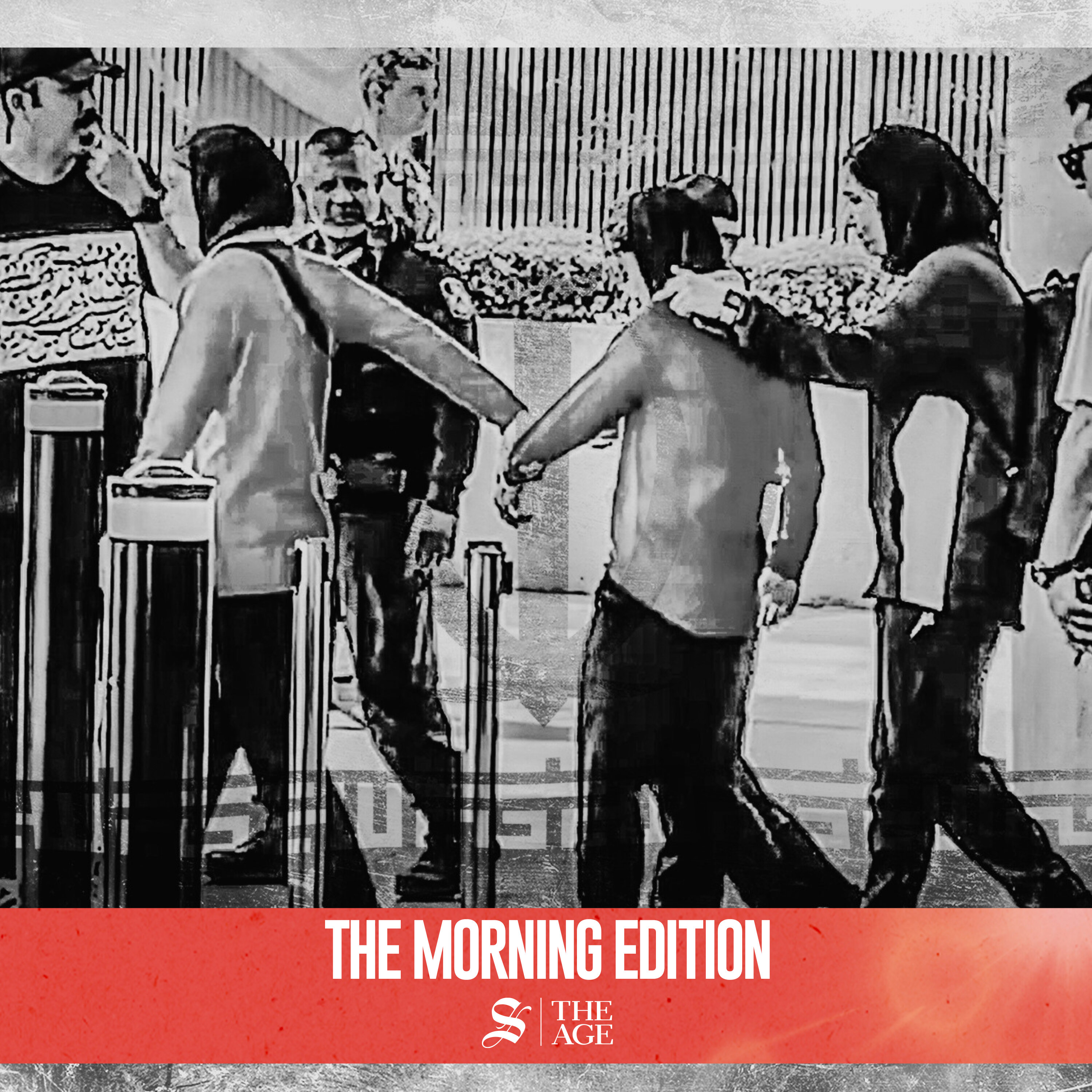
Loading summary
Transcript26 lines
- [00:02]
Samantha Selinger Morris
It reads like something out of a Hollywood script. Five female Iranian soccer players in Australia competing for the Asian cup, escaping from their handlers in the night to seek refuge from their home country, which is in the middle of a war with the US And Israel. Another two women, a player and a
- [00:21]
Interviewer/Host
member of the team's support staff, made
- [00:23]
Samantha Selinger Morris
the decision to join them a day later and also remain in Australia. Samantha morrissey, I'm Samantha Selinger Morris, and you're listening to the Morning EDITION from the Age and the Sydney Morning Herald. Today, crime and justice reporter Amber Schultz joins us from Malaysia, where she has been tracking the rest of the team on their journey home to Iran.
- [00:48]
Interviewer/Host
So, Amber, first off, can you just tell our listeners and our viewers if they're watching this where you are?
- [00:55]
Amber Schultz
So I'm currently in Kuala Lumpur, which is where the Iranian football team, the Lioness, departed from their flight from Sydney. So we're all in the same city here in Malaysia.
- [01:04]
Interviewer/Host
And okay, so we've seen the headlines, but can you just remind us what this story's all about and how it's unfolded such that you have now, you know, raced off to flat A, Kuala Lumpur?
- [01:15]
Amber Schultz
So the Iranian soccer players came to Australia to play part of the Asia cup, and during their match, they refused to sing the national anthem or salute. And that led Iranian media to call them wartime traitors, which means that they could face some very, very serious ramifications and persecution at home in Iran. Following their last match, there was sort of this dazzling escape where five of them managed to slip out of the watchful eye of their chaperones and meet with Home Affairs Minister Tony Burke and get visas. That number has now increased to seven. So there are seven players that have stayed while the remaining have returned to Iran.
- [01:53]
Narrator/News Anchor
And an incredible escape. The Iranian women's soccer team is tonight at the center of an international asylum drama.
- [02:01]
Interviewer/Host
And I believe there was some dramatic scenes of tension when these players actually were about to board the bus from the Gold coast to leave.
- [02:09]
Amber Schultz
There were so there were protesters trying to stop these women from leaving, and they were yelling, save our girls. There was also one woman who seemed to be led by the arm, by another woman maybe showing that she didn't want to board that bus. A lot of the advocates as well have interpreted messages that they've been getting from the girls, such as flashing the phones as their bus was on the tarmac at the airport as SOS signals or as trying to communicate. And they've also been sending messages to the women via Instagram and WhatsApp. And while the women haven't replied, they have given love heart emojis or reacted emojis, which, again, the Iranians in Australia are interpreting as, you know, acts of solidarity or cries for help.
- [02:51]
Samantha Selinger Morris
And so given that SOS hand gesture,
- [02:53]
Interviewer/Host
that sort of brings to mind that there were members of this team that perhaps would have liked to escape along with the five and then seven members of the delegation that did manage to stay in Australia. So do we know what the mindset was of the team members who didn't flee? Did they want to flee? Did some of them want to flee and just weren't able to physically? Do we know what's happened there?
- [03:13]
Amber Schultz
Getting those five women alone, those initial five women alone, was incredibly difficult because they are chaperoned everywhere they go. So to be able to get those five separate from everyone else to meet with Home Affairs Minister Tony Burke was a huge challenge. And it's, you know, it's also hard to say some of those women might have really wanted to stay but couldn't because of the risk that may have, the risk that that presented to their family or the potential risk that that presented to their family. There was also, as we saw one woman being led onto the bus by her teammate, and as I saw at the airport, another woman sort of being gently taken by the hand and led towards the boarding gate. So it's not clear whether those women, you know, really could have stuck their haunches in and refused to go, or whether there were other factors, such as that risk to their loved ones that maybe propelled them, pushed them onto the bus and onto the plane.
- [04:07]
Interviewer/Host
And so, okay, like you've said, it's now a total of seven members of the team that have remained in Australia escaping from the reminders, just like you've said, that was on the Gold coast to seek asylum here, but you then jumped on a flight with the remaining athletes who were returning back to Iran. So tell us what that flight was like.
- [04:26]
Amber Schultz
It was interesting. So there were also protesters in Sydney and a lot of media in Sydney, but they were really being chaperoned and I suppose protected by police from that protest activity. So they were being shuttled around through back doors and a little bit in secret, but once they made it past security at the airport, which is the point that you need a ticket to the flight, there was no one else there except for me to talk to them. Before we boarded the flight, all of the women had an opportunity to talk with Australian Border Force. And so I saw the officers take their stack of passports into another room and home Affairs Minister Tony Burke confirmed that each was spoken to and asked whether, you know, they were making this decision and whether they wanted to make this decision.
- [05:10]
Narrator/News Anchor
We couldn't take away the pressure of the context for these individuals of what might have been said to them beforehand, what pressures they might have felt were there on other family members.
- [05:22]
Amber Schultz
Right as final boarding call was being announced, one of the women walked away with police to have a conversation, and it looked like she was not going to get on the flight. It turns out that she was having a final conversation with her family, which in Iranian blackout state is not easy to do. So that was facilitated by the Australian government. But ultimately she decided to board. So there was a lot of tension, a lot of conflicting emotions, and some of the women walked on board the flight covered in tears.
- [05:51]
Interviewer/Host
And so tell us, you're then on the plane. Did any of the women speak to you? Did any of them show signs of not wanting to be there, or was it quite the opposite? Were they showing signs of relief that, you know, that they'd escaped what must have been a very intense experience in Australia?
- [06:06]
Amber Schultz
So before we boarded the flight, I spoke to a few of the women. They did say that, you know, Iran was their home, they wanted to return home and they really wanted to see their families. All of them gave me the same answer, which made me think perhaps there was a line that was being pushed. And they spoke quite freely to me, you know, with. With that line describing their. Wished to see their family. Once we got on the flight, I tried to approach a few to ask them about who the remaining two or the additional two players who stayed in Brisbane were. And one of them just became really solemn and she said, I'm sorry, I cannot speak to you. I'm not allowed to say so. It felt like as the flight got further away from Australia, the tension rose and the women maybe felt a little less free to speak, saying that though any time they spoke to me, a chaperone intervened or they deferred or they were saying, you know, the same line. So they certainly weren't free to give their opinion.
- [07:04]
Interviewer/Host
Okay, and so we are recording this Wednesday at lunchtime. You are still in Kuala Lumpur. Do you have any sense of what happens to this group now? Will they just fly home to Iran? And what do we know, if anything, about how they and their families might be treated by the Iranian regime once they arrive?
- [07:23]
Amber Schultz
So the women currently in Kuala Lumpur, they'll be taking a flight to Turkey. I'm told it's not clear whether that flight is this evening or Tomorrow, but from Turkey, they'll then take another flight to Iran. It's really unclear what sort of repercussions they'll face in Iran. There were rumours circulating from some of the advocates who said that they had been in contact with the families in Iran. One said that allegedly one of the soccer players family members had already been detained. So there is a risk that there's sort of a punishment, a wider punishment to the families. There's also a voice note circulating purporting to be from one of the, the women's mothers saying, don't come home, it's not safe, seek shelter in Australia. So it's unclear whether either of these claims are legitimate, but either way, it's a really scary situation. And these women, you know, may face real consequences for their decision not to sing the national anthem and for their association with those who decided to stay.
- [08:22]
Interviewer/Host
And so, Amber, finally, why do you think this story has captured our attention to the degree that it has? What is it about what's happening with these women?
- [08:31]
Amber Schultz
I think Iran has been a point of interest for a while because the revolution was such a massive regime change and such a massive shift. And then I think as well, the, the ongoing news about the brutality of the regime has obviously, you know, captured, captured the world's attention, coupled with these current strikes from the US and Israel. You know, there's a lot of concern about what's happening in Iran, both what's being perpetrated by the government and what people are being exposed to. And I think understanding how many risks they faced, understanding how oppressive this regime is, just the, I suppose, heroism and courage of these women to, number one, defy the regime by not singing the national anthem and number two, by deciding to flee. I think it's, you know, it's an act of courage that we don't often see.
- [09:22]
Interviewer/Host
Well, thank you so much, Amber, for your time.
- [09:25]
Amber Schultz
Thank you.
- [09:28]
Samantha Selinger Morris
Since we recorded this episode, one of the seven women has decided to return to Iran. Home Affairs Minister Tony Burke told Parliament on Wednesday afternoon that a 21 year old player contacted Iranian officials on Wednesday morning and asked to be collected. Burke said that the six other women are being housed in a secure location. Today's episode of the Morning Edition was produced by Julia Carr Katzel. Our executive producer is Tammy Mills. Tom McKendrick is our head of audio. To listen to our episodes as soon as they drop, follow the Morning Edition on Apple, Spotify or wherever you listen to podcasts. I'm Samantha Salinger. Morris, thanks for listening.