← The Morning Edition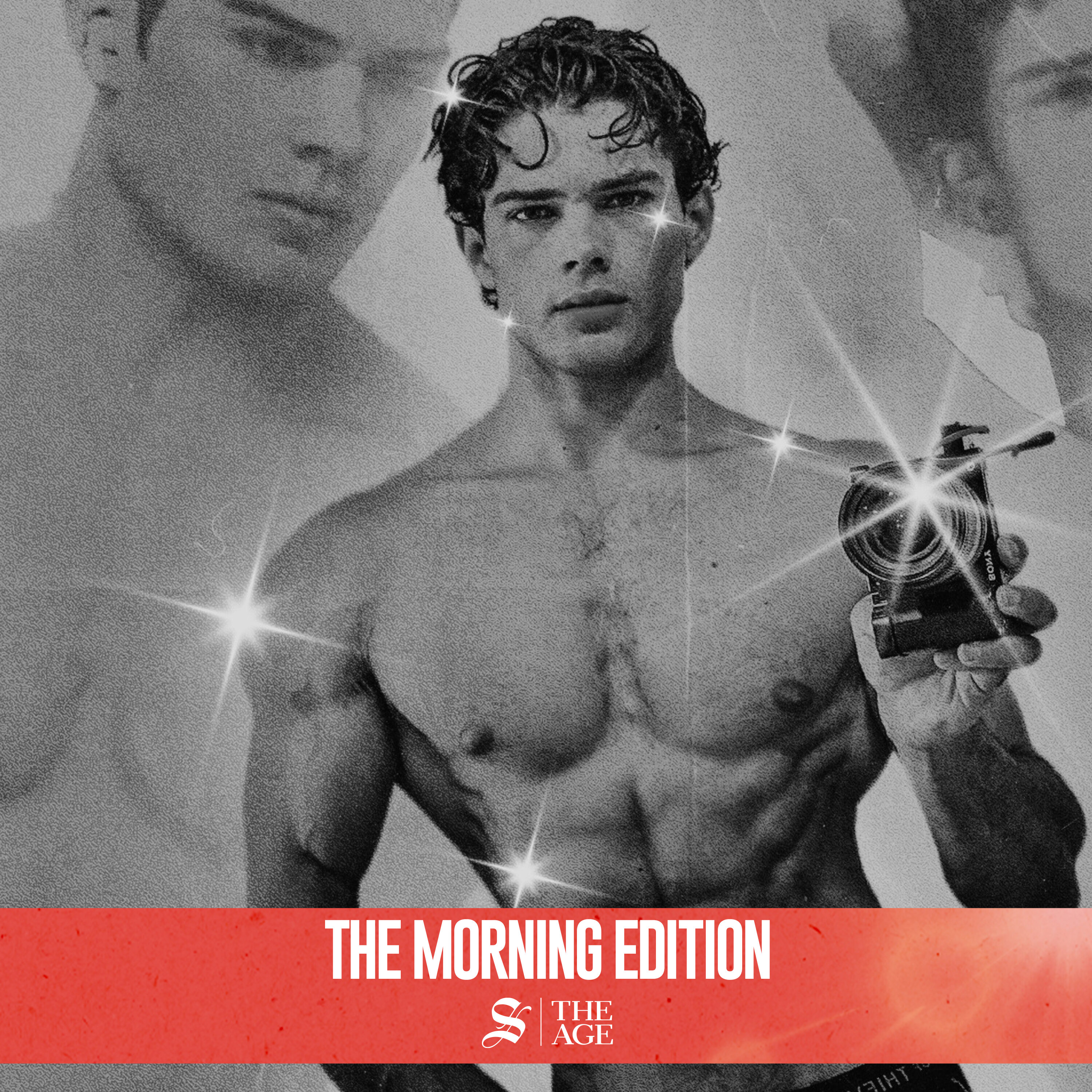
Loading summary
Transcript47 lines
- [00:00]
A
It takes a certain type of person to succeed, the type that puts in the work when no one's watching, that knows staying informed isn't optional. It's their edge. It's not for everyone. The Australian Financial Review the Daily Habit of Successful people.
- [00:19]
B
There's been a horrifying trend on the social media platform TikTok lately. It involves boys and men trading stories of bright breaking their legs in order to gain extra inches and something called bone smashing, a practice where they hammer their faces in order to heighten their cheekbones. These are just a couple of the wild self improvement measures taken up by the community known as looks Maxers. I'm Samantha Salinger Morris and you're listening to the Morning edition from the Age and the Sydney Morning Herald. Today, New Yorker magazine writer Becca Rothfeld on where this movement came from and why many of its biggest stars are Australian. It's March 23rd. Welcome Becca, to the podcast.
- [01:07]
C
Thank you so much for having me. I'm so excited to be here.
- [01:10]
B
Okay, well, first off, I am dying to know why you wanted to take a deep dive into this trend for the New Yorker magazine. I mean, you have taken a very serious look. I was counting at the very serious great thinkers in your piece. And you quote, among others, Gustave Flaubert, the critic, Susan Sontag, Karl Marx. So tell me why you looked at this so seriously.
- [01:30]
C
I mean, I think part of the explanation is just masochism. You know, I love an Internet wormhole. I love, I almost have like a novelistic fascination with weirdos on the Internet. But I also was getting a PhD in Philosophy and I was going to write a dissertation about what it means to be a beautiful person. And I almost wish, you know, that looks maxing had been a thing when I was doing my work, preparing to start writing my dissertation because it's such a good case study in the ways that this way about thinking about beauty can go wrong. And so I'm just always fascinated by people who are sort of putting into practice different theories of what personal beauty is.
- [02:08]
B
Honestly, it's bananas. But let's start, I guess at the beginning. So for the uninitiated, tell us what looks maxing is and I guess where it came from.
- [02:15]
C
Good questions. And for everyone who doesn't know about this yet, I mean, maybe just turn this off because maybe you should remain pure and blissfully ignorant. So this is sort of an evolution of incel ideology. Incel is a, is short for involuntary celibate. It's a misogynistic and racist, but sort of primarily misogynistic online subculture that developed in the kind of early and mid aughts in online forums like 4chan and Reddit. And so the sort of guiding premise of the incel forums was your, your looks and your biology are destiny. And so if you are not a conventionally attractive man, you are consigned to romantic loneliness forever. Because women are hyperogamous, which means that women try to date the highest status man available and they often date above their status. All of this is sort of pseudoscientific pop evolutionary psychology. I don't mean to be endorsing this, I'm just explaining. So the Incels understood themselves as taking the black pill is what they called it, which is a reference to, to the movie the Matrix in which one character offers another the blue pill and the red pill. The blue pill allows him to keep living happily in a delusion, and the red pill exposes him to the truth. And so the black pill is the nihilistic pill. It's people reconciling themselves to a tragic fate of kind of loneliness and social ostracization. So the looks maxers take this kind of basic description of the world, this idea that looks are destiny, this kind of reductive, insulting character caricature of women. They take all of this on board, but they think, no, you can change your looks. It is true that your looks kind of determine almost everything about your status in the world. But you can intervene and make yourself hot, and that will change everything about your life.
- [04:07]
D
By the end of this lecture, you're
- [04:09]
C
going to have an insane understanding of how to go about maximizing your appearance based on what you look.
- [04:14]
D
If you're too skinny, screenshot this in bokeh. If you're a fatter, screenshot this and start cutting. Always remember lean. This is how I fix my skin, my collagen, my hair, my height, everything. It's all in my bio. If you want to look, I kind of just like to refer back to the quote, like hair is life and if you have no hair, you have no life. Actual scientific looks. Maxine is making a return and I'm here for it. Have a good one.
- [04:41]
C
It will increase your, what they call SMB, which is sexual market value. It will make you appealing to women and all kinds of status benefits will accrue to you if you make yourself hot. And so there's a, there's a range of different things that you can do to make yourself hot. And we could talk about that. And some of the, some of the things the lick smackers have done are quite normal and unalarming. And some are quite extreme or deranged,
- [05:03]
B
as the magazine had it in the headline of your piece. So let's talk about some of the deranged stuff, because it really is extreme. Really doesn't cut it when it comes to what these men are doing.
- [05:14]
C
Yeah, so I guess on the extreme scale, the interventions range from kind of fanciful but extreme, not scientifically legitimate. So one thing that they do is this thing called bone smashing where they take a bone and they smash their jaw. They literally hit themselves in an attempt to get kind of more chiseled jawlines.
- [05:36]
D
And then you're hitting real hard. And what this is doing is this is creating micro fractures and according to Wolf's law, the bone is going to grow back stronger.
- [05:45]
C
Another thing that they do is this thing called mewing, which is they hold their tongue against the roof of their mouth also in an attempt to get a more chiseled jawline. The word mewing comes from kind of discredited orthodontist Dr. Mew, who proposed this method. And then some of the things are probably effective, but nonetheless deranged. So clavicular. Who is the influencer that my piece kind of centers on? And he's kind of the poster child of the looksmaxing movement. He's kind of recently blown up. And it's really just because he's quite extreme and he advocates these extreme methods. And so people have a real fascination with him. His real name is Braden Peters. He's 20 and he's been, he's been doing really extremely extreme looks maxing stuff since like early adolescence. He has said that he micro doses methamphetamines to remain lean for three days.
- [06:34]
D
I spammed a combination of Adderall and methamphetamine for appetite suppression. And I didn't. I literally went on a three day fast and stayed awake the entire time. And I lost five pounds. So that was kind of the craziest thing I've done. It was pretty.
- [06:55]
C
And he takes steroids, which is pretty common in the looks maxing world. And he's taken so many steroids for so long that he is avowedly infertile. And he's also said that he's not really that concerned with longevity. Like, you know, he doesn't care if he dies earlier, as long as he's as beautiful as he could be during his life. A lot of them take just kind of Ozempic, which is, you know, that's actually vetted by doctors on kind of a Pretty approved. So those are some of the crazier things that they do. And they consider all kinds of really dramatic cosmetic surgeries. Like the limb lengthening surgery is kind of the most extreme one, which makes you immobile for a really long time and is really painful. And you might have to travel to a different country to get someone to do it. There's a lot of surgical tourism in the looks maxing community.
- [07:38]
B
And so I guess, tell us, what is the goal for these boys and men of looks maxing? I mean, is it just being as attractive as they can be according to these sort of standards? And for what purpose? Is it romantic success? Is it job success? Like, what is this all about?
- [07:54]
C
So I think that there's what they say it's about, and then what we can infer, it's actually about sort of on the basis of their revealed preferences. So they say that this is a rational decision that they're making because they have observed that people with higher smv, which is sexual market value, get all kinds of benefits from society. Their higher status, they get paid more, and they have their choice of women. There's some evidence to substantiate that people are sort of biased on the basis of looks, that I did a bit of research about this for my dissertation, that, you know, people who are better looking are likely to be politicians. Of course, you can be a politician if you're bad looking. Just look at the president and the leadership of the United States right now. But so they also say that they're doing it to kind of get women or whatever, but they're actually pretty uninterested in practice in. In sleeping with women. There's a really interesting profile of clavicular in the New York Times where clavicular tells the reporter that he's kind of just more interested in knowing that women would sleep with him. And he doesn't actually feel any urge to consummate any of these relationships. He doesn't really care if he does sleep with them as long as he knows that he can. They're much more interested in upstaging other men. And their term for this is mocking. Like if it's a transitive verb, I mog you or someone mogs someone else. So they're much more interested in kind of proving that they're at the top of the male hierarchy. After the break, they view the body in very objectified terms as very detachable from the kind of person behind the body. In a way, their objectification of women has led them to, in turn objectify themselves
- [09:32]
A
it takes a certain type of person to succeed. The type that puts in the work when no one's watching, that knows staying informed isn't optional. It's their edge. It's not for everyone. The Australian Financial Review. The daily habit of successful people.
- [09:48]
B
What is the relationship here between the desire for the ultimate beauty, as however they see it, and the sort of racism and misogyny that we see filter through this network and the sort of things they say? What is the connection there?
- [10:00]
C
That's an interesting question. I mean, I think that part of it is that they. Some of the beauty standards that they espouse are probably easier for white people to satisfy. I haven't looked too far into. Into this. You know, they have all these pseudo scientific terms like mid face ratio and cancel tilt and all this stuff, but I assume that they're sort of like a presumption in favor of white, like styles and ways of looking. They casually use racial slurs in their forums all the time and stuff. And that's obviously bad. And their misogyny is obviously bad too. And I do think that their sort of objectification of women, well, they view the body in very objectified terms as very detachable from the kind of person behind the body and like the agency behind the body. And so I think that in a way, their objectification of women has led them to in turn objectify themselves. And they have this very kind of rote physicalist understanding of what personal beauty is that I think derives from their very misogynistic, very objectifying assessments of women. Also, there's just the fact that they're not thinking about the fact that maybe their sexual market value is low because they're terrible people and they're spending literally all of their time thinking about, like, peptides and like your mid face ratio. Like they're not able to have a conversation on a date. But.
- [11:12]
B
But besides that, yes, they're perfect.
- [11:15]
C
Yes.
- [11:15]
B
Yeah. And this might be too, you know, long a bow to draw, but is there something culty about this movement? Like, I'm even thinking of some of the terminology. I mean, they've got their own lexicon. You've written, you know, in this world, a man who becomes beautiful is said to have ascended. I mean, that sounds a bit culty or a bit, you know, like something like going clear in Scientology, like, is there a culty element to this? Or. No, is that just to the outsider like me?
- [11:39]
C
I think there definitely is, but I think that, like, no more so necessarily than any other kind of, like, niche online community. And I do think it's kind of threatening to breach containment, although I'm not sure to what extent people are taking it seriously. I think that people just kind of find it a fun artifact to ogle. But I definitely do think that, like, in some of the more extreme looks maxers, there is an element of the same kind of, like, mental illness that you would see in a cult. People just kind of perennially doing surgeries, like, unable to stop. There's a compulsive element for sure to some of the more extreme looks maxers.
- [12:16]
B
And also, Ilya, I wanted to ask you, I mean, what damage do you think is Lux maxing doing and to whom?
- [12:21]
C
I mean, I think that it's doing damage. I mean, the primary demographic to whom it's doing damage is these. These men who are sort of destroying their bodies, but maybe more importantly or at least in addition destroying their. Their kind of sensibility, like destroying their ability to have a more artistic and fluid relationship to beauty. I think that they're obviously doing damage to. To people of color and to women who may casually insult all the time, but of think that they represent a tendency to try to gamify everything, to optimize everything. I mean, we haven't talked about the term itself, looks maxing, which is short for maximizing, like, looks maximizing. And so it really represents, like, a very scientific, extractive, acquisitive approach to beauty in particular and kind of life in general that I think is quite deadening.
- [13:10]
B
And I've seen some analysis. I know. I read a piece in the Atlantic where they're sort of saying, well, this looks maxing trend, it's actually something that's. It's sort of revealing this moral crisis that's confronting young men today. Do you think that this is what it reveals as well? And if so, what exactly is this moral crisis?
- [13:27]
C
I'm not sure that I would go that far because I think that, I mean, it's hard to get data, you know, on how many. What percentage of like, men of a certain age are looks maxers. But, you know, a vanishingly small percentage. Like, I'm not. I'm not sure that looks maxing is any worse or reveals anything more than kind of these earlier trends did, like, pickup artists. But I think that regarding looks, Maxwell, as kind of representative of like, of young men in America or globally is a mistake. And some of the big looks, Maxwell, are Australian, by the way.
- [13:58]
B
I noticed that. Tell me what you make of that. I've seen them. I've seen them with their videos about mewing and you know, chiseling their, their jaws and whatnot. Why, why are so many of them Australian? Becca, tell us, what are we doing wrong or right?
- [14:12]
C
I don't know. I don't know. I don't know. I don't really know. I mean, maybe it's just because like people in Australia are hotter cause it's nice outside so the competition is like harder. You know, people in America are very pale on the east coast after being inside for so many months.
- [14:27]
B
That's very funny. Well, it's interesting you mentioned the Australian element to it because I wanted to ask you, is there much of a worry in the United States about the physical dangers of looks? Maxine? Cause I know here we had one endocrinologist at the University of Melbourne, Dr. Rahul Barman Ray, he said of one fat blasting drug called dnp. It's a cautionary tale cause it will cause a person to lose weight, but it can, can also be incredibly toxic and someone can die from lethal hypothermia from taking it. And that due to peptides cellular promoting properties. There's always a concern that it can lead to cancer. And I was like, damn, is that discussion happening in the United States as well? Are people concerned about the boys? Because some of the people doing it, they're quite young, right?
- [15:09]
C
They are quite young. I mean, I don't think so because I don't think that enough people are sort of doing this seriously for it to merit that kind of intervention or if that is true, like that has yet to be discovered. But I will say that there's peptides in particular are not just being used by people in the looks vaccine community. There, there are like scientifically kind of vetted peptides like Ozempic. But there's a, there's a big craze just sort of among like beauty bloggers even and among women because there's not, there's not a ton of like discussion between the, the incel adjacent looks maxing community and kind of female beauty bloggers who have long been pushing sort of more reasonable things like using retinoids on your skin, using serums, maybe doing other like more minor interventions. But now that there's just a huge general peptides craze that is a health concern and it's even being promoted a lot of the kind of make America healthy again kind of people in America, like people who are followers of RFK Jr. Or people who are vaccine skeptics, a lot of those people are quite into peptides and kind of believe that The FDA has declined to investigate peptides for conspiratorial reasons. And so those people are just injecting stuff into their bodies from China with kind of no idea what it is. And so there are health concerns about that.
- [16:24]
B
Yeah, well, I think it's exploded here to a certain degree as well. I think there's one sort of peptide cluster of ingredients. It's called the Wolverine stack. It's a combination of peptides used experimentally for rapid tissue regeneration and injury recovery, mimicking the Marvel character Wolverine's healing abilities. I mean, that does not sound necessarily kosher.
- [16:44]
C
That does not sound good. Yeah, I mean, one of the people in the New York magazine piece is kind of like, yeah, I just inject them and every now and then I kind of have like a heart murmur and I'm like, oh, like, am I going to kill myself? Because people on the, on the subreddit are recommending this peptide cocktail. And then she's like, no, it's fine. So I think that there's definitely concerns about that, but not as much about looks maxing specifically, because, you know, if I had to guess, like the number of people who have actually bone smashed in America is like probably five.
- [17:11]
B
Right. Okay, so there's lots of videos online, but it's. Yeah, it's probably making us feel like more people are doing it than are actually doing it. And I guess. Becca, just to wrap up, I wanted to ask you about what this looks maxing amongst men might be doing to their relationships, their romantic relationships with regardless of, you know, who they're wanting to date or not wanting to date. Because there was that line in your piece about clavicular you wrote. Watching him, I could not shake the feeling that he has a smooth mound where his genitals are supposed to be, as if he were a giant Ken doll. You said he almost had an anti erotic quality. I guess because he had done so much to his body. It was almost like a plastic feeling, I guess, that you felt like that came off him. So what's this doing to the relationships, do you think? Is it having any particular impact? Perhaps a negative one.
- [17:56]
C
I mean, definitely, like. I mean, I think that as I sort of tried to gesture out in the piece, sort of erotic charisma is often at odds with kind of technical perfection. Like the degree to which all of the looks maxers are calculated about their appearance and try to sort of gamify everything. It's really anathema to the spontaneity and the aesthetic creativity that I actually think goes into the production of erotic charisma. I talk about the French concept of jolie led, which means literally pretty ugly. And it's like, it's the French term for people who are kind of technically imperfect, but nonetheless, they have a lot of erotic appeal and charisma. And they often become like sex icons. Like, you think of people with gaps in their teeth. And people love that because that's like a kind of sexy imperfection. And because the looks master's end game is to just eliminate imperfection of any kind. The kind of end goal is one in just, you know, a world in which everyone looks the same. Like, there's no. There's none of the individuality that I think goes into kind of eroticism. So I think it's not great.
- [18:56]
B
That's right. The unexplained attractiveness in your piece. You point to people like Charlotte Gainsbourg and Barbra Streisand, who I think there's some amazing quote in your piece about which actor is it said that, well, I didn't think she was pretty, but then I spent a few days with her and I couldn't stop lusting after her. Was that Omar Sharif? Maybe?
- [19:13]
C
Yes, yes. Who is a co star in a movie. And they did have an affair, famously. So her usually led charisma worked on him.
- [19:22]
B
There you go. Only the French could have a. A saying that's beautiful ugly, which is meant to be a compliment.
- [19:27]
C
Yes.
- [19:31]
B
Well, Becca, it's absolutely fascinating. Never did I, you know, think that there'd be a trend that it involved this deranged stuff like, you know, smoking crystal meth to stay thin in a piece that combines the wisdom of Karl Marx and Gustave Flaubert. So thanks, Becca.
- [19:46]
C
Thanks so much. Thanks for reading.
- [19:55]
B
Today's episode of the Morning Edition was produced by Chi Huang and Josh Towers. Our executive producer is Tammy Mills, and our podcasts are overseen by Lisa Muxworthy and Tom McKendrick. If you like our show, follow the Morning Edition and leave a review for us on Apple or Spotify. Thanks for listening.
- [20:17]
A
It takes a certain type of person to succeed. The type that puts in the work when no one's watching that knows staying informed isn't optional. It's their edge. It's not for everyone. The Australian Financial Review. The daily habit of successful people.
- [20:32]
D
The Global Gaming League is presented by Atlas Earth, the fun cashback app. Hey, it's Howie Mandel, and I am inviting you to witness history as me and my How We Do It Gaming team take on Gilly the king and wallow. 2, 6, $7 million gaming in an epic global gaming league video game showdown. Plus a halftime performance by multi platinum artist Travy McCoy. Watch all the action and see who wins and advances to the championship match right now@globalgamingleague.com that's globalgamingleague.com in partnership with Level Up Expo.