← The Morning Edition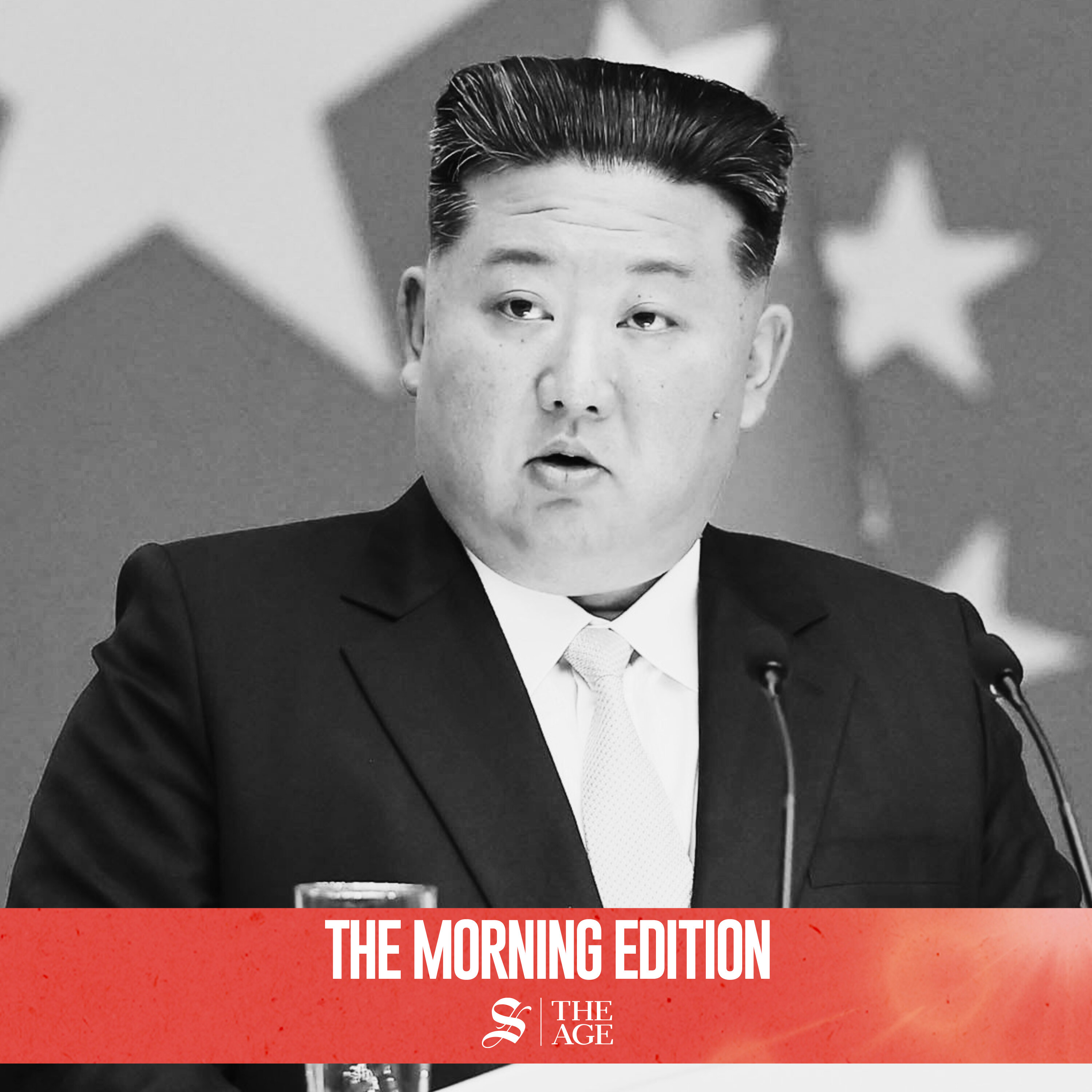
Loading summary
Transcript37 lines
- [00:07]
A
A visit this week from Chinese leader Xi Jinping to North Korea has put the world on notice. Kim Jong Un's nuclear program and ambitions are stronger than ever. But has Donald Trump taken notice? I'm Samantha Selinger Morris, and you're listening to the Morning Edition from the Age and the Sydney Morning Herald. Today international and political editor Peter Harcher on how North Korea has gone from global pariah to earning respect from some of the world's great capitals. Hey, Peter.
- [00:42]
B
Hello, Samantha.
- [00:43]
A
Welcome back.
- [00:43]
B
A pleasure.
- [00:45]
A
Okay, so I have to ask you this because a lot of us have been pretty focused on Iran's nuclear facilities. Are they obliterated? Are they not? And your latest column would suggest that maybe we should be looking at another country's nuclear facilities and perhaps we've dropped the ball. Hartra, have we dropped the ball?
- [01:04]
B
Well, a brief word on Iran. The International Atomic Energy Agency said in early March that there was no sign whatsoever that they were moving to resume their nuclear program. And Trump's own Director of National Intelligence, Tulsi Gabbard in written testimony to the Senate said there was no evidence of of any Iranian intention or progress towards nuclear enrichment. So this is an ex post facto justification Trump has come up with for this invasion. Let's just be clear about that. There is no current threat from Iran with nuclear weaponry. However, as you say, another country which is in the news this week, Xi Jinping, China's president, visited North Korea. Now, North Korea is a country that actually has on an estimate produced this week by the Stockholm Institute for International Peace, which is a very credible, serious research outfit. They've estimated that North Korea has about 60 active nuclear warheads already. It has a huge stockpile of missiles, including intercontinental ballistic missiles to give it maximum reach. And according to the Stockholm Institute, it has potential to make another 30 nuclear warheads with its existing stocks of uranium. So it's a rogue nuclear power. It's a new ish nuclear power. And it's a real nuclear threat that almost every week threatens to attack the US, the US's so called running dog, its ally South Korea, Japan, or anyone else it doesn't like very much. And I'd just add that since its recent tests of ICBMs, we know it has missile reach to strike Australia if it should choose as well.
- [02:51]
A
Okay, so why then is Donald Trump not talking about North Korea or is he? And I've just missed it.
- [02:56]
B
You haven't missed it. The preoccupation very much has been with Iran.
- [03:00]
A
Okay.
- [03:01]
B
He did show interest in the North Korean problem. During his first term, you might remember Trump's very well publicized visit to the dmz, the demilitarized zone between north and South Korea that he made in 2018-19. There were three meetings with Kim Jong Un. So Trump showed a lot of interest in that time. He said he fell in love with Kim Jong Un. I'm not kidding. He said that.
- [03:27]
A
He said they'd written love letters, he
- [03:28]
B
said they'd exchanged love letters, and there was something like dozens of letters between the two of them. However, all of that attention from Trump to what he called Little Rocket man, resulted in zero agreement. North Korea made no concessions on its nuclear program. Trump was unable to change his mind. And Trump effectively just walked away from the problem and hasn't returned to it since. That was 2017. And since then, Little Rocket man has built up more rockets, more nuclear capability, and just continued and this week, in fact announced a ramping up of its missile production by 250% over the next five years. So Trump failed, lost interest and walked away and instead has turned his attention to Iran. I just add a final point, which is that the North Korean leader, Kim Jong Un, this week pointed out that the US Was attacking Iran because Iran didn't have nuclear weapons and nobody was attacking North Korea.
- [04:34]
A
So it's learned its lesson.
- [04:36]
B
Yes. Meanwhile, another case study in nuclear weapons, and what happens when you do and don't have them, is that the Ukrainians had nuclear weapons, a legacy of their time as a Soviet state. At the end of the Cold War, they had the world's third biggest stockpile. They handed over their nukes to Russia in exchange for a security guarantee from Moscow, which obviously has not proved effective. Terribly effective. If it had kept the nuclear weapons, the consensus in Kyiv today is that Russia would not be attacking.
- [05:05]
A
Okay, so Trump walked away with no agreement with North Korea when he was interested in this years ago. And that brings us to this week because, like you said, Chinese leader Xi Jinping has had a two day visit to North Korea. So tell us the significance of this, because I did think it was interesting that as I understand it, usually it's Kim Jong Un visiting Xi Jinping in China rather than the other way around. And this time, of course, the Chinese leader's gone to North Korea. Is that a signal of North Korea's ascendance? Like, what is the significance of this meeting?
- [05:32]
B
It is a sign that Xi Jinping feels obliged for the first time in seven years to travel to North Korea. It is a sign that he very much thinks North Korea is relevant and in play at the moment. And the reason that North Korea is in play is that the new bromance between Vladimir Putin and Kim Jong Un has put it in play. North Korea had become. It has. It's had phases of being a pariah state since 2017, when North Korea conducted its sixth biggest and most intimidating nuclear test, plus demonstrated its first successful launch of an intercontinental ballistic missile since that time. And it also announced that it had acquired the ability to build a thermonuclear device. Since that time, it's been an international pariah. Everybody has had sanctions on it, including the Russians. And the Chinese have really scaled back their dealings with the country as well. But when Vladimir Putin found himself bogged down in Ukraine, running out of money, running out of ammunition, running out of soldiers, he turned to North Korea for help. And the North Koreans, Kim Jong Un was only too happy to oblige. He supplied soldiers. He Supplied an estimated 15 million artillery shells and very well publicized supply of up to 21,000 North Korean soldiers fighting against the Ukrainians for the Russians. In return, the Russians have returned the favor with some cash. But more valuable for the North Koreans is food, fuel, and nuclear and missile technology at a more sophisticated level than the North Koreans already had. The value, the total value of this has been estimated by a South Korean think tank at between about US$5 billion and US$10 billion, which for a country which has essentially no modern economy of any scale to speak of, that is a huge injection of cash. And the indications that Pyongyang has been moving closer to Moscow have caught Xi Jinping's attention. Xi Jinping invited Kim Jong Un to Beijing last year, feted him, and now has returned the visit. So it's very much an effort by Xi Jinping to reassert the Chinese sphere of influence in and over North Korea.
- [08:05]
A
So can you just walk us through, just briefly, why does China not want North Korea to have nuclear weapons? Because they are allies. Can you just walk us through that really briefly?
- [08:15]
B
Sure. Well, who wants an unpredictable rogue nuclear state on their border? The Chinese have already got to put up with the Russians on one border with their nuclear weapons. So North Korea to the Chinese, while the propaganda is all about, you know, the fraternal communist bond and socialist solidarity, and the bond, as Xi Jinping and Kim Jong Un put it this week, forged in blood because of the Korean War. That's the propaganda. But the reality is China has always been concerned about this rogue regime. It's a dynastic communist regime. The current ruler is the grandson of the founder. This is the third generation. And Kim Jong Un has nominated his young daughter as the next leader. This is not communism. This is more like a monarchy than a communist ideal. And North Korea has proved again and again to be resistant to China's ideas and influences. The Chinese for many years have kept North Korea afloat with supplies of oil, without which its economy would have collapse entirely just to keep it as a functioning state. So it didn't, didn't collapse and precipitate mass exodus of refugees across the border into China. So in between keeping it just solvent and trying to contain its nuclear program, the Chinese Communist Party has been trying to manage this small, much smaller state forever, since it started essentially in 1948, 49. But it's, it's had limited success and now Xi Jinping has decided, well, if I can't suppress them, I have to court them. Thanks to my friend Vladimir Putin's attentions.
- [09:55]
A
After the break.
- [09:57]
B
This is the story with nuclear weapons and nuclear proliferation. You know, it's like cockroaches. You see one and pretty soon you're going to see more because it encourages panics, intimidates other states into responding in kind.
- [10:17]
A
And that shift I think is borne out by what the Chinese summary of this latest visit was because it made no mention of the nuclear program, which I think is an anomaly because the two sides, as I understand it, used to be standard that they were statements about working towards ending the nuclear program. That used to be the standard for them both during diplomatic engagement. So that that's not there any longer, I think really sort of points to that shift. So I guess what's the upshot of this visit between Kim Jong Un and Xi Jin? They said that they are going to be working to expand practical cooperation between the two countries. So what might that look like?
- [10:52]
B
Yes, Xi Jinping has totally surrendered on China's years long exhortations to North Korea to give up its nuclear program. And just in case, Xi Jinping had the least intention of bringing this up at his summit with Kim Jong Un. Two days before Xi Jinping arrived, Kim Jong Un visited a nuclear processing research facility. The day before he arrived, he visited a missile and munitions factory which makes ballistic missiles as well as cruise missiles and announced this massive ramp up 250% in their missile production. Plus he sent his sister out to give a speech about repeating his own line that the nuclear program is irreversible. She said this is a line of zero retreat. This is our national sovereignty guarantee. You know, the whole bit. It couldn't have Been a more emphatic way of saying to Xi Jinping, do not talk nukes to me. And it looks like Xi Jinping obliged because there's no reference in any public statement to concern about North Korea's program. So in that sense that's a big win for North Korea to have China tacitly, implicitly accept its new status as a serious nuclear power. But the win for Xi Jinping on the other hand, was to have Kim Jong Un say that the phrase was China is our number one strategic priority.
- [12:20]
A
Right.
- [12:21]
B
So that's to elevate the relationship with China above that with Russia. That's what Xi Jinping wanted in terms of practical cooperation. As you say, they trade a little bit between the two countries already, China and North Korea, but it's pitiful in terms of international trade. It's about half a billion US dollars worth two way trade, which is not much. China sells North Korea a bunch of machinery, sophisticated tools as well as a bit of consumer stuff. The North Koreans sell tungsten is their big one oars and human hair products like wigs, fake eyelashes, eyebrows. Basically a trade in body parts because they haven't got much else to sell. And it's so tragic. You know Samantha, just look across the border. The other Korea is one of the richest and freest countries in the world. And here's North Korea where its people are perpetually undernourished. The World Health Organization, World Food Organization told us just again this year had a massive famine in the 90s that killed an estimated 2 million people. In the 90s there was absolutely no need for that. But their Jewish policy of communist self reliance and autarky is a big thing. Plus the state has turned all its resources to armaments and nuclear and missile programs. So the people have really suffered and it's so unnecessary. It's really such a tragedy for those poor people. Xi Jinping is promising new investment in North Korea and new cooperation in agriculture, in military exchange and in infrastructure, presumably into North Korea. It remains a peculiarly, it's going too far to say isolated, but it is pretty lonely. Putin's brought it back into play. Xi Jinping has joined the game.
- [14:18]
A
Well, this is what I wanted to ask you, Peter. I've got a double edged question. So were you surprised that for the first time I think in seven years that Xi Jinping declined to pressure North Korea to not continue its nuclear program? And the other side of that question is, could this embolden other countries that feel threatened by China? Hey, you know, we should learn the lesson that North Korea is learning, which it's learned from Iran, which it's learned from Ukraine, which is we need nukes, too.
- [14:43]
B
The reality that Xi Jinping has accepted of North Korea as a nuclear state, I think is. Is simply an acknowledgment that he. He's failed for years to change their mind on just about anything. So he's. He's gone with. He's turned the, you know, the inevitable into a virtue, I suppose, and to improve the relationship. Was that a surprise? Not entirely. But the. The cutting edge of that question is, what's the future? If these are the incentives and responses that come out of these developments. Well, the most immediate is thinking in Seoul. The South Korean government and people are in an active debate about whether they need to develop their own nuclear capability to defend against and deter North Korea and China. About 7 out of 10 South Koreans are in favor of them developing their own nukes. Partly that's because nobody trusts the US Any longer with Trump in charge. Trump's supposed to. The US Is supposed to provide the nuclear umbrella, but nobody trusts that anymore. So South Korea is on a very interesting cusp about how to respond to all this. Japan is having a similar debate, not as advanced, and the public there is against the idea. But the ruling party, the Liberal Democratic Party and the Prime Minister, Take Ichi, are in favor of at least having a very serious look at Japan going nuclear. And then, of course, you know, this is the story with nuclear weapons and nuclear proliferation. You know, it's like cockroaches. You see one, and pretty soon you're going to see more because it encourages and panics, intimidates other states into responding in kind. And this is a question of nuclear proliferation that will. Will spread outwards, has continued spreading outwards, and will continue from these developments.
- [16:35]
A
Okay, well, then, Peter, I want to bring you back to the beginning of our conversation when we were talking about how Trump paid attention, was a bit concerned about Korea in his first term, and has sort of dropped that. Even though, as you've mentioned, this enemy of the U.S. north Korea's got 60 warheads and is capable of making 30 more. I believe it's got missiles that can hit the States. It does. So is there any suggestion that Donald Trump is taking notice of this? You know, back down from Xi Jinping this week, this, you know, historic visit?
- [17:02]
B
And.
- [17:02]
A
Yeah, is he worried? Is he going to do something about it?
- [17:06]
B
Hard to be sure we're talking about Donald Trump here, but there are rumors everywhere that Trump is planning contact with Kim Jong Un. And would like to set up a meeting. What he has in mind exactly, I don't know. But there is talk about would be interesting to see whether Kim Jong Un accepts a meeting with Trump. At this point, unless Trump is prepared to acknowledge his country, North Korea, as a nuclear power, the incentives have switched. He's feeling emboldened. He's got a full nuclear arsenal. He might not feel any commitment, any need to butter up Donald Trump any longer. We'll see.
- [17:47]
A
So does that mean that Trump has not conceded that North Korea is a nuclear nation?
- [17:53]
B
Trump has not yet conceded publicly that it is a nuclear power. He's said that, you know, he's worried about them and worried about their potential, but he doesn't, I suppose he doesn't want to acknowledge that the outcome he sought, which was to denuclearize, has failed. Notably, when Donald Trump met Xi Jinping last month, the Americans produced a readout of the meeting saying that the two leaders had agreed on the need to denuclearize the Korean peninsula. In other words, North Korea has to lose its nukes. The Chinese side? No such reference. So it's clearly on the mind of the US it's in that document. But the Chinese now have surrendered to the reality, and it remains to be seen what Donald Trump will have to say about it.
- [18:43]
A
So that would suggest denial, not just on the mind of America, but perhaps denial that it is a nuclear power.
- [18:48]
B
It suggests that it's still the Trump intention to somehow persuade Kim Jong Un to give up his nuclear toys. And all the evidence since they began their nuclear program under his father is that it will fail. Nothing has succeeded in stopping or deterring or even really slowing their nuclear program.
- [19:11]
A
Well, thank you so much, Peter, as always.
- [19:13]
B
Pleasure, Samantha.
- [19:18]
A
In other news today, a push to improve access to rooftop Solar for Australia's 2.5 million apartment dwellers is gaining momentum. But owners are still facing headwinds from strata and government bureaucracy. Wesfarmers boss Rob Scott is betting on Australian shoppers ramping up their AI use when stocking their homes and wardrobes, but says physical stores still play a vital role in keeping customers coming back. And two new global studies have linked the advent of the iPhone in 2007 to the decline in fertility rates around the world. You can read more@the age.com or smh.com Today's episode was produced by Chee Wong. Our executive producer is Tammy Mills, and our podcasts are overseen by Lisa Muxworthy and Tom McKendrick. If you like our show, follow the Morning Edition and leave a review for us on Apple or Spotify. Thanks for listening.