← The Morning Edition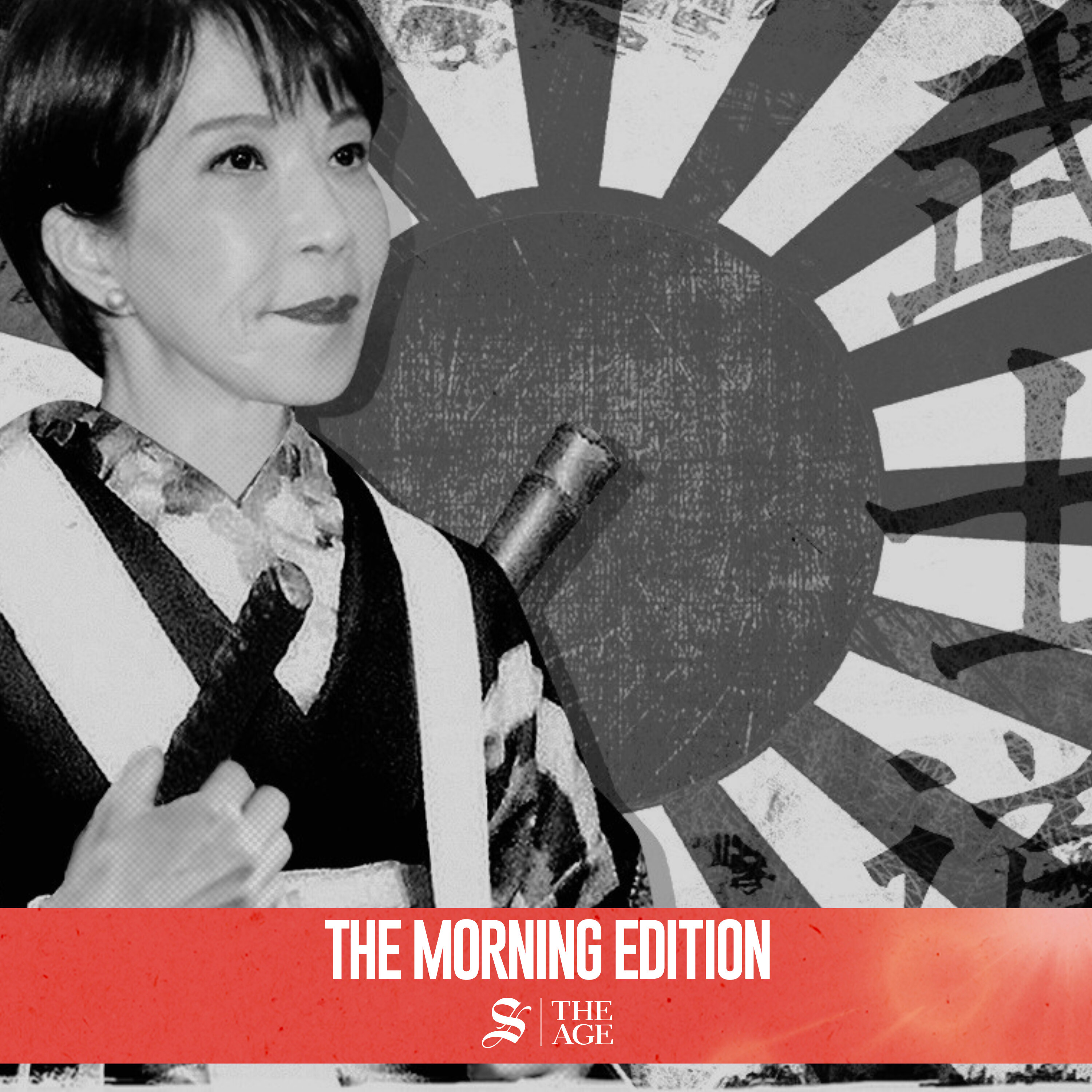
Loading summary
Transcript40 lines
- [00:00]
Peter Harcher
Foreign.
- [00:07]
Host 1
Donald Trump never fails to miss an opportunity to punish his allies. This week it was Germany when Trump announced that he'd be pulling 5,000 troops from the country after its chancellor said that the US had been humiliated by Iran. But away from the front page news, Germany and another former enemy of the United States, Japan, have been on the rise. I'm Samantha Salinger Morris, and you're listening to the MORNING EDITION from the Age and the Sydney Morning Herald. Today international and political editor Peter Harcher on the stunning turnabout from the very countries that threaten peace the most in their time and how it will impact us all. It's May 7th. Peter, welcome back to the podcast.
- [00:56]
Peter Harcher
Good to be here, Samantha.
- [00:57]
Samantha Salinger Morris
Now, I've got to ask you, first off, did you ever think that you would be writing a column about how Germany and Japan, once the greatest wartime fascist powers, have become bastions of liberty? Like, is this a Twilight Zone type moment? You know, up becomes down?
- [01:12]
Peter Harcher
Well, in one sense it is. If you take a step back from, you know, immediate news and world affairs, look at the the arc of history to see that today, when democracy is under threat, the number of democratic countries has been shrinking since 2007, only 26 full democracies left on the planet, according to the Economist Intelligence Unit annual ranking, and that two of the countries that are most committed to democracy and sustaining and defending it are in fact Japan and Germany, and that they were, in just a blink of the historic eye, a mere 75 years ago, 80 years ago, were the dominant fascist powers on the planet, seeking and almost succeeding, almost succeeding in a fascist project to extinguish human liberty. And here we are again. According to the Economist Intelligence Unit, the US Is no longer a full democracy. It's a flawed democracy.
- [02:15]
Samantha Salinger Morris
That's right.
- [02:15]
Peter Harcher
But Japan and Germany are not only fully democratic, but they're doing what they can to offset the collapse of American commitment to democracy and to liberty on the planet and to defeat threats. So it is an extraordinary Twilight Zone moment in that sense.
- [02:34]
Host 1
Okay.
- [02:35]
Samantha Salinger Morris
Well, let's walk through it then. Tell us about how Germany and Japan, how both of them have risen to become these upholders of democracy, when, of course, their history was quite the opposite.
- [02:47]
Peter Harcher
Two parts of the answer, really, Samantha. The longer term one is that after World War II, like Japan, Germany was reduced to a very pacifist but also a sort of penitent state. Japan and Germany alike really internalized the lessons of their fascist experience and their expansionist experience, their quest for global dominance. They really learned those lessons. They learned them the hard way. And they spent the post war decades doing a couple of things. Both Japan and Germany made themselves into model international citizens. For the last 75 years, Germany, together with France, established the European Union, started as the European Economic Community, and then grew into the European Union specifically so that Germany would not break out and would not attempt once more to dominate Europe and that there would be no more wars inside Europe. That was a very deliberate project to constrain itself. Likewise, Japan, under a peacetime pacifist constitution, which was imposed on them by the us, but they accepted it and they really internalized that. The Japanese really also accepted and internalized and kept that to this day, although they're now debating how to overcome it. So the Germans and the Japanese both reduced their defence spending to a bare minimum, were happy to give the defence and strategic task. They contracted it out to the US and they concentrated on becoming prosperous, successful democracies. And, wow, have they succeeded. Japan today is the world's fourth biggest economy. Germany is the world's third biggest economy. And as we said already, they're full democracies and loving it.
- [04:34]
Samantha Salinger Morris
I mean, that's incredible. I truly did not realize until reading your column that they were the third and fourth largest. Yes, that's incredible.
- [04:41]
Peter Harcher
Yes. Yeah. But in the immediate term, what they're doing now is quite different. With the advent of Donald Trump, with the fact that he is withdrawing almost day by day, you can see it occurring day by day, withdrawing American security guarantees, alliance commitments affect, whether it's to Europe or to the Indo Pacific allies. And the threat's rising. So with Europe, the threat obviously is Vladimir Putin. And the Chancellor of Germany, Friedrich Merz, has said it's obvious, increasingly obvious, that Putin's target is not Ukraine. Putin's target is all of Europe. He's not going to stop at Ukraine. And he said, we are at five minutes to midnight. We need to make Europe as strong as we can, as quickly as we can. And then in the case of Japan, Prime Minister Takei is determined to make Japan the main point of resistance in Asia against the Chinese Communist Party. And China's expansionist, not only plans, but actual daily operations to expand its sphere of influence. And they're doing that in a bunch of ways. And Taka Ichi has brought on a major confrontation with China. Beijing is now imposing a whole raft of economic sanctions on Japan, as well as military intimidation. And Taka Ichi has said she's just spoken the plain truth where she said China is using coercion to expand its influence and dominate Indo Pacific Xi Jinping, President of China, doesn't like to hear it actually spoken out loud from other countries. But then she went a step further and asked in Japan's parliament, what would it mean for Japan if the Chinese Communist Party were to try to take Taiwan by force? She said it would be a survival threatening development for Japan. Now, first of all, that's very straightforward and plain spoken. It's one of her characteristics. It's why the Japanese public likes her so much. No serving prime minister has been that plain. In other words, a threat to Taiwan we will interpret as a threat to us.
- [06:56]
Samantha Salinger Morris
Right.
- [06:57]
Peter Harcher
Which implies, of course, Japan would enter a war in defense of Taiwan. And in fact, that is the legal significance of her statement as well, that under Japanese law, if it is a survival threatening situation, it justifies the use of the Japanese military to enter that war under Japan's existing rules and laws. And it was to that that the Chinese Communist Party reacted with this raft of economic sanctions.
- [07:26]
Samantha Salinger Morris
And so all up, if you had to sum it up in terms of how they are contributing to the upholding of democracy across the globe, is it primarily that Germany is sort of rearming and asserting itself more in order to stave off Russia's aggression and then Japan is doing the same, but to stave off Chinese aggression? That's what we're talking about.
- [07:45]
Peter Harcher
That's exactly what we're talking about.
- [07:46]
Samantha Salinger Morris
Yeah. And how much rearming are we talking about here? Because I know that you wrote that Germany's defense spending last year grew by
- [07:53]
Host 1
a sharp 24% to hit 2% of
- [07:55]
Samantha Salinger Morris
GDP for the first time since the end of the Cold War. You brought that Friedrich where it says he'll drive it to 5%, which is astonishing. And what about Japan?
- [08:05]
Peter Harcher
One of the ways that Japan voluntarily sort of put a straitjacket on its own use of force is that for many decades, although the peace constitution literally says the means of armed force will never be maintained, but over the years they reinterpreted that to say, well, it's not a military force. And they put a limit on, on spending of 1% of GDP, but she has now taken it to 2% of GDP just in March, actually to the fiscal year just finished, and has said that she's going to continue beyond, we can only guess where, but beyond 3%. So Germany and Japan both have gone from about roughly 1% to doubling their defence effort as a percentage of GDP and are continuing in that trend. But these are big catch ups, right from countries which had voluntarily restrained their military power, essentially maintaining small peacetime military forces, and they're now very deliberately arming for war. They can't pretend anymore. The American umbrella that encompassed all of Europe, Western Europe, Europe, and then also its Pacific, Indo Pacific allies, Japan, South Korea, Australia, the Philippines, was partly to protect them, but it also was created partly to keep Japan and Germany down.
- [09:34]
Samantha Salinger Morris
Right.
- [09:36]
Peter Harcher
The Americans wanted to make sure that Japan and Germany would not have another militarist fascist outbreak and challenge democracy in the world again. So that's pretty interesting because now the country that's challenging democracy in the world and certainly flirting with authoritarianism at the very least, is the US and these countries are now rearming, and they're actually rearming with the encouragement of the US Both Japan, Germany, NATO allies, US Right. The Americans are encouraging all of these allies to rearm and to get more active as it retracts its security guarantees for its allies.
- [10:20]
Host 1
After the break.
- [10:21]
Peter Harcher
There are three great predators stalking the globe. There's Russia, China and the US.
- [10:33]
Advertisement Voice
New surprises every day. Cash Avalanche Casino Slot combines energetic gameplay with daily events and exciting challenges. Whether you play casually or enjoy friendly competition, there's always something happening. Download Cash Avalanche Casino Slot on the App Store and claim your bonus.
- [10:52]
Samantha Salinger Morris
Okay, so in addition to, you know, rearming, what else are Germany and Japan doing to become these exemplary democracies that are helping to sort of shore up democracy in addition to, I guess, fighting back against the aggressions of the authoritarian dictators that threaten to encroach them?
- [11:09]
Peter Harcher
They're pointing up the limits of U.S. security guarantee. They're strengthening not only themselves, but their neighbors. So Mertz has said that he wants to make Germany the central point of a stronger Europe in collaboration with allies. He's not proposing a nuclear capacity for Germany, but he is talking to the French and the Brits about a joint European nuclear umbrella to replace the American one, which is still there but he obviously thinks can't be relied on. So he's trying to strengthen all of Europe. And they're also stepping up help to Ukraine, but they're also trying to work with Indo Pacific countries because, as they say, the two theaters are now indistinguishable. Similarly, Japan is giving assistance to its neighbours, giving, for example, naval vessels to the Philippines and other equipment, military gear, to the Philippines to help them defend themselves against China, where there's constant friction on the water over contested maritime territories. They're also stepping up to replace some of the aid money that Trump has pulled out of the region. The Japanese have been huge aid donors ever since the 60s, really, as part of Their way of being model international citizens. They're consistently the second or third biggest aid donor to Pacific island countries to Southeast Asia. And now they are also doing more along those lines. Plus, Taka Ichi has engineered a pretty impressive rapprochement with the South Koreans. As you know, Japan, South Korea, a lot of bad blood. You know, she was a heavy metal drummer.
- [13:05]
Samantha Salinger Morris
Yes, I do.
- [13:05]
Peter Harcher
And the surprise way in which Taka Ichi revived improved relations with South Korea is she invited the South Korean president to come to Japan and invited him to do a session on the drums with her. The two of them sat around bashing out the.
- [13:22]
Samantha Salinger Morris
That's right, the drums.
- [13:23]
Peter Harcher
So she's refreshing, bold, unconventional, but that's effective diplomacy.
- [13:29]
Samantha Salinger Morris
Interesting. Well, I'm glad you mentioned the bad blood that there has been historically between Japan and South Korea. Japan's invaded South Korea three times. So of definitely bad history. Because I wanted to be contrary for a moment, Peter, and just ask if there's any inherent danger in Germany, in Japan, sort of rearming and becoming more assertive in this way. Because in doing so, isn't it possible this will help lead our world back to the chaotic pre 1945 multipolar order? You know, when obviously multiple great powers fought regular wars, pursued their own strategic interests? Like, is it not possible that this is going to firmly lead us to. Back to that?
- [14:08]
Peter Harcher
Well, the first point I'd make is we are already in a multipolar world. It's no longer an American. You know, the uni power moment it was declared after the Cold War ended is gone. There are three great predators stalking the globe. There's Russia, China, and the U.S. the U.S. was our predator, but it seems to be retracting a lot of its support for its erstwhile allies and is now, in fact, making territorial claims on its allies. Wants to take part of. Wants to take Greenland, wants to take Canada. So these are now predators on the move and on the march. The question is, who will stand up to them? So what you're talking about here is two committed democracies saying, well, somebody's got to stop the predators. The Americans used to do it. They're not doing it anymore. They've become one themselves. So we're gonna step up.
- [15:05]
Samantha Salinger Morris
But just to play devil's advocate here for a moment, I'm just wondering, like, is there not a possibility that you get Germany and Japan, they're rearming. Is it not a possibility that actually this makes their neighbors nervous? And, you know, Poland goes, okay, wait a minute. We got Russia on one side We've got Germany rearming, potentially becoming more nationalistic. They've got, you know, far right governments on the move there. And then Japan. Could this not make South Korea pretty nervous and think, wait a minute, maybe we need a nuclear weapon?
- [15:32]
Peter Harcher
Like, well, South Korea traditionally would have been very nervous, but they're feeling the threat from North Korea and China. They have their own internal debate about acquiring a nuclear capability. Three quarters, roughly of South Koreans want a nuclear bomb for their country.
- [15:50]
Samantha Salinger Morris
Yeah.
- [15:51]
Peter Harcher
And feeling that threat, and with a more support of Japan, it takes some of the animosity out. Okay, broadly, your point would be right. If Japan or Germany were to have an autocratic moment themselves, were. If Takaichi or Mertz were to try to crack down on democracy and assume authoritarian power, then that would be a danger. There's no such hint of that. And they're both on the conservative side of the spectrum, but it's very conventional Western democratic political spectrum that they're on the conservative side of. The alternative is, if they don't step up, what happens? The Poles. You mentioned the Poles or the South Koreans would be much less happy to be overwhelmed by dominance of Russia in Europe, China, North Korea in Asia than to have a resurgent Japan and a resurgent Germany. Defending democratic states, democratic systems, and at a very basic level, keeping sea lanes, sea lanes, open sea lines of communication. We've got a fresh appreciation for, because of the Strait of Hormuz closure or near closure. And at a very fundamental level, the Japanese under, first of all, Shinzo Abe, who was prime minister a decade ago and mentor to Take Ichi, he coined the phrase, a policy called free and open Indo Pacific. Taka Ichi has revived that this is the centerpiece of her foreign policy. We are committed, she says, Japan, to a free and open Indo Pacific and other countries, we've adopted that as well. Australia in recent years, a lot of countries have adopted that. And it's sort of very basic thing to prevent, in this case, the Chinese Communist Party from dictating who can go through international waters where half of the world's global commerce passes through the South China Sea. And in the case of Russia, well, we know the Russian ambition to control everything and shut down everything that they choose. So they're talking about keeping the world economy from being dominated and supply chains, the basics of sustenance of food and fuel to be kept circulating in the planet, as well as the preservation of, at a loftier level, human liberties.
- [18:16]
Host 1
Peter, thank you so much for your time.
- [18:18]
Peter Harcher
Pleasure, Samantha.
- [18:25]
Host 1
In other news today, the recycling company that runs the national network of ecobat battery collection bins at major retailers such as Kohl's, Woolworths, Aldi and Bunnings is being accused by former employees of dumping, stockpiling or burning millions of batteries instead of recycling them. Australia's reserves of diesel and jet fuel will be boosted to 50 days of average use under a 10 billion dollar funding package announced by the Albanese government. And Australians will have their only chance to spy a newly discovered blue green comet scorching past Earth during the next fortnight before the cosmic visitor fires off into deep space. You can read more@the age.comau or smh.comau Today's episode was produced by Chee Wong. Our executive producer is Tammy Mills, and our podcasts are overseen by Lisa Muxworthy and Tom McKendrick. If you like our show, follow the Morning Edition and leave a review for us on Apple or Spotify. Thanks for listening.