Loading summary
Transcript35 lines
- [00:04]
A
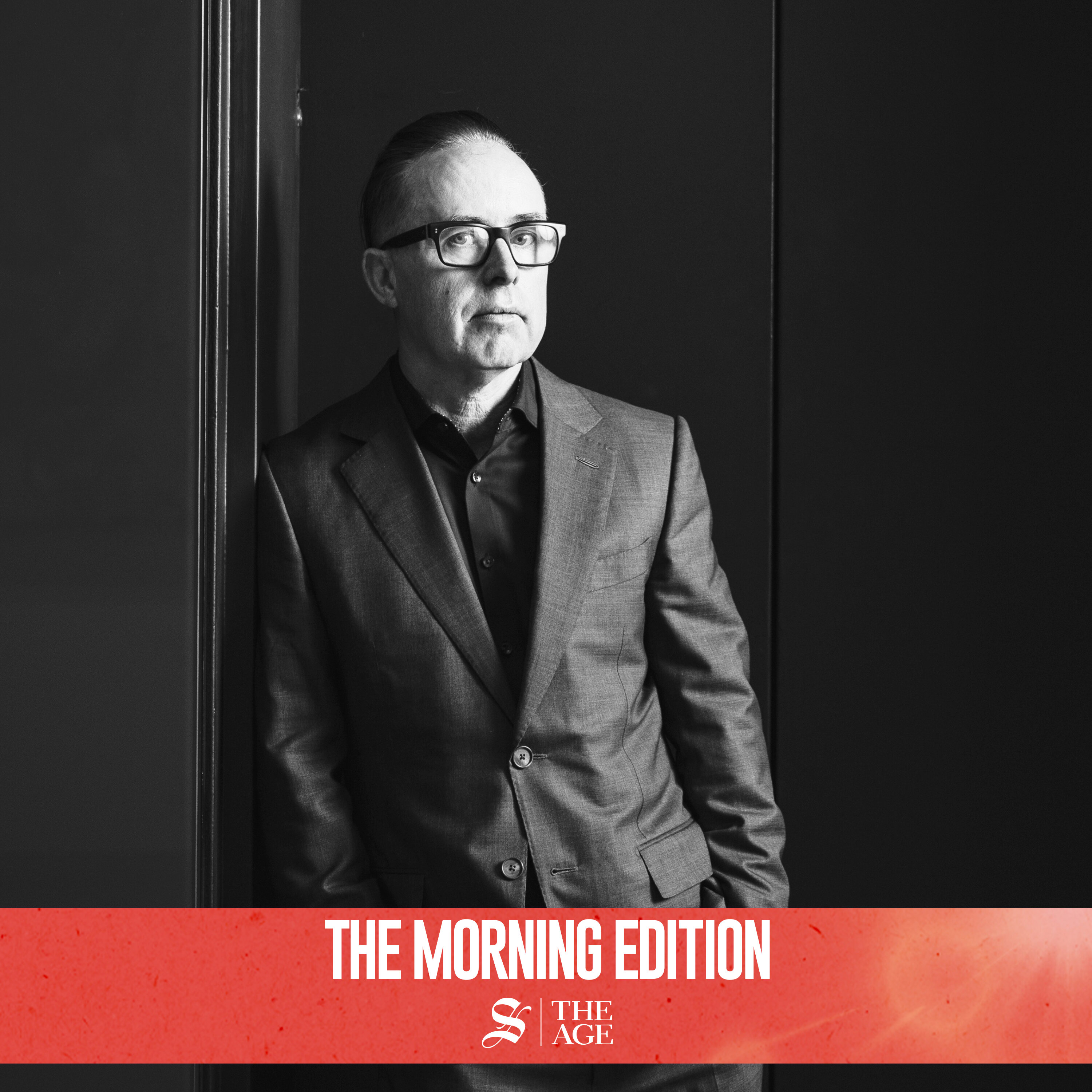
There are not that many company CEOs whom the general public knows by name, but Alan Joyce is definitely one of them, in part because of how some customers and former employees were treated by Qantas, the company he led. I'm Samantha Selinger Morris, and you're listening to the MORNING Edition from the Age and the Sydney Morning Herald. Today, senior reporter Chris Sapone on why Alan Joyce is now telling his side of the story. Chris, welcome back to the podcast.
- [00:40]
B
Thanks, Sam. Great to be here.
- [00:41]
A
Okay, so most of us, many of us haven't heard from Alan Joyce, the former CEO of Qantas, in quite a while and now he's popped up again. Why did you just interview him?
- [00:52]
B
Well, so Alan Joyce, just to take us back, he resigned from his role as the CEO of Qantas in 2023. And when he did, it was a very difficult time for Qantas. One of the conditions of his resignation was that he was going to keep quiet for a while after he stood down to give the new CEO some time to sort of, you know, find her footing and right the ship. So that time has passed. And in his time away, he has written a book and it's his own story, his autobiography, charting his rise to run the company Qantas for 15 years. And he delves into all, all of his most controversial and, you know, headline grabbing decisions that he made.
- [01:30]
A
Okay, so let's get into his take in just a little bit. But first off, can you just remind listeners of, I guess, the scandals really that took place during Alan Joyce's tenure at Qantas because I think it's safe to say he angered a lot of people. He experienced considerable political and consumer backlash before, like you say, he left the company in 2023. So what happened, Chris?
- [01:52]
B
Well, it was a number of things. When Covid hit, or I should say, even before COVID hit, Alan Joyce never shied away from a fight with another stakeholder, let's say, in the company, particularly the unions. So he had had a long standing interest in reforming the industrial relations at Qantas. And he appears that he saw that there was a real opportunity when Covid came around. That was a period where a lot of companies were standing people down, they were having to halt operations. And at that time the decision was taken, not directly but by Joyce, but it was happening on his watch to fire about 1800 ground crew for Qantas. And this would this is going to reduce the costs or the labor costs for the company. So that happened. And that was sort of one of the first Major moves. That was a source of quite a bit of outrage on the union side. And immediately the Transport Workers Union filed a suit against this move. But that was really just the beginning of a series of events. There were events like the so called ghost flight sale. So this is where Qantas was charged with having sold something like 8,000 tickets for flights that no longer existed. There was also, if you recall, during COVID there were moments where people had booked flights but were no longer able to fly. So they had flight credits with the airlines. This was a saga with Qantas where they were sending out updates saying your flight credit is going to expire if you don't use it. And yet people had no ability to use it. On top of that, under Australian consumer law, they weren't actually supposed to be flight credits. They were actually supposed to be told that they, they were entitled to a refund. And then as people got really upset and they were coming back into the airport, Qantas was not really prepared for the crush of passengers that were coming. Joyce would make comments like passengers themselves weren't match fit for travel, which was just like, you know, incredibly insulting to the public that had waited and endured all these months at home, paid for tickets that they couldn't use, then had to pay more to, to get on these slates and then be told that they weren't basically being good customers.
- [03:56]
A
It's a lot and then to pile onto it. And this is very interesting timing considering his book comes out today. You recently wrote about the more than 1800 workers like you mentioned before who were dismissed by Qantas during COVID You know, their case went all the way to the High Court which then ruled in their favor, announcing that they'd been illegally dismissed. So how are they faring?
- [04:15]
B
Yes, it's been a very long and challenging process for them because they have to be assessed for the economic loss and then also the non economic loss. So the economic loss is how much work, work that they've missed since they were fired, how long they worked for the company and the like. The non economic loss is sort of the pain and suffering, humiliation. But also, you know, medical psychological issues relating to this sort of, you know, traumatic loss of their employment. And this is very hard for a lot of people also because a lot of the people who were laid off were, you know, 50s, 60s, they were close to retirement. So they're not really in a position to find a new job. I talked to a labor expert who was talking about the, the impact of these sort of sudden layoffs sudden loss of jobs and it's, it's quite stressful because it's very hard to manage and to foresee where you're going to, where you're going to go next. And that uncertainty and that lingering uncertainty can have a real impact on somebody's mental health.
- [05:11]
A
Okay, well, let's get into Alan Joyce then, and his book. I mean, really, why should we care about his side of the story Now? I think, you know, many listeners might be listening to this and thinking, well, listen, this man collected a $3.8 million payout on leaving Qantas. Obviously, a lot of and former staff, they have been left feeling, you know, not well treated by Qantas. Right. So why do we care about Alan Joyce's story now, Chris?
- [05:34]
B
Well, I mean, he was the CEO of the biggest airline in Australia for 15 years. He was a fixture, obviously, in the, in the, you know, in the public sphere. Right. He was somebody that was actually rather outspoken, not just about issues within Qantas, but issues that were going on nationally. So he was very involved in the marriage equality movement. He's also outspoken on the indigenous voice to Parliament. And so he is sort of a notable news figure in this way. Never shy of a soundbite, never shy of a controversy. But then I think the other element that might be lost to some audience following this at home is that, as strange as it may seem, he's actually a highly respected aviation executive in international circles. So even though he's got this kind of, you know, checkered history domestically, there are people that do listen to what he says about the state of aviation globally. And he is, and I guess we have to give him credit, he is an executive that has both the strength, like the analytical strength to understand what's going on in his business. I mean, his background is math and physics, I believe. So he's somebody who really understood the mathematical implications of what was happening with costs and distribution of passengers and how networks and flight planning and the routes would work. He understands that. But he also had a bit of a marketing flair. I mean, he was the mind behind this Project Sunrise, which you hear so much about this ambitious plan to fly direct non stop from to London or Sydney to New York. This was his baby. So he had this ability to sort of, you know, look over the horizon and imagine what people might be interested in. He is a guy that knows how to, he knows how to, you know, turn heads with some of his commentary.
- [07:15]
A
I mean, it's quite interesting, I mean, I guess. Has he suffered any blowback, though, within the business community, like, amongst any circles, Is he like a bit of a Persona non grata or not at all?
- [07:24]
B
Well, I think with the broader public, he became sort of emblematic of maybe corporate overreach, particularly at a time when people were feeling very raw around Covid. I mean, people who were stuck in their homes because of lockdown suddenly paying much higher prices for everything, first and foremost for air tickets, for airfare, and then for him. He found himself at certain points being accosted by members of the public, I think his home. There were vandals at his home when he wasn't there. So he became very much a lightning rod as far as the business community. That's a little bit wait and see. I've seen some comment about, you know, how he was seen as quite successful. I mean, I think his view about business is very much, you know, it's about returning shareholder value above all. And now I think we've moved into a different period where there has to be a slightly more holistic view of what a business does. And if there's so much sort of collateral disruption created by this business that goes into the larger picture of, you know, how we view an enterprise.
- [08:33]
A
We'll be right back.
- [08:40]
B
Want to spin more and win bigger? Try Tang Luck. Ready to turn your free time into jackpot moments? Try Tang Luck. You can actually have a chance to hit a jackpot. Just pure fun. Safely withdraw to your bank account. Download Tang Luck now, and start winning real rewards. Spin at Tang Luck today.
- [09:04]
A
Well, so to that end, I mean, what does he say in this book? You know, what does he say about his side of the story? Is there a mea culpa with regards to, you know, the decisions that were made during his tenure, which obviously landed very badly. Does he justify what he did or what, you know, those around him did? What does he say, Chris?
- [09:21]
B
It's very interesting. He doesn't hold back from apologizing and giving even blanket apologies for the excesses of the time when he was CEO.
- [09:28]
A
Like what, for instance, does he apologize for?
- [09:30]
B
Oh, I mean, the comments about the customers being match fit. I think he apologized within hours of that, but he apologized again. As far as the firing of the workers. He said, and I have to be clear here, this wasn't his direct decision. So he says that they scrutinized the decision, they didn't approve the decision. But then he says if they knew everything now that they did at the time, and they knew that there'd be an effective vaccine that would allow aviation to resume, then maybe they would have made the same decision, I don't know.
- [09:58]
A
But wait, wait, can I just interrupt there for a second? So is he saying that he wasn't the final sign off on that decision? Is he saying that he is not responsible for that decision?
- [10:06]
B
Well, he says, and this is the interesting thing, he says he's responsible for everything that happened when he was CEO. So it's sort of a blanket, you know, acceptance of responsibility. But then, and this is the very interesting thing about this book, he'll narrow down onto these decisions and as soon as he explains, after apologizing, he'll immediately turn around and say, but here's all the things that you need to know about why other people got it wrong as well. Why there's this incorrect perception about what the company was doing, say with the so called ghost flights. He attributes this to this sort of technical issue where the airline could not tell the public quickly enough that these flights weren't going to fly because of a communications issue similar with the flight credits. He says along those lines that the call center was overwhelmed, they couldn't get the message out quickly enough that these credits people would still have access to them. But then it's things like, well then why didn't you just take the expiry date off? And he says, well, we kept the expiry date on to ensure that there was enough of a motive for people to want to respond. But I mean, they're calling into a call center that's got like an eight hour wait on it. So I mean, it starts to become a bit like, you know, you have to look at it with your own critical eye.
- [11:11]
A
Chris, is this book a non apology apology?
- [11:14]
B
You know, I would say it like this. It's an apology followed almost immediately by a detailed explanation about what everybody else got wrong.
- [11:21]
A
That doesn't sound like a good apology. Chris, having not read the book, I mean, do any of us like that apology in real life when someone goes, I'm really sorry. But every psychologist worth their salt always says, don't do that, don't do that.
- [11:35]
B
Yeah, there is an element of which I find, I mean, that's a very interesting aspect of the personality, which is that, you know, he's big enough to apologize, but then he's also has this like, no, you must understand, it is this it, is that it is this.
- [11:48]
A
Okay, but I want to ask you then, like, let's drill down into it. Does Alan Joyce take responsibility? Does he accept that he was just wrong and had really made the wrong call when the company sacked these 1800 workers during COVID obviously, the. The high court obviously has agreed, that's what happened, that it was illegal. Qantas agreed to pay $120 million in compensation to the workers. Then it was fined another 90 million by the court for not being sufficiently contrite. And I believe, I don't know how many of them, but I believe the workers, many of them, if not all of them, are still waiting for compensation. Is that right?
- [12:22]
B
That's right. That's right. They're waiting for their compensation as they go through this process and figure out exactly how much each individual victim is owed based on their individual circumstances.
- [12:33]
A
Okay, so the company was fined an additional. I find that so interesting. Was it $90 million for not being sufficiently contrite in this book? Is Alan Joyce sufficiently contrite?
- [12:42]
B
Chris, I don't want to judge myself, but it is his account of events. And I would say that if you're looking for pure contrition, you might not get that. Exactly. I mean, it is contrition, but with a heavy helping of explanation. And you must understand, and other people don't understand, that this is the way that the world works and a lot of other explanations that many people may find not very compelling. Having said that, it's an interesting read.
- [13:11]
A
And so I'm just curious. You mentioned there that he's got all kinds of caveats. You know, he might sort of express some contrition, but then there's all kinds of caveats. So what are his caveats about, for instance, the decision to sack these 1800
- [13:22]
B
workers during COVID Well, he points out that in August 2020, when this decision was made, the expectations for the impact of COVID on aviation were incredibly dramatic. In fact, he says that they were thinking at the time it would be worse than September 11, worse than the global financial crisis. And in fact, Qantas wasn't, you know, was contemplating getting rid of 10,000 employees. So to give you some context, they have less than 30,000 employees in the company. So that would have been massive. So I think his argument is, you know, hindsight is a great thing. We can look back and say this was an excessive move to get rid of these workers in such a way. But his argument is that if you roll back the clock to that time, we were considering something much more dramatic.
- [14:04]
A
And so, Chris, just to wrap up, what is the state of Qantas reputation now? You know, did the ghost flights and the sacking of the workers and all the controversy that occurred in Covid, you know, did it leave its Reputation in tatters. And how does it recover?
- [14:17]
B
Well, I should say, I mean, there's a class action suit against Qantas for the compensation for people who've lost money on these flights that have paid in and they never got the full amount back as well. So it's sort of been this, you know, this ongoing scandal that has shadowed the company. So when Joyce stepped down, the then cfo Vanessa Hudson took over as CEO and she has been quite methodical about rebuilding, as she says, sort of trust not just between Qantas and its customers, but internally. And this has been quite a bit of work. I can only say anecdotally, it seems like there is some traction there. I don't think that the Qantas brand has been damaged forever, but it is clearly quite a lot to live down. And so the current leadership of Qantas is aware of this and they've been taking steps to try to build that up. But again, I mean, the cost of flying is high. There's always a lot of dissatisfaction with the service that people get. They're always very ready to sort of pounce after they hear all these, you know, these lofty statements about caring about the customer. If there's a gap between what the company is promising and what it delivers, people don't hold back about, you know, that experience. So there's still some ways to go. But I do think that the Qantas at this point is, you know, they're trying to change the page on this. They would point out that all of these things that have happened in court are now legally their history for Qantas. So now this history of this time really sits in the lap of Alan Joyce.
- [15:49]
A
Thank you so much, Chris, for your time.
- [15:51]
B
Thank you, Sam.
- [16:09]
A
In other news today, the nation's sprawling suburbs would be transformed under a plan from the Productivity Commission to make the property market affordable. With three storey developments allowed everywhere and high rise apartment blocks built near train, tram and bus stations. Experts have warned it is not safe for schools to post images and videos of their students and staff as the eSafety regulator records a spike in reports of school related artificial intelligence, image misuse and a new Australian made non alcoholic sparkling wine from a local beer brewer has hit the market and we have the first verdict. You can read more at theage.com au or smh.com Today's episode was produced by Josh Towers. Our executive producer is Tammy Mills and our podcasts are overseen by Lisa Muxworthy and Tom McKendrick. If you like our show, follow the morning edition and leave a review for us on Apple or Spotify. Thanks for listening.